Host: 17 months is how long it took the acquisition of today's guest to close, but so far it sure does seem worth it for Robert Gayden. For one thing, sales grew considerably during that year and a half, so Robert's confidence in the business grew in tandem. And because the headline terms of the LOI weren't renegotiated, his effective purchase price steadily declined. Robert bought a home care business with 1.8 million of adjusted EBITDA when he finally closed we spend a lot of time on the industry itself, which is one you hear a lot about in our world. Links in the show notes to past episodes featuring similar businesses. Also listen for Robert's thoughts on his involvement in the business, which is an hour and 20 minute train ride to his north. He's on that Amtrak at 6am every morning, then back home at 7pm or sometimes 9pm he is unabashedly in the business, even though all that EBITDA is more than enough to hire an experienced operator. Listen for his thoughts here. Hint Founder energy. Finally, listen for our discussion about OPS versus Sales. Many searchers impulse is to refine the operations of their newly acquired business, create efficiencies out with the facts, in with the CRM. Private equity types call this margin expansion, but ask yourself when you get in there, is that the best use of your limited attention? Or is growing sales focusing on the top line rather than internal efficiency? After all, everything is downstream from sales. Okay, here is Robert Gayden, owner of Bright Star Care of Greater Waukesha in Lake Country Deals want to Die as you know, this is the unhappy reality of buying a business. It takes perseverance and commitment to keep an acquisition transaction alive and get it across the finish line. Tomorrow attorneys Bill Barlow and James David Williams return for an office hours webinar and the topic is what killed deals in 2025? Expect a recap of all the legal and non legal reasons why deals that went under LOI didn't end up closing. Bill and James David will share actual examples from the past year of deals that died between LOI and closing and how you can prevent a similar fate and keep your deal alive all the way through. That is tomorrow, Tuesday, December 16th, November noon Eastern. Link to register for the webinar is right at the top of this episode's show notes or on the Acquiring Minds homepage. Acquiringminds Co. Welcome to Acquiring Minds, a podcast about buying businesses. My name is Will Smith. Acquiring an existing business is an awesome opportunity for many entrepreneurs and on this podcast I talk to the people who do it. Running payroll, paying your bills, closing your books, and producing financials. These are critical tasks every business owner must do or oversee, but spending time on them distracts you from the leadership in growth work you want to do. So let system 6 do it for you. Owned and led by a former Searcher, Chris Williams, System 6 is a leading outsourced finance team for hundreds of SMBs, including over 50 searcher acquired businesses. Chris, Tim and the System 6 team understand firsthand the challenges, the opportunities of jumping into a business as its new owner. So whether you own your business already or have one under LOI, talk to System 6 about how they can give you time back and improve your financial operations. Mention Acquiring Minds and they'll provide a free review of your books and Financial Ops, a $500 value. Check out system6.com link in the show notes or email helloystem6.com Robert Gayden, welcome to Acquiring Minds.
[4:36] Guest: Thank you for having me. Will Extremely excited to be here today Robert.
Host: Your deal took over a year to get done but it has been worth it. I believe the business is growing nicely. We're going to get into it. Start us off with some background on you please.
Guest: Robert yes, so I always like to start off and share about myself. You know, both my parents were in the military growing up so I had a very eventful childhood. We lived about 11 places, got to meet like a lot of different people through that time. Naturally gravitated towards sports so I ended up leveraging that to go play college football at Truman State University School in Missouri. During my time there, you know, studied economics and finance. I gravitated towards that because you know, growing up I always wanted to learn about money. I think my parents were say maybe they weren't the best money managers. I say that in a loving way. So I naturally wanted to like learn more and more about that. Senior year of undergrad ended up being recruited to join a management development program called Commerce bank based in St. Louis. So I did that with the hopes of learning everything there is to know about banking. I don't know if I fulfilled that fully, but I definitely learned about all the major business lines of banking. So came in as like commercial credit analyst but then quickly got to rotate through all the major business lines. So trust, fiduciary, fixed income, you name it. I probably got at least two to four weeks of exposure with that. Ended up enjoying that kind of 18 month program. Ended up accepting a position over in Kansas City which was ended up being the greatest decision of my life cause I met my now wife when I Moved to Kansas City, so got lucky with that. During that time, still within the bank, I pivoted over to the fixed income department. And that's where kind of like the world really started opening up to me. I was given a territory to kind of build a book of business from scratch, you know, selling bonds. I had to learn everything there was about municipal bonds, mortgage backs and everything, just so I can have some credibility. When I sat across like a bank president, did that for about three years, really started seeing success, which was extremely exciting. But two things were happening in the personal life. One, I was wanting a little bit more just from like, I don't know if it was intellectual capacity, but I knew, you know, I was hustling really hard. I was like, know, flying down multiple times a month, staying for like a week at a time. And, you know, the pay was pretty good in terms of commission, but I was like, man, if I'm hustling this hard, I. I kind of want like a bigger reward. And that's when entrepreneurship started popping in my head. And then two, my wife matched for her residency and she was like, hey, I'm going to Iowa. And I was like, what's. What's residency and what's Iowa? I really didn't know about the medical world at that time. So at that time I had a really strong mentor who was also my managing director within the bank. And then I also had another mentor in a different business line. They both were MBA, Ivy League MBAs at that. They started like molding me and shaping my brain on going back to school full time. And it seemed like a really good fit. So I ended up leaving the bank following my now wife to Iowa. Spent time doing the whole GMAT hustle, meeting with people, flying to visit schools and everything. And long story short, ended up getting into Carnegie Mellon University Temper School of Business, I believe that was like in 2023, 2021. So much time has passed. Went there full time, ended up deciding on them than other programs because they had a really clearly defined ETA track, like actual courses not only to like learn about that, but then like ancillary courses like legal contracts and all this other kind of stuff. And they had a really prominent professor, Lynn Carrick. He's the man in Pittsburgh. And you know, he taught me a lot what I knew and kind of inspired me from that standpoint. And I had a really unique situation to where I didn't have to focus on maybe trying to job hunt when I got into business school, because I already had that kind of tied up Prior to joining, so I got to spend like all my time doing the ETA classes, talking with like second years, etc. Etc. Kind of breezing through just to get through all this. Ended up not deciding to go where I interned at for personal reasons. During my time in business school, my father unexpectedly passed away, so ended up making the jump to entrepreneurship launch my fund after I. After I graduated and then within about a couple of months, met the current sellers. And yeah, I think about 17 months later, we finally closed and now, you know, eight months into business ownership. So it's been a whirlwind, to say the least.
[9:58] Host: Robert, the passing of your father was a key point in this story. Can you expand on it?
Guest: Yeah, for sure. So, you know, it's. He was so integral and so supportive. Him and my mother, you know, no one had, at least in my family, gone back to school in terms of like business school full time. So, yeah, when he passed in between like my first year and second year, it like rocked my world in terms of, you know, just from personal, like, life is so precious, but then also like, hey, you know, what am I trying to do for the rest of my life? You know, what kind of purpose do I want to have? You know, I remember his service. A lot of people talked about he was heavily involved in the church and, you know, not getting too philosophical, but, like, know, people really only talk about, like, how you make them feel really, and when it all comes down to everything. And there was a. A litany of just very small actions that he did and probably didn't think twice of that really impacted people's lives. So I was trying to start taking steps towards how can I do that, right? Like, I can probably go to like a large, you know, private investment firm and crunch away on Excel sheets and make people a ton of money. But at that time, I was just really, mentally in a different place and really thinking long term. So I ended up still doing my internship, but ended up not wanting to go down that path and knew at the start of my second year that I would be going on a more unchartered path.
Host: And this internship was at Pimco, which for those who don't know, is a big deal place to work. So. So you were really, you. The opportunity cost here was significant.
Guest: Yes. I mean, probably prior on how I felt about Pimco, prior to my dad passing, like, yeah, I was placed in the Newport beach office. You know, it was, it was awesome out there. You know, the weather was great, pay was great, you got to be around a Lot of really smart people. You know, I was really enamored by it and you know, I thought I was like rising to the occasion for sure and all my prep work leading up to it, but like, that may that really kind of change things. Not that I didn't appreciate it, but it wasn't the end all be all for me anymore. And yeah, and that's, you know, I still did my time. I put in plenty of hours. Right. But it just wasn't, it really wasn't the same after that, that event. And again, it just way more rocked my mind into how can I make like impact? Like, how do I impact people's lives? How In a positive way and positioning myself for that. So once, you know, more information started coming out and working with like my mom and brother, especially about like, you know, the life insurance that he left behind and the inheritance, and then me starting to talk about potentially this alternative path, my mom and brother were like super supportive, not only in words, but then also part of their part, you know, financially. And so I thought.
[13:12] Host: So they invested. Are they, are they indicated that they might invest if you did this for sure, for sure.
Guest: And yeah, and this was like so early on and that's when I was starting to really think like, oh, wouldn't it be pretty cool to kind of use the proceeds from my father's pass into like, buy a business. And you know, I'm happy to say that that was successful. And it's, it's really crazy. And you know, fast forward to graduation day. My wife, my grandmother, my mom, my younger brother, and then also my in laws. So my wife's father and mother, and her father in particular I'm pretty close with. I made like a little speech and you know, about the support and everything about my dad not being there. But I, I did make a proclamation. I was like, hey, like, you know, as some of you may know or not know, like, I'm gonna go down this other path and really kind of make a name for myself. So. Yeah.
Host: And Robert, don't want to beat this to death, but just when you're like his passing made you kind of reassess your path. It wasn't, it was, it doesn't sound like it was like a carpe diem, you know, life is short thing. It sounds like actually it was. My dad had a lot of impact on people. Yeah, I want to have impact on people. So this was, that was the why of this, of this, of his, of his. Of his passing.
Guest: Yeah, I would, I would agree with that. I would Give a little caveat. I do think there was a little bit of life is short because you know, prior you just naturally, especially like when you're in business school, like oh, okay, I'll get the job because I made the investment. I'll kick it down the road to kind of do XYZ thing. And you just bank on years, right?
[15:02] Host: Yep.
Guest: Without even thinking about it. And that framework really changed my mind to where like no, it's like now, you know, it was a very unexpected passing. He was Young and his mid-50s, so that's. That calculus really changed where I was not counting years anymore. I was trying to act now.
Host: And so when you envision impact, how did you envision that buying a business could manifest your desire for impact?
Guest: Yeah, I feel like I have a relatively good head on my shoulder and like good morals and all that kind of stuff. So I just wanted to be in the seat to like make those decisions to position people for success. Whether that's like, you know, maybe not being the most micromanaging boss or whether that's like really empowering people and kind of challenging them and like getting something out of them that they didn't know that was there. And then yeah, just trying to, you know, it sounds really basic but making people feel good about what they're doing and that how it's like pushing the needle forward. Right. Because everyone's for the most part in some kind of ways, everyone's has highs and lows and everyone's struggling with their own thing and just trying to be there for them.
Host: The team at Aspen HR recently published a short white paper targeted at searchers Entitled A New CEO's Guide to Human Resources. It lays out the key items you should be thinking about as you transition into CEO and owner of the business you bought. The link to download it is in the show notes. Aspen is a professional employer organization or PEO run run by a searcher for searchers. Search fund veteran Mark Sinatra runs the company which provides HR compliance, flawless payroll, Fortune 500 caliber benefits and HR due diligence support for your acquisition, all for a fraction of the cost. Go to aspenhr.com or contact Mark directly at mark aspenhr.com so you considered doing a traditional search or at least an accelerator funded search. Yes, and that. And that changed when you, when your father passed and there was this inheritance possibility and also you wanted to do a geographically constrained search, give us the kind of the quick information there and then how the parameters of your search ended up what they ended up being.
Guest: Yeah, for sure. Thank you for that. So yeah, going in to business school, I quickly learned about the traditional search fund and then also accelerators. So naturally, like I said, since my internship was kind of like locked up before I stepped foot on campus, I was like attending all kind of networking events every time. Like, you know, all the search fund investors were like present. I was like attending that, talking with people. So I ended up building like quite a bit of a network within the space. So much so that since my wife at the time was in Chicago and I was in Pittsburgh, you know, I got pretty close with Next Gen Growth Partners. They were an accelerator. I thought it was great hands on experience for one reason or another. You know, I wasn't able to kind of participate in like their winter internship, but I still ended up learning quite a bit just from those conversations. And I was actively thinking about that as an option maybe down the road. And also traditional search, especially when you go to all the conferences, like you pointed out, the calculus definitely changed. And I have like a vivid memory of after I graduated, kind of freaking out. Called a few professors of mine, we were like literally walking the lawn, you know, at Carnegie Mellon when there's like school wasn't in session, it was like in mid May. And I'm just trying to like, I was like, did I make the right decision? You know, the job offer was X amount, you know, that would be really nice. And they were like, you know, you have like a really unique thing and like you could capitalize on this with like, you know, the determination and focus that you already possess. If possible, you know, go down the self funded route because you can have like less constrained. And although I really did like the traditional search fund model because of like the advisors, I think that's one thing people really underestimate. Yeah, self funded, I get it. It sounds phenomenal on paper because like more ownership. However, you know, a plug for traditional. There's a lot of experienced people that can end up being like in your corner and like make your eyes open and you could probably grow quicker or faster with that kind of direction. And I saw the value in that and so that's why I was always kind of going back and forth. However, the advice I did get was you have a really unique opportunity to still get something of size. So you should probably focus on that at first. And then down the road after you already have like a track record of searching, you could always try and raise and go traditional. And then also with the geographic constraint around Chicagoland, so like north, north and south along like Lake Michigan Northwest Indiana, then like southeast Wisconsin was my geographic search and I targeted X amount of zip codes. And so with that kind of geographic constraint, my advisors and professors thought like, you know, it would be a little disingenuous to try to do a traditional search with that constraint unless I was super forthright. But then there were also like opportunity costs you could be wasting time trying to raise when you could already have been searching and find opportunity on your own.
[20:52] Host: And with the self funded going self funded and whatever your inheritance was and, and maybe investment from your mom and brother, what size of business did you think you'd be able to afford?
[21:04] Guest: Yeah, so I remember thinking like man, just like you know, 500, 500,000 SE would be great adjusted evil would be great like half a million and I could get in and kind of grow it and you know, the debt load won't be too much and all that kind of stuff. And I remember like looking at opportunities. Um, I also remember having like these different, you know, because during my school and you know, you create the ppm, like you kind of go through the process to replicate it as if you're going to like raise a traditional search fund. So like I had all these, you know, now looking back, a little wonky investment thesis of like, oh man, I'm gonna get like a battery recycling plant, you know, lithium, like around Chicago. And then I got started looking and I was like, dude, there's. Unless I'm about to move to New Mexico, I'm not about to, I'm not about to stumble upon that. And so I got like really real with okay, let me just scour the Internet, hustle with brokers and learn what industries are more prevalent around here and see what's dictating from like my geography constraint. And then operating from that instead of coming from a place of like a really strict industry thesis or three Industry thesis. Because you could just set yourself up for, I don't want to say failure but like delayed success at minimum.
Host: So yeah, you're, I think you're going through the process of what Sam Rosati calls big three little two where the big three are industry size and geography. And if one of those is super is your. Is a non negotiable for you. And typically that's going to be geography. Then you have to relax the other two.
Guest: Yeah.
Host: So you're so there. There we go. You were, you thought you, you know, you were gonna in Chicago and you know the battery recycling plant. Yeah, for sure. And of a certain size. And you realize, well, if I'm Going to be in Chicago. I need to seriously like widen the aperture for sure. But what, what you were saying there about 500 SD. Oh yeah, you changed your thought there.
Guest: Yes, I was really looking at, I think now looking back, I was way more concerned about cleaner financials than I probably needed to be. I mean it's important, but yeah, when you have advisors in a team like they can, especially through the Q of E process. But yeah, I really was not really hung up. I mean I guess my floor would have been probably 300k SDE just because like the amount of capital I thought I could, could raise. And then I also felt really comfortable talking with bankers, raising debt, potentially raising outside equity. I felt, I've always felt really comfortable with that. Maybe it was like my financial background. Now I've never held like a fundraising position. However, I really was more tied to finding a good opportunity because I knew fundamentally just in the industry like you know, investors and capital allocators will come once you have like the actual opportunity. So I was less concerned about, in short, less concerned about the actual SD size as long as the minimum of 300k was met.
[24:21] Host: I see. Okay, but that is pretty small to be clear. I mean 300 is quite small.
Guest: Yeah, yeah.
Host: And, and okay. And so even now reflecting back because spoiler, the business you bought had quite a bit more SDE than that it did do and you're in the weeds and it's hard and we're going to hear about it. So do you, do you reflect back? I mean if self funded searcher who's listening, would you say the same thing to them that a 300,000 STE floor is okay?
Guest: No way. I mean get what you can that makes the most sense for you. Like if you're in the game, you're in the game but like the, the same amount of work that you do in that 300, it's going to be the same with like you know, two million or a million, relatively speaking. So yeah, go for bigger and to give a misnomer as well. That was my thought process. Like that summer of 2023 I went to a very influential conference that like changed like my whole outlook and it was like the SIG Search investment group. That's where I feel like I think I met you there for the first time. And yeah, they have the self funded search conference and those guys are awesome. They know exactly what they're talking about. I had a chance to talk with Robert and Jordan and all those guys, Aaron as well, but really hit it off with Ike who's a part of their group and he has like a home, home health agency in a different part of the country. And yeah, that was life changing just from that relationship alone. And I definitely consider him a mentor. And they were all like, dude, go bigger. Go as big as you possibly can. I was like, oh my God. You know, you kind of get taken aback by that. But then that. So when I went back, that's what changed. Like how I was hunting in terms of like pushing more of like, okay, let me at least go for like at least a million. For sure, 800, but if possible over a million.
Host: You also came out of that conference very intrigued or maybe even decided to look at home health and home care.
Guest: Yep.
Host: Say more about that. And by the way, interesting because now you actually do have an industry thesis, despite the fact that we just said exactly, exactly that you, you weren't going to have a thesis. Those businesses are, are pretty ubiquitous. So it's not unreasonable to think in all of Chicagoland and a couple hours north and a couple hours south that you not be able to find that. But still you were, you were so enthusiastic about this industry that you decided actually I will have an industry thesis on it. So what did you learn?
Guest: So in terms of like the nuts and bolts, I didn't learn, you know, every nook and cranny, but it was explained to me through the handful of individuals I talked through that, that two day conference that either had like home health, behavioral health, like tangential. What really appealed to me was someone explained it very basically. It's like, hey man, it's low capex and like, you know, I don't know if you really understand but it's like, you know, your main cost is going to be variable because it's tied to like your employees and it's in lockstep with how much revenue you generate. So even in a down year, the overwhelming majority, your income statement is going to be in lockstep and fluctuate. So you know, if you lose a client or something like that, like that revenue is gone, but then also that associated variable cost is gone and has to be redeployed with a new client. And that was really intriguing for me. I didn't have any hard operating experience and like I was super self aware of like more so being like a finance guy, maybe entrepreneurial spirit and like really scrappy. But you know, I was real with myself. I didn't have what I would consider true operating experience. So I was trying to find something that aligned with me to where I can get up to speed, learn the industry, and then also not be overwhelmed with like, you know, managing, you know, capex and machinery and all that other kind of stuff. Even though I'm still definitely interested in like, industrial services, but that was appealing to me. And then also the people I met, they just seemed like very familiar with me. I remember, you know, you know, I was so green at the time and trying to explain, like, oh, yeah, like, you know, I'm seeing these companies and I don't know, maybe trying to sound smart or whatever. And Ike was just like, dude, you're overthinking it, man. Like, just. Have you looked into like, home. I remember he asked me, like, have you even looked into like, home health home care? I was like, no. He was like, start there. Like you're, you're trying to. You're trying to do too much. Start there. Still look at your other opportunities. But like, you should consider that because it could be a good fit just based on your personality. So I took that advice and went back, saw an extremely expensive ticket to like, the Home Care association of America conference was in Chicago, probably like less than two miles away from where me and my wife live. Got permission from my wife to make a crazy investment in a conference where I knew no one. And then that ended up, up also being a stream inflection point in my process as well, because not only did I indirectly hear about like the sellers, but then I also met my banker who ended up closing my deal.
[29:45] Host: So, yeah, well, and you also learned about the industry and got a very strong flavor for what it's all about because I guess the room was just peopled with practitioners and owners of this industry. And so what did you, what did you find? And by the way, just for the audience, we're going to spend some time on this industry. It's going to come in and out of our conversation because it is such a. It is such a common one seen in search and what SIG has built. We actually just interviewed Robert, by the way.
[30:21] Guest: Robert.
Host: Robert Gayden. We just interviewed Robert Graham last week for the Mind's Capital podcast. I may error it on. On acquiring Minds as well. They are si, excuse me, Pillar Health Group, which is their home care, home health hospice roll up is at 30 million now of EBITDA. So it's. It's pretty crazy. So it's a, it's a thriving industry. Tell us what you saw there in, in that conference. Give us a couple takeaways there. That just aside from the fact that you met a banker, your future Banker. That really locked it in for you.
Guest: Yep. Honestly. And it's like, the really little things. It's. It's crazy how everything kind of comes together. I know sometimes, like, my younger brother and wife rolls their eyes because I'll harp on something very minute, but it's the truth, or at least it's how I feel. I.
Host: What do you mean, like, sign from the universe stuff?
Guest: Yeah, it's like, oh, this is like this very small thing. You know, I'll probably get on my way. I'm like, oh, man, this small thing is like an inflection point in your life and blah, blah, blah. And then. Oh, I'll just. Yeah, they'll just roll their eyes. It's like, no, you know, we'll indulge you.
Host: Robert, tell us all the inflection points.
Guest: Yeah, for sure. The very first thing was how friendly everyone was. I was like, wow. Other business owners, service providers, nurses that were in the industry who had a home health company sold it. You know, people were just extremely generous with, like, information. I was very forward of like, hey, I'm looking to, you know, buy a business. Not necessarily your business, but, like, I just kind of want to know, what are the pain points? Everything. It was like, oh, let me tell. You know, let me tell you. Sit down right here. And people were just extremely gracious to an outsider. So I was like, okay. You know, the industry is probably like that too. Like, yeah, at the time, I didn't know who the. The whole selling process, but, like, I was really taken aback by that. Yeah.
Host: This great sign by. And by the way, it. It is natural that it would be kind of have a kindness vibe because the service being sold is care.
Guest: So it.
Host: That. That tracks. Go ahead.
Guest: Yeah. And when I showed up, you know, I was completely. Because, again, you know, I dressed away. You know, I just look different for many reasons. Like, I probably look a lot more businessy, and, like, everyone's, like, a lot more relaxed. I was like, man, I probably should have took a beat on that. But. But, yeah, so that was like, the overwhelming thing. And then also the headwinds that they were facing were more so labor and people related, which I thought my skill set of, like, just interpersonal skills. And then going back to, like, my childhood, dealing with a lot of people growing up, like, you know, went to high school in Texas, lived in Arkansas for a period of time. I was born in San Diego. We lived in Jersey, lived in Puerto Rico for four years, you know, so I. I felt really comfortable with all types of people from all walks of life. And so that also really clicked. And those are like the main two things. It's like, okay, their biggest pain point is like labor, which, dealing with employees, motivating them, having them show up, et cetera. And like, that's a issue that I can like stomach. You know what I mean? Like, it's just like, okay, there's going to be an issue with any kind of industry. But like, I was like, okay, I'll sign up for that. And those are like the main two things for sure.
[33:49] Host: The other thing to say about the industry and tie it to you, Robert, is, well, the impacting people.
Guest: Yes. Your.
Host: Your original. Why this is one where I think you meant that in terms of impacting employees when you first thought about it. But here's, here's an industry where you can not only impact employees, but indirectly impact all these patients.
Guest: Y.
Host: This industry's business is in, as we said, providing care for people who, you know, don't have family, don't have resources, whatever. It might be lots of different situations. So. So that's must have been appealing.
Guest: Yeah, extremely appealing. And initially I thought it was just for the elderly and then once I learned like, oh no, a big subset is like veterans. And like working with like the local VA hospital, like that was like also another light up point. I was like, okay, both of my parents were veterans. These demographics, everyone, you know, I care about everyone's health. But like this demographic is like near and dear to my heart because like I grew up and saw that, you know, we were in Jersey when the Twin Towers fell and you know, my mom was, you know, I got pulled out of class, had to go to the base. My mom was like deployed within, you know, within three weeks after that and she was gone for like nine months. So, you know, I kind of lived that myself as a child. And so yeah, I got really excited at that opportunity to kind of like give back to them. And then also, you know, my dad being a veteran as well, it just kind of made a lot of sense. But I really like the diversification and the types of people that you can help. And so it was, yeah, a no brainer for me. Like, oh yeah, this is like a clear cut. Yeah, I can impact employees, but then I can also like impact our clients on a day to day basis who need us in some situation. It is critical that we must be there. In most situations it's still urgent, but you know, I really like that level of responsibility also.
Host: Yeah, great. Well, and then the other obvious thing that's gone Unsaid, but is obvious is the tailwinds here. It's a demographics favor this industry in a big way. So.
Guest: Yeah, and then a lot of people casually mention that at the conference. And then I think, you know, I was out of school at the time, so I got like us, one of the individuals who were like a year younger than me got their login information for Carnegie Mellon and got downloaded to IBIS World Report to get like that whole database or whatever. And then, yeah, studied that. And then once I saw like, you know, 8.5% compound annual growth rate through 2033, I was sold. I didn't need to see anything else because I thought it was incredibly important to align myself with an industry. So many people say that and I don't think people really understand like the gravity of it. Like, you know, you could be really smart or average or you know, me slightly, I think I'm like slightly above average. I really do think that. But I just try and position myself right in the best way possible. And so being in like a current that's just already flowing right, I think I'm slightly above average. So maybe I can get 10% compound annual growth rate on top of that versus picking an industry that's much tougher. 3%, you know what I mean? And it's just like I just really wanted. I was hyper focused on setting myself up for success because I do need it like a buffer time before I became what I would consider like an expert in everything. And then again, it goes back to the conference I went to. You know, Robert, and those guys are like wicked smart and I have a lot of respect for them. And I was like, okay, if they're doing it, I could probably do like a smaller version, not necessarily Pillar Health Group, but just like for one company for me. And so I was, I was pretty sold. That's great, Robert.
[37:41] Host: You're making the audience all want to go to this conference and buy, buy some businesses. Well, we're going to, as I said, we're going to keep returning to this thing theme of the industry itself. So take us to your search now. You leave the conference. You know, you're committed now really truly to the industry. Tell us, unless there's something in the search itself that you want to talk about. Let's just hear about the business that you bought. Let's hear about your first contact with it.
Guest: Yeah, and in terms of the search, I just, I had a pretty simple approach before. I like paid a lot of money for like the zoom info and all that. I Just wanted to kind of what I consider hustle or get it out the mud for about three months. So I think I started like in September, like the day. The first business day after Labor Day. I said for the rest. I met with like all these providers. The price was like out of control. So I was like, hey, I'll do this for the rest of the year in January. Once I kind of know which industry or everything like that I really want to hone in. Because at the time I hadn't like done this conference just yet. I was like, then I'll get a provider. And then we could also think about proprietary. But at first I was on all the websites, the biz by sells. I have like a huge long list of like all these, like data aggregate buying acquisition sites. And then also with brokers. I was meeting with brokers, I was hustling. So I would show up and I would get on the phone. I would just be calling people, hey, I saw this opportunity. Even if I saw it online, I would try and get a phone number because I thought that was just a way to kind of position myself. So nothing sexy. Thankfully, I met my opportunity before that. I had to go down the proprietary route. But yeah, I was definitely brokered Internet hustling every day. Came across my opportunity in October, so probably like six weeks, seven weeks in. Saw it initially on biz by sell. Yeah, right hand to the main. Yeah, I know. And there's so much junk and I like dumping on it as well. But I do think if you're on it every day, like really looking for like the refresh and everything. And that wasn't the only. That wasn't even my main site. I was actually like this data aggregator that caught it. And then when I clicked on that link, it took me to biz myself. So that's why I give bizy sell the credit. Called the broker. And then it was kind of off from there. I was really adamant about meeting with the sellers as soon as possible because I knew it was just be. Have to be like a people fit for me. And then when I saw it in Wisconsin, I definitely wanted to, you know, meet with them. And yeah, I think we kind of got in contact by the time I got in contact with them, I believe within like a week. We met like we met like that Friday. We talked maybe Monday and then we met that Friday.
[40:30] Host: And you were based in Chicago and it was based where?
Guest: And the business was based like just west of Milwaukee. That's like the easy way to put it. Yeah, so.
Host: And so how many hours is that driving?
Guest: That's about no traffic, which is probably irrelevant of even Sharon. Unless I'm driving in the middle of the night, no traffic. About an hour and 25 minutes. With traffic, man, it can get up to two and a half hours. I've only done that one time, but typically it's about an hour and 45 minutes. But I actually take the train up daily.
Host: Okay.
Guest: So I take the Amtrak up and everything like that. So yeah.
Host: And how long is that commute?
Guest: About like an hour 20. So I'll catch like the 6am, 6.10am, catch up on emails, get in to Milwaukee at like 7:30 and some change if we're not delayed, hop in my truck because I parked at like the monthly parking into downtown station and then I drive into the office. I'm in the office about like 8:11 at the latest. So yeah, that's, that's the commute.
Host: And, and when, what time do you leave and what time do you get home?
Guest: Yeah, my wife's not probably too happy about that, but yeah, it's either the 5:44. But oftentimes I see that I can't make it. So I'll catch the 7:35pm, get back into Chicago at like 9:10pm thankfully we live very close to like downtown. So I'll just bike back in the, you know, at 9:00 o' clock at night. Walk through the door by 9:20. Yeah. Rinse and repeat.
[42:02] Host: Well, so you're, yeah, that's really, that's a, that's an intense schedule to make that 6 o' clock train. You're probably getting up at 5.
Guest: Yeah.
Host: So you're probably, you're probably in bed by 10 or maybe you're cutting down your sleep. But that's only, that's less than an hour really at home. Tell us about what else you saw on this Biz by Sell listing that made you like it. Numbers.
Guest: Yeah. Et cetera. Yeah. Yeah. So there was a hard asking price of just shy of like 7 million and the size definitely took me by surprise. But then once I saw like the margins and you know, I got to give a shout out to their broker on how he like phrased it and everything. But yeah, the margins were pretty substantial for like the last three years. It was like north of 35%. Wow. SDE every year. Yeah. And then that final year at the time it was a projection but they were projecting to do 40 and I was like okay, even if they're off, you know what I mean?
Host: It's, it's still probably good 40% net margins. Is that common in this industry?
Guest: No, no, no, no, no. I would not say that at all. And I remember at the time run in by my advisor, Ike, actually, he was like, you might want to drill down into that and everything. And, you know, it was so good that it was, like, of concern, but. Yeah, yeah.
Host: And sorry, I didn't mean our 40%, because that. No, really? Yeah. That's basically. No, you're not going to find that anywhere. But are. But is the industry known for good margins? So, you know, that would be 25 to 30%. Sure.
Guest: For sure. Yeah. So I would say 20. 20 to 25 is. I would say down. Down the fairway. And you could easily adjust to that if you were lower. If you were lower than that threshold. It probably is more so on the operate, in my opinion. But, yeah, 20 to 25% is. Yeah, for sure. And 30%, maybe. I would say that's probably like, 75th, 70th percentile, for sure. But anything over 35, especially, I'm talking, like, true EIDA margins. Not even. I mean, those were, like, the SDE margins, but the EIDO margins as well were like. Yeah, mid-30s, for sure. 37, 35, 38. Yeah.
Host: And you. I will assume that you found out that they were just running super lean. That's how they were able to get 40% margins.
Guest: Yeah.
Host: Just totally understaffed.
Guest: Yeah, for sure. They were, in some regards, like, you know, it's just a dynamic. They were both in the business, and so, like, it was a husband and wife. It was a husband and wife dynamic. Yeah. Yeah. So that's how they kind of. They could play off one another. Right. And, like, divide and conquer on quite a bit, like, operations and sales. So I think that's why in their dynamic, they were able to do that. But then I was stepping in, you know, the bank, everyone's asked me, hey, it's two of them. It's one of you. How is this gonna play out? Like, are you just gonna, like, eat the workload and all that kind of stuff? And I was like, yeah, you know, I'm hungry. You know, I'm headstrong and all that kind of stuff, which I definitely did. But, like, I need to build out the team more. And so that now that I'm in the business, it makes a lot more sense because, like, they were both active, so. Yeah. So they really didn't need probably as much staff as I would need. Right. And especially my philosophy of, like, really just being, like, an owner and work on the business instead of in the business. So like it would be like a couple of more people than what they had.
[45:36] Host: If you ask owners in the ETA and search community which insurance broker provides highest quality work, great outcomes and has a practice dedicated to searchers and acquisition entrepreneurs, one name comes up again and again. Oberle. Oberle Risk Strategies has worked with hundreds of searchers over nearly a decade and is in fact led by a two time successful searcher, August Felker, which makes Oberle a specialty insurance brokerage for searchers by a former searcher. And if you've got a business under loi, Oberle will provide complimentary due diligence on that business's insurance and benefits program. An easy no risk way to get to know August and the team at Oberle to take advantage. Check out oberly-risk.com that's o b e r l e-risk.com link in the notes. So what were the numbers of the business when you first looked at it?
Guest: Yeah, so I think I told you the projection and then the asking price. So in 20, at the time when I met them, they were projecting out 2023, so we didn't have hard numbers. It was a little concerning for me because 2022 to 2021, 2022 was like just over 3 million in revenue, but in 2022 was like just shy of 4 million. So I was really confused about like that 20% decline. Obviously the bank was as well when I was having like those initial conversations, but I remember just talking to the sellers and the husband was just like, you know, we just kind of got, you know, at least for me, I just kind of got like a little lazy. We were happy, like we were trending in the right direction for a couple of years. And in so many words, I'm putting words in the mouth but they were like, hey, we kind of hit our number out of the business and we're looking to kind of like part ways and, and for whatever reason, nine times out of ten you would think like, okay, they're just, you know, maybe there's something nefarious is going on. But they were just so nonchalant and matter of fact about it. I was like, I think, I think they're probably, you know, they're very high integrity people. That was something I put together meeting with them, with my wife. My wife said that after we met with them. So I was like, okay, like we'll run with that. And then sure enough, the projection was hit like 4 million in 2023. We get the hard Numbers, they blew past that by, like, almost 10%. So I was like, okay, all right. They're not. You know, they say what they mean, they mean what they say kind of deal. And so once the Q of E, people got a hold of it. So shout out to Travis and specifically Max at Loomis Consulting Services, definitely my favorite provider throughout the whole process.
[48:30] Host: All right. Yeah. My partner, for everybody but Robert is saying this with total honesty.
Guest: No, I'm. I'm dead serious. I remember the price tag. I met with Max, and he was like, hey, it's like, X amount. He was like. I was like, is this legit? He was like, it's legit. You'll be. I was like, okay, cool. And so wait, wait.
Host: I'm sorry, What? What? It was what, legit? The price tag of the business?
Guest: No, the price tag of their services. Because it kind of shocked me a little bit. And then I was like, man, what are y' all providing? And he was like, trust me, if we go through it and it's good. You're good. I was like, okay, because I really don't want to worry about it. And then he was like, okay, I'll have, like, Travis reach out to you. And then, sure enough, I remember that may of, like, 2024, they gave us, like, the final workbook or whatever. And then, yeah, Travis was like, oh, yeah. You know, at all the times we've done this. And again, remember, there was so much, at least internally, a little concerned about, hey, are the numbers. You know, whatever. Whatever. They're like, yeah, you know, there's like a less than whatever percent variance. Like, you know, at all the times we've done this, it's probably, like, high in, like, the 90th percentile of variance from revenue and variance from EBITDA. Like, it's. It's there. It. Basically, they were saying it's all there. So, yeah, I was super excited about that.
Host: Yeah, that's great. Well, lcs, yeah. Max Lummis is one of my two partners in Mind's capital. He. He. And true. You're talking about Travis and Olia, a third person at LCS have done webinars with Acquiring Minds and plug Everybody. They'll be back to do webinars in January, so watch for that. But really great to hear back from your Q of E provider that the revenue, the EBITDA is in the 90th percentile in terms of its. How solid it is or how the. How true it is to the variance. Yeah. Yeah. So just to. Just to kind of repeat the revenue. Annual revenue tracking here, in 2021, it was 3, 9. Yeah. And in 2022, it went down to 3. 1. So, you know, by that standard, it's a declining business. But you have the conversation with the owner that you just told us, and you get comfortable with that. Yeah, you're. You're. This is all happening in 2023. 3.
Guest: Late 2023.
Host: Late 2023. So 2023 ticks into 2024, and you actually then get to see the 2023 numbers, and sure enough, they've surged right back to. What did you say? To just over four.
[51:00] Guest: Yeah, like four. Three, four, three.
Host: So. So that's great. And so did they retrade you? Did they ask for more? More than what you had in the
Guest: LoI so, no, they were. You know, I. You know, I express maybe a little bit of concern about it, but it just goes back to, like, you know, people at the end of the day, and they knew my story. They knew why I was doing this. They knew who was involved. Like, I was, you know, I wore that on my sleeve kind of deal. And it was just. It's really. You know, these transactions are so delicate, and, you know, integrity is everything. And so, like, finding ways to kind of convey that and express that, you know, I was straight up from the beginning. I was like, hey, this is who I am. This is my wife. This is where we live. This is how I was raised. This is why I want to buy your business. You know, my mother, actually my grandmother at the time was needing these services as well. So once I was, like, understanding that and understanding the industry, I was like, oh, this is, like, really attractive. I would want to, like, own something like this. So I was transparent about that, and they were transparent about, like, hey, like, you know, hey, man, it's all there. It's a good business. We kind of got, like, you know, we left our foot off the gas a little bit because, you know, we were already happy. We think it's a probably great opportunity for someone that's, like, energetic like you. I was like, okay. Like, I could put. I know what my schooling and everything tells me. You know, this is, like, the integrity thing. And I knew I was gonna work with, like, Loomis, so, like, that was always gonna be, like, the deal breaker or whatever. But. Yeah, so that's where.
Host: But, Robert, I could still see a seller being high integrity and still saying to you, look, our 2023 numbers just came in. The business has grown 33, you know, a third.
Guest: That's true.
Host: Above above where it was when you gave us the loi. We just can't. We have to, we have to incorporate that into a new price. And I wouldn't think that that. So retrading was the wrong word, which implies sort of last minute, a little bit of mischievousness. This is just you. They could very honestly be like, look, man, the surging that, that needs to be reflected in your offer. But they didn't. Happily.
Guest: They did not. They did not.
Host: Okay.
Guest: So I definitely got lucky with that. And throughout the process, you know, I think we took 17 months to close. You know, that's by design. I thought I was getting it at a comfortable place and you know, they thought they were exiting at a comfortable place and that's what it's all, all about. And you know, there's still some things that still post close fluctuated the purchase price, but for the most part, yeah, they were, they're. They're in line with that. And so we were both parties were pretty happy.
Host: And when you say 17 months to close by design, what does that mean? By design?
Guest: Yeah, so I was probably looking for still other opportunities like that first half. Even when Loomis, you know, let's just call it January to May, I was still looking for like other opportunities and hustling and seeing what was out there. But like, yeah, you really start seeing, at least to me. And they say, don't, you know, this is a plug for like, don't fall in love with your first deal. Because, like, that's something I definitely did. At least the first one I put an Eloi on because then I was like hamstrung because nothing was coming close to like, you know, the size, the scope, it being in home care, etc. Etc. I thought it just aligned with me really well. You know, I did like the sellers, you know, they were straightforward people. I'm like, man, how could I? You know, it'll probably, probably be hard to like replicate this. And so that. And then I just ended up being like, you know what? We're all in. I'm not going to look for other opportunities. I'm going to just be solely dedicated to this. And, you know, it still took an additional seven months to close after I kind of like made that decision.
[54:48] Host: So you, you thought it was slowing you down, the fact that you were still playing the field. Yeah. But then, then you stopped. You went all in. And it still took.
Guest: It still took time.
Host: Now part of this, part of the reason it took time is because you did an F reorg.
Guest: Yeah.
Host: Tell us what that is talk us through the process of doing that.
Guest: Yeah, so this is definitely like a learning lesson for me. And you know, whenever you go into these things, you got to have like a certain level of like humility and like self awareness. And you're always reevaluating, not necessarily second guessing yourself. I'm a pretty confident person. But yeah, that was probably like my almost fatal flaw in the process. Knowing what I knew about the sellers, knowing their motivations and then knowing their deal sophistication, like they were operators, you know, they. They've only sold one business. Right. So introducing the F reorg, which is just basically technically from their standpoint, which I understand, you know, reorganizing the company before we sign just for like a tax purpose, because, you know, I'm not going to go into it, but I spent a good part of 2020, that whole year learning about F reorgs and tax status and entity structures and all that. But like, basically they were S corp I wanted to acquire with like a non S corp. So going down that whole process, introducing it and just how I rolled it out, how my attorneys just sent like a crap ton of documents that definitely scared them away. I should have had like better oversight with that. So that ended up just putting our deal on ice. You know, they. They kind of went cold from that. They definitely, they thought that was the retrade. And you know, in their minds they're thinking, hey, we kept the purchase price and now this guy's trying to like make us reorganize and we don't know what this is and all this other kind of stuff. So I definitely get it from their standpoint. So we weren't able to resume until. I remember I was trying to, you know, contact them in July and stuff. And they were like, hey, we're in like Iceland for a couple of weeks. Weeks. I was like, okay, that's great. I guess it's gotta wait that much longer. But we finally came to terms, you know, I took ownership of that and then yeah, we, we conversations resume like later on that year. And then we had to go through the whole. Since it was a stock transaction, like reps and warranties. So that just took time naturally. And like it was coming up to the end of the year and everything. So we weren't able to kind of get squared away until really December, but because of the holidays. Early January.
[57:17] Host: Early January. But Robert, just not to get into the weeds of the F reorg, which is a messy beast. But the point essentially is to be able to buy the assets of the business.
Guest: Yeah.
Host: So as buyers, we like to buy the assets of the business because you leave the majority, the vast majority of the liabilities behind. You're not buying the entity, you're buying the assets out of the business and putting them in your own new entity. But sellers don't like it because they. The tax treatment is less, far less favorable for them.
Guest: Yeah, yeah. And then like the name of the game is how they, how the sellers pay taxes on the transaction and then the buyers, the majority of buyers, I feel like from listening to your podcast and talking to people and being in the industry, they want like the step up in basis. Right. They want to be able to. Right, like amortize down also. Yeah, yeah, they want to amortize down. And like the liability part as well that you, you spoke of. So like doing asset sales, a completely do new entity, like you don't have to worry about that. But like with, you know, the asset sale, you know, it leaves the sellers with like probably a higher tax burden than the alternative. The every org is designed to kind of like try and help mitigate both of that. But I ended up finding a different, you know, tax election that does that much more seamlessly and like only took one page like in our purchase agreement and stuff. So.
Host: So you ultimately didn't even do the f reorg.
Guest: Yeah, that's true.
Host: Ah. And can you share with this one page thing was.
Guest: Yeah, yeah, yeah. It's funny enough, man. I'm just giving out all the tips and tricks. But yeah, it was, I told me this actually in the beginning before my attorneys and I was just like, you know, months later I'm like, dude, I should have just listened to Ike instead of my attorneys. But yeah, it's like the 336e tax election and you can, okay, you have to work with your sellers. Right. To have it in a certain way to where you're reporting the same thing. But yeah, both parties are satisfied with, in terms of the buyer with being able to amortize down goodwill and then the seller with how they're long term capital gains tax is treated I. E from like a stock sale.
Host: Okay. All right. Well, in another recent webinar with Barlow and Williams, with Bill Barlow and James David Williams that has gone into in some detail. So for audience who is curious about all these, these tips and tricks, as you said, it's covered in a recent webinar from October, I think we did.
Guest: So check that out. Okay.
Host: Robert, this is great. So you had mentioned $7 million as being the Acquisition price. When you finally got over the line in January, what did the final structure of the deal look like?
[1:00:10] Guest: Yeah, it looked pretty similar to how it was, but, you know, I think the bank needed to provide maybe a little bit more financing because they. They ended up doing. And we didn't retrade. We still kept the same price, but they just did like, just shy like 5 million for 2024. So that was. That was, you know, helpful at. At. At minimum, in terms of, like, the momentum I was kind of looking for from initially being concerned about that drop from 2021-22 to, you know, them doing, like, record years in 2023 and 2024. That was definitely favorable, you know, so.
Host: So again, it. The first time you look at the business, it's done 3.1 million the year before.
Guest: Yeah. Yep.
Host: The last for you, full year, which was a big decline. But then in 2020, you're then in. You're in 2024. In 2023, numbers come in, and it's surged.
Guest: Yeah.
Host: And that's great. And then when you finally close now 2024 numbers have come in. Yeah. And it's all the way up at 5 million. So you made an offer price on a business when it was doing 3.1 million. By the time you close, it's doing 5 million.
Guest: Yeah.
Host: So what is that? You know, a 66% increase, roughly call it. And at the same purchase price. So is it. Is this as good as it sounds?
Guest: It's. It's pretty. It's pretty good. Yeah. I think, you know, as time was passing and, you know, you don't. Especially when you start really thinking about, like, operating the business, you start really going into operator mode. Right. And so, like, it is nice. I'm not downplaying it. And, you know, when I had a chance to do it, you know, and look back at it one weekend once I was already in the business, like.
Host: Yeah.
Guest: What was like my purchase multiple in the beginning and what did it end up being, like, under four? Like. Yeah, that's pretty. That's pretty crazy for, you know, a business almost doing like, 2 million SD. So that. That is encouraging. But it wasn't like I was secretly angling for that or anything. It was just more so the relationship I built with the sellers. You know, they would tell me all the time, you know, they. They want the business to grow. And they were telling me, especially the wife, her and I had, I feel like a really good relationship. She would say all the time, like, hey, we got this. You know, they Would give me updates. Hey, we got this client. You know, we're trying to, like, really have. Give you, like, a lot of momentum and like, runways because, you know, she got to know me, my family and all that. And so.
Host: Wow.
Guest: Yeah, it's. You just more so become like a team when.
Host: Yeah.
Guest: At least in theory. Right. Because they were literally work. I felt like working even more to trying to, like, get me on, like, a nice Runway. Right. And then. So I set you up for success.
Host: Exactly.
Guest: And so I was just really focused on doing everything I can. You know, that's why I kept all their office staff, employees, you know, super responsive about everything. Not that, you know, responsiveness is worth not retrading or anything like that, but it was just. It didn't feel like that in real time. But yeah, you are right. I mean, when I sat down after the fact, like, yeah, I think, you know, purchase multiple ego mug is like, three, seven or something crazy like that. So that. That is nice. But. But, yeah, you know.
[1:03:26] Host: Yeah. Yeah, but you.
Guest: Well, that.
Host: That's just wonderful that you. That the sellers were also just further evidence that this industry is filled with nice people.
Guest: Exactly. And it's filled with, like, yeah, compassionate people. You know, they're not. Not trying to bleed every dollar or anything like that, so. But it's also how you approach it too. I think if I would have been like, pretty sharp elbows trying to do, you know, peg it to, like, you know, the purchase price peg to like, a multiple, I probably would have been paying close to a million more. So, yeah, I'm glad. I kind of took a beat from their speed and then, like, kind of took a chance hoping that the numbers would come in pretty clean. And, yeah, I ended up ultimately getting a pretty, pretty. Pretty nice situation out of it.
Host: You just mentioned working capital, though, Robert, and actually there wasn't a working capital peg. So that was one concession you made. Give us just a. Just give us a minute on. On that little technicality of this deal.
Guest: Yeah, so they were. I mean, rightfully so. They didn't want to leave any working capital in the business again. That's why having, like, advisors and mentors is helpful. So at first that kind of took me aback, but then, you know, talking with Loomis and everyone, they're like, hey, like, you're kind of, like, you're kind of good. Like, you know, so much growth has happened to where making a concession would be kind of wise and just making sure you get enough working capital from live oak and every. Everything like that and plan it Out. But I mean, they were. I mean, they were. They were really good operators, especially, you know, the wife in particular. I mean, they were running it so clean to where, you know, they would do payroll weekly and bill weekly. And. Yeah, I mean, they would finish up payroll. Payroll hits, like, Wednesday, and they also bill, like, Wednesday. And so. And essentially when the bank account, it would just, like, nets out, like on that day and then some. So, like, yeah, they were operating it super, super clean. So I knew money was going to be coming in, so I could really, really stomach that. Obviously, I brought in working capital through the transaction, but that aspect kind of helped me out quite a bit because they were all over it. Yeah, yeah.
Host: So listener, don't get any ideas about not having a working capital pay. Only if. Only if there's, you know, all these other reasons that you can overlook it is. Would you risk doing that?
Guest: Yeah. If the revenue grows like 58% during your acquisition close. And the price doesn't change, then yeah. Yeah, probably. Exactly.
[1:06:02] Host: And by the way, circling back now to the industry is this. What does. What do payment cycles look like in this industry? What are working capital needs in home care?
Guest: I know everyone primarily thinks of pay. I mean, payroll is like the name of the game, right? Because just from the socioeconomic background of, like, part of your workforce, right. You know, paying weekly is like a very, very good advantage. So being on top of that and really, you know, kind of like the back of the napkin math, like one month of, like, payroll and then maybe a little bit more is probably what you want to target for. I know art. So we had, like, a set amount, right. They didn't do it all at close. And so we let, like, 90 to 120 days pass. And then we did a true up, which, you know, I called my man Travis from Loomis, and he was like, yeah, sure. And then ultimately, I think I. I told him tongue in cheek, like this past August, I was like, yeah, so I paid y' all just to tell me that I gotta pay the sellers a little bit more money. You know, how does that work? But they do the full true up process and, you know, you know, the true working capital at any given time, at least during that time was like, just shy of like 200k. So that's kind of like a good barometer of, like, how much working capital needs.
Host: Okay.
Guest: Home care services company of this size.
Host: And. But in an. In home care, how quickly do you get paid from when you deliver service to when you get weekly, you guys get paid weekly as well. Yeah.
Guest: Okay, so it's different. It's different payers weekly for the, for
Host: the previous service that was delivered that week.
Guest: For the previous week?
Host: Yeah, yeah, for the previous week.
Guest: Okay. So it's just, it's almost in locks up with like our payroll. So you think, you know, what is it? Friday? So this from Monday to this Sunday. Right. We pay our employees for all the shifts they work. And then we also have like clients that we just serviced by like Wednesday of next week. You know, payroll initially was hit like our account and people get paid on Friday and then we already start collecting. Then by the time Friday hits, when payroll hits all our employees, we've at least collected all of the payers. And especially we have about like 40 to 50 private pay that's already hit, you know what I mean, within a week's time frame. And then you're collecting from the VA and all that other kind of stuff for like the next maybe 20 days or so. But yeah, it's. It's still nice.
Host: Okay, great. Robert, so one of the things that you had said to me in the pre call was, and actually you've said it to us now, you were, maybe this is too strong a word, but insecure about your own lack of operational chops.
Guest: Yeah.
Host: I mean, or you were aware that you had never really operated a business 100, so. So this was a weakness you felt you needed to lean into.
[1:09:05] Guest: Yeah.
Host: And interestingly, you. You thought that you ended up leaning into it too much. What. What did you mean there? And where, where should you have put your energy?
Guest: Yeah, I think because I really wanted to know, like the nuts and bolts and you know, maybe it's, you know, business school at Carnegie Mellon that, you know, operations management and all that kind of stuff. So I was really keen on like trying to like be with the, Be with the office, learn those dynamics. And I think I should have had a more blended approach of visiting with like our employees, especially like our, our field set, our nurses and caregivers, and then also with like our clients and referral partners. And so that's like eight months in. That's just something I'm getting around to. And I see you, you really see the impact. I remember like I called one of our nurses, you know, and it's always, we're always trying to like, staff our shifts. Right. And it's, you know, if we get an influx of a new client, you know, we got to call nurses. They only want to do X amount of time. Maybe, you know, the client's dictating, Hey, I need eight hours. And you know, so there's always like that tug and pull. But I remember I called this one nurse, it was like their birthday, didn't even get a chance to talk with them and just like left a voicemail. And then all of a sudden I see like, you know, later on that afternoon that, oh yeah, they just picked up so and so shift that we, that we have so really given that, that touch and like letting people know, like my vision and like the new ownership, I wish I would have had a chance to kind of get out in front of that because we already had a really good reputation, a really strong reputation in the market. So given one reassurance within two just, you know, having like a face to like the organization really, really is powerful in like these, these markets. I feel like. So. And I'm already starting to see positive feedback from that. I mean there's also some negative feedback, but at least they know, hey, this is like, you know, Robert's business now. You know, he has a good relationship with the previous owners because he told us that himself. You know, they could verify that if they want to. And like he's here, he's present because there's a little bit of like, oh, he's from Chicago, maybe business school guy. Maybe, you know, maybe I could be a little out of touch. And so I, I wish I would have gotten on that earlier because I'm like, hey, I'm here, I'm normal. Right. I'm just, you know, I'm just trying to build on what they had and bring in good people and everything. So, so.
Host: But to be clear, Robert, you're going up, up there every day. But what you're saying is even even though you're doing that in your, in
Guest: the office every day all the time,
Host: most of your people are in the field. Your clients and customers are of course not in the office there. So 100 you're, you're in the office doing focus on ops and you should have been FaceTiming with, with in, inside and outside the organization for sure.
[1:12:01] Guest: Now that first three months really, you know, doing payroll and everything, like you need that down cold. But like once you get proficient at that, starting to get out, meet with people, go to network events, just trying to get in the market. And that's what I'm kind of hyper focused on now, like bringing in some salespeople and yeah, just trying to like have us that much more of a presence in the market. Hey, we're around, we're friendly, we're here to help if you need us now or later, you know, really trying to set that culture. I think it's just incredibly important.
Host: Robert Graham had said something to the effect of rather than focusing on operational improvements and, and layering in efficiencies into the business, which is, which is the first temptation often of searchers, it's like I'm gonna, you know, make this thing run hotter, run tighter.
Guest: Yep.
Host: It's the, the better, bigger and better lever is, is good old fashioned sales and really?
Guest: Yeah.
Host: And so you found that as well?
Guest: Yeah, yeah. I mean, not just grow the top
Host: line, focus on the top line. In other words, focus on the top line rather than margin improvement between the top line and bottom line.
Guest: Yeah. Because you can start celebrating at least in home care. I'm not saying all industries and all businesses, but like, you know, if there's like a gap in process. Right. We can highlight it, celebrate it and then like, okay, here's gonna be the process moving forward. So and so is in control of this. And yeah, just being in the market and you could see it on people's faces and everything and there's like this intangible increase. But like, yeah, focusing on sales and presence. I also say presence too because maybe not every single meeting, at least for the owner, isn't gonna be like a sales call, although it kind of indirectly is. And it's like that reputation in the area because like we're geographically constrained. I only have X amount of places I could go to. So really being around in the area I think pays like dividends. And they see you. They see me. Right. Yeah, I wholeheartedly believe that.
Host: And have you generated new sales yet? And by the way, where is revenue today? So you closed in, in January and here we are talking mid November. What's revenue look like?
Guest: Yeah, for sure, we're on pace. Oh yeah, it's like mid November. So yeah, I think we're on pace to do like 15 more. So like 5.7 by. Wow, you're in. And so yeah, it's just been a testament to one, you know, what the sellers built. Right. The foundation I got to like, yeah, launch off of which is like, you know, it's not lost on me. But then two, you know, some things of just tightening up, like really being responsive via email, via phone calls, trying to be available, trying to be proactive, trying to, you know, hey, thanks for like referring us this client, this is how they're doing, blah, blah, blah. Just really instilling that culture, I think is paying dividends and we still, you know, I haven't had a salesperson, like, all year, and I just told you that I hadn't got out as much as I wanted to. But, yeah, so now I'm in the process of kind of turbocharging that, hiring two salespeople to cover our territory, and then myself making it a point to kind of be out in the office a little bit more. So I'm hoping with that and some really concerted efforts on, like, certain payer sources and all that other kind of stuff that I don't want to bore you with, that should pay dividends in a couple of years or so.
[1:15:34] Host: So, Robert, we've talked about the fact that you leaned into operations heavily because you felt that it was a weakness of yours. Yep. But just for somebody who's listening, who might similarly lack ops experience as you did, is it a good industry for somebody without a lot of operational experience?
Guest: I would say yes, only with the caveat that, like, you know, you put. I mean, you put in the work. I think one question that, you know, people ask me now that I wouldn't say I get annoyed with, but they'd be like, oh, man, like, how many hours you work? And I'm like, you know, I'm just. I'm not wired that way, at least to get up to speed. Right. When you own something and you sign on the dotted line. I was willing, and my wife was incredibly supportive, like, you know, staying up there at the business. If I couldn't make it back, like, I was putting in time, to say the least, until I got up to speed. I think I. You know, when even our correspondence, you know, you just. I just got lost. Lost in it. So someone who can like, really dedicate the time, effort, and energy, I do think, conceptually, again, for maybe slightly above average to more, they could definitely get their arms around it in terms of how things work and how you get paid and all that other kind of stuff and how everything's connected and then also the people dynamic, too, because, yeah, I think early on I was so focused on just trying to get everything down. And I called Ike one day. I was like, man, how do you get stuff done? I was like, man, I was at work, Someone comes to my office. I got to talk to the va. I. You know, things have. And then I was like. And then the day's over. He was like, yeah, that's what it. That's exactly what it is. He was like, yeah, I remember just being so dumbfounded by that. I was like, okay, I guess that's what it Is then, well, Robert, that's
Host: a perfect encapsulation of the frustrations of working in the business, not on the business. You just perfectly expressed it. It was like, sure, I'm just, I'm just put. I'm just dealing with the thing right in front of me, just doing all day. And so when do I get to have time to, you know, do the big strategic stuff? Yeah. And the answer is you don't or not yet?
Guest: Not yet. Not yet. Not yet.
Host: Yeah.
Guest: Of course. Unless, you know, the calculus is like, especially for someone that signals themselves a high performer, like trying to get incredibly efficient and then start training people as you go and then start bringing in people. Right. It's like a phased approach. And so, yeah, I still do quite a bit in the business, but I've gotten so incredibly efficient with like all these different things to where I can still work in the business and work on the business. Although you don't want to be in this situation, but that's a trade off that I, I wanted to do because, you know, eventually, hopefully in like a year and a half or so, you know, I'll have everyone in place and, you know, I'm not actively in the business and maybe my days are like, my weeks are like 10 hours a week versus X amount a week. So that's the calculus I'm doing now. Know everything about it, then hire people specifically for it. And then I could be hands off because I already put in the work myself and I kind of know how everything's. How everything's operating. I forget the individual. I think he has like a H vac company or plumbing company. I forget. But he said it really resonated with me. I mean, I was driving and I
[1:18:58] Host: heard him say, I think I know what you're gonna say. He.
Guest: He was like, yeah, do everything. I was like, yes, dude. People get it mixed up, like getting in the business. And you're like, oh, kind of be hands off. And it's like, no, like, I need to know, like, how are we recruiting? What are we sending? What's the exact message? What is the punctuations? Like, what are we actually saying? And all these different things. I know probably my staff wasn't too happy about me kind of being around at first, but I had to know and be like, more than hands on.
Host: Was this Isaac Zimmerman bringing founder energy to your business? Is that yes?
Guest: Yes, yes.
Host: Well, for the sake. So by the way, I celebrate Isaac's message. I've mentioned it now in multiple of my own talks. So I'm all about it. For the sake of argument, however, Robert, because you are feeling some frustration and you feel a little stymied in your ability to, you know, do the big stuff and grow the business aggressively. This business had enough SD or enough ebitda, obviously, that you could, you could. And this is a, this is a big industry with a lot of people who are experienced in the industry. In theory, you had room from day one to bring in an operator and some. And an experienced operator from this industry because they're probably a lot of them out there. Is that, how do you react to that? You know, what could have been.
Guest: My initial reaction is, did you contact my wife prior to this, unbeknownst to me? Because that's been her.
Host: That's what she said.
Guest: All right, Robert's wife, I got you. For sure, for sure. She was like, am I missing something? Like we could just hire someone. And I'm like, no, that's, you know, the integrity of, you know, xyz. But yeah, I mean, for sure. Day one, before day one, I probably could have found someone. You know, I went to a business school. Like, I have a network of other MBAs or even non MBAs, and healthcare is large enough to where there's plenty of people. My wife works in healthcare. So yeah, for sure. Looking back, I definitely could have, could have found someone. But I do think, given the length of my deal process being 17 months, man, I was itching. I was like, dude, I'm over the search part or even the deal making part and acquiring, like, it's cool, I got it. I know the tax election structures. I got all that down. I'm now trying to, I'm now trying to like work in the business, meet people, be the face and everything. So I do think, I guess this is like an admission to like all the side arguments I've had, but I just think I actually wanted this though too, at least for an extended period of time.
[1:21:48] Host: Yeah. Yeah. Well, great. That, and that was a totally hypothetical. Hypothetical. I'm not advocate, I, I'm. And I'm not just for the audience advocating that. Go back and listen to Isaac Zimmerman and bringing founder energy to your business and how it's, it's a great, it's, it's very powerful to have been the one to operate your business for some number of years. I mean, you'll be so much, so much smarter and wiser now that you are thinking about stepping out or stepping up, I should say. Yeah, and, and, and, and frankly, like, if you, if you want to grow really Grow, you are going to need to be able to step out at some point. So I also don't want to overstate the founder energy thing because you do have to get out of the weeds at some point if you want to grow, so. Or, I mean, maybe not out of the weeds, but, you know, find the balance where you can't. Where you have some amount of time to work on strategic initiatives.
Guest: Yes, yes. And I definitely, definitely feel like I'm more on the visionary side of things because I'll have to, like, write things down and just table it. Like, whether it's my commute in, I'm like, oh, man, have we thought about this? Have we thought about, like, you know, expanding to, you know, occupational therapists and all this other. And I'm like, dude, I gotta. I just gotta tackle what's in front of me, start hiring people for, like, this. And then I could probably revisit some of these other growth initiatives that like, bounce around in my head and everything.
Host: Yeah. The other thing I'd say, Robert, is like, there's something to be.
Guest: How old are you? I am 35. I mean, I closed when I was 34 and then turned 35. Yeah.
Host: Yeah. So I think there's just something to be said. You're building, you're building skill equity in yourself. Your years or your year two or three of being a hardcore operator will serve you, I, I believe, well for the rest of, of your career. And to skip over that, I think that there's maybe loss there. Easy for me to say here, you know, just talking about it, you're the one who's sweating it out. But I, I do think that there's a ton of value and you certainly hear about this. And private equity types, it's like the ones who were true operators. Talk about that loudly because it does differentiate them.
[1:24:07] Guest: Yeah. Dealing with, you know, crisis and every, you know, just being like, what is going on? But keeping your temperament and, you know, in my calculus as well was, you know, I would have been logging pretty good hours at Pimco. You know, I know some of the guys and gals that ended up going down that path that was like in my cohorts or, you know, I'm just. It's all relative. Right. I'm comparing myself to that other path because, like, that was within striking distance for me. So. But yeah, but like, you know, the sellers is probably like, dude, you're working way too hard, man. Is, you know, it doesn't take all this, but I do think, like, for the level of excellence and like my growth targets and everything, you know, I'm trying to, you know, you know, I'm trying to build a world class like home care agency at least for like our area. And then you know that starts with like every single detail, right on how we position ourselves, how we come across, how we answer the phone, how we reply to emails, like the little stuff. So yeah, I'm pretty obsessive about all that right now.
Host: Yeah, well, I love that Robert. As if you need my validation. But I think that's so cool. I think it's super, super cool. Okay, let's see here. So now that you're in the industry, is it as advertised? Are the people nice? Is it growing like crazy. We've already seen, heard about the numbers of the trajectory of this business. You know what, what? Give us, give us a little primer on the industry now as an insider.
Guest: Yes, it's all as advertised. You know, I really like the industry I'm in. I think there's a handful of industries right now given this period in time in America. You know, I, I'm super happy when I lay my head on the pillow or on the Amtrak seat at like 8pm of like the industry I'm in. I don't second guess that however, when people say like the labor, you know, it's labor intensive. It's probably standard deviation more than what I was expecting when they say that in terms of the non stop, not necessarily crisis level, but there's always like something kind of going on that you want to make sure like you're on top of and handling and all that. So it just takes an incredible amount of communication and coordination and making sure like your team is so it is as advertised. It's, it's really. Well, people are warm and friendly. I think our sales process is like a lot more friendlier than other, other industries. Even within healthcare. You know, I have like friends in med device sales and all that and that, that's a, that's a heavier climb for sure. But yeah, I'm pretty, I'm really happy, you know. Now I'm just trying to like build a team that's focused on excellence and, and yeah, for growth.
Host: You'd mentioned that it all comes down to your team. Have you been frustrated on that front? Has there been a particular challenge there?
[1:27:06] Guest: Yeah, but, but the more I learn, it's more so like circumstantial. Right. And it sounds like a little cop out, but it's because like I'm different than the sellers and it's not right or wrong, they experience double digit growth. You know, I'm trying to experience double digit growth as well. And there's multiple ways to kind of go about that and build a team. You know, after like eight months, you know, some people thought it just wasn't a fit. You know, I tried to be as upfront as possible. Like, hey, you know, I come from finance background, also play collegiate sports. Both my parents were in the military. Right. When either there's a photo when I was little, I saw like, there's like in the background, honor, courage, commitment, like on my childhood wall. Like I'm not here to play. Yeah, I don't play games too much. We're gonna work hard, we're also gonna play hard. And it may be like a different flavor than what you're used to. So like, it may just not be a fit from that standpoint. And so that's what I'm kind of going through now. But then finding like managers who have like minded mentality and can communicate with like my style, that's all I'm kind of like looking for right now. So.
Host: Yeah, so just to make sure I got that. Robert, the point is you're, you're pushing harder than maybe the existing staff was used to. And some people don't want to be, be operating at that, at the level that is the new expectation.
Guest: Rightfully so. Rightfully so because like they were in it much longer. They know the industry, you know, more than me in terms of like their longevity and everything. And yet my style, my communication style, maybe directness and everything might not be for everyone, but you know, I hold myself accountable, you know, I'll own up in front of the team when a mistake was made. I've done that several times. I think all my, all my employees can say that, but I expect like the same from everyone in the organization, regardless if you're, you know, the operations manager down to like, you know, a caregiver, you know, everyone's treated with the same level of respect and like expectations of accountability.
Host: Do you think that you're managing people well?
Guest: Not yet, no. If I'm being honest. Oh, I wouldn't say poorly, but I know there's a level of tactness, tactfulness that I can get to. However, you know, when you sign multimillion dollar deal, you know, you're just laser focused. I probably will look back, you know, maybe in five years when I'm 40, like I could have probably let, let off the gas a little bit or like let that pass one time or whatever. So that, that's not lost on me. But I only kind of know what I, I know right now. So, you know, if there's other operators who are in the industry, you know, I definitely welcome for you to reach out and probably give me some nuggets of wisdom. I've been, yeah, I've been on it for like the first at least eight months and we already see the results. Right. I mean, I'll take the 15 year over year growth every year.
[1:30:10] Host: Yeah.
Guest: If I'm operating like this, so. But I do know whether it's through a advisor or mentor that I meet along the way over these next couple of years, I do know I could see like my management style changing into something that's more palatable.
Host: You sound like a hard ass, Robert.
Guest: Yeah, I will share this. I will share this. Which, I mean, I'm not proud of or anything like that, but I think the wife of this seller, because, you know, I know they in contact with like employees and then maybe a month and she was like, hey, you know, I think, I think the staff is running on all pistons, so, you know, just kind of be mindful of that. And I was like, okay, I got it.
Host: Message received.
Guest: Yeah, yeah, for sure.
Host: Little back channeling there, but good, good, for sure.
Guest: Well, you're learning, man.
Host: It's. You're not going to, you know, takes a while for a leader to establish their style. Yeah. And so, and, and, and also be in a J curve or you're not. Sorry, you're not a J curve, but in a transition. And yeah, a lot, lot on your shoulders. So it's natural that somebody would be all business for, for a while. And just to close out here, Robert, with so the numbers. So what is the EBITDA of the business today and what was the final ebitda? We talked, we keep talking about revenue, but can you give us the profitability of the business when you finally close? And then today, yeah, I believe when
Guest: we closed and again, the Q of E was on like 2023. So I know off the top of my head for the 2023 it was like QV was like 4:3 and then adjusted even it was like 1:6 and a half. And then for 2024 there was no Q of E. Right. So it was like 4:9 and then adjusted EBITDA. And this was like my own doing maybe like 1:1.8 and a half. I think I had that. And then for this year, yeah, I think we're on pace north of 2. Just shy of like 2.1 for adjusted EBITDA as well. But I do know I'm strategically, you know, the, the 35 plus percent margins is nice, but I am strategically making some choices to probably bring that down in the interim period through like investments in the business. You know, I, you know, as hard as I am on people, you know, I still, at least in my heart, you know, want to do what's right for them. So you know, getting health insurance, you know, that's, that's a hard pill to swallow, but that's something, you know, I'm moving forward. That was like a one year target goal for me. And you know, I just got like some proposals right before we joined, so that's something that I'm hoping to implement before next March and then also hiring like a couple of senior leaders in our management position. So that'll also be an investment. So you know, probably at the end of 2026, you know, I'm probably looking at like, you know, late 20% or mid to late 20%, probably even margins if I had to guess. But I do think over the longer term I could probably get back up to at least 30, but hopefully with like a larger top line.
[1:33:37] Host: Thank you for that, Robert.
Guest: Great.
Host: One thing that Bear is mentioning is that this is actually a franchise. Given that you're a first time operator, are you leveraging?
Guest: Oh yeah.
Host: The network of all the other operators across the country.
Guest: Thank you 100%. So I, I, to also offset probably my insecurity about like being an operator. Yeah, the network and then like some of the formal documentation and implementation and processes and procedures like I have readily available like in the intranet site. So that ended up being like the perfect marriage that I needed. So initially I was skeptical, but yeah, this is at least for the first acreage, this was definitely something I needed. And I have leveraged a handful of other owners and have reached out to them and called them and they've been super gracious with their time, effort and energy, even screening some of my managers that I'm currently like hiring for. So yeah, cannot thank them enough.
Host: Well, it's, it's an exciting acquisition for you, Robert. I love your story. I love the founder energy you're bringing to, to the business and just getting it so, so operationally involved. And I love the business that you found. What a, what a great find.
Guest: And I was just gonna say more than anything, being able to, you know, acquire is one thing and I definitely feel good about that or I don't know what I feel, but yeah, to have an idea and do it in like my father's name and being able to acquire with like only family and friends. So like, you know, my mother, my wife is on my cap table and everything. So it's, it's, it means a lot. Yeah, it means a lot to me.
Host: Good. What's your father's name?
Guest: Victor Smith.
Host: Victor Smith. That's great. Robert Gayden, thank you so much for sharing with us. Congratulations, sir.
Guest: Thank you. Will been a huge fan of yours for years now since we met. All the stories is so impactful. Even with the formal education, you know, I think I got really accelerated. I had a good foundation. But your podcast was also life changing and an inflection point in my life. So I just want to say full circle. Thank you for all the work that you do. It's, it's super impactful. And you know, to me, you were the first, so there could be imitators, but not the originator. So thank you for that.
[1:36:05] Host: I so appreciate that, Robert. Thanks a lot, man.
Guest: Of course.
Host: Hope you enjoyed that interview. Don't forget to subscribe to the Acquiring Minds newsletter. We send an email for every episode with an introduction to the interview, a link to the video version on YouTube, and soon, key takeaways, numbers and more essentials from the interview. For those of you who don't have time to listen or watch it, subscribe at acquiringminds.co. you'll also find all our webinars there on the website, both those we have coming up and recordings of past webinars. At this point, There are over 30 webinar recordings, a wealth of information on all the technical nitty gritty of buying a business. Acquiring Minds code.





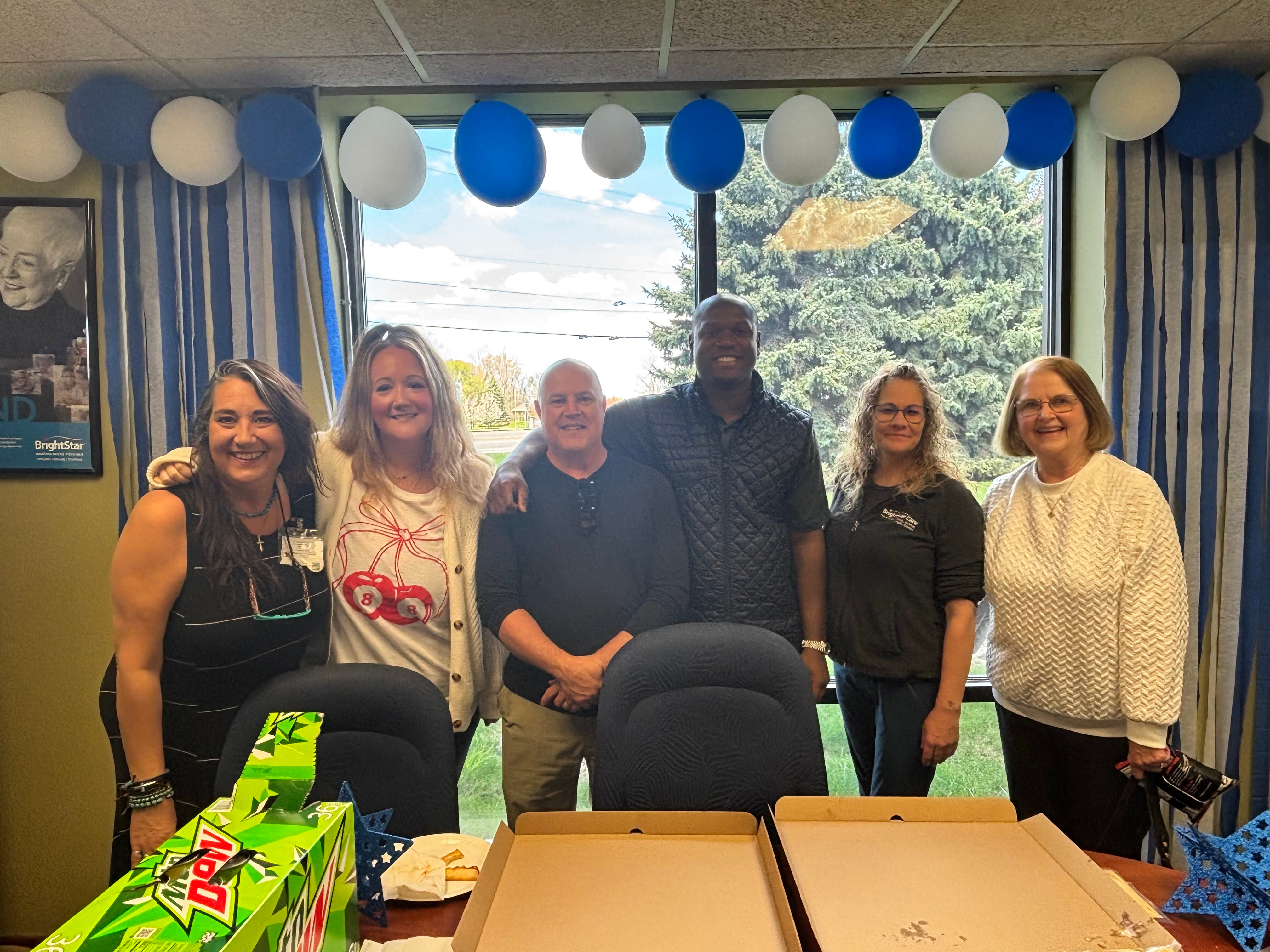























































%20-%20thumbnail.avif)





%20-%20thumbnail.avif)

%20-%20thumbnail.avif)

.avif)




%20-%20thumbnail.avif)












.avif)