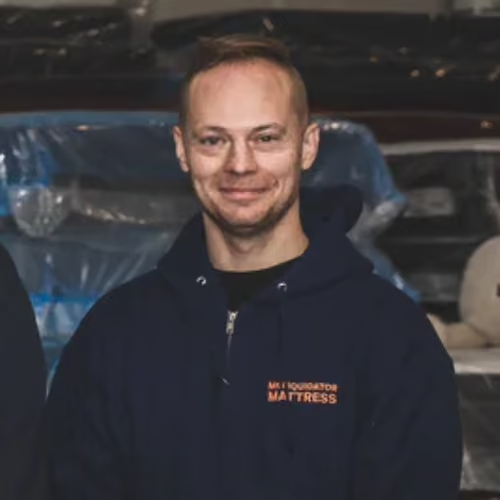
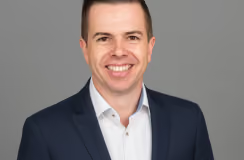
Host: We all know that retail businesses are best to avoid. But see if the business that today's guest acquired doesn't break the frame. Ken Ailson himself dismissed it at first, among other reasons, the store is called Mr. Liquidator. If you would have asked me if I would ever buy a business called Mr. Liquidator, says Ken, I probably would have been like, there's absolutely no way. But when he took a closer look, he found himself drawn to the almost $500,000 of SDE on nearly 2 million in revenue, the 700 five star reviews on Google, the 35,000 followers on Facebook, and the fact that this store was differentiated. Unlike your typical mattress store where you decide on a mattress, then have it delivered to your house later. Mr. Liquidator is a warehouse. Mattresses are wrapped in plastic in stacks sold at a deep discount, and customers can walk out the store with one rather than wait. And few employees make the whole operation work. It's a very simple but unique business with a strong local following. See what you think and whether you agree that buying a store can indeed make sense. Here's Ken Allison, owner of Mr. Liquidator. This Friday, Heather Anderson will host her monthly SBA in Lending Office hours. Heather is a prolific SBA loan broker, a name many of you recognize, and she's going to lay out the process of getting an SBA loan to buy a business step by step, stage by stage. There are so many moving pieces, as you know, to getting an SBA loan. Heather is going to show you how to fit them all together to successfully close your deal. That is this Friday, April 11th at noon Eastern. Register at the link in today's show notes or on the acquiring minds homepage. Acquiringminds co. Also, there's less than one month left before M&A Launchpad's spring show. M&A Launchpad is a one day event that brings together business buyers, owners, investors, panels on the entire cycle of acquisition entrepreneurship from acquiring and growing to exiting and investing. Walker Deibel, author of Buy Then Build is one of the keynotes and 30 other experts will be on hand sharing their expertise. M and A Launchpad is a single day Saturday, May 3rd in Houston. Get a $200 discount off your ticket with the code Acquiring minds. Go to malaunchpad.com and use the code acquiring minds all one word or use the link in the show notes. Welcome to Acquiring Minds, a podcast about buying businesses. My name is Will Smith. Acquiring an existing business is an awesome opportunity for many entrepreneurs and on this podcast I talk to the people who do it. Running, payroll, paying your bills, closing your books and producing financials. These are critical tasks every business owner must do or oversee. But spending time on them distracts you from the leadership in growth work you want to do. So let system 6 do it for you. Owned and led by a former Searcher, Chris Williams, System 6 is a leading outsourced finance team for hundreds of SMBs, including over 50 searcher acquired businesses. Chris, Tim and the System 6 team understand firsthand the challenges, the opportunities of jumping into a business as its new owner. So whether you own your business already or have one under LOI, talk to System 6 about how they can give you time back and improve your financial operations. Mention Acquiring Minds and they'll provide a free review of your books and financial ops, a $500 value. Check out system6.com, link in the show notes or email helloystems6.com Ken Elson, welcome to Acquiring Minds.
[4:30] Guest: Thanks for having me. Will excited to sit down and have a chat with you. Longtime listener. So yeah, this is great.
Host: Fantastic. Well, love to have listeners on. As you probably heard me say, so much fun. And you bought a mattress retailer, a mattress store, essentially a warehouse style store. You're sitting in it now. We're going to hear all about it. It's not the typical profile of business that folks in this audience would target. So we are eager to hear why you liked it. Start us off, Ken. What was it that led you to want to buy a business?
Guest: Yeah, I think that, you know, looking back on it now and listening to a lot of the other stories on the show, my story starts from a different angle, I guess I come from. When I was 18, I became a volunteer firefighter and, and you know, when I was younger I like really locked into the fact that I wanted to join the fire service and be a firefighter full time. And so I put all my, all my eggs in that basket and worked really hard. And when I was 22, I got hired as a firefighter full time in the Lower mainland here in Vancouver and started my career and I was off, off to the races and, and it was awesome. It's, you know, when you get, get hired as a firefighter, they definitely, you know, it is a bit of, you know, social club in a way and they, they definitely like to say that you've won the lottery and all these other things. Right. And because it is difficult to, to, to be hired. Yeah, that's right. Yeah. Yeah. There's usually hundreds of people, you know, applying for a couple jobs, so. Oh, so, so getting in young Was, was great. And so I started working and, and you know, just kind of building my own internal reputation around the fire hall. I loved every aspect of being a firefighter. Responding to emergencies and being counted on and just being in the action and being part of a team. Really love being part of a team. And, and as time went on, I quickly started to realize like, hey, you know, I guess I'm in a union and you know, there's, there's not really anywhere you can go in the, in the fire service, right? You just, you put in your time. It's all seniority based and you know, in Canada, at least in the United States, a bit different, where there is no merit to a promotion, generally speaking. And so I realized like, hey, if I want to improve my, my situation here, I, I might want to think about trying to do something else. I knew a guy who was in Canada and he left Canada to go to Orange county and he had actually started a soccer company. It's a franchise called Soccer Shots. And looking at that now, I was like, ah, yeah, you know what, that's kind of an interesting idea. I'll look at that. I think owning a business would be very rewarding. It'd be like just what a time. You could work hard, you could build it and you know, see where it goes. I didn't know really too much about business or anything like that. So I followed his journey for a little while on online and just talking to him and I knew that there was no Soccer Shots up in Canada. So one day one of my co workers, he used to sell cars and so but now he's a firefighter and he was a really good salesman and you know, I, I pitched the idea to him and he was, he was all in. So there we are, we're off to the races now. We kind of had a target. It was going to be the soccer business. Canada didn't have any franchises and we went through the process of, you know, bringing that franchise across the border into Canada, being the first Canadian franchisee. And.
[8:36] Host: And so you'd retired as a fireman?
Guest: No, sorry, we're still firefighters at this point. So we're doing, we're working at the fire hall, shift work and when we're not at the fire hall, we're working this business and we're, you know, when we got the franchise, we literally had, you know, a website and that's it. You know, you're responsible for going out and finding the business and building the program where, so you were going to
[9:03] Host: do it on the side while maintaining your full time roles as fire firefighters.
Guest: That's right. That's right. So yeah, we would work two days, two 10 hour days and then two 14 hour nights. So we would generally work the business during the day and then go to the fire hall at night and then, you know, so, but we both didn't have kids at the time, so it was definitely, you know, that work ethic within us to, to just work really hard and, and it was great. We ended up just building that program from the ground up. Learning along the way, obviously it being a franchise, you definitely have a lot of support with other franchisees. So that was kind of a nice way for me to kind of get my kind of feet wet a little bit on how to run a business, how to, you know, the different types of, and that business kind of was an interesting existing business because it was kind of like a negative cash flow. You're taking in money three months in advance of a service that you're going to provide, you know, down the line as registrations rolling. And so learning that kind of model was, was interesting as I would soon learn when Covet hit. And, and so I wasn't aware of that and, and yeah, so we ended up building that business. We, we scaled it to just like just under 5,000 kids in our 2019 programs throughout the year. Four full time employees, 40 coaches and
Host: then, and then Covid, which would be apparently fatal for a business like this, hits. What happens after Covid?
Guest: Yeah, so just before COVID actually our director of operations who was essentially running the day to day, we were kind of removed at this point from a lot of the day to day operations. We were only marginally involved in the business during the week. She had kind of pitched the idea like, hey, I have a friend. We're thinking, actually she kind of, she's smart, she like. I was thinking about going to open my own franchise in a different location, you know, unless you guys want to sell this business to me. And, and you know, my partner, great guy, we're still great friends. He, he was kind of going through some life changes and he immediately jumped on it and was like, I, I, I think I want to exit. And you know, it was like my bit of my baby as well and I felt really strongly connected to it. And I was like that I don't want to sell it. And so I tried to do everything I could to keep him on board. But then yeah, Covid came around and that threw everything off.
[12:08] Host: What happened with the COVID to this business?
Guest: Yeah, so Covid shut us down for a little bit, and we ended up. We ended up selling. We ended up going through with the sale the first two months of COVID So we exited the business to be kind of a management style buyout, but it was an all cash buyout up
Host: front and presumably not a great exit given.
Guest: No, I mean, we still exited for about three and a half times, which was pretty good because I. I was. I held out. I. I was the sticking point. I was willing to remain if. If they didn't kind of meet me at our number, and I would have brought on, you know, potentially a new partner. But then I looked at it with the stress of COVID and thought, you know what? I'm gonna exit. And I look at something else, because selling the business, I learned so much. You know, as they started to sift through all our financials and the way that we're running the business, you know, I learned a lot about. Wow. I definitely wouldn't make that mistake again. Right. And, Ken, they bought it for three,
Host: three and a half times.
Guest: Yeah.
Host: In the first couple months of COVID when the business is being positively just crushed, just decimated.
Guest: Yeah.
Host: But wow.
Guest: I mean. I mean, she was running the program, so she knew. She knew kind of probably all the mistakes that we were making, and she
Host: could see where she could add value immediately. Yeah.
Guest: And then her partner that was coming on, his family just made also another big exit out of optical company. And so they weren't overly worried about it. Okay.
Host: And this was the woman who said that was working for you, that said she want to start her own.
Guest: That's right. Okay.
Host: So you exit that business and. And then you've learned a lot. You learned from her what things you were doing operationally, incorrectly, or inefficiently. Then you also go through the process of a sale, so you learn a little something about transactions, and then you turn your attention to what.
Guest: And then it was full on. Like, as soon even before the business was sold, I started to, you know, try and find other businesses for sale. I knew that I wanted to get into another business, but I wasn't sure I had it in me to start something from scratch again. Yeah, that was a lot of work. So I just started to cruise these websites, and I had no idea that there was this little subculture of people who were actively looking for businesses as well. Right. And so I just started to look and I started to.
Host: I love that you. That you call us a subculture, Ken. I've never heard of us characterized that way, but I Guess we are.
[15:00] Guest: Yeah.
Host: Carry on.
Guest: Yeah. And so I just started looking at businesses. I, I had no idea what I was doing. I knew that, you know, I did have some rapport with people when I inquired because I had run a business prior.
Host: Yeah.
Guest: That didn't, that didn't mean I knew what I was doing when it came to, you know, acquiring a business or.
Host: And you're still a fire. Full time fireman.
Guest: Still a full time firefighter. Yep, yep, firefighter.
Host: And this. So in your vision for this next acquisition, should it happen, is again that you'll remain a full time firefighter or that. Okay. All right. So you're really doing the own a small business and put in an operator model here.
Guest: That's right, yeah.
Host: What do the following acquiring minds guests all have in common? Doug Johns, Morley Desai, Tim Erickson, Chirag Shah, Shane Ursum. They all went through the acquisition lap the accelerator in community for people serious about buying a business. But they represent just a sliver of the lab success stories. The number of deals across the lab's cohorts now stands at over 120, with over $300 million in aggregate transaction value. The acquisition lab was founded by Walker Deibel, author of Buy Then Build, the book that introduced so many of you to the very idea of buying a business. The lab offers a month long, intensive, almost daily Q and A sessions with advisors, live deal reviews with Walker, deal team introductions, and an active community of serious searchers. Check out acquisitionlab.com, link in the notes or email. The lab's co founder, Chelsea Wood. Chelseauythenbuild.com
Guest: met my new partner now, his name's Eric, at the fire hall who we're working together for multiple years. And we were talking and he was like, I'd love to partner with you on your next. On your next go. So we started working together and we just started to reach out to people and we started to send emails about listings and we started just kind of really learning as we started to interact with brokers. I think that we were very picky at first and maybe a little bit unsure about some of the risks. So even if we saw good business, we probably talked ourselves out of it. That probably caused a little bit of frustration in the broker community, you know, because Vancouver, we're really only looking at one area, generally speaking, and that's the greater Vancouver area. But we still tried to maintain a lot of good relationships with the brokers that we were talking with. But we also knew that a lot of the good businesses for sale would be businesses that potentially aren't flowing through brokers. Right.
[18:02] Host: Yeah.
Guest: Or maybe get hit a little bit before.
Host: And were you implying, Ken, that you annoyed some brokers, you were tire kicking?
Guest: Yeah, I think that like, if you look at it, we sold in 2020 and we acquired our new business in 2024. So that's a four year search. So that's, that's quite a few, there's quite a few businesses that we ended up looking at. And while I, I would hate to categorize it as tire kicking, I think that potentially, you know, there was, we were looking at everything we were looking at.
Host: And, and do you think that you, you also seem to imply that you were actually too conservative, that you were looking at risks in some of these businesses as insurmountable, but with, in retrospect, you feel that maybe you were being too conservative? Is that, Did I hear that?
Guest: Yeah, I think so. I think that we looked at it where we were really looking for something that was going to be, that we wanted it to be perfect, where we really needed to, you know, identify exactly some of the things that would be an absolute no go and then bend on a couple of other issues. And, and I think that we lost out on a couple good businesses because we were just too conservative or too hard headed when it came to negotiating with the brokers. You know, there was too much.
Host: The business that you found, the mattress retailer, was it, did you like it because you learned finally to relax your standards a little bit or was it in fact the perfect business? And it, it was the, the first one in four years that met your criteria?
Guest: Yeah, no, it wasn't the first one. So we had actually had some accepted offers on some businesses prior, but this business that we ended up buying, one of the main things was, was the, the ease in which it operates. Coming from a service business with 5,000 kids in your program, that's a lot of, you know, it's a lot of customer service, you know, and, and, and so I knew that. And the ease at which this business operates is on a totally, you know, different level. It's, it's here about it.
Host: Let's hear that sounds like one feature that you liked, but give us the big picture of, of the business and then we'll drill into the pros and cons.
Guest: Yeah. So the business is called Mr. Liquidator Mattress.
Host: Mr. Liquidator.
Guest: Mr. Liquidator. And I think if you would have asked me, you know, in February 2024, before we got the heads up on this business, if I would ever buy a business called Mr. Liquidator. I probably would have been like, there's absolutely no way. But when we, when we got the heads up on it, it was through a broker who was just about to list it and he knew our situation and he gave us the first look. And it's, it's a, it's a, it's a business that sells mattresses and bedding. One retail location, brick and mortar. And it has 35,000 followers on Facebook for some reason. Has, like.
[21:33] Host: Do you think those are legit followers?
Guest: Yeah, they are, they are. We can do, We've done, we've, we've, we've kind of did a quick audit on it and the previous owner did a lot of giveaways and people love, people love that stuff. Right. And so he built a very strong kind of social media presence. And, and I can get into that a little bit later. He, he spent essentially every dollar marketing in Facebook and so hundreds of thousands of dollars for this one location has been invested into Facebook. And, and it had just, it had about 700 five star reviews on Google. And, and when I saw that, I was like, this is something I can, I can work with. It had, you know, one manager that came with the business and manager's awesome. He was staying, he's been selling mattresses and been in, in the business for eight years. Super stable.
Host: And were other employees coming? Was that the only employee coming with the business or.
Guest: There was one laborer as well who, who works in the warehouse and he was going to come with the business. The owner's son worked in the business and they were, you know, paying him like, you know, $90,000 to work part time in the business. So that was, that was an adjustment in the financials. Um, and, and, and give us a
Host: picture of the business. Ken, this is not your, for the U.S. audience, your kind of mattress firm in a strip mall. No, you're sitting in it right in the facility right now. It's, it's got a different form factor, if you will, than a typical retail experience. What's. Give us a visual.
Guest: Yeah, so it's in a warehouse. It's in a newer warehouse in front facing, so right on the street. Nice windows, newer looking warehouse. But yeah, we are different. So it's a way that we keep our costs down and it's part of the main reason why the model works. We, we also, we sell brand new mattresses. So nothing's used, nothing secondhand or anything like that. It's a one, you know, notion that people think that we're selling Used or damaged goods. So everything's brand new. Um, but when you come into our showroom, you'll notice that all the mattresses have still the plastic bags on them. So we do not remove the plastic bags, but we do lay them down on bed frames and we have bedding items. We exclusively sell Serta and Beautyrest mattresses. They are essentially like the second largest manufacturer in North America. And we have, because we only sell them and our own brand, which is a key part of the business, but a lower end brand, we get a special kind of wholesale agreement with Serta and Beauty Rust, and we're their largest dealer essentially in British Columbia, which, you know, gives us a lot of power.
[24:41] Host: And Ken, a couple follow ups there. The. Your own brand. You have your own brand of mattress. So obviously white labeled. You're not manufacturing mattresses. Yeah, yeah, the Mr. Liquidator brand of mattress.
Guest: Yeah, it's called Rockwell. So but there's been no branding done to it. But the previous owner had. Had sourced from China mattress in a box. And, you know, it comes in at a low price point. And, uh, so we bring in containers, we import containers and mattresses and they're in boxes and people love them and we sell so many of them. And so we'll bring in, you know, 400 at a time, that'll last us, you know, less than three months type of thing. And then, you know, in four weeks, it's time to re up our ordering process and we get another container rolling and that's just sold out of this one. A brick and mortar location. So.
Host: So these Rockwell mattresses exist nowhere else? They're not?
Guest: No.
Host: Just. Just there.
Guest: Just here.
Host: And when you said that you don't have all of the mattresses that you sell remain in the plastic bag, unlike the typical mattress store experience where all the mattresses are on the bed frames and you can. People are sitting there lying on beds. Why is not doing that such a competitive advantage for you?
Guest: Well, I think lends itself to people coming in and getting excited. They see stacks of mattresses, they see plastic all over everything. And they want. They want a deal. Right. They want to walk out knowing that they just got a smoking seal on a mattress.
Host: Interesting.
Guest: That is a pain point for a lot of people. I don't think the average consumer knows the differences between, you know, this mattress and that mattress.
Host: Right.
Guest: They treat it as a commodity. Right. It really needs to be treated with, you know, a little bit more respect because we spend, you know, a third of our life on it. But, you know, most people they don't. They don't know. They don't care. It's just about the feel. And you put bed sheets on it anyways. And so if we have that one mattress still in the plastic bag on the floor, people don't need to wait to open order it in. And so that's another advantage because we hold stock. We hold about 70,000, $80,000 worth of certa Beauty rest stock at any given time, sometimes up to 100,000 or maybe even a little bit more, depending on the season. So people can come in, they can grab their mattress, and they can drive home with it.
[27:20] Host: And that's not the experience at a traditional mattress store.
Guest: You.
Host: You pick the one you like, then you put in an order, and then they ship it or they deliver it, I guess. Been so long, not sure I've ever bought a mattress. I can't recall. Yes, at a traditional mattress store. Okay.
Guest: Yeah.
Host: So this is. This is. This is so very interesting. It's all about the positioning of the experience. So.
Guest: That's right.
Host: Consumers come in, you're communicating to them that they're getting a deal and instant gratification. They can walk out with a mattress.
Guest: That's right, yeah.
Host: And do you get the impression that they've shopped around already, that they've gone to your competition to lie on the mattress, identify the sort of product that they like, and then they come to you to buy it? You sort of the brick and mortar Amazon, you know, people go into the world and decide what they want, then they actually go to Amazon to buy the thing.
Guest: That's right. That's right. Totally. Yeah. I think a little bit of that. The mattress industry as a whole, as I learned, because I knew nothing about mattresses before buying this business, you know, it has its, you know, little. Little bit of, you know, corrupt behavior. And that. That include. That includes, you know, every different, you know, big mattress ret their own name on a beautyrest mattress that would be, you know, called, let's just say just any given name. And then an independent retailer will take that mattress. At least in Canada, it'll be the same mattress, but it'll have a different, you know, name to it. So people can't technically shop around as much, so you can't come in and. And find the exact same mattress, you know, in my store as you could in one of the big brick stores here, which would country Canada. And. And so they. They do that specifically so you can't shop around. But what we can do is we can, you know, let them feel it is. People come in all the time and they've, you know, thrown our deposit down at one of the big retailers and they come in, taking a look at, and they're like, why would I, you know, spend $3,500 on this mattress if I can buy it here for 1500 and take it home tonight? So.
Host: Wow. So you're so 60%, 70% cheaper on
Guest: some of the mattresses. Yeah, on the higher end ones, yeah.
Host: Wow.
Guest: And, and that's because our model, our model, it works. We have a low kind of workforce, obviously with our manager. We have hired a full time marketing person who works in the business and then me and my partner and right now, just as we kind of learned the industry and, and, and we're in a warehouse, so our, our lease is, you know, substantially less. We do not do something called the comfort guarantee, which is very popular in the mattress industry where it's, you know, if you take a mattress home and you sleep on it for 30 nights and then you decide that you don't want it anymore, then you can bring it back to the store and, you know, get another mattress that, that hurts that retailer. Right. So they have to account that in, in their margins that they're selling. We don't offer that. And that's another way that we can keep our, our, our prices low for people. And you know, we, we, we tout ourselves on being, you know, the one of the lowest price for a brand new and name brand with full warranty mattress. And that's the good place to be. Right. You don't want to be the second lowest price guy. So,
[30:57] Host: and Ken, how much. So to the numbers of the business, how much revenue does a business like this do? I'm so, so curious. I mean.
Guest: Yeah.
Host: How many millions of dollars of mattresses does this business sell a year?
Guest: Yeah. So in 29, sorry, 2024, business sold $1.9 million worth of mattresses out of the one retail location which is, you know, I mean, with all the small mattresses that we sell, 2500 mattresses or something like that, which is quite, quite a few.
Host: 500 mattresses. So that's what, seven a day? Something like that. So. Yeah. Is my math right on that?
Guest: Yeah, probably. Yep. Yep. Okay. Yeah.
Host: So, and, and margins, can you share other numbers around the business? So 1.9 last year. So what are the, what are margins and profitability look like?
Guest: Yeah. So for if we're talking about Serta and Beautyrest, usually, you know, our Target is around 1.7 when we sell the Mattress. It's one thing I had no idea that existed because I would never think to do this. But you know, there is a certain level of haggling that happens in our store. So people come in, they see the price and what's your best deal type of thing. Right. And so we will, you know, bend on a deal by deal basis depending on, you know, the number of mattresses that they want to buy and what level of mattress. And so yeah, profitability. When we bought the business, we bought the business on adjusted numbers of being, you know, just south $500,000 of SDE
Host: and so, so about 25% net margins.
Guest: Yeah, roughly. Just, just a little bit under 25%. Our operating expenses are, you know, with full time marketing member plus, you know, $8,000 a month marketing, we're looking at like, you know, our operating expenses are like $40,000 a month. So which is not bad. You know, like my soccer business sometimes some months, depending on, you know, how many coaches, how many programs we're running, we're doing, you know, $90,000 in expenses. So $40,000, which is pretty steady and pretty good, easy to plan, is, is kind of easy compared to that. So.
[33:37] Host: Yeah, yeah, yeah, yeah. Well, it's sure as a simple business, it's just a few employees, a big space and mattresses stacked to the ceiling and people come in and buy them.
Guest: That's right.
Host: Your manager, so he's also director of operations, salesman, you know, selling on the floor, presumably. He's everything.
Guest: Yeah, I mean we've taken that, we've taken a lot off his plate. We knew that we needed him to stay, as we learned. So he, you know, we bumped his pay. We made sure he was happy. There's bonuses that are involved in selling certain levels of mattresses through Serta and Beautyrest that we don't pay like the, the manufacturer will pay that. And you know, when, if I'm on the floor and I'm selling mattresses, like, you know, the staff know that I'll pass that bonus on to them. Like I'm not going to take that bonus for myself. And you know, those things really help in terms of getting buy in from the employees and them knowing that, you know, that you're building a strong kind of team environment. And he really is responsible for selling and running the day to day when he's here. He really is kind of the perfect employee. He is married, him and his wife aren't having any children. He works weekends. He takes Tuesday and Wednesday off. So he's working Thursday, Friday Saturday, Sunday, which you know are the, are the busiest days.
Host: And and Ken, he, I mean he really is a key man here.
Guest: Yep.
Host: How did you get comfortable with that risk or how did. Maybe you've already explained how you de. Risked that. You basically I assume you talked to him before the transaction closed or not necessarily and you bumped his pay and you just kind of doing what you can to show how valuable he is and you know, sharing more value of the businesses fruits with him still. It's like if he walks, the business comes to a grinding halt.
Guest: Yeah. If, if he walks then, then that would not be. Not be good. It's definitely in our, in our plans to you know, develop that insulation in between Eric and myself and the day to day operations. Know in the short term I love being at the store and I'm quite often here anyways working on it as I need to be because I need to learn the industry inside and out. So I look at this as a full time job.
[36:25] Host: I should say that it's 7am in the morning for you right now and there you are. Yeah.
Guest: Yeah. And I'll be here all day. And, and, and yeah. So we just kind of. I never know what's going to happen. You never know what's going to happen. But I feel very comfortable that he is, he is happy where he is and, and that you know, we are. That's one of my missions is like you know, building such a strong team and strong culture and that's what I come from. That's what I know. And there is some risk there. But I know that you know, we would be able to go out and find someone and build, build another team. Yeah. If done it in the past, it's you know, part of my entire identity.
Host: That's a great answer, Ken. That and it is kind of what you want. You know, he's a model employee.
Guest: Yeah.
Host: As you said he, he does so much but he's also not completely irreplaceable. For one thing what he's, what he's doing is not so super technical or specialized that you know, it's like a. Hiring a field technician in, in some of the trades businesses. It's like they need years of experience doing the thing.
Guest: That's right.
Host: This is not that. So, so that's a great point and
Guest: that's one of the reasons why I, why we like this business so much. Getting the wholesale contracts with the big re. With the big manufacturers is very difficult. So there's a barrier there for, for people. While it doesn't Stop people from selling mattresses, you know, everywhere, you know, out of the garage and stuff. Getting a wholesale contract with one of the big manufacturers was important. And the fact that you didn't need any other, you know, big skills. We looked at, you know, like the classic H Vac and electrician. And my partner Eric, he's very, he's very handy. But then, you know, like the skilled labor and I just had come from, you know, a business that was so heavy on, on the workforce and the performance of that workforce, that.
Host: Meaning soccer coaches.
Guest: Soccer coaches. And when you're dealing with, you know, a program that was premium and that parents are there watching and, you know, it was just in my DNA that it needed to be run as great as it possibly could and that everyone needed to be happy. You relied on the coach. They were your, they were entire, your entire program. Like, if you got a bad coach, then kids are gonna hate it and they're not gonna come and they're gonna tell their parents and I mean, they're friends. And, and, and so while you did
[39:14] Host: that, well, the pressure was not a, the pressure of. That was a feature that you wanted to avoid in your next business.
Guest: That's right.
Host: And Ken, so, so just again, it's the manager, it's your warehouse person. It's now a digital marketer. That's a new expense.
Guest: Yeah.
Host: Or they had a full time marketer before.
Guest: No. So we, we realized that we needed to. Obviously marketing is the lifeblood of, you know, their, the business itself. You know, we stopped spending money on marketing then, you know, people are going to stop. Right. You know, coming in as frequently as they do. So, you know, me and my partner, obviously we're both firefighters. We don't have any marketing degrees or anything like that. I've done a little bit through Facebook, but we wanted to hire someone who knew what they were doing. So we hired someone young that we could work with, that we can mold and you know, someone with some fresh ideas. And so we did that in the first couple of months. That was one of the first kind of main big things. We also hired a fractional CFO as well.
Host: Okay. So the staff. Staff is now manager, warehouse guy, marketer, fractional cfo. And then the two of you and you are almost basically full time in the business and your partner as well.
Guest: Yeah, my partner with just the geographical region where the business is located. I live about 20 minutes away from it, which was awesome. And my partner lives in kind of the north Vancouver area, which is about an hour and 15 minute drive from where we are depending on traffic, which is notoriously horrific here.
Host: So he's in the business.
Guest: Less so he is in the business. Business at home.
Host: Okay.
Guest: Eric does a lot of our, you know, all our process building or all our financials dealing with all the, dealing with the CFO and all the, all the back end stuff where I'm kind of more in the business here working and trying to build the business through relationships and yeah, a little bit more of that, that style.
Host: Looking for an SBA loan to buy a business. Then meet Pioneer Capital Advisory, your team for getting an SBA 7A loan quickly and at great terms. The team at Pioneer has closed 81 SBA loans in just the last two and a half years, with an average close time well under the industry standard. Founder Matthias Smith and general manager Valerie stash both have 10 years of SBA experience and know the process cold. There are three analysts at Pioneer who build you a lending presentation that speaks the language of the bank's underwriters and gets them to. Yes, two account managers to guide you from underwriting to close as fast and smoothly as possible, and two sales associates ready to walk you through the Pioneer Capital advisory process. That's nine people at Pioneer, a real team to get you where you're trying to go. New owner of a business. Go to pioneerCapitalAdvisory.com or click the link in the notes. And you guys are not paying yourselves.
[42:47] Guest: We're not paying ourselves right now. No, we haven't, we haven't taken a cent. That was one of the big changes is like my previous business, we started to roll a lot of personal expenses through the business because, because we had our salaries and so we were like, well, let's just roll some. And that was. Looking back on that right now, that was a bad idea. So we're not going to do that again?
Host: No. Why was that a bad idea?
Guest: I think it just as we. Well, we weren't per. We weren't per. We never set up our previous business to sell. You know, it wasn't in. We didn't really have an exit plan. It just kind of fell in our lap and covet kind of pushed it across the line. So we really had a lot of personal expenses that were sometimes hard to justify as they were looking through our numbers and that kind of hurt our overall evaluation. And, and so you couldn't, you couldn't argue.
Host: Those were just add backs.
Guest: We tried. We tried. It just made it a little bit more complicated. And so as, as we grow, you know, I'll Just be much more mindful of that going forward. And you know, we did see a lot of businesses for sale where there were a lot of add backs. And, and as a buyer, you're kind of licking your chops a little bit there, like, hey, you know, I could maybe poke some holes in this and try and devalue business a little bit. And so if you, you know, as we look to scale our business here and develop more locations, we want to keep it as clean as possible with an exit in mind for that specific reason.
Host: Well, that's great. That's a, that's a really good and interesting learning. I'm not sure I've heard.
Guest: Yeah.
Host: That the, and now people who now are owners of businesses when they think about positioning the business for sale.
Guest: Yeah.
Host: The more personal expenses you have going through, the more opportunity. And you can't just tell yourself, well, I'll just make it an add back when the time comes to sell that every single one of those add backs is, is opening yourself up to the buyer, negotiating you down because they can test it. And so it just, it chips away. You know, you don't want to go in with this stack of things that can be chipped away at by the, by the buyer.
Guest: Exactly. Yeah. Yeah. I think that, you know, the, the clean numbers don't lie and, and that's what adds value. If there's a lot of, you know, little nuance, things that can be argued against, then you know, they're going to get you somewhere with devaluing your business even though, you know that, you know, hey, it's not like that. But yeah, you know, see, it's got to be, in my opinion, it's the cleaner the better. And I learned that through the, the previous sale. And, and so that's our plan. And, and with that being said, you know, I never thought about an exit with my first business. Like, didn't even think of it. I had no exit plan whatsoever. And so, you know, we've kind of come into this business with a little bit of an idea on, on different ways that we can scale it and then, you know, when we do that, is that a time when we want to exit? We want to be, we want to be prepared for that. So. Yeah, yeah, yeah.
[45:56] Host: Wise, wise. And it's, it's the whole built to sell. Don't know if you've read the book, but it's a concept that you always want to be building your business so that it's as saleable as possible. That's not because you necessarily intend to sell, you may, you may not. But because it is, you're creating enterprise value. The more attractive you're making it to a theoretical buyer and you might just find that you want to hold on to it anyway. So it's the ultimate optionality, the more saleable your business is.
Guest: That's right, yeah.
Host: Ken, speaking of valuation, so what was the price that you paid for this? 500,000 SDE, roughly. Business.
Guest: Yeah. So we ended up buying this business for $815,000. But the broker came to us and he said, I'll, I'll let you guys take a look at this first. Whether that's truthful or not, I don't know. I took it as truthful. I had no reason not to believe him. I hadn't seen it up on any, you know, websites yet or any. And he gave us kind of a two month heads up like, hey, I'm working on this. And he said it was going to be listed for 845,000. And so that did cause, you know, some alarm bells to go off for me because it's a pretty, it's a low multiple and what's wrong with it, Right? Yeah, exactly. And, and so we, we got a look and I looked at it right away and, and it looked, it looked, looked great. And so he kind of gave me the heads up like, hey, if you, this guy, you know, the seller needs to exit pretty quick for personal reasons, you know, I might be able to get this deal across if you throw, you know, something around this ballpark. And so we did that. We kind of negotiated back and forth a little bit on the inventory value that was going to be above and beyond that price. There's going to be $50,000 in inventory. And then anything more, we would have to adjust that and pay the balance. So we, we could have paid 815 and just got $50,000 worth of inventory. But it was important to us for the seller not to change how he was operating the business during the process of the sale. So we, you know, we ended up with, you know, an extra $50,000 in inventory or something like that. But we would had to purchase that anyways. And I wanted to, you know, me and Eric off to a good start. We didn't want to be playing catch up right away.
[48:27] Host: So why do you call that an extra $50,000 of inventory that, you know, a lot of people will consider inventory just another, another key part of the business that it takes to function. So inventory really should be considered part of the business price. And so you bought A functioning business that was selling mattresses the day you got there for 815 plus 50. So 865 sort of thing.
Guest: Yeah. I think that it was because the broker was trying to do his best to, you know, push this deal across the line. I think that he could. He could get the seller to agree on something like this, but the seller would have been, you know, not every seller is. Is versed in selling a business. Like, not. Not everyone knows that, hey, all your inventory needs, you know, some sellers might be, you know, the seller actually had, you know, an accounting firm do an appraisal of the business, and they came back at like 1.5 million or something He. He had mentioned. But there's no one in their right mind that would have probably bought the business for that amount, which is why he didn't list through the accountant. And he knew that, you know, it really was the wholesale agreement and all the reviews and the Facebook following in the. In the operations. But asides from that, you know, we were coming into a business that needed quite a bit of work. So it's not all. It's not all roses and. And great. Obviously there was some serious shortcomings.
Host: Okay, well, tell us what those were, because I'm hearing you say that you guys bought it for a 15 or 8. 68. 65, let's say with the inventory. Yeah. Which was a great price. But you're also saying that one and a half million, which is more of like a 3x would have been way too high. So, so, so, so why. Why was. What were the weaknesses that make you feel like it wasn't. Definitely wasn't worth 1.5. Even though you did. Do you feel like it was also worth more than you paid?
Guest: Yeah, I think that one of the biggest ones was there was no online presence whatsoever. And so to, you know, aside from the Google listing, aside from Facebook fans. Yeah, but, you know, in today's world, especially in retail, you should be, you know, visible to everyone by a click of, you know, a button. And he had a website, and it was. It was very bad. It was a landing page. It had a link to MapQuest to find the business, which didn't work. And that's what. That's what we're talking about. So, like, you know, it was almost a disservice to have a website like that up. It made the business look even worse. And, and so that. That's obviously one thing. It had no inventory management control. It had no.
[51:28] Host: Although you got it. You know, Ken, that website point is almost Like a pro rather more than a con. It's almost like I pay extra for that because it's such an easy lever to pull to add immediate value. But I take. But it's kind of like that's. That's the sort of thing we look for and love when we see in a business.
Guest: That's right. Yeah. And I loved it too. You know, I thought, like, hey, this is great. But, you know, when you. When we took a deeper look, there was no, you know, there's no processes. There's no his. You know, there's no policies in place for the customers to come. And, you know, so I felt like we were exposed a little bit from previous customers. You know, if they came back and. And demanded something and. And yet just.
Host: Just no professionalization. I mean, it was just slinging mattresses from a warehouse.
Guest: That's right. And this previous seller, I mean, that he was. Mr. Liquidator, started as a true liquidation center. It was a huge. It was a business that was four times the size of. Of the mattress business. Right. He used to sell furniture, shoes, everything. He was actually on a TV show, which. Which definitely helped the exposure of the business, but so it actually shrunk in size. I guess as he. As Covid hit, he changed the business model just to start dealing with mattresses. And that was for personal reasons, I think. He didn't get into, like, all the exact personal reasons with us, but he was. He was honest and forthcoming as. As a seller could be. I felt. I was very nervous when the transition was happening because I didn't fully trust him. But, you know, as working with him in the weeks after, you know, I grew to develop that trust. But yeah, so Mr. Liquidator, you know, they were lot. Lots of cash deals, lots of. Lots of things that were potentially, you know, skeletons in the closet. And. And then just some of his practices around customer service that we've had to run into with previous customers who have been unhappy. Really easy fixes. If you take the time to listen to people and to connect with them, we've been managed to remedy those and turn those people.
[54:02] Host: What is our unhappy customers that want a refund or something. And he would say no, and you've said yes sort of thing.
Guest: Yeah, yeah. And trying to make it right by them. Yeah, just people who, you know, we've had Facebook posts go out, you know, hey, like, we're having a sale. Come on back. And then people like, don't. Don't buy from these guys. And they're responding to, like, everyone who's left A comment which is a bad place to be. Right. Like, so they're promote, they're actively promoting against you. So we've had that twice. Both times get a hold of people right away, explain, hey, we're new, new owners. We've had both the customers in to the store, remedy their problem, which has been like a really quick fix in their house, you know, fixing their issue and, and just turning them into promoters and the next time we're posting there, you know, leaving positive comments. So it just like things where he was probably worn out.
Host: So he was worn out. That's why he wasn't proactive in addressing them. And what do you, what did you mean Ken, by saying you didn't fully trust him? I heard you say, yeah, cash. I heard you say, didn't fully trust him. Say more.
Guest: Yeah. So the previous owner, he was Mr. Liquidator, he was Mr. Dealmaker. Right. Like I think that anyone who entered the store and bought something when they were dealing with him left thinking they had received the best deal of their life. Right. Where in actual fact, in actual fact they didn't really probably receive that great of a deal. Kind of over inflation of numbers with a big discount in those types of practices. Now we've since stopped that and, and so, and some of the first initial dealings in the store, we had some, you know, some, some bad people come into the store who are, you know, connected with, with, with crime, crime groups and, and, and really. And know the, know the previous owner. Yeah. And so he was kind of dealing with them.
Host: But wait, but they like he knew them because they were just his customers or worse or.
Guest: Yeah, no, I, I mean I have nothing to believe that, you know, he was involved with them day to day or anything like that, but customers, you know, very comfortable talking to people like that. And so for me that was like very eye opening. I was, you know, me and my partner Eric were like, holy smokes, like seeing you know, people whip out, you know, massive wads of $100 bills, you know, or you're like, you're not sure where this money's come from. Right. Paying cash for seven mattresses at a time. And, and so, so there's you know, that kind of like, so with, with the business, you know, he was a bit of a keen man as well. And I think he still remains that as he was so connected to so many different people and suppliers and all over the world. You tell me stories of flying on airplanes to Malaysia and going into warehouses that were filled with furniture and just buying containers and bringing Them importing them into Canada and liquidating them. Right. That. That was his thing. And he enriched himself very, very much and made a very, very big business for himself. And then during COVID he, you know, scaled that back and, and, you know,
[57:51] Host: and why did he narrow down on mattresses and bedding?
Guest: It was just going to be easier. It was going to be easier for him as he got older. Dealing with mattresses, much easier than dealing with furniture. Furniture you're dealing with, you know, a million skus. Right. Constantly ever changing. Quality is always, always an issue. Ordering and maintaining inventory, just a very much, very complex in terms of like the. The retail world when you need a much larger space, too. So he downsized his space to the space that we're in now, which is, you know, a third of the size of the warehouse that he was in before. Lower staff.
Host: Yeah, yeah, yeah. It's simpler. It seems much more manageable. Cleaner business, easier to inventory to manage.
Guest: That's right, Ken.
Host: But let's circle back to your gut. You know, waving a yellow or red flag about. About the seller, because this is something that we hear time and again is kind of. Kind of a 10, one of the 10 commandments of buying a business. If you. If you don't feel like you could fully trust the seller, you should walk because it's just. It's too much risk. Your gut is probably right. And if they're dishonest in one area, there's probably dishonesty sort of rife throughout the organization.
Guest: Yeah.
Host: Why did you choose to ignore your gut on this?
Guest: I think we went through with it for a couple of reasons. We knew. We met the. We met the manufacturer before the deal. Right. So we weren't just taking. Before the deal closed. So we weren't just taking his word that, you know, he had this agreement with Certus, Simmons and Beautyrest, our. Our main supplier. So we knew that that was solid and Meta met the rep. We had to get the blessing. So I knew that that was solid, which was one of the big pieces. Then that turned to the financials. He, the broker had made essentially the. The seller before he listed the business to get like review engagement, which is a step up on just a notice to reader your financials done. And that lends more credibility to his numbers that he's presenting us. So we felt confident talking with our lawyers and with our accountants. Our account, our. The accountants that we use for the due diligence actually are from the same office as his accountants. So we knew that he was using legitimate accountants and that. That everything was kind of above board. I think that if you look at it retrospectively, he was probably underrepresenting the business size because he potentially was doing cash deals. And so there was actually more. More sales in there and potentially better margins because he probably would just write off the. The stock and then sell it for cash. Right. And so that would hurt his. His overall gross profit. So. So we felt confident that we knew that, like, hey, he's, he's. And he's, you know, built this business and done really well, but the same time, we can bring our own, you know, community with us and we can establish our own. Just because he's running it this way doesn't mean that we need to. To run it the exact same way. We knew the. The reviews were real and that, you know, that he was buying the. Buying the, you know, set amount of inventory through Certa and Simmons. So we. We could see all that. And, and so we knew. We knew it was going to, you know, it was a little bit. Yeah, it was a little. Little tough, for sure. I was definitely stressed, but I knew that, you know, because we had those main pieces in. In line, and I knew that I could count on myself and I could count on Eric and that, you know, we're smart. We can. We can battle and we can. We can make it successful if we work hard, we do the right thing enough times, people find out, and we just. Yeah. Have some faith. So.
[1:02:23] Host: Well, well, it's interesting, Ken, because it turns out your gut was. Was right. You think? I mean, some of the. Some of the sellers behavior, in fact, the shadiness, in fact, was there. So it's not that your gut was misleading you. Your gut was right. Yep. But so too was your sort of rationality that was like, we can work around this or work with this or minimize this as. As new owners. I learned a great. A great phrase at the Mite ETA conference the other week by Badge Stone, which was, you can't structure around dishonesty or you can't structure around integrity. Point is, if there's. If there's an integrity issue in a transaction, optimistic buyers will often think, well, I'll just. I'll just mitigate that risk by structuring around it. I'll put in protections.
[1:03:14] Guest: I'll.
Host: And it's. Wiser heads will say, just walk. But in this case, it sounds like you. You plowed ahead. You thought through how you would mitigate this risk, and so far, you've indeed been able to.
Guest: Yeah, that's right. And I knew that we were like our, you know, our debt service was going to be comfortable for me because. Because of our multiple and because of the type of cash flow that it was spitting out, I was, you know, so we rationalized it a little bit like that. If this was like a four times or something, then I probably wouldn't have done it. So we. We just kind of took all those pieces and we kind of formed, you know, our overall opinion and, you know, looked within ourselves and thought like, is this, you know, is this risk profile something that we are willing to do? And the answer was yes. So we went through with it. Yeah.
Host: Yeah. And we. We still have a little bit to go and kind of a big topic to hit. But I. So I want to start closing, though, on just the business itself.
Guest: Yep.
Host: One more question on risk, and then I want to hear how you structured the deal.
Guest: Yep.
Host: Supplier, Supplier, risk. So while that is an asset of the business, this really. These wholesale relationships you have with Serta sort of Beautyrest is the same company.
Guest: Yeah, yeah, yeah.
Host: Okay.
Guest: Yeah. So this.
Host: This. This relationship you have with sort of beauty rest is an asset. It's also a vulnerability because if you lose that wholesale contract, that's. That is your business, really. So how did you think about that?
Guest: One thing I realized is, like, the average consumer, you know, the average buyer doesn't really want to come in and buy a specific brand. Right. Because we are so busy and we are, you know, I think it's because of our reviews and our reputation and, you know, all the word of mouth that people come in and it's. We sell certa and beauty rest here, but certain beauty rest don't technically do any marketing in Canada, not like in the States. They're totally different. The way that the businesses operate, the manufacturers. And so it just so happens that we sell these mattresses and they're great, and I really love our relationship, but at the same time, I think that, you know, if our relationship was to sour with Serta and Simmons and Beautyrest, that we would have reps from every other mattress brand in here wanting floor space. Because we've already. We've already been approached by multiple ones. And within the rep world of the brands, there's a certain level of respect. And so once our rep retires, because he's kind of getting to that age, he's kind of already giving me the heads up, like, hey, you know, the vultures will be coming. They'll be coming in. They'll be trying to, you know, to get their product in our showroom. Because the retailers in Canada really run the manufacturers. It's the way the. It's the way everything works where in the United States, the manufacturers control the retailers. So, so, so with that being said, you know, that kind of has lowered my, my expectation of, you know, the,
[1:06:38] Host: that, that your sense of vulnerability.
Guest: Yeah. And while it is a huge bonus to, to have that and not everyone can get, you know, Certa Beauty rest wholesale agreement and not as strong as ours. So because we get, you know, some special terms because we only carry them, which is kind of, you know, mattress firm in the States. There they just went through a huge acquisition from Tempur Sealy, which is the biggest, you know, manufacturer in the United States there. And you're going to see mattress firm load up on Tempur Sealy products. Right. Where 75 of their floor is going to be temper Sealy. So, you know, the model that we're running with just one brand might be more common than not. And, you know, I like to think that we're out ahead of it a little bit because like I said, like, I just don't know if the average consumer really cares about what brand it is. Right. They really care about the feel of it. They care about the price. Right. And then maybe some people care about the, I call it the ingredients, you know, the, the specs of the mattress. But generally speaking, people don't. Don't care. So, yeah, it's one of the ways that I hope that we can grow is by strengthening that relationship with Simmons and Serta and P Rest and them looking at what Tempur Sealy is doing and, you know, maybe investing a little bit in us, you know, as we show that we're committed to them and they can be committed to us and help us expand in the future with just the one brand.
Host: And Ken, on your expansion in growth vision here, two questions. First, this model, it seems like your seller kind of found a model that. That works, which is a differentiated model that we've already talked about. This warehouse approach to selling mattresses.
Guest: Yeah.
Host: And that it doesn't need to be specific to the Vancouver market. You could stamp these out across Canada and beyond. Maybe.
Guest: Yep.
Host: Yes or no. First, Second, similar related question. What is the. What is the mattress buying behavior trend in Canada? Because here, as I assume in Canada for the last 10 years, the, you know, that we heard a lot about the online mattress retailers, the Caspers of the world, and how they were sort of a disruptor. A disruptor. But maybe that was overstated. Maybe it's still like you know, 80% of people still prefer to just go to the store and buy a mattress. So respond to those expansion, growth and mattress buying patterns and what the, the long term trend there is in Canada.
[1:09:23] Guest: Yeah. So for sure the, the, the growth and the expansion would, you know, naturally the easiest, the easiest lever to pull there is to open up a second store, open up a third store, trying to find our competitive advantages. You know, I definitely have that experience in franchising, you know, but with franchising it's all about the internal processes generally speaking. So people wanted to buy a, you know, invest in, in something that's essentially done for them. But we, you know, that could be down the line one day for sure. There's no real big bed mattress centric competitor to our big sleep shop in Canada which is called Sleep Country. It just was acquired for, in the billions of dollars by private equity. So there's a, you know, a huge appetite for this industry here in Canada obviously. And, and so yeah, I think that like we can expand in so many different ways. We were thinking like we can do our following because so many dollars have been spent in Facebook and we get so many requests for people, but we're, we're a brick and mortar location located, you know, an hour outside of Vancouver. Not everyone wants to come out here, but our ads, our ads have been pumping throughout Vancouver which is, you know, a couple million people for the last 10 years. And so we constantly get people asking from further away and they're like no, it's too far, but we're just playing.
Host: But Ken, it's, it's one of those where like. But does the model break closer in because one of your key expenses of course is rent. Yeah. And so, and, and anybody who has followed or anything about Canada real estate knows that Vancouver, Vancouver is just the real estate prices have just been crazy.
Guest: Yeah.
Host: So, so can this model work closer in town or do you need to be in the deep excerpts to make it work?
Guest: Yeah, it's a good question right now. What our plan is to test it is we're going to be running some pop up shops. So we're going to go, we're going to go full on, you know, just a, there's no reason why we can't stack a truck full of mattresses and go rent a space for a couple weekends and, and, and try it out because we're out of a warehouse. So we're going to be doing pop up shops. We're going to be doing the space. The lease is the number one, is the number one problem, right, like, so we'll, we'll have to get across that. But it's something that we're committed on looking at and working with. And you know, certain Beautyrest are committed to helping us do that as well. So we will be. As soon as we're ready, we'll, we'll definitely be looking at that. I think when it comes to like Vancouver proper, we're probably not going to find ourselves in Vancouver. We'd still probably be, you know, further outside on the suburbs. I think that, you know, Mr. Liquidator brings in a certain market of people, you know, like the lower middle market. We're trying to expand that to more middle market buyers, people who have the expectations to go into a nice showroom, but they're willing to spend money like, hey, you know, show them that we're, you know, we're one of you and we'll bring them in and just, you know, exceed their expectations with just amazing customer service. No pressure, you know, trying to lessen that pain point of buying them. And no one likes buying a mattress, right? Generally speaking. So, so we have that in our, in our sites and, and then working with, because our wholesale agreement's so good, we can actually be a wholesaler. So you know, supply smaller motels, smaller hotels with mattresses. We have a couple clients that will put, you know, orders in every year for like 40, 40 different, you know, Queens here, they need to replenish. So expanding that. There's a lot of smaller motels and hotels that aren't quite big enough to have their own wholesale agreement to go through the main, the main manufacturers. So, so expanding that outside sales capability as well, well, would be something that we would look at. But yeah, there's so many different ways that we can. And that's what I love about the business I knew would, you know, we just need you to get started. That's what we kind of, we said like we're going to find opportunities here. We're happy with the way the, the business was positioned, but we know that we're gonna, you know, keep, keep digging and find new opportunities as we go. And we, and we have been so,
[1:14:00] Host: and can the, the consumer trend of buying mattresses online has that essentially plateau still growing or, or, or what? How do you see that affecting your long term prospects with this?
Guest: Yeah, I think if anything it's declining. And I think, yeah, I think the Bed in a Box and the online brands, you now see them starting to realize that obviously. Well, I'm sure they've known that for, you know, a couple years now. But you starting to see them pop up in their own. Some of them are starting their own brick and mortars. Others have been acquired by the main manufacturers like Casper, Casper, at least Casper Canada has been acquired by Sleep Country. Sleep Country's acquired a couple different brands. And so as that happens, they want to roll it more out into the, I think that the, you know, that the people, it's like one of the purchases that people don't want to make and it's something that you really need to try. There's so many different feels and, and variations to it. There are people who just don't care. They'll sleep on anything and that's fine. But some people are a little picky. They like to, they like to know and especially in Canada, and this is not to do with the United States, but this is a Canada problem which is where we're so spread out. It's such a big country. Freight. Freight is so expensive in Canada.
[1:15:19] Host: Right.
Guest: Mattresses, a king size foam mattress weighs 150 pounds in a box. Right. And so what I think that we've seen is the, the, the, these companies, they're starting to degrade their foam a little bit to make it lighter. And, and I think that they're running into some poor reviews for that because the freight is got to be killing them. And, and so, so we see a lot of people, you know, kind of with the bounce back effect. They're coming in after they bought one of these and you know, they're, they've tried it, it, they're not happy, they've returned it, they want to come, they want to check some out, they want to feel them. So I, I, I feel like we're kind of swinging back to the way things used to be. So.
Host: Yeah, very interesting.
Guest: Yeah, yeah, yeah. So I think that's more of a opportunity than, you know, a detractor.
Host: So, and we're gonna close out here with how you, how you put the deal together and finance the deal because as I always say, there is such a US bias on acquiring mines and, and, and within that an SBA bias. So always interesting to hear how non sba, non US buyers put a deal together. How'd you do it?
Guest: Yeah, so we, we put the deal together with, it was like 88% was going to be paid at close. The vendor was going to take like 11 or 12% VTB which was going to be a five year term at 5%.
Host: This is Canadian for seller note, everybody.
Guest: Oh yeah.
Host: The vendor is the Seller. Yeah. And the VTP is the seller note, right?
Guest: That's right, yeah. Vendor.
Host: So eleven and a half. Eleven and a half percent for the seller's note. 88 and a half pay to close.
Guest: Yep. And then so in Canada, the rules are pretty clear. We can only finance up to 75% of the purchase price through the banking system. The banking system will look at the seller note or the VTP as a down payment if the seller is willing to fall into second position in behind the bank. Right. When it comes to. Yeah, if, if there's, you know, wait,
Host: okay, so the seller was 11 and a half percent. And by the way, you said with, with it was a 5% on.5% interest on a 5 year, 5 year amortization,
Guest: 5 year, 5 year term. And so every year on that date, we pay the seller 5% of his loan. We're not required to pay any of the principal payment for five years. After five years, that loan comes due and, and we pay him in full.
[1:18:10] Host: So balloon.
Guest: We pay. Yeah, we pay him like 4,500 bucks a year or something to hang on to that loan and then we'll owe him $90,000 in, in five years time with the bank's blessing, you know, doing, doing that. We had three banks that were willing to work with us. Banking system in Canada is not. You know, I hear the stories on your show and about all the SBA banks that are, that are around and it sounds to me like there's hundreds of them where in Canada. You know, there's, it's, that's not the case. Yeah.
Host: So what is the big five or something in Canada?
Guest: Yeah, yeah, yeah. And, and there are other ones, but you know, generally speaking it's not as common. So we, we, technically we, we had three. We. Well, we went with the business at the, the bdc, it's called. So it's kind of like the entrepreneurial bank for Canadians and they, they usually hand out favorable terms a little bit easier for repayment. But our goal is to, to, was to get the, the initial capital from them and then in, in a year's time we'll probably move that to a big bank. I see. Yeah. And then we'll get, you know, lower interest rates and, and things like that. So, so, so it was, it was
Host: 75 from the bank.
Guest: Yeah.
Host: Or from the BDC. 11 and a half percent from the seller. Leaving you guys to cover 13 and a half percent.
Guest: Yep.
Host: Out of pocket.
Guest: Out of pocket.
Host: Out of pocket. Between the two of you.
Guest: Yes, exactly. So we were, you Know, we were looking at, you know, less than a hundred thousand dollars each. And, and for, and for me and Eric, we were looking at deals that were much larger than this. And so that was something that we were absolutely willing to, to pull the trigger on. And our, our relationships with the, with the BDC is really good. We got, you know, the first six months of just interest only. We knew that that was going to be a bit of a hit in terms of, you know, ending up paying more and the loan costing us more. But as we, you know, got our, as we got into the business, it took a little bit of pressure off and then we knew that we could, you know, we've been cat. We've been cash positive since day one, so we've just been selling, selling, selling. And that's another aspect about this business that I really liked. It was, you know, there's no accounts receivable and. Yeah, and there's no, you know, worried about, you know, if your customers are going to pay you. It's like they, they need to pay you before they take the product.
[1:21:00] Host: And although you are carrying inventory, so you're carrying. Yeah, yeah, cash tied up, but that, but you're. Yes, it's great cash business. So your experience getting financing to buy a small business in Canada was essentially not challenging. The banks were receptive, even eager. That has that. And that was the experience of Scott Walton in New Brunswick, way on the other side of the country. Andrew Storter bought the E Commerce business in, in Calgary, I think Mark Zoja Boami, also in Calgary has had no problem with the banks getting financing from the bank. So, so always interesting for me to. Because we sort of, of, I think Americans tend to think that the SBA enables this and it, and it's so much harder to do in other, in other locales. And at least in Canada, that doesn't seem to be the case now. We can get, we can get more leverage here. We can get up to 90%. You said you're capped at 75. Yeah, but I, I don't think that is that much of an unlock really. We also, I mean, the SBA loans are 10 years, so they, and, and they're probably lower interest because they're backstopped by the, the, by the SBA program. So the terms of the loans are also probably more generous in SBA land. But it seems from what I'm hearing, eminently doable to get a small business acquisition done in Canada. The banks are totally open to this.
Guest: Absolutely. I think just like the, just like the SBA program in the States. You know, the, the Canadian banks will take a look at, you know, you yourself, the buyer in your history and your ability to run and operate the business. And then aside from that, it's really just a calculation for them, it's numbers. Right. It's does that you know, meet the debt service ratio and if it does, generally that's you know, good enough. And we, we developed a relationship with some bankers early on and it's one of the things that helped us I think actually find this deal is that we got these discussion papers essentially it's like a pre approval for. And so we would go with these pre approvals discussion papers with our initial offer and that lent some credibility to the brokers. Like okay, these guys actually, you know, have gone, they've, they're. I think a broker's number one worry is the, the buyer's ability to actually follow through financially. And so we were, you know, we would, but we knew that and, and so I think that's probably why that broker knew that he could get this deal done because we were actually had an accepted loi with this guy before with a optical business and, and he knew that we had the ability to get the financing. So I think the seller wanted out and, and yeah, we kind of had it in place and he knew that you know, with us we could, we could get that done. And that's working with. Because, because we were working with, you know, the bankers kind of early on and you know, get getting out ahead of it still write instead of writing the loi and getting the accepted agreement and then going out to find it, to find the financing. So yeah, yeah.
[1:24:12] Host: Great Ken. Well thank you for sharing all of the details from the, you know, the sellers eyebrow raising characteristics to the numbers of the business. It's a fascinating one. It makes me wonder if if some business model like this is, is doable in the States either as a 0 to 1 or if there are businesses like this out there in the States already that might be for sale. So thank you for bringing all this to us if people want to reach out. MrLiquidator CA right?
Guest: Yeah, yeah.
Host: How do they get in touch with you personally?
Guest: I'm on LinkedIn. Just my last name is very difficult. So we'll have it in the notes. Yeah. Link or. Yeah, Ken@MrLiquidator CA would love to chat, love helping people especially if they're, you know, in walking along this journey and I know it can't, can be not easy at times so I'm no expert, but I'm always willing to to lend a hand when I can. So.
Host: Yeah, well, I know that there are there's a contingent of Canadian listeners who are always hungry for more for more Canadian stories in connecting with Canadian searchers. So I imagine you'll, you'll get some outreach from from your countrymen there.
Guest: Yeah.
Host: Great, Ken. Thank you again. Hope you enjoyed that interview. Don't forget to subscribe to the Acquiring Minds newsletter. We send an email for every episode with an introduction to the interview, a link to the video version on YouTube and soon key takeaways, numbers and more essentials for from the interview. For those of you who don't have time to listen or watch it, subscribe at acquiringminds Co. You'll also find all our webinars there on the website, both those we have coming up and recordings of past webinars. At this point There are over 30 webinar recordings, a wealth of information on all the technical nitty gritty of buying a business. Acquiringminds Co.

































































%20-%20thumbnail.avif)





%20-%20thumbnail.avif)


%20-%20thumbnail.avif)

.avif)




%20-%20thumbnail.avif)