Host: A few episodes ago we heard about a couple early in their journey as owners of a tour operator business. Catherine Butler Dines and Rahul Desai bought a small niche tour operator as self funded searchers. Well today we hear from an entrepreneur on the other end both in terms of journey he's exited and size of business. Back in 2013, Greg Geronimus and his partner acquired a larger tour operator, one that did 5 million of EBITDA. Four years later they'd paid back most of the $20 million in debt on the business, grown EBITDA 50% and significantly de risk the organization. They exited the business for 9x which was 4 turns more than where they bought it. Total proceeds to investors were 62 and a half million. Greg completely breaks down his deals on the way in and the way out, including his psychology in both transactions. It was a fantastic run for a couple of 20 something first time searchers and it set Greg up to invest in other traditional searchers which he does today through his firm Footbridge Partners. Here he is Greg Geronimus, former co CEO of Smart Tours and now Managing Partner at Footbridge. Many of you will seek capital from search investors to help support your acquisition of a business. And this Thursday we're hosting a webinar on what a good investor pitch looks like. Chelsea Wood of Acquisition Lab and Andrew Hipper of Shareholder Ventures will break down what search investors look for in acquisition entrepreneurs. How to present your background as credible to run a business even if you're changing industries. How to avoid the most common search investor red flags, the narrative frameworks that help investors say yes and other topics. That is this Thursday, November 20, noon Eastern. Link to register for the webinar is right at the top of this episode's show Notes or on the Acquiring Minds homepage. Acquiringminds Co. Welcome to Acquiring Minds, a podcast about buying businesses. My name is Will Smith. Acquiring an existing business is an awesome opportunity for many entrepreneurs and on this podcast I talk to the people who do it. The team at Pioneer Capital Advisory has started offering peripassu debt for SBA business buyers. That means they can help unlock up to $3 million of conventional debt on top of the $5 million limit of SBA 7 loans so Pioneer can structure larger, more complex acquisitions. Listen to our story with Anika John for one of their clients who did just that, buying a $10 million business as a first time self funded searcher, the Pioneer team has closed more than 100 SBA loans, averaging timelines well below industry standards. Founder and owner Matthias Smith and COO Valerie Stash Bring over two decades of SBA lending experience. Matthias and Valerie have a full bench of analysts and associates who work your deals with them. A true deal team. Not just a single point of contact. Visit pioneercap.com or click the link in the Notes. Greg Jeronimus welcome to Acquiring Minds.
[3:46] Guest: Great to be here. Thanks so much for having me.
Host: Will Greg, today you are a traditional search investor via your firm, Footbridge Partners. But your journey into ETA began with your own search, a very successful one. And today we're going to hear that story. Let's start off with some background on you, Greg, going back before your search and how your path led you to buying a business.
Guest: Sure. So I guess it starts way back. Growing up in New York City, I was lucky enough to be a fly on the wall in my dad's cosmetic dermatology practice where he was quite entrepreneurial and I got to see him up close and help where I could in, in some cases just as a, as a filer, in some cases helping with insurance claims for the, some of the work that he did that was non cosmetic and, but just generally being a sounding board and getting to observe him which was very meaningful. I was also lucky enough to meet my, my wife in, in high school so that, oh, high school sweetheart, high school sweethearts. I went to Harvard undergrad, wonderful experience and I followed, admittedly followed the herd to Goldman Sachs and worked in one of their private equity arms. Wonderful experience in many respects, learned a tremendous amount. But I also had this sense that, you know, even at the age of 23, 24, that I wanted to do something entrepreneurial and I thought that business school would be a good time to figure out the next great startup idea. Fortunate enough to go to hbs, back to Boston and I'd planned to use that time to come up with a great idea. Played around with a few concepts unsuccessfully and then for me magically learned of this search concept. It wasn't a given Even back in 2011, 2012 that on HBS's campus you would learn even what a search fund was. And I felt lucky to hear a little bit about it. Started exploring the concept with a good friend of mine, David Rosner, who became my business partner, is still my business partner and it was for both of us. It was really love at first sight for the, for the search fund path. It was in many ways a more attractive risk reward for us than a pure startup idea. And it was, it drew upon both of our experience in private equity before, before business school and we decided to to chart that course as as traditional searchers looking for a business to buy.
[6:37] Host: Two follow ups to that, Greg. The first so, 2011, 2012. Had Rick and Royce started their class yet and did you take it?
Guest: Good, good question. They had not started their entrepreneurship through acquisition course. They had their financial management of small firms class in the first semester of second year. And I actually didn't take that class because I I wasn't aware of it yet. My business partner David did. In in the fall of of our second year, we started talking much more seriously about raising a, a search and we approached Rick and Royce about doing an independent project second semester on the entire search fund ecosystem and helping us chart our course. It turns out that what started as an idea for an independent project actually blossomed into a class that came together very quickly with I think 35 or 40 students in our second year of business school. In the second semester of second year, I should say. And, and that was the first, that was the first go around of their now very well known and successful entrepreneurship through acquisition course.
Host: Wait a second, Greg, maybe I misunderstood. So you have the idea for an independent project. Go to Rick and Royce and then that catalyzes a course.
Guest: Basically a few other people started. You know, they got wind of it and then word spread and then a course came to be that pretty much on the fly. And they did a great job at putting it together, sort of building the plane as they were flying it. And it was best course I took it at HBS for sure. Wow, Greg.
Host: Well, and that makes me feel like you're part of ETA history that you were, you were kind of behind the scenes and influence on that first, that first course because obviously that course has been very, and, and the book that came from it has been very very influential to a lot of people.
Guest: Well, Rick, Rick and Royce deserve all all the credit. They did a great job for, for over a decade now.
Host: Yeah, absolutely. And then just to be clear what you were saying about your upbringing. So fair to say that it was kind of a small business family yours.
Guest: It's a medical family that became a small business family. So it started just as a, as, as my dad as the the sole physician practicing on on his own. And it turned into a 15 physician practice at its at its peak. And he eventually did sell to sell to private equity and I was able to help him him with that. That was much more recently, but yeah, certainly medical family turned small business family. Yeah great.
[9:32] Host: Thank you, Greg. Okay, so take us into the search itself. What do you remember from it. What can we learn from the search process that you and David embarked upon?
Guest: So there were a couple key tenets of our search. You know, we did raise traditional search capital, but it was before the time where there were a lot of traditional search investors. So it was really search capital cobbled together from old bosses, mentors, people hanging around the HBS campus. And so it wasn't nearly as formal and institutionalized as it, as it is today. We did a geographically focused search, so we were based in New York and we were only looking at businesses in New York, New Jersey, Connecticut and parts of Pennsylvania. And that was largely driven by both of our significant others. Dave's wife, Lindsay, who had a job that she absolutely adored on Wall street, and my wife, who had just signed on to do a four year psychiatry residency at Mount Sinai Hospital. So we were geographically bound, I'd say, as a result of that. Fairly industry agnostic and very much high volume by design. So we were, we were not picking and choosing who we reached out to. We were pumping as much as we possibly could into the top of the funnel. So much so that I unknowingly emailed my, my cousin on, I think on three occasions about buying his business that was based in Queens. And I think the first two times it was funny and the third time he was actually kind of annoyed.
Host: So it's like, dude, you realize you're spamming us all.
Guest: Yeah, yeah, exactly. But you know, in addition to high volume email, which I just alluded to, we also did quite a bit outside of our office, away from our computer. We really leaned into local networking. I remember attending event after event hosted by accountants, lawyers, lower middle market banks. And it turns out that the event that or the, the tactic that led to our finding the business that we ultimately acquired and operated and sold smart, a company called Smart Tours was through a, a networking event, a happy hour in midtown Manhattan hosted by bdo. And if you know, you know. Exactly.
[12:11] Host: That's their tagline, right?
Guest: Exactly. Exactly. I didn't know, but. But yeah, exactly.
Host: So this is one of those stories which is such a pattern where you do all of this mass outreach. You, you go through the, the motions of just, you know, casting the wet the net far and wide. And then it's a single kind of conversation in person, conversation by chance that leads to the deal. Not, not to say that there's anything flawed about doing the casting the net thing, but it does seem like people I've, I've had so many guests who kind of smirk at the irony of doing so Much work in their search. And yet, you know, the business was around the corner. A friend of a friend sort sort of thing. Sounds like, sounds like the case here as well.
Guest: Absolutely. And I, I preach that to searchers that we work with to this day that, you know, there's a certain sense of productivity from being at your, at your desk making calls or sending emails. You can, you know, add to the tally of what you're putting into the top of the funnel. And I'm, I'm still to this day a big believer in, in high volume. And we, we've seen that work extremely well, high volume email, cold calling, et cetera. But you're doing yourself a significant disservice from just sticking behind your computer screen. And it's, it's really valuable to, to get out there and, and meet people and you know, in, in our case, I had a really wonderful conversation with a commercial banker. He was with Capital One at the time and he said, you've, you've got to be, meet my high school buddy. I think it was his high school buddy from 50 years prior, but a high school buddy nonetheless. And I had the opportunity to meet the, his high school buddy, this relatively sort of small, ran a small accounting shop. And he explained to me that one of his clients who runs a company called Smart Tours, had told him that he was interested in selling. And we had a nice chat. And then before I, before I could even really, you know, research the company or do any, any, any real diligence, he took out a piece of paper and he started sketching out what he thought would be an attractive deal structure between us and, and his client. And that deal structure actually formed the basis of the transaction that we, that we ultimately closed was.
Host: Wait, he's doing napkin deal structure at this, Sorry, what was the event at the bdo. At the BDO event? No, no, later.
Guest: So, so met the commercial banker from Capital One at the BDO event. He said, you've got to be my buddy, my high school buddy, the accountant. So a few days later I had coffee with this accountant and the accountant, it wasn't quite a napkin, it was a piece of paper which he had in his briefcase because he was still a briefcase guy. And, and he starts sketching out, you know, around five times EBITA with a 60% seller node and price at, you know, 4% interest. And you know, I had to restrain myself. I, I not, not let on that I, I found that to be quite attractive. And well, and let me pause you
[15:43] Host: on that, Greg, because we, we Want to spend some time on that point of the story, but just before we do, the size of business that you were targeting was similar to what a traditional searcher would target today. What, what size of EBITDA were you and Dave looking for?
Guest: Yeah, we were looking for businesses in the 2 to 5 million of EBITDA range. So fairly similar to what a partner traditional search would be looking for today. We, yeah, we certainly had a bias towards the upper end of that range and, and so not. Yeah, not too different from what you see today.
Host: Yeah.
Guest: Okay, great.
Host: And then I have just noticed how few New York based searchers I've had on. I can only think of one. I'm probably for.
Guest: Oh no.
Host: 2 but I'm probably forgetting somebody. But given the population of the area, you certainly don't hear about stories of people buying businesses in New York City proper, any of the boroughs. I haven't but even in the, even in the Tri State area you don't see much. I don't know why that is, maybe everything's overpriced there. But you'd still think that given the population density and the quantity of businesses there and the, the, the people coming out of finance wanting to buy their own business, you just see a lot more businesses coming, a lot more search stories coming out of the Tri State area. Is that also been your experience, your observation or.
Guest: No, you know we've, we've, we've seen, we've seen a number. It's certainly, it's certainly not as many as you would think based on the, the fact pattern that you, you laid out. I can think of a few other search businesses that were Manhattan based in particular or certainly Tri state area based. You know they're, they're definitely. There are a couple factors at play. One, it can, yeah, it's not the easiest state in which to, or New York at least is not the easiest state to run a business in. It's also, you know many search businesses are services businesses, very people intensive and you know, the wage requirements and expectations are quite high and there's a general sophistication I think of the, of the business owners and sellers and you know, they're more inclined on the margin to hire an advisor or you know, push for top dollar.
[18:12] Host: You know. Enzo Technologies as one of the leading IT managed service providers serving the search community led by Nick Akers, an acquiring minds guest who bought the 35 year old business. The team at Enzo regularly works with searchers and their acquisitions. And one feature of acquired businesses that Enzo is seeing over and over is the need to implement cybersecurity promptly during the transition. So many acquired small businesses either have glaring vulnerabilities, lack security best practices or both. That step one to de risk the deal you just closed should be addressing these issues. INSO is your full service IT MSP for post close stability. They assess your target, surface the biggest risks in plain English and give you a day one through 30 plan to cut exposure, prevent downtime and even find cost takeouts like bloated telecom bills. Check out enzotechnologies.com I N Z O or email Nick directly at nickenzotechnologies.com maybe before we hear about this deal, this proposed deal structure, and not only the structure itself, but the kind of interesting psychology of that and what now has led you to kind of how you coach searchers tell us the bullet points of the business in question. Smart tours.
Guest: So it was not a business, not an industry that we were particularly interested in. Um, it's a, it's a classic sort of old school tour operator. And by that I mean a company that sends travelers from the United States, in their case, to mostly exotic destinations around the world on old fashion group trips. So if you've ever been in a foreign destination and you've seen, you know, a bunch of people, typically older folks, hop off a bus with a following the lead of a, of a group leader that's got a sign and a, and a flag, you know, that very well could have been a smart tours trip. So in travel and travel is an exciting category, there are many different sort of sexy and interesting travel tech businesses. Smart tours and the broader tour operator industry certainly is not that it's sort of old fashioned, you know, arranging group trips and you know, driving for healthy utilization on those buses. And you know, despite it not being on our radar, it had a lot of really interesting characteristics that got us excited. It's a, it sits in a large, fragmented and growing industry. The cash flow characteristics are exceptional. You collect money up front from your customers and you pay that out much, much later at or, or even after the time of departure. There were lots of opportunities for improvement, some of which actually proved out, some of which were, were just, you know, fictional for us. And you know, we, we also, we had seen a long history of private equity firms paying pretty healthy multiples for these types of businesses. So we had a lot of conviction that if we could, if we could grow the business and professionalize it, that we would be setting ourselves up for the opportunity at least to exit for a pretty healthy multiple. On the back end and give us
[22:04] Host: a sense of the size of the business or any financial bullet points you could.
Guest: Sure. So the business, when we acquired it was around 30 million of revenue, around 5 million, a little bit north of EBITDA with a very large asterisk because it was a team of seven people, including the seller. So pretty remarkable revenue per employee stats that rival tech companies, frankly, pretty remarkable EBITDA per employee stats. But also, you know, given the size of the team, that was, you know, lean for some good reasons, but just, you know, way too lean, unsustainably lean. The, you know, the, the real EBITDA was, was certainly quite a bit lower than, than what was advertised on the P and L. Just given how many bodies, how many heads were required to, you know, add the business, not only to grow it, but just to, just to sustain operations.
Host: So, but, But Greg, with 5 million of EBITDA, that buys a lot of people. I mean, I feel like you could come down to 4.5 million of EBITDA and hire what, three or four people and, and you've grown your employee base by 50. Like, you know, I mean, you just got so much.
Guest: I'm just, I'm just saying, you know, if you wanted, if you took a, there was, you know, there was the P, L, EBITDA and then there was, you know, an intellectually honest ebitda. And, and yeah, we could, we could afford to add people, but it was, but it was, it was inflated. That's, that's my point.
Host: Yeah, sure. So, but, but wow, if I didn't make my reaction clear, that is a, a really good sized business. Well, for, for traditional searchers, they buy bigger businesses. So as, as you gave us the range, 2 to 5 million of EBITDA. So this is at the top of the range that, that you were looking for. Top of the range that a traditional searcher would look for. So that's big and good news, but also way bigger than probably most of us would expect a tour operator could ever get to. So is this kind of a, where did it sit in the industry? Was it a leader or are there lots of these, or were there lots of these businesses around as you got to understand the industry?
[24:24] Guest: Yeah, so it's, it's certainly a, you know, in the top decile in terms of size of tour operators, but it's by no means the largest and, and not even close. So there are a few tour operators that have eclipsed $1 billion of sales, several in the hundreds of millions of sales. It's this Sort of sneakily fascinating, you know, very lucrative, very attractive category that we continue to participate in through companies that we've backed searchers to acquire and happy to get into that later but it's despite it being cyclical and direct to consumer which have both have challenges. It's, it's a really fascinating category.
Host: Yeah. And specifically tour operators.
Guest: Specifically tour operators, yeah. It's our, it's our by far our favorite sort of sub. Subcategory and, and often misunderstood subcategory of travel.
Host: Absolutely. Well, so I've had, I guess you're the fourth interview with somebody who's bought a travel business and every time we talk about, start by talking about how travel has a bad reputation namely for the two reasons you just gave cyclicality and, and, and consumer and not just consumer but high ticket consumer. Often you know, you know, lot of discretionary although I guess those are all that's tied to the cyclicality. Once you know, in a down economy people tighten the strings and trips is one of the first things to go. And from the four of you, three of you bought tour operators. So it, it does seem if you're going to play and travel that this is the place to play. The other was a tour, was a, was a travel agency for destination weddings. Jared Ben off. But it's interesting now, 12 years after your acquisition, you acquired in 2012.
Guest: Was it in 2013. So we launched our search in 2012. Acquired a year later in 2013.
Host: 12. 12 years later actually an interview that will run two, two ahead of you. So by the time people are listening to this, it will have already run with, with Catherine Butler Dines and, and Rahul Desai, her husband. They bought a tour operator. A million dollars in revenue. Less than a million dollars in revenue. But it sounds like the category first of all, all the characteristics that you said of course remain the working, the, the working capital is probably maybe among the most attractive things about it. There's a much more reoccurring revenue than, than we all think. If you can deliver a good experience there and you know, build something of a brand in your niche then people will come back. You'll, you'll have a lot of repeat business.
[27:14] Guest: Incredibly, incredibly sticky. You. It, it has a lot of characteristics despite being direct to consumer has a lot of characteristics of what you would see. And in B2B services, frankly from a stickiness perspective, of course there's no contractual recurring component or anything, anything like that. But if you can deliver a good, good experience, you've got that customer for really as Long as they are able to and inclined to travel.
Host: Yeah, yeah.
Guest: So the cyclicality piece is, is obviously very important and you've got to be very mindful of. But if you look at every cycle, you see an incredible snapback in travel following coming out of that cycle. So you saw that in, you know, after 9 11, you saw that after the great financial crisis. You certainly saw that out of, coming out of COVID where everyone is talking about revenge travel. So there's a cycle, but it's, but the trend line is compelling up into the right and so the implications of that are don't over lever don't overpay. But if you buy well, put in a sensible capital structure, you're fine.
Host: Well in Catherine and Rahul's case, so they bought this million dollar revenue tour operator and their aim is to acquire more to, to bolt on probably retaining the brand of each of these Boltons and the, the observation that all travel to all tour operators taste like chicken. So they built some tech on the back end where the, the front, what faces the front the, the brand is what change changes. But if you can standardize and streamline the back end with tech, you can really get economies of scale by doing, doing a strategy like this. And, and it just seems like it's as healthy as ever. Lest we think that technology or young people or, or you know, a new generation or 10 years later that, you know, a different generation are, are, are traveling less than they were back in 2013, it doesn't seem like they are. So yeah, tour operators for the win I guess is my point.
Guest: There you go.
Host: Okay, Greg, so one more call out just on the size of this business or the EBITDA of this business. So $5 million in EBITDA, a seven person company. What was the founder story? I mean that's, that's quite a life this person has built for himself.
[30:01] Guest: Brilliant guy. He is Israeli by birth and served, served in the military there and I think just had a very keen sense of, of how to you know, operate something really efficiently, not get distracted by shiny objects. Just, you know, he knew what needed to get done. Cut to the chase. He had founded the business and in 1996 certainly did very well for himself just through the cash flow of generative nature of the business during his ownership period without any outside equity or debt. And then I think he got to the point pretty classic search story where he was ready to, to move on and was a bit, a bit tired perhaps in part because he hadn't built out the team quite as Much he had his hands in, in everything, a wonderful team underneath him, but he was involved in, you know, soup to nuts, absolutely everything. And you know, I think that, I think that ran its course after a certain, after a certain point and, and he was ready to move on.
Host: Well, it sounds like you guys, you know, 30 years younger though you were burned out even earlier than he did. We'll, we'll get there.
Guest: Exactly.
Host: So back to the accountant penciling this deal out or what it could look like. Take us back into that please, and, and start from the top.
Guest: Sure. So, you know, a few days after the fateful event at Midtown Manhattan hosted by bdo, I met the commercial bankers friend. This accountant, his name Robert Cohen, an accountant that had a small practice in New York, New Jersey area, had a really nice chat with him. He told me about a few of his clients, but really wanted to focus on his main client, Smart Tours. This tour operator that I ultimately got to know very well. He, you know, he told me that his, that the founder and, and CEO of that, of that business Mars was looking to sell and that he had been deputized to help him out a bit. Not officially as a, as an advisor or a, or a banker or intermediary, but just help him out because it was the first time that, that the Smart Tours founder had been through any sort of sale process. And so the accountant tells me about the business. Frankly, I didn't know much about the tour operator world at all. I didn't appreciate the distinction between a tour operator and a travel agent. I like to travel but, but that was about it. And then he proceeds to, to take out this sheet of paper and start sketching out what he thought a reasonable deal and deal structure would look like. So he, you know, he lists out the, you know, EBITDA around 5 million. Says, you know, well, you know, I think around a.5 times EBITDA multiple is fair. He had this notion that a sizable seller note would be in order. So he penciled out a 60% seller note which was larger than I ever could have imagined at a pretty favorable interest rate at 4%. And so I had to, you know, use my best poker face not to, not to react too positively, but I was, yeah, I was, I was excited, a bit taken aback. I had never been had that kind of exchange. It really was like a, you know, somebody sketching a deal out on the back of a napkin like you, you read about in books or see in movies. But it was a sheet of paper, not a napkin, but nevertheless sort of s. Same Idea. So left that, left that sit down with a sheet of paper with his chicken scratch and, and I proceeded to just look up, you know, what the heck does this business do? And so it was a little bit backwards. Normally a lot of searchers are coming up with a thesis and they get excited about a category and they, they dive in and they want to know everything about an industry and then they start reaching out to business owners. In this case, really flipped that on its head. I had a, almost a deal in hand, if you will. And then I was, you know, started Googling, you know, smart tours, tour operator, you know, what does this business do? And so a little, a little bit backwards but, but that was, that was the beginning of the, the dance.
[35:06] Host: You say it's backwards, but in fact many if not I'd say the majority of searchers end up doing it that way. Finding a business and then filling in their industry knowledge as opposed to a well constructed industry thesis. Know your, your own perch in in search land is traditional search folks coming out of business school. And so maybe there's a little bit more of that thesis discipline from that cohort. But when I look across all searchers that I talk to, I think most are driven by the deal and then backfill the industry knowledge and if they want to go after it.
Guest: That's true. I do, I do think you hit. Yeah, there's definitely a distinction between traditional and, and self funded search. But, but, but I to. Your point is well taken.
Host: Yeah. So Greg, just to, so for those in the audience who aren't grasping that that's just an incredible deal and incredible. Well, it's 5x for $5 million of EBITDA is a very strong price. It's not incredible, but it's a very good price. And then the, and then on top of that, these incredible terms, 60% seller note is really remarkable. So, but if you would like to help us put that in context, what do you think that market terms would have, would have been for that business?
[36:30] Guest: You know, it's interesting.
Host: Roughly, Roughly.
Guest: Yeah, it's, it's a, it's a great question and I, I've thought about this for over, over a decade now because on the one hand, you know, there's no, there's no doubt that this was an attractive initial structure. And to be clear, the, the structure evolved a little bit. The purchase price came up just a tad and the seller note went down from 60% to 50%. The seller felt like, you know, he had a win relative. The initial sort of anchoring from his accountant. And we were still, you know, perfectly content with the deal structure. But this question of what's market, what's fair, there's really not much of a market for a business with seven people, one of whom has his hands in everything and is looking to retire and extricate himself from that business. So the key person risk was through the roof. And so while on paper, on that, that wonderful sheet of paper, it looked really attractive. The. It's hard to quantify what the key person risk was. So, you know, if you go through the thought experiment of the seller, the founder and seller, smart tours, hiring a banker or broker, intermediary and running a process, it's not obvious to me that he would have ended up in a substantially different spot. Now, the 50 seller note where we ended up landing, that probably wouldn't have been in there, but there would have been considerable ongoing skin in the game for him. There, There had to be. The key person risk was, was too significant. So the, the deal, as I reflect on it, was, I think, much more frankly, fair and reasonable than it sounds on the surface. When you really think about how much embedded risk there was in the business that we bought. And now that was an opportunity where part of the trade or the arbitrage was buying a business with those terms. And if we could basic, if we could basically mitigate or get rid of this key person risk, that's. That was a big part of, of the ultimate magic of, of what we did.
[39:00] Host: Absolutely.
Guest: But, but I think it was fair. I really do.
Host: It's such a, it's such a good point. When we think about kind of creating value in an acquisition. The, the kind of our minds all go to growth, which of course is the obvious one, but there's also just de Risking the business. So, you know, if, if you just de. Risk a business, you create value if. And then I don't think anybody would want to de risk and then promptly sell it, but arguably you could just, just with no EBITDA growth, with no revenue growth, but a much more robust infrastructure, it's a much more valuable business. When you say he would have had to have some sort of skin in the game, no matter what, with whatever structure would have come up with. What, what just for quick education to the audience, what are the flavors of skin in the game?
Guest: Yeah. So three principally one would be the seller note, which he had, although a seller note of, you know, 50% of it, of a deal for a, for a business of this size is more or less unheard of. It's more common for considerably smaller businesses where terms are a bit all over the map. Next would be equity rollover and the last would be in earn out. And you know sellers have different different opinions on on those three different forms of consideration. Often allergic to all three and most allergic to the idea of an earn out. But seller notes are quite common in the search context where sellers are looking to transition towards retirement and and not stay particularly involved in the business post
Host: close we talk about forgiv forgivable seller notes a lot in SBA self funded land same in traditional land for bigger deals that there just is that that
Guest: is used that that forgive all selling mechanism. Yeah forgivable seller notes are are rare I'd say. Oh earnouts are more common although forgivable seller notes and enter different sides of the same coin. They're not. They're. They're you know very similar in in substance just a little bit you know positioned slightly differently. So no but but forgivable seller notes you'll see them but but they're not that common.
Host: Yeah and just to add to that forgivable seller notes are more about protecting downside whereas earnouts are more about incentivizing upside. There's that difference. And also earnouts are not allowed by the sba. So I just realized now that's why we see forgivability so much in SBA land is because it's the only way to do to have any either one is that's the only one you can have in an SBA deal. The team at Aspen HR recently published a short white paper targeted at searchers Entitled A New CEO's Guide to Human Resources. It lays out the key items you should be thinking about as you transition into CEO and owner of the business you bought. The link to download it is in the show notes. Aspen is a professional employer organization or PEO run by a searcher for searchers. Search fund veteran Mark Sinatra runs the company which provides HR compliance, flawless payroll, Fortune 500 caliber benefits and HR due diligence support for your acquisition all for a fraction of the cost. Go to aspenhr.com or contact Mark directly at mark aspenhr.com you told us where the terms ended which was you said the multiple went up a little bit. The seller note came down a little bit. Anything more to close out the transaction?
[42:59] Guest: We we. So the purchase price at at the end of the day was about 29 million. Half of that was in the form of the seller note and then of the remaining 14 and a half it actually ended up being 15 if you, because you factor in fees for lawyers and accountants and so on and so forth. But of the, of the $15 million balance we raised, we actually raised an additional 5 million of debt. We worked with SBIC lender that came in senior to the seller note and then we had 10 million of equity from a mix of investors, many of whom were in the search capital and some came in through the form of an equity gap. Great.
Host: What's an SBIC lender?
Guest: Small business investment company. They basically they're able to, they have favorable terms with the, with the SB SBA where they're able to get leverage from the, from the, from the government to juice their returns in lending to smaller businesses. It's a way that the government is incentivizes lenders to go down, go down market by sweetening the pot effectively. We worked with a firm called tamarix. They became OFs, those guys spun out. They now run a firm called RF Partners and they, they do a lot investing in the, and lending to the search ecosystem to this day. I think this is, I think we were their first go around but they're, they're pretty active in 2025. Great.
Host: And so in traditional search deals are, is the debt often coming from SBICs?
Guest: It's a mix. You've got conventional lenders, just commercial banks and SBIcs. Those are the two main buckets. SBIcs tend to be a little bit more flexible, creative can go deeper into the capital structure. They're maybe more permissive of equity distributions being paid out before the loan is fully paid down. But they also tend to be more expensive. So there's a sort of a price and flexibility and sort of quantum of leverage trade off.
[45:21] Host: Well they're very common in independent sponsor land. Many sponsors get SBIC debt and one
Guest: of the other features of SBIcs is
Host: that many of to the point about flexibility, many of them also take some equity or have an equity component to the capital they provide. This dynamic where in the coffee shop, you know he showed you his first of course in any negotiation we want the other party to go first.
Guest: You got that?
Host: Is there any way to engineer that?
Guest: Yeah, I, I, we, we encourage the engineering of that all the time with the searchers that we work with and we've had a lot of, they've had a lot of success doing that following that advice and really some of it's just a matter of discipline and not being the one to lead and some of it is just sort of how you ask the question and often it's well, you Must have thought about what your business is worth or you got to have it, you know, you got to have a number in mind. Everybody does want to make sure that I'm being, you know, we're being respectful of your time. Let's just see if we're in the same, in the, if we, if we think we can get to your, your number. So probing like that and you know, I'd say, you know, maybe half the time you'll extract some information and half the time that sellers will, will stay tight lipped. But it, it's, it's well worth it for the 50% of the time that, that you get them to share something with you even if what they share is higher than you would, than you would otherwise be prepared to, to offer that's still valuable information and can save you time if they're not anchored in something realistic or, or favorable. And, but the real magic is when a seller or one of their representatives shares something with you that is even more favorable than you could have imagined or in many cases more favorable than you would have been. Comfort comfortable offering. So there's no, no way I would have ever put out the idea of a 50% or 60% seller note. I would have been too concerned about offending the seller because that's, you know, grossly off market. And so, you know, I, I would have done myself a significant disservice if I had, if I had gone first.
[48:04] Host: Exactly. So. And I think that last point is, is, is the, is the point which is just because the seller goes first, if you can get them to go first, doesn't mean it's going to miraculously end in a lower price for you. It's just in the, you know, the chance of a chance that they're, that they have a relatively low number. In fact one so low that you wouldn't have even offered it in mind. You want to at least give them the opportunity to put that out there. Sure. It's probably not going to happen. Don't get your hopes up. But, but if not, I mean otherwise like in your case, you just, you don't want to lowball anybody, so you don't. And then you never get the opportunity for them to kind of lowball themselves. So really interesting. Better.
Guest: Better if it's their idea. And you know, I, I would say it's. We've, we've had several situations with searchers, businesses that we've, that we've bought with searchers where the, the sellers start, they go first, they start low and you know, the the value creeps up or the structure evolves after they've anchored, perhaps they get advice from a lawyer or a friend who's a banker or private equity guy or gal. But still that, that first utterance coming from them really anchors the conversation and. Yeah, and, and goes a long way all the way through. Close.
Host: Yeah, absolutely. Well, thank you for all the transparency, Greg and walking us to the, through the entire structure as well. So you get into smart tours, what do you find? Other than a two lean staff, what else do you find?
Guest: We, we found that we had no idea what we were doing. We, we were both, both just finance guys. I had worked in private equity for a couple years. Dave had worked in investment banking and then private equity and you know, we really didn't know how to operate a business. We really didn't know how to spend our time, what to be focused on, what was noise versus what was substance. It was, it was a substantial learning curve. We were also, you know, pretty young. I was, gosh, I think I just turned 26 when we, when I jumped in. Dave was, was two years my senior, but just 28. So we were on the, on the younger side of search. And so there was a lot of life experience that we had yet to have. There was certainly a lot of, there was all the operating in the experience in the world that we had that we didn't have. So there was, that was a, that was a big theme. But there was also, you know, I think an acknowledgement of you know, we had, we felt like we had time and we felt like, and we also felt like we didn't have to be heroic during the, during the operating phase. We knew that we bought the business well despite the key person risk, especially if we could over time de risk that piece, the key person risk and professionalize the business and put in systems and you know, have a real team. We knew that if we could simply do that, and it's not that simple, it's hard but if we could do that, you know, over a number of years, we would, we'd be in a position to have a nice outcome without, you know, having the, the world's greatest, you know, run as, as, as co CEOs. And I also think we were very mindful and I think self aware that neither of us are, we're, you know, big, big risk takers. You know, despite being entrepreneurs, we certainly are on the risk averse side of, of, of the entrepreneurial spectrum. And you know, I think that also influenced sort of how, how we approach things. We, we're not bet the farm kind of guys. And, and we really never contemplated going, you know, deep into what we call the, the J curve of taking a big step backwards in terms of profitability to meaningfully invest in the business to then, to then really accelerate things. We were, we spent a lot of time thinking about cash flow generation, debt pay down, you know, generating dividends, equity distributions to our, to our investors. You know, over time we obviously, you know, not obviously, but over time we were able to, you know, get our hands around the business and, and, and grow at a decent amount. But you know, all the while I think we, we knew that we had, we were sitting on something good and, and that we had a really nice opportunity at our hands just by, by virtue of how we had acquired the business. Yeah. Okay.
[53:10] Host: And so just to be clear that you're so you're kind of your, your approach when you say you're, you're a little bit more risk averse that you weren't doing a big bet the farm, big J curve play. Your point is that your attention was very much on de risking because the business was already working. Just make it a higher quality business. In a de risks business, that was the play as opposed to some grand growth strategy.
Guest: That's look, I mean that, that's absolutely right. I mean look, we, we were also trying to grow the business, but we weren't willing to, we weren't willing to jeopardize the, you know, just how darn profitable the business was. We weren't willing to risk the great things that we had because we knew that even if we didn't grow that much, we would be in a really good position. So yeah, still trying to grow the business, making bets. But were we willing to go backwards or put anything in jeopardy? Absolutely not. So it was, it was, it was a playing it relatively safe approach to, you know, business ownership for us.
[54:20] Host: And, and when you say that because you, the fact that you bought it well enabled this approach, what does that mean? Because you didn't have very heavy, because you bought it for a lower good multiple, lower interest rate on the seller note. So basically you didn't have big debt payments. Is that what that means? Or, or the lower multiple also meant that to get multiple arbitrage was going to be with, you know, easier because you, you're starting from a lower multiple. What, what, what?
Guest: Yeah, sure. So we, I think we felt that yeah, the low entry multiple, the and the nature of the business is heavily cash flow generated generative business. We, there's no, no capex negative working capital, collect money up front, pay it out later. There was the, the, you couldn't construct a better cash flow profile than, than this business or tour operators for that matter. And so we were, we were, we knew that you know, even without significant growth, we, or really any growth for that matter, we would be able to, to massively delever over a relatively short period of time, creating equity value every year. So you know, we were able to, to pay, pay down several million dollars of debt, approaching, you know, around $5 million debt each year during our ownership period. And that put us in a position where we, you know, if you, if you take a $10 million equity check and you, and you pay down 4 or 5 million dollars of debt per year, you're generating a 40 to 50% return on equity every single year. Even in a scenario where the business is flat. Even in a scenario with no multiple expansion. Yeah. Great.
Host: Wow. Yeah, more of that please. That's sounds good. Okay, Greg, where was the business? It was in.
Guest: Based in New York, New York. Couldn't get more central. It was on 42nd and 5th, right, right across from the New York New York Public Library. Didn't, didn't make a lot of sense, but it was a beautiful, beautiful place to go to work. Got to have lunch every once in a while at Bryant park right down the street. So yeah, couldn't complain.
Host: Oh wow, what a location.
Guest: Great.
Host: Okay. So seller was doing everything so you needed to de. Risk and build out some infrastructure, some human capital infrastructure.
Guest: Sure.
Host: Will assume that it probably also wasn't tech or process forward. So building tech and process was going to be part of the play here.
Guest: Absolutely.
Host: So and how did that go?
[57:01] Guest: It went well. I mean, you know, first off the, you know, year one was, was all about transitioning from the seller and you know, getting the human capital pieces in play and learning the business. We, I, I would say that, you know, we, we didn't you know, talk about earlier talking about not going, not being willing to go deep into the J curve or really into the J curve at all. We, we didn't add, we didn't add to the team massively. We did it more steadily. But we, with the addition of me and David and some a couple other hires, we were able to, you know, know, significantly mitigate and the, the key person risk that we inherited when we bought the company. And then from a technology perspective, that was really a year two initiative where we, we found a, a real software system to transfer transition away from a lot of paper and pen and clipboards a little bit, a touch of Excel, but it was more paper and pen than Excel. Even in 2020, that was a really important step for being able to professionalize the business and then subsequently scale, you know, had a couple twists and turns along the way. We got had to navigate the war in the war in Ukraine or Russia's invasion of Ukraine in 2014. We had to take a bunch of, a bunch of people that were scheduled, a couple hundred people that were scheduled to go on river cruises in Ukraine and try to redirect them to other parts of the world. Ebola came into the mix that was, that was no fun. Our largest single destination was where we sent travelers was South Africa. You might wonder what Ebola has to do with South Africa. It really, it really didn't because it was thousands and thousands of miles away from South Africa. But that, that nuance wasn't quite appreciated by the, the US consumer or traveler.
Host: Just because South Africa has the word Africa in it.
Guest: Correct. No way I'm going to, you know, getting these calls or no way I'm going to that country. We were able to educate to some extent, but, but not enough. So, you know, our largest destination took a significant hit, but we were able to navigate and still put up a decent year nonetheless and had that foundational year two of really putting in a solid system that we could then use to scale.
Host: So just going back to tour operators, are they as a category more subject to kind of black swans or random macroeconomic events? I guess it has everything to do with how diversified your destinations are really.
Guest: So key, key ingredient for any tour operator acquisition. If you're out there thinking about buying a tour operator yourself, you should be very mindful of the geographic or destination mix. If we were a South Africa specialist where that was 95, 100% of our revenue, that would have been a real problem in 2015, it was 20% of our revenue. So it wasn't pleasant, but we were fine. It was a headache, but maybe some days it felt like a migraine, but it wasn't anything that we couldn't handle. Certainly if you fast forward to what happened with COVID that all these tour operator businesses went to literally went to zero top line for a period of time. But if you, but if you put that aside, it really is much more of a function of, of destination diversification.
[1:00:59] Host: But the, these, so leaving aside just the performance of the business, these crises that you then have to like work around was really taxing on you guys energetically, no question.
Guest: You know, I, I could, it Was it was not just Ebola and the Russia's invasion of Ukraine, the previous one, not the most recent one. It was Zika. It was, you know, terrorism in Europe, you know, issues in, in. In Egypt. Other, you know, other challenges in the Middle east was. It was, it was, it was exhausting. It didn't, it didn't have a tremendous business impact. If you look at the numbers, it did maybe stifle growth and it was a contributing factor to stifling growth a bit in, in year two and maybe to some extent in year three. But, but it did. It absolutely took a toll. A lot to, A lot to navigate as, as leaders of the company.
Host: And Greg, why can't all of that be in some, in some sense delegated away?
Guest: You bu.
Host: You build out your team and they manage a portfolio and not saying you just collect checks and don't worry about it, but it sounds like it's all on your shoulders where as it doesn't seem like it should necessarily be.
Guest: Yeah, it's a great question and maybe that was a, maybe there's a leadership flaw for us, but I think when you're Talking about extracting 100 mostly senior citizens from a country that is on the verge of war or has some natural disaster or public health outbreak, I don't think that's something that you, you really should delegate.
[1:03:00] Host: Sure.
Guest: You know, sure. Tough decisions. You know, sometimes you're, you're dealing with people's, you know, lives and livelihoods or their, their health. So I, Yeah, you know, I, I think there's certain, certain topics that, whether you're running a small business, medium size, even, even a, you know, a considerably larger business that, that, you know, you've got to make, you've got to make the call and, and have your hands in. Even if, you know, to your, to your point, maybe it doesn't seem like it should be on the surface.
Host: Yeah, well, certainly too like some of these crises you're dealing with are extracting people who are already on the ground versus something's happened and now customers who haven't yet left need to be. Send some sense somewhere else.
Guest: There's different degrees of different crises, certainly. Yeah, but they're even in the cases where, you know, we had to cancel trips because of some foreign conflict. You know, that was. I think it was just, it was, it was stressful because it felt like it was, you know, derailing some of the, you know, some of the growth efforts that we, that we had put in place, you know, that we felt like we were doing everything Right. And, you know, and doing a lot of good things in our second year. And yet we were flat in, in some part due to, you know, in no small part due to, due to Ebola. So it, I think it was more of a, there was a frustration element there too.
Host: Well, and this touches on one of the, the reasons not, you know, one of the negatives of this category that we didn't touch on earlier is the, you know, the, the expectations of your customer that this is a big spend for them. This is maybe a once in a lifetime trip for them. You know, it's like being in the wedding business. People are only going to have one wedding, hopefully. And so if you're, if you're, you know, in that business, everyone, all your customers expect perfection every, you know, so it's, it's a command performance by you all every time.
Guest: Every time. And there's a lot that's outside of your control. I mean, you can, it can rain on the day that you go to the Taj Mahal. It can, you know, you're the incredible tour director that, that you hire to lead the group around Australia could have a family emergency and you've got to backfill them with somebody who's not as experienced and, you know, maybe 25% as charismatic as the, you know, as the, as the All Star. So these are, there's a lot that's, that's out. It could be airline delays, which certain, you know, certainly a tour operator has no control over. And so, you know, you own it all as the, as the company that, that cashes the check and, and, you know, owns the experience and, and that's part of it. Now you can mitigate a lot of those issues by how you respond and providing good service in response to unanticipated events or events that are fairly clearly out of your control. But nevertheless, it's high stakes and you get blamed. Unless the experience is 10 out of 10.
[1:06:29] Host: Yeah, and that would, that would be. Drain you after a while, that pressure.
Guest: Yeah, certainly. No, no, no question.
Host: Crises or not, I mean, you know, Ebola or not, just the day to day is, could be draining in that way, for sure. We talked about the reoccurring revenue that the quality of revenue here is higher than it might seem at first because you do do a good, if you deliver a good experience, they'll come back. What does in general customer acquisition look like? What did it look like?
Guest: So, you know, the, the biggest source of customer acquisition was word of mouth referrals. So that's another beautiful feature of travel. If, if you, if somebody goes on a trip, they have a great experience, they're going to put it up on Facebook. They're gonna, they're gonna print photos and show them to their friends. They're gonna put out a little a booklet and put it on their coffee table and they have friends over. They'll brag about the time that they had in Thailand or China or Cuba or where, you know, or what have you. And there's just a, there's that natural built in word of mouth referral engineering. Now there are some things that you can do to even to supercharge that, but often it's best just to let that sort of marinate and happen organically. So there's nothing that you can do to compete with just the beautiful engine of word of mouth and referrals. When we came into the business, I thought, gosh, we're going to grow this thing like a weed through digital marketing, paid social, paid search, you know, which
Host: wasn't happening at all.
Guest: It wasn't happening at all. There was no, there was no, not a Facebook page. The website looked like it had been created in the year the business was founded in 1996 and not refreshed. It had a very poor digital storefront. And we looked at each other, Dave and I, and we said, this is going to be so easy. Famous last words. We did a lot to enhance the digital presence. We invested a lot of money, not bet the farm amount of money, but a lot of money nonetheless, in paid search, paid social, other digital acquisition channels. And the results were pretty underwhelming.
[1:09:08] Host: Now why do you think that is? Because this is the lever that people pull. I mean, I'm salivating listening to it.
Guest: Yeah.
Host: And, and in fact, in many, in many stories of my guests, it does work. It works just like it should. But so why didn't, in your case? Because the older demographic, I think in
Guest: part the demographic, you nailed it. But, but also, if you think about the nature of this purchase, it's, it's a high ticket item, it's a extremely high trust item. So, you know, and it's a, and it's a. Often you're selling a once in a lifetime trip. So you really have to have a lot of confidence, conviction in the company that you're going to part, you're going to go with, you're going to partner with on your vacation. Not to mention that you're going to pay them off in a year, sometimes more than a year in advance.
Host: Yeah.
Guest: To reserve your trip. So so high trust. And so you think about acquiring those customers through a, you know, a Google Ad, that's a bit of a tough bridge. We were also a more value oriented provider so we were positioned more to be a bit more accessible kind of angling to democratize travel to these amazing destinations to some extent. And we had decent margins but you know, our dollar margins were, were gross. Profit margins were, were okay but not great. So we didn't have, we didn't have a ton to work with and it just, you know, it could only support customer acquisition costs that were, that were so high. So there are some tour operators that are more val, more premium in nature have, you know, much more gross profit dollars to play around with. And I think they can have, they have a smaller addressable market too, but with good targeting they can have success on the paid search, paid social side. But it was a, it was a really tough dynamic for us and makes a little bit more sense now in hindsight, but at the time it was surprising. Shocking really. You know, I, I couldn't believe it for a couple years.
Host: Yeah. And then, but you did eventually land on a marketing channel that worked.
Guest: We sure did. So we, there were really two main levers of, of, of of growth. The marketing channel that worked was not new age digital. It was going back in time and your classic direct mail. So we're about two years into our ownership period and frustrated by the lack of success in growing the business through the, this sort of marketing, digital marketing transformation that we thought we would bring to bear. And we had some conversations with an industry expert. She had recently retired. She had led marketing for a company called Colette, which is a much larger tour operator. They're one of the tour operators in the several hundred millions of sales. And she said what? Why aren't you guys doing direct mail? That's the, that's the silver bullet. And so you know, she, wow, she pointed us in that direction. She got us connected to a couple experts who could, you know, third party consultants who could lead us down the direct mail path. And, and that was a, a big game changer that at that juncture it, it started to, you know, instead of having these couple of first couple years which were flat, where we were still growing EBITDA by the way, flat on the top line. Growing EBITDA by improving our cost of goods sold and creating meaningful equity value by delevering, but still, you know, stubbornly flat on the top line. Our direct mail efforts really accelerated the, the top line of the business. And then the other, other Sort of key growth lever that we, that we put in place was taking what was at close at. At acquisition 100% direct to consumer business and hiring some salespeople to, to,
[1:13:32] Host: to
Guest: build out a B2B2C sales effort. And by that I mean selling trips through universities, religious organizations, retirement communities, cham, local chambers of commerce, even companies that want us to take their, their team members, their salespeople on trips. And so we were selling the same exact products, these same Tor products just through this sort of B2B2C distribution channel. And, and that was, that was quite fru. Fruitful for us too.
Host: That worked. Because that seems like one where I would say sounds good in theory, but I, I don't, I can't put my finger on why. But my, my gut would also just be like, I bet it's way easier said than done. I don't know. You know, it's doing the B2 B2C play.
Guest: Yeah, I mean, look, I think execution is everything. We hired some good people. One great salesperson, Suzanne Anderson James in particular, she was an absolute all star. She deserves a ton of credit. But it was, it was an easier market to penetrate and grow than, than on the strict B2C side. If you could build a relationship with that, you know, somebody at a community center or church or synagogue or university, who, and gain their trust.
Host: Yeah.
Guest: Then they're able to leverage their audience and, and they, they come back a few months later. Said, we have 40 people signed up for your trip.
[1:15:05] Host: Okay, Greg, so just before we turn to your decision to exit, did you, how long did you hold as you start contemplating exit.
Guest: What year were you in and had
Host: and where had you gotten? Top line two at that point.
Guest: So we, we ended up, you know, from start to finish. We held for four years at the, at the beginning of our fourth year. So end of third year, beginning of the fourth year, we received a couple unsolicited offers for the business. And at that point we had, even though we were just entering our fourth year of operation because of the nature of the, of how people booked, people booked far in advance, we knew that 2017 was going to be a very strong year and we'd be, you know, just shy of 50 million of sales. So, you know, and we're able to, you know, not, not, not doubling or tripling, but, but not, you know, but a, but pretty healthy growth from, you know, 30 or so when we bought the business. And we're able to, you know, we were looking at EBITDA around 7 and a half million despite having added a tremendous amount of, of OPEX to the business relative to when we bought it. So you know, from 6 to 20 something employees with a lot of more software and marketing spend and so, you know, very different OPEX profile and really that spoke to the, you know, de risking away from the founder and professionalization point. So but even still, you know, despite the fact that we had grown the business really nicely in the, in sort of the back half of that four year period, I, we still, you know, we still felt like we had a lot more work to do that we could continue scaling the B2B2C business line that you know, we were just scratching the surface on the direct mail side. And then we received a couple unsolicited offers from. It turns out they were both independent sponsors, but they were, they were at values that, that seemed really compelling to us and so we're sort of surprisingly compelling to us. So we decided to first talk to our, our board and just get their reaction. And remember having a conversation with a board member, investor and, and mentor of mine and David's, a guy named Michael Klein who searched way back when, before I think it was even called Search, and now has had a great career and run in private equity and runs a firm called Little John. Wonderful guy. And he explained to us that he has never experienced sellers remorse despite, despite having sold lots and lots of companies, he's never, never regretted selling. And I think we took that to heart. I think we were also quite aware that we were running an inherently cyclical business. This was 2017, beginning of 2017, when we were having these discussions with our board and we were already eight or nine years after the great financial crisis. You know, we had, we had gotten through Zika and Ebola and the European migrant crisis and you know, there was no big issues with any of our, our destinations that were sort of derailing things. And we were on this really nice growth trajectory. Didn't want to take that for granted. And so we decided to interview a few bankers. We, we got three, three opinions, you know, three opinions on value and sort of pitch pitches. And we ended up going with a group called Fidus Partners led by John Ross. They're Charlotte and New York based and they're, they just ran a phenomenal process, reached out to dozens and dozens of buyers. It was a pretty, fairly robust and broad, broad auction if you will. And, and I think they, they represented our interest really, really well. They, they knew that we were not only looking to maximize value for our investors but also that we had a desire to ultimately transition out of the business that we weren't necessarily looking to you know, work for a private equity backed business as the, as the operators for an extended period of time. And they created a ton of interest. I think we had 78 firms sign NDAs. We had 37 indications of interest. We had 12 management meetings which you know is half 12 half day meetings were put through the ringer by private equity firms. And then we had quite a number of pretty firm Lois and narrowed the group down to three and then ultimately selected a firm called Summit park that that was the, the winning bidder in the process.
[1:20:31] Host: Greg, do you think the fact that you and Dave didn't want to continue on in the business as the leaders of the business for a time that you were penalized for that on the price
Guest: that wasn't you know that was a concern. But I think you know to, to fight us his credit and you know John Ross and his team did a. Did a great job. I think they were able to you know, somehow address that and you know, and get frankly get buyers excited about the opportunity to bring in one of their own people or somebody who had taken a business from you know, 50 to 200 million of revenue or 500 million of revenue and you know as as much success and and as many good things that as David and I did, you know, we were still you know finding our our way as, as business operators. And so I think they were able to. To tell that story which, which I think was fair, you know, reasonable reasonable argument to make. I think they were able to do that quite well.
[1:21:35] Host: Well and the narrative would also probably have been like these two guys, Greg and Dave have spent the last four years building human capital infrastructure and building process. So, so you know they've, they, they have found the business in with all kinds of key man risk and now they leave the business as a business that can take in new leadership. That was kind of what you spent
Guest: the last four years doing 100%. And you know, I think we, we probably could have done a better job and in hindsight at you know, making ourselves less important. You know, we were still at the time of the, at the exit. As much as we had transitioned away from the key person risk that we inherited, we, we created some key person risk with our, ourselves not nearly to the same degree. I mean it was night night and day. But yes we, we did, we did build a business that, that could live on healthily and profitably without us.
Host: One point about cyclicality, Greg, and you had said I'm not sure you said it here, but I think in our pre call that despite the cyclicality of travel, long term trends in travel are great. It's a good cagr the travel category. When you, when you zoom out and look at it decade over decade, it just continues to grow, which we all kind of understand intuitively. We're all traveling more than our parents did, who traveled more than their parents before them. So if you kind of wanted to hold for a long, long term, you could get comfortable with the cyclicality that way. But one thing that people need to keep in mind about cyclicality is not just that you'll be dinged on it because nobody likes it, but it also may force your hand. You once, once your owner and you think about exit, it may force your hand a little bit, which is kind of what ha. I don't want to say your hand was forced. It seems like you guys were, I think felt good about selling, but there was like you basically said you felt like you were at the top of a cycle and you didn't want to push your luck. So if you find yourself in a down cycle in, in a cyclical industry, in a business that you're the owner of, it may mean that you have to wait that out until an upcycle. And that's, you know, that's not a great thing. Just a point.
Guest: It's, it's not the end of the world either because, you know, you're, it just, it extends your hold period, but and might not fundamentally change the, you know, the return on investment that you're able to generate for your investors. It, it might have, certainly might have irr implications. But you know, keep in mind that, you know, Dave and I are, we're humans too. I mean, we were both at the point in 2017 where we're, you know, about to start starting families. We both had, I had our, our daughter, our first of three, our daughter Sarah in 2017. Dave had his, his first of two boys in 2017 as well. And so, you know, the idea of extending potential liquidity for, you know, if you hit a cycle in 18 or 19 and then you can't sell until 21 or 22, you know, it wouldn't have been the end of the world. But I think we were, we were looking to de risk and diversify ourselves and get some liquidity sort of going into this next phase of life.
[1:25:06] Host: Yeah, absolutely. And you knew Covid was coming, so
Guest: you had to get out before COVID 100%.
Host: If you putting all, all this makes a lot of Sense. But let's pretend for the thought exercise here. If you had just wanted to hold on to it, you have this now, this business now doing seven and a half million dollars of ebitda. As you told us, you've been paying down a lot of the debt. So you know, you're, you, you have a line of sight on seven and a half million dollars of, of cash coming out of this business. If you had just wanted to hold on to that and, and either as a lifestyle business actually, or to keep growing it, could you have. And I'm, I'm making a larger point about traditional search. Does this traditional search vehicle allow for that?
Guest: It certainly allows from that, for that. And you know, we would have been able to start participating in the, in the distributions once we had, you know, if you think through the, you know, how the traditional search terms are set up, once we had paid down debt and, and return all the capital to investors, we would have started to participate meaningfully in the equity distributions and you know, over and above the, the salary and, and bonus structure that we had as co CEOs of the business. It was certainly doable. It was certainly, certainly at our, at our, at our discretion. I think it's, it's highly unusual because there's again, there's often a desire to sort of achieve more significant liquidity. There are, there's also very favorable tax treatment from capital gains as opposed to equity distributions from an operating company. So you know, there are a number of things that are at play. And you know, as we touched on earlier, it's, you know, it's, it's the tour operators, it's a fun business to run, but it's, you know, it can, it can be stressful, it can be tiring. And I don't, you know, I don't necessarily think that we, we wanted to be doing it, you know, forever.
[1:27:14] Host: Yep. And can you share with us what the final sale price was and what all that looked like?
Guest: Sure. So we had about 7 and a half million of EBITDA when we sold. We sold it for nine times EBITDA, which was 67 and a half million. We were, we had about a million dollars of excess cash on the balance sheet and we had delevered from 19 and a half million dollars of debt to around 4 million. And you know, net of some transaction fees, we, the proceeds to in aggregate to the Investor Group were 62 and a half million. We had also, we had also paid some distributions along the way. Just under $4 million of distribution. So yeah, very, very happy with the outcome for everybody involved.
Host: When you reflect back on this, on this outcome, what's the lesson?
Guest: So I think some of the lessons are you can, you can create a lot of value on, on the way in with how you buy the business, what you pay for, how you structure it. You can, you can play it safe and still generate an excellent return. You don't need to bet the farm to generate an outsized return in this part of the market, given where, and you know, some entry multiples tend to be, you can take a, you know, a relatively low risk path to an outsized return. You know, I think there's, there's definitely a lesson around, you know, not getting too, not getting too greedy. We, we had a, what we consider to be a fair, more than fair, in fact, really compelling offer made for the business. And rather than sitting there saying, well, you know, we'll definitely do better than that, you know, we, you know, we'll, we'll get twice as much in a couple of years. I think we really did some soul searching around, you know, what that outcome would, would mean for ourselves, for our families, for our investors. And I think with some humility, you know, we, we knew that the type of accelerated growth that we were starting to experience wasn't something that we could necessarily take for granted and that, you know, that we would, we would be well served to, to go to market and hire a banker and see what we could, see what we could achieve.
Host: We've already talked about the fact that Covid then hit, so, but, but also the firm that, the PE firm that acquired it actually has subsequently shut it down. So you did. To the point about not taking for granted success. They weren't able to take. Not only were they not able to make it successful, in fact, it's, it's no longer exists. Smart Tours. What's the coda to the story?
[1:30:28] Guest: Yeah, no, it's, it's, you know, sad personally for us, but the chronology of events is the firm that bought the business, good people, good plan, got hit by a Mack truck during COVID Revenue went to zero. And it just was, it was, it was too tough, you know, of a hole for them to, to climb out of with a leveraged capital structure and revenue going to zero. It was, it was tough and the business was able to hang on for a number of years following, you know, coming out of COVID after, after going through a Chapter 11 restructuring in 2021, the private equity firm stayed in, the lender stayed in. I think in 22 or 23, the lenders took control of the business and continued to support the company as it was trying to get its way out of COVID and we actually had some conversations with them about potentially stepping in and buying the business back but weren't able to come to terms and, and sadly the business, the business shut down and just a few months ago actually in earlier 2022.
Host: Wow.
Guest: Wow, that's sad.
Host: Let's wrap up here. Greg, why don't you just give us a little bit more about Footbridge and what you do today to support traditional searchers.
Guest: Yeah, so you know, coming out of our, our smart Tours exit where we had a two year transition period, Dave and I, we were, we were actually pretty drawn to the idea of fatigue aside doing something and something similar again and buying another business. But we started as many searchers do that have an exit. We started investing more passively behind searchers and we just were really drawn to the idea of and this opportunity to support the next generation of ETA entrepreneurs and we decided to repurpose Footbridge Partners. Footbridge was the name we used for original search fund, bring it back and this time raise a fund to buy several businesses instead of just one. So we partner with searchers, mostly traditional, but also we work with committed capital vehicles and hold cos and we love working with experienced operators that are looking to buy businesses or in industries that they know well. We've dabbled a little bit and self funded, although not much. But I think really what distinguishes Footbridge is that we are in my humble opinion most hands on, roll up their sleeves type investors in search largely if not exclusively because we just, we're really focused in working with a small number of searchers each year we'll back two or three, maybe four search teams per year instead of 20, 30, 40, 50 like some of our counterparts and we maintain about 10, 11, 12 companies at a time. So really focused, really pride ourselves on being value added and, and still not done with the travel space. We've done a number of deals for four deals that are either that are travel related, two of which are, are pure play tour operators and it's been fun to get back in the, in that industry. Maybe even more fun from a board perspective than an operating perspective. But we actually we sourced two of those deals. So yeah, we've been able to I think know, bring a lot of value from the experience that we had in, in general, but particularly in this, this tour operator world.
[1:34:17] Host: So, so okay, so as I said, you're the third tour operator acquirer I've talked to you are invested in two others. I know of another searcher who almost bought a tour operator. So th there, I mean this is really a category that lends itself to search. It sounds like, I mean that's more than a, at six people, six or seven people.
Guest: That's more than a coincidence, that's a trend.
Host: Um, but you know, yeah, I mean I, I, I, I think not to beat this to death, but the characteristics are very appealing. So simple as that, I guess. Great Greg. Well, thank you for sharing the story with us. Thank you for so much transparency. Go about the entire structure both going in and coming out of of your acquisition and then of course what happened in the in between. And of course congratulations on just a great search story with Smart Tours and what you're up to now with Footbridge Partners. We'll put a link to your LinkedIn in the show notes and people can get in touch with that way. Greg Geronimus, thank you very much.
Guest: Thanks Will really appreciate it.
Host: Hope you enjoyed that interview. Don't forget to subscribe to the Acquiring Minds newsletter. We send an email for every episode with an introduction to the interview, a link to the video version on YouTube and soon key takeaways, numbers and more essentials from the interview. For those of you who don't have time to listen or watch it, subscribe at acquiringminds Co. You'll also find all our webinars there on the website, both those we have coming up and recordings of past webinars. At this point There are over 30 webinar records, recordings, a wealth of information on all the technical nitty gritty of buying a business. Acquiringminds Co.


%20-%20header.avif)


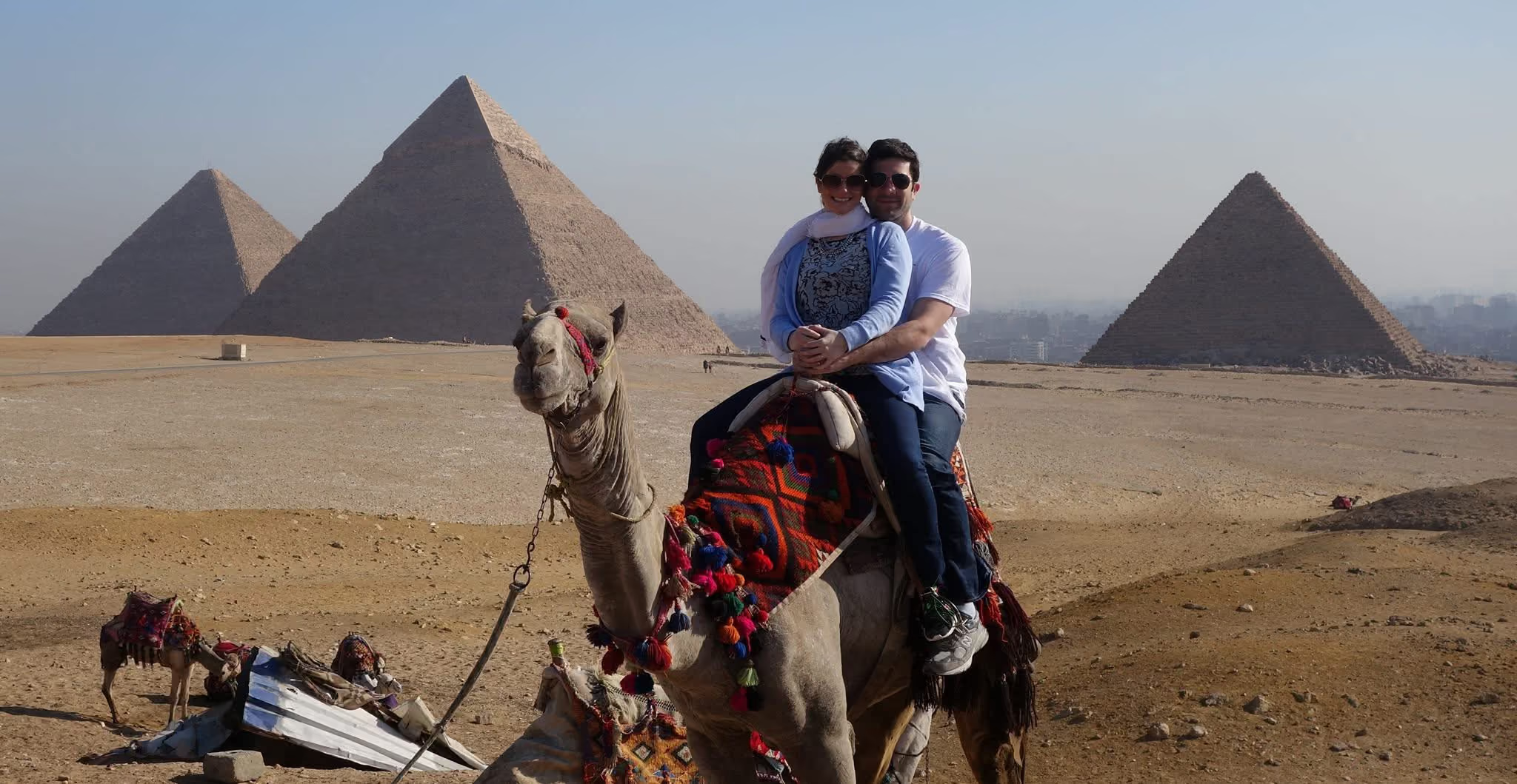




































%20-%20thumbnail.avif)





%20-%20thumbnail.avif)

%20-%20thumbnail.avif)
.avif)










.avif)