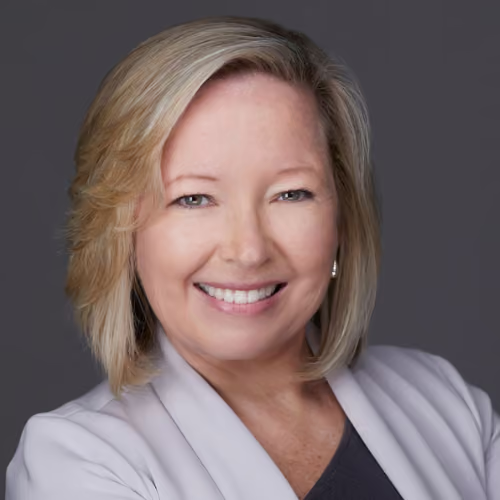
Host: Today's guest was a franchisee before he decided to buy a business, so I wanted to get his perspective on franchising versus owning an independent business. One difference I'll call out Tripp Bezance sort of fell into his franchise. The opportunity found him. Meanwhile, years later when he decided to do a search, his experience was just the opposite. The search was hard and long and basically fruitless after 18 months, at which point he decided to engage a buy side advisor. We spend a good amount of time on this piece of his story. Tripp is a huge proponent of Calder Capital, the firm he used who yes, introduced us, but no is not sponsoring this episode. Listen for the key pivot point in Tripp's story where he narrows his criteria from industry agnostic all the way down to just construction and how that narrowing made all the difference in his search. If you're struggling in your search, ask yourself. Perhaps tightening your focus would help. This is counterintuitive to new searchers. Tripp also discusses what it's like to own a construction business from the inside, including if you don't know the trade. Listen for his advice on how to lead a team who knows much more than you about the service being delivered. His advice here is sound, probably for any industry, not just construction. Okay, here he is. Tripp Bezons, owner of GNC Glass Mirror in Construction Announcements Upcoming Webinars Today, Thursday, Heather Anderson will host an SBA in Lending Office hours. Heather's a prolific SBA loan broker and a name many of you will recognize, and she's going to lay out the process of getting an SBA loan to buy a business step by step, stage by stage. There are so many moving pieces, so many stakeholders in an SBA acquisition and
Guest: Heather will show you how to fit
Host: them all together to successfully close your deal. That's today, Thursday, February 6th at noon Eastern. Register at the link in today's show notes or on the Acquiring Minds homepage. Acquiring Minds Co. Then next week Legal Office Hours, this one on legal questions related to debt financing. SBA attorneys Bill Barlo and James David Williams return to cover the main legal hiccups for both SBA and non SBA loans. That's next Thursday, February 13th at noon Eastern. Register at the link in today's show notes or or on the Acquiring Minds homepage acquiringminds co. Also SM Bash is coming back around for its 4th year and I will be 4 for 4 in my attendance this year. SM Bash is the original self funded search conference and networking event uniting small business buyers, operators and investors this year it's in Dallas, April 2nd through 4th. Many acquiring minds guests will be there both in attendance and on stage. Get your tickets now@smbash.com. Welcome to Acquiring Minds, a podcast about buying businesses. My name is Will Smith. Acquiring an existing business is an awesome opportunity for many entrepreneurs. And on this podcast I talk to the people who do it. You know that one of the most common levers to pull in a target acquisition is technology updating the systems of a business that may still be running off a spreadsheet or even pen and paper. But tech is complicated with tons of solutions out there. So choosing the right cloud platform, CRM, telephony, compliance, and cybersecurity, not to mention implementing all that, is a job in itself. Acquiring Minds guest Nick Akers knows this firsthand. As a former searcher who now owns Inso Technologies, Nick has seen the tech challenges searchers face when acquiring businesses. His team at INZO regularly works with searchers and their acquisitions, offering a complimentary IT audit of the target company. Nick takes a personal interest in all their searcher clients, drawing from his own experience in the search phase. Enzo dates back to 1989. So this is a company that has managed the tech for hundreds of small businesses over decades. And one last thing, no long term contracts with Enzo, a big differentiator. Check out enzotechnologies.com inzo or email Nick directly at nickzotechnologies.com and don't forget to tell him you're a searcher. Tripp Besons, welcome to Acquiring Minds.
[5:18] Guest: Thank you. Thanks for having me.
Host: Tripp, you came to business ownership from the world of franchising, then a couple years ago bought an independent business, which will be the subject of today's interview. But let's start with that franchise experience. Trip, how was it that you came to be a franchisee? What attracted you to that opportunity, to that model? What can you tell us?
Guest: Yeah, so getting into the franchise world really wasn't something I sought out. I was working your typical corporate job that I'm sure many of your listeners can wrap their head around. And my first foray into my career was actually selling residential windows and doors with a company. I guess as an aside, am I allowed to use brand names and all that?
[6:13] Host: Yeah, sure.
Guest: Okay. So yeah, my first foray into my career was selling residential windows and doors for Pella Windows and Doors, one of the largest, if not the largest, window manufacturers here in America. Did that for a couple of years. And then when I got into my software sales position, I wasn't really I guess having that itch scratched, if you will. I didn't know exactly what it was. I just wasn't feeling fulfilled. And one of a family member who was like an older brother to me. He had worked at Pella as well, and he started running the franchise for the company that I ultimately took a spot in. And he presented the opportunity to me. It kind of fell into my lap. I was a little hesitant at first, having never owned a business franchise or not. And, yeah, he presented it to me. And so he was.
Host: He was working at corporate at the franchise, at the franchisor level?
Guest: No, he was actually a franchisee himself. So he kind of had a similar background to me. He worked at Pella for a few years himself, did a couple of other things and really wasn't enjoying what he was doing. And he actually was actively looking for an opportunity. And he came across through a business broker, the existing franchisee for Apex Energy Solutions up in Minneapolis, the Twin Cities market, which is not exactly where I'm from, but we're both from near there. And then he presented the opportunity to me, and I spoke with the franchisor and ultimately started up their Milwaukee market.
Host: Got it. Okay. And so you started it up. So you were de novo, whereas he bought an existing territory.
Guest: That's correct.
Host: Okay. All right. Well. And then you proceeded to be that franchisee in Milwaukee for how long?
Guest: It was about, I want to say, six years.
Host: Six years. Oh, okay. And. And. And part of the. So I assume the part of the appeal was in your industry. So you already knew the industry. So there was that kind of, you know, good fit there. But it sounds like too, you were.
Guest: You were
Host: basically a corporate person who wanted to be an owner. And. And franchising, classically, is. Is a solution for that type of individual.
Guest: Yeah, it's, you know, being a business owner with an instruction manual, if you will. You know, that being the franchise, the. Not just the FDD and the franchise agreement, but just their. Their whole operations procedure, the marketing, the accounting. There's a lot of tools that come with those royalties that you pay each and every month. Yeah, it just. It seemed like that easy dip my toe into the water of being a. An owner, an entrepreneur. And I knew that was something that I always wanted to try. My cousin and myself, we both had fathers that were actually partners in a business back in our hometown. So we had lived that. That life of business ownership, if that makes sense, being part of a family that had entrepreneurs in it. So I always knew it was something that I wanted to try and I was 27, 28 years old at the time. It just seemed like a good time to give it a go.
[9:39] Host: Great. Well, and then you were in it for six years, and then what? How did you step out of it? Why did you step out of it?
Guest: You know, I found for a couple of reasons, the franchise was up in Milwaukee, and my family and I had moved back to the northwest side of Chicago after a few years. My wife and I, that is, we knew that we wanted to have kids and we wanted to be closer to family. I have two sisters that live here in the Chicagoland area. And then my wife is Greek, so the whole big fat Greek wedding stereotype, cousins and cousins of cousins, they're all here and then some. So being close to family was something that was always really important to us. And we had always planned, as we started our adventure in Milwaukee, that we knew we would ultimately settle down here. What that meant, though, and I was able to operate remotely for a certain extent. To a certain extent, the commuting and the back and forth just got to be a lot. And on top of that, I didn't find that. And I found this with a lot of different franchisees that I've spoken with, not just at Apex, but in different franchise models. I just found that the support wasn't what it had been when we started. And that's not all on the franchisor. That's also the franchisee. When you start, you really, really lean into it early, early on, and then you kind of feel what you like and you don't like. That was the same for me, too. But toward the end of my time, I just didn't feel like I was getting the support that I was hoping for. And it actually turned out that the franchisor was in the process of selling and to another entity. So I had an opportunity where I was actually able to exit and sell back to the franchisor and. And make a clean break it to the.
Host: To the existing franchisor or the. The buyer of the franchisor.
Guest: The existing one.
Host: Gotcha. Gotcha. Okay. So it was really driven by this move. Moving from Milwaukee to Chicago, and also already in the background, you felt like maybe your time at this fr. In this franchise system felt natural that it would come to a close anyway.
Guest: Yeah, I mean, if you want to wrap it up with a little bow, I would say I. I kind of burned out on it, honestly.
Host: Great. Well, I want to spend some time. We'll circle back to it. On the differences between being an independent business owner and Being a franchisee and both the mechanical differences I think are well known, but maybe the psychological differences and, and which, you know, pros and cons there. So we'll return to that. But it's great context. And so. Okay, so it is now what year when you exit?
[12:21] Guest: I exited in 2020.
Host: 2020. Okay, so Covid year. Do you immediately turn your attention to buying an independent business? Take us from here to how you decided to buy an independent business.
Guest: Yeah, so it was because of COVID kind of a weird situation where I sold. But I also being a franchisee, I had a certain level of number of contracts that I had to finish out. Normally, those contracts with the franchisee with my customers would have been really quick, easy to turn around. Well, being in a home services business, not a lot of people were letting you in your home. So that caused my, my transition out of apex toward a search to be delayed a little bit. So what ultimately happened was I started to really search for my own business, a standalone, if you will. I would say like Q4 of 2020, like October of 2020. And I had never shopped for a business before. Shop, I guess, is one way.
Host: Well, what drove you to that decision to, to go that path of all paths, by the way?
Guest: Oh, to go for a standalone or for something that wasn't franchised? Yeah, I think the aforementioned. I, I, I just felt like I had gotten the opportunity to experience being a franchisee. And I'm not saying all franchises are like this. I did feel like toward the end of my time with that franchise that you're, you're putting a lot of money in each month for royalties. You're required to do certain things. And it didn't feel like there was a lot coming back in return. I, I wanted to step out of that. I ne, toward the end of my time with my franchise, I never felt like I was actually boss. It just felt like I was almost a territory manager. And with being a standalone, obviously you're the boss. You know, you're the president, CEO, whatever title you want to put on it. I wanted to dive into that side of it and to get involved on that side of it.
Host: Well, you may have really just covered there the key difference between being a franchisee and being an independent owner. The topic I said we'd return to, so, so let's just hit it. You had also felt like you didn't, you weren't really an owner. Then you felt like, okay, you know, some guests will come on trip and who, who are doing ETA entrepreneurship through acquisition In a franchise context. But they're often very kind of by, by definition acquisitive. So part of the appeal of, of getting into a franchise is that they can buy one and then pro, as they say, programmatically add to that portfolio. So they don't intend to just be the Milwaukee territory. They tend to roll up the entire, you know, all of Wisconsin sort of thing or whatever the region is. And, and, and franchises are great for that because the integration of two businesses within the same franchise network is, is not, you know, maybe overstating it, but it's virtually non existent already on the same systems, already systematic same processes. That's the point of being in a franchise network. So you can acquire quickly and build up this portfolio of 3 and 5 and 10 and 25 units. Okay, maybe it takes a while to get to 25, but goes a lot faster than an independent business land. Again you, you do that. You, you, you take this approach. If that's your vision to buy a lot, not to just be a single territory owner. Now that you have experience doing both, do you think there's something to that? Do you think that, that, that that is one way that FR appealing than buying an independent business?
[16:12] Guest: When you say more appealing or something being more appealing, do you mean the ability to scale quickly or to scale quicker? Oh, absolutely. I mean there, yeah, 100% to keep it very short.
Host: Okay, yeah. And, and then, and then presumably if you're somebody who's been able to do that and you have 10 locations, units, territories, 20 of them, you start to not feel like a territory manager at that point. You probably feel like you're more of an owner and have some leverage. Or am I? Does this really just come down to the franchisor and how they make you feel sort of thing?
Guest: Great question. I think it is a little bit of both. I think it depends on the type of business that it is. Like for us it was vinyl replacement windows and my territory, it wasn't like two zip codes. My territory was literally like a 75 mile radius territory. It was huge. So I basically had all of Wisconsin as it was. Well, you know, I'm, it's not easy to find customers and people that are going to install Windows, you know, three hours away. You try to keep it a little bit more centralized. The like, I have friends that operate in a couple of different franchise systems. One of them is in like Great Clips. Great Clips allows you to really, they've got it locked down where you can scale immensely and you can add units. And to your point yeah, Once you get to a certain level of units, you're not doing the day to day. You're not opening stores, you know, with the keys every day and then closing them down, locking them down. Your focus then becomes not how the day to day is going to look, but how can you create this almost like organizational hierarchy? You're gonna say, okay, these six stores are gonna fall under this branch manager. Now I gotta hire a branch manager. You, you almost kind of create your organizational hierarchy with the franchise system when you get to that certain unit level, which, yeah, you are more of a business owner per se.
[18:15] Host: What do the following Acquiring minds guests all have in common? Doug Johns, Morley Desai, Tim Erickson, Chirag Shah, Shane Ursam. They all went through the Acquisition Lab, the accelerator in community for people serious about buying a business. But they represent just a sliver of the Lab's success stories. The number of deals across the Lab's cohorts now stands at over 120, with over $300 million in aggregate transaction value. The Acquisition Lab was founded by Walker Deibel, author of Buy Then Build, the book that introduced so many of you to the very idea of buying a business. The lab offers a month long, intensive, almost daily Q and A sessions with advisors, live deal reviews with Walker, Deal team introductions and an active community of serious searchers. Check out acquisitionlab.com, link in the notes or email the lab's co founder, Chelsea Wood. Chelsea buythenbuild.com so you wanted to be a business owner again, but you wanted it to feel, feel like yours and truly, in fact be yours. So you decide Search. Was this something that was on your radar? Search, as we know at Entrepreneurship through Acquisition. Had you read the books and so on or.
Guest: Yeah, yeah, absolutely, absolutely. So I, I knew that I, I went into it and with my franchise kind of fell in my lap. Like I had never searched. I just fell in my lap and did the due diligence. Was like, sweet, let's do it. Then jumped in. Yeah, I knew that searching for a business was going to be hard, especially after reading all the various books that everyone's read, be it the HBR Guide, Buy Then Build. It was harder than I thought it was going to be. Substantially so much so that it's kind of funny. I'm smiling because I as I like prepped for this interview and as I think about and have like reflected on my past between Apex and where I'm at now, GNC Glass Mirror and Construction in Lake Zurich, Illinois. It got to be so hard that I actually went back into searching in the franchise around. I started to think to myself, wow, maybe, maybe the standalone thing isn't for me. Maybe I go back to franchising and I just find maybe it just wasn't the right franchise for me before. Maybe I need to find something else. So I actually, I was very open to all ideas and yeah, it's. It's just funny how that worked out. So I read the books, started searching, and it was way harder than I thought it was going to be. It was very arduous.
[21:02] Host: What about it tripping just the. Yeah, what about it exactly was so difficult.
Guest: Oh, my God. I went to biz by sell, you know, 10 times a morning, 10 times an afternoon. I'm sure listeners and viewers watching this that are in the same spot are probably rolling their eyes because it was every coin, laundromat, every FedEx route, every bread route, everything. And listen, no shade at those businesses whatsoever. I have the utmost respect for anybody that's willing to go ahead and do that. But I knew I didn't want to get into anything like that. And I just kept hitting my head against the wall. I'm like, what, what do I do? What do I do? And then you start to network. You just start to network and you start to go down these roads and you think to yourself, okay, you get an opportunity presented to you on day one. You start to think about all the great ideas that you can bring to it, everything you can do. And then day 30 or 45 comes up. You've put your financial models together, you've done your due diligence on your side. It's time to kind of. Or get off the pot. Can I swear? Sorry.
Host: Yeah, that's fine.
Guest: So time to get off the pot.
Host: And that particular vulgarity we use a lot on this podcast.
Guest: Okay, good to know.
Host: Good to know.
Guest: Not the first time. So I found that I was getting off the pot a ton because I was second guessing myself. And then all of a sudden you're just like. When you have to put real dollars and cents into it, you're like, oh, my God, I just. Not for me. I'll find another one. I'll find another one. Well, the first time that happens, you're like, okay, no big deal. The fourth, fifth, sixth, seventh, eighth time that happens. All of a sudden, like I said, you're looking 30 days down the line. With each one of these, you've exhausted almost a year and you don't feel like you have anything to show for it. And it's just It's a very lonely place. And I think we talked about that prior too, is that this search is a very, very lonely place. And that's why I would dip back into franchising potentially. I, I talked to franchise brokers, I talked to different business brokers and it, it was a very difficult time. But I did learn a lot about myself as I reflect on it. And yeah, I mean, I know that was a longer tangent than you probably wanted me to go on, but that, that was my first, you know, year plus into searching for a business.
Host: But so, and just to make sure, kind of distill what it is that was so hard was the deal flow. You just didn't have enough of it. And even those that you'd go down the road with a little bit never, never were, never crossed the threshold that you needed. So it was, it was that more than anything. And, and then of course, the. Emotionally, it's pretty isolating.
Guest: Oh, absolutely. And you hit the nail on the head with the deal flow. I probably should have mentioned. Mentioned that before, but that it just, it wasn't there. And the stuff you were seeing, it was very watered down and it had been picked over multiple times.
Host: Yeah. And you were in Chicago at this point? At this point, yes. So you were searching in Chicago land, big market. We can only imagine that most people listening to this, unless they're in one of the big four, five, six markets, are going to have even thinner deal flow than you had.
[24:10] Guest: Absolutely. Yeah. Most likely.
Host: Okay, so what do you do to solve this problem?
Guest: God. A lot of conversations with my wife, a lot of wondering, did I make a mistake? Should I have not left Apex? But you know, we just, we always took an approach of, you can't change what's happened in the past. You just have to learn from it and move forward. And I, I've always been one that I like to network and that was one of the reasons why I agreed to come on the podcast was that I, I found that because it can be a lonelier time, because it can be a difficult time, it was nice to be able to talk to people especially, I mean, let's. I know people don't like to go back to in immediate post Covid world, but it was still weird. It was very virtual, it was very distant. And yeah, that was something where I would, I found that networking was the best thing. So I would just, I would talk to people and Buy Then Build was super helpful because Buy Then Build helped me craft my target statement. I knew that I had to just cut through The BS and have an elevator pitch about myself and my search and what I was looking for, all the criteria so that people could keep an eye out. And I always positioned prior to my statement with anybody that I spoke with. If it was a family member, a friend of a family member, one of the cousins of cousins of cousins on my wife's side, anybody that I spoke to, I would say listen, odds are you probably have nothing for me and that's fine. I don't expect anything. But maybe you know somebody who has something or better yet, maybe you know somebody that I should talk to who may know somebody. I knew it wasn't going to necessarily be that person that I ran into at the grocery store that was going to have a deal for me. But my hope was, was that just after telling my story and hearing about theirs that they would be willing to pass a name onto me or be able to pass some sort of information along to me. And I can't remember who the person ultimately was, but I got put in contact with somebody at the mbbi, which is the Midwest Business Brokers Institute, and another person at xpx, the Exit Planning Exchange of Chicago. So essentially for those listening, XPX has chapters all around the country. MBBI started out just in Chicagoland area in Illinois, but also expanded now since I met with them, I believe to Minnesota, Wisconsin, Indiana, Michigan, Ohio and possibly Iowa. Apologies to MBBI if I got those states wrong, but if not, congrats on the plug. But I, I was put in contact with people from both organizations and they are networking groups. So it's what I'm sure 90% of your listeners have been a part of, maybe at some point in time is like a networking group where, you know there's some that have bad connotations with them or just you're kind of viewed as a money suck. It's a waste of time. I couldn't have thought any different of these two organizations. They specialize in deal flow. And it was a concentrated group on both sides with a lot of crossover between both groups that were members of both that, you name it, business brokers, sellers, attorneys, buyer's attorneys, franchisees, franchisors, M and A advisors, accountants, everything else in between. Like they're all a part of these groups. And what I did was XPX was a lot more open on it. You can go on their website, go to their membership directory. And I literally went through and I did a BCC email to every single person on that with my statement, my target statement and who I was. And I got, I Think that was like 200 emails sent. I got like 20 responses. And then I just set up meetings, I set up coffees, I asked for 5 minutes, 10 minutes, an hour, whatever anybody would give me, that was it. And ultimately that just started to create the snowball effect. And that was like that. I call it my not like an aha moment, but it was just, it was that moment, that tipping point that kind of gave me more momentum and pushed me in the direction to where I'm at right now.
[28:47] Host: The and to be clear, so xpx Exit Planning Exchange. Exit planners are essentially another word label for business brokers. I mean they're, they're business brokers plus but they, they, they're adjacent to business brokers, right?
Guest: Yeah, yeah, I would say so. I would say it's business brokers plus exit planning. Is anybody involved in the exit of a business? And there's a book that I read and the name is escaping me right now, but it talks about preparing for an exit because that is a 100% fact to everybody listening to this right now. Business owners, prospective business owners, whatever it may be. 100% fact. Every single person listening to this is going to exit their business. It could be biologically through death. It could be passing it along to a family member, it could be selling it, it could be closing the doors. Hopefully that's not the case. But everybody exits. Everybody will ultimately exit their business in some way, shape or form. So the exit planning exchange. Yes, it's a group of people that in some way shape or form are going to assist in and exit with the business. Most likely a sale of a business because it is going to deal with a lot of intermediaries. It's not going to be the people necessarily advising somebody that has a mom and pop shop passing it along to their kids.
[30:14] Host: Yeah, yeah, right, great. So you email 200 of them. BCC them. We, we don't formally, we don't formally endorse, you know, spamming here, but we'll, we'll go with it. We'll, we'll go with the tactics that you use. 200 isn't the biggest the world. There are, there are much worse, you know, blasts that you can do.
Guest: Yep.
Host: And lo and behold, it worked really well. You got 20, 20 responses. Did now, did the business that you bought come from that particular step?
Guest: No, did not.
Host: Okay. But it was important in the, in the story because it kind of, it felt like it, it made you feel like you were getting traction whereas just the, the chronic biz by sell checking you were Felt like you were just spinning your, spinning your wheels on that.
Guest: Yeah, absolutely. I mean, what it did was it started me down the road, it built that momentum and it ultimately was a link in that chain that led me to another link or another connection and then another link and then another link to ultimately get me to the person that got me involved with where I'm at right now.
Host: Okay. And so maybe take us to that endpoint where how did you finally find gnc?
Guest: So this is going to be a little bit different than I think a lot of people that listen to this will have experienced or have thought about. But this is also going to be a plug for a company or a firm out of Grand Rapids, Michigan, Calder Capital. So Calder Capital, specifically Shane Kissack, he was my contact at Calder Capital. The links that I talked about leading from XPX and that spam, we'll call it spam. It is what it is. That spam email blast, it led me, I don't know what link it was, but it ultimately introduced me to Shane. And Shane actually presented to me one of his clients that had a business here in Chicago. So he was representing somebody on the sell side and presented it to me and it just wasn't a fit. It was, I mean, it wasn't like something that went super deep down, but it just wasn't a fit. But Shane, after talking with me and explaining my story, a lot of which we've talked about right now, he presented to me with Calder Capital something that they had just developed called buy side advisory. And apologies to them if they've changed the branding on it or if they've changed whatever they've put into it. But he presented this buy side advisory where they actually will work hand in hand with a buyer like myself, an investor, anybody looking to acquire a business, they will work to create more deal flow. And if you want to go even deeper with them, they'll also assist with pricing or valuing the business, doing due diligence, getting you through LOI and ultimately getting you through the finish line through close. And any type of financing that you need to get accrued or arranged, I should say, yeah. To have the deal go through.
[33:41] Host: And now obviously those services aren't going to come cheap. How did you think about what was your calculation in terms of whether or not it's worth it? Because the vast majority of searchers do it on their own and they're trying, they're kind of watching every nickel.
Guest: Yeah. So my calculation on it was it was a six month commitment and I, I mean my Wife and I had done a good job of saving. We had done a good job of just monitoring our finances, and we mapped out what the six months would look like. And this would have been like Q1 of 2022. So I had been searching at that point for about 18 months or so, maybe just under 18 months. And my wife and I just said, listen, six months, let's give this a try. And if. If it doesn't come to fruition, then I'll just find a job. I'll find a job. I'll bide my time. I'll keep my eyes and ears open. I'll continue networking with people. Something will come down the pipeline. But let's give this a try before I say, hey, I'm going to get back into, you know, normal nine to five, quote, unquote. Because at that point, we had our second baby. So in 2022, my oldest would have been four years old, and then we had a one year old. So we were, you know, needed to start to provide.
Host: Yeah, yeah. So you are fully 18 months in, so you would have been pretty frustrated at this point. So deciding to work with Calder and the additional financial commitment that was going to require was maybe a Hail Mary is, Is. Is. Is too strong. But, but the last thing you were going to try before basically putting a pause on your search, going back and getting a job.
Guest: Yeah, when I say putting a pause on my search, I would say putting like a pause in it being my number one, my active, my A and my only plan. Yeah, it was going to become a plan B. Yeah, yeah, for sure.
Host: So when you start working with Calder, do you have your search criteria dialed in at this point? That's something I haven't asked you kind of what you were looking for, what size range you were looking for. We've already talked a little bit about Frame franchise or not, but say more about that. And do you just give Calder the same criteria and they. And set them off sort of thing? What's that look like?
[36:07] Guest: Kind of. And why I'm smiling. And this is something because Calder, obviously I'm here where I'm at now because of Calder. So I have a lot of, like, I'll have a lot of phone calls. Calder will use me as a reference for a lot of people in my position that are in my previous position that are looking. And I always say, and this is one of the things I really respected about Calder, I had all my search criteria, but I was a little bit. I don't know if cocky is necessarily the word because I wasn't cocky. I just. I come from a sales and marketing background, so I kind of took the approach of, like, hey, industry wise, I don't really care. Like, I'll just. I'm not gonna be like, oh, I'll sell anything to anybody. It wasn't like that. I just thought to myself, I was young enough, I'm gonna learn, and I'll figure it out along the way. I just want to find something that excites me. Well, Calder, they have you. When you sign up, they have you fill out an evaluation. There's, like, 20 industries that you can pick from that you want to target your search, and they say to pick one. I picked all 20. Right away. Their team, like, immediately. It must have, like, triggered something in the system, because I submitted it. The team got back to me within, like, an hour. And they're like, what's this? And I go, what's what? I did it all. Then they're like, well, you need to pick one. I go, well, I'm pretty agnostic when it comes to all that. I'm. I'm good with whatever. They're like, well, no, we're never going to get anywhere. Like, we. They said to me, and I'm paraphrasing, they go, you know, you signed up for a minimum six month commitment. We're going to be doing this a lot longer than six months if you keep that. And we don't want to be doing that. Like, we don't want to. You know, we don't want you to have to pay us each month just to constantly go through all of this stuff. We need to target it. So he said, fine, how about 10? They go, no, one. I go, how about five? And they could tell I was just like, I would just want to do more. They're like, fine, do five. So he did five.
Host: And. And. And Tripp, what is the point that they're put. Because it's a little counterintuitive. You'd think that the wider the net that you're casting, the more likely you are to find a business. And they're basically signaling to you the opposite. The narrower, the better. What's. What was their point?
Guest: I think they wanted to keep it simple. They went. They wanted a quality over quantity approach. If you put all of these industries in. They're. They're trying to learn more about you. They. They try and hold your hand during the process. They're trying to learn more about you. It's very difficult to learn about somebody that maybe has, like, a pet store presented to them on Monday and all of a sudden a third party logistics provider presented to them on Tuesday and then a construction company presented to them on Wednesday. It's because you're going to say no, like, if pet store comes. No. Why not? Well, you know, I'm allergic to cats. It's like, okay, that's not going to apply though, at all to the construction side of things. So they really want to learn more about you as to, like, what makes you tick, what would be a good fit so that as they're searching, as they're screening through opportunities, they can continue to filter and find something they truly feel is a good fit for your skillset and for the thing. The feedback you've given on other misses, for lack of a better term.
[39:21] Host: Yeah, yeah.
Guest: So.
Host: So bring you fewer but more likely to close opportunities than just a ton of opportunities, which of course is. Is wise because even people like you who think they're agnostic, when they really imagine themselves in certain businesses, it's. It's like they, they kind of wince a little bit. It's like, no, I can't imagine myself in that business.
Guest: Oh, hand up. Yeah. I'm so glad. I mean, I'm so glad that they did it. And that's what I tell everybody that calls me asking on a reference for Calder. I truly respect them because they, they want you to succeed. They want you to find something. They don't want to get fat and happy off of, you know, monthly retainers. They want to get fat and happy off of you being successful in finding a business and telling your friends and family about the work experience you had with them. They. They get fat and happy off of success and they want to develop a relationship. You know, Shane and I, we talk to this day consistently. I mean, that's how you and I connected was through Shane.
Host: Exactly.
Guest: So I mean, they want to ultimately be the ones that represent me on the sell side. And I'll tell you what, like, I'll definitely throw their hat in the ring if we're ever fortunate enough to get to that point. So, yeah, yeah, working with Calder, it was great. And I, you know, they drilled me down finally to like five industries, and one of those industries was logistics. And I once again mean zero offense to anybody in this business, but it's incredibly competitive and it is very watered down and there's a lot of big players in that business too. And literally, like, within the first week, I think I had like two or three. Three pls presented to me and I just immediately told them, hey, we're going to take transportation logistics off of my list. And they laughed, they're like, okay. And then ultimately I brought it down to construction and that was my focus because I had a background in residential remodeling and construction with my Apex Energy solutions experience and on top of that, my pellet windows experience too.
Host: Right, right. Okay, great. And happily, construction is a pretty big industry and it's one that you see a lot of businesses transact in. There's a lot of kind of construction businesses. It's such a broad category. It's not very specific, but there are a lot of them that fall into that category that you see even on Biz by Sell as. Even though you were not having success with Biz by Sell, you see lots of those types of businesses. Now on the other hand, Tripp, like construction businesses are notorious for being project based. A characteristic that we're told not to like, highly cyclical.
[42:03] Guest: There are a lot of, there are
Host: a lot of things to characteristics of construction that are not that favorable for enduring profitability that, you know, the kind of the most valuable thing of all. Were you thinking about that at the time or were you just trying to find something that had good business buyer fit in terms of your skills, what turned you on sort of thing?
Guest: I would say more the latter. So I wasn't thinking so much about the enduring profitability to the words that you used. I was definitely thinking more about the fit. And listen, I'm. I'm a human being. I was, I was hungry for something. I was, I don't want to say desperate for something. I wouldn't, I wouldn't go so far as to go there, but I, I wanted to have that purpose that, that piece of my life that had been missing for almost two years at that point. Yeah, I really wanted to find something I wasn't going to just force myself into something that was going to just be a short term solution. I really did want to find something that was going to make me happy and make me feel fulfilled professionally. So that was what I cared more about.
Host: Great. And really that probably, you know, that's what I would call the X factor. So we like to try to make a science out of the strengths and weaknesses of different types of businesses, different businesses. And there is a lot to that for sure. That's basically a big part of the game. But there's always to me an X factor which is kind of does it turn you on? And there's a lot of, of power and you know, energy that can flow into a business from an owner who's really excited by it.
Guest: Yeah, I'm, I like to think that I've brought some excitement and some, some of that X factor here, but it was, it was very, very important to me because I wanted to. It gets to be, we talked about it before. It gets to be very lonely searching and it's a high failure rate to A lot more people say no than they say yes. And I may be butchering the statistic from Buy, then Build, but I remember something that's always rung true to me that from like the year 2015 to the year 2030, there were going to be something in the to the tune of like $12 trillion of baby boomer owned small businesses that were going to need to exit or transition in some capacity. 80% of that had no plan or was projected to have no plan. So I knew that there was an opportunity out there. I knew that something was going to come through.
Host: An SBA loan broker, as opposed to a direct lender, doesn't work for a particular bank. Instead, the broker pairs you with the right SBA lender for your deal based on industry terms, risk thresholds, then helps you navigate the process better than many lenders themselves do. Matthias Smith of Pioneer Capital Advisory is just such a broker. Matthias worked at two of the country's top 10 SBA lenders. So he's been on the inside of the SBA process and knows well the pitfalls and hurdles and how to avoid them. He struck out on his own to laser focus on the ETA in search space. Our niche is his niche. You'll see Mathias at all the ETA conferences. He's closed over 30 search deals since starting Pioneer in May of 2022, including some acquiring minds guests. To learn more and get in touch, go to PioneerCapitalAdvisory.com or click the link in the notes.
[45:49] Guest: Something in Buy Them Build that they had mentioned that because it is such a lonely process. Eight out of 10 individuals that go down the business buying or business search, if you will ultimately just back out and do what I probably would have done had the six months that Calder not worked out.
Host: Yeah.
Guest: And that was something that really rang true to me.
Host: Yeah. Well, now let's turn our attention to the business that you, you bought. Tell us about gnc.
Guest: So GNC Glass Mirror and Construction. We are located in Lake Zurich, Illinois, which is the northwest suburbs of Chicago. The company was established in 1985, so it is our 40th year anniversary this year.
Host: Congratulations. Love it.
Guest: Thank you. I can only speak to but we specialize in sales, service, installation, and fabrication of various glass and mirror products and applications. Our specialties. What I would say to people, especially if you're looking here in the Chicagoland area, on the residential side, are going to be shower doors. So frameless, heavy glass shower doors, as well as custom mirror replacement and fabrication. So to those individuals that might have a broken mirror or something over their vanity and their master that they need swapped out with little outlet holes carved into them or cut out, we can do all of that, no problem. On the commercial side, which is another sector of our business, we specialize in commercial storefront systems. So security doors, entry systems, insulated units, any type of commercial door that you would see or commercial window that you'd see in warehouses, offices, so on and so forth.
Host: And how are those two. The glass side of the business and commercial security related? Are they kind of two completely different business lines?
Guest: It's. It's kind of two completely different business lines because the commercial customer. We're typically working hand in hand with construction companies, general contractors. There's certainly people that we'll work with directly too, like building owners. But more often than not, it's going to be some sort of either maintenance company, construction company, or general contractor. Residentially is kind of like my Apex background or my pella background. It's B2C. So working with homeowners directly to help them kind of craft their vision.
[48:19] Host: Yeah, yeah. And what's the split between the two lines of business? How much is glass versus commercial security doors?
Guest: I would say in terms of revenue, we're looking closer to like 65 to 70% on the commercial side versus the other way, 35 to 30% on the residential side. But quantity of jobs, I mean, residential is very, very transactional. So it moves a lot faster, and we have a lot more in terms of quantity of that residential side. And the profit margins are typically better on the residential side because of the quick turnaround.
Host: Mm, great. How many employees are in the business?
Guest: We are currently at 15 employees, including myself.
Host: And is that. What was it when you bought it? How many employees?
Guest: 20.
Host: So you've reduced headcount?
Guest: Reduced, yeah. So when I say that, my hesitation is, is that, you know, we had the. The seller was with us for about a year, and then he ultimately exited the business. We had a couple of other individuals that have also retired. So part of the thing that appealed to me about the company when I first was introduced to it, was that 40 years in business, or near 40 years at that time in business, they had people that had been here for decades that were on the older side and they were ready to retire. I knew that going into it and I had those conversations with those individuals. So we've had people that have. Yes, since retired, since I took over.
Host: And. And why was that a strength that you saw in the business that you were going to lose a few people because you felt it was maybe a little bloated and there was going to be natural attrition and you weren't going to need to replace them?
Guest: Yes, that and something that I really took from the fact that it wasn't the age of the people and the state of life that they were in looking to retire. It was the simple fact that there were people with decades of commitment and experience to a brand that to me said something about the foundation of the business and the culture and the team that was in place. That was something that really, really encouraged me. I knew I wasn't going to have to come in because I didn't have any glass installers in my back pocket. I didn't have any estimators or project managers that I was ready to bring on or like bring along with me from another company. I was coming into it being myself and that was it. So I wanted a team in place and the fact that I had one with decades of experience really appealed to me.
Host: And can you share any of the numbers of the business, what it was doing, revenue wise, how profitable it was, et cetera? Yeah.
[51:03] Guest: So revenue wise I wrote down some numbers here the three years prior. I'm taking the COVID year out just because it was super wonky. But 19, 21 and 22 doing anywhere between 2.4 million to 3 million in revenue in that range and gross margins were around 50% give or take. And then yes, since I've. Oh, and then SDE, we're looking about 275k.
Host: And was there anything more to say about what you liked about it? It's in construction. You liked that there were these long tenured people that said something to you about the culture of the place, the brand of the place. What else did you like about it?
Guest: I liked the opportunity to dive into a brand new business sector on the commercial side. I being more of a networker, I really liked the idea of getting involved in something where there was going to be some relationship component of it, where if you can set yourself up as what we are as a subcontractor to them, we know where our place is in the puzzle. There is plenty of other glazing and mirror subcontractors that these construction companies can go after but, or can work with. But if you can deliver and be reliable and provide a good value, you can get last look on projects. You can really take a stranglehold with good construction companies. And when they go to ultimately bid a project, they're bidding everything, all of the different trades. They know that they'll have a glass company in GNC that they can rely on and is good, going to be a good price and they can work with us and we should get kind of a leg up on that bid. So as opposed to the residential side or what I came from previously, what I didn't really like about vinyl windows was that it came with a lifetime warranty. And that was great. And a lot of people might be thinking, well, what's wrong with that? That's a great selling point. Well, it's kind of a double edged sword. If I were to come in and talk to you about your windows and tell you you have a lifetime warranty, you're going to be like, great, I'm buying these windows once, I'm never going to have to worry about them again. Well, as a business person, I want you to buy more and more and more from me. However, like you're not gonna be able to do that with a product like that. What I liked about it, to bring it back home, was that there was a commercial side where I could really work relationships with existing clients and hopefully open up new relationships with new clients that we could put our best foot forward and prove ourselves so that we started to get priority on future projects and we could hopefully build more and more backlog and more and more revenue and ultimately profitability without having to just knock on doors, which is literally what we were doing before at my last company.
[54:04] Host: Great. So you, you thought that assuming you could deliver great quality, that the business would benefit from your own, your own where you like to play, in networking, in sales. You're a relationship builder. So assuming you're building, you're delivering good quality, you are the guy to establish and really strengthen and build up these relationships that will keep, that will make a business that is project based. Actually see a lot of recurring business, excuse me, reoccurring business from these customers, from these contractors.
Guest: Yeah. And you know what? I know that I'm the president, I know I've put a lot of time, energy, resource into this, but I'm simply just a guy when it comes down to it. Like you mentioned right at the beginning, so long as you provide good value and you do a good job that ain't me. I'm not turning screws. That's not me. I'm not the one reading through our blueprints, doing submittals and takeoffs and putting the estimates together. All of that credit goes to this team that's in place. That excited me. And that's the thing is like any team, type of salesperson, any marketer, you need to have, yeah. Bullet points for why you guys are better. But the truth is, is that like you can get the same glass that we provide. All of our competitors are using the same glass. We don't have like exclusive GNC glass. What differentiates us is the service and ultimately the communication and hopefully the relationship building and enhancement that I'm able to provide because of the people that are working for me that are doing great work for our customers each and every day.
Host: Well, this is great trip because. Because one of the other reasons that construction businesses I think can be seen as challenging is that the, that it's a very competitive space. There's a lot of Chuck in a trucks who are going to be under bidding you of course, and it's just, you know, a guy who can do the work as opposed to you, a team, you've got overhead, etc. So it sounds like, however, if you are demonstrate yourself to be very reliable, demonstrate your team, your business to be extremely reliable, actually you can really excel in the construction world because maybe there's less of that and you can really become. Have a strong brand among your customers that they'll come back again and again and again. So it almost sounds like, it almost sounds like as long as you deliver a good service, it's maybe less competitive than it would seem at least and maybe less competitive than other industries. I don't know how talk to us about how competitive or not it actually is in a construction business.
Guest: It's, it's very competitive and it is this imperfect science because at the end of the day it is dollars and cents for a lot of our, a lot of our clients, a lot of our customers, which I totally respect and I understand that's on us to present to people and explain why if we have a hundred thousand dollar bid and there's somebody else that has an $85,000 bid, why we are the ones to go with or why our bid is the one to go with, we don't win all of them, but what we really, really pride ourselves on and the construction heads that are listening to this are going to be nodding their heads like Nothing goes right 100% of the time in construction, like, this is such a funny industry that I've learned about in just two years. Like, there's so much planning that goes into something in every room that every single person is sitting in. Like, literally, as you listen to this, if you're not on the road right now, if you're listening in your office, wherever it is, like, all of the time, energy, all the hands in that cookie jar, everything involved into making that space a reality, with all of the planning that goes into it, it's amazing how much goes wrong. And what I believe separates us is we're never going to be like, oh, it's not our fault. Like, we acknowledge when it's our fault. And one of the big things early, early on in my early part of the tenure with gnc, when I sat down with a lot of our key, key customers, was, what can we be doing differently or what could we be doing better? They told me, when there is bad news, not if there is bad news, tell us, like, let us know. We do that. And it's not a pleasant conversation a lot of the time, but we. We try to be as transparent as we possibly can. And I think that that has earned a ton of respect. While it may result in a lot of yelling and shouting at the initial time, I think it builds a ton of equity. It's not even equity, though. It's just trust. More than anything, it just builds trust. In Chuck in a Truck, they're not going to tell you about it.
[59:14] Host: They're going to.
Guest: They're going to figure it out. They're going to patch it up. They're going to cut corners. And you may not see them because your check may be the check that puts dinner on their table, and they're just chasing that next check. That's not us. Like, we. We've been here now for decades. I intend to be here for long, long, long more decades. We're not getting that by just fooling people into hoping that nothing, you know, is going to present itself with an issue. So we. We take immense pride in that. And that's something that I think has earned us a lot of respect. And with some of our key customers and some customers that we had lost over years prior to me coming on, we've actually brought back on, I believe, as a result of delivering on that, delivering on that promise.
[1:00:00] Host: Great, Tripp. And. And you just mentioned that kind of the learn coming to understand how as much planning as you do in construction, there's always curve balls. And so nothing actually goes the way it should. Anything else that you've learned inside a construction business for the searchers out there who might be considering this category, plan
Guest: and reject your cash flow. And when I say that I come from a business in residential windows where if I sit down with you and you like everything that we have to say and present, you would provide a down payment of 50%. Let's say we go ahead, we order the windows, then we come back out one, two, three months later, whatever the lead time is, we put them in and then you pay us the remaining balance. That's it, done onto the next one. With construction, there's a lot more hoops to jump through. You're dealing with multi, multimillion dollar dwellings, be a multifamily buildings. We don't do skyscrapers or anything. We're a non union company, so we specialize in. I mean our insurance only allows us to go 40ft in the air. I believe it is. So three stories and lower is typically what we stay in. But you might get a material deposit in January and the hole hasn't even been dug for the building yet. But you're going to be putting in the shower doors in all of the units. Okay, that's fine. Well, it's January. All of a sudden, September comes up, you've gotten that material deposit. You need to monitor your cash flow appropriately and make sure that you have that money set aside so you can buy the material. Then you have the material in. That's great. You install it. Well, you submit a draw or you submit billing during a set period in the month. It's not like you finish on Friday, you send your billing in. A lot of these companies require you to submit your billing during an open window to bill. Well, you do that and then it may take up to 30 to 60 days to approve that billing. And then once they approve, it may take another 30 days to get into your hands. And then there's a concept called retainage that's very new to me that a lot of the construction people right now are probably laughing about. I had zero concept of this. But if you're working on a big building with lots of trades involved, every single payment that you submit and then receive, it's less 10% of what's called retainage, which is held in, I believe it's an escrow account. Apologies if I'm getting that wrong. But it is held at the title company until final inspections are done and the entire building is done. Once the entire building is done with all of the trades, all of that retainage is released. To all of the subcontractors. So luckily enough for a company like mine, where we're glass and glazing, we're typically toward the end of that timeline. So when we're done, the building's pretty close to being done. I don't know how foundation companies or concrete companies do it, but if they're doing something that starts January of this year and that project doesn't finish for two, three years down the road, they're baking it into their pricing and their cash flow management. But that was a very new concept to me for sure.
[1:03:16] Host: Well, and, and the other thing about retainage is, is that margins in construction can often be. It can often be low margin or in the trades. And so that last 10% is all or a significant percentage of, of the profit of that job. And so. So you really haven't made any money until that last for 10% is released?
Guest: Yep, absolutely. So that would be one thing that I've really learned about construction.
Host: Anything you can tell us other that we don't already know in terms of how difficult it is to hire in this world? Any tricks of the trade?
Guest: You know what? I have actually, and knock on wood, I've had pretty good luck bringing people on. I haven't really had to search for anybody internally here in the office. My general manager, she's been with the company for going on 15 years. She knows the business inside and out. She is immensely helpful in so many things. She's constantly answering questions for me. She's done her thing to a T. And my two main estimators have also been with the business for decades now at this point, one of them specializes residentially, the other specializes commercially in terms of hiring. I have a recruiting firm that I've worked with. It's not a temp labor firm. It's more of a straight up recruiting firm where we have good terms with them and after 90 days, or they submit billing to us 45 days and then we have net 45 payment terms with a certain level of guarantee on it from them. But I feel like along with my team, I've put together a culture here that people have really, really grasped onto and enjoyed a more culture of transparency. It's not so much a culture of ego, if you will. It's brought people together as a team where we've had a lot of referrals. I've told people, listen, if you know people that want to get involved in the trades, if you know people that are just not happy and they want to get involved and get a change have them come talk to me. And there's been times where we don't have the work. We don't have the work to suffice. I'm not going to take, you know, all of my people out in the field are getting their 40 hours a week. I'm very, very honest with people during the interview, especially those referral interviews. We don't have a position for you right now, because if I give you a position, all of my guys working 40 hours a week for me right now are going to get 35 hours a week, and it's not fair to them. Once we have that backlog ready to go, I will let you know and you can let me know if this is something you want to move forward on. And there's been times where I've kept in contact with candidates twice a week for three, four months. They say, hey, anything yet? Anything yet? Anything yet? And I've told them no, but keep asking. Then ultimately the time comes and sometimes it's bitten me in the butt they've found something else and I, I wish them the best and that's fine. But a couple of times they've been like, you know what? I'm ready. Let's do it. They're excited. So those have come from referrals and hopefully they keep coming.
[1:06:25] Host: Tripp. I just actually had this very conversation with Kirk Olson, whose episode will air just before yours, about improving the culture in a trades business and how that can lead to referrals for, for new hires that a lot of the guys in the in gals and trades land know each other, talk to each other. And so if there's new energy under a new owner at a trades business, that word gets out and that, that can, that can really serve as a magnet without you being proactive about it, you know, meaning going out there and aggressively hiring. You'll just kind of start getting inbound from other. From other people in the trades locally. Is. Is. Am I overstating it or are you, Are you saying that you've experienced just that?
Guest: I would say I've experienced that. I think it's just been, yeah, people that we've gotten family members. Like, at one point in time, we had a father and two sons all working here as installers. And I was hesitant. I asked all of them point blank, I go, can you work together? They all said, not a problem. And it wasn't a problem at all. It continues to not be a problem. It's great. Also, you know, on the commercial side of things, especially a lot of trades are kind of stepping over each other. You hear, you know, oh, this electrician's annoyed or this, you know, plumber's pissed off, whatever it may be. My guys all will hand business cards out and be like, hey, you know, you can talk to my owner and see what he has to say. Can't guarantee there's anything but here you go. So, yeah, I've absolutely experienced that.
Host: Great. Okay, we'll start wrapping up here, Tripp. But a couple questions about the learning curve of this business, and then we'll, We'll. We'll finally just reflect back on franchising one last time. You gave your crews the credit for actually delivering the service that you, that you sell. Of course. How much learning have you had to do about whatever glass. Glass work, glass glazing, construction. How fluent in that are you? If at all?
Guest: Not very.
Host: Fine.
Guest: If I have to, if I have
Host: to be honest, you're probably self conscious saying that, but that's actually, that's actually good news to the listener because. Yeah, go ahead, Go ahead.
Guest: I. I will tell you right now, I'm actually not self conscious about it. A lot of people tell me, my wife included, I'm not a good liar. I've never want. And I'm glad, but like, I'm not going to BS anybody. I'm not super fluent in what we do. I know enough to be relatively dangerous. But those meetings that I have with like, construction companies and our, like, previous clients and old clients and new clients, like, I bring my estimator, my project manager along with me and I will say in the meeting, like, hey, I probably won't have the answer, but this person will. And that's what I'll continue to do. I mean, I just, I believe in surrounding myself with people that know what they need or know what they do. And I'm going to learn and kind of absorb through osmosis on that. And I have to a certain extent. But I think one of the best decisions that I've made coming into this business was I sat down with my, my three key people, my general manager and my two estimators. And I flat out said this was in the first week, within the first week of acquiring gnc. I know exactly what's going on here. I know the least about what we do. And I am the youngest person here and the least tenured person here. And I came from a business where it was the total opposite. I was the oldest person at my company, my branch that I ran for Apex, and I knew the most about what we Did I could tell you ins and outs of vinyl windows, install methods, service methods, things that were required to make the project go well. I just, I knew it all. It was just, I mean 10 years combined between Apex and Pella will do that to you. But like with this, I told them flat out, as transparent as I can be, I know the least amount about what we do. And, and I'm the youngest person here. What that means is I have no opportunity or no choice or option. Rather than to trust you guys, I'm going to give you a long leash. All I ask is, is that if and when I come to you with questions, many of them are going to come across as stupid. If I come to you with changes or suggestions on things that I think can be done differently with the business, I just ask that they're not met with the fight. I ask that they're met with an open mind and an open conversation. We can talk through things. That's all I ask. And I think that setting that foundation and those expectations was very, very key to getting my relationship started off on the right foot with those individuals and ultimately the organization.
[1:11:42] Host: So Tripp, for somebody listening who doesn't know construction but feels themselves drawn toward it, you, at least from your experience in this business, it sounds like you would say that somebody without practical frontline experience in construction can run kind of a constructiony contracty business. Or should. Should we extrapolate from your one example or is there something unique about your example that other searchers can't?
[1:12:13] Guest: It's a great question. I don't think there's anything unique about my example. I think what I just said, and this is not to pat myself on the back, anybody can do this business. You just have to be honest with yourself and the people that you're working with as to what you know and what you don't know. If somebody's talking to you about. I mean I could just, there's like the Tommy boy line where he's like, it's the roto girder and he just like starts talking gibberish. Yeah, the people that have been doing this that are turning screws, that are operating chop saws, that like know all of this stuff, they're going to like see through you immediately if you try and BS them. Like don't do that. Just be honest with people. And I joke and I, I'll be self deprecating to my team plenty of the time. I'll be like, there's no way I could do this. I, to this day, like granted, I'LL have some of my guys do work on my house if, like, I need, like some quick help on something. But I, I call trades all the time to get help on my house to, like, I'm not Mr.
Host: Fix It.
Guest: I'm not throwing my tool belt on. I just don't ever see myself doing that. And that's no disrespect to anybody that does it. I think it's super admirable. It's just not me. So to answer your question, absolutely anybody that's drawn to this field, to this industry, can do it. If you are like me, somebody that is not super dexterous or mechanically inclined, that shouldn't be the reason that you don't pursue it. You just need to go into it knowing that you have to be honest first from the jump with the people that are going to be working for you so they know where you're at with it. Because if you lie to them, they're going to find out that you're lying really fast. Great advice.
Host: Great advice, Tripp. And on the topic of rewinding a little bit in the story to, to modeling this acquisition, to thinking about the finances of this acquisition, context of the question. Regular listeners will have heard me say this a lot. I get a lot of former MBAs, MBAs from very prestigious business schools come on the podcast, go down this path. They often might have banking, private equity experience, financial, if nothing financial coursework from their business school, their years of business school. And then so those who don't have such a background are intimidated by, by the large population of those types of people who, who are doing search. You also, you're not a finance guy. You're, you're a sales and marketing guy. What would you tell people who are intimidated that they don't feel like they have the, you know, the Excel chops that some other searchers out there do.
[1:15:09] Guest: Give Calder Capital call. No, I'm, I'm only kidding, but partially tongue in cheek. I mean, this goes back to what I literally just said about, you know, being drawn to the construction field. Be honest. Be honest with yourself. And we talked about a SWOT analysis. Do an internal SWOT analysis. And if you find that you are not a finance person, if you are intimidated by not so much spreadsheets, but P. Ls, balance sheets, statement of cash flows, all of these different documents that can go into the due diligence process of any business, every business. Um, I, Shane, will tell you the same thing. I was super, super intimidated prior to Calder, whenever somebody would send me, like Financial data. I'd look at it, be like, okay, and just kind of glance through it. I mean, I did it a little bit with my last company, but once again, it was a franchise. I had an accounting department that would take all of my stuff and spit out P and L data for me. Like, that was it. And I was always just operating like, okay, there's cash in the bank. You know, we're. We're good. We're healthy. Bills are being paid, lights are being kept on. It is what it is. I don't get me wrong, I'm still kind of like that, but I'm much better about it now. And I have to be, because that's the seat that I sit in and is. I have to do a better job of monitoring our P and L and our balance sheet. And I owe Calder and Shane a great deal of. I mean, I don't owe them anything. I paid them for it. But I should commend them for helping me with that because they helped me learn, and they helped me challenge myself to learn that. And I don't think that should dissuade anybody from getting involved or trying to buy their own business, because there were so many times in those, like, XPX calls or the MBBI calls that I talked about before those networking groups, when you're talking to people that are dealing with multiple deals a day, 300 plus days a year, they're like, okay, what's this? What's SDE? What's that?
Host: What's this?
Guest: What's this margin? I was just like, oh, my God, I hope I don't sound stupid. I just. I would. I'd start to gloss over. I. It's very, very possible. Once again, you can take my word with a grain of salt. People have heard from me for an hour and 13 minutes at this point or whatever it is, but I am a regular guy with three kids now, a wife, a home, a business that. There are days where it's insanely tough. There are days where it's awesome. There's definitely some sleepless nights. But what I've always found is that if you're honest with yourself about your strengths and your weaknesses, if you're honest with your team about your strengths and your weaknesses, also, you'll be. You'll be amazed. Don't. Don't feel embarrassed to be vulnerable with people. Don't feel embarrassed to tell people about your weaknesses on your team. I think people appreciate that more than you would think, and I like to think that my team's appreciated that, too. Because once again, I need them in my corner and they need me.
[1:18:22] Host: Yeah, that's so well put.
Guest: Thank you for that trip.
Host: Well, last question for you. Anything more to say on the franchise versus independent business? You've now been an owner of an independent business outside any franchise system for 2ish years. Is it everything that you hoped it would be in contrast to being a franchisee?
Guest: I think so. The franchise world is a wonderful, absolutely wonderful way to dip your toe into business ownership. What I would say to people is that there's a lot of franchise brokers out there that will say, oh, yeah, go ahead, be your own boss. Buy a Dunkin Donuts or buy a Subway. You need to buy Subways. Dunkin Donuts is multiples. Multiple units. Like we talked about before. You need to understand that you are not gonna get to where you want to go just having one unit of something like that. So that is one thing, like, make sure you do your due diligence, because if it seems too good to be true, it probably is. And I know for a fact there are a lot of franchise models out there that. Talk about pie in the sky, oh, my God, you're gonna make 200,000 your first year. This, that, and the other. And then you're like, oh, this is no problem. Well, they're giving you their top 1% numbers. Make sure you go through a franchise attorney to understand what you're getting yourself into, because there's a lot of franchises out there that can do smoke and mirrors, and all of a sudden, you're stuck with a lemon, potentially. I don't regret what I did for a single second. I'm super thankful for the opportunity, and I learned a ton about myself and how to run an organization. That would be what I would tell people. On the franchising side of things, though.
Host: And which do you prefer?
Guest: Biased right now, but I would say I prefer the standalone option. I feel like with my experience with my previous franchise that I just. I didn't feel. And maybe it was just my own doing. I didn't feel like I really owned it. I felt like I was more of a territory manager. And, you know, it is what it is, but I really enjoy being the face of something. Knowing that I am truly the one that I don't want to say makes the wheels turn, but I'm truly the. I'm truly the boss. Like, I'm truly my title as president here. I am the president of the organization. I make decisions that affect the organization positively negatively. And that's. That's just the route that I've preferred after dipping my toes into both sides. I know I've said dipping my toes a couple of times now. Apologies to the listeners if the repetitiveness has gotten super annoying.
[1:21:32] Host: Anything else, Tripp? Anything we didn't get to that you wanted to make sure you said no, I can't think.
Guest: I can't think of anything off the top of my head. I just, I. Once again, I recommend to anybody that is listening to this that if you do want to take a leap and bet on yourself, do it. But make sure that you have the support of those that you love and that love you, especially your family. Like, there's long hours, there's, you know, lots of stress. It's very tough to leave that stress at the door sometimes. My wife and my kids are great, and I think I do a pretty good job of leaving that or keeping them separate, but it's impossible to do it all the time. I've had friends that have come to me and asked me, you know, should they get involved in buying a business? And they've thought about it, and that's the biggest piece of advice that I give to them, is to make sure that those that are most important to you in your life, the ones in your household, your parents, your grandparents, your cousins, whomever it may be, that significant other, make sure that they understand what is going into this. Not from a financial side, you should do that, too, but also like a time side, a mental side, an emotional side, because there are a lot of highs and lows, and, you know, it's not. This isn't going to necessarily apply to everybody, but the other piece of advice I would give unsolicited, the highs are great. They're never as high as you think they are. The lows suck. They're never as low as you think they are. Try to keep that in mind. Try to maintain a little bit more equilibrium. And I think that you'll find that over a longer period of time, you're going to learn a ton about yourself. You're going to put money in your pocket and you're going to. You're going to be happier. I think you're going to have a ton of freedom.
Host: Excellent. Note to end on Tripp.
Guest: Thank you for that.
Host: If people want to get in touch, what's the best way you can?
Guest: I mean, I'm on LinkedIn. Feel free to connect with me on LinkedIn, Tripp. Ben, I know that my name will be in the intro and in the title of this, so go ahead, connect with me. On LinkedIn. Send me a message. Happy to chat through that. And then from there, if we need to set up a zoom call or set up a phone call, whatever it may be, just let me know through LinkedIn and we'll arrange something.
[1:24:04] Host: Super Tripp Bizons, thank you very much for coming on Acquiring Minds. Great story, great energy, really appreciate it.
Guest: Thank you. Thank you for having me. Sa.





























































%20-%20thumbnail.avif)





%20-%20thumbnail.avif)


%20-%20thumbnail.avif)

.avif)




%20-%20thumbnail.avif)