Host: The flooring industry. Businesses here are typically anchored by a retail location selling wood, vinyl, tile, carpet to a mix of residential and commercial customers. Flooring is not a highly favored industry in the world of home services buyers, which we discuss with today's guest, Jacob Voswinkle. But despite these perceived weaknesses, Jacob loves his adopted industry. He bought a sizable flooring store, which he was able to get his hands on because he opened his search to tertiary markets he was willing to move to. His store is in Jacksonville, North Carolina, a town of 70,000 about two hours east of Raleigh. In the year and a half since buying the business, Jacob is on track to have grown it 50%. Flooring is a highly fragmented industry, one of the things Jacob likes about it, but that 50% growth has actually been all organic to date. We spend time on the levers in his business and flooring generally. Now, as bright as the future looks, Jacob is realistic about his path and the sacrifice it requires. He's spending his weeks at the business in North Carolina, flying back to Austin to see his fiance on weekends. Jacob and I consider the path of buying a business what it really takes, and we explore the merits of building something big versus maintaining a great million dollar SDE lifestyle business. Listen for that at the end of our interview. Here he is, Jacob Voswinkle, owner of Floors galore. Today, Thursday, January 22nd due diligence office hours, Max Lummis and his team at LCS return for a live webinar on Net Working capital and net debt. Notoriously tricky subjects, but so important to get right. Max and team will share mistakes first time buyers commonly make in Lois and closing mechanics and how to avoid them. You'll learn what really moves purchase price and why working capital and debt are often where buyers unintentionally overpay. You'll learn what should and should not be treated as debt, especially around leases, bonuses, deferred revenue and tax items. And you'll walk away with a practical framework you can use in diligence negotiations and closing. Even if you're not a finance pro yourself, LCS is a forensic accounting firm that does the quality of earnings for dozens of search acquisitions every year. So come learn from the best that is. Today, Thursday, January 22 Noon Eastern Register right at the top of this episode's show notes or on the Acquiring Minds homepage acquiringminds co. Welcome to Acquiring Minds, a podcast about buying businesses. My name is Will Smith. Acquiring an existing business is an awesome opportunity for many entrepreneurs and on this podcast I talk to the people who do it what do the following Acquiring Minds guests all have in common? Doug Johns, Morley Desai, Tim Erickson, Chirag Shah, Shane Ursam. They all went through the Acquisition Lab, the accelerator in community for people serious about buying a business. But they represent just a sliver of the Lab's success stories. The number of deals across the Lab's cohorts now stands at over 120, with over $300 million in aggregate transaction value. The Acquisition Lab was founded by Walker Deibel, author of Buy Then Build, the book that introduced so many of you to the very idea of buying a business. The Lab offers a month long, intensive, almost daily Q and A sessions with advisors, live deal reviews with Walker, Deal team introductions, and in an active community of serious searchers. Check out acquisition lab.com link in the notes or email the Lab's co founder, Chelsea Wood. Chelsea buy, then build.com Jacob Vaswinkel, welcome to Acquiring Minds.
[4:48] Guest: Thanks for having me, Will.
Host: Jacob, you bought a flooring business. Flooring is an industry that has its weaknesses, but which you have grown to really love. We will unpack all of that. Let's begin with some background on you, please, Jacob.
Guest: Yeah, sure. Like a lot of your guests, I started my career in finance, but always had an entrepreneurial itch with a bit of a real estate bent. With that in mind, in 2021 I started buying property. And fast forward to 2023. I was making more outside of my job than I was at my W2 and that gave me the nest egg and kind of the self confidence to strike out on my own. And 2023 was the year I began my search.
Host: And okay, so what part of finance were you working in?
Guest: Yeah, so I worked in capital markets for a lender. Basically I hedged the loan portfolio and then traded the mortgage whole loans and the mortgage backed securities whenever those loans funded.
Host: And is that finance work that helps you today or helped you during your search?
[6:04] Guest: Unfortunately, bond pricing, it doesn't really translate to the world of small business. But the, the skills I honed, you know, in the real estate investing realm did translate well. And I um. You know those more entrepreneurial skills that you build on your own. Right.
Host: And, and what, and what kind of real estate were you doing on the side?
Guest: Sure. So I've done a bit of everything. Whenever I started I thought I wanted to be a buy and hold rental investor. Started out by buying a single family house. Second property was storage facility. That was about 20,000 square feet. I've done single family flip, but the storage facility was my largest win and that definitely helped me build the marketing skills and the contractor hiring skills, subcontractor management skills that then translated to the flooring business.
Host: Nick Huber, who's been on the podcast and who is famous in self storage real estate land and was really, I think peaking in terms of his influence or status in that world around this time frame when you were active, has I've heard him say of self storage that it really is, it really is. I mean I think he says it's more small business than it is real estate, but certainly and the intersection of the two, much more than you know, other like residential real estate or multifamily real estate. And it sounds like basically what you just described and the skills that you honed attest to that.
Guest: I would agree. The marketing skills, whether it's pay per click or being out front in the community, the things you need to lease up a facility are not unlike what you would see in a small home services business. If a lot of your spend is going to marketing to lease up a storage facility and you buy a business that needs a marketing turnaround or is not doing any marketing, that's going to translate well. And to answer it directly, I agree it is a small business. And at the end of the day most self storage investors, if they're not doing ground up development, they're doing revenue value add increases. Right. And the way you add value to a self storage facilities, effectively grow the noi, which if you grow the top line, that's going to translate well to NOI growth.
Host: And why didn't, if you had success with that big facility, why didn't you continue along that path?
Guest: So your audience may remember in 2022, 2 and 23, the interest rate environment changed and it became more challenging to find facilities that would pencil long term. And everything I've done, I like to have some sort of optionality around both buying or holding for the long term. So whenever I went into that facility I knew that hey, we can lease this up a little bit more and it could be something that I could hold for the cash flow. Ultimately we decided with the changing interest rates we could get out at an attractive cap rate and decided to do that. The deals were much harder to pencil in that 2022-2023 time frame. And so it was effectively a deal flow issue.
[9:48] Host: Yeah, okay. And so you, and by the way, you're not the first guest to have gone through that trajectory. Both just coming to ETA by way of real estate, but also having success in real estate and then kind of having the spigot of opportunities just shut off when interest rates went off and looking around for what's, what's next, what's better. So how did you find eta? Was it kind of just online people talking about it and tell us about that. Jump real estate to ETA if you're
Guest: in the self storage. In the early 2000 and twenties, there was a term on Twitter that was self storage, bro. If you're in that ecosystem, ETA is not a huge jump, especially for folks in finance or in that are real estate professionals. Buying a business isn't super foreign. So I don't know if there was one moment in particular that put me on to eta, but it was definitely in my back pocket as something I thought I could do after leaving if I decided to pursue that.
Host: And of course buying a business means also usually and advisedly getting off of going full time in the business and quitting whatever W2 you have versus real estate where you can do it on the side. So this decision also represented a, a career pivot. How did you think about that?
Guest: Well, I would say that even when I had the self storage facility, I was working semi remotely and the facility was in Odessa, which was five hours away from my job in Dallas. So that looked like me trading mortgage backed securities from a shack in Odessa while I implemented the systems to make it remote. So one of the motifs in my career is moving to where I see the opportunity or where I think the opportunity may be. And the second thing was whenever you leave a W2 you have a lot of time on your hands. You don't 40 hours a week is a lot, but it's really closer to 60 or 70 hours that then you can reinvest into something that was certainly something that I was open to having already worked a decent amount of hours working in real estate. And the full time job, the, the full time capacity of ETA was not that hindrance for me.
[12:27] Host: Well, but I, I mean you were walking away from a career is what I meant.
Guest: Oh sure. But we can get philosophical effectively. The ceiling in my trading career was much lower than I saw on my own even before eta.
Host: The ceiling of what you could earn or how far you could go trading
Guest: effectively at the end of the day is you see the markets move, but it is the same thing every day. It's what do I need to hedge today? How much are we going to sell today? How are we going to react to this market move or this Fed move? It's in small business ownership growing and building something is a lot more rewarding. So it's effectively what are you getting out of your work as well as what can you earn? So the combination of those two things pointed me to striking out on my own. It wasn't solely one or the other.
Host: Great. Okay, so when you decide to buy business, how do you approach your search? Do you have criteria geographically? I know that's a, that's a feature. We just heard you say that you're willing to move to where the opportunity is. I thought you were being figurative, but I think you were being literal. So uncheck all of how you approach this project.
Guest: Sure. So I was living in Austin with my now fiance. I knew I wanted to buy something big. So between 750 and 1.5 of EBITDA, that's a classic self funded searcher range. I had a geographic criteria around growing markets, but not necessarily cities and markets, more states. So I was open to anywhere in Texas, anywhere in the Carolinas, Virginia or Florida. And then the last thing was I had a preference for construction. But really just in the industry I could understand or wrap my mind around. I knew I probably wouldn't be a good fit for something like manufacturing or healthcare. And it helped that construction listings somewhat dominate the market for small business opportunities in the states. I was looking.
Host: Yeah. Well, now comes the obligatory but Jacob construction, not recurring, very project based, very cyclical. None of the traditional flags about the construction industry broadly scared you off.
[15:03] Guest: No. And you've had guests on before that have talked about whether it's a large home builder or a remodeler that's a client, they are doing projects, high ticket projects. Um, but at the end of the day, they're going to keep coming back if you're able to deliver the service, especially in a tertiary market where there may not be a deep pool of competitors.
Host: The project based revenue was. Is critique number one. Cyclicality is critique number two. So building ebbs and flows with the economy quite dramatically, certainly.
Guest: So for. Yeah, to put a bow on critique number one, my thought is the project based work, if you're in the right business, actually looks a lot more like recurring revenue than it does project based work. Regarding cyclicality, home builders are of course a cyclical industry. That being said, if you're in a market that has strong home growth, I would encourage people to look at new starts in DFW from 2006 to 2010. You will see less of the ebbs and flows. Obviously you'll have seasonality, but there are markets where home builders continue to invest even in downturns,
Host: I guess. The other thing I'd say is that construction is a very physical, physical business. You're building stuff or construction adjacent things. You're generally building stuff or helping builders build. And you were doing a very, you know, spreadsheety. You had a very spreadsheet job previously as you're in your W2 hedging, as you said, and finance. So the, that change in how you're going to use your brain and what your, you know, what your day to day was going to look like didn't scare you off either. As we see.
Guest: Sure, it's construction industry is not software, it is hands on. There are very real world problems. But the issues that you deal with, remodeling a house or evicting a tenant or when you have people squatting in your storage unit, at the end of the day it's all real world issues. And if you're of the mindset that you're able to deal with or you have the self confidence and you know, the aptitude to deal with whatever's presented to you, then I don't think that should scare anybody off of construction, especially something like flooring that's relatively straightforward to understand. Mm,
Host: great. Now the SDE target range of 750 to a million and a half, as you said, that is very common. You had. Did you envision raising capital from investors to buy a business with a million and a half of earnings of SDE is going to be, you know, 5 million, probably higher than that. It's going to probably trade for three and a half, four maybe more, which gets you to five and six million. How did you think about your like, what was it? What did your own capital look like in the, in your need to go raise capital?
[18:32] Guest: Certainly on the lower end of the range I wouldn't have needed to raise capital and I wouldn't have needed to if it was day one of my search. Unfortunately, I had a comfortable lifestyle with my now fiance in Austin that as a search or as your lack of employment extends, you run through some of that capital base. That being said, we didn't end up buying something on the low end of the range and I was comfortable with the fact that if I had a deal that was fundable, we would find the equity for it. I had seen this in self storage as well and this is something that a lot of your listeners will understand. The deal is what brings the capital much more than the person. So if you have a good deal at the end of the day, we'll likely get funded. Not to say anybody could get their deal funded. But the deal is everything
Host: you know Enzo Technologies as one of the leading IT managed service providers serving the search community. Led by Nick Akers, an acquiring minds guest who bought the 35 year old business. The team at INZO regularly works with searchers and their acquisitions. And one feature of acquired businesses that Enzo is seeing over and over is the need to implement cybersecurity promptly during the transition. So many acquired small businesses either have glaring vulnerabilities, lack security best practices or both. That step one to de risk the deal you just closed should be addressing these issues. INSO is your full service IT MSP for post close stability. They assess your target, surface the biggest risks in plain English and give you a day one through 30 plan to cut exposure, prevent downtime and even find cost takeouts like bloated telecom bills. Check out enzotechnologies.com I N Z O or email Nick directly at nicknzotechnologies.com
Guest: actually
Host: I'm going to push on that a little bit. Jacob, I think you're underselling yourself. I don't if the deal is good but the searcher doesn't seem like they know what they're doing or then that is going to be a deal killer. I think searchers I I the way I would rephrase what you're saying is lead with the deal and if the deal doesn't pass the test then, then do not pass go sort of, sort of situation it's dead on arrival. But if the deal passes the test the searcher sponsor or sponsor but the searcher is also definitely going to be evaluated. Maybe you just didn't feel that because you people, you know, you, you seem like a competent guy and, and so it wasn't a problem for you but I just don't want people out there to think that they shouldn't approach raising capital with all of the seriousness and professionalism that you know that they that they ought to.
[21:48] Guest: I certainly agree. The one thing I would say is incompetent searchers are less likely to get a deal under LOI in the first place. Y and if they lack competence and do get a deal under loi, it likely won't be fundable. You're going to have something with less than a million of EIDA in a highly cyclical business under contract at six times earning that deal won't get funded. And again all of that goes back to competence. This is in some ways a self fulfilling prophecy. Right. And ultimately this was my first time raising outside money. All my previous deals had Been some combination of high leverage andor my own bankroll. And that was because of the seriousness that I feel around raising money. Even a million dollars. Right. Which compared to some of the funds that we see are, may feel small, but it's, it's certainly a large sum to me to have responsibility over.
Host: Yeah. Well, despite the fact that I said you probably came off as a competent and so you just maybe kind of. And you got the, as to your point, you had, you had the deal in hand. So that, that also demonstrates some, some capability right there that you were able to get such a deal under loi one, you know, negative if you will on your resume. Jacob is your age.
Guest: Sure.
Host: So I, I'm beating around the bush here. You're 28, so you know, you, you know, you're, you're, you just have less experience than somebody who's 35 or 45. Needless to say. Did that ever come up with investors?
Guest: No.
Host: I could see that actually going both ways. I could see that actually being, being a positive as I, as I, as I consider you, you know, investing in you, a 28 year old, though you might not have as much experience, management experience. You also have less to lose, probably more time and energy to give there. There's a reason that Silicon Valley likes to invest in, you know, 22 year olds. The stage of life is advantageous actually even and that compensates, maybe more than compensates for lack of experience. I just took all the words out of your mouth. Please, your turn.
[24:23] Guest: I certainly agree. I think at my stage in life, not yet married, no kids, already effectively working for myself and having the opportunity and the option to move anywhere in the country, that is a great base to then build on. Yeah. And especially to acquire more because now I have the optionality to move somewhere else. We're based in North Carolina, but if I need to be based in southern Virginia or southern South Carolina where we're looking at new acquisition opportunities, I can then do that again without having to uproot the family a second time in two years, which is certainly an advantage.
Host: Yeah, absolutely. Okay. Jacob, is there anything more to say about the search, the search mechanics, that piece, or should we jump right into the business that you found and you liked and bought?
Guest: We can jump right in. I, for any searchers that may be listening, I harp continuously on geographic openness and, and that was a main key to my search. I would recommend looking in these tertiary markets. Of course, everybody would love to live in Raleigh or Austin or Dallas, but these tertiary markets, there's a Lot of opportunity. And I saw it growing up in a tertiary market, just the prevalence of small businesses. So if I could impress that on your listeners, I would highly recommend being more geographically open.
Host: Interesting. And. And by tertiary, we mean.
Guest: We mean roughly a hundred thousand people. Yeah, you know, 50.
Host: And not attached to a major metropolitan area. Like a hundred thousand size, you know, island town. Yeah.
Guest: Where'd you grow up? I grew up in Abilene, Texas. It's about 150,000 people, but two hours to the Metroplex, two hours to me. Lind, Odessa. So one of those on an island. And business we bought is in Jacksonville. Based in Jacksonville, North Carolina, which similarly is a little over an hour north of Wilmington and two hours east of the Triangle in North Carolina.
Host: Great. And so how did you find it? You were searching for Mawson. You were open to the whole of Texas, Carolina's, Virginia, but basically it was only going to be one of those four states. Okay, so you're searching across those four states.
[27:06] Guest: Correct. And this deal was brokered. Nothing really special about it. I had. I was on as many broker lists as I could be on. I had a scraper set up for biz by sell, and this came through the scraper and reached out and, I mean, it was a relatively vanilla process, but happy to talk.
Host: What do you mean by scraper, Jacob? Why did you need a scraper? Why isn't just getting alerts from this buy sell enough?
Guest: Sure, if you're looking at more than four states and you have a specific buy box. So for me, a broker may not always list, say, the EBITDA or the revenue, or they may list one or the other on a listing. The alerts on biz Buy sell may be delayed or they may not catch everything. So if you're able to manually refresh the page once an hour and run your scrape looking for listings across more states than the filters would allow and cross reference with, you know, more criteria than the filters would allow, then you're able to find listings that you may not always get alerted to, and you're able to see those the same day they're posted, which can be a great advantage.
Host: That's a great tip. I haven't heard it. Now that you say it, it just seems so obvious that, yeah, you set up particular filters in biz by selling, and if one of those filters doesn't hit a new listing, the new listing might still be a fit for you, but because the filter, you know, the filters weren't set up, it slips through and you lose the opportunity. So Almost. When you know, as I hear you describe it almost seems like a necessary step even to do this. Seriously.
Guest: I would think so. And I am able to code in vba, but I didn't have a ton of Python or web scraping experience. So ultimately I hired a contractor to build it for me with the parameters that I gave them. You can do this? Any searcher can do this for a couple hundred bucks. It's not too big of a lift.
Host: Yeah.
Guest: And by the way, it's cheaper than a lot of the deal sites that you'll subscribe to anyway for a one time fee.
Host: Great. Okay, tell us about this flooring business in Jacksonville, North Carolina.
Guest: Yeah, certainly. So it fell in the EBITDA range I was looking at. And the reason it hadn't been picked up yet in my estimation was a heavy new construction exposure. Business is about 85% new construction. That's a combination of production, home builders and custom. The rest of that is a retail component. This is something we like to see in flooring businesses that you have a diversified business. It's not just one or the other. Had a bit of customer concentration on it that we felt like we could diversify after buying the business. And they were getting to a point where they were maxed out in their geographic area and we felt that that presented an opportunity as well to then expand into new markets.
[30:30] Host: I would feel that being maxed out in your local market would necessitate growth by going to other markets, which is a heavier lift. And I think in theory you want to see the local market not having hit the ceiling in the local market so you can, you know, grow more easily right there at home. Now you have, you have successfully grown, which we'll get to, but react to that.
Guest: Sure. Something that's intuitive to me being in it, but that I should have specified was the theory around growing into new markets was whenever you're a subcontractor of a large builder and they have divisions outside your home market, typically, and this was the thesis, it's easier to plug into new markets with that same customer as opposed to starting something from scratch that is 100% homeowner based. So if we were doing, let's say 500 houses a year with builder A and they're able to introduce us to their colleague two hours away and we now have a location there, then, hey, we can hopefully plug in and peel off 100 houses for our own book in this new market, which is effectively a growth strategy on the back of your existing customers.
Host: Well, we'll definitely want to hear about whether that works sounds great in theory, but I'm also hearing, you know, a lot of capex. You know, that mostly and, and. And that, you know, presumably they already have somebody on the ground in whatever market that is. And so you're. You're still having to kind of take share from an existing relationship, but I want to spend time on it. So we'll return to it. Very interesting. What more can you tell us about the. The business? Yeah, please return to that.
Guest: Other things that we liked. It had a gm, effectively a coo, running the day to day, had seven employees in house, bookkeeper. And the owner was only on site for two to three days a week at the time and wanted to expand into single family construction. The owner had a background as a gc. He built the building we're in now and wanted to dive deeper into that, but felt like he couldn't do both to the extent that they needed to be done if he still had the business. So that was kind of what led to the opportunity with it.
[33:15] Host: And so you. You said that SDE earnings was in the range that you were targeting. Can you give us a sense of. Of revenue? I know you need to be a little bit vague here.
Guest: Yeah, it was. Your average flooring store in America is doing between 2 and 3 million. Is very rare to see something doing north of 8 million as a single store. This was certainly better than average, but it was not, you know, rarefied air. A very good store, but not one of the top 100 in the country.
Host: Okay. Okay. And this point about stores in the flooring industry is kind of interesting. So much of the. It sounds like much of the revenue is actually B2B, but you do have a. Also retail revenue, so you're serving the end customers, people who are doing a renovation and just walk, you know, husband and wife walking through or whatever. That business as well. We generally don't like retail. How. How does. How does this retail feature of the flooring industry play with the fact that it's still fundamentally mostly a B2B revenue model? You know, as you flesh that out.
Guest: Sure. So we think about the business as three main segments. There's builder retail and commercial. And commercial. Our business wasn't really in whenever we bought it. Each has their own dynamics that buyers like and buyers don't like. And there are aggregators that will focus typically on one versus the other. I'm somebody that wants a diversified business, so I'll typically look for something that has today retail and builder. And the points that are better in One versus the other are the cash conversion cycle. And retail is much better than it is in builder. Typically you're taking a deposit that's between 50 and 100% of the total bill up front, and then Obviously you have 30 to 60 days to play pay suppliers, pay subcontractors. And it's a better business for those reasons from a cash perspective. It's also a better business from a margin perspective. Retail margins are typically one and a half to two times what they would be on the builder front. But the caveat is retail is much harder to scale in a given market than builder, which is B2B. So what we like about builder is you can have one client that will do, like we said, 200, 500 projects with you a year. And that's one relationship to manage as opposed to getting 200 people to walk through the door in a given year or an extra 200 people to walk through the door. For that reason. We like the thought of scaling builder, but we like the white glove service that a retail culture provides. So the thesis is today lead with retail and service and optionality and selections, flooring selections, that is selections of tile and options for tile or LVP or carpet, and then use that service mindset to then translate to your builder customers where you can scale faster.
[36:57] Host: So you think the retail sharpens up your own customer service that then also you can apply into the B2B side certainly.
Guest: And there's other businesses that have this dynamic. But if you do a builder home and a client reaches out to a builder after three years and said, hey, who did our floors? Or we want to match this room, but we need to replace another room, you do get some of the benefit of having done that builder work on the back end a couple years down
Host: the road as well. And you mentioned the third bucket commercial, which you're not in. So when you say builder, you mean new home developer builders. So we're not talking about the builders of whatever other types of buildings, office, commercial, hospital, etc.
Guest: Correct.
Host: And so that's a, that's a different type of, that's a, I guess a GC sort of. And so is that what, what of that third bucket, even if you're not playing in it currently. So
Guest: I would say there's a fourth, which is multifamily, which is its own thing as well, which we're also not in. But for commercial things like hospitals or schools or a Jimmy John's or a 7 11, that is something that we're starting to do more of the Dynamic in that the sales dynamic in that environment is effectively reaching out to general contractors that have won the job from the owner or the builder of a project, whether that's Jim Johns corporate or Eastern Carolina University or whatever it may be, and then bidding on the subcontract to do that work. So it's different than just reaching out to a builder and much different than just marketing to homeowners. And that's something that we're working on building out but takes more time than just plugging in with another builder.
[39:04] Host: Great. And so for searchers listening, if they see a flooring business for sale, what revenue mix do you do you would you say that they'd like to see? You said some of this comes down to taste. It sounds like certain flooring business owners like X, others like Y, but, but you know, maybe project a little bit for the searchers listening.
Guest: So more than just a percentage of revenue mix, I think it matters what dollars are coming from each revenue piece. Our retail business is around a million dollars today, which is comfortable. You certainly don't want to consider a business that's I would say $2 million top line with 500, 000 in retail. You want each segment to be able to support itself and effectively. You can look at the contribution margin from each segment and then see if that is the case for any given business. At let's take the 500, 000 retail example, it's only a hundred thousand dollars of, well let's call it 200,000 of contribution margin. Probably need two people in the showroom. That's roughly a hundred thousand. We attribute a lot of our building expenses to the retail showroom because it is such a large footprint and that'll eat up another, let's say 20 to 30,000 if you include vendor displays. So at the end of the day a $80,000 business from a contribution margin perspective is not super interesting. Now if you have a store that's doing two and a half million dollars of retail and then a million and a half of builder, that is a much more interesting business, even though it's only a $4 million business than a business that's doing $4 million of only commercial. The dynamics that you'll see if you're looking at commercial or builder businesses is typically there will be an aspect of customer concentration because one gc, one hospital system or one large builder relationship grows over time and for better or worse becomes something that a lot of sellers rely on
Host: and but good to have a retail component.
Guest: I, I would.
Host: We understand, we understand that in your case, you, you talked about the benefit of it, but just looking at it from the outside, you want that. Somebody's going to want that.
Guest: I think so again, because it
Host: what
Guest: we found is, is that whenever builder slows down, call it January, February when folks are getting tax returns, or even now towards the end of the year, people want to get their floors done before family comes over for Christmas or Thanksgiving. But the weather's not great and that slows concrete pouring. It effectively slows down construction sites. So we enjoy the give and take between the retail and the builder business. And if you were in a business that was 100 builder getting slammed in the slow season or if you get hit by a hurricane would be tough where you can capitalize on opportunities whenever the builder business is slow in retail.
[42:47] Host: The team at Aspen HR recently published a short white paper targeted at searchers Entitled A New CEO's Guide to Human Resources. It lays out the key items you should be thinking about as you transition into CEO and owner of the business you bought. The link to download that is in the show notes Aspen HR is a professional employer organization or peo, which provides HR compliance, flawless payroll, robust HR technology and Fortune 500 caliber benefits, all for a fraction of the cost compared to using multiple vendors. Reach out to Aspen HR for your complimentary HR diligence checklist and benchmarking analysis. Go to AspenHR.com or contact Jenny Theere directly at jenny@aspenhr.com what about flooring as a, you know, an industry that is tied to construction kind of the the weaknesses of the flooring industry in general? Is there, is there more to say there have we basically addressed it?
Guest: Well, I'd say it's very competitive. There's almost 11,000 independent flooring retailers in the US and that creates a very fragmented market. And that's both a benefit and a negative to a searcher. And that's one of the reasons I would advise to avoid large metros is a big player will usually crowd out other players or several big players may crowd out other players to make it hard to compete on price. Obviously this presents an opportunity because there are many stores that are second and third generation owners that may be looking to sell. It's a mature market which creates aggregator opportunity. In flooring specifically, the reasons people may not like it are the reasons you wouldn't like any other construction industry. But one benefit is flooring doesn't have the capex of something like a concrete business and it doesn't have the insurance issues of something like a roofing business and for those reasons we do like it.
[45:18] Host: Well, I want to return to this question of why you like it now that you're on the inside because you, you, you fair to say that you really have come to like it?
Guest: Absolutely. I, I wouldn't be looking at buying more if, if we didn't really enjoy it.
Host: Yeah. Yeah. Okay. And were there any about this particular business, were there any other pros or cons that you should highlight?
Guest: It's hard to diligence a staff going into any given business, but I would say that we are so fortunate to have bought something with such a robust and well trained staff and cross trained with the seller only being in a couple days a week. Obviously you'll have folks that get sick or need to take vacation anytime anybody is out. This, our staff is able to step into one another's roles and take the reins effectively. So that wasn't something that we were able to really diligence going in, but turned out to be a huge benefit on the back end and ultimately the thesis of buying something larger, buying something that was established and growable and in a growing market, all that turned out to be correct.
Host: What can you tell us about the terms of the deal this, this business that is on the large side of an SBA self funded search?
Guest: Yeah, it was pretty vanilla. It typical. I think if somebody was to write a book on all the advice on search funder, they would say bring 15%, buy it three to four times earnings, bring 15% equity, get a 15% seller note and then use SBA for the rest. And that's what we did. We bought the real estate as well. So that was able to give us a blended rate and turn on the SBA note, which ultimately brought down our cash outlay every month and improved the debt service coverage ratio some. But ultimately it's a structure that I'd like to use again, honestly. Unfortunately we'll likely be capped out with, or we are capped out rather today with the SBA.
Host: So you use for that 70%. You used almost all of your, or all of your 5 million for the
Guest: 70% including the real estate. It was trying to think part of that was a. Almost every lender will give you a line of credit for 250 to 500,000 if you include the line of credit we were close to. Yeah, right around 5 million. The line of credit, the real estate and the business all added up to roughly 5.
[48:18] Host: And a reminder for the audience what the blended, the blending that you're talking about there. If you buy real Estate with the business. If the business actually, if the business is the total purchase price. If the real estate represents over 50%, so 51% or more than your. The amortization on the SBA loan for the whole package spreads all the way out to 25 years, bringing down your monthly debt service considerably. That's at one extreme and probably in most cases I shouldn't generalize, but not in this case at least. That was not the case. The business, the value of the business was considerably more than the value of the real estate. And so you didn't get that full 25 year amortization, but you did get some longer amortization than the typical 10 years of an SBA loan. Do you remember what your amortization was?
Guest: It's a little over 14 years at prime plus one fixed for five and then floating after that. So buying when we did knock on wood that in six months at our refinance or second acquisition, we'll be able to stick close to the actual fixed interest rate that we got. Now that rates have come down by a point and a half or so.
Host: Great. And of course that lower debt payment every month, even the difference between a 10 year AM and a 14 year AM means that you have some significant number of thousands of dollars every year to reinvest in the business.
Guest: Absolutely. I think it was more than $5,000 a month that buying the real estate allowed us to keep, which is certainly not insignificant. Effectively that's the cost of opening a new store and.
Host: Oh wow.
Guest: I think the real estate also played a role in the rate though. I've heard of people getting better than prime plus one. I'd be curious to pull other searchers on what rate they're seeing in the market.
Host: Yeah, no, I couldn't answer, but good question. Okay, great. Jacob, so we're at to you said 15% of equity that you brought. 15% seller note, 70% SBA. The 15% equity was from investors.
Guest: It was almost all raised. That's correct.
Host: And. And that ended up being roughly directionally how much more money?
Guest: It was a little over a million dollars.
Host: A little over a million dollars. And anything to share about the process to raise a little bit over a million dollars?
Guest: Sure. Something that I don't think is super intuitive. Whenever people are looking at deals that they'll need to raise money for, it's just the order in which to do it. Everybody knows you get a deal under loi, you shop that to banks, you get a term sheet and then you go from there. If you're Going to raise money. Some folks may be concerned about that on the front end if they're looking at larger deals. If you're doing self funded search, you don't need to have investors on the front end and investors typically won't even talk to you because it's on a deal by deal basis. Even if they like you, they may not like the deal that you end up bringing. So what I would say is you have a deal under loi, you get your term sheet, then you're able to build your equity deck and then you can shop that to investors. One thing throughout the process I was very strong on broker outreach and my deal flow on the front end. When reaching out to investors, I think it's key to one have a sharpened deck, a sharpened message and to reach out in volume. The more feedback that you get and the more pitches that you have. It's a virtuous cycle and my raise took about two weeks. I think in order to raise money in the time frame that you need, which is a little less than a month in an SBA cycle, you need to be reaching out to at least 200 people to shop your deal.
[52:37] Host: You raised a million ish dollars in two weeks?
Guest: That's correct.
Host: How many conversations did that represent and how many ultimate investors are on the cap table?
Guest: This is two years ago, but it was probably, probably less than 50 conversations. There are eight of us on the cap table.
Host: Less than 50 conversations. That's still 50 hours over two weeks.
Guest: Well, and some of them were only 20 minutes. But that being said, yes, it was, it was a fun time raising the money.
Host: And you got better over those two weeks, over those 50 conversations?
Guest: I think I got better after the first five. You learn quickly what people want to talk about and what people don't want to talk about. And after the first five, okay, how are we going to address the customer concentration? How do you think about the new construction risk and then why is the owner selling? You need to have answers for all these things and you learn what people want to go to. Because ultimately if you have a good deal, if you're buying something that's considerable size at 3 to 4x, it's going to have a good cash yield in your base case, people will want to talk to you.
Host: You had also said that whenever you have thought about either in the self storage space in your real estate endeavors or in this, that you like to retain some optionality around selling at five years, call it versus holding indefinitely. So how did you do that in this case?
[54:17] Guest: So that was A conversation with the investors and something I think both the investors screened me for and that I screened the investors for. Ultimately, the conversation went something like, hey, if we grow this to have an interesting exit in five years, we'll be throwing off 20% plus of the invested capital annually in dividends. So at that point we can have a conversation around selling or holding. But everybody I talked to was more than happy to hold something that's throwing off 20% of their invested capital for an extended period. As of our conversation when we talked, I. We haven't gotten to that point today. But the way things are trending and the conversations I have had, folks like cash flow at the end of the day.
Host: Yeah.
Guest: And it's hard to find that investment.
Host: So you modeled an exit that showed a 3 conservatively or a realistic base case of a 3x more. You could about 5 years.
Guest: Correct.
Host: And then you sort of had a qualitative conversation with your prospective investors that hey, there, there's also the possibility that it makes sense.
Guest: I'll.
Host: I'll want to hold this business beyond that and that it will make sense to hold this business beyond that. And that I could be generating you, if you write me a hundred thousand dollar check, $20,000 a year indefinitely in dividends. Or are you somebody who likes the sound of that? If yes, let's proceed. If no, then this, this investment might. Might not be for you. And there was nothing official there. It was more of just getting a sense of each other and in the vision here and kind of handshaking ex on expectations.
Guest: Certainly. That's. That's right. And ultimately too, I was, I was 26 when I was raising the money. To say anybody has their life figured out at 26 would be hard, especially when you're about to move across the country for an acquisition. So to say definitively one way or the other, I think would have been unjust about what I was going to want or what the investors might want in five years.
Host: Yeah.
Guest: Or where the business would be even. Right.
Host: Yep. Okay, Jacob, Great. Let's return. We still have got a bunch of topics here I want to get to, so let's quickly return to so how it's going. Okay, sure.
[57:04] Guest: So you closed when we closed in July of 2024.
Host: July 2024. So you are 18 months in. How is it going?
Guest: It's great. The first year we grew about 15 year over year. Obviously I only owned the business for half that year, but last year was the best year for the company to date. And this year I just looked we're on Track to grow 22% year over year, which puts us close to 2025 will be roughly 50%. Sorry, I'm looking at the calendar. 2025 will be roughly 50% over 2023
Host: growing 15% the first year of ownership and an additional and then 22% on top of that growth. The second year of ownership ends up being 50% in total. Ish. From the baseline from when you spot it.
Guest: Roughly. Yes.
Host: Fantastic. And so that growth has come from the expansion to other markets. Let's return now to. To your thesis about having some of your core customers introduce you into new markets. Is that how that one played out?
Guest: So one of the moats in new home construction, or commercial construction for that matter is the approval timeline for vendors at public companies is typically six to nine months and it can take even longer if there's availability for you to step in as a vendor. That doesn't change when you're already a vendor, but you may get preferential treatment because you are already a vendor. Most of our growth has actually come from builders. In our home market there has been let's say 10% of our growth year over year was entry into the new market. But it's almost all retail today. It is not yet that builder flywheel that we're counting on and that we're shooting for. So the thesis is not perfect but the store is only nine months old and we hope that in 2026 some of that will start to realize.
Host: Well it's. It's actually great because the thesis still. So it hasn't borne out yet but there's potential for it to so that still holding onto that expectation or hope. Meanwhile you've been pleasantly surprised that in fact there was growth to be had in your. In your home market which we said at the outset that that it felt like that the home market was pretty tapped out. In fact there was. The ceiling was higher than you thought.
Guest: Happy discovery certainly. And for what it's worth too, we grew the sales staff from two retail people whenever I bought the best business to two retail people today, one outside builder rep and I'm sorry, we have three retail people between the two markets and then a part time commercial sales rep that focuses on GCs in our market while doing some other work around the office as well. So really four and a half salespeople from just to.
[1:00:30] Host: And so your point being that you ramped up the sales team which is how you generated new revenue.
Guest: Exactly. And it's at the end of the day reinvesting in the business. We've also ramped marketing considerably as well.
Host: You mentioned customer concentration a couple times. I never asked you about it, so just. So I'm inserting that question here.
Guest: Sure. Whenever we had it, the business had about 30% customer concentration with a builder. That's right. And again, that is actually better than you'll see in businesses that have a large new construction component. We've diversified that down to between 20 and 25% with the growth. But obviously there's still work to do. And again, that's a good thing and a bad thing. Scary to buyers. But whenever you have one customer that you can rely on to bring in business, for you, it's a great thing as an owner.
Host: And you. I heard you mention public company. So is this a publicly traded home builder? The.
Guest: Our largest customer is private, but we have at least three customers that are public.
Host: So you did move across country. You were searching in Austin and now you live in Jacksonville, North Carolina. Where does then girl, fiance, girlfriend, now wife live?
Guest: She moved with me for the first year. Plus she worked remotely and we're very appreciative that her employer let her do that. Like many people in the last year and a half, she had to return to the office. So she has moved back to Austin. And my whole family lives in Austin. My parents, brother, sister, niece, nephew, etc. And I'm back there almost weekly, but obviously today I'm in Jacksonville.
Host: Oh, you're back there for the. Every weekend or almost every weekend?
Guest: Just about.
Host: Ah, okay. And so how's that going? Realistically or honestly?
Guest: That's a lot. My. I spent a lot of time on planes. Jacksonville, North Carolina is not an easy place to get to. It's like we said, two hours from Raleigh, an hour from Wilmington. So a lot of connecting flights and running through airports. But ultimately, and you'll see this again and again with searchers and people that strike out on their own. Having a supportive partner and somebody that shares your vision, this key to building something ultimately. So I think we're happy with how things have gone and we understand that ultimately this is short term and with growth comes more opportunity for both of us.
[1:03:25] Host: But it is a key. It is a key aspect of your story that anybody admiring what you're doing would have to consider seriously. Because to your point about encouraging searchers to look at tertiary markets, you probably were only able to find this business at the. The reasonable valuation that you did. Although that valuation. Let's put a pin in that and return to that in a second. But at Least, at least at first blush, a good valuation because it was in a tertiary market, because. And then. And that you were willing to move there. That's going to be, that's not going to be something a lot of people listening can do. And in fact a lot of people choose self funded search over traditional search because they want geographic control, they don't want to move essentially as well as it's going. The lifestyle that you're living now is one that most people couldn't or wouldn't do. And even you yourself, when you guys, if you guys decide to have kids or whatever, probably can't sustain.
Guest: Oh no, I think I would agree that, yeah, traveling weekly. Well, and this was part of my career decision whenever I was 22 was around, not traveling for work. Whenever you choose to go into trading, part of the appeal is that you'll be off at 4:00 Central many days whenever the markets close. And that worked well. Unfortunately you see this with, you see this in many autobiographies. Whenever you want to build something larger, you end up spending a lot more time at work or on the road. And that's certainly come to be the case in my situation.
Host: So you're building something larger than you thought you would.
Guest: I think so whenever we bought this, I wasn't sure if opening stores from scratch going to be the right answer or if acquiring more was even going to be an opportunity. 18 months in I see the opportunity to acquire more after going to conferences, talking to other owners and starting to market to those owners that may be sellers and now having the experience of opening a store from scratch with all of that knowledge and with. We haven't talked about how much I like flooring yet, but with how much I like flooring, I now have the plan of building something much larger. Yes, great.
Host: Perfect segue for me. Thank you on all that, Jacob. So, so okay, so you've got opportunities for inorganic growth. So going to these conferences, meeting these other sellers and getting a feel for what other what acquisition opportunities exist for you to roll up the industry. You've got an opportunity for organic growth in the form of spinning up new markets, which you've now have done one successfully. And you love the, you love the industry on top of it all. So why don't we take those in turn quickly. The inorganic opportunity here is. Let, let me take a stab at it. Is it essentially the obvious Highly. And you've already kind of given us a hint of this highly fragmented market, lots of kind of retirement age sellers
[1:06:48] Guest: that essentially that's that's exactly right. Or second generation, you know, that may even be retirement age. Right. So yes, it is those things.
Host: Yeah. Great. And. And have you had conversations or even just kind of put feelers out? Do you feel like this is, you know, fish in a barrel sort of situation from you once you get serious about it? Like you have a lot of opportunities to choose from.
Guest: Going back to the average size of 2 to 3 million for these stores. We're not in the market for things really under $5 million of revenue, and that really limits the opportunity, but it means that we need to reach out to a much larger subset of stores. That said, in the last month probably had close to 10 conversations with sellers. From our marketing, we've effectively built a enterprise sales system to market to flooring sellers and generate those leads. So yes, it is fragmented and yes, there are a large number of people looking to sell, but we're still looking for folks that are in our buy box.
Host: Yeah. And does. Do they also have to be in these four states?
Guest: We are only marketing in Virginia north, effectively from D.C. down to Jacksonville, Florida and within a couple hours of the coast.
Host: We're probably talking all the flooring businesses that I'm going to go check out right now when we get off the phone. You're probably already reaching out to them, I'm sure.
Guest: I've talked to a couple.
Host: Okay, so that's inorganic organ. Oh, actually, no. 1. One more thing on that, Jacob. So if you've maxed out the SBA loan, you don't have an opportunity to. To, to roll up with more SBA money, which can be incredibly powerful and affordable. So how would you imagine buying, let's say, a company of similar size? How would you imagine structuring that?
Guest: Certainly. So because of the growth and the optionality that buying the real estate gives you, we have a few different things that we can do which are all interesting. One is we can sale, lease back our building to free up some of that debt. We're also at roughly a 2x debt to EBITDA ratio today. Whenever you look at senior debt on the business, that's without including the real estate. But that also creates an opportunity to lever further at our next acquisition. So if we buy something similar, we can use round numbers, something similar to the size we are today. You probably want roughly $10 million of debt to stay around a 3x debt to EBITDA ratio. And again, the optionality of owning the real estate and having a low debt to EBITDA ratio and a solid coverage ratio today makes Me relatively comfortable with entering our next acquisition.
[1:10:07] Host: And so if you found another business, you said you probably could unlock $10 million of debt.
Guest: Well, is that what I heard you say? If we buy something that's the size we are today.
Host: Right.
Guest: I think it could support up to $10 million of debt.
Host: Including the debt you currently have.
Guest: Correct. But we'd have to, if we would
Host: have to refinance that debt and then, and then what about the, the equity to bring to the deal for acquisition number two? Where, where would you get that equity from the real estate? Is that, is that what you're saying?
Guest: That's one option. If we were going to buy something that was roughly our size or larger. The other thing is I was relatively heavy on dividend issuance in the first 12 to 18 months in order to try to return capital to investors. We've since slowed that some as we prepare for the next acquisition just to build the balance sheet so we don't have to go back to additional outside capital.
Host: So this is where it becomes quite powerful. You can, you can buy a business of similar size off the balance sheet combined with new debt and have the whole thing and, and, and support that. Absolutely, yeah. And your cap table your doesn't change at all. You still own 70% of the project. And then is that scalable? Can you do that again and again or do. Yeah, do you basically do that again and again? You build up the balance sheet again and then can do a third and fourth and fifth or does it get, does it get more difficult to keep doing that and eventually you have to raise outside money.
Guest: Sitting here today, that's the goal is just to do that again again and buy based off the balance sheet. Whenever you're buying businesses at 3x. And honestly will most flooring businesses trade below 3x because they're subscale or they have too much customer concentration? You know, one of these issues will ultimately compress the valuation. So if you're buying these businesses at 3x and you have reasonable debt on the business, then yeah, buying off the balance sheet. I don't know why we wouldn't continue that if we could.
[1:12:36] Host: Well, and by the way, those valuations. So it sounds like maybe you overpaid a little bit.
Guest: Oh, 3 to 4x. Talking to brokers in Texas, especially in competitive markets and aggregators in the Midwest and competitive markets, they seem to be paying less than three times earnings for businesses up to $2 million of revenue. I paid what was more of a general self funded searcher multiple.
Host: Yeah.
Guest: And definitely what I thought was fair now that I have a better handle on the market. I am glad that we got into the business and am very comfortable with the purchase price we paid. I am certainly going to be conservative with how much debt we use and what we pay for the next few acquisitions.
Host: Yeah, well, to the extent that you paid more than this, whatever high twos that you're hearing these other people pay, you also bought a bigger business. It sounds like, like you said, Those were at, at 2 million revenue and you know, below style businesses. And yours is as you, as you told us, you know, in the. Much larger than that or two. Two times the size of that, if not more.
Guest: Yeah, certainly. I, I think, you know, the. Our goal is to be a $10 million revenue business in 2026 and that would be growth of roughly 20% again, year over year. To buy something that is scaled, that has software in place, that has in house, bookkeeper, gm, et cetera. You're. You're going to pay more for that business than something where you need to double the staff overnight in order to replace the owner. That is typically the business that you would pay 2x or less for at
Host: the end of the day.
Guest: So exactly your point.
Host: Less than 2x. Wow. Yeah. Okay. All right, Jacob. So still a couple topics I want to get to. So I'm going to move a little, move us a little faster here. So tell us about spinning up your first, you know, remote branch.
Guest: Sure. So we chose Myrtle beach because it is two hours south of us. It is the next largest metro that we're not already serving. That is high growth and presumably a similar market to what we're doing already on the coast. We found a space that was affordable off a main highway. The build out was less than $50,000. Our rent is in real terms less than $5,000 today. And of course there's escalation throughout the term, but the real thing is staffing and sales. We have a decent marketing strategy in my mind, that we were able to spin up down there. And now we're starting to see the steadiness and the fruits of that. But ultimately time in the market and consistency in front of the purchasers that we want to be in front of, and consistency with staff and messaging, to me are the most important. So to wrap this up, it is slower, actually than I thought it would be at this point, but with the knowledge that we've gained from opening the store, I'm happy with the trajectory that we have.
[1:16:29] Host: And to be clear, when you talk about marketing, which you've Mentioned earlier as well, the work that is targeting consumers. So we're talking about Google Ads or what have you. Okay. And then because on the builder side, those B2B relationships would be sales. That would be your enterprise sales effort. So when I hear you say sales, that's building up the B2B business. When I hear you say marketing, that's building up the B2C business. Okay.
Guest: And certainly in a new market, there is some aspect of marketing that helps the builder business. Whenever you go into somebody's office and you say hi from florist galore, they've seen our billboards, they've seen our commercials on the morning news. Though they may not be looking for flooring store near me, they should have, you know, a bell should ring for them whenever they hear that.
Host: So you're actually investing in branding, not just pay per click.
Guest: It is certainly a. A full funnel, not just pay per click. That's correct.
Host: Floors galore.
Guest: That's correct.
Host: You know, I feel like I've seen businesses called floors galore. Is that like every third flooring business in America is called floors Galore?
Guest: Yeah. You know, that was something I learned after the purchase. But we own the trademark today.
Host: Oh.
Guest: Luckily. Oh.
Host: So I, I. That I was mistaken. There aren't a lot of floors galore around.
Guest: There's. There shouldn't be. If you could send me their Google locations after this.
Host: Okay.
Guest: I did feel like.
Host: All right. And, and so, and so this new location. Okay, it's going a little bit slower than, than you wanted, but you. But it's been worthwhile. The what? I assume consumer revenue comes first, builder revenue comes later. And so it kind of needs to support it. It. Yeah, it supports itself or it gets going with consumers. And then only later that builder revenue really makes it kind of a mature outpost.
[1:18:26] Guest: Well, and that's. We started thinking, we started by thinking it was only going to be a builder showroom and built it out with that in mind and hired a builder rep with that in mind. Um, it wasn't until I spoken to more people in the industry. This was. We opened it six months into my tenure here. So it was only after being in the market, speaking to more people in the industry and fleshing out the thesis further that we pivoted slightly into a retail focus first and then builder after.
Host: So if it takes $50,000 to do the build out, $60,000 a year in rent, $5,000 a month, but with escalators. And then you said two people on the ground.
Guest: One today we actually support the operations of the store from our other location.
Host: Ah, okay, then that's, call it, you know what $150,000 a year in costs plus the $50,000 one time build out, you know, that that is quite affordable, that you just wonder if doing that 10 times is a better use of a million and a half bucks than going through the pain of acquiring.
Guest: So to continue with the thought experiment to give something to that average floor retailer size of $2 million, realistically I think, I think it takes between two and three years to get there. Even with a diversified outreach, you know, sales system, if you have the goal of optionality around exit, optionality around exiting in year five, the certainty that that's going to play out is, is not going to work. And you need to effectively acquire a business a year in order to get to the revenue point where, or the EBITDA point where your multiple starts to expand.
Host: So organic like this could work better longer term, long. Yeah, because you, you just, you the. It takes a time for revenue to build up and there's probably less predictability in how long it's going to take store by store. Of course there's also less predictability and when you're doing an inorganic strategy of buying businesses, how many you're actually going to be able to buy, how much actual revenue you're going to be able to acquire.
[1:21:07] Guest: Right. But going back to the fragmented market and the willingness of sellers today, we have a strong disposition to acquiring today as opposed to that slower organic growth. Again, going back to brand building. Brand building takes a lot of time and money. So getting staffing right, brand building, finding the right location, these are all things that are solved by building. And that's part of the ETA thesis. Right.
Host: Okay. So why Jacob, do you like flooring so much now?
Guest: I think flooring gets a bad rap for a few reasons. My expectation is that people like roofing, electric H Vac, etc, because there's a skilled labor component that creates a moat. If you have those folks around you to begin with, there's benefits to scale. But actually we see those things in flooring as well. Again, without the insurance issues that you have in roofing, without the single point of failure that you may have in heavy residential trades or heavy retail trades that rely heavily on Google and, and,
Host: and the lack of licensing. There's no licensing in flooring, is there in South Carolina?
Guest: So it's state by state in South Carolina I'm a licensed flooring contractor. But for the job size in North Carolina, and again it's typically around job sizing the states require licensing. In North Carolina you don't need a license. That's correct. So the scalability with B2B, the revenue diversification through commercial, multifamily or retail, the cash conversion cycle that retail operations can provide and yeah, the lack of capex that you would see in other construction industries all. And let me add a couple more. Yeah, the fragmentation and the multiples all create a great environment for aggregators in the space. And we actually see that some of ADG is primarily a construction subcontractor that sold to Lowe's earlier in the year for over a billion dollars. And we see other firms that are aggregating, either mostly builder or mostly retail flooring contractors. So it is happening in the space, but with the added benefit of lower multiples for all the reasons people don't like it.
Host: And so is this a case of private equities? Definitely coming. It's already here in a little bit, but it's early innings and more will come. And by the way, every, you know, all my, all my guests say my industry is the next one. Exactly, exactly.
[1:24:12] Guest: So on the high end, the best multiple you can sell these businesses for, north of 100 million in revenue is low double digits. That is typically not going to be interesting to a mega fund. But that being said, there are family offices that are aggregating. And again, we've seen transactions at the high end of the market which confirms the thesis that there is opportunity to buy multiple of these. I don't think that the market's too small, frankly for there to be a number of private equity players that would eventually drive up multiples. That being said, there is light activity. But back to my issue of finding stores that are big enough. The market's too small at the mini scale level to really support the activity that you would want to see.
Host: Too small. I don't think of flooring as small. I mean not everything is smaller than H vac and plumbing, but they're the exception, not the rule. So maybe put them aside. But you know, it's got to be bigger than garage doors, for example, where you're seeing activity. I mean, I just feel like there's a flooring store or multiple in every single market across the land sort of thing. And you know, everybody's got floors.
Guest: Right. So to do market sizing, there's 10, 500 flooring retailers.
Host: Yeah.
Guest: Average revenue of two and a half million. It's a 25 billion dollar revenue market. The independent retailer market. Really only the top 500 to 1000 stores have the Staff and the revenue to be able to reinvest after you've put debt on the business.
Host: The top 1,000.
Guest: Top 500 to 1,000. Correct. I'm curious how many stores or garage door contractors have reached the point where you're able to professionalized operations and put debt on them and how that compares to flooring. Even if it is a smaller market there, it may be more of a winner take all market than flooring, if that makes sense.
Host: Yeah, yeah. Well. And I can't say that I'm. I know of private equity, I know of kind of individuals. Jordan Dubin, who was on this podcast doing it. Jacob, I heard you say that these trade $100 million in revenue. Flooring business trade for low double digits. So what that just to translate that a little bit, that means a hundred million dollars in revenue on a business like this, which is probably what, 15 margins low? A little bit lower margin?
[1:27:11] Guest: Closer to 10. 15 would be. Yeah. Extraordinary.
Host: So $10 million EBITDA business trades for 11, 12, 13x lower.
Guest: Oh, probably closer to. And this is my guess, right. I, I don't, I don't know but 7 to 10. I'd revise that statement to say that at the very top end ADG was north of a billion dollars in revenue and the whispers in the market are low double digits. And maybe I'm just helping the mega funds down the road, but the whispers in the market are low double digits for something that was doing a billion dollars of revenue.
Host: Oh wow. Okay. But by comparison, in other markets, if you could get to $10 million in EBITDA, it would trade for more. So those are low multiples for a 10 million, 10 million dollar EBITDA business to. To be clear, is your point. Yep. Let's close Jacob, with, with your reflections on this path of SBA style investor funded SBA search as a path for, for entrepreneurship, as a path for wealth building, as an alternative path. Alternative path to doing something corporate. We had an interesting philosophical conversation in the pre call which we can't redo here. It was a long one but. But maybe let's just distill it to how you reflect on what you're built. Like what from a kind of wealth building and fulfillment perspective, what you're doing, what you've chosen to do here.
Guest: Yeah, certainly if you want to build something big and you want to do it through eta, I would recommend only pursuing it if you have the bandwidth and your personal life, the skill set and the potential access to capital based on your resume and things that you've done in your professional life. I would highlight that this is not a shortcut and that it is very hard and takes extraordinary amounts of effort and time to do. On the flip side, if you want to just be your own boss and you want to buy something a little bit smaller, this is definitely a path that you can pursue. But you have to understand that it's harder to reach escape velocity and much more likely that you'll be stuck subscale if you buy something less than in my mind 750,000 of EBITDA would and define escape velocity.
[1:30:01] Host: What is that? What do you mean by that?
Guest: In our business we reinvest heavily in hiring and marketing new stores, building the balance sheet for additional acquisitions. That is going to take much more time in a smaller business. I talk to the sellers that have $1 million to $2 million businesses and, and they need to take too much out of the business to support their lifestyle to justify hiring a $50,000 salesperson, you know, after commission and investing $2,000 in software a month in order to find the customers that they need to grow. And I think you need that base of extra capital to reinvest in order to have a really interesting outcome.
Host: And what's really interesting outcome?
Guest: I would say multi.
Host: Multi million dollar exit.
Guest: An interesting outcome is at least 3x MOIC for investors. A really interesting outcome is north of 6 after 5 years. The Stanford study averages correct me if I'm wrong about a million dollars for the traditional searcher on exit. Listening to your past guests. I think mid seven figures is a great exit for a self funded searcher.
Host: Yeah. And what about going back to this holding indefinitely possibility? You know you've already grown the business 50% from when you bought it. Is there not a POS and so you could pay down debt faster if you weren't eager to grow it. Is there not an outcome where you could be cash flowing a million dollars a year to yourself and having a lifestyle business in. In shorter than 10 years?
Guest: I think we could be there in 18 months.
Host: But I mean, I don't mean EBITDA, I mean actually into your pocket.
Guest: I, I agree and I think we could be there in 18 months.
Host: 18 months from now.
Guest: Correct. That being said, I don't think that's what's best in my mind. Further acquisitions, further balance sheet growth, reinvesting in the business. It provides more opportunities for both our staff to grow and to hire additional people and to build a more interesting business rather than quote unquote sitting on the beach and having a lifestyle Business and I think that's what we're shooting for.
Host: Well, I applaud that. Not that, not that you need, not that you need my, you know, validation here Jacob. But I, I, of course I, I do. But let me also just point out as we, that we are getting a little bit into the conversation we had in the pre call that to be an entrepreneur, you know, not have a boss, not have a W2 and to be generating a million dollars a year and have total freedom and the business will draw you in at times, of course there will be fires to put out but at that size you could have a president there who's absorbing most of that and to have done it in call it four years and, and by the way, your age, I mean that would be great for a 50 year old but you'll be doing it but before age 35 is an unbelievable outcome by any standard really other than other than people who want to make $10 million. And you know, I, I just, I think, and this kind of crystallized for me in our pre call conversation. I think people in ETA maybe because of their finance orientation or something. I don't come to this world from that world. I come to this world from zero to one entrepreneurship where most people fail flat on their faces. Now they don't have PGs, they don't take loans. So there's, so it's not the, it's not the crisis that if that happens that it is for a self funded searcher but the, the just getting to a business that actually you've built something people want and it's profitable and you don't have to work for the man anymore is its own big victory. Now most people who are entrepreneurial have bigger appetites than that but just getting there is a big win. Then the idea that that could be half a million dollars a year and then, or, or a million is just, is, would just be the dream for many. Yes, people want to be Mark Zuckerberg and Elon Musk as well. And you'd never tell a venture capitalist that you're just going to have a lifestyle business that throws off a million bucks a year. But, but realistically that is an incredible, incredible outcome. And I just don't feel, I'm starting to feel like our community doesn't appreciate that. I don't know react to that.
[1:35:18] Guest: Yeah, well I, I appreciate the kind words and what I would say is many people find the community through hating their job for better or worse and trying to replace an income typically less than 200,000 worth and to do that you really only need a half a million dollar ebit of business. So the perspective of being able to step back and look and focus on optionality around building equity to one day sell and growing the business at the end of the day, growth solves a lot of problems. Sure it creates headaches, but it opens doors for the staff, it creates opportunities for acquisition or organic growth. I would encourage folks just to take a step back and think about what sets you up the best. More than running away from something like
[1:36:20] Host: many people might be running away from more growth.
Guest: Running away from a corporate job. Oh, oh, I see on the million dollar a year lifestyle business, I think at the end of the day this comes down to being honest with yourself about what you want. If you want that, I think that's great. And there's nothing wrong with it. Especially if it is in a market that you already live in and you may still be active in it 20 plus hours a week. That being said, if you've taken outside capital, we have a lot of young people on staff that want to continue to grow in their careers. Yeah, whenever I come into the store, I feel an obligation both to the investors and to the staff to continue to grow and provide opportunities. And to just take the majority of the money out of the business every year I feel would be a disservice to the rest of the stakeholders frankly. And because we have the opportunity to grow it with the base that we have.
Host: Very good point. That even if you didn't have investors, you do, most people probably will. So those are some stakeholders. But your employees are also stakeholders in the business. And not just are they, you know, getting their paycheck every two weeks. The, the, the idea of career growth. And if, and it's a, it's a, it's a great point. As much as so often entrepreneurship, and this is my own bias, is kind of about personal freedom. These businesses, these small businesses that we talk about buying here you are, you, you are walking into a situation where there are serious stakeholders. People's, the employees, people's lives. And so you know, this is so that that's something to be taken into account. Even if you can get a business sort of financially on paper to just be throwing off a million dollars a year, you're going to have all these people who are looking to, for, for leadership. And if you're not providing it, you may feel that you're letting them down and you may be letting them down that you know, you're in some sense you're kind of Respons responsible to enable them to continue growing. And even if you choose to kind of shirk that responsibility, you'll, you'll likely find that if, if your business ends up feeling failing or in fact being stagnant that it'll be hard to retain talent. The best people will just won't stick around. So there's a very practical, there's a very practical reason to just provide growth
Guest: opportunities to your staff and let me, you know, paint the picture. Imagine you are 24 years old. We, we're in a military town. More than half the staff is either the spouse of a service member or a retired service member. And imagine you're a 24 year old retired Marine and you join us as a retail salesperson or maybe a warehouse associate and five years later you're at a company that has 15 locations across four states and you have the opportunity to go run purchasing for a region or go run sales for a region. That is a far cry from where you started.
[1:39:38] Host: Yeah.
Guest: You know, a lot of times without a degree. So yeah, that opportunity is, is very cool and that's totally what we want to build. Right.
Host: Yeah. And, and let's not forget that one of the themes of acquiring minds over 400 episodes is that many searchers didn't get into this for this reason, but found that the ways that the ways they can benefit the lives of their employees, the opportunities that they can give their employees or just, or just, just life improvement. Workplace improvement ends up being one of the most gratifying features of the entire project to, to the surprise of many searchers. And I feel like you just kind of articulated that in your own story.
Guest: It's a virtuous cycle. It's better for investors, it's better for employees and of course, it's better for the owner as well.
Host: Yeah, great. Well, perfect note to end on. Jacob Voss, Winkle. We'll include a link to your LinkedIn in the show notes. Floors galore. We'll include a link to that as well. Anything else that you'd point to people, anything, any topics we didn't hit before I close?
Guest: Oh no, we did a great job. I appreciate the time. Today I post on YouTube somewhat regularly, both about search and flooring more broadly and my name is my handle. So if you want to find me there. Appreciate you checking me out.
Host: Oh, I didn't know that. I'll go check out your YouTube channel and we'll link to it in the notes. Thanks, Jacob.
Guest: Thank you so much, Will.
Host: Hope you enjoyed that interview. Don't forget to subscribe to the Acquiring Minds newsletter. We send an email for every episode with an introduction to the interview, a link to the video version on YouTube, and soon key takeaways, numbers, and more essentials from the interview. For those of you who who don't have time to listen or watch it, subscribe at Acquiring Minds Co. You'll also find all our webinars there on the website, both those we have coming up and recordings of past webinars. At this point, There are over 30 webinar recordings, a wealth of information on all the technical nitty gritty of buying a business. Acquiring Minds Co.




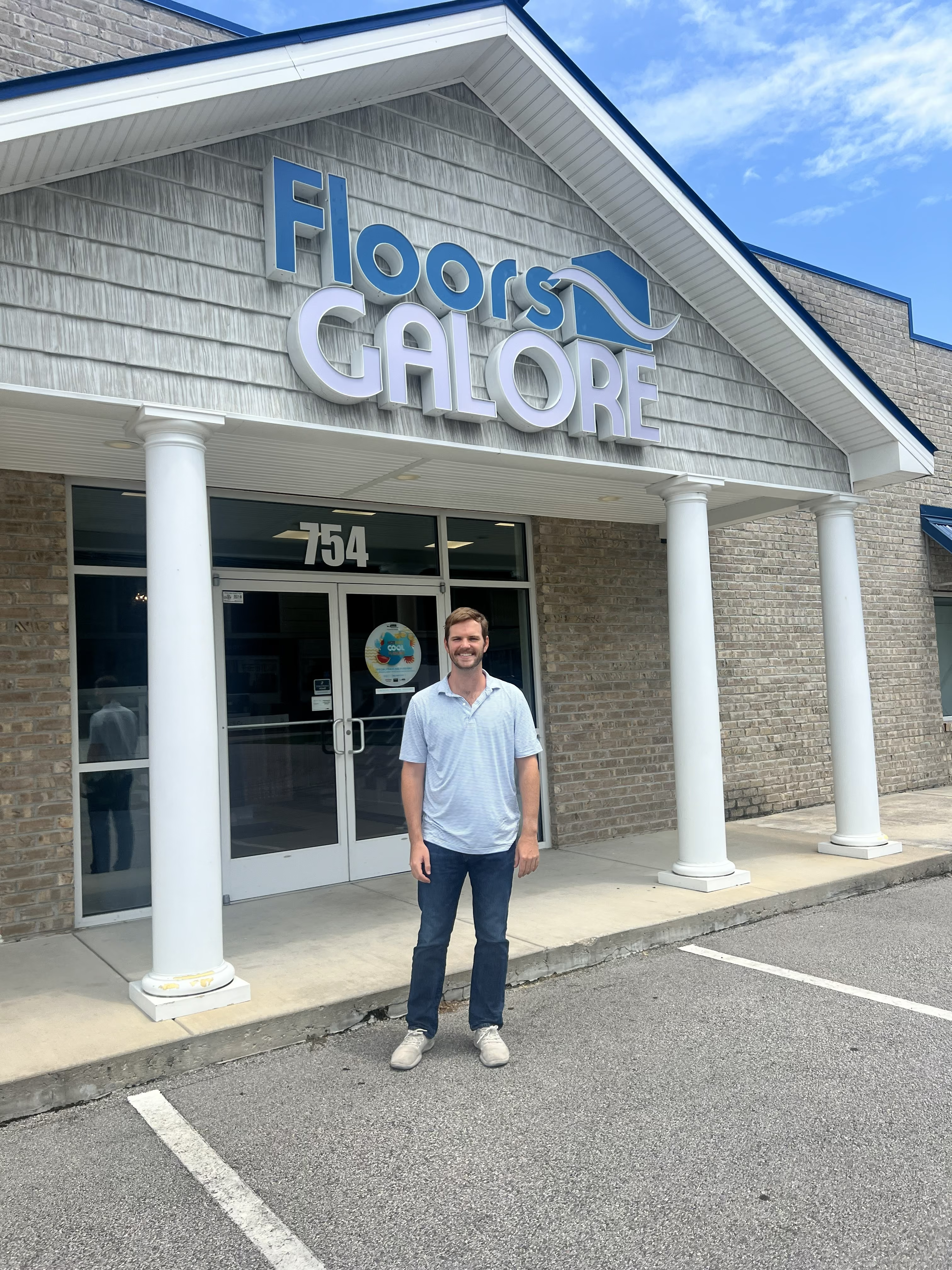

































































%20-%20thumbnail.avif)




%20-%20thumbnail.avif)


%20-%20thumbnail.avif)

.avif)




%20-%20thumbnail.avif)












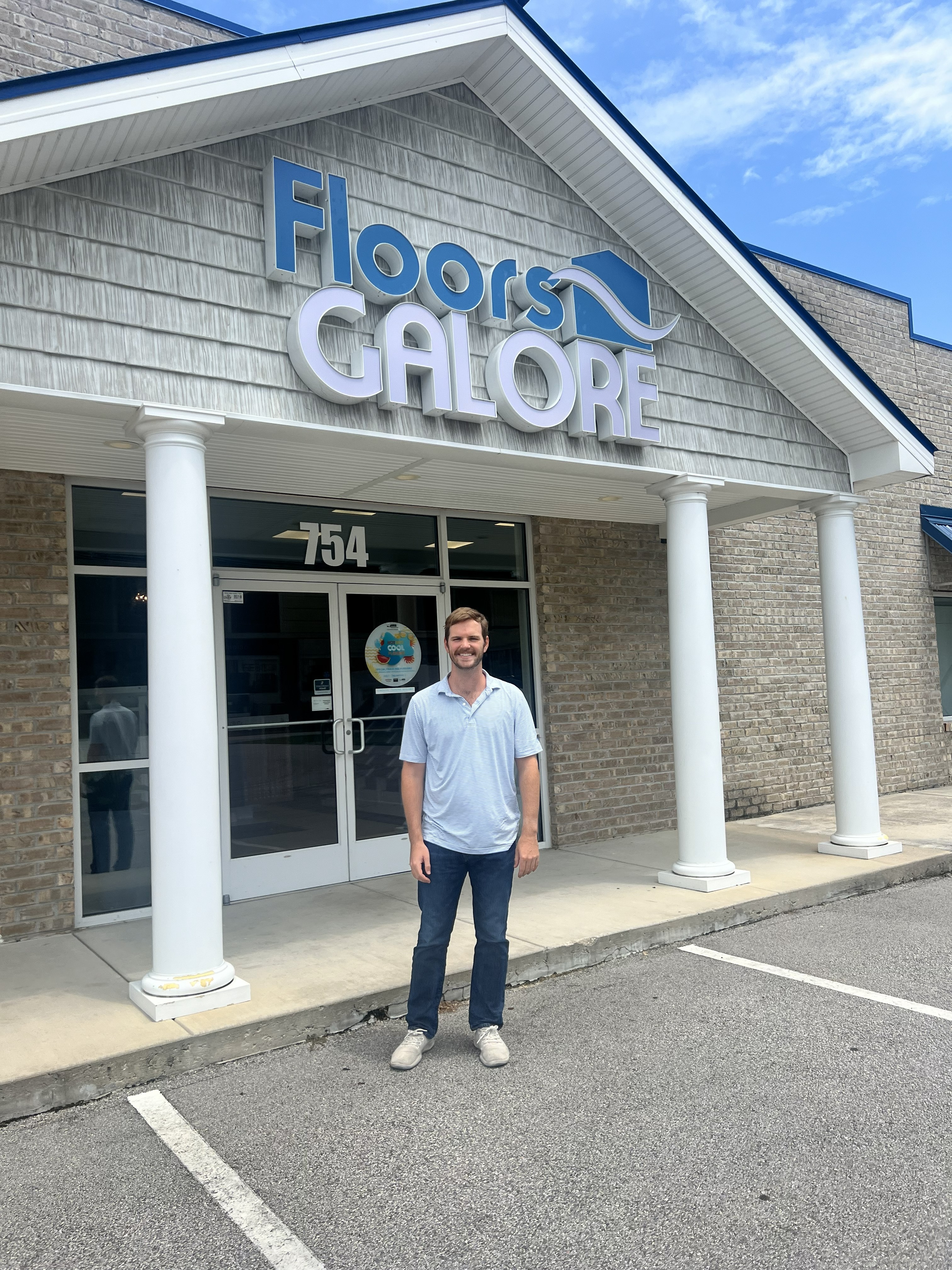
.avif)