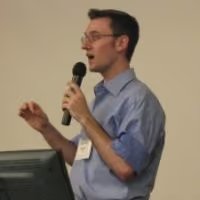
Host: We celebrate business buyer fit on Acquiring Minds, the idea that you want to find a business that would benefit from your unique skill set. But what if your resume is working in industrials for billion dollar international corporations all over the world? How do you find a business suited to that experience? Well, Adam Salmon did, and it's a fascinating one. UMEC services steel manufacturers by sourcing the machinery they need to keep their steel mills running. This is the world of heavy industry way upstream from the types of business you hear about so often on Acquiring Minds. And it was an education for me who has no exposure to this corner of the economy. The scale is different here, as Adam knew, so he anticipated taking a big swing with this acquisition into the eight figures. And it's a key reason he partnered with a firm, NovaStone, that could help him pull it off. And pull it off he did. Now running a multinational business with locations and agents in North America, the Middle East, Asia, Adam's story is a good reminder that while certain types of businesses are overrepresented in our world, the economy is infinitely complex and the possibilities for you vast. Here is Adam Salman, CEO of UMich Announcements, a webinar this Wednesday Searchers are concerned with financial due diligence and rightfully so. But focusing so much on the numbers can sometimes overshadow operational diligence that risks creating chaos post close. So come learn best practices in operational due diligence to de risk your deal and reduce those post close surprises. Chelsea Wood of Acquisition Lab will host. This is also an Office Hours, so come with questions for Chelsea. It's this Wednesday, March 26th at noon Eastern. Register at the link in today's show notes or on the Acquiring Minds homepage. Acquiring Minds Co. Welcome to Acquiring Minds, a podcast about buying businesses. My name is Will Smith. Acquiring an existing business is an awesome opportunity for many entrepreneurs and on this podcast I talk to the people who do it. The team at Aspen HR recently published a short white paper targeted at searchers Entitled A New CEO's Guide to Human Resources. It lays out the key items you should be thinking about as you transition into CEO and owner of the business you bought. The link to download it is in the show notes. Aspen is a professional employer organization or peo run by a searcher for searchers. Search fund veteran Mark Sinatra runs the company which provides HR compliance, flawless payroll, Fortune 500 caliber benefits and HR due diligence support for your acquisition, all for a fraction of the cost. Go to aspenhr.com or contact Mark directly@markspenhr.com Adam Salman welcome to acquiring minds.
[3:29] Guest: Happy to be here. Thanks for having me, Will.
Host: Adam, your story is quite unusual. From the fundraising to the business you bought teaser, it's multinational. We have a lot of ground to cover. Let's begin. You'd always wanted to be an entrepreneur, Adam, but worked in corporate for 15 years. So what was it that led you to finally jump in to entrepreneurship?
Guest: Yeah, so I wouldn't say that I was corporate specifically. I mean, I've been on this entrepreneurial path for my whole career, really. I went to Babson's master's degree in global entrepreneurship. I worked in the startup realm, moved to San Francisco, did that in like 2009, 2010. And I found the startup world to be kind of fickle. And then one of my professors at Babson introduced me, and I was writing some case studies in the kind of the entrepreneurial world at Babson. And after doing the global entrepreneurship program, working and living and studying and doing consulting work in U.S. canada, or, sorry, U.S. europe, and in and in Asia, I was brought in by Bayer Material Science to go do corporate strategy in China. So that was kind of where I jumped out of living in San Francisco doing the startup world and went in to help big companies be more lean and entrepreneurial thinking. So I spent several years in Asia doing kind of corporate strategy and they call strategic marketing. Then my girlfriend at the time, who's now my wife, moved over to China with me, and I was working in a global role. We didn't just want to be like the China business people. So we moved to Europe in 2014, spent several years in Leverkusen in Germany, had a couple kids along the way. You know, it got to be Covid time. It was 2020. We, I guess we'd been abroad for like 10 years or so, and I'd been doing other entrepreneurial things maybe on the side. A lot of my colleagues were just saying, like, Adam, you're way too, like, entrepreneurial. Like, you don't fit into the corporate mold where you kind of just play, you know, steps on the ladder. So what kind of things had you
[6:08] Host: been doing on the side?
Guest: Real estate, investing, consulting, other projects, or like, you know, when we were in Asia, we'd look at, oh, can we make this in Asia? And can we bring it back to the United States? Can we? You know, and I still had, you know, a global network of, of classmates who are all over the world. And so we'd continue to talk about different opportunities as well.
Host: Adam, one thing that you'd said to me in the pre call was That a professor at Babson steered you away from, quote, arts and crafts. What did you mean by that?
Guest: Yeah, so we're always tinkering around with, like, can we do this thing? Can we do that?
Host: And you mean in terms of new ideas?
Guest: In terms of new ideas, like the startup ideas. Can we get this here and sell it? Like, you know, when we were in the global entrepreneurship program. And I don't want to get too deep into that because it's kind of a tangent, but can we like, manufacture the shirts for the Babson store? And he's like, man, that is arts and crafts stuff. Think on a little bit higher level. Think about global industry. He was a Swiss professor, so spent time at IMD in Switzerland, also at Babson. And he's like, you really need to go after, like, large industry. And he was actually the one who made the introduction to Bayer material science. And so I really got this foray into large, heavy industry on a global scale, you know, and so that opened my eyes to how things really work with. With large industry and stopped looking at like these small startup ideas. Maybe like what a lot of the other searchers who listen to this podcast or some of the successful searchers have acquired, like Main street type businesses, franchises, smaller type companies. And so when it came, you know, if I go forward and say, okay, then I got into my search, I was really looking and I had experience in global industrial markets and helping drive industry. And so his idea was, and something I've followed in my whole career is find big opportunities that are solving lots of things. And the further upstream you go, the more profitable they can be and the more scale they have and the more you can potentially swing at something that's really huge.
Host: So back to the plot you're in, Covid, where? Pick us back up there.
Guest: So it was 2020. I. I just had my. Our. Our second child. His name is Archer. On the. I think it was like, right when Covid started. It was March 6th and we were living in Northern England. We went down, we got him a. A passport in the London embassy. And I'd already kind of negotiated with my company, like, I'm ready to relocate back to the United States. We've been abroad for 10 years. And so I think everybody has their Covid story, but we ended up just. We left everything in our rental house in Northern England. We went back to the United States, we bought a house without even seeing it, as I think a lot of other people did, and moved into a place back in our hometown. I was working all through the night in Europe and in Asia, running the electronics business for Victrex. And I, you know, as a lot of people had during COVID it had some time to think about what you wanted to do next. I realized that I couldn't retire or work the rest of my career working through the nights and then just kind of being this ghost on the Internet and not getting involved in my community. So I read this book called Buy Then Build Walker Deibel. I think a lot of people have read this book, and it was just like this light bulb went off in my head. Oh, my God, this is what I want to do. I can't believe this actually exists. And so I went out and talked to the smartest people I knew, like, this is what I want to do. I know it. This is what I want to do. You know, I talked to advisors, and I think with a lot of people who are thinking about doing the search, like, and there's a lot of people who think about it and never do it because, you know, I'm at a great point in my career. I had a good job. I had a good career going. So it took a lot of hard work and a lot of people telling me that I wasn't crazy to want to do that. And so I went around and looked for, like, okay, well, what can I buy? I got a couple hundred grand. I can get an SBA loan. Like, you follow kind of what. What does Walker Die will talk about in that book? And I looked around, and I was like, okay, I could buy a franchise. I could buy, I don't know, a gas station and these things, which, like, were arts and crafts, right? And so those don't align with my career. Those don't align with what I am qualified to run. So how can I get into the next phase? And that's when I ran into novastone, the founder of Nova Stone, Christian Malek. He also went to imd. So I think there's a little bit of a dating period, too, where I actually went back to that same professor. And I'm like, I know you taught at imd. I know that Christian went to imd. Can you validate who these people are and what's going on? And so we kind of validated each other. I wasn't ready to just jump without certainty of the next phase.
[11:29] Host: Adam, IMD is Babson's program.
Guest: IMD is a school in Switzerland, so I'd call it the Harvard of Switzerland. They do a lot of big industrial stuff. Good finance program. It's in Switzerland. Oh, okay.
Host: So Sorry, your Babson professor had gone there.
Guest: He had. He was also teaching in Switzerland. He lives in Switzerland now.
Host: I see.
Guest: Okay.
Host: And novastone is what.
Guest: And, and so Nova Stone is what you'd call like a search fund accelerator of types. I think there's a lot of different flavors as, as we all know, like of, of these different accelerators, but essentially, you know, the business model is that they help you, you know, and they really focus on mid career professionals as opposed to some of the other ones where like if you get into Harvard, you can get into several of these other companies. I talked to one lady who did the broad tree program. Yep. There's Next gen Partners, whatnot. I thought that, that Nova Stone was a good fit for me for the next step because they focus on mid career professionals. They helped us raise our fund for searching. And in 2022 I kind of jumped into the next phase of, okay, let's go find a company to buy.
[12:42] Host: And why Nova Stone? So, so connect the dots between choosing to work with an accelerator versus, let's say doing your, you know, using your 200 grand and an SBA loan to go do a self funded search. You've already hinted at scale. You wanted something of larger scale. Say more.
Guest: Yeah, so that, I mean that's entirely what it was. I looked and I said, what can I buy for a couple million dollars? And that was not, you know, what my career had led me to. And so I said, okay, well I'd rather have. And I think you've talked about this a lot on some of the other podcasts is do you want a smaller thing that you own all of or do you want a bigger thing where you have a smaller piece of the pie? In this case, I thought that my hand was a little bit forced into having a smaller piece of. A larger piece because of my skill set, my unique global skill set, working in global industry.
Host: And when you think about the numbers around these opportunities, are you think, are you drawn to bigger scale and even your professor's point about bigger scale and not doing arts and crafts because ultimately the payday to you, the entrepreneur, will be, will be larger.
Guest: Oh.
Host: Or no, not necessarily. It's just simply bigger numbers means more impact downstream, just playing at a higher level sort of thing, even if it doesn't necessarily end up making you wealthier, or is it both?
Guest: I mean, certainly the, the personal wealth is why I think people want to go down this path and, and also just, you know, being the captain of your own ship. So I, of course, yeah, the wealth is part of it. But it's also just being able to be a part of something bigger and something which really fit with my skill set. Right. I've heard of a lot of searchers that go into something that they've never experienced. But I, you know, my, my resume is really unique with spending time all over the world throughout the majority of my career. And I wanted to find something which dovetail with that. Cause I really liked that.
Host: Yeah.
Guest: And the only way I could do that was by finding a larger. I mean, actually after a couple years of searching, I was able to find some of these other things. But certainly having financial backers in a program backing me allowed me to take swings at some of these things I never would have even thought about had I not had investors behind me.
[15:12] Host: An SBA loan broker, as opposed to a direct lender, doesn't work for a particular bank. Instead, the broker pairs you with the right SBA lender for your deal based on industry terms, risk thresholds, then helps you navigate the process better than many lenders themselves do. Matthias Smith of Pioneer Capital Advisory is just such a broker. Matthias worked at two of the country's top 10 SBA lenders. So he's been on the inside of the SBA process and knows well the pitfalls and hurdles and how to avoid them. He struck out on his own to laser focus on the ETA in search space. Our niche is his niche. You'll see Matthias at all the ETA conferences. He's closed over 30 search deals since starting Pioneer in May of 2022, including some acquiring minds guests. To learn more and get in touch, go to pioneer capitaladvisory.com or click the link in the notes. And so when you take a smaller slice of a bigger pie, that means that a Nova Stone in this case takes more equity in the final enterprise. Can you share what the terms are that they provide?
Guest: Yeah, I don't know that I want to get into the term so much, but yeah, they do get a part of the carried interest which is in line with what I'm getting. And so we split that part up. But you know, with, with the search fund model, there is a percentage of carried interest which comes along, meaning after equity investors get their money back and their preferred rate of return, then based on different performance metrics, you will get carried interest tranches which vest over time performance and just consummating the acquisition.
Host: Yep, yep. And, and so I, I am not sharing NovaStone's terms here because I, I'm not sure I even know them exactly, but I, it's probably in the ballpark of what many of the accelerators are, which are the traditional search terms that you just alluded to. And Those are basically 25% carry. 25% of the final proceeds of the entire project go to the searcher. But those are in tranches of eight and a third. Eight and a third. Eight and a third based on tenure and performance. Everybody can can Google what those are specifically. So I'm saying that it's probably in that ballpark. I have had one other guest, I think just one Nick Akers, who's actually who bought an MSP in St. Louis and actually provides. Provides IT services to searchers. Now because of his own background as a searcher who went through Nova Stone, he was actually their first American searcher or maybe their first that actually consummated a deal. They are. Nova Stone is based in Europe. Did you find that element of it appealing given your international orientation and that they were Europe first and only recently came to the States.
[18:17] Guest: I think it made it easier where we understood each other. They were trying to get into the US I had spent a lot of time in Europe. I think we kind of could understand each other. I also could vet them through the like the IMD contact which I talked about.
Host: Yeah.
Guest: So yeah, I think made for an easy transition to the next phase.
Host: Yeah. You had also mentioned there was more. You perceived more value in just other than just, you know, bringing on them and whatever investors they could plug you into in their to swing bigger. There were other services that you felt they were bringing value to. Elaborate on this.
Guest: Yeah. So, you know, as, as I was working in global corporates, I was doing some like M and A scouting and some corporate development type things. But I had never acquired a company. I didn't have a lot of those M and A type skills. You talk about some of these independent sponsors. Like that is not my background. My background is really as a manager and an operator. And so the idea of me going out and, and getting a larger opportunity under LOI there was a steep learning curve. And so having a team, a legal team that could help drafting all the legal documents, an M and a team that could do all the financial modeling and whatnot, and just having people that I could work with and talk to about different opportunities and like work through those together and say, yeah, this one's great, this one's not. That was really helpful for me. And so there was definitely a benefit of working with novastone and just making sure that we both agreed from what an investor will look at and what me as an operator would have the highest chances of continued success.
Host: Okay, tell us then about what the parameters are, what your search looked like. You've touched on it a number of times, the sort of flavor of company that you wanted. But can you be more specific?
Guest: Yeah. So I was looking for global companies, obviously global, industrial, upstream. So basic materials, basic chemicals, B2B. So business to business. You're not working with consumers. So really looking for something which I was kind of touching on before, which is this global and industrial nature. We looked at a lot of really cool companies. While searching is really nerve wracking because you're putting it all on the line, it's also really cool to see what types of businesses are for sale.
Host: Yeah, I'm sorry.
Guest: We found. That was a really fun part. I went to a lot of conferences. I think another thing I'd mention is that all of my contacts were really all over the world, but they weren't focused in Colorado, where I was born and raised and where I was hoping to find an opportunity. And I didn't know the bankers, the lawyers, the accountants, business owners. Right. I kind of left after high school and then I didn't come back until I was like in my late 30s. And so I didn't have an established network. So I spent a lot of time going out and trying to find these people at deal conferences, independent sponsor conferences. And so getting into that was really a part of my search and trying to get my pipeline moving. Mm. And we found a lot of really cool opportunities. We submitted. Oh, I should have refreshed on my pipeline. But we looked at 83 companies over the time we're searching. We submitted about 12. Lois. We had three under LOI and different and, you know, they fizzled out for different reasons. And I. I didn't know if I wanted to talk about this, but we were getting towards kind of the end of my fund, the end of the search. And. And this was really an opportunity which is like, we really like this and we have conviction in it and we think that the price is right and we think that the. More than anything, the sellers are ethical and we can look them in the eye and we think that they're good people and they have a succession issue, which is what I can solve. And my background jives well with the. The problems or, you know, not. Yeah, the problems which this company has. Or, you know, they call about the hair. Right. Like, what type of hair does this? Every. Every deal has hair. So if you're looking for a deal, don't look For a deal with no hair, look for a deal that has hair that you uniquely know how to shave up and trim up.
[22:53] Host: Right, Exactly. It's so. It's such a good way to think about it.
Guest: And so there. I listened to another podcast and the name is escaping me, but there is this gentleman who talked about the hair and size matrix. Right? So there's. There's big deals or small deals on one axis. There's hairy deals and there's low, not hairy deals. It's not worth anybody's time to do a small, clean deal. And, you know, if you go to a hairy deal that's small, like, you're going to spend the same amount of time and effort. And so you probably don't want to do a small hairy deal, and a big clean deal is going to go to somebody who's going to pay like a 10x. And we went down that route of looking at clean, big deals, and we just kept on chasing multiples, and we weren't able to, you know, consummate those acquisitions.
Host: Chasing multiples means everybody's outbidding you. Your competition is outbidding you.
Guest: Okay, let's put a 6x on this. And then the broker's like, no, a 7x. And then, okay, we'll do a 7x. Okay, now it's an 8x. And you just keep on going and you just keep on getting outbid. And you're like, okay, like, this isn't one for us. And so we had to do that a lot on a lot of. A lot of clean, larger deals. So the natural thing here is like, find a big hairy deal that you uniquely know how to shave up. And so I'm not saying hairy is
[24:16] Host: the magic quadrant or the magic square
Guest: of the quadrant, the magic square of the quadrant that you uniquely know how to kind of shave up. And so, you know, that's. Now, I hate that. That's like the. The preface of the acquisition, which I did. But, you know, this. Every company has hair, and this one has its own unique hair.
Host: And so, well, we're going to turn, before we turn our attention to the business itself and hear about this hair that you're going to shave up a little bit more. On the search, you said all these interesting companies that you found. That's one of the. The fun parts of this, you know, where you're playing here. This, this industrial global upstream. You know, this is a very unfamiliar world to me. I just imagine, I don't know, big factories with giant equipment moving around. I mean, I don't Even know how to conceptualize it. Give us. Give us an example or two. And then also, what size business? I. I imagine businesses like this are very large businesses. You've talked about wanting to swing big, but how big, how. How small can you actually find? So. So just paint more of a picture of this. Of this type of business that you were looking at. And some examples, please.
Guest: Yeah, so it was really difficult to find something. Like, my mandate was, like, under 50 million as kind of enterprise value. Enterprise value. Under 50 million.
Host: Okay.
Guest: And of course, you know, if I'm going to have other investors and make it worth my while, like, it had to be kind of over $10 million in enterprise value.
Host: Okay.
Guest: Let's talk about some of those cool companies that I fell in love with. One was a company which was making roof racks for, you know, Toyotas and the Tacomas. There are a lot of really cool outdoor companies, which I like. There was one company I became friends with, with the sellers. They had a great exit, and they were making roof racks for, you know, different vehicles. And they had gone through the process to, like, automate their production. They would. They would build it, and then they'd have robotic laser cutters that were cutting these things out, having robotic welders, and they had, like, their whole process going, and they were selling them online through these, like, automotive blogs. And it had scaled really well during COVID and it was really a clean, nice deal, and they ended up selling that. So that one kind of.
Host: Oh, well, Adam, that sounds like a B2C business. That was.
Guest: That is a B2C. Yep. Right.
Host: Okay.
Guest: So then if we went more into the B2B space, we found this really cool company in Minnesota which makes prefabricated, tensioned fabric buildings. So they were manufacturing buildings, and they would sell them all over the world, and they could go into, like, lots of different verticals. So if you have these urban heat islands, you can put a. One of these canopies over your tennis complex, or they would do equestrian centers, or they would do, you know, put it over a basketball court. And they were manufacturing these buildings, and then they had this tensioned fabric. They had it on their website. They. They drove, like, a backloader on top of this fabric just to show, like, how robust and durable this fabric is. And then they made that as a system. They sent them all over the world. That was another one we ended up chasing. And I really love that opportunity. But so.
[27:36] Host: So manufacturing is. Is where. Because another word I heard you say a lot is materials. And so I'm Thinking of like, I don't know, giant quantities of some sort of, you know, powder. Powder being sliced up and moved around an enormous warehouse or something like that. So that's what I can't envision. But the two examples you just, just gave me feel more familiar to me and the traditional manufacturing.
Guest: Yeah. And of course my background was in these large kind of chemical companies. Yeah, it's very difficult. I mean, if you're going to go for a large, like a commodity chemical.
Host: Yeah.
Guest: You're talking hundreds of millions or billions of dollars type companies. Right.
Host: Okay.
Guest: We looked into technical ceramics, we looked into gases, we looked into like ore and, and moving lots of earth and stuff like that. They're capital intensive, which is kind of one of those things you don't necessarily want to get into in a search opportunity. So we wanted something, if you get to the financial side of what we're looking for, good margins, not very capital intensive, and not a lot of working capital necessary.
Host: Go back to your financial parameters. 10 to $50 million of enterprise value. It's a very wide range. And, and also geographically we haven't talked about. Despite your global orientation, you were looking for a business based in the US but presumably if it had international and international, it sold internationally or had some sort of international component to it, that would be a good business buyer fit. But you wanted HQ to be us.
Guest: Yeah, we lived around the world. I was hoping to raise my kids in the United States. I was also just hoping to stay in Colorado. So the first six months of the search was exclusively just networking up and down the front range of Colorado. So then we started widening it and widening it. And I saw a lot of these, like big industrial companies in the Midwest. I'm like, I'm not going to move to the Midwest. Not yet. Not yet. And ultimately that's where we, where we ended up coming and purchasing this company.
Host: Let's hear about this company.
Guest: Okay. So yeah, we were able to find a multinational company that supplies steel manufacturing equipment to America's steel manufacturers. We have operations in Canada, us, Mexico, in Asia. We're selling into South America, we're selling into the Middle east, we're selling into Europe. So it's, it's, this is a global industrial company which helps keep, you know, vital assets such as steel and steel manufacturing intact.
[30:23] Host: So give us an example of something that you produce and sell even if we don't, you know, keeping in mind that we don't have the vocabulary of a steel manufacturer.
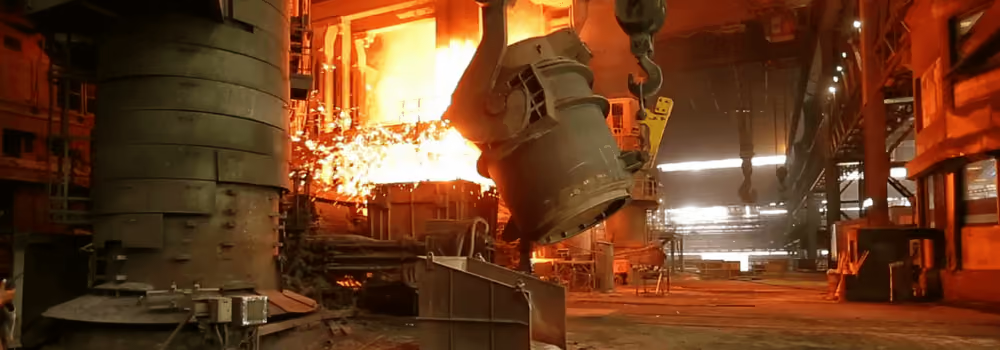
Guest: Yeah. So one of the cool things about this company is they Have a super wide portfolio and they have a network called UMEC Manufacturing Group. And the group is a network of manufacturers that we vetted with ISO standards and we say, yep, we believe in their quality, we believe in their capability, we know that they're financially sound and there's whole ISO standards around that. And we then once we qualify them into our business, then they become our manufacturing partner. And so then our remit is to contract with our, with our customers. Okay, what type of machinery do you need in order to keep your steel manufacturing facility going? Steel manufacturers differentiate their spend in two ways. One is what they call mro, maintenance, repair and operations. This is the spend they're doing every year just to keep the lights on and to keep rock coming in one side and steel plates coming out the other. And you know, this is a very high temperature, dangerous sometimes environment where these things are constantly eating themselves. And so a customer will be looking to replace one of their furnaces. We can help with some of the equipment which you put around your furnace. We can help with ladles, which is what you're carrying molten steel from station to station in. We can help with transfer cars which is another thing, moving molten steel between stations. In the steel manufacturing process, we go upstream into mining equipment. So if you're, if you're mining or, or processing coke, which is like a coal, which is a refining process, or turning taconite into sinterman, which are the raw inputs for the steel manufacturing process, we help at all of the steel equipment you would need in order to manufacture steel. It can go from the, the mining equipment down into the coke and sinter plants. It can go then into this iron making process. And then iron going into steel is really refining out some of the impurities and putting in other types of metals to get the attributes you need in the final product. We have rolling equipment. We, and really like whatever you can imagine in a steel manufacturing environment we can provide.
[33:02] Host: So you provide a catalog of all of these different types of, I don't even want to call them products, machinery, equipment that can be delivered to your customer. And you're essentially a centralized central location to acquire that equipment and, and then, and then an order and they, whatever look at your website or somehow or just maybe it's more of a consulting agreement where they bring you in and, and you spec what they need and then you turn around and, and not you don't sub it, but you source it for them and then kind of take your piece and, and, and, and manage the whole process. What's the, what's the, the workflow or the. Yeah, the customer flow.
Guest: Good question. So we don't want to be just like a shop, right? What we really want to be is like a partner to the, the steel manufacturers where we can come in, work alongside them in their capital planning and then say, okay, well what do you need this year? And there are a couple companies which will come in and turn, they call it Greenfield, where they turn a green field into a steel manufacturing facility. And there are a couple of these companies around the world and they're the ones who will manufacture the majority of all steel manufacturing assets. The steel manufacturing assets in the United States are, you know, 100 years old at you know, varying ages. But you know, a lot of the times we'll have a customer who will have a 20 or 30 year old piece of machinery. Oh, we only have one print from this thing. Can you guys help us keep our steel manufacturing process going? So we actually go in, we understand exactly what the customer needs. First they say okay, we're doing RFQs, request for quotation, who can make this thing for me? And then we, they have kind of their own Interface for submitting RFQs. So UMAC is working with a lot of these companies and they're in their system. So we kind of have a steady flow of inquiries coming through this RFQ systems. And then once we make a quote for them, then they will, then they'll select one of us and then we'll come in and we can design
Host: the
Guest: equipment for their process so it fits in essentially right into their manufacturing process. Or we can do like, you know, nuts and bolts and parts which can help them self maintain these products. And so then, you know, we have the rfq. We win the PO based on going on an initial kind of budgetary quote. Then we say, okay, yeah, we get the product, we get the project, then we'll go in and actually go through a very rigorous process so we understand every part and piece of this process. What is the, what is the size footprint, what's coming in, what's going out? And so there's a lot of questions on this request for information as we're really speccing out the project. Then we go around the world to our spec'd and manufacturers who we work with and we handle everything from specifying it. We'll do quality control in process when it's being manufactured. We then handle the post factory kind of inspection to make sure that it's exactly what the customers want. Then we handle the shipping and logistics and paying the duties so our customer can say, hey, I need this thing. And then several months later they get that thing right at their dock and they can just install it, which is, you know, what is a customer's alternative? Well, they could work with, you know, one of these large companies that make them a whole new one and they'll be constantly upselling them to just, ah, just wipe the whole thing and we'll do a whole new process for you. Or they have to set up their own whole sourcing division somewhere else in the world. And that's very difficult. So we become kind of this one stop shop where you can have a partner who understands your manufacturing process, gets the information from you and completes that whole process in several months.
[37:15] Host: And Adam, is this something where you sit in the value chain, your value proposition? Is it kind of unique to umec? Was this an innovation by the seller founders of this business or is there a whole category of businesses that do what UMIC does?
Guest: So I don't think there are a lot of people who do exactly what UMIC does. What what currently exists is there's large engineering firms that will do the engineering. Um, and then there are a lot of companies that will do a single type of product. So okay, we're a company and we manufacture rolls or we manufacture ladles, or we manufacture slag pots. And that's what we do. And if you need one of those, you come to us. Yeah, UMAC is actually somebody who can go across the whole process for, for, you know, mining iron, steel making, rolling, galvanizing and you know, out they can take care of a customer through that whole industrial process. And, and there are not very many of these companies in the world that exist.
Host: Fascinating business, Adam. Okay, and then it's, it's multinational component. We, we, I heard you say we sell into what, Mexico, Latin America. Those are where customers are. What is the multinational? Give us more on the multinational element to this business.
Guest: Yeah, so our remit to a large degree is North America, where we focus. So we have offices and we call them product managers because they're really stewarding our process with the customers. They're not necessarily just salespeople because there's a lot more of a consultative aspect, but we have people and enterprises in Canada, US, Mexico, and then we work through an agent network in other parts of the world into Brazil, Chile, and then we have a kind of a Middle Eastern agent network in India and in Bahrain. We have other agents in Germany. And so we're truly a global company. And all of our customers are the steel manufacturers of the world.
[39:32] Host: Okay. Okay. So in all of those countries you just named, there are. Steel is manufactured, those are where your, those are your customers. And you have boots on the ground. You either have a location or you have an agent on the ground that is selling into these customers.
Guest: That's right.
Host: Okay. Okay. And numbers around the business. Can you share that?
Guest: Yeah, I don't want to get too into it, but you know, top line revenue between 25 and 50 million EBITDA is, is in the high single digit millions.
Host: This sounds like it met your criteria in terms of size. And how did you source the deal?
Guest: It was actually one of my interns who found this opportunity. Um, so he found it on kind of an obscure. So I guess, I guess they found it on axial and it had, it had fallen through, I think through the cracks because not a lot of people, you know, had the skills to trim up the hair on it. And it was also through a Canadian investment bank. Yeah. So as an axial deal through, there
Host: was a broker deal and HQ, like you have multiple locations, but HQ is U.S. or HQ is Canada.
Guest: HQ is in Cincinnati, Ohio. UMEC stands for United Metallurgical Equipment Companies of Cincinnati. So we're out of Cincinnati.
Host: What do the following acquiring minds guests all have in common? Doug Johns, Morley Desai, Tim Erickson, Chirag Shah, Shane Ursam. They all went through the Acquisition Lab, the accelerator in community for people serious about buying a business. But they represent just a sliver of the lab's success stories. The number of deals across the lab's cohorts now stands at over 120, with over $300 million in aggregate transaction value. The Acquisition Lab was founded by Walker Deibel, author of Buy Then Build, the book that introduced so many of you to the very idea of buying a business. The lab offers a month long, intensive, almost daily Q and A sessions with advisors, live deal reviews with Walker, deal team introductions, and an active community of serious searchers. Check out acquisitionlab.com link in the notes or email the lab's co founder, Chelsea Wood. Chelsea Buy, then build dot com. Great, Adam. And so this is, as I said, met your financial criteria. So big and hairy. What was the hair in this particular deal?
[42:28] Guest: I'd say what are some of the things which investors had to get comfortable with? One is the scale. This is not something which searchers usually go out for. Two is probably the industry dynamics around the steel industry, you know, can be linked to, to infrastructure spending, which can be cyclical. We got more comfortable with that because, you know, there is an MRO aspect. And, you know, just to keep their lights on, steel manufacturers have to pay 7. What's the number? 75 or, sorry, $4 billion a year just in the United States to just kind of keep the lights on. And with the MRO spending, so based on the, on the revenue of this company, you know, we thought that it was just a drop in the bucket and there was definitely room to smooth out any cyclicality in the industry.
Host: Did you see cyclicality in the business as the business's performance historically?
Guest: No, actually not. And there had been tariffs on some of our products starting in the first Trump administration. And so the top line kept on kind of growing steadily, and the EBITDA was able to kind of grow lock and step with that growth. So while that was a hypothesis and something you would see from a finance background, when you looked at the actual numbers, you're like, actually their top line was pretty stable and they've consistently grown over the last. I think we looked Back to like 2014, and the top line continued to grow. And based on different things in the business, like during COVID they actually didn't slip too much knowing what happened. But, you know, there was a little bit of a dip there. But that gave us a lot of confidence that even when the world shuts down, you know, this industry is still moving.
Host: Yeah, absolutely. Great. So. So the being tied to steel was initial hair or, or at least quality of earnings, quality of revenue raises questions about that.
Guest: You.
Host: But you got comfortable. What about the. In the international nature of it, the. The scale of it? Was there anything about the business that was hair in the sense of the business is weak in some way or has some structural problem or something to your point that you can come in and fix that you're uniquely suited to fix.
[45:08] Guest: So I think, and this is maybe a discussion for a whole nother podcast, but the, the consolidation of many disparate company entities around the world is a really cumbersome process. And so this company had done really well at cobbling it together. But I think something we really realized early in the financial diligence, which took like almost a year, by the way, to get from LOI through close, you know, the company needs some accounting work just to make it super efficient and so that we can drive the business based on financial metrics that we can see quickly after the close of the month. So there is some accounting thing there. And then I think just the geopolitical aspect of the steel industry, like, if there's anything going into an election year, it's, we want the American steel workers to stay productive. And so being a company which has global sourcing was a little bit nerve wracking, you know, and so because of tariffs, because, because of tariffs and because, you know, optics, optics. And you know, so I think the, the thesis here was will, will Trump get elected, yes or no? And if no, then it's fine. And if yes, then maybe it's fine. And then if Trump gets elected, will there be tariffs or not? And so, you know, we've kind of hit two, which are, we've already hit two of those things and we're still doing really well. So, you know, and then I think the third part of the thesis was can we, will, will the world still spin and will things really change that much even if there are tariffs? And so far I think we've seen that and knock on wood, but the company continues to stand strong with a global sourcing approach. So we'll see. But this is a very geopolitically sensitive time in the US and specifically with, and it's not even like outside of the US or not like, you know, some of our customers only want to buy out of Pennsylvania or out of Ohio or something. So there's even reach.
Host: Why it would seem like your business model is actually pretty well defended from some of these possibilities because you're sort of, I don't know, a marketplace, a clearinghouse where you can, if you know, some steel manufacturer doesn't want anything coming from, you know, a country in Asia that shall remain unnamed, you, you just, you just plug in. You're a great solution because you can source from somewhere else. And indeed, like, it actually seems like your value goes up because as the geopolitical winds shift and the end user, the steel manufacturer maybe wants to change where they source from rather than, to your point of, you know, they don't want to do the sourcing internally anyway. But particularly when they have to resource some other new piece of machinery, your value goes up because that's the very, that's the very service that you provide in, in a time when sourcing is all of a sudden, is all of a sudden, you know, being newly looked at.
[48:50] Guest: Yeah, I mean, if I'm, that's, that's
Host: how you, what you told the investors.
Guest: I think there's a macro narrative here where like, yeah, it is out of fad to have global sourcing right now. Right. We're going to make everything, anything and everything in the United States and it's going to be great and we're going to have jobs for everybody. My Personal belief. And the way I kind of got a lot of the investors on board is like, actually, you know, a lot of these things which are being made like, aren't super clean. And there's something called the epa. And the reason we don't manufacture a lot of these heavy industrial products in the United States is one, the EPA doesn't like it. Two, it's hard to find welders and skilled work people to make really high quality fabricated parts in the United States. And despite the, the head, you know, the macroeconomic narrative right now, we believe that it's, it's impossible to detangle from the global supply chain, which was. Has been built up over the last, you know, three decades.
Host: And so to be clear then, Adam, your. Where you source from is almost always offshore. So you don't, like, you wouldn't source something that's domestic to your end customer in Pennsylvania because they would just go directly to that, to that provider themselves sort of thing.
Guest: Yeah, most likely it's not to say we don't have partners in the United States and we do have a good amount of partners in the United States. But, you know, people go to UMAC because they want to find global sourcing options and somebody who really understands the technical specifications required in this very rough and potentially dangerous industry where people's lives are at stakeholders. And so does America want to make good steel at it? You know, with. With good cost of inputs? Like, I think increasingly more, the answer is going to be yes, despite us trying to. Despite us trying to like, make ourselves independent. And I think there's been precedents also set with like the solar panel industry where we want to make solar panels in the United States. Okay, great. But do we want to make solar manufacture. Solar panel manufacturing equipment? And there's been precedents set where actually solar manufacturing equipment isn't taxed at the border because we want to be incentivizing the domestic manufacturer of these critical inputs to our society. So, you know, there's definitely that dynamic going on. And we think that for one, you know, our acquisition price and also the macroeconomic narrative, we think that this is a good time to get in there and if we can weather the storm, which it seems like we are, let's knock on wood and talk to me in a couple of years. But I think we have good indications that we'll be set.
[51:50] Host: Yeah. And you mentioned acquisition price. Were you able to not chase multiples this time around?
Guest: Yeah. So usual multiples for this kind of opportunity would be five and a half to six And a half X. I'll just say we didn't pay that. And so, yeah, we're, we thought that it was a good price, which took all of the risks into factor. I think that. And also, you know, how we got into the fundraising and we can, we can go on to that part. We really made sure that we had aligned interests. You know, this was a company which has very smart technical experts, honestly, in the company, which, you know, a lot of times a lot of investors said, oh, but you can't replace those people. Yeah, these are very technically excellent people, and it's hard to find these people. But this was a company where the employees wanted to be a part of the continued success of the company, but they weren't like, let's say, leveraged buyout experts, and they hadn't done acquisition or recapitalization. And that's, you know, a whole skill set of its own. So with us being able to come in and navigate that and allow employees to come in, you know, I think it's a win, win, win, where the company solves a succession issue. The company is able to recapitalize. Employees are able to come in and continue to grow with the company and be investors. And, you know, with, with the, the value which the sellers maybe left on the table, you know, we thought it was, it was just a good opportunity.
Host: And so employees were able to get some equity through this recapitalization. Through your acquisition.
Guest: Yeah, we left a large amount open for them. Some wanted. Actually there was a case where we, we actually curtailed it because they, they wanted more and more. More of the company. We said, okay, well, like, we're going to leave a good portion for you. But we didn't want. I think the beauty of the way we structured it is that we really want everybody to have like, a minority stake so that people aren't forceful in the boardroom. And so with that, we were able to. To craft a really good cap table with a lot of different types of investors and then also a good board which represented that variety of investors and allowed the company to go forward with strong leadership and advice from a great board.
[54:26] Host: Adam, I want to hear about the fundraising. We need to make sure we leave time for that. But before we get there, I just want to circle back to the diligence that you did that took a year and the messy accounting or messy books. So just paint a picture. We're not going to get into the nitty gritty, of course, but paint a picture. Are there basically different sets of books for all of these different. All of these different locations around the world and where. Where the agents operate around the world. And each of those need independent looking at. And cleaning and then ultimate consolidation.
Guest: Yeah. So I mean that. Yeah.
Host: Maybe you just gave us an answer. The answer that I was looking for.
Guest: So there are several entities that are working across many different currencies and several banking relationships, and they're using an antiquated accounting software. And so between that, between all those different factors, you know, that the books were consolidated annually, maybe not even by, you know, every six months. And so to get comfortable that you can drive a company, you know, a founder and an owner who's done this for 30 years can kind of like, judge whether things are going right or not. Right.
Host: Yeah.
Guest: Well, I'm coming in and I need, like, data in order to see if. If the ship is sailing correctly. It was. It was a bit difficult to get comfortable with that and reconciling many different currencies and accounts and accounting softwares on a monthly basis. And we're still in the process of doing that. So that's, you know, some of the. The accounting topics.
Host: Okay. Okay. All right, let's hear about the fundraise. This is. This is. Was a tumultuous part of the story, as it is for many acquisitions, but particularly in your case. What can you tell us?
Guest: Yeah, so maybe I'd start with just what I learned. You know, when I went into the search, I had these investors who were going to back me, and usually there's, you know, five different investors, and they're going to back you to go buy this company there. I think what I learned is that fundraising is a messy process. It's like a revolving door. There's always people going in and going out, and a lot of people look. Looking at the opportunities. And so it happened that not all of the investors who came in initially wanted to a stick around. And it wasn't just about the opportunity, but some of those people had gone different ways as well, just with the timing and their portfolio allocations or whatnot. And then also with just the unique nature of this business, someone's like, oh, I was hoping that you'd buy a franchise or something local in Colorado or whatnot. And one investor's like, wow, man, you are dancing with giants. I still remember that quote on their rejection letter after I'd presented it. This is just too big and I don't understand it. And it's away from my core skillset as an investor.
[57:43] Host: Yeah.
Guest: So whereas in the past I would have said okay, well, this deal's dead. I kind of was like, no, I think I really am, actually, I have conviction around this opportunity. And so I started going to independent sponsor conferences, you know, going through large lists of investors, and we were able to cobble it together. But at one point, you know, we had this idea that maybe we would try a crowdfunding round because there was another searcher who had experience in this area. And we said, yeah, let's give it a shot. And so we, we put it online. And this is maybe for any searcher who's thinking of doing such a thing. In order to do that, you know, you need to let all of your investors know that this is the company's name and everything about that company so that they can make an informed decision. But, you know, because we are under an NDA on this opportunity and because it is like a very unique company where it's, there's only a couple of these companies in the United States or the world, like, you can't just go around and say, you know, here's this private company for sale, because then competitors, customers, employees would know about that. And so we did it like on this anonymous basis. And the idea was that, okay, you can invest. And then we knew there was this loophole where, okay, you need to know the company name. So once they pledge their money, then they would go through an NDA round and then they have some time to sign the NDA and then they can pull their money at any time and then they hopefully stick around with it once they know the company's name. We ended up raising over, we got to $1.3 million that we raised. And the night before the fundraising closed, we got a call from a three letter government agency, the sec, and they said, we don't think this is compliant. And I was like, are you kidding me? So we, we quickly backstepped and we're just like, yeah, I mean, we're not doing anything unethical here, but because of the point in this fundraise and we can't like violate the NDAs and whatnot, we ended up giving that million over $1 million back.
[1:00:14] Host: And the SEC's problem with it was this, this flow that you'd figured out about kind of the loophole to reveal the company name, but only the other side of an NDA. And they said that that loophole was not legit.
Guest: They said, they said that you, anybody who's putting money into a transaction, even if it's not taken, there's, you know, there's already there's like an escrow account.
Host: Yeah.
Guest: And so they put the money in escrow account, they get the NDA. That process does not fit with SEC compliance.
Host: I see.
Guest: And so it was not able to
Host: go forward.
Guest: And quite frankly, I think I'm happy about that because we have a lot of investors now, but none of which are. I mean, when you start dealing with thousands of people, I don't know how to handle K1s for those types of investors. And this.
Host: Yeah, it's, it's a different, it's a different thing.
Guest: So anyway, this million plus that you,
Host: that you raised on We Funder, how many individual investors were there? What was the, the ticket?
Guest: Oh, that's everything from. I think we put a $100 minimum. No, it was more than that. We raised it up from there. But the largest ticket we got was a hundred thousand dollars. I remember that.
Host: So a hundred thousand dollars or less, but down to single digit, thousand dollar investments. Wow.
Guest: And, and it all, they all ping your email inbox. And so I had for like weeks, just like every email is from the, the fundraiser, the crowdfunding platform.
Host: Wow.
Guest: So, yeah, that was a crazy experience and I learned a lot. And thanks for all those people who made that happen. It just didn't work in this acquisition scenario where we needed to keep confidentiality.
Host: But, but say more about the fact that even if the s that you think that the SEC's putting the kibosh on this was actually a blessing in disguise that you probably wouldn't wanted. Have to go. Wanted to have gone down this path anyway. To go down this path anyway. Because you know, other searchers who may be willing, who are listening, who may be willing or able to share the name of the company. Do you suggest looking at We Funder or not?
Guest: I don't know, man. I guess that's something that each searcher would have to do on their own. But I would say that it's hard to get traction. And unless you know how to get traction and there are certain people in my network who are really helping to get that traction, it's hard on We Funder. So it's hard for you on We Funder.
[1:03:05] Host: You're making it sound easy, you know, your phone blowing up. But in fact there are a lot of investment opportunities posted on We Funder that get no traction, that get no investment. So you were doing something, you had talent helping you do that. So don't, don't assume that somebody can just put their search deal on We Funder and have their phone blow up with 500,000 people who want to invest in their deal.
Guest: Right. That's the first caution, I'd say. And then second there's this, I mean when you get a company under loi, like, like, you know, most of the time a seller will get cold feet after two, three months. Right. We had an extended process which lasted over a year because of some of these, you know, accounting things and all the diligence we were doing. But you can't do a raise on we funder and it took us a month to do the paperwork. You also have to have your search audited. You know, it needs to be compliant on certain levels. So it's, I wouldn't necessarily advise it unless you kind of know how to, how to do a fundraiser and you've done it before and you have patient and willing partners and sellers who will work on that. But in this scenario it didn't work. And I think it was a blessing in disguise because we were able to ultimately, in my opinion, find really great value. Add investors, employees, funds, high net worth individuals, family, offices. And all of those investors have been active to a certain degree and just following up and saying how can I help? And I have received a lot of help post close from a lot of these investors who've helped us navigate some of the early defense we've had to play, but also make some really smart decisions.
Host: And did NovaStone I assume, facilitate this process of finding investors?
Guest: Yeah, NovaStone was there, they have an investor relations team and they were putting people in front of the opportunity so they were bringing in interested people. And ultimately it was, you know, for me to kind of share the vision and the conviction and the opportunity. And so yeah, together we raised all the equity required. I would say also any advice for searchers is finding a great debt partner is amazing. I was so lucky that I found a really great debt partner. I'll just go ahead and say KeyBank did a great job and they were there early on say yeah, we like the financials, we like the opportunity, we in on this thing. And having like a wavy lender is something which I've seen other searchers really struggle with. And so KeyBank did an amazing job and I can't thank him enough that they were just like always there, solid.
[1:06:05] Host: A wavy lender that you've seen other lenders have. By that you mean. Yes, no, fickle. And you think you have your debt locked up and then you don't. Absolutely. In your case, in keys case, they were rock solid. They said yes. They were yes throughout. You could depend on Them even that
Guest: on that commitment even with a long, even with a long period. I think there's also. I've ran into a lot of like predatory lending, you know, type scenarios where like 19% interest. I heard at one point a lot of these search deals are you know, 14, 15%. You know, we got a, a real look from a real bank in their mid market group. So. And KeyBank also has a mining and metals capital markets team. So I've gotten a lot of help and introductions from them. So having a solid lender is amazing.
Host: The fundraise sounds like it was a bear given that you, you know, you got the Dancing with Giants line probably many times. I mean this is, this is kind of for probably a lot of people. This is the Warren Buffett too hard pile. The the hair on this thing is, is. Is so hairy and then going to going to we funder so so but you. You did tie it up so I have to commend you on that. This is a really unusual one, Adam. Nothing like this one has been featured on Acquiring Minds as I said at the top. So let's start closing out here with what your vision is so we understand how it fits with your expertise. What about your, your how you intend to grow the business. What, what are the opportunities?
Guest: Yeah, so we see continued expansion globally as, as something we're going to continue
Host: to do so selling to other steel manufacturers around the world.
Guest: Right.
Host: Lending them as customers.
Guest: Yeah, there's a, a thesis that in, in the longer term steel will be manufactured in the places with the lowest cost of energy. So that nods itself to the Middle east, to Brazil. And so these are areas where we think that there's large opportunity. You know, we're continuing to, to want to serve the United States. Um and so continuing to find partners in, in North America is is part of our strategy and continue to try to find manufacturing opportunities here. Um, so that's part of the strategy continuing to glow grow our our headcount. Like I said, we are serving a really large billion dollar market. And so if we just look at, at the TAM, the total addressable market MRO spend by the six largest steel manufacturers in the United States. $4 billion per year just to keep the lights on.
[1:09:01] Host: Yeah.
Guest: The expansion plans which have been announced. $75 billion just in North America. But if we are to kind of meet these carbon neutrality goals, which is a large goal of specifically the North American steel manufacturing industry, that, that by 2050 they need to spend $800 billion collectively to do that. So very large TAM and I think as the steel manufacturers are looking to change the ways of from dirty coal blast furnaces into new electric arc furnaces and also finding ways at bringing in hydrogen energy or other types of green steel making equipment, we want to be working with them hand in hand. So as their needs change, we'll also be able to help those customers with that transition. We also see opportunities in helping in some of the more what they call EPC with the engineering, procurement and construction side. But step by step, we have a great team, we have really smart employees and good backing from our investors and we see a large opportunity and we're looking forward to continuing to steward this company through the next generation of growth.
Host: How many people are there in Cincinnati?
Guest: So the North American group is about eight people. So not super large. I think we'll grow that headcount here. Yeah, we have 28 people in, in the UMET group. So if you just think about the revenue per.
Host: Per head. Incredible.
Guest: It's incredible. And so there's an incredibly efficient company which we believe we can scale as well with a large tam. So that's, you know, I see the opportunity and I keep on telling everybody I think we're a couple really smart decisions away from, from really large up, you know, sales.
Host: When did you close, Adam?
Guest: We closed on the 1st of October, 2024.
Host: Okay, so you're what, what is that about to be what, four and a half months in?
Guest: About four and a half months in, yep.
Host: And, and, and we always hear about whether or not the business that you bought is the one that you discover that you bought is the one you thought it was. A business like this, which is so different, so distributed might be even more subject to that rule. Have you found it to be the business that you thought it was?
Guest: So I would just say like one thing or caution to any searcher is like, please don't buy a PowerPoint presentation and don't get fooled by a SIM or just the financials. What I bought was sitting across the table from the sellers and judging them that they were upstanding, smart and ethical people. And so I can say, yeah, I totally have bought what I thought I was buying. Now there are small things where it's like, oh, I didn't know that didn't work or this thing or whatever. But listen, anybody who's going to do this is going to have unexpected things, right? And there are things which you don't know. Overwhelmingly, I bought a really smart team that's making good decisions and the POs are real. The margins are real and the opportunity is real. And that's something I have a great team and a long history. The company's been in business for 30 years. You don't just happen upon that. So it's robust. And, and I still work really closely with, with the founders and they've been teaching me a lot. And so I'd say I had a lot of faith. What I bought was that relationship with the, the sellers and I have complete confidence in that.
[1:13:11] Host: You know, one circling back, way back now to one of the strengths and weaknesses of the business. But it strikes me that a business like this is, it's moat is, is, is these customer relationships. Not, not anybody can wander in off the street and get a steel manufacturer as a new customer on that side and then, and then upstream. All of the, the vendors that you source from and the sort of diligence that you've done on all of them, I guess is, is a lot of baked in value to this business. That is, that is, is a moat. Am I under, am I thinking about it? Right.
Guest: 100% like the data that this and also the data, right. Like it takes a lot of diligence just to spec in one supplier. Right? Right, exactly. And you have to go through a certification process, quality assurance. You gotta know that this company can perform because we're putting our name on the line as well. This company has 50 different suppliers and I couldn't count the number of customers because I just don't know that number off top of my head. But we're selling to a large amount of, of the world's leading steel manufacturers and equipment suppliers to there. So there is a huge moat there and we're confident in, in the stability of the company. And that that is not something where depending on, I don't know, the flavor of the month that's going to go away. So that's certainly part of the value we, we purchased and the employees purchased as well. Right. So.
Host: Well, let's start zooming out on a couple things on your overall adventure here. Venture adventure. Adam, to close us out, you shared with me a naval quote that you liked about leverage and ownership. You are, you are rewarded for putting your name and credibility behind something and owning it. Find your opportunity in angle, then put leverage on it and you can lift the world. Naval is a very quotable guy. Why did this quote of all grab you?
[1:15:15] Guest: I mean, so I, there's this book by, I think it's Eric Jorgensen and he wrote about the Almanac of Naval Ravikant. I think you can Listen to it online for free. And that came with a lot of really cool quotes. And I think that was a big turning point where, like, I had my entrepreneurial aspirations and I kind of look back at my career after 10 or 15 years with all my colleagues being like, you really have this, like, entrepreneurial DNA, like, you should scratch that. And the window is kind of closing. I thought, you know, or if I did that for 10 more years, I'd just be happy as a senior global manager or whatever at a company. And then after I read that, I was like, you know, yes, there's a fulcrum aspect where if you put your name and credibility on something and you get people who believe in you and putting your name out there is. I mean, you only have one name, right? So if you ruin that, it can be very bad. Right. And so people who put their name out and hang their shingle on that building and say, this is me, that's risky. But it's also what people are investing in. And if you can get, if you're comfortable doing that and you're confident and you can get financial leverage behind you, you can turn really large things like a global industrial company where I never thought, you know, 10 or 15 years ago I would have been able to say, yes, I am the CEO of a multinational company. Yeah, yeah. And I got that by saying, you know what, I'm going to stand up and put my name on the side of the building and I'm going to stand up for this. And with the proper leverage that I got behind me, with all my investors, you can move the world. I think that's also a Plato quote. Find a lever long enough and you can. And you can move the world. And I'm now moving lots of ore into steel plates and building the infrastructure of US, Canada, Mexico and beyond. So we're optimistic about the future, but we think that, yeah, I guess personally putting my name behind something and getting leverage was the key to being where I am today. And I don't know if I've succeeded yet. Right. I think a lot of US searchers are like, I don't know, did I get there? Because there's a lot of false summits and I wouldn't say that I. False summits, I love it. I wouldn't say that I'm a success or anything, but I never thought I would have been here without putting my name on the line.
[1:18:06] Host: Well, I don't know that it was that quote, but a naval quote on this point, maybe a separate one, also grabbed me. I Recall, and it was his point about. Yes, this, this concept of putting your name on something. And the reason that it woke me up is because I think up to that point, historically, I thought of the ideal business is kind of like a faceless business, a black box that generates money. And, you know, the ultimate saleable asset, as we know, because we talk about it here constantly, the ultimate saleable asset is indeed one that is not tied to the founder. So. So you always, as. As the owner of a business, you always want to actually be abstracting away your connection to the business. And there is truth in that, to be sure. On the other hand, I had gone too far in that direction, and there's a time and a place to very much put your stamp in, in. In mesh yourself in a project. And it is all. And you are the leader, and your name is on the side of the. Of the sim or the building or the business or the van. And. And so there's definitely a time and a place for that, too. And don't run away from that. In fact, there are moments to run toward it, and we see that. And with the largest names, their names in our current, in our 2025 society, their names are brands. Elon, Trump, Oprah, you know, any celebrity.
Guest: So.
Host: So, you know, the biggest names of all are people who very much are associated with, with the businesses they built. Steve Jobs, you know, and I. The list goes on. Yeah.
Guest: And. And there's a difference between having a company which is transferable that, you know, whether I'm here or somebody else is here in 10 years, like that, you know, the company is an entity and that needs to continue on, and that's by building a strong leadership team that, you know, we can be replaceable and whatnot. But I think the aspect of, like, don't be afraid to put your credibility on the line to get where you want to go, and I want to build my brand so that if, you know, in 10 years or whatever, I'm not here, that somebody still thinks, hey, that Adam guy has had some great successes, and I'd invest in that guy as a, you know, whatever opportunity I'm going after for the next phase. Hopefully, that's. If there is a next phase.
Host: It's.
Guest: It's, you know, doing my own thing with my own money. But.
Host: Well, Adam, you. You've given me a lot of turns of phrase in this interview that I, That I really like False Summit, Dancing with Giants, putting your name on the side of the building, and then to. To close us out. I want to. I Want to hopefully not beat it to death. Death. The arts and crafts comment. Any final reflections on. Now that. Now that you are on the other side of an acquisition where in fact you did buy a large revenue wise business in an enormous kind of a large tam, you know, multinational steel manufacturing business. Any further reflections on that? Was he right?
[1:21:31] Guest: Well, he's certainly been a guiding force in my career. Thank you, jp. Janae, He's. I hope you listen to this someday. He's. You have been a great mentor to me. I don't know, maybe I'll leave with, with one final quote. You know, are good things good or are bad things bad? I don't know. You know, let's wait and see. Right. And so I'm, I'm really happy to be here. This has been a defining point in my career, but I'm pretty sure that it's good. Right. But even, even bad things can lead to great opportunities and it's those who kind of run into chaos are the ones who are rewarded ultimately. So, um, here's this next phase of chaos which I've thrown myself into. My wife followed me in here and thanks to her for, for following this, this crazy idea and hopefully it leads to great outcome.
Host: Your wife, who listened to the Cliff and Christine interview and reacted how.
Guest: That's right. She. I think she said that, yeah. It made her cry because she felt seen. Right. Because the wife of a searcher is a partner. We couldn't. None of it. I couldn't be here without my wife. And I know I can say that for a lot of the other searchers that I talk to, it's a commitment to each other. And yes, she said I could do it, but did she know what it meant? She listened to the cliff and christine1 and was like, yeah, I felt seen. And I think she reached out to her on LinkedIn to start a conversation or something.
Host: Oh, I'm so pleased.
Guest: So, yeah, this is not the easiest path you can choose searchers, but I think that it, that it is one which has great rewards if you're successful.
Host: Great story. Adam, how do you like for people to reach out to you if they have a question about any of the many features of your. Of your acquisition here?
Guest: Yeah. So if you're interested to learn more or this somehow inspired you or made you think in some way, feel free to get in touch with me. It's Adam Salman. You can find me on LinkedIn, CEO of UMEC, and we can start a discussion on LinkedIn. I think that's probably the best way excellent.
Host: Adam Salman Congratulations on getting this this deal done, this very non arts and craftsman crafts deal. And thanks for sharing it with us.
[1:24:07] Guest: Thanks Will have a nice day.
Host: Hope you enjoyed that interview. Don't forget to subscribe to the Acquiring Minds newsletter. We send an email for every episode with an introduction to the interview, a link to the video version on YouTube, and soon key takeaways, numbers and more essentials from the interview. For those of you who don't have time to listen or watch it, subscribe at Acquiring Minds Co. You'll also find all our webinars there on the website, both those we have coming up and recordings of past webinars. At this point There are over 30 webinar recordings, a wealth of information on all the technical nitty gritty of buying a business. Acquiring Minds Co.





















%20-%20thumbnail.avif)


%20-%20thumbnail.avif)

%20-%20thumbnail.avif)
.avif)


%20-%20thumbnail.avif)