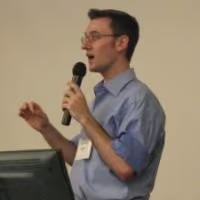
Host: Imagine you're an outdoorsy person and you invest in an expensive parka from one of the big outdoor brands. That parka may come with a lifetime warranty allowing you to send it into the manufacturer for free repair if, for example, you tear it well, repairing those parkas as opposed to making them is probably not the brand's core competency, so they may direct your coat to a third party to actually execute the repair. Yes, there is a whole business whose service is repairing warrantied garments for high end outdoor brands and today's guest bought said business after 16 years in corporate and nearing 40 years old, Jesus Wong felt a yearning to build something for himself. He explored how he would become an entrepreneur and when he learned about entrepreneurship through acquisition, he it was a eureka moment. Jesus's words I just found this wonderful world of ETA and was immediately sold on the idea. Jesus is based in Vancouver and we unpack how he financed the acquisition without the benefit of an SBA loan that we have here in the us so listen for that segment. Those of you who need or want to buy a business without an SBA loan, okay. Please enjoy this conversation with Jesus Wong, owner of Gear Restore. In the webinar from back in May on how to build a franchise, hold co host Connor Gross mentioned how many acquisition minded entrepreneurs are entering franchising through the strategy of planting your flag, that is Purchasing new territories in a franchise system intentionally to execute an acquisition strategy once their foot is in the door. We received a lot of feedback and interest on the topic and decided it warranted a deep dive in a webinar of its own. So in a follow up webinar with Connor GROSS Today, Thursday, August 7, you will learn what the plant your flag strategy is the types of searchers for whom it makes sense, how to evaluate franchise opportunities with this strategy in mind, funding strategies for franchise acquisitions and stories of flag planters who have executed this strategy and seen wild success. That is today, Thursday, August 7th, noon Eastern. The webinar is the Plant your flag strategy. Build an empire with ETA and franchising. Link to register for the webinar is right at the top of this episode's show Notes or on the Acquiring Minds homepage. Acquiringminds co. Welcome to Acquiring Minds, a podcast about buying businesses. My name is Will Smith. Acquiring an existing business is an awesome opportunity for many entrepreneurs and on this podcast I talk to the people who do it. What do the following Acquiring Minds guests all have in common? Doug Johns, Morley Desai, Tim Erickson, Chirag Shah, Shane Ursam. They all went through The Acquisition Lab, the accelerator and community for people serious about buying a business. But they represent just a sliver of the Lab's success stories. The number of deals across the Lab's cohorts now stands at over 120, with over $300 million in aggregate transaction value. The Acquisition Lab was founded by Walker Deibel, author of Buy Then Build, the book that introduced so many of you to the very idea of buying a business. The Lab offers a month long, intensive, almost daily Q and A sessions with advisors, live deal reviews with Walker, Deal team introductions, and an active community of serious searchers. Check out acquisitionlab.com, link in the notes or email the Lab's co founder, Chelsea Wood. Chelseandbuild.com Jesus Wong. Welcome to Acquiring Lights.
[4:27] Guest: Hi. Well, nice to have this chat with you. I'm very excited.
Host: Jesus, after about 17 years in corporate, your journey to buy a business began as the result of listening to that little voice in your head or in your heart. Maybe we're going to hear about that and much more. But let's begin with some background on you, Jesus. What did your path look like before you decided to buy a business? Please.
Guest: Yeah, so maybe firstly, I just want to say thanks for inviting me to the pod. It's quite an honor, to be honest, to be here. You're a celebrity in our circles, so I'm a bit starstruck, to be honest. But yeah, just wanted to say that. That's great.
Host: A celebrity. All right, let's go. Off to a good start.
Guest: Yeah. So I guess if you'll indulge me for a few minutes, I just wanted to share a bit of, you know, my past. I promise I'll connect to a little bit of the finale of my search journey. So my parents are from China. They, at a very young age immigrated to Mexico. Both my sister and I were born in Mexico City, so we spent most of our childhood there. And as many immigrant families are, mine was quite entrepreneurial. So, in fact, I actually just found out from a very extended trip with my dad this year that he was in fact, a searcher. Wasn't really what they called it back then, but it's sort of a interesting kind of full circle moment for me.
[6:18] Host: Oh, that's so funny. Jesus. Was that. Sorry to steal your thunder, but you end up in Vancouver. So was he doing it in Mexico City or in Vancouver?
Guest: In Mexico City.
Host: In Mexico.
Guest: Yeah. Yeah.
Host: Oh, wow.
Guest: Yeah, it's. I mean, the reality is I. I had grown up in my family's business. It was small restaurants, Essentially in Mexico City. And I kind of always thought that my dad had just managed them. I didn't realize he, he owned them. In the 90s my parents decided to move to Vancouver, Canada and I think for them it was quite a sacrifice because they essentially went from middle class, comfortable living lifestyle to a lower income type of lifestyle in Canada. The biggest reasons for that move was there's a bit of concern for safety. Some, you know, hope that the education for my sister and I will be better in Canada, which ultimately was. And we had some family in Vancouver. So it, it was, it was a great, you know, outcome for sure. But I certainly recognize that it was not an easy decision for them.
Host: How old were you when you landed in Vancouver?
Guest: I was seven. So yeah, yeah, early, early, early days. And yeah, I think what I'm referring to also is just when, when money wasn't, you know, abundant we, we kind of all had to pitch in. So you know, early days I worked and had part time jobs and, and had to kind of fund my own education. So it was, you know, looking back now, a great learning experience on how to navigate around tough situations and like I said, the value of money and all that, which I think just ties into a bit of my mindset in my corporate career and then the search itself as well.
Host: Yeah, well, a very powerful childhood. Jesus. I'm sure you learned a lot of lessons, but also maybe more than anything, built thick skin and character.
Guest: Yeah, yeah. And I think, you know, at the time of, and I'm kind of fast forwarding a little bit, I went to the University of British Columbia in Canada. I ultimately ended up completing a degree in accounting and finance and I landed a job at a top accounting firm at kpmg. And I was quite happy with that outcome but as sort of tying back to a little bit of that background I had mentioned earlier, just always had some, some interest in doing something else. So you know, I, I had kind of a side hustle before. It was cool. I founded a high end clothing brand, clothing line which was during my time in university and the first few years at kpmg we did pretty well. It was a small brand that sold throughout Canada. We were in a large department store. We even, yeah, we even got into Japan. That had a bit of traction there. So was going in the right direction and mind you, this was before social media. So now there's lots of ways to reach a massive audience. And back then there was just door knocking and trying to connect with the right people. I had a business partner, we got to A point where we could have started to engage the US market and had, I guess a plan, but it meant that we would have to commit a lot more resource and a lot more energy. And the logical risk adverse side of me just thought that this career in accounting finance, which had a bright future, which is too hard to pass up for a very uncertain and risky journey. So I think I fell into a bit of that prototype of a child of an immigrant where we saw white collar as a bit of a higher light than maybe blue collar or, or entrepreneurship.
[11:15] Host: If you ask owners in the ETA and search community which insurance broker provides highest quality work, great outcomes and has a practice dedicated to searchers and acquisition entrepreneurs, one name comes up again and again. Oberle. Oberle Risk Strategies has worked with hundreds of searchers over nearly a decade and is in fact led by a two time successful searcher, August Felker, which makes Oberle a specialty insurance brokerage for searchers by a former searcher. And if you've got a business under Loi, Oberle will provide complimentary due diligence on that business's insurance and benefits program. An easy, no risk way to get to know August and the team at Oberle. To take advantage, check out oberly-risk.com that's O B E R L E hyphen risk.com link in the notes.
[12:16] Guest: I'll fast forward a little bit more. One of the things that resulted in me getting into the ETA space was feeling like I had accomplished a lot in my corporate career. So I worked at KPMG for 6 years or so and then a decade in a firm called Orbis Investments. They're kind of like a hedge fund, an investment firm. So I left that role last year. I was highly rated, accomplished what I want to accomplish there. So people were surprised when I made that decision and it was not an easy decision for myself.
Host: Why did you make this decision? Why then?
Guest: Yeah, so it's. I hate to call it a midlife crisis because it just coincidentally ended up being kind of that time frame, but I was reaching the age of 40 and a decade in a company just feels like a good time frame to close a chapter. I also just started getting this niggle. I think in the last few years of my time at the company that niggle became kind of a stronger and stronger feeling. It became more of a yearning. I hate to call it an itch because I think scratching an itch wouldn't have cut it. So it became such a powerful feeling for me that I couldn't ignore anymore. And at first, I couldn't really pinpoint exactly what it was. There was times in my role where I felt like I could sort of keep pushing along in my career and I could probably reach higher levels within the company, but there was something that was holding me back, and I couldn't really know exactly until really taking the time to think through that. And then I guess, spoiler alert, it was the fact that I needed to be an entrepreneur, and that that clarity guided me through sort of the last few years where I laid out a plan for exiting the company. I, you know, left in great terms with my. My boss. I actually transitioned out over a year, which is probably the most extended departure of any job ever. But it was because I didn't really have anything lined up. I had no real plan. I just knew I needed to clear my mind, allow the space necessary for me to kind of design the. The life I wanted to live.
[15:22] Host: So you didn't know that you would buy a business necessarily? How did that then come across your radar? And why did you pursue it?
Guest: Yeah, so I actually spent maybe the first four months after leaving the job traveling a bit, but also going through what I thought entrepreneurship and what many others think, and that's building something from scratch. And as many people have mentioned before in your podcast, that zero to one journey is difficult. It's uncertain the outcome. It could come many years down the road, and that outcome may not be that success that we all hope for. So despite spending some energy and resources, and I certainly actually attempted a few startup ideas, the fact that I kind of explored entrepreneurship in the different variations led me to start kind of picking up on some content. And that's your podcast and also other influencers like Cody Sanchez. And it was like a aha moment, like a eureka moment, where I just found this wonderful world of ETA and was immediately sold on the idea.
Host: I often call it the Angels Singing Jesus. And it happens to a lot of us. It really does land with an explosion on some of us. What a great path this can be.
Guest: One other thing that sort of adds a bit of context to this is I had subscribed to this concept called fire. It's financial independence, retirement, retiring early. It's really about a life of freedom and flexibility and time being the most valuable. It also just means living, you know, modestly and ensuring that you're not letting lifestyle creep happen. So with that sort of mentality, I had, I guess, you know, by all means an interest in entrepreneurship, but it didn't have to be a grand version of it, like I didn't have to create the next big thing that, you know, sells to private equity or whatever it was. I saw it as entrepreneurship. I saw it as something I want to do, do as a personal interest and something I could get a lot of meaning and fulfillment. It's a exciting time for me because I can see a lot of the commonalities of building from scratch in this platform that I've acquired. Yeah, great.
[18:37] Host: Well, tell us what the search, your search process look like once you decided that this was the way.
Guest: Yeah. So I think the reality is I, I am the type that needs to kind of get familiar with a lot of things before I start moving a direction. And, and it could be a little bit of a downside to my approach, but I, I like to make kind of a careful approach to what I do. So that meant actually just consuming a lot of content. I listened to every one of your episodes. I read all the books, Buy them, Build HBR Guide. I joined the Cody Sanchez community. I was active on search funder. I followed all that SMB content on X, et cetera, et cetera. So that was the beginning. And then through all that, I developed a very strict process to my search I would describe as a very relentless approach. I think grit and perseverance themes that I mentioned earlier in my background work were common here. And yeah, in fact, I don't kid when I say I looked at thousands of deals. If I like, look at the CRM in front of me, to be exact, it's 1086 deals.
Host: And what were your criteria? Jesus.
Guest: Criteria wise, you know, I probably ended up in the 750 to 1.5 million of SDE. Location, somewhat agnostic. I'm in Vancouver, but I was happy to, you know, travel if needed. So I was open to that. And then very industry agnostic. I just realized how many niches there are. And, you know, I'll speak to the company I acquired in a sec. But it's an example of how niche, you know, some opportunities can be. Some gems are.
Host: People are just going to, you know, this is one of those classic, wow, I can't believe there's a business that does that. But of course, the. The service that you provide is. Is one that is very needed and in our. Most of us and kind of in our own way have probably indirectly contributed to it. If we've ever sent back an expensive coat that needed fixing, we'll get there. You are in Vancouver. Was your search limited to Canada?
[21:23] Guest: It was, and that's just because financing might have been more Difficult to try and acquire something in the US but obviously spoiler alert. Part of the business I bought does have a US component so ended up being the case. I did reach a more global kind of business but the first, first I guess efforts were sent centered around, you know, within my proximity of Vancouver, but willingness to go across Canada if, if I had the opportunity to run it remotely.
Host: So tell us then about this unusual unexpected business that you found.
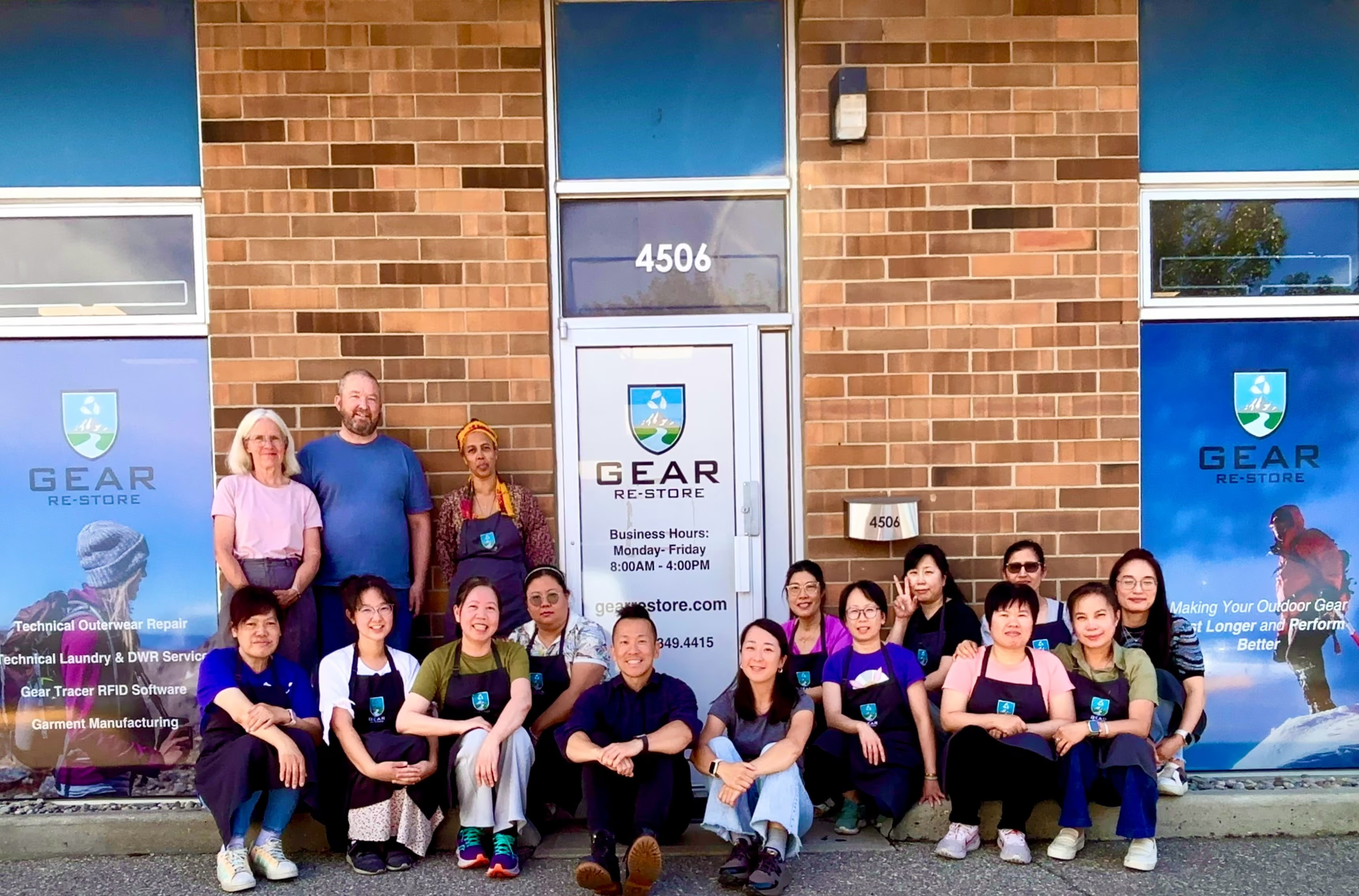
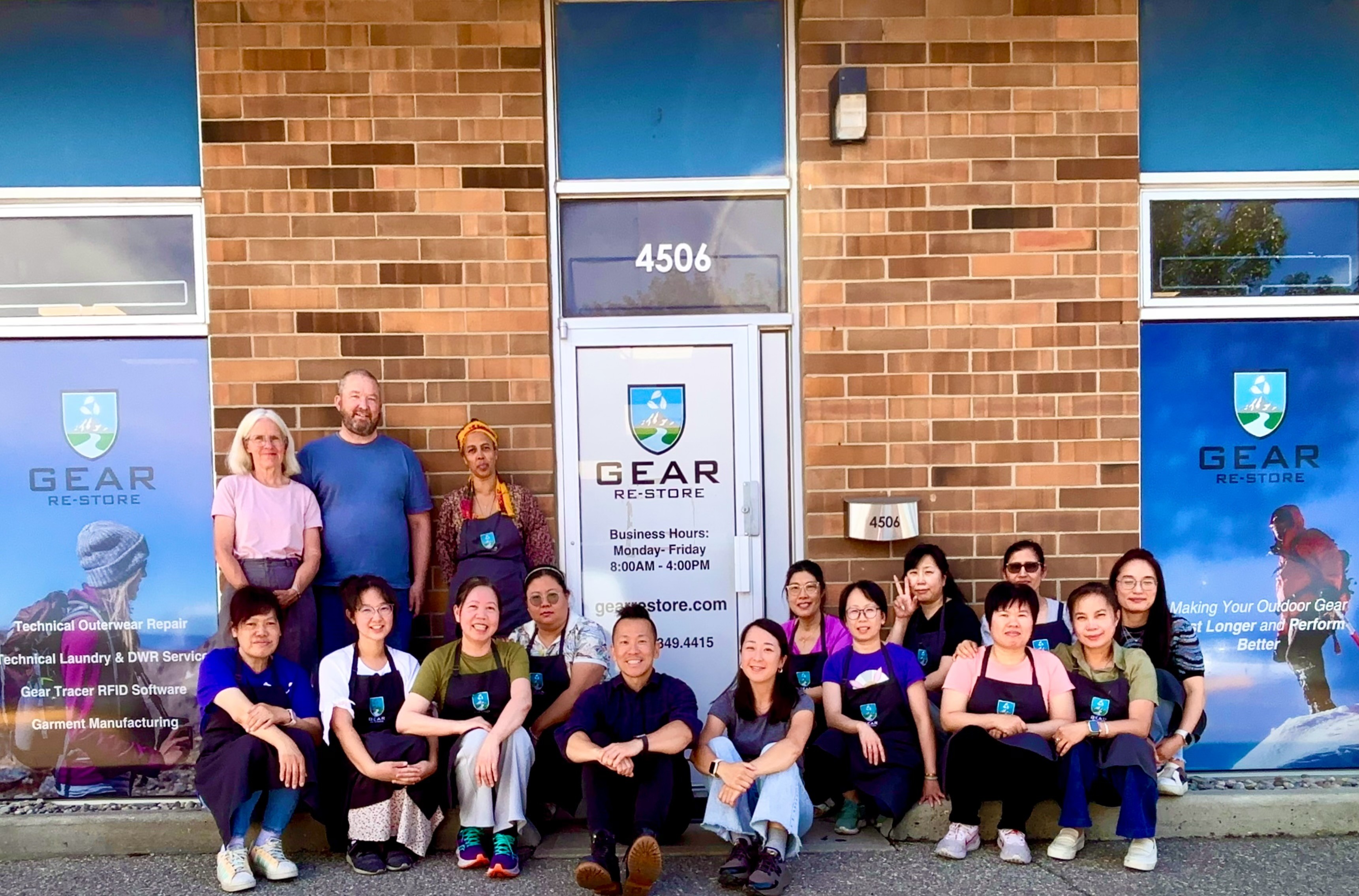
Guest: The business that I found, they they're the largest in repairs of technical outerwear and gear. We service brands, large brands like Patagonia Canada, Goose, Arteryx, Helly Hansen to name a few. We have three locations that's in Denver, Philadelphia and Calgary. And there's a workforce of about 85 people during peak season. So a fairly large labor intensive service based business.
Host: Running payroll, paying your bills, closing your books and producing financials. These are critical tasks every business owner must do or oversee. But spending time on them distracts you from the leadership in growth work you want to do. So let system 6 do it for you. Owned and led by a former Searcher, Chris Williams, System 6 is a leading outsourced finance team for hundreds of SMBs, including over 50 searcher acquired businesses. Chris, Tim and the System 6 team understand firsthand the challenges, the opportunities of jumping into a business as its new owner. So whether you own your business already or have one under LOI, talk to System 6 about how they can give you time back and improve your financial operations. Mention acquiring minds and they'll provide a free review of your books and financial ops. A $500 value. Check out system6.com, link in the show notes or email helloystem6.com having looked at least passingly at over a thousand sims and deals, what was so compelling about the name of the business is Gear Restore. What was so compelling about Gear Restore?
[24:17] Guest: Yeah, so the main thing that really sold me on it was it's not a capital intensive business. So you know, we're talking about sewing machines.
Host: So essentially I buy, I own a $500, let's say Arc' Teryx jacket, super fancy outdoor gear. There's some, there's some damage to it. And these brands have very generous warranties, often I guess lifetime warranties. So I can send it back to arteryx, they'll fix it and send it back to me and they're fixing it is actually out, they're actually outsourcing that to you. You have 80 effectively seamstresses kind of tailors who do that work and then you send it back to arct who sends it back to me. So there are all of the repair to the, this high end gear is being done by you. That's the service.
Guest: That's right.
Host: So you're in the background. But there's obviously you have these relationships with these big brands and they're sending you a very steady stream of individual articles of clothing that need fixing. So not, not recurring, but. Well, I don't know, maybe that, maybe it is recurring. It's kind of a, it's kind of a, I don't know what you'd call it. Do you have contracts in place with them? Formal contracts?
Guest: We do have contracts with some of the customers, the largest ones. We do, yeah. It's exactly as you describe it, I think. Not recurring in the sense of, you know, one product, one garment isn't going to be repaired multiple times. But the arrangement with these brands are so that we are the sole provider for these services. And because of those very kind of strong warranties, lifetime type warranties, there is an expectation for the work to continue as long as we have that relationship with them. And so to answer your first question, one of those customers for example, is Patagonia. They have something called an ironclad warranty, meaning any product going through any sort of damage, oftentimes due to the wearer, the consumer's normal use actually can be repaired. And I think that's a very good proposition for us because we're, as long as we're delivering on the quality and speed as we commit to, there's no reason for them not to continue. Continue with us.
[27:00] Host: Yeah. What else did you like about it?
Guest: The fact that it's, it's labor intensive in one way is tough because you're dealing with a huge workforce and HR is going to be a key consideration. But at the same time, you know, looking at this deal, if, let's say there are, and it's always about thinking about what you can't control, macroeconomics, you know, trends. If for whatever reason consumers don't want to buy as much, then there's going to be less repairs or maybe there is. It's actually hard to try and engage that. So how do I think about things like that? It's going to be the fact that this is a service based business, we can dial up and dial down the labor and as needed. Now it's not an immediate sort of lever to pull, but grand scheme of things, it's not like we are stuck with a lot of, you know, heavy costs because we have massive machines.
Host: Right.
Guest: So that, that Was also one thing.
Host: Yeah. You can more easily flex with the demands of the market. And these brands that you have relationships with, do you have any sense of. Are these relationships exclusive? Sorry, did you say that or in another way? Really what I'm getting at is your market share.
Guest: Yeah, we, we are the largest in North America. Are we exclusive for all brands? I don't think so, but we probably do service a majority of their needs and I think because of the size and scale scale that this business has reached, it's hard for a brand not to want to go with us because they can centralize all their needs with us, all their repair needs with us. So that's also another sort of compelling aspect of the business. As we continue to grow and become more and more of that dominant player, I think will, you know, as long as we continue the quality and the servicing, we'll be able to take on more of the market share. I think honestly I give a lot of respect to the founder, the seller of this business. He found a niche demand in the market and kind of created this industry, this little small niche industry.
Host: So it's really neat. It's a really cool one.
Guest: Yeah, I agree. And I think it's so funny that there's a lot of sort of moments where things are just connecting. I started a clothing line many moons ago and now I'm in this garment and clothing kind of business.
Host: Are you an outdoorsman? Jesus. Of course. Vancouver is an outdoorsy place.
[30:00] Guest: Yeah. It's hard not to be if you're in Vancouver. Yes, very much so. You know, hikes and camping and, and just being outdoors is, is part of our lifestyle.
Host: Yeah, sure. And one thing that I envision on this deal, it would be customer concentration. So there's only so many of these big brands or maybe not maybe, maybe I'm underestimating just how many brands high end brands there are. But if I had to guess, there's probably, you know, 10 to 20 big ones that, that offer these really generous warranties and that are, you know, seen at REI and wherever. So obviously means that, you know, the number of customers that you have is small and you might have concentration, 10, 20%. And with just Patagonia for example. Was that an issue with the business?
Guest: Yeah, so there, there was that. Because being the biggest red flag, I think in my initial review of the business, the client concentration is quite severe. The top say five brands take up almost 80% of our revenue. And the TAM is total addressable market of the industry could, could actually maybe have already been reached To a certain degree, because the brands that, that we're targeting typically are ones that offer this great warranty, are very keen to have sustainability in their ethos, and are willing to offer it because they're pro products are at a certain price point. You know, it just doesn't make sense to spend a bunch of money to repair something when the product itself wasn't at the right level. So it does mean that there's a ceiling at some point. And I recognize that that was one thing that, you know, I kind of came to terms, but also not knowing exactly. You know, when you're doing due diligence, you're doing really just scratching the surface. And so as much as I could envision some growth bringing more brands, we have some of the largest ones which I think create a halo effect for other future brands. Another reason why I felt like this was a very attractive business is we're brand agnostic. So if one brand that we've been servicing a lot falls out of trend. The next one that comes along, we're going to be right there for them. And so I think there's always going to be this sort of safety in our ability to address this need in the market. And where I see retail, really great opportunity is actually continuing our ability to help kind of the sustainability aspect of this industry that isn't just about the repair side of things. We actually do technical laundry, which means a lot of these brands offer garments, jackets, et cetera, that are waterproof. And in order to maintain that waterproofness, you really actually do have to wash it in a certain way using certain, you know, washing solutions. And we do it for ski resorts, for example. I mentioned those brands as one of our main customers. But another one is actually Vail Resorts, which owns many ski resorts. And so they come to us for that kind of technical wash servicing. So we've yet to fully tap into all of that. I think there's also other ideas. So one thing that I've been able to gratefully get out of this deal is, is the expertise and consultation of the seller. So I've hired him to be somewhat of a consultant in helping me grow the business beyond maybe what's in our immediate kind of bread and butter. He's had a lot of ideas. He calls them moonshots, but they're very, in my mind, actually very tangible things that, that could actually be possible. And so there are things that will require industry knowledge, his, his network of, of people he knows in the industry. And for us to kind of pursue as, as a Big player in this space. So I don't have all the details to speak to those, but I, I can see that as an ability for us to get to the next level of the business.
[35:29] Host: Well, it's great. Jesus. Because going back to your desire for whatever you do next to be an outlet for creativity, it seems like the business growth opportunity here is less doing, more of the same. I mean there is still growth to be had in doing what you're already doing. But as you said, you're already the leader. The TAM here is probably not so much beyond where you already are. So the opportunities for growth are sort of in these adjacencies kind of horizontally introducing new new solutions with maybe similar customers and that means kind of spinning up entirely new, you know, business lines, which is, which is creative. So that's, that's exciting.
[36:16] Guest: Yeah, very much so. And I'm amped basically to go down this path further.
Host: Yeah, Jesus. Give us a little, let's get into some of the weeds on numbers and deal structure first. Can you give us the numbers of the business itself?
Guest: Yes. So as of last year the business generated high seven figures in revenue. We have been seeing growth year on year over the last five years. You know, looking at the, the trajectory, you would think actually it's like a growth company because of numbers.
Host: Oh really?
Guest: Yeah. And I, I think that's part of why I was excited like there, there is certainly a moment, moment momentum that we can continue with hopefully. Yeah, I think even this year we're already going beyond last year. I think we've numbers for the first half of the year is looking like an extra 10% increase in top line. And that's me just kind of enjoying the ride here. So far I haven't done anything to, to help make that bigger.
Host: But this growth, Jesus. Is, is it from landing new contracts with additional brands or is it just growth of the volume from existing brands and contracts?
Guest: It seems to be both. It seems to be, you know, breaching new brands and then the existing customers having more reliance on us, giving us a bit more of what, what we could help them with. Yeah, yeah.
Host: Great. Okay, so upper seven figures. Can you share profitability earnings?
Guest: Yeah. So EBITDA is close to a million. We, we ended up at that amount last year and I'm expecting it to be similar this year or likely even higher.
Host: So you found, you found the coveted by self funded searchers million dollar or close to million dollar EBITDA million dollar Canadian.
Guest: Yeah, yeah.
Host: Business.
Guest: So maybe that's a lot less than. Yeah, that's right. Great.
Host: And so you said 80 employees and what is the number non service staff the SGA look like?
Guest: Yeah, so the, I guess non sga. So let's say all the labor has predominantly been a variable cost. Most of the fixed items are maybe, you know, some management staff, but it's really just like lease and other sort of expenses. It represents about 30%. So it's actually very heavy on the wage side of things.
[39:35] Host: Yeah, yeah. As would be expected. Great. And so this is a Canadian business for our Canadian and other non American listeners who don't have the benefit of the sba, which we searchers so lean on here. We always, it's always a great education to hear how you finance a deal. So please, how did you finance this deal?
Guest: Yeah, I think that itself was quite a journey as well for me to discover options like you say, no SBA program, no 10% down, no 10 year amortization terms. So it very much was a case of working with the kind of commercial banks. We have a top five set of banks who are kind of national entities and trying to get funding from them. It's not impossible. I hear a lot of Canadian searchers feel like there is maybe you know, a uphill battle with that. I, I think from my experience, if you have a good deal and you have the right model to prove out that, you know, the debt can be serviced, well, it's a strong business, cash flowing steady or rising. And you can emphasize how much of your past experience can help with the business. These are all things that are going to help get, get that loan that, that, that was needed for me to get the deal.
Host: I was surprised that a few of my Canadian guests didn't have much of a problem getting their deals financed. Maybe because they were good deals, but they went into it thinking that it would be really difficult, that the banks would be conservative, but finding in fact that it turned out not to be that difficult to find them. No, they, they, I don't think they got 10 year, 10 down, 10 year amortization, but they got tolerable terms. And, and just for the audience, look up the Scott Walton episode and Andrew Storter's episode. Those I think were the two. And then Mark Sojobwami as well in Calgary. So those four, I will have links to those in the show, notes for everybody. But I think in all three cases they actually found that financing wasn't so difficult. So, so say more about your experience or say whatever you were going to say next. Jesus, please.
[42:20] Guest: Yeah, I think it, it Was difficult at first to understand how to begin the conversation with banks. I contacted all the banks, every, every prominent one in Canada. And these are the top five chartered banks. I got, I guess, feedback from folks there at different levels in the organization. And some would give me some details about how much I could borrow versus the value of the company and the limits that I might have to accept. Um, but I realized I may have been talking to the wrong people. Uh, there are, you know, maybe the, I guess, loan officer at a branch who does small business servicing certainly isn't going to be able to help me with a business acquisition of a million ebitda. Yeah, and then there's folks that are kind of more senior in, in their structure. And so trying to figure out the right person to talk to was. Was a key part of it.
Host: And is there a takeaway there for the audience? Jesus. Like a title or some other. Tell when you've reached the right person within a bank in Canada that you want to be talking to.
Guest: You know, I wish I noted that down because I cheated. So maybe I can share a little bit of where my success with financing came from. So early in the journey, I realized that I needed to stack all the unfair advantages I could. And one of those things I needed to do was partner with strong team members in my deal team. And one of those players, or I guess deal team members, was a loan advisor. And I engage. Is it okay if I shout out a few people here?
Host: Yeah, yeah, absolutely. Please do.
Guest: So I connected with someone named Joey Tai, his firm, Crete Capital, and he helped me understand a lot about the landscape of lending. His background is that. And I got a lot of assurance from him that there are ways to get a deal done with a lender, but it has to be kind of presented the right way and to the right people. And I felt that, well, there's already so much we have to do as a searcher. Understanding deal structure, negotiating, you know, building relationships. All these aspects that for many are learning for the first time. I just didn't think trying to negotiate and navigate the banks and lenders was something I needed to learn. So, you know, I was quite convinced that having an advisor in that respect was important.
[45:33] Host: So it's by loan advisor you mean when. What, what we might also call down here a loan broker. So they, their role is to be an expert in understanding the credit boxes of all the banks, how it works, help you navigate the process, help you position yourself to the banks, and then they get paid by the bank as on, on, on a commission of the loan that's ultimately written. Right?
Guest: Yeah, that's right. Yeah, that, that's, that's the service that Joey offered and what I was originally seeking. But his firm actually does more than that. He sort of works at different levels depending on the searcher's needs. The reality is I got to know Joey really well and I think he was just one of those people that I could see helping me with more than just the lending aspect. You know, what you describe is exactly what he can do. But he also offers somewhat of a buy side advisory service. And I wasn't looking for that first. But like I said, I want to have strong partners by my side stack, you know, my advantages. And he was one of those people that I could say see working really well. So he helped me with, you know, reviewing deals, structuring my offers and, you know, negotiating. And I think it really helped me in my journey, which often is quite lonely and quite solo.
Host: Jesus, you were going to mention other people on your deal team?
Guest: Yeah. I really want to shout out Hai Fang Hu from the back Bennett Jones law firm and Kevin Yu from M and P who did the accounting work for us. But yeah, these are all great guys. And you know, I really have to say that my process is quite diligent. I interviewed like 20 lawyers and chose, you know, one. But there was an element with all those individuals where I could see they cared about, about the success of me landing a deal that is good for what I'm looking for. And it's hard to pinpoint, I guess it's just having those conversations and being real about it. I could sense this vested interest in me succeeding.
[48:09] Host: What can you tell us about the terms of this deal in the structure, the financing, et cetera? Where did this end up? Landing?
Guest: Yeah, so the biggest consideration I had was that concentration of customers. While it was evident to me that the relationship with these brands are quite sticky for the reasons we mentioned earlier and there isn't going to be a shortage of, you know, garments that need to be repaired in the future. There is a trend towards more sustainable, a more kind of eco friendly approach to garments. You know, fast fashion is being targeted and people don't want a lot of stuff in the landfill. All those things I think gave me confidence that, okay, well it's likely that this heavy concentration won't be an issue. But you cannot predict everything. And as the economic landscape we're finding ourselves in, there's a lot of stuff that just we wouldn't have known. And so protecting my downside was a Theme throughout, sort of my structuring of the deal and when we offered the seller this, this ultimate kind of like final structure, I was willing to give up some of the top side. And what I mean by that is I ask the seller to essentially provide a large forgivable aspect of the, of the purchase price. I put about 10% of my own equity, 60% of it is, is the loan. About 40% of it was a earn out plus some seller finance.
Host: 30%.
Guest: That's right, yeah.
Host: 10%. You. 30% earn out. 60% or excuse me, not earn out but seller note.
Guest: Yeah, yeah, that's right. I'm hesitating here because a piece of that earn out is an uncapped profit share with the seller. So it could vary, depends where we end up over the next four years. And so yeah, it's a large piece of it being an earn out. And that earn out has a specific amount based on maintaining a certain level of, of ebitda. And then there's another component where it's an upside profit share for, for the seller.
[51:05] Host: And that's, and let's take those two in parts. The maintaining a certain level of EBITDA suggests that if it, if the business dips, then the, this note will be proportionally forgiven. You will have to pay less back, less of this note back. Right. So that's what we would call a forgivable seller note. Or this is a seller note with forgivability bake baked into it. Because you are not an sb. You're not, you're in Canada, you're a Canadian. You didn't do an SBA loan earnouts which are about upside. So forgivability is about protecting downside for you, the buyer. If the earnouts are about incentivizing upside to the seller, that is not allowed in, in an SBA context. So we actually hear about earnouts very little for SBA deals down here in the States. But of course they are a very common structure in acquisitions broadly outside of an SBA context, private equity, whatever, conventional financing, whatever. And so your, your, your seller loan also had that component. There was an upside component. So if it outperformed, he was going to be, he was going to enjoy a percentage of those profits. So, so great. So you had both, both downside protection for you and upside incentive for him. The term in Canada is not seller note, but it's, what is it like vendor holdback or vendor, vendor take back. Vendor take back.
Guest: Yeah.
Host: Okay.
Guest: Yeah.
Host: So, so I'm, I'm Americanizing the language. Forgive Me for that, but it's a vendor take back. Great. And then so 60%. So going back now to getting a deal financed in Canada, 60%. So that's not as generous. I don't know if that's the right word. That's not as generous as the 80 to 90% you can get with, with the SBA here in the States. But 60% is substantial.
Guest: Yeah, yeah, it was substantial. And we went through the process of getting term sheets on, you know, a number of. From a number of different banks. And it varied in terms of what they could offer. But the reality is, because there were some hairy aspects such as the client concentration, this very niche industry we're in, the heavy reliance on labor, and the fact that it's in all these different jurisdictions and me not being in the industry beforehand, there were questions from the bank that had to be answered where the advisor that I mentioned helped a lot with. And this I think got to a point where we were comfortable both qualitatively and quantitatively. 60%, I think, was what I was expecting with this particular deal. But I think if it was a different one where it didn't have as big of a earn out component or a forgivable seller note component, it could have been a bit higher as well. There was, there was opportunities for that for other deals that we reviewed.
[54:18] Host: Up to like what, 70%?
Guest: Yeah, I think up to 70 would be the conservative. It made up impossible to be even a little bit higher than that. Bookkeeping one was, was very. I mean, it ticked boxes for everyone. So that included the bank.
Host: When Joey helped you position an answer to the banks, their doubt about your being an industry outsider, what was your answer both to the lender and to yourself? How did you get them and yourself comfortable with that fact?
Guest: Yeah, the industry outsider aspect, I think happens in most cases with searchers trying to acquire a business. And so there is an element of trying to convey that this is a serious person who's done their homework. This is something that they've spent a certain amount of time and explaining kind of the rigor that was put in. The other thing is just having an ability to say that I've led teams, I manage people, I've been in operations, different kind of operations. Mine was in finance, but the concepts of, of understanding where there are, you know, ways to improve, to grow things that are transferable, skills that are transferable was. Was key to it all. I think it was painting an overall picture of myself as, as a competent leader, ultimately.
Host: Yeah, yeah, yep, exactly. And did you get through this process. The sense that these banks, in Canada's case, the Big five, are open to people like you, searchers, individual entrepreneurs buying businesses. Were they familiar with what you're trying to do here or did they act at first like you were doing something highly risky or you were an alien?
Guest: It's actually a bit of both, to be honest. We were surprised to hear from feedback from some lenders and I think that Canadian ETA space is still developing. It's predominantly, I think, in Canada dominated by search funds rather than self funded. And so when you hear about someone who wants to kind of buy a business in the ballpark that I was looking at, there's a lot of questions. Banks aren't that used to it. There's no SBA program, so it's not like a, you know, well, kind of established route for searchers. And it's still a bit, you know, I guess, kinky, the process. It's not as smooth.
[57:23] Host: I'm used to that word in other contexts, but I'll go with it.
Guest: Hairy and kinky. Yeah, right.
Host: And Jesus. Just to round out our conversation about that, the banks, the loan offers that you got, you said yours was 60%. First of all, tell me please, what the amortization schedule was and interest rate, if you could. But then also was there a pretty tight band of the offers that you got from the other banks? What was the kind of the flavor of these offers?
Guest: The various banks offered like a slightly different flavor, but they all similarly came back with similar terms. The majority of them, and this is before we chose one that gave us the ask basically everything that we wanted. But the majority of the other ones, we probably could have pushed on it a bit more. This is part of that negotiation that we would have been able to do. Terms included a five year amortization for, for a few of them. The one that I landed with was offering a seven year, so not too far off from a ten, which is nice. That's not guaranteed. I was told that a 7 is very nice, very ideal rates, very similar to our mortgage rates. It's in the 5% mark. And so I think, you know, wait, 5%?
Host: Yeah, that's great.
Guest: Yeah, it is great. So maybe that is a good thing over here in Canada. But I, I would argue though that the rate isn't going to move the needle. The terms that the amortization terms is going to. If you can get a 10, and I have a high interest rate, I think the math works out that you're still better off from a debt servicing Perspective.
Host: I take your point that the bigger needle mover is amortization than rate, but certainly rate matters. I mean so many searchers were have been stung and in fact literally driven out of business because of the interest rate hikes that we've seen over the last couple of years. What it did to their SBA loan was material to the point of making their business unviable.
[1:00:03] Guest: So
Host: obviously it depends on what, what the change in rate is. So if it's just a point, it might not matter so much, but rates have gone up much more, moved much more than a single point in the last couple of years. So very interesting. Okay. Jesus. Thank you for all of that transparency. That's wonderful and hopefully helpful not only to Canadians, but to on to anybody who's not working with an sba. Anything to say about the cross nature of this that hasn't already been said that. So that we should say the entity is Canadian. I know this from the pre call. The entity is, you know, domiciled in Canada with a sort of American subsidiary. But it's basically. But it's a purely Canadian business that you bought that is the, you know, 100% owner of an American subsidiary. Correct. That's the structure of the business.
Guest: Correct.
Host: So. So is there any kind of anything to say about the fact that the business operates in two countries?
Guest: Yeah, it's a big part of the due diligence and I incurred, I'd say, significant amount of transaction costs was the fact that there were two jurisdictions involved, so two sets of books, two versions of tax due diligence, having to kind of convert everything over into one currency. And during this time, the foreign exchange rate, Canadian to US dollar was fluctuating significantly. So there was an element of, of having to deal with that. And mind you, transaction costs, closing costs in Canada are actually just astronomically higher than the U.S. i found out quality of earnings report costs, lawyer costs, all that. You know, when I was doing the interviewing, I realized it's just a different ballgame. So really the cost of business.
Host: Interesting.
Guest: Yeah. The cost of business acquisition is going to be higher for sure. Yeah.
Host: I wonder why that is.
Guest: Yeah, my take is that there's just firstly a less mature ETA space and there's just less players out there. So less competition, less competing to drive the cost down.
Host: And was this something the, the conversion of the books into the conversion of the currency, but then also two sets of books, all of that, that kind of very technical and in the weeds finance stuff and legal stuff too. Was that something that you, your team Basically handled. And you kind of. How close to all of that work were you?
[1:03:08] Guest: I was fairly close. I had a lot of, I guess the counting, due diligence, the work related to the quality of earnings report basically done in parallel to the service providers. I wanted to kind of do my own version and feel comfortable that I understood what are the risks. And then if the vendors came back with similar results, then I felt really confident that we were going down the right path. I don't have a background in legal, but I've read my fair share of contracts and my prior work at kpmg, it was a very technical tax law type of role and so familiar enough to be able to kind of review some of those legal documents and catch things. That's why I work pretty well with the lawyer because I would catch some stuff that he actually missed and rightfully he caught my stuff as well. And so yeah, I was pretty involved, I'll say that. But I don't think I need it to be. It's just the way that I operate.
Host: Well, you're a thorough guy. Jesus. This is something we've gathered from our conversation here, but to be clear, so you were doing your own versions of at least the accounting diligence, the financial diligence in parallel, and then making sure that they agreed with what the vendors provided.
Guest: Wow. Correct.
Host: Yeah, that's a lot.
Guest: Yeah, yeah, it was. Well, it's funny because the way that I approach some of it, I utilize AI a bit like the tax due diligence. I don't know that much about state taxes or taxes that are paid to the IRS obviously because I'm in Canada. So using ChatGPT to understand the various rules in different states and all that, I think is sort of the new, new, new way of doing things, which I thought, yeah, help, help me do things a bit more efficiently.
Host: Yeah, it's, it's, it's dazzling for sure. The tool. Well, Jesus. As we wrap up, let's, let's zoom back out to the personal side of all this. Two questions on that and then we'll close. The first is your, your phrase is caught the M and A bug. So yes, you are early into this transaction, but what did you mean by saying that to me in the pre call?
Guest: Yeah, so I think, you know, one of the real takeaways from this journey is that point about falling in love with the process. I felt like it was a struggle at first learning how to do it and trying to build an effective approach, but the outcome of that is just like, well, I Feel like I'm actually pretty decent at it. And having kind of gone through that and now starting to mentor a few folks and understand what's potentially out there for future opportunities, it just makes it quite compelling for me to continue this path of potentially future acquisitions or to sponsor deals to be involved in this ecosphere. I don't know yet exactly what it is. I say I caught the bug because deal making is just such a fascinating space. I don't think I'll necessarily focus on that now, given that I'm operating a business.
[1:07:10] Host: Well, I, I think it's a good, It's a valuable exercise to reflect to, to self reflect on what part of this whole journey one enjoys and to just crudely break it down. The deal process versus operations. There's, there's obviously just a huge range. But you are saying that you actually really liked the deal process. Whereas, for example, Jan Vanarski, whose episode aired on Thursday, independent Sponsor, said that he really likes operating and in fact doing deal. The deal process was not something that he terribly enjoyed. So he really likes being an operator and building a business. Um, and so I've now heard two people emphatically say that they, you know, one likes one, one likes the other. So I say all of this just for the audience that you don't have to like both. You should like one. If you're gonna do this, you should like one of them, but you don't have to like both. That's okay. And just be paying attention to which one you like more. And, and then you can gravitate to that over time. If you really like the deal part process, you pro. You. There's probably independent sponsorship in your future. If you really like, or at least programmatic acquisition of the business that you buy doing, you know, leaning into M and A to grow the business that you bought. And if you didn't like the deal making process so much, then you'll, you'll. You'll be happy being an operator. So good, good way to think about things. Finally, this yearning for fulfillment that you leaned into. I know you're early. Sorry. When did you close?
Guest: June 30th.
Host: June 30th?
Guest: Yep.
Host: 23 days ago.
Guest: That's right.
Host: So we are very fresh here. So it's only been 23 days, but how much do you think that this was the. That you answered the call in the right way?
[1:09:05] Guest: I absolutely answered the call. I'm ecstatic. I'm amped. I'm so excited for this next journey ahead. I think the struggle and how tough Some parts of the process really reinforce that this is the right path for me because ultimately I don't look at that being a bad thing. Someone said to me before that the rewards come from the other side of a struggle and I very much felt that way here. Yeah, I think maybe as sort of a general mental exercise that I often give myself, I ask a. Ado version of me what I would hope I would be doing at this moment. And I think that person would tell me to not rush things, to take the time and be confident in what you're doing, to bet on yourself. And then also it's better to have failed at doing something than to regret not to do at all. And I remind myself a lot about that. And then I guess the other side of it is just to ask my 8 year old self what I would be hoping I'm doing at this point. And I think that, I mean aside from probably thinking I'm an astronaut halfway to Mars at this point, it's, it's, it's, I mean all serious and I think, you know, he would hope that I'm, I'm not forgetting to have some fun enjoying the ride and spending time with people that you care about and, and be kind to myself and just be a good person. So that's sort of the mentality I'll take forward with, with me. I'm, I'm, yeah, I'm excited. This is, this is the path that, that it's meant to be. So it's, it's been great.
Host: That's, I love that. Jesus. I love the framework of what would my 80, 80 year old self tell me and what would my 8 years, 8 year old self tell me? I use the 80 year old self framework myself and it has been very clarifying at key moments in life but I've never used the 8 year old version of myself to looking forward. I will say in particularly in your case when you were eight, Jesus, let's not forget that you were one year into moving to Canada. New culture, new language, overwhelmed, disoriented. So I think your 8 year old self would be very proud of yourself today and all that you've, you've accomplished in, in the country where you were so new and so vulnerable at 8 years old. So congratulations on making a, a very professional, successful, professional life for yourself in Canada.
Guest: Thank you.
Host: Anything we didn't get to. Jesus?
[1:12:00] Guest: No, I think, you know, I was reflecting a bit on just this story just yesterday and I don't know if you've heard of Steve Jobs, Stanford Commencement Speech many times. Yeah. So he talks about dots connecting and I just, I just. Yeah, life's funny, you know, just how, how these things sort of all kind of came about. I mentioned earlier starting a clothing line business and now going into this sort of clothing based industry. The hard work that came from an immigrant mentality, my parents having an entrepreneurial background, having that yearning that probably came from that experience. I think just the dots connect somehow and funnily they do. And sometimes you just can't control it. But as long as you kind of keep working hard and do what feels right and you're good to people, I think that's the most important thing.
Host: I think so. So in the speech, for those who haven't heard, he talks about you can't look forward and connect the dots. You can only do it looking back and see the unpredictable, interesting ways that thing led. Thing A led to thing B in your life. And as I recall, he's talking about his own when he was in college, briefly taking a class on calligraphy and learning and some of that learning. And he was taken with the class and some of that learning being brought into the font development at the Mac. And of course that's why we all have pretty fonts today. And I think that his point was not only that you can only connect the dots looking backward, not forward, but that you shouldn't think that things that feel like they're, that they're sidetracking you in life are a waste necessarily.
Guest: That's right.
Host: That some spontaneous things that you indulge your fancy, when you indulge your fancies can end up actually having, you know, utility and, and really affecting things in dramatic ways in the future. I think that was his, his point. Stay hungry, stay foolish, everybody.
Guest: All right.
Host: Jesus. Well, great, great interview. Congratulations again, your story and thank you for coming on to share it and share it so transparently.
Guest: Yeah, you're welcome. And I got to thank you. I mean, you were instrumental to my journey despite maybe not knowing it until now, but you do so much good work for the community. So, like, keep it up. Well done. You're going to inspire lots of other entrepreneurs.
Host: That's very touching. Thanks, Jesus.
Guest: Thank you.
Host: Hope you enjoyed that interview. Don't forget to subscribe to the Acquiring Minds newsletter. We send an email for every episode with an introduction to the interview, a link to the video version on YouTube, and soon, key takeaways, numbers and more essentials from the interview. For those of you who don't have time to listen or watch it, subscribe at Acquiringminds co. You'll also find all our webinars webinars there on the website, both those we have coming up and recordings of past webinars. At this point There are over 30 webinar recordings, a wealth of information on all the technical nitty gritty of buying a business, acquiring minds copy.















































%20-%20thumbnail.avif)





%20-%20thumbnail.avif)

%20-%20thumbnail.avif)

.avif)



%20-%20thumbnail.avif)








.avif)