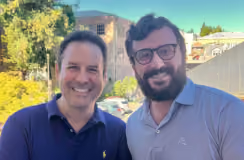
Host: Today's guest made a contrarian bet with his acquisition. Contrarianism is something we don't often see in our world, where risk is more acute owing to the high leverage we use to buy businesses. George Stern bought an SEO agency As you might guess, the perception is that traditional search engine optimization is very much in flux as ChatGPT changes consumer searching habits for the first time in 25 years. The dominance of Google's Blue Links is in question. George's bet is that SEO will stabilize around new practices and business models that incorporate answer engines like ChatGPT and will ultimately thrive. And he will have entered the industry with a great team and at a good price when the future was uncertain in the bear case. Well, even if SEO does decline, that gradual process will take many years. Consumer habits as they pertain to Georgia's marketing agency will persist for much longer than people think. What do you think? Please enjoy this interview with George Stern, owner of Growth Marketing Media. One of the very first things that business buyers think about is which industry. Well, tomorrow, Tuesday, January 20th, Connor Gross will host a webinar talking through different industries, comparing and contrasting them, and helping you understand which industries in 2026 could make sense for you and your search. Connor is a franchise consultant who specializes in entrepreneurship through acquisition, so tomorrow's session will have a franchise theme, but the characteristics and variables discussed will help any searcher find clarity around industry selection. Even if you're not looking for a franchise acquisition, that is tomorrow, Tuesday, January 20th noon Eastern Register at the link right at the top of this episode's show notes or on the Acquiring Minds homepage acquiringminds Co. Then on Thursday, January 22, due diligence office hours, Max Lummis and his team at LCS return for a live webinar on net working capital and net debt. Notoriously tricky subjects, but so important to get right. Max and team will share mistakes first time buyers commonly make in Lois and closing Mechanics and how to avoid them. You'll learn what really moves purchase price and why Networking capital and net debt are often where buyers unintentionally overpay. You'll learn what should and should not be treated as debt, especially around leases, bonuses, deferred revenue, tax items. And you'll walk away with a practical framework you can use in diligence negotiations and closing. Even if you're not a finance professional. LCS is a forensic accounting firm that does the quality of earnings for dozens of search acquisitions every year. So come learn from the best that is this Thursday, January 22, 20 noon Eastern Register at the link at the top of this episode's show notes or on the Acquiring Minds homepage. Acquiring Minds co. Welcome to Acquiring Minds, a podcast about buying businesses. My name is Will Smith. Acquiring an existing business is an awesome opportunity for business many entrepreneurs and on this podcast I talk to the people who do it Looking to secure an SBA loan to buy a business? Meet Pioneer Capital Advisory your go to partner for sophisticated buyers who want deals closed quickly and on the best possible terms, the Pioneer team has closed more than 100 SBA loans, averaging timelines well below industry standards. Founder and owner Matthias Smith and COO Valerie Stash bring over two decades of SBA lending experience. Matthias and Valerie have built a team that meticulously works your deal from underwriting to close. You'll have a full bench working on your behalf, sales associates who streamline onboarding M and a financial analysts who craft investor grade lender decks and an operations team that manages every step of the closing process with institutional level rigor. Pioneer is not a single person, but your true deal team. Visit pioneercap.com or click the link in the notes. Welcome to Acquiring Minds.
[5:21] Guest: Thanks for having me. Will. As you know, I'm a longtime listener, first time caller, so excited to do this with you.
Host: Well, always a thrill to get a longtime listener on in the seat. George, you bought an SEO agency. An SEO agency in the age of chat, GPT and changing habits of people searching for stuff online. So this represented a gamble which we will unpack. But let's start with some background on you, please, George.
Guest: Absolutely. So you know, I'm the background of someone who doesn't know what they want to be when they grow up. I spent some time as a teacher, I spent some time as an elected official leading a large government agency. I went to law school and did a bunch of legal work while I was in law school. But what started my pivot to the business and entrepreneurial world was my time at McKinsey. So after law school I was a business consultant at McKinsey, helping mostly Fortune 500, Fortune 100 companies on their biggest problems. And I loved it. I love the work. I was, I loved my colleagues, I was fascinated by it, but I, I was not getting out of bed in the morning for helping the bottom lines of large companies. And so I, I started then doing some consulting work, usually for free, despite the protestations of my wife or my then girlfriend for, for small businesses, for friends companies, for, you know, friends of friends and, and, and love that as well. But what sort of happened was you know, in both McKinsey and in, in that other consulting work, I felt like I was doing a lot of talking and not a lot of the actual doing or implementing and craved that piece of it. So that led me to a buddy who was trying to find someone to run his agency for him. He was, he needed to focus on a different company of his. He was choosing the other company over the agency because the agency was hemorrhaging money. And I for some reason was weird enough to say I'll take that on and, and dove right in and, and loved that. And that was the first true sort of taking over someone else's business and getting to work on it. We, we took it from negative 20% EBITDA to positive 50 in, in seven months and, and that really, that's when I said all right, I want more of this and that. About two and a half years ago, started my acquisition run which included.
[7:53] Host: George, let me pause you. What kind of agency was that?
Guest: So we were helping Amazon sellers often fight the, the Goliath of Amazon if they were getting suspended, but helping them with, with most things in the Amazon third party seller space. So loved that as I said.
Host: And George, did you have any equity in that?
Guest: We, we had a profit sharing agreement. So I came in to basically, you know, I, I came in making because it was losing money, but I then got a generous piece of any profit I was able to generate. And because we turned it around that, that was the pay for, for doing that gig.
Host: And how did you step out of that? What, what happened to the agency?
Guest: So the agency's still thriving. I, I was running it and started wanting to acquire others and in 2023 ended up acquiring two E commerce businesses. And as I was taking those on, I then turned the agency over to. It's now being run by one of the employees who was there when I was there. She's kicking the ass and, and doing great. I'm super proud of how, how she's doing and how it's doing and the legacy we've left there.
[9:11] Host: I don't want to derail us too much into your background, but that's such a dramatic turnaround. Why don't you quickly just give us the two or three levers that were the big ones to taking it from negative 20 EBITDA to positive 50% EBITDA, that 70% swing for those who are counting.
Guest: Yeah, I, I think so. I, I don't want to give myself too credit. I think as I mentioned my buddy who was doing this was sort of you know, desperately trying to offload it because he was already deep into a different project. And so I think a lack of attention was factor number one. And I came in and gave it the attention it deserved. Our sales process was virtually non existent and so came in and set that right pretty quickly, you know, making sure our paid ads were dialed and we had someone to actually return the leads that came in through those paid ads. We were doing very little of that, relying mostly on, you know, people paying without talking to us or referrals coming through or old clients coming back up. And, and then we had, we had sort of grow to grown too quickly and then scaled back and grown too quickly again. And so I, I needed to get the team to the right size for the amount of work we were doing, which was lever number three, I would say to coming in and turning it around.
Host: That last lever is the unpleasant, unfortunate
Guest: one always I, I, it's, you know, is in every thing that I've run, I, you know, I've had to make tough people decisions whether earned or unearned for them and, and it never gets easier. You know, I think a philosophy I actually learned at the often heartless seeming McKinsey but the they're quite good at for business reasons is you take care of people on the way out because you never know when they're going to be coming back around. And so we make sure that we were taking care of people. We were placing them in, in good new jobs and getting, getting them on their feet. And they're all frankly happier now that they're succeeding in roles rather than at an agency that's full of stress because it's losing money every day.
Host: Yep. Great. Thank you for that slight digression, George. So you start looking for other agencies to buy but instead buy two small e comm businesses. Did I get that right?
Guest: I start looking for online businesses to buy. So at this time we had my wife and I moved from our Denver metro area home to four hours west to deep in the Colorado mountains, the rural Colorado mountains. And so brick and mortar, whether right or not, felt off the table for me. So I was, as I was looking, I was looking for remote businesses and got on, you know, all of the familiar remote online business finding sites. Empire, Flippas, Flippers, Flippa. I'm conflating those two and quiet, light and I love it.
[12:16] Host: Empire Flippa.
Guest: Yeah, Empire Flippa. Maybe, maybe I've just spoiled a merger that's, that's coming down the pike here that no one was aware of and, and, and Started looking at you know, everything that came through on Quiet Light and Empire Flippers. Probably impossible to look at everything that comes through on Flippa but I I looked at a lot of it within certain parameters and was agnostic to agency versus other and and just sort of it just so happened that I ended up requiring two E Commerce ones.
Host: Great. Well those two acquisitions are not the subject of today's story so jump us to the end of the your journey with those two as you put it in the pre call small ball acquisitions.
Guest: Yeah so we at the time I I was I knew absolutely nothing about debt or or SBA or anything like that. We had sold our home in in the Denver metro area to move to the mountains and so we had a little bit of cash and and that's what I used to buy those two and and so was you know limited by my own cash in in buying smaller E Commerce companies random and and love them. I will I should you know be honest about that. I ran one really and and loved it. I I still own the other and and frankly have never given it the attention it deserves and hope to when I finally get some time here. It's still doing well. It still is is making money each year I spend about an hour a month on it but it's it needs some love at some point but I I I have not given that to it. The other I I poured my my heart into for a couple years. I I was you know I passionate about the product. We ended up it was I bought it as drop shipping but we ended up creating our own products and holding inventory and selling those and and ultimately I sold it in in the first half of 2025 and and so you know now had the thing that was taking all my time off my plate and still had the other E Commerce one I've also I've been growing a separate business from zero during this time as well but those two you know not taking up all of my time. So in, in mid-2025 started looking for the next acquisition George the E Commerce
Host: one that you that was drop shipping. Then you built your own product built up inventory and exited the first half of this year 2025. What was the product?
Guest: We were selling camping equipment. So it was you know high ticket so a lot of rooftop tents and roof racks and all the accessories that go with overlanding overlanding enthusiasts and and outdoor camping enthusiasts in general.
[15:07] Host: People might not know what that is because I feel like I only learned in the last year or so that's tent on top of car.
Guest: Yeah. I frankly I did not know what it was until I was doing due diligence on this. And I've. I've camped maybe 300 nights in my life but always like most people in a tent on the ground. This is. These are tents on top of car. Once you. Once you are looking for them, you'll see them everywhere. But they look like big boxes on. On top of the cars. They fold out to tents. They are far more comfortable than a ground tent. They have 3 inch mattresses as opposed to dirts and rocks and St Kicks. They are warm. You can, you know, camp them all. Four seasons. They're frankly I again, I never knew of them or of course owned one until I owned the company and then had a couple and it was a fantastic way. I'm now promoing a company I don't own anymore. But it was a fantastic way to get our kids into camping because you know, it couldn't be warmer, safer, more comfortable, but still camping. And so.
Host: And it's in your sleeping in the. You know, it's elevated. It's kind of like a bunk bed experience.
Guest: Yes. For kids could be fun 100 and also a selling point to the parents of. You don't have to worry about the critters getting in and, and all of that and, and this will.
Host: You're.
Guest: You're unpacking why I poured my life into this and not the other one which I just wasn't passionate about. This was I. I loved. I loved the product. But more importantly to me and this has been a takeaway and in this entrepreneurship path is I need to love the. The customers and, and you know, I was excited about talking and selling to those customers because I was helping fam first time families get into camping and get outdoors which is something I'm super passionate about. So that was why it was a great fit and, and why I poured so much time and attention into it.
Host: I need to love the customers. Very crystal clear distillation of a. Of a profound point that I don't think I've heard in 400 episodes. Good, good stuff there, George. I want to. I'm derailing us again a little bit but I just want to hear too about running a buying and running an e commerce business. So when I first started acquiring minds, I had a very much a digital business orientation. I kind of come from that. I definitely come from that world. Digital businesses have their obvious appeal of being virtual, et cetera. E Comm was just white hot. This was in 2021 just after Covid since then we've all seen E Commerce implode. I myself have, my interests have moved from digital businesses to IRL businesses. So I all but neglect E commerce these days probably, you know, more than I should because those positive attributes, those positive features of a virtual digital e commerce style business remain. So what just tell us about kind of the state of running an E commerce business in 2024, 2025. Is it one that more searchers should be looking at a category?
[18:20] Guest: Yeah, look I, we're going to get to the acquisition I did this year and I was not looking in E commerce or interested in looking in E commerce. I would, you know, and, and I'd add in particular drop shipping which has always had tight margins. They've only gotten tighter. I also when I bought my two E commerce companies it was coming from an Amazon third party seller agency. I would never buy an Amazon comp a company that's doing most of its sales on Amazon after you know, seeing how many people suffered through the Amazon selling experience. And so E commerce is, is not a place I, I tell friends to go running to right now. I do think you can still make a lot of money in it and I think a lot of people are making the, the change in mindset that you and I are which frankly means less competition in that space which means you can get better purchase prices and, and potentially you know, be doing that having better growth based on your purchase price. So I think it still could be a smart thing for someone who's risk risk tolerant and battle hardened. But it's not the one I was going to and frankly, you know, I loved the, the company I was running. A lot of things were upset in the E Commerce phase. Both, both were still doing fine. The one I still own is still doing fine. But the, the real reason I sold was, was a different macro factor of tariffs and it was because we every product in, in the rooftop tent space is made in China. And you know, things just got very hairy at the beginning of this year. The industry has, has been in a tough spot all year because of it and camping is a limited season and so they sort of were rushed into that in the beginning of this year and then it carried throughout the season. And so I had already been thinking I wanted out, I'd been setting it up to sell but that for forced my hand rather quickly and, and I, it, I, I didn't leave that thinking all right, I want back in on E Commerce. I thought wow, there are a lot of things that can upset E Commerce. All the things you mentioned, plus you know, if, if a new tariff regime comes in overnight.
Host: Right, right, right. The other thing that I is important to consider is it's you know, to you know, it's not kind of binary E commerce or not. It's, it's really E commerce is simply a channel. It's, it's really selling consumer products, usually consumer products, not always. And so a lot of the analysis shouldn't be about whether or not it's E commerce but the category that your product is in. So you were in this overland place where you brought an X factor of passion for the product and for the customer and it's growing. Overland is still, as we both kind of just acknowledged a little bit of a fringe thing and presumably therefore going mainstream and growing. So, so that's probably the, the core truth rather than whether or not it's E commerce.
[21:16] Guest: I think that's fair and, but so it does, you know, I would say it used to be to your point you find anything, you sell anything.
Host: Yeah.
Guest: And you're good. Now you probably want to bring a little bit of, of market and macro sense to what you're looking to sell.
Host: If you ask owners in the ETA and search community which insurance broker provides highest quality work, great outcomes and has a practice dedicated to searchers and acquisition entrepreneurs, one name comes up again and again. Oberle. Oberle Risk Strategies has worked with hundreds of searchers over nearly a decade and is in fact led by a two time successful searcher, August Felker, which makes Oberle a specialty insurance brokerage which is for searchers by a former searcher. And if you've got a business under loi, Oberle will provide complimentary due diligence on that business's insurance and benefits program. An easy no risk way to get to know August and the team at Oberle to take advantage. Check out oberle-risk.com that's O B E R L E- risk.com link in the notes. Great George. And so after exiting this overland E commerce business, can you share how you did there?
Guest: Yeah, well I, I bought both E commerce companies in the middle of 2023 for low six figures and exited that one for a lot more than I had paid for it. So it was, was ultimately happy with that growth in about two years.
Host: You know there is a clear through line emerging that while McKinsey is not business acquisition, it is looking at somebody else's business, analyzing somebody else's business and making prescriptions. Then you go actually have some in the trenches experience with that Agency, then you buy two starter businesses, if you will, small ball businesses, if you will. Now you've got. And apparently you. So you liked the process of taking over, improving other people's businesses. Now three times gotten your hands dirty and now you have some capital from the sale of that E commerce business to do it again. I guess. So are you just kind of. It feels like you're staring. You know, this is one of these connect the dots looking backwards thing. You're just naturally stair stepping into something bigger, which is the business we're here to talk about. Does that. Am I connecting dots that are there?
Guest: You're. You're connecting dots as they have happened. You know, I, I would never pretend that I am smart enough to have had that strategy in mind as I was doing it. The reason, frankly, I went small ball was because I had never bought something or run something that, that I had bought. I had run the agency. But, you know, that was one rep for me. And so I was cautious. I had unfortunately, as I said, went to law school. They train risk aversion into you, which is counter to any positive skill for an entrepreneur. And so I, I had to sort of beat that out of myself through repetition and so bought those two because I, you know, I couldn't. I didn't want to bankrupt my wife and me as, as we were starting our young family. And, and so that was, that was why I did it. It was not to sort of, you know, set myself up for then the step, but that is how it's gone. And I'm grateful that that's how it's gone and, and did as. As you mentioned, or as you teased here, turned that then into something bigger.
[24:55] Host: Great. And so now let's turn our attention to that. What does your search look like? And, and by the way, at this point, so I guess this is just about halfway through this year. So just we're talking four or five, six months ago. Are you at that point familiar with ETA proper or are you still kind of figuring this out as you go on your own?
Guest: Yes, I am. And you know, I think, wow, how did I first learn about it? I don't know. But, but you were early, if not first to the game. Well, and I sort of started listening to, you know, a few podcasts, I would say shortly after I bought the company. So probably and in late 2023 or so, and, and, and then, you know, kept up, so listening to a couple podcasts a week, maybe reading some content online, following some folks in this space, but never sort of since I, I hadn't used it or been a part of it when I bought the first two or when I took over the agency. I was using it more more for sort of, you know, for people to give me consolation as I was going through the, the hard times or, you know, to be able to relate to what others were going through more than using it to inspire me to buy the next thing as, as I think many, you know, are. Are inspired by your show to, to do that as. As I hear from others who have been. And so I, I was familiar with it and, and the. Thus started searching. I, I assume again, I, I don't remember quite how all of this got into my brain, but that, that, you know, it's. Something had put the idea of debt and SBA into my brain, so I now knew that that was possible and that expanded significantly. What I was able to consider as
Host: well, it is an exciting discovery. The SBA loan. Yes.
Guest: Yes. Great.
Host: Okay, so what does. As you turn your attention back to your next acquisition, what does your search look like? What are the criteria? How does this all take shape?
[27:01] Guest: Yeah, well, so to, to use your, your previous acronym, irl, I was, I was committed to only irl. So as we talked about, you know, I had sort of. I was growing a little weier of E commerce in the E commerce space. We were more established in our, our small mountain community here. And so I, I was thinking, you know, it'd really be great to have a, a company where I could be with the employees every day and show up every day and actually, you know, feel like I can see what, what it is I'm working on, which had been closer to, you know, the, the past experiences I had had and, and remote had been harder for me. I like working directly with people and being with the people, so I was reaching out to brokers in the local area. You, you've got to cast a pretty wide net when you live in a place like we do. And so I was basically looking the entire western half of Colorado and, and working with brokers there and was getting excited about deals. Was, was getting pretty far down the path and close to Lois on, on a couple in the local area. They were not quite as big as I had been hoping for, but they were much bigger than I currently had. And, and you know, so we're getting closer to that point and, and I was not at all looking. I guess I shouldn't say that I was going to say I was not at all looking in the online space, but I had not turned off My emails from Empire Flippers and Flippa and everything else. And one day an Empire Flippers weekly email popped into my inbox that had an agency in it that, that was immediately pretty exciting to me for a number of reasons. So I would say my search was pretty accidental in getting me to where I ultimately ended up, since I had been looking for brick and mortar buildings in my local area.
Host: And when you say that you were looking for that, what you were finding was a little bit smaller than what you were looking for. What size were you looking for?
Guest: Yeah, so I had, I guess I had a loose idea in my head of, of 10x what I had done before, which was again, I purchased them both for low six figures. And so, so maybe, maybe that's not quite right because the ones that we're finding were a purchase price of, of low seven figures. But I think just maybe I hadn't wrapped my head around that that would mean that the cash flow then is, you know, still low to mid six figures. I was looking to replace income I had from the E Commerce companies and to make it so that my wife, if she did not want to keep working, didn't have to keep being our reliable breadwinner. She had been our, our breadwinner when I was in government as the elected official. She had been our reliable source of income when I had bought the first two E Commerce ones. And you know, I think she is too kind to say it, but I, I think the, the feeling was there that it's probably my turn to, to provide some stability and income to this family. And so I was looking for something that could do that. And these were not quite replacing what we had. And that was where they felt a little bit smaller than I was looking for. But still, you know, we could live off of it, we could make do. And so I was still open to them and pursuing them.
[30:17] Host: And so when you thought about the size of business, you know, based on probably an SDE basis, you weren't thinking because of the nature of the business, that that signals the size of the business, that signals the management infrastructure, et cetera. It was more you were backing out the lifestyle income. The, the income that you needed to afford the lifestyle that you wanted with your wife stopping being the sole breadwinner.
Guest: Yeah, so I guess there were, there were maybe three factors going into this. The, the one is what I've described and what you just said, which is, yeah, like we, you know, this is income I'm trying to acquire here. And so I, I do need that income to be At a, at a certain level. One, two, in my experience working for very large corporations for McKinsey, working for small businesses of varying sizes, for friends and friends of friends, running the agency which was larger than both of my 2e commerce companies and then running my small 2e commerce companies. I, I had this sort of takeaway that the, the number of problems you face in business is not at all correlated to the size of the business. And in fact I, my, I would take my theory further to say that all businesses have the exact same problems and the exact same number of problems coming at them. Maybe not the exact same number of problems, but the, the same order of magnitude of problems coming at them. And so it, it is silly to, to swing small because you're going to be working just as hard and dealing with just as many issues and getting much less reward for it than to take the bigger swing that the 10x swing as I had envisioned and ultimately turned out to be much larger than a 10x swing. And so that was, that was factor number two for me which was that I, I wanted to, you know, I, I wanted to actually get more reward for the, the work I was putting into it and, and the success I had been having to see some more outcome for that. And I think I've just talked my way out of factor three of, of remembering what factor three was. So let's go with those two for now.
Host: Okay. Okay. I was, I was gonna guess what about just the conventional wisdom in a larger business is a sturdier, less risky, more, more, more robust, more mature, you can work on it rather than in it. All that good stuff. You know, the main reason to go there.
Guest: No, so for sure was, was maybe not as important as those first two factors, but was a, was a factor in my mind of I, I wanted to, I had, I had been everything in the E commerce company that I had been spending all my time into, you know, so answering the phones, making the sales, fixing the website when it goes down, building the new SEO pages. It was an SEO driven company and, and so I was not, I was ready to not do that and, and to step back from that. So was certainly looking for one with an established team that I could, you know, I could help grow and help lead rather than having to do all of the day to day myself.
[33:26] Host: Would you be comfortable sharing how much income you wanted to be able to take home from whatever you bought?
Guest: Yeah, well, to an extent. But the, you know, my, I met my wife at McKinsey. She then had joined a different consulting firm. After that she was making a very comfortable, you know we've, we've been living in a very privileged income space consulting salary for the last decade plus. And then my E commerce companies, you know we're doing well and I as you know, enough that I could sell one for a lot more than I bought it for. So I was trying to replace that and we were, you know, replace a comfortable lifestyle we'd built.
Host: Yeah. So the sometimes standard $150,000 a year salary that a self under self funded search will pro forma paying themselves is below what we're talking about here in your case.
Guest: Yes, that's right.
Host: Great. Okay George, tell us about this business that showed up in your inbox.
Guest: Yeah, so it was an agency and you know, immediately said well I've run an agency before. That's, that's interesting. I hadn't been thinking about agencies at all. But let's look at it. It turned out to the founder and an owner was a Coloradan like me and so, and had some employees in Colorado that immediately jumped at about 10 points on my interest list despite the fact that it was not in the western half of Colorado. It was in what we call the Front Range, the Denver metro area. And, and it was an SEO agency as we've talked about and I, the E commerce company I'd worked on, you know most, we'd never run an ad in our history was all SEO based. So I at this point had a, a good amount of SEO experience enough that I could certainly come in and you know, know how the team was doing both during due diligence and once taking over and, and see how things were going. And then it was an agency for home service companies and those, these were usually small mom and pop or you know, one man businesses that were trying to grow and we were helping them grow. And so back to my thesis of I've I've gotta love the customer those that was something I was getting really excited about of helping really hard working folks who are you know, building home service businesses so manual think blue collar, manual labor build them into something that gives them, you know, life changing opportunities was, is, is a customer I love and get really excited about and this to again return to that theory. I don't think I need to love the product itself or want to use it myself. And, and I've never particularly had a passion for marketing. We are a digital marketing agency. But if that is the vehicle to help the people that I can get passionate about then that's plenty for me.
[36:27] Host: The home services A few particular home services or one home service. Can you be more specific?
Guest: Yeah, we, we're, we don't, we don't discriminate and frankly, because of the success of the business that predates me, we've, we've taken on people far outside of home services too, because of referrals from others. I think we're holding on to, you know, a dentist and a personal financial advisor and, and folks like that, but we do a lot of restoration, we do a lot of roofing companies, plumbing, remodeling, everything in that space.
Host: Great. So we heard this with the Grant and Julia episode as well, where Julia bought an SEO agency. And you know, Grant and Julia, the often in SEO agencies, I gather they are focused on a particular category because you develop well, I guess it's like anything you, it's just kind of you niche down. But this is a, this is a pretty common feature in SEO agencies that there's a category specialization.
Guest: Yes, I certainly in successful ones is what I would say to that. And so first of all I have to pause and say, well, I know of Julia because of you and, and after hearing her episode, I was actually in due diligence at the time with this agency that we're talking about and, and reached out to her. She could not have possibly been more helpful. I've reached out to her again in both of these calls. She has a ton to give and I have very little to give and she gives it generously. So shout out to her and I'm so grateful to her, but to you as well, for this community you've built to make connections like that possible, which was super helpful to me in the, throughout my due diligence process. And now as, as the owner of this agency. So the, the founder of, of this agency started it in 2020 and he would do anything. And you know, this is classic, right? Like you, it's harder to, to niche down when you just need income. And so he was taking on all kinds of clients and then after a few years made the decision to niche down pretty narrowly in the home services space. And that was when growth took off. And that's just when it's easier to scale because your team knows what they're talking about, both sales and the client success managers when they're talking to these business owners. It's easier to replicate the SEO and ad strategy when you've done it for so many others in the space. It's a lot like consulting in that way, frankly, that like, you know, once you've seen 10 iterations in the same space. You, you, you're a lot more fluid in, in how to help the 11th. And so I do think that niching down is an extremely smart strategy for agencies in general and for SEO agencies in particular, actually.
[39:21] Host: And to that point we should also mention Grant Julia's husband, who zero to one his own agency, he didn't buy it. And his agency has a niche focus on nonprofits. Nonprofit megaphone I think it's called. So yes, that does seem to be like you said, the story with successful at least agencies. What can you tell us about size of business? Give us, give us the bullet points of this, of this agency that you're looking at.
Guest: Yeah, so when, when I'm looking at it, it is, and this is a, a factor that's going to come back up in, in a lot of the conversation because it, it made closing the deal pretty difficult. It was growing like gangbusters. So when I was looking at it, if we were looking at its trailing twelve month, it was doing mid seven figure revenue, it was doing low seven figure profit. And it, and so the purchase price was, was in the mid seven figure range. But what had happened was basically this, I was looking at this, you know, maybe May, June, and that growth had really taken off in like December of 2024, January of 2025 and, and just been steady growing each month after being very successful, but pretty flat for 2023 and 2024. So the, the growth was exciting. The, the, you know, the upside potential I saw from it was exciting growth in the face of the macro factors. You mentioned that at the beginning or alluded to at the beginning I should say, of, of an SEO agency in the age of AI. And a lot of that had come from niching down from ad strategy, from hiring strategically. And so I was coming into something that really to me felt primed for explosive growth. And, and luckily I still believe that, but that, that was what I was looking at in June, let's say of this year.
Host: And George, that growth, we're going to get into this pretty deeply as you, as we hear about your attempt to get an SBA loan. But that growth, were you expected to pay for that? Meaning was the multiple based on the very recent growthy numbers or the more stable 23, 24 numbers?
Guest: Yeah, it was, it was somewhere in the middle. You know, it was, it was, it
Host: was blended from the last three years.
Guest: I would say this ended up, yeah, I would say this ended up being, you know, your classic either win, win or lose lose. Because I think the Seller thought he should have sold it for more, and I thought I should have bought it for less. And I was arguing the past numbers and he was arguing the, the growth numbers. And, and frankly, I, I think the ultimate sale price was, was pretty fair because of that. But. Yeah, so if we're looking at, as you said, we'll get into the, what is sort of the provable numbers, right. The 2024 tax returns. I was overpaying for this significantly. I, I was paying more than a standard multiple on this thing. But if we're looking at, if we look at the trailing twelve month, I think I paid a pretty darn fair price. If we look at the run rate of 2025, I think I got a pretty darn good deal. And, and so that is where it just sort of came down somewhere in the middle.
[42:33] Host: So by run rate of 2025, you mean that where revenue was the moment you bought it? If it held there through the end of the year, that's what it would. That's the run rate number.
Guest: That's right.
Host: Right. So as long as it didn't decline, you got it. You, you paid a pretty solid multiple. I mean, you got a great valuation. You felt.
Guest: That's right. And, and there were reasons why it, it might have. Well, there are all kinds of risks to it. But, but there was also seller, you know, had, had founded it, grown it for five years, was the only man for three of those five years, and then still a pretty key man up until really up until the end on the sales side and up until six months before on every other side. And so there were reasons to believe it would dip. But, but I paid a price where, you know, even if it took the dip, I felt like we could, we could grow out of that and, and still be fine.
Host: And you actually didn't love the remote nature of your E. Com businesses. And yet you, so this, that was something that was a feature of this business that you simply were willing to overlook. Is that simple as that?
Guest: It's, it's as simple as that. I think I still, you know, I'm having an existential crisis every day of do I want to go all in on this or look for more acquisitions? And a lot of that is I still would love to own a local business and be able to see my workers every day and take them to lunch a couple times a week and, and have that, that in person experience. But the, I would say if this agency had been based somewhere far away from me and the majority of our employees, I should be clear are, you know, we're spread globally, but there are several here in Colorado who I've been able to meet a few times. I met the seller during due diligence in perfect person a couple of times. And so all of that was sort of was human enough for me to feel comfortable with giving up on what had been a factor for me previously.
Host: Running payroll, paying your bills, closing your books and producing financials. These are critical tasks every business owner must do or oversee. But spending time on them distracts you from the leadership and and growth work you want to do. So let system 6 do it for you. Owned and led by a former Searcher, Chris Williams, System 6 is a leading outsourced finance team for hundreds of SMBs, including over 50 searcher acquired businesses. Chris, Tim and the System 6 team understand firsthand the challenges, the opportunities of jumping into a business as its new owner. So whether you own your business already or have one under LOI, talk to System 6 about how they can give you time back and improve your financial operations. Mention acquiring minds and they'll provide a free review of your books and financial ops, a $500 value. Check out system6.com, link in the show notes or email helloystem6.com we're going to spend time George on the overall picture here of SEO in the age of AI, as we keep saying. But what of the platform risk in let's put aside AI, let's pretend ChatGPT hasn't come out yet. There is intrinsic to SEO platform risk because it's all about, I hate to use the word, it's pejorative but it's all about gaming Google and Google is a single platform and you actually had already seen the, the, the, or had scars from seeing what platform risk can do to businesses from your Amazon consultant or consulting for on with Amazon sellers or FBA sellers. So you saw, you know, the delicate, the delicate nature of, of businesses that rely on a single platform. React to that.
[46:50] Guest: Yeah. So a few things. First of all, yes I, I would say the biggest risk in the SEO space and anyone who has done SEO for, you know, more than watching one YouTube video has experienced this. We have all gone through Google does the major upgrades and everyone's traffic goes down 33% overnight. And I had experienced that in the E commerce company that again was 100% SEO traffic driven. I, I, we had the update in I don't remember which one really knocked us on our feet but it was, you know, I lost 40% of traffic in about a month and and then we had to rebuild that. Re game it, to use your words. And, and that platform risk is real. I will say I sort of, that gave me initially a pejorative view of, of all things, you know, online based because they often are held by the Goliaths of Amazon if you're doing E commerce or Google if you're doing anything, SEO driven. And then I started looking at these businesses in my local area and you know, I take a commercial painting business for example, and they had a P L history that was basically like when the economy had any hiccups whatsoever and therefore new home builds were down or commercial builds were down, their, their numbers were hit. And then I looked at another one, you know, anyway, I, as I go through all these businesses, it's like they all have some macro factor that's going to be influencing them. And, and that's, that's the fun in this is that you've got. If this, if this were easy, if this were easy, Will, as they say, you know, we, we would, we would not, we'd not have to convince people that ETA is a good lifestyle. So I, I just sort of came to embrace that. I will say that this felt so first of all, SEO agency is a little bit of a simplification of this agency. We do do paid ads for some of the clients. We do, we focus because we're locally focused. You know, we do Google's local service ads, we do their Google business profiles, we build websites for them. And so there are, there are, which you know, is basically SEO, but we do, we offer an array of services that it would be hard to sort of have the entire thing come crumbling down and in one fell swoop. And at this point this business was established. So we had existing clients, we had great reputation, we had reviews, we had smart team in place who'd been able to be nimble through past SEO updates, platform updates that had come along. So the risk is real and it's there, you know, but so point A, but there's risk everywhere. And point B, I had enough confidence that we, the team who was there already could overcome it and that I had overcome it in the past, so could as well.
[49:49] Host: Yeah, well, and let me, let me react basically in agreement with, with two points. Your point about the physical brick and mortar IRL businesses. This actually, this point came up on a recent interview. I can't remember which, but you know, a home services business, a direct home services business, that restoration business or the plumbing company, they're all killing each other for leads online and so if they have a great, you know, funnel that they've set up with Google or their, their my Google my business page or whatever, the they or SEO, they are similarly vulnerable as an E commerce business. So in some ways we're all platform, you know, we've all got Google platform, you know, not everybody, but many businesses that you, that, that are ostensibly physical IRL businesses actually are just as vulnerable to an algorithm change as a pure SEO business. Unhappy reality in 2025. Um, but, but, but an important, an important insight if I do say so myself.
Guest: The second point I was going to say is the.
Host: All of this, these algorithm updates and so on, all of this churn if you will, while a headache for you, actually also reinforces the need for agencies, SEO agencies. Because as annoying as it is and as, as as volatile as it makes, the kind of the revenue or the traffic or the, the service delivery, the, your clients, the restoration businesses, the home services businesses sure ain't going to be able to keep up with all of that. So it's almost like it creates demand for your services the more choppy it is out there in on the digital platforms.
[51:35] Guest: Yeah. And you in this thought experiment of platform risk had us take AI off the table. But I feel even more strongly about that point. In the era of AI, the fact of the matter is no one understands how ranking on AI is working right now. But those of us who are getting to play with it for hundreds of clients a day are going to have a lot more insight on it than the mom and pop shop who's trying to show up on job sites each day. And so it makes agencies extremely valuable because there's this brand new thing that is getting a ton of traffic and even more hype. And so if we're able to figure out how to do it, then can help you a lot more than you'd be able to do it on your own.
Host: Well, I may ask you to repeat yourself George, because you've just given away your key risk mitigant for how you got comfortable buying an SEO agency when everybody in SEO land is freaking out because people are searching on Google for their solutions less and less as they turn to ChatGPT. So how could you, you know, you know SEO is kind of declining, at least we all assume think, including SEO practitioners believe this as Chachi PT takes market share one more time. What you just said, why, why did you actually judo that into opportunity? Not risk.
Guest: I'll say one more time, but also add to it a little bit which, which is this. So first of all, as, as mentioned when we were doing local, right. A lot of it is Google Maps driven. It's the Google Business profile. Um, for those who don't know, you know, this is when you search your favorite restaurant and that box pops up on the right side of the browser that has their hours and their pictures. That's the Google Business profile. And that brings in a lot of leads. And that also is what you're led to if you search in Google Maps for restaurants near me. And so we're helping companies with those, meaning that like when someone has a flood in their basement for, and they're searching restoration companies near me, we're making sure that our clients pop up early in there. ChatGPT has been taking traffic from the Google main page. It has been taking significantly less traffic from Google Maps and the way people search there for, for local things. So, first of all, there was sort of like a. It is going to replace all of the AI is going to replace all of this in a number of years, but it doesn't seem like it's going to replace the Maps portion immediately. At least that's what I tell myself to be able to sleep at night. But then to step two, if, even if it does, is the point you made, which is I see a massive opportunity here. I think, again, no one has mastered AI search and even those who have, and we've gotten a lot of clients, a lot of leads from ChatGPT. But that could change tomorrow. ChatGPT is changing faster than Google ever changed in terms of how it ranks things, how it looks at things. And so even if someone has figured it out, it will, it will change tomorrow. Which is why I do think there's such real value in agencies, because we are daily retesting our theories and, and you know, on real clients in real spaces and seeing what works and what doesn't. And so we're able to keep up with that demand. I would be frankly terrified of starting my own AI ranking agency right now because I'd have no clients to test with. But I, I feel an incumbent advantage in the seat I'm sitting in and that I've got a lot of clients to run this on each day and to get those results quickly.
[55:06] Host: Yeah, well, and it's a great point. Also, you mentioned the quality of your team. You've got smart people. And so part of the bet here too is that kind of the intellectual capital of this business will ensures that, as it's figured out by the SEO industry broadly, how to do kind of chat GPT SEO. You guys will be at the forefront of that. You'll be, you'll be able to figure it out. You'll be competitive there.
Guest: Yes. And, and to underline that point and be perfectly clear, it is the team doing it and the team who is far smarter than I am on any of it. And so I, I deserve zero of the credit for what we're figuring out. And the folks on, on our team who, who are figuring out are the ones who deserve it all.
Host: By the way, what do we call SEO for AI?
Guest: Yeah, yeah, ask. Ask 10 people, you get 20 answers. Will eight. AEO and Geo are the, are the most common acronyms at present. And, and they technically mean slightly different things, but I would say most of the people I'm talking to use them completely interchangeably. I, at this point I think I'm seeing a slight preference for aeo and I think that's people sort of, you know, just sort of thinking aeo AI makes intuitive sense. What is the G for GPT Gen? Generative. Generative. So, um, the, you know, I think that's more what we're honestly doing of trying to rank you on ChatGPT, but I, we're starting to default to AEO, but the bottom line is no one knows what any of this means. And so when we're talking to customers, it's, we're, we're ranking you on chat, GPT and other platforms.
Host: This is a fascinating gambit, George, because I certainly see how you could win in how compelling that is. The thing about our world in ETA is we're essentially doing LBOs. We're levering up these acquisitions and so the risk tolerance is way lower because these businesses, we're burdening these businesses with heavy debt payments and so taking a bigger. And so that's why there's a, there's kind of an inherent conservatism to that. That's why there's like a private equity style investment versus a venture capital style investment. Two very different beasts. The VC needs to see giant upside from one of 20, whereas the PE needs to see that they all basically perform and some will perform better than others. But as a, but it's not going to be one among 20. It's going to be, you know, nine out of 10 do pretty well. So, so this is a, this is a bit of a, an odd duck in the sense that you are,
[57:58] Guest: you,
Host: you see an outcome that could be really outsized here, but there's also more, more risk than is typical in our space. So I guess just how do you think about risk in this question? Not the, the specific risks, but kind of at a meta level.
Guest: Yeah. Well, thus the existential crisis I mentioned earlier, which is I, I had bought this thinking. Okay, I've sort of, I've had my head in a few different places for the past couple years. I had two E commerce companies, I've been growing this other company that I started, and this is going to be the bigger thing that lets me sort of focus all in. But to your point, there, there's real risk in that this is not a slam dunk on, on the risk side of the equation. And so, you know, part of me thinks maybe I should be spending less time in this and looking to continue building this portfolio so that I'm, I'm diversifying it and, and getting more slam dunks in so that if, if all goes HayWire on this AI bet, then, you know, we're, I'm not bankrupting us, which remains a, a real goal of mine to not bankrupt my wife and me. And, and so the, that's, that's a, I would then say, you know, and I struggle with that. I would then say b, is I came in, you know, having a decent sense from due diligence of the quality of the team, but no real sense. And then I came in and the team is, is excellent. And so that leans me a little bit more toward the, maybe I should let them do their thing and I should go look for more acquisitions. I clearly like acquisitions. I've now acquired three of them. I, you know, listen to your podcast, whether I'm acquiring or not. And so there, you know, I, I find something fascinating about it all. I like the deal side of things. And so there's that playing into it too, which is not really your question, but it's sort of like, you know, if, if I enjoy it more, there's some risk reduction in that because I'm, I'm gonna do it harder and more passionately. And so, so all that to say that that's there now, this, this one is a gamble. And, and I had said I wanted to take a bigger swing here and I'm going to have, you know, almost as many problems or more, you know, similar order of magnitude of problems as I've had previously. I still feel that way. The upside does make that much, much more real. But to say that I'm not, it would be a lie to say I, I'm not pretty darn stressed a lot of the time as I, I still have no idea whether this gamble is going to land. And as we sort of, you know, any, any short term pressures that I'm usually pretty immune to because I've been around long enough to see the long term cycle of businesses and then if you keep doing the right things and, and don't focus on the shiny object in front of you, that works out a lot better. Despite having that mindset I had the short term, the short term dips are real for me and they're stressful and I pay very close attention to them. And so the risk here sort of has me hovering a little bit more than I'd like. Has me, you know, getting into the weeds a little bit more than I probably like. But I don't regret it because I do think that given the quality of the team and you know, the mitigation factors we've talked about and the potential upside, it's a smart bet.
[1:01:24] Host: From the perspective of searchers listening, do you think that an SEO agency is an interesting possibility for them? Anything more to say on that or have we basically already covered it?
Guest: I, I think I, I, I am hot on agencies. I think agencies are a great bet. I think SEO, if you're looking to acquire a business right now and it is SEO, and no one in that team has thought for a second about AEO or geo, whatever they want to call it, I wouldn't touch that. They're already now a year behind and so I would be looking, but I'd be very excited about a business where you think you've got the team who can lean into or already is leaning into AI. And I think that that could be a potentially solid and lucrative opportunity. With the caveat that, as you and I were just discussing it, it comes back to what you're actually looking for here. If you're looking for that business, that is your stable $150,000 income that you know is going to exist for 20 years because it already has existed for a while. An AI search related business is probably not that one. If you're excited about entrepreneurship and potential risk and the upside that comes from, you know, wrapping your arms tightly and directly around that risk, then, then I think it's good to have great upside and be a great bet.
Host: And also if you are, this is kind of a being at the forefront business, I mean the SEO industry, which is a, a large industry, is, is being rewritten. And so if that appeals to you, not being in a traditional enduring business, but in being in one that's very dynamic, again with all, you know, dynamism means risk. But if that's kind of the, the flavor of business or industry that you prefer. Another good reason to do this for sure. George, I heard you say, how did you just say something like, you know, it's been around for 20 years so it's going to be around for another 20. That's kind of the, another way of saying the Lindy effect. So define the Lindy effect for us and how, how it applies to your business. We talked about this in the pre call.
[1:03:36] Guest: Yeah, I'll let you define the Lindy effect though Will, because you did it much better than I did in the pre call. Pretty cool.
Host: Okay. Okay. So the Lindy effect is a, this is a, a great framework. It's the idea that if something things die a slower death than you think they will. Brands, products, consumer behaviors. So the perfect example is Google itself. So let's say Google isn't able to actually catch up with Chat GPT as we know with the recent release of Gemini. Google's you know, doing really well and, and you know, neck and neck there with chat GPT. But let's say it actually kind of loses to chatGPT. There will likely be a 20 year decline of Google as all of this entrenched consumer behavior of just going to Google and searching for, you know, the, the restoration business near me or whatever unwinds or, or declines. So, so I, I think there's actually a, you know, a, a mathematical equation if you, if you like about the Lindy effect where however long a business has, has been alive, it will be alive for that much that long again. So if Google's been around here for 20, 25 years, it is bound to be a long around for another 20, 25 years. Another key sort of insight of the Lindy effect is the longer things have been around the, the longer it takes to kill them off. So 25 years is a long time
Guest: for a digital business.
Host: So Google ain't going anywhere Even, even if we give, you know, the, as much benefit of the doubt as we can to chat GPT that it moves quicker, more consumers go to Chat GPT than we think. Google is still going to have its magnetism for a long time and, and continued living a lot. So that's, that's the Lindy effect. How'd I do?
Guest: Yeah, excellent. Glad again, glad that you did it, not me. So right, this is real. And, and, and, and first of all, I would say do not bet against Google in this game at all because really they're, they're bringing all of their horsepower to it and, and they're, they're good at bringing their horsepower to things and succeeding. But, but applying it to my specific situation, this was another thing that, you know, I considered a lot as I did this, which is again, our agency might be out of business in, in a few years. There's risk here. Right. I like, I know that. And so it might, it's not going to be tomorrow and it, it almost certainly isn't going to be next year. And it is because of the, the slow change here. And so there's a number of things to think about to make this real as people are thinking about the Lindy effect or something else. Right. So you take, first of all, the hype around ChatGPT far exceeds, exceeds the reality. So when you look at actually how much search people search on things like businesses near me has changed. It is very, very small. It's going to grow. And I'm not going to sit here pretending that ChatGPT might not completely take it over within a number of years. But, but it is way less than if you asked people to guess their answers would be. And so that's, that's number one. Number two in my specific space. Right. Or I'm talking about these small business owners. They're often older. They are, they're a little bit more averse to it. I frankly get some who say we want, don't use anything AI on my business. I don't want anything to do with AI. They sort of feel AI as a risk of like that's going to put all of us out of business who are working with our, on whatever. And so I don't want anything to do with that. I, I think frankly that's untrue. I think my clients are some of the last who would go out of business because of AI Because AI is not going to go into your basement and clean up after a flood. But, but there's just sort of this, this fear out there of it. And so you see among them there's going to be a slower transition. And, and then, you know, you think about homeowners and homeowners are, you know, might be, especially homeowners who need to call someone to help them with something around the home might be older and might be slower on the transition all these factors go into, you know, there's going to be dramatic change. And that's why I see the opportunity because it's sort of, it's like what we're not going to lose too much as this change plays out slowly over the next year or two. And I can use that year or two to make sure we're primed for when things start changing a lot faster and, and the problems are more immediate. So all of that gave me a little bit more hope coming into this situation.
[1:08:06] Host: Excellent George. This is just fascinating. So going back, zooming out now and, and so less about the nature of SEO and what this business actually does and just the infrastructure of the business. So in fact this business is big enough that there's leadership there. You don't need to be working in the business. What's the inverses on dynamic here?
Guest: Yeah, so there, there is a, there was a COO and a head of client services who had been around for more than a year underneath the, the previous owner and, and had been running basically everything except sales. And when I took over the owner had still had his hands pretty significantly in sales but nothing else. And so my, my first and, and what got my attention most for the last several months that I've, I've owned this has been the sales team and, and getting that built out the. But so I say there was those folks because I actually just promoted the two of them to the, the head of client services to CEO, the CEO to CEO because I think they are already running the day to day and are highly capable and so now I want them to continue doing that with me therefore pulling back a little bit from the day to day to oversee more of the longer term strategy and growth and the things we've been talking about here on this call which I think is important to have someone truly focused on given how fast this space is changing. So the, the leadership was there and this is a point that's important for anyone coming in. Right. I did. I am sort of a seller's worst nightmare because I am you know, a past lawyer and a past consultant and so my DD is always heavier than it should be. And like especially when I was doing two small E commerce companies and I was doing de DD as if I was you know, doing a PE firm's large deal because that's just what I was used to. And so I, I do a lot but you still have no idea the true caliber of the team and the leadership and what that all is going to look like. And so I didn't know what to expect when I came in. I knew what I hoped, but I didn't know what to expect. I used the last several months to, to figure out what's real and it thankfully luckily for me was that our existing team was great and that those leaders I, you know, I could promote into even bigger roles and, and feel very good about our team's ability to do that. But I'd encourage anyone to look at the people more than any of the data. I think the people is what makes the biggest difference in all of this.
[1:10:46] Host: You did George, find that a couple of classic risks in small business acquisition were riskier than portrayed or than you thought from the outside? Namely, there was higher churn and there was a little bit more key man sensitivity. Right. Can you speak to both of those?
Guest: Yeah, absolutely. So the churn, I don't want to say there was nothing misleading on the churn. It was just sort of. I, I was unaware of how much churn we were primed for relative to the churn that we had historically seen. And that was basically because of how fast we'd been growing for six months. So when you grow that fast and then, you know, you haven't adjusted the processes accordingly, you're just going to start churning more revenue each month because you're, you have a lot more revenue. And so I was, I was not, I had not fully wrapped my head around that and that has been a big challenge. This also, frankly, you know, I, I, what I had not at all wrapped my head around is the clients I've described to you. Unlike a lot of SEO, successful SEO agencies are for doctors and dentists and personal injury lawyers who often have a bit more capital in the bank that they can see marketing as an annual, as a year long investment or longer. Our clients are often job to job. And so if we're not getting them leads quickly and frankly SEO, by definition you don't get them leads quickly, then they're starting to have cash flow issues and are struggling with that. And so I just hadn't fully grasped the nature of the, the industry that we're in, the challenges that that presents for an agency like ours. So that was churn he man. Yeah, I had sort of, he, I mean he, he had built this thing from scratch and then gotten his hands out of almost everything that I was seeing and that I was worried about. But I, he was still selling and selling very successfully because he was the owner. And so it was like, oh, I've built this company for five years. I did everything for a while. I can, you know, guarantee you we're going to do this, this and this. You take him out of the equation. My two remaining sales folks are excellent, but they are not the owner and they are not, they don't have that street cred and they didn't have the same Script because he was so experience sales, he had never really done the work to create a training program or scripts or anything like that. It was just sort of all off the cuff. And so that was, that was all when, when we removed him. That was the key man stuff that I hadn't thought enough about that I, you know, pretty quickly needed to lean in on. And that's been the biggest hiccup sales. Frankly we, we are, we're addressing the churn stuff but, but sort of rebuilding sales from the ground up. We with scripts, with a strategy, with a good pipeline, with good follow up has been a challenge and something I had not done at running two small agencies because like him I had just done the sales myself. And so it now, or you know, in the case of E commerce, you often don't have to do any human selling at all. And so that, that was the, the biggest unknown that I've been facing.
[1:13:59] Host: And so is that part of how you're working on the business? You're building the sales engine, the sales function?
Guest: Yes, it certainly is what has taken up the most of my time for the past several months.
Host: And give us the bullet points.
Guest: George.
Host: Just a two minute primer on building a sales motion into an organization. What, what are the components?
Guest: Yeah, so you got to figure out first of all what your strategy is. Are you getting leads from ads? Are you getting leads from cold callers? Are you getting leads from both? And then separate from those you're getting leads from referrals. If you're getting leads from ads, then you know you're hiring closers who are closing those ads. If you're not, then you're hiring cold callers and cold callers usually seen as an undesirable position. If you anyone who's not familiar with sales, just imagine making 200 calls a day where 180 of them, you know, probably luckily for you don't pick up because who of us picks up an unknown number these days? But the 20 who do are so mad you've called them. How dare you be bothering me while I'm working, while I'm at dinner, while I'm with my kids. And, and you're trying to overcome that to get them to agree to give you a lot of money, thousands of dollars a month. And so it's a pretty tough job and, and high churn and, and, and so, so despite all that, we decided we wanted to build a cold calling function in addition to our ads which are running successfully. So hiring cold callers takes a lot of time trying to find them, train them up quickly. There's just quick churn with cold callers. Either they don't want to do it or they're not doing it well. And, and you've got to make sure they know that and then making sure the closers are in place to, to be able to, you know, close the leads wherever they are and that they know how to handle objections. They know our offers have been changing from SEO, which is what they've been selling for three years, to now aeo, to you know, AI based search. And so knowing what that all means and how to explain that to someone who's not at all tech savvy in a way that gets them excited about it rather than throwing up their hands and turned off by the whole thing. And then as anyone who's good at sales will tell you, sales is in the follow up. So you're not going to cold call someone once and get a sale or get a lead off of the Internet and get on a demo with them and get the sale. You need to be calling them again and again and again and spending time with them and, and you know, especially these small business owners who are small business owners, as I mentioned, are sometimes giving you their last 2,000, 2,500 that month, trusting that you're going to turn that into more for them, which you know, which there are. This is a part that's important to me and why it's so important that I care about the customers is there are a lot of bad agencies out there and frankly scammy marketing agencies. But we are asking these folks to trust us. And so it's really important then that we're, that we're delivering for them. And that's where the strength of the team and the fulfillment process is so important. But, and aside from the sales question of you, then you try and use a lot of automation these days as well. So like if someone books an appointment online and schedules it on your calendar four days later, they're not showing up unless you send them a few text message reminders, a few email reminders, probably a human calling them the day before saying, hey, I'm excited about our call tomorrow. So making sure you've got those pipeline processes in place that is all separate from the ads. And ads are so competitive, especially in industries like roofing because they're these high ticket jobs. And so making sure our ad, our ads are, you know, competitive but like fresh, you've got to update your content constantly in a space like restoration where the audience just isn't that big restoration business owners in the US who can, you know, pay a few thousand a month for marketing. Like they're going to see our ads ten times a month. So we got to keep them interesting and new and cycle that content through. Those are all the pieces that some of them. Not all the pieces. Those are many of the pieces that go into it and then you know, even more so. It is no small project but again it's, it's the kind of thing that like if you nail those details and most importantly back to my. You got to perform for your people. If you're doing good work, then, then it will work. If you can get them in and then you can actually deliver for them, you'll keep them and then they'll tell their friends that this agency is actually delivering and then you'll have case studies to share with people and to put into ads, testimonials to put on the website in ads. It can all. It can all work if. If you've got all the pieces. If you've got all the pieces working.
[1:18:41] Host: Yeah. That was great, George. Thank you. Okay, we're wrapping up but we are. There's still a key segment I want to get to here which is the deal itself getting an SBA loan for a business like this. So we're were very out of order. But this is a meaty part and probably our last bit of the conversation, George. And so let me kick it off by just asking you a negotiation question or a kind of a, you know, go no go on the deal question. This seller was seeing a lot of growth this year and then selling the business. Why is that not its own red flag that you know, he's, he's trying to get out while the gettings good. In fact, especially in, in light of the all the chat GPT stuff like you'd think that that was probably that dynamic that was scaring him. In fact, you were in this position in reverse on the tariff thing on your E Commerce business. You were getting out of that business because of the tariff threat. Was. Did you not see echoes of that here where he was getting out because
Guest: of the chat GPT threat 100 I so just having been around this space long enough, I am skeptical of any. Anyone selling a business for any reason other than retirement. Retirement to me is a sound, sensible reason. Otherwise, if you have a business that is is generating for that you are starting to do less and less work on and is generating seven figures in profit a year for you, why would you ever sell that thing that doesn't make any sense to me. I didn't, you know, it's counter to the, to the Warren Buffett theory of hold things forever and that's how you become one of the richest people in the world. And so red flags everywhere. I mean, all my alarms going off. And that's why it was important to me to spend time with him, to understand him. And look, he's, he's a, he's a natural salesman. He's been selling his whole life. And, and so I don't think, frankly, he was ever fully transparent with me about why he was selling this. And I'm sure that AI played into that significantly. It's sort of, he, he had run a playbook for five years and it worked. And that playbook was now going to have to change. And so whether it's, he was worried about it not working or, you know, didn't want to have to relearn the whole thing and rewrite the whole thing and do it again, both, frankly, are sensible reasons to me. And also I think once you've poured your life into something for five years and you see the challenge on the horizon, sometimes it's wise to think I'll let someone else fight that battle. And I come in with new energy, excited to fight that battle and, and totally get him, you know, his, his, more his, his. The reasons he tells potential buyers are he's very interested in getting into this new thing that he's been going to school for and, and you know, ready to, to pivot to. He's been doing this for five years and he's a little bit bored of it at this point. All of those make sense to me. I, I've been there. And so I. Basically what it does is look, I think he, he knows something about the business I don't and I'm never going to know. And there's probably some fear based reason that is making him sell. But as long as I can do enough due diligence to think that like this is not a total lemon I'm buying here that he is trying to run away from the fire he's got going, then I'm okay. And as long as his reasons can, you know, make some sense, which, which his did, then I'm okay. But all that to say yes, 100% alarm bells ringing. And I think, I think, I think it's smart for any buyer. I think, you know, this is almost every buyer. Most businesses we find are not retirees. But you should always come in skeptical of why they're selling because they always know more than you do and dig in and you know, ask that question a lot of times and, and look under the surface until you feel comfortable with their answers and with the business itself.
[1:22:25] Host: Thank you for that, George. Great. Now to getting an SBA loan for a business like this. SBA loans, SBA lenders generally don't like growthy businesses because they add a multiple that takes into account that growth if you were getting it at a lower multiple. And then, but, but the debt service on, they just like stability because they're going to want to see stability in your debt payments. To them, growth, even though it's in the right direction, is still doesn't tell a story of stability. So how did the, the lender market react to this deal?
Guest: Yeah, and you've got to add one factor to that will because you're 100% right on growth. Also, agencies have zero tangible assets. They, they are nothing more than a team and a client list which if the company goes belly up, the bank can't collect on a team and a client list. And so total airballs. They're exactly a term I learned in doing this when I got rejected by several people saying they, they didn't do airballs. So I thanks to a local lender who's. Sorry, a local broker who's wonderful. When I was looking at a few of his IRL deals here, he gave me a list of 10 lenders. I reached out to all 10. I never heard back from five. They wanted nothing to do with this deal. I got the other five on the phone. Three of them rejected me in the first 10 minutes after I gave them some of the details. And it was before they even heard the growth story. It was a, you're an agency, this is the, and given the purchase price and the fact that you have no tangible assets, it's too much of an airball for us. Not a chance. So I had two banks left. One was a small regional Colorado bank and one was a large national SBA specific lender that I started moving forward with. And to, to cut this story short, the, the SBA national lender ended up ultimately rejecting me. They, you know, claiming that the boss's boss had rejected it for being too much of an airball. Felt terrible because they told me that they were going to get it done and so set me up with another national SBA lender who was a little bit more risk tolerant because they were trying to grow quickly themselves and were willing to get this deal done. And both of those guys throughout and in when I got desperate When I started getting rejected by everyone, I started reaching out to, you know, some of the, the SBA matchmakers who I, many of the listeners to you show talk to and know their, their common names in the ETA space and to, to, you know, anyone else I could, I could get to get me potential lenders. And they were all saying to me, you've got to go with the big bank. You've got to go with the big bank. You got to go with the big bank. One of them did, I know he does this for everyone, so I'm giving it away a little bit, but he pulls up the list of SBA loans by volume that the banks have done and says, look, you want someone up here, you're talking to the small regional bank who's 300 or something, they're going to flop it, they're not going to be able to get the deal done. And so I'm, meanwhile, this small bank is, you know, taking me deliberately through their process, get through underwriting, get me to their scheduled with their, they call their pre flight committee and these big banks are saying, you can't go small, can't go small. And I say, all right, well work with me then. And you know, they're rejecting me and ghosting me. And one finally says, look, we want to do this deal with you, but you got to, you can't do that small bank. I'll put you in touch with 10 clients of ours who will tell you that they regretted working with a small bank after. And then, you know, came to us and I said, please do and, and I didn't hear anything for nine days. And eventually after nine days, they put me in touch with one person who I got on the phone with the next day who said I loved working with this big bank, but frankly I think I could have done it with a small bank as well. And meanwhile, in those nine days of silence, this small regional bank, can I shout them out?
[1:26:20] Host: Sure, yeah.
Guest: First bank, they're a Colorado, Arizona bank. They work with Colorado Arizona business. Their clients, if you're there, I highly recommend them. In those nine days of silence from the big banks telling me not to work for a small bank, they got me through their pre flight committee, they got me a commitment letter and we were off to the races. And so, you know, it ultimately was an incredibly easy decision that left me feeling like there's this ethos out there of, of big. Only when it was on a tricky deal that was complicated and required some creativity and some trust. It it was the regional bank that came through and, and left me feeling, you know, I am a, I am an anecdote of one, and I recognize that. But, but the. There wasn't a lot of nuance in the big bank and consultant position of you must go with big. And there should definitely be some nuance in, in the minds of, of potential buyers, of, of who you might work with on that, because ultimately the only bank able to get the deal done was the small regional one. And they did it in a timeline that every other bank, whether they rejected me or were taking me through, told me was impossible. So it was that, that local attention that it also got the deal done quickly, which was important here, because when a company is growing this fast, a seller is a lot more likely to get cold feet if the deal takes a while because they think I should just relist this now and I could sell it for even more. And so that, that fast progress was, was amazing. And I'll forever be loyal to my local Colorado first bank.
[1:27:51] Host: And what was the timeline? What did it take them to do the deal?
Guest: We went from LOI to closing in 46 days, and it would have been 39. We had to push back a week because of the seller's lawyer. So honestly, they got the loan done in less than 30 from final SBA approval papers delivered contract sign, and then we had a, you know, a little bit of closing time with the attorneys, but faster than anyone thought possible.
Host: And the idea, George, that you were hearing from everybody is that you got to go with big banks who do lots of SBA loans because there is new nuance and bureaucracy to the SBA process that only experienced SBA lenders will be able to navigate. Well, that's, that was kind of the implied.
Guest: Yeah, that's the crux of the argument. Yes.
Host: Yeah. Yeah. Okay, well, meta lesson, you know, just don't, don't always absorb any conventional wisdom. Press on it a little bit, consider your options. But great, great anecdote there. Thank you for that, George. Let's close with just a little bit more. You've already said a little bit, but, but I'm intrigued by this sort of decision point you're at of giving this all of your attention versus building a portfolio, which you've said. Part of that is to, to diversify away the risk of, of the, the, the higher risk nature of this particular business, but also because you like doing deals, as you said, you listen to acquisition podcasts even when you're not in the process of. Is flesh out this moment in time and how you're thinking about this?
Guest: Yeah, I, I think I, I from you know, the people I talk to, it, it's a, a pretty common thing. A lot of people folks are struggling with especially as they come into eta. I, you know, there's that initial, there sort of initial vision as you talk about of like $150,000 from this business, great income for anyone and, and maybe I just do that for the rest of my life and can be pretty simple and easy. And then others think like no, I want to like truly take an entrepreneurial path and build something large here and you know, have life changing amounts of opportunity. And, and so a lot of folks struggle with this and I've been struggling with it personally. Both because what we talked about, the risks coming into play. My attention has been stretched pretty thin for the past few years. I've always had more than one business and one's getting neglected of it. Other things in my life are getting neglected because I have them. I'm trying to build this other company while I'm doing these two things. And so part of me thinks it would be wild to try and take on another business right now and then potentially another. But again I've got to come back to A risk B what I like doing. I think it is important to, you know, identify what your strengths are and strengths can be closely tied to it, what you're excited about and passionate about because that just gets you working harder toward that. And, and that is doing deals and, and, and because of my consultant background, like you know, the first six months of diving in, wrapping your arms around the problem, solving the problems, empowering others to then carry those problems now solved forward. And, and so that's what I get most excited about now. At the same time I've got this massive thing that I have acquired and it's really important it goes well. And I acquired it because I thought I was uniquely set up to have the experience to do it well. And so I feel like I should keep my attention on it and that's why there's this, this pull and also because the upside is, is so large that if I did stay in it, you know, I, I think, I think we could do even more with it. But, but given the strength of the team and you know, I would say it's an early sign, the fact that I just decided to promote those two folks to leading all the day to day, that I'm leaning toward the, the portfolio side of things. And it comes back to what I want to be doing at this point in my life, what I think I'm good at doing at this point in my life, mitigating the risk. And also, you know, an important lesson I've learned over time as a, as a recovering type a control freak of sometimes the best thing you can do for your business is to step away and let others do it even better with than you or with more passion than you. And I think that's looking increasingly true in this agency that like I, I'll, I'm getting in the way a lot and just better for everyone if I'm empowering folks rather than trying to, you know, to, to second guess the things they're doing.
[1:32:32] Host: George, what is it about that business that means that your involvement is getting in the way? Because for most searchers listening, they, their involvement is absolutely necessary to everything. I mean, they're holding it together. But even in a slightly larger business where maybe there's some management to management layer, there's still the business is benefiting from the value they're adding. I have had guests, Ling Tran comes to mind where he had bought a very small business, but he did build it as the operator CEO from about 300,000 in SDE to about 3 million in SDE, at which point he brought in his CEO, remained somewhat involved, I think I have this right, remained somewhat involved. And his CEO finally said, Ling, you're getting in the way, please let me do my job. But that was. And so, so there is a precedent for this, but that was at a business doing 3 million in, in Ebitda and one that Ling had been actively involved in at that point probably for five, deeply involved in, for five years, you know, 100 hour week sort of stuff. So what is it about your business that it's kind of already there, that you're already getting in the way?
[1:33:49] Guest: Yeah, and there's a specific answer to that, but I want to back up but one step and just challenge a premise because it is incredibly true that most people, especially in the ETA space, especially business owners or CEOs, think they are essential. And having been a consultant for a long time for small businesses and large corporations, the side business I've been building does a lot of coaching and training of leaders. This is a universally held belief or close to universally held belief that is wrong a lot of the time, if not most of the time. And I hate to be the, the arbor of truth for a lot of people who might not want to hear the truth. But you are not as essential as you think you are. And that often empowering people is, is a much faster path to success. So I have to say that as sort of putting the leadership, coach and consultant hat on.
Host: But by the way, everybody, that's good news.
Guest: You might not like to hear it.
Host: That's really, really good news, actually.
Guest: Exactly. But it, it feels like the riskiest thing. I mean, and especially when it's your money on the line. Look, I get, I, my money is on the line, my house is on the line. You know, everything's on the line here. I get it. I get all those feelings. And as I said, I'm a recovering control freak. And so like I've, I've been there, but I, I have micromanaged teams and I have empowered teams. And the empowered teams worked out a lot better for me, both my life and the success of the thing we were doing. But, but to this business specifically and the reason it, it's an easier decision than just having the reps of overcoming the, the need to control and the need to feel essential is the, it was growing like gangbusters before I got there. And that was with the team that I acquired. And so for me to come in, I, I think I, I might have misstated it slightly to say I would be in the way. I think it's more that I would slow us down because to truly lead the day to day effectively, I need to learn everything that they've known over the last two years to then be able to, you know, tweak it to make it better. And ultimately if I did that, given my experience, I might make it 5% better than they're going to make it if they're doing their own thing. But that's going to cost us three, four or five more months if I let them do it 95% as well. And on some things better, like, you know, 105% as well, because they're going to have ideas that I might have shut down or they wouldn't even have brought up because of, of, you know, my, the idea I presented then that's ultimately better for us. And so I think, I think, you know, given the strength of the team, which doesn't always exist, but does here, the momentum that they already had, which doesn't always exist, but does here, it has made it an easier decision for me.
[1:36:33] Host: Lastly, when you say you like doing deals, what do you mean? The search for a new business, the talking to sellers, the actual mechanics of the back and forth, the negotiation, what makes somebody, someone who likes deals?
Guest: Yes. Up and including the piece I mentioned of the first few months of diving in and diagnosing and solving. So, yeah, I think the, there's. You've gotta like, you know, reviewing a ton of things that you're never going to be interested in. I think you've got to be pretty smart too. And I would frankly take more calls than you might think in the first several months because some deals might surprise you, but then you get pretty honed at what is going to make sense for you and what isn't. And, but so you've got to like reviewing those, those packets and looking at the PNLs and knowing what to look for. I personally, my favorite thing, and this is what I would say and this comes back to me caring about, you know, the customer more than the product. It is. I get so inspired by entrepreneurs who do the, the 0 to 60 angle. The ETA world I describe as you're going 60 to 100, you are not doing that 0 to 60. And frankly, I've, I've been doing 0 to 60 in one and, and I'm, I should stick with 60 to 100. I'm. It is a much different skill set. The 0 to 60 is a grind and you don't know if it's going to work out and you're putting. You're pouring your heart and soul into it. It is, it's much more that VC play you talked about, right. Of like most fail and you're just sort of taking a flyer on the fact that it might work out and, and might give you huge upside. But I get so inspired by those folks because it is. They're taking an idea and instead of talking about it like a consultant would or reading about it like most of us do, you know, before we want to do something, we, you have to watch every YouTube video and read every book. They just dive in and they do it. And that's what keeps me excited and excited about small business and excited about entrepreneurship and excited about this economy continuing to thrive is that we've got all these people who are willing to bet on their idea or bet on their dream. And the conversations I have with them are so they lift me up, they fill me up, they get me excited about doing that. So that if you're into that, that is maybe my favorite part of the deal process. I love sales, so I love the negotiation of it. And then probably my favorite piece is because of the, you know, this all started from consulting is you dive in when day one of ownership, you meet the team, you figure out what's going on, and you start, you know, helping things get even better and, and figuring out how to, how to make those tweaks that, that can potentially lead to the explosive growth. And that's the part I would love to keep getting to do, which only comes from doing all the steps before that and, and then, you know, ideally pass off that day to day to a strong team who can take it forward.
[1:39:27] Host: Well, George, the other thing that you haven't said, but I think the audience will have observed, is you seem to like variety. So you have, as you by your own description, did a lot of things before this McKinsey law. There was, there were other things. An elected official, you're a volunteer firefighter, which you didn't share, but I'm sharing on your behalf. And yeah, so I, I also just get the sense that the way your mind works is that you like to not go too long and along one path. And instead, you know, I'm trying to characterize this in a way that doesn't sound like, you know, somebody with add. I feel like this could come out sounding bad, but. And I don't mean it that way. It's just some people can do the same thing for 30 years, other people for three months.
Guest: Yeah, well, I think, I think I did describe it a little more pejoratively at the top of. I, I'm, I have the background of someone who can't decide what they want to be when I grow up, which, which is true. And I do love variety and I do get bored easily. And entrepreneurs, entrepreneurship. Eta, especially on a portfolio side is great for that because I love the variety. And you're right on all those experiences right from, from McKinsey where, you know, I was a generalist consultant. So everything was different. Every project was different and they lasted eight weeks. And then I get to move on to the next to firefighting. I'm a very proud, longtime volunteer firefighter. And what I love about firefighting is that every call is different. There's no, you know, you don't, you normally have no idea what to do on the call because you couldn't possibly train for the fact that, you know, of the crazy situation that you're finding yourself in. And so I love the variety of that. And, and so, yes, anyone who, who loves variety, I do think ETA is, is a great play for. And, and I would just make the final plug that one of the things coming back to, again, the sort of, you know, a lot of consulting, a lot of coaching that I think is massively overhyped in this world is experience is industry specific. Experience in particular, that's a hot Take. I think that people who have a great work ethic and a great attitude and are sort of indexed toward action and to problem solving and are natural leaders can succeed at anything. And that's why I love hearing your, your guests who were industry agnostic as they were looking and because I really don't think people should feel hamstrung by those industries. And look, I haven't. Right. But again, I don't think this is unique to me. I don't think I am any better than anyone else at being able to figure out new things. I just think that sort of have this outdated idea that you must start your career and you must major in something and then start your career in it and then grow in that. And people who can figure things out can figure things out. And I think most folks can and, and should be willing to take that risk on themselves if the right business comes along that terrifies them because they know nothing about it. You can learn it as long as you're willing to work hard and, and you know, solve problems and, and have the right attitude.
[1:42:37] Host: Well, great optimistic point to end on. George, plug your coaching.
Guest: Yeah, I would if I weren't so busy with everything else. But no, I, I'd love if, if people would reach out to me. I'm very online on, on all the platforms but on LinkedIn in particular, I do have to give you a warning because some people have regretted connecting with me. I post seven days a week and write many hundreds of comment and get a lot of engagement. So your, your feed may be blown up. So you know, maybe DM me, don't connect with me if you don't want that. But, but that will that following me on any of the platforms, connecting with me on any of the platforms. I'd love to hear from folks. As I've mentioned, I DM'd folks from your show who were incredibly helpful to me and I would happily pay that forward. But I.
Host: You.
Guest: You will then find everything about the other business, the, the coaching and the courses by, by getting me on social media.
Host: Great. Well, we will link to you there. George Stern, thank you so much for sharing.
Guest: Thank you, Will.
Host: Hope you enjoyed that interview. Don't forget to subscribe to the Acquiring Minds newsletter. We send an email for every episode with an introduction to the interview, a link to the video version on YouTube and soon key takeaways, numbers and more essentials from the interview. For those of you who don't have time to listen or watch it, subscribe at acquiringminds.co. you'll also find all our webinars webinars there on the website, both those we have coming up and recordings of past webinars. At this point There are over 30 webinar recordings, a wealth of information on all the technical nitty gritty of buying a business, acquiring minds copy.































































%20-%20thumbnail.avif)



%20-%20thumbnail.avif)

%20-%20thumbnail.avif)

.avif)




%20-%20thumbnail.avif)