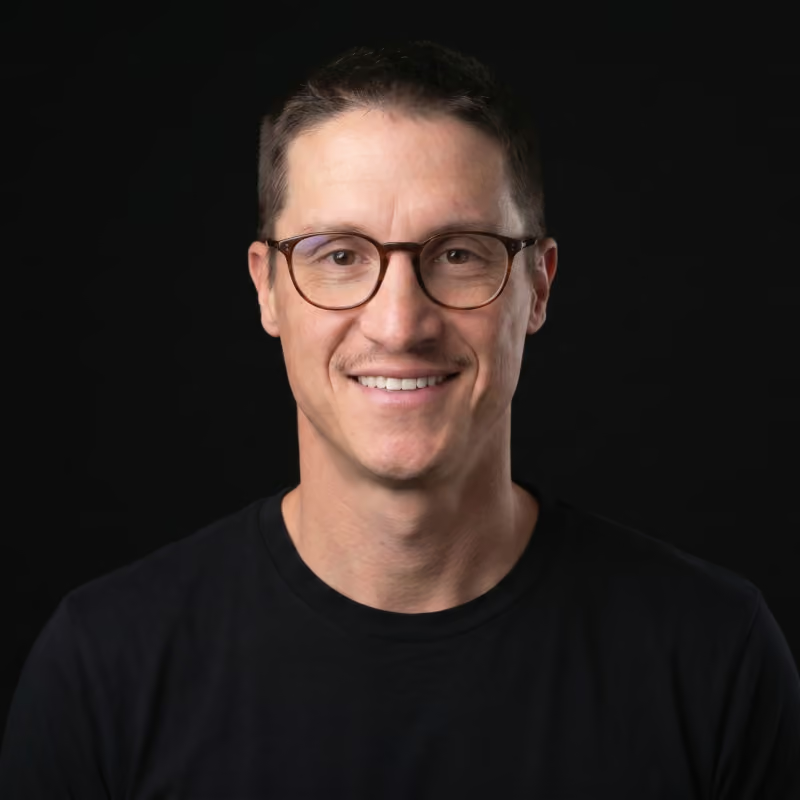
Host: It's not until late in today's interview that we hear our guest's vision for a Holdco. And I think that's telling because Barker Squire isn't in a hurry. His focus for the last six years has not been on the next acquisition, but squarely on solidifying, improving and growing the first business he bought and only business he yet owns, craneworks. And we learn that this growth has been deliberately gradual, even constrained. Focused as he's been on building a solid foundation, this is long termism at its best. Only now, having led the business himself for six years, tripled it, and identified a capable replacement, is Barker turning his attention to what's next, which could be building craneworks further by starting to acquire other businesses. Or it could be buying a completely unrelated business that sees him back in the CEO seat. If you have Holdco aspirations, Barker's approach seems sound for at least your first business. Learn it deeply. Learn how to be the CEO of a small business, build a strong foundation. See what you think. Here's Barker Squire, owner of CraneWorks Announcements next Thursday, Heather Anderson is coming back to do her office hours on SBA lending and financing. Heather is a prolific SBA loan broker. She's a name many of you will recognize and she lays out the process of getting an SBA loan step by step. There are many moving pieces, many stakeholders in an SBA acquisition and and Heather shows you how they all fit together so that you can successfully close your deal. That is next Thursday, March 6th at noon Eastern. Register at the link in today's show notes or on the Acquiring Minds homepage. Acquiring Minds Co Also, SM Bash is coming back around. SM Bash is the original self funded search conference uniting small business buyers, operators and investors. There are dual tracks of content, one for current searchers, one for operators and Brent be sure of permanent equity fame will be in attendance this year. It's in Dallas April 2nd through 4th and tickets are at a more inclusive price point than years past. So get yours now@smbash.com See you in Dallas. And finally, in case you missed it, last week my partners in Mind's Capital and I launched a podcast called Meeting of the Minds. It's a weekly show focused on independent sponsors. Now, as you know, the independent sponsor model of buying businesses is quite different than that of search larger businesses, much more outside capital, stricter expectation of an exit by investors. You can think of it as an entrepreneur doing private equity, but deal by deal without raising a fund. And for many searchers, it's where their business buying careers might Take them. Being an independent sponsor is actually doing more of what they like, deals and strategy and less of what they want to move beyond operations, people management the hand to hand combat of being an owner operator. So come learn about another model of business buying and the stories behind the entrepreneurs doing it. The podcast is Meeting of the Minds. It's every Wednesday, Spotify, Apple, YouTube, anywhere you get your podcasts. Please join us. Welcome to Acquiring Minds, a podcast about buying businesses. My name is Will Smith. Acquiring an existing business is an awesome opportunity for many entrepreneurs and on this podcast I talk to the people who do it. Running payroll, paying your bills, closing your books and producing financials. These are critical tasks every business owner must do or oversee. But spending time on them distracts you from the leadership in growth work you want to do. So let system 6 do it for you. Owned and led by a former Searcher, Chris Williams, System 6 is a leading outsourced finance team for hundreds of SMBs, including over 50 searcher acquired businesses. Chris, Tim and the System 6 team understand firsthand the challenges, the opportunities of jumping into a business as its new owner. So whether you own your business already or have one under LOI, talk to System 6 about how they can give you time back and improve your financial operations. Mention Acquiring Minds and they'll provide a free review of your books and Financial Ops, a $500 value. Check out system6.com, link in the show notes or email helloystem6.com Barker Squire welcome to Acquiring Minds.
[5:27] Guest: Thanks, I'm very happy to be here.
Host: Barker, you bought a government contracting business back in 2019, the result of a self funded search without an SBA loan. We'll get there. And you recently came to a fork in the road which we might say completes a big chapter in your career as an owner. We'll get there. But but let's start off, Barker, with why did you choose to buy a business in the first place?
Guest: Sure. So I guess I would start my answer for that by thinking back to my time in the Marine Corps. So very briefly from Southern Virginia, went to vmi, commissioned the Marine Corps, served as an infantry officer for four years, had some incredible leadership and management experiences both stateside and overseas. I got to the end of my four year commitment, however, and it kind of, I guess took stock of where I was at. And by that point I'd done what I really wanted to do in the Marine Corps and was staring down a lot of bureaucracy. Maybe some time at the PENTAGON and maybe 20 years before I could be back in a Position where I felt like I could really make the changes and have the influence, complete influence and control over the team and culture that I wanted to have. And so I made that tough decision to leave the Marine Corps with my eyes set on business. I said, hey, here's a way for me to continue doing what I love doing, which is leading people in organizations and being a history undergrad. A history major in undergrad. I decided to go back to school. Um, I chose the University of Virginia Darden School of Business. It's an outstanding program. I initially went there with the idea of, of starting a business. And I kicked around some ideas during my first year there. Ultimately felt like that maybe the timing wasn't right for the specific ideas or they weren't a great fit with my background. So I did take advantage of the internship opportunities. Did an internship with Danaher Corporation during my, you know, summer between the first and second year there. Had a great experience, but really. And got a full time offer, but confirmed that, you know, even some of the best companies in the world really don't have it all, all figured out. They're just full of smart, hardworking people who are trying to solve, you know, problems that are, that are valuable, that other people want solved. And so that reoriented me back to this desire to lead a small business. And during my first year at Darden, I'd heard about this whole search kind of concept and so I decided to really dig into that. I got my hands on all the resources that were out there at that time. Unfortunately, the podcast wasn't around back then, but, you know, read the HBR guide, buying a small Business, looked at the Stanford primers. I talked to probably a hundred different people, successful searchers, unsuccessful searchers, investment makers, et cetera. And ultimately, you know, confirmed that, hey, search is the way for me to do what I really want to do. Keep leading people in organizations. And I'm happy to go into more detail, you know, why I chose the self funded kind of route.
[9:00] Host: Great. That's great, Barker. Thank you for that. So you're at Darden, you're exposed to the search model. You decide to approach this how?
Guest: Yeah, so mentioned that I talked with a ton of searchers and looked at the various ways to execute a search when I was speaking with traditional searchers. A few themes and by the way, I think the traditional model definitely has a place. It's a great model. Wasn't the perfect model for me, but a few of those themes that kind of came out time and time again were frustration with managing call it 10 to 15 different investors who are all over the country and who are ultimately the decision makers when it comes to, you know, whether deal is funded or not. The geographic, not, not constraint, but the geographic openness of a traditional search where, you know, maybe, maybe you want to live within driving distance of your parents ideally, but you, you end up on the other side of the country if you found, if that's where the company you find is located. And then I knew that I wanted to have a certain amount of autonomy and control and to learn that with the traditional search, granted it's typically a larger business, but searchers are ended up with 20, 25% equity, something like that at the end of the day. And I was really looking for a situation where I could be the majority owner even if it meant it was a smaller company. So those are, I say, the top things that, you know, led me to the self funded model. To add to geography a bit more. I'm from Virginia, my wife's from North Carolina. We knew we wanted to be ideally in one of those two states, be close to our, to our families and yeah, all those things, yeah, coming together kind of pointing me towards this approach.
Host: Great. So did you begin your search immediately upon graduation? What did your search actually look like?
Guest: I did, I. Some advice I'd gotten from others was hey, just don't, don't worry about starting your search while you're in school. So I did the prep work and got my website up and running and. But I didn't really start searching in earnest until after graduation. So I'd say around July of 2017 really kicked my search off in earnest.
Host: And you were looking there according to your, the geography that you just said, anywhere in Virginia, anywhere in North Carolina or sort of southern central Virginia, northern central North Carolina sort of thing.
Guest: So the latter would be, you know, I guess, the ideal kind of place to land. But I'd say anywhere in Virginia or North Carolina and actually looked in South Carolina at a few companies as well. Yeah. So I was, you know, as open as I could be with geography. But I guess the main thing, we just wanted to be within driving distance of Richmond and Greensboro where our families are located.
[12:01] Host: The team at Aspen HR recently published a short white paper targeted at searchers Entitled A New CEO's Guide to Human Resources. It lays out the key items you should be thinking about as you transition into CEO and owner of the business you bought. The link to download it is in the show notes. Aspen is a professional employer organization or peo, run by a searcher for searchers Search fund veteran Mark Sinatra runs the company which provides HR compliance, flawless payroll, Fortune 500 caliber benefits and HR due diligence support for your acquisition, all for a fraction of the cost. Go to Aspen hr.com or contact Mark directly@markspenhr.com and did you have financial parameters and what were your own resources to put toward this?
Guest: Sure, sure. So in terms of financial parameters for the business, was looking for a business with a half a million up to about a million and a half in ebitda. If I had to go back and do it again today, I'd say I would put the basement number around 750,000 in EBITDA. I'd be up to find a business with 500,000 in EBITDA that was really a true business. And in terms of other resources, first and foremost I had initially a partner and then fiance and then and then wife who is incredibly supportive and still is of the whole kind of crazy process. We met at Darden actually and I kicked off my search. She kicked off her career as a consultant with McKinsey. And so I got to, even before we were married, got to jump on her health care which was a huge help and other resources. Also had what I'd saved up and invested very diligently while I was in the Marine Corps. Pretty much saved up everything that I earned while I was in the Corps and knew that that would be enough to fund my search and to get me at least part of the way through some equity contribution to, to a deal.
Host: And, and if you weren't able to get all the way there with the equity or you open to taking on investors then because we're, because I'm getting the picture of a very autonomy minded person which is.
Guest: Yeah.
Host: Which is so many people in this world.
Guest: Yeah. Yeah, I guess that's, that's fair. Didn't, yeah. Didn't raise any money up front but I did start off with a list of five potential investors and by the end of my search that had grown to 75 potential investors. Yeah, they say, I guess they say you ask people for, ask people for money, they'll give you advice. If you ask people for advice, they'll give you money. I asked a ton of people for advice and at the end of so many of my conversations, folks were like, which you know, really appreciated and still do folks, hey, if you find an opportunity in this space or kind of that I can be helpful with, please, please let me know. So I did have that, have those resources to call on. If I did you know, come across a deal that was too large for me to execute on my own and that's when I really kicked off my search. I didn't think I could do a deal completely on my, I thought I was going to have to have some outside capital I guess I'm sure as we'll talk about later ultimately was able to, to to pull it off by myself with craneworks but didn't anticipate that at the start of my search.
[15:43] Host: And can, can you share with us how much actual what was on your balance sheet? What it looked like.
Guest: I won't give you exact numbers but a few, a few hundred thousand dollars. So you know, I thought I would use the SBA 7A loan and so you know, looked at the, at the, you know, the rules of that at the time and I think it was like 10% down payment required. So I was able to kind of back into like what I could afford and was able to look work with a few potential lenders to write letters of support to helped give me a leg up when I was talking with others in the marketplace.
Host: Well and of course whatever a lot of whether or not you were going to be able to to buy the business from your own balance sheet depended on how big a business you bought. So if you found a business million and a half a day but might have required some outside equity, it would have 750 maybe not great. And okay, so did you have an industry focus? We've got geography, we've got, we've got size, money, the money piece. What about the industry?
Guest: So I knew since I was constraining things a bit with geography that I might have to be a little bit more flexible when it came to industry. But I had some, you know, broad categories I was focused on. So waste remove removal and mitigation, industrial servicing and inspection and light manufacturing kind of stand out as three areas that I was, was focused on and also that I felt were a good fit for me personally in my background too. I could, I could compare, you know, my experience growing up working on my grandparents farm and taking care of heavy equipment in the Marine Corps to those kind of business categories.
Host: Yeah, but, but they were sort of nice to haves, not need to haves.
Guest: That's right.
Host: It was, were constrained by these other geographic constraints were really top kind of top in, in size, floor of size. I don't want to jump just yet to the business that you found Barker, because I want to hear how difficult the search was for you. You considered of course we all kind of know that that piece is. Is pretty difficult. It could be harder or easier depending, but. But you found it. In fact, I recall from our pre call you saying that you found search harder than the actual operations, which kind of is. Is a little bit counter to what we always hear, which is everyone thinks the story ends when you buy the business and actually it's just beginning. But for you, in fact, becoming an operator felt much more natural after that. Not to say that it's been easy, but. But searching was really the hardest part of your journey thus far, I think.
[18:20] Guest: Yeah, I think that's, that's, yeah. Fair to say. And I can't say I was surprised by how difficult the search was because I did my due diligence and you know, talk with others who've been through the process. You know, a lot of people said, hey, there's ups and downs. When I explain it to folks now say there's. There's a few ups and there's a lot of downs. And just the reality is, you know, it really does take year and a half, two years, two and a half years and looking at thousands of opportunities and saying, saying no and being told no literally thousands of times all to get to that one. Yes, that one situation, that company deal, that really makes sense for you and whoever's sitting on the other side of the table. So. And I was doing this, you know, on my own too. Not through an accelerator, no fellow searchers to really call on. Had plenty of friends and, you know, unofficial advisors, but this is really just me waking up every day, hey, this is what I need to do to today to kind of make this happen, keep things moving forward. So when pe. Yeah. When people describe. Describe it as a grind. Yeah, it absolutely is, but it's kind of what it takes. And yeah, once I got into operating the business, I mean, sure, difficult times, but I love leading people in organizations, so. And have to have a lot more experience with that than going out and trying to find a business to buy and.
Host: Okay. And so anything to say about the process or were you just kind of working all the channels that you could, networking biz, buy, sell online, you know, etc. All the online sites, cultivating relationships with regional brokers sort of thing. Anything else to say about that?
Guest: Sure. So, yeah, one. One thing I'd heard leading up to my search, and I imagine that you've heard Will, is, you know, every searcher has their own opinion, you know, on, hey, this is the, this is what you got to do, you know, proprietary only or broker only or, you Know, avoid those two channels and just talk to other random people, you know. So when I was starting off my search, I had a channel for each of those for business brokers and investment bankers, proprietary kind of deals and cold emails, cold calls, and a third channel for other random intermediaries and estate planners, small business bankers, you know, consultants. And I decided I'm just going to track where leads come from over time and see what makes sense, you know, for me and the types of companies that I'm looking for. And several months into my search, I kind of racked and stacked all the deals that I was looking to, saw that I was getting about 40% of my leads from the investment banker business broker channel, another 40% from proprietary channel, and the, you know, the balance from just other random sources. So had some, had some good, good deal flow. But what was really revealing is when I really ranked the deals that I had looked at up to that point in time and every single one of the top five deals was a broker deal. And so at that point I decided to really solely focus on the, the business broker investment banker kind of channel. And I sought out ways to help myself stand out in the sea of folks who are looking to buy a business.
[21:52] Host: And so that, that's pretty striking data. Do you feel like that's generalizable? Are you somebody who, when, when he talks to other searchers says, you know, your, your time is probably best spent not doing proprietary?
Guest: I, you know, I explain the numbers just like I explained them to you and I always add the caveat that, you know, I was looking for a smaller business and this, you know, the same pattern, you know, may not hold true when you're going up market, when things can be, know, more competitive, you're, you're bumping up against private equity. I still have the sense that it's a, focusing on business brokers is a pretty good way to go for, for businesses that are in this, you know, call it 750,000 to a million and a half in EBITDA. You know, I had success with it, but, you know, I guess I'd encourage people, you know, to maybe do what I did starting off and have a few channels and figure out what's working for you because, you know, this was when I was searching, you know, seven years ago now. So things might be, might be a little bit different.
Host: Yeah. Yeah. Well, if anything on the proprietary piece, it's probably gotten. Inboxes have gotten more cluttered, although. So to have inbound to, to brokers, brokers are fielding more. I Mean just. It's just noisier across every channel.
Guest: Exactly. Yep, Yep.
Host: Crane works. How'd you finally find it? Tell us about the business.
Guest: Yep. So found craneworks through a phone call to kind of a one, one man shop business broker. And I call him kind of on the right day, the right time, when he was putting the final touches on a SIM or confidential information memorandum to ultimately, you know, market the business for sale. So I gave him his. Gave him his name was Don. My pitch, hey, this is who I am, what I'm looking for. And he said, I've got the perfect business for you, and gave me some kind of highlights on it. And he said, you'll be the first person to get the sim. I don't know if I actually was the first person to, but I'm sure I was one of the. One of the first few to get it. And one of. Was one of the first people to meet with the sellers of craneworks as well.
[24:14] Host: Well, you were making Don's day if you ended up being the buyer, which you did. You know.
Guest: That's right. It was just really important to. Yeah. For searchers to keep in mind. Yeah.
Host: And. And so it was the right business for you. Why tell us about it.
Guest: Yep. So, you know, it. It. I'd say it checked the. A lot of the traditional search fund criteria. So historically profitable, good base of cont. Contracted recurring revenues. Crane Works inspection contracts are typically three to five years in length. So that gives a buyer a lot of confidence coming in that things aren't going to drop off right away. The business also did and still does primarily serve the military. So craneworks did and still does serve a lot of the bases that. Bases that I trained and served aboard while I was in the Marine Corps. So there was that. Craneworks was not started by a veteran, was not led by a veteran when I bought the business. But I think that familiarity that. That I had, you know, with the military kind of helped me stand out as a. As a buyer and also gave me some confidence, too, that, you know, I. I know my way around these bases. I kind of know how contracting works behind the scenes. And the business was also headquartered about an hour and a half, two hours from where I grew up to. So more or less, you know, in my backyard, I felt like I could. I didn't know any people who worked at craneworks, but I had unknowingly driven by it many times on the way to football games and whatnot. And I felt like I could connect, I guess, culturally with the employees of the business as well.
Host: Well, it was in, it was also in, in industrial services.
Guest: Right, right.
Host: Which was one of your three bucket year, three industry buckets that you were looking for, so.
Guest: That's right.
Host: Servicing big machines was something you specifically called out as seeing yourself being able to do or being comfortable in that environment at the top of your search. So this really, this really was hand in glove for you.
Guest: It was a great fit. It was.
Host: And size wise, both employees and revenues and ebitda.
Guest: Yeah. So yeah, provided my EBITDA range that I was searching for earlier, which is half a million to a million and a half. Craneworks was sizable business, but I'd say it was on the lower half of that range. And in terms of employees, when I bought the business was 11 or 12 full time employees.
Host: That strikes me as a lot of revenue per employee. So if, if EBITDA is somewhere between 500 to a million, let's assume 20% margins. So the business is a, what is that? Anywhere from two and a half to five million for 11 people. Am I, am I, am I mathing correctly here that it's a lot of revenue per employee?
[27:23] Guest: Yeah, yeah, I think that's, I think that's fair. Yeah.
Host: And, and how is it able to command such prices?
Guest: So we've got a great mix of revenue sources. The steady work is on the inspection and maintenance side and that's, I wouldn't say that's tremendously profitable. But from time to time we get a larger, more non recurring project which could be a major repair overhaul or even a new crane that we're designing, fabricating, installing for a customer. And so it's those larger, those larger projects that are really parts heavy that give us that, you know, revenue bump and, and oftentimes profit, profitability bump as well and engineering component to those. And we're able to do a lot in house that others have to kind of outsource.
Host: And the revenue mix between the servicing maintenance contracts and that project work was what?
Guest: Roughly 50. 50.
Host: And so the, the 50. That's the recurring, those recurring contracts. Very high quality revenue, but lower margin revenue.
Guest: Sure.
Host: And, and the projects. Okay. And that's probably in the kind of a service, service and repair business. Do you feel like this is kind of a pretty typical revenue mix?
Guest: Yeah, I feel like it's fairly typical. I mean they'll, you know, you talk with a lot of, a lot of companies, there'll be some that have a little bit less on the recurring side of the house and, and vice versa. So I feel like we're fairly typical. You know, we've got our recurring revenue. We say, you know, it pays the bills, keeps the lights on and it leads to these other opportunities that can make things a little bit more interesting for us. So it's a great mix of, of stability and you know, potential for, for more.
Host: Yeah, yeah. Well, I want to get into the operations in your ownership here in a minute. But, but first let's hear a little bit more. Let's hear about the, the deal. But crane work, servicing cranes. This is not cranes that we see on a city skyline. What does it mean exactly? Or, or, or is it, I mean what, what kind of machinery are we talking here when we say crane?
Guest: Sure. So our, our core business is servicing overhead cranes for the, for the military. So an overhead crane is one you'd find in a warehouse type environment. It can be fixed or it can be rolling back and forth on, on tracks and it's used for picking up, you know, engine blocks out of heavy equipment to, you know, moving around research projects. So that makes, when I bought crane works made up the majority of other business that type of crane we did and still do take care of mobile cranes as well that you'd see typically like alongside the road for construction purposes. Our customers use them to move around. Typically heavy things are going to test or blow up and see what happens. We do take care of a few ship to shore cranes as well. So portal cranes, container cranes. But yeah, we steer clear of the tower cranes that you see on the skyline and occasionally in the news.
[30:40] Host: Yeah, yeah, yeah. Well, it's, it's so funny, Barker, because I've talked to. You're not the first person I've talked searcher I've talked to who bought a crane servicing business. And it's just, you know, the lay person, you say crane, they think tower crane. That's right. That's what you see. And turns out that there's all these other types of cranes and not only do they exist, but they're very, they're very common. I mean there's a lot of cranes in industrial environments that a layperson would probably have even have a hard time visualizing. But they're, they're everywhere, as it turns out. Okay, all right. And so the business was selling for what and how did you approach the deal itself?
Guest: So selling for about a 4x multiple. And in terms of, you know, approach to the deal, I came prepared to my, my first in person meeting with the sellers with some good questions, but also with some open ears. And I think that was really critical for me ended up, you know, being the, the successful bidder to listen for what it was exactly or why the sellers were selling, which was important and what it was exactly that they were looking for out of a deal that was presented.
Host: Say more about that please. What do you mean by open ears, please?
Guest: Sure. Well, I think so. Any, any kind of transaction like this is, is fairly significant for, for most sellers it's the, you know, largest financial transaction that they're and going to be involved in in their entire life. You can't take it, take that lightly. And it's really important to hear what's actually behind the reason for, for the sale. One, that's just part of doing good due diligence. But two, I think that helps you put forth an offer that, that speaks to that and I'm talking about the mix of, you know, cash now versus later, you know, seller note, yes or no, earn outs, things like that. It's, it's really easy to just come in and say like, hey, here's, you know, here, here's a big number or here's the boilerplate deal structure I typically put in front of people. I think if you, you do that, you're kind of doing a disservice to, to yourself. And the more that we, we listen, I'd say in life, the more we set ourselves up for success. I think that's incredibly true for events like this that really are, you know, life changing for everyone who's involved.
[33:29] Host: Well, it's such an important point. It's been made here before, but not often enough. So thank you for making it. The process of buying a, buying a business is actually a selling process. Often you're selling yourself, you're selling yourself as buyer. And good selling involves understanding what the other side of the table really wants and demonstrating how you are the entity to deliver that. So in your open ears, in your perception of the need to try to deliver what the seller was looking for, what did you uncover? How did your offer or your deal vary from what would have been kind of standard boilerplate.
Guest: Yep. So I learned that the founder of the business wanted to, to stay in the business. And that's, I'd say not the norm. And actually I, I recommend against that in most cases. But in this case I got, I got comfortable with it. So the founder of the business we're Crane versus really started about husband and wife couple. The husband was the engineer and lead technician out in the field from time to time. The wife was the business brain and administrator. Sadly, she passed away in 2012, several years before I entered the picture. But what I learned talking to the founder of the business, Jeff's his name, is that he didn't really. He was ready to stop, you know, quote, running the. The business and. But still wanted to be involved and do the things that he really enjoyed doing, which was leading these projects out in the field and doing some engineering. And I got. I got comfortable with that and say, great, you know, I want to run the business and hey, I'm not an engineer, so I'd like you to stick around and I'll take all this, you know, junk and insurance and HR and dealing with a bank and employee problems. I'll do what I can to take that off your plate and give you more time to do what you enjoy doing and do what's really valuable for the business as well. So I heard that in the conversations, you know, early on and ultimately presented an offer that kept the founder around and had him, you know, rolling some equity as well so he could participate in what. What I thought was going to be the bright future we were going to create together.
[36:04] Host: And Barker, how. So he was not looking to retire then? Was he at retirement, retirement age?
Guest: How old was he at the time? He was early to mid-50s.
Host: His reason for selling was not retirement. His reason for selling was to. To arrive at a situation which is, in fact where you guys arrived, that he would continue to be gainfully employed and maybe even have equity in the business, but not be the. Not be running the business and. And then. And see out his career that way.
Guest: That's right. I think that was. That was the founder's perspective. There was one other seller as well, who is more or less a financial backer and would get involved in some contracts, work from time to time. And he and his backer were ready to. To, you know, move on to their next thing too. So ended up present an offer that bought them out completely but kept the founder in the business.
Host: You said, Barker, that you don't recommend people do what you did as just generalized in the general case, where the seller continues on in the business. Why not? Because the structure that you and the seller arrived at is not uncommon, certainly in private equity deals, where often a private equity shop will want a seller to continue to roll some equity and to continue on, although that's going to be different because usually in those cases, the seller continues running the company. In your case, you were going to run the company and the seller was going to bas. Become an employee. Not basically literally. And so, so, so anyway, it's it's, in some ways, your model is very familiar, but there is that key detail where he was going to become an employee of his own business. So, anyway, respond to that. Why do you not like it? And, and why were you able to get comfortable in this particular case?
Guest: Sure. So, you know, why I recommend against it? It's not unique to business, but in any human organization, it's important for it to be clear to the entire organization who's in charge. And it's important for that person to have the ability to create the culture and team that they see as necessary for the business or the organization to continue to move forward and grow. You know, in the military, I've saw it in change of command ceremonies. Like, literally the flag is handed from one commander over to the next one, and then that guy's after a brief turnover, he's gone. And if there's, you know, two, quote, you know, leaders, or in the case of business, CEOs around, there's a lot of room and opportunity for confusion among employees, like, hey, who. Who's actually in charge? And this guy, you know, says he's the CEO now, but do I still bring my problems over here? Or who do I listen to? And so there's, by, you know, keeping the, the typical old guy around, you're opening the door to just more chain
[39:24] Host: of command complications change.
Guest: Exactly. Change of command, conflict issues. Yeah. And, you know, a lot of people say, like, oh, yeah, it's going to be fine, but it's typically not fine. I'd like to say that just from time in the Marine Corps got a lot of exposure to similar situations. And so, you know, maybe I just got lucky this time. I don't know. But I, I talked with the founder enough to uncover that, you know, he really, he was really, he really didn't want to run the business. I got comfortable with that, and I think that was key. And what made this situation unique and has ultimately, you know, led to what continues to be a great partnership that's worked out really well for both of us.
Host: An SBA loan broker, as opposed to a direct lender, doesn't work for a particular bank. Instead, the broker pairs you with the right SBA lender for your deal, based on industry terms, risk thresholds, then helps you navigate the process better than many lenders themselves do. Matthias Smith of Pioneer Capital Advisory is just such a broker. Matthias worked at two of the country's top 10 SBA lenders. So he's been on the inside of the SBA process and knows well the pitfalls and hurdles and how to avoid them. He struck out on his own to laser focus on the ETA and search space. Our niche is his niche. You'll see Mathias at all the ETA conferences. He's closed over 30 search deals since starting Pioneer in May of 2022, including some acquiring minds guests. To learn more and get in touch, go to PioneerCapitalAdvisory.com or click the link in the notes. Well, you are touching on another kind of wrinkle here, which is that even if you can get comfortable with the seller saying, no, no, no, really I don't want to be the boss, really, I don't want to be CEO. I really promise to not step on your toes or, you know, get out of your. I promise to get out of your way. You also, you also have to make sure that the employees.
Guest: Yeah.
Host: Play ball too, and, and are able to shift their, their view of who ownership is from him to you. And that one, that one's harder to diligence. You kind of only, you only know it's going to work once you get in there, start leading and they, and they are, you know, they do in fact shift their, shift their view of who leader is to you.
Guest: Yep, that's right. Yeah.
[42:01] Host: Okay. All right. So he rolled equity. Can you tell us more about the structure of this deal?
Guest: Yep. So he, he rolled equity yesterday on his employee. He ended up rolling 25%. And I think, yeah, something unique about the situation I think you highlighted earlier is that made it at the time ineligible for SBA 7A loan. So for senior debt, the next part of the structure here, I had to go find something, something else, something really non conventional for a self funded search, which was a con, you know, conventional loan. So ultimately worked with two regional lenders. Senior debt ended up being about 45% of the deal. The next 20% was seller notes and the remaining 10% came from me personally.
Host: And so finding conventional worked out. It wasn't. Talk to us more about that because it, it is so uncommon in self funded search land. Presumably because it's really difficult for a self funded searcher to find conventional. Although I should, I should, I should stress test that assumption. That may not be as true as we all think it.
Guest: I think you're, you're right that it is difficult. I think 2019, like the conditions were, were ripe for it for, for whatever reason, it was difficult finding a lender who was, who was open to it. And I reached out to about 25 different financing sources and the range of, you know, offers I got from, you know, lenders was about 300%. Yeah, I had some banks who are like, hey, we'll give you a, you know, you need, you need a whole lot, but we'll give you a few hundred thousand. Ultimately, these two regional lenders kind of stepped up to the plate and gave me terms that weren't, you know, on par with a 7A loan. But the, the deal could still work and you know, I could make it cash flow, make the numbers work. But yeah, it was, it was challenging and you know, just, you know, that's, I guess we're coming up on two years ago now when the Silicon Valley bank stuff went, went down. Yeah, I reached out to some traditional lenders at that time just to kind of see what the market was like for refinance purposes. And all the credit officers were just had crawling a hole. You know, they're like, we're not lending, you know, anything to anybody. And so timing in the market does, you know, play a role. Yeah, on the conventional front, I think more so than the, you know, SBA program. I think that's pretty steady and always there as, as a lending source since it's of course backed in part by the government.
Host: Yeah, yeah, the, and, and sorry, did you say there was seller note involved?
Guest: Yes, yep, there was a seller note involved as well.
Host: How much was the seller note?
Guest: About 20% of the deal.
[45:01] Host: Ah, so seller note 20%, seller own 25. So you had to come up with 55%?
Guest: That's right.
Host: Ah, well that helped the conventional. That's a much more than the 10. Yeah, yeah, yeah. I mean you've got 45% accounted for there and with your, with your 10% in, that's 55%. So then you're only looking for 45% of the debt. Yeah, okay. Okay.
Guest: Still difficult though.
Host: Well, and, and that should tell us something that even with all of that equity that you're bringing to the table, it was difficult, it was difficult even to just, even to get just 45% of this business leverage. Anything more to say about the transaction itself or your early, early ownership?
Guest: Yeah, on the transaction, I'll throw out name of my attorney because it did such a fantastic job. John Gilson now with Holland and Knight. He's built an incredible practice around representing self funded searchers, traditional searchers, private equity groups, independent sponsors. He's an incredible, he's a great attorney, but an incredible coach. And he was a fantastic resource and asset throughout the whole process.
Host: How do you spell his last name?
Guest: Barker G I L S O n John Gilson.
Host: Great.
Guest: Yep, yep. And on the accounting due to due diligence front, John connected me with my local accounting firm that did kind of a limited quality of earnings and that worked. And then I, I did as much of the due diligence as I as I could on my own to figure out value assets and dig into the contracts of the business, et cetera.
Host: Let's fast forward to where things are today. So, so you closed in 2019 when in 2019?
Guest: January of 2019. We're at.
Host: Great.
Guest: Six years here.
Host: We are. Six years.
Guest: Yeah.
Host: Condense those six years into a couple minutes here. How's it gone? This, this chapter?
Guest: Yeah. So there's really, there's not many chapters. The first chapter is the first six months or so. I knew that first really year would be kind of, kind of crazy,
Host: you
Guest: know, new business to me and I'm new to the business, but about a month and a half in a division within craneworks more or less imploded. I can't go into too much detail, unfortunately, but I had to kind of watch, call it half a million dollars in enterprise value just kind of disappear. So that was my, you know, welcome to business ownership kind of moment. I had to stay focused on the core business of craneworks.
Host: So can you give us any more? Was it, was it that, that some employees walked or that you left, lost a key contract? Was it a customer concentration thing?
Guest: The former. Some, some employees walked in and I understand, you know, the reasons that they, they did walk. It was from, from stuff that kind of had been going on before my arrival really. And I just didn't have the time to kind of unpack that and get things on a course that would work for, for them and for the business. But yeah, that's, you know, that's why multiples are lower in the lower federal market is typically because of t man risk, employee risk.
[48:29] Host: And was there anything you could have done to better diligence that or is some of that stuff just undiligenceable?
Guest: I don't think there's anything I could have done really.
Host: This is interpersonal tension that had been.
Guest: Yeah. And stuff that percolating. It's kind of stretch. Yeah, yeah. And stretch back, you know, years in some cases. So it was one of those, you know, I guess skeletons in the, in the closet that'd be fair. Nobody foresaw. Yeah. But yeah, that was a month and a half in. And then that first six month period sales were not really on track with the prior year with, you know, the business that I bought. So we had some, you know, some, you know, we got to tighten our belt kind of moments early on there. But six months in, sure enough, sales picked back up and I was like, okay, you know, the, the business that I bought is still here, our customers still like us. And around that six month mark or maybe a little bit before, worked with, with the founder and the key middle managers. We put a new strategy in place. We use the entrepreneurial operating system, you know, traction framework. And we've been really in execution mode ever since, primarily growing through, just doing, trying to do really good work for, for our customers. So if I had to pick one other stage, it'd probably be, you know, where, where we're at now which is this, you know, period of transition. We did win some big key contracts along the way. We had an immobil crane division. We've done some larger projects, we've gotten more technical, added more engineers to our team, more technicians. But yeah, I'm happy to dive into any piece you'd like to.
Host: Well, I'd like to hear Barker a little bit about just the numbers behind the growth here. Yes. So what was revenue? I don't think you told me what revenue was. I think you gave me an EBITDA range. Can you share what revenue was?
Guest: Yeah, I won't in specifics, but I'll say that Today we're about 3x the size we were back in, in 2019. So we've.
Host: Fantastic.
Guest: Yeah. Grown quite a bit and really give all that credit to, to the team that we've got in terms of employees. You know, we were at like around 11 or 12 when I bought Craneworks. We now have 26 employees and we've got an outstanding team.
[51:03] Host: And what about ebitda, has that grown
Guest: along proportional to that revenue? Cranes not coming up on employees, just, but just about every way we've, we've grown about 3x.
Host: Congratulations.
Guest: Thanks.
Host: That's, that's phenomenal. The government contracting space, it's, it's an enormous space. It's a space that's going to be getting a lot of attention from the media as, as the new administration kicks in here and, and Elon Musk goes to work.
Guest: Yeah.
Host: But maybe give us a primer on what I need to narrow your, your answer here because it is such a broad space. But I guess what you, I guess broadly, if you, if you can kind of, if you can generalize your experience, what do you like about working in government contracting? What do you not like about it?
Guest: So what I like about it is the customers we get to serve. So our customers are doing like cutting edge research. They're helping key units deploy and train. And so there's this. We know what we're doing is important. And coming out of the Marine Corps, I didn't know if I would ever find that again, really. So my mission in the Marine Corps was very focused, especially when I was deployed. And there's a lot to be said for, you know, an organization that is, that is really able to coalesce around something that, that's really important. So I feel very fortunate that, you know, we can say that as a business that we, we really do important work.
Host: And Barker, that's specifically because you're serving military customers as opposed to just government broadly.
Guest: That's right. That's specific to what Crane Works does.
Host: Yeah, yeah.
Guest: And then let's see, your next question
Host: was, what, what maybe do you not like about it and putting yourself in the shoes here of a searcher who might come across a business that serves the government. So what, what to like, what not to like?
Guest: Sure. So there's, I mean, the Federal Acquisition regulation is insanely long and it references all kinds of other stuff and it governs the vast majority of contracts with the government. And so it is, it is incredibly difficult to be a small business doing business with the government this day and age. And it becomes more and more difficult every year. I've never added up the number of, you know, pages of regulations and codes that we're subject to, but it's probably like a million pages. I mean, it is crazy. The reality is a lot of businesses, smaller businesses, do work with the government kind of not knowing what they're agreeing to and what they're representing. We, we know and, and we, we check all the boxes, but it is, it's difficult too. So there's a ton of bureaucracy and, and some of it does, you know, some of it does add value. I mean, the, the Crane programs that we support and the additional, you know, layer of roles and responsibilities that the various branches of the military have defined for managing weight hunting programs, there's a lot of value there and we can get behind those. But there's a lot of other. Just junk and random trainings and stuff. You got to do that. It's just part, it's part of it. And I think there's, you know, the pro to that is there's, there's a barrier to entry, like to what we do and what most government contractors do. I mean, you can't, you can't wake up tomorrow and be like, hey, I want to go compete with craneworks. It would take you years and millions and millions and millions of dollars to try to do that. What a moat.
[55:03] Host: That's incredible.
Guest: Yeah, it's. So that's, that's the pro. So we're, you know, you know, while we, it's this love hate relationship, you know. Yeah. We don't like dealing with all the bureaucracy. The reality is it is, it does give us a lot of confidence, you know, in our future because we, we see that we really do feel a valuable role for, for our customers.
Host: And what about customer concentration? Is that an issue in your, in your business? This would be hard to generalize because in the, under the government contracting umbrella, but just in your case, there, there's,
Guest: you know, there's some concentration as they're in, it is in any business. But when you kind of look under the hood a bit more, as I of course did during due diligence, you learn that, you know, say a business does 70% of their work with the army. Well, it's probably not all through one contract. You know, it's through a host of different contracts through, funded through a bunch of different programs that you really can think of as individual customers. So there, there's, there's some concentration, but I'd say it's, you know, it, it's certainly on par with other businesses I looked at when I was doing my,
Host: my search and, and, and just going back to the point about this, this moat of somebody trying to come in and compete with you and serve the same customers and how difficult that would be. I assume that means that to inherit these contracts, it was a stock sale, not an asset sale.
Guest: That's right. Yeah. Yeah.
Host: For this, for this very reason.
Guest: For this very reason. It's not, not impossible to do an asset purchase of, you know, a government contractor. But it's very challenging. You have to do like it's called novation agreements to get the contracts to transfer over. And there's no guarantee that contracting officers will actually agree to that. So, you know, typically when you buy on a government contractors, typically a stock purchase.
[57:00] Host: Great. And those contracts that we talked about at the top here or right when we started hearing about Crane works, three to five years. So it's recurring revenue. And those contracts are nice and pretty long.
Guest: Yeah, yeah.
Host: And so, and so that does provide the stability that we are promised by recurring revenue. This is to just tell us your experience of, of such great recurring revenue. Is it, is it as, as advertised?
Guest: Yes, I would say it is. So you can screw it up. But you know, if, if you're quote, buying that recurring revenue and you stick by your side of the bargain and you continue to fulfill your contracts to the letter and also to the intent that the customer is, is seeking, which is not always spelled out in contracts, then it puts you in a great spot for certainly, you know, seeing the full life of those contracts. And it puts you in a great position as well to, to be the awardee when they are resolicited and back out on the market again.
Host: I, I want to just hear a little bit more about your six years here and then, and then we'll turn to the future. But this three, this tripling that you've done. Barker, you said you just after those first six months you kind of turned to execution mode. Put, put in eos. So has it really just kind of been putting one foot in front of the other, following the EOS model, doing a good job, strong leadership, but no, no master strokes. It's been pretty, just kind of a gradual solid execution over five and a half years sort of picture.
Guest: Yeah, I think that's fair. No, no, no master Strokes. No magic. Dramatic changes. We've just focused on delivering really high quality inspections, maintenance, repairs, engineering and, and we just grown through our existing customers and also through word of mouth. Like we don't have a full time sales function and we've, we've really grown about as fast as we wanted to. You know, it's, it's. Safety is incredibly important in our industry and we, we care about our reputation tremendously. And so we've, we've grown up just again about, about as fast as we would want to. So we've been, we've been hesitant to, you know, dump gasoline on the fire. We feel like we're going.
Host: It's really interesting, Barker. Yeah, because of course that is what all of us are always so focused on. It's like what, what levers can we pull here? And, and, and direct sales or a formal sales outreach effort. Function would be a big priority. And so basically you, you, you really, you've, you could have grown faster.
Guest: Yeah.
Host: Based on market demand, but chose not to because you want to grow, right?
Guest: We want to grow. Right. Yeah, we're, we're focused on, you know, the Next, call it 30 years, not the next, even three years. And in order to, to get there, like, you know, we have to maintain a culture of safety and we have to keep quality high. And if we do those things well, we're, we're going to continue to grow and this is, I think this is true too, just in the, just in our industry more, more broadly. Like there's, there's a lot of work out there, but you can mess up your reputation very quickly if you're just kind of looking to make a buck. And that's, that's not what we're really about.
[1:00:32] Host: You've said safety now a few times and I, I remember that from my conversation with other searchers who, who, who've acquired a similar business that crane maintenance is incre. In fact, it's perilous. I mean, there are horrible accidents that happen every year in this industry. And so it's something that, indeed you, you. I mean, every CEO says safety is a priority, but really. And this is a dangerous job, this is a dangerous industry.
Guest: That potential is there. I, I say still the most dangerous thing that we do is, is drive on the road.
Host: Oh, really?
Guest: Yeah, yeah.
Host: Okay.
Guest: I mean, yeah, we're, we're up and down 95 quite a bit in, in Northern Virginia. You know, it's, it's. Which I know is where you live. Will can be kind of crazy when you're driving around F550 towing a trailer, you know, with a man lift on it and some test weights, you know, things can get a little. You can't stop on a dime. So that's, that's still, I'd say the most dangerous thing that we do. But yeah, when you're up on a crane, there's a, there's a crushing risk, pinching, electrocution, falling from heights. There's all kinds of things that, that can go wrong.
Host: The owner, how. How has that played out, being in the business as your employee, the other employees shifting their allegiance if they will or who they saw as leader to you. Did. Did we already hit all of that? It played out as we kind of described. Or is there more to say about how it's actually gone these, these last six years?
Guest: Fortunately, it's gone. It's gone to plan. And the founder of the business, yeah, he fulfilled his end of the bargain and he actually is semi retired now, does a few hours of work for us each week and we'll go out in the field for key projects that are really a great fit for his background and skill set as well. And he's a huge cheerleader and champion for craneworks as a brand. And so I'm so grateful for the opportunity that he really gave me and continue to be grateful for the support that he provides. You know me and advice and provides. Crane works too. And I Think he would say that I held up my end of the bargain too. So that's really worked out. Worked out well.
Host: Well, Barker, you're at risk of making this seem easy. Despite those first six months, it feels like these last five and a half years have gone according to plan, to use your phrase. Now, we also know that you, I mean, I already, we already told people that search, the search was hard for you and you found and you felt quite at home in operations. Correct me if I'm wrong. I guess the question I'll ask is now reflect on your decision to go down this path just broadly as a self funded searcher seeking autonomy, a word we heard you say a lot. Has it, has it been what you wanted it to be?
[1:03:19] Guest: Yeah, I wanted, I expected it to be challenging and rewarding and it has been both. So there's certainly been even beyond that first kind of hairy six months. There's certainly been curveballs along the way and personnel challenges here and there and customer challenges, better challenges, et cetera. There's been problems, but they're all solvable problems. And we learn things from each of those experiences too. And that's, and it has been incredibly rewarding too. And I'll say, you know, mainly just on the, I've mentioned, I really do love leading people in organizations and I want to make sure I get this out there today. It's probably the best time to say it, but I believe that leading a small business, whether it's your CEO or key manager or owner, is probably the best way to positively impact other people. There's no other position I can think of where you have such direct influence over what someone's paid, their benefits and I'd say more importantly, hopefully the purpose that they feel when they come to work every day. So you get to touch each of those things every single day in, in a small business. And I think that's an incredible responsibility. I would even say it's, it's an obligation for small business owners and small business leadership and it's incredibly personally rewarding, at least to me, to have that opportunity.
Host: Were you surprised by just how rewarding that was? Were you like some of my guests who have said something similar, but it took them by surprise, they didn't get into the, into this for that reason, but have just been, have come out the other side saying, the most gratifying part of this is what you just said.
Guest: I mean, kind of a reason one of the main reasons I did search was, you know, in pursuit to do this and yeah, to do this So I can't say that I was surprised. So I, I felt the same way, you know, leading Marines in the Marine Corps. And yeah, I wanted to keep, keep doing that. I still want to keep doing that.
Host: Yeah. Well, I, I do think, Barker, we should say that a couple things that you, you've done so well at this because on this podcast and everywhere else, we, we also, we, we hear about how hart this path is also, and how fraught it is and how perilous it can be that there are a lot of bad stories out there. And I think in your case, I think you're a natural leader. You, you, you feel very at home leading an organization that's not everybody. And, and so I think you, you have a particular talent for this, which probably makes it a more natural, a more natural way for you to direct your career. Stop me if I get something wrong. Just interrupt me. The other thing, the other thing is you had real leadership experience very early on because of your Marine Corps experience. What, what were the numbers at 20? What you led, how many people?
[1:06:41] Guest: So it, I was deployed, when I was deployed, I think I was around 24. And I had about a hundred person base for five months in the middle of nowhere, Afghanistan, then went on to run about a 400 person base at its peak. And my last role in the Marine Corps, I had a company of about 280 Marines.
Host: So you ran a base of 100 people, 400 people, then a company of 280 Marines. So, so I think, you know, you probably only were given those positions because you're a natural leader, but then you also have that, you now have that experience. So coming into civilian world to, to Lead A, a 10 or 20 or 30 person business by comparison probably feels I, I hesitate to say easier, but that's the obvious word. Fair.
Guest: It, it wasn't. I, I wasn't daunted by the size of the, the organization. So, you know, the mix of, of people and their experience levels was a lot different from leading, you know, starting off leading the platoon of around 40 marines. But, but yes, Craneworks always has been and still is the, the smallest, you know, number of people that I've, you know, professionally managed. And you know, we're, we're growing every year and we're gonna, you know, keep on growing. It's going to take a while for us to exceed that. You know, call it 400 person mark, but maybe we'll get there someday.
Host: And then I also just think that your exhibit A of how well veterans do in this world of small Business ownership and leadership because there's a lot of transferable skills that, that are learned in, in service. Obvious point. We. It's a pattern that comes up constantly, but you seem like a, like a great example of it.
Guest: Thank you.
Host: Fair.
Guest: Thank you.
Host: Okay, great. All right, Barker, well, let's close out by looking forward in your career. So what transition point you just teased? What is the transition point you're at now?
Guest: Yep. So my vision really starting off my search was over time to build a portfolio of companies that may or may not be related. And we're at that point now with craneworks. And so in July of last year, promoted our outstanding CEO of craneworks to the position of CEO. That's something that we've been targeting for some time. And Marshall is his name. He's incredible leader. Great. Technically, he's a crane engineer in so many ways. Like he's, he's the right person to lead craneworks into its next chapter. But the other kind of half of that is what, you know, what am I doing with my time now? And I'm still focused on continuing to help craneworks grow, but through some inorganic means. So I'm now focused on helping Crane Works fill geographies and some skill areas that we, that we don't have right now that we would like to have, you know, under our umbrella. So that's how I'm spending my time through 2025 here.
[1:09:53] Host: And is that how you'll spend your time indefinitely as looking for inorganic acquisition opportunities for craneworks or is there, or do you see more? Doing more?
Guest: Yeah. So while, while I'm executing that search, I'm also going to be on the lookout for, for other companies. Maybe they are related to Cranes, you know, maybe not. And how I'm thinking about it currently is if I find a business, you know, large enough especially to have proximity to, to my home, I'll jump in and operate that business for a number of years, maybe like I've done with craneworks. And I'm, I'm also staying open to finding opportunities maybe, maybe a little bit smaller and plugging operators into those companies. So yes, I want to help Crane Works to continue to, to grow organically and inorganically. But alongside that, I'm looking to at some point add the next company to this, you know, small, I guess you could call it holding, holding company.
Host: And so I, we didn't get at that. At the, at the top. You envisioned from the start a small holding company for yourself. That was, that was the long term vision.
Guest: Yes, that was the long Term vision is not to unlike. Unlike kind of the traditional search model or the PE firms out there. My vision at the onset was to find high quality businesses that it can keep and hold ideally indefinitely. And you know, longer term I see myself, you know, holding multiple companies but still being involved and working with the managers of those companies and supporting them, you know, however I can to give them the resources that they need to be successful.
Host: Well, as you know Barker, the the holds company fantasy is is. Has been trending in recent years and you haven't done it yet because you have but one. But you are certainly positioned to do it. You now have this six years of operating experience and success on top of your military experience. You have a, a business that we I think assume, I think it's fair to say is throwing off a lot of cash. So you have financial optionality. So, so it seems in your what in your 30s?
[1:12:16] Guest: 36.
Host: Yeah, 36. So it seems very realistic that you, that you actually could really build this, build this Holdco. Why do you like that model versus serially buying, building but exiting a business and, and kind of parlaying each one into a larger opportunity. You could sell crane works and then go buy a bigger business and then buy, grow, buy, grow, exit that one and so on. What, what appealed to you about a long term Holdco?
Guest: Yeah, you know craneworks and hopefully I can say this about the next business as well is, is like a, it's a great business and we've spent a lot of time and energy and investing in our, in our team and in our processes and building relationships with customers etc. So why so yeah, yeah, so why sell? I mean like it, it is challenging to, to go find a you know, business like Cranework. So you know, so, so why sell it? There's, there's no guarantee that the, the future will be as bright as the last, you know, six years have been. But, but I certainly believe that they will. Greenworks has got a incredible trajectory so. Exactly. Yes. So why sell? And yeah, unfortunately we've really been focused up until now on reinvesting pretty much everything back in the business. We're at a point now where do have some optionality and can allocate some resources outside the business now.
Host: So you've been reinvesting most free cash back into the business for these last six years.
Guest: 100 of it, yeah.
Host: Oh really? So you've just been paying yourself a salary, that's all you've been taking out for Barker's own wallet?
Guest: That's right. And at times, at times that was reduced to zero because that was the right thing to do. We didn't hit on that today because we really didn't need to. But yeah, that was the right thing to do at the time to get the, the right people on the team to lead us to, you know, our next kind of stage of, of growth.
Host: So, and so how did you finally decide that now was the time that you could step out as CEO and start taking cash out of the business? What, what was the threshold that was met?
Guest: Yeah, I think the, the most important thing is our, you know, now CEO Marshall in, in Afghana. We were both ready for this, this juncture so something we'd been targeting for a good number of years. And you know, Marshall was ready. He, he been in the business since full time, since 2020, had served in a few different roles and most recently as CEO. So he was ready. I thought he was ready. And also it gotten to that point where I felt that I could add the most value in this kind of role that I'm in now where I'm, I'm looking not just for that next contract, although I'll still help with that, but looking for the next team to help craneworks grow in that manner, you know, inorganically. Exactly.
[1:15:32] Host: With step changes. Serious.
Guest: That's right.
Host: When we talked in the pre call, you hadn't yet met, made the decision that you're going to, what you just described that you were going to look for other acquisitions for Crane Works and, or look for another acquisition for your own holds company that you yourself, if it was big enough would go run or you would partner with a searcher or some other operator to, to and partner with them and they would run it, which is what you're going to do to be clear. But the other option had been to become basically an investor, I guess a full time investor into search. And you chose against that path. You, you, you're, you will still look at search deals kind of on the side and, and will invest as kind of a side thing, but not the main thing. Why did you decide against that?
Guest: Yeah, I think just at my core kind of who I am and I love, I love leading people, I love improving operations and, and I felt as that this approach that I'm taking would give, you know, position me to be a little bit more involved, not in an overbearing way, but I still want the companies that own to, to feel like that they're a part of the, you know, Barker Squire family of companies. And it's not just a quote, you know, investment. Yeah, I didn't kick off a search for a business to, you know, make a lot of money like some people do. And there's nothing wrong with that at all. But I really view the, the financial side of this process as it's, it's. It's a tool to help us accomplish and achieve our, our goals. And for me, like the. What's most important is building outstanding teams that deliver great value to our customers. And I think I wanted to be a little bit closer to that equation than, you know, your typical investor is.
Host: Well put. Anything we didn't get to today, Barker, that you wanted to voice. Let's see, where can people download your. Your, your album?
Guest: That's right. That's right.
Host: A musician who does. Who has, as you described it yourself, Barker, kind of country jazz hybrid.
[1:18:05] Guest: Yeah, well, the one album I've got out there, which recorded once I left the Marine Corps and I was kind of gearing up for business school, it's got maybe 10 songs on it. About half of them are country and the other half are, are jazz. So I've kind of got a Frank Sinatra kind of style and then I've got a My own country style as well. So two distinct jobs.
Host: They're just, I was gonna say not two genres.
Guest: Yeah, you know, a standalone country album. Standalone jazz album. But yeah, you can go to. I think it's available pretty much everywhere. I used to get a check for like 50 cents each year, you know, for people listening to the music. I'd stopped getting that check but somehow they're, they're still up available for download. So.
Host: Well, let's go buy some Barker Squire music. Everybody streams everybody. And so he 50 cent check. You said 50 cents or $50 cents. Okay. Okay.
Guest: Yep.
Host: Yeah. I think you chose the right career path in acquiring Crane works there. Parker. Don't quit your J job. No, but that's really cool. Good to, Good to know that about you would not have predicted that you're a musician on the side. How could people reach out to you?
Guest: Barker link. Yeah, LinkedIn is probably the best way. Just feel free to just send me a message there.
Host: And to be clear, you are interested in connecting with searchers and potentially investing in their deals.
Guest: Yep, yep, I'll continue. I've done that kind of on the side as I've ran craneworks and I'll continue to do that just won't be my primary focus. So. Lee, I love talking with searchers and I'll continue to go to the conferences and be a resource as so many people have been for me.
Host: Great barker, squire. Thank you very much for your time, sir.
Guest: Thank you, William. Sam.







































%20-%20thumbnail.avif)



%20-%20thumbnail.avif)

%20-%20thumbnail.avif)

.avif)




%20-%20thumbnail.avif)