Host: Today's guest was in his late 30s when he started feeling the entrepreneurial itch. Successful in his corporate career, moving up the ladder, earning good money, Jerome Wren was mostly enjoying his work. But he wanted more freedom. For years he explored options that would allow him to step off that ladder. But it wasn't until nine years later that entrepreneurship through acquisition entered the picture. A friend of Jerem's who had also been successful in corporate shared that he'd bought a business. I was mesmerized, says Jerem. And down the rabbit hole he went. Today, Jerem owns VanLife Outfitters, an online store serving the community of folks who convert vans into homes on wheels. Fittingly, that trend is all about finding freedom. Jerem had to overcome a few challenges to make his deal happen, including resistance from a lending community that wasn't keen on e commerce as well as restated earnings by the business. Listen for how Jerem negotiated all that and how his expectation that deals die and need to be resurrected steadied him when his deal looked like it was dying. Also listen for Jerem's thoughts on pursuing this path at a later stage in his career than the typical Acquiring Minds guest. While most guests range from late 20s to early 40s, there are great reasons to buy a business later than that. Okay, here he is. Jerem Wren, owner of Van Life Outfitters. Welcome to Acquiring Minds, a podcast about buying businesses. My name is Will Smith. Acquiring an existing business is an awesome opportunity for many entrepreneurs, and on this podcast I talk to the people who do it. Running payroll, paying your bills, closing your books, and producing financials. These are critical tasks every business owner must do or oversee, but spending time on them distracts you from the leadership in growth work you want to do. So let system 6 do it for you. Owned and led by a former Searcher, Chris Williams, System 6 is a leading outsourced finance team for hundreds of SMBs, including over 50 searcher acquired businesses. Chris, Tim and the System 6 team understand firsthand the challenges, the opportunities of jumping into a business as its new owner. So whether you own your business already or have one under LOI, talk to System 6 about how they can give you time back and improve your financial operations. Mention Acquiring Minds and they'll provide a free review of your books and financial ops. A $500 value. Check out system6.com, link in the show notes or email helloystems6.com Jerem Wren welcome to Acquiring Minds.
[3:22] Guest: I'm thrilled to be here.
Host: Thank you Jerem. You left a very successful corporate career to buy a business and have more freedom. You ended up with an E commerce business whose very products celebrate freedom. We're going to hear all about that, but let's start with some background on you, please. Jeremy.
Guest: Great, thank you. So I, I come from working class family. My, my grandpa was a. Grew up on an Indian reservation in northern Montana and my dad was the first person to go to college and we moved a ton and never had any money. And part of what came out of that was that a desire to get on the like American track. So I wanted to go to good school, get a good job, work for a big company, work my way up and make it. And so I did that. I, after my undergrad I worked for a few years, then I went back to school for a business degree and then went into corporate America and worked, did that for 20 years. I worked in a type of marketing called brand management, which is a mix between marketing, communication that most people know about and general management. And I loved it. But you know, eventually it wasn't fulfilling enough for me and I looked at options and, and found my way to eta.
Host: What wasn't fulfilling about it? You'd done it for two decades.
Guest: That might be part of why it wasn't fit. Maybe just doing it so long was, wasn't. But what I really felt was that I wasn't in control of my time and my energy. So it really boiled down to the way I thought of it as I'm renting myself to a corporation. And once that phrase hit me 10 years ago or so, I couldn't get it out of my head and I wanted to find a way to own my own time. And corporate America was lucrative and exciting and I enjoyed the work, but I was working for someone else and that wasn't fulfilling enough eventually.
Host: Well, you probably needed years literally to feel established in a way that that insecurity or that, or maybe not insecurity but the desire that your childhood led to where you just wanted to, you know, be on the PL path for upper middle class life. You probably needed to really lock that in deeply for years before you feel like you had the, the wherewithal to then leave it or to step off of it. I'm psychoanalyzing you here, Jerry.
[6:21] Guest: Yeah, no, I think that's probably true. You know, I was, I also enjoyed the work. So there were years of enjoying it and getting paid more and more and getting more and more responsibility and you know, moving to different brands and that was exciting and fun. But you know, eventually I realized, you know, What? I'm always doing this for someone else and I am getting raises and promotions, but I talk to my kids all the time about assets versus expenses. But I wasn't actually living my life that way. I'm like, kids, assets, you got to get assets, you got to build or buy assets. That's how, that's what you got to do. But I wasn't doing that. I was renting my time. And the, the issue, the primary issue for me is I didn't know how to get off. I mean, there was zero to one entrepreneurship and there was real estate investment. Those were the two things that I knew of. And I did look into real estate investing for pretty seriously, but that's a slow burn and I never quite pulled the trigger. And entrepreneurship would have been great, but I didn't have a, you know, I didn't have a great idea that was worth jumping off and chasing. So I felt a little bit stuck. But it really crystallized for me, this whole topic when the company I worked for moved headquarters to Texas and I, I live in Texas now. I moved to Texas, but I didn't really want to move to Texas. And that the fact that I moved and didn't feel like I have control over where I live was like the crystallization, I was like, okay, I need, I need a way that I'm in charge of where I live, not somebody else. That was, that like broke the camel's back, so to speak. But I still didn't know what else I could do until I talked to a friend who had bought a business and it blew my mind.
Host: And before we turn to that point in the story, were the brands that you were involved with, were they brands we would know?
Guest: Yeah, I worked on brands like El Monterey Frozen Mexican Food, Ziploc bags and, and containers, Pledge cleaners, prescribing bubbles, Fantastic. A lot of cpg consumer packaged goods brands. And I really, really like that industry a lot because it's important to people. It's not, you know, a house, but it's day to day living and you know, finding a way to get them products that are better somehow cheaper, better for them in their daily lives is, it was really appealing to me. So I loved the work.
[9:21] Host: How old were you when you heard about buying a business and, and actually before that, when you started to really, it really started to crystallize that you wanted to change.
Guest: I was, I was probably 38ish when I started really thinking that, that I need a different path. But it wasn't until I was 47 that I learned about ETA.
Host: Oh, wow. And so was it the discovery of ETA that led you to finally step out?
Guest: Yeah, it was. To me, it was a. There was no way to get off of my corporate ladder. Well, I mean, there were lots of ways, but there wasn't a way that was appealing to me that I felt like could work and also, you know, take care of my family in the way I'd been used to until eta. It was, it was the only way. And I still. It's the only way I know of that can do what most of your audience knows it can do.
Host: Well, even though most people listening will already know this, let's hear more about your epiphany moment. This friend who, who did it and brought you the idea.
Guest: Yeah. So the path I was on, the path for most brand managers or people in that industry is the top of the path is CEO. You know, it is a common path to a CEO. And my friend that I had worked with at SC Johnson, he had eventually become CEO of a, of a company. And it felt like when he did that, it felt to me like he did it, he made it. And I was thrilled for him. And I just won. We didn't talk all the time. I mean, it was years between chatting, so it's a, a good friend, but it'd been a while. And so I reached out to him just to chat, see how things were going and, and discovered that he had bought a business. He had left his role as a CEO because it wasn't fulfilling to him in the same reasons that we've already talked about. It wasn't fulfilling for me and I was mesmerized. I had never heard of a regular person buying a business. Of course there's mergers and acquisitions. Rich people buy businesses. I'm not capital w wealthy. I don't come from money. And so I just never even heard of it. Like, what do you mean you part of business? That doesn't make sense. And he told me what he did and, and it was like a light bulb. I mean I, or a lightning bolt may be more dramatic. And I immediately, you know, told my wife and like, this is, I think this is what I want to do. And started looking into it. And we can talk a little bit more about that. But you know, he put down $100,000 and bought a million dollar business.
[12:11] Host: So he did the, he did the SBA style, self funded search.
Guest: He did the regular thing. And I'm like, what do you mean, like you bought that? So he bought, you know, hundreds of thousands of Cash flow that are, were at that time already paying back the loan. And in essence, the business is buying itself for him.
Host: Right.
Guest: And I, I couldn't even fathom how amazing that was. And so, you know, I started digging in. I read the two normal books. I listened to a bunch of podcasts before finding yours, and then kind of just listened to yours and well, we
Host: got to have that part in the interview.
Guest: Yeah, yeah, you're going to leave that in. This is the best podcast. Maybe I'll just hit this point home. I was 47, I'm 49 now. I'm way different than most of your guests. And the traditional search was not, you know, not an option for me for a bunch of reasons. I had gone to a really good business school, but that was back in 2005, and it just wasn't, you know, it wasn't part of anything I'd ever heard of in business school or afterwards. So for me there was more. Not more risk, but different types of risk. And we can talk about that at any time you want. But I think the fact that I'm doing this mid, mid career, but maybe, maybe even on the latter half of the career is. Seems unique among most of your, your audience.
Host: I agree. And it's one of the reasons I
Guest: should say, I don't know, maybe there's a bunch of old guys like me out there thinking, I don't know, I don't want to get off the, you know, unhook these golden handcuffs.
Host: Yeah, well, I was excited to have you on for this very reason, Jerem. Just because your age is just a little bit outside our usual bell curve. Just a little bit. The risk. Let's do talk about that. How did you think about risk in your situation? Because on, in some sense there's less risk for somebody than you. In some sense there's more. How did you, how did you think about it?
Guest: Yeah. So to me, it felt less risky and I'll walk through that a little bit. So when, when the company I worked with before said, hey, we want you to move to Texas, I went to my wife and said, let's sell everything and move to Italy. Like, let's just, let's just get off of the whole train and totally, let's quit.
Host: Let me quit and let's go job, be nomadic for six months, right.
Guest: And then figure it out after that. That was a lot of risk. You know, that's, you know, a high salary, new country. And my wife was like, yeah, we're not doing that. Let's move to Texas. And that was, you know, it was reasonable of her, but that was risky. This to me is risky, but it's less risky than staying, continuing to rent my time. So the, the corporation that told me to move to Texas could at any moment tell me, hey, thanks for. No thanks. We need somebody else here. And that happens all the time. So I could be let go at any moment with or without cause and then have to find a job again and you know, and then move wherever that new company needed me. So taking control of my own career, my own life felt less risky to me because, you know, then at least if it goes sideways, it's because I, you know, I did some, you know, I caused it to go sideways instead of the company made some bad mistakes and then I'm like laid off. So this was still risky to, to my wife. But you know, she, she agreed and we did it.
[16:06] Host: Jerem, how much W2 income were you walking away from?
Guest: A lot. You know, it was mid, mid six figures, so for a lot of years. So I, that's another reason. So you could say that that makes it more risky because I'm walking away from, you know, a lot of money. But it also means that I had some money saved up. That makes a big difference. So I had money I needed to, to live without working for 12 to 14, 12 to 24 months. And I was confident based on what I'd read and heard that, that I could make it work in that time. So decided to pull the trigger.
Host: The team at Aspen HR recently published a short white paper targeted at searchers Entitled A New CEO's Guide to Human Resources. It lays out the key items you should be thinking about as you transition into CEO and owner of the business you bought. The link to download that is in the show notes Aspen HR is a professional employer organization or peo, which provides HR compliance, flawless payroll, robust HR technology and Fortune 500 caliber benefits, all for a fraction of the cost compared to using multiple vendors. Reach out to Aspen HR for your complimentary HR diligence checklist and benchmarking analysis. Go to aspenhr.com or contact Jenny Thier directly at jennyspinahr.com let's talk dollars and cents about the risk. The two biggest risks for you buying a business strike me as you don't find a business to buy in that time and then b you buy a business and it doesn't go well. Worst case scenario, it fails outright. If that were to happen, do you feel like you are in a better or worse position to recover than whom then Somebody who's younger than me then somebody who's younger but also doesn't have the balance sheet that you did.
[18:31] Guest: Yeah, worse. Worse. Yeah. Because if, if this goes, if this goes all the way to bankruptcy, then, then I'm wiped out and I'm at zero and I'm starting over in my 50s and that's, I think that's worse than a 30 year old doing it. That's definitely true. I. So it is gambling. It's not risk free. That's true. And if I get fired from a job I could probably find another job and not lose everything. So straight financially. The worst case scenario in this, in in ETA is way worse than worst case scenario in corporate America. That's definitely true.
Host: We often talk about W2 jobs as if you think about yourself as a business of one working, your employer is your customer and you have a hundred percent customer concentration. So from the perspective if you look at your, yourself as a business, that's
Guest: a buy that business, you wouldn't buy that business.
Host: Right. The, the quality of revenue there, one decision can mean your, your revenue goes from, from 100 to 0%. Now the. I think there's also an interesting paradox to add to that. That that for somebody who's successful like you were very established, like you were making a lot of money, like you were, it's like it's actually harder for you to go and get another job. I, I would guess so. So it's kind of like you're, you're, you know, up that pyramid where, where the jobs are much fewer up there because you've reached the heights. And so were you to lose your job, get fired, get laid off, whatever it was, to go and find another job would probably be a lot. Despite the fact that you're that much more qualified, that much more experienced, that much more of impressive of a resume. There's just fewer jobs that are well suited to you versus the 30 year old who if they got laid off there's, there's a lot more supply of jobs that they could slot into. So it's almost like the, the, the dynamic of the, the risk of losing a job when you're as successful as you were is scary or more acute because you're, you're, you're losing that much more money if you lose the job and then going out and finding a replacement job is going to be harder, I would guess.
Guest: Oh, that's absolutely true. I, you know, there are a lot of people in my position who go without work for a long time because the jobs are fewer and farther between. That's certainly true. And what that also means is you have even less geographical control over your life because there are fewer jobs and wherever the job is, you got to go. And that's how I lived, you know, my career the first 20 years. And, and I was, I was maybe overly tired of it.
[21:27] Host: Great. Cheram. Well, let's hear now about the search itself. What were your criteria as you approach this?
Guest: Yeah, so I, My criteria were kind of similar to what, what you've already seen. Let me, I'll tell a little bit more about the process. So I just, I'm. I spoke with my friend in spring of 23, I decided that I would investigate and learn. So I spent the next six months reading the books, listening to podcasts, etc. In fall of 23, I told my manager that I was seriously considering making a move to do this and that if I did, I would, I would leave at the end of 2024. And, and then in spring of 24, I told him, yes, I'm definitely leaving. And so the plan was January 3rd, I was gonna. January 3rd, 2025, I was gonna quit and start looking for a job and looking for business. Thank you. You can cut that out, right? I guess the corporate America still has their grasp on me still a little bit. No, I was going to look for a business. You're right. Thank you. So that was a year after I had heard about it and my plan was to leave then another eight months or so after that. So, you know, a year and 3/4.ish. What I decided to do was, well, let me start looking now in my part time, spare time and just to practice because I had heard the main thing I was worried about was quitting in January and then, and then not finding a business for 18 months. You know, I, I wanted to go quickly and so I decided, okay, let me get my practice while I'm working. And I also decided that I should focus on digital online businesses during this part of my search. Not because I wanted to buy an online business necessarily, but because one, I was open to it and two, I thought foolishly in hindsight that if I bought an online business, I could do it in my spare time and still quit my day job in January. You know, I just disagree with myself about that now, but that's what I
[24:00] Host: was thinking at the time.
Guest: So I started looking at bro and I knew I was going to do a broker search, mostly because I, I don't want to be cold calling and trying to convince people to. I Don't want to spend my time trying to convince people to, to sell business. I'd rather somebody who's already convinced and, and is ready to sell and has a broker in place. And it felt to me better. Although I knew if it took too long, I might change my mind later. So my parameters, so that brings me to the parameters. I thought that for an online business I would want SDE of 150,000 or more and for an in person business I would want 500,000 or more. The reason I was open to so low for digital is because I had, I do have a small E comm business on the side that I started about, you know, eight years ago or so when I was feeling frustrated. I'm like, maybe I'll try this thing. So, so it's a small business. It's, it's, it's really small. So there's nothing really to talk about there other than the fact that I thought I could learn from somebody who had done E comm, built it up to a bigger business than I had and there'd be some strategic benefit to, to that and, and I could maybe do with 150,000 or less. But I knew if I did that it would, I would still need to quickly find a second business. It wasn't going to be a business.
Host: Ah, okay.
Guest: Okay. So for that reason I was focusing on online. And then the $500,000 and above is what I thought for a local business because I knew I would have to quit my job immediately, it would have to pay for me and my family and I would need to go into the office every day and, you know, be part of the company. So I, I figured that had to be a bigger business.
Host: Anything to say about the mechanics? I assume if you were doing a digital looking for digital businesses, sounds like, sounds like not only, you know, you had an SDE threshold for digital business and SD a different SD threshold for an in person business, but that your preference was digital partly because this idea that you would moonlight in it until you actually quit and. Right. So your preference was there, we'll assume
Guest: preference was there in the short term. I assumed that I would buy a boring home service business. It's quote, unquote boring in the, you know, in the terminology home services business in 2025. So really what I thought I was doing was practicing analyzing businesses. I just focused on online mostly because, well, if I happened to find a business that I wanted to buy, you know, it might, might work to do that part time.
Host: Okay, okay. Okay. So if you're looking at both, I assume that you look at the digital platforms, the quiet lights of the world, and then also the biz buy sells. You're basically all of the usual suspects.
[27:04] Guest: Yeah, it was. Those two were the primary ones. There's another one called E Cash Flow Acquisitions. I believe they're an aggregator and I like the way they aggregate. It was easy to look through their, their portfolio. Well, it's not really their portfolio, but so for online business, it was those two Quiet Light and E Cash Flow Acquisitions.
Host: Great. Okay. Before we hear about your discovery of the business that you bought, what were your resources? I mean if you were, if you were prepared to buy $150,000 STE business that's going to be. In theory, you could buy that for less than half a million bucks and you wouldn't need a lot of money to buy that business. A half a million dollar business. On the other hand, half a million dollars in an SDE is going to be more, more expensive, obviously. Anyway. What, what did your balance sheet look like? What were your own resources that you brought to this project?
Guest: So my net worth was low. Single millions. Not very, not, not what I would think is very high. But most of it was in 401k. I had $350,000 in cash that I had been saving to do something with and I hadn't found something yet. So it was kind of building on the side because I knew I wanted to find something. So, so I had, I had $350,000 in cash that I had decided would pay for me to live without an income and if I found a business quickly enough, also be a down payment for, for one of the businesses. But I was willing, I was able to quit my job and live off of that for a couple years if I needed to. And, but, but what I really expected and hoped was I'd find a bigger business than my minimum requirements and then I was going to use a robs to access 401k. We didn't talk about this yet, but I really wanted to do it on my own, not surprisingly, I imagine based on what we've talked about so far. I really wanted independence. That was number one for me was freedom and independence. And I was willing to take a sizable pay cut to do that. Like I was willing to quit my job and move to Italy. But um, so, so for me, independence trumped kind of everything else.
Host: But also what you're saying is that you didn't want to work with investors because of that.
Guest: So I don't want, I didn't Want investors because I wanted to be independent. So obviously investors bring a lot of benefits. One of the negatives for me or the primary negative for me was then I'm beholden to investors. And I, I'm. I'm ready to be done with that.
[30:02] Host: And Jerem, do you have kids?
Guest: I do. I have a lot of kids. I got five kids. My youngest is 13 and he graduates in 2030. So my goal when I, when I quit my, like, north star was by 2030, I need to be able to live wherever I want. And that was one of, like, one of the, that was. Independence was what I wanted in general, but that was a way to, to kind of focus it on, you know, the independence will show up as my ability to choose to live wherever we decided to live.
Host: So by 2030, when he's out of the house, your last kid has left the nest, you can. The litmus test of have you accomplished your goal is can wife and I then move wherever we want? Including that old conversation about Italy.
Guest: That's right. I don't, I don't know if I'm going to convince her of that, but maybe at least we, at least if we decided to, we could. That's the most important thing to me.
Host: Okay. Okay. Jerem, this is great. Thank you for so much transparency in context. Tell us about the business that you found.
Guest: Okay.
Host: So
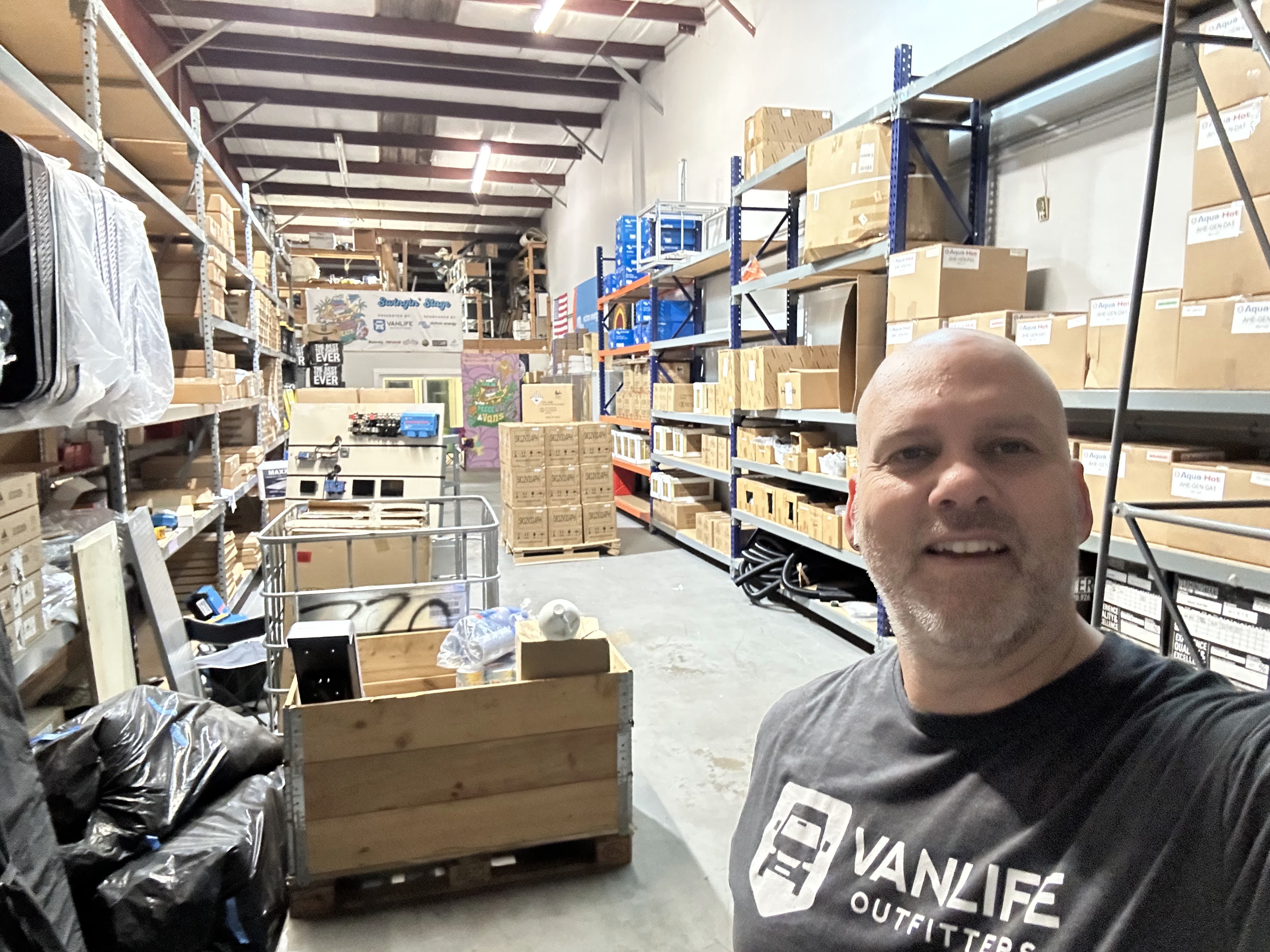
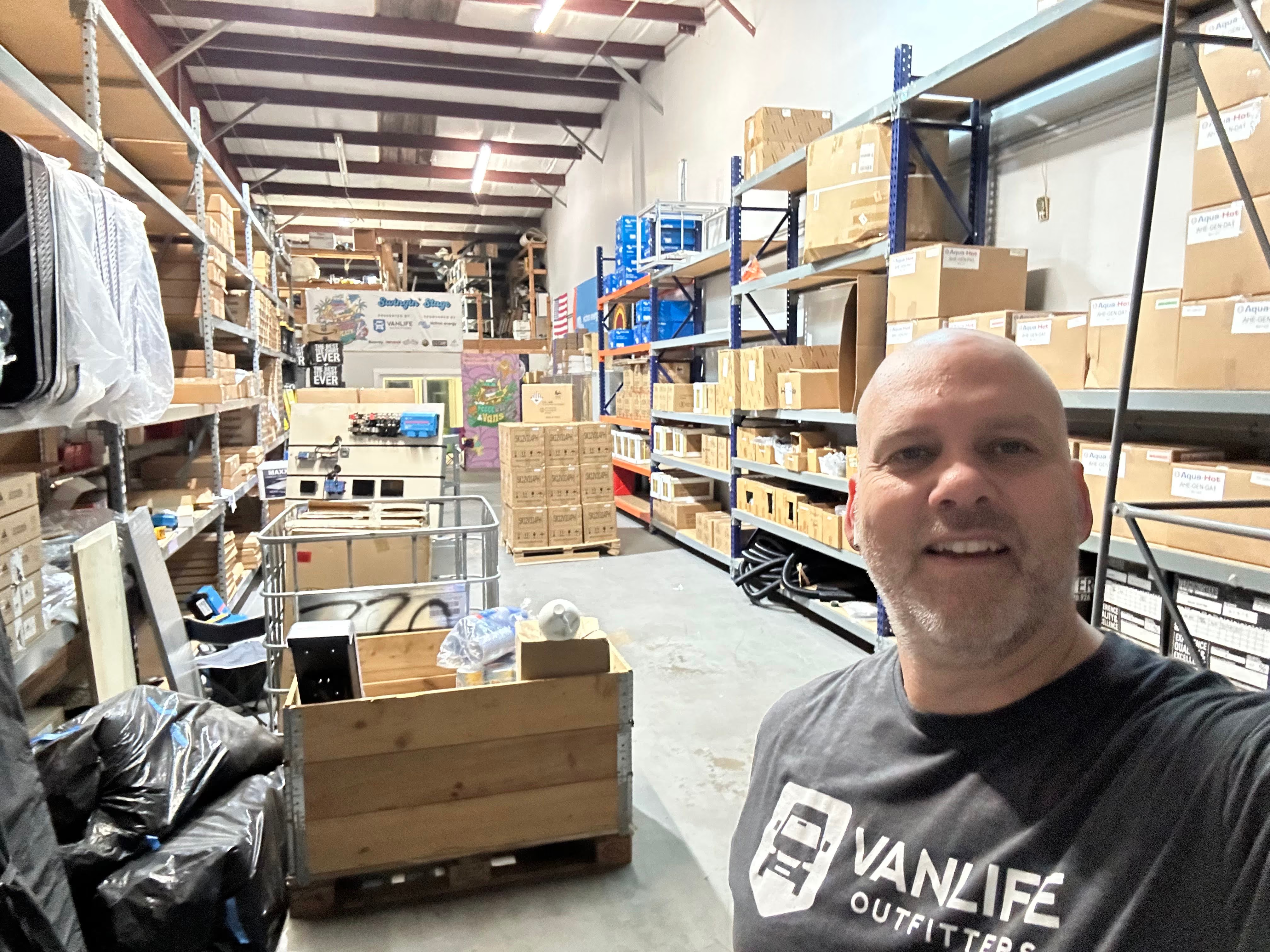
Guest: on. In late July of 2024, I sat down with my team and told them my plan, my team at the corporation. And that evening, I met the founders of Van Life Outfitters for the first time. And so it is an online retail store. We sell van parts and accessories for people who are converting a cargo van into a camper van or a mini rv. So we sell refrigerators and insulation and tables and things like that. So I fell in love with a few things. First, it's the, the size of the business. When I first heard of it, it was over a million dollars. Sde. We'll talk about how that came down quite a bit soon. And. And then secondly, I'm a out. I like jeeping camping, being in the outdoors. And I, I had never been in a camper van like this before, but it's adjacent to the type of thing I like to do with my time. So I'd always looked at camper vans as almost an ultimate freedom. You know, they just get in the van and go decide tomorrow where you want to stay that night. And so the, the correlation between the freedom I was looking for and, and the freedom that this company is giving their customers just lit me up. So. Oh yeah, it was a great size and a great company and so I met with the founders and eventually made it work.
[33:04] Host: When you say camper van, so this is what. So that's something that you can buy off the shelf or off the lot or. Camper vans are always converted vans. Give us a mental image for those who don't, who aren't plugged into van life.
Guest: Yeah. So you can buy them pre manufactured or you can have a custom van made by yourself or by a professional builder. And so we are catering to that audience of DIY builders. People who want that ultimate, you know, vacation freedom and they want to do it themselves.
Host: And. Okay. And, and so this is sort of RV adjacent. This is not RVs.
Guest: Yeah. I mean, I think of it as a small growing subsegment of rv. The RV industry, it's tiny compared to, to the, you know, hundreds of billions of dollars of, of the, the broader industry. But it is a home on the road like an RV is.
Host: Mm. And that larger RV market you see is kind of potential tam. This is what's exciting, the growth there. Because this is a sliver of what is in fact a very, very large market in there. So there's that growth to maybe participate.
Guest: You define tam, but, but you know, at the broadest sense of the, of the, the word. Yeah. That is the, that is TAM in Europe. Because of the way Europe is built and small roads and, and, and things, they're almost exclusively vans over there. So they represent maybe the. As a percentage of. Of, of the market. Europe is way ahead of us. So big upside growing quickly. It's, it's been around for decades. I mean, you know, old VW fans that people would convert and, and live in, but really more formally, it's maybe 10, 15 years old.
Host: Well, I think the hashtag Van life came across many people's radar during COVID It was one of them. It was a Covid bump trend. Exactly. And so why don't we just jump to that point? This is an E commerce business.
Guest: Yep.
Host: And a trend that surged during COVID So that's kind of two Covid trends. E commerce itself and then van life.
Guest: That's right.
Host: How did you, what did the, the financials and the performance of the business show with respect to that? And how did you think about that?
Guest: Yeah, so one of the things I wanted, as most of your listeners and, and guests wanted, was a business that's 10, 20 years old. You know, it's been churning out money for decades. And, and they, you know, and then. Etc, all of the other things that, that everybody wants. You have to give up something. And pretty much the only thing I gave up was that longevity. So the business was started in 2016 as a blog. It became a store in 2020. So it's really only four years old. And that is the biggest risk. It was the biggest risk that I saw when I looked at it. But everything else was, you know, green, green lights.
[36:36] Host: And did they launch in 2020 in response to Covid, the store piece?
Guest: Essentially, not, not, not entirely, but certainly it helped.
Host: And so I guess, yeah, it is hard to figure out what the, what story the numbers will tell there because it would have surged during COVID I mean, it went, it started in Covid, so, you know, all of the revenue is going to be for starting from zero, so it's all going to look like an increase. Yeah, they rode the wave. And so. But then what did performance look like in 23, 4 and this year?
Guest: So because, because it's new, the COVID spike, the industry spike is hidden. You don't see it in their numbers because it's just growth.
Host: Exactly.
Guest: They grew double digits for four years. And I believe, I believed at the time and still believe that the industry is worth investing in because it will continue to grow. It's such a small piece of an enormous pie that offers significant benefits that the rest of the pie doesn't offer. It'll continue to grow. So the upside is there. And I believed that then. I still, I still believe it. Yeah.
Host: You know, I mean, I have a buddy who has a van that he converted into basically where he lived during COVID He, he, he bought one of those. Like the, there was a, there's a Mercedes van, isn't there, that's particularly popular in this community. That's right, yeah. Found what he, he lives in D.C. and he drove to Montreal to find it or like upstate New York to, to get his hands on it. Now this was when, this was when like the supply everybody wanted one apparent was Right. You know, probably during COVID So it's not so crazy anymore. But the point is his appetite for what this offered was very strong.
Guest: Yeah, yeah. And that people, people drive all over the country or fly all over the country to get, to either get the van that they want to convert or to get the converted van that they, you know, had professionally done. So there's a lot of opportunity to meet the demand of customers who are having to do things like that that, you know, in a more mature industry, they won't have to it won't be as painful to get into the market as, as it is now. And it's way less painful now than 10 years ago.
[39:13] Host: Yeah, yeah. And in fact, and just to underline something you've already said, this is a long term trend. So even though it came on many of our radars, the normies, during COVID it was already a growing market, steadily growing market for decades.
Guest: Yeah, that's right. It's like E Comm. You mentioned E Comm as a trend, a Covid trend. I think of it as a Covid boost. The E Comm preceded Covid. It got a huge bump. And of course there was some, you know, some. We came down from that bump a little bit. You know, I felt that in my previous businesses. But the overall trend is, is Ecom, period, like, there's no like backlash against E Comm. That means this thing's going to go away. And no, we are a digital world. And so the fact that ecom was relatively new or that it had had such a bump in, in Covid, or that fan life was relatively new or had had a bump in Covid, that didn't scare me at all. Because I foresee these being, you know, far bigger than Covid bumps. They're both real trends that will continue to grow.
Host: The team at Pioneer Capital Advisory has started offering peripassu debt for SBA business buyers. That means they can help unlock up to $3 million of conventional debt on top of the $5 million limit of SBA 7 loans, so Pioneer can structure larger, more complex acquisitions. Listen to our story with Anika John for one of their clients who did just that, buying a $10 million business as a first time self funded searcher. The Pioneer team has closed more than 100 SBA loans averaging timelines well below industry standards. Founder and owner Matthias Smith and CEO Valerie Stash bring over two decades of SBA lending experience. Matthias and Valerie have a full bench of analysts and associates who work your deals with them. A true deal team. Not just a single point of contact. Visit pioneercap.com or click the link in the notes. If the listener has any doubts about Van life, I will just point to the fact that there has been a second episode on acquiring minds in this world. Harley Sitner. Do you know Harley or of Harley?
Guest: Because of your episode? I have. I. I'm now reminded that I never reached out to him, but I heard the episode. Yes.
[42:00] Host: And so reminder to the audience. Harley bought a downtown Seattle
Guest: auto repair
Host: business that specialized in VW vans. It was, it was a Repair business just for VW vans. Tiny business, hole in the wall. And he has grown that into peace vans, a whole brand. And I don't know if it overlaps exactly with van life, but it is essentially there. There's a, there's a market for people who are for, for VW vans only. And, and so that would be a further sliver of your market. So if, if Harley can build a business in a sliver of your sliver of kind of the RV market, then, then there's definitely something here that, that the normies among us aren't go, Harley, go. Yeah, it's pretty, it's pretty neat. And I also just to. To restate something you've already said, it's just so poetic that you went on this adventure in the spirit of freedom and then the business that you found, that's essentially what it's selling too, right? And I mean that, and I don't mean that in a cynical way. I mean that in a real way. It's.
Guest: It's lucky. It's totally lucky. And I love it. I really love it. I lucked out.
Host: We've already talked about some of the features of the business, but could you distill the pros and the cons of the business or the strengths and the weaknesses of the business as you saw them? Whatever we haven't already mentioned.
Guest: Okay, so it is an E Comm business, which is, I think I have to say, is technically a weakness. At least the industry views it as a weakness. You know, there are banks that will not loan for an E comm business, so I don't see it as a weakness, but the industry does. So I think that's relevant. It's four years old, as I mentioned, so that's a negative. As with most retail businesses, the gross margin is very low. You know, we're buying products that are, that are manufactured by other people. So those other people have high gross margins and we pay for that because we're not paying their employees. So the gross margins are in the 30s, which is relatively low. The net margin was on the low side, but in the 10, 10 to 15 range. So not crazy low. And this is probably not a weakness, but it's. It's a. Something that happens with all of these small business purchases. You know, they didn't have a lot of things figured out yet. You know, it was the processes and systems and people and structure were all, you know, in the process of being figured out. And so there was a lot of work to, to maybe help the company grow up. And so I could see that in the, in the numbers and in the conversations with the, with the founders, the
[45:02] Host: pros, which is of course, of course strength and excuse me, weakness and strength because that's where you add value.
Guest: Yeah, Opportunity. Right, yeah. The, the pros were primarily that the revenue or the, the net income was high, SDE was high. It was, when I first heard of the business it was just over a million. And we've already talked about the fact that it's, you know, it matches with, with my, with me personally and in addition it's part of an industry that I, that I could see is growing and I, I thought that it would continue to grow. And there were I think 10 employees at the time who, several of them who had been there half of the, half of the time. It's only a couple years but you know, they've had. Had some people stick around and those are the, when I first saw the business, those are the pros and cons that came to mind for me.
Host: Did it carry much inventory?
Guest: Yeah, the inventory was six figures high. Six figures in inventory. And that's a, that's a, a risk. But I come from manufacturing and so that's what I'm used to like business to business is a, is common, you know, desired business for ETA. But I'm not used to be B2B. I'm used to consumer businesses and, and so the inventory is part of that. It didn't bother me. Of course it costs money.
Host: But what about Jerem, how does this business differentiate itself from Amazon? Are the products all available on Amazon or some of these not? And then let me, sorry, let me just also say I've looked at a number of businesses that are E commerce businesses where they essentially aggregate a category. So there's category of consumer product in this website, this E Comm website is the, is the, you know, the market for that very niche product or category. But, and, and, and I could in many cases just not get comfortable with why that business should exist and put that in quotes, what value it's adding over and above Amazon it. Is that an analysis that you could overlay on this business?
Guest: Yeah, absolutely. So this is a, an industry that's early enough in its life cycle that there's a lot of work to be done by the businesses that service the customers. And this is one of those areas. So there are several small, somewhat small business retailers that do basically what we do. You can get products for converting your van on Amazon. Not all of them, but you know, a lot of them. And the the, the niche that we serve, that I have bet on essentially is that DIYers need, don't know what they're doing and they need help. And so they are. And I've done, and I've done research since coming here and learned a lot more about this, but they are, for the most part they are eager but uneducated and they, they're sometimes overestimating their capabilities, but for the most part they know that they what they don't know. And so they are looking for help. And that's actually how the blog came about. One of the founders had been a van lifer since he was a kid with VW bands. But then as an adult he decided he wanted to build his own band. And so this is in 2016. He looked around, he couldn't find enough information, videos, blogs, etc, so he kind of had to figure out how to build it on his own. And he decided, hey, I might as well share, you know, what I'm learning through a blog. And that lack of content and education exists still today. And one of the moats that I saw was that we had four years of content and trust built up strictly through education. No store or anything. But people were constantly asking, asking him his name, Zach. And constantly asking Zach, hey, where do I get that? You know, you keep telling me about these products, where do I get it? Where do I get it? Where do I get it? And so in 2020, he and Josh, the other founder, said we might as well offer them what we're telling them is good and let's. So let's turn it into a business. So they had already built trust and content that is a meaningful moat versus competition. But anyway, it's that need for education and, and that desire for trust that, that I think mean will allow Van Life Outfitters to live alongside Amazon. I think of REI and yeah, and Chewy as examples where the types of things they sell can be purchased on Amazon. But there are brand reasons, reasons to go to Chewy and brand reasons to go to rei. And I think we can continue to build that.
[50:46] Host: Yeah, yeah, no, and, and, and I think in your case those, those reasons, those brand and content reasons are much stronger because this is not just, you know, help me find the best parka. I don't want to buy it from Amazon where it just feels like a hodgepodge of everything. I want to buy it from rei. In your case, it's not, you know, something off the shelf. It's this whole project, it's this whole lifestyle even that people are embarking on. So. So there's also an argument to be made there that there will be a lot of reoccurring purchases. People who come back again and again to the site as their, as their own path unfolds into, into van life.
[51:22] Guest: There's at least a lot of opportunity for that. We're not getting as much as that as we want right now. The average order is per person, per customer is 1.4. And. And I think there's a lot of upside there.
Host: The average order per customer is 1.4. What? Oh, oh, number orders per customer.
Guest: Gotcha.
Host: Got it. Gotcha. And given that this is a kind of, this business was kind of your classic content plus commerce or content to commerce play, they went kind of evolved there naturally, but it is that. Was there, was there an SEO diligence that you did here? So bringing in people, googling how to build this stuff, presumably would be an important, important lead funnel for you guys. Customer acquisition funnel for you guys.
Guest: Yeah, I didn't pay for any, anything, but I, but I looked, you know, I did my own, like, many diligence there and it was clear. Two things were clear. One, we were at the top, you know, at least the top couple of retailers. And two, there's a ton of upside where, you know, we're not showing up where we should be.
Host: Did they have SEO as a formalized motion within the business or with a third party?
Guest: Formalized. No, no.
Host: Great, great, Great. Jeremy. Okay, so let's now do here about how you put the deal together, because there were. There were a couple twists and turns here.
Guest: Yeah. So they had in their, in their paperwork, they said that they were wanting to sell 100 of the business, but business, but they were open to selling, maintaining some equity if necessary. They had had one buyer fall through because of issues with that buyer's application and financial stability. So the banks ended up rejecting the buyer. So they had been in the process for months and were getting antsy. And we're kind of giving it one last shot and we're ready to, to run for the door kind of at a moment's notice. And one of the issues that came up is I put in an loi and two weeks later the broker came back to me and said, hey, we've had a problem with the financials
Host: and
Guest: we need to redo them. And so we are going to regroup, work on the financials and get back to you and the other. And the other candidates after we have new numbers. So that was disheartening, but not super surprising because this whole time I've been, I was expecting problems. I was expecting that I would have to make lois on multiple businesses before one would work. And so, you know, that was in my, in my head at the time. And so they came back a few weeks later with renewed or refreshed financials and the, the net profit or the SDE dropped by about 20%. That scared off banks and potential buyers. And it was one of many times when I thought to myself, okay, everything I'm hearing about says deals want to die. So I can let this die and look for something else or I can just keep, keep attacking because every deal I find is going to want to die. Okay, now here's one way this wants to die, but I can't run away because the next deal will also want to die. So I, I kept with it, which was difficult because most banks were saying no. They were saying no because of three main reasons. One was E Com. Two was this change in financials gave them that uncertainty, scared off some banks.
[55:34] Host: And Jerem, just on that point, this, this financials coming back 20% less, does that mean that the business contracted is, is declining by 20% or just they redid something or they reappoint me?
Guest: Yeah, the top line stayed the same and the, the issue was inaccurate cogs calculation. It was a cost cost accounting issue. And they, you know, it was, it was a bootstrapped business by DIY van builders who were also DIY business builders. And you know, this was an area that, that just wasn't very well done yet. You know, they were new at the financials and there was a mistake.
Host: But the earnings, if it was over a million dollars or million ish dollars of earnings when you first looked at it, a 20 drop, while not good news, is still, you know, whatever, $800,000 more. So it's still, you know, a really nice e comm business.
Guest: It's still over 750. You know, it's in the 750 to a million range. And actually one of my primary reactions was it, it just went on sale.
Host: Yeah, yeah.
Guest: You know, it's still.
Host: And there's fewer buyers. A bunch of my competition is fled.
Guest: So SDE dropped about 5 points, but it was still it, it dropped down into the 10 to 15. So it had been in the 15 to 20. It dropped down to 10 to 15. So that was a little bit scary.
[57:08] Host: But the net margins, the net margins you're talking about.
Guest: That's right.
Host: Because. Because expenses were under reported.
Guest: That's right.
Host: Yeah. Okay. And, and by the way, Just for the audience, one thing actually. Attorneys, not accountants, but Bill Barlow and, and James David Williams in our webinar yesterday mentioned when talking about the many reasons deals have died in 2025, deals that they've participated in have died in 2025 is one of the leading reasons is the financial performance after due diligence comes back weaker than founder, seller, owner has said at the outset. And that's actually very, very common. So you need probably some price adjustment there that probably depending on how dramatic this, this, this, this adjustment is, will determine how, whether or not the price also needs to be adjusted. You should basically expect it, be prepared for it. And it's not something by itself to freak out about, frankly. It's, it's, it's quite common. And think about it. Sellers are incentivized to tell the best story possible market. And you know, as you poke at that there might be some weakness in, in, in, in that story a little bit. Doesn't mean they're fraudulent, doesn't mean they're, they're overly deceptive, they're selling. And so push a little bit and you're likely to see, see those numbers weaken a little bit and, and just don't get freaked out. Assuming it's within a reasonable range and that the reasons are good and so on.
Guest: Yeah, I completely agree with that, especially based on my experience and the way I handled it is I went back to them and I said they're essentially, there's some risk in the numbers. We don't know if these numbers are right or wrong. You know, there's some, something's wrong, something's scary about the numbers. So my new LOI tied the valuation of the business to a future Q of ease assessment of the sde. And so I said instead of, basically instead of giving up evaluation, I gave a multiple and I said, let's agree that we will hold hands, go into a Q of E, find out what the business is actually doing, and then pay a multiple of that. And we agreed to the multiple and that's how we moved forward to the deal.
Host: And what was that multiple and how did you get to that multiple?
Guest: I got to the multiple by a little bit of flicking my finger and sticking it up in there and seeing which way the wind was going. So I the multiple was low mid threes. And the reason I did that was because it seemed reasonable to me that based on what it was making, based on the size, based on what I hear in podcasts and books, that that seemed like a reasonable multiple. It wasn't Very rigorous or educated.
[1:00:08] Host: Well, it was probably also anchored to whatever their, their implied multiple had been at the outset.
Guest: So I did, I did decrease my, my multiple. So my initial loi, I don't remember honestly the exact numbers, but let's say it was four. And when they came back and it was this, this, you know, drop in SDE had happened, then I dropped my multiple as well to say three and a half. And, and we move forward with that. I also proposed purchasing 70% of the business, which was a lot lower than they had asked for, but I wanted to eliminate some of the risk. And so I, I reached there as well and, and had them keep, you know, a chunk of equity.
Host: Well, I, I want to return to that in a second there, Jerem, but I, I think I interrupted you when you were about to give us the third reason that banks were telling you. No, you said E Com. You said the financials. The, the earnings dropped 20%. And then the third reason.
Guest: Yeah, the third reason was taxes. You know, for an SBA loan, you're supposed to have three years of, of taxes and they, they will do the, the forecasted revenue off of those. And this is a, there are two issues with. This is a growing business. So that hurts when year one of the three is really low. It hurts the ability to pay a three and a half times multiple off the trailing 12 months. And also they did their taxes on cash and their financials on accrual, and I think that's pretty common. But that also scared banks away because they didn't think they could get the SBA to agree to it.
Host: And Jerem, you actually had a banker tell you to run from the deal?
Guest: Yeah, and he, he was fantastic, a fantastic help through the process as I was learning and preparing. But he did, when, when this SDE dropped, he said I should run away from this deal. He was not a banker, but a loan broker and a former guest of yours. I've heard him on yours, and just a great, great guy. And he was looking out for me. He wrote me long emails like, dude, this is dangerous. Don't do it. You should run. And that's part of why I changed the, the LOI to be based on a Q of E because I didn't want to trust their numbers and say, hey, I'll pay you this much for this business. I wanted us to go in. I also didn't want to get to the end of a QO Q of E and have the, the sellers freak out because the QOV said no, you got to Drop it again. So I wanted them to go into the QOV holding hands with me that, you know, whatever this thing says, we agree, and even if it says, you know, now it's only 500,000 of SDE, I wanted us all as much as possible. I wasn't. They weren't legally bound to it, but, you know, emotionally bound to. Let's do this thing together.
[1:03:43] Host: Well, this, this loan broker in. In Colorado that told you to run. I actually. It sounds like he actually has a different assessment of them coming back with the. The earnings 20% less than I did, which is, hey, you know, don't. Don't disqualify. That often happens. He really saw that as a red flag. So I just want to call out that his reaction was much stronger than I'm having now.
Guest: Yeah, he had that. There was also. The tax thing was a problem. So those were real problems. And he. He felt confident that we wouldn't be able to get an SBA loan for it. And then if it. And if we did, it would be. It would end up blowing up in my. In my face. And I think because he has way more experience than I do, he was probably, by the percentages, he was probably right the most. Most of the time, this, you know, this scenario wouldn't work out well. I, I just pushed forward because of that all deals want to die thing. And I was like, okay, until I've signed on the actual loan, I'm not committed. I might as well just keep going and I can bail when. When I find out that. That I was wrong. And so I just kept at it.
Host: And then what did that Q of E come back saying?
Guest: It actually came. Came back higher. So the SD SDE went up about $50,000. And, and. And by that time, the founders were nervous and kind of tired of how things are going, and they said, let's not change the price. Even though we agreed to that. This means we would raise the price. Let's not do that. Let's just keep going because we've got a bank that says they're interested. Let's not make any changes. So.
Host: Oh, great.
Guest: It turned out great for me.
Host: Yeah. So. So $50,000 of additional earnings that you didn't have to pay for.
Guest: Right? That's right. That's what happened.
Host: Great. Great. Now, you had said to me, Jerem, that the quality of earnings that you paid for was. Was what. How did you think about this? This was an interesting little detail to your search.
[1:06:00] Guest: Yeah. So I, I looked into quality of earnings. I reached. I reached out to several potential accountants that I could work with. And the first meeting I had, the, the cost was 45, 000 and I was, I was not ready for that. I, I did not know that that's what it was. I don't know how well I should have googled how much do these cost? I didn't. Of course. I found out it was $45,000 at the end of a fantastic meeting where they showed me the work they do. And I was just so impressed. The whole time I'm having this meeting, I'm thinking, wow, if I own a business, I want somebody to come in and do this analysis for me. It was, it was truly great. But I assumed this business would, this deal would die. I really believed it was not going to work. And I couldn't get myself to spend $45,000. I met with another person and it was $25,000. And even that on a, on a deal where a loan broker who's very experienced told me to run, I didn't want to spend 25,000. I found a third option. I probably interviewed five, but you know, in rough tiers I found a third option that was about $10,000. The work and analysis was not as strong but, but really I felt confident because of my experience in business under, in understanding P Ls. So I just needed the numbers to be verified. I didn't, I wanted the analysis, but I didn't really need the analysis. So I went the $10,000 route and got a quality of earnings done. And as expected, the, the analysis was somewhat superficial, but the, the numbers were verified and, and like I said, they, they happened to, to go my way a little bit with a little bit higher sde. But the main thing I learned coming from that is if you're, if you're comfortable with a P L. I think especially in a world where deals are trying to die, that, that it's worth at least considering lower cost quality of earnings where at least just, just get the numbers verified. If you feel like you can analyze those numbers, then, then you don't need $45,000.
Host: Let's linger on this, Jerem. So the, the, what you paid for was just essentially numbers verification. And that's the first step in any quality of earnings is they, is the firm will go in and look at the books and make sure that what they're saying is accurate essentially. So yeah, verifying the numbers.
Guest: Right.
Host: Which is, which is really what I think most of us think the Q of E is, is kind of the bulk of it. But then what you're saying is that a, a more full fledged Q of E or a higher, a higher value Q of E would also include this analysis you keep referring to. What might that analysis look like? Is that a five page write up of what they think you should do? What, what, what, what are we talking about?
[1:09:14] Guest: Like a 15 page consulting deck? It was, it was a deep dive into the business obviously put together by multiple team members from different areas of, with functional expertise evaluating pros, cons, opportunities. It didn't have a swat like you know, formally here as a swat, but it was essentially a swat of the entire business really outstanding. It felt, it seemed like a consulting deck that I would have seen in corporate. So it was great.
Host: Okay, well and so just to go along to price here. So it's very easy for me, people in my position who are not spending the money to exhort people to pay for quality of earnings because spending whatever thousands of dollars is better than buying a bad business even if the quality of earnings comes back telling you that you shouldn't buy the business. Easy for me to say. Okay, but yeah, $25,000, 20, $25,000. When people that you respect have told you to run away from the business, that would be indeed hard to stomach. And by the way, let me just make a comment on pricing there. You've, you've to me kind of given us a good range. That $45,000 for self funded search that would be very, the very high end. I don't usually hear a number, I don't usually hear a number that large. $10,000 I do think is the, is the low end as you've said. Said I think of quality of earnings for a typical kind of SBA buyer in the 20 to 25 range, but still significant. So I just think it's a really good first person experience to hear from you about this because as it's easy for me to say Everybody should spend 20 or $25,000 on their Q of E. And you're kind of picking apart when it may, may make sense not to, but just the obvious disclaimer to everybody listening. We want everybody to be as careful and cautious and not cut corners in their analysis. And so the spirit of saying hey, get a quality of earnings is just about covering your behind because you really don't want to buy a bad business. But it, but it's an, it's a harder decision than, than, than, than, than. I may, I may make it seem
Guest: sometimes I think the decision to get a Q of E should not be hard. Everyone should get a Q of E. Especially now that I've gone through this and I did reach out to people to say hey do I really need a Q of E? And everyone I reached out to is like yes, you're foolish for even asking. And now that I've done it, I would never buy a business without a Q of E. I, I may or may not go on the low end of the spectrum in the future it'll be situation dependent but I would never go without a qv. I think that's widely. You know most people think that in the industry but just for those people like me who are new, I would not even consider it. No way. Yeah.
[1:12:18] Host: Yeah. Well that's even better put. I'm not, I, yeah I am not saying don't consider not getting a q of etc. Whether or not you do, you know, kind of a stripped down Q of E or a more a fuller Q of E and pay the 10 $15,000 difference.
Guest: Good stuff.
Host: Okay Jeremy, you were the 70% 30%. The fact that the sellers were prepared to roll 30% say more about that why they were saying that and then why you were open to it and what it did to the deal dynamics.
Guest: Yeah so a few things happened to to drive that. First my, like I said earlier I was expecting to use a robs so I was going to dip into my 401k to buy a business unless I bought a business early enough that I could use the cash I had. I thought because I hadn't even quit my job yet I really want to use the cash and save the robs for a future deal So I wanted to find a deal that I could afford with the cash that I had on hand and so that, that drove a lot of the decisions. In fact it, I also because of that did decide to bring on a small investor a personal friend of mine who, who chipped in as well. So he and I, I bought 70%. He bought a small percentage of the 30 and then the founders kept the rest and that helped me just use cash. So I, I put in 150,000 000 of cash and bought control of 752,000 to a million dollar SDE business and that was a really good deal to me.
Host: And the fact that the sellers were rolling equity and going to be something like partners did that not feel how did that feel? How did you think about that? Especially for a guy who didn't want investors. They're not exactly investors. It's sort of a. An in Between.
Guest: Yeah, so I. A few main ways I thought about that first. It, it allowed me to afford the deal. So it was without going into your required, right? Yeah, almost required. You know, based on the strategic decision I made about Robs, it was required. I, I had to have them on there. 2. I'm buying a business that is largely driven by expert van lifers who founded the business and lived the life and are known in the industry. So having them as continue to be owners is a positive. And then the third thing is I went and met with them after we got the second loi signed. I, I flew down actually we waited until after the Q of E which to me felt really late. But I'm in Dallas there in Sarasota. So after the Q of E I flew to meet with them and they are just outstanding, fantastic guys and I know I've heard a lot of stories where it turns out that they sound nice and they end up not being nice. So I knew there was some risk there but the agreement was that I had control of the business. So worst case scenario they end up being terrible and I cut them out of, you know, day to day management. But darn, they get, you know, they get some of the upside. That didn't seem like a huge risk to me given the benefits that I just talked about. So I was excited to do it especially after I met them.
[1:16:11] Host: And then assuming things do go well with your relationship with them on the other side of the transaction, what will their continued role will be? The same? Yeah, they would stay indefinitely in their, in their roles.
Guest: Now we agreed that they would leave day to day management of the business and that they would essentially become a board of directors. So there was a transition period and then after that they're available for advising and strategy discussions. So they are largely silent partners but we'll meet quarterly and I ask them questions all the time.
Host: And with their departure then who was going to fill their shoes? And where I'm leading you is to tie into your stage of career, stage of life. You had said to me in the pre call you were wanting to work on the business, not in the business essentially.
Guest: Yeah, we have. So we haven't talked about that very much but that's right. I, my goal was on the business, not in the business but. But I would need to be the managing owner of the business and I knew I would need to step in as CEO in this case most of the employees are remote and so I could stay in Dallas at least until 2030 and, and manage the company remotely. Now it has been difficult because I'm trying to balance managing the business and, and not being all the way in the weeds of the business. And that's been a little bit of a tricky balance for me. But that, that was my objective was to kind of focus on leading the team who would be driving the business.
Host: And that's what the departing owners were doing. Were they doing anything operational? Were you going to have to make any hires to fill, to fill their shoes?
[1:18:08] Guest: I hired a couple of expert van lifers for, to increase our technical support team. So I need to shore up my lack of experience. So they were, they were the preeminent experts in the business. Although they did, they did have a couple of technical people. So I added a couple of more people to that team. I promoted a few people to be managers. There were essentially no managers in the team. Everyone reported up to the, the founders. And so I, I brought structure, organization and a couple of people and added some processes. So essentially I was replacing them in their roles as managing the team, marketing and finances.
Host: I only have you for a few more minutes, Jerome, but. So why don't you. When did you finally close?
Guest: January 8th, which was five days after I had planned to quit my job. So it went well and weirdly close
Host: to exactly one year prior to when this episode will air. This one will probably air on, you know, the back half of January. So you will have been a year in it almost to the day, months.
Guest: That's great.
Host: How is it going? How has it been? Is the business you bought, the business you thought you bought?
Guest: The business I bought is the business I thought I bought it. It's realer than when you're thinking about it theoretically. You know, it matters a lot more. It's, it's harder, as most of your guests say, you know, theory is a lot easier than practice. And so I've, you know, I would give myself a B in some areas, a C, and somewhere areas in a. You know, I've done, I've done things well and poorly, but the big, the two biggest things are, one, I'm in charge of my time, so I'm working on things that, that I think I should be working on, period. I don't, I don't do anything that I don't think is the right thing to do in the moment. And that is such a blessing. I mean, I absolutely love that. And number two, I can live wherever we want to live already. I don't have to wait for 20, 30. Now. We are staying in Dallas for my youngest to graduate high School, but at least that's our choice because it happens to be a remote, you know, online business. I can live wherever I want already. And that freedom, I love it.
Host: Congratulations, Jerem. What have you done worse than you thought you had? What would you give yourself a C in, in what's been harder than you expected? I assume those are kind of overlapping.
[1:21:07] Guest: Yeah, I'll mention, I'll mention one kind of main thing I focused on. So we, we planned for a three month transition. One month full time, one month half time and one month quarter time in the first week. And my, my, as I headed into the transition, I thought, okay, my goal is to learn as much as possible from the founders. That's how I went into it. Within the first week, I realized that's not what my goal should be. My goal should be to make sure the company can live without the founders. That doesn't mean I have to do all the learning from the founders. I need to make sure the company is ready, that the team, including me, that we're ready. So I had also planned on not making any changes until at least the fourth month, but maybe even the seventh, you know, after three or four, three or six months. But I promoted a couple of, I promoted three people in my second week on the business and added some structure to the business and quickly hired a couple other people that I mentioned before. And that was solely because I thought that my primary objective needed to be to make sure we could live without the founders. And I think I did a pretty good job in that area. But one thing I didn't do that I put off was evaluating the, the tech side of the, the store. And I thought, okay, I, I believe we could do better on the store for mostly I was thinking customer reasons and, and eventually we will get to that. Well, so I put it on the back burner. In hindsight, that was just stupid because the store is the most important thing we have. It is the thing like without the store, there's, it doesn't matter how great our team is. So on January or on June 8, our store crashed and was down for 48 hours and has limped along since then. And we started to build a new store. We have a new store that actually just launched yesterday, you know, in December. But I not thinking about that and proactively building a team or finding external partners or, you know, preparing to make sure that that store could work was, I think I just, that's like a D. I get a D for that because that's just, that was dumb. It was A mistake. And I think what people can take from that is do a, do a risk assessment on the business. You know, what are all the risks, how likely is each risk and how terrible would it be if the risk comes true and then rank it. And if I had done that our store would have been at the very top, would have been number one and I would have put some more focus on that instead of saying oh yeah I should get to the store someday. So that's where I would give myself probably a D. Now we have a new store. It's not perfect but it's. We've moved to the Shopify platform and It's I think 2005 or 2025 turns out to be a foundation building year and 2026 is going to be a big one I think.
[1:24:39] Host: Great. Well I also believe that in tech businesses, digital businesses, E Com businesses there are diligence providers who specifically will look at questions like this. Are you aware of that that there's E Com diligence providers and so if they'll look at the platform plus whatever, whatever is is the system is based on.
Guest: I was not, I thought I probably should have, should have looked into it but I was not at the time.
Host: Well I, and I think there is, I mean they're definitely tech diligence providers. So for example if you're buying a SaaS business, rapid diligence I think an early acquiring minds guest, I'm forgetting his name but his team at the time would do line by line code reviews of the code base that you're buying in the SaaS business.
Guest: Yeah, I've talked to plenty that's different
Host: than E Commerce but I suspect that there's even, I suspect that there's something analogous in Econ land.
Guest: Yeah, I've, I've at minimum I've talked to a lot of agencies and freelancers who could do that type of work. I haven't spoken with anyone who, whose job is, who's, whose business is doing that work. But there are a lot of people who can do that work and it is something that I, that I should have done before.
Host: You talked about looking for a digital business with 150 of SDE and in person physical real world business of 500 SDE. You found one of whatever 8900 of SDE. How do you think about size today?
Guest: I would buy the biggest business possible and a lot of people have said that I think that this business is barely big enough. My, my goal and a lot of people's goal is to work on instead of in the business. You mentioned that before. You can't do that unless you have the right team, the right processes, the right systems, etc. And I don't know how you could do that if you got a $250,000, 300,500 even 500,000 SDE. So to me it's actually I feel having only bought one business at the size I bought, I feel that the, that risk is enormous. That buying a small business just leaves you open to the, to the problems of, you know, entrepreneurship that having a, having a decent wallet and the businesses coffers, you know, that's a big deal. So I would advise people to buy the biggest business, biggest business they can.
[1:27:28] Host: Let me press on that or let me offer an alternative and just have you react. So as we've covered, you are approaching 50 and had been a very successful manager of brands, big brands. So you were used to running teams and being at the top of an org chart. If you're 30 and you're buying a business and you haven't had that experience so you don't take it for granted that you can delegate a lot. You just don't have the delegation experience or expectation and you, and so getting your hands dirty might not be as, as off putting as it was in your case. And there's something to be said where the, you can add a lot of value by being the one to put those systems in place. You will be up to your eyeballs in the business. Let us not, you know, this is very much an argument for working in the business. And so everything will be on your shoulders. Every problem will, will come up to you. But if you can handle that and be the one to, to build the systems over two, maybe three years, there's a lot of value to be added there. Does that sound like a reasonable alternative path for a different avatar than you?
Guest: Yeah, I, I think that's a, that's a great point. If your objective is to work on the business and not in the business, you should buy as big as possible. That's like, that's what I, that's what I think you should do. But if your objective is simply to buy a business and get as much value out of it as possible, then yeah, then, then getting in the weeds, doing as much of, you know, sweat equity as you can makes a lot of sense. Another way to think about it though is if you can afford it or if your situation is, is, is such that this can work, your personal business is going to be better off if you're Buying multiple businesses and being in the weeds of business A means that business B is years down the line and my goal is for business B to be a lot closer than that. And I can't do that if I'm working in, in business A. I don't remember if I got on A or B or X whatever name you give your company, a single letter name. So it really depends on a lot of factors I guess if someone's in my situation looking for a way out of corporate America and they have the means, buy big.
[1:30:30] Host: And Jerem, given your year now in the business and now that you really understand it from the inside, when do you think it could be viable for you to buy the second business? A second business?
Guest: Yeah, I was hoping 2025. Obviously that didn't happen since we're in December I really would like to. Next year. I think next year is realistic.
Host: And an unrelated business. Well probably E Com I'm gonna guess but. But are we talking about acquiring as a way of growing Van Life Outfitters or. No, acquiring something separate that's building out the Ren Family Holdco.
Guest: Yeah. I had hoped coming into this like before I found found Van Life Outfitters I had hoped to build a small Holdco that I could use as a way to give my children opportunities and to me that would be best if you had disparate companies and industries. But I knew that there was a chance that once I got into a business I would feel compelled to buy a supporting or complimentary business and that is how I feel right now. I, I think the best thing for Van Life Outfitters would be to. To acquire a related business that can help support it. So that's most likely.
Host: Can you share what you're paying yourself now given in reminder to the audience that you are walking away from a mid six figure salary?
Guest: Yeah, so I, I'm trying to. I'm essentially paying myself my base salary from my corporate job. So half, roughly half of what I was making before and that I didn't pay myself for, for five or six months but anyway I am, I'm paying myself a, a good salary although you know, less than I was making before.
Host: And are has that meant a contraction of your lifestyle at all or. No, you're still covering the nut of the lifestyle that you had in corporate.
Guest: Day to day life is covered. I won't be going on vacations to Italy for a while nor moving there.
Host: Any last thoughts Jerem, on doing it at the age that you're doing it for? The late forties, early fifties or or later folks who, who listen and all they hear is voices who are in their, you know, some 20s, but mostly 30s or early 40s.
[1:33:03] Guest: Yeah. And that one thing I didn't mention, I read a book before starting the search and there was a quote, don't get ready, get started. And I tend to be a little bit more analytical and thoughtful and more take more of a planning approach. Which is why I heard about this path in spring of 2023 and thought, yeah, maybe I'll do that. And then spent a year essentially thinking about it before I told, before I, you know, made the final decision and told, told the company that I was gonna leave. And then, even then I wasn't leaving for eight months. So I took a long time. But in, in the summer of 2024, I wrote that note on a, on a post. It, I've got it here in my, my desk. And that really drove me to act differently. And so I pushed ahead without knowing everything. And there were many times in due diligence and working with banks, etc, where I'm like, I just have no idea what's happening. And I felt like I should have gotten ready. Like I should have, I should be more ready for this. And I would look at this, post it, I mean, like, no, this is what I'm trying. I'm just going. And it made a huge difference for me personally. So, you know, for those who might be dragging their feet or you know, reading the books twice instead of just once or something like taking too long, you'll probably never be ready. So don't focus on getting ready, focus on getting started. And made a huge difference for me.
Host: Great, great note to end on. Jerem Wren, thanks for coming on and sharing so transparently. As I said earlier, really a great case study of doing this for a guy who was so successful in his corporate career and but felt that that itch to freedom that drives so many crazy people to, to becoming entrepreneurs. We'll look forward to hearing about acquisition number two. We will put a link to Van Life Outfitters in the show notes. We'll put a link to your LinkedIn in the show notes. Jerem Rin, thank you very much for coming on.
Guest: Loved it. Thanks for having me.
Host: Hope you enjoyed that interview. Don't forget to subscribe to the Acquiring Minds newsletter. We send an email for every episode with an introduction to the interview, a link to the video version on YouTube and soon, key takeaways, numbers and more essentials from the interview. For those of you who don't have time to listen or watch it. Subscribe at Acquiringminds co. You'll also find all our webinars there on the website, both those we have coming up and recordings of past webinars. At this point There are over 30 webinar recordings, a wealth of information on all the tech, technical, nitty gritty of buying a business. Acquiringminds copy.






























































%20-%20thumbnail.avif)





%20-%20thumbnail.avif)

%20-%20thumbnail.avif)

.avif)




%20-%20thumbnail.avif)