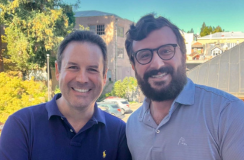
Host: There are two key themes in today's interview with Alex Glasner. The first is the impossibility of really knowing what the business you buy is like until you actually buy it. Here's my favorite line in the interview from Alex Quote the key issue is as a searcher, you think I've done my due diligence. I know everything there is to know and these are the 30 changes I'm going to make. But you come to the business and you realize this business is not the business that you thought you bought. End quote. So a big challenge of this adventure of buying a business is your vision making contact with reality. You need to be prepared for a period of reconciliation between the two. The second theme from Alex Becoming a Leader. Like Alex, many entrepreneurs buying a small business don't have much, maybe any leadership experience. So you're going from being a searcher, working probably alone, negotiating a deal over zoom, to head of an organization with 1040, or in Alex's case, 140 people. In a flash, all eyes are on you. This is not only intimidating, but it also requires a skill and we spend time today talking about how Alex is learning that skill as he goes, including letting go of wanting to be liked. I can relate. It's always fun to catch up with the dynamic fast talking Alex Glasner, Owner and co Managing Director of Workpays. Welcome to Acquiring Minds, a podcast about buying businesses. My name is Will Smith. Acquiring an existing business is an awesome opportunity for many entrepreneurs and on this podcast I talk to the people who do it. You already know that business owners are making amazing use of virtual assistants, often based in the Philippines. And while virtual assistants are helpful, virtual professionals are transformative. More Staffing is a boutique agency that hires a players in the Philippines not for simple tasks, but for deep competency work. Think operators, supply chain managers, controllers. More Staffing de risks your engagement with a 12 month guarantee to you and they provide coaching for six months to their talent. When an engagement begins, that means your hire is coached in the background, no additional cost to you, so that your working relationship flourishes and is as successful as it can be. Global staffing is increasingly the norm and building the muscle within your business to take advantage of it will be crucial in the years ahead. Speak with More Staffing about the pool of capable, affordable managers they can connect you with. Check out Morenow Co. That's Morenow Co. Alex Glasner welcome back to Acquiring Minds.
[3:08] Guest: Hi, how's it going Alex, I interviewed
Host: you originally back in January of 2022, so 16 months ago you had acquired a business the previous September. So you were only about four months into your role as owner. New owner. Today we're going to hear how things have gone. Let's start off with a refresher. Please give us a little background on you, Alex and tell us briefly about your search and what you bought.
Guest: Okay, so brief background to me. I'm Alex from London originally. My career has been a bit everywhere so I spent a few years working in politics. As I say a speechwriter more I was like a diary manager. Daniel Dogsbody spent most of my career in finance, business strategy. I also spent five years in the U.S. i went to business school in Boston where I found out about entrepreneurship through acquisition. After business school I went to go and work in investment banking. Did that for about two years and then started my search in the middle of the pandemic in the end of 2020 was doing a self funded search. I found workpays in the beginning of 2021, so pretty soon and then we completed in June. Workpays is a. And I'm going to say this very quickly because it doesn't mean very much. An employability and skills training provider. Essentially we do three things. One, we help unemployed people get the skills that they need to enable them to get a job. Two, we help them find a job. And, and three, once they're in a job, we help them upskill so they can progress in their career.
Host: Beautiful. Okay, so, and so you actually closed on the business in June of 2021.
Guest: No, that's. No, that's when we signed the LOI. No, September.
Host: It was September.
Guest: You're right. Yeah.
Host: Okay.
Guest: You know better than I did.
Host: Well, I'm going to link of course to your previous interview in the show notes. It was a great interview. We get into your search. One of the things that was striking then and you were one of my earlier interviews, but remains striking because I don't think I've heard anybody be as systematic about the prep for their search. So you talked to, you interviewed like 50 former searchers. You said something that was, was really interesting, which is that you learned a lot. The Most in those 50 interviews from those who had failed to acquire or acquired and it had gone badly than you did from those who had been successful. Which is something that actually has later been validated because when I do interviews with folks whose searches were went badly, I mean people absolutely love hearing those stories. So I, I guess you were right on there. And then you, you had, you, you set up the whole infrastructure for your Search over the course of six weeks and then you really hammered it. So a very organized search people could really take a lesson from that. So go back and listen to episode one with Alex, everyone. All right, sir, let's just start with kind of an open ended question. How is it going to.
[6:02] Guest: I'm going to say a couple of things. So firstly, the reason I was smiling while you were just talking is because the number of people who've called me up subsequently to say can you put me in touch with people who failed? And really people don't like to be known as someone who didn't do so well in their search fund. So I generally say, you know what, maybe you should search. I don't really want to say that's the first thing. Secondly, how is it going? So you talk about how systematic my search was and I think I thought very early on that I need a really rigid infrastructure to enable me to do my work better. And I think that was really helpful for me. How is it at workpayes? I think that it is when you have a company of 130 people, doing that is significantly more difficult. And one of the benefits that a searcher can bring is professionalizing in a verticomm as an organization. I have been trying to do that and a year and a half into buying, having acquired workpays and still struggle with that absolutely every day. So trying to impose this sort of rigid structure that I had at constant peak my search fund on 130 people. And I think the fact that it's a year and a half later and I feel like we have made a lot of progress, but perhaps not as much as I would like. I think just goes to show the difference between searching and operating well and
Host: the difference between creating your own little universe where you're a lone actor, you can control everything and you're only limited by your own self discipline versus having to impose that discipline on everyone else. Well, let's just, let's just double click on this a little bit. What? So, so kind of another way of putting this, it sounds like is you're learning to be a manager of a large organization or you know, a large ish organization, over 100 people. So can you just expand, expand on what you just said? Is it kind of hard to get everybody on the same page or is it that people resist, you know, your ideas or is it communication is difficult when it's more than just a small room of people? What is it specifically that's difficult?
Guest: All of the above, actually. So one of the Things that we've been trying to do is improve our HR system. So I have a chief of staff, she did this absolutely amazing project on HR and retention and essentially her findings were that not only are we probably not hiring as well as we should be, our processes for hiring aren't so good. Our processes for managing people while they're here probably aren't as robust as they should be. And so trying to bring in new processes is actually significantly more difficult than you would think. Whether it be making sure that 130 people know what the new processes are when not everyone checks every single email they get, making sure that the processes actually are followed. When you bring in 50 new processes for different parts of the business, I'm only one person. I cannot manage 50 different processes on a daily basis. And ensuring that those processes are policed properly is also equally as difficult. Build. And so over time you go back and you look and you think, oh, hold on, that's not, that's not how it should be done. And that is a real challenge, but also quite exciting.
[9:01] Host: Alex, I have to ask, as you, as you reflect on, on this, this year and a half plus that you've been in the business and in implementing all these new processes, you know, one of the themes in this world is the extent to which you put you in, you, you implement changes in the business that you acquired, how much, how soon, etc. Is it, you know, do you think that you are, is it possible that it's been challenging because you want to, you're so hungry to do so much. Is it too much too soon? Or is it not really that this is just, you know, you're sitting in a sweet spot. It's just the nature of change is that it's really hard and slow moving.
Guest: I think it is that one, there's a search who comes into company you want to do. There's a huge amount that you want to achieve and you have this end goal and you want to achieve it. So I think there's that and I'll come back to this in a second. Second, I think that companies are very slow moving. My third point is that actually change is that sometimes you don't even know what needs to be changed. And so this, I think this is actually really interesting. When I first came to the business, I decided I, you know, so I decided I was going to save us lots of money, going to go through world costs and work out why our margin had been kind of coming down a bit before the acquisition. And so I decided I was going to renegotiate our telephone bill. And I spoke to Jim Sharp, who's one of my investors, very early on and I think I mentioned last time he has an absolutely great website. And he said to me, he's like, don't be the idiot that comes along and renegotiates the telephone bill and thinks you've achieved a lot. And I thought, do I tell him, do I not tell him I've done that? And I think that's a problem. I think you come to the business, I think the key issue is as a searcher, you come to the business and you think, I've done my due diligence, I know everything there is to know. And, and these are the 30 changes I'm going to make. You come to the business and you realize this business is not the business that you thought you bought. It's still going to be really great and it still is. You know, there's still a lot you can do with it, but the things I think you ultimately do are very different. However, that said, I think to your point, I think you make two really, really key points that one, I think as a searcher you want to make lots and lots of changes. And so I know that my impulse, as you can probably tell from how quickly I talk is, is to try and do as many things as possible all at the same time. And so whether it be today writing a bid, whether it be today thinking about our green strategy, thinking about our online strategy, thinking about our end of month finances, there's so much that you just want, you want to do. And actually, not only am I just one person, but building that sort of momentum among staff who just think about work incredibly different to you is very, very difficult. And then that leads to the second point, which is, you know, my desire for change is very different to probably a lot of people. You know, when you, when you, these companies that you often buy can be, in many ways they can be lifestyle businesses. And I don't think workplace has ever been a lifestyle business, but I think people treat often these businesses can be slightly slower moving, as you said. And I think change is very different in our industry to what it's like in banking, private equity consulting, which is where most people come from.
[12:06] Host: You came from a very kind of traditionally high caliber environment. I don't want to make you feel uncomfortable or flatter you, but you mentioned it, you mentioned it on your previous episode. You know, Harvard Business School. Great. You're fortunate enough to have a great education in the UK investment banking at the highest you know, so kind of really operating at the highest levels. And. And I think people who come from that environment are just used to being surrounded by people who are similarly motivated, similarly ambitious, similarly capable, and then to maybe be in an environment where everybody isn't. So type A results in a culture clash. Is there an element of that here?
Guest: I've spoken to a lot of searchers who say something very similar, and I think that underestimates how amazing the staff are in every single company. And I think that. Is there an underlying assumption there that staff are unambitious, lazy, or don't really care? And I'm not saying that's what you're saying, but I often, I think the way I try to think about is actually our roles, that people have different incentives. And this is what someone said to me this last week, is that people in investment banking are scared, always permanently scared they're going to lose their job, are incredibly insecure, and therefore are willing to work until midnight, four in the morning, or whatever it is to try, you know, to succeed. And I think actually the people that in a lot of the companies that are acquired by search funds have very different impulses. I think they're probably equally as ambitious. Their ambition might be about work, it might be about family, but in many ways they're also not being. You know, they don't have that. They probably don't have that same financial incentive that a lot of us used to have pre doing the search fund to do really well. And I think it's that actually understanding that, I think is more important than thinking about this sort of culture clash. And one of the things I was actually thinking about before today was have I been more changed by workplace or has workpays? Have I changed workplace and where is it? I think that is the whole point of a search fund is to bring those two cultures together. So I don't think it's more of a clash. I think it's more of like a meshing.
Host: Very interesting, Alex. And as you ask yourself this question, did you just answer it? That workpaces has influenced you and vice versa, or has one influenced the other more? Did you come to a conclusion?
Guest: Well, on good days I'd like to say that it's equal. On bad days, I'd say that I made no change whatsoever to work days and it's barely moved since I got here. But no, I'd like to hope that we do have a very. The culture is. I have tried to change our culture in some way. So whether we think about making sure. We have proper structures in place. As I mentioned hiring, I mentioned any other process. I've been trying to put these in place so that rather than being acting like it's a company of 20 people, we act like the company of 130 people that we are. And we have those similar processes in place that I would have seen in any other place I've worked.
[15:12] Host: Alex, one of the things on this point of change in searchers coming in and trying to, quote, improve processes is one of the reasons to kind of pump the brakes and do it slowly is because, you know, you'll come in, you'll think that, you know, process X is broken or inefficient, and then you'll learn six months later, after you've really immersed yourself in the business for a lot longer, oh, there is a method to the madness. This process looks this way for a. For a very good reason. And if I had changed that process, I would have broken X, Y and Z. Is. How has that. Has that played a role at all? Are some of the processes that you've wanted to change actually already, you know, the way they should be?
Guest: 100.
Host: No, no.
Guest: 100%. That's right. And actually, I think the reason why change has been slower than I expected is really because I've tried my best to dig deep down into what the issues are. So rather than making an issue and rather than saying seeing on the surface this might be an issue and trying to make a really rash decision, what I try to do is do a really deep dive. It's why we have. It's why I brought on a chief of staff and why she and I have been working together on our HR project. We did a curriculum review as well to think about how we place ourselves in the future. And I think, actually to your point, that many things are done really well at the moment, but what we're trying to understand is where aren't things done well? And I think you are totally right is that I always come up with five hypotheses, but I'm never going to. And then 10 probably different ways to solve those issues that I found. But most of the time, of those five hypotheses, you know, two or three might be correct and others might not. Don't quote me because I probably can't think of something, but I think that's our general starting point. I try and be slightly more analytical about it. And I think the way a search firm works, which is where your contracts are. Sorry, where you have these very state, very stable recurring revenue I think enables you to be slightly slower as well so you can be more methodical in your changes.
Host: August Felker is a two time successful searcher. First with a traditional search fund. The second time around he did a self funded search. Today August runs Oberle Risk Strategies, an insurance firm with a dedicated practice group for searchers and acquisition entrepreneurs like you. If you've got a business under loi, Oberle will provide complimentary due diligence on that business's insurance and benefits program. A great no risk way to get to know August and team. They love helping searchers. They've worked with hundreds. Oberly is a specialty insurance brokerage for searchers by a former searcher. Check out oberly-risk.com O B E R L E- risk.com link in the show notes Alex it turns out we both re listened to your first episode this morning in preparation of this interview. Did anything jump out at you or strike you as you as you listened to your your younger self 16 months ago Talk about, you know, this business and your excitement for this business, did anything you know, jump out at you as oh, that was naive or oh no, I'm still right about that. It's nice to know that I was right 16 months ago about how things have unfolded. Anything that that you. Any, any reaction you had?
[18:38] Guest: Yeah, I mean one thing that stuck out to me was I said that I think WorkPays is the best company in the world and I still believe that. I believe that for very, very different reasons to what I believed it then. But I still believe that workpays is an absolutely amazing company and has the power to change people's lives for the better. I think probably at the time I was thinking this is a great platform for from which we can become gods of our sector. That's not what. And I still believe that that is possible. I think the road is slightly more winding than I first believed there. And so we spoke about this buy and build strategy and we have yet to acquire a company. We came very close in the last couple of months but I thought that was going to be a lot easier and I think things like that we think I've probably a bit naive then.
Host: Well I we're going to talk more about that. I was going to ask about that so I'm glad you touched on it. But before we do, you've now said kind of two different ways a similar thing which is you said a few minutes ago that the business you thought you were buying is different than the business you actually bought and what you now just said is that you still think it's the best company in the world but for different reasons. So same theme. What was different about Work Pays than you you saw as an outsider trying to acquire the business?
Guest: Yeah, I actually don't know if the company is very different from the day before. Sorry, from what I thought it was going to be the day before, the day before I acquired it to the day after. I think what has happened with Workpays is that we have grown from being a 40 person company about six months before I joined to an 80 month 80 person company the day I joined to 130 to 140 today. That is a huge amount of change. And I think that it's there that all our issues lie. And so Anne and my co md, she always says, you know what I used to know when I came here, barely even 20 people here. I knew everyone's. I knew everyone's name, I knew their kid's name, I knew their kids as I knew their pet, their partner's names, I knew their birthdays. We go into meetings now and we'll often meet people and we'll be like, oh, it's nice to see you. And they go, well actually I saw you a week ago and I think that is, I think when you experience that much growth, I think that has a huge impact on the company and we've seen impacts in so many different ways. I talk a lot about hr, but I can also talk about our finances. I can talk about absolutely everything and even the culture. So, you know, I spoke on the, on the, the last call we had about a workplace being a family and we are so keen to ensure that it is still a family. But when you are 140 people, some of whom will never ever meet one another because we just work in so many different regions, that can be very difficult. And when you need to put more hierarchy in place and better structures in place, that also then becomes a lot more difficult. So no, I don't think it's so much. That workplace is very different. I think it's. I personally underestimated the challenge that such big growth would bring.
[21:55] Host: And let me just make sure I understand. So under your ownership it's grown from 80 to 140?
Guest: I wish. So actually we won some new contracts while we were under noi and so as a result we've staffed up those contracts. So not. It's not unfortunately. I wish it was because of the work that I had done, but it's not.
Host: Okay. But the increase in headcount did occur while after you took ownership. So you were the owner, co managing director when it went from 80 to 140. Yeah. So that's. What is that 60, 75% increase in people. Yeah, that's you know, and what I would say about that Alex is like that actually seems like a, a separate, a challenge that doesn't necessarily have to do with search. Any business, even a start from scratch business that goes from 80 to 140 people. You'll hear any, any entrepreneur or leader of a business that experiences that much growth in a relatively short amount of time say what you just said that. You know, I used to know everybody, now I don't. And we used to be like a family and now it's feels less like a family and we're really trying to keep hold on to that. So certainly not to belittle it, but I'm not sure that that's actually a specific to the story of church here.
Guest: Yeah, I think that's 100% right. But I think as firstly as I said, I think I underestimated the challenge that would bring. And I think secondly, as someone who's barely managed five people, six people beforehand, suddenly coming to an organization where you're thinking I need to think about how we manage 130 people is a huge. And thank goodness it's normally Anne does most of the operational stuff. So actually she, it's, you know, she looks after a lot of this. But actually thinking about how you deal with that problem and the problems that, that hiring that many more people can then bring is really tough.
Host: Yeah. Well, let's hear a little bit more about Ann. She is your. So managing director is the title correct?
Guest: Yeah, we're both managing directors.
Host: Forgive me. Is that, how is that different than president or CEO? Is that just kind of a different phrasing in the UK versus the US Pretty much.
[24:03] Guest: No, exactly. So president. I don't think we use the term president. The reason why we didn't go for CEO was because you very rarely see co CEOs. So I thought it might be weird to have two CEOs, but two MDs seem to make more sense.
Host: Okay, okay. So you have this managing director, this co managing director in Ann and Rolled Equity. So she has some of the business. Yeah, she was also the kind of second in, second in command lieutenant under the previous owner, founder Helen, who is kind of a very well known and respected person in the industry. So that's kind of Anne's backstory. How has it gone as a co managing director your relationship with her? Because I would say that, that obviously that could be one too many cooks in the kitchen. So how has that gone?
Guest: Really, really, really well. We, you know, Ann is as friend as, as much as a colleague and I think that's really important. And one of the things that I think one of the things maybe, and I don't know, I don't know whether it's like this for other people who have this similar situation. I don't think that there is any politics between us and I think that's really important. And, and maybe, and I think in every, every company that you win, there's lots of politics, but I think when you're right at the top, you don't, you know, you don't see the politics. And I think we are lucky that even though we are together there have the same unified goal, which is to get work pays to wherever we want to get it to. And I think we are 100% bought into that and we understand each other's role very well. Yes, I think there are times when there is pressure and I think we put pressure on one another, but I think we both, we have incredibly similar personalities and feel the pressure in the same way. And going back to what I was saying about our roles being slightly split, so Ann focuses on operations and operational strategy and I focus on growth and growth strategy. However, we both are very unified. So I will often, I have a call with our two ops directors every single week with Anne where we go over our figures and when we've been looking at acquisitions, I will always do the first few calls. Ann is the one who can really ask the proper DD question. So she will go in there and she'll have like the six hour meeting or the day long meeting with the team to really drill down to work out how we can best fit that company into workbase.
Host: It sounds wonderful and relatively harmonious, which is really the best you can ask for. Did you get lucky in an. Or did you kind of diligence Ann when you were diligencing the larger business?
Guest: Very good question. No, I gotta be really honest. I didn't actually and perhaps I should have done. I, I think to, I don't want to blow my own, my own trumpet, but I think I'm, I think I can do one on one relationships pretty well. I'm pretty. When I go to a party, I'm always a person who's right in the corner of the room who doesn't really want to talk to anyone or just hopes that I can, you know, don't have to drink much and then can go home by 8:00pm but the second I, if I have a one on one I think I can do significantly better. Anne is actually, well, she's, she's quite good at both. And what we did do however is in advance of the acquisition I had at least one weekly call with Helen and Anne together. But we also had a weekly session together just Anne and just Ann and I to discuss strategy post acquisition. So we actually wrote a whole post acquisition strategy document together that formed part of the investment rounding that we gave to investors and also guides a lot of what we do today. So I think in many ways yes there was that pre interview but I don't, in fairness I think they were probably in Ann was probably interviewing me more than I was interviewing her.
[27:45] Host: Well, whether or not you were doing it with a lot of kind of diligence, intentionality, if and if you felt that the chemistry was off with Anne or you didn't like her, that would have surfaced during that process and you would have addressed it or walked away or whatever.
Guest: So 100 and I will say so when I am not the I, I'm really awkward. I'm very British and very, very awkward. And when I first met Anne I because, because I was stuck in America, I actually couldn't meet Anne and Helen until literally the last minute. And I came back to, I came back to the uk I went to Derby to where I was staying for a few days to finally meet them and finish the deal or complete the deal. And Anne comes to collect me from the house that I was renting and she gives me the biggest hug. And I think that just like sums her up. And I think it was from that moment you realize actually I think we're going to be fine.
Host: Okay, let's get into just a few more minutes here, Alex. But let's get into a couple specifics. Dynamics, dynamics about the business itself that, that we touched on in the first interview. And I just want to follow up on them first of all. So just to to reiterate what you said at the top, you work pays is in the business of using winning contracts from the government and deploying that money into helping people get jobs and then upskill once they're in jobs essentially. Right. There were three sectors. I just named two but that's kind of the spectrum more or less. And you had the business had really strong performance metrics. There are some KPIs in this world and just because I took notes as I listened re listened to it this Morning. The industry average is like 64% of people going through a program like Work Pays will complete it. So kind of 36% attrition, you all were at 89%, well above the industry average. Really an impressive number. Where is that number today?
Guest: So this year I think we're pretty high again. I think we're in the 80s. Last year it was less good. So essentially it's actually been a really tough time for our industry. What has happened is that we have been hit by the worst of all worlds. So companies like Workdays, or actually Workdays. Sorry. Specifically because we have our fingers in mini pies, we do really well. Not only when the economy is doing really badly so that we can help those people who've lost their jobs or who are looking for jobs to find one, but also when the economy is doing really well so that companies can give us money to upskill their workers workforce. However, we are in a situation where we have a really abysmal economy and yet we have the lowest unemployment we've had in 50 years. And so that has had a massive impact not only on us, but the entire industry. Now it doesn't. Whether or not I can tell you stories about how we believe that we are outperforming the industry or that we are outperforming the industry. What that has meant is that some of our numbers have come down or the number of people starting on our program have come down in particular to apprenticeships, which is what we're talking about here. And as a result, a couple of people leaving can then lower your number from the high 80s to let's say the 70s or 60s.
[30:57] Host: Yeah, well, the dynamic you describe is the same over here. You know, kind of limping economy, but, but very, very tight labor market. So it's a, it's apparently a very unusual dynamic, macroeconomic dynamic. Two other questions I want to, I'll save the buy and build one for second. First, your, one of the things we talked about in a business like this, you know, the, the, your first reflex is oh, customer concentration. You know, the government is your, your customer. And the way that you explained that away to, to yourself and to me and made sense is that in fact, yes, technically the government is your sole customer, but you're, you're, you're soliciting, you're bidding on contracts from a number of different agencies. So yes, with, so within the government, you, you're very diversified in terms of the agencies that you're, you're getting contracts from. Correct.
Guest: That is, that, that is Correct.
Host: And has that. And is that was the way you explained that to yourself? Is that borne out?
Guest: Yes. And I can't remember if I said this as well, that the UK is one of the most, you know, our, our politics is some of the most stable in the, the world. And I say that as of January 2022, when we last spoke, and I say that, you know, even, I think I said even with Brexit, you know, we had one blip in 2016 and thank goodness we have a very stable government. Well, we, in the last, since we last spoke, we've had three Prime Ministers, one of whom didn't outlast to let us, which is, I don't know if you heard about that in the us. So it's, that has had an impact on us. So the. So while I still believe, I still believe that that actually we have many different payers. We have, you know, and actually they've expanded it now. They're, they're doing, I don't know, they have, they're devolving a lot of the powers, so from the central government to local government and even like on a very, very, very small level, they're devolving powers. And so we have a lot more people who are paying us and we've just won a lot of contracts from very, very local government. So the sort of people who remove your bins as well will also be paying us for some of the things that we are doing. However, because of the huge amounts of instability that we've seen in UK politics in the last year and a year and a half or last year, that has had an impact on the amount of funding that is available. So what that has meant is that the EU funds ended in March this year and we were always under the impression that the government was going to replace them. Like for, like that's what the government said. It said actually not only that, it was going to invest more money in lots of different programs. That was the whole point of Brexit. However, because of this instability, they haven't actually brought yet forward the funds yet to replace the EU funds. And that is when I thought about this as part of the acquisition. I just never thought that was going to happen because we are helping the most vulnerable people in society. And so we help these people who are known as NEETs, not in education, employment or training. If we don't support them, the chances are that they won't just be unemployed for the short term, they'll be very long term unemployed. And that will have an impact on our economy for years and years. So we simply didn't believe that government wouldn't do anything. However, given the political instability, that's unfortunately what's happened. So would that be any different if we were in a really poor economic environment and we were trying to get more commercial clients? No, I don't really think so. But there's one department that controls the purse strings. Maybe that does have an impact.
[34:21] Host: Okay. But the growth that we talked about from the 80 to 140, you said that was for contracts that had been secured prior to your tenure, and you were just staffing up to meet those contracts, so that all of that. All of those. That pipeline for you is basically before this instability happened.
Guest: Oh, yeah. That was what? Constant pipeline. So we, you know, we are constantly winning new. We are constantly winning new contracts. We have an absolutely amazing bid writer. We call him our dog, our Director of Growth. We've won a lot of contracts. I actually spent half the day today working on a bid and the finances for one of our bids, which is the first time I've done it. Normally Ann does that, but, you know, we are constantly winning new bids. It's just the amount of money available has gone down because it has simply hasn't been released yet. But we know that probably at latest March next year, but probably November this year, that more funds will be released.
Host: Okay. Okay. So the pie, if you will, has shrunk a little bit, but there's still a lot of pie there. And as long as you're one of the strong performers in the industry, there's no reason to think that you will not continue to at least not only be stable, but grow.
Guest: Yeah, no, exactly. And we have seen. We've actually. So we. A lot of our contracts had a dip, as I said, because of the underperformance. And now we are getting to the stage where we actually don't think that we have enough money left in our contracts and that we are thinking, who can we take? Who can we ask to give us more money to fulfill our contracts? So, yes, no, we're doing okay. And I'm not worried. And I would say that it's not that the pie has shrunk. The pie has temporarily had a slice taken out of it. And that slice, someone's going to put that slice back in.
Host: Good, good clarification, Alex. Actually, one other question occurs to me before we get to the growth for acquisition question. The work, one of the things that you were really motivated by in this business was the end result and the end benefit that you're delivering, which is helping people who basically find employment and people who are maybe kind of right at the margins not go in the wrong direction or not fall off the labor market altogether. And as a somebody who's only ever been in kind of the for profit world, I know very little about entities that are trying to basically help people. But I feel like what I have heard is that there's a lot of idealism when you are from the outside looking in and then you get in, see how the sausage is made, and it can be disillusioning. No entity, no nonprofit or for the, for the larger good entity is, is, you know, as clean or works as well as you want it to. Are you just as idealistic about work pays and the end result it delivers as you were as an outsider?
[37:07] Guest: Firstly, I'm going to say. I'm going to say a couple of things. So one, when I tell. I find it very difficult to say I am, you know, to praise myself. And so I. What I will say is that workpays does absolutely incredible work. I think I said that already on this chat. Absolutely nothing to do with me. And I was very well aware of that going on, that actually, while I might be trying, trying to steer the ship in one direction or the other, ultimately the people who are doing the most important work at Workpace are not me. It's our tutors, our key workers, our engagement brokers who are supporting people to get the skills they need and supporting people to get the job. So that's the first thing. So has my idealism changed about any of that? No, I still don't do any work that does comes anywhere near as close to the amazing work that those people do. That said, I think the people who do become disillusioned actually are those right at the front. And I think we do see that. And I think our industry has very famously very, very high turnover. And that is because people come into a job like this, they think, like you said, that they're going to be helping people. And then they think, well, hold on, this company is putting lots of ca APIs on my back. Why is that? This doesn't seem. How is this helping. How is this helping the unemployed people I'm supposed to be supporting? And actually key for me and key as part of what we're doing as HR is actually to ensure that people actually understand that the reason why you have these targets is because it's not about the fact that you're making us profit or you're making the company profit. What you're actually doing is supporting those people into work. So when we say, how many times have you met these people? What support are you giving them? Training? Are you giving them to get a job? We're not doing that because this gets us 5 pounds, that gets us 12 pounds or whatever. We're doing it because actually we believe that can help people. And I think again, it's like you're meshing. The good work that you do has to be based on hard action. And I think ensuring that people understand that, I think is really, really important. One thing I will say is that I remain really idealistic about what we can achieve at workdays. One of the things that I've become really interested in recently is this kind of evil of automation. I say the evil of automation. I don't think it's evil, but more I think the impact that that is going to have on 40% of the workforce or more who simply won't have a job. And actually it's many of the people that we are supporting or. And the kind of jobs that a lot of people we're supporting might go into, their jobs are going to be automated. So that I do worry about. However, we are putting a lot of effort into becoming a green focused company. So we're trying to make sure that our curriculum is very, very green focused. We have something called Project Sage. And so I remain very idealistic about our ability to change people's lives and also about what we can achieve for both the uk, for both people and the UK economy. The Y economy.
[39:57] Host: Okay, let's talk dive in now to just the buy and build. So you had this aspiration that it seemed like an industry, I mean the classic thing that many searchers see, somewhat fragmented. This seemed. Workpay seemed like a great platform acquisition. And you actually, I think one of your investors was, was a little bit skeptical about it. If I already said this, forgive me, was a little bit skeptical of that. By the time we were speaking and you were, you were only four months into the acquisition, you were starting already to feel like maybe that investor knew something you didn't. You were starting to see how it might be hard. Sounds like 16 months later you're really realizing that it's hard. Talk us through all of that.
Guest: Yeah, so. Well, first I want to point out it wasn't an investor, someone, it was one of the people, one of the few people, I might add, who didn't want to invest in my, my business. So I'm just going to put that out there. So actually it's not One of my investors, my investors are all fully on board with our acquisition strategy and our board is really, really on board with it as well. How is it going to. And so how is it going and why have we not acquired a business today? So actually I think what I mentioned in the call last time was that it's difficult because doing a search while running a business, while you're trying to build up your BD department, while you're trying to build up your marketing department and your finance department and I talk about process quite a lot, but making sure that you have accounts done properly, that takes a lot of work. And so when you say to a searcher, when you say to a business owner, I can talk to you, but it's going to have to be at 8pm you get a lot of no's actually. And so really my ability to put that work in is quite curtailed. And I was very appreciative of that pretty early on, knowing that I need to secure this shit first before we start thinking about bringing others on board. And so that's the first thing. We have recently started to ramp up that in the last probably six months to probably almost about a year actually. We've been working really hard at looking for another for a bolt on Ann and I know exactly what we want to get, but we've had a few sort of almost got there but then failed. And so recently, for example, one of the things we want to do is we have our whole strategic plan and part of that is to be a niche apprenticeship provider and part of that is to be a green focused, as a green focused apprenticeship provider or green focused provider of skills. And so we found this absolutely amazing company in one of the areas that we're really excited about going into. And we took things probably, we were probably a bit too slow about it and as a result the deal kind of the sellers got a bit nervous right towards the end. But no, it's going. The reason I use that as an example because I think it's going well. It's slightly tougher and slower than I thought. And as I said the last time we spoke, time kills deals. And that is something that I'm definitely noticing.
[43:01] Host: Yeah, well, when you talk about you need to secure this ship before, you know, you can really become acquisitive, I guess tightening up things within the organization, but it also just sounds like freeing your time so getting things in place where you can find another six hours in your day to devote yourself to it.
Guest: Yeah, I spoke to a searcher very soon after acquiring Workpace. And he said, oh, so you must be really bored. And I said, what do you mean? He said, well, like every searcher, you must just be doing nothing all day because there's no work for you to do. And I'm thinking I'm working every day until midnight. I don't know what, I don't know who you're talking to. And I think what you're saying is exactly right. And it's actually about putting the one. My last lesson at business school taught me something I thought was super interesting. Which is the best boss is the one who, when they walk away, the company is fine. And I think about that a lot. And that is exactly what I want to achieve at workplace. If I could be on a beach in, oh, I don't know, in a far east somewhere enjoying my life, wouldn't that be ideal? And actually, I think if I can do that while owning workplace, it's not what I'm trying to do because I don't think I'm that personality. But if I can, I will believe that I have succeeded at workpays. And I think, exactly to your point, that making sure that we've got things right is incredibly important. And one more thing I will say, because I don't want to give the impression that workpays is doing badly. It's not, it's not at all. The first year I had these goals that we were going to get to certain million of EBITDA and we didn't get there. I spoke to some of my investors, not to broach a newsletter, but basically say, this is how it's going. I speak to my investors, probably I speak to a different investor every couple of weeks. And one person said to me, I almost, I honestly, I'm not normally this emotional, but one investor said to me, oh yeah, my first two years, we call them my blue years, because my wife and I just said, she's like, you just used to come home so unhappy. So you come home quite unhappy. And he said, that is normal for when you're doing a search. It's these first, it's your first six months are honeymoon. The next year and a half after that is just day after day after day of struggle. And I think that is not only I think what I'm experiencing, what I'm seeing lots of people experience, which then makes it more difficult to achieve those really heady goals that you had before you acquired the company.
[45:20] Host: But, and, but, but why? So the first six months, sure, like transitioning is hard, but what happens in the next year and a half. Is it just like when, when, when, when dream meets reality? In reality, it's just a lot messier than, than, than you thought it was going to be. And so it's disappointing and frustrating for the next 18 months. Why is this such a uniform pattern across searchers?
Guest: Yeah, I think there are a couple of things. So one, again, it's like you buy this company and you think it's going to be X, but it's Y. And there are all these issues. So you don't, you. There are all these issues. You don't even think about their issues. It's not like, it's not like you didn't, it's not like had you done your dd, you would have found out about this. You just, you just, they're just. You just, it's you. There are issues that as an owner you are able to, that if you've been an owner of a business, I think for 10 years, you are able to, you're equipped to deal with. So Ann and Helen are very well equipped, or Helen was, and Ann is very well equipped to deal with a lot of the multitude of issues that come up. I simply am not. And that is a key point for searches. The second thing is, and I think that is the second point, it's you, it's. You are simply making 80% of your decisions are wrong. And Jim Sharp says this on his website, he says, do not underestimate how many bad decisions you are going to make, whether it be a hiring decision, whether it be a poor decision in a meeting. And I think actually HR can be one of the most difficult parts. For example, and by hr, I don't mean the process. I'm talking about, I'm talking about how I'm managing people and understanding that. And Ann, I remember very early on made some comments about that, really actually quite helpful, constructive comments, which I'm not sure she'll probably even remember about trying to give me advice about it. And I think you make so many mistakes and that weighs on you. And it's not like even when you're doing banking, if you go home at 4 in the morning, at least you go to sleep. And your job, you can sleep till the next morning and you don't really think about it for those four hours you're sleeping. In my job, not one day has gone by where I don't have a dream or a nightmare about work pays. Something going right, something going wrong, really 100%, but I love it. But work pays is so much a Part of my life. And I carry the weight of work pays on my shoulders. My partner says that. He said that there are three in our marriage. You, me, and work pays. Perhaps that's one of the issues. And I think that is. I think the issue that happens in the first year and a half is that you have the weight of this. Of you have something this huge weight on your shoulders, and yet you are making decisions that negatively impacted. And I think that's super interesting. And you have to. You do have to get your head around that sometimes. And when you. And then when you start making tougher decisions that you think are the right decisions, it's about, you know, trying to be firm about it, which can also be tough.
[48:07] Host: Fascinating. Thank you for that, Alex. I just want to call out your partner saying that there. There's three of you in the relationship.
Guest: Did, did.
Host: Did you. Did he either hear the thing that your. What your mom would say about your dad or, or is that just a spooky coincidence because you said in our first interview that your mom would talk about. Or. No, somebody in your family would talk about how there were three children, you, your sister, and your dad's business because he was also a business owner. So there you go. The apple doesn't fall too far from the tree.
Guest: No, that's. That's exactly right. That's right. Yeah. No, I'm exactly. I am definitely my father's son. That's great. And actually, funnily enough, he calls me up every day to give me advice about work days, so pretty helpful. Mostly tax advice because he's a. He's an accountant, but, you know, I'll take whatever advice I can.
Host: You had, I believe, mentioned a. An eventual career in politics, like, later on. Has this experience informed that plan one way or the other?
Guest: So do you know what? That was my original plan when I left undergrad, and it wasn't a plan for. It has. It was not in the cards for a very long time. Partly because I lived in America, partly because I worked in finance, I thought. No, it's just. It's just not going to happen. Happen working in this. I mean, honestly. Yes, if I could have an impact on our country's policy and direction, I would absolutely love that. I'm not gonna. I have. Honestly, I have no idea. I'm not trying to give a politician answer and be like, you know, maybe one day. That's. I. I just. I just have. I just have no idea. Yes, I would absolutely love that. This had made me so sure about the ways that you can make change and the ability to kind of. To impact that change. So whether it be supporting small businesses, whether it be the impact of policy. Yeah, no, 100%. I find that really, really interesting and if I could support that, I would love that. But I think that's. I think I'm getting old now.
Host: Last question for you, Alex, and we've touched on a lot of this already, but I want to have you answer it directly and explicitly throughout this journey so far. What muscle have you built? What muscle has atrophied? Sounds like you've become a little bit better manager. Thanks to Ann.
Guest: Definitely. Well, I'm a different manager. I wouldn't say I'm a better manager, but maybe I am a better manager. Thanks to Anne, I'm a different manager. I think when you go into a business, often what happens is. And I give this advice to a lot of people who call me and I say, do not worry about whether people like you, you want. Ann always says that. She said this is one of the first comments she's made to me. She's like, you just are too desperate for everyone to like you. You. The problem is in your role. No one is going to like you all the time. And what you realise is two things that one, people. So I think I become significantly better at understanding management. I don't know where I've become, what I've become worse at. Probably my personal life has taken a massive hit because Work Pays is. It's the first time ever that I've actually found it really exciting when I'm out of work to talk about my job and I don't think anyone else agrees with that. So I think that's probably slightly worse. But from a management point of view, you know, I think I've noticed when I go into a room now at work, people laugh significantly louder at my jokes and I'm not. I'm just simply not a funny person. And two people. I know that people are being rude about me behind my back because, you know, you're the boss and you. And sometimes things trickle through and that is the way it is and there's nothing that I can do to change that. However good a person or boss that I am to a friendly, I am with them. So actually the key thing, you know, Work Pays has to come first and your management style has to remember that. And I think yes, actually. Sorry, there's a bit of a long winded answer. Say yes. I think my management style has got significantly, has changed a lot and I think I get a Lot more done now than I did when I first came to work. Pays as a result of it.
[51:57] Host: And this thing about wanting to be liked, do you feel like you've kind of had to intentionally thicken your skin or just with the, the slings and arrows of, you know, the day to day, you just shed that need naturally and now you're just a hard ass and you don't care or do you constantly have to remind yourself, Alex, don't care what people think. Work pace comes first, you know, make this decision despite, you know, the questions of popularity, you know, you know what I mean?
Guest: Is it, yeah.
Host: A conversation with yourself or did you just grow the muscle where you don't care anymore?
Guest: I think I don't notice what people say actually, or what people are thinking. So it's not that people are rude to me and then I don't notice it. It's more that I don't think I give as much time to that. But at the same time, I do not believe that you can be a good boss that nobody likes. And so actually, because if I were a boss that nobody likes, all my staff would be leaving. And I think. And so that's a whole issue in itself. So actually making sure that your staff respect you and at least like you somewhat, I think is obviously still important. But it's also about thinking again, like you said, work pays comes first. So I think there is a fine balance. I wouldn't say I'm like a cold, horrible person. I go out with my staff and I talk to my. I will go out with my staff all the time. We go out for lunches, we go out for drinks and. But remembering that you are the owner,/CEO,/MD is really, really important in that you will, you know, you're not probably they don't want to be your friend, even though, you know, I wish they would at first.
Host: Yeah, let's call it there. Alex, always such a, such a pleasure to, to chat with you. What is your favorite way for people to, to reach out to you? Sounds like a lot of people have been doing so successfully. How? LinkedIn email. What is it?
Guest: Yeah, so I'm on LinkedIn, Alex Glassner. And then my email is really easy. It's alex at Workpage. That is, it pays to work. So workdays.co.uk.co.uk.
Host: all in the notes. Alex, thank you very much for coming back on. Really enjoyed it.























































%20-%20thumbnail.png)





%20-%20thumbnail.png)



%20-%20thumbnail.png)

.png)




%20-%20thumbnail.png)