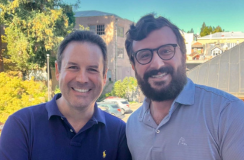
Host: When I first heard the numbers from today's guest, I thought I had misunderstood them. 200 million in revenue, 30 million in EBITDA by the end of the year, and the team just did their first acquisition in March. Some of my more ambitious guests aim to get to 100 million in revenue over five or 10 years. So how could it be possible to get to twice that number in nine months? Well, in today's interview you will learn Jordan Dubin and his two partners are rolling up the garage door repair industry. And Jordan does a phenomenal job of breaking it down. We hear their thesis around the garage door industry, their strategy of attack to consolidate the industry, what they standardize and centralize in their acquired businesses and what they leave untouched, the deal structure offered to owners, and lots and lots of numbers. Speaking of which, do note this distinction between what Jordan is doing and what the typical Acquiring Minds guest does, which helps answer the question how have they done this? Most Acquiring Minds guests are looking for a single good business to buy, typically using an SBA loan. By contrast, Jordan and his partners have a very dialed in thesis and in a category home services where they had years of experience as private equity associates and they went out and raised $35 million to pursue this vision. When you have a war chest of 35 million, you can make moves in an industry where not a lot of consolidation is happening. So what Jordan and team are doing here is more in the vein of traditional private equity. Still, many if not most of the themes we hit on can be applied to your self funded search. How to think about an industry where an industry is on its consolidation curve or if it's even on one, how to relate to owners, how to differentiate yourself as a buyer, how to best position yourself to perhaps one day sell the business you're trying to buy. These should be your considerations in a self funded search as much as they are Jordan's in a $200 million roll up. This was an exciting story in a rich education. The best kind of interview. I hope you agree. Here is Jordan Dubin, co founder of Guild Garage Group Announcements Chelsea Wood has run the Acquisition Lab for five years and in that time has witnessed the searches of hundreds of aspiring buyers and had calls with thousands of them. So Chelsea knows what separates those who succeed in closing a deal from those who don't. And this Thursday, December 12, she's hosting a webinar with Acquiring Minds to share her observations with us. In this one hour session, Chelsea will dive into the key mistakes she sees searchers make and how to avoid them to ensure a successful close and ownership period. This is part two of Chelsea's presentation last month on the same topic. There was so much to say we split it into a two parter and it's not just a presentation, it's a live office hours session with time for Q and A. So bring your questions and take a big step forward in your acquisition journey. Come learn from Chelsea's expertise and avoid the missteps that trip up many first time buyers. It's this Thursday, December 12, 11am Eastern. That's 11am Eastern, an hour earlier than our usual noontime. The link to register is in today's show notes or on the Acquiring Minds homepage. Acquiringminds Co. Welcome to Acquiring Minds, a podcast about buying businesses. My name is Will Smith. Acquiring an existing business is an awesome opportunity opportunity for many entrepreneurs and on this podcast I talk to the people who do it. A PEO run by a Searcher for Searchers if you're running a company with less than 100 employees and providing health insurance to them, you may secure better benefit plans at a 15 to 30% discount through a professional employer organization or PEO. At Aspen, HR, run by search fund veteran Mark Sinatra, understands the needs of search operators and provides HR compliance, flawless payroll, HR due diligence support for your acquisition, and Fortune 500 caliber benefits, all for a fraction of the cost. And tis the season to evaluate your employee benefit plan. Most new clients reach out to Aspen 90 days before year end or their renewal date. So before they get slammed, check out aspenhr.com or contact Mark directly@markspenhr.com Jordan Dubin welcome to Acquiring Minds.
[5:20] Guest: Thanks for having me. It's fun being a longtime fan and now finally being able to be on an episode.
Host: Well that's great to hear. It's always fun for me too to have a listener on. Well Jordan, you and your two partners are building a large business in the garage door repair industry. And by large I mean getting to 200 million in revenue, 30 in EBITDA by the end of this year. And your first acquisition closed only in March of this year. That is an incredible pace. Let's hear about it Jordan. How did this hyper growth roll up begin?
[6:01] Guest: Yeah, well thank you again for having me on. So you know, I think like a lot of the stories and the entrepreneurs you have on your show, it's a long, long path getting kind of to today. Certainly not linear, but I guess I'll start with my own background which then will coincide with Sean and Joe's background when we do eventually Meet in the narrative of guilt. But I grew up in New York City, went to school up in Boston, played football in college. And I think where you could probably say for me, this journey really started was sophomore year of college, kind of the first year I was thinking about potentially doing some sort of business internship. At the time, I had no idea what I wanted to do. I grew up with a father who worked in finance for a hedge fund. I didn't think I wanted to do that, but kind of my knowledge of, hey, what are the other parts of the finance ecosystem was not very broad. And I was lucky enough to get introduced to two guys by the names of Matt Perlman and Alex Sloan, who at the time had just graduated from Harvard Business School. And we're building out a portfolio of Burger King franchises across the southeast United States. And so I became effectively their first ever intern before they probably even needed an intern. And they've grown their business, Garden Station Partners today to be one of the truly premier lower middle market private equity firms in the US but at the time, their office was literally of their dad's townhouses.
Host: So Patrick o' Shaughnessy just had them on, I think, like, the best.
Guest: Yeah, exactly.
Host: They're a big deal. It's a great, it's a great entrepreneurial story. Like you said, they very modest start, I guess, and I guess you were there, I guess you, you were part of that modesty.
Guest: That's, that's, that's my claim to fame is being their first ever intern. But I, I, I learned a ton from them that summer. And, um, and I think the bigger thing was, you know, I was 19 years old, very impressionable, and these two guys who were 30, 31 at the time, I mean, they were, they were like gods in my eyes. They were so cool, they were so smart. And I just loved being a part of what they were building. And I think, you know, to the extent I really understood the actual financial engineering that goes on behind the scenes, I think I found that interesting. But it was more just the dynamic, the energy, the relationships they were forming with all these underlying sellers of Burger King franchises. And I think that was the first time I had kind of had a light go off in my head where I was like, I could see myself doing this down the road. I don't know if it's, you know, doing it as a part of a franchise system or doing it in qsr, but, you know, I love this idea of meeting with sellers all across the US Forming relationships, forming bonds, and then building something together. And Taking disparate parts and creating something much larger.
[9:25] Host: Jordan, let me jump in with that because I have to say, to your credit, you thought that was cool and you, and you could see their vision because I would imagine that when they were starting, ETA wasn't a thing. I mean people, people have been buying businesses forever, etc, etc. But ETA as we understand it, with its own name and label and courses wasn't a thing. Franchises still aren't a thing and, or even less so then. So I would imagine two guys working out, working out of a house, working out of their house, your parents house or whatever buying un, unsexy fast food franchises was. And there, and there was no precedent for this. Like now they are the precedent. So people doing this today will point at them and be like, see these guys did this really cool thing. So that gives me, you know, 25 year old, 35 year old coverage to go do it. But they were, they were real trailblazers with this model. So anyway, I, I just would imagine it would be very easy to, to, to scratch your head, roll your eyes, dismiss it. And yet you were taken with it. You saw the vision. So say more.
Guest: Yeah, I think you hit the nail on the head. I think, you know, spending an entire summer with them again when you're, when you're 19 years old and here come these two kind of 30 year old guys who have their shit together. They're confident, they're smart. I mean, I think it would be hard not to leave that summer being like, I want to be Matt Pearlman and Alex Sloan and that's exactly what I did. But I think, you know, to, to more specifically answer your question, it wasn't about the sophistication, it wasn't about the financial engineering, the sexiness or unsexiness of what we were doing. It was, I just so much appreciated and loved how they formed these real relationships and bonds with all these different families and owner operators across the US and they knew them, not even on a first name basis by their nicknames and they had funny inside jokes and they, you know, knew exactly, hey, when we go to Memphis, we go to this restaurant because that's the restaurant they love. And that's what I was drawn to. And, and you know, fast forward to today and you know, we'll go through the whole story and there are many more kind of things that went into starting Guild. But to this day that's my favorite part about Guild is, you know, the different relationships and bonds that I've been able to form with all the different Owners that have joined guild and, and really just having almost like families in different states that I consider like second families to me and having traditions with them, having inside jokes with them. So. Yeah, so I think, I think that answers your question.
[12:25] Host: It does, it does. That's great. And it is such a good precursor because from what I know from the pre call and from the videos, you really are. The connections that you're making with the owners are a key part of your, of your playbook, for lack of a better word. I don't want to make it sound clinical.
Guest: Go ahead. Yeah, I think, you know, we have 14 deals closed today, and of those 14, I think five of the owner's kids call me Uncle Jordan. So I'd like to believe that's a testament to the connections we form.
Host: Although how old are you, Jordan? That does make you. That does make you seem old. And you're like, what, 20? What?
Guest: I'm 27. Yeah, I'm 27 years old, Uncle Young Uncle Jordan.
Host: All right.
Guest: Young Uncle Jordan. So, yeah, so I think, you know, that was kind of the spark that started the fire, spending that summer with Alex and Matt. And, you know, I think, I think I point blank said to them at the end of the summer, what do I do? How do I become you two? I. I want to be you two. And, you know, our relationship, my relationship with, with Matt and Alex has grown immensely over the last, I guess, decade, and they have been two of the most influential people in my life, I think, you know, I. I never grew up with a brother. They're probably the two closest things I have told the brothers. And so they really laid out the roadmap for me. And they said, look, you got to start with investment banking and then, you know, go to a great private equity firm and then take it from there, see, see where things go. You'll probably change your mind. This is not what you want to do, but start with banking and then. And then do private equity. And so I did just that. So ended up working in investment banking like many people do in the finance world. Right out of college, spent two years at Goldman Sachs. And then after Goldman Sachs, I went to a private equity firm called L. Catterton. My first day on the job at El Catterton, I met Joe Delaney and Sean Slazak. So they had both done three years of investment banking at different banks at Citi and Barclays, and I'd done two years at Goldman, but we were a part of the same associate class. So I think there were eight associates in our class. But we all came in together and that's where I met my two partners, Joe and Sean. And then while we were at Catterton, we spent about two and a half years there. The beautiful thing about our experience was we basically exclusively focused on buy and build investing. And so we saw, Underwrote and then worked on platforms across veterinary clinics, collision repair, optometry clinics, med spas, H vac, electrical, plumbing. And so our two and a half years there was truly like a learning grounds where we found out the playbook and learned the playbook firsthand from brilliant partners at El Catterton. I think, you know, one of the things we got to experience at El Catterton, which makes it such a unique place to work, is when you're at the associate level. Your work on the deal is not limited to just the underwriting process. You know, you of course do the three month sprint where you don't sleep and get the IC memo across. But that's just the beginning. Then you basically work hand in hand with your portfolio company and serve a role almost as like the VP of finance for that company through the hold period. And so especially for Joe and Sean who had portfolio companies at the time that were roll ups. So Alliance Animal Health, which was a vet clinic, roll up and Lend the Plumber, which was an H VAC and plumbing, roll up. Every day they got to do the exact things we do at Guild and every day they were charged with putting out the same fires that we put out at Guild. And so I think that all of us felt very, very confident in this playbook and then this investing style. And so when we ultimately made the decision, hey, this is something we'd like to do on our own and take this leap and take this massive risk, we felt confident in it.
[17:12] Host: August Felker is a two time successful searcher. First with a traditional search fund. The second time around he did a self funded search. Today August runs Oberle Risk Strategies, an insurance firm with a dedicated practice group for searchers and acquisition entrepreneurs like you. If you've got a business under loi, Oberly will provide complimentary due diligence on that business's insurance and benefits program. A great no risk way to get to know August and team. They love helping searchers. They've worked with hundreds. Oberly is a specialty insurance brokerage for searchers by a former searcher. Check out oberly-risk.com O B E R L E- risk.com link in the show notes. Well, that's great background. Jordan and I have to Say, you know, one of the things about this podcast is that I try to show that ETA is not just for people with a certain pedigree, because a lot of people with that pedigree, that that pedigree is over represented in the ETA world because the top business schools are among the first places that have taught ETA explicitly. Private equity basically is ETA at an institutional level. And so a lot of people come down here from private equity. So, so those people like you are overrepresented in this world. But I try to show enough examples, just a lot of examples of people who don't have that background to show that this is open to all. With your story, however, I'm getting the impression that really your ability to move as fast as you've moved, quite frankly, let's just not beat around the bush. It probably is not something that somebody who, I mean, you just said you guys had cumulative, cumulatively a lot of experience doing precisely what you are now doing and further, that you, Jordan, at least have had your eye on doing something like this since you were 19. So you have been plotting, maybe, maybe you had distractions in there or whatever. But at least, you know, this is, this is something, it feels like this is a, a vision years in the, in the making. Is that overstating it?
[19:36] Guest: You know, that's the Disney version of it, I think. You know, at 19 I thought I wanted to do this and, and as you correctly pointed out, Will, there were certainly distractions along the way. But then, you know, I came back to it and I think Catter Catergen was a really good experience for all of us because we learned so much about this investing style and that was really where we learned the financial engineering side of it versus what I got exposure to at 19 years old, which was the relationship side of it, the camaraderie side of it, the team building side of it. But I think that for us, what we saw and one of the reasons we had the confidence to go out is there are all these lower and middle market private equity firms who are paying these high premiums for residential and commercial services platforms when they eclipse 20 million of EBITDA. But they're not the ones going and starting them from scratch. They're not the ones willing to go stack pennies and fly around the country to create that scale. Because at the end of the day, when you're a private equity firm, whether you're the smallest lower middle market private equity firm or you're a large middle market private equity firm like in El Catterton, you have so much money to deploy that constantly. Time and time again I would hear the partners at Catterton during the IC discussions ask, is the juice worth the squeeze? And so there is always going to be a threshold of a deal of a company that is too small to warrant the attention and time of a lower middle market private equity firm. Even if that business is growing 20%, 25%, even if that business has best in class management. And so I think we saw that niche and that gap as hey, here's where we can put our thumb on the scale and here's a niche we can own and play in where we're not trying to be someone we're not, we're not trying to be heroes and go head to head with every single private equity firm, every single well capitalized private equity firm with a deep team of operating partners. This is the part of the ecosystem where 320 year olds can actually be uniquely advantaged and create something very special. And so three 20 year olds.
[22:11] Host: Yeah.
Guest: Yep. Yeah.
Host: Actually, let me, let me, let me pause you Jordan, because I want, I want to get into the thesis in some detail. But first of all, for those who don't know the private equity world, El Catterton is a name that anybody in private equity would know.
Guest: This is a, Yeah, I mean L. Carerton's a great firm. They're, they're, I wouldn't say it's as well known as a Blackstone or a kkr, but, but they're pretty well known in the consumer space. And as you can probably tell, I think the world of El Caterton and the partners there that they are, we, we myself, Joe and Sean would not be where we are today without them.
Host: And you said that you saw how private equity firms like El Catterton don't go, you know, is the juice worth the squeeze? They don't go below a certain threshold of ebitda. Yet down here in the lower, lower middle market of eta, we always hear that things have gotten so competitive that private equity is dipping below $2 million of EBITDA. And so if you, so the, the needle to thread is to find that business, that's 750,000 of EBITDA or SDE up to a million and a half below that. It's too small. Of course there are countless acquiring minds guests who are counter examples. But the conventional wisdom below 750 is too small. Above a million and a half of SDE or ebitda, you're going to start competing with private equity. But I'm hearing You say that private equity doesn't go that low. So, so square that circle for me.
Guest: Well, I'll actually, I think I'll take a step back and kind of challenge something you said. Well, I, I, I think one of the things I get frustrated with when I hear people kind of talk about the thresholds and all that is I think the worst thing you can do is box yourself in and say hey, here, here's my spreadsheet, here's my criteria. If it doesn't check these boxes, it, it doesn't work for me. If it's below 750, it's too small. If it's above 1.5 million of EBITDA, it's too big. I think that you have to stay flexible, you have to stay nimble. Most of the private equity firms I've seen, yeah, they're usually looking for $1 million plus EBITDA businesses. However, that doesn't mean you can't compete in that 1 to 3, 1 to $4 million EBITDA range. Similarly, I guess the rule of thumb as you pointed out is hey, don't go below 750k of EBITDA for all the reasons I acknowledge and understand. But We've acquired now two businesses that do between 400,000 and 500,000 of EBITDA that in the hold period we've owned them have all reached 750,000 plus of EBITDA. And had we kind of said to ourselves, hey, we're never going to dip below 500, we're never going to dip below 700, we may have now partnered with two of the fastest growing companies we have. And so I think that in this world of lower, lower, lower middle market eta, roll ups, private equity, whatever you want to call it, there are so many other things you have to look at, so many other intangibles, non financial metrics you have to look at to really see, okay, this is a company primed for growth. And I think that's where we've been really successful is our willingness to be creative, our willingness to evolve and we're ever evolving to best position guild for growth. I mean not including tuck ins because those obviously get very small. Our smallest partner company has $400,000 of EBITDA. Our largest partner company has seven and a half million of EBITDA. There's no private equity firm, PBAC platform that would ever tell you our ebitda range is 400,000 to 7 and a half million. Someone would laugh at you. But that's exactly what we've done.
[26:33] Host: Well, I want to return to the 401jordan and talk about some of the intangibles that you saw in that particular business that, that entice you to go that low. Back to the thesis formation. So there you guys are at El Caterton thinking we can do something like this for ourselves. We see that there's a gap in the market because private equity isn't going to go as we're, we're willing to stack pennies as you put it. And we feel like we have a lot of experience with the playbook here. Tell, tell, tell me more about how this, what this thesis looked like and how it took shape.
[27:08] Guest: Yeah, so it's funny because in many ways it feels like just yesterday, but in other ways it feels like a lifetime ago. Myself, Joe and Sean, we used to stay late at the office. We're talking 1, 2, 3am and talk about this. And for so long it felt like one of those things. Yeah, we'll talk about it, we'll pretend we're going to do it and then it's never going to happen because it's so scary. There's so much risk. And I think one day we were just like, it's time to put up or shut up. You know, every single person in finance talks about doing this, but you know, we got to burn the ships, we got to do it. And so I think we came to the conclusion that, you know, we just got to commit to this and talking about it, strategizing, trying to source on the side. When you have a full time job, you're just never going to get anywhere. And so, so that, that was kind of us getting started. But in terms of the thesis generation, you know, we had spent a lot of time looking into the residential and commercial services categories in our last year at El Catterton. Ultimately we ended up settling on residential services as kind of the category that we wanted to create a platform in and ended up acquiring Len the Plumber, which was an H VAC plumbing and electrical platform, and going into the market along with what seemed like every private equity firm at the time, and still to this day, and it's been to my understanding, a phenomenal investment for Alcadderton. But one of the things we saw about the residential services category more broadly that was really enticing was there was real industrial logic that supported consolidation. You know, you had all the underlying attractive parts about the industry and the companies. You know, things being non discretionary, you know, having very good free cash flow conversion, all kind of the line items, you Check when you're like, hey, if I'm going to do a roll up, what are the five things that matter? But aside from just those five things, you know, what you saw with H Vac was when you take four businesses, bring them together, if you really do have strong intentional integration, you can right size those P and LS so quickly. And you know, whether it be procurement savings go to the manufacturers, eliminating duplicative back office functions. Again, there is real industrial logic that supports consolidation. You're not just shoving things together for the sake of gaining scale. And so our thesis, which isn't a novel one, was this does not just apply for H vac, plumbing and electrical, but in fact this is more, this speaks more broadly to the residential services category as a whole. So what is the next frontier in residential services that doesn't have every single private equity firm in it already, but has at least one precedent transaction that we can point to and hold on to to give us comfort that this is a category that institutional capital likes and has interest in?
[30:37] Host: And what's a precedent transaction or what was it in your case?
Guest: For us, it was a one. But I think, I think that point is a really important one. You know, when I have people kind of ask me about the guild story and they are thinking about doing something similar or just want to understand how I made the decision, you know, one of the things I told them, I tell people, which is very true, is, you know, it's all great and good to say, hey, we're going to go into this category where no private equity firm is and find the next frontier. But I think you have to be very intentional that, you know, the next frontier has to have some sort of proof point if you're going to play a role in the ecosystem, a role in the food chain. You don't want to go into a category where nobody has established any type of platform. No one has built out the proof points for the industrial logic that supports consolidation. No one has kind of put up a benchmark, a watermark for, hey, this is what a scaled platform trades for. You just don't want to do that. And so you want to find a category that doesn't have a million private equity firms running around, but yet there's one precedent transaction. And on the precedent transaction, sure, it's good to know where a scaled platform trades. But more importantly, hey, this is a best in class scale business. Let's reverse engineer what they do to understand what the tech stack is in the category, how you have best in class employee retention, how Digital marketing plays a role in the category and so the ability to learn from someone else is critical. And I've always thought what's made Guild so successful is we're not the first mover, we're the second mover. And we'll probably talk about A one a lot over the next several minutes. I have so much respect for that organization and their founder, Tommy Mello. I mean he, he's a visionary, he truly is. And he redefined this category. And so much of what we do at Guild today is modeled after A1. Not because we're trying to rip them off of their ideas or practices, but, but because they're a best in class business and they've shown how to be hyper successful in the garage door category and they've really lifted this entire industry.
[33:07] Host: Jordan, let's give a little context. So a one is an organically grown or inorganic. Give us 60 seconds on a one.
Guest: Yeah, sure. And Tommy Mello, and let me apologize in advance, I find myself doing this a lot where I talk about the garage door category as if everyone knows as much as I do. I get yelled at a lot by my friends and family about this. But wait, you don't know who Tommy Melo is? Friends and family?
Host: You.
Guest: You don't have a poster of Tommy Mellow in your bedroom? So Tommy Mello, he's an entrepreneur who founded this garage door company, a one garage door, I think it was like in 2008 or 2009 and he organically grew it to be about a hundred million of revenue and I think 20 million of EBITDA and then sold it to a private equity firm in November of 2022. Private equity firm by the name of the Cortech Group and then the Cortech Group. Their whole thesis was, hey, you have this unbelievable best in class business that's growing 20 to 25% a year organically. Let's supplement this growth with M and A and create a best in class organic growth engine with a M and A platform which would have been amazing. And so they weren't like Guild in the sense that they got their start through M and A, their heritage, their start was all organic growth. And then when the Cortech Group came in, they tried to introduce M and A. You know, I think they've continued to be very successful on the organic growth front. Less successful with M and A, but it's still, it's still an amazing business and it's grown incredibly over the last two to three years. But yeah, I think that answers your question.
Host: Yeah, it does.
Guest: That's. And Tommy, still the CEO. He, he, you know, sold majority stake, but he's actually still the CEO.
Host: And, and Tommy Mello is an influencer. I mean, he's very online. He's, he's a personality. So anybody can Google him and see lots of, lots of Tommy Mello. But to be be clear what you said, he built a hundred million dollars in revenue organically.
Guest: Yeah, over 10 or 12 years. Wow. Yeah. Very, very impressive. Very, very impressive.
Host: Yeah, we don't, we don't hear that number very often. And when we do, it's almost certainly involves acquisition being the nature of this podcast.
Guest: But so anyway, great, I think to give him, to give him credit to, you know, he introduced a lot of things into the industry that he saw in H vac and plumbing and landscaping that previously no one in the industry had been doing. You know, service titan, which we think is the best digital CRM system to use in the residential services space. He brought that to the garage door industry. He brought the concept of branding and wrapping your trucks to the garage door industry. So, you know, he grew a one a ton. But he also like, really helped reinvent the industry. And so again, I, I try to give credit where credit's due and I sometimes feel sad about the fact that we're competitors, but he, he's built an amazing business.
[36:43] Host: Great, great background. Okay, so, so now returning to your thesis. So one of the, the things that, that you just articulated is you're, you know, you use this phrase last frontier or new frontier or next frontier. So I guess in private equity land, there's always, you know, looking for the next category where there's opportunity and H Vac is long since picked over. It's, it's the poster child for private equity being hyperactive in the category. And so you were looking for other resident, other residential services, home services categories. And one of your criteria was that there at least be a precedent transaction, which you just described Tommy Mello selling to Cortech. What other criteria are there? How else, what else did you use to zero in on garage doors?
Guest: Well, I'll just kind of set the stage for you, what we saw. And it, you know, you, you can do all, you can do all this desktop research, desktop diligence, and you can gather all these facts. But as I tell Joe and Sean all the time, and I, I think they're ready to punch me in the face now after I say it for the 100th time. But, you know, this is not taking a final exam and your college Fin class, it's yeah, you can gather all the research you want, you can have all the expert calls you want, but how you win and how you create is getting out there, getting in the game, convincing owners to join your vision. And so, but obviously the research is important and understanding what you're walking into is important. So here were the facts that got us so excited. You had a category that was 92% fragmented, had roughly 15,000 independent garage door repair companies. On the residential side had a total addressable market of around 13 billion. On the commercial side, 20 billion. The category was set to grow 7 to 9% over the next five years because it had historically been in the stone age. You know, digitalization was just starting to be rolled out. Owners were leaning into branding best practices. And so you had this category that was about to hit its breakout point, similar to honestly h vac 10 years ago. And it kind of set the stage perfectly where, hey, I mean, you know, do you want to go in and be the acquirer of choice? Of course. But just getting exposure to this category would make for a great investment. So that, that's kind of what we saw. And then, you know, as I alluded to earlier, and I don't mean to sound like a broken record here, there was real industrial logic that supported consolidation in the same way that in the H Vac industry, as you built scale, you could go to the manufacturers, you could go to different people in your ecosystem and realize procurement savings. You could do the same thing here where as you scaled up, as you had more volume coming through, you could go to the manufacturers that provided the doors for you, the manufacturers that provided the motors for you. You could go to the people in your ecosystem, even like the service titans of the world or the insurance providers, or even the providers of fleet management. You know, I think today we have like 600 vans on the road. You're telling me the person buying 600 vans can't get better pricing than the person buying 10? So, you know, all the same things that again made H Vac so successful existed here. The only difference was there weren't 25 PE back platforms doing it.
[40:34] Host: But Jordan, let me push back on that. What you call the industrial logic of what, what was it? Of, of, of consolidation. Yeah, the industrial logic consolidation where you know, the kind of, the centralizing procurement is the classic example. Buy more stuff for a larger enterprise and you get better pricing. That doesn't seem, you're saying that as if in other roll ups that doesn't happen. I thought that was one of the reasons to do a roll up anytime, anywhere, any category, you know, you're saying, is it. You'd be okay.
Guest: I mean you'd be surprised. And I think yes, all of them to an extent have kind of some aspect of this. But it comes down to the quantum. You know, how much of your cost can you really reduce when you have scale? How powerful are the economies of scale? So like the example I'll give, and I can't speak to this industry intelligently at all, but you think about some of these like doggy overnight boarding roll ups that you see everywhere. You know, If I own 20 of those, where am I really cutting cost? Like, maybe I can buy more food in bulk. Maybe I can buy more shampoo in bulk if I'm shampooing the dogs. But like, is that a needle mover? No, because like the shampoo and the food is not a real cost line item in my p. Go to the garage door category. You know, the doors, what you're buying from the manufacturers, the motors, like the lift masters of the world, what you're buying to operate those doors, I mean, we're talking hundreds of thousands of dollars per company in savings. And so I think you're right that there's some flavor of it in most roll ups. It's just a question of how powerful is it and can you extract those savings?
[42:37] Host: Great illustration. Thank you. Okay, and are there, are there more criteria? I mean, there's one I remember from the pre call that I really want you to talk about. Do you recall lack of a platform size?
Guest: Oh yeah. So, so the other thing. So as we learn more about it, you know, we, we asked a ton of people in the private equity space, you know, why is nobody rolled up garage doors? We built the spreadsheet. It checks every box. It's, it seems perfect. What are we missing? Are we walking in to, you know, a dumpster fire? And you know, what people said was yes, a ton of private equity firms have been circling the category very closely since the A1 deal got announced. But the issue is there's no platform of scale out there. There's no single digestible asset, not even at a platform scale at $20 million plus Ebida scale, but an asset that had 5, 6, 7, $8 million of EBITDA that could serve as the base of the platform. And so you really, really needed to go in and start it from scratch. And I think the other factoid I mentioned to you, Will, on our previous call, which I should have mentioned when I was setting the scene and Getting everyone excited about the garage door category was that of the 15,000 garage door repair companies in the U.S. only 100 have greater than 2 million of EBITDA 100. And of those 100, less than 20 have less than 10 to 15% new construction exposure. So when you think about your target universe, it's tiny, tiny. And so I'm sure this, this will be your next question, so I'll just start talking about it. The thesis, how, how we evolved, our thesis was, okay, this is a great category, but we have to move fast and we have to move now because there are 10 to 15 prime candidates out there and only 10 to 15, and we have to get as many off the board as possible before anyone else can take them. But if you do take 10 of those 15, 8 of those 15 you create not just a lead versus potential future institutional capital, competitors trying to come in and build a platform, you create a moat because now you've created a digestible asset, but there are no other digestible assets out there. And so we got started and we basically said, okay, we need as many of those 10 to 15 companies as possible. Now how are we going to do that?
[45:39] Host: You know that one of the most common levers to pull in a target acquisition is technology updating the systems of a business that may still be running off a spreadsheet or even pen and paper. But tech is complicated with tons of solutions out there. So choosing the right cloud platform, CRM, telephony, compliance and cybersecurity, not to mention implementing all that, is a job in itself. Acquiring Minds Guest Nick Akers knows this firsthand. As a former searcher who now owns Inzo Technologies, Nick has seen the tech challenges searchers face when acquiring businesses. His team at INZO regularly works with searchers and their acquisitions, offering a complimentary IT audit of the target company. Nick takes a personal interest in all their searcher clients, drawing from his own experience in the search phase. Inzo dates back to 1989. So this is a company that has managed the tech for hundreds of small businesses over decades. And one last thing, no long term contracts with Enzo, a big differentiator. Check out inzotechnologies.com I N Z O or email Nick directly@nicknzotechnologies.com and don't forget to tell them you're a searcher. This is really an interesting criterion or characteristic of an industry that people should think about that there's no at least these big categories like a home services category, that there are no platforms of size in the category, not Not a one. So there's no, there's nowhere for a would be consolidator to get a toehold. Doesn't that, but doesn't that say something about the industry? Like that these businesses can't be big unless you can make some do some new sort of national play because otherwise they would be right. There would be somebody who's has a $10 million. And, and how is there, how is there not? How are there none? If Tommy Mello built to 100 million, he was just so out there and everybody else was languishing at 5 million EBITDA at best and below sort of
Guest: thing, not even like 2 million of EBITDA and below. There was, there was one 7 million dollar one who's actually a part of Guild now. But no, I, you're asking all the right questions. So, so first I'll answer the last question which was yes, Tommy was just so far ahead of everyone historically that he was the one who was able to achieve this scale. I think two, growth in a category where there is no scale is almost exponential. Where he was able to realize so much better pricing from the manufacturers, from the different people in the ecosystem that it was almost like a one was on rocket fuel and everyone else was on vegetable oil. So I think that answers your question about Tommy. I think your question about hey, if there are no players of scale isn't the writing on the wall that scale shouldn't exist here? And I think it's, it's a, it's the correct question to ask. And I think what I really want people to understand is when we had all these amazing facts about the garage door category, we were still very skeptical. You know, we asked ourselves constantly, what are we missing? What are we missing? Like we are not smarter than private equity. We, we did not just discover fire. You know, what are we missing? And I'll talk about them a lot more later. But I think one of the reasons my partnership works so well with Joe and Sean is, is I'm kind of the eternal optimist. Joe is kind of the eternal pessimist. And so Joe would challenge me always like no, there has to be something. The category is too small that you, you know, the, the price that everyone took in 2021 doesn't stand. And, and I would push back and, and Sean would be kind of the, the middle one weighing both sides. But I think, you know, why we got comfort Will was a one proved you can get scale and two, the total addressable market of the category was large enough to where you could create multiple hundred million dollar plus revenue companies and still not have 20% of the market, 10% of the market. I think where you get concerned with hey, could there be a scaled player? Here is if you're looking at a billion dollar total addressable market where it's like hey, if we get to 100 million revenue, we'll have 10% of the market share in the U.S. do I really think I can create a platform that has 10% market share in the U.S. probably not. So I think the answer is twofold. Just to summarize one, a one could do it. Why can't we do it? And to the total addressable market was large enough that it had the proof point that you could easily create a hundred plus million dollar revenue business.
[50:57] Host: Well those are very compelling points. That's a great analysis. And the, the thought about what percentage of a total addressable market, an entire market, do I really think we can get to what is in you? And you basically, and you said that 10% is too aggressive, too optimistic. Somebody shouldn't go into an industry expecting to get 10% of the market. What, what, what should a good target be? 2%, 5%?
[51:26] Guest: I don't know if I even think about it that way. I think more so of like the outlandish examples like 10%. I, I have supreme confidence in myself and my partners, but I do not think I can go and get 10% market share in an industry in a year. I think. And it's also, you know, actually this is a good point to bring up. It's not just about what you can achieve, it's about what are you going to sell to the next guy. Assuming you're reverse engineering this thing where hey, we want to sell to a private equity firm, they're going to look at your business and say Great, you're at 100 million of revenue, 20 million of EBITDA, but you're 10% of the market. What am I going to do? I'm going to make a 25% market share player. You've left no meat on the bone for me. And so I think what you have to be very intentional about is thinking not only about the growth that you can realize but, but putting yourself in the shoes, in the mind of the next guy, the next buyer, and deciding what are his value creation levers going to be, how is he going to grow this? And if you're at 10% market share and he has to underwrite 25 to 30% market share, you have an issue. Yeah, because he's Going to do the same thing. He's going to say when I sell this to KKR. Yeah, they have to have 70% market share. Like yeah, you know, it's not gonna happen.
Host: It's such a, such a great point, Jordan. And not just in the context of the scale at which you're operating. For any ETA person and ETA considering buying a business, even for those of you who are thinking you'll never sell the business and you're buying it for your career, it's, it's definitely wise to at least consider the exit strategies. You never know and, and so always be one of your, one of your matrices of your analysis should be what does this look like to the. The when I'm the seller to a future buyer, such, such an important exercise. Great reminder.
Guest: Yeah, I think that you don't want to be too hyper focused on this, but I think there's certainly an element of reverse engineering that needs to be consistently present in the mind of everyone as they build and scale a business. Because if your ultimate goal is to sell the business, whether it be a single company via ETA or you're trying to do a similar roll up to Guild, you can really change the trajectory of the exit with two or three small decisions. And so for us we kind of, we almost made like a fake sheet, a fake wall, one pager of the eventual future SIM of Guild and said what do we want this to look like? And so we said okay, size. We want it to be, at the time we wanted it to be 20 million of EBITDA. So we said 20 million of EBITDA with 20% margin. So 100 million of revenue. We want new construction to be sub 10%. We want all the employees to be W2 employees, no 10, 99 subcontracted labor, no union labor. We want everyone to be on the same CRM, everyone to use the same financial ERP system. So we want everyone to be on service titan, everyone to use SAGE for accounting, everyone to have ADP for hr. And you know when you have the little box on the right that says future growth levers, you know, here's how you grow the business. When the bankers pull together these sims, we want the growth levers to be continue to continue to push organic growth. Launch a greenfield strategy which is instead of acquiring a business in a new market, just start from scratch. And three, take the proof points we will have developed around tuck in acquisitions and really supercharged that. So take these beachhead partners that we've brought together and do three to four small scale acquisitions per year per partner. And I think that exercise is really helpful for anybody. It was certainly very helpful for us. But again, I think there's a balance where you want to be flexible and you want to continue to evolve, but you want to remind yourself of what the true north is and what are the things that you can't compromise on. And so for us, honestly the biggest thing is the new construction percentage as the platform has scaled. Obviously the goal no longer is 20 million of EBITDA, but we will not go above 10 new construction. That's just a non negotiable for us. And so having that on the page from day zero has really like served as a reminder. So I think it's a good exercise, a great exercise.
[56:12] Host: That's so fascinating. I'd love to get my hands on that, that one pager. Can we?
Guest: Yeah, of course. I'll send it to you.
Host: Yeah, great. Please do.
Guest: And it says 20 million of EBITDA though, so you'll laugh when you see it.
Host: So, so that, that's my question. So this was, this was your imagined sim for when you guys go to market with, with your, the business that you've built. 20 million of EBITDA, you're going to hit 30 million by the end of this year. You're on track to. So you were imagining getting to 20 million in EBITDA when 2028. You're kidding.
Guest: No, I'm not kidding. And I distinctly remember Joe, by the way. I love Joe. Joe's the greatest partner ever. I distinctly remember Joe saying that will never happen. That's not realistic, Jordan.
Host: So just to make sure, if people are only half listening or listening to us on 2X Listen. Jordan and his two partners were aiming to get to $20 million in EBITDA 28 in five years, from 2024 through 2028. And one of the three partners said, Never going to happen. They're on Track to hit 30 million EBITDA at the end of the first year. That is crazy. We're going to hear why.
[57:28] Guest: But.
Host: And I got to really keep my eye on time because we're just winding up here. We haven't even done acquisition number one. But this is really rich, Jordan. But before we get into what your strategy was going to be, the, you know, everybody wants to hear, what are the categories that you liked but didn't make the cut?
Guest: Of course
Host: you're gonna tell us.
Guest: Yeah, yeah, I'll tell you guys. Great. Well, we narrowed it down to two. Garage and tree servicing. And tree servicing right now is a really Hot category for lower middle market private equity. It's a smaller total addressable market than garage. I think it's. I think it's like 5 or 6 billion, maybe 7 max. But it's a really attractive category. And at the time there was only one private equity firm executing a roll up. Fast forward to today. I think there's like 10 or 11. And so I think it's a testament to how quickly the windows of opportunity open and close in these categories. And I think that certainly there's a line between being relentless but not reckless, but speed. If you're trying to create scale in these super niche hot categories is paramount because the windows just close. And I've always kind of had a fear of being in a category that doesn't have a $10 billion plus total addressable market and duking it out with 15 private equity firms just because, you know, I know what we're capable of, I know where we're strong. And that is not a situation I think we can be strong in. And, and that is not a situation I ever want to be in. So. But yeah.
Host: Why do you like tree? Why do you like tree if it's already getting a lot of activity? It's, it's.
Guest: I don't like it anymore. I would never.
Host: You liked it a year ago or a year ago?
Guest: Yeah, yeah. When there was one private equity firm, I liked it a lot. I would never go into tree servicing today.
Host: Okay.
Guest: Timing. Timing is a big part too. But I would distinguish between the strategy we do, which is large scale roll ups and if you are kind of a eta. Eta, or is that the word, the noun, and I've heard that one.
Host: Yeah, yeah, eta.
Guest: Or if you're an eta. Or you could argue tree servicing is the perfect category to go into because you'll always be able to find one or two or three great targets that have very reasonable valuation expectations that private equity has missed or just botched the pitch with. They came off as arrogant or rush them. And you have all these platforms around you that are so desperate for growth and scale that if you can create scale with one asset, you will command a super premium multiple. So I am not an eta. Er, but if I was an eta, I would target categories exactly like tree servicing, where there are five to 10 private equity platforms duking it out for a finite amount of scaled assets. You'll find one or two. Like it might take you a year, might take you two years, you will find one and then grow that business and you will be the most coveted asset in the market.
[1:01:05] Host: Yeah, it's so interesting. And it's just one of the patterns that, that I had no idea about. But that becomes really clear after doing my job as podcaster here in this world for a while, which is that there, you know, that there's just this daisy chain, there's tiny little companies, and then if you can consolidate a few of those, then there's maybe some small. Maybe there's a somebody who, you know, an ETA person who wants to buy a slightly bigger business who will buy it from you because they're trying to assemble slightly bigger businesses to sell it to a small private equity shop. It's a food chain who they are. And it's just. I had no idea that that phenomenon existed in the market, but it's so. It's almost formulaic now. It does seem like you can't just assume there's always going to be buyers. It has to be a category with some. This isn't exactly what you were saying before, but related to this, this idea of a precedent transaction, there has to be some private equity activity. You can have to envision who a buyer might be because I guess in some categories there just aren't buyers.
Guest: Probably.
Host: And probably a lot of categories.
Guest: No, no, totally, totally. And I think it's basic, but you want to be in a category that you think will be larger and better and more sophisticated in three years than it is today. You don't want to enter a dying industry. You don't want to enter an industry that's in the midst of change for the worst. Change for the better would be great. Look at Garage as an example of that. But you want to ensure that, you know, you have tailwinds and you don't have headwinds. So, yeah, I think, I think you do have to be intentional.
Host: And one last. To your point about the how fast things can happen, I mean, your point of Tree Services is the best example, that a year ago there was one and now there's 10 or whatever.
Guest: Yeah. But just to use the.
Host: The H Vac going back to H Vac, you know, I've been doing this now for about three years. And H Vac for my time doing Acquiring Minds, H Vac has been pointed to as like the hot roll up category. And so I just naively assumed that it kind of was always thus. Well, no, I mean, I now know, including my business partner in Mines Capital, Nicholas James and others who bought in the mid late teens. And it was a completely unappealing nobody there category. So. So I was wrong. I Mean, I only came into it, it was already hot. But sure enough, just a couple years before I started doing acquiring minds, nobody was talking about H Vac. It's just so, so, so it really does move faster than I realize.
[1:03:39] Guest: Well, we'll look at the broader example too right now of residential services. Roll ups were kind of all anyone talked about for the last three to four years, and everyone was trying to do it. And that's what every banker pitched a private equity firm on. That's what every private equity firm was looking for. Now all of a sudden, in the last six months, partially as a result of kind of the advent and sophistication of AI, is everyone wants to pile into white collar services categories now. Accounting, legal firms, IT services. Why? Because you have similar industrial logic that supports consolidation, especially when you have the potential of AI removing 50% of the workforce and costs improving. 50%. So we're not 50% because there's some flow through. But you get my point. And so, you know, you can look at categories, but it's also just like broader sectors, broader themes, broader investment styles. Like it. Just when things get hot, they explode. And it, it's a, I think it's like a, a followers world where, where if you have kind of one person show success in a category, one person show success with a thesis, you're going to very quickly see 10 other people mimicking it.
Host: Fascinating. Okay, Jordan, so you, you've decided on the category. Here we are at an hour. You've decided on the category. What is your, what is your strategy going to be? And we, and we are going to have to pick up the pace a little bit. It.
Guest: Sure.
Host: Forgive my constant questioning. What, what is the strategy? How do you start?
Guest: Well, the strategy was very simple at first, which is get a single owner to answer my phone calls, which was very challenging. Took two to three months to get a single person to answer my phone call. And what we did was, how I thought about it was I was like, okay, what is every ETA or what is every private equity firm gonna do? They're gonna sit behind their computer and they're gonna pay for a $15,000 a year grata subscription or a Zoom Info subscription. And they're going to send emails, 50% of which will go to spam, 50% of which will be opened by the owner, and they won't respond. I wanted to do things differently, even if it was harder, even if it required way more sweat equity. So we sourced in two ways. We would call people until they picked up, and we would Write handwritten letters in large craft envelopes. And the envelopes had to be craft because if they were white or yellow, they could be mistaken for, like, hey, you know, this is, you know, the irs. I'm getting subpoenaed. But if they were craft and you hand wrote the name and the address on the front, an owner would pick it up and be like, oh, this is my niece or nephew sending me their art project from preschool. Then they'd open it, and it would be a presentation from the guild guys and a handwritten letter. And we must.
[1:06:57] Host: What do you mean craft? Like. Like construction paper. What's a craft?
Guest: Kind of like if you just like, Google craft envelopes, it's kind of like a brownish tan. I mean, you definitely know what I'm talking about. You just have never thought, okay, it's craft. It's kind of like this color, like, almost like a manila folder.
Host: Yeah, yeah, yeah. Got them.
Guest: And I mean, we probably sent 700 or 800 of those letters. Wow. And, like, I think the response rate was like, 10 to 15%. But when you think about it, I mean, that's 50 plus people, 50 plus targets. Getting on the phone with you and being willing to talk. And two of our first five deals came that way from handwritten letters. Three. Three of our first five deals came from handwritten letters. And, you know, when you get the owner on the phone again, I was like, okay, what would a private equity firm do? They would sit there and they'd be like, okay, let's schedule a zoom in two weeks, and then let's do a second zoom and a third zoom. I would always make up this excuse where I'd get on the phone with the owner, and I'd be like, oh, that's so funny that you're based out of Georgia, because I'm going to be there tomorrow visiting my. Great. On Tuesday, do you want to get dinner? And they'd be like, yeah, sure, if you're in town, that's fine. And I just booked the first flight to Georgia. And why I did that was I've always had that. You know, I'm young, but I'm old school in the way I approach things. One dinner over a couple beers with an owner is the equivalent, in my opinion, of six to eight zooms. Both in the information you can extract, but more importantly, the trust you build and the trust you develop. And. And I think over those dinners, what I would do is I think people kind of. And I don't mean to generalize, but I think most people approach it one of two ways where they either try to come in and act overly sophisticated and come in and be like, hey, we're this large private equity firm. We have all these resources. We've done this a million times. You know, trust us. And then you have kind of the other side of the spectrum. And again, not trying to generalize where, you know, someone buys a pair of cowboy boots to try to relate to the owner in Texas and makes up some story about their father or mother working in the trades their whole life, when in reality they were a lawyer.
[1:09:50] Host: That's what we call the presidential candidate method.
Guest: Yeah. And totally fake. For me, I was like, I'm not going to do either of those things. I am going to be so authentic, so transparent that it's borderline, like, jeopardizing to the pitch. And so I would go in there and be like, I'm Jordan Dubin, I'm from New York City. And if you think a Jew from New York City can come in and run your garage door business in Georgia, you're crazy. You know, if I took over your business, if I fired you and took over your business, it would go to zero. And so how you know this is going to be a true partnership is you may think you're reliant on me. I assure you, I'm ten times more reliant on you. With that being said, I will give you everything I have. You know, you tell me how I can be value added, and I will give you every last ounce of attention and effort and care that you need, and let's build this thing. And so that was the approach I took. And. And it was really successful. And just for the sake of speeding this up. Deals beget other deals.
Host: Wait, but Jordan, Jordan 2. To follow ups to that. What? First of all, is that what you heard? Remind me their names. The Burger King guys. Alex and Matt.
Guest: And Alex.
Host: Matt and Alex. Is that based on what they would say?
Guest: You know, honestly, it's very similar. Like, they were very authentic.
Host: And
Guest: I think, like, without even. Without even thinking, what would Matt and Alex do? It just, it kind of naturally, you know, now that you say that, the pitch is probably very similar. Like, if you were to do side by side cam, it would probably be pretty similar, which makes me feel very good about myself, that I've kind of become like my mentors.
Host: Yeah. And the other thing, Jordan, is, is what was the pitch? So you've told us very clearly and compellingly.
Guest: Yeah.
Host: How you demonstrated your transparency, your authenticity. But what was that? What were you selling Come with me. We're going to build a giant freakin organization. And yeah. So what was the value add pitch there?
[1:12:10] Guest: I think. Well, the, the cool thing was my pitch to owners. Our pitch to owners was the same pitch to investors. I mean, you know, how we viewed it was share with them all the information so they have the information at their kind of disposal and they can analyze it themselves. Of here's how big the industry is, here's how fragmented it is, here's what a private equity firm likes and dislikes in a platform if you create it. We have this unbelievable opportunity to create a first of its kind m and a platform in an industry that has not had one built. To do that though, we need awesome partners like yourself. Are you interested? And so I think, you know, we never wanted to dumb down the pitch because one, all these owners are smarter than we are. And two, I think helping people understand this isn't about buying your business like you're part of this journey. This is a startup and we're all marching towards that same goal is hypercritical because you really like align your motivations with your partners who again, you're hyper reliant on. And so I think it was like really just not sugarcoating it, not being around the bush, but treating it like you were pitching an investor who's going to give you $5 million of equity to start a platform. You know, the same pitch to the owner whose business is going to be the base of the platform. And so that was kind of the approach we took. Now more specifically what we said was, look, we're not going to do any type of rebranding. We're going to have uniformity in systems and processes across the board. You know, it's important, you know that. And there's going to be kind of no sweetheart deals here where you don't have to go to service titan or you know, you don't have to do your payroll this way. But we're still going to maintain the localized brand, the localized culture, the localized leadership. And so, you know, it's a way to create a national platform with localized expertise. And so, you know, there, as you can probably tell, there are a lot of aspects of the pitch, a lot of it would be fielding questions. But that was, that was kind of, I would say the overarching message of the pitch was, you know, you're not a seller, you are a buyer and you are buying into this vision and you are buying into being shoulder to shoulder with myself, Joe and Sean in creating a first of Its kind platform in an awesome industry.
Host: Great. And so obviously then unlike many searchers who will be listening where their pitch to a seller is, I want to carry on your legacy and be the owner of your business for the next generation. You're explicit about the fact that we are building something here. It's going to be a sprint, maybe a long sprint, maybe a five or seven year sprint. We're going to go fast and hard for a number of years and then there will be another exit event where there will be another buyer. Everybody gets that.
[1:15:22] Guest: Yeah, everyone gets it. But you know, I think what's, I think it's important to be transparent about exit everything because it's not about getting to a yes. You know, how you really have these platforms go off the rails is you just say and lie through your teeth to get people to say yes. And then week one, when it's not the reality they were promised, you know, that's when you have things go off the rails. And so for us, it was be again, overly transparent, overly honest, just to make sure there was alignment. But I think in doing that, it also created so much more trust off the bat because they're like, wow, like these people aren't being shady with their responses to the questions of like, what's going to happen to how we do payroll. They're just being blatantly honest and very detailed in their responses. And so, so, yeah, but, but I think also what I've told every owner, which is 100% true, is, you know, when we do eventually sell Guild, I'm going to roll as much equity as I can because I want a portion of my personal net worth tied to Guild for the rest of my life. Because I fully believe in this category and what we're building more than anything. And so I hope for every single owner they get to do the same thing, which is don't cash out all your chips and you know, two to three years, three to four years, whatever it is, but continue to take chips off the table and roll equity and have this be a vehicle to create generational wealth for you and your family. The same way I hope it will be for mine if, if I have a family one day.
Host: And Jordan, we, we are not going to get too much into the mechanics because of time around the industrial logic and the economies of scale. But I have heard you say a couple of times, broad strokes, your strategy is not unifying the brand. All these owners, all these acquisitions get to retain their local brands behind the scenes. The thing that you were insistent about were These, you keep bringing up these three tools. Everybody on Sage, the accounting, everybody on ADP for payroll, and everybody on what was the end service titan. So, so why were, how did you decide on the line there of what you were, what you were going to insist on that be unified and what was it.
Guest: Yeah.
Host: Going to be insisted upon?
[1:18:00] Guest: Well, integration is hypercritical for these platforms, especially when you get to the scale that we're headed towards. And the reason integration is so important is that's how you really tap into the economies of scale. That's how you really realize the industrial logic that supports consolidation. And without it, you basically have 20 disparate units. And that is a massive headache because you're running 20 different businesses versus running one business with 20 locations. And so how I think, how we think about kind of the level of integration, the level of uniformity is when it comes to the enterprise facing nature of the businesses, when it comes to the back office, you want uniformity, you want consistent systems processes that allows our executive team, our 20 person executive team to be able to monitor and help every underlying brand. Now when it comes to the consumer facing nature of the business, whether that be the literal brand on the truck, the way the technicians greet the consumer, the ways they upsell, cross sell, the way they perform the service, even we allow the owners and the businesses to continue doing what they've been doing. Because put simply, there's a reason they're a part of guild, they're best in class, what they do is amazing. And why reinvent the wheel? Why change something that doesn't need to be fixed? And I think, you know, one of the things that I've come to realize is, you know, this country is so diverse and the underlying markets in this country are so different from each other that to assume what would work in Phoenix would work in Minneapolis is crazy. I mean if you think not just in terms of the end consumer, but the, the topography, the style of homes, it's all different. And so I think actually where some of the platforms have actually shot themselves in the foot is trying to create this very uniform homogeneous structure with one brand, one price book, one way to sell. And, and trying to do that nationally. I think you can do that in a regional sense. You know, if you do a southwest platform with San Diego, Phoenix, New Mexico, parts of New Mexico. But to assume that you can kind of paint the country one color on the consumer facing side, I think is naive.
Host: Yeah, well, the other, at least in terms of the brand, you're also, you're also forfeiting all of this accumulated brand equity.
Guest: And it's real, if brand equity is real. And yeah, so it's not just, you know, hey, we're not going to change the brand because the owner has, you know, an emotional attachment to this logo he created on Microsoft Paint five years ago. It's no, there's real brand equity, there's real brand recognition. And that is so important in a direct to consumer residential services business.
[1:21:05] Host: Fascinating. Jordan. Okay, let's see here. Oh, we didn't get into. Can you share what your, you touched on your pitch to investors. Can you share what that looked like, how much you raised to go do this?
Guest: Yeah, we raised about $35 million upfront and then put it all to work very quickly and then have since taken on an additional $5 million of equity. So $40 million of equity total and just put in place an institutional debt facility with a private credit firm based out of New York. That gives us roughly an additional 85 million of dry powder to use.
Host: And will you then, so you don't need to raise any more equity? Likely.
Guest: That's the plan. Yeah, that's the plan.
Host: But you went, you went through your 40 or your 35.
Guest: Went through the 35. Yeah, pretty quickly. Very quickly. Okay.
Host: And we're going to get to that, that quickness here is probably where we'll, how we'll end. What are you going to say?
Guest: No, I'm ready for the next question. Right.
Host: And so, and, and when you can, can you share with us what it looks like? The, the structure of an acquisition? So when you're pitching an owner what you're kind of what you offer, you give them a valuation of their business and then, and then what does the structure of the acquisition look like or the partnering with you look like?
Guest: Yeah, sure. So there are two types of, I guess, acquisitions. We do transactions. We do, you know, we have our partnership beachhead transactions and then we also have the tuck ins. Tuck ins being, hey, you know, oftentimes we'll, we'll buy a business that has two employees or even one employee and they're retiring. But you're buying it for the customer list, the sticker base. And so we'll buy 100% of those businesses and just roll them into one of our larger beachhead companies. Like for example, right way Garage Doors run by quite literally one of my closest friends in the world, Jake Wald. You know, part of our strategy there is, hey, let's go consolidate and rationalize this hyper fragmented market in Northern California where we'll buy businesses for $50,000 cash that spit out, well, you don't really know what the net profit is because it's, you know, it's, it's not a real profit margin because there's one or two employees, but 400 grand worth of revenue annually. And in a right way, whether it's sophisticated systems and processes can take that and immediately realize 20% margins on it with no additional marketing spend. And so it's so goddamn accretive to do the tuck in strategy. But you need like I couldn't go buy that two man company on my own even if it only cost $50,000 because it would go to zero. And so you need your beachhead partners like Jake and Right Way to support those tuck ins. So that's, so that's tuck ins now for our actual beachhead partners again like Right Way, like Jake Wald or Jeff.
[1:24:16] Host: And tell us the beachhead strategy first. We didn't get, we didn't, it's kind of implied, but give it to us clearly and then tell us how you the, the structure.
Guest: So, so our strategy is twofold. It's two part, two phases. We call it our land and expand strategy. So landing is partner with 15 to 20 uniquely scaled, uniquely sophisticated partners all across the US and then phase two, expand is help each of those businesses, each of those brands grow both organically but also inorganically through Tuck in M and A. And so how we've always kind of conceptualized it in our mind is, you know, we're not creating one platform, we're creating 15 to 20 regional platforms. Where I think when this is all said and done, I would love to be able to say, you know, in a category where there was only one business with greater than 5 million of EBITDA, we created another 10. So that's kind of how I think about it.
Host: And so 15 to 20 different markets, I mean, I assume you just go down the list from biggest to smallest cities in the country sort of thing.
Guest: I wish, I wish it was that easy. It's not, you know, beggars can't be choosers. We've run all kind of the MSA data and figured out okay, these are the best markets for a garage door company. But this is where it's a unique industry where just because you have a market that for all of these reasons, all these data points, points to the fact that it's a perfect underlying location for a garage door company doesn't mean there's a scaled player there. And so, you know, you could point to like Omaha Nebraska for example, I would love to get into Omaha, but there's no scaled player in Omaha. So there's no beachhead partner to go partner with to execute the land and expand strategy. So yes, part of it was kind of outside in, but more of it was like let's go find those large players and build around them in their markets because naturally their markets have to be at least somewhat attractive if they've gotten to this scale.
Host: And so going back to the overall thesis that there aren't platform companies for larger private equity owned by insurance into of course you have your own, your own floor that you won't go below. So you have what you, your beach heads are your own platforms. You're, you're kind of using those, those terms interchangeably. Yeah, so, so, so somebody listening to this, who's, who's who who is willing to stack pennies, an opportunity for them would be to go buy a few small garage door businesses in Omaha, consolidate them and then call you and sell to us. Kidding. Not kidding.
[1:27:03] Guest: Oh yeah, I'm not kidding either. If you want to do that, I will be the happiest person ever.
Host: Okay.
Guest: Join the family.
Host: Okay. And so with the. Thank you for the beachhead strategy. So basically those 15 to 20 years going down the list of size, where the biggest players are and going after the biggest players, the highest quality players in the industry and okay, so what
Guest: the Mount Rushmore, the Mount Rushmore categories.
Host: So how do you then what is your offer to them? The structure?
Guest: The offer is, the offer is, hey, we're not here to buy you out. We're here to ha. We're here to take a majority stake in your business. So I'll use numbers, I'll say hey, well you have a great business. We want to partner with you. We want to take a majority stake in the business, anywhere between, call it 70 to 80%. And then we want you to roll, we want you to retain 20 to 30%. Now you'll get the upfront liquidity of that initial buyout at a mid single digits multiple because that's what a 1 to $2 million EBITDA business commands. And then we're going to become partners. And over the next three to four years you're going to grow your business and you're going to have our help. You're going to continue to realize cash flow from distributions every quarter your pro rata share. So let's say will you own 30% in addition to your W2 salary. You continue to get 30% of the excess cash flow Hitting your pocket, hitting your wallet every quarter. And then in four years when we go to sell this thing, you will get a quote unquote second bite of the apple. Now you may say, yeah, but I only own 30% at that point. However, not only has your EBITDA grown, your company has grown, but also this is where each of the underlying owners get to realize the massive multiple arbitrage because they're selling off of their ebitda. So let's say you went from one to three. You're selling three, not off the six to eight times that you sold for in the beginning, but now you're selling off of a mid to high teens multiple. Because that is what a, that is what the second largest garage door repair business in the US would trade for. I mean a one traded for 21 times. So. So you know, come along for this ride, we'll work with you, we'll help you grow the business, but also we'll help you unlock evaluation range in terms of an exit multiple that previously was just completely unfathomable for a standalone mom and pop business. Even if you did reach 5 to 7 million of EBITDA. And you know, in this category that doesn't exist except for one and even they didn't get a mid teens multiple.
[1:30:09] Host: I can't do the math in my head, but that 30% the second bite.
Guest: So you end up making two to three times as much even, even though it's 30%.
Host: Wow, that's quite a deal. Now in that structure, feels like, I'm no expert, but feels like it's kind of a typical, a typical structure for a roll up where you're, where you want the owners to continue to, to, to roll their equity and, and structure it that way.
Guest: Yeah, for the most part a lot of private equity firms will just kind of say, hey, we're buying 100 of the business. You know, either you're in or you're out. Just because they have the resources to deploy their own regional GMs, they don't need to rely on the existing executive team. And you know, I think that partnership is hypercritical to everything we do. And when we do our next platform and our next platform and our next platform, we will always use the same model just because we think it works better than anything. But I guess if you were poking holes in it and you're trying to play devil's advocate, what you could say is, hey, you're doing all this work, but you only get 70% of the proceeds at the end of the tunnel. Why not just buy 100% of the business and put in a little extra work? Because you don't have the owner rolling and you get 100% of the proceeds at exit. But again, what I would say is I can't do what the owner does as well as he does, and nobody I can hire would do it as well as he does. That's why we find uniquely scaled, uniquely sophisticated businesses, best in class owners, because nobody does it better than they do. And let's come together and create a situation where two plus two equals five and not two plus two equals four and let's all benefit well.
Host: And I suspect that, that making an offer, the more appealing the offer to the owners, the faster you can acquire because you're, the owners are pretty receptive to what you're offering them. So there has to be part of this totally the offer that you're making, it being compelling to the owners has to be a contributor to how fast you moved. Let's, let's go.
Guest: Yeah, but honestly, Will, I think this is important to call out. Like before I did this, I just assumed everyone is transactional. Capitalism is capitalism. No one cares about the relationship side. No one cares about kind of the connection. It's, I'm being offered seven times by you. Six times by the other guy. Yeah, I'm gonna take seven times. That is so not the case. At least I can only speak to the garage door industry. But like that is so not the case in this industry. And I appreciate that so much because it shows how thoughtful each of the owners are. And they're not just looking at the upfront cash, but they're thinking about the long term proceeds and the long term journey. And so we're obviously in a very fortunate position today where we have assets who will join Guild over the three or four other private equity firms trying to do the same thing as us. And those private equity firms will offer two to three terms higher than we're offering. And these owners will still join Guild because they believe in the vision. And again, they're putting themselves in the shoes of a buyer, not a seller. And they're saying, you know, which platform do I want to be a co owner of? Which platform do I think will be more successful in the next three to four years when the dust settles? And I think, you know, we, we've created such a lead and built such a behemoth that we've just kind of run away from, from all the other platforms that are trying to do something similar. And, and the owners get that and so, yes, it's, you know, you can say you guys offer a better deal, but it's not like we're offering higher prices. It's. It's. If anything, it's the latter. It's the opposite. It's just what we have to offer. And, you know, that's not easy to create. We certainly didn't have that from day zero. But we're in a fortunate position now where we really benefit from it.
[1:34:29] Host: Jordan, let's close by hearing what you attribute moving so fast to faster even than your own boldest, your own boldest goals of 5, 20 million in EBITDA after five years, and you're going to be 30 million after your first year. You've said, well, please, what do you attribute all of that to? That's just breathtaking, really.
Guest: Two things. It's very simple. 50% of the equation is luck, and 50% of the equation is, I have the best partners in the world. Um, and when I say partners, starts with Joe and Sean. They are the two best partners I could ever ask for, and I'm so thankful every day that we're on this journey together. And then the other side of the partnership equation is all the owners in Guild. Um, you know, I've grown so close to all them, and I care so deeply about all of them, from Jake to Jeff to Carrie to Travis to Dan. I mean, all of them. And they're the reason we've been able to move so fast. Not just because they've reached out to their network and reached out to their friends to join Guild, but also because of their 110% commitment to growing this platform as a team. And it's really a beautiful thing, man. Like, I. I really think Guild has outgrown me pretty substantially and now, you know, as it continues to grow. And by the way, I. I have. I have no doubt that this time next year, Guild is going to be close to 50 million of EBITDA. But it's no longer me kind of pushing this thing. It's our great executive team. But more importantly, it's the owners. You know, it's Jake, it's Jeff, it's Carrie, it's Travis. I'm just in such awe of all of them every day because they do such an incredible job and they're the ones redefining this industry. Not. Not me. Joe and Sean. We're just me. Joe and Sean are simply the stewards that kind of connected the dots and brought this vision together. The backbone of Guild are the owners. And. And they are what make Guild so special, and they're the reason we've been able to grow so quickly and become so goddamn big.
[1:37:04] Host: But Jordan, is that to say that because they're, because they're. A lot of that growth has been organic growth from your beach heads?
Guest: Oh, yeah, organic. Organically, we are up, I think, 14 year over year. And that does, obviously does not factor in any acquisitions. So think about that. You know, we're adding on 10 to 15 million of revenue in acquisitions, basically a month at this point, but also growing 14% organically. So.
Host: But that still doesn't explain.
Guest: Powerful combination.
Host: Very powerful combination. But that still doesn't explain how you. You've done so many acquisitions. How have you been able to do so many acquisitions in such a short amount of time? So let's, let's leave aside. I'm sure you're. I believe you, that your, your beachhead owners are amazing. But still, there's pieces to this. That is to the credit of the three of you. How are you. How are you just that pace of acquisition, how are you executing?
Guest: So that goes back to the first part. Joe and Sean, they're two of the sharpest individuals I've ever met in my life. And we all have poured everything into this for the last year, and we all play such different roles, and that's why the partnership works out so well. I'm on the road probably four to five days a week without fail. They are not, but they are in the office most days past midnight, closing all these deals simultaneously, managing three different legal diligence streams, four different financial diligence streams. And, you know, we outsource a lot of the work. Like, we have these great QOV providers and we have this great law firm that we've worked with for every deal. So it's. It's not like Joe is sitting there or Sean's sitting there, you know, crafting the legal doc by hand from scratch. But to your point, it's still a ton. And to do sizable transactions simultaneously is not easy. But again, that's, that's why I have the two greatest partners. They've made the impossible not look possible, be possible. And I think it's, you know, there's no one person you can point to as the reason Guild has been so successful is because of that individual. It's. It's truly a group effort, and everyone is exceptional in their own respective lane. And that's what's made Guild so successful and will continue to make Guild so successful. You know what I remind people all the time is, yeah, we're going to surpass 200 million of revenue and 30 million of EBITDA by the end of this year. But we're also literally less than a year in from the close of our first acquisition. I think we're nine months in, eight months in, where are we going to be two years in? Where are we going to be three years in? And so I have very high expectations for what Guild can and will become. Whereas once I thought about it as, hey, let's build something that will play a role in the food chain. I think our ultimate goal is to create the single largest garage door company in the United States and frankly, one of the largest residential services platforms in the entire country.
[1:40:36] Host: Well, at this rate, that doesn't seem fanciful. But, But Jordan, and then let me ask you, you attribute 50% to luck. I don't know if you're being humble, not serious. I suspect you are. But. But we heard you speak for an hour about this carefully crafted, very strategic thesis, industry thesis, and it sure doesn't feel lucky. It feels like a. An intelligent thesis come to life. What. Where's the luck?
Guest: You know, the lux in timing? The luck is in the luck is in the timing. The luck is in, you know, other parties who probably had a similar thesis to us, not ultimately deciding to act on it six months before us. You know, I think one of the super frustrating parts of what we do is so much is out of your control and there are so many factors that can derail what you're doing. And so, yes, I think everything we try to do is intentional. And I appreciate you saying the thesis was well thought out, but, you know, there's all the stuff that goes on outside of what we can control that either breaks your way or doesn't. And, you know, we're lucky to have a good amount of stuff.
[1:42:02] Host: Yeah.
Guest: Break our way.
Host: Well, fair enough. Those of us who experience good things, there's just a lot of good fortune there. But just to distinguish that from. It's not like you fell into some crazy opportunity. That's luck. I'm being a little semantic, but. But you know, really, this is. You're. You're getting. There's good fortune going on here that you're able to do this. But. But there wasn't something unforeseen that dramatically changed this to for the better. Really Good.
Guest: That's correct. That's correct.
Host: Well, Jordan, you're busy, so maybe you don't want people reaching out, but indulge me. If people want to, or if that person wants to Go buy, buy, buy up garage door repair businesses in Omaha.
Guest: I'm serious, if, if we get three or four people to start building small platforms, that would be the greatest outcome of this, of this podcast ever. But no, I mean, I. It sounds crazy to think that myself at 27 could give advice to other people far older and wiser than myself, but people want to reach out if they want to ask about my experience. I'm always happy to talk. I'm pretty Damn active on LinkedIn, so just, I guess, follow me on LinkedIn, message me on LinkedIn. And you know, our offices are in New York City, so if you find yourself there and you want to get coffee. As I alluded to earlier, an in person interaction is better than zoom interaction.
Host: Well, that's very generous of you, Jordan. I know you are extremely busy because I am going to end our interview and go trick or treating with my daughter and you are going to go back to work. So on that note, sir, thank you very much. Fascinating. Congratulations to you and the partners on what you built so far. Really inspiring, really. And really an education. I think we all learned a whole lot about how to approach and choose and then approach an industry. So wonderful interview. Thank you, sir.
Guest: Thank you for having me on.



















































%20-%20thumbnail.png)





%20-%20thumbnail.png)


%20-%20thumbnail.png)

.png)




%20-%20thumbnail.png)