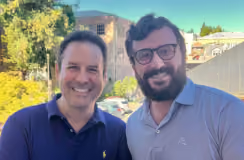
Host: Today's guest spent 10 years at Amazon in a variety of roles, from running a $100 million E Commerce P and L to developing the Just Walk out grocery concept. And even with all that experience at a notoriously hard driving company, there has still been quite the learning curve. In his new role as business owner, Eric Bauer bought Tom Turner Hat, a brand whose hats are sold at hardware stores, garden centers, travel centers. You'll hear Eric say that he's able to apply his Amazon experience about 40% of the time in his business. The other 60% is new and different. Listen for what that 60% is. If you're coming from a hard charging white collar environment, you'll probably have a similar experience. So note just because you've run a $100 million P&L in corporate, it does not mean that running a $3 million P&L small business is simpler and easier, just different. But regular listeners of Acquiring Minds already know that now, in addition to a professional pivot, this was also a big lifestyle change. Eric pulled up stakes and moved from his native Seattle to Auburn, Alabama, where his acquisition is based. Enjoy this interview with Eric Bauer, owner of Turner Hat Company announcements next Thursday, October 24 Attorneys James David Williams and Bill Barlow, whose entire practice is devoted to business acquisition, return for legal office hours. This month's topic Cap Tables 101 How Capital Structure works when buying a business. So that's negotiating your relationship with your partner in the search, structuring your deal for outside capital, seller equity roles, post closing, employee equity and more. Now as office hours. There will be ample time to answer all your legal questions, not just those related to cap tables. So come get any legal question you have about your deal or your search answered by James, David and Bill that's next Thursday, October 24, noon Eastern. Link to register for the webinar is in today's show notes or on the Acquiring Minds homepage. AcquiringMinds co. Welcome to Acquiring Minds, a podcast about buying businesses. My name is Will Smith. Acquiring an existing business is an awesome opportunity for many entrepreneurs, and on this podcast I talk to the people who do it. What do the following Acquiring Minds guests all have in common? Doug Johns, Morley Desai, Tim Erickson, Chirag Shah, Shane Ursam. They all went through the Acquisition Lab, the accelerator and community for people serious about buying a business. But they represent just a sliver of the Lab's success stories. The number of deals across the Lab's cohorts now stands at over 120, with over $300 million in aggregate transaction value. The acquisition Lab was founded by Walker Deibel, author of Buy Then Build, the book that introduced so many of you to the very idea of buying a business. The Lab offers a month long, intensive, almost daily Q and A sessions with advisors, live Deal reviews with Walker, Deal team introductions, and an active community of serious searchers. Check out acquisitionlab.com, link in the notes or email the lab's co founder, Chelsea Wood Chelseie then build.com Eric Bauer, welcome to Acquiring Minds.
[4:04] Guest: Thank you. Thank you for having me.
Host: Eric, you worked at Amazon in Seattle for years, but at the beginning of this year you left Seattle and moved to Auburn, Alabama to take over a hat brand, Turner Hat. So this is going to be fun. Start us off with some background on you, please, Eric.
Guest: Yes. So I was born and raised just outside Seattle in kind of my high school time. I knew I wanted to do something entrepreneurial, but started thinking about things and really couldn't figure out exactly what that would be. I went to the University of Washington after high school, like a lot of my classmates, and still at the time was kind of rumbling around trying to figure out like where my spot in the entrepreneurial ecosystem was and did startup competitions, did some pitch things and all that, and really could never find something that I was so excited about that I would, I would kind of risk it all and take a career leap there. So I did some other things. I interviewed and then got a internship at a friend's business. His dad ran a business that did software for studies. So I got a little bit of a sense of a small business feel and then was really just going to go and try my luck on something entrepreneurial. I didn't really know what, um, and, but want some backup options. So I applied for a job at Amazon, which at the time was, was pretty small and it didn't have a very big recruiting outfit relative to where it is today. I happen to know someone who got a job there in their, their. It was a retail leadership development program and she recommended it to me. And so I reached out, I applied, I got the job. And then when I told my parents that I wanted to go do something entrepreneurial in another country, they looked at me like I had three heads and convinced me that I should go and take the Amazon job. Wait, wait, Eric. Sorry, you're.
[6:07] Host: You were talking to them about doing something entrepreneurial outside of the US did you say that?
Guest: I hear that was, that was kind of like the, the like romanticized version. I would go to a Spanish speaking country. I took Spanish in high school. And some in college and try to like start something from scratch and really kind of prove myself in that kind of way and figure out what it was.
Host: But do like build a business there or live in a more inexpensive country so that you could digital nomad. Build something sassy for the US audience.
Guest: Build something there was the plan was the, in a lot of it was like the lower cost of starting up things, lower cost of labor, all that. And I was thinking through it and how I would do that and the, the whole digital landscape wasn't really on my radar. That wasn't like my skill set that I was going to go after. So I wanted to do something kind of more blue collar grassroots that I could really like get my hands around. It was the vision and thinking back on it, it wasn't the greatest and most well thought out vision. And so my parents had some, some good advice and told me to go to Amazon. I still, that would have been.
Host: Boy, that would have been starting a business on hard mode. Oh yeah, your first one in another country, in another language, even though you spoke some Spanish. So I, you know I tend to celebrate entrepreneurial risks. But maybe your parents were, were, you were right to take your parents advice in that one. What year was this by the way? So give us a sense of how big or not Amazon was.
Guest: It was 2013. So it was right before they kind of went into their like hypergrowth mode. So when I joined I think they had I'm gonna guess around 10,000 employees. And then by the time I left 10 years later I was in the. They have like an, they call it an old fart tool that measures your, your tenure at Amazon. And I was in the 99.7 percentile of tenure there. Just. And that's just because of the exponential curve they, they grew on post. Me joining that.
Host: That is crazy. So at about 10,000 employees those folks were still in the, you know, point 03 first employees of the business.
Guest: Yeah, yeah, it's great. It is, it's insane. And that started. You can see what the color badges around the like the Amazon has their colored badges. And you'll see by the time I had a red one, which is a 10 year one. And you'll see at first when I started there were very few yellows and only a couple reds. And then more and more yellows, which is a five year badge would kind of just proliferate all around. And then it was only a couple people still that had the red. So it was, it was, it was kind of a visual reminder of how long you had been there, which was, by the time I was ready to leave was kind of like a nice, kind of like badge of honor. But also like, I have really been here for quite a while. So.
[9:02] Host: No, totally, I, you could totally see that going both ways. Like, you know, whoever designed that system was probably like, oh, it's status. You know, the people with the red of the status. But it also is constantly reminding the person with the red badge, like, boy, I've been here a long time. Should I go somewhere else?
Guest: Yeah, exactly. Which, it sounds like that, which is exactly the psychology that eventually took you over.
Host: Yeah, but I'm jumping ahead.
Guest: Oh, no, no. Yeah. So I, I had this idea, I was like, okay, I'll be there for two years and then do the kind of like get my experience, put on my resume and then go and do something more startup. Um, and then I was, I ended up being there for 10 years, which was, which was fine. Which is actually, it was great. In hindsight. I got to scratch that itch much more directly than I thought I would there. When I started, I started in retail. I was selling computer parts online directly with the vendors. So I worked on behalf of vendors like Samdesk or SanDisk and Microsoft. They would sell their products to Amazon, we would buy them and then we'd resell them. So we're a first party platform. I managed all kind of the, the financial of that, I managed the inventory of it, I managed the marketing to the extent that we did a lot of marketing on Amazon and ran that P and L end to end with fairly loose guardrails. I mean they had some things in place, but we had a lot of say over how much inventory we brought in. We had a lot of say over like our deal pricing and all that. Amazon has a lot of its own policies on some of the other pieces, but we were responsible for the end net profit margin at the end of the day. So we really had accountability for the business, which was really interesting. And I learned a ton about the big three areas of business in terms of supply chain marketing and in the P and L and.
Host: Wait, sorry, the big three areas of business. I've never heard this frame.
Guest: Oh, I just, I, that's just the way that we segmented it in like the retail department. So I, I did that, the vendor role for a couple years. I moved into supply chain and baby products. And that was one of the, I'd say the best parts about Amazon is you could go into an area where you have next to no experience and then pick it up and learn it because of the way that they structure their metrics and structured the different guardrails in place. And so I picked up supply chain with baby products. I had no familiarity with baby products, but all of a sudden I was responsible for inbounding and outbounding products, like from a virtual perspective, as small as a pacifier and as big as a crib, and then figuring out what the best solution for each of those products was. So I learned a lot about how Amazon operates their supply chain. I learned a lot about how custom or vendors get their products into the United States and then into our supply chains. Way too much about labeling and making sure products are identifiable in the warehouse. Did a ton of that work, which at the time seemed, seemed pretty rote and boring, but came to be more and more important the more I did. I did that for a bit and then I moved on to my first kind of like startup Y project at Amazon. So I went over to Amazon Go, which is a set of, I'm not sure how many they have now, but at the time it was one all digital convenience store concept. So you'd walk in, you'd scan your badge or you scanned your phone, and then you have the, the store track your purchases. You'd walk out with what they called just walk out technology and you get charged later for it. And we thought it was the greatest thing since sliced bread. The store at the base of the Amazon campus was doing super well. And our plan was to roll out to many, many more of these sites. And then we ran into classic scale issues where customers didn't understand the technology. There was a lot more education than we expected when we went from a demographic that was really tech savvy at the pace of an Amazon building, to other parts where folks weren't as familiar and didn't necessarily see the value. So they, they played around with that concept a ton. I was responsible for the merchandising program there. So where we put things, how to determine visibility on the shelf. And that had everything to do with helping customers make a decision quickly because the whole concept was being able to get in, get out fast.
[13:39] Host: An SBA loan broker, as opposed to a direct lender, doesn't work for a particular bank. Instead, the broker pairs you with the right SBA lender for your deal based on industry terms, risk thresholds, then helps you navigate the process better than many lenders themselves do. Matthias Smith of Pioneer Capital Advisory is just such a broker. Matthias worked at two of the country's top 10 SBA lenders. So he's been on the inside of the SBA process and knows well the pitfalls and hurdles and how to avoid them. He struck out on his own to laser focus on the ETA and search space. Our niche is his niche. You'll see Mathias at all the ETA conferences. He's closed over 30 search deals since starting Pioneer in May of 2022, including some acquiring minds guests. To learn more and get in touch, go to pioneer capitaladvisory.com or click the link in the notes.
Guest: Then the pandemic hit. So this was 2020. Things in the grocery business got really intense as they did for everybody. But we were scrambling a ton. We re shifted folks around within Amazon. So I was on a Covid response team. I was picked to go work on that team for a couple of months where we, we figured out how to roll out mass COVID testing to our fcs, which was a crazy experience. It was the same kind of idea where you're figuring out how to develop a process and nail the important parts of it and then leave everything else up to figure out later. I did that for a couple months while we kind of put that process in motion. And then I went back to the grocery space to work with the online grocery channel, which delivers groceries directly to customers. So a ton of kind of like rolling around in, in the COVID era. At that point I, I started to, to get burnt out as a lot of people did. I took a sabbatical in.
[15:50] Host: Eric, let me, let me pause you there. I have to say, pretty exciting experience being on the front lines of that Amazon concept, the fully automated store. I mean that was, what was that called again? Just go.
Guest: I just, just walk out was the technology and then there were three formats around it.
Host: Well, it was, I mean that was a very high profile experiment at the time. I mean I remember people living in San Francisco and also, you know, my year to the ground here in the D.C. area, people getting pretty excited to have one of those stores come to come to town. So. But yeah, but then maybe it not being a big success, like even. Yeah, I remember the confusion around how to use it or whatever. But anyway, being on, on the core, it sounds like you were on the core team kind of rolling this out. Sounds pretty, pretty cool.
Guest: It was, it was a, in a really good experience in terms of. That was my first product experience. So it was more software related in terms of we were building new tools for the merchandisers to do that aspect more quickly. Eventually we were building new fixtures to support produce because we weren't able to do that before. And so coming up with those. Those specs and then identifying, okay, what's the P0 like, most important priorities? What's the P1, P2. And learning that skill set was all really done kind of through osmosis. Like, there was no, like, training where someone sat you down and they're like, here's how you be a product manager. It was more the folks building the actual tech tools and the fixtures would ask you what you need, and then they'd say, hey, here's a better way to think about, like, sending over these requirements. And then you'd kind of learn as you went. And that actually played pretty closely to the search process when I. When I got to it. Great.
Host: Well, speaking of which. So you take a sabbatical.
Guest: Yep, I took a sabbatical. I did the very classic. Went to. Went around visit a bunch of friends and on the east coast that I hadn't seen in a while, um, went to France and spent time in Paris and did the reflection at a cafe with the pen and the notebook and did that whole kind of thing. And I actually as. As like, kind of stereotypical as it sounds. I actually found that that worked really well. When I kind of went back and thought about, like, okay, why did I do this? In the. Like, I was so over the stress of. Of delivering these things so quickly and constantly changing direction. I had a really big project that was my kind of claim to fame on it was that it got a. A footnote in a document that we sent to Jeff Bezos that I got to write the little paragraph for. So I. That was like, the level of profile that this. This project had. And. But then we shut it off super quickly. Just, we. We made a decision one day that it wasn't the right way to go, and we shut it off, which was very normal and happened all the time. But it got to a point where I was starting to take those things personally, where I put all this time and effort in, and then you go and turn this off. And so I went back and started thinking through why I'd done this in the first place and what kind of made me happy and what didn't. And it was like, I was really fortunate to be able to do that at Amazon and for them to give me the time to do that. And so I realized that I wanted to go back and do my own thing. And this had gone back. I had mentioned some of the things I was engaged with while I was at university. I had read in 2018 I forgot I had heard about it, but I believe it was 2018 when they released the HBR Guide to Buying a Business. That I read it, kind of put it on shelf, thought it was an interesting idea, but then read it again in 2022 and it really the kind of main reason for getting into entrepreneurship through acquisition really resonated of I want to do my own thing, but I don't have an idea that I'm so passionate that I'm going to throw everything away to go and start from scratch. And so I started the search and started putting things together, decided it was what I was going to do and then kind of went about building out that search process.
[20:07] Host: And this is what had you identified that you liked? You've told us kind of what you didn't like about your then position and experience at Amazon. But what was the stuff that that was to those, the sticks? What were the carrots? What was drawing you? What were you looking for?
Guest: Yeah, I part of it was the, the ability to build something that I felt was really mine. And I kind of alluded to that a little bit with like crazy idea I had to go somewhere in South America. But like I wanted something that I could really claim as like I came up with this idea, I researched the customer need, I built something that addressed that need and then I delivered it to market to market, marketed it and sold it to customers. And I had pieces of that at Amazon in all kind of different ways but I never put the whole thread together. And so it was something that I had wanted to do for a while. The other kind of like driving factor I think from a young age is my mom had always worked for really small businesses and my, my dad had worked for a big consulting firm and still does for his like most of his life and seeing and like talking to my, my mom in particular about the like day to day interactions and the decisions that they make and some of which were very silly and the kind of focus on the wrong things that she and my dad would talk about and then eventually she and I would talk about. It gave me some confidence that it was something that I could do and was in some ways perhaps lower risk than what I was doing at Amazon. This was also around the time when they started letting people go and this I was never really that concerned about being, being laid off but the, it wasn't really in my kind of department but the thought that this was a stable and dependable like always their job that I had a clear career ladder on started to kind of vanish. And I wondered like, is the risk of going and doing something for myself really that much higher than the risk of staying in a, in a kind of a corporate role? And then how does the reward ratio fill out there too? So I had kind of designs on, you know, acquire one company, then acquire another. We'll see if that kind of like plays on. But, but that was, was one of the ideas do kind of a roll in acquisition. I like that I could go choose how big I wanted this thing to get. I like that I could choose to hire a general manager later and find something else to do. And so just the number of options and the ability to explore was the key thing that always led me to entrepreneurship. And, but, but I finally found something that I could not like with all the opportunity costs I built up while I was at Amazon. Not just kind of dish that away and start from scratch?
[23:04] Host: Well, your point, your, your risk analysis there is a great, a great one and one that people overlook but that you'll see kind of floating around. This, this, this idea that we think of the W2 job as the safest option. When in fact if you think of yourself as a business, a one person business, when you have a job, you have 100% customer concentration. You've got all of your eggs in a single basket of your employer. And so if, if we again thinking about ourselves as one person businesses, that is a very weak, not very strong business. Not a business you'd buy with 100% customer, customer concentration. So I think a great framework to realize to kind of wake up to the fact that a job is not always such a safe, safe option. The other thing I'm feeling here Eric, is just like, you know, some of the what you were learning or what you did learn at Amazon just seemed to be incredibly valuable skills for the future. I mean running $100 million E commerce concern and then, and then getting all this product development experience and go to market stuff with new concepts, it seems like those are just very, very valuable. A very, very valuable skill set. Now maybe running a hundred million dollar E commerce business unit isn't that valuable because there are very few places you can actually do that and one of them was your existing employer. So it's maybe it's not like a place that you can, there's not that many places you can really take that skill. But I guess what I'm just observing is when, when I'm talking to somebody who's kind of mid career. How old are you by the way? Or how old were you in this time period, 33.
[24:50] Guest: 33, yep.
Host: So in Silicon Valley terms, 33. Your mid career.
Guest: Yeah, yeah, yeah.
Host: Still very young, but with 10 years of experience at Amazon, it's a lot for a 33 year old. You, you were, you were walking away from this incredibly valuable skill set. And so that I have to, I mean there, there's, there's opportunity cost in that because presumably whatever you, whatever business you went on to buy was not going to leverage your skill set as much as staying in Amazon or some, or some, you know, some business like Amazon. Yeah. So I, you know, you, I feel like there was a lot of risk in leaving some of these skills that you developed. Do you, do you agree?
Guest: Yeah, I agree. I think I was heartened by some of the like more senior level folks that started to leave around the 2019 through 2023, like we'll call it an era at Amazon when things I felt in the folks that I had spent a lot of time there with felt like perceptibly changed in terms of the way that the company was run. And this, he was a, I think he was a VP by the time he left. He went to go to GameStop and his, his kind of takeaway was of, it was, that was when GameStop was, was going nuts with all the pandemic stuff going on. And his takeaway from it was, you know, one, I can always go back to Amazon if I need to. And that's, that's, I think actually even harder at his, his kind of level of seniority. Like this is a pretty rare fried air for me. I, I did kind of develop this niche skill set that really can be like the square peg that it fits into is Amazon. And so if they need someone to come back and fill a square peg, like I can do that. So I didn't feel that worried about like my prospects just drying up forever. But I liked his kind of calculus of there's a way back and you've got kind of the stamp on your resume that would get you in the door at another couple of places. And so I felt okay about that. That helped kind of lessen the anxiety.
Host: Totally, totally. Yep. Makes sense.
Guest: Great.
[27:00] Host: Okay, Eric, well, tell us about your search, your criteria, the type of search you attempted. Give us those bullet points.
Guest: Yeah. So I started out with kind of the traditional model. So I was looking for something in the realm of 750,000. I think I started higher. I think I wanted $1 million in EBITDA up to $3 million in EBITDA. I wanted a 4 to 6x multiplier on the EBITDA value. And then I wanted to have something with super high reoccurring revenue. And I wanted something that was on the coast. And those were kind of my, my set criteria. I wanted like low customer concentration, some of those other qualitative factors as well. I started looking and I can get to the process of. I started looking, but I like immediately found out that those were pretty unrealistic criteria that I, that I was looking for specifically at the time interest rates were going up and valuations of companies were still pretty high. And so any company that I came across with really high reoccurring revenues, so something like a subscription model, anything in software was still going for, I'd say easily 8 to 10 as EBITDA. And I was going to debt finance this. And that totally blew up any kind of model. I had to be able to debt finance something with, with that high of a multiple. And so I started looking in some of the more traditional kind of roles or companies. I looked at plumbing and H vac and all that. My experience obviously wasn't in any of those kind of trades. And so there was a key man risk for those industries where typically you need somebody to hold, I believe it's a bond, but you need to have some experience there in order to hold that. And if you don't, you're gonna put in the name of one of your employees and then hope that employee doesn't leave because then you can't do any business without them. So I kind of scratched off that industry. And all this kind of comes back to things that I found out over time searching. I didn't find a lot of this stuff in my preliminary research on how to do a search fund and what to look for. And so I did kind of the basic due diligence of. I read a bunch of books. I was on Search Funder all the time trying to find information about how people did this. I would say I, I used the HBR guide for buying a small business. Like almost like, like a bible. Like I would read the chapter, put it in my notes, build the model that they had in there, and just structured everything around that. And while I don't know if it was, I think it's different for everybody. And I made changes along the way. Just getting started. And this is kind of the whole like, thing that I've, I've told folks that have asked me about the search. Just getting started was the important part. And then figuring out kind of the, the other pieces as you go comes with, with, with the experience of doing it.
[30:00] Host: So I, which is to say Eric, that the, the book was a good starting point. But, but, but, but having it, be having it, using it to prescribe, every little thing you do is maybe over leaning on it.
Guest: Absolutely. Yep, yep. And it won't tell you the nuances of some of these things. Like it'll tell you you need 90% reoccurring revenue, but it won't tell you how to trade off 80% reoccurring revenue versus the multiplier. And that's all done at the market. Like you're, you're not going to find any prescription around that. And you kind of have to get familiar with what people are willing to do before and what the market situations are before you can come to your own conclusion on that. And so I, that was, I started to get to the point where I had read all these things and then I didn't know, I didn't know how to start and then the, the solution was just kind of starting. So I, I put together my llc. I had that running for a little while to, to in. And I would say this too, for folks that have asked me that having the LLC and having the website just lended some credibility to the search that I found really useful. I did all of my searching through brokers. I was still working full time at Amazon and doing this on nights and weekends. And so I didn't have time to do the like go through a hundred lists of business owners, call each one of them or send them a personalized mail and then hear back and do some negotiating. So I wanted business owners who were willing to sell were familiar with the process. I want to minimize the risk of having it fall apart midway through. And so the broker search was the right process for me and I started.
Host: Eric, Eric, you're, you're million to $3 million EBITDA 4 to 6x. Yep. So quick math. Let's, let's say you found a $2 million EBITDA business at 5x. That's $10 million, 5 million more than the SBA offers. Yep. So, so can you give us a sense of how much of your own capital you had to bring to this project and how you were thinking about investors, if at all?
Guest: Yeah, I was willing to bring up to $1 million of my own capital there and that was mostly from Amazon stock appreciation. Like it was just right place, right time kind of thing. And then I had a group of, of high net worth individuals that could contribute mostly from Amazon again. Like older, older employees. Like it was a good network to have.
Host: Amazon Mafia.
Guest: Exactly. Yeah. And so, so a lot of, a lot of those folks, family friends from where I grew up with the, the father of the, the. My friend that I mentioned whose company we work for, he sold his business and that we interned at. And so there were, there were people. I had a list of folks I was super nervous about asking for money. Like there was there. I had never done anything like that before my entire life. I talked to a couple people who were in kind of the PE space and, and they, I had, most of them hadn't heard about entrepreneurship through acquisition and weren't familiar with the model. And they like just kind of frankly said like, yeah, right, like we're going to give a 33, 34 year old a bunch of money to go run his own business with. And so which, which I, which in hindsight could have been more disheartening than it was, but I had done so much due diligence, I think, on the model itself and the success stories around it that I felt really comfortable, like kind of just brushing that aside. Whereas like, I think had I not done that much and I had encountered that kind of resistance early on, I might have just given up on it.
[33:34] Host: Yeah. Yeah.
Guest: So.
Host: Well, and I also think that it, it just goes to show, kind of reinforces that this is pretty amazing because just like somebody who hasn't read the book or been exposed to ETR or whatever just kind of hears about it. Even a pe, you know, a person, somebody who understands leveraged buyouts that their first reaction would be like, yeah, right, that's possible. Yeah, should just remind us all that how amazing that indeed it is possible. Yeah.
Guest: Yeah, it is. And in that, I think the other thing too that, that reminded me, that reminds me of is those conversations that my, my mom would have with, with my dad and then me about the, the, the first company that she was at, she was at for like 20ish years. The, the father was the owner, the son took it over and I think frankly was like pretty incompetent, like from. I never had firsthand experience, but the perspective I got, which was obviously filtered, was that he was, he was quite incompetent. And my thought for, for 10, 15 years was this guy can run this thing and not run to the ground. Like this is not an impossible skill set that, that nobody can do. And so I, that gave me a lot of confidence. And then she went to another company that was kind of a similar deal, although the managers there were much more competent. But they just started it because it was something that they, they were into and then they built a business around it. So the one she's in now, they do metal fabrication. And he started that as a metal fabricator and then built the company around it. And it's not like he had a PhD or a master's program or worked at Bain. He was just a guy who knew how to like balance his checkbook and make sure that he wasn't spending more than he was earning and built the business slowly. And even after hearing like kind of that, that pushback, those two things gave me a lot of heart of. I've heard other people have done this, it's been successful, and then I know people around me that do it and they're, they're not like, they're not like a very special set of person that comes along once in a while.
Host: Well, that's a great counterpoint, Eric, because one of the things that we hear about this path is that how hard it is, how difficult it is. And it's something that I'm always banging the drum about because I don't want people to underestimate how difficult it is. A and B, I've heard time and again from guest after guest that indeed it is really difficult. But. So this is a great counterpoint that yes, it's difficult, but I've also heard people say something similar to what you just said, which is, look, these businesses are basically, many of these are simple businesses. Let's also not overstate how difficult this is. This is not running a hundred million dollar P L business with huge amounts of data coming in that you have to sift through and all these, I mean, you know, the business that you had at Amazon was probably complexity wise, way, way, way more complex. So anyway, I, I just think that, you know, maybe the truth lies somewhere in the middle. Maybe probably more just depends on the business that you, that you buy. And, and I also think that when people talk about it being hard, actually this is a key point. When people talk about it being hard, they're not talking about the complexity of the business, they're talking about managing people. Yeah. And that probably is hard and does not relate to, you know, how good your grades are or whether or not you worked at Bain. That has more to do with EQ and tolerance for human foibles.
[37:04] Guest: I don't know.
Host: We're going to get into that.
Guest: Yeah, but go ahead. I've got a lot of that. Yeah, that. But so I met with more people. People said yes, they gave kind of soft commits. And I had, I was fully prepared to go and do that if I, if I needed to. My preference was to not. I would prefer something in the $1 million EBITDA range and own the entire thing outright, not have to answer to any investors. And I did kind of balance this. It would be nice to have quote unquote adults in the room to help me kind of move things along. But I also wanted to really, the whole point of this was to do my own thing and I could have advisors, but I didn't want people necessarily pushing me in direction I didn't want to go. So 1 million was kind of my target, as I'll mention. I did not get to 1 million. So I, I was looking for about a year. I was, My kind of process evolved as I went. But I had mentioned this kind of in passing around the, the Amazon work where I didn't know what I needed to know or what I needed to tell people until I started talking to brokers. So I started up on Axial. It was a really good way. I don't necessarily recommend it for all folks. It's a platform that sources deals based on like your criteria and then it charges a finder's fee if you go forward with those deals. But I, it was a really good way for me to understand what was out there, get quick access to confidential information, memorandums or SIMs, and then read through what was available, how those were prevented, presented. Understand like when I was communicating with brokers, what kind of things they wanted to see from me to test my bona fides. And, and I noticed that some of them were checking my website and asking questions about it. So I knew that was kind of an important piece of my own marketing. But as I started to run through those, I started to put together the process and first it was a Google sheet, then it was an Excel spreadsheet, then it was. Eventually I used Bigin, which is a CRM product from Zoho, which is really low cost and super easy to put together. But I was, I was getting my pipeline in place, understanding what I need to look at, and then really figuring out. The key thing that I think most people have to figure out in the process is like how to quickly say no to things that might look shiny, but you, you figure out the, the flags and the keywords and you just, you just move away. The one example.
[39:37] Host: Can you give us a. Yeah, great.
Guest: The example that kept coming up was for, for retailers and people selling to other companies, it was like, works with Fortune 500 companies. And many times that means they have one massive Fortune 500 customer and they're 30 to 40% of their business is what I found in the types of businesses I was looking at. And so any mention of like works with a like Fortune 500, Fortune 100 company. I um, I was pretty leery about and then would just skim this when I, if I requested more information and got the sim, I just skim it immediately to customer concentration and make sure that it was or wasn't what I, what I thought. So there were, there, there's shortcuts that you learn. Um, I, I quickly was doing some math and I'm, I went through at least 1400 teasers. Um, so those were, those are quick. And it got to a point where I could really easily chalk through those. And then went through 237. I had the like list pulled up. 237 Sims that, that I evaluated with a team of interns that I, I brought on once I had my process in place and, and was able to instruct them directly on, on what to look for from a quantitative and qualitative perspective and then how to put them into a database so that we could track them better. So went through 200 of those and then I only wrote IOIs for four companies. And then a couple of them had those unrealistic expectations around multiples or they were looking for a strategic buyer. That happened a ton of times even before I got to the IOI stage. And so I moved away from those. But really I like honed in on spending time on the companies that I thought I had a good shot of moving forward with. And again this was because I was time constrained with my full time job.
Host: Yeah, that's great Eric. Let me, let me follow up real quick. So, so your funnel looks like how many teasers did you look at? 1400.
Guest: 1400.
Host: Yep. 1400 became two. What did you say? 250 to 300 Sims. Which means you reached out to the broker saying sign the NDA. Can I get more information?
Guest: Yep.
Host: Right.
Guest: I occasionally would, would shoot a note on a, on a teaser to, to like same kind of idea. I'd say like, hey, this mentions Fortune 500 companies. Tell me the customer concentration. Like you don't have to send me the whole sim. And kind of in that that was kind of a halfway point. I felt like that saved me some time as well.
[42:10] Host: Yeah, because you skipped the NDA probably there.
Guest: Yeah.
Host: And then from those 253, 300 kind of taking into a Closer look at down to four IOIs. Yep. Okay. And down to the one business that you bought. Now why did you choose to use IOIs by the way, rather than, you know, just hear people. Yeah, just LOI versus do IOI as an intermediate step then loi.
Guest: I, I'd say it was probably because of the, the HBR book. Like it was the process that I knew and I didn't have enough experience generating those IOIs to know when I needed them or when I didn't. So I, I kind of stuck with the. And that was the way I treated the entire search process was I stuck with the rules, quote unquote, until I found where I could bend and break them.
Host: It's well put. I like that. And do you find reflecting back that the IOI method served you?
Guest: It did. I think it helped me from like having to spend the time on the loi, which, which wasn't all that time consuming. Like looking back. And I assumed it would be a lot more time consuming. I assumed all these steps would be a lot bigger than they were. But I thought I had a couple more criteria that I wanted to look at before I felt comfortable moving ahead with an loi. I also discussed price range pretty narrowly in the ioi and so I could get a sense whether or not we were in play for the business or not. And that helped with at least two of them where they just were looking. The one, two of them actually were, they were food distributors which I was like, oh, that's a great dovetail with, with the grocery experience. But they, they were looking because they're so stable and they tended to have customers like hospitals and schools. They were looking for what I thought was unreasonable multiples of I think like six to eight. And I just couldn't justify it for the growth in the, the, the business itself.
Host: So well. And here we have a great example of why the IOI can be helpful. The indicator. IOI stands for indication of interest because you draw out the seller on price a little bit. So rather than investing time in doing an alloy, you do a quick kind of like are we in the ballpark here, Mr. Mrs. Seller? And if not, you move on. And you haven't invested in lost time in developing an ally for a deal that was never going to happen anyway.
Guest: Absolutely. Yep. And that was, that was, we got pretty sharp on that. Like I, I use comparables I or comparables I from I use a search funded database for those of other produce distributors and food distributors and the, the seller and the seller's broker just weren't having any of those kind of other data points. And at some point you, you're also, you're buying from the seller and you gotta like take into account do you want to work with this person for five, six, seven months plus the time afterwards. And if they're gonna be unreasonable and stick before you even get started, like is it worth, worth going forward? So did it right?
[45:11] Host: You'll recall hearing about the inaugural M and a launchpad conference on Acquiring Minds back in the spring. The event brought together searchers, seasoned business buyers, owners and private equity investors for a single day to go deep on buying businesses. Well, it was such a success, the organizers are hosting a sequel in October. Walker Deibel, author of Buy then build is keynoting and 30 other experts will be on hand sharing their journeys to acquire, operate, scale and exit their businesses for significant returns. It's happening October 26th in Chicago. Use code acquiringminds@malaunchpad.com for a $200 discount. So if you missed the event in the spring, here's your chance to attend in Chicago on October 26th. And with a $200 discount, go to Malaunchpad.com or click the link in the notes and use the code acquiring minds all one word. Your decision to have your own website as opposed to. So you had a. What was the name of your kind of search vehicle brand?
Guest: It was Mercer Street Capital, which for those and I thankfully didn't have many people in Seattle because Mercer street is a terrible street with a lot of traffic. But it was where I started at Amazon so it was kind of a cool like callback to that. But I only had one guy who was like why did you pick that street? But it was, it was Mercer Street Capital and The website was mercerstreetcap.com and
Host: so you'll hear often searchers ask well should I put myself out there as kind of an entity like that, a branded entity which kind of positions you as a bit of a private equity type vibe versus you know, just just sending an email from your Gmail or just very a very personal human outreach. And so obviously you chose Mercer Street Capital. You chose the branded way. Any reflections on. I think you already said that that served you well.
Guest: Yeah, I thought it worked well for me especially when you're working with brokers who the one I also like. They span the whole gamut of professionalism from very buttoned up and very process driven to like I've literally had pictures of sims sent to me in like almost handwritten and it for the especially those more buttoned up brokers. It was helpful for me to get my foot in the door and I had kind of my pitch of what I was looking for and had that all ready to go. And just I never encountered anyone who I got responses on almost every outreach I did. Folks could early on say we're not interested in a private equity or at least a small kind of private equity like acquisition. We're looking for strategics. But I got responses from almost everybody and nobody kind of questioned that how I was going to go and acquire the business after I kind of set that out so I didn't have to spend time explaining how I was going to do this, what my background was, send like a novel over to them. Most folks looked at the website and were really comfortable with that. So I think it saved me a ton of time. But that was again a very broker specific search.
[48:31] Host: Okay, great. Well that's because you will hear detractors say that argument which say like if you're not private equity or don't pretend to be private equity, you know, sometimes if you, if you encounter a seller who doesn't want to sell to private equity, of course there are lots of those they'd rather be dealing with. You know, the individual entrepreneurial searcher who in, in whom they see themselves their young, younger version of themselves. And so sometimes that type of seller might, might like less a kind of private equity vibe and more the individual entrepreneur vibe. So that's why I wanted to ask your opinion there. But great to know so clearly that it's that it was you would advocate or at least in your case it worked well.
Guest: Yep.
Host: Eric, I mean we haven't even gotten into your business yet here, so I'm watching the clock closely. But a lot of good meat here. Tell people a little bit more about Axial. You know, almost everybody goes to Biz by Sell first and I'm sure you did use By Biz by Sell here and there, especially if you got to 1400 teasers that you. But, but, but, but tell people a little bit more about Axial, how it works, why you, why you called it out as your primary source deals as opposed to Biz by Sell.
Guest: Yeah, and it was my primary search until I found the list of brokers. I needed to get more comfortable. But Axial lets you put in your criteria, so an EBITDA range, for example of what you're looking for. It lets you select industries that you are not or are not interested in and it lets you do some other filtering as well. But from there it's basically a matchmaking service where it takes those criteria and it looks at companies that are listed and then it puts them in kind of your feed so that you can go and review those teasers and then request a sim and behaves like a CRM that's already purpose built for this. And so the drawback of it, and I forgot what the specifics are, but if you do acquire a business that you heard about first through Axial, which is a kind of complicated process in itself, you do pay them a finders fee. And I found as I got more familiar with who the brokerage I was looking at, the areas I was looking in and who they represented, I got. I started signing up for their, their email list. I would get those in the, in my email and then I would find I was also getting those in Axial. And so then there was a requirement for me to go and inform Axial that if I went forward with this company I had already found it out through this email list. And that just got really time consuming. The overlap got so high that I stopped using Axial. But for the right person, for the right searcher and for just starting out, I thought it was a really, really good tool. And I met a lot of great brokers that I still keep in contact with through Axial. So it's a. Yeah, but Eric, when
[51:20] Host: you describe like how you used it, put you in your criteria, hit search and then it populates your feedback. Why is that any different than going to biz by sell putting I mean this by sell of course has filter, a searchable feature with filters. Putting those in and then getting the search results back on Biz by sell and bookmarking the ones you like.
Guest: Yeah, and I did that any different. I did that as well. The businesses I found on Axial tended to be more professionally represented. Is the kind of the gamut between it. So biz by sell sometimes feels like a craigslist for. For businesses. And there is a craigslist for businesses too. Which if you want to take a look at it, it's pretty odd. But BizMysell separating the wheat from the chaff there was really tough for me. There was a lot of good, good businesses that would work well. My filters and a lot of those showed up on Axial. And then Axial didn't have all of the kind of noise of your small mom and pop that's not really looking to sell but wants to see them get a price on there and that kind of thing. So I found it a lot more streamlined than biz myself. And I did use both Totally. Yeah.
Host: And that's kind of what I. Is my understanding, I would call out is the core value prop for Axial. It's a more professionalized, more curated marketplace where biz by sell is the beloved grab bag that we know it to be. Yeah.
Guest: I spent a lot of nights browsing it and it can get wild. So
Host: getting weird with this by itself.
Guest: Yeah. All right.
Host: And by the way, geography, you mentioned the coasts earlier, but again, with the volume of deals that you looked at, I suspect you had loosened that criteria at this point.
Guest: Yeah, I was starting to find that deals on the coast were typically expensive. The ones I was looking for in terms of the EBITDA that they wanted and also the industry. So a lot of the what I found, and this was kind of where I was looking, but manufacturing, I was looking at manufacturing, I was looking at industry, I was looking at services. All of those tended to like cluster around kind of California in the coast. But they were all usually the way, this is my hypothesis is the way that those companies survive is because they're tied really closely to a big customer. So almost every big or like large enough company that's surviving there, that's still small, that's not like an enterprise is usually tied to one big defense contractor, one big commercial development, one, something like that. And I think it's just tough. My, my thought is it's just tough for a company in the 1 to 5 or 1 to $3 million EBITDA range to survive as a standalone business in those, those kind of high, like highly expensive areas. So I brought in my geography. I started kind of looking inland and then I just kind of scrapped the whole geography criteria. And I was able to do that because I wasn't married. I'm not married, I don't have any kids. And so it was easy for me to kind of pack up and find whatever was, was there for me. And I think as we'll, we'll get to. And the brokers mentioned this, the fact that the company was in Alabama was a, like a, a value point for it in terms of. It would have attracted a lot more attention had it been in Dallas or Tennessee than, than kind of way south of, of Atlanta.
[55:01] Host: Sure, sure. And just to, to, to state the obvious here, that that's also just a big life decision too, that you're willing to move anywhere. Yeah. So I assume that took some, took some coming to that decision. Am I really going to leave Seattle where I've been forever? All my friends are, my network, my family, etc.
Guest: Yeah.
Host: Going and going not just to, you know, one of the cool coastal cities, but anywhere, anywhere that this, that this path might lead you.
Guest: Yeah, and I was, I would say that's something in hindsight that I underestimated how difficult that would be. I really, like, I was so focused on doing this and so ready to find something that I kind of shrugged that away and said, like, yeah, I'll deal with it. Like, that's totally fine. I am a social person, but I also spend a lot of time alone. I travel alone a lot. And so I thought I'd be pretty comfortable going somewhere by myself without a strong community and maintaining those connections back home digitally and coming back pretty frequently. Um, and then I, I got here and the, the, the first day was pretty tough. Um, and, and I, I, the, the realization set in once I bought the business that like, this isn't a, this isn't something you can walk away from. Like, you've got a big debt obligation, you've got a lot of people depending on you selling the businesses. I assume a three to five year kind of ordeal in terms of getting anything ready to go and finding the right buyer and all that. And so it's not something you can just turn away from and say like, oops, I made a mistake and move back and do something else. You do, on the other hand, have a ton of options of how you operate the business. And so over time I got more comfortable with working remotely. I can, I can go back and work from Seattle and all that, but it was a much bigger shock than I anticipated. Moving down here and then just not having the community. Also, like the huge change in what I was doing on a day to day basis and who I was doing it with, all that hit pretty hard and I think I had some blinders on in terms of how difficult that would be.
[57:15] Host: Well, I want to spend some time on that, Eric, because it's kind of, to me, it's really one of the central aspects of your story. But let's return to it. And again, in the interest of time, let's quickly hear about the business. Let's hear about Turner Hat. How did you find it? And then give us all the bullet points about the business, why you liked it, et cetera.
Guest: Yeah, so Turner Hat was represented by a broker called Viking M and a. They. The, the managing director was out of Tennessee, I think, and a friend of mine who was also at Amazon and then started doing his own search, but only in the Nashville area. He and I were talking, he recommended this outfit and I started I signed up to their list and was looking at their deals and found a scalable headwear distribution company is how they pitched it. And I was really against apparel because of the seasonal functionalities and the style aspect of it and how kind of finicky that can be. I wasn't interested in the south in particular when I started, as I mentioned, but I kind of clicked in anyways. And their bread and butter are like hats that protect you from the sun when you're doing yard work. And so their price point is between, or our price point is between $16 and $50. The $6 hats are things that you'd wear out in the yard. And they're there, as I have tested, really stable, like high quality products at a, at a fair price. And because of that they don't fluctuate too much when it comes to economic downturns. I looked at some of the data from the 2009 recession. They did, they did just fine. They, they're sold mostly through hardware stores, travel centers and like gardening centers. And so they stay pretty consistent no matter what the economic trends are. Importantly for me because I saw a lot of these, they did not have a huge pandemic bump that they wanted to be priced into their overall value. So they did not increase 40% year over year in 2023 and want to use that EBITDA result as their primary basis for the valuation. The more I talked to the owners, the more they discussed being really careful about how they grew. They didn't want to go into accounts that would be able to squeeze them. So they have really low cost customer concentration. They sell mostly to individual store owners rather than going through a big corporate chain. And they have a distributed salesforce of contracted agents that sell other lines as well. So they sell things like gloves and knives. And so really low customer concentration, very low volatility. It was smaller than I wanted to be. Their EBITDA for 20233 was 350k, which was. I had also loosened that guardrail. I was willing to go down to 750k in EBITDA, but I saw potential in the brand. They didn't really have one. They mostly operated as a distributor. Right now we are called Turner Hat. But today that doesn't stand for very much out there. And then they weren't doing any kind of E Commerce. They had tried that in the past and they had said it was too expensive. They were getting a bunch of returns. I knew all the signs that that kind of pointed to and felt confident that I could turn that back on. And then they were really geographically concentrated in the south and the southeast. And so I thought there was opportunity to move out west, move north with some new product lines. And, and so even though it was smaller than I was looking for, there felt to me like a lot of untapped upside. That made me really like the deal the more I dove into the due diligence. They were really well presented, very fairly presented in their financials, and so found no hiccups there. And yeah, it was not at all what I was expecting to acquire, but. But turned out to. To be almost exactly what I expected, which is, which is really rare from the other folks that I've talked to.
[1:01:36] Host: Mm. Well, I got to say, it's really interesting, Eric. I mean, you were, you were, you were willing to go look at anywhere in the country. Go anywhere in the country. And, and you looked at a lot, a lot of businesses. And this one, which, yeah, violated your. Your criteria in a number of ways, still really spoke to you. Let me, let me poke at it a little bit. So. So I feel like hats are hard to differentiate around. So, so these are. So again, these are hats you'd like garden hats and cowboy hats and kind of what, what other type of are
Guest: those that sports hats, so things like field hats, fishing boonies, those types of things.
Host: So I feel like that would be something where basically without a strong brand, which you said it does not yet have, it'd be hard to differentiate. It would be a low margin product, commoditized, high volume. How did you think about that?
Guest: Yeah, so the niche that they serve, the way that I looked at it, was customer concentration and customer acquisition. And the niche that they serve is kind of twofold. One, the product niche. It's surprisingly hard to pack and distribute these hats to different customers around the country. It's expensive. You really have to know what you're doing in terms of getting the right volume in there without damaging them, but also making sure that you're shipping a box is profitable. And then we offer a level of customization that the bigger players weren't offering. So the biggest, I believe, kind of customer or manufacturer in our space is Dorfman Pacific. They do really big accounts, but, for example, they're only going to ship you one size in a set of 12 hats. And if you're a small store, you can't take on that inventory, even if it's a little bit less expensive because you'll have no room for this full assortment. Whereas we'll do everything custom for you. So we'll do whatever kind of set of hats that you want. As long as you meet our $250 shipping threshold, we will ship them to you for free. And the owners had built a process around that niche that was fairly profitable. It's 10 to 15% net margins depending on the customer and in really efficient. They had taken a lot of the cost out already because they had to. And I really like those aspects of it where they had the process in place. They had really good terms with their supplier suppliers, they had good terms with their vendors and they kept a lot of our customers and they kept a lot of their customers year over year. And so I felt like we could live on the distribution and that aspect of the business for a while while we built a brand that I think took advantage of the strengths of the product that were already in there. Like they are good quality hats and I don't think they're, they're represented well in that sense because the, the two owners purchased the company as a late stage career change. They were in their 50s when they, they bought it and were really focused on the distribution side of the business and never, I think, took the time because of the investment required to focus on the branding side of the business. So I saw upside there in addition to the kind of grand work that was already working really well.
[1:05:02] Host: Well, that's a phenomenal point because that if you have something that maybe isn't super differentiated. So basically what I've heard you say is you had something that actually is differentiated. It's a high quality product, but the brand has no value as yet. But you have this incredible distribution network. And that, that, that, that's, that that's such an asset. That's one of the reasons that, you know, you buy a business like this rather than starting a business like this from scratch. I mean really recreating that distribution network would just take forever. Oh yeah. So that's really valuable. Yeah, that, that makes a lot of sense. So now you've got, yeah, you, I like how you put it. You can live off the existing kind of distribution relationships and just kind of sell through that you're already seeing. And now you can just build a brand on top of that as opposed to kind of doing the reverse, which is probably what a startup hat company would do. You try to like brand your brand, brand, brand, brand, brand, and then try to go out and distribute this, this product. And did you also see an opportunity with these, this, this great distribution network to eventually sell more into it, sell more product into it or More types of hats or maybe not even hats, but something else. Gloves, whatever.
[1:06:15] Guest: Yeah, and there, there's some overlap there with a lot of our reps are selling gloves and, and they're, they're similar niche products. And this was one of the, I think the best parts about searching of all these industries that you had no idea existed. But somebody's gotta give the products that sell in travel centers and small ace hardwares to those owners. And there's a ton of small distribution companies that do this, a ton of small brands that fill this niche and those are potential acquisition targets in the future of layering on those types of companies. We are, as I said, really focused on the Southeast. And so there has been no push to do anything in the winter hat category. I have spent like all of the time since the acquisition to develop a winter line that we think is going to do really well. Even in the Midwest where we already sell a lot of hats during the summertime but don't penetrate at all during the winter. And then also move coastally up to the Northeast. I think we have a lot of opportunity in Oregon, Washington and so there's a ton of selling in to both the existing customer base with new products. We are not very well penetrated even with, I think our Last count was 2,500 active customers. Even with that number of customers, we're nowhere near our fair share of penetration in terms of the number of stores that could be carrying any tortum hat that does. And that's because there's a lot of education there of. And I still find this like kind of hard to believe. But you, you put these things in a hardware store and they do sell even cowboy hats. Like we'll sell them in places you would not expect. Oregon, like the Oregon coast up into Idaho. Obviously they do pretty well in kind of the Southeast, but you can put them in different places and folks love it as an impulse buy. And, and all that kind of lends to this idea that we just need to go find the customers and educate them on it. So I think there's a ton of
Host: upside there as well when we think about distribution. You know, one of the kind of the classic thing that people will have heard about is like trying to elbow your way onto the Walmart shelf or to the Target shelf. Some, you know, some giant distribution win that you get. And that shelf space and being on the shelves is incredibly precious and incredibly competitive. And you as the, you know, small manufacturer, supplier of the good take out, you know, Walmart and Target have so much buying power they can push all this risk onto you and it can kind of make or break your company. So that's one narrative many of us have heard. Yeah, in your case, you're working with these small distributors to go out to the, you know, onesie twosie stores across the land. Is it competitive to find more stores to work with or to increase product that is being sold through these distribution relationships you have? Is it, is it like that or is it pretty easy? You can just give them more to sell and they'll do it for you?
[1:09:11] Guest: It's more of a, I'd say the, the hardest part right now is finding sales folks and reps to do it. It's more of a number of doors that we can knock on kind of opportunity. Not we have to come up with a better price to out compete the hat distributor that's already in there. There's a ton of white space to go around of just underserved areas that don't have anybody calling on them. People don't think that they might be like a niche that's worthwhile to sell to. And again, that's where our low cost infrastructure is really helpful because we can get those markets. We just need to get somebody out there to let them know about the program and how it works. Whereas a ton of your higher branded products that spend a lot of money on advertising and those kind of things, it's never going to be profitable for them to set up shop in those kind of stores. And so it's not particularly competitive in the areas that we're looking at. I think we're planning to get a little bit more head to head as we go into places like California where there already are folks selling hats in some of those stores that we'd like to be in. And then the question will be where can we compete on price? Where can we compete on convenience? That's been a really big point of feedback we've gotten is how we distribute the hats kind of ready to go on, on the store floor so no one needs to touch them. Our low order minimums mean you don't have to carry back stock. And so there's, there's some key selling points that I didn't really, I didn't understand at all until I bought the company and then really figured out what differentiated the product for customers. All I knew was that customers kept coming back and there was, there was going to be a reason behind it. So it took a while to figure out what that was.
Host: You know, this is really. And I guess the SIM said as Much. This is a distribution company. You know, you might, somebody might at first glance call this kind of a hat manufacturer, but in fact you guys don't manufacture the hats.
Guest: You.
Host: These are, these are contract manufactured.
Guest: Yep. Yeah. We get them primarily from China and Mexico.
Host: Great. And then brand them and then you, you distribute them. You know, interestingly there, there are kind of FBA Alibaba vibes there. Now I'm sure that that wasn't, that concept wasn't invented by Alibaba or fba, but that's where we've heard about it a lot in recent years where you entrepreneur, find some product that's being manufactured in China in the Alibaba catalog and then you import it, brand it and sell it on, on Amazon. And you know, you've, you're, you're in business. Now obviously that model also has maybe not. Doesn't work as well as it did 10 years, five, 10 years ago. But I guess it's an old and tried and true model that basically you contract the manufacturing and then you put your brand on it. That's probably, that's probably, frankly as I'm talking myself through this, that's probably how most manufacturing really is these days. Yeah.
[1:12:07] Guest: And folks will ask us, and there's a point of pride to it, I'd say of like having things manufactured in the United States and I would love to get there. The fact is when I look at our competitors, they can only do it in limited quantities because there just aren't people here that do that anymore. Like we've lost the skill set to be able to manufacture these things in the US which may not have been like our competitive advantage in the first place. And so there are still some high end artisans that will do this. A lot of. But a lot of the raw materials are imported from China and then just kind of fashioned and decorated once they're in the United States. And finding somebody to do that, especially in Alabama, is almost impossible. And so while like I've had ideas about going to a higher end line where we do some more near shore product, but that's not the primary focus for now. It's figuring out how we do the best product and what we're doing today. But it is something that I always kind of like the idea of. And then the reality, there's a reason that you don't see a ton of those out there. The reality is it's really hard to do. And there's not a huge market for hats. Over 200 that are handmade in the U.S. yeah, yeah.
Host: And what amount of interaction do you have with your manufacturers? Are you, are they basically kind of you get their offering this kind of white label offering and then you pick which ones you like and put your buy them and put your name on them or do you actually work with them to make design, have it. Have input on the design and manufacture itself?
Guest: We work with them to have design on the input. So some, I'd say 30% of the catalog of the products that we just need an example of. So like our, our boonie hats for fishing that just need to be a boonie hat. Like you don't really need a whole bunch of specifications around it. Those are white labeled. We'll bring them in and put a brand on the ones where the fit is really important. The ones where the quality of the material are a differentiator. Those are the ones we'll put unique specifications in for the supplier and then have them develop those specs.
Host: Okay, Eric. And then so the other giant opportunity here, or so it would seem, which, which you touched on, is the E Commerce play. So the previous seller, the sellers, the previous owners had attempted E Commerce. It didn't go well. They shut it down. But you being having worked in the belly of the beast for 10 years, maybe you thought that you could do better than they did or how did you think about the E Commerce opportunity here? Easier said than done or. No, in fact, it's an enormous opportunity.
Guest: It's both as, as it typically is, it is an enormous opportunity. The thing that we need to fix is fit primarily and that's hard with all apparel, but it's really hard with a like wide brim, stiff hat where it can cost you 30 bucks to ship it across the country. And, and so if you get that wrong, like you're, you're washed out on that customer. You're not going to make a profit on it. So we have to be really careful about how we list and describe and fit and size all of our hats. And we're in the process of redoing that because it hasn't been an area of focus. I think what the previous owners, I know what the previous owners did was put their hats online. They size them according to the manufacturer specs and then they sold them and then they got returns when they didn't match what the customer customer had had expected. Which is, is really typical. It's just harder and more expensive with a expensive product ship that's not super high revenue. And so we're focusing a lot on how to make it easier to buy Them size them properly. There's a couple other brands that are doing that at the higher end space. We're going to be the first ones doing at the, the kind of value priced product and then, and then go from there. But the, the, the simple example is our standard paper. They're made of a kind of a paper material. Cowboy hats are sized to the eighth of an inch and if you're off by an eighth of an inch like you mismeasure or the hat is, is different configuration than you expected. It does not fit like there is no kind of wiggle room in terms of that, that measurement. And so we're adding um, different sizers and different ways to adjust the brim so that it fits you even if you're off by a little bit or you fit between sizes. Um, and that's, that's been one of the more creative aspects of, of doing this and, but also feels really familiar when we had to figure out how to ship a crib to somebody and still make a profit on it.
[1:16:45] Host: Uh, yeah.
Guest: So, so it does call back a little bit.
Host: Yeah. Well. And, and so overall how are you feeling? Like your 10 years at Amazon and all of that skill set that you built is being, is being leveraged in your project here. How useful is it? Are you basically having to learn a new business all over again?
Guest: It's, I'd say it's probably 40% of it is applied on a daily basis or 40% of my work is directly related to what I was doing before and 60% is net new. And that 60% is what you had mentioned up at the top. It's mainly a workforce that is very different than the workforce that I used to work with and manage. It's dealing with kind of EQ issues and making sure everybody's motivated and feels like they have a place at the company. And it's managing really, really small fires that have to be put out all day rather than one like massive document that you're working on for your VP that's stressing you out for three weeks. It's, it's 19 of those tiny little things that you got to do that day. And if you don't then like you'll get a fine or whatever will happen so. Or your product will show up late or any of that. So those, those small things and managing those kind of tasks. I had the task part of it I kind of lost like I definitely did a lot of that when I, when I first started. But managing like a to do list and task was something I had to get better at and get back to, and then understanding my employees and what makes them tick and what they, how they prefer to work, what motivates them is all net new. And yeah, like I manage people at Amazon, but as I mentioned, it's a very, very different type of employee that I'm working with now.
[1:18:36] Host: And so what have you learned? Tell, tell us for the, for the person who's, you know, sitting in a very whatever in a tech company or some, you know, big corporate environment with a lot of Type A's running around thinking about doing this project, a project like what you've done, working with a very different type of employee. What. How could you, you know, help them, help them accelerate their path to, to doing it? Right?
Guest: Yeah. I think that the thing that I've taken away is you, you kind of have to show them a lot of times the, the value and the meaning in what they're doing. And, and I don't think the previous owners had done a good job of that. Like I think they had kind of treated it as a, it's a, it's a nice place to work relative to some of the other warehouse jobs and some of the other kind of back end office administration jobs. But it was never something you aspired to work at. I don't think it was kind of a job that you held. And where I'm trying to, with the folks that I see have potential and that I want to bring forward, I'm trying to get them to understand like this is going to be more than just the job that you punch in and punch out of and you go home and don't think about and not in a way that should stress them out, but that they are excited about making bigger and developing new skills and even if they don't come from like a traditional business background. And so that having them buy in has been the single hardest challenge for me. And I had some folks that did it on really easily. I've had other folks I've had to kind of pull and negotiate with along the way. But otherwise what ends up happening in kind of a sector like this is folks get a job for another dollar an hour and they leave and you've lost some good talent that it was probably worth it. But you didn't even know that they were looking or that they had a problem with the kind of salary. So building in that kind of like there's a reason to be here and we're doing something important is a big change from how the company used to be run. Is a big change for the folks working there. Uh, but I see that as the only way of keeping a talented workforce in place in a, in this kind of industry.
Host: And Eric, when you say get motivating people, getting them bought in, what is your KPI? How, how, how, how do you gauge if somebody is bought in versus those who still aren't bought in other than you see somebody leave for a dollar an hour?
[1:21:11] Guest: I, it's a feel right now. And this comes, this like irks me all the time because I, I tell people that like suppliers and our vendors, that I come from a place where like we had metrics for everything and they were all real time. And I have metrics for almost nothing now and none of them are real time. And so I rely a lot on kind of the emotional component of it and like understanding how the employer is feeling about their job, understanding what it, what they like about it. A lot of the times it's not like the salary or the pay and it's the people that they're working with or the conditions under which they work. And in having those conversations and they often have to be like in person conversations are help for me to understand like who's really set and buying into it and who's not. And then the output of it is just is productivity. And you can see that on the shop floor of who's bought in to go the extra mile, who's going to stay after their break starts to get something done and finish it out and then maybe take their break later. Who's like coming with new ideas for how to do things. And those are the types of people that you can tell are bought in and the rest of them. Or actually the other one is as we change processes, which we're doing rapidly and all the time, who's resisting that and who's, who's like moving forward with it and embracing the process. Those are embracing the process in a productive way. There's definitely productive pushback. But the folks that are embracing it and trying to find ways to make it work for them and understand why we're making the change, it's pretty simple to understand that they're bought in.
Host: Yeah. And that one, that last one is sort of the, the change management piece. It's like you're implementing changes and those who are on the bus are bought in. And those who choose to get off the bus or you escort them off the bus are not the buy in ones. You're making a lot of changes all at once. You talked about how your frenetic life at Amazon. And that's the culture of Amazon. Sounds vaguely like the move fast and break things thing from Facebook. Don't know if it's exactly that, but basically moving fast. I want to tie so. So. So with that backdrop. And then also what you said a number of times when you were describing your Amazon life, where it was identifying the important things, prioritizing the important things, what did you need to master asap? And what other stuff can you let yourself learn later and can just kind of be imperfect for a while, basically? Yeah. Does it? Basically. That's a long winded way of saying prioritization. How have you, what, what have you found in this business or your successful running and owning of this business to be the things you need to prioritize? And what can you let slip?
Guest: Yeah, the, the I actually found this is my operations manager is going to hear this and then get annoyed. But the, the people aspect has been something that I've been able to let slip from a hiring perspective. And so then the reason I say that is we can manage with fewer people if those people that aren't there didn't want to be on the bus in the first place. And so I've. Even within our peak season right now, we have chosen not to fill some roles that we feel like we can't find the right people for. And we quickly get rid of people that don't fit what we need, even if we know it's going to leave us in a situation where we're hurting for other folks. And then we choose based on that what we can and cannot do with the hole that were left. And that was a super common thing at Amazon. It often took a long time to hire somebody and you'd figure out how you'd move around that gap in the meantime. And so I prioritized hiring. We've interviewed a ton of people. The talent pool down here is a little shallow, so it can be hard to find someone. But I haven't just prioritized filling a seat with a warm body. The other things that I'm not as focused on right now are necessarily that kind of growth of new accounts. Our accounts right now are pretty loyal. We're focused on refreshing our brand a little bit so that it kind of speaks to more people than it does right now. We're focused on updating our selection so that we have more things that appeal to more customers. And I think like spring, summer of next year is when we'll kind of double down on our, our actual campaign to go out and acquire new customers. But for right now, we're spending time on building up that pipeline and thinking about how we're going to do it. We're not just jumping on it. So those are the things we've kind of chosen to wait on the long run. Like it takes a couple months to develop a product. It actually takes a lot longer than it used to at Amazon. Those are the things that we're focusing on right now. So we have new things to talk about and excite the new owners, which I kind of took for granted as well. Like, I kind of thought they don't really care about our products, but in terms of they just want something to cover someone's head. But the customers that come by our booth at trade shows are always asking what's new and what they can bring on. So I prioritize that.
[1:26:32] Host: As a result, we didn't get the terms of the acquisition. Can you tell us, can you give us the bullet points there? What was the purchase price and then how did the terms break down?
Guest: Yeah, so it was a 1.5, just about purchase price, 1.49. And then it was 350k EBITDA for the last year. So we did about 4.2x. They were growing about 7 to 10% per year with some smoothing for the pandemic. And so it was a little bit pricey. I was kind of hoping for more of like a 3.5 range. But I saw, like I said, overall, the. And this actually came out to, I think, be a blessing in disguise. This small price, or the relatively small price of what it was selling for, meant that I could invest some of my own capital into it and actually make an impact. Whereas if I bought a $10 million company and had a couple hundred thousand dollars to throw at it, we really probably wouldn't move the needle all that much. Whereas we can spend time not acquiring new customers and be okay with the ones that we're doing because our infrastructure costs are low, there's some cash to burn, and we got some working capital out of the deal as well that we can rely on. And so the small size of it has made it. I mean, as it does, made it a lot more nimble. But so I shouldn't feel too bad at the kind of eventual price that we got to.
[1:28:09] Host: And how did you structure it?
Guest: 10% equity and 90% debt. And then it kind of washed out, strangely, because we got $150,000 in working capital. So we got almost all of the down payment back in working capital as well. So it Was kind of zero down essentially.
Host: And did you have to, did I hear you say though that you've now come out of pocket and invested more of your own capital?
Guest: Yep. To bring in more inventory. So it came with $300,000 in inventory. That was actually the thing that I think I was the least familiar with was the working capital peg and all that aspect. But it turned out to be a decent number. 300k is about like an average balance for us. But I wanted to invest more for E Commerce. I wanted to bring on new styles and new lines. And all that takes, takes capital. And that's the single biggest thing that I've learned to watch is like our cash flow as a result of holding this inventory. It's something I never had to do at Amazon. We had targets and things to hit, but it was a never ending spout of new inventory that we could buy. Whereas this, we have to be really diligent with what we're holding. So I've, I've invested some of my own capital and bring in that new inventory.
Host: Well, I want to hear more there, but just before you give me more, the, the additional capital that you invested, we should effectively treat that as more purchase price, should we not?
Guest: Yeah, we could. Yeah.
Host: I, so, so a million and a half plus. How much more did you put?
Guest: 75.
Host: 75,000?
Guest: Yeah. So not like, okay, not a huge amount more.
Host: Yeah, okay. I thought it's a bigger number.
Guest: The thing is like we, we could have operated at the way that the business was running without that additional 750,000. It just, we would have focused on growing the business the traditional way, which was acquiring new accounts with the existing product line. And I, this kind of goes back to how the business was run previously. The previous owners were doing that I think rightly because they didn't want to invest in longer term like return horizons on new product, new branding, all that because they knew they were going to retire and unlikely to see the benefits of those investments. And so I wanted to pretty quickly start investing in those new product lines, new branding, because I'm hoping to see this over the next five to 10 years and see the returns on those.
[1:30:27] Host: And because those are a slower burn investments, the sooner you get cracking, you just need to get going on something that's going to take longer to come to fruition.
Guest: Yeah.
Host: So say more about the difficulty of managing inventory because at the top we heard that you were managing that managing inventory at these big business units within Amazon was something that was part of your job description. So, so what's so different here.
Guest: The timing and the fact that we're warehousing is the biggest difference. So at Amazon, the way that the model works both for FBA and for the one piece, but more so for the one P is we're holding X to X weeks of inventory. So in the case of some computer parts, it was four to 10 weeks of sales. And one those sales were easier to predict because it was much more distributed across or diversified across a huge line of products. And so it was hard to be off on all of them. And you could kind of substitute products for other products and to like we were usually the second line warehousing facility from the first line, which was the vendor itself. So Samsung would hold a ton of monitors for all of its customers and then we would just hold four to 10 weeks of it, depending on the season and whether we were running a deal. Whereas I am getting product that's taking 90 days to arrive to me rather than four to 10 when it's shipping domestically from one warehouse to another. And then a lot of times in paying for part of that upfront and then paying for the rest of it when it arrives and then selling through it over, depending on the style, anywhere from a month to six months. So managing that calculation of cash on hand versus cash that's held in inventory versus liabilities to vendors and what we're going to have to be in the future is complicated. And then the other thing that kind of rolls into that is like bringing the products on shore has a, our tariff rate is, I haven't gone too far deep into it, but it's between 30 and 50%. And so I don't get that bill for usually 30 days after the product has arrived from the freight forwarder. And so I am always like aware that, okay, I just paid the cost for the container, but then there's going to be another 30 to 50% of that value coming back to me in another 30 days. So there's a lot of planning of cash inflows and outflows. It was something that I, like I said, had never had to do before besides my own personal budgeting. It is a little bit like that, but at a much, much bigger scale. And it's been something that I have gotten good at quickly because I need to get good at quickly. And I immediately saw how this could turn really bad. And I had read all the like books about it and all the, the ways of how to do it and how it was important. But until it really kind of hit me in the face I never really thought of cash flow as like something that I have to worry about this much.
[1:33:31] Host: Yeah. And what's a good book or what was a good resource to help you bone up on it? Even though you just finished saying that only experience was really the best teacher to prepare you.
Guest: Entrepreneurial finance, I think was the best one. I forgot the name of the author of it, but he's a profess. It's a college like Kazi college test book and he talks a lot about the overall kind of like deal making process and I found some value in that. But like his focus on cash flow is really important. And then I believe it's covered in the E myth, which is not an ETA book, but a book about entrepreneurship. And they talk about cash flow in that as well. But that's more of cash flow is important. Think about your cash.
Host: Okay. Okay, great. Okay, wrapping up here, Eric, but let's return back now just to, you know, you characterized for us when you got there that you had a little bit of a oh shit moment.
Guest: Yeah.
Host: So you got through that. But, but talk to us about kind of how's it going? How do you feel about this, this really big life decision that you've made? It's always a big life decision from any of my guests, but yours included a big move and really a departure from a geographic departure, a professional departure. And as you yourself said, this isn't really a business that you could get out of very easily. Some businesses of my guests are more liquid than others. If you had bought a home services business, there's probably a lot more buyers for that than a hat business. So you know, whether you like it or not, you've signed up here for a number of years. How's it going? How do you feel?
Guest: Some days are better than others. There are some days where it's very stressful. And I knew this going into it, but we were going to be down this year about 5 depending on the month, 5 to 10% in revenue. And so I planned for that, but seeing that trend year over year just hurts. And there's a lot of self belief that I need to find in the business to, to, to keep myself straight. And like one of the examples of that was early on I went to a trade show. The previous seller told, or the seller told me, this one's not worth going to, don't go to it. And I was like, it'll be great to meet some customers. And I had probably 10 people over two days stop by my booth and none of them bought anything. It was peak of the summer. Like people had already bought products for the, for us and, and it wasn't the right market for us to be at in the first place. But that cratered my confidence for, for about a month until we went to another trade show that we did a lot better at. But because there's so little like background and experience, small changes day to day, like have a very big effect on my self confidence in the, in the business going forward. And I have to keep that in check. And so like that makes kind of my day to day, like pretty variable in terms of how I'm feeling. But I am like lucky that I'm able to stay in contact with my friends and family back home. My girlfriend's been very supportive of a very strange situation for us over the past year. And having those connections and then having some pretty solid folks at the office themselves has really kept me leveled on those kind of challenges and I feel really confident we're going to overcome them. But everything kind of feels like a punch in the gut at this point when it goes wrong. And the wins are kind of. This is more me personally. The wins feel really good and then you're like, okay, when's the next shoe going to drop? And so I think getting familiar with that has been tough. I've talked to the again the, the, the friend's dad who sold his company and I meet on a monthly basis and he really validated a lot of the feelings. He started his company from scratch over many years and, and his kind of comment, he's like, how. He asked the question, how are you feeling? And I kind of gave him the same answer. And he said, when you're thinking about your business, you'll never feel like everything is working 100% the way you want it to, no matter how well things are going. And you just have to get used to that feeling and figure out how to move forward with that kind of in the back of your mind, which is maybe a personality thing, but it is, it is advice that I've taken to heart. And when things like are tough, I'll kind of move them aside, worry about what I can control, all those kind of things. So there is a huge mental aspect to it that similarly I did not anticipate. I was used to all the stress at work of how others would perceive me and how my reviews would go and all that. But I wasn't used to like, I'm really in control now for the good and the bad and in kind of working through that. So it's Been a, it's been a journey, but I think it's something that I've gotten a lot better at and gotten a lot more comfortable with over the first couple of months.
[1:38:32] Host: Well, it reminds me of something that people will say about how hard this path is, that part of the difficulty of it is in the early years simply because you're not used to your emotion, your emotional muscle hasn't grown yet to, to absorb these ebbs and flows. And some of the, in some of the down days that you're having now in year three and four, you might reflect back on those types of days, still happen to you, but you just roll with it. It's not a big deal because you've built that muscle where. And you'll look back at how you react now and you'll be like, well, I was just. Not that you were overreacting, you just weren't used to it. And part of this is just acclimation. Not to say that some crises that happen aren't real crises, but. But maybe part of it is, is like you've just finished saying that it's kind of mindset and just developing a new emotional tolerance for some of this. Up and down.
[1:39:23] Guest: Much more so than I thought. Yeah.
Host: And what about just being an entrepreneur? You, you had, you know, going back to college, you wanted to be doing, do something entrepreneurial.
Guest: You're now doing that has, that is actually met and exceeded my expectations in, in some ways I think I built up so much wanting over time to be able to do things on my own in my own way that finally getting to do it is. Is more rewarding than it might have been if I had just gotten started out doing it right after college. And so, and some of the confidence that I, I know to some extent what I'm. What I'm doing in the product space. And so the flexibility, the. Of not just where I work, how I work, who I work with, all those that I can control, has been like every bit as advertised is, Is really, really exciting for me. And that's kind of the thing that keeps me rolling. And then the ability to make like the flexibility around making decisions about how we go forward with the company, what we choose to focus on and what we don't has. Has also been just as like, really enlightening for me. It's. It's kind of reinvigorated me in a way that I hadn't felt in a long time. And I'm, I'm loving that aspect, but I think too that's. It's one of the things where you gotta kind of balance those two out and make sure that you're not getting too ahead of your skis or anything like that.
Host: Well, great to hear that, Eric, because often when we have very high expectations for something, our expectations are not met. Uh, but it sounds like in this case they were exceeded. So that's, that's, that's happy. Uh, and then what about just the going from Seattle to Auburn, Alabama. Very different cultures, very different environments. Do you feel like a fish out of water or do you have your people there or what. What's. What's tell us more about that.
Guest: I'm still definitely a fish out of water. I am never not asked, like, where I'm from. Like, everybody knows the second I start talking or even like kind of looking at me that I'm not from there. And they asked me like, what are you doing here? I usually in a nice way, but sometimes not really. So it's like occasionally you'll get some, some weird questions. Not in Auburn per se, but kind of the areas of outside where I think people hear where I'm from and then they assume that like, I'm an ultra liberal, like person and they worry that I'm coming to, to ruin Alabama. Like that has only happened twice where people have had really negative interactions or remarks to like, where I'm from and what I'm doing here. Everybody else has been so like, welcoming and I found some routine and some like some things that I can do in the area. I'm lucky to be in Auburn just because it brings forth like a more diverse set of people because of the college. There's a ton of different professors and people doing different things and they're from all different places where if you get outside and this is kind of from my understanding of where our warehouse is 20 minutes outside of Auburn. And most folks who work for the warehouse or live in notice Olga, where warehouse is based are from there and raised there. And so it could be easy to get to a place where there's not a lot of churn of folks. And I've been lucky to find that in Auburn. And the thing, the kind of like talking point that I make on this that has been really hardening for me is that I expected it to be worse when I moved down. I expected everybody to like my politics, lean left. And I've been that way for a long time. And I expected everybody based on kind of the rhetoric down here to be really far right leaning. And what I found in, like, when it comes up which it does not often is. Like folks are equally on the side of like they don't really care. They're kind of like subtly right leaning but by no means like radical in any way. And we find a ton of common ground when we do have those types of conversations, which I try not to get into to, but they, they come up when I tell people where I'm from. So that's been really like hardening for me. Like I said, I was, I was born and raised in Seattle and so I did not have exposure to other, other kind of cultural areas. And it's been really like, I think life wise and kind of like building me as a person. It's been one of the, the, the better things that I've, I've gotten out of this.
[1:44:05] Host: Well, that's beautiful. And I mean that because obviously our, our nation is in dire need of more people having more red going to live in blue or blue going to live in red. Exactly. And being reminded that most of us are basically directionally have similar values.
Guest: Yep.
Host: Eric, I didn't ask you and, and I want to ask you point blank about your own take home pay because if after 10 years at Amazon, although Amazon famously doesn't pay as well as
Guest: its, as the other, the other big
Host: tech companies, but it still pays more probably pretty well. And you got all that Amazon stock.
Guest: Oh yeah.
Host: A business doing $350,000 in EBITDA Turner hat. If we just back of the envelope math being half of that will go to your SBA loan. So that leaves you with 175 to reinvest in the business and pay yourself. How does, what are you paying yourself and how does it compare to what you're making at Amazon? How much, how much salary are you having to leave on the table did
[1:45:08] Guest: you have to look into? I am not paying myself anything consistently right now. I'm kind of paying like as I need to based on bills that I've come up. So the, the goal for me to pay myself is $75,000 a year. That's what I'll probably eventually take home and take out of the business at the end of the year. But right now it's been kind of like what I need when I need it. The, that is, I'm trying to think through that is less than a third of what I was making at Amazon in, in salary, which is fine, like is fine for me. And it kind of reminds me when I like I bought a condo in Seattle and, and the first thing that my dentist who is a lifelong Friend of mine said to me was like, you can't. You need to think of it as like a redistribution of where you're saving rather than like where then just a big sinkhole of cash. And so I've started, I've taken that into account when I think about how, like, how I'm saving for retirement, all that type of stuff of, okay, the principal that's going towards a loan I'm thinking of as savings. I'm considering and looking forward to possibly restructuring the loan in the future. My interest rate's 9.5%, which is not bad for the time period I got it, but certainly sounds worse than what it might have been five or 10 years ago. And so there's some opportunity there. But I am trying to take into account, like, the, the principal component going into my, my savings. And then the other half of it is the cost of living down here is, is much less than Seattle.
Host: And why is Your target number 75,000 for, for when you get comfortable paying yourself a salary?
Guest: It's really not for a good reason. It's for the reason that we penciled out in the, the SBA loan, like financial calculator. And so it's not, it's kind of what I had in my mind to set aside in our financials when I go through them as just a target point. But it's not like, rooted in any need or anything. I am.
Host: Well, I bet it's rooted in your replacement perceiving yourself as stepping out of the business. What would you have to pay somebody to take over?
Guest: Yeah, and they had two, two owners who were paying themselves. I forget the number, but somewhere in the range of 100 to $150,000 each. And so a lot of that's going towards the SBA loan now, but it was. They included that figure of 75 as the market cost for a company of this size. Owner in Auburn, Alabama, which is, was a lot less than the, the, the, the payment plug for some of the companies I was looking at in, in other parts of the country.
Host: Yeah. Yeah, great. Well, thank you for sharing that. And, and we should note the obvious here that when people listen to these stories and try to imagine themselves in the shoes of the guest, you're in a position where you have a nice nest egg from your Amazon stock. You can live, you're living basically, you're living off savings. And not everybody is going to be in that same position. They might not have the same net worth as you. They may have a family, et cetera, et cetera, et Cetera, So, so just need to call that out so people were. We understand that. Yep. Anything we didn't talk about, Eric, that you wanted to make sure you mentioned, we've hit on a lot.
[1:48:35] Guest: No, I think, I think it's, it's a pretty good summary of it. I, I think I, I tried. I wanted to, like, convey the fact that, like, it's, it's rewarding. And I may have focused less on that than I, that we, we could have, but it has been really like, an unreal process. And like, I still, like, actually, the thing that comes to mind is like, we have UPS or FedEx come pick up our product that we ship out. And every day still to this day, it's been five months now, six months, I see the boxes ready to go outside, and I just, I cannot imagine how we're moving that many hats. And it still, like, shocks me every day I go out there and I'm like that, like, that's just a lot of boxes of hats that I would expect nobody to buy. It's just not a thing that you see up where I'm from. And so I still am, like, feel very naive. A lot of things are still very new to me. And that's part of the benefit as well, is just being refreshed and looking at things from a different perspective.
Host: Well, let's do some quick math here. So I'm not even sure I got the revenue number from you. We got the EBITDA number. Did we get the revenue number?
Guest: What is rough revenue, roughly, was 3 million last year.
Host: Okay, so 3 million divided by what's the average order value? 30 bucks.
Guest: It's, they're going to store. So it's like 500.
Host: $500 for the average order?
Guest: For the average total order.
Host: No, but I, I, I'm trying to back into how many hats, how many hats a year you sell?
Guest: 30 is the average. Yep.
Host: So that's 100,000 hats a year. You quick. That's for some easy math. 100,000.
Guest: Pretty easy.
Host: Which is how many a day to. Almost 300 hats a day.
Guest: Yeah, they just, and it, it's bizarre. They all go small parcel, like, it's, it's nuts. And like the, where it's like I'm just surrounded by hats. It's, which is, I have to say,
Host: I guess it's all the more impactful to hear a guy who worked at Amazon say that because of all perches in the world. To be at the Amazon perch, you probably get a sense of like, damn, there's A lot of X that flows through the world or a lot of Y that is sold. And so even if somebody who worked at Amazon for 10 years is impressed by the number of hats he's selling, that says something.
Guest: Yeah. Yeah. And I think that's why I'm kind of optimistic about the upside too is like, if we can sell, I don't know, like 400,000 cribs of the, of one style in a year, like, how, how hard can it be to sell 400,000? So there's, there's, there's a lot to do and it's really exciting. Great, great.
[1:51:02] Host: And, and, well, and just to your point about how actually rewarding this has been, how do you now see your career going forward? Are you going to be a guy who does a Holdco? Are you going to do Turner hat, see where it goes? You don't know what, how are you thinking about the future now?
Guest: The plan is to do a Holdco eventually. I want to get, I want to like, use those creative muscles I've been waiting for you to use for a while. So I want to build out the brand, build up the, the, the new product lines that we have coming. I want to get someone in place who can do that and make sure that we're doing it on a regular basis and not getting stale again and really build this into a company that's, that's sustainable without me there. And then do a Holdco and start to look at some other opportunities. The end. I wouldn't have thought about doing another Hat company, but the industry is really fragmented for this type of niche. And so there are a couple of owners that I've talked to of, of similar companies that typically operate in different geographic areas who are getting, getting on up there and might consider selling. So it's an, it's an opportunity that I'm considering. Otherwise we might be doing something. I, I would like to do something vertical and do more retail and get back to that or do something horizontal and get a new line like Gloves. So there's a, there's a ton of opportunities. It is, they were not lying when they said it was highly distributable. And it's a, it's a, interesting kind of place to start. Great.
Host: Well, congratulations, Eric. It seems like a really. You got clearly a lot of energy and enthusiasm about what's to come. Even, even having survived some, some ups and downs to get, you know, over the course of what, five months? You said no, you've.
Guest: Five months, you've had it six, almost six yeah.
Host: Oh I thought you moved down there in January.
Guest: I moved down there in January and then and then bought it in March. So it's been and bought in March.
Host: Six months. Okay, six months. If people have questions Eric, how can they reach you? How do you prefer people reach out?
Guest: They can reach me at my email so Eric, Eric Turnerhat.com is easy enough. That's the one I check the most often. I'm also on LinkedIn at bower1b a u e r and feel free to reach out. I've talked to a couple folks post acquisition and it's as exciting for me to talk to people as I hope it's exciting for them. So I really enjoy it. So please don't hesitate to reach out.
Host: Great. Well very generous offer. Thank you for that Eric and thank you for coming on and sharing your story. Congratulations again.
Guest: Of course Will thank you very much. Sam.




































































%20-%20thumbnail.avif)





%20-%20thumbnail.avif)


%20-%20thumbnail.avif)

.avif)




%20-%20thumbnail.avif)