Host: In today's episode two Previous guests make return appearances Taylor Wallace had been in tech for 10 years when he made a hard pivot in his career to partner with a friend and buy a doggy daycare. In his first interview from November 2022, we spent a lot of time discussing the differences between a professional life in tech and one in small business. Well, earlier this year Taylor pivoted again, this time by partnering with private equity. You'll learn how and why Taylor chose PE rather than continuing to go it alone and what life is like now as part of a larger doggy daycare roll up. Part two is with Tyler o', Connor, who bought a golf school Bird Golf Academy. Tyler is himself an avid golfer and we characterized this as a dream business when he first appeared on Acquiring Minds and in February of 2023. So is it still a dream? Tyler's words it's really fantastic. I have no regrets. I absolutely love what I do. Those happy vibes notwithstanding, Tyler and I do discuss the gritty reality of being a business owner. Dealing with adversity and problems is a constant, and he is frank about that. Okay, Here is part one. Taylor Wallace, owner of Paws and Rec Taylor's first appearance on Acquiring Minds was episode 101 entitled Buying Doggy Daycares After 10 Years in Tech. There's a link to it in the notes. Announcements A webinar next Thursday, October 10 which business should you buy? When it comes to buying a business, it's not all about SDE and recurring revenue. A key question any searcher should ask yourself is what experience and skills do I bring? And which sort of business would best benefit from those assets? Also known as Business Buyer Fit, this session will be a deep dive on exactly this theme by Co Founder and Managing Director of Acquisition Lab Chelsea Wood. Business Buyer Fit is a topic that the Lab takes seriously. Indeed, a large section of the onboarding intensive at the Lab is helping buyers figure out their unique value proposition and the types of businesses that could benefit from that value. This webinar is also in Office hours, so come with your questions. We're going to leave a good chunk of time at the end for Q and A. We which business should you buy? Next Thursday, October 10th noon Eastern Register in today's show notes or on the Acquiring Minds homepage. Acquiringminds Co. Welcome to Acquiring Minds, a podcast about buying businesses. My name is Will Smith. Acquiring an existing business is an awesome opportunity for many entrepreneurs, and on this podcast I talk to the people who do it. You'll recall hearing about the inaugural M and a Launchpad conference on Acquiring Minds back in the spring. The event brought together searchers, seasoned business buyers, owners and private equity investors for a single day to go deep on buying businesses. Well, it was such a success, the organizers are hosting a sequel in October. Walker Deibel, author of Buy then build is keynoting and 30 other experts will be on hand sharing their journeys to acquire, operate, scale and exit their businesses for significant returns. It's happening October 26th in Chicago. Use code acquiring minds@malaunchpad.com for a $200 discount. So if you missed the event in the spring, here's your chance to attend in Chicago on October 26th. And with a $200 discount, go to ma launchpad.com or click the link in the notes and use the code Acquiring Minds. All one word. Taylor Wallace welcome back to Acquiring Minds.
[4:29] Guest 2: Thanks for having me, Taylor.
Host: Our first interview together was back in September 2022. So almost two years ago you were a refugee from tech who went into the doggy daycare business with a partner. You had two locations when we spoke. Since then you have been acquired and today we're going to hear that update all that has transpired in these last two years. Start us off please, Taylor. Refreshing the audience's memory on your background and how you came to buy to first buy a business.
Guest 2: Yeah. So quick quick summary. I one of my best friends was a manager at a franchise doggy daycare and I was a tech guy and Covid forced us to look at our lives deeply like like it did with many people. And I got laid off from a startup and he was really ready to do his own thing. So we started exploring how to get into the stuff the pet services space together. Stumbled upon a small doggy daycare in Tampa that was for sale that we ended up buying and went on to eventually open or buy four more locations before partnering with private equity last fall.
Host: Okay, great. One feature of the of our first interview was the fact that you were exiting tech and we spent some time on on why that was. So I often point to your episode for anybody considering who's in tech, considering this buy a business thing, this small business thing. Point them to your interview because you were articulate in the emotions that drove you to do that and passionate. All right, Taylor, great. So, and I and I believe that when we talked so so we, as I said, I think you had the two locations in September 2022. You might not remember so precisely. Do you happen to.
[6:14] Guest 2: Yeah, we had two in September and I think probably at that Time we had started building our first De Novo, which we opened early 2024. So we had kind of the third underway. And then we acquired a fourth location in the summer of 23.
Host: Sorry, the de novo number three would have been launching in early 23.
Guest 2: I think you said launched in 24.
Host: Oh. So it was.
Guest 2: Took way longer than expected and was part of. Part of the driver for the PE partnership.
Host: Okay. Okay, great. Of the two acquisitions that you had when we spoke, the first acquisition was a high six figures acquisition, so the purchase price was shy of a million bucks. So a small acquisition, you had doubled revenue in the first six months. Yep. So very promising there. And then your second acquisition was nearly twice as big, at least in terms of purchase price. So low seven figures.
Guest 2: Yep.
Host: And then you nearly doubled the revenue there in six months.
Guest 3: Yep.
Host: Maybe, maybe say a little bit more than those bullet points about your early success with those first two acquisitions, what you were doing, why you're seeing such success, how. What it was doing to. For the. For thesis formation, if you will.
Guest 2: Yeah, I mean our, our kind of very high level thesis was that we could buy smaller facilities that were kind of underutilized in terms of occupancy and my partner could look at a space and say, hey, you know, they have 50 to 75 dogs a day at this location. And I can very safely double that. And with my kind of marketing and tech background, I was like, I can double the number of leads they're going to get in this facility. So that was kind of our strategy as we would go in and we'd buy a location that had, you know, call it half the number of dogs. We thought we could get in there both from an operations standpoint and a marketing standpoint. And he would focus on how do we do that safely. And I would focus on how do we actually get the dogs to show up. And that's kind of still what we're doing. Right. In some respects is, is we're now working with a much bigger platform and trying to figure out how do we operationally fit more dogs safely into these locations and grow revenue and how do we drive more leads.
Guest 3: Great.
Host: And so just to maybe make an analogy with the. I mean, I think it's self explanatory, but doubling the number of dogs. I mean, in the doggy daycare business, you're basically limited by the number of dogs you can house at any given time. So if you can increase that, that increases the ceiling on the revenue the business can do. Of course, it crowding is the. Is the thing that you got to be careful of there. So doing it safely is the name of the game. So threading the needle of increasing capacity while still having it be a, you know, pleasant and safe experience for the dogs was your kind of special sauce.
[9:08] Guest 2: Absolutely. Yeah.
Host: Okay, so. So talk to us quickly about acquisition three and de novo one. So locations three and four. Yeah, so we.
Guest 2: We had done these two acquisitions, and we started to. After the second one, the. When we did the first one, I was still consulting in tech halftime, and when we did the second one, it was like, hey, there's something here. We, you know, we think we really have. Have something we can kind of build and grow. So I kind of put my head down and said, let's try to do more acquisitions. And at the same time, we should probably do a de novo so that we can understand the financials of. Of doing a de novo against these acquisitions. And what we found was that de novo, my partners kind of built everything you could build inside of a doggy daycare, from the floors to the kennels to the ac. Like, every system he's. He's been involved in, but he had never put one together kind of from scratch. And I'm. I've built a lot of stuff, but none of it involves concrete or permits or architectural drawings. And so we kind of took on that de novo. I think we signed a lease probably in 22, and it opened in 24. So it took us two years. And we thought we were going to do it in six months. And it's still under construction to some degree.
Guest 3: We.
Guest 2: We have. It's open and operating, but we're still kind of working on a few finishing touches there even six months after opening it. So that was kind of a new and very challenging piece for us. And then we went heads down on trying to do more acquisitions, mostly in. In and around our existing locations in Tampa. So we started looking at kind of Sarasota, Orlando, eventually the entire state of Florida, and a little bit in kind of the Southeast. And we felt like we really could do a lot more. Like, we had personal capacity after we got that second location humming. But we were really struggling to kind of figure out the growth strategy. And we had kind of appetite for risk that the investors we had at the time didn't necessarily share, and they were super supportive, but it was like, hey, we would go see this facility in Georgia, and we'd be like, hey, there's something interesting here. But you kind of become a victim of your own success where you're. You're like, hey, we, we did so well on these first two. We want to make sure we do as well on the next one. So we were going to be very, very picky and we almost got too picky. So that combination of sort of this real estate challenge and also capacity. But, but I don't want to say risk aversion, but sort of being more cautious about the acquisitions we were doing. We were trying to understand like, how do we, how do we really grow this thing and kind of what's the next step for us? And, and that kind of leads to, to the eventual, you know, private equity partnership and acquisition.
[12:00] Host: Interesting. So when you say you, the risk aversion and the being a victim of your own success. Acquisitions one and two had performed so well. It was kind of like your investors using those as benchmarks. So if you can't hit those are the new benchmarks of performance. So if that Georgia location ain't gonna do what Acquisition one and two did, then maybe let's not do it.
Guest 2: Yeah, I think that was a piece of it. I mean, I think the other thing we saw is we would, we would have conversations sometimes with businesses where we clearly couldn't 2x the revenue because they were bigger, more, more established brands or they were multi unit and they wouldn't take us as seriously because we weren't, you know, this, this big, well capitalized kind of company. And we would sort of talk to them, be like, listen, like we're really good operators, we could definitely handle your business. And you know, they're getting calls from private equity firms too. And, and so that was kind of another added layer. We just felt like we, we weren't, we weren't trying to scale so quickly to where it didn't, where it made sense to do acquisitions that weren't going to be home runs. So I think that was kind of hamstringing us a little bit. So what we were finding was a lot of really small potential acquisitions where it'd be like, hey, we can add, you know, we can buy this business for $150,000 of EBITDA and we can buy it for, you know, under a million dollars. But like, how much upside really is there? So, yeah, I mean, we kind of became a victim of our own success and we couldn't find a way to, to replicate kind of what we had done on the first two as easily as we thought. When we kind of put our heads down and said, let's do a, you know, a mini doggy daycare roll up
Host: and the de Novo, the construction that took so long, do you feel like that? Did you conclude that that's how long it would take for subsequent ones? Or was it, or was it not just like the first one was painful because you went through learnings, but the second one, in fact, maybe you could get closer to that six month building out.
Guest 2: Yeah, I think it was kind of like a comedy of errors in terms of like how many things went wrong. And it was, you know, not not knowing enough about the process of real estate development, not picking the right partners from the get go to kind of help with that. So we now, I mean we have a head of real estate that, and we're very aggressively looking at the Novos and some of them we think we can get open in six months. And it's, you know, the head of real estate has worked on a thousand Burger Kings and you know, a bunch of other kind of multi unit brick and mortar businesses. So he, he, you know, and he's very much helped us kind of push the, the nova we do have forward. So it's, it's that level of kind of expertise now that we, we didn't have before that, you know, gives us a lot more confidence in that de novo strategy.
Host: Yeah, very interesting. Yeah. I mean when you say real estate development, essentially that's what you were doing. You were basically becoming real estate developers. A whole nother skill set and industry, if you will, to learn.
Guest 2: Yeah.
Host: All right, Taylor. And were you gonna add to that?
[15:00] Guest 2: Well, it's, we joke now that my partner and I, the next business we work on is going to have no real estate and no humans. I don't know what that looks like, but.
Host: Back to tech. Back to tech, Taylor.
Guest 2: Oh, it's all full circle.
Host: All right, so tell us about how the conversation started with private equity.
Guest 2: Yeah, so I think we were kind of in this place, you know, we spent 2023 really trying to kind of pursue this, this de novo strategy. You know, we got our two existing facilities like really humming and I've talked to a lot of kind of other operators that, that run into this sort of growth challenge in various different businesses, SMBs, and, and you sort of get to this place where like your business is doing really well, you have a good team around you and like almost a lot of your work just feels like tinkering at that point where you're basically like, oh, like if I pull these levers, I might squeeze a little bit more revenue or I might squeeze a little bit more Eida. But it's almost like, am I really improving the business by doing all this stuff, or do I just need kind of a new big, hairy challenge? So we looked at a bunch of stuff. We. We thought about building doggy daycare software, and at that time, we were starting to get a lot more calls from private equity groups that were looking at. At doggy daycare. And, and kind of what's happened in the pet space is you've had a lot of private equity firms for the last 10 years that have been acquiring, rolling up veterinary services, and it's gotten to the point where, like, a vast majority of the animal hospitals and vet clinics in the United States are owned by private equity. So that those firms are now looking at like, hey, what's the next kind of frontier of pet and doggy daycare was kind of popping up. So we had a group reach out to us at the beginning of 2024, and we spent some time with them, and we, we really liked the idea of. Of a private equity partnership. And, and our investors had worked with. With private equity before and had good experiences, and they were like, hey, you know, if you find a great group, this could be really awesome. You guys are young and you'll learn a lot. And, and that first group, we. We loved them as operators, but when it came time to kind of start exploring a deal, it just really didn't make sense. So we said, you know what?
Host: Wasn't. It wasn't a good offer.
Guest 2: Yeah, it just wasn't. The. The offer didn't make sense for us. So we were like, you know what? Like, let's put our heads back down. Let's. Let's get this de novo open. You know, let's continue on our. Our acquisition strategy, see if we can do a couple more before we kind of come up for error, and maybe we go out and kind of raise. Raise private capital and kind of build out our team more aggressively and continue to. To just do what we were doing. And. But like, almost immediately after that, that series of conversations, we got a call from a guy we had met at our first ever pet industry conference. And he was the head of M and A for NBA, which is the largest consolidator of bets and doggy daycares in the US and we had just bought our first doggy daycare. So I went up to their big NBA booth and I said, we just bought a doggy daycare, and I'm coming for you. And he thought it was great and kind of. He called us a few times at NBA, and he had subsequently left there, and he ended up at NBA because he had done a vet roll up that had a doggy daycare component to it with a partner and this, they, you know, sort of parted ways. He stayed at NBA and led their, their pet services M and A team and he felt like there was an opportunity to kind of do it differently and he got back together with his partner and said, hey, let's, let's do a, a, a dog daycare rollup and, and let's do it differently where we really focus on not just kind of multiple arbitrage and what pe, bad PE is kind of known for, of just buying as many of these as we can, cobbling them together and flipping them to the next buyer and let's really try to build a business where we acquire doggy daycares and integrate them. So he called us up and said, hey, I started this new thing and we're looking for younger operators that really want to keep doing what they're doing and we don't have a platform team yet and we love what you guys are doing and we'd be interested in chatting. So that led us on like a six month journey of conversations with them and trying to decide if we wanted to partner with private equity. Now we're six months into working with Pet Resort Hospitality Group, running payroll, paying
[19:35] Host: your bills, closing your books and producing financials. These are critical tasks every business owner must do or oversee. But spending time on them distracts you from the leadership and growth work you want to do. So let system 6 do it for you. Owned and led by a former Searcher, Chris Williams, System 6 is a leading outsourced finance team for hundreds of SMBs, including over 50 searcher acquired businesses. Chris, Tim and the System 6 team understand firsthand the challenges, the opportunities of jumping into a business as its new owner. So whether you own your business already or have one under LOI, talk to System 6 about how they can give you time back and improve your financial operations. Mention acquiring minds and they'll provide a free review of your books and financial ops, a $500 value. Check out system6.com link in the show notes or email helloystem6.com so they were eyeing you guys as the platform as
Guest 2: their sort of, I mean they, they. What ended up happening was we, they did, they had done one acquisition and it was five units in the northeast. But they really didn't have a management team at the time. It was Azar and Al are the two founders and they had kind of come together and Azar is private equity, kind of independent sponsor Wall street guy. And ey all, who was the guy we met at NBA is, you know, he's a corporate development guy. And they were kind of exploring a bunch of paths to bring together a, an operating team. And what subsequently happened is they did, they did five acquisitions in the fall of 2023, us being one of them. And they brought together these six now six companies with varying degrees of, of talent and leadership. And some of the owners have stayed on like us, and some have left. And over the last six months, we've, we've essentially built a, a platform team with that group, as well as a couple outside folks.
[21:59] Host: Interesting. So, so just for the audience, I think most people understand what a platform is, but when there's a rollup platform is the fir is the is, is usually a first acquisition that represents kind of the base, the foundation. And usually it's larger because subsequent acquisitions will be the bolt ons, not always as, as, as the entire rollup grows, then so so too can subsequent acquisitions. And so subsequent acquisitions can be bigger than the original platform. But usually in the first handful of acquisitions, that platform's the biggest. So in your case, there wasn't a, an exact platform. It was basically smaller companies assembled into a platform of which you were a part.
Guest 2: Yeah, it's definitely unique. And so Trivest is our capital partner. And yeah, I mean, I don't know. I believe, I'm not going to speak for them, but I believe they've, they've kind of done this before where they'll buy several smaller businesses and then kind of build the platform team from the leadership group that kind of emerges out of that. So, yeah, I mean, what ended up happening is like we had with as those, those acquisitions all came together in the fall of 2023. We had, you know, a finance lead that was internal, but now our finance team is from another acquisition that had a big finance group. We've brought a few of those folks in. We brought on an external head of hr and she actually had owned a doggy daycare that she had sold years ago and had like a corporate HR experience before that. So she was very familiar with the space and then brought on a head of integration who just had done a lot of kind of private equity integration to really kind of help help us build that out. But the bulk of the rest of the team is, is, is, is people that have been working at the brands that, that, that joined the platform. And then we, in the beginning of 24, we did bring on a CEO to kind of help us pull all of this together, which has been awesome. I think it really kind of needed somebody external to come in and say, hey, you know, here's, here's where we're going. Because you have six different brands that all do stuff a little bit differently. And we're trying to figure out how do we, how do we coalesce that but at the same time leave some of the special sauce that, that makes us all unique.
[24:19] Host: Yeah, yeah. So that special sauce is. You're trying to retain the special sauce. But there is a unification of brand. Everybody's becoming a pet resort other way around.
Guest 2: So we're, we're kind of, we're leaving the brands in the specific markets where they operate and especially when the brands have kind of some market prominence. So like for us, Paws and Rec is a well known brand in Tampa. Another one of our partners is Old Town Pet Resort in kind of the D.C. metro area. So we're leaving those independent brands and we're trying to kind of figure out behind the scenes what are, you know, the overly used word synergies we have. So like an easy example is we all buy chemicals, right? Grooming supplies, shampoo, conditioner, cleaning supplies. And as a, you know, smaller business in Florida, like, we're not getting discounts on any cleaning supplies now is 20 units. We get massive discounts on cleaning supplies and shampoo and conditioner. But that applies across the operations, it applies across the marketing. You know, we're getting better rates on any kind of marketing services we need. And we're also trying to figure out like, we, we do really, really well with daycare. We have a membership model. Um, we're in an urban setting. We've kind of leaned very heavily into daycare. But traditionally pet services is a much more boarding heavy business. So we're looking at some of these businesses we've partnered with and they do a lot more boarding revenue than we do. We do a lot more daycare revenue than they do. So how can we sort of look at those separate models and figure out, you know, can we help boost the daycare revenue at some of these other locations? Can they help us with our boarding revenue? And, and yeah, can we sort of streamline a lot more of what's happening in the background?
Host: Yeah, so just on the brand. So Paws and Rec continues on. So the pet resort shirt that you're wearing now is, is. What is that? One of the other.
Guest 2: It's the holding company, the umbrella.
Host: Okay. Yeah, the holding, the hold. Gotcha.
Guest 3: Okay.
Host: But it's actually not a consumer facing brand. And it's not any of the consumer facing brands.
Guest 2: Correct.
Host: Okay, well, Taylor, can you share with us any of the particulars of the deal or returns to investors maybe, or you know, give us some picture of what this looks like to exit to private equity? Obviously the, the reputation of that phrase is dollar signs. So what did it mean for you?
Guest 2: Yeah, so we, what can I say, 5x multiple on invested capital in four years internally. So that's, that's about all I can say. I think what we, what I can share is we really looked at,
[27:01] Guest 3: based
Guest 2: off of kind of all the levers we were going to pull ourselves and what we thought we could achieve from a multiple perspective on our own and then comp that against what payout today and then rolled equity plus, you know, longer term upside would look like with them. And it came out to basically be like we would assume all of the risk ourselves and probably have to continue to grow at the rate we'd grown for about seven years to have a similar outcome that we would have today plus a couple of years working with them. And for us the big thing became kind of de. Risking the investment. Like as an entrepreneur, you get to a place after you've had some level of success where you're like, okay, I have all of my equity and net worth is in this one asset. And a friend I was kind of talking to that's, that's done a lot of deals, framed it really well, is like you've kind of earned the money at that point, but it's in this illiquid asset. So do you want to keep it in that illiquid asset or do you want to trade that for cash and equity in another asset? So that was kind of some of the games we were playing with ourselves was just trying to understand, you know, do we want to kind of let it ride and keep pushing this forward and, or do we want to, you know, get some cash under our belts today and, and continue to have a pretty material upside and, and work in a different capacity with kind of a bigger partner. Because for us it was never about leaving. Like we had no interest in exiting. And that was like the very first conversation we had with, with his rna. All is, is, you know, we want to keep doing what we're doing. So if you guys want to acquire us and kick us out, like that's not of any interest to us. We really just want to figure out how do we do it in a bigger capacity than we've been doing it on our own. And that's definitely, definitely been the case over the last six months.
Host: Taylor, I really like that how you put the kind of casing out the possibilities here. So you looked at the private equity case and kind of ran that model and looked at your outcomes and then staying independent ran that case and looked at your outcomes. But the way you put it, where it was kind of like what has to be true if we remain independent to compare with what feels like a de risked and more likely outcome going with private equity. And then when you put it that way, it's like, wow, we have to, we have to get a lot of things right for the next number of years for. And staying illiquid still with a lot of risk for a comparable outcome to what we could get here. Is that, is that right? Yeah, yeah, yeah. Great. Well, that's a, that's a really, that's a really good framework.
Guest 2: I, you know, I've had subsequent conversations with people and that's kind of what I tell them is, is really look at like. And a lot of that depends on sort of what the, what the multiple you're getting paid today could. Could look like. You know, how much debt you have. That's another big component of it. Right. Is, is, you know, you can have this fantastic SMB. Um, and you know, if you've, if you've acquired it with a lot of debt, like, you might not be making that much money off of it. And you're sort of looking forward, being like, how long is it going to take me to pay off this debt to where I can really start cash flowing, this thing. And we kind of, we talked about it in the last episode, but we kind of did this interesting blend of financing where we put ourselves in a position to where we could eventually pay down the debt, cash flow, the business. But we were also leveraging debt to grow quickly and it ended up working out, but we weren't in a position where we were like making tons of money prior to the partnership. So it was kind of like, you know, we had this great asset and we kind of wanted to realize some of that today, but still also feel like we were working towards building something that was going to have long term value as well. And that's, that's kind of what we ended up with.
[30:54] Host: Sure. And can you talk about how much equity you rolled?
Guest 2: I can't. Sorry.
Host: Okay. And can you give us a sense of. Is there, is there kind of a typical range there in private equity or is it just totally across the board? I mean, I, I assume it's got to be well under 50 generally.
Guest 2: Yeah, I mean it really depends. Like you can go look at Trivest and they have different funds and some of them are, most of them are majority funds, some of them are minority funds where they'll take a minority position. A lot of it depends on kind of that platform question we talked about of how involved does the private equity firm want you to be in the business going forward? And generally if they want you to be very involved, they're, they're going to either let you or ask you to roll a lot more equity because they want to make sure that you're incentivized to stick around and keep building with them in other instances. And you see this with a lot of the kind of true roll ups is it's a very nominal piece of equity. It's you know, maybe 5, 10% because they, they, they want to give you that second bite of the apple. But if you leave, they're, they're not feeling like they have this massive chunk of equity that's sitting on the cap table that is not contributing to the growth of the business. So if, if you ever end up in kind of a situation with private equity where you're trying to figure out how much equity do I roll, how much can I roll, how much should I roll? That's a big piece of it for both sides is understanding like do you want to keep working on the business? And if so, you know, how, how, how much of your upside do you want kind of still in the company?
Host: So obviously then in your case you're on the, you're on the working still very much in the business. So you're on the end of the spectrum that would be rolling more rather than less equity.
Guest 2: Yeah, it's, it's, we're, we're, we're excited about kind of where we're at and where the business is going.
Guest 3: Cool.
Host: And the 5x return on invested capital. So that is to say the cash that you and your partner brought in, you quintupled and investor cash as well. Is that what we're doing?
Guest 2: Sort of. Again, we had kind of a weird financing structure, but was akin to that. Yeah.
Host: Well, congratulations by the way, Taylor.
[33:01] Guest 2: Thank you. Great.
Host: Yeah. Yeah. Much more gratifying than all those years in tech.
Guest 2: Yeah, yeah. I mean it's at least, at least
Host: in terms of, at least in terms of sort of the actualization of a dream, you know?
Guest 2: Yeah. I think the thing that's d. Like I've, I've, I've heard we talked about this on the last episode But I think tech is, you're trying to hit these like billion dollar grand slams and the outcomes become very binary. Right. It's like I'm either going to be, you know, the next Mark Zuckerberg or I'm going to, you know, eat ramen. And I think what's came true for us in SMB and what really excites me about it is you can hit a lot of really solid doubles and you know, build a great life, build great businesses, employ a lot of people, you know, build wealth for yourself and others. And that's, that's, you know, essentially what we were able to accomplish, which has been great, is, you know, just putting kind of one foot in front of the other and trying to build something that, that had tangible value instead of trying to just continue raising VC money until eventually you IPO or somebody buys you for a billion dollars.
Host: Yeah, yeah, exactly. Taylor, you put, a minute ago, you put bad. PE is known for, differentiate for the audience between, you know, negative, the negative reputation that private equity can have. And then when you see, I guess in your partner kind of a, the good guy private equity. So people have a sense of kind of what to be looking for.
Guest 2: Yeah, I mean, I think, you know, breaking it down like private equity is at a high level, it's just private investing. Right. So it's financial firms, funds that buy and invest in private businesses. So that can mean a bunch of stuff. But I think that the PE moniker, especially as it relates to PE kind of buying smaller middle market companies is this idea that they come in, they buy your business, they kick you out, or they kick out your people, they cut costs and they try to, you know, in the, in the case of roll ups, they're just going to go buy a ton of businesses, smash them all together, not do any integration, and then flip it to the next buyer to kind of figure it out and it becomes all about this like financial engineering and multiple arbitrage. And that does happen, right? There's, there's countless examples of that occurring, but I think there are a lot and there's sort of an emerging amount of funds and private equity firms that, that don't operate that way. And they are going to be very smart about how they leverage cash to, to grow businesses through M and A in our case and in the case of rollups. But they also understand that the best companies are good companies. So that was our big kind of discussion and why it took us six months to get here is we really wanted to understand that these guys shared our vision. They shared our values and they felt like that, you know, we're not just going to go out and buy as many doggy daycares as we can, smash them together and, and hope it works. Like, we're going to actually build a real business here that has a lot of underlying value. And the way that we're going to grow that is, is partially through M and A. And I think, like, an easy example that points to that is like, we're not just doing M and A. It's like we also have a de novo strategy that we're leaning into because we feel that that needs to be a big part of the business. And. Yeah, so, I mean, I think that the way that we kind of talk about it internally is like, private equity can just be another capital source and it can really accelerate things. And if, if done right with the right partners, it, it's not as scary as I think people often make it out to be. And, you know, you can, you can find a lot of people that have had private, bad private equity experiences, but there's a lot of people that have had really, really good ones. And that's what we kind of had in our corner is a lot of the guys we talked to had, had gone through, you know, some kind of private equity journey and had had a really good, good experience with it. And we're like, hey, you guys are young and this is going to really help take your business to the next level. And it's going to challenge you as, as operators to grow in ways that you're not experiencing now, because you're going to go really, really fast. And yeah, that's definitely been the case for the last six months. I mean, we're, we're now at 20 units that my partner and I are, are all working on. So we went from, you know, at the time of close, we had three units open. We got that fourth de novo open and, and very quickly we were part of a group that, you know, at the time of close was, I think, 17 units. And we've just, just brought on three more in the last month. So. And we're working across all of them. So it's, it's been a kind of wild journey the last couple months, kind of diving into all these different businesses and, and it's been a lot of fun.
[37:40] Host: And so the reputation of private equity that when, you know, loan or partner, small business owner is doing their thing, they get into private equity and it's kind of a step up, it's bigger leagues, it's more demanding, faster Moving more sophisticated. You're finding this to be true?
Guest 2: 100%. Yeah. We had, you know, we've talked to a lot of private equity type groups over the years and, and very early on we were talking to a group and, and I became friends with the one partner there and we were kind of floating the idea of working with them and, and he was like, you know, if we partner, like, we like to go really fast and really hard and are you ready for that? And that kind of stuck in my head of like, you know, if we're going to do this, these guys are going to go fast and they're going to go hard. And, and yeah, I mean that's definitely been the case. Right. Is, is it went from me and my partner kind of making every decision and that impacting our 75 employees to now we have a management team that's very experienced and we have 700 plus employees and taking care of thousands of dogs every day across 20 locations. And there's just a lot more stuff kind of happening and we're constantly trying to kind of add to that group and grow it. And I was kind of taking notes before the call this morning and it's like you're in a bigger boat and everybody's working to row in the same direction, but there's a lot of paddles. So you're kind of like, you know, you're smashing paddles a lot more. And, and before it's like my partner and I would make every decision and, and you know, our investors were very passive and, and you know, we talk to them once a month and it's, it's now it's, you know, we have a, a management team of 10, 10, 15 people. And you know, you're, you're trying to get consensus to, to make decisions with a bigger group and, and you know, sometimes you're, you know, as a small business owner, it's like what you say goes and, and now you're, you're back into kind of a more corporate setting where you know, you're, you're trying to get consensus and, and work with, with a lot more people who all have different but often better ideas.
[39:44] Host: And what is your title, Taylor?
Guest 2: So I'm currently the head of marketing and strategy. So I'm leading marketing for all the brands and also just kind of working on the general strategic direction of the business.
Host: And so are you part of that management team?
Guest 2: Yeah.
Host: Yeah. Okay. And do you, who do you report to? The CEO?
Guest 2: Yeah.
Host: Great.
Guest 2: And
Host: the sponsors, what were the names? Azar and Azar.
Guest 2: And Al. Yeah.
Host: In a, hired a CEO, the CEO that you report to. So what is their role in the business? Curious.
Guest 2: Yeah, so it's kind of another interesting structure where Azar is the chairman of the board, Trivest is the capital partner and Al is the head of corporate development, chief chief development officer. So he's, he's hyper focused on going out and kind of finding new partners. Azar is, is chairman. So he's, he's not in kind of the day to day operations and, and yeah, the CEO is, is running the company with you know, a handful of, of us that are helping kind of lead at the platform level. And yeah, I mean that we can, we can talk about that a little bit because that was kind of an interesting process. Was you know, when we joined and we did all these acquisitions, there was no, there was no CEO and it was kind of a question mark as to like who the CEO was going to be. And you know, it became apparent to me pretty early on in the conversations with them and with Tribest that I did not have the experience to kind of be the CEO of what they were building. So that was a part of the kind of six month process of being like, you know, am I okay with that? And had, had that initially been what
Host: you envisioned for yourself?
Guest 2: I don't know. And that was like part of it. Right. And like I think that was one of the questions when we touched on what drives is like they asked and I was like oh, I don't know. And they're well if you don't know, you're probably not the guy. And yeah, and it was like oh wow, like that's an interesting data point. And you know, so, and, and also like working with Azar, him and I have become very close and, and he is very much, you know, an independent sponsor investor and he loves kind of pulling groups together and, and building businesses as, as kind of an integrator of humans. But he's, he's very adamantly like I'm not a CEO and I don't want to be. And that kind of struck me because I'm surrounded by lots of people that either are, want to be CEOs and, and I just felt like I kind of knew that if we were going to build a really, really big business, I didn't necessarily have the experience to do that right away. And what subsequently happened is we brought on a gentleman by the name of Jason Duffy to be the CEO and he, he spent a, a number of decades in, in grocery. He jokes that he Went from the, the butcher block to the boardroom, worked his way up as a butcher and eventually was helping lead Walmart in China. So it's been a lot of years with Walmart and then did a stint in tech at Clear and then for the last couple years was the head of operations at a large privately owned pet resort group. So he's got this really interesting mix of like deep corporate management experience, some startup experience, but also the pet resort side of the business. And my partner and I said kind of forever like the guy to lead a 20 plus unit pet resort rollup has sort of his experience as a pet resort operator, my experience as kind of a tech marketing business person plus like 10 years of depth. And that's what we got with with Jason which has been really awesome. And, and so yeah just like having going from entrepreneur, small business CEO to you know, W2 that is, is you know a big equity holder in this new business. But is, is reporting to someone has definitely been an interesting change but I'm the learning is accelerating really rapidly which has been cool.
[43:58] Host: One of the things you said in the pre call Taylor is that we're in, we're glancing off this topic is just that in a corporations as much as easy it is to hate on them as entrepreneurs or owners and more independent minded folks, of course there's something to be learned in any context. And corporations are, they might be, feel big and unwieldy but you know they're basically the picture of success. They've gotten to, to be big entities and that you don't you know, you do that through excellence, not the other way around. So there's, there's something to be learned in, in, in a corporate context. Not to say that you guys are now corporate exactly. But you're getting there. 700 employees. So, so, so talk to me a little bit about your opening of your mind to what corporate has to teach.
Guest 2: Yeah, I mean I think that it goes back to that sort of analysis we did on the financial outcomes of like hey, you know, how long would it take us to, to, to get to where we want to go? And I think the math we did was like you know, how long would it take us to get to 20 units ourselves? And you, you look at that through the lens of learning as well. It's like okay, how, how long is it going to take me to get to 20 units? What are the things I need to learn to get there? What are kind of the, the, the resources we need to bring in like a very clear one for us Was. Was finance. Like, we, we had a bookkeeper and, you know, me doing very wonky financial models with a degree in literature. And so, so we, we sort of said, hey, like, what do we want to learn right now? And I think for both my partner and I, it was like we felt like we, we really wanted to learn how to build a bigger business and we wanted to do that quickly. And, and the thought being that, you know, we're, they're going to do that with Pet Resort Hospitality Group, and, and, and then that becomes the bigger business that we work on or we have this experience that we can kind of go leverage for the next one. And I think even six months in, like, if, if everything blew up tomorrow and we had to go do something else, like, we would be so much better positioned to, to grow a bigger business on our own next time. And I, I imagine, you know, fast forward three to five years and, and you know, we're gonna, we're either gonna be leading a really big business with, with Tart Resort Hospitality Group, where we're going to be in a spot where we can go out and do something even bigger than we did the first time.
[46:19] Host: Great, Taylor. And you know, you, you've referred now to, you know, being young and you've just said that you could envision doing this again in your career. How old are you?
Guest 2: I am 35.
Host: Is there anything, any story or theme that we didn't hit on that you want to make sure the audience hears from somebody who bought a business and then has kind of seen the full life cycle of buying, growing, and then selling to private equity?
Guest 2: Yeah, I mean, I think the other story I mentioned, I was in D.C. last weekend, that we talk about a lot and it's become really evident is as a, you know, as an entrepreneur, like I had a partner, which I, I am a big fan of partnership. But even with a partner, you kind of end up on this island of your SMB where it's, it's just the two of you kind of figuring everything else out. And, you know, occasionally you'll go to a trade show and you'll have a bunch of frenemies there, and there are other businesses in different markets that, you know, you're kind of sharing best practices, but there's. You're still individual islands that are kind of coming together just to chat. And last week in D.C. you know, we had 30 people that came together. They're all now under one. One umbrella together, running different businesses, but we're all rolling in the same direction. And like that's been a really unique experience of coming together with these other operators that all want to make everybody's business better. And I think that's been a learning for me, just looking backwards and if we ever do this again, I think there's so much value to be had in trying to find ways to learn from and collaborate with others that are kind of doing something similar to you. And I was in like a bunch of CEO groups and stuff like that, but I think just being in a group now of other operators in our business has been super valuable.
[48:05] Host: Yeah. You know, I've got franchises on the brain because I did a webinar last week and then I did promptly did an interview with somebody who bought a bunch of franchise existing franchise businesses. And one of the big appeals appealing or one of the big strengths of buying existing franchise businesses or into a franchise brand is exactly what you just articulated. So you all the. You've got all these operators across the country who are under your same brand. And so you're not. You're not competitive with them and you're not. You, You've all got autonomy because you're individual owners and entrepreneurs. But you do still feel kind of like you're rowing in the same direction. You want success for them because success for them kind of bleeds up through and through, you know, the brand to you in some way. So there's, there's kind of a rowing in the same direction thing and an eagerness to collaborate and share and an openness to it and a camaraderie. So I'm just, I'm just reminded of that and how that, how people who buy franchise businesses say what a strong feature of going that path. It is.
Guest 2: Yeah. And I think that's, that's kind of what we're trying to build internally. Right. Is where, where we can bring together operators where they still feel empowered to run their business, but they're getting a ton of support from, from a larger group and a platform team that's, that's there to help them.
Guest 3: Great.
Host: Taylor. Well, if anybody out there is considering selling to private equity and they want to talk to somebody who's done it, how can they reach out to you?
Guest 2: Hit me up on Twitter at Taywall, would love to talk to you.
Host: Taywall is still active on Twitter. I was going to ask.
Guest 2: I myself, but neither.
Host: Neither is anybody, it seems.
Guest 2: Yeah.
Guest 3: Yeah.
Host: Great. Taylor Wallace, congratulations again to your partner as well. And thanks for coming on and sharing with us how this journey is concluded. At least that first chapter as an independent entrepreneur. Now a new chapter begins. Yeah, right. If the second bite of the apple, you'll come on for a third time. Good stuff. Thanks, Taylor.
Guest 2: Awesome. Appreciate it.
Host: Hope you enjoyed that conversation with Taylor. Now comes my update interview with Tyler O', Connor, whose first appearance was episode 120 entitled Using $100,000 to Buy a Seven Figure Dream Business. Link to that in the show Notes. An SBA loan broker, as opposed to a direct lender, doesn't work for a particular bank. Instead, the broker pairs you with the right SBA lender for your deal based on industry terms, risk thresholds, then helps you navigate the process better than many lenders themselves do. Matthias Smith of Pioneer Capital Advisory is just such a broker. Matthias worked at two of the country's top 10 SBA lenders. So he's been on the inside of the SBA process and knows well the pitfalls and hurdles and how to avoid them. He struck out on his own to laser focus on the ETA in search space. Our niche is his niche. You'll see Matthias at all the ETA conferences. He's closed over 30 search deals since starting Pioneer in May of 2022, including some acquiring Minds guests. To learn more and get in touch, go to PioneerCapitalAdvisory.com or click the link in the notes. Tyler O', Connor, welcome back to Acquiring Minds.
[51:33] Guest 3: Thank you, Will.
Host: Tyler, your interview aired in February last year. February 2023, you had acquired Bird Golf Academy, a golf school. It seemed like a strong business and you are a golfer. So your story was a really fun one. Here we are now about a year and a half later, and it was time to get you back on and hear how things have gone since. Before we hear about that. Tyler, why don't you remind us a bit about your backstory and the acquisition of Bird Golf Academy for people who didn't hear your first appearance.
Guest 3: Yeah. Thank you, Will. Well, it's great to be back and I don't think I've missed a podcast of yours yet. So I really enjoy Acquiring Minds and I'm happy to be back on with you.
Host: That's awesome, Tyler. Thank you.
Guest 3: Yeah, my story, I'm a former military army officer, did that for about six years. Got out of the military in 2016 and finished my MBA at George Washington University in D.C. and went into consulting at that point for about four years, about two years longer than I wanted it to be. And I was kind of ready to move on and knew that I always wanted to be an entrepreneur, but I didn't have an idea. I'm not like a Steve Jobs. I wasn't going to start a new company at that stage in my life. And when I found out what search funds were, I was obviously very intrigued and interested and it didn't take long for me to kind of jump head first. And I think from the time we started searching to the time we closed on Bird golf was probably six or eight months. So yeah, I've been doing this for 23 months. So we're very happy with the way things are going and I'm excited to share that with you today.
Host: Awesome. Tyler. Well, one of my kind of favorite details of your search was the way you found Bird Golf Academy was you had been on the boring businesses telling everybody you were going to buy a boring business. Love it. Embrace boring. So you know where I'm going here?
Guest 2: Yeah.
Host: Can you tell it or. I remember it so well. I'll tell it. But if you want to, go ahead.
Guest 3: I know I'm happy to and I still wouldn't mind getting my hands on a boring business. So maybe down the road that is something I'll jump into. But basically what happened was I was home for Easter and I told my mom that I was going to quit my job with great benefits and great pay and great career path and I was going to go out on my own and buy a business and buy a boring business and buy H vac because it's so reliable and everybody wants it. And, and you know, she basically said, you know, Tyler, you've always been successful at what you do. I think that you should try to find something that you're actually passionate about instead of, instead of a boring business. And I thought, well, no one, no one's ever told, ever told me you could do that. You know, if you could buy a business you actually, in an industry you actually like. So I went home and I was just on biz by sell and it was a Monday night, it was about 10 o' clock at night and I just typed in, you know, golf. And there were a ton of golf courses for sale, driving ranges. And I knew that it wasn't going to, that that wasn't what I wanted. And then I just happened to kind of come across this posting for Bird Golf Academy and it was, it was pretty basic. There wasn't a picture, it was kind of just very generic. And I reached out to the broker and we engaged in some conversations and you know, one thing led to another and yeah, we ended up closing.
[55:22] Host: That's great. Yeah, I love it. Both your mom's point about you don't have to do boring. And that how you just dropped golf into biz by selling there it was.
Guest 3: And believe me, she takes credit for it every chance she can. So she won't let me forget it. If you ask her, she'll tell you it was her idea for me to buy Bird Golf.
Host: Well, just a little bit more detail before we get into how it's gone. Give us some of the bullet points on Bird Golf Academy. Just, just strictly from a business perspective. Revenue, employees, what it does. Exactly.
Guest 3: Yeah. So Bird Golf Academy is three, four five day private golf school and we have located over 20 locations all around the country. So it's basically a stay and play package where you'll receive private individualized instruction at one of these great, fantastic golf resorts all around the country. And we've got Now, I think, 18 instructors, like I said, over 20 locations around the country and soon to be, hopefully our first international location as well. The business has, like I said, about 18 instructors and those are all 1099. We have two US based full time employees and one offshore employee that's full time as well. And then myself, ah, I'm not sure
Host: I remembered that or that we hit that from in the, in the first interview. There's only three truly W2'd folks. All the teachers are 1099. And then you have a, and then an offshore person. Did I get that right? So, yeah, yeah. Very small footprint.
Guest 3: Exactly. Yeah, very small. And it just so happens that both of the, the W2 folks are, are based in Phoenix, which is where our flagship location is. That's where the business started. So they've been with the company for, you know, 17 plus years. So yeah, they, they're, they've been around for quite a while.
[57:08] Host: And these instructors, these 18 folks, some of these are former pros. Right. So there's a bit of a thrill factor or a star factor for some of them for some of your students.
Guest 3: Yeah, absolutely. The folks that have played on tour and you know, top five finishes, you know, top of the money list when at the time that they stopped playing, former LPGA Rookies of the Year, one of our instructors was a, she won a US Open and two LPG championships, which are, which are majors. I mean, if you're not a golfer, that's, that's a pretty big deal. So yeah, these are, these are very accomplished instructors. They've all been teaching for over 20 years. We don't have anybody that's like straight out of school. And I think that that kind of adds to what Bird Golf offers Here, you know, it's like you're getting a serious professional. These guys have been doing this all their lives. And, and yeah, that's, that's kind of what we do.
Host: Yeah. And again, just to, to repeat what I said at the very top, that you're a golfer. So this, I would use that term very loosely.
Guest 3: I was my. A recreational golfer and I, I probably, you know, have as many high noons on the golf course that I do as, as golf balls and play, and that's a lot. So I'm a very recreational golfer, not a pro by any means. In fact, when I play golf, I hesitate to even tell people what I do because then I have this like, expectation that I'm supposed to be some really great golfer. You know, I can tell you this story that, you know, it always comes up. It's like the last hole or the second to last hole. Somebody asked me what I do and I say, oh, I own a golf school. And they say, oh, yeah, I'd love to get into something. I'd like to do something like that. And I say, yeah, you know, I'll give you the 10%, you know, friends and family discount if you want. And, and I was, remember, on the last hole, I tell this guy to hit an iron off the tee and he hits a great shot and it's in the middle of fairway and he's got 120 yards into the green. I say, you know, hey, hey, Joe, that, that lesson's free. The next one's going to cost you. And now it's my turn to get up and hit. And I hit the ball in the woods and I hit it in the sand. I'm shanking the ball. And so we finished the round, we're shaking hands. He says, you know, after that last hole, you're going to have to give me a lot more than 10% off for that golf school.
Host: So let's hear now. Tyler, about 23 months in, how it's. How it's going. Other than the fact that you kind of have to hide the fact that you're a golfer now.
Guest 3: Yeah, yeah, no, it's been going great. It's really fantastic. I have no regrets. I absolutely love what I do. It's been fantastic as the transition from like a W2 employee to being entrepreneur, being your own boss. So much more flexibility. My wife and I just had a baby, so being able to kind of take time to be with the baby and my wife and also just the freedom to make decisions in a business and put them into Action and to see the results is really fulfilling and really rewarding. And that's probably the thing that I really love the most, is being able to make a decision and move very quickly on those, on those decisions and for better or for worse, you know, so that's, that's probably the best thing about the business in terms of how successful we are. You know, there are aspects of the business that are up, there are aspects of the business that are flat, there's aspects of the business that are down. So, you know, it's, it is what it is. And I would say that, you know, we're certainly not losing money, but we're not growing at like a exponential clip that, you know, some business owners would expect, you know, after they buy a business and, and put in their own ideas into action. Like, you know, these things take time. I guess the second thing I would say on that is, you know, this is not recurring revenue. I mean, this is like a very project based thing and you're selling a golf school. Our average ticket will range anywhere from 4,300 bucks to 7,200 bucks. So that, you know, you're fighting. Every single lead is so valuable and you're fighting for say an average of five to six thousand dollars. And you've got to do that time and time again. You cannot take any time off.
[1:01:28] Host: Well, in terms of how it's not, you know, to the moon yet. I guess the first question or the first concern is always when you buy a business, is it at least no skeletons? Not a lemon?
Guest 3: Yeah.
Host: Not a bill of goods? It's.
Guest 3: No, totally, yeah. What you thought as, as advertised, you know, in fact, like, you know, I think when we, when we originally spoke, the, the biggest risk in the business was, well, what happens if one of these golf courses that you partner with? Because I don't own any golf courses. I just have an agreement with these folks that I can use their space and we bring them hotels, hotel rooms. So our biggest location, the location that's responsible for 40% of our revenue, you know, is maybe six months in they called me and the, the golf management company had lost their contract and they had been working with this golf course for 23 plus years and we had then been there for 17. So after 17 years, you know, the partnership was over. No fault of our own. The golf course decided they wanted to go with a different management company, which means we were out. And I think probably within two days we already had like, we came up with a verbal agreement with another location in, in the Phoenix area. That we had better rates, so better margins, better facility, more golf courses, you know, everything. So the key risks that we identified actually did happen. And you know, we basically went into our risk mitigation plan and it all
Guest 2: worked out for the better.
Host: Well, that's extremely optimistic. Definitely early stress testing of the business, the very risk that you were concerned about, for sure.
[1:03:03] Guest 3: And you know, being in that position, I mean, it is a terrifying, terrifying feeling to not know if you're going to lose 40% of your business or what you're going to do with that. And not only for, for me, but, you know, I have instructors who are relying on, on that location or on that business to pay their own bills. So I've, I'm responsible for putting food on their table. And now we've got to come up with a solution. So, you know, being a business owner and being in those shoes, like solving those problems, it can be very stressful, but when it works out, it's also very rewarding.
Host: So that was one risk that you dealt with and in fact emerged kind of stronger from the other. Maybe it's not a risk, but just kind of weakness in the business model, which you already touched on, is that you're kind of fighting for every dollar. This is highly discretionary spend, consumer spend, big ticket.
Guest 3: The.
Host: How has that been? It sounds like that's been kind of, you're constantly fighting that. But are, have, have there been any changes to that? Has it gone better or worse than you expected?
Guest 3: So I would say the number of students, we track, you know, number of students every month, every year that number has declined slightly. But you know, we raise our prices every year, you know, for, you know, to address, you know, rising costs and things like that. So even though we've lost some students, you know, we've maybe gotten rid of some of the less performing locations or we've kind of optimized travel, we've optimized schedules. And also with the price increase every year, our top line revenue was above last year's at the end of May. Now we're recording this the first part of July and I can tell you now through June. So we were up through the end of May. Now through June, we're down about 2% top line revenue. And the reason for that is frankly, just because I was traveling and I wasn't available as much as I have been in the past. So when I say, you know, you, you, you cannot drop the ball once and you know, you could say like one of the terms that we hear a lot on this show is like you're buying a business or you're buying a job. Well, I mean I certainly, I certainly bought a job. Like I am the head sales guy, you know, so we do have some help in that department, but it's not 100% and it's still my responsibility to book schools and to make sales. And when I'm doing other things or traveling to different locations or having a baby, you know, those numbers are gonna, are gonna drop. So now it's on us to kind of get back to where we are, where we were.
Host: And Tyler, I didn't ask, I meant to. If you could share the revenue of the business when you bought it and, and, and then feeding into that, what does, what do the resources at the business look like for investing in a full time salesperson so that you can solve that problem?
[1:06:08] Guest 3: When we bought the business they were projecting around four to four and a half million in revenue in top line. And there's just like now being in the business, like there's, there's frankly like there's no way that that was possible. Just looking at, I only have X number of instructors. So say back then it was 15 instructors times 30 days a month, times 12 months a year. Like you're not going to get to that number. And that's probably something that maybe I could have diligence a little bit better. We're using trends and forecasts and things like that. There was a lot of pent up demand for travel coming out of COVID and I think that subsided. And you know, we've seen that across the travel industry really especially like an industry like this. So, so that's what they were projecting, you know, four or four and a half. I'd say now we'll probably finish the year around like 3.6, which is kind
Guest 2: of what we're hoping for.
Guest 3: Now for your second question, what does a full time salesperson look like? I've budgeted around 100 grand for $100,000 for a full time sales employee. And that's a base, that's a mix of a base salary plus commission. I haven't pulled the trigger on it yet because I, one of my, one of my instructors, you know, when he's not teaching, he's fulfilling a role as a part time salesperson. So that helps kind of him, gives him more, more cash in his pocket and it takes the stress off me a little bit. So when he's on a stretch of, he's doing sales for 10 days. Okay, now I can take these 10 days and I can go focus on another portion of the business. So it's kind of a good mix. But, you know, there are some weaknesses. Every time we have to switch over from him to me, we're losing that momentum. We may be missing emails and phone calls when he's teaching, and that's an issue that we're going to have to address. But right now I think we're doing okay.
Host: Okay. Well, your attitude sounds like you feel pretty good about things. And as you said, some things are up, some things are down. So I'm not trying to suggest that this is negative, but I will say, Tyler, that 3.6 million compared to four, four and a half that was projected, that is a big decline. If you were underwriting at four, four and a half million, does that mean that there are loan repayment squeezes or working capital squeezes?
Guest 3: I mean, the pro forma had the investors getting their money back a lot sooner than, than they have. Like, you know, we could say that. So, but in terms of like, you know, making the debt payments, that's, that's not an issue. There's, there's, there's no issues with that. We've still had money that we're able to kind of reinvest in the business, buying new technologies and upgrading the facilities at some places. So no, the capital requirements, like, it hasn't been like that tight.
[1:09:07] Host: And you get your leads from online, I assume?
Guest 3: Yeah, all inbound leads. So people go to the website, they fill out a brochure request and you know, we'll contact them and so they'll, they'll get the brochure and we follow up with emails and phone calls and talk to them about, okay, well, you know, are you looking for an east coast or west coast and what time of the month or what time of the year are you looking to go? And so there's a lot of, you know, phone calls like that, but it's, it's all inbound stuff.
Host: But you are driving that inbound with Google Ads, Facebook ads. There's all of the above digital marketing
Guest 3: that you're doing a lot of digital marketing. SEO is a big part of our budget. We gotten into the social media advertising and we, we get on some email lists and things like that. One of the cool things that happened recently was one of our former students is an, he works, he's an ad executive and he basically had like a user lose situation with some TV time. And he basically said, you know, Tyler, I love the product. I think I can help you out. I've Got to spend this money regardless. So let's make an agreement. I'm going to give you, say, you know, for example, $75,000 for the TV time in exchange for golf schools down the road. And all I'm on the hook for is coming up with the. With the TV commercial. So we just finalized that, and that's really cool. And that's going to go live on Monday. And we're. I'm excited to kind of see where that goes. Like, you know, kind of going back to being a business owner and making decisions. You know, this is an area that, okay, I made the decision to invest in this, and we're going to see how it plays out. You know, it may be successful, it may not be successful, and then we won't do it again. But we're learning, you know, and that's just. That's. That's really cool to me.
Host: Yeah, very much so. And you know, Tyler, the thing about the business is if you can solve the demand generation or problem or, or at least figure out a scalable way to generate more leads and bring more people into the funnel and convert more of them, it feels like a very scalable business because there are umpteen courses to partner with, and there's probably. I suspect there's a lot of golfing teacher, golfing instructor talent out there to be had. So if you can just. If you can just bring in the demand, you can probably service it pretty, pretty easily. And like, you, like, you've already found you turned on a new partnership with another golf course very quickly. You could probably do. So if that's any indication, you could do more of the same.
Guest 3: Yeah, good. Good point. So I think that that would require. Actually, I know this. I know that that would require a change in our business model, and this is definitely something that we've thought about. But for that to happen, you know, I would need to. I could just call up every golf course in the country and say, hey, I'm gonna. I'm. I'm basically a broker, right? So somebody calls me and then I farm them out to some golf course number one. We can't protect the integrity of the instruction that way. So I have no idea what the quality of the instruction would be at that particular golf course if I just called up, you know, some golf course down the road. So we use all of our own instructors, so every. Every instructor works for us and we travel them around, you know, in the. In the winter they're down south, and in the summer they're up north. Yes. Like in the future there we could do that. We could, you know, kind of select different golf courses with that, have instructors that are local. The reason I haven't done that is because I really feel like I have a responsibility to the instructors that came with the business. I mean, they've been, they've been with this company, some of them, for, you know, since its inception, which is 20 plus years. So that, and if I were to do that and bring on all these new instructors, well, now that's less, that's less schools or less days a month for them. You can't just ramp up that quickly. Right. So we've done that like very slowly and we've just had someone retire. So as folks retire, then we'll kind of move into that model. So it's not going to be something that's done overnight, but over time then, yes, we will kind of look at doing that. And I kind of mentioned, you know, the, the location international. We have a verbal agreement with the location in the UK and obviously I'm not going to travel someone to the, to Europe for a three day golf school. So we're going to have to partner with someone over there. But there will be a vetting process and make sure that they're, you know, the standards are there. And as we kind of do that and as we kind of build into these new locations, we will kind of ship to that model.
[1:13:41] Host: Interesting. Okay. So the model really is you have inventory of hours or days of instructor time and it's less tied to the locations and more to the instructor's time. So you don't want to bring on more instructors or partner with more instructors when you haven't filled the inventory.
Guest 2: Existing inventory.
Guest 3: Exactly. Right. Yeah.
Host: Okay. One thing that you'd mentioned to me in our pre call was that managing people had been a struggle during these last 23 months. Can you say more about that?
Guest 3: There's always something like, you know, like I said, like, you know, if folks aren't getting booked, they're gonna, they're gonna tell me, you know, hey, I don't have any schools in December or I need the, I need at least one or two schools to pay my bills every month. You know, so now that's on me. Now I'm driving like, okay, I have to get this person to school. I have to give them schools. Another example would be, you know, we're integrating more technology. So we're buying, you know, these launch monitors for all these instructors. Now if you're not a golfer, what a launch monitor does is it Measures the club head when it hits the golf ball and it tells you the speed of your club head, the speed of the golf ball, the direction of the golf ball, the spin. A lot of these instructors, like I said, they've been teaching for over. They've been teaching their whole lives. They didn't have launch monitors back in the day. So they are, some of the older folks are resistant to change. Now it's my job to kind of talk to them and say, listen, this is the way the industry is going to. We're offering this, this will be a requirement. I'm, I'm giving you six months. And by the way, I'm buying these dang things. So let's get on board. You know, so that, that was, that, that was one struggle that some folks kind of push back on and you need to kind of pick and choose your battles. But this is one that is kind of a non negotiable. I mean, every other golf school in the country uses these things.
[1:15:23] Guest 2: You got to have it.
Host: Yeah. Tyler, One thing I'm, I'm hearing or that I'm reminded of is that kind of telling people what to do, telling your folks what to do is when they're W2'd you have more leeway to do that. But when they're 1099, it can be a little bit grayer. You can simply make it a requirement of, hey, working, working. Continuing to work with me means that you are, you know, you know how to manage this technology. But just broadly, do you ever find that there is any difference in the fact that the, that most of your, quote, employees are actually 1099 versus if they were working directly for you, or is that not really an issue in your case?
Guest 3: No, it is. And one of the things that I've kind of. I did this, I set this up very deliberately when I had bought the company. The former owner, he was very involved and would call these instructors to talk about whatever kind of issues that the owner had or the instructors had to solve those kind of issues. But we have a general manager. I mean, what's a general manager doing if the owner's doing all this stuff? Like I said when we started the call, I come from a military background, so I wanted to kind of maintain a command and control or a hierarchy. So the instructors would go to the general manager and then the instructor, the general manager goes to me. It really helps that they can voice their frustrations to him and kind of get, get all that off their chest and then he'll kind of dilute it. Give it to me. And then Tyler, as a CEO, can kind of in, you know, behind the scenes, can come up with a solution. I call them and say, hey, I got great news. We got a solution for you. Instead of maybe when tempers are hot and tempers are flaring to kind of, you know, be arguing, let them get all that out off their chest with a general manager who they've had a relationship with for, like I said, 15 years. I mean, you know, it's not like, you know, they're friends. They're. They know these guys. So the general manager kind of fills that rule to kind of be the first stop, and he'll kind of bring any kind of tempers down. And then Tyler, as a CEO can go in and with, hey, I got great news. And the same thing goes with the customers, too, because this is a hospitality business. Not everyone has a stellar A plus time all the time. So there are times when someone might call and say, hey, my hotel is shit. Or like, the hot. This is. This is a legit complaint I got. The hot tub wasn't hot enough. Okay, like, what the hell am I going to do about that? You know, like, so these are just things that they want. The customer, like, wants someone to listen to their problems so the general manager can call, oh, I'm so sorry about that. We're going to get that taken care of. Or, you know, I hate to hear that. Now Tyler can call and say, guys, I hear you're having a terrible time with the hotel. I'm going to comp your dinner tonight. There's going to be a free bottle of wine in your room when you get back to the room. So now it's like, oh, my God, the CEO just called me and he's comping my hotel night, or he's comping my dinner tonight. So it.
[1:18:25] Guest 2: You can.
Guest 3: Like I said, this is very deliberate. Like, we did that. We didn't just come up with this. And I think that those. That, that kind of structure and hierarchy really can. Can solve a lot of those problems.
Host: This is something that you are, as you said, really deliberate about and. And strategic about. And it sounds really effective.
Guest 3: Yeah, I. I think so.
Host: Interesting, too, to just hear you say that this is a hospitality business, that this is, you know, kind of customer service. Because it's not. It's a school, but it's a school plus plus. Or it's, you know, or maybe it's a trip plus some school. You know, it's kind of, you know, is it one of these hospitality businesses masquerading as a school or a school masquerading as a hospitality, this is sort of thing. But, but I suspect that maybe the hospitality angle of it, the, you know that you're in the travel business and have to show people a good time was maybe not something that jumped off the page at you. When you consider it, consider this sim. You thought you were buying pure instruction.
Guest 3: Yeah, I probably underestimated the aspect of the hospitality nature. Yeah, I would say so. I was thinking more about how many damn credit card points I'm going to get from Marriott and Hyatt and I wasn't necessarily thinking about that but definitely come to learn those things. Well, we have done what we. One of the other things that we did is we kind of upped our communications game. So before someone would book a school and that school may be six months down the road or something for next year and, and they would not hear from us again until the night before their school when the instructor would call and say I'm going to meet you at 9:30 at the Pro shop. Well now we send all kinds of different emails, reminder emails and say here's a packing list and here's where the hotel is. And so, so getting those communications out up front has definitely cut down on some of those calls that we used to get and some of those emails that we used to get. We don't have to worry about those anymore because we're more proactive about it.
Host: Tyler, you've already touched on it a little bit. We talked about it in the pre call the working capital. You knew going into this that that is something that small businesses struggle with so you were prepared for it. But it's one of these where until you really felt was just kind of an intellectual exercise and indeed you have really felt it. Tell us about what it feels like and the particular struggles in this business.
Guest 3: Yeah, I mean this is a seasonal business. So like right now in the, in the summer this would be like the, the low season like right now. And then you know, November and December are always like kind of the lower, low, low times. The spring would be the busiest. We make all our money in the spring. So you know, right now we really have to kind of be very careful about like where we're spending our money and making sure that. And like I said, this is a project base. So if there's any kind of like market corrections or dips or anything like that or trends and people stop booking, booking trips then we would be like, you know, really in, in trouble. So I think that When I had bought the business, there was a certain amount of money included in the working capital and it was a lot. It was probably more than what we really needed. And as a first time business owner, I probably looked at that and was like, holy shit, I got a lot of money in the bank right now. And I probably, I probably as a first time business owner went a little bit overboard on, on spending and kind of learned that lesson early on. And now it's just like, you gotta be a lot more careful to get through the low season.
[1:21:40] Guest 2: So.
Guest 3: And that's tough because it's like I want to give my money back to my investors. And in the spring it's like you got all this cash in the bank, like, oh yeah, I can give them a much higher return, but you got to be very careful. It's like, okay, I'm going to need that cash come the low season.
Host: It's funny because most buyers, the working capital, they get into that business and find that there's not enough and you found that there was too much. And yet even that can kind of bite you because it doesn't psychologically propel, prepare you for, you know, husbanding your resources for 12 months. Yeah, you kind of take it for granted.
Guest 3: Probably pretty stupid. I mean, I looking back, like I'd have to go back and look and see what we even spent the damn money on, to be honest. I'm sure there was, I'm sure it was business. It's all business related. I mean, well, part of it was, part of it was, you know, me as the head sales guy, I'm going around and traveling to these 20 plus locations all around the country. You know, I have to experience this place, I have to go to the hotel and see the golf course. So I know how to sell it and say, hey, you go to this location in Florida, they've got four different restaurants. You're going to want to try the Italian place. The hotel is, you know, maybe five minutes from the golf course. So I needed to experience all that so I could like accurately sell it. But you know, it just now that I've kind of learned that lesson and we're in our second year, you have to be much more mindful of those things.
Host: Well, you have talked about how the ability to make decisions, your own decisions for your own business and make them quick, quickly and see the results is one of the most gratifying aspects of being an entrepreneur, small business owner. You have just talked about the responsibility and that you feel for your people and how gratifying that is to round us out here. Tyler, what would you kind of. What impression do you want to leave people with who listen to your first episode about your story to date in your decision to do this?
Guest 3: Yeah. You know, I would tell you that, like, I'm just a regular guy. Like, I'm not, like a Harvard business grad. I'm just a regular old dude who, you know, heard about search funds and was able to put this deal together. So, you know, if you really have the drive and determination and the commitment, like, you can do this, too. But you need to understand that this is a very, very serious thing. Okay. When you have those, like, those low moments, it can be very scary. And I'm going to tell you one quick story. This is a. This is a story from when I was. When I. When I was in Afghanistan. And there's just a lot of different parallels. When you are feeling like you. In. In business ownership, when things are going poorly, you cannot. You can't just freeze and you can't just, like, you know, lean on. You have to. You have to be able to get through it. Right? So when I was in Afghanistan, I was an infantry officer. We were clearing this road, and it's a one way out, you know, one way in, one way out situation. Cliffs on the left, river on the right. You can't turn these big trucks around. And I'm out clearing, clearing the road for IEDs with the military working dogs and the minesweepers and whatnot. And we get this call on the radio, and one of my sergeants says. He says, hey, Captain o', Connor, we just intercepted this call that the enemy said, get ready, the Americans are coming. And I'm on the. I'm not even in a protected truck. And I'm sitting there, I'm like, okay, I'm about to get blown up. And the feeling in that moment is your feet are stuck in concrete, but your legs, like, turn to jello. And I'm not exaggerating when I tell you that there are days in small business ownership that will feel like that, you know, I'm not making this up. Ask around. You have to be ready for that. Like, if you are not the type of person that can handle adversity, well, this may not be for you. It's not for everyone, okay? So you need to be very careful about the type of business that you buy and make sure that if things go south, you can get through it and, you know, just keep keep going. Thankfully, in that story in Afghanistan, everything was fine. Nothing happened, you know, and we were all good and, and we got through it. And I'm. I'm continuing to get through. Through this. You know, like I said, we're just about two years in and, and things are great, and we're, we're loving life and.
[1:25:57] Host: Tyler, just to be absolutely clear about what this quality of a person is, forgive the cliched term, but is it kind of grit or the ability to just not freeze? It's just kind of the push through it. I mean, what is the quality?
Guest 3: Yeah, I don't know if I would say grit, but being able to deal with adversity would probably be. Is kind of the first thing that comes to mind. And being a problem solver, I do think that I'm pretty good at solving problems. Maybe as a former consultant, somebody hands me a problem instead of complaining about it and say, okay, what are our options? That's always the first question. What are our options? Thinking outside the box, doing things that haven't necessarily been done before just because, you know, like I said, or I didn't say this, but in my previous careers as a military officer and as a consultant, a lot of times you would say something and say, why do we do this? Oh, well, that's just the way we've always done it. That's the way it's always been done. No, I don't want to hear that ever. You have to be able to think outside the box and solve problems. So dealing with adversity and problem solving would be like the two biggest qualities that. That I would say make a good entrepreneur a good small business owner.
[1:27:14] Host: Tyler, that was a really strong story and way to illustrate, like, what this can actually be like. I always try to have my guests talk about the realities of small business ownership because the napkin math can be so appealing, but that really glosses over what the realities of. Of the life, the life, the lifestyle are. So I really appreciate you giving us your perspective on it. If people want to reach out, how do you like them to do that? What's the best way?
Guest 3: Well, you know, Will, I was so inundated with all the messages and support I received on the last call, and I was so happy, happy to help. And, you know, it does take a lot of time to get back to those folks. And if you remember, I was talking to or I kind of started my journey with Sam Rossadi's Bootcamp. So I think I'm going to dedicate my resources and support and time to the folks that go through the boot camp as an alumni. So if you would like to reach out, go to Sam's boot Camp, and then I'd be happy to get in touch with you. How's that?
Host: You know, Tyler, I have decided that I'm going to start saying. I didn't say it just now because I guess I'm not comfortable saying it every single time I'm hearing this from my guests, that they get lot of inbound with people with questions, and that oftentimes the people asking for their time don't make the best use of that time, haven't done the homework or haven't, you know, are asking basic questions or kind of doing the can I pick your brain? Sort of thing, and not coming with pointed questions, educated questions that make the best use of your time and also underestimating just how many people are asking for your time. So understand audience, this is where I say, despite the fact that I invite Tyler to give his contact information, you should not reach out to him until you've really. You can really come and have. And make intelligent use of his time. So he took the words out of my mouth and did me one better by saying, he'll only talk to you if you go to Sam Rosati's boot
Guest 3: camp, which I love, and that's a plug for Sam. So I better be getting some, like, referrals on. On those signups too. So. No, they got a great program there, and I really endorse them.
Host: Great. Tyler, thanks for coming back on Acquiring minds. Congratulations on 23 months. Despite the fact that it's not as glamorous or perfect as maybe it seemed. You seem like you're plowing forward. Got a lot of plans, a lot of improvements still to make, and so I'll be eager to follow along.
Guest 3: Yeah. Thanks, Will. Thanks for having me.
Host: Sa.









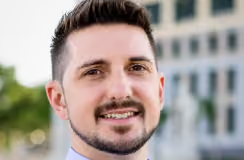





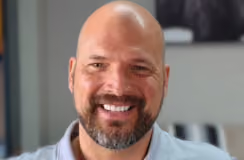

































%20-%20thumbnail.avif)



%20-%20thumbnail.avif)

%20-%20thumbnail.avif)

.avif)



%20-%20thumbnail.avif)