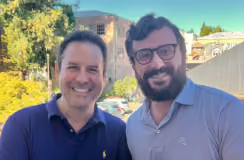
Host: Now, I don't have a green thumb, but I think I would really enjoy owning the business of today's guest. Rory Tyre bought a garden center. He had been a customer of the nursery and during his search to buy a business, he took a shot at reaching out to its owner. Well, fortunately for Rory, not only was the owner amenable to selling, he was a person of high integrity. We spend time in the interview unpacking that communication between Rory and the seller. And while there was trust there, Rory still had to do a lot of education. You know that this is one of the downsides of buying an unlisted business where the seller hasn't had valuation or deal process explained to them by a broker. That is an awkward role for you as buyer to fill. So lots to learn from how Rory approached this and you're going to learn about the business of nurseries. You may be surprised by how much cash and peace they can generate. Please enjoy this interview with Rory Tyer, owner of South Pleasantburg Nursery in Greenville, South Carolina. Announcements Four awesome webinars coming up. Two this week, two next. You can register for each of these in today's show notes or right on the acquiring minds homepage. AcquiringMinds Co this Thursday, September 19, due diligence office hours, Max Lummis and his team at LCS return for a live session devoted to answering your questions on all things related to the process of due diligence. You'll recognize Max's name. He's my partner in Mind's Capital and his company, lcs, is a forensic accounting firm that does the quality of earnings for dozens of search acquisitions every year. So come get your due diligence questions answered by one of the most active diligence teams in the search ecosystem. This Thursday, September 19th, noon Eastern. Then the next day, Friday this Friday, September 20th, searcher now owner Costa Dio is hosting a session on how much you should budget for a self funded search. Costub left private Equity to do his own self funded search which culminated in his acquisition of a tree services business in his hometown of Seattle. And he's going to break down exactly all the costs involved in the actual searching part of buying a business using the self funded model. You probably have a vague sense that it is expensive. Well, Costub is going to explain it in granular detail and give you some hard numbers around all those costs. That is this Friday, September 20th, noon Eastern. Then next week, Thursday, September 26th, attorneys James David Williams and Bill Barlow, whose entire practice is devoted to business acquisition, return for legal office hours this month's topic is Deal Structure. Bill and James David will go over some basics like asset versus Stock deal, but they're also bringing along a tax expert to go over Freorg, qsbs S Corps versus Partnerships and other topics that they frequently get asked about by searchers. So come with your tax questions this month. That's next Thursday, September 26, noon Eastern. And finally next Friday, September 27, searcher Dave Lewis, who bought a blue collar business, recently hired an operator to take over, allowing him to step out of the business. Now, as you know, this is a major step, a highly desirable step in any searcher's journey. And Dave is going to walk us through how he recruited, hired and trained this operator to replace himself. That is next Friday, September 27, noon Eastern. Register for any of these awesome webinars in today's show notes or right on the Acquiring Minds homepage. Acquiringminds Co. Hope to see you at one, if not all four of these great webinars we got coming over the next two weeks. See you there. Welcome to Acquiring Minds, a podcast about buying businesses. My name is Will Smith. Acquiring an existing business is an awesome opportunity for many entrepreneurs, and on this podcast I talk to the people who do it running payroll, paying your bills, closing your books and producing financials. These are critical tasks every business owner must do or oversee, but spending time on them distracts you from the leadership in growth work you want to do. So let system 6 do it for you. Owned and led by a former Searcher, Chris Williams, System 6 is a leading outsourced finance team for hundreds of SMBs, including over 50 searcher acquired businesses. Chris, Tim and the System 6 team understand firsthand the challenges, the opportunities of jumping into a business as its new owner. So whether you own your business already or have one under LOI, talk to System 6 about how they can give you time back and improve your financial operations. Mention Acquiring Minds and they'll provide a free review of your books and Financial Ops, a $500 value. Check out system6.com link in the show notes or email helloystem6.com Rory Tyer welcome to Acquiring Minds.
[6:13] Guest: Hey, it's so good to be here. Well, thanks for having me.
Host: Rory. You bought a garden center, a nursery business, and a pretty big one, or at least it generates more revenue than one might think. This is an intriguing, fun type of business. Never had somebody who bought a garden center before, so let's get into it. Start us off, Rory, with some background on you, please.
Guest: Yeah, yeah. I think the the trajectory that got me to where I am now started when I was actually in seminary. So after college I went to seminary and studied New Testament studies academically at the time, my intent was to get the master's and then go get a PhD. And a couple things happened over the course of two years. I got really burned out academically. When you're in an environment like that, you look around, you start to realize there's some people who are like very serious scholars that are going to get into those PhD programs. And I got some advice from somebody I trusted that they said if you can see yourself doing anything other than getting a PhD and being happy with it, you should probably go do that other thing because this is all consuming. And I learned a lot about what people can make. The process of trying to get like a good tenure track teaching job with actual benefits is just very grueling. And I mean, I was doing a lot of other stuff, man. I was online dating, I'm a singer songwriter, I was in a band, we were playing around, it was outside of Chicago is where the school was. And I just looked around and I realized this isn't me. And a couple things happened kind of in quick succession. So for close to a year, I ended up getting hired in the marketing department of the school. I had done some writing for the student newsletter and they needed somebody to create a bunch of content over like a month contract. That turned into a full time position. And I ended up teaching myself videography because we had to revamp the whole website and do a ton of interviews with our faculty. And I got to take that on, ended up meeting a student who was in the university system, had like an adult, finish your degree program. And I met one of those students and her dad and uncle owned a small leadership training company. And I had interviewed her for a video for the school. And then at the end she said, have you, you know, are you happy in your job? Like what do you, you know? And I, it ended up, they hired me to kind of revamp their marketing and so I did that. And also it was a remote job and I had all the video equipment that they were using and so I used it to do freelance videography work around the Chicago area. Also was still playing with my band pretty actively. And that company, they ended up kind of shutting down about eight or so months later due to cash flow issues. And they laid off. It was a small team, but they laid almost everybody off. And, and, and so by that time my wife and I had thought about starting a family, moving away from Chicago. And so I ended up getting an executive leadership position in a non profit in Mississippi. So I moved from Chicago to Mississippi, which could be its own whole story in cultural intelligence and transition. I helped lead that nonprofit for four years and I got a lot of leadership experience during that time. You know, I was over marketing, but really I was helping the CEO, who became a good friend and mentor of mine, to kind of revamp a very old organization that needed some revamping during that time, that CEO. And this is where I started getting introduced to coaching. So I do a lot of executive coaching now. And that had been my kind of my career before this. He had worked for this large global leadership training company and he wanted to keep doing that, but in a way that served the nonprofit. So we started an LLC that was actually owned by the 501C3, which was a lot of interesting legal gymnastics. And over about four years we revamped the branding of the nonprofit, grew its fundraising efforts, and then also I got trained as a coach. I started doing my own, essentially I became a consultant without really understanding that that was the world I was getting into. So I got very used to sitting down with senior leaders, mostly nonprofits, but also small businesses, and just kind of articulating back to them. Here's the challenges I hear you having and here's how leadership and team development can help probably solve some of those challenges. And so ended up getting certified as a coach and eventually kind of developing my own, you might call a book of business. Like I got very used to doing my doing everything end to end. I would build the relationships, develop the program, build a contract and execute on it and then try to follow up with the client. Eventually we separated those two organizations. We did a lot of change pretty quickly in the nonprofit and I think that didn't go over well with all the board members. And I think the CEO was ready for to go back into that world full time. And so we separated the organizations. I went full time doing leadership development and consulting that eventually led me. I there's a very large accounting firm that came to me as a client, then needed me to develop like this leadership development series for them. They experienced insane growth. They went from having two prospective partners to 11 prospective partners. They didn't have a formal development program to kind of train them up. And so I built that and at the end of that they offered me a full time job. And so I was working full time for this professional services firm up until the point where I stepped away to focus fully on buying this business. And so in that Capacity. I just. And we ultimately ended up working mostly with commercial construction and manufacturing companies. And so typically I'd be coaching one or two members of a senior leadership team and organizing some kind of monthly leader development either on zoom with group coaching or we also typically do like quarterly on sites. And so it's a kind of thing. We didn't use EOS as an example, but a lot of similar conversations, similar results with, you know, trust building and that sort of thing. And so that, that has been, that had been my world up until about February of this year.
[11:51] Host: Okay. And so why did that world become this world? What was the trigger?
Guest: Yeah, that's a great question. So, you know, we moved to Greenville, South Carolina right before I got offered that full time role. And getting offered that role was eyeopening for me. Our consultancy that I had, that I had talked about, that I had helped found was pretty small. And I, when I was offered this full time role, the compensation was, was much bigger. And it was my first time being working with a very large organization. I mean this, this firm was like the 25th largest public accounting firm last year. And so it kind of opened my eyes to, I don't know, I kind of felt like maybe I've been undervaluing myself and not, not trying hard enough. Like the ceiling is a lot higher. May needs to be. And that was, that was kind of unlock one. I've always been more motivated by just people and learning than income. And when this happened I thought, oh, interesting. I can, I'm still involved with people and I can still do this stuff, but my income's going up. So that's, that's exciting. It sounds kind of basic when you say it out loud, but it was, I don't know why, it was just, it was kind of eye opening to me. Well then around that same time, Eric Pacifici, who is the, you know, on the. He used to be anonymous as SMB attorney and he released this first version of his M and A masterclass and somehow somebody put it into my Twitter feed and I was fascinated by it. Like I'd never, I knew nothing about M and A. I didn't know what EBITDA was. You know, I was very uneducated in business and finance. Don't have an accounting background or anything. I mean, I've never worked in banking, but I just, I ate it up. I mean, I just, I read all of this stuff. A lot of it's very technical. And so I, and then I, I followed him and I started following more people and eventually I Saw somebody talk about eta and I saw somebody recommend the HBR Guide to Buying a Small Business. And so again, this is like a very common theme here, but once you read that book, I, I just remember, like, I sort of looked around me and realized I can't unsee the world this way. Like, there's a, there's a different way of thinking about the kind of life I could build for my daughters. I've got three daughters, six and under. And you know, my parents are amazing. They weren't entrepreneurs in the sense we didn't have a business. And I just, I hadn't, I don't know, no one had ever mentored or encouraged me to. Like, I know some people that grew up reading Rich Dad, Poor dad, and they have this idea of buy a cash flowing asset. I just had not been exposed to that world. And so I went through this really whirl when I started meeting people, reaching out to people on social media and just asking them questions. And then eventually I started perusing biz by sell, you know, and, and Rory,
[14:21] Host: why do you think being an entrepreneur resonated with you? Because a lot of people, hundreds of thousands of people will see these ETA tweets, these, these monster threads that go viral and they don't take action. But you did.
Guest: Yeah, great question. The other thing I realized quickly was that my background being in people and team building and coaching could be a huge asset to owning my own business.
Host: Yes.
Guest: You know, even people who are very, very skilled in finance, you constantly see things like you can't run a business off a spreadsheet.
Host: Yes.
Guest: You know, you can't model out having a drunk employee show up to work or all this stuff. And I, and I realized I'm sitting with that one. That's a good one, right? Yeah. You know, you can't, you can't account for that in your, your, your, your Excel tabs. And so, you know, I, I realized I've been sitting with these primarily blue collar owners of, of pretty successful businesses and all the challenges they're dealing with are not really. They don't require finance skills to, to deal with. Now we had a finance team at the firm that would help them with things like job cost accounting, construction as an example. And that was awesome and needed. But a lot of it was just like, how do we don't trust each other? Like, how can we communicate better? I can't. We don't know how to hold people accountable. Our hiring is terrible, and I feel like nobody wants to work. And you get into it and Realize that you don't know how to write a good job post or where to put that, or how to have an onboarding process that gets people to stay. And I just kind of started realizing I'm helping to create, I think, a lot of value, not just monetarily, but culturally. Like, this is becoming a better team to be a part of, in part because of what we're doing. And what would it be like if I had my own business with my own team to treat like almost like a lab of. You know, I believe in this stuff. I think it's helpful. What if this was benefiting my own business? And then, you know, autonomy is important to me. I've been working remotely, I should say, so that helped me in my search. I had a lot of flexibility and time. And so I did. I worked full time throughout my whole search process and was very undisciplined, very part time. We can talk more about what that looked like when we get there. But you know, I. That flexibility, I realized I value that really, really highly. And the, the work I was doing. Most of our clients are in the mid south, Mississippi, Louisiana, Tennessee. And I had to travel a good bit for, for a lot of this, a lot of different things. And that just got really tiring with three young kids and my wife working full time. You know, if my wife wasn't working full time, maybe it would have been different in terms of. But just the energy suck on the family. When I would travel, you just, you, you hate having those conversations over and over and realizing what it's going to do. And point I realized, man, if I own my own business, and in particular if it was either remote or local to me, I just wouldn't have to travel like this. And that became really attractive.
[16:52] Host: Great. Sure. Well, that makes sense, Rory. Even for somebody who hadn't really been exposed to or attracted to entrepreneurship before the. So let's hear about this. How did you put it? Half ass, part time search. You go on then.
Guest: What? Yeah, it's not, not a model. I mean, I'm, you know, I, I sort of made time for it as I could. I tried to be, I mean, initially, like so many people do. I try to be very open. There's some things I thought I didn't want. Interestingly, I would have told you that brick and mortar retail was something I did not want as part of my. By my criteria.
Host: Yeah.
Guest: And I, you know, I just thought I'm used. Kind of my mind was, look, I'm used to talking to business owners about their Challenges I know how to approach them and what questions to ask. So let me see if I can try to connect with business owners as fast as possible in this search to get past the broker. And. And so I had, you know, a number of fits and starts. I mean, I met a couple of owners in person that I drove. You know, I actually went to an ETA conference at UVA almost two years ago now and stopped in Raleigh on the way to meet the business owner. I drove out to the coast to meet with another business owner. And you know, it was. I kept hitting, I kept feeling like I was. The dichotomy was these are either businesses that I don't feel confident are transactable in the sense of there's just too many holes that the owner's gonna leave or their valuation expectations are way too high given what I'm learning about how I think I could value business or it just wouldn't. It made me realize, oh, this is just not a fit or there's a bidding process. So that was the other big deal was realizing I'm going to get in this bidding process. I don't have a huge personal war chest. And the more I learned about it, the more I thought, I don't know that I want to take on investors. That frankly just seems like a lot of work and a lot of coordination. And I know a lot of people have done that really well and had amazing outcomes with getting on investors. But I just started realizing I don't want to be in a competitive bidding process alongside other like PE Light firms or searchers that have a lot of investors. That feels exhausting to me. And so some of these businesses look really attractive. But I realized I'm going to have to really fight for it and have investors. And that makes me sound kind of lazy. I don't know, it was just this. It didn't resonate with me. Like that's not the experience I would like to have trying to acquire a business. And that's not really rational, I think. I don't put this forth as a model for anybody. It was just, it did not sit right with me intuitively with who I am. And so gradually what I realized was two things. One, I would like to try to find something proprietary so that I can just begin directly building relationship with the seller. From the very beginning, I had high confidence in my ability to both educate on some of this stuff and, and be, you know, the buyer. And then I realized, I'll hold your
[19:40] Host: thought on part on number two there. But yeah, even though you Were seeing that one of the classic even in brokered businesses where a broker has hopefully presumably educated the seller, the business owner and seller on the market value of their business, you were still seeing that many sellers had unrealistic expectations even after the broker. And so you were going to have to be the bearer of this bad news to the seller if you went direct and they were going to find you suspect because obviously you are incentivized to tell them that their business isn't worth what they think it is because you want to buy it.
Guest: So yeah. And you know, and you're not, you're not the person they're going to trust to hear that information from for the most part and which I understand. I mean if you have a broker that you're trusting to educate and run the process for you, that should be your point person for that. I get that. I mean that business owner I met in Raleigh, I followed up that meeting with a list of questions to the broker in email. And I should have done this in a phone call. It was one learning. But I thought I've got some questions, let me just put them here and feel free to work through them and we can set up a call. And the broker replied back with one sentence. He was like, we disagree with your assumptions and your questions and we're not going to move forward. It was just like. And I went back and reread that thing. I was like wow, did I say something really offensive? And it was just, I was just asking questions about how did you arrive at this valuation method? Here's a couple things I'm seeing. Can you, can you talk about this? And it was just a, it just, it was a reaction that made me go oh goodness. Like I don't want to have that conversation multiple times.
[21:04] Host: But in retrospect, do you think it was that you, that you were fatiguing the seller with your questions or the broker or that they were basically not realistic about what they should expect from would be buyers like who was at fault.
Guest: There's in this particular business, I think it was overvalued. I think the owner had an idea in his mind of how the company used to be and of what it could potentially be. And it's a very project based business. They produced a product that I sort of fell in love with when I saw pictures of it. And I imagined and this was a really big filter for me was can I be proud to tell my friends and my family and my kids that this is my business? And when I looked at what they produced I thought oh my goodness, I can absolutely be proud of that. These are beautiful. But just the valuation expectations didn't make sense and I think they could tell by my questions that that was, that I was questioning some of the stuff that led them to that valuation.
Host: August Felker is a two time successful searcher, first with a traditional search fund. The second time around he did a self funded search. Today August runs Oberle Risk Strategies, an insurance firm with a dedicated practice group for searchers and acquisition entrepreneurs like you. If you've got a business under loi, Oberle will provide complimentary due diligence on that business's insurance and benefits program. A great no risk way to get to know August and team. They love helping searchers. They've worked with hundreds. Oberly is a specialty insurance brokerage for searchers by a former searcher. Check out oberle-risk.com O B E R L E- risk.com link in the show notes
Guest: the major realization I had then had to do with living here in Greenville. So the Southeast in general is booming. I mean we've benefited from and I'm from Virginia originally. We lived in Chicago, lived in Mississippi, I spent some time in North Carolina. But moving here to Greenville felt my wife jokes we're going to get buried in our backyard because we're just done moving and we love it here. And I realized, wow, Greenville's growing significantly and it's projected to continue to grow. If I could find a business that in any way depends on our demographics, I could probably just be an okay operator of that business and still benefit really well on a five to ten year time horizon. And so that what I started to do was just drive around and I started, I created a spreadsheet of businesses I saw that seemed interesting in like any industry if I saw their sign, I saw their truck, if somebody told me about it, I would write it down and I would go look it up. I know several other guests have mentioned this but like our public library has a subscription to database called Data Axle. And so I would look up, you know, try to find contact information, some history in the business and I did a little bit of, of of cold outreach. I mean I did some, I paid somebody overseas to build me a list with certain NAICS codes. I called a few business owners had, was rebuffed really heartily on a couple once they figured out that I didn't already own or had no industry experience which I was transparent about because I didn't want to, you know, lie about that or anything. And I Had a couple of really good conversations. In fact, some of my most interesting leads came from a post I made in a local Facebook group. So our neighborhood has a Facebook group where I know there are business owners that live in the neighborhood. And so I just made a post, I said, hey, here's who I am. I'm looking for a business owner who wants to retire. I might want to sell their business open to some industries. Let's talk. And I had three leads from that one post and then one of those turned into a very short term consulting project where the idea was let's like get to know each other and do some work together and see if it could be a fit. And it was a smaller business with some revenue concentration. But I really liked it. And that ended amicably. It didn't make sense to move forward, but it was a really good learning experience. And it was funny that just came from like some of my most activity came from a single Facebook post.
[24:56] Host: Yeah, that is super interesting. I'm not sure I've heard that particular proprietary search technique, but it does make sense. And I just want to highlight what you said, Rory, about just the, the growth of the area being an incredible tailwind for almost any business. And yeah, in theory. And we, we do hear that on acquiring minds a lot. And particularly actually in the Carolinas, in North Carolina. I think I've heard two recent guests talk about that. Typically, I feel like they, they realize it after the fact, after they've already acquired their business and they, they realize, wow, being in a grow really what is helped me along here. But you could see at the outset that that was going to be something that would really serve you. Yeah. But anyway, so just again, a note for the audience that like buying in a growing market can be a giant advantage. As you said, Southeast is, is kind of where that's happening these days.
Guest: Yeah.
Host: All right, great. And, and Roy, what were so criteria were local and as you've made clear.
Guest: Yeah.
Host: And what can you give us a sense of like what you could afford, what your balance sheet look like, especially if you were not going to use investors.
Guest: Yeah. And so this is where I really marched forward on, I would say sort of blind faith. Like we're not, you know, we, we did not have. I didn't have a big war chest of savings. You know, we could have cashed out some retirement funds if we wanted to. We had a decent amount of cash. But I, I really just marched forward under the assumption that like I'm going to find one and when I find It, I'm going to fight for it and I'm going to find a way to make it work. And I do think that if you're going to, especially when you're searching part, very part time like I was, I just, I had to believe that that was what was going to happen because there were long periods where I felt like I wasn't seeing anything and I didn't really know what the next step was. And that was, was kind of discouraging. I just knew the more I kept doing it, the more I kept wanting to. Wanting to do it. And so I didn't. I mean, you know, I think I had the typical, like, I'd like to have something, at least $500,000 of SDE to not come in from day one and be. And feel squeezed. I knew, you know, the consulting and education were actually the only other business I went under. LOI was a consulting firm that was working with a particular demographic and had kind of the beginnings of what I could see becoming a productized service that could have really high margins and be really easy to implement. And after getting into LOI and having some more conversations, I just realized that I had not diligenced it well enough. There was some. There was a key employee who was treated like an employee but was a contractor. And that made me nervous because that, it's my understanding that liability for that survives an asset sale. So that person could end up coming after me for back taxes if they decided to. I don't know that they're, you know, for withholding. And I just realized it was the kind of business that really should have been like a mentor, like an apprenticeship where you come in, partner together and have some transition of equity over time as you learn the business and build the relationships that were kind of at the heart of what made them work. But it was a remote company and that was really attractive to me. And so initially I was looking. I know B2B service as well. I understand consulting, coaching, education. And I looked at all kinds of things. I mean, there was a restoration business actually here in town that I seriously looked at. But I'll tell you, I reached a point, I did reach a point where I was like, I don't know whether I'm going to find. I mean, I don't know whether I'm going to find anything. I have a lot of interesting ideas about different businesses. But when I look back at that time now I have this feeling of like, I would have liked to have felt more locked in on a particular industry. And I could not find that lock in. I just, I couldn't find it. I felt like I had lots of really good ideas and basic understandings of a number of industries. You know, some stereotypical ones, like home services, were attractive for a lot of reasons. But I mean, like with home services, when I thought of myself running a company, am I the person that's going to take a home service company and scale it successfully and execute it successfully, I just don't. I don't think that I am. And I kind of foundered for a little while, to be honest. And so when I in that floundering is when I started trying to do more proprietary outreach, making some phone calls and just saying, hey, let me scrap my need to find an industry and say, this is the one I'm going after, and let me just see if I can find a successful business that's clearly local that stands to benefit from Greenville's growth. And it was in the course of that that I thought to call up the former owner of the garden center
[29:26] Host: and Rory, your initial kind of what you perceived as the value that you could introduce into a small business, namely the built culture building and the. Your way with people and your enthusiasm for people, something that many searchers often run away from or they just grudgingly expect to have to deal with people problems. Seems like your briar patch that wasn't it. Sounds like your, your confidence in that started to be a little shaken or like you just. I guess I'm asking, like, why did you, when considering buying a home services business, for example, why did all of a sudden you have doubt? Well, oh, well, maybe Rory's not the guy to buy a home services business, when in fact the home services business probably the, you know, could benefit a lot from the value that you think you have, which I agree with the people stuff.
[30:20] Guest: Yeah. I think two things. One, I think I kept realizing any brokered home services businesses become very competitive and even the ones that like, there's a lot of wise people on Twitter who have, who run home services or plumbing companies. Take a plumbing company. Plumbing company seems so hot. And I think for a lot of different reasons, a lot of owners get inflated ideas about how much their 250k SDE plumbing company should go for. Like you should be able to get eight times for this. And it's almost like you have the honor as a buyer of getting this at all as opposed to somebody else. It doesn't matter what the price or terms are. That, that's probably an unfair generalization, but that's the sense that I kept getting and then the ones that I did feel like were fairly priced. I, I just knew this is going to be a very competitive process and I did not manage to. I tried to connect with the owners of a few local plumbing and H vac companies and just, it just did not seem to work. I don't know why. I just never seem to be able to get them on the phone long enough to try to have a conversation. And so I had the impression in
Host: the industry you started to feel like the industry wasn't a fit for your personality anyway.
Guest: Well, and I think, I think I was paying really close attention to people who are operating these companies. And I started like as an example. So much of lead generation for home services is SEO and that's an area I know almost nothing about. And, and just realized, is that the game I want to play?
Host: Yeah.
Guest: Like, is it when I. Is that. Because that's the hill I'm gonna have to climb, whether I hire somebody for it or just try to do it myself, which I really don't want to do. And. Yeah, I don't know, I, I just, I just remember feeling like this. Ah, it's not for me. It's almost, I don't know, it was just intuitive.
Host: Okay. Okay. And then just to follow up on your balance sheet. So the point was you didn't have a ton of money.
Guest: No.
Host: To do here. So you were really, like you said, just to be clear, like you were not looking at your balance sheet and saying to yourself, okay, I'm, I'm constrained to this size of business. You were just trying to find any business and you were going to make it work within reason sort of thing.
Guest: Yeah, yeah. And I, and I, I'd connected at that point with enough other people in the, in the space who said I either. Like, there's a guy that owns a business that I become good friends with who has a father in law and he said, my father in law wants to invest and if you and I do this together in some way, he, he'll come on and he could make a sizable investment. I, like, I knew at this point, if I wanted, if I needed to go up and put the flags up and make the contacts to get investors, I could, I just didn't find something that was both big enough and fairly priced where I, and wasn't in a huge competitive process that I just didn't even want to be a part of, which is, I mean, that's really restrictive, all those things I just said. Right. So I'm Limiting my own options, but I just didn't find something that, that, that missed those and that I felt like this was, this is the right one. And, and so we, I mean we, I'll say this plays into our. How I ended up acquiring it. Part of where I knew I was, the funds were going to come from was we took out a HELOC on our house and we had like $168,000 line of credit there. And I thought I'm going to use some of that for my down payment or all of it. I'm happy to do that. And just to fast forward, I found out if you're going to do that and the lender is okay with that, you have to be able to show that you can pay off that loan separate from the cash flow from the business. And since my wife was working full time, that would have worked. And we had some cash savings. I think I, we had, my wife and I had a lot of conversations about this. I think we felt comfortable committing to somewhere between 160 and 200,000 that we could inject, most of which would come from that HELOC.
[33:50] Host: Okay. Okay, great. Well, that's helpful. 150 to 2000. Great. All right, so the garden center, it's on your radar already. Why is it on your radar? And then tell us about your outreach there.
Guest: Yeah, yeah, well, so I mentioned. We, I've been trying to pay attention like what local businesses seem like they're, they're great. And we, we moved here in the summer of 2021 and started, we, I found it on Google, the, the nursery and we went and we started buying plants from there. And when you go into the property, the building is, it's kind of dilapidated, like looking. I mean it's, it's fine, but it's also, I mean it's a 60 year old garden center. And so you drive in but then you park and you get out and it's kind of in, it's kind of down from the road. And one whole side of the property border is bordered by the Reedy river, which I didn't even find out until like our fourth or fifth visit there because it's mostly trees and you're in what feels like a park. I mean there's all these big mature trees all around the property. There's these big pine trees on the property. It's, you know, a lot, there's probably about five acres that are on the main property and so there's a lot of space to walk around and they have a Ton of water features and like a huge koi pond and a bunch of fountains. And it just felt more like a park, I think. And when I tell you we. We kept wanting to go back there because we got this like, intangible feeling of peace from spending time there. Like, I can't put it any differently that we just really enjoyed being on the property. And at some point, I don't, I don't. I do not remember why I got this idea in my head, but I thought they are doing something right. Like, they, they have clearly not invested in a bunch of slick marketing. I've seen zero brand efforts by them around town. They've clearly been here a long time. I, I just had the suspicion, like, this is probably run by somebody new retirement age, and the business seems to be doing pretty well because they're carrying a ton of inventory. Well, well, let me say I kind of had the thought either too much of their cash is tied up inventory and I'll be disappointed if I ever get to the point of talking about financials, or I'll realize they're able to carry so much inventory in their balance sheet because they're in a really financially healthy situation, which. Which turned out to be the case. But either way, I mean, it's just like a. And, And I would love to have people come visit because I love it. I love getting to show up there for work every day now. But, yeah, so we just had this feeling of peace and I thought they must be doing something right. I love plants. I mean, I'm a hobbyist, but I. And, and then I thought I would be so proud to show my daughters this place and to have them come to work with me. And so, like, if I had an H VAC company, we're out of an office or something, I mean, maybe one of them could ride around with me in a truck with one of the techs or something. But the office is probably not going to be the sort of place that I want to bring my kids and hang out all the time. Whereas a nursery is just like a giant playground and like a, like a wonderland. And my kids are super imaginative and creative. And so I just got this idea in my head, wow, wouldn't that be neat? I would be so proud to own a business like that. I just have no idea if it's financially healthy or not, nor do I know whether the guy wants to sell it or whether it's in a condition I'd want to buy it.
[36:38] Host: Yeah.
Guest: And so at some point, I just. I sent him an Email. This was in May of last year. So April, May and June are the absolute busiest time. You make something like 70% of your revenue for the year in those three months. I didn't understand that. Yeah, it's very seasonal, and I didn't understand that at the time. So I sent the owner an email, which he somehow responded to within a couple of days. And the email was just like, hey, I, you know, I'm. I'm learning a lot about businesses locally. I don't know a whole lot about what it's like to have a garden center. Would you be open to being interviewed by me just about what it's like to own this business? And, you know, his reply was sort of short. He was like, yeah, that's fine, but right now it's terrible, you know, reach back out later. And so I think I got back in touch in July. We got together in either July or August for the first time. I talked to him on the phone. Actually. That was our first communication after that was on the phone. And I'm just kind of getting to know him a little bit at some point. And he's a very straightforward guy I've come to learn, which I really appreciate. And he just goes, why do you want to know all this? Why are you asking these questions? And I said, well, here's my thing. I've been wanting to buy a business in Greenville. I love your nursery. And I don't know whether it's a business I'd like to own, but I'm wondering if you are thinking about retirement, because if you are, I'd like to at least have a conversation, if you're open to that. And he said, you know, if you had gotten to me last summer, I would not have been, but I am now. And. And, yeah, let's talk about that. And so, yeah, I mean, it's just. He was very.
Host: Rory, let me. Let me pause you on a couple things. The. So you said you emailed him and said, let me interview you to learn about your business.
Guest: I just have to ask you some questions.
Host: This is a key technique because it got him on the phone and it got you building rapport. So. So I'd like to get you on the phone and ask you questions about your business, basically.
Guest: Yep, Basically, I just want to learn, like, I would love to learn what it is like to own and run this business. And I tried that tactic with a few other people. I've sent LinkedIn messages, I sent some emails, I left some voicemails, and no one. It didn't Work for. It worked for one other person. I got, I got a business owner on the phone. It's a very niche construction company locally. And I got him on the phone and ended up buying lunch and just asking him a ton of questions. And it turns out he was actually already under loi with a big, another big company that. Out of, out of the city. That was, but, but he was as open as he could be without violating his NDA. And I learned a lot. But that's the only other time that tactic worked.
Host: And was the, was the sequence of events the same where you ask him questions for 20 minutes and eventually he's like, why are you asking me all this? Did that happen with the lunch with the niche construction business guy?
[39:04] Guest: Yeah, you know, with that. I think I was clear with him on the phone, um, that this is why I'm calling you. And he said, look, I'm, I'm actually already under loi. Um, it's not a done deal by any means. I can't talk about it much, but I'd be happy to meet you and talk more about it. Um, and so I, I, I mean, in my mind, I think he, he probably liked that I was, you know, straightforward and, and proactive. And I think in his mind, like, it's under loi. It's not done. And I did learn from him, there were a couple of wrinkles in the process that, that he, he had a little bit of uncertainty. So I think at that point he was probably keeping his options a little, a little bit open. I, I would not have been the right buyer for that company, we figured out at that lunch. But it was really, really interesting. It's, when I say niche construction, it's like working on underwater stuff. So, like, earlier in his career, he would put on a scuba suit and dive down to work on, like, bridge pilings and stuff. Almost died at one point. So he stopped putting on the scuba suit. It was, it was, it was a great lunch. I have no regrets about that.
Host: Great. And then you're, you said you were a hobbyist. You. So you have plants or a green thumb or what? Just explain, explain to us your level of knowledge about gardening. Because, because, you know, while I, you know, I'm very intrigued by this business, but I know not the first thing about plants. So I just, I just wonder is your, your, your knowledge and your, the fact that you're a hobbyist, how, what role that played? I guess it probably played a big one. I mean, that's how you got there in the first place. If Nothing else.
Guest: Yeah, well, I grew up when I was young. My parents had like a small garden in the backyard and really young. And I have some like, core memories of like walking through a small cornfield and, and stuff like that. And so when, when our oldest daughter was pretty young, my wife and I just decided we would like to plant some things because it's something they can do together with us. They can learn about how things grow and how to care for things. And then we can grow blueberries and, and blackberries and just plant some simple, you know, vegetables to teach them about that. And so we, we lived in Mississippi. We had, you know, we planted a fig tree that got huge fig trees will get up to like, some of them will get like 15ft tall and wide in two or three years. We plan in several small gardens. And it just became like a family hobby that we could really do together. And my wife and I, my wife in particular, it's like a big stress reliever for her to just go work in the garden, weed and plant. And so, yeah, it's just something we've always done together. When we moved here to Greenville, we, the woman we bought the house from had done a great job in the front beds, but the back needed a lot of work. And so it's. This has been our constant hobby project is trying to plant more and more, make it nicer. And yeah, we're proud of where it's come. So it's a stress reliever just being around plants. There's actually a lot of research around this, that being outside and being around plants and planting can like, lower your heart rate, reduce your risk of hypertension. I mean, it's actually really interesting. But that was my level. I know no specialized horticultural knowledge. But the other thing I should say is my father in law, until early this year, he ran kind of a niche, he would hate to have it called a landscaping business. He called it garden restoration. Basically in Columbia, South Carolina. He would go to somebody who had like a big property, typically like a widow, and she would basically say, I remember what this looked like when my husband kept it up. It hasn't been kept up in five years since he passed. I'd like it restored. And so he could go in and know what's native, what's not, what to prune and how to prune it, what to plant. And he had a crew doing that. And so as I got to know him over the past, I've been married over 10 years now. And so, you know, he'll give us books about plants as gifts and stuff like that. And so that it's always kind of been there, but no more than a hobbyist level of, of knowledge before this.
[42:29] Host: Really cool, Rory. Okay, well, it does sound like a great family hobby. By the way, you're not the first person. Well, I, somebody, somebody has recommended to me recently that I get into gardening with my, with my own daughter. So I guess that that's a.
Guest: Well, and I'll tell you the easiest way to do it. They make these grow bags, these like black cloth bags with handles. You just fill them with soil and you plant right in them. And then like we have some on a pallet outside. You can put them on a patio. It's like kind of contained, but you can grow whatever you want. And it's like a great way to news kids to it, just.
Host: Oh, great.
Guest: That, that one's free will.
Host: Okay, Fascinating. All right, so where were we? You are having this conversation with a seller and he says, you know, I would be open to it if you, if you contacted me last year I wouldn't be, but now I am.
Guest: Yeah.
Host: And. Yeah.
Guest: And so I can't, I can't remember if we had our first in person meeting where. Because. Because there was an in person meeting shortly after that where I went and sat down in his office. And the way the building is constructed, there's no closed door offices in the building. It's a little bit unique. So his office has a doorway, but there's no door on the hinges. And there's a cutout over his desk where he's got a direct line of sight to the register. And that's just how he's, he's, he had operated the business for more than 20 years. He's just in it all the time, you know, Jack of all trades. He has two children who were working in the business and are still working for me. Jim's the name of the former owner. He walked out of the office and we talked and. But one of those. It was either that very first in person meeting or the second one where I had told him, I don't want you to feel, I don't want you to share more right now than you're comfortable sharing. But at some point I would like to have an idea of what I would be willing to pay for the business. And to do that, I really need to know what your tax returns are. I don't need to see all of them. They can be redacted, but I need to know those numbers because eventually I'm going to get a loan and that's what the bank is going to look at. They're not going to look at anything else. And so I came and he had them printed out, like the first page redacted for the past, I think, five years in a middle envelope, my name on it. And he handed it to me. And I remember this moment because I remember sitting in the chair in the office and I was like, this is the moment where I'm going to know whether I want to move forward or not. This is going to be really interesting. And so I opened and start looking. And I mean, the business had done extremely well. Like, way healthier than I even thought it was going to be. I mean, I maybe thought it was going to make him 300, $350,000 a year. And I think the average over the past four or five years is something closer to like 800-850K SDE. Incredible. And what quickly became clear to me from looking at the returns was that this guy and this jived with his personality, he wasn't trying to do anything creative with his taxes. I mean, he was just making decent money and paying taxes on it, which was a huge green flag to me because you can get in a lot of trouble with trying to value a business and get a loan in a business where there have been some creative tax strategies employed or dishonest tax strategies employed. And so I looked through this tax returns and I said, okay. And then at some point, I think in that conversation, he shared with me a number that he had in mind as a value. And he was willing to sell both the real estate and the business. And he had a number that was in mind for both. And he also shared with me that he didn't have them in two separate entities. I know my accountant has told me I should have done that, but I haven't done that. But they're. They're sort of both together. And I said, okay, that. And in my mind, I thought, that seems extremely reasonable. I'm going to hold my breath till we do a quality of earnings because I want to make sure there's nothing that I'm not seeing. But that just seemed so from that moment, I think it was like, oh, this business, he's got a very reasonable price already in mind.
[45:49] Host: What was it?
Guest: So he had. I think it was between two. And I think he said two and a half, 2.5 million was the price he had in mind for the real estate, which is eight acres.
Host: Oh, just the real estate. Sorry.
Guest: No, no, no, no, no, no, no. 2.5 million for all of it. What? All of it? Yes. And that was inclusive of inventory. So at the time we were talking, he had about. This is the winter. So, you know, getting into fall and winter when they have less, we have less inventory. But I think he had something like $650,000 worth of inventory on hand. And that also was. Was part of that. So 2.5 million for the real estate, for the business and for the inventory and all equipment.
Host: That's incredible. And now why so low? I mean, that's a 3X on a business with really solid SDE 60 years old and consistent. What's the quality of this revenue despite the fact that it's retail? We don't like retail. It's very seasonal. We don't like seasonal. But from. He gave you five years of tax returns, you said how consistent was this 800 to 850 number?
Guest: Yeah, that's a great question. So it had grown significantly in those five years. It. I saw a rise starting in 2018. It started going up in 2019. And then in Covid, it just.
Host: They went nuts.
Guest: Did really, really well. But then it increased the year after Covid and it increased the next year after Covid as well, but not so much. And so there was sort of this like new. The way I interpreted the history was they've hit kind of a new plateau at a very healthy level of revenue and margin without making a lot of any investments in marketing in, you know, a lot of garden centers will, if you look at some of the best in class ones, they invest a ton of money into making a very slick retail experience. So really nice fixtures, you know, the properties manicured really well. They'll host events and classes. They'll have like big all weekend events with food trucks and wine tastings and like all this theme stuff. They curate a big newsletter. They're like investing a lot of money in this marketing and this place had done none of that. And they've been here for 60 years. And, and so the, the kind of thesis I quickly developed in my mind was, okay, they've hit somewhat of a plateau. I suspect we're going to have to fight a lot harder the next five years for this revenue than they've had to fight the last five years. But I'll have to, I'll do that with tools that I understand like brand awareness and marketing, as well as tightening up on customer service and, and making some investments and making it a space that people want to come spend more time and hang out, not just come and buy plants. I Want to caveat that because a lot of garden centers, again, they invest in having a cafe, right? Serving coffee and food and having all these tables or people can hang out. And they didn't have any of that. But my wife and I still wanted to keep coming back and spending time there. And so I thought, I have this vision for what it could be. But I mean, it's doing great already. So worst case scenario, we just keep iterating on what is. And I have incremental growth. And because I'm not going to have investors, I don't have to worry about posting very normal average growth numbers or maybe going down, you know, the J curve everybody talks about. I know it's going to happen, and it's happening now. I don't have to worry about being accountable to anyone except for myself, my family, for that. And so that made me feel good.
[49:00] Host: And why did you just say that you thought you'd have to fight for the revenue harder for the next five years?
Guest: Yeah, great question.
Host: For these past five years, because Covid effects made it easy for. Yeah.
Guest: So the garden center industry in general saw just huge bumps in sales post Covid. And in a lot of them, there's a very pronounced bump in 2020 and 2021, and then a fairly pronounced drop in 22 and then 23. And I didn't see that. I saw kind of a plateau. So then that combined with a couple of unique things about this South Pleasant Nursery. The name. So you can see it's on my shirt again.
Host: South Pleasantburg Nursery.
Guest: Yeah, South Pleasantburg Nursery. So South Pleasantburg is the road that it's on. It is in the city limits of Greenville, just at the. At the southern end of the city. And so we're the only. We're one of two nurseries, garden centers within the city limits. The other one is kind of a backyard operation run by one guy. And he's a really nice guy and he's great. I've talked with him. But the only other garden centers you have to drive between 15 and 30 minutes outside of the city to get to. So our location is amazing. And. And so. And we're Greenville's oldest garden center, which is, again, not something that I'd seen them kind of double down on in their marketing. And they had some really knowledgeable, still have really knowledgeable team members. And I thought, okay, the. The COVID effect is it's there because I see the plateau. But. And that has been the only thing driving this because they haven't been doing a ton of Marketing. But what if I can find a way to turn that on, double down on professionalizing, you know, customer service and just really lean into that? We're Greenville's, like, we're Greenville's garden center. We're Greenville's oldest garden center. You know, there are other great options around Greenville. And I thought, and I've told the team this, I don't want us to ever assume that people are just going to keep coming back. We can't do that because there are other options. Even if they're a little further. We need to fight for them, fight for the customer, fight for the revenue. And so, yeah, I think it's just a Covid effect that all outdoor living garden centers there, there was a dramatic rise post Covid, but in a lot of those, you see kind of a relatively dramatic fall in 22 or 23, and that hadn't happened. And so far this year, we're a little bit below and this is again, I'm in the big an industry consulting group with a bunch of other independent garden centers. Most people are posting declines year over year. This year we are down, I think about last I checked, it was 2 or 3% top line from last year, which the way I structured the transaction and my expectations going in was that's probably going to happen. And so that's not. That doesn't make me scared yet.
[51:32] Host: You'll recall hearing about the inaugural M and A launchpad conference on acquiring minds back in the spring. The event brought together searchers, seasoned business buyers, owners and private equity investors for a single day to go deep on buying businesses. Well, it was such a success, the organizers are hosting a sequel in October. Walker Deibel, author of Buy then build is keynoting and 30 other experts will be on hand sharing their journeys to acquire, operate, scale and exit their businesses for significant returns. It's happening October 26th in Chicago. Use code acquiringminds@malaunchpad.com for a $200 discount. So if you missed the event in the spring, here's your chance to attend in Chicago on October 26th. And with a $200 discount, go to Malaunchpad.com or click the link in the notes and use the code acquiringminds. All one word. And just curious why you had the confidence that it where revenue was was a new normal. So it had spiked, it had come down a little bit and then plateaued. But that plateau was higher than it was pre Covid, so it settled in. Or so you thought. Or so your thesis was at a higher level. But why did you have that confidence that it wouldn't stabilize there and not just go all the way back down to where it was pre Covid?
Guest: Yeah, great question. I mean, look, Jerry's still out, right? I mean, I took over the business on, like, May 3rd, you know, so we'll see. But two things. Number one, the demographics of Greenville. So Greenville is going to grow significantly over the next 10 years. And so if we can capture some percentage of those new folks who want to buy plants, that's good for us and just existing market penetration. I felt like. And since being there every day, I'm constantly running into people who are like, we've lived here all our lives and we didn't know this was here. And so those two things convince me, hey, if we can just double down on letting people know we're here and double down on capturing demand for the people that are going to keep moving here for the next decade, I think we can at the very least maintain normal 5 to 10% year over year growth and potentially much more if we can double down on some really creative marketing and events.
Host: Great.
Guest: Yeah.
Host: Okay. Had you said why you. Why his valuation number was so low? Have we got.
[54:05] Guest: That's three.
Host: That's three. Just for the audience. Maybe. Maybe I said this. Indulge me again. Yeah, 3x for a business that does great revenue, although it's seen growth. So, so that revenue, maybe the quality of that revenue isn't as. It's not super stable. And. But what do you think the value of the real estate was? So carve out the real estate for us.
Guest: So his. He. He assigned a value of $250,000 to his real estate. Okay, great. And it ended up appraising for more than double that, which was very helpful to me because, I mean, to get ahead of myself in the transaction structuring. But I ended up doing two loans, right? A 504 for the real estate and a 7A with SBA loans. And I was able to put more of the overall price into the real estate loan because the lender was willing to lend it 100% of that appraised value, which, which helps the debt service coverage a bit. But he. To, to answer your question, why so low? A number of things that I came to understand. Number one, he got that value from a consultant that he trusted who had. There. There's a system called the Value Builders system. I don't know if you've ever heard of this system, but it's like a, it's. It's essentially a, A platform for business consultants. And you interview a business owner and there's this dashboard with something like 12 little metrics on it that help to come up with an enterprise value for the business. And these metrics, there's a lot of things that we would, that would almost be search of criteria like level of management involvement in the business, stability, you know, amount of recurring revenue versus project based revenue, a bunch of stuff like that. So he had run him, this consultant, run him through this and came up with that number that had been at the time we talked, I think more than a year and a half prior. So the business had grown a little bit since then and the real estate ended up appraising for a little bit more. That's one thing. Interestingly, that consultant came back and spent a day with him as we were negotiating the LOI and did that analysis again and came out with a relatively higher number. And the seller's response, Jim's response was, well, we agreed on a number and I'm going to honor that, which is extremely humbling to me. Like he, that honestly, if I say the, the one, the one thing that really caused me to just literally stop looking at any other businesses and run really hard at this was I realized the owner of this business has rock solid integrity. He is straightforward. He's not playing games. He just is who he is. He says stuff. I mean, he, he would tell me things in casual conversation that honestly reflected kind of negatively in the business and he would just. There was not this sense that he was fencing anything or mincing his words. And I picked up on that very early. And I thought, man, this is the kind of person I want to have as a partner in this process because anything other than that is going to make the process harder than it needs to be. And he, he just. The other thing I'll say is he had made good money the past five years from the business. He felt comfortable. I mean, when I tell you he put something like 20% of the business in a donor advised fund before we signed the LOI so that after the purchase he had to donate 20% of the proceeds into this fund so it could be used for all these nonprofits. Like that's just the sort of person he is. Money was not his, his main concern. And I know you've heard people say like that sellers or money may not be their main concern. I see people go back and forth like, oh, they say that, but in this case it was genuinely. He was so proud of the business. His two kids are working in the business and he Wanted them to have the best chance of success moving forward. And he just was not personally motivated by money. He was happy with the deal that we struck and felt like he just had to follow through on it. From a matter of integrity, which I am extremely thankful for.
[57:39] Host: Yeah, absolutely. Well, thank you, Jim. Really remarkable. Because what sure seems like a screaming deal. Okay.
Guest: And I will let me add a couple of things to that too. So for people, I mean, you heard me say 70% of the revenue comes within about three months of the year. So I think he's also very self aware that there's things about this business that are hard. The, the seasonality is you have to be very good at managing your cash in, in the offseason, I mean, all the time, but especially when you're not getting the revenue. There's also, you know, we don't have a lot of outdoor covered shopping on our property. So a lot of nurseries will have all these walkways and greenhouses and all of our stuff for the most part is outside except for some indoor things in our greenhouse. And that means if you get like five or six rainy Saturdays, like thunderstorm Saturdays in spring, you might lose like 30% of your revenue for the year and probably not be able to recover it because that, the spring is when people are planting, that's when they're buying plants. And so you hope some of those folks will come back in a weekday. But of course a lot of them are working and they're not thinking about it. And so that's a very real risk. And I think he acknowledged that this is not, it's just not from. Compared to other. No business is truly easy. I don't, I don't think, except for maybe course creation once you get to a certain point. But you know, there's no, he just, he was self aware about that and I think and he was self aware about the age of the property. You know, the fact that there was a number, there are a number of staff members who are close to retirement age. And so there's sort of an experience and knowledge cliff coming within the next couple, two to three years at most. And he was aware of that. And there was no structure on the staff, so no management roles, no formal organization. They didn't do formal scheduling. People just sort of decided when they were going to work and, and they had a lot of self motivated people that got the job done. But it wasn't structured at all. And I haven't fully put in a lot of structure yet because I wanted to make sure I Do it right.
Host: Yeah.
Guest: And he was self aware about that stuff. And I think that also informed he didn't have an overinflated sense of what the business should be worth.
Host: Well, and let's also remind ourselves something you said at the top, which is you didn't want retail. And fundamentally a garden center is a store. You're basically buying a store retail. And we all. And so retail is unattractive and retail is not going to command a lot of multiple, a large multiple. So while this business kind of feels like something different and maybe a garden center does have enough idiosyncrasies to it that it's not traditional retail, it's kind of at its core retail consumer, you know, probably vulnerable to recessions, vulnerable to the weather in this case. So, yeah, not normal revenue, et cetera.
[1:00:05] Guest: Garden centers. There's. There's a couple models. I mean, we are. It's interesting, the word nursery. Like we're South Pleasantburg Nursery. I used to think nursery is a place where plants are grown and garden center is a place where you go buy stuff related to your garden. And there's not really a standard way of thinking about that. But we're pure retail, which in and of itself is a little bit riskier because you're not. You have less control. In some sense, you're beholden to what your vendors have available when they have it available. And you need to get. I've learned a lot about the ordering process. You need to get your orders in first because a lot of other people trying to get these flower, you know, these plants from these growers. And so that makes it even a little riskier because we're just pure retail. We don't do any of our own growing.
Host: Okay. And so wait, so to be clear, you're a garden center or you are a nursery?
Guest: South Pleasantburg Nursery. You know, I don't know. We just. I think people tend to use the terms interchangeably. Just as I said, you can get plants. We care for and nurture plants and get them to you.
Host: Yeah, great. All right. So you decide you want it. You feel really good about, of course, what the financials revealed. You feel really good about the seller. What does it look like to make your offer? Because I know that there was, this was where your own educating, you know, you're not working through a broker, you're going direct.
Guest: Yeah.
Host: This is again where your education of a seller comes into play.
Guest: Yeah. So early in the conversation I sent him, I found. I can't remember even the name of this broker, but There's a broker from somewhere in the Carolinas that created a PDF to educate business owners on the whole process of how do you value business and what does taking it to market look like? And interestingly, he wrote it in a way where you can almost feel his, like he's experienced so many business owners who have an overinflated idea of business value and he's trying to knock that down and get them to be realistic, which I really appreciate. And I, and, but not disrespectfully, just that's, I picked it up. So I sent that to Jim and I said, hey, you know, read this through this, this kind of shows how I think about the process. We had a lot of conversations about it. I, I, I really just coached and, and talked him along. My, the first really big, the first thing that was really important to me was, as I said, he's got two kids that work in the business. So my first, first priority was I need to make sure that they're not wanting to buy the business and that, or that their dad's not going to change his mind about keeping in the family. And so, you know, fairly early on, I sat down at his house with him and his son, who would have been really, I think, the one to buy it if he was going to. And I just shared with him a lot about my vision. And it turns out his son has had a lot of the same ideas about marketing and about what the business could look like that I have had and just got really excited about the idea of working for me. And I met with him one on one for a late night not too long after that and kept talking and I told him I'm an open book. I said, man, I'm not independently wealthy. If you want, I'll share with you exactly how I'm planning to do this. And you could probably do it if you wanted to. And I think he just didn't. Neither he nor his sister wanted that level of business.
Host: How you were going to buy the business, you teed up your whole, you said, if you want to do this instead of me, I'll show you how.
[1:03:02] Guest: I'll show you how. Because I don't, I want to be absolutely certain that at some point at the 11th hour, you are not going to change, you're not going to change your mind or that your dad is not going to find a reason to change his mind. And so both he and his sister, like I said, who are awesome and work for me now, they, they just didn't, they saw the level of complexity require. And I think they recognized they, they, they liked their dad having the opportunity to get, you know, to have a sale and to benefit from his years of hard work and. But yeah, so I met, I first step was talking with both of his kids. The next step was we identified three key employees who've been there in one case for 40 years. So the former owner bought the business from the founder more than 20 plus years ago and that guy had been with him then and then has been with him for 40 years. So I, I met individually with them one on one as a condition of closing. And then there's some language in a seller note, one of the seller notes that he has about making sure they stick around for at least a year. And those meetings went really well. So that was very important to me because I was like, am I going to be able to relate to these guys? I mean they know so much about plants, about the industry, they've been in it for so long. How are they going to think of me? And I think I'm still learning some of that. But we had good relationship, I mean in February, so we went under loi in December is that that's kind of where that we got and the way I got there, this was suggested by a friend of mine and I'm going to say this in case this is helpful to anybody. A guy I know who's bought businesses suggested setting up kind of like a three tiered option presentation and saying here's three different ways that we could do this, one of which is full seller financing. And there's pros and cons to that on both sides. The pro I leaned into was we don't have to involve banks at all and it can be really smooth. And then there was sort of a middle of the way where it was sort of a shared seller note and seller and, and, and bank loan. And then there was sort of a third way where it was kind of a still a seller note, but it was minimized a little bit. And I, I had him over at my house one day. We had actually bought a couple trees that we're going to plant and he brought them over to his truck and then sat down and had, I had some coffee or something and I just opened my laptop and walked him through a PowerPoint that I've made and just kind of explain to him there's how I'm thinking about it. And so then I emailed him that PDF and said take some time, think about this talk with your accountant. Oh, I think he told me he's going to talk with his accountant, which was a very big scare for me because I heard a lot of horror stories of accountants basically saying, no, this is a bad idea, but that didn't happen.
Host: And Rory, the presenting the three options, was this one of these like on a pricing page of a SaaS product or something where you were trying to orient him toward one of your preferred option?
Guest: Yes. And now I will say what was very transparent. Yeah. So my, my, I mean, my preferred one, honestly, I would have loved to have gotten full seller financing. I mean that would have been, that would have been great. But I was very clear, like with full seller financing, you're getting the least cash up front. And, and I, you know, and, and so I. The middle of the road one, which this is so often what happens when you see those pricing matrices, right. Where there's a, there's one on the far left and the one on the far right is giving me the most, but the one in the middle is like the sweet spot in terms of margin and work product. And that's kind of how I structured it. And that is based. I don't remember, I don't have in front of me. I don't remember exactly. But that's basically what ended up happening.
[1:06:12] Host: And so sorry, that option was, that
Guest: was basically half and half where he would sell or finance half of it and the bank would finance the other half and I'd provide some equity. And the way that that ended up working out was he has two seller notes, one that is on full standby for five years. And we actually financed some a working capital infusion into that. So he wired me at close six figures of working capital just to help because I acquired it at May. So April is the largest revenue generating month for the business. And I missed that whole month because of some delays, mostly related to the real estate. I learned a lot about buying real estate, which I'd never done before, but there are a lot of delays. And so I missed that whole month. He in turn got that revenue that he hadn't initially been expecting to get. And so we built some working capital into that smaller seller note, which I don't begin paying back until five years from now. And that was very helpful when there's
Host: a large of the business was that
Guest: it was 10 or 11%. It was over 10% because I could have gotten the business with no money down per the SBA's regulations because it's a note in full standby. My lender was not comfortable with that, but I ended up Putting.
Host: The SBA would have allowed it.
Guest: Yeah, yeah, the SBA would have allowed it, but I ended up putting 50,000 down, which is a token compared to the enterprise value that we're talking about. So I feel extremely lucky and thankful. And then there's another seller note for, I think it's about 40 or 45% of the. Of the total. And that's the terms kind of match the SBA seven terms with the 10 years. And then with the SBA, I've got the two loans, the real estate loan and the seven loan.
Host: Great valuation on the business, as we've already said multiple times. And then you get these incredible terms as well.
Guest: I was like, very, yeah, you know, there were a few moments during it where I thought that it was going to fall apart, where he was going to have a conversation or where he was delaying it for some reason. And it's.
Host: Yeah. Did he not come back from his conversation with his accountant saying, my accountant says no?
Guest: So, interestingly, he didn't bring his accountant into it until kind of late in the process. And by that point, he was basically telling his accountant, here's what we're doing. And what he came back and told me was his accountant was mad at him.
Host: And.
Guest: And I said, oh, he should be. Tell me more. You know, and so this is one of those phone conversations where I'm like, okay, what are the next words out of your mouth going to be? You know, like, your accountant's mad at you. Surely you've, You've worked with this guy for years. You trust him more than me, surely. And nope, it was just sort of. He was just relaying to me a fact that the accountant was mad at me. And I remember I may have been pacing in front of my wife when this happened. I'm sure my face looks very interesting, but there's a few moments like that where I thought is, there's no way, like at some point, another moment, the real estate appraised for more than twice what we had agreed on. And I went to him and I asked him very transparently, I said, it appraised for more. It's going to be a separate loan. Would it be okay if I shifted some dollars from allocating to the business purchase into the real estate purchase, because that will help me have. I'll just have to pay less debt payments every month. And he didn't blink an eye. He's like, yeah, sure. Whereas I can easily imagine somebody else going, hey, that's great for you, but the value of my business is a separate Calculus from the value of the real estate. So you, you know, you can figure that out if you both these things. But that's just. He was just very fair and very, just very.
[1:09:21] Host: Again, Rory, you, you shifting the valuation around, does that, sorry, does that affect him? Did that affect him? Because ultimately the lump sum is the same.
Guest: Yeah, it didn't. Ultimately the lump sum was the same.
Host: And.
Guest: And that was, that was his main. Was. As long as my. As long as the same total amount remains unchanged. Sure. I'm. I'm happy for you to do that.
Host: Okay.
Guest: I was expecting him to push back, you know, but. But he didn't. Okay.
Host: Okay, good. And the. So the working capital. So this was something we, we've talked about the seasonality. You miss April, so you've got May and June to look forward to and then it's dry for the rest of the year.
Guest: Yep.
Host: He. But he again in a very, I don't know if it's generous or just fair minded way wired you a lot of the, the benefit of April. So you have this working capital. You said to me something really interesting on the pre call, which is you're. You're almost glad that you missed part of the busy season when you bought it.
Guest: Oh yeah, that's great. So a couple things happened because of the delays. The one delay that happened and I worked with Matthias the loan broker. You know, people know SBA broker Smith. Yes. I'm so thankful for Pioneer is his guidance. It was just super helpful. But he was pushing me. He said you need to get the highest line of credit, the highest SBA Express line of credit that your lender will allow you to get because it's much harder to get a line of credit post acquisition. And so I ended up asking for and getting a $300,000 line of credit which I have safely if I need to use it. Have not had to yet and may not have to, but it's there. And then because of the delay, like I said, the owner was. Was willing to wire me that lump sum of working capital. And that between those two things, I felt like I entered May in a relatively similar position to the way that I would have entered it, but with the additional flexibility of that line of credit. And it gave me. The other thing that happened that I forgot to mention is I ended up working in the business for about a month before we closed. So I mentioned there's five people now out of a staff of about 15 who know about this trend. You know, there's the owners, two kids and the three other Key employees, the six people. And word started getting out and Jim talked to me one day and he said, I just, I feel like maybe I should tell them. I know some people say, don't share this news until it's happening, but I just, I feel like they're talking about it. And so we agreed on a Saturday morning, I came in, I brought Chick Fil a or something and had a team meeting and he kind of announced it. And then I introduced myself and I was very, you know, we're transparent. We said, it's not done yet. There's still some things to do. But I'm going to start coming here because I want to get to know all of you and I want to get to know the business much better. And this was kind of a blur.
[1:12:00] Host: Was under loi you had.
Guest: Yeah, so this was. So we closed on, I believe, May 3rd, and this was about a month before that, in April.
Host: Where and how did the employees react to your overture this Saturday morning?
Guest: Yeah, you know, my memory of it is that they were kind of non committal, but warm, you know, and knowing
Host: that that's about all you can ask for.
Guest: Exactly. I mean, and I, you know, I told them I'm not. Yeah, I mean, it was a, it was a good morning. And I spent the rest of the day at there just walking around watching people asking people questions. And then from that day onward, the other thing that had happened, I mentioned I was working full time. I actually got let go from my job. My job got eliminated in February. So timeline is I'm under loi in December. We're trying to close by March. That's clearly getting delayed. But then I find out that my last day of employment is going to be February, like 17th I think it was. And I got a month severance. But that the way that the stars aligned that week that my job ended is when the quality of earnings report came back very clean. And so I ended up going into a month with severance from my employer and just fully focused on, okay, the quality of earnings is here. That's the last green light I really needed. Now let's like run really, really hard at this. And so the timing actually worked out really well. I will say we were scraping the barrel of our savings by the time, you know, by the time we actually transitioned in May. But I, I don't have any regrets about it. It was absolutely the right decision.
Host: Well, congratulations, Rory. Let's start closing up here with just some reflections on, on how it's been to be the owner. So first of all tell us. I'm just going to spoon feed you this one. How much of an improvement to your personal life it is that you own a business 12 minutes from your house versus crisscrossing, crisscrossing the southeast.
Guest: It's so nice. It's so nice. I mean like I, you know, when you, I park in the back and I walk up to the back of the store and there's all these fountains that already turned on by the time I get there. And so you're walking through all these plants and all these fountains and it's just like the most peaceful way to begin a day imaginable. The team is just such a solid, interesting collection of people that, you know, I, I have not had to step into. The closest to a critical role I've had to step into, I would say is like HR and marketing, but other than that. And that's partially due to the fact that the former owner has been there full time and he's in fact it's coming out end of July is when he's done full time and I'll have him on a consulting basis as needed up until 12 months from acquisition date. And we just yesterday had a long conversation. There's a few points. He's going to need to step back in later this year because again it's so much seasonal. There's stuff that happens only in the fall and I didn't get to see that. And he's going to need to help transition some people with that. But you know, last week I went to the beach with my family and you know, the joke in our family is when our kids are there, it's a trip, not a vacation. Right? So it was a trip. But I did not, I was not worried. I mean between the former owner being there and he actually took one of those days off last week. Actually now that I think about it, there's just a solid team of leaders who I would say up until they haven't had formally recognized management roles but they've been living that way and it has been such a joy to get to know them better and to watch them bring the business I have my couple weeks ago I had my six year old daughter there with me for like three days and there's a lot of credit to her because she's a great self managed, creative kid. But like it's just so fun to bring my kids. They're so excited to be there. I'm excited to share with people that I have a nursery. Like I, I tell our team all the time we don't really sell plants. I think we help people find joy in and outside their homes and plants are a big part of that. But they're not the only part. And I feel so good about that.
[1:15:42] Host: That's amazing, Roy. Yeah, yeah. And just going back to some of the mechanics here. The seller who was so in the business, like you said, wore all the hats, had his office right there in that, in that kind of ramshackle shack that you got as your office. But in fact him not being there as much and you, you know, being the new owner who's not going to be as competent quite yet as you wrap up, it doesn't feel like maybe the business is suffering from his lack of involvement.
Guest: Well, I, I, I, I've been telling people close to me, I, I think our harder times are in front of us, you know, for a number of reasons. We've got, like I said, several retirement aged staff members who are really knowledgeable, very hard working and most of them want to work as long as they can and I want them to work as long as they can, but I know at some point they're going to not want to work as much as they do. And there's a big knowledge transfer challenge that's there. Jim in particular, he used to build ponds for people. So he's sort of known amongst our customers as the pond guy. He, I mean and we sell a lot of pond but we, we have, I don't know that anybody else around us has as many like niche little pond repair products in stock that we have and I don't want to lose that. But most that knowledge is with him right now and he's done a great job of creating a bunch of guides and how to's and explainers and I've been actually filming him do some education since I've been there. So I'm filming him explaining the properties irrigation system, filming him how to repair sprinkler heads and how to run the timer and fix certain things. And there's more that we're going to do. He's going to do something about ponds. So that, that's a very real cliff that's coming. And I think his personality is, he is always going to want to be helpful. I think he's going to find a lot to do in retirement, but he's also going to miss being there. And if I really need him for something, I have no doubt that we can make that happen. But my focus is going to be the education and the standardization of structure on the team. So making sure. We have identified openers and closers, we've identified zones of the nursery and who's scheduled for those zones rather than who's just going to be there for the day. And really I have not begun that major change push yet. I've really been going slow because I wanted to learn and wanted to and I've made some changes. I mean I've improved our signage in the property. I'm working on a new logo that is going to be awesome. And I've instituted some team meetings which regular team meetings which they. I was three minutes late for this conversation because the team meeting ran a little long and just trying to introduce some of that slowly. But yeah, I do think it's going to be interesting as we get into the fall. There's a little bit of a bump in the fall, revenue wise, it's going to be more challenging in the future. I feel like I've had one of the gentler post acquisition transitions that I think people could have. And look, who's to say long run, I might look back and go, wow, I wish I changed something faster or I wish it had been harder. I would have learned more and more quickly. I don't know. But for where our family is and where my kids are right now, it has been really, really nice.
[1:18:36] Host: And you're in these groups with other garden center, independent garden center owners and you also had your own ideas about this kind of low hanging fruit that he's not doing any of the best practices, not doing the newsletter, not doing the hosting events on the property. So are all of. Now that you're inside the business and understand much more about the business, are all of those levers as pullable as you thought, are all these opportunities to improve the business as real as you thought?
Guest: Yeah, that's a great question. Yes. So in particular with local like brand, I would say brand awareness, things like partnerships marketing, you know, putting a better sign on the street, even improving our landscaping. You know, it's, it's a little ironic. The landscaping at the top of our property with all the road frontage is, is not good. And you know, even just that sort of thing. I mean a lot of gardens, sometimes you drive by and it looks like a garden right there out front and, and ours isn't that. And yet it's done really well. So I'm working with the team, I just announced them this morning that I'm going to begin soliciting input for ideas of what plants they'd like to see up there. And I'm going to have one of them. There's a couple that do landscape design work and so they'll assign that to them. I'm building a little river walk. So like I said, the Reedy river runs along the property. Long, long term. The city of Greenville has this big greenway called the Swamp Rabbit Trail. And our property is actually on the expansion plan that this is like a 10 year vision which could utterly transform the business. To have that much foot traffic. I don't know if it's going to happen, but in the meantime, we're building a basic little riverwalk along the river with that, like you could push a stroller on and, you know, we'll do an event in the fall just to see how is it like for us to host events. I mean, yeah, the property has one bathroom. Probably gonna have to get some porta potties to support the foot traffic that
Host: I'd like to have.
Guest: But yeah, I do think there's a lot of. I see nothing but growth opportunity ahead because every, everybody that comes for the most part has like a great experience. Like, I wish I found out this place sooner. You guys have so many nice plants. Your staff is so helpful. And so I'm just like, yeah, let's double down on that and just get more eyeballs. Get more eyeballs. That's what I'm telling my team. I'm trying to get more people coming. It's your responsibility to do what you can to give them an incredible experience while they're here. Because I can't talk to everybody. And that message seems to resonate.
Host: And any J curve stuff other than, I mean, I think you said sales have dipped a little bit, but that's sales dipping, not new expenses. Because you're a new owner and you're investing in ways that the old owner wasn't. So what's that look like?
[1:21:00] Guest: Yes, definitely. I hired two people. So I worked in the business for a month, like I said, and I did a lot in that month. I ran the register, I dealt with an HR sensitive situation and I hired, I interviewed four people and ended up hiring two of them. One of them started before I acquired the business. So I was just sort of like, you'll get paid, you know, don't worry. And so the headcount is a little bit higher. My insurance cost almost tripled compared to what the former owner was paying. Some of that was the replacement cost in the building was way too low given what construction costs are now. And some of it was they didn't have a cyber policy. And we in January the owner adopted a very state of the art point of sale system that's, that's germane to the industry and we're just doing a lot more online now. So I have a cyber policy. Just little things like that that add up given a couple people raises who, who really deserved it. I'm, I'm not taking a salary out of the business yet, which I think it's like in part because my wife is working. I am doing a little bit of coaching and consulting on the side still, which helps. And then I have the two entities now. One has the real estate, one has the business and I'm paying rent and you know, I'm going to be taxed on that money regardless. So I am kind of taking that as my salary right now. I think the business could afford to pay me a salary, but I'm being conservative because I can be right now to try and reinvest as much as I can. And really mostly in marketing and the
Host: business wasn't open Sundays or isn't open Sundays.
Guest: It isn't, yeah.
Host: And is that something you're going to change? I mean that seems like an enormous opportunity. And I've come across businesses like that where for religious reasons they're not open one of the days of the week. And so obviously that seems like the most obvious thing in the world to improve sales.
Guest: How are you feeling about that? Well, the joke I make to people is if Chick Fil a can do it, staying, do what they do, stay closed on Sunday, I think we could probably find a way to do it. I think, you know, the, the, I'm, I'm, I'm a Christian, I'm religious. The, the former owner is, is a very religious person. He honestly says, I think the business has been successful because we've honored Sunday, we've been closed and, and I don't know whether or not that's the case, but to, to be able to come, I mean that, that's one of the big challenges of in person retail is most of them are open seven days a week and you've got to manage staffing and people all that time. But having that rest day for the team and for me frankly is really good. And so I don't, I don't, I think there's a lot of other levers I could pull before I would need to, to change that. And I, I don't intend to, I would not, I would like to not do that.
Host: And, and that's because of your respect for the staff already kind of being used to that. Or for your own religious reasons or for kind of not superstition, but almost like you feel there's something in you that feels like just in your gut. It's like, maybe I shouldn't touch this one.
Guest: No, yeah, that's a. It's a great question. It's not. Not for specifically religious reasons. I do think it is helpful in business and in personal life to have a defined rhythm of rest. And so, like, that is a day that the property can rest from having people all over it. It's a day that the team knows no one's ever going to have to schedule. The only thing that happens is somebody does come to the property for a couple hours and hand water a lot of the plants that need to be hand watered if it hasn't rained during the hot season. And so, yeah, I just. Rhythms of rest are really important to me. A lot of times when I coach people, it's helping them, trying to figure out what does rest look like for them and how can they get more of it. And so I don't, I don't want to disrupt that because it's been working so well, you know.
[1:24:18] Host: Okay, Rory, anything. I didn't ask you anything about the story or about the business, I guess. Let me ask you this. Unless there's something else you want to say, if somebody else is looking at a garden center out there, any thoughts on this industry, Any, any warnings? Obviously the seasonality would be a big one. You'd mentioned something about, you mentioned how not being your own grower means that you're a little bit vulnerable to a value chain. Like you don't have. You kind of have supplier risk there.
Guest: Yeah.
Host: So maybe what are some of the dynamics that you would flag for people who might be looking at buying a garden center themselves?
Guest: It's a really good question. I mean, how they approach and handle seasonality is important. You know, this, this business is open year round. And a lot of garden centers aren't. They open in the spring, they close in the hot summer, they open in the fall, and then they close over the deepest of winters. And that presents some interesting staffing dynamics and challenges. And the former owner opted to maintain a loyal staff. Now there are a few people that voluntarily cut their hours during the not busy seasons, which has helped. And if you can find more of those kinds of people, that's great. But you really got a diligence because if it's a year round thing and your thought is, oh, I can come in and just close some of these months that they're not, they're not profitable or not making very much money. Well, you're going to decimate the staff and you're going to have to just count on having almost a totally different kind of staff. You know, look at the gross margins and I think the gross margins as a tip of the iceberg for what is the brand fundamentally. And so one of the reasons I was attracted to my nursery is that they, they don't really do sales. And so a lot of nurseries will have sales all the time. And like, you sort of become known for bargain hunters and bargain shopping and that's not a great place to be. It pushes your gross margins way down. It pushes your owner comp. Way down as a result. And I knew that I didn't want to be, I wanted to be more in the premium product kind of vein and then double down on customer service and quality. And so I would say look at the brand because if it has been known as a bargain place and you think you can come in and raise prices to improve gross margins, you better have a plan to cycle through a large percentage of your customer base and make sure you're bringing in new people and do the demographics of the area support it. I mean, people are only going to drive so far for the most part, unless they have a reputation for these fabulous regionally attractive events, which some people do, but those are expensive and they require a lot of coordination and planning to pull off. Well, a lot of branding. You have to have a lot of eyeballs on your marketing, your newsletter to get enough people to come to make the investment worth it. And which, which we've never, we haven't really tried and I don't know if how it's going to go for us. So I also think you need to look at, you know, how many suppliers are they behold, beholden to too few suppliers. Are they accurately tracking inventory? That can be a nightmare. Because some inventory, I mean, how. Analyzing turns of inventory, I mean, some of this are just like retail best practices, right? In the garden center world, you got a lot of people that are passionate about plants and they're passionate about plant and plant education and landscaping, but they don't have the retail expertise. And some of the consulting groups I'm part of now, that's what they're trying to do is to get the business acumen and the retail expertise up so that owners can have profitable, comfortable businesses, have team members who have leadership responsibilities so they're not putting out all the fires themselves all the time. So it's really, you know, Quality, longevity of the team, what is their brand? What are they known for in the community? What are the demographic tailwinds of the community, and what are their margins? Is there room for restructuring? How you price that won't drive people away. That can immediately drop some money to the bottom line. And then if you're a grower, I know almost nothing about growing operations. I just know it's an additional level of technical complexity, state of the equipment, you know, all those kinds of things.
[1:28:07] Host: Yeah. Yep. Great, Rory. And returning to the fact that this is fundamentally a retail business, one of the reasons retail businesses are vulnerable and less popular is, of course, because of. You're constantly competing with Amazon, one of the most ruthless competitors in the world. Is this selling plants basically shielded from that because they're. They're hard to buy online or something? Maybe when people. People want to go have the tactile experience of picking out their own plant. Or how does online. In the threat.
Guest: Yeah.
Host: Or potential threat of online play here?
Guest: Yeah, that's a great question. There are several companies that I've like, I get their Facebook ads all the time for buying plants online. Fast Growing trees is one that you may have heard of. And, you know, I think we're kind of in the early stages of seeing whether companies like that can be profitable and grow over time. Because to sell, to handle all those logistics and still make a profit, you have to bump up the price of the plant a lot. And so people are paying like $99 for a blueberry bush that you could get at my place for a lot less. And I'm still making, you know, a 55% gross margin on that plant. And so it. And so some of this is people just don't know. They see beautiful pictures and they assume that what they get in their mail is going to look just like that. It almost never does, you know, and. And so I would say it's possible. It's possible that they could end up making more series inroads. I think what we are going to try is we don't have any online ordering right now. The website is a relic. So I'm working right now to create that for local delivery and local pickup. And so my thought is I don't need to capture everybody. I just need to capture anybody locally who is in around Greenville and proud of Greenville and likes the idea of getting plants delivered to them from somebody that they can actually take the plant in and talk to them about it if they want to. I would also say, I think the trend I'm seeing in successful garden centers is toward being a more of an experience. So it's less transactional. It's more of you want to spend time here. There's stuff to do, there's classes, there's stuff for your kids. And that's where I'm headed with the property as much as I can is to make it experiential. Where people want to slow down and spend time and have knowledgeable face to face conversation. I think in a. I think there's an increasing digital back, like anti digital backlash or I think people crave reality.
[1:30:28] Host: Yep.
Guest: And being in person. And I think especially as we're seeing the ongoing effects of device addiction, especially in kids and how it's just ruining a lot of people and attention spans and eq, I think more and more people are going to want to get out, like literally touch grass, touch plants. And so that's kind of how I want to lean into with like this is a. This is a healthy hobby. It's a passion. It's about making things more beautiful. It's about doing things together as a family. Leaving your property more beautiful than it was when you got it. I mean those are the kind of messages we're going to double down. And then things like native plants, pollinators. I just see a huge opportunity for people that want to feel like they're part of something bigger than themselves. And it's tactile and it's fun and it's peaceful. And I'm hoping that that is enough to stave off the incessant online ads I'm getting from these online plant growers.
Host: But we'll see.
Guest: It could be a more significant challenge a couple years from now. I don't know.
Host: Well, Rory, everything that you just said there resonated with me. And I think you've just hit the nail on the head as to why I'm intrigued by this business. Even though, as I said, I've never planted a plant in my life. So I'm not somebody who has the hobby at all. And yet I find myself drawn to it. And I think, I think it's for all the reasons that you said, just kind of digital fatigue. Have a kid. So the idea of doing, making this like a family hobby, all of that stuff, I think, I think you're onto something there, Rory. This was a fantastic interview. And what a great business, what an intriguing business, What a great seller. Lucky you. If people have questions is how do you prefer they reach out?
Guest: Yeah. So I'm pretty active on Twitter. It's just. Rory, Tyre, you can send me an email so my It's Rory P. Nursery dot com. You can find me on LinkedIn. I'm always happy to chat.
Host: Great. Well, as always, audience, just make sure you've done some homework before you reach out to Rory and ask him for his very precious time. He's newly in his business, so be aware and and respectful of that. But sounds like he's really eager to help. Thank you for that offer, Rory. And thanks for coming on Acquiring Minds. Great interview.
Guest: Thanks.
Host: Will.




























































%20-%20thumbnail.avif)





%20-%20thumbnail.avif)


%20-%20thumbnail.avif)

.avif)




%20-%20thumbnail.avif)