Host: Today's guest had the notion that he'd one day do something entrepreneurial, but as he neared 40, he was still in a W2 one that was hard to leave given how generous the salaries are in tech, his industry. But it was precisely that looming birthday that forced the issue for Tom Mater. Tom's words, looking at 40 approaching fast really was like, okay, you've got to do something. You can't just have this idea in the back of your head that one day you'll do it anymore. You actually have to make the move and go forward and see what happens. To his credit, Tom did exactly that, and he brought in his brother Dawson to help him run things, a partnership that has been crucial to navigating a chaotic transition. The Matter Brothers business cleans vent hoods for restaurants. There was a lot to like about it. High margin, thin competition, a service mandated by law, and how much there was to professionalize. There were also weaknesses how much there was to professionalize that one is both pro and con in the logistics of operating a nocturnal business. As of recording, Tom and Dawson are through the worst of the transition. But you'll hear what a feat that was, requiring not just the devoted attention of Tom and Dawson, but Dawson's wife as well. Here are Tom Matter and Dawson Matter, owners of Product Cleaning. Welcome to Acquiring Minds, a podcast about buying businesses. My name is Will Smith. Acquiring an existing business is an awesome opportunity for many entrepreneurs, and on this podcast I talk to the people who do it. You know that one of the most common levers to pull in a target acquisition is technology updating the systems of a business that may still be running off a spreadsheet or even pen and paper. But tech is complicated with tons of solutions out there. So choosing the right cloud platform, CRM, telephony, compliance and cybersecurity, not to mention implementing all that, is a job in itself. Acquiring Minds Guest Nick Akers knows this firsthand. As a former searcher who now owns Inso Technologies, Nick has seen the tech challenges searchers face when acquiring businesses. His team at Inzo regularly works with searchers and their acquisitions, offering a complimentary IT audit of the target company. Nick takes a personal interest in all their searcher clients, drawing from his own experience in the search phase. Enzo dates back to 1989. So this is a company that has managed the tech for hundreds of small businesses over decades. And one last thing, no long term contracts with Enzo. A big differentiator. Check out inzotechnologies.com I N Z O or email Nick directly@nickzotechnologies.com and don't forget to tell them you're a searcher. Tom and Dawson matter. Welcome to Acquiring Minds.
[3:22] Guest 2: Thanks Will.
Guest 3: Thanks, Will.
Guest 2: Good to be here.
Host: You two are brothers and owner operators of product cleaning. Tom, you decided to buy a business after reaching a point in your career in tech that you realized you might want to try something else. So we're going to get a little of that backstory.
Guest 2: Let's start there.
Host: Tom, little background on you to help us understand why you both are sitting in the back room of a warehouse right now.
Guest 2: Sure. I think the story actually goes back even before my career because we both grew up with a dad who, who worked for himself as long as we can remember from the day I was born. I think he had one W2 job his whole life for like a couple years and then went through. He owned a sandwich shop, a hardware store, like all this different stuff. He actually bought the hardware store. So he was maybe an original acquirer. And, and so we grew up just seeing that and seeing, you know, kind of the freedom but also the stress and, and you know, know, the long hours. But I think we were, we're just kind of entrepreneurial blood. And I worked in tech and it was interesting for a long time and then I think I just got to a point where there's still some parts of tech that I find very interesting, but it was just this like drive inside that I, I don't know where but it, it just like a burning desire to do my own thing and, and have some. It was just more agency I think is really what.
Host: It had always been there.
Guest 3: Tom.
Host: Or that came. It came about recently.
Guest 2: It had always been there. I just never quite knew how I was going to get there. Like I knew it, I just, I didn't know how but I was. One day I will have my own thing. I don't know if I'll start it. I don't know if I'll buy it. Buying it never really crossed my mind until, you know, relatively recently.
Host: And as a guy in tech, are you a developer?
Guest 2: Not a developer, more of an architect on a sales team.
Host: Okay.
Guest 2: Solutions architect.
Host: So as somebody who is in tech, oftentimes your exposure to entrepreneurship is people who are doing zero to one entrepreneurship in something tech related. And so did that appeal to you ever. Did you ever consider that path and versus the one of buying an existing small business?
Guest 2: I definitely considered starting. I went through the thought process of, you know, what would it look like, how would I do it? You know, what industry would it be in. And I have a lot of ideas, but that just the risk and the idea of just really starting with nothing and all the work it would take to grow just to step one and I would have to give up my income in the meantime because I couldn't do both at the same time. I don't think it was just too much, too big of a pill to swallow.
[6:16] Host: And then how did you learn about this path of ETA entrepreneurship through acquisition? How and when did you learn about it?
Guest 2: You know, I honestly don't remember exactly how I learned about it. Probably just, I, I don't think there was like an instance where I was like, oh my gosh, this is a, you know, a new idea to me because I knew that my dad had bought multiple companies, small businesses, you know, earlier in his life. And so, you know, over, I don't know, probably over the last 10 years I've poked around on biz by sell here and there, you know, just looking at, you know, what's out there. Never released. I didn't know how to do it though. I didn't know the mechanics of the actual, you know, sale of a business or acquisition of the business. And I think that really started about two years ago when my friend Preston Ward told me about your show. Preston tells me about a lot of podcasts and I was like, well, okay, I'll probably listen to it at some point. About a year later I actually did and I was like, this is, this is what I needed because now I have examples of people just like me who have done this and it works and how to finance it and how to buy it. And so that was, I wouldn't have done it well without, without acquiring mines. I don't, I, I really don't know if I would have.
Host: Well, that's music to my ears, Tom. Thanks for saying that and I'm just thrilled to hear it. Although let's get into your transition a little bit before I feel too happy about it. Great. So, and then of course we were introduced by Jordan Carter of sig, who also former guest in the pod. So Jordan was also influential. Must have been in some way to
Guest 2: this journey of yours. He, you know, it was, it was really interesting timing actually. I was pretty serious about my search by the time I met Jordan, given it was a part time surge. So, you know, not as serious as Jordan where it's every, you know, just buckling down for three years I think is what it took him.
Host: And, and by the way, Jordan is also adamant that people not do a part Time search. He is Mr. Full Time Search, actually. Yes. But anyway, I digress.
Guest 2: He has definitely told me that because I, you know, I've told him I want to buy another one at some point. He's like, you should just. You should just quit and go full time. Like that's easy, easier to set. And I think we'll get to why that's a little bit harder for me to. To do. I'll let you get there when you want to, but. Yeah, yeah, he. He moved down the street from me when I was pretty. I was pretty well on my way already. Okay, great.
Host: Yeah. And then you've come to find that he's very immersed in this world. Dawson, let's get you in here. What? What? I know you enter the story, I think a little bit later, but do you want to give any backstory on yourself?
[9:08] Guest 3: You know, I grew up in Dallas. Same story as Thomas. I watched my dad own his own business, do his own thing for a long time. So I also have that ingrained in me. You know, our other brother also owns his own business. I went to college in Asheville, North Carolina. While I was in college, a friend and I started a vending company where you bend shaved ice and downtown Asheville at music festivals, things like that. And then after that, after I got out of college, I started a gutter cleaning company and I would also install gut of protection on people's homes. I was really a oneman operation with help here and there, but it's something I've always wanted to do. I've already done it before on a smaller scale. It's similar to Thomas. It's just. It's just something I always felt that I needed and wanted to do. So.
Host: Yeah. Yeah. And were your. Was your vending business and your gutter business, even though they were essentially single person or two people, I guess in the case of the vending business, would you consider those businesses having been successful businesses, but for what they were?
Guest 3: For supporting myself? Yes. And I was new. I didn't know what I was doing. I was guerrilla marketing, going door to door. Of course, with the. The vending, I had to get a permit from the city, but other than that, they were. They were successful, very simple businesses. Like I said, the permit was probably the most difficult thing I had to do, so.
Guest 2: Yeah, but.
Host: Yeah, well, going door to door is hard. Although, as Tom made clear, you're actually a pretty gifted salesperson, so maybe that's not so hard for you.
Guest 3: No. Well, the thing about gutter cleaning is you can look at someone's house and tell if they need it or not.
Host: So, so you just, you just knock on the doors that are appropriate. Yeah, exactly. Gotcha. Okay, great. Tom, back to you. So it's clear that you guys have entrepreneurial DNA from your dad into all three of you brothers. Why now? Tom, you, you were working in tech, you were feeling, how about tech and how is your career going? Kind of contextualize that for us.
Guest 2: Going well, I would say for somebody who had a, you know, business degree out of college with no, you know, no real engineering background, somehow I made it work pretty well. I don't know, 12, 15 years into the tech world. And for a long time I thought it was, you know, fascinating. But I, I think you get to a point, at least at my age where I'm 38, about to be 39, and you really start, think once, once somebody tells you that you're not young anymore, you're like, oh, wait a second, I only have so much time to do this. And I think that looking at 40 approaching fast really was like, okay, it's kind of, you got to do something. You can't just have this idea on the back of your head that one day you'll do it anymore. You actually have to make the move and go forward and see what happens.
[12:24] Host: Great detail that you just, it was kind of a sense of urgency in your own life to, to make something happen before. The approaching those round numbers tend to motivate us. But, but do I also hear that tech itself had lost its shine for you?
Guest 2: A lot of the people that I've worked with in tech, they are incredibly driven to get to the C suite or, you know, somewhere near it. And I just never really had those, those aspirations. I very much enjoyed being like an individual contributor.
Host: Okay, great. So you decide with 40 approaching that you need to pursue your entrepreneurial itch. What does your search look like? How do you approach it? Tom?
Guest 2: It was a, it was a part time search as you mentioned. You know, it, it started, I think like so many people is by selling, get on there, poke around, look at about 500 restaurants for sale with a couple, you know, maybe a, I don't know about gems, but a couple maybe legitimate businesses here and there. I'm sure there's a lot of legitimate ones, but I think you catch the, the gist. And then I started, once I started listening to acquiring minds and listening and hearing that people are making, you know, using HubSpot and creating CRMs and like tracking all, all these really detailed datas and calling Brokers. And so that's when I started to be like, oh, okay, there's a lot more I can do here to find like a quality business. So that's when I started picking up the phone and I actually looked. So I looked, I was like, how do I get a list of brokers? And I went to the International Business Broker association, maybe ibba. And so I looked on there, then there's another one similar to ibba. And I pulled all the names there and I just started calling those people. And then I started getting more names. And so I just built my list and I kept calling and kept emailing. And then one day a broker picked up the phone, he goes, I, you know, you may want to hear about this little dent hood cleaning business.
Host: And I was like, so, so your approach was cultivate the, cultivate relationship with brokers approach. And, and it sounds like it worked. Were brokers pretty receptive to you? I mean, that's ultimately where came from. But in general, would you say it was fruitful time spent?
Guest 2: Overall, yes. The beginning was a little bit rough when people are saying, well, you know, show me proof of funds. We want to see, you know, full cash amount in your bank account. I didn't have, you know, $3 million in cash. And so I was like, how do, how do people get past this stonewall? So I got a friend who does have a very large brokerage account to write me a letter saying he would back me and he would have, he was fully intending to. And so I actually used that letter to be like, here's the money, now send me the sim.
[15:19] Host: Oh, interesting. And did you have, and did you have a sense of kind of a, a net worth threshold they were looking for or was it just like just some sort of assets?
Guest 2: There were several brokers that they wanted to see like cash and the full amount of the, the deal, which again didn't make sense to me and I don't know if that's common or not, but I, that was the beginning. I did learn, once I figured out why are they asked, they just want to make sure you're a qualified buyer. And once I understood that there's a million different ways kind of around that at the end of the day you're dealing with a person who has the power to send you the SIM without you showing them a, you know, a number in a bank account.
Host: And, and just to be clear, so, so the audience can shortcut what you had to go through to get the friend, you know, the, the, your friend to back you and Write you a letter and so on. What was the technique that you eventually landed on that was sufficient to get people to share a SIM with you without demonstrating a huge amount, you know, your, the vouch letter from your friend.
Guest 2: So I, I would show them like my account statement from just one of my accounts with, you know, however much money in it that that would easily cover the down payment on an SBA loan. And I told them like, look, this is a small business, I'm going to, I would never pay cash for anything that I can finance at a decent rate that's going to return, I'm going to finance the purchase. Here's my down payment. If the business is a good business, the SBA will, or the bank will fund it through the SBA and you don't have anything to worry about.
Host: Excellent, Excellent. Okay, so for the, for the audience it's when prompted for funds it's here's the money. I have to cover the down payment because I plan to acquire this with an SBA loan which is totally normal sort of response. Running payroll, paying your bills, closing your books and producing financials. These are critical tasks every business owner must do or oversee. But spending time on them distracts you from the leadership in growth work you want to do. So let system 6 do it for you. Owned and led by a former Searcher, Chris Williams, System 6 is a leading outsourced finance team for hundreds of SMBs, including over 50 searcher acquired businesses. Chris, Tim and the System 6 team understand firsthand the challenges, the opportunities of jumping into a business as its new owner. So whether you own your business already or have one under LOI, talk to System 6 about how they can give you time back and improve your financial operations. Mention acquiring minds and they'll provide a free review of your books and financial ops. A $500 value. Check out system6.com link in the show notes or email helloystem6.com and what were your search parameters Tom? What were you looking at? Size wise, industry wise, etc.
[18:28] Guest 2: Yeah so I, I started with the, you know while I didn't take I guess Jordan's full time search, you know to hard, I did take the open minded, you know, industry agnostic anywhere in the country. At least that's how I started and, and I was looking for 750 plus EBITDA, those parameters did change over time. I ended up kind of shifting toward well I want to look for a professional services business because that's more or less what I've been doing to some degree at least with My position in tech. So it was, I felt that that would be something comfortable to me. But on the other side, well, like I, when I lived in Austin, working for another large tech company on the side, I built furniture. And I think you'll find with people in tech this happens. It's, it's very interesting to me. A lot of people in tech have hobbies or you know, just things they enjoy that are very hands on.
Host: Yeah.
Guest 2: And I think that just comes from sitting in front of a screen for eight hours. You really feel the need to actually create something tangible.
Host: Sure.
Guest 2: And so the, as I started looking at more, there was a wood milling business that I looked at briefly and that was the one that was like, you know what? I think it would actually be really interesting to go do something physical like whether it's, you know, milling wood or a blue collar service business. So then I, then I opened the search back up in a different direction.
Host: And you guys are in Dallas now. And did you, where you're both from and when did the, the geographic criteria tighten to Dallas or did it, it
Guest 2: never actually tightened to Dallas. There was an H vac company I looked at in Florida and this is when I started to think, okay, I need to limit it at least somewhat geographically to somewhere I would want to be. Nothing against Florida, but I, you know, I went through the, the thought of, okay, I put all my stuff in a U haul, I pull up to, you know, an apartment building in Florida. I get out, there's probably an alligator in the street or something. And I'm just like, I, that is so foreign to me. I don't know anybody there. I have no support. And that's when I was like, you know, I need it to be somewhere I think more that I'm more familiar with. And there's a lot to be said, I think, for running a business in a city that you know like the back of your hand.
[21:14] Host: And so when you realize that you didn't want to move to Florida, did that also disqualify everywhere and that you were then going to look for something in Dallas?
Guest 2: Not necessarily Dallas. I was looking in Texas. And South Carolina is kind of where it narrowed down to. And sorry, okay, this is going to be random, but Wyoming, because I have.
Host: Okay. And is that because you know people or you enjoy those two states or history in Wyoming?
Guest 2: I have history. And why kind of, I wouldn't say grew up there, but semi grew up in Wyoming.
Host: So South Carolina, Wyoming, in Texas, places that you have connections to, what do you find? Tell us about the business that you found.
Guest 2: So product. Initially I, you know, I was kind of like this is just another one that I'll look at and throw to the side or disqualify for some reason. Once I started looking at it, what I realized is this is an essential service for restaurants. It's required by fire code and, and it's recurring. You have to do this either monthly, quarterly, and then some very infrequent or sorry, a very small subset of customers are all, you know, annual or biannual. So I'm like, this is recurring revenue and a required service. Or you, if we don't do our service, you can't run your business. And so I'm like, okay, there's actually probably, you know, a good reason to look at this.
Host: And, and so product cleaning means you clean what the hoods of the, in the kitchens of restaurants. What does the business do? What is, what is a, an actual service delivery look like?
Guest 2: So I think Dawson would be better equipped to answer that actually.
Guest 3: It's not just the vent hood. It's the vents, the filters, the kitchen exhaust, and then the uplast fan at the very top. So what our guys do is they go in the kitchen, shut down, they'll wrap the hood in plastic and we use sodium hydroxide to lie, which is lie to help break down the grease and hot water. So our guys will wrap the hoods, we'll get up on the roof, they'll shoot the fan that sucks up the grease laden air, they'll shoot the fan, they'll shoot the exhaust and then the guy from the bottom will shoot the whole hood and we'll wipe it down. And that's, you know, it's easy said, but when you watch it be done, it's a very demanding job that can take four, five, six hours just for a couple hoods.
Guest 2: And it's nasty
Host: and it's multiple people. It's a multi person job.
Guest 3: Yes. Our guys operate in a crew of two. So one crew is two people. And there are jobs that require two crews or sometimes three because there's restaurants that have one hood all the way up to eight or nine hoods. It just depends.
[24:06] Host: And your. So it could take a few hours. Two people. And what do you charge for that roughly? What's the range?
Guest 3: So the range is generally our minimum is going to be 400 up upwards, say $2,000 for five, six, seven hoods, depending on the type of food they cook as well. Very important.
Guest 2: I would say we average around 550 to 600 a job on average.
Host: Okay. Okay, great. And the how skilled is this is, is doing this. And so where, and where I'm going with that is how hard is it to find people who, who can or will do this?
Guest 3: It's different. It's, it's. At first, at first I was finding, finding, finding it to be difficult. Of course I didn't really know what I was doing either or what I was looking for in someone because there's not a lot of hood cleaners out there. There's a lot of people that have experienced power washing. But it takes six months to a year to actually, in my opinion, really truly understand the job in itself. So I wouldn't say it's easy to find people, but it's not impossible either because there are people out there.
Guest 2: You know, the, what you're looking for is you need somebody who's detail oriented, who can walk in, you know, and clean a Taco Bell or a Michel Star restaurant and do it perfect every time. And you also have to find that person who wants to work from 10pm to 6am Right.
Host: Ah, so this is nocturnal.
Guest 2: Of course this is nocturnal. Very nocturnal. And then you also have to find somebody who's, you know, that you can put in one of your, you know, expensive vehicles with expensive equipment and trust them to drive it around town and not get in an accident and then use your very expensive, you know, industrial grade power washing equipment and not, you know, shoot the previous. The people we bought it from, they had a, an employee sue them because he shot his hand off with a, or shot a hole through his hand with a power washer. So there's, you know, you've got to find people who are, you know, again, detail oriented. Careful.
Guest 3: They have to be competent.
Guest 2: Yeah, they just have to be competent. There's a lot of things that can go wrong in the back of a, of a restaurant.
Host: Yeah. Yep. Okay, well, all sounds like you have to be quite selective. But you don't have the, you know, four years of training sort of or, or more that, for example, hiring a plumber or somebody in H vac, for example, would require. You don't have that kind of technical knowledge need.
Guest 2: That is correct. Yeah.
Guest 3: No.
Host: Okay. All right, guys. And, and so thank you for the picture of the business. What, what did the numbers of the business look like? How much revenue was it generating SDE employees? Tell us, tell us. Kind of the bullet points.
[27:07] Guest 2: Yeah, so the, the, the, the finances
Guest 3: were,
Guest 2: I mean, I looked at him and I was like, is this real? Like, I'll guess I'LL find out in due diligence because I was you know, looking at it and they were doing about right around 950 in revenue, so just under a million and their SDE was about 525.
Host: Whoa.
Guest 2: Just a massive margin.
Host: Yeah. Although as, as you know, often in a, in a business like this if the margins are too high, that's more red flag than green flag. It, it just doesn't add up. So how do you, so what was
Guest 2: red flag to me? That was a red flag to me. But I, you know, once I talked to the seller, she did not seem like she was hiding anything. I feel like I'm a decent, you know, can read people decently and I had no reason to not believe anything she was saying. And so I went forward and submitted the loi and, but the, the financial due diligence was the first thing that
Host: we did and cut to the end here was there are the margins actually that good? And, and if so, how, how so how can that be?
Guest 2: Well, the margins, it was real. They didn't have any management besides themselves. It was a husband, wife, couple that, that ran this and so they didn't have any management. And I knew, you know, coming in, we are not going to run the company this way so our margins will decrease. I knew that you know, very quickly.
Guest 3: Yeah.
Guest 2: But there was still, you know, today we've maintained, we've, you know, we've upgraded our, we have a big warehouse now. Previously they were operating kind of out of a, they were operating out of a parking lot with like a 400 square foot office that just kind of had some, they would store their plastic and chemical in there. We've upgraded that, we've upgraded the equipment. We have a 2 with twice as many employees and we've maintained, I think our margin last time I looked was last week. Still right around 42%. So still.
Host: Wow.
Guest 2: A good net margin. Now as we add, we have not added a management layer. So as we, you know, when we do add our, I guess it would be our second non revenue generate generating position, our margins will probably go down. I'm, I'm thinking we'll probably settle around 30%.
Host: Okay. All right. Well that's starting to get to a place where this all feels reasonable and sustainable and, and like we would expect. I mean just, just for the audience there, there is just a, a force of gravity that brings that, that causes margins to coalesce around a certain bond band of call it across small business. I call it, you know, high low teens to high 20s. So anything below that is pretty tight. Of course, those businesses do exist particularly low margin businesses and anything above that are pretty, pretty strong margins. So you do still have really strong margins, but they're not freakishly outsized like they were. Like they still are, but like they particularly were when you bought the business. Um, but again, this is the, you know, this is a business that didn't have proper office space or warehouse space operating out of a parking lot. No management layer, husband and wife basically doing everything. So it's their job. And hence when you have that situation that the margins can get super high. So it is a classic tell in a, in kind of a blue collar business like this with super high margins that basically it. First thing to look at is what is the owner doing? Typically everything in here. And this is exhibit A. And that. But that didn't spook you because. Because often that can just be like a. Forget. I don't, you know, I. Business buyer, don't want to be the one to fix all of that. But in fact, no, you said to yourself, we'll take that on. We'll. We'll put in a management layer, we'll rent new space, all of these, because you're adding value by doing that. But still a lot of people just don't want to do it. They want to start with something bigger. How did you think about that? You didn't spook well.
[31:28] Guest 2: So I, I looked at it and when I talked to this, I, like you just said, I realized, you know this, I am buying a job for someone. Probably not myself, but I'm buying a job for someone. So after I got off the phone with, with the seller, I immediately called Dawson and I say, hey, this is the company. He had no idea I was even searching at this point, by the way. Okay, he. So he gets a call. I think he was probably at work. He worked at a, at a H VAC company. And I'm like, hey, do you want to run? Do you want to be the operations manager for a vent hood cleaning company? And I didn't even describe the job to him or anything. He was just like, yeah, yeah, let's do that.
Host: So, Dawson, let's hear the other side of that phone call. Why. Why did you. Why were you such an easy yes and did you think it was random and what were you thinking?
Guest 3: Well, I didn't think it was random because something we had spoken about in the past before. I don't have any great reason for saying yes other than I just wanted to do. Sounds exciting. You know, I try not to take anything too seriously. So it sounded like a fun opportunity, a challenging opportunity. So there's no reason to say no, you know, I'll learn something. It's challenging.
Host: And were you an H VAC technician? I mean, had you invested in education in H Vac or were you on the business side?
Guest 3: It was, I was a technician. I was, I oversaw the operations at the shop for a company who does temporary climates. So we would do propane heat at construction sites and then air conditioning and retail when their, when their units would go out, we'd come install temporary solutions.
[33:16] Host: That's nice to have your, you know, your operations manager problem solved from day one. And especially in somebody that you trust your brother. That was, it was that. It was. Tom, was that always going to be your strategy or did that just, was that just a eureka moment in, in this. Looking at this business?
Guest 2: It was not always my strategy because like I, you know, mentioned before, I, my main, my search was mainly for a professional services business.
Host: Yeah.
Guest 2: Which, you know, Dawson is incredibly capable in a lot of things and we probably would have found a way to work together at some point, but it wouldn't have been as easy a transition, I think for him. So it was not. When I was doing my search, I was not thinking, hey, this is going to be something for me and Dawson all along.
Host: Okay.
Guest 2: All right. Yeah. Very much occurred to me as I was looking at product cleaning. Great.
Host: Okay. And now returning to the business. So just it's strengths and weaknesses. We've heard the strengths. This business model is not recurring revenue, but strong reoccurring revenue because it's basically they're paying for a service that there's just regulatory compulsion. They can't operate their restaurant if they're not, if they're not paying, you know, getting done what you guys sell so high. You call it high quality of revenue. Not quite recurring, but probably a lot of long standing clients. Yes. Yes, that's.
Guest 2: Yes. But.
Host: Oh, okay. Well, we'll, we'll get there. And great margins. Any other. Anything else about strengths of this business was in, in, in Dallas, so you didn't have to go anywhere.
Guest 2: Dallas has a. I mean D. So the DFW Metroplex is, is huge. And so you just have your, you, you have almost unlimited potential customers. And the, when you look at the competition, we have a few, but, but not that much. There's really just not that much competition out there. Always the quality, quality competition.
Guest 3: There's a lot of guys with power
Guest 2: washers, but there's, there's not A lot of guys with a power washer and, you know, $2 million of general liability insurance. And that is a. Well, I'm sure we'll get there. But the insurance for this was not something we expected. I had no idea what we were getting into there.
Host: Okay.
Guest 3: Yeah, we will.
Host: We will get to that. Okay. So fragmented and low competition or easy competition. Not very professionalized as an industry.
Guest 2: That's. I would put it that way. We have one competitor that I would. One, one to two competitors that I would say are very professional. And that's kind of what we're modeling. Ish. After.
[36:11] Host: Any other weaknesses to speak of? We heard about this business not being professionalized. Very raw. You're gonna have to, you know, lean into a lot of putting in management, better processes, etc. Hiring, but. Or real estate. Anything else? Anything else not to like about this business.
Guest 3: One thing is we're limited to the times that we can serve a lot of our customers unless we have a key to their business, which on any given day throughout the week can limit the amount of jobs we do. Which can be frustrating because we could technically do more jobs if we had entry into their businesses, but that's not always the case. So that's an issue that we run into. A lot of the times is just running into a wall due to that reason.
Guest 2: Every restaurant closes around 10. The service takes three to four hours. And so if you can't get a key to come after hours, you're. You're very limited to that. That kind of hot time slot. Because the restauranters, they don't want to wait around. They want you to show up right when they're about to leave or right when they're. Sorry, Right when they're closing down their kitchen.
Host: Yeah. So you have to show up 9:45 call it and they. But then they leave you there. If assuming you get in before everybody leaves, they'll just leave you there for four hours?
Guest 3: Oftentimes, yes, not all the time.
Host: A PEO run by a searcher for searchers. If you're running a company with less than 100 employees and providing health insurance to them, you may secure better benefit plans at a 15 to 30% discount through a professional employer organization or PEO. Aspen HR, run by search fund veteran Mark Sinatra, understands the needs of search operators and provides HR compliance, flawless payroll, HR due diligence support for your acquisition, and Fortune 500 caliber benefits, all for a fraction of the cost. And tis the season to evaluate your employee benefit plan. Most new clients reach out to Aspen 90 days before year end or their renewal date. So before they get slammed, check out Aspen HR.com or contact Mark directly at Mark Aspen HR.com Tom, what were you. So what was the idea about quitting or not? You know, we've touched on it with hiring Dawson as your. Is your operations leader. But say more where I was working
Guest 2: or am working, I was, you know, my W2 income was considerable. And I, you know, knew that kind of, you know, breaking my search rules and going for a business that I really liked, but at a lower, you know, SDE or eida, that I was not going to be able to maintain any semblance of, you know, the, you know, lifestyle, which is. I don't have an extravagant lifestyle. I, you know, but. But I. It would have been a drastic shift if I would have, you know, quit or at some point if I couldn't grow the business fast enough. You know, I have savings and I could have, you know, continued for a while. But knowing that Dawson's, like I said, incredibly capable and I trust him to do the job well, we. We just. We see the world similarly. So I know that if I say, hey, this is what needs to get done. He's going to do it, and I don't need to. It's going to get done. And so I, I felt that with Dawson kind of running things and me giving general oversight, I would, you know, it would be a good idea to kind of stay where I was, continue my income and use some of that being personal to. To buy better equipment, to, you know, spruce up our warehouse, to, you know, make. Make those initial fixes to the business that needed to be made.
[40:30] Host: And what. What else was going to be your role other than putting resources, putting cash into the business? Were you going to have any management? Were you going to be on, you know, how. How many hours a week, if any, were you envisioning being involved? Is this just something you have on the side or it's something that you're involved in or what?
Guest 2: So it was supposed to be on the side. Initially, I was going to take over the office manager role, which is with the. The couple we bought it from. The wife was the office manager and the husband was in Dawson's current role. And I thought that that was going to be perfectly doable because she worked two hours a day.
Host: She claimed.
Guest 2: She claimed there is no way. There is just no way. Maybe she found a way to do it. But there's no way that I've seen that this could be done in two hours a day. I very quickly realized that I was not going to be capable of doing that role and continuing my professional career at the same time. And that is when Dawson's wife volunteered. So we have now broken. I've broken every search rule that there ever was. Don't create a. You know, don't go into business with a partner. Don't go into business with a family. Lower EBITDA than I originally wanted. But you know what? It's working, and it's working really well.
[42:00] Host: Okay, well, I want to hear how it's working, because it didn't work initially. I know that the transition was. Was rocky, and so we're going to spend some time there. But before we leave, before we get there, tell us about the terms that you acquire the business for.
Guest 2: Yeah, so like I said, they were. They were a little bit over half a million SDE. We acquired it for 1.75. So whatever that comes out to right around. Right around three and a half. So I felt that it was a fair price. I. In hindsight, I probably overpaid just a little bit. I probably could have gotten a little better deal, as Jordan says. And I believe this in short order. That will be a rounding error, and I'm not really worried about it. But, you know, it is something to. That I do think about from time to time.
Host: Okay, and 10 SBA loan. How did that.
Guest 2: Yeah, so we actually got a 10%. 10% seller note, and I actually only put 5% because the SBA, I think it was a relatively recent rule change where the seller equity injection could count for half of the total. So I actually only had to put in 5%.
Host: So they have a 10%. They have 10% seller note, and then a 5% seller standby note.
Guest 2: The whole thing's on standby for two years. The whole seller.
Host: Okay. Okay. Okay. So that gets us to 15%. So the SBA loan was 85%?
Guest 2: Yes.
Host: And so are you guys partners in this business, or is. Is Dawson more an employee or does Dawson have ownership? Dawson, do you have. I could ask you, Dawson, do you have ownership?
Guest 3: Yes. Yes, I do.
Host: Okay.
Guest 3: 1585.
Guest 2: Yeah.
Guest 3: And.
Guest 2: And there's a reason for that. That specific number.
Host: 1585. 1585. Okay.
Guest 3: What.
Host: And what is the. Can you shed any light on that?
Guest 2: Yes, I can. The. The reason was we wanted one person to be the PG on the loan so that we didn't combine our SBA buckets. Yep. And what we were. What. What I learned was that you. You technically, you don't have to put a PG under 20%, but banks prefer to see 15. What. What they said was, you know, if you do 19, it looks like you're trying to skirt a rule. I'm like, well, the rule's the rule. Yeah, but that's what they wanted. And so what Dawson and I kind of agreed on was we knew it was going to be a lot of sweat equity for him. 15% was not enough. And so what we've kind of worked out is that after the loan's paid off and we hit a certain EBITDA threshold, his stake will double.
[45:17] Host: Ah, from 15 to 30.
Guest 2: Yes.
Host: Ah, okay, great. Well, that's nice alignment there to. To grow the business. Okay, thank you for that, Tom. Or sharing how the deal was structured. Okay, so let's hear about this transition. You say it's going well. Did it go well from day one?
Guest 2: No, definitely not.
Host: So. So share with us some of the surprises that you encountered after you took over.
Guest 3: First surprise is one guy quit with one day's notice. He told me.
Host: How many employees are there? I don't think I asked, Sal.
Guest 3: We have nine.
Guest 2: Were six when we bought it.
Host: And those are including the two husband and wife founders?
Guest 2: No, sorry, six. Basically six technicians. Yeah. Okay.
Host: Six technicians and a husband and wife.
Guest 2: Yes.
Host: One of those six technicians quit on day one. You said day two. Yeah. Okay. All right. So there goes 60, 16% of your revenue walking out the door, more or less. All right, keep going.
Guest 2: That happens. I, you know, I am starting to very quickly find out that I cannot physically do both of these jobs at the same time because I can't be on two phone calls at the same time. And there are a lot more phone calls coming in than I was initially led to believe, which is a lot of times a good thing because it's a new client wanting service or current customer wanting to schedule service. I think it was maybe our fifth or sixth day in business. It was the first Saturday, and I get a call that I was just wholly unprepared for. And I get up at 8 on a Saturday, and I have like, 11 missed calls on the. On the phone. And I'm like, from the same number. Like, oh, my gosh, what is this? And then I open the text messages. There's like 20 text messages. And it was, you know, it was just my. My first experience with an unhappy customer. But they were very unhappy. They'd had to shut down their restaurant because the service the night before, they'd had their. Their wiring wasn't done correctly. And we had told them this in the past I didn't know at the time, but we had told them, the previous owners had told them, you guys need to fix the wiring or eventually something's going to happen. And it finally happened because we have to move the fans every time we clean them. And if they're not wired correctly through a conduit, eventually the wires will fray and touch and short your. Your motor, your circuit. And that's exactly what happened here. So the restaurant filled up with smoke, and this lady's calling me, and I, I don't know what happened. You know, I've been in this for six days. So I immediately call the, the, the husband that we bought it from, and I was like, you have to come meet me up here. And that was, that's just one example of something that was, you know, these kind of phone calls all the time.
[48:26] Guest 3: I was going to say in the beginning and even sometimes now, I've had, I've had to learn, I should say that it's not the end of the world because at the beginning, it's incredibly stressful when somebody calls you and they're really upset. It's 7:30 in the morning. I felt like the world was ending and I had to learn to cope with that stress.
Guest 2: And it just, it took us a couple weeks, I would say, to really fully digest that, you know, and I knew this. You can know it, but knowing it and kind of fully processing it and living in it are different. That just because there's one customer complaint does not mean you're gonna, you know, you're gonna lose your entire customer base or just because one employee quits, they're not all going to walk out the door. So it felt very fragile at the beginning, when in reality it wasn't. In hindsight, we probably should have fired that customer as a customer, not done what I did, and give them a credit for the service and continue working with them. Because it is our responsibility to clean. It is still their responsibility to maintain their systems.
Guest 3: Yeah, we report the problems to them. It's their responsibility, especially with electrical issues. A lot of companies won't serve these restaurants if they have exposed wires or something that could be dangerous or a liability in any way.
Guest 2: We just didn't know.
Host: Yeah, and part of this too, is, I mean, you want to avoid the situations you encountered. But I think one thing that may be obvious to the audience but has been left unsaid, the reason for hood cleaning is fire safety.
Guest 2: So.
Host: So the point here is that if this stuff isn't cleaned, there's fire hazards. Tom, you Gave me some. And so add electricity to that, and it probably compounds the problem.
Guest 2: Electricity, water.
Host: Exactly, exactly. Tom, you had given me some stat around fire damage or fire destruction. I think you just said that pretty much every restaurant that burns. This is what it was. Every restaurant that burns down, it's due to vent grease. Fire.
Guest 2: Oh, a lot of them, yes. That. A very high percentage. Okay. All right.
Host: Which is why regulated and taken so seriously.
Guest 2: Exactly. Yeah. Once a fire starts inside of a duct, especially if it's a long duct, I mean, it's. How do you put that out? It's very difficult or impossible.
Host: Yeah, yeah. This episode that occurred this Saturday morning, was this also the one, Tom, where the previous owner shows up, does in fact show up. You call him to come, and you see that maybe his customer service isn't at the level that you would expect it to be.
[51:17] Guest 2: Yes.
Host: Can we talk about that?
Guest 2: The understatement of 2024 will.
Host: Okay, well, let's hear.
Guest 2: Yeah. So I. I want to preface this that, you know, the. The sellers were. They were first generation Korean. So they're just. Their cultural differences, I think, and also just differences in the way you may express yourself. What I learned is that the husband, he's a very nice guy, and he, I think, does care about the customers. Just the way that he shows it is not. It does not come across that way. And he uses some words that probably he thinks are appropriate that are not. So this customer starts, you know, she's. She's just not happy. She had to shut down her restaurant early. Her. You know, there was nobody in there eating. And so he walks in and he. And he immediately is like, you know, you said you did. You had 50 customers in here, but there's nobody in here eating. She goes, because I had to shut it down. He was like, that's just completely absurd. This is ridiculous. You know, we shouldn't even be here. And I'm just like, hey, let's just. This isn't your business anymore. This is now my reputation, my income, my, you know, personal guarantee on a pretty large loan. Let me talk to this customer. And that was, I think, the last time he ever talked to one of our customers. Um, it. It was my jaw just about hit the floor.
Host: And did you have any inkling of that going into the purchase? And because you wonder if that had been holding the business back. And so, in fact, in that moment, it's really uncomfortable. And you're like, yo, dude, you know, this is my business now. You're hurting. Hurting effectively my business. My reputation here, but it might be one of those, like, well, I can do, I can treat my customers better than this. Maybe there, you know, maybe, maybe there's, maybe there's upside here. Maybe this is showing more potential in the business because I'll be a, I'll be a. I'll be able to provide better customer service pretty easily.
Guest 2: Absolutely.
Guest 3: That was the first thing we ever heard on the first call we had
Guest 2: with Esther the, the seller. She told us. Yeah, and she is, she is just, she has a phone presence that is just, you know, just a demeanor about her. She is so professional. So, you know, soft spoken and kind, but at the same time very confident in what she's saying. You know, she, she told us straight up. She was like, this business has a lot of potential. My husband is the limiting factor
Host: because of behavior. Like we just heard.
[54:02] Guest 2: That would be one of, I think, a few, a few things. And she was spot on. I, I think he, he also didn't trust his employees to do anything. He essentially treated them like, like delinquent children, like to the point where they'd own this. They started this business 12 years ago and at no point did they ever give their employees gas cards. So he would get a call at like 3:00am from, you know, one of his employees, say, hey, I'm 50 miles away and we're out of gas. He would get out of bed, drive out there, fill up their van and go home.
Guest 3: Which is what they expected me to do. When we took it over, I was
Host: like, this is insane.
Guest 3: Why am I up at 4 in the morning?
Guest 2: It reminded me of your episode with the guy. I think it was the, the surface coating business in the northeast, where the guy would, like, get up at, I don't know, like 4am to do scheduling off of a tape recorder or something.
Host: Yeah, yeah, yeah, yeah. Dan Tagley Teller. Yeah, sure.
Guest 2: But, you know, all of these things were just like, these are so easy to fix. And it is. We gave our employees gas cards like, you know, as soon as we could get them. And Dawson's work got, you know, cut down by 20%.
Host: Amazing. This is the art of buying. Buying a small business. It's identifying the problems with the business. And if there are problems where a lot of value can be added easily, problem fixed easily, that's what you want. In fact, we talk about they're not being the perfect business, so don't wait around for the perfect business. But really it should be, don't look for a perfect business anyway. Don't look for a business that doesn't have areas for improvement. Look for a business that, that is doing okay in spite of itself. I love that phrase when it, when it attached to this concept. A business is doing okay in spite of itself. And the problems with it, the flaws, the weaknesses with it are easily overcome so that you can come in as new owners and quickly add value. Just sounds like you guys have. However we're making it sound easy, it still wasn't easy. So this transition, tell us more about the transition. Because it was crazy, right, Tom? Because you and I exchanged oh, some emails while it was happening.
Guest 2: Yeah, it, yeah, it was. Yeah. Well, I wanted to, you know, I was, you know, thought I was going to get on here, you know, week two in the business and be like, you know, well, everything's going great. Just, it's a breeze. Just. No, I was working, I don't know, for the first month to two, maybe six weeks. I was working like 18 hours a day plus. It was brutal. And trying to change mindsets between like, you know, a tech call and a, an event hood cleaning call and going back and forth and then getting calls at, you know, midnight from a crew member who whatever. Or having to call your customers because one of your crew calls out for some reason. That is a horrible reason. Yeah, very dubious. And once, you know, again, once Dawson's wife, London came in was. It took us a little while to train her and that she worked with the seller, the, the, the seller, the wife side of the seller to, to train as well. And within about two weeks she had taken over a. About 70% of what I was doing. I was still doing invoicing and, and accounting and things like that. And then I would say another three weeks later she took over the invoicing. So she was, she was running the office just like the wife had been doing before and that.
[57:51] Host: And, and so where has that settled out? Tom? What, what does your day to day look like now? And so to be absolutely clear, you still got your tech job, which is. Is it a demanding job and a demanding tech job? I mean, how many hours a week are you putting in your W2?
Guest 2: It, it's a 40 hour, it's a 40 hour a week job. You know, some weeks you work 60. Other weeks you may work 20, but it evens out. I would say averages out to about 40.
Host: Okay. And so how much are you in product?
Guest 2: So now I'm probably Dawson, I don't know, you probably have better idea. Two hours a day that he sees and maybe another, you know, probably, yeah, probably two to three Hours a day
Host: great or is that great? I mean, is that, is that, are you. Have you reached stasis? Can you handle this? Or do you need to get that further down? Because that's still an additional 10 to 15 hours a week with a day job.
Guest 2: It is. I would say that we, you know, it was. So we've kind of shifted our mindset a little bit from, you know, you know, we need to be in hyper growth mode. We need to be, you know, pursuing new customers. And now we're kind of, we've hit a point where it's like, hey, why don't we slow down? Let's get all of our, you know, we need to get processes in place and, you know, procedures in place and, you know, actual, you know, guidelines, actual software to run the business. The previous sellers, they've been running the thing, they've been running about a thousand to twelve hundred active customers on Google Calendar. They were using Google Calendar CRM. That is not scalable. Not. Don't do that. And when you use Google Calendar as a CRM, everything is in like the notes section. So you go back, you look at these notes. For some of these customers, there's know It'll be like August 13, 2016, customer called to do this, and it's just line after line after line of that. So it's unstructured. There is no good way that I can find to opt, you know, programmatically transfer that into a real CRM. And so what we've kind of decided is, hey, we need to. We're still pursuing new customers, but a higher quality of customer because the higher quality customers are actually, they're, they're much less work.
[1:00:22] Host: Yeah.
Guest 2: Complain as much, they don't call back as much. So we're pursuing those while we transition to a real CRM. That will be a huge benefit and it'll cut down Dawson's time and London's time spent doing manual tasks by, I'm thinking at least 40%.
Guest 3: Which right now we both work 12 to 14 hours every day, all day long. Because while we're still slowing down, we still have to keep a certain number every day in each week.
Guest 2: We still have an SBA payment to make every month.
Guest 3: We have to be very on top of that.
Host: Dawson, say more. So when you say you're slowing down, so you mean you guys are taking the pedal a little bit off growth, but you still need to meet of jobs a week.
Guest 3: Yeah, daily numbers, not necessarily jobs, but, you know, each job has a different value. So we're trying to Reach a number each day. And if we look at Wednesday tomorrow, it's like, oh my God, we have a five o' clock slot we need to fill. We have a 9 o' clock slot we need to fill. How do we do that? Because you're at the mercy of these people and what they want, which you know can make it difficult because it's like we don't, if we have those spots, not only do we not get those that revenue, but there's a crew who doesn't get to work that day, which is a whole different aspect. They're calling me saying, hey, we're not getting enough hours. Or sometimes they're like, hey, we're getting too many, man. I got to step back, finding a balance. But it's a full time job. Me and London are in here every day, all day. London, first thing. She, I every, almost every morning I wake up to her, hi, this is London with product Cleaning.
Host: You know my alarm clock on her cell phone in bed sort of thing. She's taking calls. Well, okay, so 12 to 14 hours. Now that sounds like you need yet another employee or is that just because you're still in the middle of the transition and things should die down or no. Or do. Or just the volume of the business is such you need a yet a had a third employee.
Guest 3: It's 12 to 14. We have recently set like a hard time. We're like, all right London, let's go home. Of course the work could never stop if you don't want it to. There's plenty of work to do. But I would say now, now that we've kind of gotten in the groove of it and we have our own office, we don't have to work as much because before, like we said, our old office was more or less in a parking lot with the 400 square foot actual office inside. But now we have a centralized location where we keep all of our stuff so our crews can really run themselves as long as I have everything they need here. Which has really helped cut back on the amount of time I have to be out in the field.
[1:03:12] Guest 2: Yeah. So, well, we had, the bank wanted us to have to do the loan. I, this was something I didn't expect. They, I, they forced us to have a lease to, to do the loan there. Like you, you guys have to have a space. We need to see the lease. We cannot close the loan without it. I signed a lease, we closed the loan. It took two months to get a certificate of occupancy so we could turn on electricity in this office because the landlords had not submitted plans to the city. So I got to learn all about, you know, commercial real estate permitting process as well, which I was not expecting. And that actually, that. It's hard to describe it. It added so much more work for Dawson by just not having a centralized location where we could all come together and have everything. You can't. You can't operate this out of a parking lot efficiently. No.
Host: Yeah. And so the bank recognized this. The bank saw or had some sense of what the previous quote, unquote office was and said, guy. They themselves were like, we're not going to underwrite this business unless you can demonstrate that you're going to fix this from day one.
Guest 2: I. I think that would be giving the bank a little too much credit, honestly. They. I think they just. They had a set of guidelines, and there were a few that I was just like, hey, this does not make sense for our business. And this was one where I, you know, we. We very well could have continued probably in that spot for a little while. It would have been hard. We didn't need this office. But in hindsight, it was. It was a. It was kind of a blessing. They didn't. They did not foresee this, but it ended up being a blessing that they forced us to do it.
Host: I see. And is there anything from that process of getting the lead, getting a new lease while you're basically negotiating your trans, trying to close your transaction, and then turns out the space isn't even ready for two months. Is there anything. Any takeaway for the audience there?
Guest 2: Tom, do you think I will answer that with. What I should have done was.
Host: Yeah, perfect.
Guest 2: I should have started talking to the. We had kind of assumed that the. We would be able to take over the lease. It was. I was kind of told that by the seller, and I took it at face value. When I actually, we got. We were what I thought was two weeks away from closing and started talking to the landlord. They were like, we're selling the building in eight months, so we're not gonna, you know, let. We're not gonna let you take it over. So I would just say, you know, that that was. I should have been more diligent on. On diligence.
[1:06:10] Host: The space better.
Guest 2: Yeah.
Host: Before we get too. Too far away from it, I want to just circle back around to something. Dawson, you said about the, you know, the customers having a problem blowing up your phone, how stressful that was initially. But over the weeks and couple of months here, you guys closed when?
Guest 2: August 2nd.
Host: Okay, so coming up on three months. Over these last three months, you've kind of thickened your skin around that, is that, you know, one of the. One of the things that we hear a theme of acquiring minds is, is just how different being an owner is and how stressful it is and how moments like that one, I assume, can often trigger the. The infamous fetal position moment where you're, like, kind of terrified, what have I done?
Guest 3: But.
Host: But then what you'll hear is that over time, the owner develops the thicker skin, and they reflect back on some of the early terrifying moments and realize that maybe it was just that they were green to being an owner and that those moments. Similar moments happen now a year, two, three years into their ownership. And it just rolls off their back a little bit because they've developed. They kind of built the muscle. I'm hearing that something is similar has already happened with you guys.
Guest 3: Yes, it takes a lot of discussion between. I was telling Thomas the other day. I was like, no, I. I've come to realize. And I was doing a little reading. You know, a lot of it's just fear. There's a. It's a lot of. It's just fear, and it's not always real. You know what I mean? It's. It's just a feeling that, you know, over time, day by day, I've become less fearful. It just takes a little bit looking inward, be like, why do I feel this way?
Guest 2: You know, I. I do want to add. I. I think that a lot of that fear, as Dawson puts it, came from the fact that we inherited, you know, so it was originally six. Very quickly turned to five employees. But those five employees have been working for this couple for most of them. I. I think for. For the full 12 years, and I think the shortest tenure was seven. So, you know, these guys had been operating this way, you know, for a decade. They knew. They know this job inside out. They know these customers. They know the equipment. And I've used a power washer, what, three times in my life before this. So, you know, we were really at. At the mercy. We felt at the mercy of, you know, the people whose paychecks were signing, which is a very odd.
Guest 3: It's a horrible place to be.
Guest 2: Yeah. Feeling. And as we've hired our own people and trained them to do the, you know, things the way that we like them done, that fear has largely subsided.
[1:09:09] Host: Well, it sounds like. So is it that you've mastered your own fear or that you've actually just strategically defended yourself better so that if some of Your original employees quit, you have other employees that you can lean on. You know how to hire, you know how to build a pipeline of folks, all the above.
Guest 2: I, I think both for sure and
Guest 3: I think talking like I talked to Thomas, I talked to London about these, you know, the feelings of fear, where they come from. And I've learned a lot of times that's all it is. And people will figure out these pro, like a lot of people call us in these restaurants and they're really upset and then two hours later they're like, oh, one of our employees figured it out. It's like, well, you know what I mean? And I'm. More often than not, I've learned, and this is probably helped with my, my fear, but I've learned that these are people and they'll probably figure it out. You know, this is not oftentimes it's not our fault. There are times where it is, but we'll do our best to make it up and get out there and fix it. But, you know, a lot of times it's really not that big of a.
Host: Guys, we're going to start wrapping up, but just a little bit more on the relationship with the existing employees and how it kind of created fear. You articulated this dynamic that I've heard before where as new owner, you almost feel beholden to your employees even though you're writing the checks. Not a good feeling to have position to be in. Anything more to say about the dynamic? Did you get along with these employees or do I, am I reading between the lines that there was also some tension there, that they were not receptive to change or the new leaders?
Guest 2: Well, you know, a lot of it also, I think came from the fact that we have difficulty communicating with our employees. A lot of them, English is not their first language and some of them just, you know, no, don't even know basic English. So we've got, we have a couple that can translate for us. And you know, now we've hired English speaking employees, but. There were, there were a lot of things at play. I think, you know, we were seen as, you know, these guys don't know what they're doing because we, we didn't, we didn't know how to clean a hood. I, I don't know if they thought that, you know, we, we didn't, you know, had no idea what was going on. About two weeks ago we had to pull a couple employees aside and say, hey, we know that you're, you know, fudging on your hours. And this is, you know, if you got away with that under the previous ownership. Congratulations. But that is not going to apply here and that has not happened again. And as we've, you know.
[1:12:01] Host: Did you have to bring the translator for that conversation?
Guest 3: No, I pulled one of them into the office.
Guest 2: It was the translator.
Host: No, because that person, that person really has you over a barrel. You lose the translator, then you really can't talk to anybody.
Guest 2: Yeah, the, the, the good side is most of the guys who just like don't speak English. They're actually the guys who I have, you know, give them a key, give them a gas card, give them their schedule and we don't have to worry about them. Yeah.
Host: Okay. And anything more to say about running a nocturnal business or a business where the service is delivered at night? You've already, you've already given a lot of little details about 4 o' clock mornings. 4, 4 in the morning runs to the. To fill the gas, or making sure your guys get in before the restaurant closes, or waking up to 11 voicemails, etc. Anything else? Because this is, that's very much a, a key feature of this business.
Guest 3: Yeah, I'd say it's really forced me to be more prepared than I have had to be in the past because of course when my day ends, everyone else's day starts. So if London and I don't give everyone everything they need, I maybe like a key for our restaurant, an alarm code, any other codes they may need to get on the roof. If they're missing a gas card, then I'm the one getting up at four in the morning to deal with those problems. So it's really, really important for London and I end our day to make sure that the teams are prepared to have everything they need, which is incredibly important, which at first I wasn't doing and I was, I was, you know, I was getting home at five or six in the morning and then I have to make a schedule. I pretty much point pulling all nighters, waking up at 1 o' clock the next day PM and doing it all over again. So slowly that's come to an end and I've learned, I've learned how to avoid that through preparedness.
Host: Dawson. Is it one of these, though, where every morning you wake up and you dread what happened the night before?
Guest 3: So funny that you asked that. That does happen because yes, you said, like, this morning I woke up, I didn't have a single text on my phone and I was, you know, very happy. But sometimes I do, but I've had to be less hands on to the old owner. Because we have a centralized location. They have gas cars that have everything they need in the office. Of course, there's small things like o rings and stuff which are expensive, which I hand out myself. I don't want free reign to those, you know, some of them are 50 cents a piece of. But other than that. Yeah, less and less. Every, every week I wake up with text messages and problems.
Guest 2: So, and I've gotten to a point where every time I see Dawson on my caller id, I'm not the first thought through my mind is, oh my gosh, a restaurant that we cleaned finally burned down or something. Some other horrible disaster.
[1:15:06] Host: Yeah, yeah. Why do you feel like you overpaid or even by a little bit? You had said that, Tom. Now that we, now that we've seen inside the business,
Guest 2: I, I, I, the operational due diligence on, on this was difficult. I, you know, I, if, when I, well, when I buy my next business, I will, my due diligence will be a lot more thorough because I, I now can like, see the levers that I, you know, can pull. There were, there were just a lot of things in the operations I could have used to negotiate. The lack of a CRM, for example. I, I, I am fairly confident I could have negotiated on that. You know, vans, the van, the equipment was, you know, I, I don't know what a good power washer looks like. You know, kind of what we ended up with was stuff that we, we needed to replace. It was causing a lot of problems. It was slowing down jobs.
Guest 3: Just got rid of one right before this.
Guest 2: Yeah.
Host: How much is a power washer? Few grand.
Guest 2: So these are hot water power washers. And you can go get one, you can go to Northern Tool and get one for a few, few thousand dollars, but you're going to run into equipment problems. So we, you know, at the beginning of this, we had all these customer callbacks. They'd call and be like, there's water all over our kitchen or grease everywhere. And we're just like, how is this happening? And Dawson gets a video from one of the employees shooting one of the pressure washers. And what was happening was like O rings were exploding out of the things and shooting water and grease everywhere. So that was when I, you know, I was like, we just, we need to fix this problem. I'm going to buy the best quality equipment I can find with long warranties, and we're just not going to worry about that being an issue anymore. And I would say that cut down customer callbacks considerably
Guest 3: but those, those, those power washers are night and day in price and quality. Yeah.
Guest 2: So one of these runs anywhere from, know just the machine itself, about $12,000 if you wanted, you know, fully installed. But you know, all the other things you kind of need to do it. You're, you're looking about 15 to 18, depending on the setup. Ah, and we've got three and we're about to add another one. So that would be something else I could have negotiated on. I just, you know, I didn't know what I didn't know.
Host: And did you just overlook diligencing the, the equipment altogether or did you kind of look at it yourself, being not an expert?
Guest 2: We looked at it ourselves and I, you know, I just like, how do you due diligence a power washer? I didn't.
[1:18:02] Guest 3: You don't know what you don't know.
Guest 2: I don't know who to, you know,
Host: what's the answer for the audience? For somebody else looking at a business like this who doesn't know are there is there, what would you do? What would you suggest to the audience? Now you know how to do it, so you just do it yourself. But for somebody else out there who doesn't know how to diligence of power washer. Find somebody on Craigslist who works in the trade in the trade and pay them 50 bucks to come over or 200 bucks to come over and look at it or what you can look
Guest 3: at who makes it. First of all, the company that makes it is very important. Look at it and see how dirty it is.
Guest 2: Well, I, I honestly, I, I don't, I don't know to fire it up,
Guest 3: really have to turn it on, see if it leaks, see if it squirts water.
Guest 2: I think the only way we'd have really figured that out was by going on a few jobs before we bought the business, which I tried to do. The sellers were not comfortable with that. Luckily for us, you know, $12,000, 15,000, it's a lot of money. But compared to, I think a lot of the other very capital intensive businesses that have, you know, come on your podcast, you know that that's pocket change to some of them. So it could have been way worse. And I also knew that going in, so I didn't feel a ton of pressure to like, I knew how much this equipment cost. So I, it's like it's not going to be the end of the world if we need to replace some of this.
Host: Okay, well, two last questions. Tom. I think I already said two last questions.
Guest 3: Three.
Host: Three questions ago for, for both of you, really. So for anybody listening, this is one of these businesses that's so niche. Who, who knew that such a business existed?
Guest 2: And.
Host: But it does have a lot of appealing characteristics, some less appealing that. That We, I think we've exhaustively explored all of the pros and cons. But what would you net it out for us? Do you think this is an appealing business for some searcher out there, that they should go looking at a, a duct cleaning business?
Guest 2: Possibly for some people it could be a great fit. But I want to be like, very clear. This is not, you know, if you're thinking, hey, I'm looking at H Vac, plumbing, electrical, you know, this is another blue collar similar to that. It's. It's not
Host: in what way.
Guest 2: So when you need your air conditioning fixed or installed, that's something you want to happen. You, you want the outcome from that. You need the outcome from that. You need your electrical installed or fixed. You, you need your plumbing to work. You want it to work. These customers don't necessarily want to clean their vent hoods. They know that they have to. But I don't know. I would say the majority of our customers try to find ways to skirt around it. We'll have customers that call and say, hey, just, you know, give us the, the certification sticker and we'll just, we'll just pay you for that and call it a day. And we're just like, no, we're, we're not going to do that. Or customers that will, you know, we'll call to get them on the schedule and they'll be like, yeah, we're just not going to do it this time. And they'll do that three or four times and then expect you to come clean when it's just absolutely filthy for the same price and complain when you're saying, well, we have to raise the price because you, you know, didn't service. Service your system for a year. So, you know, we, it is reoccurring revenue, but it's not as easily reoccurring as, you know, it doesn't just happen.
[1:21:44] Host: Dawson, what do you, what do you think? Having worked in. In a couple of other businesses kind of in the trades or kind of
Guest 3: blue collar, I think Thomas is pretty right on. Not all of our customers would don't want us there. Some do. We get a lot of calls, but it is a necessary service that they have to pay for, which is really interesting because it almost makes our office manager, her job is in some way like A sales job, but she has to call. To call our customers and pitch to them. But, hey, it's time to get your kitchen exhaust cleaned, so on and so forth. You know, she gets pushed back. It's like a phone sales job. But she's an office manager. It's really interesting. And it requires her to have good people skills and communicate with these people.
Guest 2: Well.
Host: Well, I guess what this means, and Tom, I think you hit on it, is that just because something is mandated by regulation, by law, doesn't mean it's easy revenue, that you just. You're just taking orders all day, you still have to sell, then in some cases, twist the arm of your customers. So. So maybe that and maybe. I think, Tom, even earlier in the conversation when I said high quality of revenue, you were kind of like, is that.
Guest 2: That's exactly what I was referring to. Yeah.
Host: So. So. So beware. I guess there's a real lesson here that be wary that on paper, something seems like, man, you know, revenue that's. That's mandated by regulation got to be the highest quality revenue. Not necessarily.
Guest 2: Not necessarily.
Guest 3: No. Those are still people you're dealing with. And if they can get away with not paying for it, I mean, they're
Guest 2: small business owners just like we are, you know, restaurants. But it's still a small business. They still have, you know, employees who pay and bills they don't want to pay.
Host: Yeah.
Guest 2: You know, as we. We are more professional than the previous owners, and so we are. We are able to. We are changing our clientele to be more professional as well. So there are the restaurants out there that say, hey, here's a key. Show up every three months. We don't want to hear about it. We just want our systems cleaned on a regular schedule, and you better not miss one. And that's the kind of customer that we want and are starting to acquire many more of. And I say we. I really mean, Dawson, a lot of these people are.
[1:24:12] Guest 3: There are some that are excited to see us because these restaurants, again, are their businesses. So they're happy to walk in in the morning and to see their hood nice and shiny and clean. There are those customers. Yeah. It's not all bad.
Host: Yeah, well, that. We could have a whole other conversation about quality of customer. That's often where quality of revenue really comes from, is high quality customers that probably, you know, if you get 25 Taco Bells, that's probably very high quality revenue.
Guest 2: Very.
Host: Yeah.
Guest 3: Yep.
Guest 2: And we have a. We have a few chains that when we have, you know, keys and alarm codes, for those, they're super easy. We, we, they're flexible on the schedule, they pay their bills, we can show up anytime. We just.
Host: And they're, and they're, they got two. They're corporate and there's too much at risk for them to start cutting corners. So they absolutely are going to pay for service like this.
Guest 2: They're either corporate or sometimes even better franchise owners who are, you know, with corporate is checking on them. Yeah, yeah. So they have to do it. And the other, I would say subset of that are customers that have strict property managers that, you know, are in the know about this and don't want their, you know, buildings burning down.
Host: And then just. Tom, leave us with kind of the financial picture here. So you're basically able to, you're not taking any income for yourself out of this. You know, you've hired Dawson and I guess in London as well and you might need to hire somebody else. But just, I guess the question is what is the, your investment in the business look like you're just plowing everything back in and the fact that you have a W2 really kind of gives you room to do that. Just trying to get a sense. Because most people listening will not do what you're doing. They will become the owner, operator. The business will become their sole source of income.
Guest 2: Yes, that's what I, that is still my intention.
Host: Okay. I, you know those tech golden handcuffs
Guest 2: keeping you golden handcuffs, cash flow. It's, it's hard, you know, and if I would have, you know, if I had found a business, a quality business that had, you know, 1.5 to 2 million of EBITDA or you know, maybe even a million, it would be a different story and I would not still be working in tech. But I, I felt this was a, a good opportunity for a lot of the reasons that we, you know, talked about just so much low hanging, it was just low hanging fruit hitting me in the face just everywhere I look. So I'm like, I have to buy this because like we can fix it. And I, and I still believe that. And I think we're, you know, it's proven to us every day. I, we are on track. I don't know if Dawson knows this, but we're, I think we're on track to do about 20% better than the sellers did in our first year if we can.
[1:27:06] Host: Oh, fantastic.
Guest 2: At least.
Host: Yeah, fantastic. That's great growth.
Guest 2: Yeah.
Guest 3: We do have to spend one day a week calling pretty much being debt collectors. So London and I take time aside one day a week to call our overdue invoices. And that's really important because for some reason, it takes a lot of these people a long time to pay us. And we have, I don't know how much road.
Guest 2: But cash flow. Cash flow management. But that's, I think, something that probably a lot of the people you've interviewed have to deal with in some way or another.
Host: Yep. And just I'm reminded because thinking about how you collect cash, it's a B2B business. So you're invoicing. If this were a consumer business, you could probably get paid on delivery. But when we say duct cleaning, in your case, you are not doing home duct cleaning. So this is not like previous guest Dominic Blues business, for example, where you're going into residences and cleaning those H vac ducts. This is restaurant exhaust cleaning.
Guest 2: The name of our company is a little bit of a misnomer, but it's what we inherited.
Host: Great, guys. Anything else that you wanted to talk about that I didn't ask? Tom, we. You were about to say something about the fact that your background is not the private equity finance background that you'll hear some acquiring minds guests have. What are your thoughts on that? It's not both of you.
Guest 2: You know, my, my background in, you know, looking at numbers and businesses is, you know, from what I learned in undergrad, you know, accounting 101, managerial accounting. And that was a long time ago. I don't speak fluent finance. I think, you know, initially when I was listening to your podcast, it was a little bit intimidating because I'm like, I don't have the background to go evaluate a business, you know, from a spreadsheet. You know, I, I know what EBITDA is and I know, you know, you know, what margins are. And I, you know, I can read a balance sheet to some degree. It makes sense to me. But listening to so many of your, you know, guests, Jordan would be a great example. You know, he, he's, he speaks that language. I don't, it made me a little bit uncomfortable. And I didn't say this earlier, but I did say it on the pre call. I think it was specifically the.
Guest 3: I.
Guest 2: Do you remember his name? He's from Nashville and he, he bought a cleaning company that he, I think transitioned into an apartment, turning.
Host: George Valon.
Guest 2: George Vallon. That was the episode that really, you know, I was like, okay, we can, we can do this.
[1:30:04] Host: Because George came from software as well. Like you. I think he was software sales also.
Guest 2: Did he. It was. He, he was, yeah, he was Sass.
Host: B2B SaaS, sales, you know, so I
Guest 2: was like in a similar background. You know, I, I don't have to be an expert in private equity to understand a business. And, you know, there are probably businesses out there that I could not have evaluated. But this one was so simple that, that I did feel comfortable to. But it, but it was intimidating. And I guess I would say that to maybe listeners who don't come from a finance background, you can do it too. It may be a little more difficult and you may need a little more help, but it is, that is not, I don't think, a requirement to do this. Having an MBA is not a requirement to do this.
Host: Yeah. And did you, like, prepare a financial model of any kind for the acquisition?
Guest 2: I did, I did. And I'm, I am, you know, at heart, I am a STEM guy, I guess. Yeah.
Host: Yeah.
Guest 2: So numbers, they, they, they make sense to me much more than an essay does. So.
Host: Yeah.
Guest 2: You know, while I don't have the education, the. It does somewhat come naturally to me and it makes sense and pretty quickly.
Host: Yeah. And on the other side now of your transaction, you just talked about kind of your evolution of how you thought about this before you actually did a transaction. Now you're on the other side and you're operating a small business, still feel the same. That in fact, basically, like, how do you reflect back now on being intimidated that you don't have a finance background? Are you like, ah, didn't need that at all sort of thing, or not actually like you, you were right to be intimidated and there was a learning curve.
Guest 2: I, I don't think there was a reason to be intimidated, but I'm glad that I was because.
Host: Because it forced you to treat it seriously.
Guest 2: It did. It pushed me to go learn things that I probably otherwise wouldn't have.
Host: Yeah. What are your thoughts on all this?
Guest 3: I mean, obviously I don't come from a background of finance or tech, so when I listen to your podcast, I don't relate to anybody. But I must say, we are here and we are doing it. So it is possible. My wife, of course, I don't know, I don't know what her position want to be called, but she also doesn't come from either of those backgrounds. And of course, Thomas works a few hours every day and he finances everything. But when it comes to running this business, product cleaning, London and I are here all day every day doing it, and there's nine people relying on us, so it's totally possible. You know, I'm really proud of us we're here, we're doing it. I don't come from those backgrounds, but here we are.
[1:33:02] Guest 2: I mean here's a. I think that's
Host: so well said, Dawson. Thank you. Go ahead, Tom.
Guest 2: That I haven't asked. Dawson is. And you know this is not a, you know how great is. Is Tom, but do you think that you in London could do it without kind of some oversight on the financials and me saying hey, this, you know, need to keep an eye on our cash flow and we need to.
Guest 3: No. I think it's important that we all have our roles but that we don't. There's no way we can focus on that too.
Guest 2: I think I, I would like add this as I, I don't think that product will be the last business that I acquire and I still have, you know, I still do want to go find a professional services business. I'm really glad that we did product first. It was a really great I think Intro 101 onto buying a small business just because it's a very simple business to run. Great business. Very simple. And it I has given me a, you know, could I go, you know, one man diligence of, you know, $2 million EBITDA professional service company. No. But I'll. Even though the industries are totally different, I have a much better idea of what I need to do on a more complex transaction.
Host: If people want to reach out, is there a way that they. You like them to do that? Guys, on LinkedIn or Twitter or email,
Guest 2: I would email us at our, at our main email and our office manager will direct them to either Dawson or myself. That's info@pd cleaning.com PD cleaning.com as in
Host: product cleaning.com Got it.
Guest 2: That's it.
Host: Tom Dawson matter. Thank you guys. Thank you brothers. Congratulations on buying a business and and getting through at least the choppiest part of the transition. Still got a ways to go, but it sounds like life is a little bit less crazy. Three months in and growing at 20%.
Guest 2: It is.
Guest 3: Thank you, Will.
Guest 2: Thank you, Will.


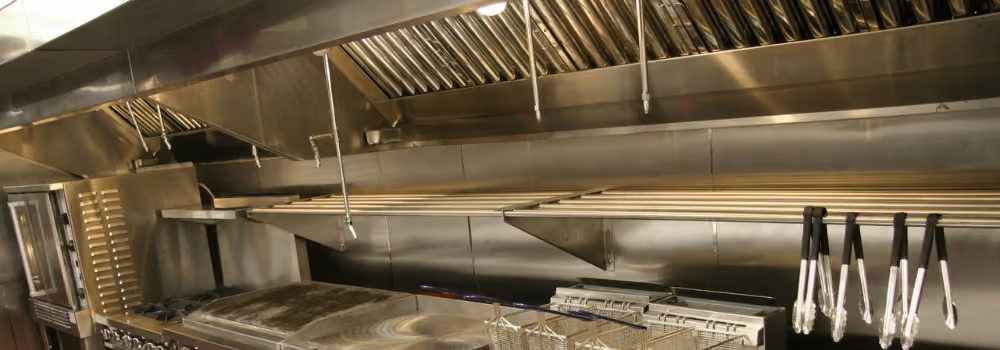




























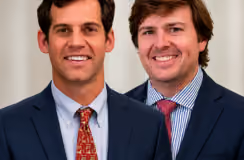





























%20-%20thumbnail.avif)





%20-%20thumbnail.avif)


%20-%20thumbnail.avif)

.avif)




%20-%20thumbnail.avif)