Host: Regular listeners of Acquiring Minds will have heard stories where a new business owner had to fill in and do the work that frontline employees of the business typically do. The entrepreneur had to drive the truck or make the deliveries or paint the walls themselves. It's the ultimate working in the business, literally doing the work of the crews. But I'm not sure I've had a guest top today's two guests George Teabill and Keith Fields bought a commercial cleaning business and during their transition they went out with their crews overnight to clean offices. And they did it for months. Now they bought a small business with about 380,000 of SDE. Maybe if they'd bought bigger they could have avoided this outcome, but they wanted to get in the game. And as it turns out, they don't regret those nights anyway. On the contrary, that investment will pay off in myriad ways. I wouldn't change a thing, says Keith. You'll hear why both he and George treasure having worked the night shift for months as cleaners in their newly acquired business. We also discuss buying into a franchise system and what they liked about theirs, how they course corrected a blue collar business in decline, communicating with a low paid immigrant workforce, the value of going on this journey together, and much more. When George and Keith bought their ServiceMaster clean territory last October, revenue was slipping fast from one and a half million down to 1.1 million in a matter of months. But nine months into their ownership and revenue is up to 1.8 million and they're just getting started. Please enjoy this interview with George Teabill and Keith Fields, owners of Servicemaster Clean in Buffalo, New York. Announcements for some of you, buying a business right now is less your priority than simply operating in leading one. You just want to get in the seat. Well, don't forget to be checking Smith List for amazing opportunities to do just that. Smithlist.com is a job board for operators and leaders of small businesses, and many of the roles posted there are from within the searcher community and perfectly suited to entrepreneurial operators. Which is probably you if you're listening to this podcast. So head to Smith List and sign up for the alerts so that you're notified as we post new job opportunities for entrepreneurial operators like you. Smithlist.com Smithlist.com. Welcome to Acquiring Minds, a podcast about buying businesses. My name is Will Smith. Acquiring an existing business is an awesome opportunity for many entrepreneurs, and on this podcast I talk to the people who do it. What do the following Acquiring Minds guests all have in common? Doug Johns, Morley Desai, Tim Erickson Chirag Shah, Shane Ursam, they all went through the Acquisition Lab, the accelerator in community for people serious about buying a business. But they represent just a sliver of the Lab's success stories. The number of deals across the Lab's cohorts now stands at over 120, with over $300 million in aggregate transaction value. The Acquisition Lab was founded by Walker Deibel, author of Buy Then Build, the book that introduced so many of you to the very idea of buying a business. The Lab offers a month long, intensive, almost daily Q and A sessions with advisors, live deal reviews with Walker, Deal team introductions and in an active community of serious searchers. Check out acquisitionlab.com link in the notes or email. The Lab's co founder, Chelsea wood. Chelsea buy then build.com George Thibbell, Keith Fields, welcome to Acquiring Minds.
[4:28] Guest 2: Nice to be here.
Guest 3: Good to be here.
Host: George and Keith, you acquired an existing franchise business in the commercial cleaning space so janitorial. It was a rocky transition but you are optimistic about the future. Big aspirations. Let's get right into it. George, would you start us off with some background on you please? Then Keith, we'll go to you.
Guest 2: Absolutely. Happy to be here. Will My background is a little bit unique as you can hear. I do joke a lot where I spoke with people from western New York that my accent is not really locally here. I'm originally from Romania. I was born in Bucharest in Romania and moved to Brussels to Belgium. Both of my parents had a military background. We moved a lot as kids and I did my high school in Brussels in French and played tennis my entire childhood and I got a Division 1 scholarship to the US and moved to Buffalo, New York of all places and started playing college and I also did my background in finance. I went into for a finance background, got injured several times, you know with my tennis, had a bad back and owned a painting franchise in college. College Pro Painters was one of the the painting guy at the the business I owned for for about a year and pursued a career in banking. I I worked in wealth management for about three, three and a half years. Lived in the Caribbean where I worked for a private Swiss bank. Moved there with my wife. She was there for a med school and came back got my second degree in a quantitative finance, financial mathematics. Worked my visa up and worked for MNT bank which is Fortune 500. It's headquartered in Buffalo, New York and worked there for about five years in risk management, in model validation quant and got my green card and that eludes me to kind of the search of Last year. So I quit my, my, my banking job and ventured in. In the story we're gonna. Which we're gonna be leading today.
[6:43] Host: So beautiful. Thanks George.
Guest 2: Keith.
Guest 3: Yeah, similar to George, not from Buffalo, but call it home now. I grew up in Tennessee, small town outside of Nashville. Spent four years in the Marine Corps right after high school and moved to Buffalo for college at the University of Buffalo. That's where George and I met finance class. And we've kind of stuck together throughout the, you know, his time apart going to different countries and, and traveling all over. During that time I was. Spent about five years in corporate banking doing some different things with air, rail and power. And then got an opportunity to work for a self storage reit. Spent about five years there doing several different things, Revenue management, business development, and then left as the director of acquisitions. So working on the acquisition side a little bit familiar kind of as we moved into the ETA space and our company, actually the company that I worked for got acquired earlier, early 2023 and that made my decision pretty easy to, to move on to the next thing. And we hit the ground running from there.
Host: So this decision. You guys have known each other for years. I'm, I'm, I'm guessing I'm imagining, you know, beers at the, at, you know, in your dorm rooms in college, scheming about what entrepreneurial venture you'd eventually do. Is it one of these? And that finally came to fruition or not? Ne. Not necessarily. Not really. How did you decide to partner? How did you decide to choose this as the business opportunity you would pursue?
Guest 3: I would say, I wouldn't say.
Guest 2: Go ahead, Keith.
Guest 3: It definitely wasn't beers, you know, for, for us, we, we were a little bit older, going to college. We were there for, for a reason, you know, and, and we actually got put in a group together, a finance class and we just kind of connected. We both were shutting down the library every night, studying, working hard and you know, we took a class together and said, you know, as a finance class, we said this is what we want to do. We just got to figure out how to do it. And from there, once we graduated on and off for the last decade, we've had business ventures to together individually, most not successful, some successful. And so, you know, it was, it was an attraction through work, you know, work ethic and just seeing each other grind a lot of the same energy and same goals and aspirations.
[9:37] Host: I love it here.
Guest 3: I.
Host: Here I was suggesting that you guys were partying through college drunk, talking about taking over the world, but in Fact, you were burning the midwint night oil at the library and that's what drew you together.
Guest 2: Yeah. And, and I think Will, one thing is when we are in college, kind of going towards the end of our, you know, senior year, our, I would say our aspiration was to, to, to, to work on that corporate ladder, right. We had high, you know, I remember we took a financial reporting analysis, you know, class together. We're like, wow, this looks so interesting, you know, analyzing financial statements going in. And so our kind of, you know, vision there was to, you know, work the corporate ladder, be successful and climb as fast as we can on the finance world that we are preparing for. That changed, I would say in the first couple of years after being in IT and actually exploring the corporate lifestyle. And our ambition hasn't changed, but our focus and our identifying what's important to us changed in that last decade that we, we, we, we climbed. Yeah, we, we progressed towards so well
Host: that, that, that's a great, that's a great kind of way to put it. Ambition is the same. It's just now the vision of how to manifest that ambition is, is different. What did you not like about corporate or why, why did the, the path forward not stay going on a corporate career which really had turned you on initially
Guest 2: when you do everything right and you become very successful at the job, right. We climbed the titles fairly fast. The income was going up, right. And we got to VP, SVP roles right fairly quick in that mid-30s. And we were looking on paper, we were extremely successful, right. Everyone around us was very proud of our accomplishments. But the more we were on this path, and I just speak for myself, I know Keith has kind of felt the same way was the unfulfillment was getting worse and worse, right. Like I remember just driving from work and just looking back and saying, you know, this is not. There's no intrinsic motivation, there's no fulfillment and I'm. And then, you know, it helped. You know, I was surrounding myself with higher level executives that are, you know, many, many years ahead of me. And I was looking at their, you know, day to day and I was looking at their lifestyle and there was nothing there that you know, attracted me to, to that lifestyle. And you know, when, when those things conflict, right? When, when you're doing everything, you're, you're, the results are there. But then, you know, the, the level of satisfaction and motivation almost decreases gradually there's a problem and you have to change something, you know, so that's kind of my, my take on It.
[12:23] Host: Keith, was your experience the same?
Guest 3: Yeah, it's. It's similar. You know, for me. We, George and I, we push ourselves physically. We work out hard. We, you know, we work hard in general. And I just kind of looked at it internally and said, you know, I want to know what I'm made of. I want to know what I can do and what I'm capable of. And I knew that I wasn't able to push the limits where I was at, you know, in the corporate world. And so that's. That was one of the big motivators for me. You know, I also think I have a little bit of a problem with authority, you know, being told what to do, when to do, how to do it. Now, that doesn't change necessarily. You're at the mercy of customers and your employees and everything. So it's. It's a bit different, but you have a lot more autonomy and control where we're at now. And so it's definitely the best decision I ever made making that transition. And yeah, it was just internal. Had to push myself more and find that challenge.
Host: And so you didn't think, even though you guys were pushing hard, that's why you were successful relatively early, young, getting to high rungs of the ladder. Keith, you didn't feel like it was. You felt like the job didn't push you as hard as you wanted to be pushed, or it was. It was not. Not enough edge to it.
Guest 3: Yeah, you know, I. I really loved what I do, as did in the. The real estate space. But, you know, being in that corporate ladder, you're always up against some kind of limitation. You know, there's. You're not always graded on the merits. Right. It's what's in the budget to allow you to do the next thing. It's who's in the role to allow you to step into that next role. So, you know, those limitations, I just really wanted to take the guardrails off and be able to go in any direction that I wanted.
Host: All right, well, spoken like an entrepreneur. And, George, back to you. What you said about the looking ahead at the people who are above you on the corporate ladder and not actually wanting what they have, either professionally or personally, lifestyle wise. I've heard that many times. Very. In a very recent interview, which will have aired just a week or so before, this one with Mike Day said the same thing. He was an engineer at Boeing, loved his time there, respect the organization, his colleagues. But as he looked, he was. He was mid-40s, so he was a little bit Further on, I think, than you guys. And it's one. And he wasn't the first person that I heard say, this is, this is a. This is a pattern. Look at, you know. You know, you ask yourself where I am, how do I feel about what I'm doing? And so on. And then part B of that question is, and, and do I even want what future 10 years in this, on this path looks like? And then you. And you have a model right ahead of you, your boss or your boss's boss or whatever. And if that ain't pretty, or if it's just not what you want, then that's usually a. A further sign to, to change things up. So, great, guys. And maybe just an example or two of other business ventures, things you've gotten into in these, in these inter.
[15:47] Guest 2: I'll start with a very unsuccessful website that we were trying to start. And I think this was a great lesson for us because we knew very little about building a website and just going into a field that we saw the opportunity. I believe KITA was a local marketplace that we're trying to build. The need was there, but seeing the need and then executing on it, they're two different things. And then we realized very early on that, you know, you need more execution than the vision and the big picture. Right? And that was a huge lesson for us where we spend, you know, I would say a couple months and some funds there where we tried to build something that we really weren't, you know, technically prepared for it. So that was one thing that I kept in mind. And I'll let Keith bring the other one.
Host: A PEO run by a searcher for searchers. If you're running a company with less than 100 employees and providing health insurance to them, you may secure better benefit plans at a 15 to 30% discount through a professional employer organization or PEO. Aspen HR run by search fund veteran Mark Sinatra, understands the needs of search operators and provides HR compliance, flawless payroll, HR due diligence, support for your acquisition, and Fortune 500 caliber benefits, all for a fraction of the cost. And tis the season to evaluate your employee benefit plan. Most new clients reach out to Aspen 90 days before year end or their renewal date. So before they get slammed, check out aspenhr.com or contact Mark directly@markspenhr.com We've had
Guest 3: a few real estate ventures that that worked out. You know, on my side, I was involved in a property preservation construction company, had ownership in that shortly after the 2008. So it was around 2010, 11, you know, these bank owned properties need maintained inspections, things like that. So had a little bit of business there and then exited. George also had a painting franchise in the past. You know, I, I got into flipping before it got popular on TV and once it got really competitive there, decided to move out. So we've done several different things over the years, but it's always been half in, half out, you know, maintaining those corporate jobs while we're doing it. So they were great lessons, but we didn't go fully in until 2023.
[18:41] Guest 2: And I think Will, this is such an important point as while we were, you know, having our corporate, you know, jobs and we kept, you know, our vision and our, our, our goals, you know, we obviously will get hot and cold several times throughout the year, right where we're basically, you know, starting several ventures. But it was, we realized that, you know, you, the only way to actually, you know, move forward is to go all in in our next venture. And this is exactly what we did with, you know, last year when we decided and we, we saw the niche, we saw the opportunity and we didn't let go. And I think there were, you know, some reasons for us to, you know, back up or just look for, you know, a different size business. There was, there was a lot of other things we could have done but the last decade of just being, you know, in that middle, right and just, you know, having our aspirations and our goals, right and not really it, it made take the decision last year. So that was, you know, that's an important point I think and I always advise people to just, you know, it's very difficult when you, when you, you know, there's a saying is what, what stands behind a great life and it's a good life, right? Like, you know, so for so far for us, we had, we had that good life, you know, going on and it's very challenging when you have, you know, that good life to actually, you know, go on and, and you know, take it, take a leap of faith and, and hopefully experience that great life.
Host: They were great. I do agree that that is a great point or insight that it took kind of going all in. You feel like the recipe for really finally getting something off the ground or getting something material moving was going all in. Burning the boats is my, my favorite term of, term of art when it comes to that college pro painters. George, before we got to get off your backstory here and get into the meat of the story, but I just can't let that go because that one has come up a number of times. With other guests. This is the National Painting Company. It's a franchise. And what it does is it gives ambitious, entrepreneurial college students an opportunity to run their own small business in painting. Right? This is the one.
Guest 2: Yes. Yes, sir. That's the one. Yes.
Host: And you feel, and would you recommend that? Well, I don't think anybody in my, I'm actually people are listening who are in college. So what would you say to them?
Guest 2: I, I, I, I'll give you a little bit of backstory. So I, you know, in, I was a junior in college in finance, and, you know, all my classes were like, you got to get an internship over the summer, right? That's, that was the number one thing, you know, that, you know, to get prepared for the job market when you graduate. And I just kept applying and, and they, being a college athlete, they really liked, you know, that college athlete mentality, you know, the competitive, you know, spirit, you know. And I went in, in this trainings had knew nothing about painting or anything, but, well, it was such a, it taught me so much about cold calling, going door to door, sales. I was essentially just knocking on doors and then having, you know, a budget of, you know, other college kids that I hired and paying per lead of just, you know, getting people to see, hey, do you need painting this, this summer? Right? That was the whole spring where just they gave me a territory. Luckily, I had a very nice territory in Buffalo, you know, a little bit more affluent. So I was just going in those neighborhoods and, you know, my English was way, way worse. People could really, you know, like, didn't really, you know, were like, what are you doing here? Oh, well, I'm looking to paint your house. Well, have you ever painted? I'm like, no, but I can measure it. They taught me how to actually measure the square footage on the outside. And it taught me so much about sales and, you know, putting, putting signs on the highway at night. Me and my wife, my, my current wife, we, we were just, you know, going all in. And it was a very successful venture I ran, you know, it was over over a hundred thousand dollars business over the summer. Bought letters, a van, everything. It, it, it really, really taught me a lot. But, you know, one lesson I had was I was explaining to other, you know, mentors or people above me what I'm doing. And they're like, you're crazy. Why would you do that? I mean, you know, you should, you know, why would you go at night, put, put signs on the highway? Why would you go through this? And I was very fulfilled internally But I was not 100% convinced that this was my, you know, conviction. And other people actually convinced me that hey no, you should, you know, go get a, go get a banking job, go pursue this career, you know, that, that you, that you go get two masters, go. And I pursued for a decade this, this, this venture. But you know, looking back, you know, my instincts and my excitement about Keith knows it because I was, I was, I was meeting him at night and I was explaining to him everything what I was doing while I was in college and I was, the excitement was there so I couldn't, you know, you know, I would say recommend this opportunity. It's not for everybody. Most the, the, the bad rep has it that you know, the franchise gives you everything. You know, the funds it charge you, you know, the fees, the royalties are astronomical. You know, they, they do. But, but it's, it's, it's for the right, for the right fit and for the right test. It's, it's a, it's an unbelievable opportunity, you know, to, to test yourself and to see, you know, hey, can you actually build it from. Yeah.
[23:42] Guest 3: So.
Host: Well, it's obviously such good training for running a true local blue collar services business. And so many people in our world, in the ETA world of buying businesses, you know, the big, the big gap that they have on their resume is operations experience. And so it feels like we need one of these for like mid career people to go out and get training or get experience doing a small business operations for a season or for a year before diving in. So too, too bad that it's just for college kids because. Yeah. What invaluable experience.
[24:18] Guest 2: Absolutely, absolutely. And it's, you know, it's, it's, you get what you put in, right. And it teaches you a lot about business. So, so yeah, it was, it was incredibly. I, I, I, I'm very grateful for that opportunity.
Host: Well guys, we got a lot to, to cover here, so let me, let us move on. So you have told us why you were both ready to step off your respective traditional corporate finance paths. Why buy business? Tell us how the vision that you're now pursuing, how that coalesced.
Guest 3: I would say it kind of went in phases. December 2022, George and I sat down and said, you know, we've been after this for a decade, let's go all in and figure this out. And from there, you know, we just started, you know, covering the Internet, looking for, you know, biz buy, sell businesses to buy businesses to start. And we said we're going to Give it six months, we're going to give it our all. And from there if it doesn't work out, then we'll just continue and be happy in corporate. And during that six months we did that. You know, we're working full time jobs and we were spending all night searching for businesses trying to figure it out. I would say the thing that led us to ETA was George being very active on Twitter. You know, he's like, hey, there's these books out there, let's read these books, start talking to people. You know, we went through endless networking. You know, we've talked to many of the, the past guests on your show, you know, and, and we figured out, you know, ETA made the most sense. My background was acquisitions and so I kind of understood a little bit about that part. And although it's very different working with the SBA and you know, once we, we committed to that, we went through a lot of businesses, we, we made some mistakes, we started going down some ventures that seemed to make sense at the time and ended up not what we wanted. Some on the startup side and with the waste management, that didn't work out. And then once we figured it out, I think it was by April we had this deal under contract. So you know, we, we wrote several Lois, we talked to many, many owners. And so that's kind of what led us to it was just sitting down, committing to it. And then once we found eta, it made the most sense and we pulled the trigger.
Host: But wait, it sounds like in fact even once you discovered eta, you were still entertaining other things. So while you liked it, it wasn't, and maybe I have this wrong, it wasn't the like, you know, skies parting, angel singing moment that it is for some of my guests. It was like this could be one path which looks good, but then there's these others that you guys apparently dabbled in as well.
[27:19] Guest 3: Yeah, I would say one thing is we're pretty aggressive with our goals and ambitions. So you know, we looked at a, a different franchise and we were going down the path. We had spoke to the, the franchisee, everything looked good and we said, okay, this makes sense. We can have, you know, a somewhat of a base salary and explore other things. There's two of us, you know, so we can do, we don't have to run one company, we can run two. And so we had it introduction to an idea as new concept in the waste management industry. And so you know, we went in to, to gain as much knowledge as fast as we could. And you know, at first it sounded really good and I still think it's a good business but it was a startup and the more that we kind of looked at it, we wanted to stay away from startups.
Host: Well, I imagine for a couple of guys in their mid-30s doing well in finance, you had hefty W2 income to replace mind sharing what that looked like.
Guest 3: Yeah, I mean we both in the six figures income wise. So you know we were doing well. Especially you know, here in Buffalo. Cost of living is, is affordable so we were doing well. And so that was one of the aspects of a startup. We knew there was going to be a lot of pain and you know, jumping into something that's existing. And then another piece of that I would say is my background with self storage and knowing the acquisition side that we could step in. Part of our model was acquiring mom and pop operated self storage facilities, coming, putting in technology systems. And so as we looked at it we said well there's a lot of mom and pop businesses out there. We can kind of apply the same thing here.
Host: Well that is the, yeah, that is kind of the model here or big, a big part of it or a big feature of it. And what did your then search look like? So what were your parameters in terms of SDE that you wanted? You know, basically replacing or, or I don't know if you want. I, you probably didn't expect that you could fully replace both of your salaries all at once. Correct me if I'm wrong. So, so what kind of SDE did you, were you looking for? How much money did you guys have liquid to put toward this project? Give us some, some dirty details here if you would. George, you want to take that?
Guest 2: Yeah, sure. So I mean we, we were pretty broad. One thing we discovered, and I think we discovered along the way is we were doing a self funded proprietary search. Right that's you know, the terminology. But we, we were looking for you know, I would say 1 million to 5 million in revenue businesses. And we looked for, there's a couple of pieces that we heard that they, that's, that's that make it appealing such as reoccurring revenue enduringly profitable, you know, businesses that you know, locally. You know, we, we, we do look at you know, some, the recessionary, you know, environment, you know, how, how, how certain industries are, are performing in certain environments. So we, we've analyzed everything, demographics. We looked at in the, in the, you know, healthcare space. So we, we, our, our, our niche was very broad. We did, you know, contacted all the like, all the local brokers here in western New York. We were reaching out directly to several meetings with owners. We, we identified that, you know, we, we have a very compelling case for owners. Owners trusted us. We, we were going to be, you know, operationally involved. Our story related with a lot of the local owners here in Buffalo, New York. And it was a very, very appealing, you know, process for us where we actually truly enjoyed learning about the businesses, learning about the story of, you know, you know, baby boomer owners who's actually got their kids through college, through their business, went through, you know, with the employees, all the story. And we had a, a very genuine interest in their business, in their story. And they're, you know, talking about looking at people that have, you know, in corporate that are, you know, 20 years old, 30 years later, we were looking at those, at the business owners who are 20, 30, and we had, you know, I was like, wow, this is inspiring, right? This is the, you know, for me personally, it was the American dream, right? It was something that I was, you know, truly, you know, immersed on. And I kept asking questions, you know, getting there, getting to know the end. And a lot of the owners was. That was very appealing to them because, you know, the other offers were from a competitor that would, you know, you know, buy them out. Right. You know, look, look to cutting expenses, you know, the typical play from another business, whether for us it was all about, you know, the people, the growth and the interest, the genuine interest in the businesses. So very early on we're like, wow, this actually appeals to. Without actually trying to sell. We are very attractive buyer, I would say, to a lot of local businesses here.
[32:12] Host: And in terms of that revenue range, a million to 5 million, that's a very broad revenue range. And if we just assume 20% margins, that's anywhere from 200 to a million of SD. So what was the, what were you guys going to do? I mean, spoiler. You buy at the low end of that range. But let's say like at this point in the, in the story where you're considering what you'll buy. If you found $1 million business throwing off $200,000 a year, how is that going? How did the math work on supporting two guys Coming from great salaries, we
Guest 2: basically looked at one or two opportunities, right. We knew that this was maybe not a, if we buy on the lower end, maybe this was not have been the only thing we would do. Right. We have and we currently have several other projects on the side, you know, consulting and other acquisitions. So we're, we've always Been, you know, okay, this is the first thing, right, we gotta be able to close on. On. And there was always that urgency component over decade that accumulated. So we had that urgency side where we need to get, we need to close, we need to get it. And you know, we looked at, okay, we could have, you know, you know, look for investors and just go on the other route. But that was, you know, that, that would just increase the length of our search that would, you know, play around. So, so that urgency was, was, I would say our number, you know, was, was the, the fuel, the fuel behind us where we say let's, let's find a business that we can close. And, and you know, if we can closing with our own funds, right without raising capital, that's probably going to, you know, fast track the closing process and get us, you know, where we want it to be in the shortest amount of period of time. I would say the urgency was, was, was a big, big factor.
[33:49] Host: So this is a, this is a get in the game is more important than finding the perfect business. Of course, the perfect business doesn't exist, but even being too picky about the business.
Guest 2: Yes, absolutely. And you know, one, one, one funny story. Well is, and I'm not trying to give a strategy here, but we did look at all your guests on the podcast. We build a spreadsheet, we ranked all your guests and we start reaching out and we were very successful on, on, I would say we had probably between 10 to 20 successful calls with you know, industries people that we could relate partnerships, all that component. And you know, I just have in my mind those stories that have been, you know, and we did, you know, by listening to your, to some of the stories, you know, some folks were in the search for 1, 2, 3, you know, like a lengthier time of time and we're like that can't happen for us. Right. So we got to figure out, you know, you know, what, what, what the alternative is here. So, so, so, you know, and this is a little bit of a thank you to you because this was, you know, it was very helpful for us in, in, in this process.
Host: Good. That's awesome, George. And you're the second guest in, in as many weeks who has said to me I heard on your podcast these people who it would take a year or two or three to search and get this thing done. And I needed to have it happen faster than that. So, so I guess, yeah, the, the fear of a super long search really motivates people to. And, and then, and then you get urge you get kind of that sense of urgency and you probably, yeah, obviously you close, close faster. Great. Keith, anything to add to all this?
Guest 3: Yeah, you know, the, the other thing that I would add kind of, you know, being in, in acquisitions and in my past life, I knew that every deal has hair on it and you're gonna have to work through something, you know. And then the, the other piece of this business that we found was the valuation. Very attractive value valuation from our perspective. So that allowed us to say this is it, let's move forward.
Host: Great. Well, let's now hear about the business that you found.
Guest 2: I'll start with how we found it. So basically it was multiple brokers. We've reached out and we met with a local broker on the other side and I would say very unsophisticated local broker, late 70s. And we, I would say discarded him very early on because coming from our corporate lives, we was like, well this person doesn't. No computers, very basic. Right. But looking at his listings, he had probably the largest amount of listing on biz by sell locally. That was something learning perspective that he reasoned very well with the baby boomer owner. That was actually which the market were looking for. And this is eventually the person that actually, you know, brought us the existing deal here. And looking closer to it, we, we, we realized very on that it had a lot of elements that were important to us, you know, reoccurring revenue, 30 year old existing business, physical assets, real estate in place. So there are certain things that really attracted us to, to the deal. It was on the lower side. So that was one of the things that we had to take into account for. And we did and we decided to move forward on loi here.
[37:21] Host: And to be clear, you guys quit and then quit your jobs and then started searching or was the idea that you'd quit only when you found a business?
Guest 2: Second? Yeah, we, only when we found business.
Host: So it was a quote, part time search. You weren't searching full time. You did a part time search and then, then you quit when you found the business.
Guest 2: We were both working from home, so hopefully our employers don't really our previous employers. But yeah, we were focused a lot of more and more time on the search and you know, the calls, I mean it was just, you know, I would say that was probably, I would call it the full time and yeah, full time search during the day and yes.
Host: So gotcha. Okay. And so more about this business. What was the business? What is the business? How big was it? You said it was 30 years old. Has reoccurring revenue or recurring revenue. So tell us more about what the business actually is.
Guest 2: Yeah, I'll start here and then I'll let Keith kind of add in. So the special part about this business was that, you know, it was, you know, started. The business was started initially by a couple that essentially started cleaning themselves and they've built it to a very successful level. We see this maybe in the industry called a lifestyle business where, you know, the couple had their, you know, roles in the business. You know, I think the spouse, the wife was taking care of, almost like an office manager role, and the husband was more on the operation side. But they built it to a very comfortable level. 45 employees, around 1.5 in revenue. And they were very successful. We heard that they were spending a lot of time in Europe. They had an office manager and operations manager in place and they sold it in, in 2021. They sold the business in 2021 to a gentle older gentleman that was not coming from this industry that, that acquired it and with very little, you know, janitorial, commercial cleaning experience, also very little business experience. So, so, so the person who, who, who bought in 2021 came in and realized, I think very early on that, you know, this is not as passive as he expected it. You know, I think the vision that he had was, you know, you put it, you have an operations manager in place and you know, that person is running the business and you know, you basically, you know, cash flow and you maintain. Right. That was kind of his philosophy. But the two key people that were running the business quit, left. So the operations manager and the office manager left. And you know, since then it was kind of the business was very trending downwards. Right. That the previous person had several panic attacks. It was just, there was a lot of pain. I think, you know, that we, that we. So, so we bought the business, you know, after two years of this person, you know, owning it because he realized very early on that he needs to exit. And that's when we came in and we bought the business from, from, from, from. From this gentleman that, that, that. Yeah, that realized that the pain.
[40:26] Host: Well, a few, a few follow ups here. First of all, everybody listening. So here's an example of somebody who bought a business and thought, oh, I'll buy a business and the operator will just run things and happens. Sure. But don't assume you can pull it off. Very perilous as, as the. Your seller painfully learned cautionary tale. Okay. And then the. So would you consider this a turnaround? I mean, was this business in outright distress or was it just kind of on the decline? You needed to, you know, arrest the decline and reverse it? I mean, how dire was the, was the situation at the business?
Guest 2: I'll let Keith take that one.
Guest 3: Yeah, I would say the, the border of on decline and distressed, you know, the, the seller had walked away for the most part. He actually took a full time job while we were under contract and was no longer at the business during the day, had his operations manager there. I think in the time that we went under contract to the time we closed, three of the largest customers left. The staff was constant turnover. You know, staffing was a major issue. So by the time we walked in the door, you know, everyone told us sit and observe for six months before you change anything. We did not have that luxury. We had to start making changes immediately.
[42:01] Host: Well, on the other hand, because there was so much turnover, you, you probably weren't disrupting that many employees. Part, part of the reason you don't implement changes early is because the team that you've inherited is not going to respond well to all this disruption. But if, if the business is churning through employees anyway, maybe there aren't that many people whose lives you'll disrupt by implementing change or, but so, so 45 people at the business. How many people were kind of in management and how many of those 45 were basically field cleaners?
Guest 2: Yeah, the, the, the, the, the previous, the successful part of the business pre, you know, acquisition of the gentleman was, was that there was a real structure in place, right. There was an ops manager, office manager, and then you had a supervisory level that's crucial to our part of the business. And then you have the frontline staff. Those layers have been kind of eliminated in the last part of the acquisition. So you essentially had the ops manager kind of like removed all that supervisory level and that person kind of running the entirety of the show, but running it not in the most successful and operationally efficient way. So we realized very early on that that second layer of supervisory was missing. And that is, I would say, probably one of the key pieces of the operations of our type of business and also the business, our side. You cannot have 45 employees basically reporting to one person. And that puts a lot of pressure on that one ops manager. And also secondly, the capacity and the ability for that person to efficiently run day to day operations is, is, it's, you're setting up for failure.
Host: And guys, this was a franchise. Yes, yes. So, so, okay, so, so let, let's hear about that. But what I don't Understand is you mentioned husband and wife started this. So they were franchisees.
Guest 2: Absolutely.
Host: So they, they were a de novo franchise terr territory in this franchise system 32 years ago. Okay. And then they built up this territory but, but still under franchise. All right, so tell us about your analysis of the, of this, of the franchisor of this franchise brand.
Guest 2: Yeah, the franchise. We looked into it and we you know we reviewed the FTD and, and, and we were actually you know us, we are not very keen on franchising to be honest with you because there's you know that you have the royalty component and you also have the restrictions component. Right. And you know we came in from corporate where there's you know it's all about you know, structure, restrictions, rules. Right. And we, we saw franchising as that you know, side of you know, adding you know, having, having a business with certain restrictions. But there were several things we, we liked. The, the, the, the, the group that you know, the service master group that we we purchased was recently acquired by, by private equity and there was a lot of, I would say momentum in you know, in for, on the growth side. And we, we, we looked at that and we saw that opportunistic approach and fast forward to today. I think you know the biggest lesson for, for me and then Keith can add on this is really with a friend. You know, the, the one feedback we heard from the previous owner was that I had no help, nobody was helping me, nobody was you know, you know, I'm, I'm just paying the royalty and I get nothing in return. Right. That was kind of the, the, the constant feedback and we couldn't disagree more on that side because we leveraged all the resources. We went to the annual conference in February. We, we met you know, the president of the, of the, of the franchise. They came into Buffalo, they visited us. We, we, we expressed our growth and we expressed our vision and we had so much support from, from, from that, that perspective and I would say so many opportunities that, that wouldn't come up from you know, from just being, not being a franchise have come up so far. And also the second part I would like to mention is the network. We met, you know, the most successful owners in the network, spoke with them. We build relationships with those franchise owners not locally but from all over the country. They have done it for 30 years and they are current mentors helping us grow and build the operations of the business that I think it would be very difficult from a non franchise perspective. So the short story will is you get what you put in. You have to be able to articulate your ask. You have to be able to put yourself out there. And the reward is. Can be, can be there on. In a franchise model.
[46:35] Host: Well, let's, let's push on that a little bit, George, because it does. It sounds like you guys were really proactive, which is great, reaching out to other franchisees and then communicating to the franchisor and meeting the president, so on and, and being vocal about what you wanted to do here. But you still need a franchisor on the other side of the table who's receptive to that. And it sounds like you guys got lucky, if you will, that there was new energy, new blood at the franchisor with, through this private equity group that had just acquired it. And so that you caught them at a particular, a good moment where they're eager to bring in ambitious people and to demonstrate goodwill to the franchisees. I guess so. So, you know, I think it takes two to tango in that situation. And so I guess the learning would be what express, like, express like just basically try to get to know the franchisor as much as you can and be vocal about what you, what you acquisition entrepreneur want to do and just see how they respond and see if there's chemistry and see if there's receptivity to what your, what your ambitions are sort of thing.
Guest 2: Yeah, that's, that's, that's definitely the learning. Go ahead, Keith.
Guest 3: Yeah, I, I think that's part of it. And for us, you know, it's important who we work with. I will say we looked at another franchise, very similar, acquired by private equity, pushing out technology, you know, aspiring growth, and we just didn't like the, the personality of that other franchise. And at that point, that was early on and we actually said we're not going to do franchises if, you know, this is kind of the, the approach. So for us, it really is getting to know them, you know, what kind of support is out there, what those fees you're going to be paying are, and if they're going to change. So it was really just kind of doing our homework and figuring it out.
[48:29] Host: I guess one of the other things is this is very specific to your situation, so I'm not sure how valuable it is for the audience, but since the franchise was now under new ownership with this private equity group, talking to the other franchisees and saying, hey, you know, what's it like to work in this franchise? What's it like working with this franchisor? A lot of them were probably like not that helpful because they were like, well, it's under new ownership now, so we don't know. There's this moment of uncertainty for everybody sort of thing, right?
Guest 3: Yeah, absolutely. You know, that's one thing we kind of notice coming in, especially the legacy owners in the franchise. You know, there was a lot of rumblings folks that we talked with that nothing's going to change or oh, they're just trying to come in and grow. They don't care about the owners.
Host: So.
Guest 3: And then there were owners that were legacy owners that were like, this is great, we're finally going to get support. So it really was kind of that mixed feelings among the franchisees that were out there. But the franchisees that we were talking to and aspiring to follow behind were the ones who were excited and that's kind of what kept us excited about it.
Host: Interesting. So the franchisees that you liked seem to be fired up.
Guest 2: Yes.
Host: So that, that, that energy pulled you along. Interesting. Well, I think all of this goes to the point that basically when you buy an existing franchise business, there's just more risk there and that risk can be good and bad. So, so, because if you, you just, there's a whole other relationship there to, to vet and try and diligence to the extent that you can, that is with the franchisor, how they're going to behave or how much support, etc. So it's just an additional level of complexity. When you go to diligence, you're the business that you're looking at buying, but that's not necessarily a negative because that can be extremely beneficial. I mean, I think, I think George, you're, you're now kind of a proponent of what you guys did that there was so much, you've gotten so much support, it's really been a cheat code. Now you're paying for it and ain't free. That's what the royalties are for. So you, you, hopefully you, you would hope that you are getting something for that. But, but still, I mean, I'm just reminded my most recent interview, the one that'll probably air before you guys with Corey Robinson bought four units and then quickly another, another eight in a franchise system, batteries plus. So retail sells batteries and kind of energy services. And so we just did a deep dive as to analyzing the pros and cons of working within a franchise. There's a lot to like about it, especially if you are acquisition minded from the outset. August Felker is a two time successful searcher. First with a traditional search fund, the second time around he did a self funded search. Today August runs Oberle Risk Strategies, an insurance firm with a dedicated practice group for searchers and acquisition entrepreneurs like you. If you've got a business under loi, Oberly will provide complimentary due diligence on that business's insurance and benefits program. A great no risk way to get to know August and team. They love helping searchers. They've worked with hundreds. Oberly is a specialty insurance brokerage for searchers by a former searcher. Check out oberly-risk.com O B E R L E- risk.com link in the show notes. Guys, you said you communicated your vision to the franchisor president. What is the vision? What was the vision that you communicated?
[52:12] Guest 2: Eth. You wanna take that one?
Guest 3: Yeah, I mean our, our vision is to you know, first take control of our market. You know our, our mission, our, our goal is to be the, the best quality commercial cleaning company in Buffalo. And so we're starting with that and then it's to grow within our market. We see a lot of opportunity. You know, quality is one piece of the service that is lacking significantly. I don't think that's just in our market, I think that's in the industry in general. You know, so the, to come in and provide quality service, that's, that's number one grow within the market but then also have the opportunity to roll up within other markets. You know we've had some of those conversations with other owners and that's another piece I think that's unique to us is as we've started getting more into the acquisition space, a lot of sellers aren't ready to sell. So we have the opportunity to have that conversation with those sellers of hey, let's get this, this and this in order before we come in and acquire that business. The other piece of it is we're getting our, our hands in on operations and down to the you know, frontline level. I think that going in that to me that's one of the, the benefits of buying small. You know, you can go in and buy at a high level, a large company and I think you miss some of the details down on that front line. And so that now that we've had the opportunity to see that, you know we can communicate much better with the franchisor of hey, you know we, we know what happens within this business in the day to day. We can go into, to this, acquire this new business and you know, implement the things that we've learned and you know, really grow those franchises, those markets
[54:13] Host: as well, it's a great point. If, if you want to, if you want to do a programmatic acquisition strategy and for. In a franchise context, buying small allows you to really educate yourself on that, how that franchise system works and, you know, improve your first territory or unit or location and then know how to do the same in subsequent ones. Super. Super. Well, like kind of have your own playbook for how to work within this system and. But, but the vision. Maybe. So maybe that's what you said to the president, Keith. So. But I also know that there's a bigger vision here. What is the aspiration here? You guys left these lofty corporate tracks in finance. What is the large aspiration here, if any.
Guest 3: Yeah, yeah. Within number.
Host: Is there a number or is it just build a hold go or what?
Guest 3: You know, I, I think I look at us, you know, at the high level. We're an acquisition company. We're opportunistic. We have a lot of complimentary skill sets and we have a diverse background, you know, real estate, banking, sports and entertainment. So we're looking in those areas. But ultimately we want to identify verticals and roll up within those verticals. So that's the, the big vision. Whole co would be great, you know, if, if it comes to that, we'll, we'll figure that out. But it is to keep acquiring and buying, right. You know, ultimately for us, the big thing is culture. You know, we want to have companies that are run the way we want run the way. The things that we didn't like in corporate. So ultimately it's kind of, you know, continuing to acquire for those right opportunities, but provide a great workplace for employees and do that in every company that, that we look to, to acquire.
Guest 2: And well, one, one observation here to just give you a kind of a story. When we came in, right, that supervisory, you know, we buying, you know, going for the employees. To go through two acquisitions in such a short period of time, it's not easy, right. The culture is not there. Right. And we, we actually pushed on a supervisory person who's been through, you know, the two, the two acquisitions, and he's like, well, you're just going to buy it and sell it, you know, in a couple. Like that was the feedback, right? So that trust and that culture is, is. And we didn't really, you know, accounted for that when we, when, when we came in, right. And we realized it's very. So for us building that trust. And you know, when, when the supervisory team or even the frontline staff were going to work, there was no really Excitement, I mean there's very little excitement about cleaning in general, right? Cleaning is a hard job, right? It's, it's not, you know, it's nothing fancy, but for us we have the 4 o' clock meeting here and you know, having that table full of excitement, people, you know, that being, being happ. Know happy customers, being proud in the, in the job that they're doing and taking, taking very, you know, taking accountability for that. It's been, it's, it's, it's just been such a life changing that we really didn't, you know, in cold in our corporate culture. We talked about culture, mission statement, all that. It was all blah, blah for me personally because I never really looked into it, you know, until we actually, you know, own a business that, and I understand the, the importance of culture because it actually it's life changing, right? Seeing the, our employees coming to work happy, having, you know, providing a good quality service with the right people was one of our first priority. And that allows us ultimately to grow, right? And without that we wouldn't be in a position to grow. And we did that instinctively because taking on growth early on was not something that we could do. We had to, to basically build that, that baseline of our employees. And we did our first company picnic, I think, you know, in the, in the, you know, we had people coming in excited. You know, we have a lot of immigrants and workforce, right from different baseline, different cultures. And it was just, it's, it's cool to see that. And we realized, okay, this is what we want to do actually, because with that, that growth side and then the ability to scale will come, but it's a must for us.
[58:32] Host: And George, did you guys plan at the outset that there would be, that building culture would be a big part of this or was it only once you got inside the business and you saw that there was probably a really bad culture or non existent culture that you decided culture was something that you should prioritize. Because the way that you're making it sound is like it was. Well, you're not making it sound either this way or that. I'm just curious, like was it, was this an evolution that you realized culture was important or did you always plan that it would be such a big part of your strategy?
Guest 2: It was an evolution for me personally, it was an evolution because we understood that the quality of the happiness of our employees is a direct reflection of the quality of work they're going to be performing. And also it was an evolution for sure. And it just kept that evolution Kept going higher and higher because it's a must in this type of workforce. Had to let go. You know, I would say we counted yesterday probably 20 plus. I mean there's, the industry has a high turnover, but, you know, we, we let go of, you know, 20 plus people and rehired, you know, so, so there's a lot of rehiring, hiring, establishing that culture as we, as we evolved. And at this stage we're, you know, seeing the results, you know, a couple of, you know, eight months later post acquisition is just, it's, it's, it's, it's, it's, it's one of the most satisfying
Host: place where liquid experience and this is one of those, those where you establish a new culture and you say this is how things are going to be now. Everybody, if you're on board, we'd love to have you be part of this new direction that we're taking the company and if not, we invite you to leave sort of thing. And so you basically, you know, keep the people on the bus that are down with the new ownership and down with the new culture and those who are not are get off the bus one way or the other.
[1:00:29] Guest 2: Yeah, absolutely. Naturally evolves. Right. And you know, it was a lot of mistrust in the beginning, right. Because we were saying those things right as post closing. You're right to the team at our table, to everyone around us. But, you know, we had to roll our hands dirty and just go with them at night, gain their trust. And it took several, several months of building that trust. You know, we brought employees that were let go by the previous ownership just because they couldn't operate in those working environments. And I just remember one particular case was one of a top lead supervisor. We called him in and he's like, I'm just gonna be here for an hour, observe you, Very, very cautious approach. And it took months and months of just us doing what we say we're gonna do, being with them at night, us cleaning, covering accounts, covering certain things that, that, that, that, that evolved. And you know, we were looking at each other, you know, while we were doing it at an early stage and says, what are we doing? Is this worth it? Is this. I mean, you know, there's a lot of questions right, you, you ask yourself, you know, when you, when you're in the trenches. But like looking back right now, it was all worth it because we see the results and we're early still.
Host: Yeah. And, and Keith, weigh in on, on this as well, that this how you built trust and Actually doing cleaning or going out at nights, that was, I don't mean this in a negative way. That was performative, that was making a point. Or that was because you actually needed to. Or both or what?
Guest 3: I would say both, but we absolutely had to. You know, staffing such an issue for us, you know, one of the things we looked at is a customer cannot go without service. We were understaffed, high levels of call off. So, you know, in these early nights, you know, I would have to bring my daughter to, to George's house. She would sleep there and we would go out cleaning all night. And then, you know, we're in the office first thing the, the next morning. So, you know, it was a lot of have to.
Host: You guys would go out cleaning all night, the two of you?
Guest 2: Yeah.
Host: Because you were short staffed.
Guest 3: Yes.
Host: How many nights did you do that?
Guest 3: Probably months. A couple months.
Guest 2: Two.
Guest 3: Two to three months.
Host: Really?
Guest 3: Yeah, yeah.
Host: Overnight, the both of you?
Guest 2: Yes.
Host: Great guys. Good, good. That is really admirable. That's awesome. And, and, and, and you know, you, you've, you said early on that part of the bond that the two of you share is that you are grinders. You can grind. But talk to us a little bit about the, as George said, like, looking at each other, being like, is this what we're, Is this really what we signed up for? Is this, was this the vision? No, but really? Yeah, talk, talk a little bit more about that and, and, and just kind of the, the re. The shifting in the kind of professional identity that you must have been undergoing, from high flying kind of corporate careers to this, you know, that, that. I mean, there's a lot there that must have been. And how did your family react and so on. Just. So I, what do you want to say about all that? Because that, that must have been quite a, quite a few months of just the psychological development. There must have been something.
[1:03:49] Guest 3: Yeah, I mean, it was a bit of a change, you know, going from the corporate job to, to cleaning toilets, stripping and waxing floors. But, you know, I think it taught us a lot. And the big thing with our relationship is we find ways to laugh. I think it's very important. You know, we're very serious, we work hard, but you know, we're able to crack jokes in those times of what are we doing? And ultimately we knew it was a good business. You know, it's reoccurring revenue, everybody needs it. You know, medical facilities, industrial facilities, two of our biggest focuses. And you know, we looked at what happened during COVID this business Stayed open where, you know, many were shut down. This business actually grew during COVID So, you know, we looked at it as we knew that it was the right business. It's just gonna take a lot of work to get it back on track, you know, and, and you know, part of our relationship as partners and, and friends. You know, I've, I've looked at George for, you know, 10, getting his green card and he stopped at nothing to get it. And I have so much respect for him. And I know, you know, someone who's going to continue to grind and work that hard to, you know, take the next step. I just, I knew I had the right person beside me. So, you know, it was hard, but it was easy. Having someone next to you that's going
Host: through the grind with you, that's so cool, guys. George, you want to add anything? Well, let, let me, let me jump because I got a really be watching the clock here because we got a ways to go. We're already an hour into this. The now despite the fact that this is behind you, that you learned a lot, you know, the, the kind of character building and understanding of your business building experience that this was. There are going to be people who are hearing this and are like, these guys should have just bought a bigger business and you know, maybe they learned something about how to clean. But, but they also could have skipped through that part if they just bought a half a million dollar ste business or what have you respond to them.
[1:06:04] Guest 3: I wouldn't change it. You know, the. No, I wouldn't, I wouldn't change a thing. And there's a lot of things that go into that. You know, I think that number one, understanding what the frontline workers are doing, you know, how they're feeling, how they're thinking, you know, their attitude towards the job, how can you impact that? You know, then coming from corporate, you have departments, you know, it. Your computer breaks now we've got no one to call. You know, I'm, I'm calling George into my office when something happens to my computer, you know, and we just have to figure it out. The problem solving, the stress that that comes with it, you know, it's, it's, it's a, it's a benefit in the long run. It's, you know, it's difficult going through it, but the learning. And I think that's going to translate as we continue to acquire and roll up because, you know, we ultimately are. But it allows us to ask questions and see things that we wouldn't have seen if we weren't in at this
Guest 2: level and will for me it's like the, the understanding of operations. We, we had operations, you know, in banking in, in our previous career. And I give very little credit and very little value for, you know, highly successful operations, you know, managers or professionals and understanding how, you know, I'm very obsessed towards systems and SOPs, right. And understanding how difficult it is that creation and especially implementation of systems at a, you know, at a, at a, at a lower level. It was just like it's something that I right now realize that it's so crucially important. And like Keith mentioned, I think going in we always going to have, you know, being in due diligence with, having meetings with, you know, next future businesses that we're going to acquire. It is, I mean the questions that we're going to be asking and the due diligence that we're going to have from, you know, from going down to the details is just such an invaluable lesson. And I realize this when I, you know, speak with other, you know, searchers or entrepreneurs. I can tell right now, I mean maybe it's cocky from my side, but I can tell very early on if someone has a deep understanding of, you know, what trickles down to, you know, the operations and the systems and the procedures just trickle down to all the, all the way to the front line. And that's, I mean that is just, it's a, it's a high pay lesson. But I think it will, it will help us scale incredibly well and make the future decisions in such a much more strategic and, and beneficial way for us. I don't know, it's just, it's, it's a lot of learning that, it's a high, high, high price to pay. I agree, but I think it's, it's, it's an incredible learning and you know, three months it's been, you know, since beginning of the year we looked at each other, right? Let's put the systems in place. Let's, let's get a. And we haven't cleaned since the beginning of the year.
Host: So you know, that's, you know, so,
Guest 2: so, so you know, we, we, we had to build that up, right? And we had to create it. But I don't know, just the learning and the experience and the background is just, it's an invaluable lesson that I wouldn't, I wouldn't trade it.
[1:09:00] Host: I love it, guys. I mean I'm not necessarily going to prescribe that everybody do it, but yeah, I'm sold on Just how valuable it is. I mean, and if you think about it kind of as an investment, as opposed, you know, we think about investment as capital, but an investment of time. And I agree, you'll.
Guest 2: The.
Host: The return on this investment will be high indeed for years to come as long as you're in this. In the janitorial business, in this franchise system. And then again and again, the credit, the credibility that you built with your employees. I mean, again, just so. I mean, they must have been like, who are our bosses? I don't get why they're doing this, but I love it. And will.
Guest 2: It's like there's this phrase I hear in the space that's like, oh, you just put an operator in place. I keep hearing this right. And then people don't understand the difficulty of one, finding that operator, and two, if you don't understand the operations or that you're not going to be able to just put an operator in place because, I don't know, it's just something that I keep hearing in the space just like, oh, I'm going to put an operator in place and be successful. That is that. And I understand that the weight of that phrase so much at a much higher level.
Host: Well, your seller was a. Exhibit A of that. Right? That's what, that's what he thought he was doing. Okay, guys, let's see here. Before we get too far away from the numbers of the deal and the business, let's hear those just real quick. So it was doing. Yeah, I think you said, George, it was doing a million and a half when it was sold the first time or when you guys bought it, it was doing a million and a half. Yeah.
Guest 2: When, when we, when we, when we initially went under contract was. Was doing a minute and a half. We had a, like a lengthy closing period, much more lengthier than expected.
Host: So, so, so, so, yeah, and, and so. And what was it doing then when you got into the business?
Guest 2: I'll let Keith kind of.
Guest 3: Yeah, so it had been hovering, uh, around a million and a half for about the last four or five years. Uh, so under both previous owners, it had stayed fairly consistent. When we went under contract, it was still in that range annualized. It had dropped to about 1.1 by the time we closed.
Host: And then. Did you retrade? You must have.
Guest 3: Yes, yeah, yes, yes.
Host: Yeah, yeah, yeah, yeah. Okay. So, so million and a half or. And so let's say a million and a half. What was it doing? What are the margins like in this business? What was the SDE?
Guest 2: I think it was a 380 SDE. Yeah, so 380SD and, and we, we essentially bought it at a 2, 2X, you know, including the real estate. So.
Host: So. Oh, 2X including the real estate. What was the real estate?
Guest 2: Real estate was two. Was it two, 250.
Guest 3: 250, yeah.
Host: And what, what is it, a commercial building?
Guest 2: Yeah, yeah, our office here.
Host: Yep. So 2x of 380 is 760 and 250 of that is the building. So you got the business for 510. Business that was doing 3D and SDE got for 510. So you got a great deal, it would seem. Although wait, that 380 number is. Was at the after losing the business or it was at the 1.1 number or the 1.5 that was after. After. Yeah, great. Okay, well that helps. You got a good deal, right?
[1:12:35] Guest 3: Yeah.
Host: Is it, was it a good deal?
Guest 3: No, it was a good deal. Yeah, absolutely. And you know, we, during due diligence, we had a third party valuation. You know, banks were, were, you know, very attracted to it. So we had no problem choosing a lender there. So it was, it was a very good deal. And now that was another, you know, driver on buying small. It was almost, I don't want to say too good to pass up, but very attractive.
Host: Yeah. Yeah. Well, good for you guys. And this is the Service Master brand is what it's called.
Guest 3: Yep, Service Master Clean.
Host: Service Master Clean. And so that's a pretty. That you said it's a legacy franchise. So that's a brand with hundreds of territories around the country. What's give us a sense of scale? Yeah, okay.
Guest 3: Yeah, around, I believe around 450 franchises throughout the country.
Host: 450, okay. All right. Just a little bit more on the culture changes and, and, and just the immigrant culture. George, you're an immigrant. You've mentioned that, you mentioned it on the pre call and a lot of the frontline staff are immigrants. And so I don't know just what talk to people out there who might be considering a blue collar business where their, their crews might have a lot of immigrant folks working in them. What would you say about that particular dynamic?
Guest 2: I would say just from a business perspective. Right. Like for me it's personal. Right. One thing we did was very long with, we wanted to meet every single person that worked for us and not just say, hey, we're the owners, but actually understand them. What's their background, what's their culture, what is. And you know, we have immigrant workforce from you Know, Ukrainian, Arabic, Africa. Like it's basically very wide variety of immigrant and that comes with different cultures. Right. And understanding that that cultural background is super important because you really have to understand there are similarities within cultures. And for example, the South American or Puerto Rican are some of the best workers and they take a lot of pride in their cleaning, the praising and the ability to actually appreciate their works a lot better than just going in and yelling and saying, hey, you missed it, versus, you know, someone from Eastern Europe or a different culture where they react. So I think it's just, it's important to understand the cultural background of your immigrant workforce. And you know, we have couples that have been, you know, engineers, doctors, accountants that have been working for us for five plus years and they are some of our best workers that are, you know, full time workers and they're extremely, you know, proud and, and take a lot of pride. And the professionalism level is extremely high. So you can find an extremely valuable workforce. You know, we hear everyone, you know, complaining about the workforce, the quality of work, but you really have to spend the time to, you know, understand, you know, go in a little bit deeper. Right. We went above and beyond because the English is, you know, obviously not our first language. And some of the, some of the workforce, you know, they've been working for, they've been in America for 10 plus years and they still don't speak English because they just live in their, in the, in the, in the, in their respective communities. Right. So they don't really need to. And our work, you know, doesn't need English speaking. Right. You're going at night, the building is closed. You can just, you know, perform your duties without, you know, required to speak the English. But the community, we have to figure out the communication part. Right? So we're, we're, you know, downloading certain apps that they communicate in. I understand it because I have, you know, my family in Europe all over the place. So I understand that. And then we translating, you know, everything, the scope of work details, customer communication and we really, you know, make sure that communication piece, piece is, is in place. And I mean it's just transformed the, the quality. And also they're, they, they just feel like they're being listened. They feel like they're being, you know, you know, understood. And, and then the reward is just, it's, it's, it's, it's so invaluable. I'll stop here.
[1:16:49] Host: So to distill that, George, it sounds like it's, it's be attentive to the culture, cultural differences, one group from another. First of all, don't just treat them like sort of an American you'd expect to treat a fellow American. Try to kind of learn frankly a little bit about their culture and how they might react in a work context. And then each immigrant group, obviously from different. Every country is a different culture. So that if you got a multi. A rainbow staff from a bunch of different countries, that means learn something about all the countries and then the language too. Do what you. Sorry, what was it? You have an app where you. I didn't understand. Communicating in their language.
Guest 2: So a lot of im. Yeah, A lot of immigrants, you know, and a lot of international outside of the US they communicate through WhatsApp. Right? WhatsApp is one of the, you know, one of the apps, you know, and, you know, very little in the, you know, in the US because it's dominated by the iPhone market. Right. The Apple, you know, you have imessage. Right. Well, that, that's, you know, like a lot of just people don't really even have that, that side. And you know, small things like this is. I think they're very important, you know, going, you know, when the Ramadan is. Is coming, saying, going to your, you know, workforce and saying, hey, you can start later on. You can do your, you know, and you know, as long as the quality is there, I mean, it goes, it goes a long way. It goes a long way. Understanding, you know, the, The. The yearly cycle and just. And just because, you know, the labor piece, it is the highest constraint in our business, right? Like everybody talks about it, right? Finding the quality labor. You know, we're playing at the minimum wage and a little bit above it, right? So, you know, that space is not easy to be filled, right? And we developed some partnerships with the local refugee groups here, so we're actually being able to develop those partnerships. And so far we've been successful in figuring that piece of the puzzle. And it's also rewarding, right. You know, we, we see the, The. The excitement and implementing reward system employee of the month. You know, it's very easy when you don't. In our space, when you don't hear from a customer, you assume that, hey, you know, just everything, you know, everything. No news is good news in our. In our, in our. In our space, right? So rewarding that good behavior, attendance, et cetera, et cetera, have just been, you know, been very successful ways to. To. To. To grow our business.
[1:19:18] Host: And George, when you said earlier that when in corporate, you know, in the corporate context, culture Mission statements and stuff. It's something that a lot of people kind of roll their eyes at and just think is window dressing on just a soulless corporate corporation. But you are, is that to say that now as an owner you see that differently or do you think that in a small business culture actually really does matter in a way that it doesn't in a corporate or. Yeah. I mean, what's changed in the way you view culture? I think it's just, were you wrong before? Were you wrong? It always mattered and you just didn't realize when, when you were a corporate guy.
Guest 2: Maybe I was wrong, you know, and I, I, that's one thing he knows, I admit, when I'm, when I'm wrong. But I think for the smaller the business, it's the, the most imperative. It's almost like a necessary step to, to, to understand. Right. And to value it and it's actions, right. We can state it and we can create it and present it. It's all about the day to day actions and that consistent behavior. Right. And it takes a long time. So I just, you know, for us it's valuing that and just, it's our strategy going forward for sure. And it wasn't when we came in.
Host: Keith, anything to add on the culture bit?
Guest 3: Yeah, I think, you know, the, the corporate culture side a lot of times feels like an empty glass. You know, you have these mission statements, you get the emails. But that's, that's kind of the level of it, you know, for us, you know, we're involved. We go to, you know, when there's a Burmese fundraiser, you know, we'll show up and you know, say, hey, meet everybody. You know, we, we get involved, you know, and then, and we've, we've made mistakes, you know, on trying to change the culture side as well. You know, it hasn't been, we've come in and done this great job, you know, and just an example of that, you know, I believed in this thought of radical transparency. You know, we're going to tell everyone everything we're doing, what the vision is, what the goal is, is. And that backfired and we reversed course. You know, it turns out a lot of folks are scared of growth, you know, oh, we're going to grow. I'm going to lose my job, you know, so it's, it's a learning process. Like, like, you know, you mentioned it's an evolution, but it's, it's really about action. Instead of just sending an email saying, hey, we support this. We, you know, we're actually showing up, we're being involved. And you know, that translates a lot of ways. One, we see a lot of the other cultures, the other folks getting involved, like, oh, you know, here's a fundraiser at this community that, you know, is a different background than me. And, and they're showing up. And so, you know, you kind of see that start to happen. And then the other side of it, when you do those things, a lot of folks start bringing people they know and they bring good people. They're like, oh, you know, they, you know, are translating all of our scope of work, everything we didn't need to know into our native language. You know, the, it's a clear understanding of what the job is. So, you know, I think it's just actually doing what you're saying instead of just sending out an empty message.
[1:22:34] Host: Great, guys. Well, I, I find it really kind of inspirational that you're, you're building this culture in this, in this very kind of heavily immigrant workforce business. Great stuff. We're going to start wrapping up here, guys. Back to the. So transition. There was more to the transition, the culture. We've spent a lot of time on culture which deserves it. But there was a problematic GM I think the people should hear about.
Guest 3: And
Host: the power of recurring revenue was something that we talked, talked about. Familiar theme to listeners. But let's, you know, you're, you know, it's, it's one thing to know this academically how recurring revenue is valuable, it's another to feel it. So I want to hear you guys articulate that first this gm.
Guest 3: Yes. So, you know, George is too busy
Host: sighing so he can't talk right now. So you go, you go ahead, keep.
Guest 3: Yeah, you know, so prior to close the, the seller did invite us to, to come in and observe. The day to day part of it I think is because he had taken a full time job and, and was no longer there and maybe wanted an extra set of eyes. But I mean we realized it immediately that there was a problem. You know, the way he was treating the staff was absolutely unacceptable. No one wanted to come into work. You know, it was just creating a lot of issues. We noticed he was not around during the day. He was out supposedly visiting customers. You know, he was not working at night. He actually had another job at night. So he wasn't even answering the phone. You know, we have software to see if, if our staff is clocked in at night. He wasn't monitoring that. So he would show up the next day and a customer would not receive service. So There was, there was a lot of red flags, a lot of problems. And, you know, I, I actually had went away for a few days and I came back and there were some. Some major issues. The first thing I noticed when I walked in was, uh, our door was broken in our office. And, uh, apparently he had locked his keys in the office and decided the, the best approach to get his keys was to kick the door in. So. And. And didn't mention anything. Showed up the next day like nothing happened. So, you know, we had to go to the seller and say, you know, I understand, you know, we're about to close. You know, there's a lot of things going on, but we're not going to move forward unless he's removed immediately. So. So, you know, it was a nightmare for, for the team, for the business, but, you know, we were able to work that out and we actually had to let him go because the, the seller said, okay, that, that's not a problem, but you have to tell them. So. Yeah, it was quite an interesting experience.
[1:25:37] Host: Wow. So you. So you were just under loi. You hadn't closed, and yet you had to be the ones to fire this.
Guest 3: Yeah, that's right.
Host: Wow.
Guest 2: For me, it was such a. Such a lesson of learning, you know, how one key person can actually, you know, be so, you know, impactful to the organization. Right. I didn't really, you know, understood that from my corporate career. And it was just an immediate lesson of how, you know, the importance of hiring. Right. And just bringing the right people along is just such a. Such an important piece operationally. So I just learned a lot from what not to do and what exactly and the impact. It was just tremendous learning again.
Host: Well, you guys are learning the hard way a lot of things, though. I mean, it was an eventful transition, or not even yet transition because you hadn't even closed. You're already getting drama before you've even closed. And when did you close? As of when do you own this business?
Guest 3: So we closed October 31st of 2023. Our initial target close date was June 28th.
Host: Okay, so it pushed. What is that, three months? Four months. Four months. And you guys use Matthias, right?
Guest 3: Yes. Yes, we did.
Host: Let's give Matthias Smith a little plug. He introduced us. Sponsor of acquiring MINDS and loan broker. So Matthias helped you guys get your SBA loan?
[1:27:07] Guest 2: Yeah, it's. It's a. I, you know, it was an incredible asset and resource in the space, and the SMB community in Twitter has been just very helpful. I'm part of the different peer Groups in the community, constantly networking with folks in the industry and it's just such a fun. We've always wanted to be part of something and I don't know, just the space seems so genuine and so there's a lot of excitement, there's a lot of growth and just I, you know, I told my wife, I was like, hey, you know, we're gonna have spend some vacations on some conferences with someone. She's like looking at me like with who? Like what are you talking about? I'm like, there's a whole community out there of folks like us, you know, hungry, professional, genuine, honest that are looking to do good in the world and also, you know, be successful financially and, and, and, and intrinsically. And I'm like, I think this is, you know, it's almost like YOLO know that you want to be part of, you know, a certain, you know, trend and it's fun to be, to just getting started in that, in that space. So you know, and you're part of it. Will. You know, Matthias, there's, I mean there's countless number of people and professionals in this space that are doing a lot of great things and it's a fun, it's a fun, fun space.
Guest 3: It's a team sport.
Host: Well, it was, yes, very well put. George and I share your enthusiasm and everything you said. It's really, it really is a really neat space and the energy here is intoxicating.
Guest 2: Kidding. Really? Yes.
Host: So the recurring revenue guys talk to, talk to me about that and then, and then revenue, your revenue in general. What does the business look like today after what is that, nine months of ownership? Recurring revenue first.
Guest 3: Yeah. So you know, coming from the, the self storage space, I kind of knew the, the power of recurring revenue. New it's not a one time sale, you know. So to me I look at it as the. Much of your business is relationship based. You know, you got to make sure those customers are happy. But it does give you a lot of predictability in planning and looking to the future. So I had a good understanding and understood the value of that. I think that George maybe picked it up a little bit later on on seeing the, you know, it allowed us, you know, honestly looking at the, the recurring revenue, it allowed us to come in and spend a few months on operations we technically haven't even started selling yet. So that recurring revenue has allowed us to, to stay afloat and make changes and improve operations without have to actively be out selling every day day.
[1:30:00] Host: And though you haven't been active in selling or really started your proactive selling. Where is revenue, isn't it? It's up as I recall.
Guest 3: Yeah, so we've grown about 40%. We're around 1.7, 1.8 right now. And that's after the, the drop. So we were able to, to pick up some new customers. We had some relationships of within the, the community who just wanted to make a change. We won back some of the customers that were lost. So you know, and that's, that's all been inbound. We haven't, we haven't started any outbound sales yet.
Host: Wow, that's a lot of growth for just taking calls. Word of mouth inbound. Great. So 1.7, 1.8. And circling back now to you guys personally in your own needs for income. What does that look like? So we, we, we recall that you said, you know, you wanted to get in the game, you wanted to start your acquisition journey so you're willing to buy small. But that was just step one and eventually, you know, you're, you're going to need to see some, some solid income from this, I assume. So what does that picture look like for you guys? How are you thinking about paying yourselves? What are you paying yourselves? When are you going to pay yourselves? When are you going to do your next acquisition?
Guest 2: Yeah, I think, I think it's. Well I'll start here and then I'll let Keith. It's. We, we do have you know, a third partner as well and we, we have several, you know, I would say side projects on the side. Right. We have a consulting, several consulting agreements in the, I would say in the self storage space. We do have a self storage development project, some marketing and M and A in the space. We looked at, at several, you know, other acquisitions ongoing. Actually. We have several meetings this week and there's you know the, the, we have a financial advising wealth management Agarwood partnership there. So we. Tennis league. So we have several things that are you know, starting to evolve in, in parallel. We, we, we keep ourselves very, very busy Will. And, and our time and, and, and focus is very diligently planned for several hours and yeah, it's, it's, it's all kind of building that foundation and, and, and, and, and really you know, being very, I would say intentional about our actions and I can like Keith here maybe elaborate on several things.
Guest 3: Yeah, you know, I think that's one of the other things when we looked at this business, you know, we, we did have funds to buy bigger. Uh, and that's just part of being diligent. Over the last decade, you know, and, and, and I'll say I cashed out my retirement, my 401k, you know, to put toward this, to live on, you know, and buying this size of business gave us an idea of how long we can survive, how long we can make it. So there's a lot of planning, a lot of budgeting. You know, I would say we're both pretty simple where we're not going on lavish vacation, we're working, you know, so there's not a lot of money spent on the extra things. And we know what that minimum number is. The, the salary that we can take from the, the business supports that at a minimum level and that allows us to, to focus on the growth. So, you know, ultimately we knew we're going to be a little bit strapped, but we will be able to survive. And to me, it's been working out well, you know, able to cover everything we need to cover. We have opportunities for more growth. And then, you know, the consulting side allows us to bring in extra as well along as some of our other ventures. So, you know, we knew there was going to be. Be pain, we knew there was going to be investment. But ultimately, at the end of the day, you know, we're in good shape and, and we can continue to maintain this. But you know, it continues to build every month as well. Every month. You know, revenue is growing, bottom line's growing. So.
[1:34:08] Host: Well, yeah, so just to be clear, you guys had some savings from well over a decade in corporate, either liquid savings or in retirement. Keith, in your case, you actually cashed out your retirement. So in some, some ways you're, you're, you're dipping into your savings. You're, you're leaning on your savings. You also are paying somewhat out of something to yourselves, out of the business.
Guest 2: Yep.
Host: So, so you're so that, that. And then you've got the consulting. You'd mentioned that earlier. I forgot to ask about it. You've got kind of the consulting and some other stuff that also supplements the income and this is how you're currently living and it's all below what your W2 salaries are. But of course it's also just temporary
Guest 2: and a supporting wife on my end will. So that's, that's. That. I think that's incredibly important. You know, totally been. Been together for more than a decade and she always knew that I, this is, this was my passion and, and mission and couldn't be more grateful for that because it's, it's, it's, it's such an important piece that you know, knowing that I'm going to spend more time on the call with my business partners than her on certain weeks and days and then fully supporting that. Can't take that for granted because that's totally, that's Keith.
Host: You're, you're his work wife.
Guest 3: Yeah, that's right. The.
Host: I do have to, I do have to say guys, you had did say that your search was successful when you went all in or when you kind of fully committed to it. Now you, you did part time search. You didn't. So so obviously you're able to do anyway you did your part time search but then the agreement was you were going to go all in on the business but in fact you, you're still juggling multiple things now maybe you have to because the consulting stuff stuff provides necessary income but it, it doesn't feel in fact like you're 110% in the cleaning business because you have other concerns as well.
[1:36:13] Guest 3: Yeah, you know the thing I'll say is, you know we, we don't sleep much so we are, you know we're spending a good 12, 14 hours a day on, on Service Master and then we're supplementing in, in those other areas and it's good relationships you know, with consulting. It's not as time based so you know, whether it's a Sunday or, or whatever the case may be, we're able to do that. But that's also part of that bigger vision. Right. So we, we're working on our own self storage development at the moment. You know, real estate is going to be, be part of our portfolio in the future. So we do see it as part of that bigger picture while also you know, continuing to grow and support Service Master at the same time.
Host: Okay so, so it's not at, there's not opportunity cost to is part of this Holdco or portfolio of assets that you're building.
Guest 3: Absolutely.
Host: What didn't we get to guys? Anything anything that we should have talked about in that I haven't yet asked you about.
Guest 2: One thing I'd like to mention Will, is the power of partnerships. I think it's, I keep hearing it a lot in the space and I see a lot of, you know, more unsuccessful and struggling part than successful. And I think that is just so incredibly important to understand. You know, this is something I wish, you know, I would like to communicate, you know, to the audience or to folks in the industry because it is, it's one of the most important, most important decisions that you're going to make, you know, is that, that power of partnerships and, and in our case, you know, I couldn't be more happy with, you know, Keith and Taylor coming along on this and just building it and because ultimately you're going to be pushed to the limits on, you know, extreme on very often occasions and understanding, you know, who basically the strength and it's an evolving door, right? And being able to be vulnerable, you know, more and more vulnerable along the journey is just such an incredible piece and I just, just, you know, I like to, you know, bring that up because it's, it's, it's, it's incredible. It could really define the success or the failure of, of your journey and also the road that you're kind of following, right? It's, it's because, you know, right now, right? It's, we have so much, you know, pain. Probably listeners listening to this is like, man, this sounds so painful, but it's the best time I've had in my life. Like, like this, this, like this, this eight month is, is the most fun I've ever had. It's the most I felt alive and it's, I wouldn't change it for, for, for, for, for anything. And that's because of the partnerships and I think that's, that's very important and they could have gone on the other side fairly easy. Right? Like we had. There's more reasons for, for it to fail and to, for, for, for it to, to, to be pushed. So I just, you know, I want to, I want to just communicate that aspect.
[1:39:00] Host: I'm glad you did, George. That was, that was great. Well, George and Keith, you, you reached out to a lot of acquiring minds guests. So as you know, I always say at the end, if people want to reach out to you, how do you prefer they do that? Do you like George? I guess you're on Twitter, active on Twitter. Is that the best place? Or LinkedIn or somewhere else?
Guest 2: Yeah, Twitter and LinkedIn are probably the best, best ways, you know, looking to give back again? I'm looking to, to, to be part of the community and however I can help. Definitely Twitter and, and, and LinkedIn are two best ways for sure.
Host: Or just LinkedIn in your case.
Guest 3: Yeah, just LinkedIn.
Guest 2: Great.
Host: Well, always remember audience, that if you do ask one or both of these gentlemen to hop on Zoom with you that you, you use their time respectfully and do your homework. Because if you haven't yet gleaned it from the episode, these are a couple of busy guys, so their time is precious. George Teabill, Keith Fields, thank you very much for coming on Acquiring Minds. Congratulations on this first acquisition of what I'm sure will be many more.
Guest 3: Thanks, Will.
Guest 2: Thank you, Will. And thank you for everything you do for the community. Appreciate it.
Host: Thanks.


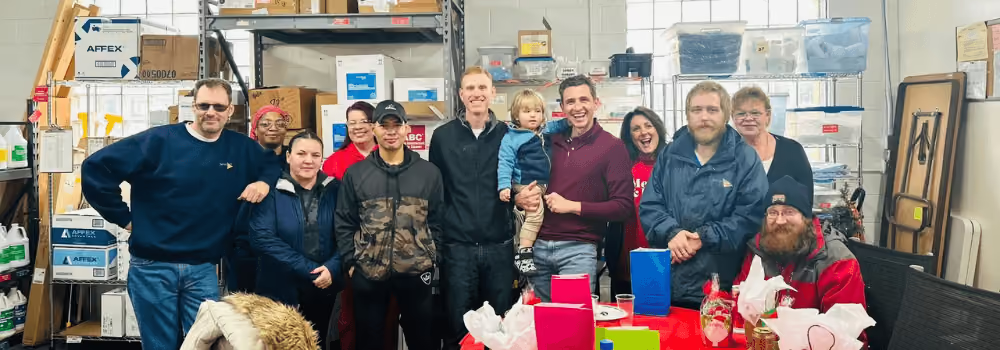



























































%20-%20thumbnail.avif)





%20-%20thumbnail.avif)


%20-%20thumbnail.avif)

.avif)




%20-%20thumbnail.avif)