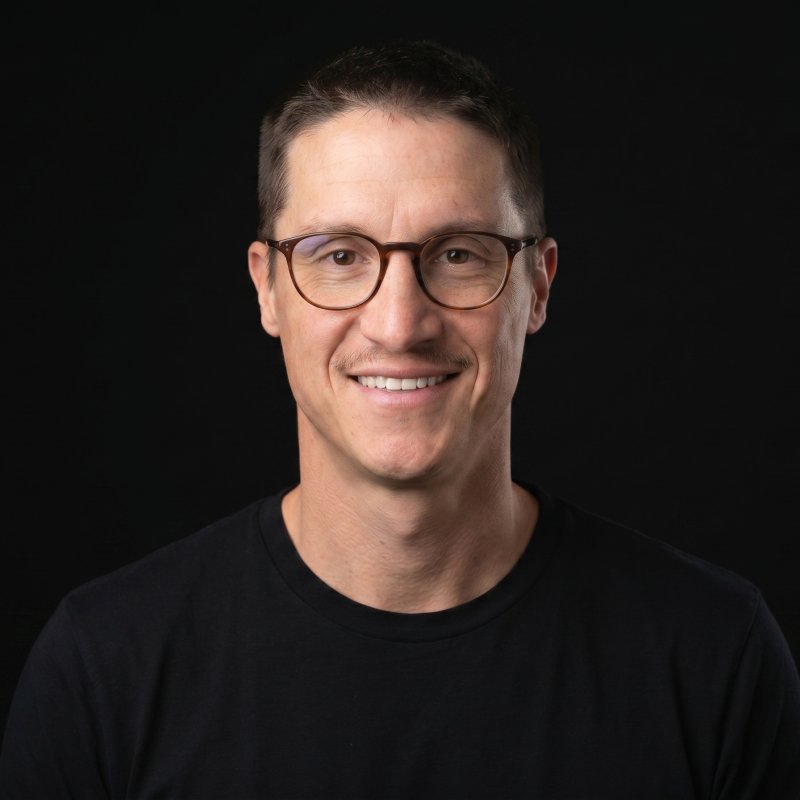
Host: This is an entrepreneurship podcast and I'm the first to admit that I engage in the glorification of big numbers. The higher the revenue, the faster the growth, the fatter the margin, the better. But you'll hear that the character of today's acquisition is a bit different. Alex Michael wanted more control over his life, more freedom, and he zeroed in on buying an e commerce business to achieve that. And achieve it he has. His life now is more serendipitous, less structured. To be clear, Alex is growing. His business sales are up over 30%. But it's not all about business for Alex. He's also now able to allow other interests to claim his attention, like writing and becoming a volunteer firefighter. And this is by design. It's exactly what he wanted. Another point, Alex reflects how the decision to buy a business caused a shift inside. He now finds himself saying yes to all sorts of things because by buying a business he set a precedent of living life on his own terms. It's a point none of my guests have ever made, even though I bet it's true for most of them. If you decide to join the ranks of acquisition entrepreneurs by doing this crazy thing of buying a business, that decision alone, that self affirmation, will probably cause a shift in you too, that you now see yourself as someone who seizes the moment and sets your own terms. See if Alex's reflections land on you the same way. Here he is. Alex Michael, Owner of Wallaroo Wallets. Welcome to Acquiring Minds, a podcast about buying businesses. My name is Will Smith. Acquiring an existing business is an awesome opportunity for many entrepreneurs and on this podcast I talk to the people who do it. I want to share an update on the Acquisition Lab. As you know, the Lab is a highly vetted cohort based accelerator and community for people serious about buying a business. After going through the Lab's month long intensive, you have ongoing access to almost daily Q and A sessions with advisors, regular live deal reviews with Walker Deibel, author of Buy, then Build Potential Deal Team introductions and a very active Slack group with other searchers on the path. Well, the update is that the Lab recently passed 60 businesses acquired and for well over $100 million in aggregate transaction value. Also, all members now enjoy lifetime access to the Lab because when you buy a business it's often just the first of many and and the Lab wants to support you in every deal, not just your first. Lastly, check out my recent interview with Shane Ursum, episode 105. Shane acquired a business with over $1 million in EBITDA in just six months. And he attributes a lot of his deal success to what he learned in the Lab. Check out acquisitionlab.com or email the lab's director, Chelsea Wood. Chelseieve Alex. Michael, welcome back to Acquiring Minds.
[3:13] Guest: Thanks, Will. It's awesome to be back virtually and existentially.
Host: Well, it was an existential year ago that we talked. You had acquired an Amazon FBA business in February 2022 called Wallaroo. The hero product of Walaroo is a living leather wallet that sticks to the back of your phone. And a lot has happened in E commerce, in consumer spending, since we spoke. And of course, you have now been in the business for 15 months instead of just those three. So we're eager to hear how all of this has played out both your personal journey and to get a window into an e commerce FBA business in 2023. So before we get into it, Alex, can you just give us a quick refresher on you and how it was that you came to buy an Amazon FBA E commerce business?
Guest: Yeah, definitely. I like to call myself a reformed corporate drone now because for, you know, eight or so years or whatever it was, that's kind of what I was. I worked in a number of different jobs from consulting to energy trading to the ticket business and then tech sales, which is the last thing I was doing. Uh, and I finally stumbled upon this wonderful world that you inhabit a lot of the time, which is acquisition, entrepreneurship. And I was like, I need to do that. I need to buy a business. And that was sort of my ticket out. Um, so I went through that whole process of, of looking for businesses and, and placing offers and getting an SBA loan and was fortunate and, and privileged enough to find Wallaroo and Walru found me. And, and here we are.
Host: Great. And remind us a little bit more about Wallaroo beyond just the one line that I gave it. Tell us a little bit about the business.
Guest: Yeah, so Walru Wallets, like you said, the hero product, and really still the Hero product is a, it's a stick on phone wallet. It's a little genuine leather wallet, sticks to the back of your phone with a little 3M adhesive and, and it holds, you know, three cards and some cash. And people seem to really love it, and they seem to love it before when I bought the business, and they love it even more now. So we're expanding a little bit. We're kind of staying in that, that realm of sort of the minimalist carry with quality and style and trying to stick to that kind of general brand ethos. Whether we're succeeding, I don't know. But yeah, that's the business.
Host: Cool. And it's an Amazon FBA business, meaning basically all the sales were via the Amazon platform. You have the product shipped from the port directly to Amazon. Amazon fulfills the entire logistics piece, right?
Guest: Yeah, for sure. And when we last talked, actually I was taking inventory in my house before I sent it to Amazon, which I've now changed to a 3PL, so I've got a 3PL warehouse up in Connecticut. They take possession of the inventory and then they'll ship it to FBA when it's ready.
Host: Great. Got it. Okay, Alex, well, just let's start with an kind of open ended question. How is it going?
[6:06] Guest: It's going well, I think. Somebody asked me the other day, like, has it gone as you expected? And the answer was the obvious like yes and no. I think a lot of things have definitely gone as expected in terms of people like the product. Amazon continues to be a great marketplace and running a business has engendered a lot of freedom. So I think the broad strokes have sort of gone as expected from a strategic perspective. Unsurprisingly, not everything has gone as expected, which is kind of the fun part, I guess. I mean, I think when we spoke I was like, oh, I'm just gonna flip on Shopify and start directing a lot of traffic there and getting all this revenue that I don't have to pay Amazon for. And you know, nothing is ever simple, which is the fun part, like I said. But so, yeah, I think strategically a lot of things, you know, I've tried a lot, I've had some expensive lessons, but overall things are going really well. From a top line perspective, the business is growing still. From a gross margin perspective, the business is growing still. And I think the, you know, the general outlook is very positive. And in spite of some of the things you alluded to in the beginning, you know, consumer spending is slowing down, interest rates are going up, my SBA loan payment has gone up. The, the indicators are all positive. People still like the products, they're still spending money on the products, and Amazon has not disappeared into oblivion yet. So those are all good things.
Host: Sure, they sure are. Well, let's put a few numbers behind this, Alex. So when we talk, when you bought the business, it was doing about $650,000 in sales annually. The product is a 15 to $20 product, 13 to $20 product, right?
Guest: Yeah.
Host: So that's, that's a lot of, of volume sales. I Think you were selling like 30 a day. I mean, you know, dozens a day. That's, that's the cash register ringing a lot of times. I remember thinking, which is a cool, cool thing, A high volume business, a high volume product business. And SDE was about 180, so, so that was of course pre loan. So the minute you bought the business that SDE basically halved due to the sba. What do those numbers look like today? Do you know, off the top of your head?
Guest: Yeah, so last year we did somewhere around 875k in revenue. Just remember that it was, yeah, the top line growth was really solid. And that was, I mean that was without launching any new products, which I think was the biggest positive. So yeah, bullet point underneath that growth that went really well. Advertising costs fluctuated. I think that was the biggest piece where I, I did a lot of experimentation last year. There was a lot of learning, there was a lot of testing different things. And so that percentage that I said, you know that total advertising cost of sale. Right. How much, how much out of that $15am I spending to make that $15? It was about 20% when I bought the business. And that's our sort of healthy overall target. That number has fluctuated and I've gotten it back down to about 18, 19, which is really nice. But it got as high as, you know, 26, 27%, which, you know, you think, oh, 6 or 7%, like that's a lot. But it's not much. Like that's a lot. And that was making a huge, huge difference. So kind of into the weeds there. But the point, point being, so that margin, you know, my margins kind of fluctuated a little bit as I played around with price, later on with advertising strategy, etc. But we're kind of back to a very healthy gross margin.
[9:29] Host: And when you say back to, does that mean that you basically kind of reverted to where your sellers had it or did you find a couple optimizations as you were expensively testing stuff?
Guest: Both, I mean the, the number, the number is back where the sellers had it. But the, the, the mechanism through which I got there is, is very different and I think also has more upside. And what I mean by that is we're trying to new placements on Amazon. We're trying things like sponsored brands placements, sponsored display placements. You know, my Amazon store has been revamped and redesigned and so, you know, the overall number is the same, but I think the way we're doing it allows that top line revenue number to get a Lot bigger.
Host: Oh, okay, great. And so that's tbd, that's kind of an investment for the next year or two.
Guest: Totally.
Host: That, totally. And, but, but then going back to the, to the increase in sales from 650 to 875, did that happen also because of what, what you were experimenting with or would that have happen happened anyway?
Guest: It's a good question. Probably a little bit of both. I think spending more money on advertising drove up sales. Like there's no question about that. And I sacrificed, I mean I consciously sacrificed a little bit of that margin in the beginning to grow the business because I just wanted to capture more market share. Whether there was a good idea or not, I don't know. It was probably ego driven on some level, but it worked. But the other side of it is it's a real, like I said a year ago, it's a really good product and people like it. And the business was going to grow whether or not I did anything right. So yeah, a little bit of both.
Host: And, and just to put some numbers behind the ad spend, you were at 500 bucks a day when they, when they bought the business. I assume they were or you were, but it was, that was the number that I left the interview with. And Alex, we, let's not get too much into the weeds on Amazon ad spending but because we all kind of hear about that Amazon's advertising platform is now one of its Amazon's own big revenue generators with it. Like if you own Amazon stock, this is something that you hear about a lot. But just give us a picture of it, just in brief. Is it really complicated? I mean it sounds like it's become like Google AdWords over the years has become an increasingly complex product. What's it look like to a total outsider? Give us a 60 second tutorial.
Guest: Yeah, the caveat to this is I have like a very cursory understanding of it and that's sort of intentional. So when I talked about all these different experiments I did, I started with something called Perpetual, which I might have mentioned in our last episode, that was an automated software to do Amazon ppc. I saw some issues with that without getting too deep into it. And so I started trying to learn and do it myself. That worked well. But to your point, it's complicated. I mean it takes a lot of time. Like it's not rocket science. You can figure it out. It's sort of a little bit art, a little bit science, but you can figure it out, but it just takes a lot of time. And I just don't want to spend my time doing that stuff. So I ended up going through various agencies and hired an agency to do it. And so I pay them about $2,000 a month now. But to answer your question, like, you know, again, it's not the most complicated thing in the world, but it can become a huge time suck. And it's very sort of mechanical and methodical and stuff I don't really find interesting.
[12:43] Host: Okay, fair enough. The. And just circling back to the numbers, and then we'll move on a little bit. Your SDE where given where sales grew to, but also the increase in ad spend, and then you kind of leveled back out at 17, 18%. What, what, what's your ste look like today? And with the increase, the increase rate on your SBA loan, what's SDA look like today for. For people to understand?
Guest: That's the. Yeah, yeah. So many acronyms. I don't know. And the reason I don't know is because I've. I've had a lot of these little experiments and these little projects where I'm investing. So for. Here's an example, right? Like, I've totally revamped my data. Excuse me, a brand guide, changed my logo a little bit, revamped some of the listings. And so those are things that cost a fair amount of money. In the front end, I think they will return something. Well, on the back end, there are signs that that's happening, but maybe not. And so my sde, like, technically, my SDE probably looks terrible right now because I spent a lot of money on, you know, just investing back into the business this year. But the reason I brought up, like, gross margin, for instance, is it's about the same in terms of, like, what they call the contribution margin. And contribution margin is just like, it's. It's essentially net margin before, you know, things like reinvesting into revamping your listings, et cetera, et cetera. So, yeah, short answers. I'm not really sure. My loan payment has gone up to about 9,200 per month, up from 7,300. So that's substantial.
Host: Yeah.
Guest: You know, but revenue's growing, right. And so there's more money to play with. I'm launching new products. That's a lot of upfront investment. I'm figuring out the cadence of inventory ordering, and I still have not figured that out. You know, the whole cash flow equation, which I'm not great at yet. So. Yeah, I wish I had a better answer for you. I don't know.
Host: Well, well, here's. Here's a kind of a litmus test. You were, I think you were within days of giving notice to your job when we, to Your, your last W2 when we spoke that did happen. I saw, I saw on social media. So you have been solely or. And or gainfully employed by this ever since. So whatever your SDE is, it's paying the, paying your personal bills.
[15:00] Guest: It is paying the bills.
Host: Okay, Alex, a couple, couple things just to kind of circle back. You've already touched on a few of these. You just mentioned the quality of the product. And, and one thing it took me many, many interviews to, to, to ask about people, their, their diligence when buying a product business or a service business is how do you know if the actual deliverable of whatever it is the business that you're acquiring delivers is good? So you know, what, how do you know if you're going to buy a landscaping business that you know your, your team is good and, or versus they're just doing shoddy work? I mean, everything might check out. And then you buy the business. Day one, you find out that, like, your team is crappy or, you know, the services you deliver is crappy. Same with, same could happen with the product if you didn't diligence it properly. But I suspect a lot of people don't. Did you diligence it and, and now that you found that, now that you definitely know as owner of the business that the quality of the product is high, was that. Yeah. Was that because you diligence it or did you just get lucky?
Guest: Yes. I think it's interesting because there's kind of a question behind your question about buying a business in general and diligencing a business in general, which is like, at what point do you have you done enough diligence and figured out is this a good business, is it a good product, et cetera? And it's such an interesting question, and I don't know the answer to either one necessarily. But what I relied upon a lot in my search and in my diligence was finding like, what I believe to be reliable proxies. And what I mean by that is like, so for instance, I told you I went through Quiet Light Brokerage. Quiet Light is a very reputable online business brokerage. There are tons of online business brokerages. A lot of them suck. And that was my, that was my first proxy for like, okay, this is a, this is a first level of filtration. Right. Is that foolproof? Obviously not. But the reason I bring all that up is because I think with the Product my proxy was, this has, you know, 3,500 reviews it had at the time. And if you, I mean, just go and read through all those, like, yeah, if it had seven good ones, okay, fine, who knows, right? A lot of people were really happy with this thing. Then obviously I brought it, I bought it, played with it myself, gave it to my parents, all this stuff. But I think it's just about finding reliable proxies and I think that's true for life as well. Like you, you can, you can think yourself to death about anything. But I think at a certain point you've got to like find a reliable mechanism through which to assess something and trust that and then make a decision.
Host: Yeah. Anyway, that is so well put. Absolutely. A lot of life can and should be lived by proxy. But your diligence as well, or to the extent that something can't be diligence directly, rather than throwing up your hands and giving up and saying, well, I hope that works out, look for a proxy whereby you might be able to diligence the thing indirectly that you're having a hard time diligencing directly. Great, okay. So you had talked about wanting to diversify off Amazon and I think you've already given us the hint that that hasn't played out exactly as you thought. And that is something. So I want to just kind of hear you riff on that because that is something you'll see in a lot of the listings for e commerce businesses. It's like, oh, this is only being sold on Amazon. So the opportunity here is to, you know, do Shopify, do your own standalone site. And for people who know, know that that is not trivial at all. I mean, there's the logistics piece of that. But also, just how are you going to drive people to this, this new Shopify website? I mean, if we could all just flip a switch and get traffic to websites, we'd all be gazillionaires. That's hard. So what have you found?
[18:26] Guest: Yeah, I found exactly what you just described very well, which is, you know, it's not as easy as flipping on a switch. I think even, even having come into being, buying the business with a little bit of Shopify experience, I was still very naive about the level of effort it would take. And so I sort of spent, I spent a lot of money and a decent amount of time, like in a half assed attempt to try to do that. And so I dipped my toe into the waters of, you know, spinning up some Facebook ads and redoing the website. And the website looked Good. And the ads were probably fine, but I was so, like, I was so half in, half out in that effort that it just, it was just a money suck. Right. So I talked about expensive lessons. Like that was an expensive lesson. And the lesson was I really needed to focus time and attention and money on doing it. And so it's still a huge priority because to your point, I mean, you look at these listings today now, like I don't think people want to buy just an FBA business anymore. I think it's, you know, there's platform risk and people are becoming more and more aware of that. And so I still am very focused on making this happen. But it's more like now I know I need time or I need to be able to hire somebody that has time. I need capital and it needs to be a very serious intentional effort. So there will be more forays into that, but it's, you know, it's going to look a little bit different, I guess.
Host: Yeah, yeah. And then you just have to ask yourself about opportunity cost because the, you know, the initial thousand dollars you put into your Shopify effort, maybe that could just go into something else. Doing something else on the Amazon platform to, to juice. To juice sales there.
Guest: Exactly.
Host: Time or money better spent.
Guest: Yeah, exactly. Oh, and that's, I'm glad you brought that up because that's the piece I actually just missed in my response, which is that was what I learned early on too is like I have this great Amazon business and I could, I can just throw more money at that on that fire and it's going to grow right like that. You know, there's, there's lower hanging fruit within the Amazon side of things. And that wasn't as clear to me as it is now.
Host: I think we've been clear. But let's just make this as explicit as possible. If you're shopping for an E commerce business and it's an FBA business and there's no Shopify sales to speak of or anything off Amazon really don't treat that as, as something easy to do. It's, it's a whole other, almost a whole other business. I mean, you already have a product, you already have product market fit. You know that the product can be sold to consumers if it's already selling successfully on Amazon, you have a, a supply chain for your product, but it's an entirely new market. So it's like starting up, starting from a standstill in a new market. Because remember, if you have an FBA business, you also don't have the Emails, you have no contact information for your consumers. The people buying off Amazon. Amazon is extremely, frustratingly stingy about that. I think there are workarounds, but you really can't even directly communicate with your Amazon customers to somehow funnel them off or at least get feedback from them or whatever. Of course, you can always be reading your own reviews. There are ways to glean a lot of market intelligence from Amazon, but you don't have any direct contact with the consumer. In theory, you already know that business owners are making amazing use of virtual assistants, often based in the Philippines. And while virtual assistants are helpful, virtual professionals are transformative. More Staffing is a boutique agency that hires a players in the Philippines not for simple tasks, but for deep competency work. Think operators, supply chain managers, controllers. More Staffing de risks your engagement with a 12 month guarantee to you and they provide coaching for six months to their talent. When an engagement begins, that means your hire is coached in the background, no additional cost to you, so that your working relationship flourishes and is as successful as it can be. Global staffing is increasingly the norm and building the muscle within your business to take advantage of it will be crucial in the years ahead. Speak with More Staffing about the pool of capable, affordable managers they can connect you with. Check out Morenow Co. That's Morenow Co.
[22:37] Guest: I just want to point out, it's, it's very clear to me, like it was obvious that you were very good at this when we first spoke, but like talking to you a year later for somebody who doesn't own an FBA business, like yeah, you are dead on in everything you're saying and it's a, and, and you're, and you're bringing up really important details that aren't self evident when you go through this process. So I think this is really valuable for your listeners and I just want to give you a little, little bit of props because I know you're not going to do it yourself.
Host: I appreciate that, Alex. Yeah, I do.
Guest: Thank you.
Host: Yeah, I'll have to decide whether or not I'm going to leave that in. Maybe I will.
Guest: Fair enough.
Host: Okay. Before we're going to move kind of into your personal kind of journey about this, this whole adventure in a minute. But last kind of in the weeds question about the business itself, you had touched on launching other products. That was something that you, that was definitely a plan of yours a year ago and you touched on in this interview that you're working on that. So talk a little bit more about that.
Guest: Yeah, we find it took me Some time. We launched a magnetic version of the phone wallet earlier this year and so that's up on Amazon now. There's a lot of early momentum, but I think that's partially because we priced it really low to start with. So we'll see how that goes. But as of now, that product launch is going reasonably well. And then we're about to launch a product that my sister had the idea for and it was brilliant. And it's just, it's like the fun of like having a business and your family gets involved. It's so cool. But anyway, we call my sister Wheats. And so the internal code name for this project is the Walla Wheats. I don't know why we call her Weets. That was just the nickname she got as a kid. So anyway, the Walla Wheats is in its been produced. It's on its way to the warehouse and we're going to launch it soon. It's like a little. It's a. It's a minimalist card holder with a wrist strap. So it's targeted women. Yeah. So it's a sweet product. Such a good idea. I think it's going to do really well and I'm really excited about that one.
[24:34] Host: Cool. And is that not a product concept that yet exists at all?
Guest: So it's interesting on Amazon, like, not really. Not executed very well. And she, she actually ordered it from a similar product from another website and was like, this thing is awesome, but it's like 60 bucks and it's not as awesome as it could be. And so, you know, she kind of had some input. And then my parents, like, my parents have been so involved and so helpful throughout this process. And so we have these little like family meetings that were like, what about if you do this? And then my mom had a really good point about, well, what about the little clip and all these wonderful contributions? Anyway, that doesn't answer your question. But the point being not really. I mean, not executed, I think, as well as we. We executed it. That remains to be seen. But anyway, really cool. Yeah.
Host: Alex, actually one more in the business. So just reflecting back now, do you think that is there anything about the business that you bought that you kind of didn't see and don't like or would have done differently? I mean, you know, any kind of, I don't want to use the word regrets, but just kind of reflecting back or any kind of would have, should have, could have emotions there.
Guest: No, none whatsoever. I would make the same decision again in a heartbeat. And yeah, the guys, Gabe And Cam did. Gabe. Gabe and Cam did an amazing job. They're, they're really smart guys, really good people and they build a really good business. So I know I said that a year ago. I believe it as strongly as I did.
Host: Yeah, that's amazing. We've touched on the freedom aspect to this. So you were seeking a new level of freedom, something that corporate life had not afforded you. And I noticed that your Tagline on your LinkedIn is working on what feels interesting. So that feels like, that feels like somebody who's in control of their own day, which is awesome. So did this path of buying an E commerce business afford you the freedom that you were seeking?
Guest: Yeah, and on more than a one to one level, I think the LinkedIn tagline is very telling. So something really interesting came from buying this business. Freedom came from it in the very tangible sense of I am not tied to somebody else or their schedule. But what also came from it that I think is way more powerful, that really strikes me now is that in buying the business, I essentially gave myself permission, I gave myself permission to start living life on my own terms. And so that decision, that move was a message to myself that said you don't have to operate within the cultural constructs, within the narratives that you've accepted from other people, from society, from whatever. So I think it's engendered freedom both in the. I have freedom over my time and my schedule and that's awesome. But also in a deeper sense of I feel more like existentially free to pursue things that I feel interesting and put stupid Taglines on my LinkedIn and not really give a shit about what the response is going to be. And I think that's, I think there's something extremely powerful with that. And so since, since that happened, I found myself like saying yes to so many serendipitous things just because I have, I gave myself permission to say yes to whatever want to say yes to. And it's just crazy. I mean, I have three businesses now. I'm, I'm working to become a volunteer firefighter. I write a bunch of ramblings on the Internet and maybe people read them, maybe they don't, but I just genuinely really like my life now. And I couldn't imagine saying that even a year ago. Honestly.
[28:14] Host: You know, that reminds me of a little, a little insight that I had about life a long time ago, which was when I, when I was grad graduating college, I was, I had a kind of dorm room business web thing, small, but enough that it could support Me, and I was considering, I was applying in all kinds of conventional consulting and programming jobs or going full time in this business, and I decided to go full time on that business. And so that set me on a path of basically being like self identifying as an entrepreneur, even though I clearly already was kind of being entrepreneurial by doing this on the side in school. But, but also my phrase is it set a precedent. And so I like, I set a precedent that this is who, like this is the decision. These are the types of decisions I make. I make the entrepreneurial decision. I make the, the decision, the ambiguously, you know, unclear, you know, off the beaten path or whatever decision. And it just, it made making similar decisions like that in the future more natural, more obvious because I'd already set the precedent that this is, that this is who I am. So I often think where there's a big decision looming because we all kind of like do the pros and cons, the immediate pros and cons, but there are these subtler pros and cons. And one of them is always like, what precedent are you setting by, you know, taking the left fork in the road versus the right? Because there's a little bit of an investment there. It'll. It'll likely entrench you in a similar decision the next time that a similar decision comes along. So I like, I like thinking about big decisions in terms of setting precedents as well.
Guest: So. Well said.
Host: Well, let's get to your writing. I didn't know about the firefighting, but I am one of, one of your audience members, one of your readers, and one of your most. I didn't catch the date. I think it was pretty recent though. You wrote about productivity, so can you give us the 60 seconds on it?
[30:07] Guest: I think with the productivity thing, part of why I wanted to write about it is because usually what gets said about it misses the point. And so essentially what I wrote, I called it the lazy emotional path to productivity. And basically it was like, I don't like my style. I don't, you know, I sleep past 11am all the time. Like, I'm lazy. I don't like to work very much. Contrary to the fact that I have three businesses, I actually don't work very much and I don't. I'm not a structure guy. So my point that I was writing about wasn't necessarily that that is or is not the way to go about, you know, living a productive life, but it was more the fact that like a lot of the stuff that we read about when we Read about productivity, like all this, you know, pomodoro techniques and time boxing and all this crap that people do. Like, it's just an emotional, emotional coping mechanism. Because really, I think a lot of the time we're not productive because we're scared or we're sad or we're whatever. Like, it's usually an emotional problem. So if it happened actually with Walru, for me recently is I was spending a bunch of time tweaking the listing of my stick on Wallet, which is a product that does tons of revenue already. It's doing really well. And I had already optimized it, so there wasn't much left to be done, but I was still doing it. And finally I was like, why am I doing this? And I was doing it because I was scared. I was scared about the product launch of the Waluits and I was scared that it was going to fail. And so I didn't work on that because I was scared. So I wasn't being unproductive because I wasn't like blocking my time or whatever. I was being unproductive because I just wasn't dealing with whatever like, emotional shit I had. And so, like, anyway, that was sort of the thesis of the essay was like, your productivity problem probably isn't a. Is not a tactical issue.
Host: Well, you're a great writer, man. Really, really fun to read your words. So keep at it. And I assume as a writer you always kind of have the next essay or two or three concept kicking around, so. So what can we expect from you in the months ahead? What topics?
Guest: Oh, it's a good question. My parents. I want to write about their marriage because they are the most different people that I know. Like, they're so different and they have the best marriage of anybody I know. And I want to explore that and the fun part. One of the things I love. Yeah, one of the things I love about writing too is that, like, I'll just have a general idea of something, but of a topic and I'll start writing and the essay will become something completely different. So, like, I don't know why it is that they have a great marriage necessarily, but through the writing I'm going to have an idea afterwards and then I'll share that and then everybody can be like, ah, that's true, or that's not true, or whatever. It's fun. I love it. So that's one of them.
Host: Last question for you, Alex. We have heard about, you know, your freedom and this has allowed you to open yourself to all kinds of kind of saying yes to a lot of different stuff that you might have felt uncomfortable saying yes to before. The question I like to now ask is, what muscle have you built through this process of buying a business? And what muscle has atrophied?
[33:01] Guest: Ooh, that's a good question. That's a really good question. I think the muscle I've built is exactly what you touched on, that we touched on, which is just if I find that if I feel that energy of like, yes. Of interest, of magnetism, like just saying yes and not thinking about it or not putting it off or not creating a time delay in between the stimulus and the response, that muscle has been developed a lot. And I think on balance, that has been a huge positive. What muscle has atrophied? That's a good question. Paradoxically, I think my work muscle has atrophied. Depending on how you might define work, like, I feel a lot less. We talked about the writing. Like, writing is currently the thing that I love doing the most actually. And I spend a ton of time writing. And so if you consider that work, then my work muscle has actually grown. I write all the time, but I actually don't feel all that compelled to like, work on business stuff most of the time. And I don't think that's a bad thing necessarily. I think maybe I could be a little bit more structured with when, like designating time to work on business. But I think it's. I've. I've maybe over indexed so much the other way of just following whatever I want to do that I gotta be like, sometimes I gotta be like, all right, but you still have to, like, run your business, dude.
Host: Well, that's great. Alex, is there anything about. About this buying a business, buying an E commerce business journey of yours that I didn't ask that you would want to impart to people?
Guest: Probably not. You ask really good questions. I mean, I think you know, and you also. It's funny, I've had a lot of conversations with people that have watched the last episode we did, so you obviously have a lot of listeners and they're all awesome. Like, everybody I've talked to has been awesome. I talked to this guy Darryl the other day and wonderful guy in Houston who's thinking about doing this. And I think, like, I'm so glad I told you this before we started recording. Like, I'm so glad that you're asking about the philosophical side of things, because we can talk about business and tactics and all this stuff all day, but, like, the end of the day, it's like, why are we doing this? Why do we do any of this? Why do you have your podcast? Why do I buy a business? Why do I go pet the dog? Like, you know, that's, I think that's sort of the, the essence of living is just asking why and maybe approximating what we think the answer might be in that moment. And so, yeah, I think for your listeners, like, as they're thinking about buying a business, like, think about why and think about, you know, everything within the context of why they're doing what they're doing. Great.
Host: Well put. Perfect note to end on. Alex, Michael, thank you very much for coming back, sir.
Guest: Thanks, Will. It's a pleasure.















































%20-%20thumbnail.png)




%20-%20thumbnail.png)


%20-%20thumbnail.png)

.png)


%20-%20thumbnail.png)