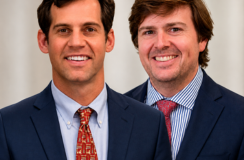
Host: I'm so excited to bring you this episode. My two guests, Bradley and Logan bought, grew and sold a local landscaping business in Austin, Texas. You know from the headline that their sale price was eye watering, especially for a couple guys not yet 30 years old. So the story itself is spectacular, from not knowing what a search fund was in 2017 to selling the business they'd acquired to a public corporation just three and a half years later. But what I actually love most about this conversation is all the strategy that got them from point A to B. We go deep on how Bradley and Logan took a project based business with chronic and existential cash flow headaches and made it a recurring revenue machine with a predictable sales function. Now their business happened to be landscaping, but the lessons you'll learn here are applicable to so many service businesses which where there is both project revenue and contract or recurring revenue to be had. Now you already know how coveted recurring revenue is as a searcher, but it needs to be emphasized in Bradley and Logan's case, it made the difference between a fragile hanging on by their fingernails landscaping business to one that was healthy and growing fast and beating its competition and ultimately worth eight figures to a large and sophisticated acquirer. Now quick aside about that sale number. You'll hear at the end when I do some quick math to arrive at a number in the 25 to 30 million dollars range. Just to give some more space to that here, though Bradley and Logan of course can't disclose any information about brightview's valuation math and acquisition price. But there is an article on the industry site landscapemanagement.net that says Brightview acquires at between five and seven times EBITDA, so call it six. I assume that's from public filings, Brightview being a publicly traded company, then the 2019 revenue of WLE, Bradley and Logan's company is listed on that same industry site's top 100 list from that year as 23.5 million. Finally, industry standard EBITDA margins in landscaping are in the low 20s. So if you multiply all these numbers together industry margins by WLE's revenue in 2019 by Brightview's average acquisition multiple, MyMath gets $28.2 million. So this is just me on a napkin obviously, but it seems like a fair way to calculate their sale price much more specifically than just saying eight figures. Of course I couldn't get any confirmation from anybody, but mid to high 20s feels realistic to me. Now I like to know the numbers, especially the big ones, so hopefully I didn't lose you in the weeds there. Okay. And lastly, this interview is over 2 hours. I feel like this intro is almost over 2 hours. I tried to cut but there was just so much good stuff. I really didn't cut much at all. So it's in two parts. I release part two on Thursday. Please enjoy this story and education from Logan Brown and Bradley Rufner. Welcome to Acquiring Minds, a podcast about buying businesses. My name is Will Smith. Acquiring an existing business is an awesome opportunity for many entrepreneurs and on this podcast I talk to the people who do it. Wouldn't it be great to have experts at your back when buying a business? People to help you polish up your pitch and processes as you go to market as a searcher, then help you evaluate opportunities once you get some deal flow. Such experts exist buy side advisors, but they'll cost you to the tune of tens of thousands, even hundreds of thousands of dollars. But another option exists, the Acquisition Lab. The lab is a do it with you buy side advisory service, not do it for you. Founded by Walker Deibel, author of Buy Then Build, the Lab represents Walker's vision for what is most needed to make a searcher successful and available at an accessible price. It's cohort based and you will come out the other side of your cohort prepared to go to market as a savvy searcher with a tight message in process so brokers take you seriously, pre approved for a loan and with an entire community at your disposal to help you along the journey to buying a business. To learn More, check out acquisitionlab.com, link in the show notes Bradley Roofner and Logan Brown thank you for joining me today on Acquiring Minds.
[4:49] Guest 2: Thanks for having me.
Guest 3: Thanks Paul.
Host: Last year the two of you sold a landscaping business to Brightview. Brightview is the very large landscaping corporation publicly traded that's known for growing through acquisition. And you yourselves had acquired the landscaping business that you sold to Brightview. So this is a story of two acquisition entrepreneurs buying a small local services business, growing it and selling it to a much larger player some years later for I think it's safe to say a solidly 8 figure 7 some. We'll get into that later in the interview. Today we are going to relive this journey and glean what we can from it because I think that what you guys have done is really the dream for many, many people in the Acquiring Minds audience. So let's start off with some background. Please share with us how the two of you met.
Guest 2: Yeah, so Bradley and I met in actually our first two weeks of college. We were going to the University of Texas at Austin. We were both interested in business. We were pledging the same Christian fraternity at ut, and we met up over a dinner and we actually, like, shook hands. 50, 50 after that dinner on splitting up a business that we knew we wanted to start at the time together. And yeah, that's kind of the origin story. That was 11 years ago.
[6:20] Host: Well, what transpired in this conversation or this first meeting that gave you both such confidence in the other that, you know, you. You went in 50, 50 on a. On a business, on a partner.
Guest 3: Yeah, I think we just. Just saw, well, that we just had, you know, kind of tremendous overlap in mission, vision, values. What we wanted to do with our lives we want to spend our time on. And it's kind of like a moment where it was like, you too? Like, we had, you know, just such compatible views for our lives and what we wanted to do that it just made sense to. To work together, start, start right away, not lose any time. And, you know, I think we were always, you know, just enamored with the idea of having equity in something. We were both entrepreneurs wanting to grow a business or businesses and just really wanted to start right away.
Host: And I mean, that's incredible to that kind of origin founding story and meeting and immediate compatibility. Were you both, as kids, kind of investing nerds, entrepreneurs? Give me just a little bit of your respective personalities.
Guest 2: Yeah, yeah. Investing nerds is probably a good way to explain it. I mean, we were both high school entrepreneurs. We both had dads that helped us get interested in business at a pretty young age. Ironically, actually, both of our dads had us investing in stocks at a pretty young age. My dad loaned me a little bit of money to go pick one stock. I picked Apple. So that worked out pretty well. And then I started a small car wash. Yeah, exactly. That didn't hurt. And then I started a small car wash, pickup and delivery service when I was 16, when I could drive. That was like my first foray into business.
Host: Yeah.
Guest 3: And my dad was having me read 10Ks and publicly available information when I was young. He puts together a program for me where every year I'd get a pick from a couple of different stocks that were available that would be interesting to somebody at different ages in their life. So when you're 7 or 8, you're looking at Hasbro, Mattel. When you're 14, 15, you're looking at Disney or another entertainment company, Chipotle. You can have a car, Ford or gm. So every year we would talk about you know, different companies available, and I'd get a pick, you know, a stock that was fit to what my interest would be, different ages of my life. And I just always love, you know, thanking people for supporting my business whenever we would go, you know, have Chipotle or see a Marvel movie. So I always understood that fractional ownership, you have a piece of the, you know, the income of, you know, whatever the spend is within the company. So I got into that way and then became an entrepreneur in high school. I had my own catering business and, you know, just felt that bug since then. So.
[9:15] Host: That's great. Well, I've, I've heard the, you know, parents getting their kids interested in investing story before, but that, that wrinkle, Bradley, that your dad, like, gave you a basket of companies to choose from, that that mapped to your interest, where you were in life. That, that's a. Definitely a clever detail that would, you know, make a kid even, even more engaged and use that one. Okay, cool. So I assume and are you guys both from Texas?
Guest 2: Sure are, born and raised.
Host: Okay, great, great. Okay. So you meet, you said it was your, you said it was freshman year when you were pledging?
Guest 2: Yeah, we met our first two weeks of college.
Host: First two weeks of college. Incredible. Okay.
Guest 2: Yeah.
Host: And did you each already have an idea of what sort of venture or fund or something that you wanted to start this, this 5050 partnership was in? What, what was the, the vision?
Guest 2: So the first thing we did was we were selling golf hats, actually. So we were using an idea that Bradley and one of his other high school buddies had come up with, which was to put golf tees into hats. So there was like an elastic band that you would put the tees in. It was basically just so you could keep up with your golf tees while you're playing instead of sticking them in your pocket or sticking them up in the hat and stuff like that. So we had a dinner where Bradley shared this idea, and I was like, man, this is a brilliant idea. We should definitely do this. And so that was actually the first business that we split 50, 50. But I do think from pretty early on, I don't remember exactly when, but pretty early on, we had the idea of one day having an investment partnership. We really looked up to people like Warren Buffett and his model for partnerships that he had, like back in the 60s, was like kind of this friends and family thing that just kind of grew out of this high quality group of investors and friends that he had, and he was investing in the public markets. And so we Kind of wanted to have, like, one of those types of investment partnerships. So we knew that pretty early on. And we ended up starting a fund before we left college. So we got our Series 65 licenses and we put all the documents together. And lo and behold, we had a hedge fund before we left the University of Texas. So that's what we were doing kind of our junior and senior year after we wrapped up the whole golf hat thing.
Host: And what happened with the golf hat thing? Did you bring a product to market?
Guest 2: Yeah, so we were selling it mainly to companies that were putting on, like, events. So they do, like a charity golf tournament, and we'd sell branded versions of our hat. And it was kind of like a unique giveaway item, gift item at the end of the tournament. And we were working the whole time on getting some intellectual property on it. We were trying to get a utility patent and a design patent on the product, and that was a great learning experience. But we weren't able to bring the utility patent process to close. And so there were a couple companies that we actually had some really fun conversations with that were somewhat interested in buying the patent and helping, you know, or having us help them design some products to release ahead. Headgear was one of them, and Under Armour. And so we got to have some great conversations as college students with these companies about trying to sell our product to them, but ended up not working out and kind of falling apart at the end because we couldn't get the patent.
[12:43] Guest 3: But, yeah, I don't think we'd call Hattie our screaming success.
Host: No.
Guest 3: But, you know, I think one thing we care a lot about is just starting young and having equity in something, like being able to viscerally, viscerally feel the wins and the losses of having ownership in a business. And we just were able to learn so many lessons early, right before we got into a bigger venture like WLE that I think served us well. And everybody is interested in talking to student entrepreneurs. So that was a very helpful card for us to be able to meet people, to grow our network. So we're really glad we did start young. We're always advocates for young people to just try something.
Host: Yeah.
Guest 2: Well.
Host: And so speaking of age, how old are you guys now?
Guest 3: Well, it was the ripe age of 30.
Guest 2: I just turned 30 in September.
Guest 3: Yeah. And I'm 29. I'll be 30 in February.
Host: Cool. Great. Okay. So you are working together through college. I assume you're working on that business. And then you said by your senior year, you decided essentially to do essentially a Hedge fund. Right. And you had kind of shuttered the, the, the golf hat business. And so what. So tell us kind of what was the story there? You raised money from investors, you were seniors with this fund. You were going to go, this was your vision for the next 10 years. Talk, talk, talk us through kind of that next step in your careers.
Guest 2: Yeah, this is a, it's a pretty fun part of the story. So we have this hedge fund, we're going into our senior year, and we just got it up and running over the summer of our junior year, going into our senior year, and we go to start raising money. And we're raising money under the premise of us operating a long only, kind of small cap, micro cap value investing fund. So investing really small companies, no shorting, investing equity in there and along for the ride. So we go to raise money, and the first meeting surprisingly goes really well. And, and the person says, all right, great, I'll give you some money. I think they wrote us a check for like $50,000. His name was Greg Davis. I was like our first investor after Bradley's dad. And so we were so excited coming out of that meeting, and that got us some momentum. And we kept raising money for the next several months as we're getting closer to the end of that year. And it was going really well. But eventually we kind of looked up and realized, like, these meetings are going really well, but now we've raised like, I don't know, $175,000 or something. We're like, if we're leaving college in six months, this fund is not going to be large enough to sustain our lives. So we're raising money pretty slowly. And I think we came to the realization that people are not going to write massive checks to two seniors in college with a fund like we were getting mainly people who just believed that we were smart and hungry and they wanted to support us and they liked our idea. But we weren't like talking to an endowment who was going to seed us with $20 million or anything. So we changed our strategy up a little bit and we started looking for a big strategic investor that could kind of anchor the fund and then we could pitch that person's credibility and all the due diligence they would have done on us to decide to invest in us to the next round of investors, you know, so on and so forth. Yep. So we ended up catching a really big break. And we met a guy named Steve Kuhn, who became kind of the anchor investor in our, in our fund. And he ended up Also becoming a large investor in our deal to do wle later. And so he was, yeah, he's a huge part of our story and was a great mentor to us as well as we were building out the hedge fund and that's when things kind of got rolling for us. He joined, helped kind of advise us and made a big investment into the fund early on.
[16:43] Host: And when you're raising a hedge fund, your first fund, and you're young, what is the asset number that you're targeting? You threw out a number 20 million. Is that the number or what? No, no.
Guest 2: That would have been awesome. We were really targeting like we were trying to get it to a million buc bucks in the fund was really the initial target. And we were trying to raise ideally like 100 grand or so from each person was kind of the target. But you know, as we've, you know, gotten older, I feel like we realize now everybody states a minimum in a fund, but unless you're like Bridgewater, very few people are too serious about that fund minimum. You know, like you'll, if somebody says, hey, I'll give you money, it's pretty hard to turn that down unless you're well over subscribed. So we were taking checks anywhere from, I think our smallest investor was probably 25, and then our largest was about half a million, 600,000.
Host: Okay. And so what had changed about your strategy when you realized that you were raising too slowly was simply that you needed to get this kind of cornerstone investor, but you still were, you know, full seam ahead on the idea of doing a hedge fund.
[18:01] Guest 2: Yeah.
Host: So you get this gentleman, you get this gentleman, Kuhn Azure as your kind of your cornerstone investor. And then can you share what number you eventually do get to? Is it a million bucks?
Guest 2: Yeah, so we got to. Right, at a million. Exactly. Okay.
Host: Okay, great. So you're now what, a year out of school or you've just graduated, you've got this million dollar million under management and your intention is to do public market investing, but small micro cap, you said, and buy and hold. And then what happens? How does the strategy evolve?
Guest 3: Yeah, so we started and we were having a very long term horizon mindset with this fund. So we were thinking this was going to be our partnership, the beginnings of the partnership. We would invest this capital, we'd grow this capital over a long period of time. So starting with a million dollars for us was just amazing. And we started making long only value investments in the small cap markets. And we were trying to find areas where we could have edge, which that caused us to move lower and lower and lower down the market cap spectrum in the public markets. So eventually I guess we started looking at anything under about a billion dollars in market cap. Then we moved down 500 million and then we were looking in the tiniest, most inefficient, least followed parts of the market, which is like equities, less than $10 million in equity value to where our capital could actually be a meaningful stake in those businesses. And then we just found that there's several opportunities, several publicly traded equities that probably shouldn't exist. And the public markets, it doesn't make sense to bear the fees associated with making all the publicly required filings. Maybe there's a reason why it should be removed from the public markets. So then we got interested in doing more active style investments in companies where we would take a larger stake in the business and try and influence management. So after about a year doing the delist,
Guest 2: not necessarily. I mean I would say it was a general shakeup. So we would be throwing out a few different potential strategies to the management as to what we could do. So it might be like liquidate, it might be replace the management team. Like you're taking advantage of these people, we need to get somebody else in here and kick you out, that type of thing. It could be dlist, it could be like a take private or a have somebody as a part of this liquidation strategy take the company off the publicly listed markets.
Host: I have to say guys, as whatever, 22 year olds with a million bucks, you were awfully Carl Icahn esque.
Guest 3: I don't know about that. We were just trying to find edge for our capital. We're competing against other people who have gone and gotten Harvard MBAs with billion dollars under management. Right. So how do we position our capital and our intellect in ways that are different and that are parts of the market that those people can invest in was kind of our strategy. You know, I think that's something that we, we kept learning and kept iterating on with our investors. And we were just starting to realize like even in the small cap markets, if we found a value stock that we were really excited about, we might be paying eight times for that business, we might be paying 12 times for that business with no real catalyst for how those businesses would increase their value. And if we were getting involved in a micro cap stock, just the cost of accumulating those shares, the illiquidity in that part of the market, how challenging it is to be able to buy up enough of the company were all barriers to us. So as we were thinking about a strategy shift, which we can talk more about in detail, it started to become more overwhelmingly obvious that our ability to buy an entire private business at a much lower multiple than we'd be excited about in the, in the public markets was probably going to turn into a better long term trade for us and our investors.
[22:09] Host: It's such a big pivot in strategy, not only just sort of financially speaking, but it means that you become entrepreneur or maybe you weren't thinking about this initially, I know the end of the story, but it meant that you were going to become active investors, entrepreneurs, operators rather than guys kind of, you know, behind screens making investment decisions. So yeah, Bradley, you said like we could get into it a little bit more. Share, just share whatever additional detail is relevant here. I think it was such a fateful pivot. August Felker is a two time successful searcher. First with a traditional search fund. The second time around he did a self funded search. Today August runs Oberle Risk Strategies, an insurance firm with a dedicated practice group for searchers and acquisition entrepreneurs like you. If you've got a business under loi, Oberly will provide complimentary due diligence on that business's insurance and benefits program. A great no risk way to get to know August and team. They love helping searchers. They've worked with hundreds. Oberly is a specialty insurance brokerage for searchers by a former searcher. Check out oberle-risk.com O B E R L E- risk.com link in the show notes.
Guest 3: Yeah, I'm interested to hear what Logan would have to say, but looking back on it, I think you just compare the financial return side by side as one place to start. So if we're buying a company in the public markets that's mature, I mean it's gone through probably its highest rate of growth and is now publicly listed. We're buying that business between 8 and 12 times. We're using zero leverage and we're going to just hold that company passively. Like there's a certain return profile of that versus if you're looking at the small end of private markets where you can use leverage, buy a business at two to five times EBITDA and actually be involved in generating new sales like those produce pretty opposing return profiles. One being a lot more exciting than the other one, you know. And for us having an entrepreneurial background, we just felt like we had all this pent up entrepreneurial energy that we wanted to use and we were getting a little Bit of out for that, like when we were doing more active style investments, but it just didn't feel like we were using our, our skill set, our time and our energy to the best of its abilities. And even a lot of people would say that the best public markets investors are ones who do all their research up front, build conviction and idea that's got a really long Runway, put capital to work and do nothing. And that decisions to sell that company after you've bought it will be compromising the return that you were initially envisioning when you made that investment. So that wasn't necessarily the most aligning with what we thought we wanted to do with our time in our hands. So being able to buy an entire private business, be able to plug ourselves in as management, and then operate and run that business to grow, it was something that I think we really felt a desire to do. What do you think, Logan?
[25:13] Guest 2: Yeah, it was a bet on our own entrepreneurial spirit in many ways. And I think our investors caught onto that too. I think they could sense that there was a new energy we had when we were talking about these activist investments we were doing. So I think they were betting on that entrepreneurial spirit and we were too. And it didn't feel like a massive pivot at the time, you know, because I think we, we were thinking about this, you know, even though it didn't happen this linearly, it was like passive investing. Passive investing goes to active investing, active investing goes to active investing in one company where you wholly own it and you're very active in, in that one asset. But there were a lot, it was very dynamic time in our lives. Like we were talking to our investors a lot about this potential change. At one point we ruminated on like, maybe we should do both. We should keep trying to run the hedge fund and raise a separate amount to go buy this other company. We had partnered up with our friend Kade Thomas to eventually go buy this company. And so we had like three partners and we were figuring all the different ways that we could attack this problem and just eventually decided it was the best move to completely liquidate the fund, take it all, raise more money, raise debt, and then put it all in one basket and buy this company that we had found and then negotiated a deal on.
Host: So you had found the company before making this decision to go be acquisition entrepreneurs. So it's kind of like this opportunity came across your desk as you were looking at all these opportunities and that's all that. And you kind of thought about how what you could do with this opportunity that wle the landscaping business. And then kind of, that's how you made the decision. So you. So another way of asking, you didn't do like a quote unquote search like a lot of my guests have done.
[27:12] Guest 2: Yeah, exactly. It was very unconventional and we didn't even know that terminology at the time, actually, so we wouldn't have called it a search fund. But it's very similar to what we were doing know, we were looking for a private company in a certain geographic region. We wanted to stay in Austin, and we were trying to find an asset to purchase. We were just doing it in the context of already running a hedge fund and thinking this would be a great investment to kind of add into the portfolio. And we were trying to figure out how we could configure the fund to try and do both at the same time. So that's kind of the part that was weird about our experiences. It wasn't like this pure play on, I have a job now. I'm going to go start searching for a company for two years and I'll find something and buy it and run it. Our approach is a little bit different. We were kind of running a fund at the time, but we were basically doing a search fund on the side of running a hedge fund.
Guest 3: We talk about now how we really would have benefited from knowing about the search fund community and some people that came before us, like the Harvard Business Review book on entrepreneurship through acquisition that came out In February of 2017, I think, at the beginning. And we ended up closing in our acquisition at the end of February 2017. Just being able to read those case studies and having a market understanding of fee structure and multiples and everything and just what deals have done well, historically would have been, would have been a big benefit. So that's, that's usually the first place we, we point people is, you know, is that book.
Guest 2: And yeah, like our investors didn't even know what this would have been called or what it was. So we were having to pitch them on a structure and we were having to start from scratch on what that structure might look like.
Guest 3: Yeah.
Guest 2: So we're like, well, what if we split the equity this way and what if we put these terms in and we have this capital structure to buy it and we try and raise the money this way and the debt this way, like we were coming up with all this from scratch. It would have been so helpful to have a set of other examples to look at because then, you know, we're having to explain our investors why we Think we should even have this much equity in something? We're like, well, we're personally guaranteeing it and we're going to run it ourselves. So, like, here's.
Host: Yeah.
Guest 2: Why we logically think that this is the conclusion. But we didn't have anything to point to and be like, hey, look, these other 20 search funds all have these types of terms.
Guest 3: Yeah, we're kind of recreating the wheel with this. We were thinking about it in terms of kind of like a micro lbo. And, you know, that was something our investors could latch onto. But just the idea of doing it at the size and the amount of leverage you'd use and what that means for the operator running the business was. Yeah, but it was totally new to all of us.
Host: Well, people often complain today about how hard search is, how hard finding that great business is, because there are many searchers out there now and it's become more competitive. But the flip side is that if, even if you were to have done this in 2015 or 2010, as you said, there were no Playbooks and Buy Then Build or the Harvard book written yet. So you were also at a disadvantage because you were having to, you know, figure all of this out from scratch. And now searchers today don't have to do that. So pros and cons to. To. To being a searcher today. And so how had you found or how had wle the landscaping business come across your desks?
[30:24] Guest 2: Yeah, so it was actually when we bought it, it was called why Geld Enterprises. Pretty tough name to spell and to say, which is why it eventually got changed. But it was the last name of the person who owned it, and we found it through a broker. I believe it was actually our third partner, Kate, who originally found the deal. But we found it through a broker, and we started working directly with that broker and then directly with the seller. And we found it in kind of late 2016, in the fall of 2016. And then we closed about six, seven months later in 2017.
Host: So you had reached out to brokers and said, hey, we're interested in deploying capital into a local business.
Guest 3: Yeah. Yeah, we had a pretty loose search criteria, and we were going out and trying to turn over rocks and find deals locally, and we knew we wanted to find low multiple of ebitda. We wanted to find a business that we thought we'd have an operating edge in, and we wanted to find. I think we were calling it boring business back then, but that might just be. I hear that more now. We might have said the Words unsexy. Just finding something that was unloved. And I think we had seen many of our peers or what was popular at the University of Texas was starting up a business, growing something that was technology related 0 to 1. And we were trying to think, well, there's probably a gulch of businesses that need to turn over. We're young, we're hungry, we can run it. And you know, a lot of owners have kids that maybe don't want to run those businesses. Like, who's going to want to take over the janitorial company that could be us. And we started looking at all sorts of different businesses. Towing operations. We looked for cleaning businesses, coffee shops, breweries, landscaping companies. Our third partner, Kate, had a background in landscaping, which made that area seem attractive. And we didn't have a good idea of how large we wanted to buy. Some of the businesses we were looking at were extremely tiny, but we were just kind of enamored with the difference in multiple, having control, being able to grow the business. And that was kind of our North Star. That led us into this market. And I'm really glad we found Weigold Enterprises. I think we're also advocates in many ways for finding businesses that are listed because that means the sellers already contemplated selling. He's got an undermine. Like a lot of that work has already been done. Right. And we were experiencing the headaches of trying to go and sometimes literally knock on doors and convince people to sell. Yeah.
Guest 2: Like, we just walk. We'd walk into a coffee shop like you're gonna go buy a cup of coffee. And we would legitimately go to the like, barista. And we'd be like, hi, we have an investment fund and we got a pitch for you. Do you know who the owner of this established property husband is?
[33:12] Guest 3: Yeah.
Guest 2: And. And then we'd legitimately try and network our way through the barista to the owner of the coffee shop chain and. And start talking to them about like, you know, would you be interested in selling your business? We did that with towing companies, which is a fairly scary one. Kate and I pulled up to a towing company one time and it just didn't feel like the safest environment we'd ever been in.
Guest 3: Yeah. Like, we just didn't know. That's part of the, you know, the negative that I have experiences. No one told us about axial. No one told us about Biz by Sell. Like, we just did not really have a framework for where most deals happen. So we were just going out and trying to find them on our own. Yeah.
Host: And then eventually you learned that there was this thing called a business broker and they could help you a little bit at least, so you no longer had to literally knock on doors.
Guest 2: Yeah, we found a few brokers pretty early on, but we found what I would call the bottom of the barrel of. Of brokers who then were trying to also pitch us the bottom of the barrel. And businesses, like businesses that are just jobs, you know, like they were tiny, tiny, tiny things. But we were. Yeah, eventually, after all of the initial, you know, attempts, we. We landed on the broker that brought us Y gelt as well as we had found bizbuysell and a couple other things. So we had, we at least looked, I would say maybe at a few dozen businesses, but nothing compared to like what people are looking at today where someone might be running a fairly sophisticated process to reach out to like a couple thousand businesses in a cold email or something. We weren't doing anything on that level and didn't have anything really proprietary other than driving around and knocking on the doors of local businesses.
Host: Well, I've said to guests previously that biz Buy Sell often provides this like, aha moment to a lot of people. It's like, wow, look at all these business for sale.
Guest 3: This is cool.
Host: But like, I imagine the aha moment that it gave you guys would have like blown your minds. You were like, wow, we no more going to towing shops. We can actually just look at this site. This is amazing. What have we been doing? Yeah, but it's cool. I mean, it's so scrappy. It's so scrappy what you guys were doing. Like an entrepreneurial, you know, so I. Despite the fact that it was unsophisticated and you can laugh about it now, there's, I have to say there's a certain romance to it. Easy for me to say. I wasn't the one doing it.
Guest 3: Oh yeah. Well, I guess we had Brent Beechwar as kind of like our Warren Buffett style model for this part of our lives. I just remember hearing him talk about how the way all these deals get done is like a thousand steak dinners and you gotta travel around and meet people. And that was kind of an idea we took literally. We didn't necessarily know what the top of the funnel looked like for him to actually find these people and then go meet them and take them out for a steak dinner. But I guess, yeah, being people that were behind the computers with unlimited number of companies to look at in the public markets, we didn't necessarily know how limited the private markets would be at Any given time, you can buy any public business you want at any time. As long as the market's open, private businesses come up for sale and that's the time that they're available.
[36:22] Guest 2: I think one thing well is it gave us a good framework for not putting too much pressure on finding the perfect business because we just. Because we had the benefit of not knowing about this whole market and all the other types of deals that people have been doing. We didn't have a Twitter feed of everyone talking about this amazing business they just bought that's got all these great features and meets all this criteria. And so I think it put less pressure on us in one sense because we were willing to compromise in a lot of areas. Now we can get into a conversation about where that was smart and where it was not smart. But it certainly allowed us to have some freedom and feel like, okay, we're going to buy something and it's going to be imperfect and then we're going to try and really make something out of it through our hard work and our effort. We're not just trying to go find kind of the perfect business to buy. And I think not knowing too many examples was a little bit of a benefit to us at that point.
Host: That is such a great point. And it's one that comes up from time to time. It's like now again, the search has become more mature and more well known and there's so many examples. There's the perfect business syndrome that afflicts a lot of searchers because they're all looking for recurring revenue xyz, even though they would also all say, well, I know that doesn't exist and I should probably be a little bit looser in my criteria. It's hard to do that when you have been told that no, these are the desirable characteristics. So there's a tension there that
Guest 2: you
Host: guys didn't have to deal with. Go ahead.
Guest 2: We ended up writing an article on compromise. To Close was the title. And it basically talks about that idea that you do have to decide at some point what you're willing to compromise on if you actually want to get a deal done. So we've just seen a lot of searchers have this hard set core criteria that they're pretty unwilling to compromise on. And it's like, I want kind of a 10 out of 10 business to buy. And very, very, very few of those exist. And if they do, there's a ton of competition. It's probably already gone. So you have to kind of be. You have to be willing to Compromise. And you have to know what is a smart area for you to compromise on based on your skill set and experience and background, versus maybe areas that you shouldn't compromise on.
Guest 3: Yeah. I think an anecdote we hear is a lot of people set out with a certain timeline for their search, and it just so happens that the business they buy is at the very end of their timeline, in our opinion, largely because that you have to do a deal at some point. That's an experience that I think a lot of people can resonate with. And I think something we are big advocates of is knowing up front like these are my core criteria. However, I'm uniquely able to actually have some compromises on those criteria because there's areas that I have strengths that I can go improve the business to make it more like what I'd like it to see versus what it is today. And we think about edge from our time in the public markets. You have to have some reason for buyer business fit that makes you the best candidate for finding that business if it's a competitive process, unless you found it on your own or had kind of a first look on it. So I think we're really encouraging of finding ways where you think you can add value on a business to where it currently exists to take it to where it might be the perfect business you'd want to buy. And not necessarily trying to find that business right out the gate. Because for your point, it probably has gotten more competitive for that perfect business. And then probably the other half of the story is that syndrome you were talking about that makes it feel like it's so much more overwhelmingly competitive. People have been buying and selling businesses in the United States for 2200 years. Search Fund model is not new. It's new in the sense that we've wrapped kind of that package around in a certain market fee structure and things like that. But deals are going to get done, and part of that is figuring out the way that you can go find the right deal for yourself to get done for yourself.
[40:22] Host: And just people can kind of infer from the word, but if they're not public market investors. When you say edge, you mean what exactly? And then map that directly onto our world, please.
Guest 3: Yeah, when I say edge, I mean some unique characteristic capability for you. Your experience, your capital, your outlook on a market, outlook on an industry that makes you poised to be the right person to buy that business. And that could mean that you're the person that is able to pay the most for the business. That'd be maybe the most obvious way that that would come through for a strategic acquirer. There's many reasons why they're the ones who are able to pay the most for a business because they have synergies that you're not going to have as a person that's buying that company to then operate it.
Guest 2: Right.
Guest 3: So I think for us, for our edge is we, we wouldn't have called it this at the time, but I think we were a little more willing to go kind of buy the job. The business we bought had enough EBITDA to where it's not like, you know, we had to be the ones doing all the work in the business. But I think we were very interested and eager to clean up a business and to take a business that was not as marketable and bring in professionalization, bring in kind of a higher level of skill set compared to the market and then to try and let that be our edge. Because again, we were used to competing against Harvard MBAs in the public markets. And it was pretty enticing to think about competing against people that maybe didn't go to college that are proprietors of landscape companies a lot more street smarts than us. But you know, potentially there was an area that we could out compete in professionalization. So that's, that's one edge that we have. What do you think Logan, about other excellent edges we had?
[42:02] Guest 2: Yeah, I, I would say like a classic example to explain this is like if a guy has worked in the airline industry for 30 years and then he goes to advise a hedge fund on investing in airlines, right? Like that hedge fund is now going to try and promote that they have an informational edge in investing in airline companies. Cause they have someone who's been a 30 year executive. So similar like mapping that one to one. If you are somebody who's worked in a SaaS company for 15 years and now you went and got your MBA and now you're trying to go buy a business and you've launched a search fund, you buying a SaaS business, you would say I have an informational and experiential edge in buying these types of businesses. So I can probably better understand, I can do better analysis on this company's value and maybe see something that someone who doesn't have all the experience is not going to see. That's my edge over the other player essentially in this deal.
Host: Yeah. Great. That's great guys. Thank you. So tell us about why guilt.
Guest 2: Nailed it.
Host: Yeah. How many employees size, you know, give us the bullet points.
Guest 2: Yeah. So when we bought it had about 60 or so employees. Six, zero, 60. And had a handful of management staff, maybe like six or seven kind of management employees. And then it was doing about 7 to 8 million in revenue. And it would be. What would you say reported EBITDA was when we bought it?
Guest 3: Maybe about two if you normalize it and adjusted. Adjusted and did one point.
Guest 2: Yeah, seven high ones.
Host: Okay, well, $2 million EBITDA, that's, you know, that's going to be larger than a lot of individual first time acquisition entrepreneurs get their hands on. Unless they're doing a traditional search fund.
Guest 3: Yeah, yeah. You know, I think we were able to buy this business one because it was largely project based revenue. So it's doing about a million in maintenance and the rest was new construction. So I think the market was bearing that price largely because of the fact that so much of the revenue was one time in nature project based. So I think that allowed us to get into a bigger business. We were excited about that. I think looking back, I might just cut it there. We'll let you talk.
Host: Okay. Ooh. What were you going to say, Radley? So $8 billion. Seven or $8 million in revenue, about $2 million. Call it adjusted EBITDA. And what was the acquisition price?
Guest 3: So we got in that business for about $5.5 million. Yeah. And we brought in a little bit of extra cash to the balance sheet for working capital.
Host: Great. And did you recognize, even going into it, this distinction between recurring maintenance revenue and construction revenue? I mean, did you know what you were getting yourselves into with so little recurring revenue?
[45:08] Guest 3: I don't think we had the language at the time. I think we were probably trying to justify to ourselves the deal. And we were probably trying to look at the project based revenue through a unique lens of thinking it was more secure than maybe other businesses. And to a certain extent it was. We were doing a lot of direct to developer work in hoas. And if you do a good job on the current phase, you're probably the preferred bidder for the next phase. But we were probably looking at that revenue as a little too secure, thinking that we would be on those same job sites for multiple projects down the road. And we were kind of underwriting to that backlog in a way that was probably, you shouldn't do that, should probably be an upside. Some things that you were not expecting that was a benefit. But for us, we were looking at that probably as more secure.
Host: And did you use SBA financing for the deal?
Guest 3: So we didn't. Our acquisition was a mix of seller Financing and equity. We didn't use any SBA financing.
Host: Okay. Because a good SBA lender is really going to lean hard against that construction versus maintenance mix. And just for the audience, like, this is a place where SBA lenders can. A good SBA lender can provide a lot of value in your deal because they're another set of eyes, another layer of expertise that can really challenge you if you're being overconfident in the quality of a certain piece of the revenue. Like the construction revenue in your case. Okay, so you. So what's. So what's your vision other than renaming the business on day one? What is your vision for Weigelt?
Guest 2: Well, yeah, we renamed it probably six months in, but it certainly was very early on our vision. You know, I would have probably told you at the time, had a handful of components to it. Like, one of these would have been grow the recurring revenue piece. That was certainly a part of the thesis, but it would have been like one of five points. We had this, like, document we started sharing with investors. It was like our five point plan type of thing. So that was like one of them. And then several of the other ones would have been like, you know, we want to grow and improve the management team, so have a better, more professionalized structure around. Having people that are trying to run the business without as much involvement from us would have been ideal. At the beginning, we knew that we wanted to try and expand this growing portfolio of high quality customers that the business had. So like Bradley said, we worked for a lot of premier developers in the area, and that was a huge draw to us. When we were buying the business, we had these really great big developers doing these massive communities, like multiple thousands of homes. And so you could easily go stand on one of those projects and just kind of look out at this expansive roadway and know, okay, if we keep doing a good job here, we get to do everything, you know, that goes for miles down that way. And so it was really appealing to try and go after more of those types of customers and continue to entrench ourselves with the ones we already had. And then we had some idea of building facilities down the road. I don't know how much of that would have been a part of our original plan, but like, the facilities that they were in at the time when we bought the company were pretty meager.
[48:25] Host: Yeah.
Guest 2: Humble beginnings. We were in the back of a State Farm office in like a parking. Back of a parking lot of a State Farm office. And then there was another site that was behind the House. It was like the backyard of a house that was this really big, you know, sort of backyard air, dirt backyard area. And that's where all of the equipment was kept for the construction side. And then the whole maintenance department was based out of the State Farm office. So we were like sharing. We had two offices, three offices inside the actual State Farm office because the seller was running a State Farm operation as well. So, like, really meager, humble beginnings from an office space perspective. So I think it's. To some extent we knew we wanted to grow into a more mature, professional office setting and have much nicer facilities to run the operation out of for both hiring talent and efficiencies. So that was in the first year. We set out to build a new office space as well.
Host: I'm surprised that a business was able to get to 7 and $8 million in revenues, being so rough around the edges. I mean, there's $2 million in give or take in EBITDA. That's enough capital to be working off of more than a dirt floor in the backyard.
Guest 3: Yeah. Well, I think the story is the business was started in 2003, so it took our seller 14 years to get to that point. Right. And we got a benefit from those 14 years of him figuring out how to make this business work for him as the owner. Right. So I think about what it would look like for us to have tried to start that business from scratch versus what we thought and just having the assembled workforce, the equipment, all the trucks, a facility to operate out of. Again, we're in Austin, Texas, and that is not an easy place to find anywhere to work out of.
Host: Right. Yeah.
Guest 3: So I think we saw a lot of room to improve it, but we also were very encouraged and thankful for all the work that, you know, Wayne had done with the business to get it to that point. And I think he ran in a way that, you know, kind of maximized the value of the business to himself as the sole proprietor.
Guest 2: So, yeah, he's built to sell terminology. It was very owner centric. So everything was just built around his own personality, what he was good at, what he wasn't good at. But he was a super clever guy and he had. He had figured out to, you know, how to really maximize the value to himself out of the business from a very lean operation.
Guest 3: Yeah, yeah. So when we were looking at it, we saw Austin continuing to grow. This is 2017, so Hays county was one of the fastest growing counties in America at that time, with kind of no real signs of slowing down at all. And we knew that there was going to be a large pipeline of new work coming down the road and thought that this was a great team, a group of assets that already assembled to go pursue that work. And then on top of it, we can turn the business into more of a maintenance provider along the way and really over invest in that area because it was a part of the business that seemed very sticky and had especially one big account. That seller had been operating on that development for probably almost since the beginning, right?
[51:33] Guest 2: Almost 10 years.
Guest 3: Yeah. So we, we just saw that kind of stickiness on the maintenance side, thought we could grow that and as well as being able to purpose the construction, the development team to take advantage of the wave of new business coming in Austin,
Host: just to circle back on the, the backyard facilities of the business. You know, I'm glad you, I'm glad you kind of pushed, pushed back a little bit because I do think it's easy for us to be, it's easy to be disparaging of a small business that feels rough around the edges like that. And what you and I should know better, I mean, what I've, I've heard so many times from guests is that like, yeah, maybe from the outside it doesn't look like the slickest operation, but there's so much under the hood that, you know, that, that isn't, that isn't evident. And that in fact, whatever the backyard or the fax machine or whatever kind of miscommunicates you think it's an unsophisticated business. But there's a lot of reason that things are the way they are. And it's actually, that actually dovetails into one of the pieces of advice for the transition, like don't go in there changing too much too quickly. You might see all these things that you think are wrong or are underdeveloped or are unsophisticated, and there may well be a method to the madness. So don't, don't be too overconfident that like, all this stuff needs to be fixed. You know, as you said, the seller probably built this thing from scratch and may really know what they were doing. So just a side point there. Okay, great. So we, we understand your strategy.
Guest 3: You
Host: and growing maintenance. You recognize the value of that because you're looking at the books and you're seeing that there was this great maintenance customer that had, that had been really sticky. You wanted more of that revenue. One of the things that we've talked about in one of our pre calls was your strategy to grow the business so you have said, well, I'll let you. So how are you going to go out and get this new recurring revenue? What was the strategy?
Guest 2: So this is where we also should get to some of the less glamorous parts of the story, which as soon as we started, our revenue was lower than expected. So the way that we had capitalized and financed the business was built around a certain model. Within the first three months, we were already in a cash crunch. And that's with the extra cash we had brought into the business. And a lot of that had to do with the fact that these development projects that we were kind of counting on to come online were not starting yet. And they represented a pretty large amount of the revenue and they're pretty slow to pay. So if they're not starting, all this cash that we were hoping to get in at a certain period was not coming in. So we were in a cash crunch within the first three months or so and needed basically we had to pull on our line of credit and do some other things to try and make up for that difference. And then also, as we were trying to fix that problem, we started growing the construction revenue, because that was kind of the easiest revenue to go out and get quickly. Right? We could go bid projects, try and win projects, and tell people we could start on them soon. And this was to help our sort of like revenue deficit problem. So even though we knew intellectually maintenance is more valuable, our real life situation was we've got to fix a revenue problem. The easiest way to do that is through construction. Well, that kind of started a fateful path where over a long period of time, we sort of aggressively grew the construction revenue in trying to fix a cash crunch problem. And in doing so, we really made our cash crunch problem worse. We just made it larger because we were aggressively growing a bad cash flow business to try and solve a gas fill problem. So if we went and started on a new project, even if we started quickly, our costs started day one. I'm paying somebody to go out, and I'm paying that person weekly to go out and work on this project. Well, we might not get, you know, even the opportunity to build a project till the end of the month, and then it may take another 60 to 90 days to get paid, depending on how rough the project billing cycle is. So it might be 90 to 120 days before the first dollar comes in from, you know, the original date of the first cost that we incurred to do that project. So, and then if you grow that aggressively, you're taking on More and more and more of it. That means you've got more and more cost you're providing as you sign on to more and more projects, you're hiring more people, you're buying more equipment, et cetera. So your costs are growing, but your revenue sort of bubble is still building in terms of it's not converting to cash quickly enough. So we were kind of in a perpetual cash crisis for what felt like forever. But it's really from kind of three or so months after we bought the business till about two, two and a half years later. And those are some tough times. So growing the construction department was. There's a lot we're proud of in the projects that we got to do. We have some really cool projects around Central Texas and we still get to drive past those projects and it's a lot of fun. But from a business perspective, it was a super hard experience to try and figure out how to solve that cash flow problem.
[56:49] Guest 3: Yeah, I feel my blood pressure rising. Listen to you reads all that.
Host: Yeah, well, well elaborate just a little bit on the, on the emotional piece. Were you guys in a panic or was it fine, just hard or what? Because the, the transition moment can be just completely overwhelming for a lot of first time acquisition entrepreneurs.
[57:13] Guest 3: Yeah, it was very stressful. I'm having trouble thinking of the exact emotions we were feeling. It almost felt like we had to just go figure it out and there wasn't time and we didn't do a very good job of honestly thinking about what we were feeling and the stress we were feeling at the time. But I think we just felt really stretched, I think stretched to the limits of our prior experience. We were trying to learn how to manage 60 people, pretty much all of which at least at the management staff were older than us. I think we under assumed how hard the cash management side would be and we over assumed how hard growth would be. So growth ended up not being as big of a challenge for us. Managing cash flow ended up being a challenge for us and that's just not what we were expecting going in. And I think you have to be malleable and flexible and adapt and learn how to address the problems that come up when they come up.
Host: Just not to belabor this, but on the cash flow crunch. So you had said, Logan, at the top of your explanation of that, that these projects that were in the pipeline for the business just were delayed or whatever. So that meant all the revenue coming from those were delayed. So was it just bad timing of your acquisition or did your seller know this or I mean, you know, yes, I understand that the cash flow cycle is really unappealing. You know, you're paying your guys and only maybe four months will you get that money back. But like that, shouldn't that already be baked into an operating business so that you, when you guys come in, yeah, you're, you're receiving cash that was billed for four months ago. So it should be fine. Like he should have absorbed all of that pain by the time you step in. Fourteen years later, after the inception of the business.
Guest 2: Yeah, I, to this day still don't think that there was anything insidious stone to try and manipulate the timing of projects and the timing of the sale. But I do think it just naturally happens where if you're running that business and you're running those projects, you sort of are wrapping up things in a way that makes the most, you know, that makes the best positive return to yourself as a person selling a business. And I don't think there's anything malicious about it. I think he was just trying to wrap up some of his big projects before he sold the company. He knew that there were other phases. I don't think he lied about anything. I mean, I think we did end up working on a lot of these next phases of a lot of these projects. It really did just push in a really unfortunate way from a timing perspective. Right when we kind of bought the business and he had wrapped up a couple really big ones that had really big phases. So it really helped his trailing twelve month financials look really good. But then as soon as we stepped in a couple of those, it only took a couple, you know, to have wrapped up to where now there's no new revenue coming in immediately from those projects. They're waiting to start the next phase or they're stuck in a design phase of, you know, of a project before they can actually release it to be installed, et cetera, et cetera. There's a bunch of different reasons for that.
[1:00:07] Guest 3: Yeah.
Guest 2: But no, I don't think the seller did anything to try and manipulate that situation. I think it just was a sort of natural and we should have, we should have been prepared for it better than we were. We didn't bring enough cash, I don't think for, for us buying a fairly good sized construction company. We just didn't buy, we didn't bring enough cash into the deal to float all the working capital and we didn't do a deep enough dive. I don't think on our initial analysis of the business to figure out how much capital it would really need. If we stress tested a couple situations, right. We just did our cash needs based on how everything had been going, but we did zero stress testing to say, okay, well what if one big project pushes, how much capital would you need then? Because like, that's not a crazy situation. You know, I mean, like projects push all the time. You got to anticipate that type of thing and be ready for it.
Host: Yeah.
Guest 3: I think we had two different problems. The first problem was not having the work we needed to have initially. So we wanted to keep the entire workforce and that just meant that we were using that workforce to complete less projects. So we're starting with somewhat of a margin problem. Right. And then that's a bad place to start. And then the second problem became growth. So we were trying to outgrow some of these problems and that looked like us nearly almost doubling the construction side of the business in a year. And I think one thing we didn't understand at the time was when you bring on a whole new set of customers that was different than what you had historically in a project based business and you don't really understand exactly what the payment dynamics are going to be like with those new customers. We brought on a lot of general contractor work that brought in a whole other set of intermediaries between us and the people that are actually paying us. Right. Which slows down the time process even more. We started doing other types of work that we hadn't historically done that involved a lot of long lead time, upfront deposits on items. So there are all these kind of hits to the cash flow model we weren't expecting while doing more work. So that's just kind of a bad combination of multiple things that create a bad cash cycle. In hindsight, we can compare all this against our maintenance business. And that kind of informs a lot of our thinkings now about why maintenance is so valuable. Why we to a certain extent wish we would have started with maybe even a smaller business, but maintenance only because we've kind of lived those experiences really upfront, close and personal and felt the stress of floating two different types of businesses at the exact same time that are about the same size.
Host: Yeah. Well, this is great that you guys are so experienced with this. We're going to continue dissecting this. But I just want to distill, I think, what you said, Logan, about just for the listeners out there, you know, maybe looking at a landscaping business or some other kind of maintenance and or construction project based business, what you think you didn't do as well as you could have during the acquisition was really kind of interrogating the quality of the pipeline of that project work. So really like you said, stress testing. What if one of these doesn't come to fruition? What if three of these don't come to fruition? Or what if they do come to fruition but 60 days later so that model that out. And then also, and this is kind of maybe two sides of the same coin, like be more conservative with your working capital needs, have more working capital. But really that's going to be informed by step one, by interrogating your pipeline. Do I have that right?
[1:03:40] Guest 2: Yeah, yeah. One of the things that we give in terms of advice to first time searchers is thinking about how when you're in the search phase and even in the negotiating phase for a business, working capital tends to be like the last thing you think about. People don't even want to really bring it up in the until like fairly close to close. We've seen very often because like, well it's going to be this, we know it's going to be kind of contentious a little bit. They're going to have, you know, we're already arguing probably about purchase price and now we're arguing about deal structure and earn out or non earn out, like all these big kind of hairy things that are part of the negotiating process. When you're trying to get to close and then they get to working capital, they get it all worked out. Well, working capital might be kind of the last consideration or one of the last considerations of the big items in the deal making process. But as soon as you're an operator, working capital becomes like your whole life, you know how much cash you have and you paying all your people and getting them paid on time and having enough money to float your operation, pay all of your expenses while you're trying to grab revenue and turn it into cash becomes the air you're breathing every day. And if you gave it more consideration in the deal making process, it's going to make your life easier as an operator. If you gave it less consideration in the distribution deal making process, your life is going to be much harder as an operator. So I think giving way more thought overall because most people who are looking to buy these companies are super smart. It's not a, it's not an ignorance thing. It's just a time and focus and thoughtfulness like apply yourself to really thinking about cash flow, stress testing different situations. You probably should bring a little bit more cash to close than you really think you need. And you should have conversations as early as you possibly can with the seller about working capital and start getting a lot of data on that and start working different situations and playing out different models to to try and become an expert on it before you ever have to get into running the business.
Host: That is the end of part one of this interview with Logan Brown and Bradley Rufner. Watch your feed on Thursday for part.
Guest 3: Sam.




































%20-%20thumbnail.png)





%20-%20thumbnail.png)

%20-%20thumbnail.png)

.png)



%20-%20thumbnail.png)









%20-%20thumbnail.png)