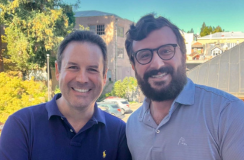
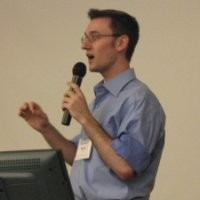
Host: James Temple occasionally returns to his alma mater, UVA's Darden Business School to teach a class to the business school students about buying franchises. And guess what? They're skeptical. Maybe you are too. I am. Or at least was. As I hear more and more stories like James is today, I'm really starting to warm to the idea of buying a franchise. James started in 2009 with a very modest investment alongside his mother and today runs a 19 unit $7 million Mathnasium empire with locations across Virginia and Maryland. I just drove by his Alexandria location last week. Actually, his story, like my recent guest Doug Johns, who acquired the $9 million Mr. Rooter franchise business, should make the skeptical among you sit up and pay attention when acquisition entrepreneurs start talking franchises. Enjoy my conversation with James Temple, one of the top Mathnasium franchisees in the country. Welcome to Acquiring Minds, a podcast about buying businesses. My name is Will Smith. Acquiring an existing business is an awesome opportunity for many entrepreneurs and on this podcast I talk to the people who do it. August Felker is a two time successful searcher, first with a traditional search fund. The second time around he did a self funded search. Today August runs Oberle Risk Strategies, an insurance firm with a dedicated practice group for searchers and acquisition entrepreneurs like you. If you've got a business under loi, Oberle will provide complimentary due diligence on that business's insurance and benefits program. A great no risk way to get to know August and team. They love helping searchers. They've worked with hundreds. Oberle is a specialty insurance brokerage for searchers by a former searcher. Check out oberle-risk.com O B E R L E- risk.com link in the show notes James Temple. Thank you for joining me today on Acquiring Minds.
Guest: Yeah, thanks for having me. I really appreciate it.
Host: James, you're the owner of 19 locations of the Mathnasium franchise. Mathnasium is a brick and mortar math learning center. You'll tell us more about it. But with 19 locations and over 10 years under your belt doing this, you've been very successful and we want to hear your story. What I'd like to do is spend the first part of our conversation on your story and then take the second part to talk about franchising. Generally, you're one of my first guests who is an acquisition entrepreneur in a franchise system, but I'm getting more and more requests from people for stories like yours and in fact two other interviews that'll air around the same time as this one also have to do with Franchising. So it is a topic I'm starting to cover more. And so today we'll do a deep dive and it'll be great. So to the first part of the interview. James, what started you on this path to building a Math Nasium empire?
[3:17] Guest: Yeah, well, I had been interested in owning my own business for a long time. I was in the Air Force. I was an Air Force officer for seven years. Studied math as an undergrad at the University of Virginia. And I didn't know what that business would be or when it would come around. But I knew I didn't want to spend the rest of my career in the military. I wanted to go to business school. I wanted to learn business, perhaps have a career and then own my own business after I'd learned a bit about business. So I thought it was some number of years out. Well, while I was in business school, my dad passed away suddenly. And that left my mom needing to figure out what her future looked like. And it left me feeling like life was short. And if I really didn't want to go do a traditional MBA job after business school, then I really ought to seriously think about getting into my own business now. And that could be a way to secure my mom's future as well. So we explored the opportunity of Mathnesium. I came across Mathnesium in a magazine some number of years before we started. I did a project on it while I was in business school, probably because I have always really liked math, as I said, and studied it in college. And so one thing led to another after my dad passed away and we got to know one of the math nasian franchisees in Virginia at the time, and she became a good friend and educated us well on the business. And so we were moving right down that, that path of seriously considering Math Nasium. And part of the franchising process is what's called Discovery Day. So you often go wherever the franchisor is located. You spend the day with them, they evaluate you, you further evaluate them. So Math Nasium is in Los Angeles. And we were on a flight, getting ready to get on a flight to go to Los Angeles. And this woman who owned one of the math nasiums in Virginia had been mentoring us, asked us if we would be interested in buying her business instead of starting our own. And the answer to that was yes. And In September of 2009, we closed on our first location.
Host: Great. So you all were seriously considering going the traditional way into the franchise system, meaning, you know, paying the franchisor and starting your own Franchise, location, territory yourselves before getting this call from the woman who'd been mentoring you. And then you acquired her existing location and territory.
Guest: Right. There were only two magnesiums in Virginia at the time. There are about 40 now. And so I didn't think to pursue acquiring one of those two locations. There was plenty of opportunity to open a new location. And so that was where we defaulted until she posed that question to us.
[6:11] Host: And what magazine did you see Mathnesium written up in? And it must have really struck you if you did a project on it. And. Yeah, and ultimately it's, you know, the business that you got serious about when you and your mom kind of put your heads together. So. But just curious, like, where did you first hear about it? What magazine?
Guest: You know, I couldn't tell you what magazine. It was an ad. Franchises are in the business of selling franchises, and they have to advertise, just like we have to advertise for customers. And so it was in an ad, a magazine advertising the sale of franchises. I don't remember which one, but oddly enough, I was getting my hair cut on base. I don't know, maybe this was something like 2006, 2007. And it stuck with me because of how much I have enjoyed math. And prior to starting Math Nasium, I had tutored some math, really just for fun. So it resonated with me because of that.
Host: So you love math and you actually have experience teaching math to students. So. And here was this business opportunity. So, yeah, I can see why I would have grabbed your attention. Cool.
Guest: So.
Host: So. So the plan is that you're going to go into business with your mom one way or the other. Are you all business partners? What did that look like?
Guest: Yeah, I mean, so we really honed in on the mathnesium idea and didn't explore too many other options. And we, we certainly were going to do that together. You know, her experience was in early childhood education. She'd been doing that for about 30 years at that point. And I had finished up a business degree and knew the technical aspects of math. And so we thought it'd be a great partnership. But beyond that, it's just something we wanted to do personally. We wanted to spend that time together and go on this journey we both didn't know much about together. And it wasn't always that we would both be in the business, working it full time. For me, minimal level of success would have been getting her started and something she could have done with her time and to generate income. And that would have probably just been one location. And I would have gone and gotten a job like many of my MBA classmates. But we had success with first location and I, I really enjoyed. Enjoyed it. And so we opened Second location on our own. And, and really from. From there have just been committed to doing it together since.
Host: Cool. Okay. So. So the initial vision wasn't the Empire, but after that, the success of the first location, that kind of did start to, to take shape in your minds that this could be, this could be the path continuing with, with Mathnasium.
Guest: And, and, well, I had. Let me just add that I had contemplated that it may take more than one location to make this worth dedicating all my time to. And so I had sketched out what it would look like to own four or five of these, but I had never sketched out what it would look like to own 19 of these. And so that was a gradual progression that we've been on for the last. It'll be 13 years in September.
[9:21] Host: 13 years. And so your taste for Mathnesium, as you've explained, I mean, it really dovetailed beautifully with kind of the combined skill sets that you and your, your mother brought to, brought to the tables. And so you didn't. So my question would have been like, how to evaluate how you evaluated this one as a good franchise opportunity versus others. Sounds like you. It was more just kind of like following your interests and where your, where your skills lay than it was, oh, this is going to be a better franchise than, I don't know, some quick service restaurant or something. Let me put a pin in that question because we'll probably get back to you helping us think through what makes a good franchise or not later in the conversation. But talk to me about this. This woman who's mentoring the two of you and you're seeing her business, you're liking what you're seeing. Dive into a little bit more detail about, you know, that relationship and then why she wanted to sell and your decision to indeed buy her out.
Guest: Yeah, we were liking the fundamentals of the business. In particular, I like how math is taught at Math Nasium. It resonated with me from the very beginning. It's how I naturally came to think about math. And just a minute on that. You know, at Math Nasium, we really are focused on kids understanding how the math works. We're focused on creating problem solvers and not just problems that you've seen and repeated over and over again, but giving you such a great fundamental level of math and then great problem solving skills that you can begin to solve. Problems that you've never seen, not only because you have those technical skills, but you also have the confidence to attack them and do all that in a way that kids enjoy math. And so that way of approaching math really resonated with me as opposed to let's just drill and memorize our way through math, which is not very enjoyable and not very productive for most students. We learned during this time we were getting to know Math Nasium with this owner. We got to know that about mathnesium. All the advertising material says that, but you don't really get to know it until you can feel it and touch it for yourself. That was one thing that really solidified that Math Nasium would be. We would approve of the educational philosophy, but going into Math Nasium, just fundamentally, math is important for kids. And we saw that that could be done in an enjoyable way. That owner was implementing Math Nasium in a way that kids were really enjoying the process, but she wasn't growing and she had some personal. Which is often the case when somebody's ready to sell. They have personal things going on which are preventing them from implementing the vision that they've had for their business. And those personal things weren't going to go away for her. And I think she really liked us and we really liked her, and she felt like she could. She trusted us with what she had started and the kids that she had in the business at that point. And we didn't know much about that market at the time because we were in Charlottesville, where the University of Virginia is in Richmond, about an hour, a little more than an hour away. And I'm not from either of those places. So we didn't know the market that well, but we got to know the market well, and it's a tremendous market. So for all those reasons and for the reasons that we saw room for improvement, we thought this acquisition would be a good idea. And let me just add that we're incredibly grateful to her and the trust that she placed in us and the opportunity she gave us because that started this whole journey.
[13:05] Host: Sure, sure. Can you talk about what that first deal with her looked like when she sold to you?
Guest: Yeah, I can talk a little bit about it.
Host: Wouldn't it be great to have experts at your back when buying a business? People to help you polish up your pitch and processes as you go to market as a searcher, then help you evaluate opportunities once you get some deal flow? Such experts exist buy side advisors, but they'll cost you to the tune of tens of thousands, even hundreds of Thousands of dollars. But another option exists, the Acquisition Lab. The lab is a do it with you buy side advisory service, not do it for you. Founded by Walker Deibel, author of Buy Then Build, the Lab represents Walker's vision for what is most needed to make a searcher successful and available at an accessible price. It's cohort based and you will come out the other side of your cohort prepared to go to market as a savvy searcher with a tight message and process so brokers take you seriously, pre approved for a loan and with an entire community at your disposal to help you along the journey to buying a business. To learn more, check out acquisitionlab.com link in the show notes.
Guest: So it was certainly underperforming the last 12 months. Revenue was under $100,000. I think that's important too because a lot of times when especially I think the listeners of your podcast are really focused on finding the big deals, we found a quite small deal. And so it wasn't maybe it was breaking even for her or losing a little bit of money. So there really wasn't a multiple to talk about. In the end, we paid about 30, $40,000 for the business she was willing to sell or finance some of that so that we could have additional capital to grow in the future if we needed it. And it all in all, it was a fairly small and simple deal, I would say.
[15:02] Host: Yeah, yeah. And you. And actually so again, forgive my ignorance about all things franchising, but buying a business for $40,000, that sounds like that's less than the startup franchise fee that a lot of franchises cost. So were you able to buy her out for more, for less than it would have cost to do one from scratch? Am I the question even makes sense?
Guest: Yep, it does. So you're right. There's a, usually a franchise fee when you get into a franchise in Magnesium, that's a per location franchise fee. It currently is more than 40. At that time it was less than 40. But there's, there's many more expenses to getting started as you, as you know. And so I would say we paid less than what it would have cost to start it from scratch.
Host: Mm. And you had this existing clientele so it was, it was a kind of a slam dunk tiny, a tiny deal for, you know, the average acquiring minds listener and what they're considering for themselves. But still it was a, it was a kind of a screaming deal recognizing that you really had a good relationship with her and there was all this qualitative value to it as well, but just numerically it seems like it was a no brainer.
Guest: Well, I would say it didn't necessarily feel like that at the time, but it felt low risk in that we didn't have a lot of capital in it, that I had the confidence that I could always leave and earn income if we needed that because the business wasn't earning income. And while we had some money in it, what would keep us in the business is that we were taking over the lease and at some point that lease would expire and we could walk away from the business not having lost a lot of money and lost some time, some opportunity. So for those reasons it was a fairly easy decision. But we, you know, by no means did we were we certain we were going to make money and certainly not the kinds of, of money we would need to make to keep us both engaged in it.
Host: But you did feel obviously that you'd be able to improve upon what she had because if she wasn't even, she was barely breaking even or maybe even losing money, then you know, that's not, that's not worth anything unless you, you figure that you can turn it around and turn it around you did. So, so kind of give us a picture of that first year after acquisition.
Guest: Yeah, the needle moved. Well, we thought was quickly back then. We have been able to move the needle much further than that. But in the first year, you know, I would have to, it's been a little while, so I'd have to actually look up the numbers. But I'm sure we doubled, if not tripled revenue since we were running it ourselves and not paying ourselves. It was certainly profitable and it was able to finance the opening of location number two, which we opened ourselves from scratch about 10 months, 10 months later. So it was putting off enough cash that we felt confident to take the risk on another one and that it would pay for it.
[18:05] Host: And Also in those 10 months, as I, as you said a few minutes ago, you started to see that this could really be something that was worth your while to continue with full time and not go back to corporate life or get some other job. Those, those 10 months kind of demonstrated that to you.
Guest: It did. A piece I left out is when I graduated from Darden in the summer of 2009, I did take a job. It was with Target as a manager in their warehouse. And what was particularly attractive about that job is it allowed me to work Friday, Saturday and Sunday, 14 hour days and have Monday through Thursday available to work in the business. So the business was open Monday through Thursday. And Saturday. So it would just be one day that it was open that I wasn't there and it allowed some income to come into the business. So the part of getting the confidence to open number two was getting the confidence to quit that job as well, which I did. So I'm grateful for Target and what they were able to do for us at that time. But when we opened the second one, I was going to go run that one and that had to go, which increased the risk because now all the income needs to come from the business. But yeah, that's further evidence that we had confidence in moving forward.
Host: And so for those first 10 months, ish, you were effectively working two jobs. You were working, you were bringing home, paying the bills with the Target shop and then every other waking hour you were in at your math nasium center. Yeah. You're not paying yourself.
Guest: Right. So it was essentially two full time jobs and it was rigorous and that's another reason why it had to. Yeah, it had to stop at some point.
Host: Yeah. Well, maybe you look back at those, those 10 months, those that, those are your founding months. Those were the, you know, when it all started, got off the ground. So probably you might be nostalgic for them even now. Okay, so number two, location. You've gotten confidence, you've. But there's more on the line because you quit your day job and why do you choo to start, start a magnesium location from scratch rather than find another willing seller?
Guest: Well, you have to know that in that time frame, Math Nasium was a really immature franchise. We were, There were probably 120 units when we got involved. There's almost 1,000 units now. There were two in Virginia and probably, I don't know if we were number three or if we were number four or five, but there weren't a lot of opportunity and everyone was still just a few years into it. So I would say there weren't opportunities, at least none that I saw, to acquire additional math nasiums. We were limited geography and we still are. We've limited ourselves geographically even today. And so there were only four or five options. And my guess is there were only four or five options at the time. And it didn't seem like any of those people were interested in selling. But there was also a lot of available territory and good territory. So we opened in a neighboring territory, the second best territory in Richmond, Virginia. And I think that was the right decision.
[21:17] Host: And okay, you have 19 locations now, so we're not going to be able to get into the story of each one but you told me that your first. What was it? The first one was the acquisition, and then the subsequent seven were all open from scratch. Or eight.
Guest: Yeah, I can walk through this quickly in buckets. So number one and two, you have that story. We decided to then secure the rest of the market in Richmond, Virginia, and that was four additional ones. So we got our first six were all in Richmond, Virginia, and that's how many are still in Richmond, Virginia. Then an opportunity came to acquire another location in McLean, Virginia, which is a tremendous market. Again, an underperforming magnesium story very similar to the first location. And so we took that opportunity, and now we're in two regions, and there's some inefficiency to that. So we say, well, let's figure out how we can grow in this Northern Virginia or D.C. metro area market. And we began to look for new locations. There's still a significant amount of availability. We begin to look for new locations, and we map a plan for that. And then acquisition opportunities started to come our way as well. And so that's really where the acquisition activity started to accelerate. We entered our third market, which is Hampton Roads, the same way, with an acquisition, and then there was an available market, and we opened there. I count the D.C. metro area as Maryland as well. But we entered that market through two acquisitions. So we have 17 in Virginia and two in Maryland. Both of the Marylands are acquisition opportunities. So it was a great way for us to enter a market and then grow by opening new locations. At this point in this area, there really aren't any new locations available. So we continue to just be in an acquisition mindset.
Host: Okay.
Guest: So in total, we have nine acquisitions and 10 locations that we've opened ourselves.
Host: Great. And so now. So you started all this. And it was. 2009 was the first acquisition. We're in 2022. So give us a sense of scale today.
Guest: Yeah. So the 19 locations will do $7 million of revenue this year. And the locations range from our underperforming locations at about 200k of revenue. And then we. In 2021, we were recognized as having the top location in the US at over a million dollars of revenue. And that happens to be our very first location.
[24:08] Host: Oh, wow. Cool. Congratulations for being number one. That's great. So that. That gives us. That gives us a range of kind of what a math nasium franchise might. Might do. 200 to a million at the. A million would be basically the ceiling if you were number one, if that was the number one location in the entire US and maybe 200 maybe it can be probably perform even worse than 200. It was when you first acquired it, it was only doing 100, I think you said so. So do you consider that kind of the range 100 to a million?
Guest: Yeah. So there's a document that comes with all franchisees called a franchise disclosure document. And item 19 of that franchise disclosure document at the franchisor's option will usually provide financial performance information. And while you don't always get profit and loss type information, you usually at least get top line information. And so if you pulled the 2021 version of that, you would see that it spans from the 100ks up to our location at just over a million dollars with the average being somewhere in the 260-270k per year.
Host: Okay, wow. So your million dollar location, that's really well outside the median and average is my math right? Am I using the median and average my math right on that?
Guest: You are. I prefer median, but yeah you are. And our seventh location, which was our second acquisition, was the top mathnesium at over a million dollars before the pandemic. And so we have two of those elite class mathneseums that were acquisitions. Which goes to a point that I want listeners to understand is that there can be tremendous opportunity in buying small, especially in a franchise, because there are so many opportunities to add on. So if you think about our first location, or maybe just our district of Richmond as a platform, we've been able to add on to that and in some cases find grossly underperforming locations and buy them with little capital and turn them around and create what is now a seven million dollar business.
Host: Yeah, I, I mean I certainly, that certainly sounds very appealing. I'm, I'm always wary of turnaround opportunities just because from everything that I've ever heard, you really got to know what you're doing. You really gotta. Yeah, that basically, I mean, you know, turnarounds by definition are suffering underperforming businesses. So you gotta. There's enough, there's risk enough in buying any business, let alone one that has already demonstrated its ability to fail or underperform. So maybe. Well, I don't know. Can you address that?
[27:10] Guest: Yeah, I think a lot of the risk is in the first one. But you understand the business well and you understand why once you have one or six or whatever the number is, you, you understand why what makes a location successful or not successful and that significantly decreases your risk. And if there are a thousand units across the US you have lots of opportunities to find these you don't have to go find a new business, underperforming business, every time you want to grow, you have to go find more of what you're doing already. That's underperforming. That given what you've proven you can do, you can acquire and make a difference.
Host: Yeah. Yep. So would the advice be then to not but not acquire an underperforming one as your first one, buy a solid one and then, you know, get your, get your feet wet, understand the business, operate for a while and then maybe treat these underperforming locations as opportunity.
Guest: Well, just like what you did, I think just like most of the those that are searching for a business. Yeah. I mean it'd be great to buy the well performing business that is worth the investment of more money. It gives you the cash flow right away and it's stable and then you can add on to that. I think what a lot of people are finding difficult right now is finding those it's a competitive market. Despite the discussion around more businesses for sale than ever. As I interact with all these people searching, whether it be on search funder or listening to their stories or podcasts, or just meeting them individually, they're having a hard time finding that perfect business. And there is an alternate path, while maybe a little more risky, could be as equally or more so rewarding.
Host: Great. Well, let's tie up your story and then get into some of these more intellectual questions around franchising. So just to in case people miss the numbers, you and your, your mother acquired that first location for about 40,000 but seller financed. So you probably brought to the table even less cash than 40,000. And today your business is doing $7 million in revenue. Can you give us any kind of sense of margins? Yeah.
Guest: Let me add to the. So my mom and I each put $10,000 into the business and that's what we have in the business today. While we have a significant amount of cash in the business to grow, we haven't put any more capital in. So that's amazing.
Host: Congratulations.
Guest: I talk to people. Thank you. I talk to people all the time who say they just don't have the money to buy a business. And not only are there resources like the sba, but there are opportunities to buy small under the right conditions using whatever money you have. In terms of margins, they can vary widely by location because there's a lot of fixed costs, but once you overcome them, the margins are good as a portfolio. I'll just say that we're somewhere between 10 to 20, 20% margins and they're getting better as we perform. And a lot of our recent growth is to the credit of our coo who started with us as an instructor, who has worked through every position and runs the business for us at this point and is an owner now as well. She has a minority stake in the business. And so I just want to give credit where credit is due for the numbers that I'm throwing out.
[31:01] Host: Yeah, no, that's great. I'm glad you did that. And to that point, what did your own trajectory of working in the business versus on the business look like? From our pre call you and what you just said, it's clear that you're not teaching students math at this point and probably haven't been for a while. So give us that picture, please.
Guest: Yeah. In the beginning was everything. We had a team of three or four instructors and except for them teaching kids, everything else was done by my mom and I, including we taught as well, which was enjoyable but not a way to scale the business. I quickly took on the back office type activities of figuring out what our marketing should be, how are we going to do billing, hiring. And that role evolved over time. I ran our second location but eventually hired someone to run it. As we opened 3, 4 and 5 and had to step out, it just wasn't feasible to manage a team that were in different places and be running a location myself day to day. And then we just continued on a journey of I would take on task, figure them out, create a system for them and then we would find someone else to do them, often in a part time role, maybe even they had another role in the business. And then as we got larger and larger, had the scale, the resources and the demand, we would centralize functions into a full time position. So the evolution for me became supervising center directors. Center directors are the managers at each of the locations and doing some of the back office stuff, but trying to move back office stuff to other people. Eventually it migrated to okay, Nikki is her name. Our COO would manage the center directors directly and I would manage back office and mentor her. Then it became so large that she needed district managers between her and the center directors. And then she eventually took the back office as well and we hired a back office manager. And so now she has three direct reports and there are two district managers and a back office manager. All of that detail to say it gives me the time I need to think about bigger picture things and work on the business and think about acquisition opportunities, growth opportunities, what we're doing well and what we're not doing well and, and what guidance to give Nikki as she manages the business and frankly, getting a little ahead of ourselves. But to think about what's next.
[33:44] Host: Well, that was a tempting thing to dangle out there. What is next?
Guest: Well, I originally thought my plan was to own a portfolio of companies and have a great operator in each, but still have an operational flavor to what I did. But I'm taking much more of an investor mindset these days, and with the cash that we generate from Magnesium, looking at ways to put it to work, probably, certainly other places, maybe in the math Nasium space, but certainly using my expertise in the franchise space, doing some startup investing and toying with the idea of helping some of these searchers fund what they want to do. So it's a young idea, but I think my time will be much more advising and investing going forward rather than operating.
Host: And why spend your time doing that, James, Rather than continue doing what you do so well, which is acquiring more math nasiums, why not go colonize North Carolina and Tennessee? And, you know, for every, every hour you spend learning how to invest in searchers, you know, that hour probably would go further in, you know, acquiring more math Nasium since you, you are probably one of the top three experts on the franchise in the whole country.
Guest: Well, I, I think I can do both. It's not giving up on math nasium growth. It's. It's pursuing that. But, you know, it's counting on the great team we have in place to manage that business and to manage the growth. And I can still work methanesium opportunities as they come available. So I can do both. I think I have my cake and eat it too.
Host: All right. I love that phrase and concept and to see it happening to people, it's so great. And your mom.
Guest: So mom has had many roles in the business. She ran a center for six or seven years, which is that same one that is number one. Was number one. In 2021. She stepped out of a center and took on hiring and training. And eventually we decided that she can move to an inactive status and focus on spending time with grandchildren, which is a wonderful accomplishment for us and the business. That she is financially secure and her time is her own and that she can spend it with the things that are most meaningful in life. So she's inactive at this point and
[36:19] Host: all from flipping through a magazine while getting your hair cut.
Guest: Yeah, I mean, maybe I should spend more time advertising in magazines is the moral of that story.
Host: And this is your grandkids or your kids or do you have siblings?
Guest: No, my husband and I don't have kids, but all of my other siblings do. I have three brothers and they have kids.
Host: Cool.
Guest: And they're in Missouri and Pennsylvania, so she has to travel a bit and it's nice that she has the freedom to do that.
Host: And you're sitting in Richmond now? You live in Richmond?
Guest: Yeah, I live just west of Richmond in Powhatan.
Host: Oh, okay, sure. And is there, what does headquarters look like for you guys? Is there. You're not fully remote or are you. Other than the central locations, obviously. But like, what is, what is headquarters?
Guest: Yeah, the, the only team members that, that work out of a, a company location are the, the centers. The, the teams that are in the centers. Everything else is remote. So I, I work out of my home and Nikki and her, her direct reports do as well, and our entire back office team does as well.
Host: And how was that? How it always was, or is that because of COVID Like, and you made that change because of COVID No, it's
Guest: how it always has been. I have fought hard against renting an office and having us all show up every day. We were able to pull talent from many different places. People appreciate the freedom pre Covid as well to do this. And one of the things we've accomplished is to figure out how our center directors can spend some of their time working remotely, some of their non customer facing time working remotely. And that's the quality of life that we would like for them. So we fully have fully embraced as much as possible, remote work. And during the pandemic, we had to teach online. And even today we're still teaching some of our students online and that's all remote. People are doing that from their homes and it works well.
Host: Wow. So it works well because everything that we, you know, all the headlines said during COVID that everyone's educational, the education quality was, was plummeting because kids couldn't learn as well via Zoom as, you know, in person. Yeah. I mean, was that not devastating to the business? Give us a minute or two on, on Math, Nasium and Covid.
Guest: The hardest part of COVID was the emotional and mental tour it took on on all the team to get this right. We shut down in March of 2020. It just eventually had to shut completely down. We did not have an online solution to that. The franchise had an online solution they were testing. So thank goodness we were part of a franchise at that point because we had tremendous support, not only from our peer franchisees, but from the franchisor to figure out how to do this. And so within two weeks, we took our 2,000 students online completely and just had to figure out how to do it. And it was hard on everybody because it didn't work great at that time. And it wasn't just our 2,000 students. It was the 100,000 students throughout the franchise system that had to get on. But from our perspective, 2,000 students, and the system wasn't set up for that. We were going to incrementally move people to online. The pandemic happened. We had to do it all at once. So it was a tremendous effort and it had lots of bumps and we got lots of bruises from it. But we were able to keep all the customers that wanted to stay with us and then after some amount of time, give them the option of coming back in center if that was what they wanted to do. The reason our students had a different experience than the one you're talking about being advertised is because we provide individualized instruction in a small group setting. What? And so that's all we had to replicate online. We still just needed an instructor with three or four kids instead of a classroom trying to be moved online. A classroom of 20 to 30 kids with a teacher trying to keep everybody together and productive and learning. And in that large of a group in a classroom, it's really hard to get feedback on what kids are learning and what they're not. You put that online, it's even harder to understand. Yeah. What they're doing. Classroom management is really hard in person, is a lot harder online when you throw in less supervision. But also the technical difficulties that came with it. So we just had an easier problem to solve than the school systems. And so that's why our customers had a different experience than they were having while they were in school.
[41:07] Host: But you must have felt a revenue decline. I mean, there must have been some parents who. Yeah, yeah, yeah.
Guest: I mean, I think at our worst, we were about 25% down.
Host: Okay.
Guest: Okay.
Host: And have you recovered since? Are you back to pre Covid levels? Not yet.
Guest: Yeah. So 2019, we were around 6 million. We did one acquisition since then and now we're over seven. But that acquisition doesn't account for that million dollar difference. So yes, revenue levels for the portfolio are. Have recovered. There are individual locations that haven't recovered.
Host: Okay. And just one more personal thing, James. So you are a. I mean, you majored in math, so that tells me you're a math kind of whiz. Yeah. I mean, to go to a great university and, and major in math you get into some pretty abstract stuff, probably by your sophomore year anyway, so. And you like math. That was one of the things that drew you to the franchise. But you actually haven't been. And you like teaching math, but you actually haven't been doing that for years. So that actually isn't a big part of the story. It's kind of how things got kicked off. But one doesn't need to be a math whiz who likes teaching math to have done what you did.
[42:33] Guest: A couple of things I would want to say about that. Yeah, you know, I. I am. I am good at math, but I realize how much I get to compare myself to the team that we have hired to teach the kids math, and they are better at math than I am. Which is. Which is really what you want in every situation. You know, as. As the owner and CEO of the business. I don't want to be the smartest person in the room, and I certainly don't want to be the person best at math, since I'm not doing it. So we have a very talented math team that's fun to be around. You know, the business is. Is a lot of fun for that reason, because we get to be around math all day and we get to hire math mathy people. But that's. You don't. I'm convinced you don't need that in a business. If there's a next business for me, I don't feel like I'm gonna have to have the same passion for it at the end of the day. What I have learned about myself is I enjoy the game of business. It's a serious game. I don't call it a game to be nonchalant about it. It's serious. There's a lot of people that count on me and my mom and Nikki for their paychecks, and that's serious. And there's a lot of parents who've entrusted us to teach their kids math. But if you think about business as a puzzle or a game, there's a lot of enjoyment to be had in playing the game. And that's what gets me up and working on it every day now, is that enjoyment. And I can find that enjoyment in a different kind of business, too.
Host: That's very well put. And I feel very similarly, which is how I'm able to get so excited about people who are, you know, buying whatever. All different sorts of businesses. They're all. They're all uniquely interesting to me. Very cool, James. Okay, let's get into franchising. And, you know, generally so you teach a. So there's kind of the ETA course at uva Darden. Darden is the business school at uva and it's not called eta, but it's effectively the ETA course. And, and you teach the day on franchising. And this is all from our pre call. You had told me that the students are always kind of like, I don't want to do franchising or buy a franchise for X, Y and Z reason which acquiring minds listeners can guess what those reasons are, but tell us what those reasons are and then tell us what your answer to the students is.
[45:08] Guest: Sure. The course at Darden is called Acquisition of Closely Held Enterprises. Could easily be named Ate and been doing that for a few years. Was invited to help out with a mentor of mine and eventually took over the class myself. And you know, you go to business school and you think about all the, let's just call them sexy opportunities that you foresee having coming out of business school. Some of those are finance jobs, consulting jobs, great marketing jobs, great general management jobs. And when you start about, you think about starting your own business, it defaults to startups, right? Tech startups, these sexy, high risk, high reward, doing something new kinds of businesses. But what seems to be the reality is that most people a few years out of business school want to go buy a business instead. And what we want to do in this class is help them understand that franchising is an opportunity where you can accomplish that same goal. What we're pushing up against are all the things I just mentioned about the sexy opportunities. And so the things that they often cite besides just sort of their identity around I'm a startup kind of guy or something like that, is that there's just a number of things. So one is control. You are partnered with a franchisor and you definitely do not have full control over what you can do. You can look at that from a negative side of things, especially if you're someone who wants a lot of freedom and is very creative and doesn't follow rules well. But on the flip side of that, that control is purposeful in that there's a system that has been designed for success. And the reason there's control is because they want people following the system so they can be successful. And also said that the brand can be consistent. But that's one thing that we hear usually the first is control. The next one is around scalability. So if I buy a franchise, they're often brick and mortar. But regardless, they are bound by a territory. The franchisors aren't just saying here's the U.S. go be our franchisor. They're saying here's your part of the US or internationally and so go be a franchisor in your part that we're giving you. And therefore there is some limit to scale because you can only serve that population. But scalability comes through multi unit franchising instead of just one unit. Now there are still bounds on scale. Those territories still only add up to being able to access a certain population in my case of kids. Whereas if I, you know, was an E commerce business or a SaaS business, then the world is my oyster. Right. So but if from my perspective, you know, I can, well, I did. I built a $7 million business that profit margins are 10 to 20% and that, you know, while, yeah, there certainly are larger businesses, businesses out there, you start to think about the risk associated with the opportunities. And I would say because I've chose this franchising opportunity, I've decreased the risk. Yeah, I've limited some scalability, but still plenty scalable to generate a return on our investment and the income we would want to see. So control scalability. And then there's paying the franchisor. So margins, you know, profitability isn't. The argument is that profitability isn't as good as it could be because you're going to pay the franchisor franchise fee to get in and then royalties and other fees to operate. And so a minute on math Nasium's fees. Just to give people context, we remarked on magnesium franchise fees. Again, there's some right now somewhere in the $40,000 per location range, there's discounts for additional locations and then for top performing franchisees, there's incentives that reduce that as well. And then on an ongoing basis, we pay 10% of revenue as a variable royalty, 2% of revenue as a marketing fee. Marketing royalty. And then there's a $500 per owner fixed royalty. So I only pay $500 a month and so does someone who has one location. And then there's a $250 per month per location marketing fee as well. So if you have one location that can add up for me, there's also some rebates if you're top performing. So for me, at our scale, we're about 10% to the franchisor. But we couldn't do what we do without them. And not only probably the biggest item is the curriculum. Our curriculum is fantastic. It is the brainchild of late Larry Martinick, who people could look at online and we could not reproduce that on our own, so that's worth its weight in gold. But then all of the systems that have been built, software systems and otherwise, that have been built so that we can operate a math nasium are things that would have been really expensive to do on our own and would have required a much larger scale in order to justify investing in. And so that money, most days I feel like that money is well spent. And you want to evaluate that as you're thinking about a franchisor. Yeah, you're going to have lower margins because you need to pay the franchisor. But what are you getting for that? And how much of those costs would you have had anyway? And again, I go back to, you know, I think a lot about risk adjusted returns. I might be paying the franchisor, but because we have a proven system and a proven model, my likelihood of profitability is much higher than someone who is going to start, start something like this from scratch. Well, so those are the big three ones.
[51:26] Host: Shoot, I just have so many. Okay, let me just the, just, just to emphasize the point you made about the royalty fee. Yeah, I, I do feel like people kind of treat that as like a toll or a tax, just a cost of being part, of being part of the franchise system and, you know, just kind of taken off the top. But you are getting something for it and not just being part of the franchise. You're getting whatever depends on the business, a CRM system. You're getting all of this support court. You're, I assume you're getting, you know, access to data from the other, the, the other, the other units in the system. There's probably a lot of big things I'm forgetting because, because I'm, I'm naive. But I mean, it's not just money off the top. It's money in exchange for services and value back. Right.
Guest: Well, that's what you should expect. Right. I mean, not all franchises are created equal. As you evaluate entering a franchise, you not only have to, if you're buying a privately held business that's not a franchise, you just have to evaluate that business. When you're buying a franchise, you have to evaluate that location, but you have to evaluate the franchisor. And one of the things you have to evaluate is what you're getting for the money you're going to be paying them. And we've come to a good conclusion in Mathemasium that we're getting what we need for what we're paying. But there, I'm sure there are franchises where that is not the case, and you have to evaluate that.
Host: Okay. And the thing that you just said about, you know, kind of there's a system there, the market demand is kind of proven because you're buying into an existing franchise brand. So kind of by definition, it's already has some market acceptance. But there's also the difference between a very, very, very established franchise, like a McDonald's that's been around for decades and is more than proven. It's iconic versus, like, what you did. So Mathnasium was a young, as you've said now a couple of times, a very young franchise. And so it wasn't. Correct me if I'm wrong, but it. It. It wasn't a foregone conclusion that it would go from 100 to a thousand units over the next 13 years. Right. So how do you think. How does. How does entertaining a franchise consider that? How do they, you know. Yeah.
Guest: Yeah. So it's interesting to. To consider the. The spectrum of franchise maturity, and you have to think about that in terms of what you want to get out of the business and also what you want to contribute. Yes. I entered Magnesium when it was a young franchise. I feel like I took an appropriate amount of risk financially. I might have taken a little more risk with my time than I should have. Well, it's hard to think about it that way since you know how it's worked out. But my time was very valuable, and so that was probably the bigger risk than the money. But because it was low risk and it was young and I felt like I could influence the franchise, it was the right opportunity for me at the time. It would not be the right opportunity for me right now. Entering, as I think about what's next, starting with that young of a franchise, is probably not what I'm looking for, because I have more of an investor mindset now than an operational mindset. Unless I was partnered with the right operational partner and the financial risk was appropriate, I'm looking for something probably more mature. The other end of the spectrum, of course, is the. The annuity that is McDonald's. You're really an investor if you want to get into that franchise and you can own hundreds of them if that's what you want to do. And I'm not sure that's what I'm looking for either, but you have the whole spectrum to work with, and so just you have to find the one that has the right level of maturity for you, where you're taking the right financial risk and you can contribute in the way that you want to, if you want to be part of the, the ground floor and help really figure out what this franchise looks like, then you want a young one and you want a franchisor who's open to that level of contribution. If you want to benefit from that already having big figured out, then you want to be further up in the spectrum of maturity.
[56:00] Host: How do you decide or how would you advise folks to think through buying an existing franchise versus starting a location or a unit themselves from scratch? We've already talked about your experience doing this and thought about it some. But are there best practices here or is it very case by case?
Guest: You know, I would lean towards buying an existing location. And so if I had a world of opportunity, the one I would pick is a proven franchise, a location that is successful, maybe not the most successful, although if the numbers are right, that works too. But a successful location that is going to be profitable and can generate in the short term enough income for you to do what you want to do to learn the business and then quickly add on and grow from there, that, that would be the best situation. But you know, there might not be that exact opportunity. And so you have to decide where you are willing to accept more risk and opportunity and where you're not. So certainly starting a new location of a more mature franchise has its benefits. What you have to watch out for, you have to ask yourself, why is it available? Right? So if there's people like me in that franchise, why haven't they already opened that location? There are still great magnesium locations that have never been opened, but they represent a minority in the, in the, in the inventory of territories that are left. So you have to do the extra work. So that comes with pursuing a more mature franchise too is less opportunity to open from scratch. On the other end of that spectrum, a younger franchise, if you know a territory is good, like I understand Virginia and Maryland and the kids space, right. And so if I was going to open another franchise in this area that was kids related, I would, I could predict how well at least compared to other locations that would open, how well it's going to do because I understand the kids space and I understand the areas that I operate in now. And so there is opportunity at the low, the immature end of the spectrum as well because there could be so many great territories that are still available.
[58:39] Host: When we talk about.
Guest: So we're not giving, Sorry, I'm not giving you the answer. And that's because I think there's opportunity in all quality franchises regardless of maturity. And you have to Match it with one. What's available to, what experience do you want to have?
Host: Yeah, when we were talking about the range of revenue that you see at your units from, from 200,000 all the way up to a million and you said even that, you know, you have some in your portfolio that, that continue to underperform or that are underperforming. Now how can there be such a range of performance when this, you know, franchises, their reputation and in fact their value proposition is that it should be pretty formulaic. You know, you do with the franchisor, the, you play, you do the playbook that the franchisor has given you. You could talk to all these other, your, you know, your colleagues in the franchise and learn best practices from them. So I just, I wouldn't think there'd be such, such wide swings in performance. Can you, can you talk to that a little bit?
Guest: Yeah, I mean the, the first answer is not all territories are created equal. There's not the same number of kids in every territory. There's not the same level of affluence, there's not the same priority on math education. So that's one point. But I've seen territories that aren't great do really well. And I've seen the opposite as well. And that's because it comes down to the person, the operator in general, but also the person that's there every day interacting with parents and with students. You know, it's a very hands on, relationship driven business. The more people like the center director, the more they feel like they're competent and doing the right things for their students, the more they're going to tell other people about it, the longer they're going to stay. And you know, like any business, it is difficult to get the right people in every seat all the time. And so that's really the biggest factor is who's running the business day to day. Now we increase. The reason our average is above the system average is because we've done the work to take a franchise system and even add additional systems and support to it so that that person that's there every day. So the average magnesium owner is there every day and does everything but instruction and even some instruction. Our managers that are there every day have many things that they don't have to be concerned with. They really need to be focused on parent relationships, working with their schools and communities and serving those students. They don't need to worry about payroll, they don't need to worry about marketing that isn't in the community. If they have a question on something, we have a resource to help them figure it out. There's just the billing. They don't have to worry about billing. There's just a lot that they don't have to worry about. So that increases the focus they can have on the things that drive success, revenue and profitability. And that's why we are doing better than the average franchisee. So the system still needs to continue to evolve so that the everyday owner can have as similar to experience to that as possible. That they can focus on the things that grow their business rather than the administrative things in the business. And we've made a lot of headway in Mathesium to the credit of the franchisor and those of us that contribute to helping them figure those things out. Mathemasium was just acquired by Roark Capital which is a very large private equity franchising firm. And that relationship is going well and they seem quite motivated to continue on this path of improving systems and processes. To do exactly what you're observing is to bring everyone up a level so that we have more consistent resources available for every magnesium instead of having to depend on a rock star owner or a rock star center director being at all 1000 math nasiums.
[1:02:50] Host: Yeah. Yeah. I don't think one of the three things that was said by the students going back now to the reasons people don't like the idea of buying a franchise. Did you say that? Kind of. You use the phrase that you're partnering with the franchisor at some point and was one of the reasons that there's, that there's kind of a lot of. In some ways there's a lot of risk as highlighted by what you just said. It's like, okay, so this PE firm has acquired Mathnasium. So now you're dealing with different owners. So far so good. But you know, you, you gotta hope that they continue to care about the, the, the enterprise as much and the brand and the direction things are going. So, so there is this actually this quite a big risk element that you are. Yeah. You are effectively partnered with the franchisor. And so you got to really believe that they know what they're doing and have your best interests at heart. And if they sell out that whoever acquires them in this case a PE firm, same thing. So is that a fair point?
[1:03:51] Guest: Yeah. So you have a risk that you don't have if you buy, you buy a non franchise business is this partner. And you have to be serious about doing your due diligence on the partner. But also understand that the partner can change. So we have wonderful founders, and after it'll be 20 years, Matthias will be 20 years old in October, I think it is. And they've decided to exit, which is certainly appropriate and sort of their last act was to put us in good hands. And so we're grateful for them and what they've done. But that could go a different way right now. It would be an odd thing for a private equity firm who has investors to come into a business and operate it, try to operate in a way away from what has proven it successful. You know, if it's a turnaround, that's one thing. Math Nasium wasn't a turnaround. And so you would expect that they would continue that trend of operating in a simple way and continue to try to improve it. And they have. Every action so far has said that they have. So I'm thankful that the founders made a good choice, that we have a great relationship with our new owners and some people should think about that as they enter a franchise. That additional risk, there's also risk. There's just legal risk. You're signing a franchise agreement. There's all of these rules associated with that agreement, and you ought to understand them. Most of them only come into play if the partnership breaks down in some other way. But the franchisor is definitely in the driver's seat when it comes to franchise agreements. You need to assess that risk as well.
Host: I suspect that in this world of franchising, there are lawyers and attorneys who specialize in franchising, and certainly I know there's such thing as a franchise consultant. So there are people out there who can help you digest the FDD and all of the considerations. Right?
Guest: Yeah. So, yes, there are many attorneys who specialize in franchising, and I would encourage you to reach out to one of those if you, if you were considering franchising. While your everyday attorney will have some knowledge, there's just a depth of knowledge that comes from working with someone who lives and breathes it. The franchise consultants, they tend to be people who help you think about which brands you should pursue. They have a portfolio of brands that they can facilitate a sale of, but they get paid by the franchisor. So just understand the nature of that relationship. We used one to help us figure out to look at some other opportunities and then came back to Mathnasium early on. And they can be quite helpful in that. They tend to have a depth of experience as well. Just understand that they have a portfolio of things they can sell you and that they will get paid by the franchisor when they sell them.
[1:06:45] Host: Yeah, key point. Another point about the reason the students and the reasons people might not want a franchise. I don't think you said vanity and that strikes me as a huge one. You said creativity and the control, which is kind of related. But just, you know, the idea that you're not operating under your own, your own brand. Do people articulate that?
Guest: Well, I think I thought of vanity as sort of that conversation before we started listing the three control. You know, it was that whole it's not sexy. So yeah, absolutely. Vanity. You know, there are wonderful businesses. There's a dog waste removal based business, you know, pet waste removal business. It's a good business. But I mean many people won't do it because they just don't want to be known as the dog poop business.
Host: Right.
Guest: And yeah, there's some business that ethically I just don't align with. But in terms of being too proud to operate a business that scoops dog poop, that's just not how I'm made up. It's a service that people value. You can employ great people doing it and you can get a return on your investment and make great income doing that and all kinds of other business. And I don't have any problem having a world class NBA and thinking about owning a dog poop scooping business. So perhaps I'm wired differently. I would encourage other people to think about it that way too. Yeah.
Host: Although in your case I would say that there was an aspect you were drawn to the brand or you were drawn to the concept. I mean it grabbed your attention and so, you know, you've probably felt really kind of, you probably have some emotional connection or emotional draw to math Nasium as a brand. It's not just the numbers. You probably, you're probably like, this seems like a cool concept that I want to be associated with.
Guest: Well, and it's a purpose driven business. We really do make a difference for these kids lives. You know, it's really something to see a kid that's in, let's say second grade and is already frustrated with math because the only way they can do math is by using their fingers. And they run out of fingers quickly. And using your fingers you often end up with the wrong number. And you can never tell someone how you got the answer. And it's that experience in first and second grade that creates a lifetime of I'm not a math person. How many people have you heard say that I'm not a math person? But yet you still have many years of math that you have to pursue. We can change that trajectory. And you don't have to be in second grade for us to change that directory. We've had high schoolers come in using the same example of where they can't do anything but count on their fingers to get basic addition and subtraction done. And that has defined their math experience. And we can help them specifically with that. And then that just opens up the idea that I could be a math person and I could pursue a career in math. It's really quite unfortunate that the majority of kids, you know, if this is all the opportunities you have in the world, and maybe 60% of them require some proficiency with math or at least the problem solving skills developed through a good math education that at ages of 5, 6, 7, 8, 9, 10, they're eliminating all of those opportunities that require math and really creating their identity around the opportunities that are left. And it doesn't have to be that way. And so I'm absolutely passionate about doing that. And we build a team around that passion and that's authentic. I just got back from Las Vegas from the Math Nasium convention and that passion is authentic. It's why so many of us got into it. And part of the satisfaction we get out of the business. Yeah, but I go back to my point, you know, that doesn't have to be the case to own a business. There's a lot of, I mean, almost every business, employees, people. There's a tremendous satisfaction I get from being a business owner that employs people and that helps them reach their financial goals and in some cases have dramatically changed their financial future as a result of them being part of our business. And that we can provide great benefits and a great work experience and a positive culture. Those things have tremendous value and you have the opportunity to do those in every business that has employees. So there's lots of room to find passion in business. And that doesn't have to be at the expense of having an investor mindset and want to return on your investment and generating income.
[1:11:17] Host: Very well put, James. I couldn't agree more with everything you just said. That's great. Okay, I think let's wrap it. Franchising is a vast topic, so we're not going to touch on everything today. But is there anything from that about the concept of buying an existing franchise or that the acquisition entrepreneurs, searchers who are listening to this who either haven't considered franchising or kind of are maybe considering it that you think they need to hear that we haven't already said,
Guest: I guess a couple of things. One, there is a franchise out there for everything. There are many more franchises than you think. There are Thousands of the Entrepreneur 500 list is a good place to start, to start thinking about them. If you find a brand that you like and you are interested in acquiring an existing location, getting involved in that franchise community could be valuable. Just waiting for one to come up on Biz Buy Sell is not going to be the way to go. You know, the mathnesiums that I want to buy often never make it to Biz Buy Sell. You know, they're bought before they end up there. And one of the things that you will have to do and you should do is get to know the franchise development teams at those franchises. So the franchise development teams are the sales teams, but they are also aware of the resale opportunities. They are often part of that approval process of allowing someone to come up for sale. So just in the same way you would let a broker know, hey, I'm interested in opportunities. Let me know if you have anything specifically for a given franchise that you're interested. Building a relationship with a franchise development team could be really useful. And building a relationship with some of the more successful franchisees could be useful. Every franchisee's name is listed in the fdd, including I think their contact information. At least an address or something is required in those disclosures. So by Getting access to FDDs, you can learn a lot about a franchise. And if you this is not sponsored, but if you don't mind me mentioning, fddexchange.com is a service where you can get access to FTDS fairly easily without having to go through the franchise development process. They can get one free one a day or you can subscribe and get more than that. So there are opportunities to learn about a franchise through the ftds. So I would say, I would say those things are important and then just make sure you do your due diligence. Just because other people have made a decision doesn't mean it's a good decision. So make sure you do your due diligence to make sure it's the right decision for you.
[1:13:58] Host: James, one thing you just touched on that I had meant to ask and didn't was just about how we've been circling around this. Your whole story is around this. But as an acquisition entrepreneur, buying. So let's say I get my own a single franchise location, the path to buying more is I, I mean, I feel like I could argue this both ways is there's more. It's easier or it's, it's not as easy. I mean, it's easier in that there are all these locations. You can quickly reach out to any of these folks who are, who, who might want to sell their location or you know they're going to come to you first if somebody in the neighboring territory wants to sell their location or they're going to come to you or you know, some of the other close by territories. So it seems like it would be from that perspective, it would probably be easier. On the flip side, if you yourself are looking to sell. I, I'm not going to project here. Why don't you just, why don't you just answer, answer for me like on, on looking forward at a path of acquisition to grow your empire. Do you think being in a franchise network is more conducive to that or being an independent?
[1:15:09] Guest: If you take the example of, let's say rolling up landscaping businesses.
Host: Yeah.
Guest: Or rolling up math nasiums or another franchise, I would think that the rolling up the franchise is easier because you understand the system. You have a relationship once you're in the system with all of these different owners. So I would tend to say it would be easier to find the opportunities and if you have a good reputation in the community to close on the opportunities. One risk that we haven't really talked about is if you underperform, the franchisor is not going to let you grow and inquire. So you need to show them that early on in the process, early on in your first couple locations that you are someone that should own additional locations. So there is that additional risk. You know, if you're rolling up landscaping business, the, the next landscaping business isn't going to stop you because your other ones aren't performing well. You may stop yourself, but they're not going to stop you. But the franchisor will stop you if, if you're not successful. So something to consider, but I would think it's, I would think it's easier in the franchise space, but that's also all I've ever done. So.
Host: All right, well, let's leave it there. James, what a great story and what a privilege to have somebody who's so familiar with acquisition in a franchise system on to share with us. So thank you very much. Congratulations again on a spectacular run. And I guess we should also say to searchers out there who might be looking for investors in their deal that you are somebody that they should reach out to.
Guest: Yeah. Especially if you're in the franchising space or any of my fellow Darden alum are listening. Those are two areas that I would definitely be interested in talking about. And happy day.
Host: How can people reach you? James?
Guest: The best way is probably LinkedIn. It shouldn't be that hard to find me James Temple. Just search for Math Nasium and James Temple. It'll come up.
Host: Yep. And of course link is always in the show notes.
Guest: There you go James.
Host: Thank you very much Shark. This has been great.
Guest: Yeah, I really appreciate it. Thanks for giving the opportunity to share my story and hopefully help someone else who's thinking about doing something similar.
Host: Absolutely. La.





























%20-%20thumbnail.png)




%20-%20thumbnail.png)

%20-%20thumbnail.png)

.png)


%20-%20thumbnail.png)