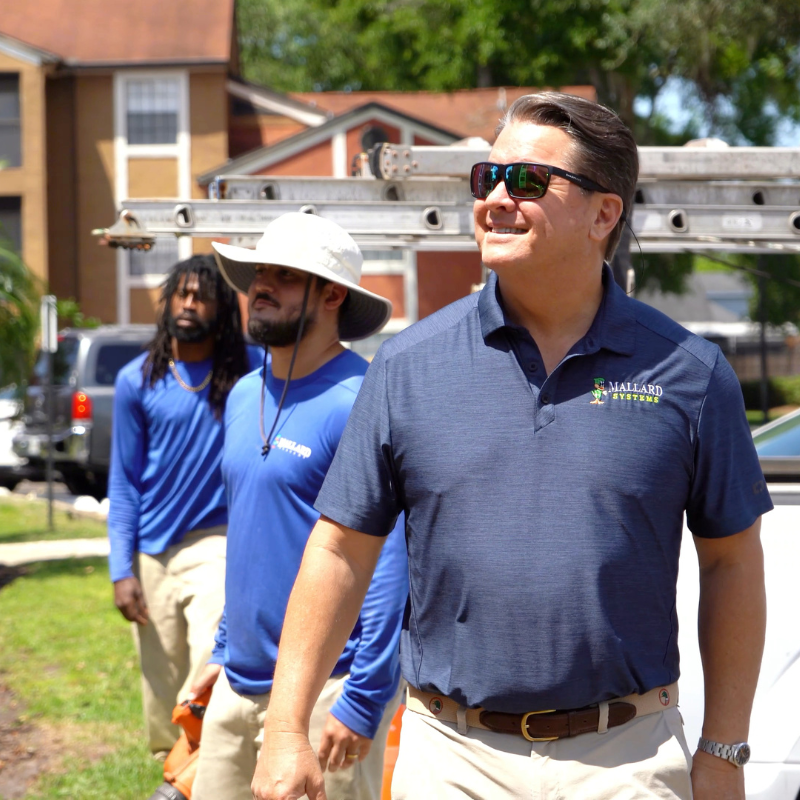
Host: Today's guest's foray into business ownership was harrowing. Joe Springsteen was presented an opportunity to own a biohazard business. These are the companies that clean up the really bad stuff, bodies, crime scenes, infestations. As a painful example of working in the business, Joe found himself performing those cleanings. And after a grueling three years, he shut the business down. But despite this unhappy initiation into small business, Joe still wanted to be an owner. His desire for agency was stronger than his disappointment at the outcome of that first venture. He hears Sam Rosati in an interview on Acquiring Minds and joins Sam's boot camp the next week. At that boot camp, Joe meets Jackie Hirsch, a well known business broker and an investor in Mind's Capital. Hello Jackie. Jackie sets out to find Joe a business. And find him one she does. Not only is Mallard Systems a good searcher friendly business, but it offers great business buyer fit for Joe. Mallard's a $3 million provider of outdoor cleaning and maintenance for commercial buildings. Joe had years of experience in commercial property management and felt right at home taking the helm. This time around, Joe's acquisition is going well. He closed out 2025 right at 4 million of revenue, up 25% from 3.2 million in 2023. Here he is, Joe Springsteen, owner of Malard Systems. Welcome to Acquiring Minds, a podcast about buying businesses. My name is Will Smith. Acquiring an existing business is an awesome opportunity for many entrepreneurs and on this podcast I talk to the people who do it Looking to secure an SBA loan to buy a business? Meet Pioneer Capital Advisory your go to Partner for sophisticated buyers who want deals closed quickly and on the best possible terms. The Pioneer team has closed more than 100 SBA loans, averaging timelines well below industry standards. Founder and owner Matthias Smith and COO Valerie Stash bring over two decades of SBA lending experience. Matthias and Valerie have built a team that meticulously works your deal from underwriting to close. You'll have a full bench working on your behalf, sales associates who streamline onboarding M and a financial analysts who craft investor grade lender decks and an operations team that manages every step of the closing process with institutional level rigor. Pioneer is not a single person but your true deal team. Visit pioneercap.com or click the link in the notes. Joe Springsteen welcome to Acquiring Minds.
[3:19] Guest: Thank you Will. It's great to be here.
Host: Joe, you bought a business for outdoor cleaning and maintenance of commercial buildings properties, a business that I commented to you in our pre call as feeling like a great self funded searcher Business. We're going to hear all about it and about you. Let's begin with a little background on you, please, Joe.
Guest: Okay, sure. My name is Joe Springsteen. I'm the owner of Mallard Systems. And well, just going back. I grew up in the Tampa suburbs in the 80s. My dad was retired Air Force. My mom was a serial entrepreneur during those years. But since 2013 I've lived in Orlando. Four grown kids between me and my wife Audrey, almost empty nesters. And I think I'm vying for the oldest new entrepreneur title at Acquiring mind. So excited to be here.
Host: You, you, you're vying for it, but I don't think you, I don't think you win, Joe. So you are as old as the super bowl, as you put it to me.
Guest: That's right. It's easy.
Host: Yeah. Not, not, not being a passionate football fan, I had to look up exactly what that, what that is, but, and do some research.
Guest: Numerals, right? So the exact. Exactly. I think.
Host: Yeah, yeah.
Guest: Plus there's even math involved, so it's difficult, you know.
Host: Well, so what was it? Well, let, let's hear a little bit of your kind of recent career history and then what was it that drove you to want to buy a business during a later chapter of your career?
Guest: Okay, well, recent is, you know, it depends on perspective. So I guess my career arc. I graduated from University of Florida, worked for my mom's real estate brokerage at that time, briefly ended up going to law school, became a corporate lawyer. So I spent several years, this is 93 to 2004 to give you context. So worked at a law firm in Seoul for some time, a large firm in Atlanta. And then I was recruited based on my overseas experience into General Mills as an international council. So spent the, the next four years doing cross border JVs and asset acquisitions. And then, you know, we, we had our first child, my first wife, and we were up in Minneapolis dealing with, with stuff that Florida people were not, you know, accustomed to dealing with. And the wife at the time had family back in St. Pete, so we made a big move and I was, I was not really super happy about being a corporate attorney as well. So 2004 to 2020, I would call that my commercial real estate phase. I was in St. Pete working for a distressed debt fund and we were kind of doing, acquiring commercial real estate debt and doing workouts and forbearances and you know, and foreclosing on some properties. So one of the big ones that I did was a, it was a multifamily deal. So I had to basically take it over. And, and that was kind of my first, first crack at multifamily operations and what all that meant. And then from there that led into an operations phase. I was running third property management businesses for national firms. And then I guess Most recently from 2016 to 2020, I ran Cushman and Wakefield's multifamily platform in Florida. So that encompassed about 18,000 units, 70 properties, you know, across the state of Florida. So it was, it was, and for
[7:26] Host: those who don't know, residential. Cushman and Wakefield, of course is one of the, the biggest property managers in the country.
Guest: Correct, correct. So probably in the, you know, top, top 25 in the nation. I've lost track of, of the metrics right now. One thing we didn't talk about in our pre call was that, you know, running, running those, that property management businesses was really running a small to medium business. If you, if you kind of, if you can just say, okay, you have 50 properties with an average of 250 units that, that should, you know, have $2,000 a month rents and you multiply that out, that's about $300 million in rental revenue. And then the property management model is based on charging a percentage on that revenue. So the larger property management companies charge about a 2 and a half to 3% fee. So you know, when you kind of map it out, it's about, you know, seven to $10 million business, you know, covering that, you know, that size of a, of a portfolio. So I think a lot of that translates into kind of where I ended up.
Host: Yeah, it's a great point. And what about the, how many people were under you? Is it also comparable to a seven to $10 million small business?
Guest: I think it is because we had probably five to 10 properties per regional manager. So if you have a 50 property portfolio that's, you know, that's like five to seven regional managers, then you have a marketing manager, you know, somebody in ops, you have an accounting group. If you're, if you're a smaller company, you have all of that in house and all that is paid for by the revenue off of, you know, the management fee. And I was privy to, you know, the kind of the back end of that and my, my first operations job and you know, they were running kind of net profit of 40%. I think, you know, that was a extremely well run, lean business. I would say most of the property management firms are probably, you know, net margins of 10 to 20%.
[9:51] Host: Wow. Meaning, wow to the 40% in a business where the average is 15ish. Huh? Great, Joe. And you did that, you said through 22.
Guest: Through 2020.
Host: Through 2020, that's right. And what happened then?
Guest: Well, in 2020, I invested in. Well, by 2020 I. I'd already invested in this biohazard company that a neighbor had. So I was kind of a minority guy, 10%. And then in 2020, I had the opportunity to acquire the rest of the shares in that. In that biohazard company.
Host: So a biohazard company meaning exactly what. I think I know what that means.
Guest: All the gross, spell it out. So it started as a blood cleanup, hoarding cleanup, rat feces cleanup, mold cleanup. You know, I mean, I was in their full hazmat gear, you know, the face mask with the breathers, full ppe, just cleaning alongside of my guys. And you know, this, the nature of this work a lot of times is they just, you get a call at 2 in the morning and, you know, it's something that's terrible that happened and you know, the, and you got to come in and clean this unit.
Host: Meaning, meaning it's often a crime scene
Guest: or just, you know, I guess in my, in my experience it was more seniors that passed away and you know, the property manager calls up. Yeah, but we also did some work for a military installation over in Tampa. So we were literally, we had a crew driving over, checking in, going to this building that had been evacuated basically because there was just rat feces and infestation and rats. And it's not horrible business, but profitable, I guess, for some people that want to really lever that up.
Host: But well, well that, that would be the appeal of such a business, right? That you charge premiums, the margins are fantastic because it's a business most normal people want to stay away from. But seriously, I mean, that, that would be the dynamic, right?
[12:12] Guest: Yeah, that, that was kind of the, the dynamic. But really my thesis coming out of the multifamily business was, hey, I can really leverage lever this business into, you know, more restoration work because a lot of the equipment that we were using was similar to, you know, the water restoration. You know, if there's damage to a building and, you know, we had to dry the water out and whatnot. So that thesis didn't really work out very well. And you know, I did have some confidence that I had time to transition the company from that, you know, biohazard work into some more restoration jobs because we had a number of long term contract or contracts for Covid disinfection. So we had a, you Know, group of office buildings in Orlando and Tampa. And we would go in a couple times a week and, you know, fog the interiors of the buildings. A lot of fear of COVID And, you know, there are a lot of people at that time were just trying to mitigate that. That risk of spreading Covid. So I had some tailwinds on that. There were. There were some very conservative clients that kept us on, you know, pretty, you know, past the real Covid scare, I'd say the second Covid scare. But I also decided along the way that I just didn't want to invest more money into this business to see where it went. It was just something that, you know, I decided to kind of sell off some assets and run it lean and, you know, get. Get my money out of it. So I ran it extremely.
Host: Joe, let me. Let me. Let me pause you there.
Guest: Sure.
Host: We didn't hear why you jumped into this entrepreneurial opportunity. So you're doing well in your corporate job, and you've been corporate the whole time, from attorney to property management business. Doing very well there. And. And then. So why the hard pivot into business, small business ownership? And I think this is key because this really underpins, you know, your. Your why, I think, is quite strong.
Guest: Yep. Good question. So my why happened in 2015, where I was pretty much blindsided by my first wife asking for a divorce. So it's turned my entire world upside down. You know, we had three young kids, big house in a nice neighborhood, and, you know, I. I know that we had been spending years and years kind of living keeping up with the Joneses. And it was. It was a tough period to. To go through. But I think the outcome of it was that I was able to kind of reassess my own what's important to me and how I could continue to support my kids, obviously, but also to kind of, you know, reassess who I am, you know, who my genuine self is and how I could. You know, I'm. I'm older at that point. I'm already, you know, 50. Right. If. If that had not happened, I probably would have just, you know, stayed in the W2 world and saved money and eventually retired. But this really gave me an opportunity to kind of step back. I decided right around the time that I took the Cushman job that I was going to start living very lean, you know, rented a small place, saved my money, built up some. Some dry powder over the years, made a couple of good investments, you know, literally flipping a house and a beach condo, both, which turned Out. Great. So, you know, by 20, it was 20, 19, 2020. I decided to kind of step out of the corporate world and, and dive right in and I, I dove into that biohazard business.
[16:38] Host: The kind of stepping back that your divorce foisted upon you. What did you see about yourself that kind of had been, I don't know, suppressed, may strong. But you're leading us to believe that, you know, you weren't living, you're kind of true to yourself. And so, and so it was an entrepreneurship specifically that you were kind of, I heard you say, keeping up with the Joneses. So you were kind of doing the corporate thing to make sure the salary was big because there was lifestyle creep and you know, having all the trashings of upper middle class kind of existence and that wasn't really doing for your soul.
Guest: Yeah, exactly. Yeah. And you know, I guess when I, when I think back even, you know, to the brief period that I worked with my mom, you know, straight out of, straight out of college, you know, I had a brief stint doing some commercial real estate, sold a golf course with her and made a little chunk of money. You know, I think along the way I was in my mid-20s and I read as most guys in their mid-20s that are interested in entrepreneurship at that period were reading Rich Dad, Poor dad, you know, the Kiyosaki books. So I had kind of this framework like I want, you know, it gave me some context to that I, that resonated with me and I think that entrepreneurial drive enabled me to succeed in the W2 world.
[18:03] Host: So.
Guest: But it was, wasn't something that I could, that I'd fully leaned into, you know, until that terrible, terrible time. So I wouldn't, yeah, I wouldn't wish that on anybody. Right. But it also kind of gave me an opportunity to reassess, you know, who I am and where I want to be. And I've got a few years left, so let's go for it,
Host: you know. Enzo Technologies as one of the leading IT managed service providers serving the search community. Led by Nick Akers, an acquiring minds guest who bought the 35 year old business. The team at Inzo regularly works with searchers and their acquisitions. And one feature of acquired businesses that Enzo is seeing over and over is the need to implement cybersecurity promptly during the transition. So many acquired small businesses either have glaring vulnerabilities, lack security best practices or both. That step one to de risk the deal you just closed should be addressing these issues. Inso is your full service IT MSP for Post close stability. They assess your target surface, the biggest risks in plain English and give you a day one through 30 plan to cut exposure, prevent downtime and even find cost takeouts like bloated telecom bills. Check out enzotechnologies.com I N Z O or email Nick directly at nicknzotechnologies.com okay, now we're jumping back. So, so this opportunity to do biohazard business comes along, your neighbor, at first you're a small piece investor, 10% and then you go all in by buying him out. This is not the business we're here to talk about. This is a prelude. Prelude still. But one thing I just do want to double click on before we leave the biohazard story is you had said to me you used the word naive about getting into that, that you had naivete going in and in fact it didn't go well. So, so what, what was your naivete? What, what was the, the big lesson or two?
Guest: Probably my quest for agency, full agency overcame my, my risk assessment of, you know, where this thing could go. So you know, I, I think I was just at a point where I wanted to do a deal and I, it was kind of laid out in front of me and you know, I thought I could make a good, good go at it. Naivety in that I, you know, I didn't, I don't think I do the research on, you know, the things that I should consider when acquiring an SMB. I didn't know about the Harvard, you know, Bible, for lack of a better term. I wasn't introduced to acquiring minds. God, you know, if I, if I had known about you back then, I could have avoided a lot of issues. But I just overheard, I haven't had
[21:19] Host: a biohazard, somebody who bought a biohazard business on which, which may tell us something.
Guest: Maybe that's because it's not a good one to buy.
Host: Don't know.
Guest: Go on. Ye, I think going in, you know, I had the COVID contracts and those were going fine and then I kind of tipped my toe into, you know, Google, AdWords and just looking for, you know, leads. And I came up against the service masters and the large, you know, there's some very specific biohazard companies that are just pouring money into ads. So it was kind of a losing battle, you know, trying to go that route. And then I didn't have insurance experience so I think that was critical. So you just have an environment where a lot of this type of work is. It goes through kind of a referral from, you know, A large insurance group. Yeah. So I just pulled back and I said okay, I'm gonna sell off the assets. I set up a home office and then I just ran for cash flow. I ended up, I had in my head that I, you know, once I hit a 1 1/2 x MOIC, I'm out. So that's what I did. I just, you know, collected my cash, ran, ran a very small business. Did a lot of the work myself. Took about three years, but I did it and I shut it all down.
Host: Did a lot of the work yourself, the cleanup work?
Guest: Yeah, I did had with your guys? Yeah, I had one person under contract that had all the licensing so that's very key. But you know, on the tail end of that we parted ways and I was just, I was just doing some on you know, not unless but work that did not require licensing. So some hoarding cleanup and yeah, yeah, I gutted through it. So.
Host: Wow, Joe, I didn't realize that you basically had been the, been the guy or one of the guys doing, doing the actual work for three years.
Guest: Yep.
Host: And yet, and, and yet you wanted to go back to the SMB game after all this. Your, your, your taste for agency was not quenched in even though it meant, you know, God knows what you've seen through those eyes.
Guest: I can't even.
Host: Yeah, yeah, no really, really crazy stuff. Conversation for, for cocktails, I guess.
Guest: Or. Yeah. Or you might not want to eat dinner after, you know, so. Yeah. Yeah.
[24:03] Host: Okay. So the desire for agency is still strong and, and owning a business is still the way. It's just let's do it smarter this time is the, is the conclusion, let's do it smarter.
Guest: And also, you know, let's think about what my day to day is going to be like and you know, what type of customers and am I going to have and you know, is it a positive environment or a negative environment? You know, it's just things that I didn't think about. I was just, it's like, oh, it's very profitable business and blah blah, blah. But man, at the end of the day, you know, if I, you know, for me personally, I want to build a sustainable long term business that I'm happy to be in a day to day basis. So I learned that about myself. So I knew that whatever I was going to jump into next, I was going to enjoy myself on a day to day basis and enjoy the people that I work with. And that's one big thing I missed when I was in my kind of multif family environment. So, you know, fancy blazer in a, you know, nice office and working with institutional clients and you know, having a very professional team around me, you know, I miss that for sure. The intellectual stimulation that goes along with that. So those were, those were thoughts when I, when I kind of jump back in.
Host: Is there anything to tell us about the search phase there? A couple familiar names there that it. That you should, I'd probably like you to mention. Sure.
Guest: So.
Host: So talk, talk us through a couple of the little bullet points of your search.
Guest: Sure. Well, for, I think I, I spun my wheels for about a year. I call that the, you know, the Cody Sanchez face. Which I love watching Cody Sanchez, you know, but it's very non specific. I joined her a little mastermind group. So I was scraping data. Yeah. So I used Biz Scout and I scraped a bunch of data in Orlando. I focused on commercial landscapers and pool cleaning companies and pest control and then set up a CRM and started doing a mix of phone calls. I mean, cold phone calls, yellow letter campaign. Have you heard of these?
Host: Just from real estate land.
Guest: Yeah, exactly.
Host: Yeah.
Guest: You know, just my personal story. Just give me a call on my cell phone. You know, I'm not a, I'm not a private equity firm. I'm just looking for a family owned business and it's all, you know, that all came from my heart and it was a genuine story. And I got, I got a lot of reaction from that. I mean, out of probably 5,000 contacts across, you know, those service industries just in Orlando, I had probably 150 really good phone calls, conversations, meetings, face to face. Ended up with. Really? Yeah, absolutely.
[27:11] Host: So. So it really works?
Guest: I think it works. I think it's all about putting yourself out there and being genuine and having a compelling story that, that not, I wouldn't say a potential seller, but, you know, an entrepreneur just kind of relates to that.
Host: Yeah.
Guest: And maybe, you know, my story is different because I am an older guy. I've got, you know, older kids and ensconced in Orlando long term. And I'm, you know, I'm concerned about my own legacy. And you know, I, I think the, the business owner relates to all that. Yeah, yeah. At the end of the day, it was 15ndas, 0, Lois. You know, a few of the guys I still keep in contact with, you know, but it's, it was all. Maybe in a few years or maybe in a couple of years. Give me a call back. So there was really no urgency for them to sell
Host: the classic story, the classic challenge with a proprietary approach that even if you're skillful enough in your outreach to get people on the phone or to a meeting, they're still not primed to sell necessarily. And so it's. That. That's an enormous challenge in and of itself.
Guest: So. But an amazing kind of time period and a number of calls that, you know, I wouldn't trade at all. So there was an inflection point. I'm a little bit dismayed. You know, I've gone through all this process I'm flipping through, and I think I just heard of your podcast at this point. It's, like, late. It was like, November 2023.
Host: Okay.
Guest: And then I heard your podcast with your interview with Sam Rosati, and that was the big three little two.
Host: Yeah.
Guest: Which.
Host: Sure.
Guest: Which still use that phrase.
Host: Yeah.
Guest: But number one, I had dialed in, right? I was like, geography, geography, geography. You know, I was kind of industry agnostic. My number two was a service industry that. That doesn't require a huge amount of licensing and time period to get it. And then number three was, you know, the typical 750 to 1.5 million EBITDA. So also, another lesson I learned from the biohazard company was it was way too small. So I. I was doing some research on SBA debt. You know, I just. I figured I'd find the deal first and then figure out, you know, the. The financing later. But once I heard Rosati and he mentioned. I don't think he mentioned SM Boot camp in particular, but, you know, I connected with that conversation so much that I looked them up. I'm like, oh, this guy's a Tampa. Oh, he has an SM boot camp. Oh, it's starting next week. So I pick up the phone, I. I call these guys, I talk to Chandler Reed, sign up, and literally, like a week later, I'm in the boot camp at Tampa. Beautiful.
[30:32] Host: And Sam wasn't even sponsoring, by the way, for the audience, quick aside. So Sam's big three little two concept, probably many people will have heard it or recall it, but for those who haven't, big three little two is the concept that the three kind of really big criteria in buying a business is geography, size of business, and industry. And if those are the big three, and if you are dead set on. On one of those three, pretty inflexible. Like, in your case, you were dead set that it was going to be the Orlando Metro. You need to be willing to compromise on the other two. So if you have to. Look, if you are committed to Orlando, that means you might have a Target size, but you might got, you're probably going to have to be flexible there. Industry preference, but might have to be flexible there. That's the concept.
Guest: So yeah, back to you. Right? Yeah.
Host: So you end up at SM Boot.
Guest: Yeah, end up at SM Boot, can end up there. The speaker list, you know, I'm just kind of, I'm just trying to take it all in. Right. But when I read off the speaker list, it's, they're kind of SMB royalty I think, you know, or at least a few of these guys are, and women. So, you know, there was Eric Pasofici from SMB Law, Bruce Marks from First bank of the Lakes, Josh, Josh Richmond, who started his own Nucorisk about a year ago. Mike German, Hollywell Partners for Q of E. And then the last speaker was Jackie Hirsch, Crown Pacific, a business broker. And when I saw Jackie speak and I just, I had to step aside, you know, before she left and, and just talk to her and we ended up spending about an hour chatting with each other and you know, she came out of it. Just, you know, I'm going to find you a deal. Like give me a couple months. We are, you know, we're both based in Orlando, so I was extremely fortunate not only to find Jackie, but for this whole group. And I ended up hiring this entire team as my deal team. Set up my little website, my little searcher website with my criteria, my background, a little picture of the family, you know, a little button that you push so you get a one page PDF of everything that's on the website. So I did, I just went lockstep with everything that the Boot Camp was talking about. I used their underwriting tools and I can't recommend it enough. It just, it just gets you from theoretical, kind of the Cody to SM Boot Camp. You know, it's like that transition and
[33:21] Host: one thing that differentiates it is that it's in person. They now also have a virtual offering that they launched. I, I know they launched it. I don't know how it's going or whatever, but, but at this, in this time frame, and I think to this day it's an in person experience which is, you know, comes with its own value.
Guest: Yeah.
Host: And Jackie, I will say Jackie is a friend and she's an investor in Mind's Capital. And I also have been fortunate to get to know over the last couple of years. And she just has a wonderful entrepreneurial, optimistic spirit about her. So she's, she's just really a Joy.
Guest: Yeah, yeah, 100%.
Host: Jackie is going to Find you a business.
Guest: Yeah.
Host: What does she find you?
Guest: Okay, so. So that was November 23rd. Then we're in. I think it was early March of 23. She calls me up. There's this business and it's right about the size and it's, you know, 30, 45 minutes from your house. You should take a look at it. So it was a material solutions company was kind of interesting and they basically, they provided or they set up kind of the back of house warehouses in Universal Studios and the, the magic place that I'm not allowed to mention because, you know, I have a contract with them, but they would, they would set up these warehouses specifically for all the uniforms and costumes that the employees would wear. So it was kind of an interesting business.
Host: But unfortunately they just set it up and so it makes sure all the costumes are there and all the props and stuff are just there. They're just in charge.
Guest: It's really the. Yeah, and it's like the, the storage systems for, for that.
Host: Yeah, yeah.
Guest: So they have RFID on all the uniforms and costumes and you'd kind of walk through a scanner and then it would.
Host: Yes.
Guest: Check it in, check it out, basically.
Host: Yes, yes. Interesting business.
Guest: Interesting business. You know, the financials looks pretty good. And then we went to a couple meetings and then I looked at the lease terms and they looked a little bit low for, you know, the size of space that I, that I saw. So I just, Yeah, I just went on online on LoopNet, I think, and just pulled up commercial space and their rents were about half of market. So I asked for a lease agreement. Oh, it's renewing in a year. Oh, and by the way, the building, a prior seller sold the building to institutional capital. So I'm like, you know, so that just blew the numbers. It just wasn't, wasn't going to cash flow. Just, just on the lease term, we were a little bit down the line on, on underwriting. So I said, jackie, I'm just going to take a break and, you know, had a little van, life van, planned to plan a trip with my wife and jumped in the van cross country, driving from Orlando to southern Utah to go to some of the national parks. So I'm halfway across the country. Jackie calls me back, Joe, I've got a deal. And it's, you know, there are already five bids on it. I just found it. So I literally pulled an LOI together. I already had the LOI form, sent it in, and she set up a phone call with the seller. So I said, okay. Uh, and I was in Gallup, New Mexico by myself. Um, and I pulled into the parking lot of a casino on a reservation and I just sat in the back and luckily I had like a starlink on the roof. So I just got onto a, a zoom call and talked with the seller and I mean it was like magic. Like we just totally clicked. Like within five minutes they were both broke. Jackie was on one side, the seller's broker was on the other side and they both just checked out because we just started talking about his business and you know, how he's growing the multifamily piece and he's like, I mean the first, first person that he, he mentioned was my mentor, Cushman and Wakefield, David Bales. I gotta call him out. He's an amazing leader and you know, the next.
[38:05] Host: So you, the two of you had somebody in common?
Guest: We had a whole list of people in common.
Host: Ah, yeah.
Guest: So his business, you know, he was 75, 70% commercial, 30% residential. The residential piece was kind of roof washing of nice houses and you know, window in Winter park, kind of nice areas of Orlando. But the other 70% was kind of split between hospitality and multifamily. And the folks he was talking about were kind of my contemporaries from the multifamily business. So we immediately clicked based on that. So.
Host: And say more about exactly what the business does. It, it cleans the exteriors of these buildings.
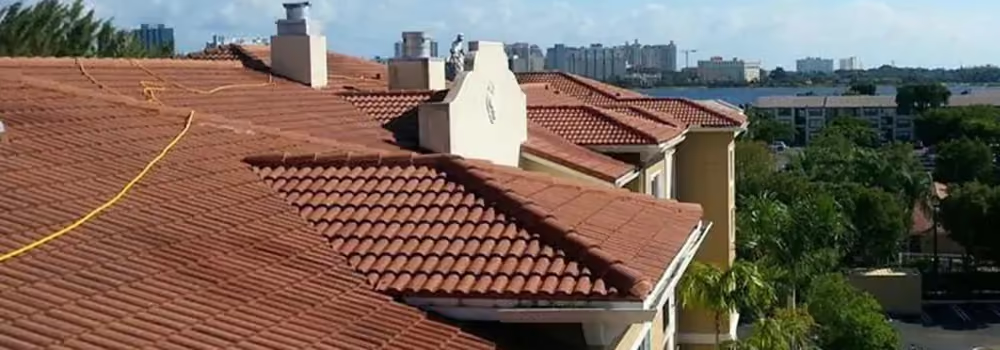
Guest: Yeah, the residential business is a little different. It's, it's focused more on roof Washington soft washing process. So instead of pressure washing tiles and potentially damaging them, this, this company, Mallard, it's, it's a 35 year old company, pretty much invented the, the whole soft wash process in the early 90s. Since then it's become kind of industry standard across the US and even in parts of Europe. So it's kind of an interesting, you know, too bad you couldn't patent that process back then. But it's, you know, it's their claim to fame that's interesting. Yeah, it's, it's our claim to fame. And then the other part was, you know, kind of exterior cleaning. So you have large apartment communities, you have multi story buildings and you know, it's, it's very important to keep the kind of the exterior building envelope clean to kind of avoid future water damage. If you don't clean out a gutter and you have a lot of buildup or on a TPO roof, you'll get basically og organic growth that gets infused into the stucco or whatever the siding is or even into the roof. Structure and it causes damage. So it goes from kind of a opex, you know, just daily or kind of quarterly or yearly or twice, twice yearly maintenance to capex, actually fixing stuff. So. Yeah, yeah.
[40:32] Host: And it sounds like it's, it's somewhat essential to the building.
Guest: Absolutely. Well, you know, and that's, that's really the education. It's very much a consultative sales business on the, on the B2B side. So it's really education and making the regional maintenance director or the asset manager or you know, whoever is kind of stroking the checks that you should have a line item in your budget, you know, for exterior cleaning in order to avoid a full repaint, you know, you can extend the life of a paint job that might cost know, half a million or 2 million or $4 million or replacing you know, parts of the roof structure which could be a lot more expensive as well. So.
Host: Gotcha. So so many of your target customers perceive it as discretionary and part of your sales process is convincing them that it's if not essential, ROI positive because it prevents, it prevents all kinds of additional costs later.
Guest: That's it.
Host: And Joe, I would think that a business like the. So I don't know how, how technical these cleaning processes are, but I would imagine not so technical, especially if a lot of it is pressure washing. It would seem like the, that this was a low moat, low margin, frankly, difficult business. Is it?
[42:00] Guest: It would seem that way. But when you're dealing with a certain level of clients, they have insurance requirements, you know, for gl, for umbrella insurance, even for per, per truck insurance, you have a. Pretty much every apartment owner goes through a compliance process, you know, so if you don't have certificate insurance that's up to date with all the minimums that are, you know, in your contract to do a job, then you can't do that job. So I think the moat is really, you know, doing, doing this type of work the way it should be done and covering yourself the way you should be covered. And then there, you know, there is some expertise as well because you know, we do a lot of lift work. So you know, we have these 66 foot, 86 foot plus lifts that our guys are operating. Know they need to be certified to operate them, move them around the properties, you know, and they're taking hoses up and you know, cleaning buildings, cleaning windows and then we're also repelling off the side of buildings, you know, to get to hard to, hard to get spots. And that takes certifications as well. So I think all of those are more or less moats for chucking a truck, you know, that's got a pressure washer from Home Depot. So yeah, it's a little more involved than that.
Host: The team at Aspen HR recently published a short white paper targeted at searchers Entitled A New CEO's Guide to Human Resources. It lays out the key items you should be thinking about as you transition into CEO and owner of the business you bought. The link to download that is in the Show Notes Aspen HR is a professional employer organization or PEO which provides HR compliance, flawless payroll, robust HR technology and Fortune 500 caliber benefits all for a fraction of the cost compared to using multiple vendors. Reach out to Aspen HR for your complimentary HR diligence checklist and benchmarking analysis. Go to aspenhr.com or contact Jenny Thier directly at jennypenhr.com I did want to ask you about the Chuck and A trucks because you do find yourself bumping up against them and having to sell your value prop because enterprising Chuck in A trucks can buy a pressure washer and a truck and they're in business sort of thing. So let, but let's put a pin in that and come back to it. The is is so window washing is also part of the service offering.
[45:11] Guest: It was, it was part of the service offering but less of a focus. So that was one of the things that I really pushed into post acquisition and, and getting the certifications for the, you know, for the repellers as well.
Host: Okay Joe, so can you tell us some numbers around the business? We've heard that it's a 35 year old business. What else can you share?
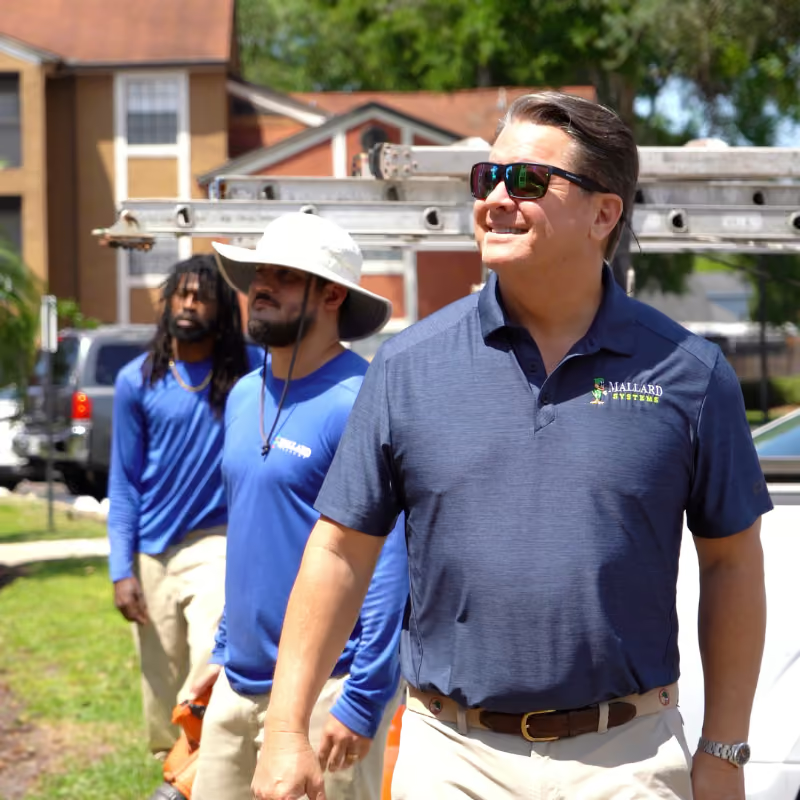
Guest: It's a 35 year old business. 20, you know, 23 to 26 employees, a couple of subcontractors that I use sometimes but pretty much everything is in
Host: house
Guest: when I underwrote the deal. So that was 2023 numbers. Look, you know, so we're in kind of early 24. We were at about 3.1 to 3.2 million in revenue for 2023. And then I was really looking at kind of the average, average EBITDA and average SDE over the prior three years. So when I came into an offer I was, I think, you know, my, my offer was a little aggressive based on those numbers. I came in at about a 4.7x EBITDA and a 3 1/2x SDE based on the 23 numbers. So you know that was like 3.31 or 3.2 million. Then what I kind of looking at the time of Loi May of 24, I was really, I was looking for trends and talking with the seller at the time, he was very open about, you know, providing any report from QuickBooks, you know, that I asked for. So I was able to get a very clear picture of the business. So I was looking at, you know, key kind of top 10 customers and what their revenue looked like per customer. I was looking at his kind of aged ars, well, how that looked, his APs, his balance sheet, and he would provide updates whenever I wanted. And what I saw was he had a big pop in early 24. So when I looked at trailing 12 months versus the full year of 23, he's trending to 3.8 million in revenue. So, you know, I had to. The question I had to ask myself was, okay, is this like a one time, one time thing or could I replicate or I could or could I kind of continue the business at that level? So that was kind of, you know, that was a decision I had to make for myself. But, you know, the bankers kind of saw the same thing that I did, you know, when I kind of put my business plan together and talked it over with them. So on trailing 12 to May of 24, time of LOI, if I backed into an EBITDA number, it was really like 3.2x, not 4 points or not 4.7. And then my SDE was like 2.7x versus 3 and a half. So. And then on top of that, you know, I, I just saw a lot of marketing spend that was, you know, 30% of the residential revenue. So my plan was really to move heavily into commercial and to kind of de. Emphasize that residential business. So there was some meat on the bone there from, you know, kind of reallocating that marketing.
[49:13] Host: And was this also a case where you thought you'd be able to lean on your existing Rolodex and turn on new business?
Guest: I think that was my thesis in retrospect for both the biohazard company and this one. But it was real for this one because they were already servicing some of the, you know, the contacts that I, that I knew. So also, you know, on the back end, I could call some guys and ask them what they thought of the company and oh, these guys are fantastic. Actually, I've been using them for 20 years. You know, that's the reaction. Yeah. So
Host: fantastic. So, yeah. So you. Okay, so you. If you were looking at the full year, previous full year's numbers and or average of the previous three full years, it was a bit of a rich multiple but they had this surge in revenue, and if you could sustain that, it was a fan. It was actually a fantastic multiple. And spoiler, you have so far sustained it. So. So your purchase price is looking better with every month that goes by. Your effective purchase price is looking better with every month that goes by. Which is. Which is great. Can you share the. The deal terms, how you put the. How you put it together?
Guest: Sure. It's. It's the classic, you know, sole owner leveraged buyout. So I had no outside investors. I did a 90% SBA 7A purchase price. I was not the highest bidder. So that's another aside. I. I came in at 1.475 million, and the full price offers, there were five other offers at one and a half. So my cash in.
[51:11] Host: And. And Joe, why do you think you won the deal? Was it this, this. The aforementioned chemistry you had with the seller?
Guest: 100%. That was it. Just.
Host: And it was just. You got. And. And just to dig a little on that chemistry, you guys knew a lot of the same people. You just, you hit it off. Was that. That was a. Essentially. Essentially it.
Guest: That's essentially a two. I mean, there were some personal things as well that we. That we aligned on, you know, just. Just dealing with, you know, the, the tough part of. Of aging parents and, you know, the ages or, I mean, his kids were a little older, but, you know, we just. We just saw eye to eye on a lot of things.
Host: Yeah.
Guest: Yeah.
Host: Great. Okay. Thank you. So you. So it was a SBA deal, 10% of your 10% down and no investors. Correct. And so that 10% of that is about 150,000. So that was off your own balance sheet. There were some deal costs in there, but out of pocket, you were what, 200 into the whole project?
Guest: 162. 162. So when you're working with the SBA, you need to make sure that you add. Well, they will add up the project cost for you. So if you have, you know, one and a half million, you know, rounded purchase price, then you have, you know, there's an SB loan fee. You have, you know, legitimate deal costs or due diligence costs that you pay for prior to closing. So I was able to move my legal fees into it, my Q of the cost, and some accounting fees as well, which counted towards my equity. And then when you look at project costs, you're looking at the purchase price plus, you know, hopefully working capital. You know, I think that's been discussed a lot in some of your prior podcasts and something that the boot camp hammered into me as well. You know, you're going to need. You're going to need working capital for. Because this is going to be a cash flow issue if you don't have any working capital on day one. So I was very focused on that. I had already had experience with the first company, so, you know, I needed to make sure that I had enough cash on hand both within the deal and then reserves on the side as well. So
[54:00] Host: reserves on the side, meaning your own. Your own balance sheet, personal liquidity. Right.
Guest: In case things went sideways for a couple months or whatever. So total project cost on 1.475 million. Purchase price was about 1.62 million. And then 10% of that is 162,000. Great.
Host: And I don't think we heard the ste.
Guest: Well, the, the my trailing twelve number, kind of my back of the envelope, you know, it was just shy of. It was like 550 to 600, call it SDE, including paying myself about, you know, 100K. So, I mean, that's enough to live on, right?
Host: Yeah. So. So you getting into the business planned on and are now paying yourself 100 grand as its owner CEO.
Guest: Right. And then, you know, as the year progressed and we were able to exceed that, you know, that trailing 12 number, we closed out 25 to like $6,000. Sigh of 4 million. So, yeah, we exceeded that number and you know, putting together business plan to just keep growing it, you know, even at a conservative kind of like.
Host: So that surge in revenue that you. That the business had seen just before your ownership did in fact carry through to your ownership. And in fact, you pushed it up even further. So you got to effectively 4 million in revenue.
Guest: Correct. And I was able to distribute my initial capital and then some.
Host: In one year, you're 162 and then some. So you're fully paid back.
Guest: Yep. Wow.
Host: Well, that sounds like it's going the way it's supposed to.
Guest: It's going all right.
Host: That's great. That's great, Joe. Congratulations. And is it going the way you want it to? For all the reasons that you kind of hoped it, it, it. It specifically, is it the business that you thought it was? Have you been able to actually parlay some of your contacts into new business and whatever other ideas you had?
Guest: It's all, it's all played out pretty much the way that I, you know, I'd probably say, you know, if I had below par. Par or above par. It's definitely above par. I think it was three Months into my ownership, I went to a little trade show that was put on by the largest property management company in the world. They alone have 75,000 units just in Florida. And I knew the head of like their kind of statewide maintenance director from, you know, it's kind of a small incestuous world, multifamily. I just, I just made a beeline to him. We caught up for a few minutes. A month later, we were named as Graystar's preferred vendor for exterior cleaning in Florida. And that has played through. We've also made like one of the big pockets from, you know, prior to acquisition was, you know, this magical amusement park that has magical resorts in it
[57:49] Host: that shall remain nameless.
Guest: That shall remain nameless because they will chase after me. But we're able to expand our presence there into, I think we're at eight resorts on property providing their kind of periodic cleaning. Those are three year contracts. So I'm feeling, feeling pretty, pretty good about our prospects and great.
Host: Joe, I, I hear the word contracts and I failed to ask you this when you were telling us about the business. So is it, is it contractual revenue in general recurring?
Guest: It's, it's a bit of a misnomer, you know, those three year contracts for this particular client, you know, if we did anything terrible, you know, they could cancel us in the space of seven days. You know, so it's always, it's always about, you know, how good was your last job and making sure that you're doing work according to standards, you're really mindful of safety, you know, so it's always continual training, making sure that our guys have the best equipment, the best training that I can buy for them. So, you know, I think our success is kind of like a flywheel because, you know, now I have the capital to be able to continue to invest in better equipment. You know, I looked at, for instance, you know, we had a lift costs. I talked about the lifts before. You know, our, our monthly rental bill was, I don't know, $15,000 or something like that. So I went out and bought a very specific lift for certain jobs that were difficult, you know, for regular lifts to get into. So that's, that's been kind of a, a very positive thing. And then it raises our moat a little bit more because, yeah, you know, I have a tracked lift that kind of, when you kind of put it all down and compress it together as much as it, you know, as it can, it's a 60 foot lift that can go through kind of a regular doorway. So You. Interesting. Yeah. You have these courtyards of multifamily apartments that other competitors can't get into. And we just get that little lift and go through the. The gate and expand it and go up 60ft and do our job. So.
[1:00:16] Host: Interesting. So one sort of one gadget, if you will, one vehicle purchase. CAPEX expenditure has kind of, as you said, increased your moat, helped the business.
Guest: Yep, absolutely.
Host: Anything else to say about how things are going? Well, I, I did want to hear about the competitive landscape, the chuck. Chucking at trucks, but anything more to say about. On. On the. On the good side of the business that you now own?
Guest: Um, I. I think one thing that enabled kind of a quick, you know, kind of enabled me to step in quickly was that, you know, I talked about the overlap in my client base, you know, the institutional asset managers, the senior property managers. But being on the, you know, on that side of it, you know, I had deep experience just working with general contractors, roofers, restoration guys, building engineers, you know, so I could wear. I could wear the blazer in the office, but, you know, a lot of the times I was in a T shirt and just, you know, in my work boots and my hard hat and working, you know, just working with guys. So I felt like I stepped into this and I could talk shop immediately, you know, with my team, you know, with the crew supervisor. So it was a day one immediate comfort. Funnily, when the seller introduced me on day one, I literally walked into the shop and Bob is like, hey, as you might have heard, there's a new buyer or a new owner of the company want to introduce you. And I just looked at Bob and I said, look, I'm. I'm just, I'm Bob. I'm a few pounds lighter and a couple inches taller. And everybody just, you know, you know, tension broke and everybody felt a little relieved. I said, I'm not changing stuff. You know, you guys all have your jobs and we're just gonna, you know, build on, you know, what Bob's been doing. Bob the builder has been building for, you know, the last 11 years. And, and we're going to. Going to keep moving. So.
Host: And. And, you know, this is a case of just great business. Buyer fit. To your, to your point about how at home you felt in this business, was that something that you communicated during your transition speech? Like, hey, guys, I have experience in this world. I'm not some, whatever, some office jockey.
Guest: I mean, not. It was a very limited kind of talk. You know, they're. Because, you know, guy, these guys are you know, they're blue collar salts of the earth making, you know, 20, 25 bucks an hour. What they're most concerned about is, you know, do I have a job? You know, am I getting fired? Is, you know, or is, you know, they're more concerned about what's going to happen to themselves. So yeah, I wanted to assuage them and let them know that they're all valuable team members and you know, that I've talked about each of them and, and you know, I think I spent the next few days just having one on ones with every single person. So that was, that was, I think having been, you know, kind of in that multifamily business and just working with people that are managing those properties. You know, the maintenance guys and you know, the turn techs and the assistant managers and the leasing people, you know, that all kind of played into,
[1:03:54] Host: you
Guest: know, my comfort in working with the team.
Host: Yeah. I heard you say Bob, what he's been building for the last 11 years. So he was not the founder, he bought the business himself 11 years ago.
Guest: That's right.
Host: Or now 12.
Guest: He was the second owner and I'm the third. So been a private company the whole time.
Host: Joe, you did say to me in the pre call that I didn't hear much about it, that there was, there was actually some turnover on day two. So it sounds like, it sounds like day one went swimmingly, but then day two, maybe less. So.
Guest: Yeah, so day one I did have a separate conversation with our kind of key accounts manager. So basically, you know, a very important sales guy. Day two, he walked in the office and said. And tendered his resignation. And I just said, look, and we did have a long conversation prior to me talking with, you know, with the team at the shop. And you know, I said, look, you know, I, I admire, you know, what you guys have built. I'm sorry that, you know, you weren't. He was, he was upset because he didn't know about the sale.
Host: Yeah.
Guest: So he, he felt ownership in the company.
Host: Yeah.
Guest: And you know, and I, I totally empathize with that. And I said, look, I, you know, I'm gonna be here for you, you know, if you change your mind or whatever, but I'll accept your resignation. You know, best wishes. I'm really sorry to see you go. I think, you know, we could really grow something special, you know, if you changed your mind. And I just kind of left it at that. So. Very nervous time. You know, I think it was in a, a couple days, maybe two or three days. So he gives me a call, he says, hey, you know, just have a conversation. I said, okay, that's fine. So came back in and, you know, I just. Looking back at what he was making, I thought he was a little bit underpaid. So I said, look, I think you were underpaid for what you do. And, you know, I want to pay you better than market and I want to make sure that you're happy where you are and that you have all the tools that you need to continue to succeed. So he gave me kind of a number and we went back and forth and that was the end of it. He accepted. And we've been working great together and ever since then. Oh, great, great.
[1:06:39] Host: Well, Joe, that actually the, the finesse with which you handled that, I want to tie back in now your age and your experience that many people in the audience, people who buy small businesses don't have. You've been, you have years of experience as a manager. How do you think that that has played out or not? Do you think it gives you an advantage? It must.
Guest: I think it does because I've really screwed up as a manager a few times in the past. You know, I just didn't have the kind of the emotional intelligence at certain, you know, especially kind of my first kind of multifamily ops job working with people. I learned some tough lessons there. And you know, you make mistakes. I mean, I got fired ultimately from that job. But, you know, you learn and you, you just have to move on. You know, like if something, something ends, it might be your fault sometimes.
Host: Yeah.
Guest: So you got to learn from that, like your wounds and then, you know, go after it again. That's the only way I've been able to go the places I've.
Host: I am the competitive landscape, Joe. And we, we may have already kind of talked about this and it sounds like, I mean, your recent capex investment on this new lift, the quality of service and how important that is, and your reinvestment in quality, in training, in certification, the, the relationships and contracts, as sort of tenuous as the contracts are, they are relationships and contracts. I assume all of that is what keeps the chucks in a truck at bay.
Guest: The chucks in a truck are really more on the residential side. And ah, yeah, so that's really, you know, that's our roof washing kind of some exterior cleaning, but primarily roof washing business. That's a classic B2C home service business. It's, it's separate and apart. I mean, I really have two businesses. You know, one is that classic home Service business, you know, it's just kind of, I mean it's, it's a good size. I mean it's million bucks of revenue a year. But it just, you know, the burden of just the ad spend bringing in those leads. And we have great inside sales people too. You know, I've had to really learn that business and we'll see what happens with it. Okay. Not really focused on expanding that piece of it. I think the future is really just growing out the commercial side and expanding our offerings. We do exterior cleaning, but we were specifically doing window washing for high rises. I think I mentioned that we do some waterproofing of windows, seal coating, so roof painting. So there are, there are a number of additional services that our clients are already asking for. So they're kind of natural extensions of what we do now using the same talent, the same equipment. So it's organic growth. I think it's an organic growth plan for us on the commercial side.
[1:10:19] Host: And tying again back now to your kind of looking forward and the fact that you did this in your late 50s. You had mentioned to me me that you have something like a plan, five year plan. As actually anybody you know, anybody buying a business probably would. But as, as, but I want to ask how that if that's different for somebody. This was, this is probably what you'll do before you retire is my get my. You'll probably do this up until you're ready to retire. Fair to say?
Guest: I would kind of, I would recharacterize that. So I think my time horizon is forever and the five year plan is really a five year operating plan to budget towards. Because I think, you know, even on an annual basis or quarterly basis, you, you need to have a plan that you're shooting for that you share with your team. You know that they get involved in and provide input on how to achieve that plan and the things that they do. So yeah, I mean it's exciting. The team is excited that.
Host: And what is your five year plan call for or project for or aim for?
Guest: It's pretty conservative, you know, 10% revenue growth per year and then just tighten up our operating margin. You know, there's a, there's there's some, there's there's some kind of reallocation of capital, you know, that we could. And that we could tighten up our margins with. But I think just kind of stepping back, like I think I have a pretty conservative goal because I want this to be a sustainable company, a sustainable lifestyle, not only for myself but for the team members involved. So you know, it's kind of, I think going back to Sam again and his podcast with Kostab Du. Yeah, the intentional owner. They talk a lot about just building kind of sustainability into your life. I'm an avid listener of that podcast and that's, that's where, that's what I believe as well, that, you know, I'm very cognizant of my day to day spending time with my wife Audrey, you know, carving out time to, you know, have trips or just be with my adult kids when they're in town. You know, I've got my, my two eldest boys have their own entrepreneurial stuff going on and you know, one of them's in Singapore and the other one's in Sri Lanka. I think, you know, I kind of lose track of that one. But it's important when they're in town or, you know, we can plan trips and be together. You know, that's part of, part of why I'm doing this as well. Just to have the wherewithal to create, you know, experiences to share with my loved ones.
[1:13:40] Host: Joe, how do you reflect now having been inside and the owner, operator of two small businesses? How do you compare and contrast this one and really kind of your own intersection which, with each of these businesses
Guest: night and day, I mean, I went from the grind and just, you know, just daily, just pushing through that was painful on just a day to day basis, just really managing every, every dollar and making sure that everything is covered, all the bases are covered, doing everything I had to do, you know, myself but, you know, just learning, learned, learned a lot about running a lean business and you know, cutting the chaff from the wheat, so to say. And that's, that's really that that experience enabled me to just jump right in as well and rip through the financials and you know, ask a lot of questions. And I think it's, that first experience was really crucial to, you know, what we're doing now. So I don't, I'm glad I went through that too. You know, everything in life is an experience and hopefully you can, you can learn from it and build, build on it.
[1:15:12] Host: You had mentioned to me that you find that you, that you have found that your talents are better suited to entrepreneurship through acquisition. And, and while you did buy that biohazard business, it didn't feel very established, so it ultimately felt more of a story of zero to one.
Guest: Yeah, yeah, yeah. I, I, I think I realized that I wasn't a startup guy. You know, there are certain breeds of entrepreneurs I think, you know, There are, I guess there are founders and then there are operators and I'm definitely in the latter group. I recognize that about myself. I'm also not kind of a natural salesperson, but I do well in kind of long tail consultative sales processes. So I think that multifamily experiences has given me a lot of good experience as well.
Host: Anything else, Joe, about your journey that any reflections you're a year and a half in. It's going really well.
Guest: You've, you've grown revenue to 4 million
Host: from, well, I guess 3.8, but that's up from 3.2 not that long ago. You've got a 10% growth per year projection. That'll get you to what, 6 million in five years if you hit it?
Guest: Something like that, yeah.
Host: Anything more to add? Anything maybe to say to people who are considering doing this in their, in their mid, late 50s or early later?
Guest: I, you know, I don't know if I could speak to people in their mid, late 50s. I would, I would hope that, you know, they were younger than me, you know.
Host: Why?
Guest: Well, I would say folks in my, I'm 60 now, but I, I feel like I'm in my early 40s and my doctors tells me that, you know, my body is like, I'm in my early 40s, so I think I have a little more Runway than other folks that might be of this age. But I would just like stepping back to. Regardless of whether you're kind of in your 40s, 50s, 60s, or, you know, you're 25, 35, I think you really need to, you're going to dive into it, get brutally clear on your kind of big criteria, but, you know, kind of that big. Why just spend a lot of time kind of assessing what you're good at and how your experience, you know, whether it's 2 years, 5 years, 10 or 20 years, transfers to, you know, what you're looking at. You know, for me, you know, my number one was geography. I'm, I'm not moving. I've got my life here. You know, I've got my house, my kids and you know, I mean, I've got people here. I'm not going for other people. It's going to be different. I mean, you're going to be in a different stage of life than, or maybe you were coming out of a, the same industry or parallel industry. So you're gonna, your first big criteria is going to be industry and you're going to be more geographically agnostic. But for me, my family, my community and kind of a Stable life is what I'm after.
[1:18:45] Host: And now that you're in this business, Joe, where the business buyer fit is so tight, do. And you reflect back on that. What did you call it, a materials handling business, the, you know, the costume asset management business. Do you look back at that and be like, boy, that would have been much harder than I, than I realized. Just because what you're in now is, is so, so natural to you.
Guest: Yeah. Yeah. There was definitely the aha moment when I was introduced to Mallard Systems. I think, you know, it is a tough market and you do have, you know, independent sponsors and, you know, some PE dipping their toes into smaller deals that they might want to roll up. I mean, that's probably more an issue with H Vac or electric or, you know, those, those types of industries. But I think you just have to have some, you have to establish some connection with what you're going after.
Host: Well, congratulations on the successful pivot in your whole life and, and getting through that biohazard crucible.
Guest: Wow.
Host: And emerging on the other side with the, the gumption to go do it again. And this time it seems to be working very, very well. So congratulations on all that. We will provide a link to your LinkedIn in the show notes. And the business is mallard systems.
Guest: Yep. MallardSystems.com and my email is JollardSystems.com so there you go.
Host: Super Joe Springsteen. Thank you very much for coming on.
Guest: Thanks will appreciate it.
Host: Hope you enjoyed that interview. Don't forget to subscribe to the Acquiring Minds newsletter. We send an email for every episode with an introduction to the interview, a link to the video version on YouTube and soon keep key takeaways, numbers and more essentials from the interview. For those of you who don't have time to listen or watch it, subscribe at Acquiring Minds Co. You'll also find all our webinars there on the website, both those we have coming up and recordings of past webinars. At this point, There are over 30 webinar recordings, a wealth of information on all the tech, technical, nitty gritty of buying a business. Acquiringminds copy.











































%20-%20thumbnail.avif)




%20-%20thumbnail.avif)

%20-%20thumbnail.avif)
.avif)



%20-%20thumbnail.avif)