Host: Today's interview shows the full circle of a successful acquisition and later exit via the traditional search fund model. True to the stated requirement of traditional search that the entrepreneur be willing to move anywhere for a good business, Edward McDonnell moved with his pregnant wife from Chapel Hill across the country to Seattle to take the reins of Botanical Designs. When he bought it, the indoor plant business was 80 employees in Seattle. Only when Edward exited to a private equity buyer four and a half years later, he'd grown it to two more states for a total of three branches. He continued on as CEO for another two years under the PE Group's ownership and grew botanical another five branches for a total of eight and 200 employees. Quite a journey. Now listen for Edward's take on traditional search, which often receives the critique of being less autonomous or independent than self funded search. Well, one thing overlooked by that critique is resources cash. Traditional search gives you resources both in the capital that funds the search itself and later in the cash flow of the larger business you've likely acquired as a traditional searcher. Cash is oxygen in small business, so being perpetually tight on cash as self funded searchers often are both before and after acquisition constrains your freedom of movement. So while you may be freer from a cap table perspective, as a self funded searcher, you may ultimately feel boxed in if the business lives. Check to check. This is a generalization of course, but something to ponder. Okay, Here is Edward McDonnell, acquirer and former CEO of Botanical Designs Today Thursday, a webinar on cybersecurity for searchers. Most small businesses carry unseen cyber gaps that become the oper your problem on day one of ownership. Nick Akers, president and CEO of Enzo Technologies, who acquire the business through entrepreneurship through acquisition, explains how these vulnerabilities hide inside people, processes, technology and data. You'll learn why searchers miss them, how they impact early operations, and how a cybersecurity risk assessment brings them to light before they become expensive problems. The webinar is Cybersecurity for searchers why SMBs need a risk assessment it is today Thursday, February 26th noon Eastern. Link to register is right at the top of this episode's show notes or on the Acquiring Minds homepage. AcquiringMinds co. Welcome to Acquiring Minds, a podcast about buying businesses. My name is Will Smith. Acquiring an existing business is an awesome opportunity for many entrepreneurs and on this podcast I talk to the people who do it. If you ask owners in the ETA and search community which insurance broker provides highest quality work, great outcomes, and has a practice dedicated to searchers and acquisition entrepreneurs. One name comes up again and again. Oberle. Oberle Risk Strategies has worked with hundreds of searchers over nearly a decade and is in fact led by a two time successful searcher, August Felker, which makes Oberle a specialty insurance brokerage for searchers by a former searcher. And if you've got a business under Loi, Oberle will provide complimentary due diligence on that business's insurance and benefits program. An easy no risk way to get to know August and the team at Oberle to take advantage. Check out oberle-risk.com that's O B E R L E- risk.com link in the notes. Edward McDonnell, welcome to acquiring Minds.
[4:42] Guest: Hey Will, thanks for having me today. Good to be here.
Host: Edward. You acquired an indoor plant business with the traditional search fund model. You grew and exited that business. So you experience the full cycle of the search fund journey and you have agreed to share it with us. Thank you. Start us off please with some background on you, Edward.
Guest: Sure. Well, I grew up in Richmond, Virginia from about 10 onward and was mechanical engineer at UVA. So big, big fan of, you know, all things Virginia. You know, you may or may not be, but we'll see. The, you know, I was lucky enough to get a job at Honda right after college doing body structure design for Acura MDX and Honda pilot type vehicles. So really, you know, nitty gritty engineering and then worked at an aerospace company for a few years and really through that journey totally loved it but realized I wanted to do something entrepreneurial and so decided to get my mba, went to UVA Darden, was fortunate enough to get in there and kind of do a full circle of, you know, six years in Charlottesville, Virginia and really while I was there explored anything and everything, entrepreneurship, you know, I really at that stage thought I wanted to do early stage medical device type type entrepreneurship and even worked for a summer for an early stage medical device company. I realized, well, that was a great path. You know, I really upon reflection in my, you know, engineering days of, you know, walking manufacturing floors and really getting to know people and interacting with, you know, large numbers of people doing great work, that that would have been a better path for me. And so at the time and for context, we're talking now fall of 2015. So a little over 10 years ago I was in my second year at Darden and I learned about search funds for the first time and I went full bore into exploring the different types. You know, accelerators were pretty new at that time, but definitely, you Know, looked at that path, looked at self funded path, looked at traditional path, and really through that journey determined 1. A search fund was definitely for me, you know, going and owning and operating a business for the long term, that was just one what I was meant to do. And so I found a path to do it and eventually decided on a traditional search, which I'm happy to get into the reasons now or if you want to dig into that a little bit later, that was, that was going
[7:27] Host: to be my question. So.
Guest: Yes.
Host: Why? We just heard that you explored the various models and you settled on traditional. Traditional why?
Guest: Yeah, so ultimately a few reasons. I mean, number one, I had, we'll say, very little cash and a bunch of debt coming out of business school, which certainly impacted that decision. Right. But even beyond that, I knew that I wanted resources to be able to do things like hop on a plane if I needed to, to go look at a company without a second thought and be able to afford and pay for that. I wanted to, you know, do my proper due diligence on buying a company where, you know, I didn't want to have to worry about, hey, spending this much on say a quality of earnings versus that much on a quality of earnings. You know, I wanted to do it right and I wanted to make sure that I wasn't making a mistake and I was going to buy a really good company to operate long term because it's a huge commitment, as you know, and everyone on here knows all your listeners do too. I also really hit it off with a bunch of mentors in the space who, you know, ended up as investors. But I really valued that input from them. You know, people who had been there, who had run companies, who had invested in companies, who had advised, you know, those with, you know, less experience will say running a company but, you know, would be there if and really when I needed support or conversations or guidance or referrals or whatnot. And after talking to lots and lots of phone calls and even doing really a road show to everywhere from California, Chicago, Boston, Dallas, Charlotte, New Jersey, et cetera, it's like, okay, this is it for me, this is the path. I like it for all these reasons and let's go do this.
[9:22] Host: Well, also in 2015, 16, doing an SBA style self funded search was less common, wasn't nearly as talked about.
Guest: That's right, that is true. I think the structures that searchers have been able to leverage, call it, I don't know when that really kicked in. Let's say 2018, 2020, et cetera. And to now where you can put little to no money down, raise it and yes, you're taking a personal guarantee on the debt, but you're owning, let's just call it 60, 80% of the company that flavor know in exchange for certain other terms. Right. The step up, et cetera, et cetera. It wasn't really available. I think that's fair. Or maybe it was and I just didn't know about it. Would I still have pursued it at the time knowing that, you know, probably not. I still think, you know, certainly I've had a good outcome with traditional in a lot of different ways but you know, that's, I think that's a fair statement what you said. It's not, it wasn't necessarily as available. So yeah.
Host: That said the, the three big reasons that you just cited to want to do a traditional search fund are stand. They're as relevant today as they were 10 and 12 years ago. And they, and they were. I wanted to actually say them back to you because one of them I actually don't think I've heard. But you, you said the kind of the mentorship and network of these investors that one you hear a lot the fact that you weren't going to be able to. I mean you, you had student debt. So this was a way of being able to do a search financially yourself that otherwise would have been impossible. So that was kind of a. Speaks for itself. But the, the other one where because the traditional search fund model pays you and gives you additional budget to execute the search to spend on deal fees that gave you, you, you recognize going into it that that gave you the latitude to not have to nickel and dime your own every decision to. About visiting a company, hopping on a plane, visiting a company due diligence. I'm not sure I've, I've heard that expressed but it's, it's a good point. You, you recognize that having a little bit of capital to spend on the search would probably enable better decisions by you.
Guest: Yeah, I, I'm a firm believer that deal flow helps you be more objective. And I also think that doing proper due diligence saves a lot of headache later. You know, knowing as much as you can about a company especially related to quality of earnings, like that's the number one. There's a lot of diligence things that need to be done but that's, that's the like one thing that needs a. Really needs a good third party to do. Um, but yeah, so like some examples during my search I, I was really looking broadly at B2B recurring revenue services businesses, you know, really non software. Right. And that's extremely broad. Right. How do you narrow that down? But like some examples. So I ended up searching, located out of Chapel Hill, North Carolina. So my, my spouse happened to go to, you know, grad school right after me and, and was there for public health school. But I looked at MSPs and waste disposal companies on Long island and I looked at a cattle scales and calibration company in Oregon, in rural Oregon. I looked at a plumbing company in Orlando and these are all companies I visited. You know, I had financials in place. We seemed like we were in the ballpark on structure. And I went to visit for owner meetings, you know, in addition to ones in North Carolina or Atlanta or D.C. or Kansas City, et cetera. I mean the, the list goes on and on. And I was not afraid to go do those. You know, spending your budget wisely and you know, frugally is always important. And I was staying at, you know, whatever, the priceline hotel of the moment for all these trips. But I didn't hesitate once I knew that these could be a fit. Basically, hey, is this qualified? Do I have financials where it's in the right size range? Does the owner, you know, likely in my ballpark on valuation. Right. Like not like 15 times EBITDA or something. That was never going to work. So once those were checked, I was on a plane because meeting the relationship or building the relationship with that seller is absolutely critical. And most of these were proprietary deals. There were a few brokered ones sprinkled in there. I really straddled the line on both. But I did not want to hesitate to avoid a great company just because I wanted to save a little bit on travel expenses. And it really enabled that if I was doing a self funded search, I would have never gone to see that company in Oregon. Maybe we ended up buying a company in Seattle and we met for the first time in Minnesota. But, but anyway, I might, you know, would I have gotten on that plane to differentiate myself from other prospective buyers? You know, I don't know. But absolutely. Having funding in the bank to go do that, it was a no brainer to go do that.
[14:46] Host: Yeah, no, it's a great point. And your other one about the importance of due diligence, which of course anybody listening will understand. But still, as a self funded searcher, it is very tempting to cut corners on your Q of E because it's coming right out of your own back pocket. And, and these. And especially when it comes to the Q of E, it's a significant expense. It's not the thousand dollars that it takes to fly out to Oregon and back and stay at a hotel. It's, it may be the difference between 15 and $25,000 for, you know, which Q of E provider you go with. And so the, the temptation is just so strong to pay the 15 rather than the 25. And. Yeah, and, and setting yourself up to not, to not have that temptation to cut corners is, is prudent.
[15:33] Guest: It is. And I get it. From the self funded searcher side. I get it. You know, it's, it's, it's a tough challenge to balance time and money during a search. Yeah.
Host: Well, the other thing that jumps out about your search there, Edward, is that you were, I mean actually just to step back, I, in the intro to our conversation now said how you went through the full life cycle. In many ways your story is very, a very traditional, traditional search fund journey and because of the outcome, which we're of course going to hear about. But also just as you describe your search, the proprietary nature of it, that's a common feature of traditional search funds, less so in, in self funded search land, but also the commitment, the openness, willingness to, to go anywhere to buy business. And so the, you know, the unspoken, the expectation by investors in traditional search fund land is that you searcher will have a nationwide search and will be, will be willing to go and live where that company, a good target is found. The unspoken, you know, understanding secret is that many searchers are in fact not willing to do that and end up looking regionally. And so the geographic, there is something of a geographic constraint. But what I'm hearing from you is that you were really, you really were wide open from rural Oregon to Long island to Orlando. So were in fact you willing to live absolutely anywhere?
Guest: I think generally, yes, I'd say the target regionally would have been Atlanta to D.C. but we bought a company in Seattle and we moved to Seattle. And so I think that's maybe an example. I think there's more transparency around regional, more transparent discussions and maybe allude to around regional. But it has to be at least super regional. And it comes down to it's a numbers game, right? If you need, because of the way the economics work and check sizes work and how to properly align incentives with an entrepreneur searcher and the outcome, you can't buy a 500k EBITDA company, right. It has to be whatever, 2, 3 million EBITDA. And if you're looking in One city, for example. Right. Just it's a numbers game. How do you find the right company in the right industry where the seller likes you at the right time for the right valuation, Right. Revenue quality, et cetera, et cetera. Really threading that needle to find a 3 million EITOT company only in one city, it's extremely difficult. It's certainly not impossible, and there's plenty of examples where people have pulled it off. But if you open up the aperture to, you know, many places throughout the United States or for those searching in, you know, globally or in a different country where they live or whatnot, I think it's helpful and it's really just a numbers game at the end of the day. Yeah, it's a big sales funnel, so. Exactly.
[18:27] Host: So it is a good point. It's not an arbitrary requirement. And the traditional search fund model, it's really seen as kind of necessary to be able to find a deal. You just got to widen that aperture, as you said.
Guest: I think that's right.
Host: Running payroll, paying your bills, closing your books and producing financials, these are critical tasks every business owner must do or oversee. But spending time on them distracts you from the leadership in growth work you want to do. So let system 6 do it for you. Owned and led by a former Searcher, Chris Williams, System 6 is a leading outsourced finance team for hundreds of SMBs, including over 50 searcher acquired businesses. Chris, Tim and the System 6 team understand firsthand the challenges, the opportunities of jumping into a business as its new owner. So whether you own your business already or have one under LOI, talk to System 6 about how they can give you time back and improve your financial operations. Mention acquiring minds and they'll provide a free review of your books and financial ops, a $500 value. Check out system6.com link in the show notes or email helloystem6.com anything more to say about the search? Edward, before you hear about the company
Guest: you found, I think, you know, I was very focused on those types of companies and finding them and you know, you hit walls along the way during the search and you just gotta blast through it, you know, just like operating, et cetera. So I'm sure you've had plenty of guests talk about the ins and outs of search, so happy to jump to why I liked that particular company.
Host: Also because your search now being 10ish years ago, you know, a lot of the tactics will have changed and absolutely the inboxes of the owners are now flooded and maybe they were less so back in 20, 15, 16. So tell us about the business you bought and why. I. Well let's, let's hear the bullet points of it first. Sure.
Guest: The bullet points are, you know, we bought a company called Botanical Designs based in Seattle, Washington. So it was really a, you know, at the time a one branch founder owned company doing interior plants and high impact urban landscaping. Really just in King County, Washington which is Seattle, Bellevue, Redmond, kind of the Amazon and Microsoft realm. I found out about that business probably 10, 12 months into my search and courted them. It ended up being brokered, but it was sort of a hybrid, sort of proprietary brokered type scenario. And I knew that it had legs, it was the right size, you know, for a traditional search fund and every other metric pretty much was right down the center of the fairway on you know, if you read the Stanford study or whatnot, it's highly recurring. So basically we designed, installed and maintained interior plants, living walls, green roofs, some exterior plazas, that sort of thing. As a business I could understand it was you know, over if you count a holiday decor business, over 75% recurring and limited customer concentration. You know one customer did about 5% of sales and the rest were less than 1%. It was, you know, something that had low capex. The industry was growing really at the time you were just starting to see like even in like the Trader Joe's or at the grocery store, like there weren't like pots of succulents that you could buy like this little, you know, little cactus type of thing. In 2013 that was like non existent. But by 2017, 2018 that was everywhere. So you could just sort of feel this growing and, and they were building commercial office buildings and hotels everywhere including Seattle like crazy. So there are just some really good tailwinds to that type of company and that type of industry, you know, really had all the, all the metrics you would want.
[22:49] Host: What about just to pick at that? Because yes, it does sound like just checks all the boxes. It does feel though like the spend that you represent for your clients customers is pretty discretionary, non essential. Nice to have a green wall. But that's the first thing that goes in a downturn sort of thing. A live, excuse me, a living wall.
Guest: Yeah, it's a fair question. I think that's something that you know, required diligence but kind of flipping that it was a very small dollar spend as a total budgetary requirement for customers. So for example, take like the class A high end office building in a downtown area. You know they have a lobby that they've spent millions of dollars on that's top notch rent. You know, people have signed long term leases to lease that space. They then have expectations about what that entails. And I would say the exterior plaza part is not discretionary at all. Right. Those are permanent architecturally integral spaces. I think, I think for plants, you know, you, you probably think that. And it's more discretionary than like let's say plumbing or you know, something like that for sure. But taking a space that is like cold and you know, maybe it's just like this concrete lobby or marble granite lobby and upgrading it with plants or with holiday decor in the right type of season. Like just seeing the look on people's faces before and after who were like watching us install these things, it just was like night and day. And we actually saw an increase in called architecturally integral plant. You know, planters and living walls and that sort of thing inside spaces. Like even in a key arena in Seattle, which is like where the Seattle Kraken play hockey, there's a 10,000 plant living wall in that hockey arena and it's in the basement and it requires artificial light, but it's still there and it's, it's not going away. It's the Instagram able thing there. So.
[24:58] Host: Yeah, yeah, no, it's a great point. While not technically, technically essential, there's this kind of pressure to maintain appearances and once something like that is in, if you were to take it out or, or you know, the nice holiday decor or the, the plants just the, the normal, outside of the holiday season plants are starting to either disappear or look a little, look a little tired. That landlord is going to hear from it, hear about it from the tenants and everybody. You know, the, A place of work is something that needs to, that needs to signal health and strength and esthetics are all about that. So, so there really is, you know, that kind of a, it's kind of essential marketing, if you will. Maybe I'm stretching, but anyway, point taken.
Guest: That's a fair point. I think that's a fair way to describe it. And there were some customers and clients who saw it exactly like that. Yeah, yeah.
Host: Anything you could say to quantify the business revenue, Number of employees, asking price, profitability.
Guest: So we were at 88,0 employees when we acquired. So you know, sizable branch, sizable number of people, which was nice because there was, you know, we had decent managers in place, you know, from the get go, who had had longevity at the company and so on. But yeah, 80 employees is like right, right in the heart of the traditional search fund size range. Right in the heart of the traditional search fund, you know, valuation range, et cetera. If you just like pick apart, you know, the Stanford study from 2018 or whatever and put this one in, you know, it's going to line up almost exactly with every single, every single metric and average that you would see.
Host: Can you give us top line revenue at the time?
Guest: Top line at the time, about 11 million, I recall something like that.
[27:00] Host: Okay, so I'm going to assume you're neither confirming nor denying. Let's say it was a 20% margin business. So that ends up being 2 ish of EBITDA, which as you said is kind of traditional search fund sweet spot.
Guest: Right in the sweet spot.
Host: And, and, and multiple paid. Similar sweet spot.
Guest: Yeah, similar sweet spot on multiple.
Host: Okay, My words, not yours. That probably looks like anywhere from, you know, mid high fours to six at the high end. So somewhere in that range. Thank you, Edward.
Guest: And yeah, 80.
Host: 80 people. That, that feels like more people then even what you've described here as an 11 million, $11 million revenue business. I don't, I may be wrong there, but that feels like more, more headcount per, per dollar of revenue than I'm used to. Is. Is it.
Guest: I think that, you know, we had a lot of field staff because it's a heavy maintenance company where we have individuals who are highly skilled but go into the field, super passionate about plants every single day and take care of them and so on. So, so it was, you know, heavy field services type business, which probably drives some of that. We did see, you know, kind of across the board, those, that revenue per employee I think is a lot higher now than, you know, it would have been back then. I think that's part of it too. You know, part of it's, you know, the inflation we saw in, you know, what is that, 20, 22 or something like that?
Host: Yep.
Guest: In prices across the board for everything. Yeah.
Host: You were searching from Chapel Hill. So you upped and moved the family.
Guest: Absolutely, yeah. 20.
Host: And what, what did the family look like at the time?
Guest: Was it just you? So I, you know, married, my wife was pregnant with our first child, my, my older daughter and we, so 2018, we bought the company, moved across the country, bought a house, had a baby. It was like, it was a lot, I'm not gonna lie. And, and you know, what I didn't maybe touch upon before is I had never, let's just call formally supervised an individual, an employee in my career to that point. And Now I have 80, you know, a team of 80 that. That I'm in charge of. So it was a wild. It was a wild year. It's fun in so many ways.
Host: Well, well, that's interesting, Edward. We hadn't actually talked about that in our pre calls that you had what. How did you put it? Formally supervised, otherwise known as managed.
Guest: Yeah, that's correct.
Host: Otherwise you had never managed a soul.
Guest: No, no. You know, some summer interns, that type of thing as an engineer, but that. That's it. No. Okay. I was a design engineer, you know, certainly project manage, work with teams, interact with plenty of people. You know, I was like, you know, head of a club Baja racing team at uva, where I was like one of the top two people. You know, I had certainly done some leading in the past on many levels, but never, you know, never formally managed another.
[30:11] Host: Well, I want to hear more about that. Before we do, is there anything to say about the trans. The immediate transition, day one, or should we just hop into your tenure as an operator and.
Guest: Yeah, I mean, I would say day one, I was very pleasantly surprised at the reception and, and I think it just speaks to the, the people and the individuals and the industry and the company. Day one. But it was, hey, seller, we do a big all company meeting. He was the founder of the company. He introduced me as the new owner and there was, you know, kind of the shock and awe, but it was an asset sale and we, we went through, you know, offer letters and sort of the mechanics you have to do. And it took very little time. I'm talking less than a half an hour and everyone's back out the door taking care of plants. It was, you know, it. We did a good job of talking about the, you know, we'll call it the what's in it for me thing, you know, describing benefits and they're not changing, your manager's not changing, you know, et cetera, et cetera. But, you know, credit to everyone at the company and candidly, the founder also for creating such a great environment. You know, people just got back on their way. You know, there were, there were certainly a few discussions here and there, but I was amazingly surprised at how easy
Host: day one was and that and that carried through. There were no later points of friction? Wow.
Guest: No, no, I, you know, there. As you try to scale and add certain systems and such which we can get into, you know, there's friction here and there and how do you implement it, et cetera. But I think I'm still amazed to this day. You know, was like April 11, 2018, something like that. It was a fantastic day and it could have gone very differently. So you just never know. You can't predict.
Host: Yeah. Okay, well, let's now do hear about this point that you had never really managed anybody. Did you take to it naturally was. Do you feel that your lack of management experience was a challenge?
Guest: I think, I think I took to it fine. I, I think it helped that the managers in place were really good and they, you know, had the respect of the team and they had some systems and processes and such. So call it from the coming up to speed on the HR type items at the company. You know, they, they already had that going. They had an outside consultant. I didn't have to invent that and so on. So, you know, a lot of it was just, hey, being humble and learning from those in the field. You know, I'm not going to go like, sure, I have an mba, you know, I'm not going to go flash it. I think even, even four years, five years later, I bet there were less than five people at the company who knew or even cared that I had an mba. It wasn't something that was important to them. And I think, I think just going in with that mindset of humility and I'm here to learn from you and everything we're doing in the field, taking care of customers and take care of plants was already really good. I think that helped and I think, I think people got that. I genuinely wanted their input and I genuinely thought the company was already pretty darn good and that, that definitely helped through that process. Otherwise though, no, I never, I wasn't fearful, I guess of it. I knew I had mentors to back me up and you know, this was operating was precisely why I even got into this in the first place. Like searching is really just a formality, so to speak, to get, get the company and start operating. And so I was ready at that point, just ready to get going.
[34:02] Host: Interesting that you had such an itch to operate given that you'd never really done it before, but you, you were drawn to it. You thought you'd like it.
Guest: Yeah, I think so, yeah. Yeah, yeah. I mean part of that maybe was in sort of my blood from like grandparents who own shops and you know, all that kind of entrepreneurs, you know, I don't, I don't know. But yeah, it, it's there. So.
Host: Well, it's funny, Edward, I mean we're just getting the picture of a, of, of a high quality company.
Guest: Yeah. Really? Absolutely.
Host: And so there's this interesting Sort of paradox in our world where, you know, buying a high quality company is kind of what we all seek to do. On the other hand, it is precisely the weaknesses of the companies that we buy where the obvious value levers are. So, you know, finding problems, weaknesses in a business that you are uniquely suited to fix is, is really where there's a lot of, a lot of value to create. What was your vision for what you would do with this business?
Guest: Absolutely. So I think big picture vision was, hey, this is recurring revenue surfaces business. There's good tailwinds to grow just organically in the local market, which would be the Seattle area. I think at the time we saw there's potential for acquisition downline to gain market share or however you want to say it. That was not the day one picture though. It was get in, learn the business, grow the customer base, you know, that sort of thing. Sell more plants and take care of them the best we can. The back end of the business was not exactly how I would have wanted it. And I think that was a good thing. You know, you talk about opportunities. I definitely saw through diligence and through, you know, and then early on after starting to operate was, you know, they were ready for, say, implementation of a CRM and things like this. That there were certain individuals driving that in the business and hey, let's solve these problems, let's solve these issues we have that are created by not having this and so on. And I really liked that. And I was able to get exposed a little bit to that during the diligence process and really understand what they were doing and what they were not doing. And there were, there are certainly gaps like there are in any company.
[36:25] Host: Wait, sorry. So the back office was, look, was in need of a technological upgrade is what you're saying.
Guest: Yeah, I'll give you.
Host: But there, but there was already. But there were already managers who saw that and were open to doing it. Is that, is that what you meant?
Guest: That's correct. Yeah. So, so I'll give you an example. So there was no CRM, not even a informal one. So for example, if someone said, hey, does anyone know. I'm just going to make up some names. Does anyone know Cindy at, you know, XYZ Property Management company? Anybody have her info? I need to call her about this installation or this thing we have coming up, schedule, meeting. It's like, okay, well I haven't, I can't find that info. I know that George talked to that person last month. So I called George, Hey George, can you look through your Outlook is, you know, and find this bit of info. Maybe George wasn't available or George couldn't find it and was like no, you know, it was really someone else, et cetera. There was a lot of that and I think there's a lot of that in a lot of different companies. But there are things like that that even though I was not hey, the plant expert coming into this company and maybe not even yet called the management expert in this company that were very solvable and these are issues that are getting in everyone's way every day. So if I can get in there and I can help remove these barriers at whatever level, whether it be communication or finding information or you know, what to do if someone's on vacation, how do we handle that situation and cover for them In a route based business, if I can do all of those things and figure out systems for doing those, then we're going to make the business better. We're going to make everyone currently there more effective and honestly happier because they don't have to kind of bash their head into brick walls day in and day out and so on. So even just like populating a CRM and starting that process is one example of, you know, how that helped long term and it took some time and it was a heavy lift and so on but, but we got there and
Host: so that was something that you did and other things, things like that. So making it basically this is professionalization or well maybe that's not professionalization, that's more digitization. So taking thing a paper based business and making it kind of cloud based. Absolutely. And you, and you saw, you did that successfully and saw a lot of value come from doing so.
[39:00] Guest: Absolutely. Yeah there's and I could give you an endless number of examples just like that,
Host: you know. Enzo Technologies as one of the leading IT managed service providers serving the search community led by Nick Akers, an acquiring minds guest who bought the 35 year old business. The team at Enzo regularly works with searchers and their acquisitions. And one feature of acquired businesses that Enzo is seeing over and over is the need to implement cybersecurity promptly during the transition. So many acquired small businesses either have glaring vulnerabilities, lack security best practices or both. That step one to de risk the deal you just closed should be addressing these issues. INSO is your full service IT MSP for post close stability. They assess your target, surface the biggest risks in plain English and and give you a day one through 30 plan to cut exposure, prevent downtime and even find cost takeouts like bloated telecom bills. Check out inzotechnologies.com I N Z O or email Nick directly at nicknzotechnologies.com you also implemented EOS. Tell us about that.
Guest: Yeah, so I think for me EOS was a game changer. And you know, there's different operating systems out there, I've heard work well for people like Rockefeller Habits or you know, great game of business or whatever. You pick one. But I'm familiar with eos, so I'll talk about, I think how that worked for me and worked for us in our business. So about a year in I wanted to try to sort of self implement something like this. You know, we saw that we tried a bunch of different ways for hey, how should our meetings be structured? Or how do we communicate the vision of the company moving forward? How do we, you know, measure KPIs consistently, you know, et cetera, et cetera. And I found myself reinventing the wheel, you know, effectively. And it's like, okay, are we a business that takes care of plants, takes care of customers, or are we a business that is an expert at developing an operating company for a business? Right? And like, no brainer, we're not the operating company experts or the operating system experts. So EOS for me was a really good off the shelf type of thing. We ended up getting an implementer which, you know, I saw as not a low cost, but it was a high value activity. So we started at our sort of executive and senior management team level, really ran for four quarters before rolling it down to the rest of the company. But what I really liked about EOS in particular is even just they have this one page Vision Traction Organizer that is a way to document and communicate the core values of your company and do it in a really tangible and meaningful way, not just like aspirational values like who are we actually as individuals and as a company. And the marketing strategy to help your team qualify leads like who are we going after? Who are we not going after? Let's not waste our time on this type of service or driving three hours away to do something because that's not what we are. We're a central business district focused company. And then there's this spot called three Year Picture which I really like and for me that's probably my favorite area and all it is is hey, three years from now, what's like our size on revenue? And then what are 10 bullet point metrics for how the company's going to look like? Or descriptions we'll say, and that's the part where it allowed our team to put in like, hey, how many vehicles are we going to have? Or how many employees are we going to have? Or you know, what are our training programs going to look like? Or, you know, I had one. We're going to find, be able to find any piece of information within two minutes without having to ask somebody else, which was totally aspirational. But these are points that are digestible for everyone at the company and we can galvanize around. And then what it allowed for was, hey, three months later, six months later, et cetera, for, you know, if someone asked, hey, we have this initiative, why, why are we doing this? I don't really understand why you have to go through, you know, maybe it's the headache of doing this or that. I'm like, well, remember we talked about our three year picture and where we're going to be in three years and this is driving us to that. This is going to help us find information quicker or allow us to train new team members better or you know, to be able to free up some cash to go buy more vehicles so that we can solve the issue of people having to ride in a vehicle together to get dropped off somewhere, et cetera. It was such a good communication tool for me repeatedly for the next five years. I mean, I was with the company six and a half years, so it was a game changer on those levels. It also helped us structure our meetings better, even stay on track with meetings and weekly meetings, but also make them useful. You know, it wasn't just, hey, let's do a status update and then, you know, everyone's like looking at their watch the whole time. Like, I got, I have things to do, I need to go back to work. It was, hey, let's solve the most high priority issues, try to do it in this meeting or have a scheduled path to do it in this meeting. And it took these like, depending on the group, 30, 60, 90 minute meetings and made them as impactful as we could so that it wouldn't waste time. And they were the same time every week so everyone knew when they were going to be and you know, they didn't have to change that. It wasn't, we didn't have to waste time scheduling, but we also didn't have to waste time thinking of an agenda either and like people preparing updates or anything like that. It was, let's solve the most pertinent items and, and go and move. So I really liked it. I still really like it. I would totally use it again and,
[45:14] Host: and the, the money you Spent on an implementer.
Guest: Yeah, that worked. It did. So we did about six quarters with an implementer and at that point we were ready to kind of go off on our own, so to speak. But you know, after trying to self implement early on, saw that it wasn't really working exactly how we wanted and really needed someone who knew the system in and out. So.
Host: And what does that run roughly?
Guest: So I think, I think they would say the rates, there's like a daily rate per quarter. We did like a one day a quarter. So yeah, it's probably in the like 4 to 8k range or something like that per person. Yeah. So it's not, it's not inexpensive. But we more than saw the value. Right. Of that. So.
Host: Great. You know, I'm reminded of Tato Corcoran who was a guest two years ago and just interviewed her for an update to, you know, and see what's happened in the last two or so years. And her episode will run right around this one, maybe, maybe just before yours, Edward. And in it she talks about the growing as a leader. She bought a tiny business, three people, 400,000 of revenue, manufacturing business, just really small and fragile. And she talks about her evolution as a leader and how she's been kind of too soft. She finally recognized that she was being too soft. She was a doormat. She said her words and she seeks help. And one of the pieces of advice that she gets is to come up with some, some, some company philosophy, some company values, some company rules that can be pointed to in moments of, you know, pushback from employees or kind of why, but why from employees? And even though those, you know, those in her case just, I think two pieces, it was a two pager to begin with came from her. So it's not like some third party or other source of authority came from her. It kind of, it kind of then does stand apart as its own kind of, you know, source of authority. And she can, and it was something that it was very helpful to be able to point to, to give her own words or decisions. Weight.
Guest: Yep.
Host: And it feels like something similar here because what the eos did is it, you know, it, it forced you to, you know, put some kind of stuff on paper. It's still from you in management.
Guest: Absolutely.
Host: But, but the fact that it's written down sort of, or that it's been, it's been kind of canonized gives it weight so that you can, you can point to it and point back to it. I wonder if it's a similar dynamic even in your Much larger business to her tiny one.
[48:15] Guest: It, it sounds like it, you know, and, and ultimately even running a larger company, it's about small team leadership. Like it's, it's, you know, there's a senior management team and each of them have, you know, managers or direct employee reports or, or what, whatnot. So I do think it scales because of exactly that. I think it is similar. Ultimately it helped organize thoughts. Yes, it was written, yes, it was simple, simplified, but it's a communication tool. It really is because you have to repeat those things, what do they say seven times or more before it really sets in. And I think that's true. And you know, no one really believes it until you said the same thing for months and months and months that you're not going to just change to whatever the next fad is or something like that. So yeah, I think it is, it's really about communication. And one of the jobs of a CEO of any scale company is to set the vision and to communicate the vision with, with input from others. But yeah, that's, that's one of the, you know, call it five jobs of a CEO.
Host: So. Well, and by the way, first time CEO that you were, Edward, I've often heard that what you just said as, as the, the something that's really hard for novice leaders to internalize, that they need to be repeating themselves so much. And you know, I, I've heard it said that like you want to repeat it so much that you hope to, you know, stumble upon people at the water cooler making fun of you behind your back, that you're so repetitive. That's the sign of the level of repetition that's actually healthy for you as CEO.
Guest: That's exactly right.
Host: But it's very hard to actually do because as humans we don't want to be repetitive.
Guest: Yeah, no, that's exactly right. I think EOS helped with that. I mean, also give a lot of credit to Nick Moreno, who is our coo. So he was a searcher and then ended up joining us sort of post search as COO really about a year in. And his background was Marine Corps Infantry Officer. And so he had a lot more of that especially unit and even, you know, company type leadership than I did. But he, you know, would sort of jokingly but not call me Chief Repeater Officer, you know, CRO Not CRO like Chief Revenue Officer, which is part of the job of the CEO but anyway, the C. RO Chief Repetition Officer. And you know, credit him too for being like, now you need to say it again. You need to say it again. So Nick's great, so I want to, want to throw him some props there.
Host: Oh, good.
[51:02] Guest: Okay, Edward,
Host: I want to hear about how your growth developed in, in the expansion that you did. This is a story of taking the business to markets across the country and one of the traveling a lot. But before we do that, just going back to the case for making this acquisition, the investment case that you took to your investors. So if it was doing $11 million in revenue to hit the hurdles so quick aside for the audience who may have forgotten or not be aware, the search traditional search fund model is performance based. So for you, protagonist searcher, to get your full carry, the full 25% carry, the ultimate returns to the investors need to hit certain thresholds. And if they do, then you get your full 25% carry. Otherwise you get 16 and 2, 3%. Is that math right.
Guest: Or some linear inter. Interpolation for that last third, you know.
Host: Oh, okay.
Guest: Between certain ranges. It's not binary like you miss by a dollar.
Host: Okay.
Guest: No, there, there's a linear component that is much more. Call it fair and aligned. Yep.
Host: So to hit the threshold for you to, to realize that 25 carry, what did your 11 million dollar revenue need to turn into?
Guest: So I think there's a number of factors that drive that.
Host: Right.
Guest: We wanted to grow ebitda, if I recall, you know, the rough number compounded in value creation was probably, I want to say it was like 15% compounded, something like that and sort of everything checked out. Now there's many ways to achieve that. Right. You could drive revenue, add more customers, sell more things to your existing customers or acquire, which is what we did. You can add, you know, sort of improve the back end, set yourself up as a platform for sort of middle market pe. And therefore you're likely to get multiple expansion, meaning, hey, the amount of number of times EBITDA you paid for a business, you're not necessarily stuck at that on the next phase of ownership, et cetera. So there's a whole number of value drivers and you know, AJ Wasserstein at Yale and others have, have really good publications on that. So I'll leave it to them to explain all of that, you know, in more detail. But I think all of those, all of those helped every single one of them from ours. More customers, more services, acquisitions at lower multiples and multiple expansion.
Host: Yeah. And, and so let me ask it this this way. Do you recall what if you had your entry price, what your exit price would need to be to hit the thresholds because yeah, you're right, there's a whole basket of things that, that contribute to value creation, but ultimately it comes down to what you entered at and what you exited at and how long that took.
[54:15] Guest: That's exactly right. I don't remember the exact model details candidly from you know, eight years ago, long time ago.
Host: No, I know, and this is not a question I've asked before, but it's an interesting one for people who are, you know, in an exit based, exit assumed project to, to hit a 35 IRR if looking at a particular business, what does that business need to do to be exited for after five years for me to hit that? But yes, this probably would require a return to that 12 year old model
Guest: to get an answer. No. And I'm someone who prides myself on knowing my numbers. You know, did 25 board meetings that I led and you got to know this info when you get into those meetings and so on. And no, I, I don't actually know that off the top of my head.
Host: Well, you're doing great, Edward. This, that is decade old information and pretty specific, but a rhetorical question for the audience to, to chew on if they're again, as I said, in sort of an exit minded acquisition project. All right, let's hear about how you decided to start going to other markets.
Guest: So you know, we, we knew we wanted to grow, right. You know, got in the business to be able to figure out how to grow it. And I think, you know, when you talk about, call it plants or landscaping, yeah, it's a broad base of industries, but there's so many specialties within it. You know, there's like tree services and lawn care for homes and garden centers. And you can grow the plants yourself or you can buy them. You could install the soccer field at the local high school through the, the public bid process, et cetera, et cetera. I mean there's, there's a million ways to tackle that. And there's actually, interestingly, there's a company in Portland, Oregon called Dennis's 70s that they do, they do. I think like all of those things. It's a family owned business as far as I know. But that's like, hey, one example, do you want to do this or do we stay in our niche which is, you know, downtown urban core or central business district, plants and landscaping and just be, you know, people say what, 2 inches wide and 2 miles deep type of thing and really, you know, decided to do the latter, really stay niche and all of you know, if you pursue those other you know, business lines, right. They're going to be different customers. There are different ways to market and spend. It's different equipment sets, different skill sets of your team, et cetera, et cetera. The complexity just. And the number of things you have to be really good at gets unwieldy really, really quickly. So that was not a good path. So it was like, okay, if we want to grow and we want to stay in our niche, we need to do a really good job in our existing market, but we also need to go to other markets. And that's where the acquisition discussions really started to take hold. And so that's what we did. So roundabout two years in. Yeah, right before the pandemic there. So we're talking 2020 now. We bought a company in Denver from a retiring owner. Same industry, same types of businesses, same types of customers, same types of products and services. A little smaller, but it was a really good test case and I think it went well, including the implementation and sort of getting to know the team and staying consistent and generating that recurring revenue consistently. And then about a year later, we bought a great company in the Twin Cities. You know, these were somewhat opportunistic on locations, but I was able to go to a lot of industry conferences and honestly just I love, I love the people in the interior plant industry. You know, there's conferences all over the place, but it's just they're fun to get to know and as people and they're so passionate.
[58:33] Host: What do you love about them?
Guest: Passionate about what they're doing, you know. And I generally like talking to business owners all the time. Like, you probably do too, which is why you may be one of the reasons you have this podcast so you can relate. But I just always enjoyed conferences and, you know, industry events and such. And what helped early on was to sort of learn from, you know, them in a non competitive way, etc. Because they're, you know, in their own market, wherever they are, if they're in Boston or they're in whatever, Tampa. But you know, you get to know some of them throughout that and some of them are like, hey, you know, it's my turn to retire. And like, okay, well I can be a resource for you moving forward. And there's some really good industry advisors who help facilitate these type of transactions and so on. But that was a really good test case. So that company we bought and we were able to grow quickly and again, really passionate base of people running the company just was great. I mean, at that point, I'll say the Company was founded in 40 plus years old at that point, and it worked out really well. You know, what it did require though is, you know, we didn't have, call it the budget or the resources for a regional level of management. So what that meant was, you know, we're on airplanes. So that started the national expansion which also involves, you know, we're a field service company. You have to, if you're going to lead the team, you have to be with the team at least periodically.
[1:00:08] Host: And that was you?
Guest: Yeah, so that was me. And then that was, you know, our coo Nick. Yeah. And at that time, especially with the Minnesota branch, Nick did a ton of heavy lifting with, with implementing that and, and really getting. Identifying who the general manager would be and who are we going to promote and who really wants that as their career path and who's going to do a great job. We were able to do that and mentor, you know, Cassandra, the next generation of managers of the business, which was, which was awesome.
Host: I'm surprised to hear that you say that you didn't have the scale or size or budget for regional management, which to me, you know, another person or two probably would have done it in the early days.
Guest: Right.
Host: Because you had just two, then three, then four locations. Given the, you know, the revenue of this business, I just would have thought it would have supported hiring somebody. So you guys aren't crisscrossing the country.
Guest: Oh, great question. So I'll clarify on. We absolutely had local general managers who knew the market and all the in, you know, everyone was reporting to, you know, on those markets. What we, what we didn't have was ki regional VP who oversaw five branches and where that was not like one of our C suite team members, you know.
Host: Yeah, yeah.
Guest: And so that was, you know, we're on airplanes, so. And that was.
Host: And that was because you couldn't afford it. You couldn't afford it in the early days. Or, or is it because you, you guys wanted to be close to the acquisitions at least?
Guest: I think, I think it's both. I think, I think getting the platform down and what do we need to implement, what do we not need to implement in a new acquisition? Takes a little bit of experimentation, you know, because we were able to learn from great things, they were doing well and then they, we were able to sort of teach them on great things that we were doing well and sort of blend it. And I think early on it was really trying to figure out and hone in what that model was for us. And you know, and that was really Helpful, but also implementation and, you know, bringing an acquisition into the rest of your company. I think whether you do that next door or you do that in a different state, you know, it requires oversight, you know, and, and we were trying to make sure that the, the field teams and everyone, you know, the managers at the company and so on were, were able to focus on sales and ops and not 100% of their day focused now on some acquisition implementation thing that was going to distract them from doing that, from taking care of plants, taking care of customers. So I, I think, I think that was a key part and we had to learn what that is, what that model was, I think going and doing for us anyway. Five acquisitions in the first year of a new industry would have been very difficult to hone the model, you know, not even if it was possible to actually acquire those. Going and then managing them and implementing them into one system. Like, what system is it that you're actually assembling everyone into? You know, we needed some time to be able to do that. We, to understand ourselves, to understand, hey, we're. This time we're like finally on EOS and rocking and rolling with that. What does our CRM look like? What are our, what's our field service management software? What's our fleet management software? And we had like 60 vehicles or something like that. And at that point in three different states, how are we managing that? And so on and so forth. If we had tried to do that all day one, meaning April 2018 would have been extremely difficult. So I think if you see people buying multiple acquisitions in year one who are really successful in whatever call it roll up or consolidation, they've probably been in the industry before and they already know and have a plan for how to do that and they can just get going. We did not yet have that kind of pre2020, pre2021, but we did really, by the end of that second acquisition, we had a much more polished who we are, what we want the acquisition to be, are we maintaining their brand? Are we not? Which we did absolutely maintain their brands in these various places. There's local rapport, you know, and goodwill built with those brands and so on.
[1:04:53] Host: And you would roll in EOS, you would roll in all of your tech, the CRM, etc.
Guest: Correct. And in many cases that was solving the same headaches that I mentioned back in 2018 that we came across at the, you know, kind of the first day or first few months, et cetera, with botanical designs. You know, there was a. We'll Call it a desire. Hey, we have, let's lay out the issues that you have, things you're running into every day that are challenging in your business. And they were the same. They were the same. And that's part of the benefit, I think of staying in a niche is, is, you know, it was reminiscent of everything we had already done and therefore was a little bit easier to get it across the finish line both in communication of, hey, here's what we're going to do and here's why we want to do it and we want to solve these issues and so on. I think it's key and it would have been really hard to do earlier for us.
Host: What did the whole acquisition portfolio look like by the end of your tenure?
[1:06:03] Guest: So by the end we, we've done a few more acquisitions. So I guess we, we did go to market and you know, found a sort of equity recapitalization, which means sell the company to what was a private equity buyer who's, you know, really reputable and you know, really aligned on that vision. And so we did do additional acquisition, Florida and Georgia during my tenure. So really from the start we were 80 employees in that one market in that one state. And by the end we were eight branches in five states from Florida, Georgia, Minnesota, Colorado, and then two in Washington. So also Spokane, Washington with probably just under 200 employees.
Host: And that was during your entire tenure?
Guest: Yep, six and a half years as searcher.
Host: And so so you searched, you exited, but you carried on as CEO of the business post exiting to the private equity group.
Guest: That's exactly right. So I stayed on for about two years post that acquisition. So operated for four and a half years under the traditional search fund ownership and then two years under really a 90 plus percent single sponsor private equity ownership.
Host: And during your four and a half years as the, under the traditional search fund model still, how much of that geographic expansion was there? How many branches were there the end of that?
Guest: So we had the three branches at that point. So call it four years in.
Host: Yep, Denver, Denver, Twin Cities, Seattle. And then in your two years as CEO under the private equity group, you bought another five, acquired another five.
Guest: No, it was, ended up being four more branches, but it was really one. One acquisition. We'll say, oh, okay, okay.
Host: Oh right. And then you. And then you spun one up from zero in Spokane, Is that what you said?
Guest: Yep, that's right. Yep.
Host: Okay.
Guest: And then they've continued, you know, to have success acquiring no same type of thing and, and so on, which has been great. It's Great to see.
Host: And during all of this, Edward, how much were you traveling?
Guest: So towards the end, quite a bit. I mean we, we had branch big branches in Orlando and Atlanta and Twin Cities and Denver and Seattle. So even if you just think about, you know, visiting with the team and you know, making sure they know that the leadership of the business is, you know, really aware and, and you know, engaged and caring about what everyone is doing and so on, you have to have FaceTime. You really do, I think, in any, in any business. And our workforce is out in the field every day. You know, it's not, you know, a different type of business. Maybe it would work better remotely, you know, like this type of interaction now. But we, we had to be there from time to time. And even if you go on like a rotation, so to speak, you really have to have FaceTime with the team. And that involves being on the road not all the time, but you know, two, three weeks, a month depending on what's going on. And you know, is that five days a week? It depends. Sometimes is that a quick trip, Sometimes can you loop multiple trips together? Yeah, it can be done and so on. But I just, it was much different than the one branch, Seattle, where literally I think it was like 95% of our customers were within a 10 mile radius of our, of our shop. In 2018 to eight branches in five states from Florida all the way up to Seattle. Definitely a different dynamic which was where the company needed to go. And it was candidly as a vision that I really helped drive. And it worked out for many reasons, both for the company and for the ownership. But it definitely was draining, will say, on me at the end of it. And I've got two small kids and at that point in time it just wasn't what I wanted to do right then, you know, and ended up spending 2025 being able to travel a lot of different places with my family, you know, my spouse and two kids. And it was just an unbelievable experience. To be able to refresh, re energize and, and just spend so much time with them is unbelievable. And I, you know, wouldn't have had that opportunity otherwise. So I feel blessed for that.
[1:10:56] Host: Because you essentially took a year off and traveled the world with your family.
Guest: Yeah.
Host: Post in 2025.
Guest: Correct. Post. Post departure. Yep. From botanical design. So it really was time to put, you know, call it the super like long tenure, decades long landscaping and plants type executive in place. And it was the right time. So. So that's what we did. It was, you know, he's rocking and rolling and I think that the team is doing great. The company's doing great.
Host: Great, Edward. So reminder to the audience, as a, under this traditional search fund model, you ran it for four and a half years, sold it to private equity and then continued on as CEO for two years. And then, and then you fully, fully exited. Then you had the one liquidity event when you sold it to private equity.
Guest: Yes, and then I did roll some equity, so I still have a minority stake in the company as well, which I'm happy to have, so.
[1:12:00] Host: Right, great. And what can you tell us about your, your exit or the exit for you as a search fund entrepreneur and your investors to the private equity group?
Guest: So I think from, you know, outcome side, it was, it was a good outcome. From, you know, if you look at what's called the Stanford study and all of that, you know, we hit, we hit hurdles and therefore is a good outcome for the investors, is a good outcome for me. And then I think the, the company there was also positioned well for sort of the next phase of growth. So certainly there's bumps along the way. You know, I don't want to paint this as everything's like rosy when you're running a company because there's challenges day in, day out that you got to work through. But, you know, growing from 80 employees to 200 and the outcome was, was a good one for sure for, for the investors, for me, for, for, I think everyone involved.
Host: So the, to hit your hurdle, your 25 full carry would mean a third. It is a 35 IRR. I think that is the, the hurdle, right?
Guest: It depends on, you know, there, there's different ranges, but I think the Stanford study, that's, that's in the realm.
Host: So to, so a 35% IRR, people are going to do have to do their own math. But that is really a great, great return. So congratulations, Edward, and life changing for you. You had said to me that selling the process of was the hardest thing you've ever done in your life.
Guest: Yeah, I think that's true. I think that's true.
Host: Not operating, not buying, not, you know, whatever else it might have been.
Guest: And none of it is easy, by the way. I'd say it's all hard. There's no doubt.
Host: So what was so hard about it?
Guest: So I think this is true with any, you know, call it business seller, especially when you have an emotional attachment to the business, to the team, to the industry, you know, whatever it may be. You know, when you're selling a business, you really need to keep it going on a clip. You need to spend a lot of time as part of the sales process, you know, preparing for it, responding to requests, etc. And also, you know, finding the right buyer in the end to match the vision for what you want and so on. It's really thread in the needle and it's, it's longer than you probably would expect. It is definitely more emotional than you probably would expect. And it gave me a little sense, I'll say, a big sense of what it's like to be a seller. Even the founders, and I was not the founder, but even the founder of a business and you know, it's their baby that they are, you know, bringing to market and having to answer hundreds and maybe even thousands of questions about and also perform, make sure they're performing and make sure the business is performing throughout that it's, it's difficult. There's no doubt and certainly we got it done. And, and I think, you know, also then, you know, clearly I was staying on. Right. We're well positioned for sort of the next phase as well. Without cutting corners and such to do it. It's really hard. It's really hard.
[1:15:24] Host: Did you go to market or did the private equity group come knocking?
Guest: No, we did, we did go to market. So we hired an investment banker and went broad type of process, really highly structured process with timelines and here's when this step is going to be due and here's when we're going to have management meetings and here's when Lois are due and here's when we're going to forecast closing and all of that. We did the full process and it's the right thing to do for the stage we were and you know, sort of the, you know, structure of our company and so on. And it then also allowed us to find the right buyer, you know, who really believed in the vision for the next phase of the company. So there's a whole lot to it and it was a really good path for us, I would say.
Host: Great, we're wrapping up here, Edward, but I just wanted to zoom out in kind of two meta questions on the experience. First is having done a traditional search fund. So we talked about that decision at the top and in the intervening years self funded search and other flavors of this have emerged or become more popular. And in our pre call we talked about the autonomy of the kind of self funded SBA style where you're not necessarily expected to sell depending on if you have investors at all and even if you do what they what their expectations are. It's not such a expectation as traditional search is. And so traditional search can have kind of the, the reputation for having less autonomy, therefore, for a variety of reasons, but basically it's, it's, it's really more of a private equity style journey. And you pushed back on that. Your, your sense of autonomy over these years was very, very high. Elaborate, please.
Guest: Yeah, I think from my own personal experience, I had a lot of autonomy with how I spent my time, what decisions we made, where I wanted to take the company and where we as a team wanted to take the company. You know, if I wanted to buy this or that, meaning like vehicle or, you know, change a supply source or, you know, any of that. Certainly we had board meetings and there's, you know, we had a very engaged board and a very effective board, but sort of beyond, let's call the budgetary process each year it's really the CEO and the leadership team to go execute in the best way they think is possible. And I found from my own personal experience, I had a lot of autonomy in, in that, hey, what's the vision we're setting and where are we taking this company and how am I operating this company and how am I spending my time day to day and so on? And I, I, I actually think as I was thinking deeper about that, there's also a certain, that, that's from the ownership mindset. Hey, who owns what or what percentage you own? I actually think size and scale of company gives you more autonomy where the business is not controlling you. If, if that.
[1:18:38] Host: What a good point. Wow, what a good point.
Guest: Yeah. So the cash flow and the ability to allocate that capital to however you best see fit. Hey, we're going to do four of these growth initiatives each year or we're going to pay down debt or whatever it may be, because you have that scale, because you have that cash flow, you can hire that manager or you can pay a little more to that person for taking on extra things or these other things. And it's not just, you know, you out of your pocket type of thing. I think there's merits to all paths. Like, I'm not, I'm not trying to say that, I'm not trying to over glorify one path or the other. I'm not trying to overly criticize one path or the other. I think as long as someone is doing their proper due diligence on whatever path is best for them, you know, which is a deeply personal decision, I think that's what they need to be focused on and that's what they need to be doing. And that, that worked great for me, for us. But yeah, having the ability to allocate capital kind of back to the other point is huge. And not just being tied to, hey, we have like I'm going to pick a number on, on the small side, 50k this year in free cash flow after paying debt and taxes. You know, you don't have a lot of options with what to do with that. In a way that's kind of controlling you. You gotta probably just build cash on the balance sheet for a rainy day. At that point you don't really have other options. So bigger business, you do have more, more optionality there for how to grow the business. And I felt that to be freeing in a way. And it didn't, didn't. I didn't focus day to day on the ownership structure. I felt, I felt like it was a good structure for me and I was happy with it.
Host: So it's really a great point. Edward. Nothing to add. Cash flow is oxygen, more cash flow is, is breathing room. Don't underestimate that. Just because you own the whole thing, if it's the whole thing of something really small, that thing may own you. So well put.
Guest: Good. That's right.
Host: Now that you're a successful, successfully exited searcher, you're in the ecosystem, plugged into the Darden world, a veteran, Edward, you probably get searchers coming to you. I don't know. But what do you tell people who seek counsel on this path just broadly about whether or not they should proceed?
[1:21:10] Guest: Sure, I think that's a great question. So I mean first, do they really want to run a company or not? Right. There's great paths for people who want to be investors or want to peripherally be involved in companies or you know, some path like that. But do they really want to be the operator day in and day out? Because I think no matter what search path you choose, like that is, that is the path. This is not independent sponsor type path. There's a good podcast I've heard of called Minds Capital podcast that's probably good for you on that. But the.
Host: Thank you.
Guest: That's number one. The. There's a whole other host. Right. Hey, what geography do you want to live in? Or do you have restrictions on geography? How big of a business do you want to operate? What type of business do you want to operate? Are you more of a consumer oriented or a manufacturing oriented or you like services or you like software or any of those? You know, do you Want mentors sort of at your fingertips? Are you okay by yourself? Do you want seven employees or do you want seven 70 or 700 employees, etc? Like, these are deeply personal decisions that someone has to make about themselves and their path forward. And that to me, better informs, which is right for them than, you know, only focusing on, oh, someone had this great outcome. You know, that's the path for me. And maybe that's a good, maybe that's a good reason for them or why they choose that. But, you know, those decisions, those answers to those questions are going to help guide you on, hey, do I want to do it self funded or do I want to do a hybrid or do I want to do traditional or do I want to do accelerator or do I want to do none of those? You know, and sometimes doing none of them and staying at whatever your current role is, at whatever company is the right outcome for you, and that's okay.
Host: So. And how old are you now, Edward?
Guest: I am. What am I, 38. 38 years old.
Host: 38. And so what do you think is next for you?
Guest: So, yeah, after deep reflection, it's buying a business in Virginia. That's really where we are. So I've.
Host: According to what model?
Guest: According to what model? That's great. That's a great question. So I've, I've really lined up different structures on how I would get called the SBA size company across the finish line and closed. How I would do, you know, call it more the 2,35-million EBITDA type company across the finish line and closed. I'm open to operating. I'm also open to really being the chair of the board. I've been talking to someone about a potential partnership. We'll see if that ends up having legs and so on. So that's really where it is. And, and I like, I like being geographically constrained a little bit. You know, as we talked about earlier, that's going to really limit my aperture on the larger companies and the number of them that are in the right size, the right industry, the right timing, et cetera. But, but long and short of it is that's what's next. So I've kicked off that search, been doing a lot of networking and such in central Virginia and other parts of Virginia. And I'm, I'm really looking forward to that next phase, for sure.
[1:24:33] Host: Well, I don't know if this potential partner is somebody that I know, but there is a good cohort of acquiring minds, former guests there in Richmond. You got James Temple down there, you got Bruce Van Barker, Squire, probably forgetting some people but you. You Darden guys all seem to gravitate down to. To Richmond. I don't come across you up here. But anyway, it's a great group.
Guest: I'll sure there's a good group, you know, in the D.C. area as well or whatever there's got to be or non city, you know, anyone here lives in for sure. Y. Yeah. Y. See them all on early February where I saw them all a few weeks ago when this airs. But. Right. So we meet, we meet a few times a year as a group. It's. It's bigger than only those individuals, but I know them all well and they're. They're great. They're great.
Host: Yep. Well, I love, love Darden, loved being part of the. The ETA conference there this fall. So.
Guest: Yeah, good stuff. Love you participating in that for sure.
Host: Yeah. Anything. Any final thoughts, Edward, or did we hit everything that you wanted to say?
Guest: I think that's great, you know, with, with sort of the journey. Hopefully there's some nuggets in there for someone out there as part of their diligence process and so on. Otherwise I would say, you know, if. If someone out there is an operator who, you know, is interested in being in Virginia and operating especially central Virginia, but it can be elsewhere as well. I'd, you know, I'd love to just connect with them and get to know them, you know, who knows where it leads eventually. Also, you know, if there are, we'll call it family office or other type equity investors out there who, you know, want to look at getting to know someone with that track record, you know, having owned a company, built it, you know, successful exit and so on. Love to connect with those individuals as well. Yeah, I think it's just fun to be here today and, and sort of, you know, talk with the world. It's like us two here. But you know, I've never done something like this before, so it's fun to. Fun to do that face to face. It certainly involved in CEDA and panels and you know, all that good stuff over the years, but this is a different format that's I've enjoyed. So good.
[1:27:01] Host: Well, well earned, Edward, and very exciting where you are in your career just to, in my words, net it out for everybody. You know, as you just said, successful exited searcher. Demonstrated track record from never having managed anybody to managing a team of. To buying a business with 80 people then. Then growing it to 200 people. So deep operational experience. Now a personal balance sheet to do something with. You could take this in your, you know, not yet 40. You could take this in so many different directions. And it sounds like, you know, search and buying businesses will. Will remain the theme at least for the next chapter. And yeah, it sounds like you're exploring doing buying something yourself or finding an operator that you can, you know, put in or maybe raising money from family offices. It seems like you're really. You've got the. All those options that we hear so much about all the time. You're picking and choosing and feeling what's right.
Guest: Yeah, I'm fortunate to have flexibility at this point in time and how to. How to get that done. Yep, for sure. Great.
Host: We'll link to your LinkedIn in the show notes, Edward. And thank you for coming on Acquiring Minds.
Guest: Good, thank you. And then one other thing. I'm gonna create this if an email address amunrohill gp.com as well. Sometimes, you know, people want to reach out on LinkedIn, but they're out of, you know, InMail requests or whatever. It's a lot easier to get a message rather than just a LinkedIn connection request, so that I know sort of who it's from or what it is or whatever. So you can also reach out@amonro hill gp.com as well.
Host: Okay. You're calling yourself a GP these days, huh?
Guest: That's the website that's a tell. Using for 10 years. So it hasn't changed the GP with growth partners.
Host: Ah, okay. Okay, okay.
Guest: Yeah.
Host: All right.
Guest: So that was shortened.
Host: Well, well, well. That's also in the show notes, everybody. That email address will be in the show notes, Edward, thanks very much.
Guest: All right, thanks, Will. Yep. Have a good one.
Host: Hope you enjoyed that interview. Don't forget to subscribe to the Acquiring Minds newsletter. We send an email email for every episode with an introduction to the interview, a link to the video version on YouTube, and soon, key takeaways, numbers, and more essentials from the interview. For those of you who don't have time to listen or watch it, subscribe at acquiringminds Co. You'll also find all our webinars there on the website. Both those we have coming up and recording recordings of past webinars. At this point, There are over 30 webinar recordings, a wealth of information on all the technical nitty gritty of buying a business. Acquiringminds Co.


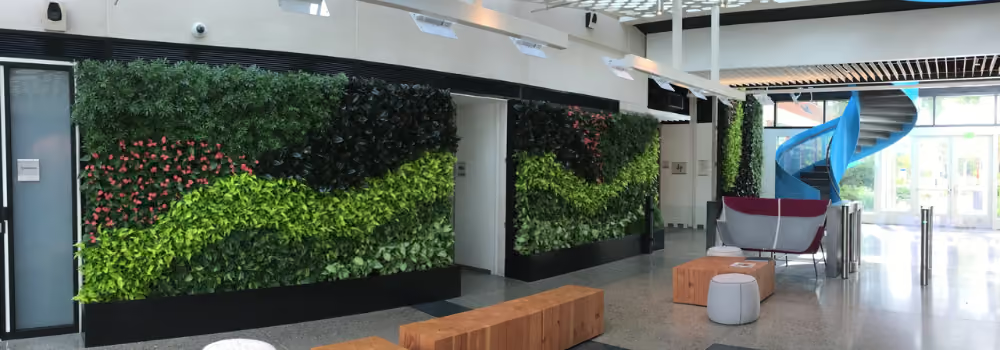


































%20-%20thumbnail.avif)




%20-%20thumbnail.avif)

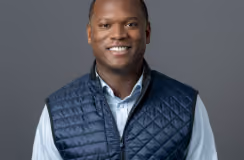
%20-%20thumbnail.avif)

.avif)
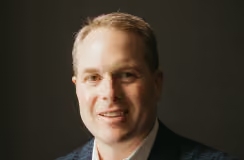



%20-%20thumbnail.avif)


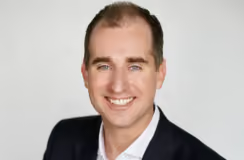
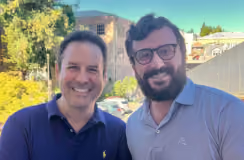




.avif)