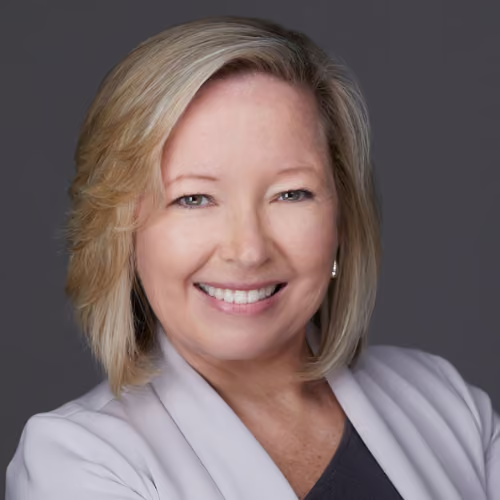
Host: The worst day I've had running the business has been better than the best day I had working for someone else. So Scott Crosby told me about his new life as the owner of an H Vac and Refrigeration Services business in St. Louis. Scott bought Small American Services, had under 300,000 of SDE and 4 1/2 employees. We talk about how he's managed through the vulnerability of such a small business, including turning over essentially the whole team. Part of Scott's model here is not taking any money out of the business for himself in the early days, everything is being plowed back in. We unpack Scott's approach here and whether he advises other searchers to follow suit if their financial situation supports it. Speaking of advising searchers, Scott shares a ton of tactical tips from his journey. Listen for his top 50 concept and his exhortation that you reach out to your local Economic Resource Center AKA Small Business Development Center, AKA sbdc, which are free and powerful, is if overlooked tools for local SMB entrepreneurs. Scott mentions his Acquisition Analyzer, a spreadsheet he used throughout the search to quickly assess a deal. We've linked to that in the show notes. We've also linked to a document that he prepared for us in advance of the interview, recounting his journey plus the many lessons learned along the way. We thank Scott for putting that together for us and for being willing to share it. As he mentions in our conversation. Scott loves to connect with people, so don't hesitate to reach out to him. His contact is also in the notes. Okay, here he is. Scott Crosby, owner of American Services St. Louis There are a handful of legal diligence issues that arise again and again for entrepreneurs buying a business. What are they? Well, attorneys James David Williams and Bill Barlow return for a legal office hours to walk you through them and of course how you business buyer should address them to protect yourself while still getting your deal across the finish line. That is tomorrow, Tuesday, February 24th noon Eastern the webinar is common legal diligence issues and how to handle them. Link to register is right at the top of this episode's show notes or on the Acquiring Minds homepage Acquiring Minds Co. Then on Thursday, a webinar on cybersecurity for searchers. Most small businesses carry unseen cyber gaps that become the operators your problem on day one. Nick Akers, president and CEO of Enzo Technologies who acquired the business through entrepreneur partnership through acquisition, explains how these vulnerabilities hide inside people processes, technology data. You'll learn why searchers miss them, how they impact early operations and how a cybersecurity risk assessment brings them to light before they become expensive problems. The webinar is Cybersecurity for searchers. Why SMBs need a risk assessment it is Thursday, February 26, noon Eastern. Link to register is right at the top of this episode's show notes or on the Acquiring Minds homepage. Acquiringminds Co. Welcome to Acquiring Minds, a podcast about buying businesses. My name is Will Smith. Acquiring an existing business is an awesome opportunity for many entrepreneurs, and on this podcast I talk to the people who do it. The team at Aspen HR recently published a short white paper targeted at searchers Entitled A New CEO's Guide to Human Resources. It lays out the key items you should be thinking about as you transition into CEO and owner of the business you bought. The link to download that is in the show notes Aspen HR is a professional employer organization, or peo, which provides HR compliance, flawless payroll, robust HR technology, and Fortune 500 caliber benefits, all for a fraction of the cost compared to using multiple vendors. Reach out to Aspen HR for your complimentary HR diligence checklist and benchmarking analysis. Go to aspenhr.com or contact Jenny Thier directly at jennypenhr.com Scott Crosby welcome to Acquiring Minds.
[5:30] Guest: Thanks for having me, Will. Excited to be here, Scott.
Host: You're 10 months into your acquisition, a path that you chose after a varied career. There have been many challenges which we're going to hear about, but you did close an email to me with the line quote, the worst day I've had running the business has been better than the best day I had working for someone else, which I thought distilled your journey to date poetically. Let's hear about it. Please start us off with sharing a quick rundown of that varied career before you bought a business.
[6:11] Guest: Well, thanks again for having me. A big fan. Podcast has definitely been instrumental in my journey and I can't wait to share some stories and can't wait to share a lot of practical advice. So I've had a very unique and winding career. Started out in politics right out of college, went into media for a bit, then to construction where I did a stint as CEO for about nine years, back to media and then to software sales. So born and raised in St. Louis, started out in Jeff City at the Capitol, then went to San Diego D.C. in the middle there. Just a lot. Kind of a winding story. So there's two kind of defining moments I'd say that's happened in my career. And the first one came right after college, so I interned For a state representative in college, running campaigns, thrust in there as a 21 year old, ended up taking over and running the campaign. Actually, my first two weeks on the job wasn't even registered to vote at the time. You know, not involved in politics whatsoever. And graduate college, we won that election and they offered me a job to come work at the Capitol. Well, at the same time, I'd been offered a job for a big corporation selling wine. And it was a friend and alumni that offered me that job. And I really had a decision to make. And the way that my thought process and my brain worked in making that decision was what's going to serve me best in the long term, short term? You know, the job in politics paid next to nothing. I think I made 16,000 the first year, you know, double or triple that selling wine and. But I thought, okay, who am I going to meet? What are the types of people I'm going to meet? What's going to serve me better in the long run from a networking, from a business development, from a leadership development standpoint. And ultimately I, you know, chose to go into politics and work in the Senate. And it was a pivotal decision. I ended up meeting several people in the construction industry and kind of falling in love with the industry then and come full circle. Now I'm right back to where I started and I'm working on a collaboration with the very first person that I ever met when I was 21 years old, a collaboration with his company right now on the deal that we're working on together. So that was kind of the first defining moment in my career.
Host: Um, well, a very responsible young man. Scott. That wine might have been too tempting for me to pass up.
Guest: I mean, no, no offense to the folks that do that. They're. They're great. I have friends in the wine industry, but I thought, you know, going to 711 and stocking shelves or going to fundraisers with wealthy individuals who. What's going to serve me better in the future? So it's pretty easy to serve.
[9:09] Host: Well, when you put it like that, yeah.
Guest: Great.
Host: And what was defining moment number two?
Guest: Yeah, that's. So that that one happened a little later in life, in my previous career. I was at the company a long time and managed a team and I'd been kind of kicking around the idea of buying a business. I started that process back in 2017, ironically, and we'll probably talk a little bit more about that when we talk about search. But I was looking over commission plans for my team and we decided to look at mine And I noticed it was short tens of thousands of dollars. And you know, I had a really record quarter the quarter before that. And the company decided not to pay me my commission. And they were within the right to do so, you know, with provisions that they had in our comp plans. But that kind of set off a trigger to me, like, do I want to be in charge of my own destiny? Do I want to be in charge of my future and in business in general? And I would say that accelerated my search. I was always kind of in the back of my mind going to buy business. I'm an entrepreneur at heart. But that, that moment right there thought, okay, I'm going to take control of my professional career. And when you own the company, you can't really stiff yourself out of commission. So you can choose not to pay yourself, but it's a choice you're making deducting money back into the business. So that kind of kickstarted that happened in April of 2024 and sped my timeline for buying a business up quite a bit. We had a timeline in mind, my wife and I. And at that point she said, you know, you're not really happy anyway. And they, they took from our family. So let's, let's go.
Host: Did you quit then and do start a full time search or did you start searching while a part time search? Yep.
Guest: Yeah, started searching while that night, it was April 18th. I remember the exact day that night I got on VIZ by Sell and started reaching out to brokers and, and looking for businesses. I was already a member of a co working space that was also kind of instrumental in my search. And that's one of the pieces of advice I'll be able to give later on. But yeah, that night.
Host: Co working space where you now sit.
Guest: I do, yeah. I'm in their media room right now. Our American Services world headquarters is technically out of the coworking space, even though our physical office is somewhere else.
Host: And so Scott, you had started searching you or you had searched once in 2017, so before the being stiffed on the Commission seven years earlier. Yeah, so you had, you had a dalliance with, with search earlier that didn't go anywhere. Tell that in brief.
[12:12] Guest: Yeah, so I moved back from San Diego, coming off of almost nine years as a CEO and put myself on sabbatical. Kind of like, you know, it's a, it was, it was stressful, especially toward the end. But I still have my old emails and in fact the first broker I reached out to, I ended up buying American Services from. They still had the NDA on file still from 2017. That got put on hold, actually, because I went into media accidentally. So I developed a TV show and. And decided, you know what, this is a. I have time. I'm not married, no kids. You know, I'm living on a shoestring budget. I can go ahead and just make this TV show and just give it a run doing that. So put the. Put buying business on hold while I made the TV show, which we did make and put out. It's on Amazon, but so great experience there, man. Running a business is definitely akin to making and producing a. A TV show that the stress related to it and the work and the hours put in when you're actually filming is insane. So I do compare it a lot, and that experience actually has helped me a lot in. In dealing with stress.
Host: Well, why don't you give us a couple minutes on this TV show? Production experience. It's. That's a first for an Acquiring Minds guest.
Guest: Yeah, I've always had this kind of creative itching me. I play music, you know, podcast producer, as we've talked about, film producer. But, you know, that was the first time being in charge, raising the money. Had a co writer. We had this idea before COVID to do a show about remotely working, and that was the name of it, actually working remote and exploring the different, you know, humor behind coworking spaces. Working from home, working from coffee shops, you know, way before it became kind of popular. And so we wrote a script. I got Dana Powell from Modern Family, who's from Missouri, to star in it.
Host: Which one? Which character is that from Modern Family?
Guest: She's. She's the sister of the cam, I think. Yeah, yeah, yeah. From the farm in. In Missouri. Yeah.
Host: Ah, okay. Okay. I've only seen a couple episodes, but I know their faces. That's. She's a bit. She. So she would be. Anybody who knows Modern Family would know her.
Guest: Oh, yeah, for sure. Yep.
Host: Oh, that's okay.
Guest: Yeah, she was in Bridesmaids and a couple other things too. And so, yeah, it was just. Just that whole experience of. Of putting a team together. We had a crew of about 30. You gotta get permits. You gotta. There's so much to do as a producer of it. You don't sleep, I think, for two straight weeks, at least. 20 hour days.
[15:01] Host: Wow.
Guest: No sleeping at all. Just lining everything up. You know, you got craft services, which is the food. You got to manage all the different pieces of the production. And then the whole time you're kind of reviewing the tape of the day too. So as a producer of it, you're just. Which is kind of like the CEO. Yeah. You're just your hands in every little piece where the actors and actresses can just go home when their stuff's done.
Host: Yeah, yeah.
Guest: You know, post shoot every day is when the producers actually get to work even more. So. Yeah, yeah, I remember it distinctly. And yeah, we had locations all over St. Louis. It's a great place to film and my parents house is in it, so they got a big kick out of that, you know.
Host: Wow. And so how did it do? What, what, what do you do with it? Do you try to sell it to a studio or something?
Guest: So we were going to. We won numerous awards all over the country and all over the world. You're kidding. On both the script and the. The finished video. And then Covet hit and. And I thought, oh, it's great.
Host: Millions exactly are exposed.
Guest: You know, rising boat lifts all. Lifts all tides. But ultimately the feedback we got was, yeah, you and everyone else has written a script that does this.
Host: And I'm like, oh, so the timing actually worked against you because there was a lot of similarly themed.
Guest: Yeah. Shows and from people that you know are famous.
Host: So that helps.
Guest: So we, you know, I tried to pivot as CEOs do, you know, tried to pivot and go corporate and do a branded deal and we came pretty close with some big brands. Ultimately didn't work out and then we threw it up on Amazon so you can go watch a little TV show. It's one episode called Remotely working on Amazon. It's still out there. There's a movie that ripped our name two years later. But don't care. It's fine. People can watch both. It was ended up being just for fun, but honestly it ended up being a great experience. What I'm doing now for the reasons we talked about.
Host: Well, yeah. Well weave that in if, if you. If there's more to say. That's so interesting. I. That and so impressive. That's really, really cool, Scott. That's so entrepreneurial. I mean that's zero to one entrepreneurship. We don't think of it that way. We think of it as a different beast in industry. But it's basically as you said, producing a. Producing something is essentially being the founder CEO of it.
Guest: It is. Yeah.
Host: That's really, really cool. Okay, so that was that. Okay. Then Covid hits, you go into software sales, you're there. Then you have this commission, unhappy discovery and then start looking for businesses that night. What do you want to tell us about the search itself now the search in 2024.
Guest: Great. And I know a lot of your audience is interested in the search piece, so I'll try to give some good, good advice around that. So my, you know, my buy box was really geography for sure. So within two hours of St. Louis. I was kind of industry agnostic, so didn't really care. I liked blue collar a lot. You know, I missed being in construction. I preferred kind of smaller. I know that's a hot topic in the search land. You know, big versus small. I've preferred kind of in the 250 to 500 SD range. I'm self funded. Didn't want to go raise a lot of money. We had some parameters just with my family and my wife that we had to stick with then. So. And frankly, the association that I ran, the CEO was under 2 million with 5 to 10 employees. So I felt actually super comfortable with running a smaller and growing it. So yeah, I wanted to do that. And then I added a Scott, you're.
[18:53] Host: So it sounds like reason number one had to do with your own balance sheet and, and basically what you could afford. A certain amount of, you know, an SDE of 250 to 500 which is going to be a business that costs 750 to 1-750. Call it depending on 3 or 4x multiple, depending on what the ste is. And so 10 or 10ish percent of 10. 15% of that is kind of what you had to contribute to the project. And you and, and your wife agreed.
Guest: No more. Right.
Host: Sort of thing.
Guest: Yep. And that gave us a little bit of savings and a little bit of wiggle room in case we needed to dip into that or inject capital into the business.
Host: Yeah, yeah. Post close, liquidity wise.
Guest: That's right. There's a term for everything. I added a fourth and I. When I coach people on surging, I really dig into this fourth one and I think, I think it should be added in your buy box. And I think people should think a lot more about it than they do. And that is B2B versus B2C and really, really discovering what makes you happy and the type of customer that you want to serve and where your skill set is and what I mean by that. I'm a relationship guy. I love relationships. My whole life has been B2B. I have a big network and I really thought about. I don't know anything about home services and digital marketing. In fact, the company I use, which I love to do my own house because I keep personal and business separate. I've had a different technician for years. I've never had the same person. It's so impersonal, it's so transactional. I didn't want to do that. I really wanted to build and buy something where I can build relationships with the clients and tap into my network and just be an account manager.
Host: The team at Pioneer Capital Advisory has started offering peripassu debt for SBA business buyers. That means they can help unlock up to $3 million of conventional debt on top of the $5 million limit of SBA 7 loans. So Pioneer can structure larger, more complex acquisitions. Listen to our story with Anika John from one of their clients who did just that, buying a $10 million business as a first time self funded searcher. The Pioneer team has closed more than 100 SBA loans, averaging timelines well below industry standards. Founder and owner Matthias Smith and COO Valerie Stash bring over two decades of SBA lending experience. Matthias and Valerie have a full bench of analysts and associates who work your deals with them. A true deal team. Not just a single point of contact. Visit pioneercap.com or click the link in the notes and how did you think about the eventual, I assume, goal of being able to step out of the business? I know you're a ways from there and you know, you actually don't want to be the lynchpin of the relationships because that makes you key man and makes the business more fragile and makes you inextricable from it.
[22:15] Guest: Definitely that's the eventual goal and we've kind of set things up from the beginning to run that way. Even though I enjoy being out with customers and I enjoy the relationship management piece of it. So the goal is definitely to grow it to a point where we can step out. You've had a lot of guests come on with the advice of digging in and rolling up your sleeves in the first few years and I, I, I subscribe to that wholeheartedly. You know, it's, it's fun. First of all, you just bought it. It's your baby. You should want to get involved, especially if you're buying small and you can't really fix it unless you know the insides and outs of it. So you know my, I, I've posted this on, on LinkedIn and, and in other forums before. You know, some of my favorite days are sitting at the front desk just answering phones and, and really, you know, out of that experience I, I wrote an entire manual on how to be our dispatcher and office manager.
Host: Mm.
Guest: With like literally line by line on how to do everything that the job entails because we've done it and I've done it well.
Host: This reminds me of a theme that has kind of crystallized only recently that even if you as buyer searcher aspire to have some big roll up or reach huge levels of revenue and, and at that point really not be obviously not be in the day to day, you wouldn't be a, wouldn't be able to and reach scale. But even if that's your eventual goal, it's it, it's so valuable to spend the first year or two or so learning the, the ins and outs ever the nooks and crannies, writing the sops yourself as you've done so so value such a valuable education to, to then that will then enable you much better to achieve that, that loftier goal.
[24:16] Guest: Yeah, I agree. They've made TV shows about it. Undercover Boss. Yeah, things like that. People actually going undercover and doing the job themselves.
Host: Yeah, I haven't seen Undercover Boss. Interesting. Great. Carry on. Thank you.
Guest: Yeah. So self funded. My strategy. Big believer in your first deal, especially going broker, the broker route. So I took a little bit of different approach. I didn't specifically target off market deals, but what I did, I call it the top 50. So the top 50. And I've advised a lot of searchers on this strategy. Basically whatever market you're going in, make a list of 50 influential people. Doesn't have to be business owners. It doesn't have to be CEOs of Fortune 500 companies. Could be chamber members, nonprofit board members, people that are just connectors. Everyone knows connectors in the community. So make a, make a list of your top 50 and then start reaching out and just asking for breakfast, lunch, coffee, dinner, zoom meetings, whatever time they'll give you. And that 50 quickly turns into several hundred because everyone will introduce you to one or two people at least. And, and then your, then your message is hey, this is what I'm looking for. This is my buy box. This is my qualifications. That list, you know, is still bearing fruit. I've got off market deals sent to me, you know, at least three that I can think of off top of my head. Just from that list. People still, hey, are you still looking? You know, so in its most basic form, that's something you should be doing now. There's like, you know that on steroids, which people are doing newsletters and Updates and fancy CRMs and things like that. You know, one of the biggest.
Host: But I think those are though those are substantively quite different. Scott because those are all about, you know, kind of marketing, Those are more marketing. And what you're describing is more of a sales, a sales motion where you're having real conversations with people and building relationships. One on one relationships.
Guest: Yep. Yeah. And yeah, I've worked through that with a couple people that are looking for business and it's, it's, it's doing really well.
Host: That strategy and, and sorry, articulate it one more time. Scott. Top 50. Who are the 50 people? Just people in the community, but not necessarily business owners, but people who would know business owners.
Guest: Same can be, they can be. So I was kind of fortunate. You know, I'm born and raised and grew up in St. Louis and already had a network here. So I sat down and just made a list of the 50 people in my network and then there were quite a few actually I would say that were connected to people in my network. But I think this person would be a great person to know. Okay, so.
[27:19] Host: Okay.
Guest: Yeah, and then you just start from there and you know, when you're on the phone you just, you're catching up and then you're, you're just going through your buy box a little bit and then hey, if there's anyone, you know, here's what I'm looking for. So A, if you come across any businesses for sale or you're talk, you're having a conversation, keep me top of mind, here's what I'm looking for. And then B, is there anyone else you can introduce me to? Brokers, other business owners, things like that. And they will, and that'll, that'll 2 or 3x, you know, in short time.
Host: Yeah.
Guest: And then you've got people in the community looking out for you and hey, you know, Scott's looking for this. It also serves you when you own a business because now you've got, you know, 200 people. You can also go through, hey, get referrals, got, you know, I'm still looking. So again, I love networking and relationships so it was natural to me. But you know, a lot of people, it's not natural to do that or they don't know where to start or they're looking at a different market they're not from. Yes. So my advice is get on LinkedIn. Who do you know that might be in that market, Go to their connections and then reach out to that one person. Hey, can you introduce me to these two or three people? Look at the chamber, at the local area, on who's on the board. Most of the time it's small business owners. And then you can reach out with the same message. Nonprofit boards always chock full of business owners. So you can do, do it that way. You know, subscribe to the business journal in whatever market you're searching in always a great way.
Host: And if you are, if you are emailing somebody pretty cold, or if you, or if you're lucky enough to get an introduction, but somebody that you don't know and, but that is on this top 50 list of yours, you're asking them for their time. What is the pitch to actually ask them for their time to spend 15, 30 minutes with you?
Guest: The pitch is I'd like to talk to you about acquiring a business and if you might know anyone that's looking to sell or you might have a couple people introduce me to.
Host: Okay. And so you say that as the, as a description for the call so they know exactly what you're about.
Guest: And if it's in the industry that you're interested in, or you could also approach it as I'm exploring buying a business. And I like to talk to other business owners to learn what it's like. So if you don't feel comfortable making a direct ask, you can ask them. Business owners love to talk about their experience running a business and, you know, give advice and things like that. So you can approach it from that aspect as well. And then always, always, always close with how you can help them. You know, is there an intro I can make or is there something I can do for you? You know, so you're, you don't want to come off as just a taker. Yeah, yeah, yeah.
[30:04] Host: Well, that seems like a very powerful tactic, Scott. And as you said, not everybody's cup of tea. You gotta, I mean, it's gonna be, it's gonna be. You're not, you're naturally suited to it. So it worked well for you. I, I totally see the genius in it, but a lot of people are listening to be like, I could never do that, but great. But, but for those who can, and even for those who don't, you know, push yourself, you know. Yeah. As you said, you don't have to think. What I also like about it is you don't have to think about it as a. I don't, I don't even like the fact that I use the word tactic. You don't have to think about it
Guest: as a search tactic.
Host: You could think about it, I mean, as building the foundation of contacts that you're going to have for years because you are, after all, getting invested in buying a business in this community. So these are your future colleagues, sort of. Or compatriot fellow business owners. Anyway.
Guest: That's an excellent point. And if you don't feel comfortable doing it or you're unwilling to do it, you might want to think about not buying a business because that's, you know, being in the community, especially if you want to grow, being a part of the community is a major part of that. So if you buy small, especially, you're going to be diving into sales pretty much immediately. And part of that is being out in the community. Part of that is reaching out to your network. So if you're not, if you're not willing to do that, you might not want to buy a business. You might want to double. Double think that. Touche.
Host: Great. No, yeah, it's a great point. Okay, I want to get to the business that you did buy, but there was a. I think you did four Lois that you submitted. Four Lois. You had two accepted, only the one closed. What did you learn from the one that broke or the. Or the others that you submitted that you weren't selected for?
Guest: Yeah, that's great. And so we were under LOI for two of the similar businesses that were two hours apart. And so, you know, ding, ding. What does every searcher think then? Consolidation roll up, hold, go. All the, all the buzzwords are going in my head. So we start, yeah, we start, start the LOI or the due diligence process on ultimately super close to closing. On the second one that was two hours away, it just fell through. And that kind of taught me a lesson about buying from younger owners. And the owner of this one was not retirement age. And I always kind of was a little weary about that. If you're not selling the private equity for a huge cash out and you're that young, why are you selling? You know, is the business worth it to begin with or. And I'm over five now trying to buy a business from someone that's not retirement age and under 60. I would say, you know.
[33:05] Host: Yeah. Wish wash in this particular one that where they, they broke the loi. Do you think that they just changed their mind precisely because they weren't ready yet? They were too young?
Guest: Well, there was another offer that came in last minute that was slightly better than ours. And I don't know to this day if it's closed. I'm friends with the broker that has a deal, is a great guy, but I respect that space to not dig in. So I figured if it comes back around, it'll come back around. I've changed my mind a little bit about making a second acquisition that close and we can talk about that when we talk about the operations. If we get into it now that you own a business, it's easier to expand than it would be to just go acquire one that close.
Host: You know, or organic growth would be better for something that close rather than inorganic.
Guest: Great. Yep. Okay. So. But yeah, I just find owners that are younger, they don't know what they're going to do afterwards. They're just kind of wish washy they changed their mind, you know, and it's just never worked out. Honestly, I'm literally 0 for 5 with, with talking even and not getting anywhere close to closing a deal. So kind of have a hard rule now that's, you know, unless it's real extenuating circumstances. Yeah. That I'm not going to.
Host: Yeah, no it is, it is conventional wisdom and I, and I think that. Yeah. That the data bears that out. Of course there are exceptions. There are non retirement people who sell their businesses and there can be, and there can be reasons. But as a, as a, as a rule of thumb, I think it's a, this is a pretty solid one. And, and also just, you know, even, even if there's the possibility that this younger owner might sell to you, you know, it's a numbers game buying a business. And, and if you're looking for, you should often in your deal kind of be looking for reasons to disqualify a deal. And so that, you know that, that might do, that might be a way to just to easily kind of filter out non high quality deals. Even if, you know there's one in there that might have worked.
Guest: Walk away from bad deals, bad brokers, bad people. That's what I always say. If any one of those three are giving you the spidey sense, just walk away.
Host: Even bad brokers, huh?
Guest: Yeah. Yeah. One of the deals that fell apart was because of the broker and you know, not a broker I would ever deal with again. And so brokers are just bike owners and everyone else. There's good and there's bad. So.
Host: Yeah.
Guest: And you know, if it's in the indication, dealing with the LOI process can tell you a lot about what it's going to be like at closing.
Host: Sure.
Guest: And if you're, if you're having friction right off the bat, it's not going to be pleasant experience. Sure. It's not worth it. You know.
[36:05] Host: Let's hear Scott about the business that did close.
Guest: I do want to get there. I have one more piece of advice on the search piece, if you don't mind.
Host: Yeah, hit no please.
Guest: There's a couple points. So have a bias for action, please. Like paralysis for analysis. I need to build my CRM before I start reaching out. If you're searching for business, just start making phone calls and emails. Who cares how you're tracking it? Have a bias for action. And this little tidbit I'm about to tell you is going to be gold for searchers. Okay. Every city, especially big ones, has an economic development resource center. It's the hidden gym for searchers. So mine was instrumental. Louis shaken shout out to him was instrumental helping me. So what does an economic development resource center do? Well, they have someone who's dedicated to helping people buy businesses. It's literally their job and it's a free resource.
Host: And, and these are actually SBA run. These are government.
Guest: They are. It's a public private partnership usually funded locally or by the state with federal support like the SCORE program a lot of times runs through that. What can they do for you? Well, in a lot of cases they could do 504 loans right from the Economic Development Resource Center. They can introduce you and act as a broker for loans. So the one that I work through, oh, you have a track. Here's the bankers that would love that deal. Oh you have catering. Here's the, here's the bankers that would love that deal that do those kind of deals instrumental and then they can give you free access to Live plan. And Live plan is a piece of software you're going to want to get if you're a searcher. Once you're under loi, it can write your SBA approved business plan using AI, all sorts of good stuff. Can do financial planning, financial templates, very, very instrumental tool and they can give it to you for free for three months. So fantastic. Those two things. Yeah.
Host: I just really, I'm wondering why this hasn't come up before. I wonder why people don't know about this. You're in dealing with your local one. Did it feel like it was getting traffic that people were using it? Not from our community, but just local small business people.
Guest: Not searchers? No.
Host: Yeah, definitely not searchers.
Guest: But others. Others, yes. Like the one in St. Charles has an incubator. So if you're just starting out, you can office out of there and they help you and. But I've helped searchers in lots of different communities. There are. Everyone has one. So you're in a, even a medium sized market. You're gold and highly. It should Be one of the first calls you make honestly because. And guess what, you know, going back to the theme, the guy that helped me is now helping me get clients. So he's making referrals to people that are going to help my business. Like it doesn't stop, you know, so. And then there's lots of resources that they can do when you own a business also. So it's just an instrumental piece. I wanted to make sure I got that in there.
[39:15] Host: I think it's a great tip and I am aware of the one here locally for us. It's associated with George Mason University and I at, I was at Darden's ETA conference and met one of the gentlemen who I don't know if he runs it but he's a higher up there. And yeah, I was kind of learning about it from him but. And I think I'd been come across the website at some point so it wasn't totally foreign to me. But given how immersed I am in this world and that it, that I, it was really pretty unknown to me even after four years of doing this says something about how underutilized and under marketed they are. But it did seem, then I went back to the website and there was like dozens of you know, people, local small business luminaries on the website. You know, people that presumably you could be connected to. So it was pretty intriguing.
Guest: It definitely is.
Host: What do the following Acquiring Minds guests all have in common? Doug Johns, Morley Desai, Tim Erickson, Chirag Shah, Shane Ursam. They all went through the Acquisition Lab, the accelerator in community for people serious about buying a business. But they represent just a sliver of the Lab's success stories. The number of deals across the Lab's cohorts now stands at over 120 with over $300 million in aggregate transaction value. The Acquisition Lab was founded by Walker Deibel, author of Buy Then Build, the book that introduced so many of you to the very idea of buying a business. The Lab offers a month long, intensive, almost daily Q and A sessions with advisors, live deal reviews with Walker Deal team introductions and in an active community of serious searchers. Check out acquisition lab.com link in the notes or email the Lab's co founder, Chelsea Wood. Chelsea buy, then build.com can we hear Scott about American Services? The business is the business that did close.
Guest: Great. So it's, you know, came across my email list. That's how I found out about it from a broker list. That's another lender tip. Just get on everyone's email list. They'll they'll send you deals. And that was actually already under LOI on the other one. And this one came across and I'm like, oh, you know, and I talked to the broker and he's like, yeah, they're kind of talking to someone. There's an LOI submitted. You know, it's going really well, but, you know, it doesn't hurt. They're not exclusive. Doesn't hurt to have a conversation. So it was our office, eight minutes from my house. A little bit bigger too. And so I met the owner and we hit it off really well. I laid out my vision for how I think about things from a training, from a recruiting, from a sales. And then I left that meeting, came home, typed up an LOI and submitted it. You know, they were asking 1.2, I think I offer. I offered 800. And then they took it the next day. And they took it.
[42:27] Host: Meaning they. They accepted your LOI. They accepted it at a 60%, 30, 33% discount, yeah. How did you come up with 800 when the asking was 1.2?
Guest: So I took all the financial information and I put it into my analyzer, which I paid a $10 off TikTok for this acquisition analyzer. I don't remember the creator I got it from. I've used it hundreds of times. So I took the sde, I backed out, you know, or figured I have to hire an accountant because the. The main owner of the company was actually an accountant. Did all the books, so did the normal stuff, and then thought, okay, well, that is a fair multiple. Gives me a little bit of wiggle room. I think the debt service ratio was 1.5. I was trying to get around, you know, that. I said that seemed.
Host: And what multiple did you come up with?
Guest: 3, about 3 or so. You know, I think the average SDE was 275, you know, close to. Close to that. The owner was paying herself 80 or so thousand plus, you know, distributions every once in a while. Her son was the, like, service manager. So had to account for maybe, you know, he did a lot of work in the field, come to find out. So, you know, had to account for. For that as well. And. And hiring a technician to replace him. So just felt like a fair. A fair number at the time. And looking back now, yeah, I'd change some stuff, you know, given what I've learned since taking up the business, that's normal. But I think that multiple for H Vac, you know, is. Was pretty good. Actually, looking back on it now, like a year later, you know, yeah, and we do all three. I know you've had refrigeration, you've had cooking equipment repair on here before. So we do all three. We do H Vac, we do all refrigeration, ice machines, walking coolers, service and repair and cooking equipment. Kind of the hot side, the hot
Host: side of the business. So do you have a restaurant focus?
Guest: So we have probably four or five kind of buckets that we, we focus on. One is restaurants for sure. Industrials and other manufacturing plants. We, we do really well servicing manufacturing plants and then kind of education as well. Schools and daycares and then senior living is a, is a big vertical for us too. So you know we're.
[45:02] Host: And so how do you do, how do you describe the business? H vac essentially or kind of H vac And I'm actually refrigeration.
Guest: So from day one and it's fun right now because we're, we're getting into, into the sales piece and how we talk about our business. The gap in the market that I saw from day one and that I continue to see is true asset management and true partnership for the smaller operators. So you think about someone that owns 30 locations of anything daycare, senior living, restaurants, you know, a lot of times they're using facility maintenance companies and there's fancy asset tagging and things like that. Well, someone that owns two or three or four, they get forgotten about. You know it's just the same thing in software sales and tech, right? Everyone's chasing the big enterprise deal. Everyone wants that big, big whale. When I came in and I'm like okay, you know, three to five locations gives a lot of work actually. And the operator of that is so bogged down in day to day they don't even probably know what equipment they have, let alone a maintenance plan, let alone capex planning. Like someone that owns three locations is not doing much capex planning, I can tell you that. And so what we are positioning ourselves as your kind of like white glove service that you get at a large multi 20 location or facilities maintenance company. You're getting that same level of service where we're going to come out and inventory every single thing you have and then we're going to do a capex planning table for you. We're going to really truly partner with you on asset management and we've tested this out a few times and the message is resonating and it's working and that's where I want to go. I've always had a soft place for the smaller operators, obviously And I think in all areas they just don't get treated the same because the revenue perceived is not there.
Host: Yeah, yeah, interesting insight. But Scott, before we get it into your ownership, so just to round out the deal, when it go into you, your offer, you use this, use this. What did you call it?
Guest: I mean it's a spreadsheet analyzer.
Host: Spreadsheet, yeah, there, that, that thing, the spreadsheet to come up with a valuation. When you submitted your for 800 though the listed price was 1.2. Did you provide any rationale or anything? Or did you say yeah or did you just.
Guest: Not really.
Host: Not really. Okay.
Guest: In subsequent offers that have not gone through. I have and now I'm thinking okay, well maybe you know, less is more. But no, I did this.
Host: This actually just came up in a webinar with Barlo and Williams, with Bill Barlow and James David Williams, attorneys who do their monthly office hours with us. And this very topic came up in the loi. When presenting an offer, do if you come in way, you know, well, under asking, should you provide some sort of rationale for why you did that so as not to offend the seller. And you know, and you, you, you know, you could imagine you saying, you know, I think a fair multiple is this and your SDE is this and I. When he takes together it comes out to about 800,000 about. And James David's response to that was don't do that. It's kind of defensive. Be confident and just say, you know, here's, here's my offer. I don't need to explain myself. And so that's what you did and it seemed to have worked nicely. So yeah, the other thing I'm reminded of Scott is people should go back and listen to Johannes Hawks episode, that's probably a two and a half year old episode now. But during his and his partner search they didn't look at asking price at all for all intents and purposes because they didn't want to be anchored in their own minds by whatever the asking price was. They would look at a business that they were interested in and, and kind of bottoms up, decide what they thought it was worth or what they thought a fair purchase price was with the information that they had from the sim or, and then send that across, which is exactly what you did. You, you didn't even pay attention to the 1.2 number. You started from the information you had and created a valuation that you thought was fair and did it that way. That's very powerful. Not many people think about it that way, but you did and it worked as we've said.
[49:50] Guest: So it did.
Host: Good stuff.
Guest: Yeah. So it was 830,000 or so inventory. So it was a typical, I'd say deal structure, you know. But I did a 10% seller note. Hindsight. Wish I wouldn't have done the second half of that. I think I would have been better off actually rolling that 40,000 into the SBA loan.
Host: Wait, sorry, tell it. Take us break, break down the structure.
Guest: We did a, we ended up doing an $80,000 seller note that was split between 40 that was on full standby, so I could count it to equity. So that counted as the 5%. And then I did another one for 40,000 at lower interest. But it was only 5 year am first time buyer mistake right there. And I think that's, you know, there's some content out there now around. Be careful of that. But you know, I didn't know at the time, so I'm.
Host: And because the amortization was 5 instead of 10 years, it means it's, you know, you're paying it back more and so the monthly payment is a lot more. Even though the interest rate was less than your SBA loan.
[51:06] Guest: Yep. Naive mistake. I thought, okay, well I'm going to have to borrow 40 anyway. I might as well pay 6% instead of whatever 1075 at the time. Yeah, yeah, yeah. Mistake you just.
Host: But an accelerated amortization or a 5 year versus 10 year term, it translates to significantly higher monthly payments on such a loan.
Guest: It does, yeah. And I'm feeling, you know, especially now during slower season, feeling it a little bit more.
Host: Yeah.
Guest: So good tip. Yeah, so yeah, definitely be careful of that. So I think we end up bringing 40k total out of pocket to the deal. And then we had, we had about a hundred thousand in working capital in, in the deal that was funded by the bank. And you know, working capital obviously hot topic as well. Always lots of people. You never, you never have enough. Even if you ever think, you know, everyone's already said that. We actually pegged it pretty well minus the unknown, which you never know which the first week. So great news. The first week we own the business, we get awarded a massive bid of a hundred thousand dollar contract that we win. That's amazing news. The bad news is we didn't ask for a down payment and the equipment cost is 50% of that. So congratulations, in 30 days you're going to owe that to the vendor and you're not getting paid on this for 45 to 60. 60.
Host: Oh yeah.
Guest: So that job was stalled a little bit, so it didn't really end up hurting us till three or four months in. But we did have to inject some capital back, you know, to cover that into the business. So about 50,000 more. And my business partner did, did a loan to the company at a low interest to, to help with that. So. But other, you know, we, we pegged it pretty well except for that. But that's something that you don't know is going to happen and you know, when you're doing due diligence. Yeah, I actually did review the bid, but I didn't own the business yet, so I didn't, you know, I, I didn't know what I didn't know, which is to require, you know, 50% down on those types of projects, which we now do. But I didn't.
Host: So, so it wasn't to working capital. Like you should have gotten more working capital. Instead you should have structured the way you structure the payment terms with the, with them. Was what was the mistake or what you learned?
Guest: Yep. The one piece of advice, I would never buy a business or I would try to avoid buying one from a bank that doesn't do line of credit. Because, you know, I've heard that said a lot. But we're definitely, you know, feeling that during the slow period too. You know, you just want there for safety, even if you don't need to tap into it. But, you know, the, the rumors are true. It's nearly impossible to get one once you, you know, once you buy a business and close, if you do asset sale, you gotta wait a couple years. It's, it's nearly impossible. Same thing with credit cards. Same thing with, you know, all the, all the things that everyone has said on, on the show is very real great credits. And it does not matter. You know, they see the financials and our bank that we got the SBA loan was the only entity that would give us a business credit card. The only one. Wow.
[54:40] Host: Wow.
Guest: Yeah. And 10 months in, we just got, you know, one of the major brands to give us one with a embarrassingly and stupid low credit limit. You know, it's like really, you know. Yeah, so that's a very real problem.
Host: And so just reminder to everybody, when you do an asset deal, it means you are buying the assets of the business that you're buying into a net new entity, a brand new business entity. And so when you go out into the market to try to get any number of types of credit from credit card to lines of credit, that whoever you're Talking to is going to look at the age of the entity, and they're going to see that it's to going brand new. They're not going to like that. They generally like to see two years of. Of history of life to the entity, even though you'll say no, but this is an existing operating business, and it's just the new entity is just a formality, not going to cut it. And so you end up being in a position where you can't get credit for the first two years until the entity ages.
Guest: And vendors, same thing.
Host: Vendor terms.
Guest: Yeah, we were lucky. My business partner's a very good negotiator, and most of our vendors gave us the same terms, and one of our biggest vendors actually gave us better terms than the previous company had.
Host: Oh, wow. Okay.
Guest: So from a vendor standpoint, we didn't have too. Too many problems, but yeah, credit, credit cards, line of credit, all.
Host: And Scott, when you say you had your line of credit and you also had working capital, are you talking about, or you're talking about the line of credit as the working capital?
Guest: No, we got working capital included in the deal. We did not get a line of credit.
Host: Oh, you didn't end up getting line of credit from the bank? Sorry, I thought you were saying.
Guest: Yeah, the bank that we did because you had the force, did not do it. They don't offer it. And so we had to give ourselves.
Host: So you don't have it now?
Guest: Don't have it? No. Okay. And it's. It's not good. Okay, well, just for peace, even if you don't need to tap it, you know, you want it there just for peace, you know, because you're going through, no matter what you buy, your business is going to have cycles. And you're learning the cycles for the first time. You know, the slow season cycle we're in now was a huge shock to me, even though I've been in construction half of my career. I know that the winter is the slow time, but it's way different when you're signing a check and. Yeah. So it would be nice to have it as just a piece. And I wouldn't recommend, if at all possible, doing a deal without getting a lot of credit included.
[57:24] Host: Yeah. Yep. Great. And the working capital that you got as part. So you got it as part of your SBA loan, an additional $100,000 cash to the balance sheet of the business. Did you bump up against any issues there? Because Heather Anderson, SBA loan broker who does webinars with us, will talk about how some Lenders don't like to do that because they feel like, you know, they're basically just giving you another $100,000 that you should be bringing as kind of as your own equity infusion sort of thing. Anything there,
Guest: find a bank that'll work with you. That's the, that's the advice there. You know, every bank is different, and that's one thing you'll learn if you haven't already, if you're out there in search land. Like, every bank has a different credit department, has a different appetite for risk. You know, ultimately, the bank that we went with had a good reputation for getting deals done, had worked with. The broker that we had worked with already was a recommendation from the Economic Development Resource. So it all kind of lined up. Yeah, you know, they weren't the cheapest money in town, but their, you know, collateral shortfall rules that they had aligned with what we were trying to do as well. So, yeah, definitely I got turned down by a ton of banks, you know, and most of them said that same thing, like, we're not going to give you a line of credit over what you're putting in yourself. You know, it's like the other mistake, I'd say it wasn't really a big deal, actually. We didn't really have a lot of WIP work in progress or AR outstanding. But I could see searchers that I've been talking to lately, you know, buy the receivables if you can, for no other reason than it's just a pain to reconcile. And when you're in the seat in your first 90 to 6 months, 90 days to 6 months, you don't want to be sitting there having a separate spreadsheet trying to figure out, oh, this percent came in now. This percent came in now. Like, if you can just include the receivables, just buy the receivables from them, it'll make your life so much easier. So that was. And again, we didn't have that much, so it wasn't that big of a pain. But even the little amount we did, I still don't want to mess with it. Like, I should have just bought three, bought the receivables.
Host: Scott, when you say, you refer to a business partner, what was the involvement there? What does that look like?
Guest: Yeah, so, you know, I was going to go on it on my own. When the second deal came, we were under loi for two, or I was under loi for two doing due diligence. I thought, you know, you can go faster with a business partner. It's more fun. And really my vision is never just to own one. I'd like to own several businesses in or out of what I'm in now. So I thought okay, let me, let me bring on, bring on a partner. And so I've known the, the partner that's in the business now for a while, lives in my neighborhood. We've meet a lot of mutual friends. You know, he's got experience in the industry a little bit as well and so he came on board about halfway through diligence I'd say. So he's still with us today in a limited capacity just because of family responsibilities and other responsibilities that he has, but contributes to sales and a little bit on the operation side and very good at negotiation as I've already demonstrated with our vendors. Our plan is to get to a certain revenue amount with American in St. Louis and then if we can do bolt ons where it makes sense to do that obviously and then try to expand within four or five hours of St. Louis, you know, kind of dominate Missouri I guess. Yeah, no, no grand plans of Building 100 company HealthCo all throughout the United States, you know, type thing.
[1:01:37] Host: Not yet.
Guest: Not yet, you know, or yeah, I'm obviously married. I have a four and a two year old. He's got kids that have sports and activities and so the travel piece, we want to try to keep it as much as local as possible.
Host: Anything more to say about the acquisition itself or can we get into what ownership has been like and what these, you know, this 10 month of transitions has been like?
Guest: Yeah, just real quick kind of practical tips, you know, control the process. When you're under loi and you're doing due diligence, it's your baby now. You're the qb. You are the one in control. So be your own project manager. Do weekly check ins if you can. Meet the owner in person as much as you can. It's so important to meet the owner in person as much as you can.
Host: Just.
Guest: But be in control. I always tell searchers be easy to work with so please get Adobe so you can just docusign stuff super quick or you can just sign with Adobe super quick bank documents, anything. You know, don't ever be the one to slow things down. You want to be turning documents around within minutes and just don't ignore the red flags. I mentioned it before but you know, bad deals, bad brokers, bad owners, bad people, just walk away.
[1:03:05] Host: I love the, the quick turn piece of advice. It's one that we hear, actually hear a lot more about it on the mind's capital side in independent sponsor land, where transactions are more cumbersome, bigger numbers just always, always be the ball in the other person's court. Always be turning it around, turning around, turning it around, turning it around. So I hear that in search Land a lot as well.
Guest: Sending every. He's been doing this his whole career. He's like, by far. You're. You're the best. You're the best I've ever dealt with. Like. And despite that, it still took. We run our LOI in September of 2024. Didn't close till April 1st. The holidays just, just crushed it. But I, I always, in everything I do, I, I just, I don't want to be the one that's the problem, you know?
Host: Yeah, I could work on that in my own life. But I digress. What about having the owner rank the employees? This was an interesting tip that you had.
Guest: Diligence.
Host: Yeah, yeah.
Guest: So, you know, that stems from taking over and realizing very quickly we're going to have to replace just about everybody.
Host: How many employees were there?
Guest: So there was a dispatcher, office manager, one, the service manager, and then two and a half technicians. So the half was an apprentice that had been there a few years, but was almost. Which I didn't know this either, was nearly none of his time was billable. So he straight up was just learning.
Host: So the total then was what, four. What did you say? Four, five and a half?
Guest: Yeah. Service manager, dispatcher, four and a half. Plus the owner that was really absentee. You know, she is. Was getting up there in age, health issues, you know, was kind of removed from the business for several years, actually. So the. Her son, the service manager was kind of running it. He didn't have an interest in taking over. He's a technician. He just loves being out there. Loves in the field, loves managing the guys. You know, terrified of accounting, terrified of sales. Didn't want anything to do with it.
Host: And so when you get in there and discover that you're going to have to replace all the employees. Yeah, say, say more about that.
Guest: Pretty quickly realize we did not have the team to really even service the clients that we have, let alone. Let's go grow this thing. Kind of a problem employee. You know, all the things that you've heard said before of demanding raises. And you owe me this and you owe me that. And we had one of our key technicians who, you know, great, great technician, one of the best in St. Louis. Not reliable, you know, didn't show up after two weeks. Just stopped Showing up, just problems in his personal life and lots of other things and just, you know, but then I go back and look at the employment records and yeah, that's kind of his thing. You know, most of the summary just doesn't show up. But, oh, he's the only one that can do this piece or that piece or he's the only guy that can do this.
[1:06:23] Host: So they, so the, so the discovery of this Scott, in a two technician business.
Guest: Yeah.
Host: A four and a half employee business. Was this, was this a crisis? I mean, this is the, the reason why small businesses, on the small side of small businesses, they're so precarious because you've got so little in the way of revenue centers. You've got two people or three people who are generating revenue. If one of them doesn't come to work or doesn't like to work in the summer or whatever, there goes half your revenue.
Guest: Yes, it became a problem pretty much immediately. Thankfully I've got leadership experience and thankfully I've got construction experience, you know, being around it at least.
Host: And
Guest: I, I called a partner that provided some temporary labor for us for the summer and honestly, if it wasn't for that partnership, I don't think we would have made it. So we pivoted pretty quickly to like, okay, you know, here's our backlog, here's what we've got coming up, here's our clients. Summer's crazy, you know, in our industry. So let's go. We made the key hire two months after taking over. Still with us today, one of our best technicians. You know, it was a referral from a friend. So that's. That, that helped a lot. And then plus the supplement dual labor we got from the temp company that we worked with got us through the summer until I could figure out the hiring, which we eventually did, which was, you know, I have a long time recruiter in the construction space that I've worked with in previous roles that stepped in and helped us out. Which, you know, that's an expense that you, you're not planning on right off the bat.
Host: And so speaking of expenses, a business that's doing. What did you say? 275.
Guest: Yeah.
Host: Of ste.
Guest: Yeah.
Host: So. And then, and then, you know, cut that in half for your, that same business now under debt service. All these new expenses, the recruiting expenses, losing people, etc, what does it look, what does the cash flow look like in the business? And, and are you paying yourself? And talk to us about what the, you know, this all means for money coming out.
Guest: Yeah, well, this goes back to the balance sheet and the buy in from the family, you know, if we agreed to go a certain amount of time without a paycheck. So we've been building up and saving. So we agreed to go a certain amount of time, which we're, we're past that time now still. So I'm not saying you and your
[1:09:16] Host: wife agreed that I would take.
Guest: Yes.
Host: That you.
Guest: Yeah. We live off one income plus savings. So we're dumping everything back in to the business. This was a traditional old school business. Fax machines, you know, on prem. Server 0 software, paper tickets. Like our clients were getting carbon copies of the job that we just did for them. Paper billing, six hours to do payroll, which we got down to 15 minutes. So you know, one of your guests and I think their sponsor Enzo, you know, shout out to them.
Host: Yeah.
Guest: Oh, great. No, Nick was one of the first people I called. Like, Nick, I need you, man. I need you. You're in St. Louis. That's even better.
Host: Enzo Technologies. Nick Akers, also a former guest.
Guest: Thank you for.
Host: That's great to hear.
Guest: Scott Oberleigh too, right? They're still. Yeah, yeah.
Host: August Falker of Oberly.
Guest: Absolutely.
Host: Shout out. Also St. Louis business.
Guest: Yep. I've been to their office a few times. One of the best vendors honestly that I've ever, ever dealt with still.
Host: Well, and I love to hear that.
Guest: I talk to them a lot because we have to do certificate of insurance when we brought on, bring on new clients and they turn that around in minutes. It's like insane. Their, their customer service is so good. So.
Host: No, well, I've used that.
Guest: Several of your vendors actually that have been on. Several of your guests that have been on the show. The background check company too. Yeah, I've.
Host: Oh yeah, yeah, yeah, yeah.
Guest: So yeah, it's been instrumental. But anyway, back to the, back to the, the expenses. Yeah. So we're, I'm still, we're still dumping everything back in. You know, new websites, all new training technology. You know, we got the landlord, we negotiated a renovation of the office too. So that happened in, in month one as well. They still, they smoked in the office. That's how bad it was. I almost threw up on the third day. I'm like, I can't do this.
Host: So, and, and so, Scott, I, I do have to say that I feel like not taking any, any money out, but working full time, more than full time in the business does mean that the effective purchase price of the business is whatever that your time is worth.
Guest: Fair. Yeah, yeah, for sure.
Host: And reflecting back on these 10 months, do you think if somebody, this balance sheet supports it, in other words, they can live off savings or live off a spouse's income while not taking any income out of their new business acquisition? Do you think that this is a good model?
Guest: It depends on what your goal is. So we didn't have to do any of that. I could have, I could have come in and left everything as is and taken the salary.
[1:12:00] Host: Yeah.
Guest: So the previous ownership comp basically is covering the SBA loan and then the difference was the profit. So I could have easily, but I didn't want to do that. The plan really from the beginning was let's, let's dump everything we can in that first year. And if I can take distributions after six months, I will now paying for my cell phone, paying for my Internet, it's still covering some things. That's relieving the burden. So it's, it's not, not all, not all lost there, but the additional expenses of having to rehire just about everybody, you know, that and some other things too, but that, that really has put a dent. But it needed to be done. And where we sit today is we're in a great spot where we're starting to grow. You know, it's our slow season right now, so we're dumping a lot into marketing. Kind of really prepping to have a monster Q2 and Q3 and grow business by 20 or 30% or more this year. So we've got the team in place. We're four technicians plus service manager.
Host: Actually do give us the bullet points, Scott, of all of kind of the foundation that you've laid over these last 10 months. What are all the improvements you've made? Team back office, et cetera.
Guest: So renovated the office. That was a big one. Software, we implemented a CRM. We've, we've partnered with a recruiter. We have our onboarding all dialed away. The greatest, you know, joy I got was when our three new technicians told us it's the best onboarding experience they ever had in their careers. I gave them a really like good. Happy to share my onboarding plan too, if anyone wants it.
Host: And what, what, what is the is it kind of a notion, Doc? An sop? What is this plan?
Guest: Well, there's a back office SOP to it with my checklist if everything needs to be done. But then there's a employee facing document that they get. Here's what to expect. Here's our mission, vision, values. Here's day one, here's week one. Here's month one all laid out for them. So they just come and do.
Host: Your recruiter helped you put this together or you knew how to do that from your past life as a CEO.
Guest: Just partly that, winging it. Partly winging it, partly AI, you know, chatgpt helping. Yeah, yeah, all of all the things together. So we did that really, really, really dialed in our finances and reporting. I, I took that on and that's been a real big pleasant surprise. On how much I've enjoyed digging into spreadsheets and numbers, being a networker and a sales guy. My wife's in finance and loves that stuff. The notion of networking to her is like, I don't know how you do that. I'd rather dig into the numbers and spreadsheets, but cash flow analysis, net cash position. I do a monthly and then a rolling three month cash flow analysis. Just all the reports, everything else which was never there, kind of dialed in on the back end how we do things, documenting all the office manager dispatcher procedures and roles, just all those things. And then training, the training piece. The company never really invested in training. So we, we joined an organization that can do our refrigeration and hot side training. And so I sent one of our technicians, one of them who survived. He was the lone one that we kept. I sent him down to North Carolina or South Carolina to go do training down there. So just making investments, doing those kind of things. So all that costs.
[1:15:54] Host: And even with all those investments and even not paying yourself or taking any money out, you were profitable or you. There was enough money there to.
Guest: We're still closing out December I think. I think we're going to end the year in the positive. So one of the things.
Host: Well, it sounds like a lot of this stuff is sweat equity stuff. I mean, yeah, there were financial investments, but a lot of what I just heard you say is you're you crafting, building, doing stuff that.
Guest: And the training is not, is expensive. You know, sending someone to a week training, you've got, I think I estimated one week. Sending someone away for training for one week is about eight grand to do that.
Host: Yeah. So doesn't surprise me.
Guest: And then you have downtime for training also. So every hour you take, you know, you're not billing that, you gotta move that to GNA in downtime. So yeah, a lot of it was sweat equity, but we've also invested quite a bit back into it and I think after all that I think we're still going to end up in the block by a little bit as well. So I Think moving forward we did some things too that are now coming to fruition. So the rates were ridiculously below market labor rates that we were charging. So we've, we got them. They're not where they need to be, but they're, you know, closer to market rate now. You know what we charge per hour.
Host: So what you charge per hour or what you pay your people charge. Ah, okay. So you raise your prices.
Guest: Yeah, we raise our prices. Yeah. Okay. We.
Host: Okay.
Guest: But they've always paid well. You know, when we added benefits too, which was a direct cost, you know, paying a little bit more insurance, added uniforms. So we split the cost of the uniforms with the guys where retirement starts in April, you know, things like that. So from a benefit standpoint we had. And then when you hire more technicians, the insurance cost gets out of that as well. So that definitely cut in.
Host: Well, it, it really feels like Scott, what you, you came in not expecting to take any money from. For yourself and you just said in, in your whole playbook was we're gonna just invest a ton in. In the business. These are all investments as you've already said, pretty obviously. But I, I do wonder like it doing that in the first year of ownership when you haven't been through a cycle or two. You know, are you. How, how did you get the confidence of where to allocate this capital which is essentially the decision you made. These are all capital allocation decisions. And it sure it sounds amazing and great and healthy, but. But obviously the revenue in a new increased revenue needs to materialize to be
[1:18:41] Guest: able to pay for it.
Host: One would expect, right?
Guest: Yeah. So the pivots in the unknown which actually to come full circle back to your original question on ranking employees. We didn't know we were going to have to replace everybody. So all of the things that we were going to do, we could have done right off the bat in the first three months. And then you're selling. Then you're just sell sales if you've got the team in place already. I didn't know I didn't have the team in place. So then you're losing time because you one, you don't feel confident that you can go sell new business with the team you got. And that's a mistake by the way. I would start selling from day one because it's kind of ironic. I'm a sales guy and so is my business partner. But we fundamentally didn't understand the sales cycle of our. Even though it's B2B and we've both done B2B forever we didn't realize it's still going to take a little bit time to close new business. And we lost business, too, which was another unknown. We had two clients go bankrupt in the first three months. Thousands of dollars a week out the door. You can't know that, you know, so you take that and you combine that with losing or having to replace, you know, half your team. So. But start selling, you know, from. From day one is another practical tip. No matter what, who cares? Just bring the business in. You'll figure it out. So ranking employees, you know, I don't know if I would have been able to. Truly, I. I guess I probably would have. Would have known a little bit of the team I was getting had I done this exercise. But basically have your seller rank their employees abc and whatever they say, deduct a point. So if they say they're A players, they're really B. If they say they're B, they're C. If they're really C, you're probably gonna have to fire them. If they admit that they're a C, they're probably. They're probably really bad. And I did not do that, you know, so you just kind of assume, oh, I'm taking over a great team. They did 1.5 million last year, of course, you know, so it just slowed down a little bit. But I think we're in a great position now to be able to accelerate and go out and get new business, and we're doing that now. So it, you know, delayed. I think it delayed our plans probably by six months.
[1:21:07] Host: And do you expect to be able to pay yourself next year? Are you still waiting?
Guest: Yeah, we have it budgeted for me to start taking something this month.
Host: Congratulations.
Guest: Yeah, yeah. And anything helps. And, you know, my wife's a saint. We've had to definitely make adjustments, but I think that's part of the grander vision of what we're trying to do. And. And on the flip side, and, you know, every single guest that's come on here has said this. The freedom that you have, you know, tomorrow my daughter's got a ENT appointment. I'll be taking her to that. You know, it's like, I get to do pickups, and I've not missed a school event this entire year. I'm at every party. It's really cool to be able to do that, you know, so the benefit.
Host: And Scott, when you talked about your. Your big. Your what you are trying to build, other than this, independence and autonomy, which is so powerful, but from a business perspective, you said you know, not, not trying to necessarily roll up into something huge, but to, but to be a big player in Missouri. I also heard you say that you want to buy more businesses. So to the extent that there is kind of a dream, a business dream,
Guest: what is it to be independent from having to do the day to day things. So, and we'll get, we could get there with American, I think in a year or two, but to really build a portfolio where we could kind of step back and have others running day to day where we can be more capital allocators and just more strategic. And so I think that's kind of the, we've got a revenue target in mind, you know, somewhere in the 15, 20 million range of, of companies and portfolios, you know, companies. And I think we could get there in five to seven years.
Host: With this business or. No, with this.
Guest: Plus this.
Host: Plus the acquisition of like businesses.
Guest: Yeah, yeah, yeah. And there's, there's a, we're, we're discussing that now. I mean obviously you get into a business and you. But we've had to dedicate more time to fixing some of the things we didn't think we'd have to fix. So that's less time from strategy and less time on, okay, let's go buy the next one, you know.
Host: Sure.
Guest: So now that we've got that kind of ironed out now it's sales. So we're going to head down sell, sell, sell, sell, try to try to get their revenue target for this year and then maybe middle of this year, start looking at other acquisitions, either adjacent bolt ons or in something else. You know, I like this space a lot. It's, you know, I think the value prop is there and we're on the younger side in St. Louis, especially when it comes to the ownership group. You know, when we go out and meet with clients, they're like blown away, you know, the owner coming to meet with me. Like that doesn't happen. You know, I write thank you notes, handwritten thank you notes, you know, it's just, it's just stuff that's not been done or that isn't being done. That's kind of no brainer in other worlds, you know.
[1:24:35] Host: Well, that's what we, that's what we hope. It's kind of one of the theses of this whole world is that some of the best practices that we take for granted from our previous careers can be brought in to a small kind of dusty, not rusty business, a fax machine business, and really amp it up.
Guest: Well, I got the Confidence to do all this started out in that first job in politics, being put in charge of someone's life, Running a campaign. When you're 21 and you got volunteers, you just kind of adapt, and it's sink or swim. And I think most of the spots I've been in, I've had to do this. So, you know, the association I took over in San Diego, the outgoing president was there 40 years. You know, their shag carpet. When I got to the office, probably not the right team in place for what needed to be done. By the time I left there, revenue had grown substantially. You know, different lines of revenue, different verticals, membership had grown. You know, we were a powerhouse politically. All the things I wanted to do, and I ultimately left to move back to St. Louis, but also, I'm like. I kind of got bored. Like, I built it up. I did the thing, and it was like, okay, let's move on to something else, you know?
Host: Well, maybe that explains why you seem so chill and comfortable in. In a very small business that was very fragile and even more fragile than it appeared that you immediately kind of hit crises when you got there. You seem to have taken it in stride. Or. Or. Or were there bad fetal position moments?
Guest: Oh, fetal position, tears, you name it. Oh, okay.
Host: Well, that's an important detail.
Guest: Yeah, yeah, yeah. Always. You know, I think I. I underestimated the amount of stress and sleepless nights you would go through, especially during a slower season of. You know, I've been a CEO, I've ran organizations. I've signed the front of the check in those organizations, but it wasn't my money.
Host: Yeah.
Guest: And, you know, there wasn't stakes, and there wasn't. There wasn't stakes on the line, you know, and. And I'm a people person, and I care deeply about my team, especially the one I have now. We've handpicked these guys, and, you know, they all have kids. Everyone has kids. They have families. So I feel the pressure and the weight of making sure that we provide for them and we take care of them. And so I underestimated how stressful that would feel. I knew the stress and the workload and everything I assumed would happen and how I'd feel has happened. You know, I have more free time. At least I can allocate my time the way I want to. I still work, you know, I thought, you know, I'm managing this large department for a publicly traded software company. I'm working like a dog anyway. I might as well do that for myself. That's come True. You know, I still get the laptop out and do sales stuff at night while I'm, you know, whatever. I love that stuff. It's fun, but I'm still doing it and I'm just doing it for myself. And it's much more fun to make a sale when you own the company. Much more fun. Stressful highs and lows, all that has come true. But I truly did underestimate the roller coaster, day to day and sometimes hour to hour of being a business owner. It's wild.
[1:28:23] Host: Well, on that note, Scott, I gotta let you go. Was there anything that we didn't hit that you wanted to. I know we didn't get to all your notes. And by the way, I should say for the audience, you sent this phenomenal kind of notes for me, prep notes that really lays out a lot of your journey, some of which we didn't get to. And I do think people could benefit from it. So with your permission, I'll link to it in the show notes.
Guest: Yeah, absolutely. And to your audience. I'm an open book. You know, connect with me on LinkedIn. My email's out there. You can email me. Very active on LinkedIn, but I'm, I'm transparent. I'm an open book. I take calls. Happy to. To connect and help you in your search or in after you close in the operations piece. Because I definitely got a lot more to say on that.
Host: You're going to be in people's top 50, Scott.
Guest: That's right. I hope so.
Host: Great. Well, we will, we will link to you on LinkedIn in the show notes and to American services as well. And thank you very much for coming on. Scott. Congratulations on the. On the progress so far.
Guest: Absolutely. Thank you.
Host: Hope you enjoyed that interview. Don't forget to subscribe to the Acquiring Minds newsletter. We send an email for every episode with an introduction to the interview, a link to the video version on YouTube, and soon key takeaways, numbers and more essentials from the interview. For those of you who don't have time to listen or watch it, subscribe at Acquiring Minds Co. You'll also find all our webinars there on the website. Both those we have coming up and recordings of past webinars. At this point, There are over 30 webinar recordings, a wealth of information on all the technical nitty gritty of buying a business Acquiring Minds copy.


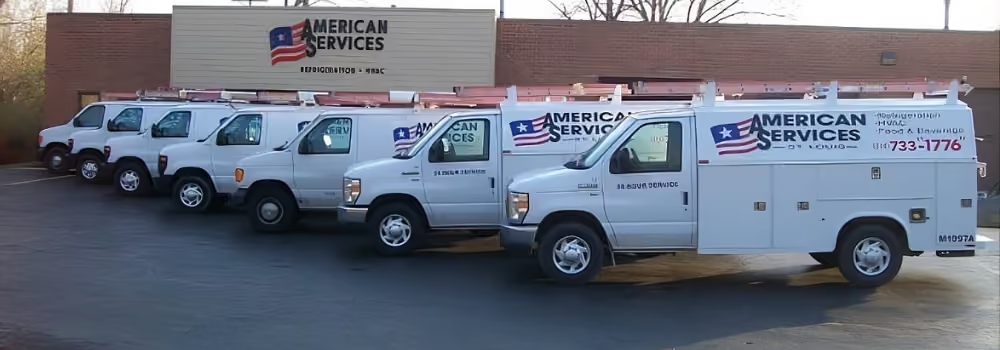





























































%20-%20thumbnail.avif)





%20-%20thumbnail.avif)


%20-%20thumbnail.avif)

.avif)




%20-%20thumbnail.avif)










.avif)