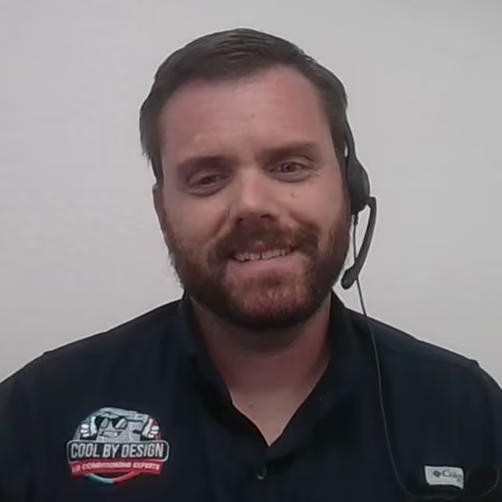
Host: Today's guest thought he would take over his family's H Vac business. Corey Mullins was himself an H Vac technician and had worked his way up since graduating high school. But alas, that original plan didn't pan out and Corey had to figure out what next answer. Start his own H Vac business, which he did with $10,000 in a single truck. But right around the same time, he connected with another local H Vac owner looking to sell. That business was tiny, less than $200,000 in revenue and falling. But it was a decades old business. And as you may know, H Vac companies put labels with their phone numbers on the units they install. So this business's phone number was clearly displayed on the side of probably thousands of units throughout South Florid, waiting to be called when those units inevitably had issues. That phone number had real value and Corey bought the business for $150,000. He only had to bring the 10% required by SBA, so $15,000. And if you add the aforementioned $10,000 that he was using to bootstrap, Corey invested $25,000 all in. He spent the next three years building before selling to private equity for $3.2 million, mostly in cash. $25,000 to $3.2 million in under four years. How about that MOIC? A key theme of today's story is how Corey was a tradesman by background, so he knew the business of H Vac cold, an obvious advantage that many searchers don't have. He's shocked that so many people in our community buy these businesses without any experience in the trade. But of course, what searchers lack in trade knowledge, they make up for in business building ability. Hopefully having both is the killer combination. Private equity knows this. They often install operating partners from the target industry into their acquisitions. But but searchers generally don't do that. They become the operators themselves. Well, hearing Corey's story should make you wonder about the possibilities of partnering with someone like him. What might that model look like? See what you think and enjoy this story of tradesman now acquisition entrepreneur Corey Mullins. And if you're interested in a story with a similar pattern, check out Patrick Norris from April 2024, who started on the back of a garbage truck and eventually bought, grew and exited his own trash business for 4.4 million. A lot of your success buying a business depends on assessments you make before you become its owner. When you're asking yourself essentially, is this a good deal? Well, the team at forensic accounting firm LCS has performed due diligence for over a thousand transactions in the small business market. And today, Thursday, they'll be hosting an office hours webinar to share the patterns they look for that suggest a good deal. They'll go deep on factors like low entry, multiple business buyer fit, quality of revenue, seller alignment, and industry tailwinds. Now, regular listeners of Acquiring Minds know what these terms mean, but the LCS team will go deep on really understanding why they are such important characteristics. The webinar is what actually makes a good deal. Patterns from over 1,000 transactions. It's today Thursday, March 26th noon Eastern. Link to register is right at the top of this episode's show Notes or on the Acquiring Minds homepage. Acquiring Minds Co Then Tuesday for the past decade or more, one of the best ways to achieve operational leverage for business owners was offshore talent. More recently, you can't say operational leverage without AI appearing in the same sentence. So the question on many owners minds is how do offshore talent and AI play together in your small business? What is the right balance between the two? Which tasks and responsibilities remain better for offshore talent and which is AI better suited to? Well, Greg Carey of More Staffing has been at the forefront of helping business owners gain operational leverage, first with offshore Talent and now with AI as well. So Greg understands how these two powerful levers complement each other in small businesses and how you as current or hopeful business owner should approach it. So Tuesday, Greg is hosting a webinar on this very topic, offshore talent versus AI for business buyers and owners. It is Tuesday, March 31 noon Eastern. Link to register is right at the top of this episode's show Notes or on the Acquiring Minds homepage. Acquiring Minds Co. Foreign welcome to Acquiring Minds, a podcast about buying businesses. My name is Will Smith. Acquiring an existing business is an awesome opportunity for many entrepreneurs and on this podcast I talk to the people who do it. The team at Pioneer Capital Advisory has started offering peripassu debt for SBA business buyers. That means they can help unlock up to $3 million of conventional debt on top of the $5 million limit of SBA SBA 7 loans so Pioneer can structure larger, more complex acquisitions. Listen to our story with Anika John for one of their clients who did just that, buying a $10 million business as a first time self funded searcher, the Pioneer team has closed more than 100 SBA loans, averaging timelines well below industry standards. Founder and owner Matthias Smith and COO Valerie Stash bring over two decades of SBA lending experience. Matthias and Valerie have a full bench of analysts and Associates who work your deals with them. A true deal team. Not just a single point of contact. Visit pioneercap.com or click the link in the notes. Corey Mullins, welcome to Acquiring Minds.
[7:11] Guest: Thank you for having me.
Host: Corey. You bought a very small H Vac business, less than $200,000 in revenue. You grew it and successfully exited it to PE in under four years. We're going to hear that story. To kick us off some background on you, please, Corey.
Guest: So I pretty much grew up in the trades. My father was in the H Vac trade from the time I was probably in middle school on. So I, you know, I had some touch of the trades, you know, how the trades work, specifically H Vac. Always had an interest in blue collar, working with my hands, you know, mechanical. And after high school it was just a natural progression to roll into the H Vac business, the family business. I guess before that I would work, you know, sometimes summers or do part time jobs with my dad. So had a little background in it, but you know, straight after high school, jumped in fully immersed.
Host: So your dad had an H Vac business
Guest: at that point? No, he worked for somebody else until about 2006, which is right after I graduated high school, which I guess segues into my journey and you know, full time H Vac and you know, business experience and getting the full experience from start to finish in the H Vac business.
Host: You mean you got the full experience?
Guest: Yeah, over the course of, you know, almost 20 years.
[9:02] Host: Okay, so right out of high school you joined the trade and then work in it for the next 20 years.
Guest: Almost 20 years to the day. You know, when I started, went off on my own, it was about 20 years so that, you know, I basically got the master class from. I started at the bottom as an apprentice, worked my way up, install service tech, you know, just kind of the way, you know, the natural progression a lot of people see going in the trades as or in H Vac. I'm going to start off as an apprentice and they think you become an installer, then you become a service tech and then maybe sales, try to work your way up to management. I, you know, I worked the full gamut from apprentice to basically general manager of my family's business before leaving to start and acquire another H Vac business to start my journey in entrepreneurship.
Host: Great. So tell us what the pivot was there that started your journey in entrepreneurship.
Guest: So growing up in a family business or working in a family business, you kind of, you know, think, one day I'm going to take this over or, you know, this business will be mine one day. And, you know, that doesn't always pan out for everybody. You know, there's siblings involved. I did have, you know, we're talking the end of 2021. I had a plan, which I thought I had a plan to buy the family business that didn't work out, which abruptly, you know, brought in some bad feelings on both sides. You know, things didn't work out so roughly, let's say probably 10 days before Christmas of 2021, I found myself walking out the door with no real plan. And that's, you know, what else am I going to do? I got licensed my state license in Florida in 2011. So I already had my license. So that was a jump start for me where a lot of people, you know, they decide to the business, oh, I got to go get my license. I already had my license. So it was just within a matter of, we'll say this was December 15th. By January 1st of 2022, I was, you know, on the way running to starting my own business while in the process of trying to acquire another business. How that came along was when I was still at my family's business. I had gotten a call from a. A competitor that they were looking to exit. And I had kept that information. Cause I figured once I acquired my family's business, then I would try to acquire that one and roll it in. Obviously, that didn't work out. So one of the first things I did after the first three years, I called them up and said, hey, you still looking to sell? Yes, we are in negotiations.
Host: Corey, let me pause you there, because I want to take our time as we ease into that acquisition. But just to. Just to repeat the chain of events here. So you. You are, you know, you got almost two decades of experience in H Vac. You're working for your family business. You expect that you'll one day buy, inherit, become the owner of this family business. That's kind of go. That process is underway in 2021. And then it kind of comes apart. And at the end of the year, around Christmas time, you walk out the door and are wondering what to do next. You, as you said, you have your license, so you have an advantage over a lot of people in the H Vac game. And so you start an H Vac business of your own. And you also call back this other existing H Vac business who'd reached out to you about wanting to sell. Do I have all that right?
[12:46] Guest: Simultaneously, you know, I got it hit the ground running January 1st and I knew I was going to rebrand this other business anyways because it was a family name business, you know, and I wanted a more creative, more marketable, more memorable name. So, you know, kind of did that a little backwards because I'm incorporating, doing what I need to do while acquiring that business, knowing I'm just going to roll it into this new brand.
Host: Yeah.
Guest: You know, so it wasn't like I acquired the business and then rebranded it, did it a little backwards.
Host: Okay, so a couple things to just underline for the audience here. How about how your story is a little bit different than my typical. First of all, you grew up in the trades, so you are an acquisition entrepreneur who knew the trade very, very well. We're going to hear all about that perspective of buying H Vac businesses and how it contrasts with a typical searcher who buys an H Vac business. And you also did formally start a business. So it's maybe not pure, pure entrepreneurship through acquisition. You were going to start a business anyway, but it really ended up being pretty much simultaneous. Right. That you're. That you're turning on your own H Vac business while you then you buy. Buy this other small one, Right?
Guest: Yes. Yeah. Because this was, you know, this wasn't planned. A lot of people on your podcast, they set out on this journey to search and buy a business. And they know they're going to do it. They have the time, they have the me it was, you know, I found myself, what am I going to do next? And I need to hit the ground running. You know, I acquire. I use an SBA 7A loan to acquire that business. So, you know, that doesn't happen overnight.
Host: Yeah.
Guest: So I needed to hit the ground running, get the wheels turning, get some money coming in. And so that's the way I did. I started this brand and rolled that one in backwards into current brand.
Host: And the business that you started, what's the name of it?
Guest: Cool by Design.
Host: Cool by Design. So as you said, you know, nice brand, a marketable brand, a memorable brand. And the business that you were acquiring was a family brand. Tell us about that business, give us the bullet points on it.
[15:14] Guest: McConnell Air Conditioning. They had a great business. They were in business since 1975. Friendly competitors. In my family's business, they're less than a mile apart. Family's business had been in business since 1970. We acquired it almost called second generation. My father acquired in 2006 from his sister's husband, basically my uncle who had started the business in 1970. Some McConnell air friendly competitor. We knew they were probably friendly with them. You know, tragedy, you know, tragedy brought that business to at the point where it was slowly declining. The father started the business, unfortunately, a tragedy had gotten hit by a car when he was an avid cyclist, and the son, you know, had taken over on a whim. You know, he didn't. He did, you know, what he could, you know, but, you know, the business was rapidly declining from, you know, having maybe 10 trucks to working out of a house with the mom answering the phones. And he was, you know, he was the only tech. He was getting burnt out. He wanted out. And, you know, they were calling around to competitors to see if somebody wanted to acquire it. And that's where I took that phone call and made that connection.
Host: And Corey, why did you want to buy a business where it was hardly, at this point, a business? It was, as you said, a single tech. The son who's burnt out, so. So he's, you know, why not just hire a technician? What value did you see in acquiring this quote, business that was. Was a shell of its former self?
Guest: Yeah, the value to me was the 1975 phone number. Coming out of a business that had 1970 phone numbers. I knew the value in that. You could get a call from a customer who hasn't called you in 15, 20 years, and we have. And, you know, you can convert that to a sale, a service contract, a sale, whatever, you know, and I wanted phones that were going to be ringing day one. I'm starting my own business. It takes time to get that traction.
Host: And Corey, this. This phone number, this 1970s phone number, it rings. Is this the. That whole thing about, you know, because you got the sticker or the magnet on the actual H vac unit in the basement, and people see it when there's a problem and call it that. That phenomenon or just because it's. It's. Or what, it's just floating around out there. It's online.
Guest: Yeah. Mostly the stickers on the units, you know, you know, still do it. People brand thermostats. They put their company name of thermostat, the sticker on the unit, or, you know, people that still have the number in their phone book, and they, you know, they've used the company in the past. They haven't used it in a while, their air brakes. You know, we. The company has a demographic of a lot of older customers. Those tend to be good customers, loyal customers.
[18:23] Host: So they just. They. That really. I mean, I've heard that before. I'm just always kind of surprised that it Works. And I guess the question is, sure, there's some value to, to those calls coming in, but how much are. Is, you know, are you actually paying for that and how many calls is it actually generating? So first question, first, how much were. Were you buying this for?
Guest: I spent $100,000 on the business. But another reason I was interested in is because this is 2022, the height of COVID Anybody who is in a construction trade business, or pretty much anybody, knew it was hard to find trucks. He had a 2020 Mercedes Sprinter that was worth about 50 grand. So that's 50 grand. So the way I saw it, I'm paying 50 grand for the goodwill, the phone numbers. It's not hard to make 50 grand pay that back in this business. That was my thought process. Let's get the phone ringing. If I was to spend $50,000 on pay per clicks, I could burn through that in a few months and get nothing for it. You know, at least have some loyal customers. And it ended up working out better in my favor because this wasn't the plan in the beginning. But he, the, the son, the technician, he asked if I need another technician. He wanted to come work for me for. And it, you know, you know how long it was going to be, that it might be a year or two. He ended up working for me for three years, which ended up being a good thing. I got a good tech out of it. I got ringing phone numbers, and I got a truck. And the plus of having him there, everybody knew him, the customers knew him. So for the first year, we tried to make a point, only send him to those customers if it's possible, keep that relationship going. They get used to seeing him in our logo, our shirt, and then once he does move on, they're already comfortable with us and our brand and the way we do business.
Host: And we're talking about the son who was burned out, but he actually still wanted to keep working. He was happy to work for you.
Guest: Yeah, I mean, you get. I find in running a business and you get more burned out on doing all the other stuff around your business than just going out and doing the work that you signed up to do. If you say you're, you know, you're a good plumber and you start a plumbing company and you come from the truck, you kind of have this view that, hey, I'm just going to be a plumber, but then you end up being an accountant, a warehouse manager, you know, all the things you don't want, all the things you're doing on the Nights and weekends does it, you know, after work. That's what burned you out. In my experience, if you can clock in, clock out and go home with no weight on your shoulders, you know, it's kind of a lot easier,
[21:06] Host: you know. Enzo Technologies as one of the leading IT managed service providers serving the search community. Led by Nick Akers, an acquiring minds guest who bought the 35 year old business. The team at Inzo regularly works with searchers and their acquisitions. And one feature of acquired businesses that Enzo is seeing over and over is the need to implement cybersecurity promptly during the transition. So many acquired small businesses either have glaring vulnerabilities, lack security best practices, or both. That step one to de risk the deal you just closed should be addressing these issues. INSO is your full service IT MSP for post close stability. They assess your target, surface the biggest risks in plain English and give you a day one through 30 plan to cut exposure, prevent downtime and even find cost takeouts like bloated telecom bills. Check out enzotechnologies.com I N Z O or email Nick directly at nick@zotechnologies.com okay, so you buy this business for $100,000. It comes with a Mercedes Sprinter at a time when those were extremely scarce. That's worth 50 grand. So the other 50 of your hundred goes to this phone number and goodwill and you get a technician, a very skilled technician who's going to provide good continuity with existing customers. And do you have a sense of how long it took you to get a return on that $50,000 investment?
Guest: Then the first year we netted more than that $50,000 off that customer base.
Host: That's great. Well, I have to say Corey, for our audience this is very validating to here because we are acquisition oriented and see buying a business as a way of shortcutting the years that it takes to build brand or you know, a big footprint of, of units out there in the local market with our phone numbers on the stickers sort of thing. But there's always the question of like, yeah, but is, is could the money that you use to acquire an H VAC business be better spent in actually spinning one up from scratch? And here you are kind of validating the point that, I mean you got a great deal, it sounds like. So that helps. But, but you're validating the idea that even with all of your experience, you saw value in the shortcut. You saw this as a shortcut, a way to get, get the phones to ring. We often say that as sort of A metaphor. But you meant it literally.
Guest: Yes, Ian. I think if you have somebody from outside this industry couldn't have bought this business and made it work. It wouldn't. So I would say to anybody who has experience in their trade and wants to start their own buy a business, there's a lot of small businesses that you can buy for a very attractive price because the financial buyers, the private equity groups, the searchers, they're not interested in them because they can't buy these businesses and run them. So you can actually pick up a lot of these small companies for. And you can make creative deals as a percentage of revenue for a certain amount of years, which I did with a smaller acquisition I made a little farther down the road where, you know, you're basically only paying. You're only paying for closed and paid revenue, which is even a better deal for you as a business buyer.
[24:51] Host: Now, why could a searcher not have acquired this little business? McConnell's.
Guest: Well, when I was first just, there just wasn't any money there on top. When you looked at the balance sheet and, you know, the P and L to begin with. And I didn't know that he was going to come work for me until, you know, five days before closing, he asked me, so if you didn't know this business, what were you going to do with that? You had no tech. You had a truck full of tools and a phone that's ringing and no way to get the work done.
Host: And what you were going to do, not realizing that the tech was going to come with it. The sun in the business was you were going to service all those calls.
Guest: Yeah, I was going to grind it out. I mean, actually, a month before I closed on that, I hired another tech already, too. So we were, me and another tech already and actually an apprentice. So there were three of us already. And when he actually had to come work for me, I was actually worried, like, I really want to hire this guy, but do I have enough work for him? You know, so that was the scary part. Like, hey, I'm going to hire him. I hope I can keep all these people busy. And I mean, end up working out, but doesn't always work out that way.
Host: Yeah, yeah. And of course, this was peak H Vac, Peak Home Services. So it was. It was a busy time in the industry. In a good way, right?
Guest: Yeah.
Host: From demand was stronger than ever.
Guest: Yeah. Covid to 2024. Probably the best four years for home service businesses ever. I mean, definitely the best four years I've ever seen. And a lot of People starting new companies and thinking, hey, this isn't so hard. You know, business is just flying in your lap. It's like, just wait. It's not going to be this easy forever. And we're seeing that now.
Host: And we're seeing that now. So just say a little. We're getting a little bit ahead, but say a little bit more about that. What are we seeing now? How is it different? How is it kind of a return to the mean, to the norm?
Guest: Yeah. So, I mean, a lot of people, you know, I network a lot, you know, see people around, see you don't supply houses or, you know, we're in a recession. I don't, I don't see as a recession. I see as getting back to normal. I mean, we just. And you're going to have a correction in any market after coming off the best, you know, four years ever. Right. Demand's going to dry up. I mean, we got insulated a little longer here in southeast Florida, I think, because we had a lot of people moving from the Northeast, from California, reinvesting in this area, which kept us busy even longer. But I heard people, year before we started seeing it saying, you know, they were slowing down.
[27:29] Host: Where are you based exactly?
Guest: Fort Lauderdale, Florida.
Host: Fort Lauderdale. And so you're seeing people who got into the business more recently to the industry more recently, or bumping into them at the supply shops or whatever, and they're saying, oh, we're in a recession. And you're saying, no. Where this is actually just what normal feels like. And normal in H vac is. What's it like? Is it. Is it a hard industry, a competitive industry? What say. Say more about normal.
Guest: It's a very competitive industry. And, you know, the human nature, I guess, of a lot of homeowners is they want to get the lowest price. So it's competitive. You could, you know, show up to houses where there might already be another truck or two in the driveway. You know, average home are getting three to five estimates. You know, that's. It's a lot harder, you know, it's a lot harder to sell in that environment. And it's really hard to sell in that environment when you're not the lowest price. It's easy to have a 70% plus closing ratio and you're the lowest bidder. But when you're a premium service provider, you know, that's a competitive environment. It's not easy. Right.
Host: Well, we're going to spend a little bit more time on this in a few minutes. And on your point about being Premium, that is where you position yourself in the market. So you're not trying to be the low cost provider, correct?
Guest: Yeah, absolutely.
Host: Okay, great. Well, we'll return to that as well. Back to the story. So one thing that you said to me was that as you, as you launch, slash launched slash acquired your new business, you were always building it to sell. Say more about that.
Guest: Yeah, I mean, I guess I had a good enough pulse on the industry to see, you know, what was going on, the private money coming in. I mean a lot of that, you know, social networking face, you know, the Facebook group for H vac owners, this that, you know, as a part of all these groups, just trying to absorb all the knowledge I could. You know, there's some very smart people in those groups and you just gotta watch out for the landmines and the, you know, the goobers and those type of people. But there's a lot of people that are willing to give you, you know, advice for free and help you that have done it, have been there.
Host: Well, there's, it's one thing to, you know, get best practices from other smart people in your industry. But, but I feel like when you said this to me, you were saying something a little bit deeper. More, more of a, more of a strategic philosophy that you had. Not that you just want to run the best business, but you want to build a business to be saleable.
[30:11] Guest: Yeah, yeah. So the, you know, the strategy behind that is, you know, starts with pricing yourself properly, not pricing yourself for the business that you are today, the business you want to be, because that's the only way you're going to be able to grow. The low price company is not going to be sellable. The profit margin is not going to be there. You know, we always, as painful as it is, you got to have your book straight, pay your taxes, right? If you want to, you know, if you want to have a sellable business, you're going to get, you're not going to get the value. If you're, you know, you're cooking the books or, you know, creative accounting will call and there's nothing wrong with that. If you're building a business that you want to keep for 20 years, there's going to be a legacy business that you're going to hand down to your kids. But if you're building a sellable business, the best piece of advice I can give you is really keep your books straight and keep personal business separate. Because yeah, you might save 20, 30% now, but you could get 6, 8, 10, 12x on that value later, which one's really saving you more money. So I always knew I was gonna sell this business. I thought it was gonna be maybe in 10 years. It happened a lot quicker. And, you know, just kind of seeing opportunity and saying, you know, one day just said, hey, let's talk to brokers, see what options are out there. And, you know, we don't have to. We don't have to exit this business, but at the right opportunity is there, we will. And it worked out for us.
Host: Yeah, well, and we're going to get to that. But one thing that you saw even just as you were launching the business was, was this interest buy private equity, this outside capital coming in. Right. You were seeing that. So you knew that you were in an industry that was hot and that you would have buyers for your business. Fair to say?
Guest: Yeah, I mean, we. Yeah, we definitely. I started seeing that, you know, 2020. Really, I think it started a little before that. And you start when you have, you know, like I said, with the social network, you have a pulse on industry. You see this person sold, this person sold, this person sold. And you start hearing about these multiples and you start thinking back, like, you know, 3x used to be a great multiple. Or, you know, you see a lot of guys, you know, trade businesses. They work, work, you know, work until the day they die and the business dissolves or they're ready to retire and they basically shut the business down. And, you know, the values. People are starting to see the value in the trades. If you build a good business, profitable business, there's value there and you can actually get something in the end for your hard work.
Host: You also had the benefit of some of some historical knowledge, which was that there had been a big private equity consolidation wave earlier in the century. Right around the 2000, early 2000s.
[33:09] Guest: Yeah, in the early 2000s.
Host: So you'd seen this cycle before and you knew that it was. It has a beginning, a middle, and the end. And an end. What. What perspective did that give you?
Guest: Yeah, I mean, that was just like the early 2000s private equity wave into H Vac, I think, was just like a small glimpse of what we're seeing now. And, you know, I've always known, and you see markets change. This could, you know, this could hold up. It could not. We don't know. This could just be the beginning of something large. A little bit off topic. You know, BlackRock just invested into a large private equity group. So, I mean, this could just be the beginning. We don't know. And sometimes you find Your place in the. Yourself in the right place at the right time. And being in the trades right now, I think is being in the right place at the right time for a lot of people.
Host: You had a financial goal too, when you were thinking about building to sell. What was that?
Guest: In my. When I first started, I was thinking, I'll buy, you know, I'll build $5 million business, at least 20 in EBITDA and, you know, multiples hold up. Hopefully, you know, I could get, you know, out of this with. If I could get out of this with $5 million after taxes and everything. That was kind of my end goal to where I'm thinking, hey, with $5 million invested, you can live off the gains and never work again if you don't want to.
Host: And so getting to $5 million after taxes means selling for what, 7 million something.
Guest: Yeah, it's probably to be comfortable. It depends on how much debt you have. Right. So I would say anywhere between 8 and $10 million.
Host: Ah, okay. And to get there, you were going to need to get to, you said $5 million in revenue. So a million dollars of earnings.
Guest: Yeah. To start being able to get to that range. Right. I mean, if you could get an 8x multiple on a million, you would be there.
Host: And is that what the multiples are? I mean, I knew H Vac was hot, but that's very hot. 8x on a million dollars.
Guest: I mean, you kind of never know. I mean, there's rumors of a few years ago, some of the larger companies was 5 plus million dollars in EBITDA getting 10 to 15x, you know, but you, you never really know. Right?
Host: Yeah. Yeah. Okay, so this is to remind the audience this is all early 2022, that you really kick this off. We're not going to go through the next three or four years of your owner ship and, and, and in operations. But, but give us kind of the bullet points. What does it look like? How, how do you grow it, you know, in terms of trucks, employees, revenue. What, what can you tell us? Give the highlight. Give us the highlights.
[36:05] Guest: Yeah. One of the most crucial pieces was partnering with a good online marketing company that specialized in the trades. That was a crucial part helping us grow. I mean, if you can't get the phone ringing, everything starts with a sale. So that, you know, that was a very crucial part. And we, you know, we did good there and we just saw good, organic, rapid growth, but, you know, not too rapid. You know, my goal was to grow quick, but not so fast that you lose control, you lose, you Know, you lose profitability. I want a profitability through growth. So I think at the point When I acquired McConnell Air, I had a tech and an apprentice. So I brought on, you know, then I had two techs in Apprentice. After I acquired McConnell Air, we ran like that for probably two years. But we did lean on a lot of subcontractor. I had a lot of subcontractor relationships for installs and duct replacement, stuff like that. So it allowed us to keep our employee count lower for our revenue, not to buy as many trucks, you know, keep insurance lower. Um, so we pretty much ran like that for two years. And then, you know, I hit a wall where I got to a point where, like, I need help. You know, I think everyone gets that point in their business, right? I need help. And luckily, you know, we had the revenue supported. I was able to bring on a field manager to help free me up, because at this point, I'm running the field. I'm doing a lot of the sales. I'm doing the back office stuff. And I think that was a pivotal point. When I brought on the. The field manager, that freed me up to kind of work a little bit more on the business. And then probably six months later, I brought in an office manager. And that was another pivotal point. And then I'm starting to see a little light at the end of the tunnel where, you know, I don't have to work 80 hours a week anymore, and this business can run more without me. And I think that was probably one of the biggest mistakes I think I made, was waiting too long to hire those people. I think we probably could have got twice as far as we did if I hired sooner.
Host: Oh, let's hear about that, Corey. Because it is counterintuitive that you were working 80 hours a week, even though you had this. This philosophy about the way you were approaching building this business, that you needed to build it to sell. And yet it sounds like you were, you know, kind of a typical owner where it was all on your shoulders. You were holding thing, the thing together through sheer force of force of will. That makes for a fragile business, that makes for an unsalable business. So. Yeah, so why was it a mistake? How did you let yourself do that? And, and, and then, and then why do you think that you could have even gotten further if you had invested in help sooner?
Guest: I mean, you can do, you know, you can do a lot more with the right people than you can do by yourself, right? I'm only one person. And you, you know, like, working 80 hours a week catches up to you and you know, burnout's a real thing. But we, you know, I pushed through, we managed. And yeah, if I would have hired these, you know, people sooner, I would add more. I'd been able to focus on the business more, have a clearer mind, to put other things in place, different systems in place, people in place, you know, to help grow, grow the business and you know, some, you know, I was just too busy chopping down trees to sharpen my ax. I was in the weeds. Like, when do I have time to hire? You know, luckily, you know, I got to a point where I wasn't really doing a lot of the field work, but just doing the sales and running around, running the jobs and ordering the equipment. And you know, at this point I had somebody in the office at least taking the phone calls. But you know, it's like you're putting out all the fires, every fire. You know, I'm running around putting out fires all day on top of trying to run the business and it's just not, it's not feasible, it's not sustainable.
[40:08] Host: Okay.
Guest: You start seeing the customer experience starting to slip and that's really what pushed me because my number one thing was customer experience. We got, you know, we're not going to get where we're going to, where we want to go without taking care of the customer and delivering that five star experience. And that's what we're charging for. Once you start seeing that slip, that's what really pushed me. Like I need to do something, I need to hire.
Host: Great. Okay. And so you make these two hires over the course of six or so months and that allows you to start working more on the business, not in the business. It allows you to eases the burnout. I guess you were starting to experience the 80 hour weeks. What, when is this, what year and what does revenue look like at this point?
Guest: So I hired my field manager and September of 2024 and 2024 we did. Do just over $2 million in sales.
Host: And then it is then that you start to contemplate selling, selling earlier than you, than you thought you would. You know, you're not at the $5 million in revenue, you're at $2 million in revenue or just over. So what is the psychology that leads you to sell earlier, sell sooner?
Guest: Yeah. So that I guess at that point we're in 2024. I didn't really have a serious thought about selling. It's always in my mind like, we need to do this, we need to do that. So we can get to this goal. And I mean, you always have those days as a business owner. I mean, especially in the trades. I'm done. You know, I don't know how much longer I can do this. You know, this is, you know, but I never, I didn't have that pivotal moment like, this business is ready. It wasn't ready to sell. You know, if I'm running around that way, it's not. It's not sellable business. So I didn't have that thought yet. So we go through, we finish out 2024, we have a great year. I mean, we went from zero revenue to just over, just over 2 million within was it three years? So we're doing, you know, we're doing good, we're growing, and then we get into 2025, we're moving along, everything good, you know, get to a point where, how do you. I didn't even think about hiring an office manager yet, which I should have. But I get an email from somebody who's experienced, have experience in the home service business. They're looking for a job. And I'm an opportunist. I'm like, this guy's emailing me, Let me have a conversation with him. He was the right fit for the job. I brought it. That was pivotal. He got our office cleaned up, systems in place. Very organized person. Follow up. He's following up on sales. You know, should have hired, you know, I should have hired both those managers six months in, if I knew better. Um, and then, so we're going through 2025, everything's going good. And I think maybe, you know, I might. I think I might have been getting to the point where I'm getting. Maybe I was getting a little bored because I wasn't working 80 hours a week. I don't know what it was, you know, I'm still involved in the business, um, as far as working that much. I. Even in the first year in business, I. I took vacations. I still took time off. I'm like, if I. What's the point in doing this if I'm a slave? So I'll be a slave when I'm here, but I gotta take time off. So I always, you know, my first year in business, I took two weeks off. People told me I was crazy. I'm like, I'd be, you know, I'm gonna go crazy if I don't. And then from there on, I collectively took probably, you know, three to four weeks off a year. And then 2025, everything's going good. We're still growing. And I wake up one morning and decide maybe it's time to sell. And this I, I, I execute fast. When I have an idea, I just, I run with it. So I've been connected with a broker. He's a broker that sells H vac businesses. That's all he does. He's well known in the business I've been connected with.
[44:25] Host: I've seen him on LinkedIn, I think. What's his name?
Guest: Patrick Lang.
Host: Yeah, yeah, that's the one.
Guest: Yeah. So, yeah, that's his niche is H vac companies. Mid market, lower mid market, H vac companies. So I, I just messaged him on Facebook the next day, we're on a video call. You know, I had a number in my head and just tell him about the business. He, you know, he undershot that number by a bit. And I was like, all right, I'll send you the financials. Let's see if we, you know. And then after he reviewed the financials, he came in a little bit over the number. That was my minimum number. And I, you know, I sat on it for a day or two, talked to my wife. I'm like, you know what, let's just do it. Let's see what happens. Let's bring it to market. If we don't get asking price, we won't, you know, we won't sell it.
[45:17] Host: Running payroll, paying your bills, closing your books and producing financials. These are critical tasks every business owner must do or oversee. But spending time on them distracts you from the leadership and growth work you want to do. So let system 6 do it for you. Owned and led by a former Searcher, Chris Williams, System 6 is a leading outsourced finance team for hundreds of SMBs, including over 50 searcher acquire acquired businesses. Chris, Tim and the System 6 team understand firsthand the challenges, the opportunities of jumping into a business as its new owner. So whether you own your business already or have one under LOI, talk to System 6 about how they can give you time back and improve your financial operations. Mention Acquiring Minds and they'll provide a free review of your books and financial ops. A $500 value. Check out system6.com, link in the show notes or email. Hello, system6.com, what was your number if it wasn't 5 million or, or 8 million, which was going to get you to 5 million after taxes, that kind of dream number. It was something less than that. What, can you share what it was?
Guest: Yeah, My number was 3 million.
Host: 3 million. And that would have given you, call it something over 2.
Guest: After taxes, after commissions, after the small amount of debt we had in taxes. Yeah.
Host: And you also perceived that, that the, the multiple, you know, going back to this cycle of private equity consolidation, it wasn't going to last forever. Right. So there was a, there was a window that was gonna close at some point. Was that a factor in your decision to explore selling?
Guest: Yeah, definitely a factor in my head. You see, you know, you hear chatter in the business, you know, being plugged in, it's like, hey, this business got acquired. It's not doing so well, this business. You know, there was a big collapse here with a private equity backed. Big private equity backed. We'll call it a roll up in the Fort Lardell area that collapsed. Air pros. So it's kind of like, you know, this is where this starts falling apart, right? When people start collapsing and losing their money, everyone starts backing out. Right. So it's, that was part of my thought process. The good companies, they're going to be fine, but there's a lot of ones that don't know what they're doing too.
[48:01] Host: Okay, so your number was 3 million. You say, let's, let's go, let's do this. Let's put it on the market, and if we can get 3 million, great. And if not, not. By the way, Corey, how old are you at this point? Or this is last year. So how old are you?
Guest: Yeah, when I listed my business, I was 38.
Host: 38, okay, so you're 39 now. Great. What happens?
Guest: So we list the business. A lot of interest. H Vac still hot. Especially in Florida. We have multiple interested parties, we get multiple offers, and we review the, you know, go to the process saying, who do you think you know, the best? You know, the money's important too, but you know, who's the best fit, you know, who's, you know, gonna. Who has the best chance of carrying this business on as well? I mean, I put a lot of blood, sweat and tears in this business. I don't want it to just foil overnight because I leave. And I haven't left, I'm still here. But we'll get to that. And then we decided to met with some people, had some meetings, and decided to enter into loi.
Host: You heard from PE groups, but you also heard from searchers, the audience that's listening to us right now, right?
Guest: Yes, I, Yeah, I did. Because the process Patrick does is like, soon as you're interested and show that you're, you know, I guess there's some vetting. He does, obviously that you're a capable buyer. Let's get in the room together, which is basically a video call and get face to face and see, you know, they think I'm a good fit. They're. I think they're a good fit. You know, it's good right away. So I probably had three calls with what, you know, you'd call searchers.
Host: And did they, did they rise to the top at all? You know, we know that you didn't sell to a searcher, so I'm wondering if there's a reason that searchers as a category was not. You were not going to sell to one.
Guest: Yeah, I don't think it was. And I wasn't going to sell the one I had. There was one searcher that I thought that I liked and I thought that he could probably be the right guy for this business. His offer didn't come in competitive, but.
Host: And were the offers from the searchers not competitive overall or just his wasn't.
Guest: All the searcher offers were not competitive.
Host: Oh, okay.
Guest: Yeah.
Host: So the search. When you're, when your searcher competing with private equity, you're going to be less than private equity. This is something that the audience will, will already know. But we're.
Guest: It's hard to compete with private equity when you using your own money. A lot of these people are using SBA loans. They got a lot more risk on the table than the private equity companies.
Host: Exactly. And they're not likely to benefit from immediate multiple arbitrage that all the private equity guys can. And what about your view? So money aside, the fact that their, their offers were less across the board than the private equity groups, what about your sense of who is going to run this business, your business successfully? It's a different profile. Right. The private equity groups are going to bring in an executive or maybe continue you on as leader of the business. There are models there, different models, but generally the searchers are going to be. Are going to step in and run the business themselves. How did you think about that?
[51:37] Guest: I mean, in general, I think anybody from outside the H Vac company that, from the H Vac business that is looking to buy an H Vac business, I think they're a little insane, to be frank. Not saying it can't be done, but you know, from the inside, I know how technical the business is and I mean, I'm a lot of respect for people who do it and you know, I guess for lack of better terms, you got huge set of balls because it's a wild ride, especially if you don't know the technical side of it and but the people who pull it off, it's nothing short of a miracle, I think.
Host: Well, that's flattering words for the folks who've been on the podcast who bought H Vac businesses, some of whom you've connected with. Sean Daly there in your neck of the woods, a searcher who bought an H Vac business not being an H Vac guy himself and there are many, many others and he bought a pretty
Guest: small one, which is even harder. Now if you're coming in, you're buying a 5 million plus dollar business that most likely there's that layer of management technical experience in place but you know, which my, my business had. But you're relying, you're, you're really relying on other people and hoping that they're going to lead you in the right direction or they're not just going to take off on you.
Host: And what about the point, Corey, that to really be a business owner, a business builder, you're not and in fact shouldn't be a technician in that business? You know, in your, in a trades business it's easy to kind of talk about, you know, business owner not buying, not being technically knowledgeable about H Vac service delivery. But in all businesses, you know, I, I there, there are functions of the business from sales to HR to digital marketing to whatever it is that the business owner is not going to know. So once a business gets above a pretty small size, the expectation that they're going to know how to do all the jobs is out the window anyway. And they're in their role is not to know how to deliver the service or how to do all the things. And it's, you know, to build the business which is its own skill, we like to believe. And so the searchers who are considering buying an H Vac business, it is scary and maybe even crazy. I don't mean to take away from your point. It's something we talk about constantly on this podcast. What's it like to buy business where you don't know anything about, about the service of the business? On the other hand, there is this counterpoint which is, well, eventually you're going to need to, you're going to need to not be in the truck anyway. If you're building an H Vac business to a certain size, you're not supposed to be in the weeds of the business to really build a true enterprise. And they're just, you know, and you know, we talked about this with Peter de Baptiste where he bought an H Vac Business up at the More Delray area. And plumbing. Plumbing business.
[54:47] Guest: Yeah, plumbing. But he's out of Davey. He's not far from. From us.
Host: Oh, okay, okay. And he can never get in the truck, so, you know, just because he wouldn't, you know, wouldn't know what to do. So he's forced to always be thinking in terms of systems, always be it. Thinking in terms of, you know, how to deliver service at a high level. You know, it almost creates a. A healthy barrier when you don't know how to deliver the service yourself because you're. You're useless in the truck. So you got to figure out some other way to solve problems, and that way is the scalable way. Now, I know this is all very academic and sounds good on paper sort of thing, but react to all that.
Guest: Don't disagree. I don't mean to my comments, just to just totally take away and say, oh, the technical part's the hardest part. Because it's not. Once you get into building a business, that's the hardest part. And there is some strengths to not knowing the field or the field, the tech side of it, like I had mentioned, it's almost like it's a strength because you don't get pulled into the truck, you don't get pulled into the field, and you can stay working on the business. Because one of the hardest things for me to do is to get out of the truck. And it's exactly. Even still hard for me today, running this business to not say, oh, I can just go do that myself. Exactly. Like, oh, we're, you know, we're a little backed up, or this, you know, this is. This is very technical. And, you know, the tech we have available is, you know, not there yet. Let me just go do it myself. So there's a lot of strengths and having the business acumen and having that experience. I think if you partner, if you have the right technical people that you can hire, I think that's a huge strength, or I think the hugest strength would be somebody with the business acumen and somebody with the tech field knowledge. Becoming business partners would be a huge strength too, because I think that's the only time business partnerships work is when each person brings something different to the table or bu.
Host: Where you actually are a technician with years of experience and you have the business acumen and appetite to. To. To be an entrepreneur.
[57:07] Guest: Well, yeah, so I had to learn it the hard way.
Host: Which part? Learn which part? Yeah. Well, you mean just by doing it?
Guest: Yeah, well, every.
Host: Everybody does. Even if you you know, go to business school. That doesn't mean, you know, you know that you can come out and automatically spin up a successful business or buy a business successfully.
Guest: It's just fascinating to me when I first started listening to your podcast and seeing people from outside buying H Vac companies like for, you know, just thought it was a crazy concept.
Host: Yeah. And again, maybe, maybe it is slightly crazy. You know, I don't, I don't disagree with all your points. I think we're kind of both directionally right in what we're saying. But back to you and just before we return to the plot and how the sale comes to together, you are this technician with years of experience and you're entrepreneurial and figured out how to, figured out how to buy and build a business. And if, if you know, the having that despite everything I just said about, you know, the, the non H Vac trained people coming in and maybe there' advantage to that because they think in systems and think in scale, et cetera. Let's be honest, knowing the business as deeply as you do is a huge advantage. Why don't more trades people do what you did and, and set out on their own or, or build a business? We heard you just say that for people who have been in H Vac or whatever trade for a long time, there's a lot of opportunity in buying much smaller businesses than PE or even a searcher would buy. But in the hands of a skilled technician, they can really do something with that. I wonder why there are you're. That you're kind of such a unicorn. A skilled tradesman who also then has the entrepreneurial wherewithal to buy and build something.
Guest: Yeah, I mean, I think it, you know, it starts with risks. A lot of people don't want to take the risk. They get comfortable. Um, and not everybody is meant to be an entrepreneur. Should or should be an entrepreneur. And you can't blame, you know, it's not taking anything away from them. We all have sure brains and skills that work in different ways. And if you want to clock in and clock out and live a comfortable life, that's, that's great. And you know, you probably live longer than I will because of the stress and the battle scars. And it's not easy. You know, it's about, you know, entrepreneurs. There's been like a buzzword for a long time and it's been romanticized. It's not easy, it's not fun. It can be very rewarding and there are times it is fun. You know, I say it's the highest of highs and lowest of lows. And I just, you know, the risk involved, the startup capital, I guess. You know, a lot of time, you know, when you're working in the trades, a lot of time, you know, you're, you're scrap, you're, unfortunately, you're scraping to be middle class, have a house, have a family. You know, I've known guys who wanted to do it and, you know, their wives talked them out of it or, you know, whatever it is, they, you know, got cold feet at the last minute. It's definitely not easy. I mean, I was, I guess I was kind of forced into it in a way.
[1:00:36] Host: Yeah, yeah, right, exactly. You, you wouldn't have necessarily gone down this path but for the, your FA taking over the family business didn't work out. You were just talking about how, you know, you're kind of. Many people in the trades are scraping by. We, we see a lot of headlines these days. We hear on this podcast about how being in the trades is, is increasingly lucrative. It's, you know, there's a scarcity of talent in the trades, and so that means wages are going up and you can earn really well. I don't even mean buying a trades business. I mean just being a technician. And so we're all aware of that dynamic. But you had this phrase, a trade dad, and this image that you painted for me of just, you know, how different it was, you know, back when you were growing up, it wasn't, it wasn't, you know, a lucrative field to get into. So just talk, just, what, what is a trade dad, you know, and a trade dad then versus a trade dad now?
Guest: Yeah, I think that's part of, that's part of the reason why we have a shortage or had a shortage of people, young kids coming in the trades, I think it's starting to come back. But, you know, in my generation growing up, you, you know, your dad was in the trade. You saw that, you barely saw him. He was always working a lot, coming home late, barely scraping by, always tired. And, you know, so you see that growing up and you're, why the hell do I want to do that? You're going to go college, try to do something else. And I think that's part of the reason we've had a shortage of people going into the trades, and you can't blame them. And then now I think it's coming for, you know, full circle. People in trades are making more. When I started in this trade, if you made $50,000 a year as a technician, you were a top technician. I mean, now really. Yeah, $20, you know, 20, $22 an hour was a top technician. And everything cost less back then too. But now, you know, you can make good money being a technician or a salesperson or in the trade now and not have to own your own business. And there's plenty, there's people in sales on our trade. You know, there's always outliers, right. Making, you know, mint six figures. It just depends where you're at and what you're doing. So I think now, you know, you see the trade dads, especially the business owners or, you know, you start, you go over your friend's house and they live in a, you know, nice house, nice cars, vacations that, you know, as a kid that attracts you to, you know, what's this dad do? Or you. Yeah, you know, on career day that, you know, the plumbing dad shows up in his porch. You know, that's how those things that wow young boys, you know, like your kids were in the cars, you know, you want that fast car and you start seeing that it's not just the doctor showing up in the porches. And I think that's part of going to start attracting people back to the trades. And then we got to create that work, work life balance, if there is such a thing. But you know, some people believe in that.
[1:03:45] Host: Do you?
Guest: I mean, I don't. I feel if you want to be a high achiever, you want, you know, you've got big goals. I don't think you can have a work life balance. At least I haven't figured that out.
Host: Well, you're pretty balanced now. A couple million bucks in the bank and, and I'm still working a lot doing, doing podcast interviews. No, I know, but you know, there's also the, there's the seasons way of thinking about one's career where you work at a sprint for a number of years to some sort of benefit and then maybe take a break for a couple years before you go, go into your next thing. So it's, it's more like a sine wave than it is a constant, constant grind.
Guest: Yeah, I don't think I'll ever stop. I was just kind of, you know, joking. My wife, when this was all going down, kept telling her I was going to be retired. She said, you're not going to be retired. She knows me. She's like, you're not going to be able to stop.
Host: Yeah, you and many people listening, Corey and me. Why didn't your dad being a trade dad scare you? Off from being in the trades. The way you described that it scared off people in our generation.
Guest: Yeah, that's a good question. I'm not know if I don't know if I 100% know the answer to that. But you know, my dad was always a very hard worker. One of the hardest working people I know. Like just an insane work ethic which thank God I inherited, you know, very admirable. And you know, we, we always, you know, we always. He always provided. We always had what we needed. I mean we never got rich. But I'm not 100 sure what I, I just knew I wasn't built for college was part of it. I guess I wasn't, I wasn't going to college. I was mechanically. I liked working on things, you know, and I never really had, I guess, big aspirations to say, hey, I'm gonna live in this mansion one day, you know, if I could be middle, you know, middle class, make a good living and that's what the trades will provide for you. And just end up being in the right place at the right time is really a lot of it being in the trade.
[1:06:13] Host: Well, give yourself some credit here, Corey. You did make it happen for yourself. Also good combination of good timing and in your own, you know, applying yourself. Do you have kids?
Guest: Yeah, one great.
Host: I wonder what the version of trade dad they'll see.
Guest: Yeah, the one with the Porsche. He recently told me he wants to go into the trades, which I'm not a guy.
Host: How old is he?
Guest: Thirteen.
Host: Okay.
Guest: His mom has a Ph.D. so could have learned it either way.
Host: Well, isn't that the perfect encapsulation of the rise of the trades? Trades or PhDs and he chooses traits.
Guest: Yeah, I think part of it is he, you know, he sees, you know, how, you know, we don't live an extravagant life, but we, you know, we live a nice upper middle class life. And he sees that and I think that's part of it. And his brain kind of works like with mine. He's a mechanical brain. Like see from a young age I could figure out how things work. I was taking stuff apart. He's the same way. So I think that's part of it.
Host: Well, it's also he has seen you be successful. So. And I don't just mean like the material comfort that you've provided, but I assume he knows you built your own business and then exited your own business. And so he, you know, he's, he, he has something to model, right?
Guest: Yeah, absolutely. And I think I would like, I think it hopefully by the time he's in the position to start entrepreneurship, I. I can do it with him, and I'll be in a position where I don't need the money. I think it'd be a lot funner to do. When you don't need the money, you're not chasing the money. And I can do it with him, for him. I think that would be fun. I'm gonna make him. I'm gonna make him work for somebody else first.
Host: I was gonna say you started to sound like you're gonna make it easy on him, and part of the reason.
Guest: Make them work. The best thing my dad did for me is not make it easy. I mean, he made me start in the. The trenches.
Host: Yeah.
Guest: And work my way up. That's the best thing he did for me. And I'm gonna, you know, make him go work for somebody else so he knows what it's like to have a real, you know, have a real boss, not a dad.
Host: Okay, Corey. Great. Well, let's. Let's circle back and circle out here. The. The story. So you.
Guest: You.
Host: Who do you sell to? And give us the. Give us detail there, please.
Guest: Yeah, I'm selling to a private equity group platform. They own several other home service businesses within the state. Mostly H Vac, but some plumbing as well. Not only financially was it a good fit. I feel like the platform was a good fit for me, for my business, for the company, for my employees. Ever since, you know, they took over, things gone so far gotten better for employees. Their benefits are better. So, you know.
[1:09:22] Host: And your decision to go with them was financial or. It was also this point of, you thought, you know, the most capable hands.
Guest: Yeah. The financial part was the starting piece. You got to meet that first, and then we'll narrow down the people who can meet that piece. Right. And I feel like out of the ones that met the financial part, they were going to be the best partners for us.
Host: Mm. And can you share what you sold it for?
Guest: 3.25. Right.
Host: And that was your asking price? That's what you put it on the market for asking. And was that all in cash or was there rolled equity or. Yeah, seller note?
Guest: Yeah, I rolled 7%.
Host: 7%.
Guest: Okay.
Host: And the rest cash?
Guest: Yes.
Host: Okay.
Guest: All right.
Host: And. And then you stayed on. You're there now.
Guest: Yes.
Host: And how. And is that an indefinite arrangement or a transitional arrangement?
Guest: I mean, it's. It's in. It's indefinite as long as, you know, both parties see it as. Continue to see it as mutually beneficial.
Host: Great. Well, congratulations, Cor. And that was when that was at the end of last year. End of 25.
Guest: Yeah, that was right before Christmas. Right before Christmas of 25.
Host: Just like your other less happy.
Guest: Probably ended up being almost four years to the date. Wow. Yeah.
Host: So this is very fresh. Congratulations. You're basically two months into the, into the, on the other side of your, of your exit. How do you reflect on, on your success and what. In what you built. You're only. You said 39, right? You're 38 last year. 39 now. Yeah. So you're 39. A lot of, A lot of years to run. Just heard that you're not going to retire. Your wife says you're never going to retire, so you got decades ahead of you. How does this fit in? Do you have some grand vision? You don't know, you're taking a breath. What, what do you. Where's your head at these days?
Guest: Yeah, I'm definitely taking a little bit of breath. I'm still working some way, you know, obviously some weight off my shoulders. I definitely will be back into business at some point. Some business probably home service. I'm good at it. That's what I know what that looks like. I don't know yet.
Host: Okay.
[1:12:00] Guest: So you know, a lot of these deals come with non compete stuff like that. So.
Host: Okay. Okay.
Guest: It.
Host: Let's say you're, you're on the other side of your non compete or in your. A completely different geography where you could kind of do whatever you wanted. I'm curious now with that much, that many more experience, years of experience in H Vac and your most recent four years is actually running and building an H Vac business from a tiny little one that you acquired and then having this exit, having a, having a balance sheet, having capital that you can put to work, that's a different canvas that you could paint on now and you could up level yourself, you know, what be, you know, be let your imagination run wild. What, what might, you know, the 2.0 of, of Corey look like?
Guest: Yeah, definitely. Probably start with a small acquisition, you know, have a foundation to build off of. Not as small as the last one, but you know, a smaller acquisition to where you know, you're under the radar, you're not, you're not competing with the financial buyers and then come in and build from there. I think is going to be the best move.
Host: So rinse and repeat. Just start with a bigger business. But basically the same playbook.
Guest: Yeah. With a version of that playbook. Right. I learned a lot of things this way. One of them not Hiring fast enough. I'm going to start outside of the truck and never get in the truck. Just, you know, just a lot of little things you learn along the way and see what you know, we can grow from there. You know, if I start with a business that has a million dollars in sales, let's say, you know, that's a lot bigger jumpstart than a company that has sub 200,000 in sales. You know, we have a few technicians and office staff somewhere to start.
Host: Yeah, well one thing that we talk about a lot on this podcast is the ideal size to buy a business at. The bigger. Bigger is better is generally the conventional wisdom. But this is a question that we talk about a lot and debate and consider and so, but I feel like somebody like with your deep experience really bigger would. As big as possible. Almost, almost would, would be good. Would be ideal for you. Is there any reason other than like you don't think you could get your hands on a bigger business because you'd be out competitive, competed? Is there, is there not a reason, is there any other reason that you wouldn't want to just buy as big as you could?
Guest: I mean, I guess it depends what the market looks like. If the multiples are still where they are on the, on the upper end, it's, there's not a lot of return on investment for me there from, you know, I'm paying 8x for a business. Right. If I can buy something sub 3x or lower on the lower end market, there's, there's a lot of upside potential there. You don't have to grow the business as much to get that money out. Like you buy a $10 million company for an 8.10x, you gotta double that company to make money on it. If I could take a million dollar company and bring it to five, there's a lot more upside there. Yeah, probably a lot more work in the trenches, but I think I'll still be up for it.
[1:15:38] Host: And going back to this point about H Vac being a tough, a competitive business, my own, not my own education about the trades is, is basically started and around when I started the podcast, call it 2021. So it was during the good years. So I, I was one of these people who naively just thought that this was, you know, these were always, you know, great businesses. And now that we're returning to a norm where it's, it's a tough and competitive business, what would you tell people about, you know, who might be considering buying an H Vac business and, and what they should expect and how it's different from what it's been the last few years.
Guest: It's a tough business. It'll always be a tough business, but when done right, it's a very rewarding business and the margins are high and that, that's why the, the institutional and the private money is flowing in. Just if you're a private buyer, a searcher, don't overpay, you know, don't, you can't compete with the, you know, the 810X. You're just, you're, you're almost bound to fail if you're paying that for the business. As a, as a searcher, there's not, there's no meat left on the bone.
Host: Well, as a, as a SBA style searcher, you wouldn't be able to pay 8x anyway. It wouldn't, wouldn't pass, wouldn't get underwritten.
Guest: The
Host: going back to size and searchers. Do you have a, this question of searchers not knowing H Vac, not knowing the, you know, the technical aspects of the business. Do you have a sense of what a good size for this audience might be?
Guest: I'd say probably between 3 and 5 million in sales. And make sure that there is a level of middle management in place. Like, you know, once you kind of get below that, it's not, you're not gonna see much middle management. Make sure you have a service manager, an install manager, you know, close to that 3 million dollar market could be one person. And make sure they're bought in, they're dedicated and you think they're going to stay for at least a year. That's probably the most important part. Coming from the outside, you need some kind of technical management because you can hire technicians and they can tell you, you know, whatever they want to tell you. And you don't know if they're just BSing you or what's really going on. Okay.
[1:18:15] Host: And so the answer to that is a manager, a technical manager. So the person that they're reporting up to and that person's reporting to you and they sort of, they're the ones who make the, are looking over the shoulders of the text or at least are hearing the recommendations of the text and thumbs up or thumbs downing everything.
Guest: Yeah, they can do, you know, the high level tech support and troubleshooting with the texts and deal with some of the, you know, the chronic is, you know, issues, callbacks, customers calling, you know, high end customer complaints, stuff like that. You send a tech out there twice, you can't just keep sending it the tech back that can't fix it. Right. And then, I mean, I would say best case scenarios, if there's a technical person you can partner with, whether they're already in that business or not, minority partnership, so they're bought in and they have some skin in the game and they're going to stay around.
Host: Well, say more about that. Like, like, for example, I mean, I could imagine as somebody like you, my audience, the searchers out there, would just love to partner with somebody like you and go off and find that smallish H vac business and build together. Now, you may say, I don't need. I don't need anybody at this point. Why would I do that? But maybe, maybe partnering this audience, partnering with you before you'd set out, you know, before you had your exit, before you had your first acquisition, you know, you were entrepreneurial, you knew the industry deeply. Is, is there a model here where the searcher comes in as the quote, business guy, business gal and partners with a technician and, and buys a small business or even starts one? Yeah. Or is that just too dangerous? Because, I mean, because if you don't know the technician, you're just, you're partnering with somebody you don't know and there's just too much risk there sort of thing.
Guest: Yeah, I mean, I would say definitely want to partner with somebody you're comfortable with or you, you know, you know them for some, you know, however you vet that person, maybe you know them, maybe it's, you know, you know, it's a, you know, your friend's husband or whoever. You know, I would say try to partner with somebody who is at least in a management role, service manager, an install manager, some, you know, somebody that had some kind of management experience or even a field supervisor leading. They have some kind of experience leading people. Or maybe you as the business manager can do that and kind of combine that role. But yeah, you know, before this experience, I wouldn't have seen the value in that partnership, but 100%, I see that value in that partnership now. And that's something I would seriously consider on my next venture. Would be partnering with somebody who had the business chops.
[1:21:18] Host: Oh, okay.
Guest: I think that, you know, you might get some inbound. Yeah, I think we can do, you know, we can build more together, you know, with the right, with the right people. Would you, you know, it's like, would you rather have 100% of $3 million or 50% of $20 million? Sure.
Host: The old, smaller slice of a bigger pie argument.
Guest: Yeah. From my experience, when two technical people partner up in this industry it rarely works out.
Host: So in other words, the, it's not because they lack the business acumen or
Guest: you know, if I think partnerships work best when people bring different things to the table. Just think of it like a marriage. Like my wife brings totally different things to the table than I do.
Host: And, and what do you think are the gaps at this point for you? Because you have built, acquired, built a business and exited it. So on paper it sure sounds like you got plenty of business acumen. Where, where, where do you see your business gaps being?
Guest: Yeah, I mean I did it on a, what a lot of people would consider a small scale, but at the same time it's proof. I like to tell people you don't have to build a mammoth business to have a life changing exit. My gaps in business are probably building above that $3 million mark. I haven't been there building that middle layer management to that upper management team as you get bigger. If you're going to build a $10 million company, you need, you know, you're bringing in C suite, right. So you need to, you know, that's where my experience lacks. I've never worked corporate, I've never experienced that. And part of my reason thing of doing this deal too and working with the people I, the group I am is to get exposure to that. You know, the CEO of this platform has some, you know, pretty distinguished business background and I want to hopefully learn from these people and get experience that I haven't had before. I've never worked in a, say a structured environment.
Host: Great. Corey. Well, congratulations again on your exit. But also just building, I mean buying A less than $200,000 Revenue Revenue Business and parlaying that in your own kind of startup brand into $2.5 million of revenue in less than four short years, doing it all before the age of 40. Anything we didn't hit on in your story that you wanted to, that you wanted to, that I missed.
[1:24:12] Guest: We, I mean, I think we covered it pretty well. The important parts. Nobody's really interested in the days that you cry yourself to sleep.
Host: No, let's. Yes, we are, we are.
Guest: No, no, I gotta say we have
Host: focused on, we focused on all of the positive and the exit and the growth and so on. But before I let you go, please do talk about how hard it was in, in the fetal position moments to the extent you had them.
Guest: Yeah, I mean I, I guess I can't, I was fortunate. I can't say I had any one like fetal position moment where it's like how am I going to make payroll this week? How am I, you know, But I can say it is hard. It's if anybody of your audience has a romanticized vision of buying and growing and owning a business, you gotta really dig deep and say, you know, this is something I got. You gotta be a hundred percent in. You have, you got to have grit, you gotta have determination. You have to be willing to sacrifice a hell of a lot, especially time, time with, you know, your family, time with friends, just dig in and not have a life as big. Basically what it comes down to because I, you know, I say 90% of owning a business is doing doing stuff you don't want to do, but knowing you got to do it and doing it anyways.
Host: Great. COREY well, I'm glad we we we heard that last little point on the journey about how hard it was and how much sacrifice you feel like you you made very important color to the to what on paper just looks like an up and to the right kind of trajectory. How can people reach you? Corey Email.
Guest: Email's probably the best.
Host: We'll put whatever you want in the show notes for people to reach out to you. Corey Mullins, thanks very much for joining us on Acquiring Minds.
Guest: All right, thank you for having me.
Host: Hope you enjoyed that interview. Don't forget to subscribe to the Acquiring Minds newsletter. We send an email for every episode with an introduction to the interview, a link to the video version on YouTube, and soon, key takeaways, numbers and more essentials from the interview. For those of you who don't have time to listen or watch it, subscribe at Acquiring Minds co. You'll also find all our webinars there on the website, both those we have coming up and recordings of past webinars. At this point, There are over 30 webinar recordings, a wealth of information on all the technical nitty gritty of buying a business. Acquiringminds copy.




































































%20-%20thumbnail.avif)





%20-%20thumbnail.avif)



%20-%20thumbnail.avif)

.avif)




%20-%20thumbnail.avif)