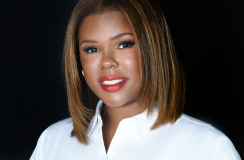
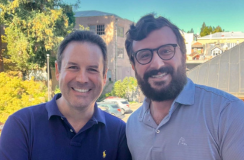
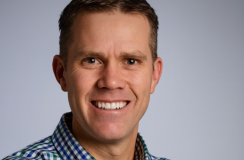
Host: Jesse Sapphire bought a printing business in Manhattan in 2019. Nine months into his acquisition, things were going well. Then Covid descended and overnight the sales faucet just turned off. And when I say overnight, Jesse's sales plunged 95% in literally two days. So this is the story of one acquisition entrepreneur's March through a generation defining moment, how he held on and was able to come out the other side. Now Jesse actually doesn't yet take survival for granted. Maybe he never will having been so close to death. But sales are approaching pre Covid levels so there's cause for optimism. My favorite part of this interview is when Jesse talks about a trial exposing whether you truly like your work. If the going gets tough, really tough, and you're still into it, you got yourself a vocation. When I ask about Jesse's future plans in small business in light of his near death experience, he answers, I really like owning and running a small business. I want to own more, I will own more. How's that for a natural owner operator? Here he is, Jesse Safire, owner of ABG Print. Welcome to Acquiring Minds, a podcast about buying businesses. My name is Will Smith. Acquiring an existing business is an awesome opportunity for many entrepreneurs and on this podcast I talk to the people who do it. August Felker is a two time successful searcher, first with a traditional search fund. The second time around he did a self funded search. Today August runs Oberle Risk Strategies, an insurance firm with a dedicated practice group for searchers and acquisition entrepreneurs like you. If you've got a business under loi, Oberle will provide complimentary due diligence on that business's insurance and benefits program. A great no risk way to get to know August and team. They love helping searchers. They've worked with hundreds. Oberly is a specialty insurance brokerage for searchers by a former searcher. Check out oberle-risk.com O B E R L E Risk link in the show notes Jesse Sapphire welcome to Acquiring Minds.
Guest: Thanks so much Will. Great to be here.
Host: Jesse, you acquired a printing business in June 2019, nine months before the world turned upside down, hitting corners of the economy that relied on in person business particularly hard. Your business played in one of those corners and it got bad to say the least. Today you're not quite back to pre Covid levels as I understand it, but you can at least see that milestone in the distance. So this is going to be a harrowing if hopeful story of small business survival. But start us off first please. Jesse with some background on you.
[3:09] Guest: Awesome and sure and listen, Will, I think I'm going to hold you to that. We've predicted that we're going to officially make it, so it's stated here. Great. Sure. So my background graduated Princeton and after that had a career in financial services in a couple of different roles and great background, really enjoyed it. But ultimately found myself slightly unfulfilled in terms of the roles and responsibilities I had within organizations and had always teased around the idea of buying, buying and owning a business, managing a small business. My mother started a business herself when she was actually 55 years old and has been running it successfully. I can't say how old she is now, but she's doing great and that was certainly an inspiration for me as well as a lot of my peer group who I saw doing transactions as well. So I pivoted from a career in financial services and set out on a self funded search. I used an exit I think at my last corporate job I survived five CEO changes and it was the fifth CEO that eventually came in and said listen I, I don't really know who you are, I have nothing against you but I'm bringing, bringing my own team in. I said terrific. Took a package, used it to fund my search and the timing worked out in life. I've heard a lot of other guests of yours share that, you know, it's not just you know what you'd like, it's also the timing with your life. My wife had just graduated business school and was looking for a job in consulting. It just made a overall, we just had a kid. It made a good time to go out and do this for my life.
Host: Great. And a couple follow ups there. Jesse, your mom's business is what, what kind of business is it?
Guest: She's a fixed income money manager. The shout out New Century Advisors. If you are a pension or institution looking for excellent fixed income money management, I highly recommend you find them down in Bethesda, Maryland.
Host: Okay, great. And when you say you worked in financial services, can you be more specific? This is a crowd that will probably understand whatever nuance is there.
Guest: Absolutely. Sure. So interned for Goldman after that. Actually took a year after I graduated of all things to teach English down in Ecuador and was a professional poker player down in Ecuador as well as working for the World bank all down there for a year after that came back and this was the go go days 2007 so ended up working for a hedge fund as an analyst and it was a small fund but ultimately I left when we were up to 500 million in AUM from there I went to a residential mortgage company that needed help cleaning up the mess from 2009, 2010 and stayed there for about seven years. Became the youngest VP at the company. Had a team, I think up to 800 people at one point under me. And you know, tough ride. Mortgage industry is a resident. Mortgage industry is a tough industry. And I can very honestly say I didn't have a lot of passion for it. And you know, it wasn't what I wanted to do with my life. So as I said, when the fifth CEO came in and candidly blew me out, it was a big sigh of relief.
[6:58] Host: All right, so you decide that you want to search and you are back in New York. I mean I can. And you are in New York right now I'm in New York. I was searching the streets of Manhattan through the window behind you.
Guest: So yes, I was, I'm living in New York now. Where the acquisition happened, I searched in Philadelphia. The name of my search company was Orianna Capital. Orianna was the street behind where I lived in an apartment in Northern Liberties.
Host: In Philadelphia you were searching and were you searching in the Philly geography or you were searching in New York, but from Philly I was searching
Guest: from D.C. to Connecticut. In terms of geography, I was searching from Philadelphia. So recall as I had mentioned, so my wife was just graduating business school and I knew I wanted to make an acquisition. So it presented an opportunity where we could in an ideal world land a job and a business in the same location, which we did, which happened to be New York City. I, it wasn't like I set out to be specifically in New York City. And what I the advice that I had received early on about searching is while it's good to niche down, the tighter your parameters the, on things like geography, you know, the, the harder it is to, to find a good deal. Right? Like you want to be tight on things like, you know, is there recurring revenue and you know, is it a good company? But being tight on things that have nothing to do with a good company.
Host: Right.
Guest: Just makes your job that much harder. So I wasn't specifically looking in New York and I did try to keep it fairly wide and also looked at very what I refer to as like unsexy niches, both in terms of unsexy businesses, but then also unsexy for what other searchers might might look for. I wasn't looking for businesses that might be more attractive to search fund backed searchers and was instead looking for a business that might might more appeal to if you were funding Your own search.
[9:11] Host: Let's hear what some of those criteria are, how those are different. Because if you're telling me unsexy to searchers, that feels like a bit of a euphemism for, you know, violating a few of these, you know, cardinal rules of like recurring revenue or whatever, like you said, or whatever, or tail industry tailwinds or whatever it might be. So which of those, which of those holy criteria were you willing to violate?
Guest: So I, I think that without getting too specific on search funds, because every deal is a little bit different. The searcher generally gets 25% of the upside on a deal. Right. They don't get equity. So if they buy a business, don't grow it, pay back all the debt, they generate a lot of return, but they don't see a big benefit because they only get 25% of the upside when there's an exit. So by definition, you need to find a business that's actually growing at a pretty decent clip. And you also need to find a business that you can get a clean exit from. Printing businesses are notoriously hard to sell, so it's hard to get a good exit and they aren't growing 20, 30%. And so if I were funded on a search and I was going to be paid 25% of the upside on exit, right. I would not buy a printing company. And so what I appreciate the clarification because I absolutely would look for the typical search for things of recurring revenue. A stable, long customer base, a long track record, a niche industry that's. Some people call it forgettable or some people call it like a need to have, but not particularly strategic to the business, like window cleaning or something like that. So all of that absolutely important, no quibble with that. Just talking about, you know, the idea that a lot of times people think about the exit when they buy, right? Like who's, who's going to be the next buyer of this business, Right?
Host: Yeah.
Guest: And you have to do that if you have, you know, investors that want to see a return. And you also have to, you know, if you're going to buy a. I'll combine them Both. A healthcare SaaS business. Right. At nine times.
Host: Right.
Guest: You better, you better grow it a lot if you're going to see a return. And so I stayed out of like the traditional, like, search areas that are super exciting, like home health care vertical software companies and then also like home services, like, like roofing and things like that.
Host: Yeah, that's great, Jesse, and you said it. But I just want to be very clear with the audience. The model that you're talking about here is traditional search funds. The, you know, Stanford study style with the structure that you talked about where the searcher only, in the most optimistic scenario only only has 25% equity. And, and I just want to highlight that because most of this audience is going to be self funded people and I just don't want there to be confusion people, they're definitely traditional search fund people listening as well, but they'll, they'll already know what exactly what you mean. You know, that's really. I had two things you said there that I hadn't actually heard made explicit. This, you said forgettable. I actually haven't heard people talk about that. I have, I have heard kind of private equity people say that kind of the ideal business is one where recurring, you know, your clients are coming back. You know, you have recurring contracts with your clients and you're crucial to their business, but you're, you're low on their expenses. You're kind of an afterthought, but also they'd never get rid of you. And so if, you know, in a belt tightening scenario, it's good to be low on the expense list because, you know, they start at the top and work themselves down. But I'd never kind of heard it just encapsulated with the word forgettable. I like that. So you're searching from Philly up and down, you know, the Amtrak corridor. What, what, what do you find? How do you find abg? Print? Sure.
[13:03] Guest: So you're going to think I made this up, but I promise it's true. So the, I think like the second week of my search, I decided to take the website that I had built at Orianna Capital and I made a flyer and I had downloaded or scraped a website and found a bunch of both business brokers and then small businesses. And I basically sent out like a direct mail campaign. And it was really, I think it was an open and honest kind of brochure that just said, look, leave this on your desk, there's going to be a business and then just call this number when it's time. And then I went about my search and I didn't, I totally forgot about it, right. I was doing email marketing, I was on LinkedIn, I was networking, I maybe even went to one trade show or two, certainly looked at a bunch of broker deals. And then about a year and a half in, I got a phone call, I was working on a couple other eyes actually, and I got a phone call from a business broker in New York that says hey, I've got this flyer on my desk and I've got a business and I just brought it to market and I think, you know, there's certainly other people interested in it but you know, I like you to take a look at it.
Host: Awesome. And so Jesse had had your flyer literally said leave this on your desk.
Guest: I, I, I have to go back and find a copy of it. It definitely had some colloquial language. I don't know, I don't know what the specific call to action was but it was basically acknowledging the honesty that like I'm not expecting that you're going to grab open this letter and say oh well that's terrific because I have this business right here that I'd like to sell.
Host: Yeah, right.
Guest: I'm so, I'm so glad you sent me this letter. And it was more just the idea that like you know, we're here this reach out when you, when you have something acknowledging that it's not now but you, you may
[15:11] Host: Listeners of Acquiring Minds know that for almost any business you acquire, its success comes down to the people and how you develop and manage them as their new leader. Thing is, in addition to management there is also a lot of process and bureaucratic work when it comes to your new employees. Payroll, compliance, HR technology, hiring to name but a few. These processes are crucial to get right but at the same time distract from where you want to be putting your energy in leadership. So Aspen HR is an HR firm and PEO that takes this work off your plate and handles it with the care it demands. Aspen is owned and run by Mark Sinatra, his himself a successful former searcher. So Aspen's own leadership understands the HR challenges that searchers have post acquisition. The firm is offering Acquiring Minds listeners a complimentary pre acquisition HR and PEO review for your target business. Check out aspenhr.com or contact Mark directly@markspenhr.com Let's have an abbreviated telling of the acquisition itself.
Guest: Sure. Meaning the deal structure.
Host: Yeah, deal structure and any interesting wrinkles to how it went down. History of the business. Yeah, take, yeah, let's start with those things and if anything else comes up I'll ask.
Guest: Sure. So I'd say it was structured fairly typical for an SBA 7A acquisition. A large degree of SBA debt, about 5% seller debt and I came out of the pocket, out of pocket with the rest with a little bit of that. The part from me came a little bit came from investors but I brought the, I only came to them once I had Assigned loi and was ready to close. And so that structure, you know, at the end of the day I end up putting of my own money. I put about 1% in and you know the. There were plenty of wrinkles, the largest of which was there was a period during which we were closing the deal. So we closed in June of 2019. In January of 2019 there was a bad month and so we had to renegotiate price. And I remember giving the classic talk saying to the seller, I like you, I like the company, I want to buy it. I just don't like the deal. And if you like the person and you like the company, but you don't like the deal, you can kind of fix that. And so we did and renegotiated on some terms, but other than that it was pretty straightforward. I wouldn't say no. Sometimes I don't know if you can talk about it or not, but sometimes when people do seven as they have a side letter to handle an earn out. You're not supposed to have earnouts with 7A loans. So whenever you're dealing with earnouts or significant seller financing, then things really can get complicated quickly. This really didn't have any of that. I tried to keep it. I learned in previous, you know, by too much financial engineering on prior deals that had fallen apart. I just wanted to keep things really simple. And so you know, three and a half times basically for. Go ahead.
[19:00] Host: Yeah, but Jesse, what just so people can understand, should they encounter this themselves. When was the bad month in January and you had to renegotiate the terms a little bit. Was that just lowering the price or did you do something some other downside protection like some sort of larger seller note or escrow, some something in escrow. What did that look like? So for help people a little on deal technique here.
Guest: Yeah, so I, I looked at the idea of some forgive forgivable debt that basically would be seller structured debt that would be forgivable to reset the effective purchase price. I think in the end I went away from it. Basically the short answer to your question is we lowered the purchase price. I had a thought of trying to do forgivable seller debt. The challenge was seller debt. Is that typical seller debt? I would say you might know better. Is kind of three to five year schedule.
Host: Right.
Guest: And even if you have a low fixed rate, which we did, your amortization is such that the payments are significantly higher versus 10 year. Right. So you kind of go to a perspective of yeah, you can load a bunch more seller debt on the cap structure. But all you're doing is bringing forward your debt repayment schedule and you're weakening your debt to ebitda. Right. And so it wasn't obvious like so the natural would be like, okay, well I'm going to take more of the put more into seller debt. Right. But it actually hurts me, right? Especially when I already have such, such low equity coming from me contributed to the deal. So instead I just went after purchase price and got less of a concession than I might have had. I said, okay, we're going to get an extra half a million in seller debt, but it's totally forgivable if certain earnouts, or excuse me, certain revenue thresholds aren't met. I also think that those are very hard to measure and cost a lot, I think in legal bills to try to figure out. And also as many searchers will see, there's also a first time seller. Right. And trying to get a first time seller to sign up for something like that would have been tricky. I certainly can get done right and probably, you know, in hindsight, certainly from a results oriented perspective might, might have been a better way to go. But I think you also have to have the mindset you just want to get a deal done right when it's time to get done. And so simplicity is the name of the game.
[21:51] Host: Okay, Jesse, so you buy the business and tell us how things go in the first nine months. Pre Covid.
Guest: Sure. So typical searcher playbook. Learn, drink from the fire hose, learn as much as you can. Advanced cheerleader, you know, for the company, working with production, working with sales, seeing what the big issues are. Only changes and only things I was addressing were things I knew with 100% certainty was in my wheelhouse and something I could fix. I'll give you one very quick example. I looked under the hood at the AdWords account, the Google AdWords account and saw that they were ring fenced for only New York. So we're a printing company in New York City, only advertising to New York IP addresses or searches within New York City. We print for corporations, for meetings and conferences and events, important pitches, product shows. People are traveling here all the time. People are looking for a printer in New York City because they're going to come here. So I immediately changed the AdWords to, to focus on if the search was not in New York City, but the search keywords had New York identifying terms. Right. If you type in printing services, Manhattan, but you're searching from Oslo, I'll take that. Right. And so, you know, things like that that, like where pretty non. That's not going to rub anyone the wrong way. That's not telling someone how to do their job. That, you know, little, little changes like that. And then I also spent a lot of time talking to the second day on the job we had a customer who the seller had stopped wanting to do work for and they were refusing to pay our invoices and it had all fallen apart in the last three weeks. And it had to do with, long story short, they, they needed some accounting help from us. Basically. They, they, even though they were one company, they were several funds and they wanted to allocate our invoices of printing expense across several different funds. And the prior owner had been unwilling to do that. And so I just walked in and, and sat down with them, you know, two days in and we resolved the issue. We came to a great conclusion and I was actually able to raise price off of it and also learned a whole lot about the value that we bring to our clients. So it was kind of just solutioning from the start. But we saw immediate, immediate benefits across the board of just being in and pitching and helping out. We were up 25 to 30% on a year over year period for those first, first nine months. Wow.
[25:00] Host: It's going great, Jesse.
Guest: Just, just what could possibly go wrong? Right.
Host: I don't think I asked what, what was the size of the business and a little bit more about the business size, number of employees, age, you're located in Manhattan, where in Manhattan. Anything else I might be forgetting.
Guest: Businesses started in 1992. When I acquired it, it had in any given year, three and a half to four million. Top line, about a million three in ebitda.
Host: Oh, nice.
Guest: Pretty good Steady Eddy cash flow machine. One of the things I liked about it. So in 911 it took a hit and in 2008 it took a hit, came back from both. And to give you a sense of the magnitude, because this will come up when we talk about the pandemic, it took about a 30% hit in both cases. And so those are very watershed moments, especially for businesses in New York. And pretty good when you're looking at business that's been around since 1992. Pretty good litmus test for what's the survivability, can it bounce back? And when I looked at kind of the stress test of the business and thinking and presenting it to the banks, it's actually kind of a funny story. I, I looked at that, you know, 30% downside. I remember showing that to the banks at the time and them saying, Jesse, don't, don't be ridiculous. I'm glad you're so conservative. But just show us a stress test down, down 15%.
Host: And so meanwhile there's this news out of Wuhan, right? And the business serves primarily the financial services industry, the Goldman Sachs of the world and the many, the many reports and presentations and conference conference materials.
Guest: Yes, so absolutely. So historically 95% of our business was that and now it's about 40%. But we print for our friendly neighborhood Fortune 500 company here in New York City. We print for nonprofits, we print for corporate event planning businesses, we print for marketing agencies. And the comprehensive use case is really important. Communication matters related to pitches, roadshows, marketing materials, all the important things that a company views as driving revenue for them. The, the communications related to that. And both we do that both from a small format perspective that's you know, think like sheets of paper and then also from now wide format. So everything from posters to full room wraps to backdrops to step and repeats and that kind of stuff.
[27:51] Host: Great, thank you. I want to step back one, one second. You, when you were talking, giving the little anecdote about meeting with the, the group that wanted to distribute your invoices across four different funds. And I'm reminded of my interview with Chris Williams a couple months ago. Chris bought a payroll and financial services business. And he talks about how he, one of the things he'd wish he'd done differently when he bought the business was reach out to customers. And he had decided not to do that early on because he was, he kind of was just like, don't rock the apple cart came in. Just like, I don't want to touch anything. I don't want to spook anybody, including any of our customers. And he later decided that like that was an error and that reaching out to customers was something a. What you know, businesses are bought and sold. Not that big a deal from the customer's perspective and better to. And so, so he was over concerned about rocking the apple cart. And the opportunity that he missed was kind of like what you just said, meeting with that customer, like it's an opportunity like getting facetime with a customer. You learn very quickly. And I mean it's such an efficient way to learn about your own business, this business that you've bought, because they'll tell you all kinds of information that's helpful. And then also by the way, Chris made the funny point, like it's also a little awkward, like they're probably going to find out that you Bought the business. So better you just tell them proactively soon after it happens versus like nine months later where they're like, oh, oh, you're the new owner and you've never said hi, you never introduced yourself like.
Guest: Right.
Host: Anyway, I just want to surface that point from a previous interview back to the, back to, back to you, Jesse, and the business. How did you, how did you address in your own mind the very obvious headwind of a paper business? And you know, just like software is eating the world, like the cloud is eating the world. And yes, paper is still used, but it is, I assume, used less every year. So how did you, how did you address that in your own mind?
Guest: Sure. So a couple different ways. Printing, like many, like software is a perfect example. So software is entirely niched out. Right. As is printing. Right. So if I were printing black and white utility statements in the Midwest, right. I would probably not go for a business right. Like that. Because in the printing world like that is, you know, think records are becoming digitized by Google. And more, more and more is less and less is being printed on, on that front. But a lot of the trends in the industry are actually going towards what's called shorter runs, which is sort of a lower volume of printing and faster turn, meaning they want it faster. So a printing business that's in New York City that specializes in printing, you know, 10 of something very quickly rather than 100,000 of something over a two week period.
[30:48] Host: Right.
Guest: Is actually the recipient of some of the trends of that change. Wide formats growing significantly. The other thing I would say if you were to put a wide swath on it, things that people want to print are very much alive and well. Things that people don't want to print are going by the wayside. Right. And we for the most part are in the business of printing what people want to print because it drives them revenue, it brings them customers, it's important materials for them. We don't try to convince anyone to print. It's just once they've decided to print that we're a good option. I think an anecdotal. So I have two older brothers that I very much look up to. One is a marketer out in San Francisco with a VC backed tech company and the other one is in DC with a PR firm. Both told me, presented the, the headwinds that you're describing within six months of owning the business, both of their companies, with no influence, help or drive from them, had placed orders with me. And I very much rubbed it in their face because you Know, I basically said, like, no one wants to be the guy that says, hey, listen, people still print. But people still print. The pitch deck is not dead. I do every once in a while have a client that says, hey, listen, we're going to switch over to iPads, right. We're going to bring people in and hand them iPads. And, you know, I don't sit there saying, why would you do that? They're going to get lost. People want to write notes. I don't. We don't. I'm not interested in convincing people that. That it's the right decision. But we see that time and time again that, you know, especially as people are focused on strategy and driving more revenue and figuring out in a potential oncoming recession, they're very focused on finding ways to communicate effectively in meetings. And they're still using a lot of these materials. And then on the wide format side, events, conferences, trade shows, those are all very much still happening.
Host: Thank you for that. Okay, so now let's get into Covid. Jesse, tell us, tell us what happens. Starts happening in March 2020 in your business.
[33:04] Guest: Sure. So we saw some early signs. We actually were printing for a bank in a deal in February that got canceled. It was overseas and then. But everybody else right around, you know, first week in March, second week in March, you know, you have to realize it hit New York pretty hard, and it hit New York kind of first, so.
Host: That's right.
Guest: You know, I remember just hearing the silence right. There wasn't. The printing machines weren't running right. You know, we had about 22 employees at the time. Now, we're structured around the clock, so at any given moment, there's not 22 people here. But because we're running effectively 24 hours during the week. Right. There's always somebody here. Right. And, you know, at a printing company, whenever things start to get really clean. Right. You know, you're not doing a lot of printing. Right. Because that's typically what the production staff will do is, you know, when. When there's no jobs to do, they'll clean up. And all of a sudden things are looking pristine. Right. And the machines, I'm not hearing them on, and I'm forced reading the news, and I'm in the middle of New York City. And, you know, so I, I reached out to an accountant and I reached out to some other folks, and, you know, they, they gave me some pretty good advice. But I. I made a snap decision. We cut down to. I went from 22 people to four people by March 15 and wow. And when I made the decision, it seemed like it was fast, but I said to the staff, I said a couple things, I need to cut your jobs now so I can save your career. If. If we can bring you back to. You're going to be a week ahead of everybody else on the unemployment. And I know you think I'm nuts, and I know you think I'm crazy and you probably don't like me right now, but you're going to be able to sign up for unemployment very fast. And in about a week's time, there's going to be millions of people behind you. I think when you do these kind of things, you have to pull the ripcord because if you have the slow drip of, you know, let a couple people go, then a couple of people go, then a couple people go. It's just. It's awful for morale. It looks like you're, you know, pulling favorites or doing something. And I was, you know, it was pretty shocking. I had some very quick realization. So we were down. I mean, just to set the numbers here, I mean, on a period over period basis, we were down 95%. There was a complete cessation of. Of all business economic activity in New York City. And we. In many ways, our business is a derivative of office occupancy in New York. Right.
Host: And 95%, yeah.
Guest: Just. It went off. I mean, it just. It's like someone turned off the switch. Right.
Host: And that. And that was that by March 15, by your snap decision, or eventually, like, at the lowest point, it got that. Got that bet.
[36:05] Guest: I mean, like, how quickly did it
Host: take to get down to 95% decline?
Guest: 2 days on an ongoing basis. Right. Because we have. So maybe a couple things. So we don't have contractual revenue. Right. We have recurring revenue in the sense that we have repeat clients that continue that, you know, come to us with more and more orders, but it's not like they're signed on the dotted line and contribute, you know, so certainly. And. And the other thing is, you know, we very much had a concentration to, at that time, both financial services in New York City and also tied to New York. Well, financial services very much went remote. New York City got hit. And, you know, just everything about the pandemic just hit us right on the head. And so we were sitting there with, you know, overlevered, certainly from a financial standpoint. All the institutional knowledge had just, you know, candidly been let go with minimal exception. Right. And everyone else was. Was falling apart, too. Right. In the sense that even if we had tried to, you know, keep, like, let's assume in some fantasy land that we somehow had significant demand, right. All of our vendors, all of our suppliers. How would you get employees into the office, right. Of the health and safety of. Of. Of our staff? So there were, There were so many challenges, right, Unrelated to the fact that there was no demand. I was joking at the time. Like, by April, right. Thank God we have, you know, a labor issue, supply chain issue, all sorts of vendor issues, health and safety issues, because otherwise this whole lack of demand thing would really be a problem. Right. And, you know, at that point, you know, there's a lot of skills and roadmaps you can follow if, like, you lose a key customer or you have a downturn, maybe 20%. But I don't think there's a playbook for being down 95%, right. With also call it 80% loss in staff. And, you know, just, just basically, you know, you go from working on the business to literally working in the business. I had to fix a lamination machine with my own toolkit while on FaceTime with the manufacturer's rep out of the Midwest, because we couldn't even. The. The one thing that we were printing was Covid signage that people wanted laminated. And we couldn't get a rep in to come. To come fix the machine. No one would show up. So I had to go via FaceTime, fix it myself. And I remember thinking at that moment, you know, this is not how I saw this going.
Host: Yeah, yeah, yeah, that was tough. Well, not to at all kind of diminish how much fear and panic you must have been feeling. But was it a little bit? A little bit. It's like when the entire world is sinking. Maybe it's a little bit better than if it was just your business so you could look everywhere and there's crisis all around you. So you're at least you're not alone. Is it maybe a shorter way of
[39:22] Guest: saying, I mean, first off, misery loves company, right? And the broader point, I've heard other guests on your show share this something which is 100% true. The number one fear that you have when you're buying a business that exists is that you're going to screw it all up, Right. What's the change? The only thing that changes is you, Right. You're the new owner, Right. And so if, if the business goes downhill, by definition, it's you, right?
Host: Yeah.
Guest: And, you know, when you start something new that's supposed to fail, it's supposed to be tough. Like you might not make it. But you're buying something that's been around since 1992, right? If it goes downhill, right? It's on you, buddy. And also you have all the, the guarantee on the business, right? And so now all of a sudden, right, we were open and transparent with folks and yes, it was really bad, but absolutely no one was saying, jesse, you screwed up. Right? And I think everyone understood like, hey, we're all in this together. No one wanted this. From a results oriented standpoint, this deal is an unmitigated disaster, right? And now, right, you have a choice, right? It's, you know, do you want to dig your way out and see what you can do or do you just want to fold your tent, right? And I think that to your point, the relief of not having like, you know, it's like water off a duck's back, right? I'm not sitting there thinking, oh gosh, I screwed up, you know, yeah, I mouthed off to a supplier, they won't, or, you know, I, I lost a deal with a client or I made a bad decision. Don't, I mean, don't get me wrong, I've made plenty of those mistakes over the course of, you know, the recovery. And there's certainly been challenges, but my point is there was a freedom to kind of go try to go try to recover because we were all in this together. And I said that to the staff. I said, the one thing you cannot do, right, is we just can't stick our heads in the sand and hope it all goes away. Right? We're going to have to work out of it, right? And we're going to have to work out of it with less money, less people, less. You know, we were, we were under invested in capital equipment. We were, we're in a, we're in a location that is suited to our previous niche. And we candidly lost. I mean our, our big, like every printer, the, the kind of secret of printing businesses, they tend to have like a core product market fit where they deliver to. And, and ours was this particular pro projects that we would do for large investment banks. And it just entirely went away. Right. And it's not coming back. Right. And it was a big concentration we had. And you know, I think it was important to be honest with everyone that it was going to be really hard, but also upfront that, you know, we weren't going to come at a place of, from a place of blaming each other or attacking one another, that we were just going to have to rebuild with what we had. And we're Going to have to rely on the fact that we have good customers that eventually would come back. We have a good name that people know and like, and we provide a good service. There was certainly the added challenge, right, of what do you do when you're a 24 hour business, right? If you stop going 24 hours, right, and all of a sudden that's your big value adder or one of the key assets that you offer your customer base, right? But you physically can't do that, right? How do you maintain, like, because the first time you lose a customer because you weren't there when they needed you, right? You've lost them forever, right? And it's hard to win back to your customers. But at the same time, you know, a lot of other folks would be like, oh, well, we have amended Covid hours or we, you know, we're, we're not, we're, we've changed the structure of how we deliver your service, right. There weren't as many options for us. And so we, you know, from a, from a management standpoint, right, Just having, making sure that, you know, we forwarded phone lines so we could answer all the phones, tell people we were on call, making it so like we could maintain as much as the service level as we possibly could so that we weren't in a position where we, we lost clients that if they at all were interested in our service.
[43:43] Host: Wow. Well, with four people covering 24 hours, you know, that's three people. That's three shifts. So you got three people there and then one person floating. I mean, not a lot of room for error there. If, if somebody gets sick or for example, gets Covid. I mean, one of your people gets Covid and then all of a sudden you're, you know, or two people get Covid, then, then you're, there's no way you're delivering your 24 hour on call service.
Guest: Sure, yeah. I mean, we like you. You can do the math. I mean, like, we weren't always there, right? But we were certainly answering the phone and could get in. Or we figured, you know, we. A lot of printers teamed together, right? Like, hey, I just had a job come in. Can you help do it for me? Of course, no problem. Absolutely. One thing, one positive thing, I will say also the community of printers, right?
Host: Where.
Guest: And this is true for a lot of small business too, everyone I reached out to and you know, I always said the same thing, hey, if we can help you, just let us know how. And you know, and vice versa, right? And because everyone, you know, in the city was, was, was kind of in it, in it together.
Host: Yeah, yeah, yeah. It must have been very much kind of a bunker, a bunker mentality for, for months there. And just curious on the numbers, when you went from 24, 22 to four people did that and dropped 95% in revenue, did that, did you get to a point of steady state? Were you able to be break even or not losing little, little money but little enough that you could go. You had Runway or what? What. Yeah. What did that look like?
[45:18] Guest: It was painful. So you know, look the, the playbook when something like this happens. So you need to grab as much cash as you can possibly find. So we max drew on our working capital line. We immediately went to get ppp. We immediately tried to get eventually when it came out down the road Eidl Main street lending, I mean it almost felt like that was a full time job in and of itself was just finding money, right. And you know, I mean, let's call it what it is, bailout after bailout, right. And so my job was first and foremost survive, right? And so we, I would say didn't haven't come back to a steady state until gosh, Q4 of 2022. And we were able to curb the bleeding, right. But the other thing that, you know, we, you can't turn everything off, right? We still have to market, right? We still have to, I mean less. But you, you still have to work to improve the business. You still have to pay people, right? And you know, we had four people for a little while, I think by, I don't remember the exact numbers but, but maybe by 2021 we were back to call it 8 to 10. Now we're running, you know, 12 to 13 people. But yeah, I mean coming off of, coming off of a base like that was, was, was very difficult and, and we didn't see a break even for quite some time. I had to, you know, I found myself being very open and honest with everyone from the landlord to debt holders to the seller to, you know, suppliers. And what I realized very quickly is that no one was talking to us like we were a deadbeat because we weren't behaving like a deadbeat. Meaning we don't have the money to pay you. But we're telling you exactly where we are. We're telling you exactly what's going on. You're in the middle of it too. And the line I kept using with everyone is look, the entire value chain has been crushed. We're certainly taking our hit, but everybody has to Take a hit. Right. And so, you know, I think where, you know, the landlord might have said in March, you know, shut up and pay your bill. Right. By May. Right. That wasn't their tune. Right. And certainly credit to, to, to our lending institution, our SBA lender, our bank, you know, they, they immediately understood what we were going through because they had a book of business that was going through very similar things. We were getting hit harder than a lot of the other folks. Like, you know, if you were a distribution company for medical supplies, you're doing great, or a nursing staffing business, you were doing great. But they had a lot of businesses that, you know, like a restaurant wasn't doing so hot. So there was, you know, the SBA gave out, I think there was six months where they covered payments. Yeah. Then there was, you know, additional help and we leveraged some deferrals, but it was a full time case study in just small business cash management. And we extended a lot of our suppliers. It's funny, when you're a small business, everybody you work with, not ubiquitously, but in our case, everybody is bigger than we are. Our clients are bigger than we are, our lenders are bigger than we are, our suppliers are bigger than we are. Everybody's bigger than us. Right. So they all have leverage on us, presumably, but know you reach out to them and say, hey, we're paying you on 30 days. Can I pay you on 90 days? Right. And here's why. And I'm willing to go back to 30, but I need 90 for now. And here's exactly why. Right. Dear landlord, we really appreciate it. We love being here. We're the only one in the building right now. Can we pay 50%? Right. On the, on the debt. Right. Let's go interest only. Let's go deferrals. Like, each one of these conversations, right. Is, you know, a tough conversation, but goes a lot easier because the first sentence isn't I screwed up and made a bad mistake, or we're a deadbeat and can't figure it out. It's, we're all in this together and we had something that no one saw coming. Hit us.
[49:46] Host: Yeah, you know, go ahead.
Guest: No, I mean, and, you know, other than that, I would say, and then trying to maintain a positive spirit, like acknowledging what's happening, but at the same time saying, you know, you can cry about it because it's, it's painful and it sucks and we're here, or you can say, you know, I'm, I'm up for the challenge and what an Amazing marketing story. This will be one day when we, when we, when we come around. And I remember thinking that at the time where, you know, I, I just thought to myself, wow, like, this is going to be a great story to tell if we can pull the kick safe.
Host: Yeah. I was just going to observe, Jesse, that go. Your, your tone talking about this. You know, sometimes when I've had guests on who've really gone through it, you know, they're even recalling it will cause their voice to, to break a little bit. Like it's, it's so kind of traumatic and upsetting to think about. And you don't sound like that, not at all saying that you were, you know, skipping to work. But I do detect a little bit of like, you were almost maybe invigorated is by it. Yeah. Like, you took it like a, like a personal challenge to overcome. Elaborate. You just talked about your positive energy, which was, which was great. But elaborate a little bit on your. We've said a lot. Is there any more to say about your emotional state? I mean, did you have, did you have fetal position moments or were you just like, let's do this, people. You know, the, the, the, the strong, positive leader the whole time?
[51:28] Guest: So I never had the fetal position moment. I did. I, I, I believe this is a moment for some gratitude. So, so let me, let me just sort of say this is not a me thing. Right. So everyone on my team and my company also experienced this and also, and we all supported each other and we would not be where we are today on our way back to recovery without them. And the exact same, you know, mindset that, that they had as well. They, they're employees of this company, but they view themselves as, you know, this is their baby too. And that's something I'll certainly never forget and felt that when I did the acquisition. But they showed that all the way through the second piece, I would say. And sometimes people take this for granted or talk about it, but I have a wife who's like a rock and we have a kid and my wife was at her job working hard, and things at home were very stable and very calm. You see a lot of situations where, you know, maybe both the, the married couple works in the business or it's not that there's not that backing, and if you don't, it, it, it compounds on, on everything. So I had stable. The, for the remaining employees that we did have, they were incredibly hardworking, stable and energized at home. On the home front, I had an incredibly stable situation. Which allowed me to also kind of maintain my stability. And then the final point I would say, and what was kind of, you know, it is kind of heartwarming for me personally, is that you don't really. I once read a book, it's a small book called the Dip. But you don't really find out what you want to do in life until it doesn't go well. Right. And, you know, people would call during the pandemic and say, like, hey, how's it going? And I said, well, we still have the same phone number, and I'm having fun getting kicked in the teeth every day. Right. And that was just my line. Right. And the truth is, I've had, you know, certainly in other careers. Like, I, gosh, when I was managing money at a hedge fund, you know, I had, you know, 2008, I got my butt handed to me and lost millions of dollars. And you know what? That was no fun. And I didn't want to do that anymore. Right. Working at a mortgage company that had to settle with the CFPB for $165 million and, you know, had a bunch of bad processes that we're trying to fix. That that was hard. And didn't, you know, I didn't want to do that anymore. This. Right. I don't know whether it's the pg. I don't know this fact that I actually own it. But I'll tell you, this got hard, and I wanted to come to the office. Right. And it may, you know, in the end, it may not work out. I think it will. I'm optimistic. I'm way more optimistic now than I would have been, certainly when I've talked on other podcasts or if we had talked earlier. But, you know, you don't find out what you love until it doesn't go well, and then you still want to do it. Right. And I think maybe it's a broader message not to get too far in a soapbox, but, you know, we're seeing a little bit that more now in the overall economy, where things have been going right for a lot of people for about a, you know, a decade or so. And I think we're about to see some things not go so hot, and we're going to find out who really likes what they're doing. Right.
[55:07] Host: Yeah.
Guest: And so I think it's a good lesson.
Host: What a great litmus test. I'd never heard that. That's from Seth Godin's the Dip.
Guest: Yeah. Yeah. I think, you know, and again, I. I'm certainly guilty of attributing certain ideas and thoughts to the wrong book or the wrong person. But the important part is I learned the lesson. I can't share it, but, you know, but anyway, so, yeah, no, I, I, I really felt, and I remember actually reading that book in a different context for, at a job. I was at the time where I was like, ah, I don't, I don't want to go through the dip here. Right. But in this case, you know, really, really felt it. And I will say it's nice when you can have, when you go through it with others. And so, you know, we, we have some folks at our firm that, you know, they're, they wouldn't want to be anywhere else. We have had some folks leave and I've helped them find other jobs and I've helped them move on in their, their careers. But the folks that we have here, you know, they, they want to be here and, and pride themselves in bringing this company back.
Host: That's, that's awesome. Jesse, the you, you, you got down to four. You said you're now back up to about 11 or 12.
Guest: Yeah, we've.
Host: And are, are some of those folks the previous people you had to let go, Were you able to go back to them and say, yes, come back
Guest: everybody that, so we, we offered a job eventually. We've offered a job back to, to everybody that had been, not everyone has accepted. You know, there were some folks we lost folks to like the MTA during this time because of the demand for labor and a lot of industries that you wouldn't expect. A lot of people that were on the wait list for things. Like we had a couple of guys in production that always wanted to work for mta. That's the, so sorry. The transit authority in New York, they wanted to be bus drivers, good pension plans or some wanted to be UPS drivers because they just have really good pension. They're stable jobs. And you know, we lost some, some folks that way. We also, but yes, we, we have grown back. I will say this. We've, we prior had roles that were in the company that we've outsourced, so they don't count as headcount. Like our marketing team is now fully outsourced, whereas before we had some internal marketing help. Now they're an outsourced team. It is outsourced. I bounced back and forth several times on finance between having it be outsourced finance. Ultimately we've brought that back in house. But so the folks we have from a production standpoint, we're close to back to where we were in terms of the full headcount on production. But the nature of our businesses has also changed. We're doing something on the order of 300% more jobs per year. It's just that the average job size has fallen significantly and it just, we were, our business was built around a couple large projects every single month that unfortunately just super high margin projects every month. And unfortunately those, they just went the way the dodo burr.
[58:15] Host: And, and, and so I assume that also means that you've diversified away from those, those large projects were all from the financial services industry. And so you've also diversified away from those projects, but also industries.
Guest: Yes. And that's been the other heartwarming thing is as we grow back, when the phone rings and there's new clients every single week, you may not be back, but at least it feels like you feel like you have something. Right? Because we're not just winning business back from our existing clients. And it's great to. When they haven't reached out to us for two years and then they say hey, we, you know, finally ready to talk to you guys again. We'd love, love to use your services. That feels great. But finding new businesses and in New York we're, we're seeing a lot more from fashion, we're seeing a lot more from luxury goods, we're seeing a little bit of pharma work. We're certainly seeing a lot of, we're very popular with the buy side. So someone will have use us like at a Goldman or a Deutsche or formerly Credit Suisse and then they go and they work in private equity and they want that kind of similar experience and they don't have in house printing there. And so they'll reach out to us for, for a lot of that work. So we've seen, gosh, I think we have something on the order of like 150 to 200 buy side like private equity, venture capital and investment management companies that are all using our services.
Host: When you bought the business it was at three and a half to $4 million annual revenue. Where's revenue today?
Guest: So we closed out last year two and a half goal for this year is three. In 2020 we had 800,000 and that includes two months, January and February that were consistent with the year prior. So you know, depending on how you look at it, you know, ripping back off an incredibly huge hit. But you know, so our, our work is not done and, but we're now at a place where I feel like we can, we can look up there may Be, you know, the potential for an acquisition to help us recover the rest of the way. There may be other options. Whereas before you could draw up any, you could make a strategy. You think about strategy as long as you wanted to. But every strategy had the same first step, which was you have to grow revenue somehow because there was no other way to do anything else until you did that. So we've done that first step. So now we're, you know, while still focus that and focus on our organic growth and still coming back and also thinking about, okay, how can we, how can we finally solve this problem the rest of the way?
[1:01:06] Host: Jesse, just, we've, you've hit on a lot of different kind of attributes and nuances of the printing business. But any, anything else that we didn't already touch on that you would tell searchers out there who might be considering a printing business. Like is there any kind of 60, 122nd kind of, you know, synopsis of the industry that you could give or is it, is it too, is it kind of too fragmented, too nuanced of an industry to do that? Yeah, just.
Guest: Sure.
Host: So the brief education on the printing business for us all.
Guest: Absolutely. So the first thing I would share is anyone who's interested in or looking at a deal or wants to do something in the printing space, 100 feel free to get a hold of me. I'm always happy to chat, always interested and happy to, to support another searcher and give advice. In fact, a lot of times when I find I tell my story, a lot of folks, they hear how bad it's gone and they still want to do it. And so I kind of view that as a test. I would say the water's warm. There's plenty of. The story in printing is very similar to the story in small business in the United States right now. There's a lot of owners in the right demographics and you know, it's the magic for what death, divorce, illness and dumb kids. Right. And you're looking for, you know, there's plenty of folks out there that. And of course when I say dumb kids, they're probably just disinterested kids. I could probably change it to that. But you know, I, there's. There's plenty of folks looking to sell their business. I think the growth areas certainly are in wide format as well as in some areas around print on demand. And I think that it is an exciting area. I do know certainly there's a lot of within print. There's also signs. There's a lot of sign businesses for Sale. And I know that there's been a lot of successful searchers that have done roll ups, but overall it's, you know, it's good, good cash flow business that I recommend as an industry certainly worth, worth looking at. But like anything else there's a, there's a lot of great areas to find and there certainly has been plenty of consolidation in the industry and that, that does, you know, lend itself towards, towards just being, you know, plenty of deals available.
[1:03:42] Host: Yeah. One thing you said was that earlier on the, the dirty secret in printing is that most printing businesses, I think you said, sort of rely on a particular, what was it, niche or, or stream of projects or, or something. And, and just also just the overall kind of like what you've described about your own business. It seems like printing businesses are usually going to be attached to some other industry maybe and there's going to be heavy concentration there. So being not only diligencing that business and printing in general, but the, the industry that it might be attached to. Is that a broad characterization that's accurate?
Guest: I think it's accurate. So especially within, you know, the, the type of, you know, digital printing, you know, small F format or wide format. So you could take three businesses like include ABG Print and there's a couple others in the city and you on the surface could look at them and say, okay, well they're all clearly competing with each other. But I can tell you one firm has, you know, arts and entertainment on lock. Right? Like Broadway is going to print with that business. Right. And you know, we're big in finance and some of the corporates and then another business is, is huge with, you know, some of the nonprofits and foundations right now. They're not going to say no to a client in a different area and certainly they can support it. But you know, as people move around in the industry, they just sort of get a name for it and people get known for doing that and then all of a sudden they wake up one day and they have the vocabulary, you know, without getting too into it. Nobody want. We don't sell print to any. Like, I don't call people up and say have you thought about printing something lately? Like, or what print. We try to reference everything in terms of the use case and product and vocabulary that our clients would use. Right. Do you have a roadshow coming up? Do you have any important pitches you're working on? Do you have any deals you're working on? Right. You know, how's deal flow for you? Right. Are you finding what you need Those are the kinds of things we would mention to a client of ours. Right? Not like do you need any printing? Right. That would be. No one wants to talk to the printer.
Host: I think I can guess the answer to this next and final question, Jesse. But in, in your interview with Ryan Conde, you talk about, you just kind of mention, you know, buying this business and then over the course of your career, assuming this goes in the way, goes directionally well, that you could see yourself buying other small businesses. Not, not necessarily a printing roll up, but just maybe a Holdco for lack of a better term. Given your experience thus far, what of that vision? Still, still the dream and vision and plan or 100%.
[1:06:30] Guest: So the plan was always to buy 5 to 10, buy and hold strategy and hold them, hold them forever. I think that the, whenever you have a investment thesis, it's always helpful if the first trade works. I think it's fair to say the first trade has gone a little bit rougher than anyone anticipated. But so I think from a timeline perspective that'll push things back in terms of heading down that path in terms of having five to 10 businesses by a certain point. But I'm not focused on, you know, the, to achieve that goal by any particular year. I'm much more focused on, you know, being able to hold my head high and say I really like doing deals. I really like owning and running a small business. I want to own more. I will own more. And I think that I'd love to be in a position where, you know, avg. Print is, is high flying and really doing great and, and I can look another business owner in the eye and say, I can almost guarantee no matter what happens, I'm going to be able to keep it alive and have it be successful.
Host: And yeah, I mean, recalling your, your perspective when it was hitting the fan and you were like, well, you know, in the back of your mind it was always like, well I know this will make for a fantastic story. Like you could, you could, you could look forward and imagine yourself reflecting back. Were getting, you know, 20 years of operational experience in, you know, one year. If you can survive this as an operator man, boy, have you earned your stripes and, and the confidence to, to buy other small businesses.
Guest: Yeah, no, I definitely feel that. And, and at, at the time I felt that, you know, that I used that in many ways to say, okay, well even if this doesn't work out, these are all great lessons. Right. And I do feel as someone that, you know, if you have investors, right. And not everyone does, but some people do and even if it's. You're your own investor. Right. I do believe that you, it's totally acceptable to have deals not work out or deals fail or things to. But the manner in which it happens is very telling of, of an individual. Right. Um, and I, you know, would want to know if I was an investor in a company and, and it didn't work out, I would want to know that that entrepreneur did absolutely everything they could in their power to, you know, try to, try to make it right and was open and honest. And you know, I've, I've tried to be that way. I want to be very clear. You may wish to check in with me, you know, in some period of time down the road because it, you know, our, our future is, is not certain by any means, but at the same time I feel far more confident now than I ever have since, since owning the company. And I, I feel that we're doing the right things and I'm proud of what we've done and you know, just feel that good things are in our future but that we, we won't lose sight of, you know, how, how hard it's been and how easy it is to lose.
[1:09:59] Host: And when you do buy that second and third business will do you see yourself being an owner operator again, operating again, or are you like, okay, I've got my operational chops now. I'll, you know, run things at arm's length because once was enough.
Guest: I, I may have to pass on the question. I. Remains to be seen. I could see both. I do like being working day to day in a business. I also recognize that there's folks that can, can do it far better than I, and, and if I had the right managers in place and that could scale up my ability to, to buy more deals, I would, I would 100% do that, I think. But knowing that I have the ability to get under the hood if I have to, isn't, is, is, is very valuable. So, you know, I, I don't know what the future holds, but you know, I'd like to see, you know, it's certainly I'm in the right place now for, for where we're at.
Host: Great. Jesse, if people want to reach out, do you have a preferred way email LinkedIn?
Guest: Yeah.
Host: On Twitter?
Guest: Yeah, I have. I'm on LinkedIn at Jesse Sapphire. I, you can certainly email me anytime at my company, Jesse, @abgprint.com I'm not a big Twitter guy. Maybe I should get more involved on Twitter, but I've mostly been focusing on LinkedIn and always appreciate reach out. I love connecting with people in the industry and love sharing any advice I can as long as folks recognize that free advice should be taken. For what it's worth,
Host: Jesse, thank you very much for coming on. This was a blast and really a, an impressive story of survival, a war story really. Covid was, was kind of like wartime, I imagine, especially there in the middle of Manhattan.
[1:12:00] Guest: Yeah.
Host: So always, always better when those war stories are ones of victory. And I'd say you're, you've already been victorious. I know, I know you're holding out. You're not, you're not declaring victory just yet. But you certainly seem well on your way. So congratulations on that and thanks again.
Guest: Thank you so much. Will, this was terrific. I appreciate you giving me the chance to talk about ABG and tell our story a little bit.


















































%20-%20thumbnail.png)





%20-%20thumbnail.png)



%20-%20thumbnail.png)

.png)



%20-%20thumbnail.png)