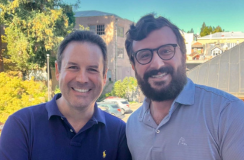
Host: Culture Company culture A nebulous concept and one sometimes greeted with eye rolls by more spreadsheet oriented types. But my biggest takeaway from today's interview with Michael Arrieta is how much I've been overlooking it in my interviews. Michael was an early employee at DocuSign and grew with that company's rapid rise and eventual IPO. After such a successful run, rather than stay in tech and reach for the next rung of the Silicon Valley ladder, he decided to step out and buy small businesses. The result is Holdco Garden City started in 2020, which has since acquired three businesses. We hear about those acquisitions today and we spend a lot of time on Michael's philosophy of how to implement change and what changes to prioritize. The question I'm now asking myself is whether the biggest opportunity in buying small businesses is is not getting rid of the fax machine and putting in cloud software tools, but rather bringing in new culture. Because in the same way that the previous owner may not have had the time or awareness to focus on that fax machine, he probably didn't have time to focus on culture either. And so over the years a culture developed at the business that you buy without much direction or intention around it. And so by you bringing direction and intention to that legacy culture and elevating it, you can improve the organization in much deeper ways than just tossing out the fax machine. See if you agree. Here is Michael Arrieta, Founder and CEO of Garden City. Welcome to Acquiring Minds, a podcast about buying businesses. My name is Will Smith. Acquiring an existing business is an awesome opportunity for many entrepreneurs and on this podcast I talk to the people who do it. You already know that business owners are making amazing use of virtual assistants, often based in the Philippines. And while virtual assistants are helpful, virtual professionals are transformative. More Staffing is a boutique agency that hires a players in the Philippines not for task execution but but for deep competency work. Think controllers, operators, Supply chain managers. Moore Staffing helped an e commerce company build their entire supply chain, analytics and finance team. It saved them over $400,000 and enabled them to build the in house expertise of a much larger business. Global staffing is increasingly the norm and building the muscle within your business to take advantage of it will be crucial in the years ahead. So if you're sourcing the next management hire within your business, make sure you speak with More Staffing first about the pool of capable, affordable managers they can connect you with. Check out Morenow Co. That's Morenow Co. Michael Arrieta thank you for Joining me today on Acquiring Minds.
[3:17] Guest: Looking forward to it.
Host: Will Michael, you're the founder and CEO of Garden City, a holding company that started only in 2020, but it has been pretty active since. Let's set the stage with a brief description of Garden City in your own words, Michael. And then we'll get to your background and work forward. So please tell us more about what Garden City is and does.
Guest: Yeah, sure. Garden City Companies or Garden City Equity. We should probably figure out which one we want to go with. But Garden City Companies is a people first holding company that acquires, grows and forever holds blue collar and white collar service companies. And we typically buy these companies from retiring owners that are seeking a liquidity plan or a succession plan. So that's what we do. So we look for blue and white collar service companies and we buy them from retiring owners and we hold them forever. Great.
Host: And starting in 2020, give us a couple bullet points on where you're at here. Early February 2023.
Guest: Yeah. So we raised the fund out of the gates in early February 2020, the month before COVID hit. So perfect timing, truly perfect timing. And we raised capital from about 50, what we call mission aligned and value add investors. So These are the CEOs of companies like, you know, Docusign, Uber, Equifax, Chick Fil A athletes such as Drew Brees, Tim Tebow, like that entire plethora. Those are our 50 families that we steward their capital. So those are the, that's the capital that we use. So we raise that money from those 50 families. And since then, we've made five investments in service companies. So three of those investments are majority, 100% control companies that Garden City Companies owns. That's part of our holding company. And we provide shared services and we help them grow. And then the other two companies are minority stakes that hopefully someday when the owners are ready to give up majority stake, we've been a good faithful partner to them and they would entrust us with a majority stake. So Garden City Companies right now has those 50 plus families, those five companies. Our team is comprised of a little less than 10 full time people at the holding company. The focus on growing these great businesses and finding these great businesses daily. And we're headquartered across Atlanta and Charlotte, so our team's dual headquartered across both.
Host: And you're buying nationwide or is there a regional focus at all?
Guest: We're trying to focus on the Southeast because just the proximity is a lot easier. You know, we have quarterly board meetings or we like to go and visit and see them. Or spend time with the company. And so just for us and our families, just so we're not on the road and having to travel across country, we try to stay focused on the Southeast, but we really have a big focus on other areas right now. Like, Texas is not a long plane ride. It's really well about the plane ride. Like, can it be less than a two hour plane ride? That's kind of our secret thing that we say internally there's something in Oregon, we'll look at it, you know, but we're kind of hoping it doesn't work out great.
[6:29] Host: Well, Michael, I know your background, of course, you, you and you had this very successful track record in, in tech. And so it's really interesting that you've made this decision to go from that to Garden City and buying blue and white collar businesses. And so we kind of want to hear how all of that transpired. Take us back even further to before your tech career as far as you think is relevant. And let's hear the, you know, the quick story of how you arrived at this concept.
Guest: Yeah, I'll try to do it pretty quickly and succinct. Born in Florida, both of my parents have always had service like jobs. And so I was raised around that. I wasn't raised ever around white collar jobs. And so I kind of saw firsthand what that was like, even for my grandfather and just all around. And so that was always kind of ingrained in me. I didn't really realize it right, but that was always ingrained in me. And so, you know, I had a stutter problem, which was incredible because that got me a scholarship to get proper private education, which helped me overcome that stutter problem. And actually this is pretty cool. Well, two out of three kids that are in poverty, they come out of poverty. Two out of three kids, they come out directly correlated to having positive influence and positive exposure in their lives. So how, how do two out of three kids that come out of poverty do it? They say it's just having positive exposure. So by me going to this private school that we couldn't have otherwise afforded, I just saw a whole new life of people that were white collar, like jobs, you know, and how important education was and all that. So I started going down the white collar way. I went to university and all that good stuff. And then I went into Silicon Valley and did that for a decade. And after my last company, DocuSign that I was a part of, after we went public, it was kind of this thing that like, if money were no object and you could do anything in the world. I wasn't a billionaire or anything, you know, but if money were no object, you could do anything in this world, what would you do? And for me, I was like, I've always really liked service companies. I don't know, every time we go to a dry cleaner, I'm like, I'm fascinated by the fact that people need dry cleaning. Or like every time we go to car wash, I'm like, I'm fascinated people need car wash or, or like what my investors that have been with me now for three years always call me like, hey, we need to buy an H Vac company. I'm like, yeah, dude, I get it. Like, I get it. You need H Vac everywhere. Like the thing you care about almost more than water and food is heat and, and, and air. And so I've always just been fascinated by those companies. And the thing that really got me to follow it was my mother and father. Like they work these companies and the struggles of making ends meet and the fact that they were never viewed as purposeful or they never lived on mission or they were not valued and they were more a cog in the wheel. I was like, you know what, I love these businesses. I probably could grow them pretty well. And I have a deep yearning for like impacting the people in these companies, you know, so that was it. I just followed my dream.
[9:25] Host: And you didn't really know what, you know, search was or search funds or eta. This was all kind of your own, kind of your own notion that you, you of course you now know all about that stuff. But it was really, this concept was, was indigenous to your own, your own, your own mind completely.
Guest: I had zero clue about this world. Zero. I mean, I thought the whole world traded on 10 to 20 times ARR. You know, because that was my right. And, and I, and I was so far away from the tangible products because everything was software, intellectual property. And so I had no clue. But, but I knew some people that were in my ecosystem. Like this baller that owns 23 barbershops. I was like, that's awesome. Like you own 23 barber shops. Like you're a baller, you know, that's so cool. Like people need haircuts or this other guy, like, you know, flying around private that owns these car wash. I'm like, genius, you know, but like, so I just saw these business owners at scale that had these boring cash flow businesses and I'm like, yeah, man, Docusign, we're trying to force people to see the value that this Gets to save money through efficiencies. These companies, if they just are like, good at hiring the right people and customer service and pricing, they're going to crush it, you know?
Host: Yeah.
Guest: Only thing. And then people started telling me like, hey, there's this thing called search fun. I was like, maybe that's it. And I read all the Stanford and Chicago boot school business and HBS and everything, and I'm like, well, that's not really it because I don't want to operate it, you know, I don't want to buy a business and operate it. And then more and more research, someone started sharing more business models with me. A guy named Brent B. Short that you and I both know and starting to learn his model. And I was like, that's it. It's actually buying those same sort of businesses, growing them through what, what we're talking about, and then stewarding them long term, like holding them long term.
Host: Great. Well, let's return to that. But I want to dig in a little bit on your appreciation for just meeting a very simple market demand. People need their cars washed. And contrasting that with, I mean, you had a really illustrious career in tech. You kind of breezed through it. But I want to, I want people to know that kind of what you experience in tech. Give us a couple bullet points there. I mean, DocuSign, you rode from a very small business all the way through ipo and, and then there were. And then. Any other, any other details that would be relevant to get more context of, like, where you're coming from?
Guest: Yeah, I mean, it was totally stupid for me to leave tech. Right. Like in tech in Silicon Valley, it's all about leveling up, Right. So when I got into Silicon Valley, I joined as a channel sales manager of a startup called WYZE Technology. And then, you know, by getting the favor of the CEO, by pure luck and coincidence, he allowed me to be his chief of staff. Right? So now I'm in. Now I'm with a CEO, which, like every day I was like, oh, one day he'll say hi to me, one day I'll get. And now I'm with him 24 7. And then we get acquired and Michael Dell buys our company. And then I become chief of staff to that CEO. Now I'm like, wow, now this is. Now I'm on a Fortune 50 company being chief of staff to the right hand guy, A right hand guy to one of the biggest leaders. Now I'm flying all across the world. I'm like, man, now this is the top of the world. And then it's like actually I had this yearning about like I kind of liked creating more. The document opportunity came up, so I joined that right? And that was less than, I don't know, probably 50, 75 people. And, and I joined as the chief of staff and VP to the chairman and CEO. So I was his right hand man, his jack of all trades, the extension of him to grow the business and go international. We grew from, you know, 100 people to 200 to 500. A thousand, 2,000, four, 5,000, you know, and we just rode this massive wave and now the company goes public and we're like, can it go public for 2 billion? Can it go public for 2 billion? It's like, whoa, we just finished a day at 6 billion and then it's like 10, 20, 30, 40, 50, $60 billion. You know, at the height of COVID and it was stupid to leave because the opportunities I had one of our, our CFO left and joined. It doesn't matter what the company is, but a company, a food delivery company that everyone knows of, offer to be the co CEO and I'm like, this is genius. Like when I was at Wise, I got this much equity. Then when I was Docusign I got this much equity and then I stayed a little bit longer at this much. And then now the whole point of the game is you go to another company, you get this much and you get a bigger side or you get this much and you just keep doing it based on your, based on your background, experience, expertise, network. And for me to jump out of that completely and be like operating cash flow, 2 million of profit. It's like, wait, I'm pitching the CEO of Intel, that was the CEO of VMware that we're going to buy janitorial companies. And I'm leaving this to go do that. And so it was stupid if you look at it just completely logically. At the same time, I didn't care. I was like, hey, if money were no issue, what would I do with the short days we have left on this earth? Have another at win another at bat just for more safety and more security, you know. So it took, now I will say it took me a year and a half to take the plunge because those golden handcuffs have seen, oh, 90 more days of vesting. Oh, 90 more days of vesting. And as the stock's going up, it's hard. But luckily I'm married to a good woman. That, that was very encouraging to follow my dreams and I'm glad.
[14:57] Host: Well, the other Thing I would just wonder about is, like, you'd seen these incredible rides up. I mean, this kind of explosive. You've been at the front lines of an explosive success, startup success. I just also imagine that it's. Does that not kind of become a. Addicting or. It's like, you know, once you've experienced that, everything else feels anticlimactic. So you just kind of be chasing that feeling again. The rocket, you know, being on a rocket ship again. So. So even money aside, just the. The thrill of being on a rocket ship. And small businesses are not that they're really fun and interesting and dynamic in their own way, but rocket ships, they are not. So was there. Is there no, you know, rocket ship envy in you?
[15:45] Guest: So two things come to mind. One is that it was a calling that I could not stop or resist. And number two is that it was a. It was a thrill of starting something new. And so what I mean is there was plenty of things that Buddies or myself have, even when I was at Wise or Dell or Docusign being like, oh, I want to start this concept, right? Like, I remember working on this idea with a company called Park Around. It was my company I started. I was like, there's all these parking places. They're all manual, and there's parking spots everywhere. What do. We created an app. They get Rev Share, right? And it was genius. Now it's Park Mobile and everything else, but it was like going against the wind. I just couldn't do it. It was just so hard. It was so hard with Garden City companies, with Garden City, it was just. It felt like there was a wind behind my back. It felt so natural. It felt so easy. To be honest with you, I don't want to say that word, but that is what it felt. It felt so easy that it felt like such a calling, you know? And so I just resisted. I was like, this is a walk in the park. And then the other thing is that there was a thrill. There was a thrill of, like, how does this work? How do you buy companies? Where do you find them? What is diligence? How do you structure a fund? Like, how do you make a return? How do you pay yourself? Right? Like, who do you hire? Like, all these things was a thrill, and it still is a thrill. As I. You and I were talking before this call, and I was showing you things around my house here, and it's a thrill every day of creating something new.
Host: Yeah. Yeah, great. You realize as you were kind of exploring this path, I don't want to operate A company. I don't want to buy and operate a company. And then you arrived at kind of the Brent B. Sure approach, which is where Garden City now plays. But why not? Why didn't you want to operate? Why, what about operations? Did you not like and kind of being more of an investor? You did.
Guest: I don't know if I'm either an investor nor operator. I think the more and more I grow up and have self examination and reflection on who it is that God made me to be, I think I've realized that what I really am is I'm highly relational. Like I freaking love people. Like I could just chat it up with the valet guy here at the slopes for two, three hours. Um, and I just love people, I love hearing their stories. I'm authentically curious of who they are, how they got here, what they're doing, what their dreams are and, and if my next meeting's two hours late, be like I caught up in authentically being curious. I don't know. It's who I am. So I love being relational people. I love gathering people. So like at Garden City, we, we bring our 50 plus investors and their spouses together once every 12 to 18 months. And it's just, it's incredible. It's incredible how we bring them together, what we do, the artists we bring in to play music, it's just, it's really special to me. And then I love creativity. Like I'm writing a book right now with a big author about how to sell your small business and then we're doing these other ideas and just, I just love ideas now. A lot of them are bad ideas, but I just love idea brainstorming. So, so that, that is my thriving. So I'm, you know, in the entrepreneur operating system, the EOS playbook, they call that a visionary. I think that's a. But generous for me, but just, I'm just a founder. I'm, I'm, I'm entrepreneurial, but I love people. I love gathering people, I love coming up with ideas. And so if I could operate there, that is where I'm best. That's where I am so enthusiastic and it's not depleting to me. Granted, when you start a company from scratch, you do have to be the investor and think through what is this company worth and what's the market and what's the multiple, how much leverage, if any at all. And what's a management team and the underwriting of it. You have no one else. Thankfully. I brought in a partner a couple of years ago that that is his gifting. And then after bringing him on, I was like, well now that we have some companies, I have to be the operator. I have to be the operator and holding the management teams accountable, thinking through the budget, thinking through hiring, a thinking through technology culture. And that was depleting to me too. I was getting through, right? And that's what I have always known how to do, is just do my best even if I had to kill myself. But it was depleting. And so then I brought in another partner that that's his God gifting talent, right? It's to be like an amazing operator, that he's done it at scale, right? And so now it's allowed me to be truly in the EOS playbook of just doing this, speaking to my investors, speaking of business owners, speaking to our CEOs and loving on them, right? And just coming up with stupid ideas and hopefully one or two good ones.
[20:13] Host: Top of the list for most acquisition entrepreneurs after they close on the business is digital marketing. Is the business doing it properly or at all? Has the website been touched since 2005? In many cases that website is going to need an overhaul. Eversight is a firm that works with searchers to do custom redesigns of their websites for a flat monthly fee. So you don't need to spend down your precious working capital for a custom redesign of the website. That and all ongoing support is baked into their monthly fee. So your website cost is simple and predictable month after month with the assurance of knowing that you can ping the folks at Eversight for any changes you might need. And you will talk to a human, call or email your Eversight rep, make a request and expect your changes live in hours, sometimes minutes. There is so much going on when you transition that business you buy. Make the website management easy by putting it in the capable hands of Eversight. Check out Eversight.com searchers E V E R S I T E.com searchers. Well, let's talk about some particulars here. Let's. Let's hear the story of one of your acquisitions. Let's say you said you have, you've had three majority acquisitions, so three kind of pure acquisitions and then two minority investments. Let's hear the story of one of those, of those acquisitions.
[21:45] Guest: Yeah, sure. So I'll just go with the most, probably the most recent one that we made about 10 months ago or nine months ago. So the company is called Connext C O N N ext. The way this deal came to us is one of our investors. He called us and he was in this industry of kind of IT construction, IT services. So his background came from when you build the Atlanta Brave stadium, you have to wire it for WI fi and access control and all that stuff. And he sold his business to Tribest. He's one of our LPs, one of our shareholders. And he was at some event and he saw a guy that he's known for decades in the industry that also had a similar company. That company's name was called Trextel. And Trexell had two departments in their business. They had an MSP part of the business, the reoccurring, you know, msp, very scalable, crazy high profit margins. And they had this IT deployment side of the business that does IT services for companies like McDonald's and Jimmy John's and Publix and all that sort of stuff, right? Aldi's. And what they do is they go and they help install and deploy new hardware, right? He wanted to get rid of this old school business, you know, that makes 10, 15% net margins. And he wanted to scale the MSP side and told one of our investors, hey, I'm actually going to go talk to an investment bank because I'm going to sell that part of the business. I'm going to sell off that department. And so my investor said, hey, I'm an investor in Garden City. I think you love these guys. They buy with no intention to sell. They use little to zero debt. They keep their process super simple, like 60 days. They could probably speak and buy the entire business from you. They'll allow you to roll over equity. You know, if you want to roll over, you could still be involved or go. But they're just really good guys. They'll add value around installing technology. They'll add value with culture, they'll add value with sales introductions to help grow the business. And he was like, man, like that sounds like a lot of one plus one equals five accretive value. I'd probably, if they'd be willing to, I'd probably want to roll over a good amount if they're going to grow it like that. And so we had a conversation with him that Friday and we just told him, hey, tell us a little bit of your financials. Like what's your revenue for that department? What's your net income for that department? What's your plans for that department? Who runs that department? How would the new name of this department work out, right? All these sort of things. So he told us, you know, does a little over 3 million of EBITDA for that department. There's some hair with controller because that would be shared. Obviously there's some hair with the head of HR because that's shared. But there is actually gm and that's all he does. And he has his team and that's all he does. And so we looked at the business, we asked for the financials, we had a couple of phone calls. You know, what's the dream situation of everyone? Kind of what's their pipeline for the next year? What makes them different than the competition? We gave them an offer and we, and the way we typically give offers is we're like, hey, we think the business is valued like this. We may be missing a couple of things. Does this mean kind of what you were thinking or is there something totally off? And it might be that maybe, maybe it's that you want to roll over more. Maybe it's the earn out, it's not good. Maybe say you don't want to earn out, maybe it's that you, maybe the multiple is way too low and we're valuing something much lower than what you're valuing it at. You know, maybe you didn't know the market, so, so we may miss, but if not, we just want to have that conversation. And he wanted to know three things. One, do you actually have the capital to close or is this something you got to go raise the capital? Two, can you close in 60 days? And three is, can I still stay involved? You know, so we said yes, we have all the capital already raised, but we don't have to go raise it. It's in the bank account. Two is we actually will guarantee we could close in 60 days because we don't use debt, we keep legal stupid simple, like very, very straightforward. And number three is however you want to stay involved, however much you want to roll over, you want to be chairman, you want to see on the board. Sure. And that's what happened. So we bought the company 58 days. In 58 days, we bought the company. And the day before closing, we met with every single manager in the entire company. We told them what this means for them, that their department is now standing on its own. We called it connects, connecting. What's next, right? And since then we've brought on a president to the company, we've brought on a CRO, we've brought on the head of finance, we promoted the GM to coo and we put a board around him, an amazing board around him. And we have used our 50 plus investors as sales introductions. And Ebitda has basically almost Doubled. Almost doubled. Not quite doubled, but almost doubled in less than a year. So it's been awesome. And the owner's still involved. He's on the board, he rolled over equity, and now he's actually even an investor in Garden City companies. So he goes to our shareholder summits and he's part of our family.
[26:52] Host: Michael, you make the acquisition transaction process seem really kind of straightforward and easy. But compare that acquisition and transaction process to your first one, because it does seem like you have. I mean, you've. That's your third, your third at bat. You've gotten some, Some reps. Was the first time that you bought, made an acquisition a little rockier or. I mean, this is your first time doing this. I mean, you came into this space inexperienced in buying small businesses and now you're making it look easy. So kind of compare how things have developed for you personally in the last two or three years.
[27:27] Guest: Yeah. So our first company that we bought and we're having some difficulties now with it and doesn't matter what the name is, but we're having some difficulties now with it. And I believe the reason is, is I heard in the search fund world many times that you at that 18 month itch, right? Is like make or break. And we were like 18 months since launching and I was like, I got to make. Like, it's got to be a make, not break. You know, I have to show that all the money that we raised we could put to work. So I sold myself that we had to buy this company. And then in diligence, what happened was I allowed myself to focus on all the little tiny nuances of diligence. A thousand things that don't Google any diligence checklist. And there's like 800 things. First deal, we have to make sure every one of those are dotted, every one of those are so forth. Is there a. Is there a risk of lead pain or IT breach or all this stuff that had nothing to do with the business? And instead I didn't just stick to why I even got into the first place. Like, is this a good industry? Do they have a good brand reputation? Is there a good team? Like, is this team going to be good? Like on day two? How important is this owner to the transaction? Right? Do we actually even trust this owner and he'll be there for us after the transaction? I got out of the three or four things that really matter. But you or anyone coming out of any industry is like, I don't know a lot about M and A, but if I had to guess the market's got to be good, the team's got to be good, so forth. Right? Like you got to get along with the management and we got into the minutia. So that is the difference between how we look at deals now. Like, I had a call with the large company this morning that we're hoping to make an offer in and I'm like, look, diligence is going to be diligence. I know the big things to look for. And they all pass a sift test. You know, that's how we approach connects, that's how we approach other companies.
Host: Interesting. So, so the minutia actually distracted you from the big questions and you, and you didn't really answer the big questions well. And now it's kind of starting to come back and bite you. And you, and you would also kind of imply that at 18 months you hadn't yet actually acquired something. So maybe you lowered your standards a little bit because you were just eager to deploy some capital.
Guest: Yeah, I was scared, fearful, scared. Worried that was gonna be a failure. And then of course we make like three acquisitions, like back to back to back. But yes, it's, it's, it's the, the worst. I mean, I've heard a lot of people say this, but the worst deal you could do is a bad one. Like it's not not making a deal, it's having a bad deal, you know?
Host: Yeah, yeah, yeah. And how had you been doing your, your deal flow, your rate finding deals for those first 18 months and how do you do it now?
[30:09] Guest: Yeah, there's kind of a couple strategies. One strategy is we do have a pretty unique story in terms of being like a holding company in terms of buying and growing and holding forever, in terms of not using debt, in terms of having this collective of 50 kind of world class investors. Right. And kind of my story of coming from tech to this messy lower middle market. And so just sharing the story with, speaking or podcast, stuff like that, really trying to get the narrative out has been helpful. You know that people. Oh, I'm kind of for this whole people first. We want service workers to thrive, prosper and flourish like I'm for you Garden City, and how you want these workers to thrive and provide the best jobs you've ever had. So that's been a big kind of momentum behind us. Like the wind behind our sales has been kind of this just network effect number two. It's just been the intermediaries. So we have someone on our team that focuses on calling on bankers. But what we Tell bankers, which almost this is kind of funny. All the deals we get from bankers are deals that the investment bankers didn't win or they're not taken to market, but they're for us personally. And they're like, hey, we bid it on this company. Like, right now there's a roofing company that this investment banker bid it on. They're not going to go with investment banker. The guy calls us, he's like, hey, I'm just so for you guys, I know you love service workers. I know you want them to thrive, prosper. I know you. I could help grow through technology. I can introduce you. Or here's a number. Like, you guys should go after it. That happens so much. So it's this whole thing that people want to support, you know, so that's our quiet thing. Like, we, we don't participate in auctions, right? We're just like, if you find something that fits us, here it is. And we give you $100,000. So anyone ever sends us a deal, ever, we give them $100,000 finder's fee, plus $25,000 to the charity of her choice. And so if you're an investment banker and you send us a deal that even your firm's not representing, you get a hundred thousand, or your firm could have it and they could pay you or whatever. So that's number two. But by far, it's the biggest one is proprietary. So people are like, why do you have investors? Like, why do you do it with your own capital? There's no benefit. Like, our investors are incredible. They provide zero problems. There's one that does, but they provide almost zero problems. And they're constantly thinking of us. They're constantly opening their Rolodex for us. They're constantly introducing us to people. They're constantly asking, how can I help? How can I help? I mean, so without them, I mean, all of our five deals we've done, four of them have come from our investors. One of them has come from an intermediary that just brought us a deal.
Host: That's phenomenal. Well, I, I even people, individual acquisition entrepreneurs, most of my audience, who, who buy a business, and they may have searched for a year, for two years to find it. Even their experience often is once they buy that business, that deals will start kind of coming to them. Maybe other people in the industry, maybe other people locally. Now that they are, they've demonstrated themselves to actually be able to do a deal. And they're, they're active and they're real. It's it's really remarkable how like what a step up in deal flow occurs and you know, and you're operating at a different level. I you mentioned Brent. Be sure earlier. I'm sure something like a permanent equity just gets tons and tons of inbound. Like they probably aren't doing well, I don't have no idea. But they probably don't need to be doing much outreach themselves at this point. It's probably all inbound.
[33:39] Guest: Yes and no. I mean, yes, a lot is inbound, but at the end of the day, there is just a lot of competition out there. I mean, there are just, there's so much capital, you know, there's so many independent sponsors, there's, you know, hundreds of search funders, right? There's, there's, there's hundreds or thousands of strategics, right? And so at the end of the day it's like, yes, you will get deal flow, but you always have to circle, like circulate and activate the channels, you know, like again, as you know, Brent's one of my best friends, right? And he and I talk about it and it's like we, our teams constantly got to be pounding the pavement, right, and going to events, telling people. But at the end of the day, you did hit something really good. So we have a health care service platform, we have a sales, kind of a sales service platform, janitorial pool and IT service. And now that we're in those five, we naturally see deals in all those five because we're in it, right? That is awesome that that is significantly helpful that I never realized that that would happen, you know.
Host: And Michael, what are is kind of your target range, your target parameter?
Guest: The smallest company that we would consider make an investment in has to have a net free cash flow, EBITDA, whatever you want to call it, of 2 million. And the highest kind of biggest company that we desire to go after in our fund is about 8 million of EBITDA. So 2 to 8 million of EBITDA, top line minimum. You know, ideally 10 to 100 million if it's something bigger. Like right now we're talking to a much bigger company. It does about 15 million of EBITDA. That'd be a bigger check for us, right? We would just lean on our investors and be like, hey, our fund would feel comfortable putting X millions of dollars into this. Would you guys want to co invest and put in the rest? So we have the ability to very easily, but we focus on 2 to 8 million million of EBITDA. Tend to call it 100 million of top line revenue. Great.
Host: So you've now given us two, mentioned two of your acquisitions. What's the third? The one in between. So the one at 18 months which was a little bit challenged. Now the one that was the carve out from the MSP business. And what's the middle one?
Guest: Yeah, so we bought a janitorial business called Duncan and Sons that was around since 1970. Something amazing story of this gentleman named Gary Duncan that he was cutting grass one day trying to provide for his, I think 12 children, you heard me right. And, and one of the businesses he was cutting grass for, the janitor didn't come and he needed to clean. He said, Gary, you wouldn't be interested in cleaning my building. Right. And Gary's like, I'll try. And so, and we still have the account until this day, 40 something years later. Oh, 50 years later now. And so we got introduced to him through an intermediary that was a friend of his and he was just really looking for someone that could steward and take care of his people for decades to come. You know, he, that would, he did not care about the, he wanted a fair price. Who doesn't? But more importantly, his two sons were still in the business. Right. He loved the people deeply. He just wanted to be sure that whoever stood in next was going to steward the business and treat people well the way that he did. Easy conversation out of the gates diligence was super easy. There was an earn out clause in there that, that, that was, that was missed by a little bit. And that was the genesis of hey, what do we do here? And to see his character and to see how we responded with our character just showed exactly how the partnership was going to be. And so now it's amazing, we grew wonderfully last year. We added some more management to the team and again with our introductions, we opened up a lot of new big accounts. We just expanded here to where I'm at today in Utah, so cleaning some big facilities now in Utah. So we went from Knoxville, Tennessee to Utah, expanding some accounts here. We're going to Nashville next. It's an amazing company that employs 500 people and, and, and it's amazing. We're really trying to focus on how do we radically love these service workers, these cleaners, in a way they've never been loved. How do we give them dignity and respect in a way that blows their socks off, you know.
[38:05] Host: Well, let's get into that some Michael, because that you've, you've touched on it again and again. And, and I know from our pre Call as well that, like, that was one of the core things that you kind of what the value that you could. You could bring to the space, which was kind of improved culture. Improve maybe. I don't know if dignity is too strong a word for people who are working in. In service jobs. So just can you, like, address that directly now? What. What is the value proposition? And can you give us some examples of how you've. How you've changed or improved the culture at some of these acquisitions?
Guest: Yeah, sure, Absolutely. So one of our shareholders and advisors and board members is. Is a gentleman named Hors. Schultze Horst was the founder of the Ritz Carlton, and he wrote an excellent book that any business leader or operator especially should read called Excellence Wins. So good. It's just about being excellent. And his theme at Ritz Carlton was, we are ladies and gentlemen, serving ladies and gentlemen. So he would stand up in front of a whole crowd at a new hotel opening, you know, 500 new workers there at the Ritz Carlton in Jamaica or whatever, and he would say, hello, everybody, my name is Hort Schultze. I'm the founder and CEO of the Ritz Carlton Hotel Company, and I'm a very, very important person who have a dead straight face. And he knew what everyone was thinking. Yeah, you are, you rich man. That's arrogant. That's whatever, right? And of course. And we're just this lousy way, whatever. And then he would look at them for about a minute, not say a word, and then he would lean over the podium and go, but so are each and every one of you. Each and every one of you are very, very important people. We have the opportunity to be ladies and gentlemen of excellence serving our clients of ladies and gentlemen. Or you could be a servant that you could take the sentence and just be a servant that serves ladies and gentlemen, gentlemen. Which one do you want to be? And so that's what we base everything off of, right? Is that we give the opportunity of. We could be ladies and gentlemen that have dignity and respect in what we do and do it with excellence, right. To serve our customers. Or you could look at your job as a peasant that serves other people. Right? It's the decisions also been up to you. Hor Schultze hired JP Power. And of course, what's the number one thing that you think people want that makes them happier? Money. Right? That's what you think? Well, JP Power showed that that's actually number six to number eight on the list year after year. Number six or number eight is actually money. The first thing workers Want. And this is specific to the service world of horses. Research is they want a place of belonging. They want a place of belonging. They want to know that they belong. They want to know that they. That they matter, that they're not just a serial number, right? So it's something you could do around that. I don't know, how about a monthly company town hall on all hands where you talk about the company, where you let them know that they belong. We let them know the new customers that we want, that you let them know the new markets are going into that you let them know the new people that we just hire that you let them know the new services that we're offering, that you let them know the new systems that we're doing. What about that alone? Communication is kindness. Communication is kindness. Clarity is kindness, right? So that hits number one, a place of belonging to number two is a place that their voice are being heard. They just want to know that their voice is being heard. They want to know that their voice actually matters. So a maid that cleans a Ritz Carlton, she sees that this is ridiculous every day, that when she. That her cart only has enough for eight rooms, that she has to go down, load her car, come back up to do it again, go down, load her car. She wants to know that she could actually say, like, hey, if we get a bigger card or if we put the storage on this floor, it's a lot better. But if she has no place for her voice being heard and she knows it's never heard, that suppresses her. There's no dignity, no respect there, right? And number three is that they see a path that lets them know that there is upward mobility, that there's a clear advancement track, right? That they want to know what is it that I could do? Or what is it that's available for me on how I can get there, right? What's the ladder to. The ladder to success? Chick Fil A does a brilliant job in this, right? That you start in there, then you become a manager, then you could be an operator, then you could go into corporate if you want, right? It's. They have it everywhere, right? That is a brilliant model. Those three things, how much do we focus on that we actually give a massive amount of clarity and a massive amount of communication for them to feel as though there's a place of belonging, that we actually ask them, like, can I hear your voice? Can I get feedback? Can I know what you think on how we get better? And number three, actually letting them know, like, here is the platter that if you do X, Y and Z, sky's the limit. But instead, what we do is we just do what? Just give them more money. And here's your performance review at the end of the year. It's so transactional when, as humans, we're relational, right? And so I love that stuff, that that stuff doesn't cost us money. Like, some of my investors are like, oh, like, we're all about purpose and we're all about, like, blessing and helping others. I'm like, or just really good business. Like, even if I was like the worst person on planet Earth and you told me to run the best business and I was completely logical about it, I'd be like, oh, okay, I'm gonna give a lot of communication. I'm gonna let the voices being heard. I'm showing upward mobility because it's just good business. It's not just like a kumbaya, like, nice to have. It's genius, you know?
[43:40] Host: Mm. And so I imagine that you've been seeing some benefits from this as you've. As you've layered it in.
Guest: Massive. I mean, in all of our companies, you know, I mean, again, in one of the companies that we own, it's difficult because of the market, because of the economy we're in, the interest rates, the inflation, the supply chain. It's difficult. And it's really, really hard to hold those people with us when they see that there's such headwinds, right? That's really, really, really hard. So there is the reality of being in a difficult situation, but status quo of all the other businesses, right? It's beautiful. They feel seen, they feel heard, they feel acknowledged. They know that we care. So we have standups in every month, in every one of our companies. We instituted managerial one on ones with all the people so they could be heard. When we buy companies, we hear all the voices, right? We give clear leadership, we promote, we show internal promotion, promotions. Basic things that cost us nothing. Right?
Host: Yeah.
Guest: It just takes a whole lot of
Host: high intention bringing this down to. To kind of a more micro, smaller acquisitions. A lot of the, the guests that I've had will demonstrate in their first couple of days, their first week month, that they hear their new employees by making really slight changes. So if, you know, they, The. The team had wanted a water cooler, you know, in that room as well as in the main room or whatever, they'll. They'll implement that.
[45:04] Guest: Or if,
Host: you know, just small tweaks like that that demonstrate that even these trivial changes that you, The, The. My new employees Want and have been desiring. I am here to service. And those little things can really go a long way. And they can. And especially early on, they can really set a precedent for kind of what the new culture will be under the acquisition entrepreneurs ownership. And as somebody who listens now you're talking about it again at kind of a grander scale. But I think it's. It's conceptually very similar.
Guest: And what I'll say about that just really quick, Will, is I'm actually against what you just said in terms of the small, continuous, ongoing forever changes. Because what we've seen is like there. Well, two things I want to say. The small little tweaks really massively change the operations of a business. Business, right, Such as we come in with this Harvard Business School case study about we need to redo, blah, blah, blah, right? It's like. Or we put a contact us form on the website for a B2C business on the front page and our lead just doubled. And that changes everything. So like, that's like a little tweak that changes everything. And I'm all for those. And that's such the case with small business rather than a complex B school plan. Right. So I'm all for that. But, um, on something that you said, which way to learn the hard way is like, oh, this week we add a gym. Next week we paint the walls. And the next week at the website, and the next week we. The issue with that is that you're very responsive instead of proactive. And so what we tend to do now is we tend to take probably the first six months and we just listen. Listen, we listen. It's really hard not to change stuff. And we listen and we listen. And after we listen, we create the plan that we're like, okay, here's the things that we're going to change. Like, we're going to change your org chart, we're going to change the water cooler. We're going to actually add a warehouse, you know, and that's what we're going to do. And we're going to all do that. We're going to marshal that plan and that's going to be it. So I know you guys mentioned adding snacks. I know you guys mentioned fuel card and all that stuff. And that's recorded. But we're not doing that right now. Like, after hearing everything you said, we. We intentionally and proactively are doing this plan, you know, because what we started to do is we started to just listen and be it. It just became a rat race with no Clear sense of direction. You know, there's a clear. There's many clear examples. I'm thinking of that now we do what I'm saying, and it's. It's harder. It takes more discipline, but it's so much more fruitful.
Host: So even. Even sort of symbolic, small changes. In the beginning, you would. You would suggest people not do. Rather just spend the first months just listening, just listening, just listening, then digest all of that, from the small to the large, and then kind of come out with a plan, communicate it, say, we've heard you. Some of it we're taking, Some of it, we're not. This is what we're doing. We've really put a lot of thought and time listening into this. And here's our go forward.
[48:07] Guest: Yeah. And it depends on what we're talking about, right? Like one of the businesses we bought, we were talking to the controller and she's like, yeah, you know, we're still paying out $15,000 a year for a CRM we don't use and blah, blah. And so we're not going to sit there and wait six months for something so little like that. You know, we're like, yeah, like, can we just cancel that? Like, like this week? Or if you need our team's help, we could help, but can we cancel that? That we're going to do. Right. But when it's actual other things, like, oh, yeah, it's like, I'm Like, a lot of it is those things that the employee like, they're like, hey, there's this room that we don't really use in the back. You know, we should convert it. So I call my sister in South Florida, I call my friends. I'm like, hey, we're gonna get the paint, we're gonna go to Home Goods, we're gonna buy furniture, we're gonna transform it. You know, then it's like, oh, hey, this. And then now I'm like running around like, just like being so reactive rather than taking a step back and being like that. Break room. Oh, the website. Oh, this, this. The cars. The new logo.
Host: The new.
Guest: Because it keeps coming, right? So you have to take a step back, plan, prepare, and then execute. I'm a big fan. I'm a big believer of. Unless it is like, hey, we're spending 15,000 and we don't turn that thing on.
Host: It's like, yeah, yeah. If there's something where this just like actively hemorrhaging money, perhaps you can. And it's just flipping a switch, then maybe you go ahead and do that. Yeah.
Guest: Something that's bleeding in a really bad way. It could be cultural. It could be something that just makes no sense. There was something else that. And we bought a company the first day. Like, here's a big regret. When we bought the company the first day, the guy like, this guy in purchasing is like, hey, I have to fill out this paperwork every time about all the products we have to order. It's so silly. I just know what to order. And I was like, so you believe that we don't need that? He's like, yes. And I'm purchasing. We don't need that. So I, of course, want to make small tweaks. Go for it. Empowerment. Right. Which feels good. People first. Well, eight months later, we're like, why is our margin and inventory so bad? It's like, oh, he didn't realize the downwind, the downward implications of that. I didn't realize the downward implications of that. And then we got in big trouble. So if I would have done what we said and been like, hey, here's one of the things we're going to do. I've seen how it works, you know, and involve people around that we would have been in a much better spot.
Host: Well, and I think to that point, like, part of the reason that you resist change, as tempting as it can be in the early days, even if something just seems like it's not going to have any repercussions, is that often things are the way they are for a good reason. And it takes you as the new owner, being in the business long enough for a cycle or two of sales to occur or what, from one season to pass to the next for you to really understand. Oh, that's why that's the way it is. It seems broken, but it's actually not completely.
Guest: The thing I love that I continue to realize is these business owners are not stupid. Like, they're not like, you know, going in from DocuSign, I'm like, oh, well, we have Google and Microsoft Salesforce, our investors and Kleiner Perkins and blah, blah, blah. And we scale globally and we hit. And it's like, these small business owners just are clearly not as wise as we are. And it's like. Or they know what the heck they're doing because they're multi millionaires and you're about to give them a check for. For 10, 20, 30, $40 million, and you're calling them not idiots. Like, they definitely, you know, and so I'm sure there could be little tweaks, but don't think you're so much better than them because time and time again shows that we're not.
[51:35] Host: Michael, another thing that you have touched on and I know from our pre call that is, is more value that you want to bring into the organizations is, is kind of sales. Sales, sales centricity maybe. Talk to me about that.
Guest: Yeah, I mean so it's just so top of mind right now. So so of our 50 something investors, say eight of them I think, I think it's call it eight are private equity guys. Big, big, big, big, big, big, big companies and some small ones. Right. So some small funds, some hundred million dollar fund is some of the biggest private equity funds in the world. The, the CEOs of those are some of our investors. And a thing I've learned time and time again is I'm like wait, why the heck are they investing in me out of the gate? Like why do they actually believe in this thesis of like buy and grow through culture, tech and sales and then hold forever? Like they're either smoking dope or they, or there's something here that, that, that like that clicks with them. And now over the last three years talking to them more and more and more, I've realized it. It's like traditional private equity is financial engineering. That's what it is. Knowing when to get in, knowing how to get out. And it's like passing the tongue to other private equity companies and they all make money at the end. And it works, and it works and everyone makes money and the businesses are growing. So I guess it works. But the thing that I've realized that they've told me is they're like the number one lever that you could do to grow any business is sales. The number one thing you do to growing business is sales. And I believe that. And so when I look at a B2B company, like the IT service company connects that we bought or the janitorial business or the sales as a service business, those three in particular are B2B businesses. What is it worth to them? If we could open the doors to XYZ Enterprise company and knock down massive contracts. That's. I mean what is that worth? That's a massive. That's so accretive. That's one plus one equals five. That's such value add, right? So today I was talking to a very large accounting service company and so many that they got 15 bids on a business, on their business to sell. And someone connected me to him there yesterday and I was talking to him and he's like what we're looking for like, is someone that's like a power forward that could put 25 points on the board and put up 12 rebounds. And it's awesome. In the locker room, they're like, if it's just a backup point guard, we don't need it, you know? And he's like, all these firms, I'm blown away. They all have such big aum and this and that. But when we break down to it as gritty entrepreneurs, we don't need more financial help. We don't need like. And I'm like, well, what happens if we knock down these accounts called Costco and you know, equifax or whatever. McDonald's, chick fil, a Dairy Queen, Ashley Furniture, Publix, right? Blah, blah. He's like, I mean, we would double, we would triple, we will quadruple. I mean, could we actually get in? It's like, well, those CEOs or owners or executives is the money we'd be giving you. So of course they'd want to grow their investment and help you out if, if the services on par or superior, you know. So that's the hack, that's the benefit that we talk about is that we can get these B2B companies to knock down massive contracts with telco telecommunication companies or CPG or what. Any industry we could get into because of our investors. It's all about relationships.
[55:05] Host: And that has, that is borne out. Because that sound, that feels like one of those things that it's like a great concept, but when rubber meets the road, does it actually play out that way?
Guest: Yeah, exactly. Massively, massively, massively. I mean, it's. It's one plus one equals two. It really, really, really. It's like a docusign will. When we raised any fund, any new fundraise, any new round is what we call it in venture, right? If we were raising our series C for 80 million, we would not go to Kleiner Perkins, the COIAG, Sell and Dreesen. First we would go to all the strategics. First we would go to markbenioff@salesforce.com, mark, we're raising a Series C. Here's evaluation. Would you invest? Then we go to Satya, Nadella and Microsoft. Then we go to Bill McDermott at SAP. Then we go to Don Thompson, CEO of McDonald's. Then we go to Rick Smith, CEO of Equifax. Then we go to Pat Gelsker, CEO of EM.
Host: Where.
Guest: And, and I could keep saying the names and they'd be like, I'm in for a million. I'M in for. I'm in for 10. I'm in for half a million. I'm in. So now we got all these people, and then after we got to 20 million or whatever it is, now we went to Sequoia Andreessen and we were like, hey, we're raising around. Everyone's going to bid on it. You're going to give us your term sheet. But we got all the strategics in right. That we needed. And now after the round's complete, guess what we did. Hey, Mark Benioff, can you introduce us to your CIO at Salesforce? Because you guys are using Echo sign and we really want you to use DocuSign. In addition to that, can you introduce us to your head of partner sales so that your sales reps could actually resell us? In addition to that, can you actually introduce your chief product officer so they could actually integrate DocuSign to Salesforce.com? hey, Bill McDermott, blah, blah, blah, blah. So people support what they help create. People support what they help create. If their money's going into helping create something, they're going to support it. Right?
Host: It's.
Guest: And there's nothing more complex than that. You know, it's just that simple. So I connexed. I connects are having a big problem and it's a really positive problem. We inundated our chief revenue officer and we cannot follow up on all the introductions. It was a big. It was a big lesson learned. We got too excited being like, here's. Here's this grocery store and this convenience store and this gas station and this department store and this. I mean, so many. And he's like, I cannot follow up on all the introductions. But we're closing them left and right because the money that the ownership of the company is the same people. What a.
[57:23] Host: What an incredible hack. That's. That's, It's a hack. Yeah. Phenomenal. Michael. Let's get to another one of the value. Yeah.
Guest: Which by the way, is the reason why, like, so we'll probably raise our next fund, our next fundraise, our next fund in the next six months. And let's say we raise 100, 250 million. Not one ounce of that's going to be institutional capital. I just don't see how they would help unless it's like institutional capital of like, we manage the money for all the, all the churches. And, and we actually are not just these financiers that manage it for the churches as an endowment, but we could actually put you in touch with all the church Mega pastors, they could help introduce you to all the real estate. Right. Like so, so many times, like Drew Brees, amazing investor, dear friend, his family office got introduced to us and I was like, no offense, but this is not going to happen. Like we're not just going to be something on the, on your balance sheet that shows that we're a lower middle market private equity fund that's going to produce 2030 returns and it's going to be passive. Like if Drew wants to be involved with us, we could set up a call with Drew and when we need Drew's help, Drew could open doors because he owns a bunch of Dunkin Donuts and Jimmy John's and Walk Ons and Surge Entertainment and there's a lot of value out there, huh? And so that's how we roll. We're just like, if there's not value add, we're not looking for dumb money. We don't need it. You know that like that is a model.
Host: Sure. Yeah. Well, you hear that often in, in VC land. Like don't you know, it's, it's much, it's, it's about the, the value that the money is bringing, not just the cash itself. And I don't believe. And you, and you hear that in SMB land as well, but I haven't heard quite the kind of like open door value at the opening door of doors value add kind of hack that we're talking about. Makes perfect sense and I guess I've heard versions of it, but I don't think I've heard it, you know, employed as much as you're doing it kind of like systematically in the SMB acquisition space.
Guest: So it started happening in venture probably about three years ago where vertical venture funds started to enter the marketplace. So what I mean by that is let's just say that I started a new startup called Lyft, right. And, and in Lyft I'm like, I need money. And so what's the option for money out there? I guess I'm going to go to Kleiner Sequoia and Dreeson, blah blah. And then I'm like, what value out are they going to add to me? And they're like, we have operating partners that are going to help you with your finances and know how to balance your stuff and go to the next. Either we have operating partners that are going to help you with your finances and we have operate right. Like they're not going to open their LP book to you. Right. Because by the way, at that size or LPs are also endowments and pension funds. That's the only way you could raise a billions of dollars. But now what starts to happen is there's a dude that he's like hey we are whatever autonomous vehicle fund, we're $80 million and all of our LPs are people from Ford and from GM and from this autonomous driving vehicle and from this Bridgestone and from Hankook. Right. And we're funded. All we do, all we do is, is we focus on value add within your industry. So if you're lift and you're looking for term sheets and you have Sequoia putting X valuation and you have XYZ vehicle fund, who are you going to go with? Clearly you're going to go with the value add one. You know and so that's kind of where I'm hoping that what we're doing is like who are you going to go with? The other SMB private equity fund that's going to financial engineer the heck out of this or value added out of the gates. We could have help.
[1:01:11] Host: Michael, putting technology into small businesses is kind of one of the classic playbooks and it is one that I have heard you touch on but that has can sometimes be oversold like as if these businesses, you know, putting in some cloud CRM is going to transform everything. I mean I just heard you give an example. I don't know if it was hypothetical. No, a real example of like there was a CRM and it wasn't being used so obvious obviously in that business adding a CRM wouldn't have done anything. So. And you also just finished saying that like really the needle mover in all of these businesses is sales. So how do you feel like now that you're inside some of these businesses that you've acquired, how are you feeling about that stereotype that these businesses, you know, just layer in some, some cloud based SaaS and you, you're off to the races.
Guest: The lesson learned now five businesses in is it better be a dire need like you every time he speaks to the business they better be pressing on this technology, on this need that technology could fix. Don't go look for nice to haves, go look for true dire problems that again are bleeding to fix. So what do we do? We were like oh this is a nice to have your payroll clearly looks too complex for us and there's clearly too many people hours that is going into that. So we are going to roll out an automated payroll system that every single high tech company uses. I can't believe you haven't heard of it and it's utter failure. It's a disaster. They're like, it was not even a problem to begin with. Like, sure, we had someone focus half her time on it and sure, I guess you could now take 20% of her time. So we're getting 20% of someone's time. But it wasn't a problem, the change management. And by the way, you guys know you changed a lot of other stuff, so now you're going to change this. And we're like, what the heck did we do? Like, and they're like, mike, it was you that said that it would be really no brainer to deploy automated payroll because. Made me feel good. And so lesson learned, right? Fortunately, fortunately, we're. It's fine. But then there's other examples of another company that we're like, hey, like, we have to get our DSO and our AR and our AP in place. Like, we have to. And we have to get our leads in place. And we like, this is chaotic. And we're gonna get one single all in one ERP CRM system to bring it all together that everyone's like begging for. Like, every conversation that we have is like, we need to get this, we need to get this, we need to get this. You know, so that's where we've landed is say like, for me, before it was like, culture, technology and sales, all three matter. And now it's like, culture is just what we do. There's nothing that like, makes it better or worse. It's just like, it's how we love on people. It's our intention. Technology has fallen way lower and less is a dire need and sales has skyrocketed to the top as a lever of growth.
[1:04:14] Host: Wow, that is, that's so powerful for people listening to this to hear sales, culture, and then technology toward the bottom.
Guest: And I want to say, like, again, culture, like, like, culture's paramount. It's kind of like the cake, you know, it's like, it's the, it's the pudding in the cake. It's everything, you know? Yeah, but yeah, in terms of like an intentionality of like, effort being put in, it's not as much as like,
Host: yeah, yeah, fair enough. And, but I will, I will say that I'm not sure that people listening to this will have put as much, nearly as much thought into culture as, as you have, or it won't come as naturally. So for people listening, they, they should probably carve out, some of, you know, the, the change that they're going to implement. Look at the most high culture improvements,
Guest: high performance teams ever. I went to Alabama and I got a front row seat at Nick Saban and how he ran things. Right. Or you look at, I'm, I'm deeply involved a lot of military things of Navy Seals and whatnot. You look at any single high performance team, there is a deep level of trust, there's a deep level of conflict, of them not being able, of them not being scared of direct candor. Right? Radical candor. And they achieve amazing things. It's all culture. Like, you want to achieve greatness without culture.
Host: I want to pivot a little bit. You, I saw a LinkedIn post of yours where you are trying to build your pipeline of operators and CEOs for maybe, I don't know if current acquisitions, maybe subsequent ones. And you were looking for people, searchers or people from the search community. And for a guy who is so connected up and down Silicon Valley and you probably know dozens and hundreds of people throughout Silicon Valley, there are really adept business people. But in fact, you're, you're, you're looking at this pool over here in search land for your operators and CEOs. Why, why is that? Talk to me about that.
[1:06:06] Guest: Yeah, so basically when you look at, when you look at exactly what it is that we're looking for in terms of these small to mid sized companies, time and time again, the people that are in technology, right, making hundreds of thousands of dollars a year, really operating within one single box of their role and responsibility. Typical. That is typically, that is not a fit of someone that you're like, hey, you're actually jack of all trades, you will get some equity, but your cash component is probably way down. It's just typically not the place to go fishing. So the question is, where do you go fishing? If you're looking at a small to mid sized company, that is messy. People have to wear multiple hats. Cash comps not going to be like it is at hundreds of millions of dollars or billions of dollars a company, right? And then they have a deep, you know, natural calling passion for kind of getting nitty gritty doing things that don't scale. And so there are places, but to me the most logical place was what about people that actually with the action they're showing is that they want to get into small business and they want to take a cash pay cut to actually get equity so they could blow companies up and do great things. And that's, and those are searchers. And the fact that almost half of searchers don't find a business is perfect because those searchers that don't find a business, do you know what they go do? Exactly what they were doing before, you know, so it's like if we could, you know, Rescue 1 or 2 that didn't find a business. And we're like, yeah, like, so we hired a searcher, right? He's incredible. And what he told us is, he's like, what I didn't realize is my, my yearning as a searcher. And many of our other searchers were operators. He goes, do you know what the search process is every day of your life? It's sales. Why don't we just stop there? That says everything. It never hit me, but I'm like, you're right. This guy who's not a sales guy is having to figure out how to get to people, figure out pipeline, figure out what to say, how to close them, how to get to the next step stage, make an offer, win them over while doing diligence. None of that has to do with being an operator, right? So the, so the, the role that you have to do in between actually operating and buying is a sales role, you know, so if we could take those operators, be like, hey, we think you want it to operate. What if we allow you to skip over the sales thing and we just put you in a business to operate? They're like that. That, yeah, that's helpful. That's good.
Host: Well, of course, one of the other things that attracts people to search is the upside. Are they, Are these operators that you're bringing in, is there any upside, equity participation?
Guest: Absolutely. Yeah. There's not going to be as much, clearly, as if they found the business on their own, raise the money on their own, did diligence, closed it on their own, and ran it all on their own. But we found the business, we diligence that we raise the capital. So they're still going to get paid extremely generously as a CEO, as the operator, no questions asked, while having a partner. This should also be compensated properly.
[1:09:08] Host: Michael, we want to, I want to wrap us up here, but two more kind of big questions for you. First, about just kind of the, the structure of Garden City to the extent that you can share and investors and how that works. And then second, just on your kind of past and, and personality and how, how that all ended up here, can you tell us a little bit about how the structure of the, of this holding company works? Because there's so many ways to, to do this.
Guest: So please, very simple. Again, I didn't, you know, when I went to an Attorney. I was like, hey, I want to use my capital to buy businesses and that's it. And I have a couple friends who are telling me they want to give me capital too so I could buy businesses. So instead of me buying a half a million dollar or $1 million, even a business on my own, I guess now I could buy two or three million dollars and use their capital. How do I do this? And the attorney's like, well then you would get paid on their money. It's called a carry or carried, interest or promote. I'm like, that's cool. So I get money on their money, you know. And he was like, yeah, dude, it's called private equity. I'm like, I know, I had no clue. You know, I thought I was just doing them a favor and they're doing me a favor, you know. And so the way the model works is we created an llc. So it's a holding company, it's not a limited partnership. Their actual manager, hence and members, the investors, they own actual units. Just like you own units in a publicly traded company, Berkshire Hathaway. They own units in this company called Garden City. The operations that this company does is that they just so happen to buy other companies. That's the operation. Some companies manufacture products, our company buys companies. And the way it works is there's a fund and we call the capital down on deal by deal. As we buy the companies, we call the percentage of the capital down. They pay us a normal management fee every year that provides for our team salary and office and travel and systems and all that good stuff. So that's how we survive. And then once we call their capital down, we have to return every single dollar of capital on a deal by deal basis, right? So that's the American model. And so we have to give them back on this company called Connext. If we call down X dollars, we need to give the investors X dollars back until we make a penny off that company. So obviously that depends on what multiple we buy the company at. How much leverage do we put on the company and what's the growth of that company, right? So if you buy a company for five times and it stays flat and there's no debt, you should assume it's going to take five years to pay back your investors on that. That's a 20% cash on cash return. They're pretty happy for us. We need to wait five years until we make our carry our promote on that business. And that's a simple way it works. And so they give us a management Fee. That's how we eat. They get all their money back on the company, we call the capital down. They then get a little bit of a preferred interest on that very nominal, and then we get our nominal fee of our promote after they're paid back on a deal by deal basis. Does that make sense?
[1:12:16] Host: Yeah, that's great. Thank you for that explanation. Last question for you, Michael. I just want to circle all the way back to the top in your history. You talked about how as a, as a kid, you had a stutter that got you out of the. From out of the public school system into the private school system. That opened your eyes. But I also know from our pre call that you found yourself in an environment where, you know, you were socioeconomically below a lot of the. A lot of the other folks at your private school. So that could screw with a kid's head. And here I am looking at, you know, seeing you in front of me today, a very successful, very driven person doing, you know, buying service. Then the other aspect of your childhood, of course, is that your parents were in kind of service industry jobs and maybe struggled at times. And now you've. You're acquiring businesses where maybe a lot of the employees are kind of. You see your parents in them. So seems like, you know, that you can connect those dots. On the other hand, you know, some people who, with that background might have a chip on their shoulder and, and might, you know, have gotten. Developed some resentment being around a bunch of rich kids, you know, being a stuttering kid around a lot of rich kids.
Guest: It's.
Host: It's just kind of interesting to me respond to all that.
Guest: Yeah, there's a lot, a lot, a lot, a lot, a lot there, obviously. But you are, you're very, very right in the fact of. I mean, I think there's a true self in each and every one of us. A true, true, true, true self. Not true self is the person that, you know, we, we were born into this world. Being as you go through life, something called shame comes in. And what my shame was was stutter, not fitting in, overweight. I was different. My parents, you know, had some dysfunction. We were not there financially. Kids looked down upon my family and where we lived and what we drove. And so the true self of me inside with all that shame, never wanted me to operate my true self. It made me start wanting to operate into a way to fight off all that shame. So what did I do? I started being a controlaholic. I had to control everything. I started being. I felt like I had to do it, do it, do it. I felt like I had to get crap done. I felt like I had to be uber intentional. I felt like I just. I did not want to face that true person. So I tried to numb it out by just. By just proving to the world that I mattered, right? I had to try to prove to the world that I matter. I'm not this overweight, poor, stutter Puerto Rican kid. Look, finally I'm good at Cutco. Finally I'm making money. Finally I do. Blah, blah, blah. Oh, I'm so connected, right? And it's like the question to ask is like, is that person your true self? Or is that person actually the person that you've created over so such a long period of time? And so through some therapy, through some mentors, through just a lot of stuff, I've come to realize, like, you know what? Through healing of the past and healing of trauma and a bunch of other things, I don't. I don't have to prove to the world anymore. I don't have to run around frantically doing, doing, doing, accomplishing, accomplishing, accomplishing. First of all, no one gives a crap. Truly. You're just fighting against yourselves. You know, like, that's so truly what it is. And so hence, like, I've spent a lot of time saying, man, God, show me, who is that Michael Arietta? If he's not a connector, get crap done. You know, just so responsible, so strategic. Who is it? And it's like, wait a minute, is he a gentle, relational, creative guy that maybe shouldn't be working 60 hours a week? Maybe should just, you know, focus on relationships, focus on some ideas, focus on doing some events?
[1:16:08] Host: And.
Guest: And then what the. What the condemnation comes on myself saying is, like, well, then you clearly are not a CEO. Then you clearly, you know, are not going to be the best. And it's like, well, what the hell does the best even mean, right? And so it's this deep, deep, deep thing, Will, where my. The thing I've been telling my friends just lately is I'm like, hey, brother, I love you for who you are, not what you do. So how about we stop trying to do, do, do and start trying to be? And that's really hard because when you just be, you're kind of naked and exposed and you're like, but this is not enough, is it? It's not enough. I have to do. And it's like, no, actually, it is enough. So it's a. It's a discipline and a belief and having faith and maybe everything I'M saying is very confusing. But the net. Net of it is I spent way too long will trying to prove to the world and prove to myself that I matter based on my accomplishments, my progress, who I know. And now I'm trying to actually more die to all that stuff and surrender to that stuff. And that's why recently I went on LinkedIn and I deleted all my experience. You can't find DocuSign on there. You can't find Wise, you can't find my family office, you can't find my education, you can't. You can't find any of that crap. I just. I deleted it. You know, I actually deleted it and gave the password and login to my team because I don't even want to go on it, you know, that's why I'm getting out of the daily operating role where everything has to go through me and putting integrator in place and I'm going up. It's deathly afraid. I'm afraid. I'm scared. I feel as though I'm not important. But the thing I keep reminding myself is like, that's not who I truly am. I'm beloved. I matter. I'm. My family loves me. I'm a good father. I'm a good husband. Right. I have to keep reminding myself of that truth. Otherwise I'll keep performing to the world. And that's fricking depleting and exhausting.
Host: Wow, Michael, what a. That was just really beautiful words. I don't want to really add anything to that, so let's just call it right there. What a lovely note to end on. Thank you very much for coming on. And we sure got into a lot there. That was. It's really, really cool what you're doing at Garden City. And maybe not just the. The actions that you're taking, but the philosophy with which you're doing it. So I think there's a lot to learn from you, Michael, and really thank you for your time.
[1:18:18] Guest: Thank you, brother. Blessings, Sam.
















































%20-%20thumbnail.png)





%20-%20thumbnail.png)


%20-%20thumbnail.png)

.png)




%20-%20thumbnail.png)