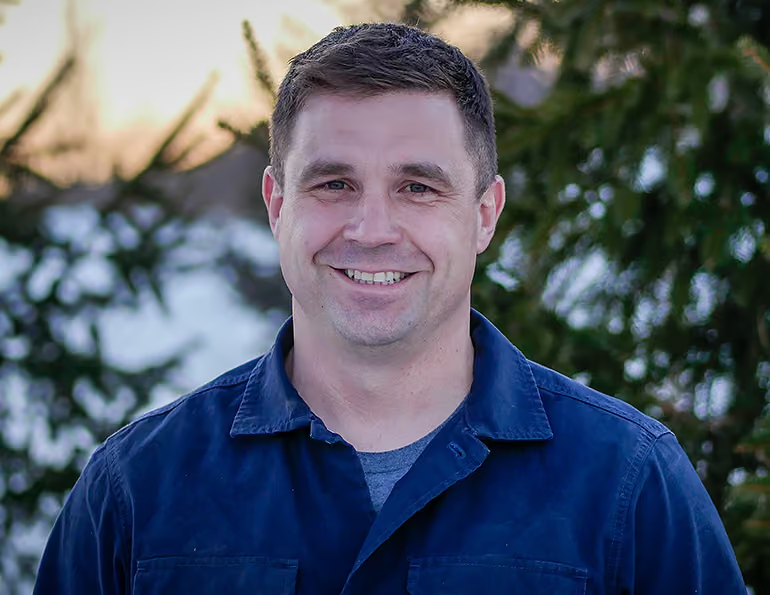
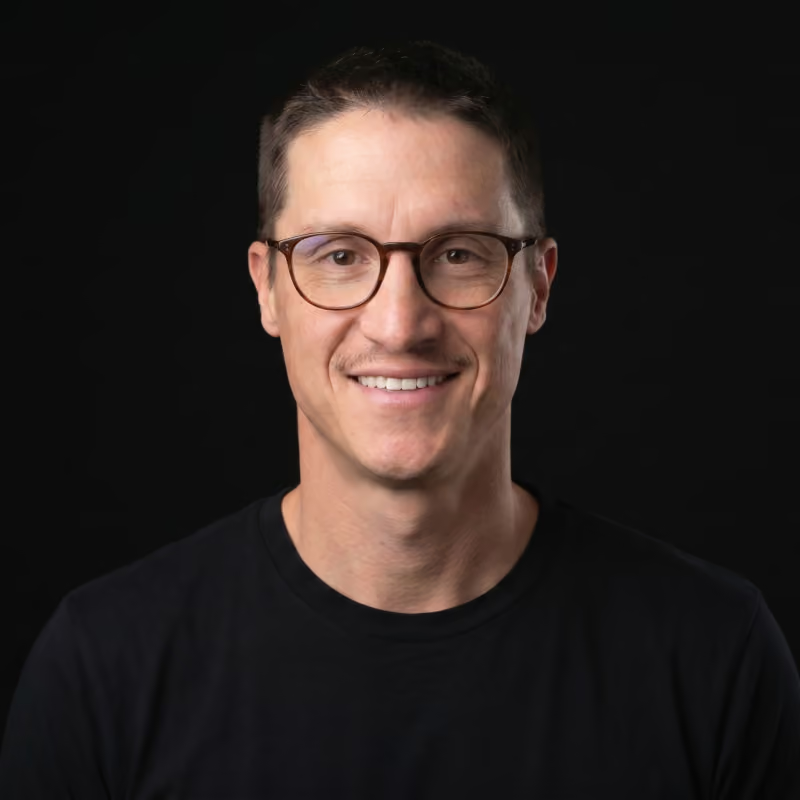
Host: Welcome to Acquiring Minds, a podcast about buying businesses. My name is Will Smith. Acquiring an existing business is an awesome opportunity for many entrepreneurs. And on this podcast, I talk to the people who do it. Imagine you're 22 years old, about to graduate college. You're interviewing for jobs, but not excited about the industry that your degree points you to. Sitting in class one day with your laptop open, an email from your brother appears in your inbox. He sent you a link to a website where you can see businesses that are for sale. You poke around the site and see that there's a ski resort for sale, a ski resort in your home state. You drop all notions of getting a job and decide you're going to buy this aging ski resort instead. That really happened, and Rick Schmitz was that senior. He did acquire the ski resort, turned it around, and went on to acquire others. It is now 17 years later, and he is the owner of multiple ski resorts. What an awesome story of business acquisition. Here he is to tell that story. Rick Schmitz. Rick Schmitz, thank you for joining me today on Acquiring Minds.
Guest: Thanks for having me. Looking forward to it.
Host: So you acquired Nordic Mountain, which is a ski resort in northern Wisconsin, back in 2005, and that acquisition led to another, led to another, led to another. So your story touches on a lot of themes that we see here, including one acquisition, that first one leading to multiple, but also people who you know. One of the great things about your story is that you're involved in a business that you're passionate about.
Guest: You grew up as a skier.
Host: So I want to make sure we touch on know working in your passion as well. But as an introduction, why don't you take us back to 2004, 2005, and what led you to this first acquisition? Let's just start there.
Guest: Sure. So in 2004, I was a senior at Washington University in St. Louis in business school, getting a finance degree. And in that time, through business school, I had all kinds of finance, finance internships. I'd worked for mutual fund companies, and I clerked on the options Exchange in Chicago to look at the trading side of things. I had enough experience to realize that I was not passionate about any of it. I wasn't excited about what I was about to do with the rest of my life. And like everyone else in business school, you know, I always said, I'm going to start my own business. And one of the interesting things was I took any entrepreneurship class that was offered. One of the guest speakers said something that was really impactful to Me. And, you know, because everyone in business school said, I'm going to have my own business at some point. I'm going to go off, make a bunch of money, I'll use that money, and then I'll start a business. But this speaker said, well, that's great in theory, but, you know, eventually you're going to get used to making a bunch of money. You're going to get used to that lifestyle. You're going to get married, you're going to have a family, and you have all these responsibilities that makes it less likely to happen. He goes, do it right now. When you're in college, when you're out of college, you're used to living on nothing. You have no other responsibilities. And it's. It's. It's a great time to do it. And so for me, that was, you know, like, yeah, it is a really great time. Now I just need to figure out what a business is. And that was, you know, it was in that senior year, I was doing a ton of interviews for all kinds of different finance jobs, of which I was, again, not excited about any of them. And I remember sitting in a business law class and had my laptop out. My brother had emailed me a website earlier that day called bizbysell.com and said, check this out. And so I went on it, and I'm like, I wanted to move back to Wisconsin, where I'm from. So at that time, you put in where you want to go. I put Wisconsin. And then it gave a bunch of different categories and pick what category you want to see. And I'm like, I don't know. Recreation industry. Sounds fun. And so the very first thing on the list was Nordic Mountain Ski Area, which I had kind of heard about. Not really as a skier growing up in Wisconsin, really under the radar ski resort. And from that point forward, I kind of just put interviewing to the side and started writing a business plan and decided this is what I want to do. And to.
[4:20] Host: What? You're 22 at the time?
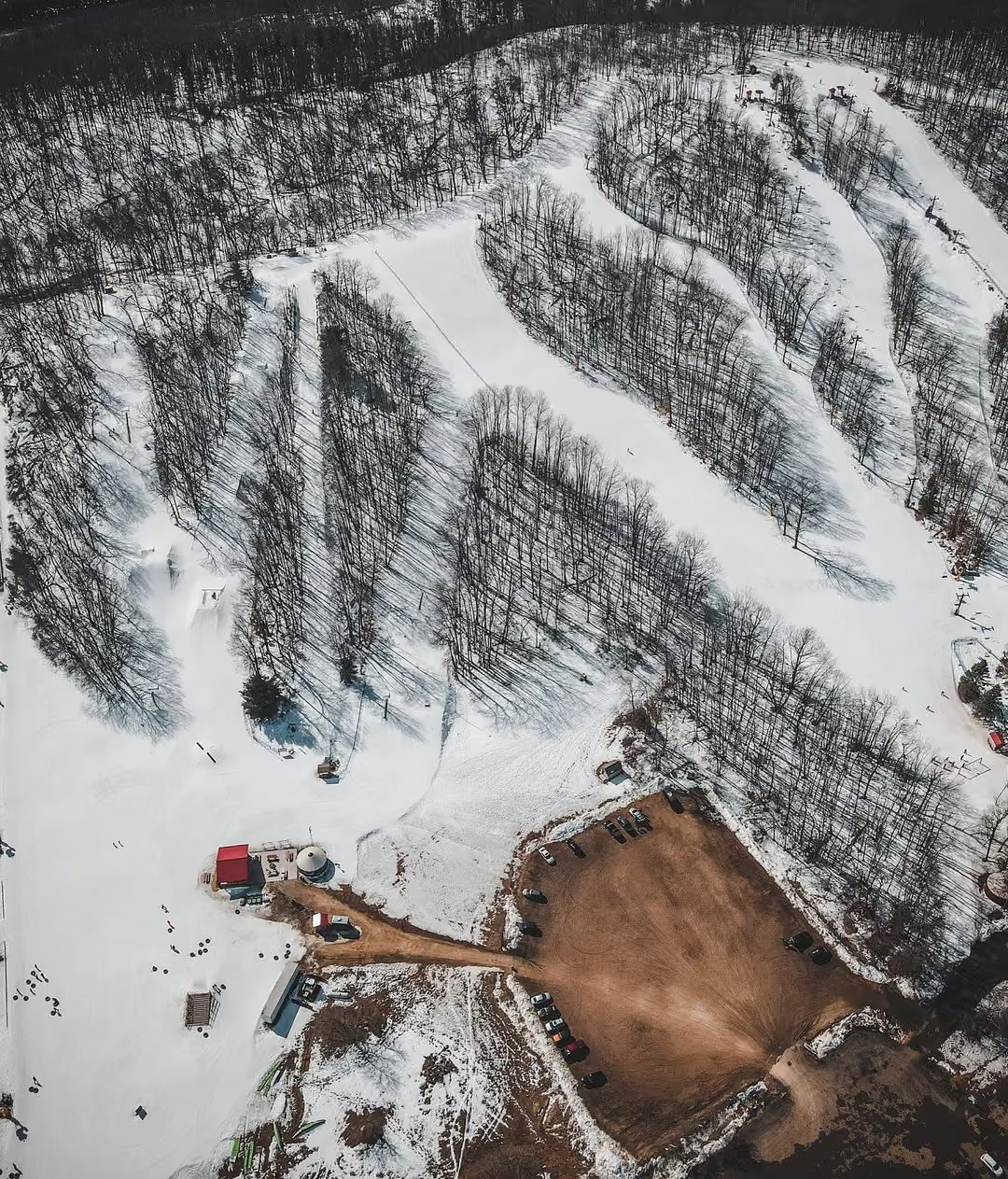
Guest: I'm 22. And so, yeah, so. So I came home over Christmas break. I went to Nordic and I ski there. And I was like, this isn't a great ski resort right now, as an avid skier, but it could be. And so I used that as the basis for my business plan. I had no experience in the ski industry, and so I just used, from a skier's perspective of what could be improved. And now that I've been in the business for 17 years, I know that, you know, every skier has an opinion on what the ski resort should be. But it was, you know, that was. The basis for the business plan is this is kind of an underperforming ski area that has a ton of potential. They had never done any marketing on the scare and its 30 year history, like none. It was just kind of. It was there and you had to know about it and go there. You know, they would go and get groups and that was the marketing, which still is to this day a good business for it. But. And it was, it was relatively tired and it's, you know, so it just needed some passion and that's what I brought to the table.
Host: And you were 22, so talk us through that psychology. Were you just young and dumb or what? Uh, I mean, I mean, it worked out well, but I mean, that's a bold. That's a bold move. I mean, that's bolder than, you know, starting a website from scratch or some of the kind of more traditional entrepreneurial paths that you hear about today. You went out and bought a ski resort at 22?
Guest: Yeah, it was. And you know, I had tons of people, you know, say I was crazy. I had tons of people try to talk me out of it, One of which is my older brother and current business partner on two of my ski hills.
Host: Was he the guy who sent you biz by selling?
Guest: No, different one. Okay, yeah, a lot of brothers, but this was a different one that said, you know, hey, you, you know, you have a good degree and you should go make a bunch of money and what your degree is. And I was like, no, I want to do this. And so, yeah, it was crazy. I remember my football coach thought I was crazy. A lot of my classmates thought it was crazy. Everyone thought it was really cool. But yeah, it was, it was. The psychology behind it was, you know, I believe I can make this go. And I was going to stop at nothing until I did. So, yeah, so I wrote that business plan. I'd been in communication. There was a broker on the deal. So I've been talking with the business broker on and off and negotiated on the price a lot. I think it was listed at a million dollars initially. And so I was trying to figure out, how can we make this go. I'm looking at the financials that they had, which were relatively poor. They didn't keep very good records. And so I'm trying to write a business plan off of that and try and make some projections on what this business could do. And all this while I was finishing my senior year in school, but negotiating that entire time through the business broker, and there was times where I thought it was going to blow up in negotiations. And I was like, this isn't going to work at this price. And the business broker would call me back and he'd say, let's make a low offer and see what happens. It had been on the market for five years, so they had been actively trying to sell it, which is part of why it was in the condition that it was. Because if they're selling the business for five years, they were really just kind of in the. In a very infrastructure heavy business. To not be maintaining the stuff and improving on it and continually investing in it for those five years was pretty harmful to it. So they really, they wanted to retire, they wanted to get out. And I remember I graduated, I think, on May 15, and on May 23, I had an accepted offer to purchase it. And I was like, this is awesome. I moved home and I'm like, I bought a ski hill and I had a financing contingency. And, you know, I didn't know, admittedly very much of anything at that time. Yeah, my focus had been on, you know, college and having fun. And so I did not know all the ins and outs of what that was going to be. It was, you know, learning from the Internet on what I needed to do next.
[7:59] Host: Were the previous owners helpful to you?
Guest: They were, they were. They wanted to see the ski resort go, they wanted to see it continue on, you know, and. And that was part of it. So in that time, so now it was getting the financing package for that. And so that was a huge challenge. We were able to, you know, finally negotiate the price from a million down to $625,000, which at that time was, you know, all the money in the world to me, like more than I could ever fathom getting out of college. So I had to find a way to do this. Luckily, my parents were super instrumental in support of the entire way. And they said, we'll give you a loan of $100,000 as the down payment on that 600. And so to the banks that I went to, we had, you know, we said that loan was a gift because I didn't want them to know that it was 100% financed. Essentially. They may have assumed it, but yeah, so that was. So I had that 100,000. It wouldn't have been possible without that. But then I still had to make up this $525,000.
Host: Right.
Guest: And so within the first couple of weeks of being home, I had set up meetings with all the banks that would take a meeting with me. And I remember going to those meetings, you know, with my business plan that I thought was all polished and ready to go. And the first meeting lasted all of 15 minutes. And I remember walking out thinking like, oh man, I'm going to have to get my resume together. This is. No one's going to give me this money. But the reality was, I know what I thought I told them in that meeting and I know what they heard looking back at it. And what they heard was, I'm 22 years old, I have absolutely zero experience in this industry, and I want to buy a seasonally weather dependent business that has been losing money for the last
[9:40] Host: five years that needs a giant update of new infrastructure.
Guest: Exactly, exactly. Well, that wasn't totally in my business plan because I didn't know, I. I didn't know the industry. And so at that time I was completely unaware of how much, you know, if I had known at the time how much money I would later pour into the business, I probably wouldn't have done it at that time, you know. So a lot of it changed, you know, from the original business plan. But it. So that's what the bank heard. I was in and out of that bank very quickly. But luckily there was two or three banks that actually listened. And there was a couple of them where my first meeting with them lasted a couple hours and they really listened to the business plan and they could hear my passion for it and what I wanted to do. And so then, you know, from that point I took those two or three banks and I just kept working with them and I kept looking for any other kind of financing that was out there, because I would have some banks that would come back and say we might be able to do three or four hundred of this, but we are not comfortable taking the whole thing on with this risk. So I found some other things. I found, you know, through the county that the ski hill was in, I found a revolving loan fund for, you know, I can't remember if it was 50,000 or 25,000 at that point. The state department of tourism had a loan for tourism businesses. And that was actually a really, really good, favorable loan with a good interest rate. I think I got, I was able to get 100,000 out of that. And there might have been one or two other forms, but there was a lot of different ways to piece together all of this financing and get it and then waiting for an appraisal to come back. The other thing about the skill is it's on Leased property. It's a county park, so there's not even any real property to buy with it. And again, a business that's showing a loss for five years, it's more or less an asset sale. So the assets, fortunately for me at the time, were appraised really high because they're really unique assets. A snow grooming machine is not something that an appraiser is used to see. Yeah. And it's not something that sells a lot. And, you know, now I know what a market is for them. At that time, I didn't, you know, I thought the groomer that I was buying was worth $60,000, but it was actually worth five, you know, but so it was an asset sale and, you know, and buying, you know, the name and the book of business and what it was. But it was incredibly challenging.
Host: Rick, when you say the book of business, so this was a B2B company,
Guest: you said they brought in groups. I mean. I mean, by the book of business, I mean the customer. By buying, the customer base, the goodwill of the company. So.
[12:06] Host: But it was a public. It was for the public because you said, yep, okay.
Guest: The biggest part of that. The biggest part of that business was the group business. That's one thing that they. Why the hill had been successful and ran for 30 years was they were really, really good. And they had a really, really good group salesperson that went out and literally got almost every school in the area to come for a ski trip there.
Host: Gotcha.
Guest: That was essentially creating the business. And so. And all those relationships, you know, with the schools was. Was a huge part of making that place successful. Yeah. And that, in turn, creates your future skiers. When you're getting all the young kids to ski, they're going to come when they grow up and bring their families back. And that's still a huge part of the business.
Host: So. But the business was actually losing money, and you were. And had sat on the market for five years. I mean, why. So that would spook most people, which is probably why it just, you know, it's like. It's kind of like a house that sits on the market. Like, the longer it sits, the longer it's going to sit, because it just. People assume something's wrong with it. So, you know, why didn't that scare you?
Guest: Or have we ever.
Host: Have we already covered. The answer is basically because as a
Guest: skier, it could be so much better. And like I said, there had been no marketing done on the place. Like, like, none whatsoever. Like, if we can make people know about this place, sure. And come and do some marketing. That's going to grow it a lot. So that's what the business plan was. It was we're going to increase the marketing substantially. We're going to create a marketing budget and really get the word out. And we're going to improve the hill a lot and the guest experience a ton. And that's going to make it a lot better. So. Yeah. So that was the answer there.
Host: Yeah. And did you. Was there a line item for your own salary? I mean, were you going to be able to pay yourself out of the business or were you young enough that you could just pay yourself almost nothing?
Guest: I paid myself almost nothing. I made nothing. I made nothing for 10 years, you know, to be. To be totally honest. And that's partially just my own philosophy on it and why I've been able to grow is, you know, until, you know, maybe seven or eight years ago, it was every penny these businesses make are going right back into them. And so I paid myself, you know, a little bit more each year. I remember my first year, I looked at my draws. It was $12,500 after one year of work, you know, working an incredible amount. And I was able to live super inexpensively. Wacom is not an expensive place to live. You know, I was at the business, I worked all the time. I ate all my meals there. It was, you know, it was pretty minimal, you know, my cost of living, but I pulled almost nothing, just enough to live. And that was my philosophy every year, is I'm going to live frugally to make it so that this business can go, because I can make so much more money in the long run investing back in the business. And that's what I did. And we continue to do, you know, and everything is substantial returns when we grow these businesses and continue to invest in the infrastructure. There's huge returns on that.
Host: Well, I assume that Nordic Mountain isn't for sale today, but if it was, you know, it was acquired for $625,000 in 2005. Do you have any sense or could you share any ballpark of what the value of Nordic Mountain might be today just so we can kind of get gauge what this ROI looks like of 17 years of blood, sweat and tears?
[15:10] Guest: Yeah, my guess is it's probably. Ski hills are hard, but they do sell. And knowing what our earnings are, and a multiple of that, I would say it's probably two and a half to $3 million business today.
Host: Amazing. Awesome. Phenomenal. So and so just going back to 2005, before we move on. You. You know, many people have the fantasy of running a business that is their passion. You were passionate about skiing, but I imagine it was one of those things where, like, loving skiing is different. Different than running a ski hill.
Guest: Absolutely.
Host: So, but it's. Fortunately, it sounds like you actually liked running the ski hill anyway. Like, talk to me about how you like that transition of like, you know, making your business your passion, your business.
Guest: Yeah. So, you know, and that's. It can be a scary thing because I've heard of, you know, other people that, you know all of a sudden, even within our industry, that they buy a ski resort because they think it's going to be awesome and they're going to ski all the time and you end up not skiing very much. And it's very hard. And so it's really, you have to love the business side of it. And I look at my business partner, Mike, my brother, who owns Little Switzerland in the Rock Snow park with me, two of our other hills, and he's not nearly as passionate as a skier as I am. He admits that. And he's like, I love the business. He just loves the business itself. Because our business is awesome because we sell fun, you know, like we're not selling a widget or something that, you know, a necessary thing that, you know. There's tons of other businesses that are completely essential and provide really great service. But we, our number one job is to make sure people come here and have an awesome time. Yeah, that is really, really fun. And so that's the staff that we hire is people that, you know, want have that in mind. And so, and then just growing the business. It is a ski resort is five or six or eight different businesses all rolled into one from, you know, we have ticketing and a retail shop. So we have retail side of it. We have a rental operation and a very large, very lucrative rental operation at each ski resort. Each ski resort has multiple food outlets, so there's a cafeteria style and then there's a full service restaurant at each of them in a bar restaurant. There's the whole outside operation side, which is, you know, snow farming, as it could be called, where we're making snow, grooming the snow, maintaining the snow, all the lift, all that stuff. So there's so many different aspects to it that it's a really, really interesting business all rolled into one different one.
Host: Yeah. And none of that is outsourced. It's all under your. Your own company.
Guest: Correct.
Host: Entity.
Guest: Correct. We've dabbled a little bit here or there. When we had actually the first year we had Little Switzerland, we did not run the restaurant. And that we realized very quickly we had to have control of all that and to do it. So we do it all.
Host: Cool.
Guest: But yeah. So back to the original question. The key is, you know, you have to make it fun. And, you know, when my. My. In the season, I try to get out and ski every single day when I'm at one of the hills. And a lot of times that's, you know, 20 minutes, a half hour, but it's. It's super important to me. And a lot of times I'm like, I have all this other stuff I should be doing. It's a mental break to get out there. The employees see that you're out on the hill, and I also see the hill from the guest perspective then.
[18:16] Host: Exactly.
Guest: There's rarely a time that I don't come back with a list, and then I give to our operations department and say, here's the things I noticed on the hill. You know, so it's really important. And then when our season's done, because we're in the Midwest, we end sooner than everyone else. I just go pack up and go out west and go skiing.
Host: Really? Yep. Look for other acquisitions.
Guest: Sure, sure.
Host: Cool. Well, all right. So that's Nordic Mountain. Now, three other acquisitions have had. Have happened in these intervening years. We don't have time for each of them, but if you could do like a quick couple minutes on each and bring us up to the present. Just a couple minutes.
Guest: Yeah. So in 2009, after Nordic had started to show more and more success and we were doing really well and people were taking notice, a real estate investor approached me who had a place up in Upper Michigan and went skiing up there at a place called Blackjack Mountain.
Host: Okay.
Guest: And Blackjack had also been closed for a year. And he said. He called me up cold one day, and I still remember, and he said, I want to buy Blackjack Mountain and I want you to run it. I said, okay. And so I had a meeting with him. Long story short of it is we reopened Blackjack. We had an arrangement where through his real estate funding, he was able to. And because of his bank relationships, he was able to 100% finance the acquisition. And then so he owned the real estate operating entity. And then every year I operated it, he gave me 10% more of that operating entity, and then I owned 100% of the operating company. And so we had that relationship. I did that for four years. And then in the fourth year of doing that, my Two of my older brothers saw how much fun I was having at my job, and they were not having as much fun at their job. One was a home builder, and it was 2009, so he was struggling.
Host: He was hurting more. I mean, he was having the least fun of all of us.
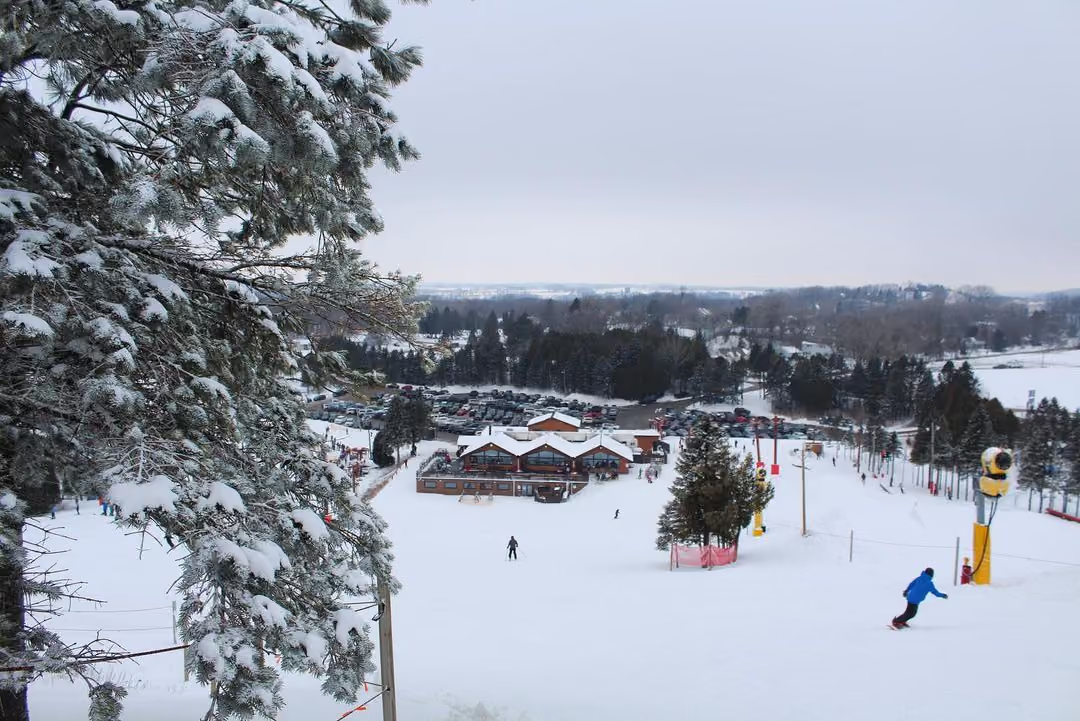
Guest: Right, right. And so that was his job. And the other one was an electrician. And they both saw how much fun I was having. And we all grew up skiing at Little Switzerland and Slinger and. And so we started looking at that opportunity, and through some of their contacts and people they knew, we found out that the hill that had been closed for five years had been acquired by someone that was looking for an operator. So then we approached that person, and through that deal, we actually negotiated. We realized being closed for five years, the ski resort needed a crazy amount of investment, and we weren't going to do that on a lease. And so we. We negotiated with the person that had acquired the entire property to just buy the ski hill portion of it so that we could work on the lifts and the snowmaking infrastructure there. So we acquired that in the 2011 and then reopened the ski resort in 2012. We did it a very large amount with sweat equity. My brothers and I were all very hands on. We didn't have a lot of help. We had a couple of guys helping us. We brought some of our lift people down from Nordic and Blackjack to help rebuild the ski area, and we reopened it. And that was, you know, and so that was a crazy year when I had all three of them. I was training my brothers into the industry, more or less. They had a lot of really valuable skills, from real estate and construction to electrical. And that was invaluable in rebuilding the ski resort, especially doing it ourselves. But the ski business side of it, you know, I was essentially, you know, leading the way on that. And Blackjack was still going, Nordic was still going. And I also, my wife and I started our family. We had our first kid. And so after that year, decided that maybe that was too much, maybe a little too quick. And Blackjack had been. Had been a little bit underperforming my business plan. It was, you know, I realized how tough it was. Blackjack's awesome mountain, beautiful place, tons of natural snow, but really, really difficult to get skiers to drive up there when there's a lot of other options locally, especially as snowmaking and grooming has gotten better at all these other places. And saw immediately the success of Switz out of the gate and realized that my model needed to shift A little bit more from. Not just the coolest place to ski now, but let's look at more urban ski areas, ones that are closer to population. They're going to perform better because Little Switzerland is smaller than Nordic, but after its second year, outperformed Nordic, and now it is. It does probably two and a half times the revenue of Nordic, just because even though it's a much smaller hill, it's much closer to Milwaukee, it's in an urban population. So we realized that was the model.
[22:55] Host: And so Little Switzerland is like two hours outside of Milwaukee, right?
Guest: No, that's Nordic. Little Switzerland is 40 minutes from downtown.
Host: Oh, wow. Okay. That's. Yeah, that's super close. And everybody in Milwaukee, I mean, it has brand recognition.
Guest: People know it had a ton of brand recognition.
Host: You grew up skiing on this hill?
Guest: Yep, we grew up skiing on it. And people, you know, there's not a day that I'm not at work at Little Sweats that people don't come up and said, let me tell you about the first time I learned to ski here, because everyone did. And so it has a ton of goodwill in that name. And so we realized that the success of Little Switzerland. Switzerland, you know, took off and actually far exceeded my business plan and my projections, which was really, really exciting. And we saw that. And we also saw this ski area that's even closer to Milwaukee and smaller yet. It's just by the airport in Milwaukee. You can actually see the skyline from it. It was also acquired the same year we acquired Little Switzerland, and it was acquired by a very, very aggressive developer that was really big into baseball, and he built a beautiful baseball complex there. And. And he put some money into the ski resort, but we watched them, as a competitor every year, kind of shrink the operation of the ski resort a little bit more every year. And I was watching from a distance, looking at it and saying, you know, he's not having a lot of fun doing this. Yeah, I can tell. So I reached out just through LinkedIn to him and said, hey, would you be interested in talking about the ski hill? And he was very open to it. So in 2017, my brothers and I acquired the Rock Snow park, just the ski hill portion of it. He has a much larger complex there in operation called Ballpark Commons that has. He built a minor league baseball stadium, all kinds of other stuff there. But we acquired just the ski hill side of it, the Rock Snow park, and we've had that for four seasons now. And so we've built that business up substantially in that time as well.
[24:49] Host: And so that's doing well as well.
Guest: That's doing very well now. Yes, that took a little time as well. That one didn't grow as quickly as Switzerland. It took a little bit more time. But this year we definitely really made some huge strides with it.
Host: Well, it sounds like cracking the code to the ski resort business is just like any real estate business, that it's location, location, location. The closer you are to downtown, the more likely you are to have success.
Guest: Yes and no. For us in the Midwest, absolutely, to an extent. I mean, skiing is still an experience. Right. So you're selling, you know, that mountain experience, being outside, recreation, fun. And so for a lot of people, that experience is going somewhere more remote. Yeah. But for us in the Midwest, that's not what we are. And you know, when you're going to a mountain, you really want to go. When you're going out west, you want to go somewhere that's truly, you know, amazing and fly to these remote places. And you're okay to fly and drive after that. But in the Midwest, we're, we're day visit areas. We're not. People don't come here for vacation. They do a little bit from Chicago, but not a ton of. Yeah, but we're learn two beginner areas and terrain parks, the jumps and rails. And so people come here to teach their kids for that big trip they're taking out west. And so convenience matters. That, so then that's what really, really matters. And we, you know, spend a ton of money on, on our beginner areas and the conveyor lifts and everything in there to make sure they're all top notch and, and do the very best that we can with our instructing and our ski school programs. But yeah, we're teaching the people to ski and we're teaching them, introducing them to the sport, and then they're gonna go on and ski other places, but this will always be their home place. And, you know, a lot of people will come and, you know, ski a couple runs and have a beer after work. We have night skiing and we're open. And so that's a big part of it. High school racing, ski racing is a huge part of it. So, yeah, so it's a little bit different. So ours is a niche within the small ski industry of urban ski areas.
Host: So are you, what does the future look like? Are you going to continue doing acquisitions?
Guest: How. Yeah, so I get asked that question all the time. You know, what's next? And you know, right now we're very happy with what we have and what we're operating. But that doesn't mean that I'm not. I don't always have, you know, my ear to the ground and just looking for opportunities. I'm always looking at what's out there. You know, if a ski resort ever comes across as publicly listed, I'm certainly going to sign an NDA and take a look at it and see if it makes sense anywhere in the country
[27:19] Host: or in the Midwest.
Guest: I'll look everywhere. The logistics of running one remote, we're very hands on operators at this point. So my goal now is to try and remove myself a little bit more from the day to day. We're very involved in every day at all three of our hills, so it'd be pretty tough to run one that's really far away.
Host: All right. Well, one of the things that's interesting about your story is that it seems like the deals came to you, except for that first Nordic Mountain biz buy sell you kind of. It was posted on biz by sell. You found it.
Guest: But
Host: buying a ski hill is probably very high profile. People in the industry hear about that. Probably people in the larger tourism industry hear about that. The local, larger tourism industry. So many of the other, your counterparts, other people that I talked to really struggle with deal flow and finding other opportunities. But in your case, it seems like they come to you. Is that a fair assessment?
Guest: Yeah, it is. Lucky you then, you know, part of it is there's not a lot of people that buy ski hills, right? There's just not a lot. There is a ton of ski areas in America. A lot of them are small mom and pop ski areas that were started by a family and maybe they've survived two, maybe even three generations and then they're looking for an exit. And so there's not a lot of people that buy them. There's a lot of people that want to buy them. There's a lot of people within the industry even that work at different levels within the industry that want to. But it's a pretty tough market. The other thing is these small mom and pop ski areas, they're in a tough spot right now with a lot of the bigger conglomeration that's going on within our ski industry. You know, there's two main players that kind of dominate the entire ski industry and they are consolidating and they're even, you know, talking about my urban model of doing that. Vail Resorts is the biggest ski area operator and they are, they have started to acquire urban areas. They bought one, an area very close to ours on the Illinois Chicago border called Wilmot. They bought one in Detroit, they bought one in Minneapolis. And so they're starting to take notice that these urban areas can be really good. And then they acquired Peak Resorts, which was kind of a more regional Midwest and East coast conglomerate of 17 ski areas. Vail acquired them, which now made Vail's portfolio a ton of small skiers like ours as well. And so they're a buyer, but if they're not interested, there's. There's not a lot of people out there. And so I've even had people that, you know, it is a very small, very tight knit, awesome, awesome industry. And really everyone works together. We all feel that, you know, rising tide floats, all boats and yeah, let's create more skiers. And so I've had, you know, people that I've, I've met over the years that have called me and say, hey, we're thinking of exiting. You know, would you be interested? And I've taken a look at some that way and I've missed some and there's been some that I wanted to buy that, that I've missed. So it, but yeah, it is definitely unique industry where opportunities do come, but some we seek out. You know, the rock. We went and we saw that one.
[30:35] Host: Yeah.
Guest: Potential there.
Host: Yeah. Well, when you were making, you know, that first business plan at age 22 for Nordic Mountain, did you think that you probably weren't thinking too far ahead? You were probably just thinking, how do I make this deal work? And then you got the deal and how do I make this business work? You weren't. But was there any inkling that maybe you could own multiple and that this could lead to a career in acquiring, having a portfolio, if you will, of ski resorts?
Guest: Yeah, I think pretty quickly I saw that. And that was just from going to industry stuff and seeing that, you know, there's a lot of economies to scale when you start to grow to more ski areas. And, you know, going to see some of the operators that have multiple areas and, and you know, peak resorts that I had mentioned, they started kind of like I had. And where it was a guy that started one ski resort outside St. Louis and then grew it to 17 ski resorts. And so I looked at that and I looked at him and I said, now that, now that's something that's interesting.
Host: Yeah.
Guest: And so I think, you know, at first when I wrote that business plan, my plan was, I'm going to live in Wachoma, Wisconsin, in this really small town. I'm going to Run this ski resort. And this is going to be, you know, this is going to be my life, and that's going to be it. But I think very quickly, after year one or year two, I always started to look at, all right, what's the next step? Is there other opportunity out there and seeing what's there?
Host: And so just to kind of wrap up here, do you have any thoughts for other people considering an acquisition path versus building from scratch path? I mean, it's worked out well for you. Is there something generalizable about your career that you could apply to others, do you think?
Guest: I think one of the biggest things for me, and I know, you know, it's not always possible, but if you can find something that you're passionate about, it makes everything easier, and it's not work anymore, you know, and for me, that's what's been the most important, fortunate thing for my life. You know, there were so many times that this deal, you know, the Nordic deal, for instance, it almost. There was probably a dozen times that I didn't think it was going to happen, that it was going to blow up and I was going to have to move on. But I would not let any setback stop me. And if one bank said, nope, absolutely, we're out, I was determined to dig in and find another way. If I had to bring in investors, which was something I was starting to explore as I was getting worried about bank financing, I was going to do whatever it took to get this because I really believed in it. I think, for me, that's the biggest thing, is be passionate about it and believe in what you're going to do. And that's really a huge key that's
[33:06] Host: really fortunate to be able to bring that. That level of passion to something, just to be able to bear all of the. You know, this is a classic story of bearing a lot of rejection, having people all around you telling you you're crazy and just kind of like walking through walls until you made it happen. So those stories are actually quite rare even. Even among all the stories about entrepreneurship, one of these kind of pure passion stories, you don't come across those very often. So that's. That's really cool. And that passion remains now 17. 17 years later.
Guest: Thousand percent. Yeah. Yeah, it does. Last year, when the ski season ended, I only. I didn't get to go skiing because every ski resort was shut down with COVID So this year I went twice. So I took two different ski trips out there. And, yeah, it is. It is still my very favorite thing to do.
Host: That's amazing.
Guest: So it is awesome.
Host: Well, congratulations on building a professional life around it. Are you online anywhere, Rick, that people can follow you or do you tweet or anything or.
Guest: I don't really tweet. You know, I spend enough time on our ski hill social media. I do that. I am on LinkedIn. I'm not on there much, but, yeah, I don't. I don't do. I don't do a lot of personal stuff right now. I kind of focus on our businesses.
Host: Sure. Okay. Well, if people want to go to Nordic Mountain or Little Switzerland, I assume it's. I know, it's nordicmountain.com. is it also litterswitzerland.com and you want to, you know, plug your parks here.
Guest: It's littleswitz.com because flynn.com is a jewelry store in the Caribbean.
Host: I assume you approach them about their domain name at some point.
Guest: Yeah, I don't think I can afford it based on their jewelry prices, but. And then the other one is rocksnowpark.com.
Host: okay.
Guest: Great.
Host: Rock Snow Park. Well, Rick, thanks for your time. This was really an inspirational story. So I appreciate your sharing it, being transparent with your numbers. So continued. Good luck.
Guest: Yeah, appreciate it. Enjoyed my time here. Thank you very much.
Host: Great. Thanks, Rick.

















%20-%20thumbnail.avif)

%20-%20thumbnail.avif)
%20-%20thumbnail.avif)
.avif)

%20-%20thumbnail.avif)