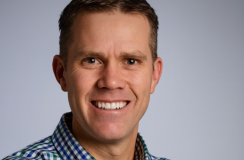
Host: Sam Rosati is a name you've heard Acquiring Minds guests mention. Sam is a search boot camp operator, a hold co owner, S.M. bash, co founder, founding partner at SMB Law Group, search Investor, publisher of the Search Investor List and I'm probably forgetting what else? Well, through all of this activity, and particularly by running a boot camp for entrepreneurs looking to buy a business, Sam has seen countless searches up close and he's observed that not being clear on your target criteria can needlessly prolong your search by months or worse. So he developed a framework to get clear on your criteria for the business you aim to acquire. He calls it Big three Little Two. Big three Little Two achieves two things. First, it allows you to quickly qualify a business you see for sale so you know whether to invest more time pursuing it. And second, it strikes a balance to ensure you have enough deal flow, but not so much that you're just looking at everything. As Sam says in the interview, as a searcher, you are a pipeline manager. I'd not heard it put that way before, but that is an apt label for someone conducting an effective search to buy a business. Here is Sam Rosati on his framework Big three Little two.
Guest: Foreign.
Host: Welcome to Acquiring Minds, a podcast about buying businesses. My name is Will Smith. Acquiring an existing business is an awesome opportunity for many entrepreneurs and on this podcast I talk to the people who do it. Listeners of Acquiring Minds know that for almost any business you acquire, its success comes down to the people and how you develop and manage them as their new leader. Thing is, in addition to management, there is also a lot of process and bureaucratic work when it comes to your new employees. Payroll, compliance, hr, technology, hiring to name but a few. These processes are crucial to get right, but at the same time distract from where you want to be putting your energy in leadership. So Aspen HR is an HR firm and PEO that takes this work off your plate and handles it with the care it demands. Aspen is owned and run by Mark Sinatra, himself a successful former searcher, so Aspen's own leadership understands the HR challenges that searchers have Post acquisition. The firm is offering Acquiring Minds listeners a complimentary pre acquisition HR and PEO review for your target business. Check out aspenhr.com or contact Mark directly@markspenhr.com Sam Rosati welcome to Acquiring Minds.
Guest: Thanks Will.
Host: Sam, your name comes up a lot among my guests. Whether it's because of the bootcamp that you run or hosting SM Bash or your investor list, or just generally being a connector in the world of buying small businesses. Many self Funded searchers make contact with Sam Rosati at some point in their search. Now, Sam, you've got your own story of business acquisition, but that's actually not what we're going to talk about today, though hopefully maybe we will at a later date. What we are going to talk about is the fact that from your perch you see a ton of searchers and you see some of the mistakes that are made over and over. And you recently tweeted that the number one reason that finding a small business to buy can take so, so long is because searchers lack a clear big three and second two criteria. So this big three and second two are what we're going to get into. But first, Sam, by way of introducing yourself, what are three or four things you want people to know about you and what you're up to right now in 2023?
[4:13] Guest: Sure. Well, I would be remiss if I didn't say I'm a dad and a husband. We just had a baby right before sn, so. Oh yeah, congrats number three and final man. Yeah, so that's been fun. And it's an adventure, right? Like everything in life is truly an adventure when you're an entrepreneur. And that's really how I look at what I am and what I do. It's pretty simple. I first and foremost, I have a Holdco. It's not pursuing capital, it's Pursuant holdings is technically the name. And it has interests in nearly two dozen small companies. Every one of those companies has partners, different industries, different operations, different ownership percentages and structures. But at its core it's a Holdco. And so that is what I spend my day to day overseeing. And then secondarily, I spend a lot of time supporting searchers because I love it. But selfishly, it's a great opportunity as well to invest. And for me, it's a source of operating talent, it's a source of deal flow. And frankly, it's a fulfilling place to spend your career and I'm thankful to have found it.
Host: Cool. That's great, Sam. Thank you. And do give us a quick picture of the boot camp, actually, because that is kind of a formal way that you make contact with searchers and it's come up on the pod before. What does that look like?
Guest: The Bootcamp is a three day crash course on how to find small companies, how to get them signed up, diligence and closed, and importantly, how to connect searchers who have never done this before with the people they need to be the quarterback of their own deal so they need a deal team. They need sba, lender, lawyer, Q of the accountant, insurance agent, tax accountant. I think just as importantly, they also need people that have gone before them, other searcher CEOs, to show them how they did it and to show them it's possible. So that's our boot camp. It's three days. It's pretty intense. It right now is in person now we've got three more boot camps for the rest of 2023, but a little bit of a preview. We are going to put it online and it's a bit of a challenge to try and create that dynamic on the Internet, but we're spending some time on it, so I'll leave that as a teaser.
[6:54] Host: Yeah, that is, that's quite a teaser. And, and so, but currently in the in person version, you've got three more just in 2023. So what does that mean? You're doing them every two or three months?
Guest: Yeah, I would say that I'd like to put a month in between each one, but they're going to be stacked into the fall and winter because frankly, summer is. I would like to slow down. I think we're putting a little energy into putting boot camp online as well. So right now we're gonna, we're gonna kick to the fall to, to get started with live again.
Host: Okay. Okay. All right, Sam, well, let's get into this tweet of yours, which I found really interesting. I think it was actually the second time you tweeted about it and it caught my attention the first time and then the second time again. And I said, let's, let's do an episode about this because it, because it really kind of represents this distillation of what you've seen across probably dozens and dozens of searchers about why it takes so long. And it's funny because our whole category, this whole thing is called Search. It's not called SMB Owner, it's not called Operator. It's called Search because we so identify with the pain of the part that just is getting our hands on a business to own. So true. And so, and so here you are kind of like, here's the reasons why this part of the puzzle. The search is. Can be so brutal. And here's how to fix it. So you have your big three in your second two.
Guest: Yep.
Host: Let's go, let's go through them. What is number one of the big three?
Guest: So let's back up and make sure that we're defining what it is we're talking about. When I talk about Big three, second two. I'm talking about it using the lens of a self funded searcher. So to the extent you're a traditional searcher, you've raised search capital, you have an investor base that truly dictates the strategic, strategic focus of your search. I don't think this applies. This is in line with all of my personal and pursuant activities. It uses the self funded lens. You, the searcher are going out to become an owner, operator, an entrepreneur. Really what we think about when we leave our, our jobs and go out to find a small company. And so if you're self funded, I think big three, little two take on a secondary meaning. Let's start with number one, which is geography. Well, I'll ask you will, in the search fund world, do you think it's okay for there to be a regional or even state or even city specific searches? Is that okay?
[9:44] Host: Right? Not, not in a traditional search fund, of course. That's one, that's one of the big, in the, in the ongoing debate that's one of the big knocks against traditional search fund is you're, you're generally going to have to go to where you find a deal. Now that's the, that's the official line. But you will find traditional search funders who say yeah, but actually most people do kind of go local or at least regional. But that's not, that's not. What is that? That's not the official line. That's the kind of the whisper.
Guest: Right. I think the stats prove that out in traditional world that people on the average do end up buying a business relatively close to where they're searching from. So in self funded we say that actually regional or geographic focused searches are completely acceptable and even encouraged. And it just makes think about what a searcher is. You're out there, you're young, you probably are not differentiated, you don't check a lot of the boxes that brokers and business owners want you to check. So one of the advantages you have is being in person. You can show off your personality, your hustle, your, all of the things that make you unique that you can't show on the Internet or on an email. So we actually encourage geographic searches and I'll kind of, for instance, each of these. When I went out to search for the first business, our focus was 90 miles from Tampa International Airport. And in hindsight that was crazy. But now that I've seen hundreds of searchers self funded go through the process, I think that works really well. And in Florida, 90 miles doesn't get you anywhere it gets you to Orlando, barely. In D.C. it gets you into four different states. I think in, in New York, metro that can get you into. It's got to be more than that. So, you know, and to back up a little bit, our take is of the big three. Big three are geography, size and industry. What we try to teach is that you need to be pretty specific on two of those three, but you can't be specific on all three. Your deal flow won't be, won't be deep enough. And, and on the flip side, the reason search takes so long is a lot of times people are not specific on two out of the three, they're specific on one, so their pipeline is too big. So not to confuse everybody, but our philosophy on this is the reason search takes so long is because people go out and search and they don't really know what is a good fit for them in terms of size, geography, and industry. And they're figuring it out as they go. And so they end up crafting their big three over six or 12 months, but that's just too long. When you're a self funded searcher, you're bleeding through your savings, you're paying for diligence costs, you've got to be laser focused and time is your enter is your enemy. So we again sort of walk through these big three little two to make sure people go into this knowing what is a truly actionable deal for them. And let's tighten their criteria up and focus only on those deals.
[13:01] Host: Yeah, that's, that's great, Sam. And before we get to the next one of the big three on geography, let me ask a follow up. Why did you, in retrospect, decide 90 miles from the Tampa International Airport had been crazy?
Guest: Yeah, well, I was, I thought it was crazy, or I think it's crazy now because when you think about how broad searchers search today, you know, they're willing to typically move across state lines. They'll, they'll kind of go anywhere for the right deal. You read the HBR guide and, and you read about these home run outcomes and dream deals and opportunities, and they oftentimes happen far away from where the searcher is. And so looking back, limiting our search to 90 miles cut out 99.9% of the opportunities out there in the country. And it made us go super narrow into greater Tampa Bay. Kind of seems crazy, but it worked.
Host: But, but it worked. And so then do you have a best practice for somebody who wants to stay where they are as to what the, what the radius should be?
Guest: Yeah, I don't have a, a sort of rule of thumb on how, how wide the radius should be. What I have a rule of thumb for is picking two out of the three of these big three criteria and be focused on two out of the three. And so let me just give you a for instance. If you're going to be a hyper local searcher, like I was 90 miles from Tampa International Airport, by definition you're cutting out nearly 100% of the deals out there in the world. What is it you should probably do with respect to deal size and deal industry? In order to make sure your pipeline
Host: is deep enough, you open them up, loosen those criteria. Right. So smaller size.
Guest: Exact.
Host: And on industry, broaden it out. Like what you'll take, you'll take anything.
[15:00] Guest: Exactly.
Host: You'll look at anything. Yeah.
Guest: And at the end of the day, this is all to get a volume of deals into your pipeline. Because we all know in search, in order to buy one business, you probably have to go under LOI on two or three. Three businesses. Right. So let's work our way sort of up the pipeline. If you want to buy one and you need to go under LOI and probably two or three, you probably need to submit a dozen in order dozen, Lois, to go under LOI on 2 to 3. So that means you're submitting at least one LOI a month. Well, to submit one LOI a month, you probably need to be visiting at least two, three, four businesses a month. And if you're going to visit that many, you're going to need to see how many SIMS, you know, 20, 30, 40amonth to be able to get that many site visits, to get that many letters of intent out the door. And so this all goes back to managing criteria. So you're seeing enough deals come into your pipeline, but not too many. Because as a searcher, that's what you are. You are a pipeline manager.
Host: I haven't heard it put that way, but that's great. Okay, and so let's hear the second of the big three size.
Guest: So everybody, when they search tends to be too broad in terms of size on the upper end. So everybody and I've talked and, you know, spoke on Twitter a little bit about there's this sweet spot in terms of ebitda. EBITDA is just a proxy for cash profit, annual cash profit at the business that you're looking at. And also by definition, if you're a self funded searcher, you need to be using the lens of the SBA. Right. So a 5 million dollar SBA loan cap. Plus these days a lot of the SBA lenders and in our ETA community are doing Perry pursue junior loans. Long story short, if your purchase price is much more than 10 million bucks, you're going to struggle to get that done with an SBA loan, you're going to struggle to get it done in a way where you're the majority owner of the business with control and feel like an owner operator. So back our way down again. $10 million purchase price probably means that if the business has more than 2 million of EBITDA, it's going to be out of reach. So if you put 2 million of EBITDA on the high end, what's the low end in terms of size? And, and I find that actually it's the low end where there's more disagreement. Right. There's a lot of talk about if you buy a business for with $250,000 of SDE that starts feeling like you're buying a job and not an enterprise. And that's true. And you can talk to Nick Hashka about that because there's a lot of pros about buying a business that small. The issue back to pipeline again is where do the volume of deals exist on the size spectrum? All of the deals are small. If you were to compare of 100 deals out there that you find in a given geography, how many are sub 500 SD? How many are 500 to 750 SD? 750 to 15 of EBITDA. The volume of deals occurs on the small end. So when we talk about size, if you're not willing to buy something small, whatever you mean by that, maybe 5 or 600 of SDE and below, you're cutting out most of the deal volume. So again back to geo size and industry. If you're only searching within 90 miles of Tampa International Airport and you're cutting out everything else, you better be prepared to buy something small. Otherwise you're not going to see nearly enough deals coming into your pipeline to hit anything close to submitting one loi a month.
[19:06] Host: August Felker is a two time successful searcher. First with a traditional search fund. The second time around he did a self funded search. Today August runs Oberle Risk Strategies, an insurance firm with a dedicated practice group for searchers and acquisition entrepreneurs like you. If you've got a business under loi, Oberle will provide complimentary due diligence on that business's insurance and benefits program. A great no risk way to get to know August and team. They love helping searchers. They've worked with hundreds. Oberle is a specialty insurance brokerage for searchers by a former searcher. Check out oberly-risk.com O B E R L E- risk.com link in the show notes and just going back to the, to the upper range, the $2 million in EBITDA and above. I mean the thing is, is even if you, a self funded searcher actually wanted that, the chances that they're even going to find such a deal anyway are very slim. So it's, it can, it can be a little bit moot because I mean you're, you're, it's gonna be hard to find that deal anyway or to have access to it. So, and on the, so on this buying small, going back now to the, to the bottom end of the, of the, of the range, your target range. Yes, this debate, buying small. In fact, I mean it's, it's been coming back up on this podcast a lot as recently as today's episode and Thursday's episode one, both of whom bought small. One, it went really well. It's been going well for the last four years. The other, he felt on day three the perils of going small because one of the proprietary machines that he used kicked out within a month. A truck kicked out. One of his employees left. And so, and so the argument about, about buying small is that you just have no tolerance for anything happening. There's just no cushion. And it's not, it's. And so even if you're willing to like buy a job or get in there and be the operator and get your hands dirty, there's still a pretty good argument that like. Yeah, but just the finances are such that if you're, you know, you're one crisis away sort of thing. When, when people bring that point up to you, Sam, how do you respond?
[21:23] Guest: Look, I, I can't be in the business of telling people what they need to do. We all have to make our own decisions. But it comes down to when you buy a small company, you're likely going to do two things. Hopefully buy it for a lower multiple and hopefully you're going to buy it sooner. Right. There's more of them. They tend to transact in an easier fashion. And so you're making, in my opinion, I think I'm stealing this from Haska. You're making a big bet on growing that small business. So if you buy small, you're probably buying a job. There's not going to be a general manager who operates the business independent of the Owner, you're going to be capital constrained. And after you account for debt service, there's not going to be a lot left over. So when you buy that small sub 500 SDE business, you're making a huge bet on you, the new operator, growing that business fast enough to outrace the lack of capital and profit to reinvest. You're going to outrace the fact that you probably aren't getting paid enough to do that job after debt service. So I think that that pickle that you're describing is a higher risk bet. And you hear a lot of these home run outcomes where somebody buys a 450k SDE H vac contractor and quadruples EBITDA in 3 years and sells it for 8 times to a private equity backed consolidator. There are, there are lots of those stories and those are great. But I think there are just as many of the other side of that coin. You get into that business, you, the new operator you know are replacing an owner who's lived their life in that industry. You, you have to transition that knowledge in those contacts, your capital constrained so that when that 80, 85,000 $F150 breaks down and you have to go write a check for a new one, where does that check come from? And if two thirds of your annual cash profit are going to debt service on a small company, you are your, your finance so tight you have no breathing room. And so it in my opinion is a higher risk bet when you buy small. On the flip side, you can probably make a higher upside home run outcome if you buy small as well. Yeah, you have to grow it.
[24:00] Host: We've touched on it already, but talk to us about industry preference, which is the third leg of the stool of the big three here.
Guest: So in self funded search, the thing we see the most often, and I think it's the right approach, is to be fairly industry agnostic. And going back to our search day one 90 miles from Tampa, we ended up doing anything from 500k of SDE to 2 million of EBITDA. That's probably broader than I would advise, but because our geography was so narrow, we had to be broad on size. And then the last thing was again we couldn't be narrow on industry. So we said from an industry perspective, we'll look at everything that isn't. And then we inserted the industries that we wouldn't look at. So we wouldn't look at true construction in terms of general contracting, prime contractor construction, we wouldn't look at healthcare providers. So we weren't going to buy them. Healthcare, dental practice, chiropractic clinic, and we probably wouldn't buy retail. We certainly weren't going to buy like franchise restaurant retail. But generally we weren't going to look at anything B to C retail. Everything else was on the table because if we were to constrain it any more than that, we probably would have seen two deals a week and we'd still be searching six years later.
Host: Now Sam, with these. So these three again, size of business, geographic focus, industry preferences.
Guest: We think you need to be very specific and thoughtful about two out of the three. If you're going to be like a lot of us, self funded searchers and you're going to really want to buy a business in your home state or within a few hours of where you live, that's fine, that works. A ton of searchers do that. I can give great examples. But you probably need to do two things. You need to be willing to buy smaller than is ideal in your mind and you probably need to be pretty wide in terms of industry.
Host: And, and so when people are looking at this list of three and deciding you know which one, which ones they they need to be more flexible on, does it usually. Does the answer usually just emerge from their own criteria? Like it's very clear. It's like I ain't moving. So therefore it's gotta be size and industry preference.
Guest: Yeah. So we spend a lot of time on this during bootcamp and after making sure people are very clear about what is a fit for them. Because a big part of the reason self funded search and all search takes too long is they're figuring their criteria out as they're seeing deal flow, as they're seeing deal flow that just falls into their inbox for no specific reason. And I know that we've hammered a lot on a local or a geographic search, but the following works just as well, which is you can be an industry focused searcher, right? You can say hey I want to go acquire dental practices. I want to set up that friendly PC MSO structure that allows searcher to not be a licensed clinician but to own the economics of that business. That works. But you may need to plan to do that somewhere other than where you live. And so if you're going to be hyper industry specific, we kind of say the exact opposite in terms of geo. You need to open that GEO up. We worked with a searcher and he's, he's still searching that the only business he wanted to buy initially was insurance agencies. And insurance agencies are enormously competitive right now from an M and A perspective because private equity has realized that recurring revenue is glorious. So they're bidding them up and they're very unaffordable for searchers. So I think we did two things I've tried to suggest. He needs to search nationwide. Absolutely. And secondarily, maybe consider other industries if that competitive insurance agency dynamic is the only one that interests him.
[28:20] Host: Sam, actually you're reminding me of something which is, I feel like it's a kind of qualitative difference, not an official one, between traditional search funds and self funded. And that is the idea of an industry thesis. So I think that in the traditional search fund space, a lot of those folks, those searchers have done research and developed a thesis, not always at all, but definitely more I would say, than on the self funded side where I think you've already said that on the self, self funded, searchers in general are much more industry agnostic. Do you have any, first of all, do you think that that's accurate? And then secondly, do you have any thoughts on industry thesis? Is that, is that something you incur at all? Have people do and like the guy wanting to buy dental practices? I assume the people who have industry theses that you meet kind of come to the table with them. They've had some vision from industry experience or something and they're like I'm going to do X, whereas everybody else is just like, they don't have them anyway. So just respond to all that, please.
Guest: Yeah, sure. So I, I fundamentally believe in having an industry thesis if it fits the criteria that needs to fit your life, which first and foremost means I don't think you can have a specific industry thesis if you need to stay in a local market to buy a business.
Host: Yeah.
Guest: However I've set out personally, I had an industry thesis on a fencing business that we bought a few years ago and we went out, I went out with a partner specifically to look for commercial fence installation contractors. And it's, it's been a lot of fun. It's fun because it's been successful and worked. I think when we set out, we had a preference for something that we could drive to, but it wasn't a necessity. And if it was, I wouldn't have suggested to do it because when you, you know, in the deal flow you need to transact on one, there are just not enough deals in a local market when you have a specific thesis like commercial fence installation. Now maybe we pivot a bit and if we said, all right, dental practices, well, there have got to be, you know, 50 times more dental practices in every single market than commercial fence installation contractors. So it always depends. I think the one I would prefer people describe is what's the nature of the revenue that they're looking to acquire. Everybody I think rightly wants the predictability of recurring or repeating revenue. And I don't think that they use that criteria enough. I think they care more about like industry is easy to understand and to, to conceptualize. I'm going to be the owner of a software as a service business, a SaaS business. But they don't think quite as much about what are the other industries that have repeat or recurring revenue dynamics that kind of mimic SaaS. And maybe there's less M and a price pressure on those industries. So things like man, this is a tough example, but we were involved in a business that resembled pest control. And while the revenue repeated, it wasn't contractually reoccurring, you know, 12 month annual contracts. They were terminable at will contracts. Customer could decide to terminate us anytime for any reason, but every first of the month we auto invoiced all of our customers and that repeating revenue was the basis upon which we could build the other half of that business which was entirely a project based quasi construction business. There are a couple searchers in Texas that I spoke to recently and they exited a commercial landscaping business that over time built up its recurring monthly lawn care revenue business that repeated month after month after month and had huge EBITDA margins. And we spoke a ton about how they use that revenue, that ebitda, that cash flow to support the construction side of the business that was highly capital intensive, was highly working capital intensive and frankly not all that profitable. Great.
[33:13] Host: So if people are thinking thesis one other kind of way to think about it is nature of revenue that you want to pursue?
Guest: I think so. Yeah.
Host: Let's move to the, to the second two. And, and how do they fit in overall Sam, in terms of, you know, the first three, you, you are tight on one, a little more flexible on the, the other two. So how do the, how do number four and five fit in with the entire kind of matrix?
Guest: Sure. So. And well let me be clear man. All of this comes from being punched in the face on so many deals, deals that I've bought, businesses I've ran voluntarily or not. This is just pattern recognition now over having been a part of so many small business acquisitions as an owner, as an operator, as an investor. And it is truly a roller coaster. It's these criteria are just a framework for people to use when they, they go out to start. Because you cannot as a self funded searcher spend years and years doing this. I can tell you my wife wouldn't have allowed that. Most people I don't think have the finances to support it. And it's just all about being very intentional about what you're going out to buy and making sure that as soon as you find it, you know it's real and that all of the businesses you find that aren't a good fit, you have conviction to say no to so that you can move on and save your time and energy to finding the ones that do fit. So that's, I think big three are easy to understand. The second two is all about you as the searcher are unique, you're going to have to number four. The first one of the second two is how are you going to finance it? So it pretty much means what kind of debt are you going to use and what kind of equity are you going to raise to make your equity injection? So boot camp, we use the SBA loan framework. Most people are using that as the primary source of funding for their SMB deal. I don't think I need to regurgitate what the rules are of SBA that is primary. And we actually walk through a lot of the underwriting criteria of SBA lenders to make sure that searchers know when they find a deal. There are a ton of criteria that the bank is going to use to underwrite and quickly kill deals. And it's not just about DSCR debt service coverage, it's not just about cash flow, supporting the loan. It's about all sorts of other things like licensure requirements, customer concentration, all of these other criteria that too many searchers allow too far down the road and waste a bunch of time on knowing they're never going to close. So back to how are you going to finance it? SBA loan, understanding the sop, understanding how banks think about underwriting. And then I think just as importantly, but less well understood, is how to raise equity. Because most self funded searchers, let's say they're buying a $3 million purchase price business are going to use debt, SBA and seller debt for, I don't know, likely 80, 85, 90% of it. And then they need an, an equity check of usually something like 10 to 20% of the purchase price. So in this case 3 to 600,000 bucks. And in most cases that searcher doesn't have 3 to 600,000 bucks and they've probably spent a lot of money on their search. So where are they going to go find that equity investment from? We spend a lot of time on that too. The framework for what that equity looks like, how to raise it, who to call, what the rules are, and I think it's pretty helpful. I'll put a little plug out there. We have created a database of every self funded search investor who wants to be on this list to be contacted about these kind of deals. It's free. It's on my website. Like, no. No holds bar on that.
[37:38] Host: Yeah. Kevin Bieberhausen's episode aired recently. Not the panel at SM Bash. He came on again, just me and him talking about his.
Guest: He's a great story. He raised a ton of money. A ton of equity he raised using that list and a bunch of hustle. That's right.
Host: That's, that's. You encapsulated it perfectly with a little sprinkling of Sam Rosati, your name came up multiple times in that episode. And Sam, to tie this, this financing piece back. So again, the whole, let's remind the audience the big three second to this framework is to accelerate the time it takes to actually close a business and become the owner operator. So with financing, so what is the specific prescription before people start their search? Are they supposed to have it all figured out, tied up? Because one of the things that came up so often at SM Bash in a number of conversations was like when to talk to investors. And usually investors will say, let's cultivate a relationship, but really, it's like they'll really talk to you, want to talk to you when you already have a deal. But that starts, you know, kind of jumping ahead in your search process. So what say you on all that?
Guest: Yeah, Will, man, you ask some tough questions, but let me see what I can do. So on debt, I think what you need to know is how the SBA works. And you need to know how to kill a deal, because the SBA won't allow it to happen. You need to know that earnouts are not allowed under the sop. So you know, you cannot offer on a deal where the seller says, I want two more million dollars in your offering. Let's bridge it with an earn out. So things like that. And then I think just as importantly, you need to know who you're going to call because you quickly need to realize after you offer on a business, whether or not your SBA lender is going to go for it. So obviously we have a deal team at boot camp and we just provide our deal team lender because we think it's important that everybody who comes through has spent time with our lender, knows how they look at deals, knows their underwriting criteria and philosophy, and can make that phone call as fast as they need to. And I think that's it. I will say that most searchers make a mistake by calling their SBA lenders after they look at every single deal, and it gets to the point where they almost want the SBA lender to make the acquisition decision for them. And that's not the rule. You just need to know what the rules are and what's actionable. I think more importantly, on the equity side, you probably need to know how much money you, as the searcher, can put into your deal personally. And then you need to have some kind of comfort around how much you're willing to go out there and raise. And I'll just say what we did. I don't think there is a right or wrong answer, but what we did is we had a. When we first went out to search, had a small advisory board. It was informal. There was nothing supporting this relationship. It was friends and mentors of ours who were nice enough to listen to us when we had questions, to sit down with us, you know, once a quarter and work through some deals. And. And importantly, they were willing to put their mug shot on our website because we were young. Even though I don't have any hair, we needed to have some gray hair on our website, and they were willing to serve that function so that when we talk to a broker and an owner, they could go to our site and see who some of our investors might be. And that gave us a lot of credibility. I don't think you need to go spam that investor list we created and tell everybody about yourself before you have actionable deals. I don't think that's the right thing to do. And most investors on that list, I understand through speaking with them and feedback, even though they may say they want a relationship. Like you mentioned, it's way easier to build a relationship with an investor when you have an actionable deal to present to them. And I think that's where the equity conversation starts.
[42:05] Host: Okay, so if I'm listening to this now, and I just want to make sure I have all my ducks in a row according to this kind of framework. On the financing piece, it's like, have a plan and a picture of exactly what you will do when you find that deal. You don't necessarily have to have all of your investors already saying yes or have talked and cultivated a relationship with 15 different people, it's more like. But you know that like when there's a deal, a live deal that you like, that you can quickly action on kind of these steps that you've already defined for yourself.
Guest: Exactly. Go back to $3 million deal that comes across your desk. You know, as soon as that deal hits, if you like it, approximately how much debt you think you're going to get. Have a sense for whether your deal team lender will go for it and know who to call. And then on the equity side, know how much of an equity check you're roughly going to need based on how much you can bring to the table and the SOP for what's left over after the SBA loan and then a bunch of emails and folks who you can call to gin up that equity
Host: re. Listen to the Kevin Viejelhausen.
Guest: Exactly.
Host: Episode because he talks about that. The flurry. I mean he was a Tasmanian devil. A phone call. Yeah.
Guest: But Kevin's. He can sell ice to an Eskimo. So he's got a lot of skill.
Host: Okay, last. The second of the. Of the second two. The fifth of. Of the whole list. Yep, the last.
Guest: So I think if you wanted to encapsulate this criteria, who is going to operate the business? It goes back to buy them build by Walker Diebull and finding the right fit. So obviously if you were to look at our slide, it it asks you know, who will operate the business. That is an Obvious answer for 99 SMB deals out of a hundred. The answer is the Searcher. The searcher is going to be the CEO. What I don't think people do is think hard enough about that. What they don't think about is okay, Searcher is going to take over the CEO seat. Kind of by definition, former CEO, former owner is going to exit that seat. Well, what exactly was that seller, that CEO doing day to day? Was it a technical business where they had a technical skill set? And for example, if the technician out in the field had a question, if they called prior to sale the seller to troubleshoot a technical answer out in the field and you, Searcher, are going to go replace that seller day to day and have no idea about the technical expertise of the business, you're making a horrific mistake or you need to have an answer for who that technician is going to call. So things like what are the owner's roles in the business day to day prior to close that you're going to need to replace? And I think that's the fit that really matters is and that searchers don't think often about. So they might go offer on an H Vac contractor, for example, because they read on Twitter that H Vac is glamorous and it's, you know, in need of consolidation and private equity will buy it off you for a high multiple. And it's always hot in Florida, so you need a bunch of H Vac, that's great. But if you can't take over that owner's job as lead technician, run away. And that is what that last criteria is all about, is defining for yourself what are you good at, what are you comfortable with, what are you willing to do and how does that overlap with the vacant roles that the seller is leaving? And I will say, like there are some tricks here and none of this is magical, but if you can find a business where the owner or owners are not involved, by definition that's a safer business because that business is running without the roles of the owner. And maybe you can jump in as CEO and not really have to stress about the day to day operational logistics of the business. John Hubbard sat into that opportunity at Express Trailers and I think that's one of the best dynamics a searcher can possibly get into. It's pretty rare. We've, we've been in a business before where the general manager was running a business that we participated in and the seller lived in the same city. He would come in a few days a week. He definitely had his thumb on the pulse. But if he went away for a week, the business wasn't going to fall apart. And you know, we like to share some tricks around how to ferret that out. Because if you've ever read a SIM before, it always says, you know, owner is passive and not involved and will be glad to transition his knowledge over two weeks time. You know, that's a bunch of baloney.
[47:11] Host: And is there any, is there any, any of those tricks to figure that out that you can, that you can share here?
Guest: I don't know Will. I'm not sure I'm willing to share those with you. Man. I'm kidding. So here's one. A good one. Go. When you do a site visit, go ride along with the owner for a couple hours, get in the truck, in the car, drive along, make sure they have their cell phone on them, try to track how often that cell phone rings, try to pull them away from the office long enough where undoubtedly if they're needed for something they would have gotten a call and see how often does that thing light up, how often is that seller Getting pulled away from your conversation or that dinner or whatever it is to go troubleshoot something back at the office. Another one would be to ask for a ride along with the seller to go visit some of the vendors or the customers in person and, you know, make the seller comfortable. Tell them that you can. They, the seller can call you something else, a consultant, you know, an apprentice. It doesn't matter. So the seller is comfortable doing this. But if most of the customers you visit or most of the vendors you visit know that seller on a first name basis and are asking that seller about their spouse or their dog or what they had for dinner last Tuesday night, it means they're close. And they're close enough where there's some risk that that personal relationship is what ties that customer to that target company. And it will give you just a little bit more hesitation when you go to answer the question, how important is the seller to that business? Stuff like that.
[49:03] Host: Great. Thank you for that, Sam. Yeah, and just a follow up point to tying this back to ste. You know, one of the reasons, you know, I think actually you tweeted recently like STE is a good kind of first filter, but it really doesn't tell you much case tying this to the operator point. A $350,000 SDE business with two managers is a lot more appealing than a $750,000 SDE business with no managers, where the seller is the one answering every call and might be doing some of the technical work and so on. So sometimes what appear to be lower or is lower SDE and maybe appears like a smaller business just is less profitable. There's. It's kicking off less cash because there's actually managers that are doing stuff, which is what you want. And I would argue that you would take the, I would argue strongly that you, you really want that. The smaller business with less ste, but managers in place versus the, the alternative.
Guest: I would agree. But it's the case that everything in this community of buying small companies is harder than it looks on Twitter. It's more complicated than you can read about in, you know, the HBR Guide or Buy Them Build. This is a hard entrepreneurial venture and a lot of these devils are in the details.
Host: Yeah, yeah. And, and case by case, I mean, every business is so idiosyncratic. And just a last question on the operations. This, this fifth one. Do you find that searchers struggle with this, that they don't, that they underestimate, kind of like what the op the current seller is doing or how they're going to fit in Is this a classic mistake that you see a lot?
Guest: Yeah, I think the classic mistake is not thinking enough prospectively about the skill set you have going in. I mean, I was a lawyer and a CPA when we bought the dumpster business. And in hindsight, the thought and the belief that I could manage blue collar staff successfully was maybe arrogant at best and stupid at worst. So I think it's important that searchers sit down and, you know, read. There's this saying, it's easier to advise somebody else or counsel somebody else than it is to counsel yourself. So maybe to think about your personal profile as, you know, a third party friend and counsel them, say, hey, you know, what is it that it's pretty clear you should avoid? Industry. Not industry, but, you know, what's your expertise? What is not your expertise? What are you good at? So people do not think about that enough. And then the tactical analysis of that seller and what their roles are, I think it's probably two things. One, searchers, when they see a deal, are so inclined to get hot and bothered by it that they don't question what baloney the broker has put in the sim. So they believe for face value all of the information that's fed to them. And I think we try to instill a bit of confidence that you can ask hard questions. There are ways to get hard information that you must have before you go cannonball into a deal and sign a PG and invest all your money and start a new life.
[52:35] Host: So, yeah, Sam, this is, this has been great. Thank you for this. People are going to really appreciate it. You are easy to find online, but is there, is there anything you want to plug in SM Bash 2020 for the next pursuant, you know, cohort. What, what, what can you, what do you want to plug here?
Guest: Look, man, I'm not going to be hypocrite and try and sell. So if you want to find it, people will find it on the Internet. Twitter is probably where I try to spend most of the time because it spreads the word quickly. So just go find me on Twitter. But I must say, the best part of SM batch this year was realizing how tall you are.
Host: Oh, yeah?
Guest: Yeah. And I would say that goes back to this whole community. Forget the different institutions that are getting built to support the community. If there's something I'm thankful for after, you know, being in ETA for five or six years now, it's the quality of the people in this community. We're generally all of an entrepreneurial bent and we're generally pretty generous. And I'M very thankful for the group of people that's in this community, so. You're one of them, man. I appreciate what you do.
Host: I. I appreciate that, Sam. That's means a lot coming from you.
Guest: Yeah.
Host: So. So let's leave it there. Sir. Thanks a lot for coming on. And we will have to get you back to just share the entire Sam Rosati bio and how you got to where you are. So we'll. We'll do a part two at some point.
[54:05] Guest: All right.
Host: Thank you.
Guest: Cool. See you, man. Sam.




















































%20-%20thumbnail.png)






%20-%20thumbnail.png)



%20-%20thumbnail.png)

.png)




%20-%20thumbnail.png)