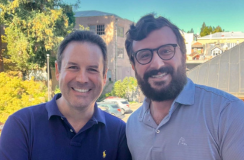
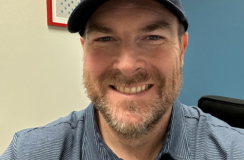
Host: Today's guest brings a broad perspective to entrepreneurship through acquisition. He didn't arrive here by reading Walker Dibel's book or taking an ETA class in business school. Instead, Adam Markley was a partner in an education venture that taught people how to buy a business. The venture had a big UK focus, so it didn't revolve around SBA financing. This steeped Adam in an approach where heavy seller financing and more creative structures to buy a business were more common. It also gave Adam lots and lots of reps looking at deals as he would help evaluate the acquisitions of the members in this community. Flash forward and today. Adam has been involved in many of his own acquisitions and his personal holding company here in the States includes five businesses he either fully or partially acquired and one he started from scratch. Another theme to listen for in this interview is how Adam works with operating partners, a feature that is present in almost all of his holdings. Here is Adam Markley, founder of Prox Capital Group Announcements don't forget this week's webinars today, Thursday, July 18, three top search investors will share their perspectives on self funded search Nicholas James of Minds Capital, my partner Tony Cappert of Workbench Capital and Adam Borse, whom you'll recognize from his Acquiring Minds interview back in February. If you're looking to raise money from investors for your self funded acquisition or are considering investing in this asset class yourself, come hear three super sharp investors discuss their views on self funded deals and searchers in the market overall. That's today, Thursday, July 18th noon Eastern. Link in the show notes of this episode or on the acquiring minds homepage, acquiringminds co. Then tomorrow, Friday, July 19, attorneys James David Williams and Bill Barlow, whose entire practice is devoted to small business acquisition, return for a legal office hours. They'll walk us through some of the common sticking points they see in deals and how to overcome those sticking points. And there will be ample time to answer all legal questions related to buying a business, not just those on negotiation. So come get any legal question you have about your deal or or your search answered by James, David and Bill. That is tomorrow, Friday, July 19th noon Eastern. Link in the show notes of this episode or on the Acquiring Minds homepage, Acquiringminds Co. And finally next week, Thursday, July 25, Connor Gross will teach the merits of buying an existing franchise business and more important, how to evaluate a franchise, network or brand from an ETA perspective. Connor's owned or operated franchise units in multiple systems and he's grown his own portfolio through multiple successful acquisitions, so he knows the power of acquisitions in a franchise context specifically. That's next Thursday, July 25, noon Eastern. Link in the show notes of this episode or on the Acquiring Minds homepage. Acquiring Minds co okay, on to today's episode. Welcome to Acquiring Minds, a podcast about buying businesses. My name is Will Smith. Acquiring an existing business is an awesome opportunity for many entrepreneurs, and on this podcast I talk to the people people who do it. An SBA loan broker, as opposed to a direct lender, doesn't work for a particular bank. Instead, the broker pairs you with the right SBA lender for your deal based on industry terms risk thresholds, then helps you navigate the process better than many lenders themselves do. Matthias Smith of Pioneer Capital Advisory is just such a broker. Matthias worked at two of the country's top 10 SBA lenders, so he's been on the inside of the SBA process and knows well the pitfalls and hurdles and how to avoid them. He struck out on his own to laser focus on the ETA in search space. Our niche is his niche. You'll see Mathias at all the ETA conferences. He's closed over 30 search deals since starting Pioneer in May of 2022, including some acquiring Minds guests. To learn more and get in touch, go to PioneerCapitalAdvisory.com or click the link in the notes Adam Markley, welcome to Acquiring Minds.
[5:11] Guest: Great to be here, Will. Great to be here, Adam.
Host: You've looked at hundreds, maybe more, thousands of small business deals, both your own and those of others. So we're going to hear about your journey down this exciting, if treacherous path and what you've learned along the way from peering inside so many transactions. Start us off with some background, Adam, on you.
Guest: Yeah, my background is I started in public accounting straight out of school. I actually went to school for engineering. Got bored of it. Insert every bean counter joke you can ever imagine about switching from engineering to accounting if you were bored there.
Host: From one nerdy thing to another, from
[6:01] Guest: one nerdy thing to another. And what's interesting is even before, well, I guess simultaneous to that switch of major, I had this feeling I wanted to buy businesses. And before I ever knew what the term of rollup was, or entrepreneurship through acquisition or even just the concept of it, I always thought about buying. Buying the simple business, the laundromat, the car wash, and then buying a lot of them, knowing that economies of scale add lots of margin and things like that. And I don't know where that came into my head. I came from a very non entrepreneurial family. Both my parents worked for the government, my father, the federal, my mom, the school system. And so certainly not entrepreneurial in the. The classic traditional. Raised in a small business or business owner, own family or things like that. And so I went to school, got bored, switched to accounting and started down a very traditional path. Instead of going to the big four, one of the major accounting firms, I went to a small regional firm based out of Richmond, Virginia and I I spent most of my time working on small business clients. Pick an industry, I touched most of them. It felt like at that time, especially the hotbeds of what we would know as acquisition targets today, things like landscaping companies and H Vac companies and personal training and physical therapy and chiropractors and eye doctors and professional services of all kinds of. Including a law firm that ultimately my older brother ended up working at for a few years. Later in life I touched so many different businesses and this thought came to me, what do I need to do to be successful? I'm working on tax returns and accounting work for people who had far more wealth than I had. We didn't have a lot growing up. And it was what do I need to do to achieve what they've achieved? And it came down to two things. Basically. One was they either own businesses or own real estate. And oftentimes the people who own real estate, even if they own many properties. And I saw people with 50 plus properties in their holdings. It's the business of real estate, not the real estate itself that was driving most of the value. So it all comes back to business. And that continued to reinforce the desire to be entrepreneurial, to find a way to, to really lean into business ownership at some point. Fast forward 10 years. I ended up bouncing around in my career through a few industries. I left public accounting, I touched hospitality, I touched restaurant, I touched, I touched again public accounting and worked on construction clients and manufacturing clients, online education, you know, charter school education. And so through this I ended up going through what felt like lateral moves predominantly driven by personal life choices and relocations and things like that. But I didn't realize at the time what it was doing was it was reinforcing the exposure to a wide variety of industries, a different size of businesses I was working at, small to large. You know, the restaurant I worked at was one of the largest franchisors of Ruth Chris, the high end steakhouse. And this was an immigrant from Cuba who worked in the original restaurant under Ruth herself, if you will. And she gave him his first restaurant. And he ultimately owned nine of them, plus valet company, plus other concepts and things like that. And so you got to experience not just this cross industry exposure to what scale looks like, but people who had started from nothing and grown into something. This was a guy who was getting his haircuts and nails trimmed in the office and had a driver and things like that. Coming from a, you know, an immigration situation and had no money. Right. Was a dishwasher at 14 in the restaurant. And so you got to see these kind of stories really close up in different ways. And I saw bad as well. Worked in, worked in automotive and it was an inherited situation. The son inherited the business from the father. And you know, you want to talk about business crash course of what small business ownership can be. The Friday before I started working there as the controller at 24 years of age, an 8,000 square foot building burned to the ground. So you're walking into an immense problem on your first day. Uh, basically the, the number two sitting next to the owner of this used car group, body shop, service center, all this stuff. And then on Wednesday of the, the week I started. So not five days later, the IRS levied the bank accounts and emptied cash. And on Friday payroll was due. That's a heck of a first week of any job. And in the small business world, while it sounds extreme, these things can happen. And it just shaped my knowledge and shaped my experience as I, as I walked through this part of my career. And at the time it felt awful. I was working 80 hours a week and life was terrible. Long story short, I ended up through my career. I ended up at a very entrepreneurial organization that I know you're familiar with. It's a very large digital publishing company based out of Baltimore, Maryland that focuses on financial and health newsletters. It's a large multinational company and this was where I reinvigorated my entrepreneurial spirit to say the least. It's a company that rewards self starters and initiative or people who will see a void and fill a void. And I ultimately did nothing. I was hired to do and that truly reinvigorated things. I ended up overseeing from a financial strategy and operations perspective, the entire non publishing business, both internationally in the US from a financial perspective and so did that for a few years and then flipped to the revenue generating side of the business. Ended up starting to do joint ventures and negotiated deals. The problem and downside with that is they wanted me to then start my own division, which I did and through that process had an opportunity to acquire an education company that taught people how to buy businesses and that is the launch pad to everything I've accomplished in the last half a decade or more was that opportunity to acquire that education company, manage it, become a co face of it for a number of years, coach and educate hundreds of students, see as you mentioned, tons of deals along the way, and ultimately start the holding company I have now and start entering into the small business acquisition space in a really material way.
[13:19] Host: Adam, I guess a lot of guests have the notion of entrepreneurship as the Silicon Valley notion, so that, you know, they've just the Mark Zuckerberg, Elon Musk, that's what an entrepreneur is. They don't identify with Mark Zuckerberg, therefore they're not going to be an entrepreneur. And then when they learn about eta, it's a light bulb. It's like, oh, this is another path to entrepreneurship. And by the way, it's a pretty compelling one. There's a. Turns out there's a lot of money to be made in small business. So it sounds like your, your recognition of that came gradually. As an accountant, you were seeing inside the world of small business a lot and seeing really successful stories in people. So that was you. You already knew by the time you started working directly with business acquisitions that small business was a really interesting place to make a career.
Guest: Absolutely. I'll never forget one moment a guy had started a baby formula company. And as anyone who's had kids understands, that's not a cheap, cheap investment if you need to feed a child baby formula. So he started a baby formula company and I'll never forget his minor kids. His kids were like 8 and 10 years old. They had their own QuickBooks accounts to manage their transactions as children. I remember his, one of his estimated payments for the particular year I was working on at the time, and it was, you know, probably what, 2006 or 7 or something like that. And I'm holding an old school personal check handwritten for seven and a half million dollars. And there's only a few moments like that that'll, you know, create an imprint in terms of what is possible. Um, and this is a real company. And I think having touched so many businesses so early in life, in my career, you realize everything around you is a business. Someone had to make it, produce it, distribute it, service it, all of those things. And there's no right way to make money. There's many ways to make money. Yeah. And, and it just created that deep exposure and understanding that there is a really powerful opportunity to really lean into business ownership at some point. And I suffered the imposter syndrome that so many people do. Right Feeling like I couldn't do it or I didn't have money or anything like this. This was the mid early aughts, right? I was young, I was 22, 23, 24 years old. Surely I couldn't afford to do this. Surely I couldn't, you know, make something like this happen. But the real reality is I probably could have, but just didn't have the knowledge or awareness at the time around the components. We're also familiar with what the SBA is, how you can actually structure deals and things like that. But at the time it was just a pure recognition that there's money to be made everywhere in just about every type of business.
[16:19] Host: Adam, another thing you'd said in the, in the pre call was your expo as the accountant for so many of these small businesses. Eventually they were also turning to you to help them grow, or maybe you were stepping up to point out how they could grow because I guess they would maybe be practitioners of a, of a, of a skill that they then sold, but they weren't necessarily, you know, P and L focused or savvy. And you kind of learn the skill of showing them how to grow. Is there something to say there?
Guest: Yeah, yeah, there's a. There's a couple of experiences where I remember one was a physical therapist in between patients. He was doing QuickBooks and I would show up at the office and we'd be talking and this was a guy who had quite a few kids and was trying to figure this thing out. And it's like, how do I not do this? He was in classic, I'm operating the business and I need to be not doing this. And so as a 22 year old at the time, or 21 year old, whichever it was this fascinating story of, oh, that's a great question. I should probably go figure out the answer to this because that's real value being unlocked. And so over the next few years, he ended up opening multiple locations, ended up treating only his VIP patients and no longer doing his books and things like that. And it came through the course of, you know, candidly, predominantly his hard work, obviously, but being able to have a sound, be a sounding board and have some level of input, no matter big or small. At the time, it felt really big to me. But the reality is it was an entry point into understanding that with growth comes even further opportunity, both financially from a lifestyle perspective, in the freedom of time, the capacity to execute on what you want to execute.
[18:16] Host: What do the following acquiring minds guests all have in common? Doug Johns, Morley Desai, Tim Erickson, Chirag Shah, Shane Ursam. They all went through the Acquisition Lab, the accelerator in community for people serious about buying a business. But they represent just a sliver of the Lab's success stories. The number of deals across the Lab's cohorts now stands at over 120, with over $300 million in aggregate transaction value. The Acquisition Lab was founded by Walker Deibel, author of Buy Then Build, the book that introduced so many of you to the very idea of buying a business. The Lab offers a month long, intensive, almost daily Q and A sessions with advisors, live deal reviews with Walker, deal team introductions, and an active community of serious searchers. Check out acquisitionlab.com link in the notes or email the Lab's co founder, Chelsea Wood. Chelsea Buy, then build dot com.
Guest: Great.
Host: Well, thinking big, we'll return to that theme. Or maybe it'll just be self evident when we hear about what you've built. So take us back now to the story. You're at this publishing company and your entrepreneurial fire in the belly has really been lit. This company's culture encourages that. And you acquire into that larger business an education business about buying businesses. And when your own education about buying businesses, therefore it gets really, really serious.
Guest: So yeah, exactly. Yes. So during that period of time I'd already again started doing joint ventures and other acquisition style things, advising on deals predominantly for the company. At the same time I started looking and dabbling a little bit with what it would look like to acquire something myself. But this opportunity came, a mutual connection ended up introducing me to the founder of this education company. And over the first two to three months we ended up having great conversations and connection and he came back to Baltimore for a visit and I offered him a 100% earnout deal to acquire his education company and he accepted. Little did I know at the time he was actually coming to offer me to give me half the company if I would leave the big publishing company to come run it. That came in retrospect, but at the time, yeah, he agreed to that. Fast forward six, seven months. We ended up having to make a closing payment because the legal team at the big publishing company needed to make changes and had to give cash as a result. But yeah, I successfully bought that into the education company and into the division I had started and was immediately thrown into not just an advisory position for students of the business, but very much headlong into an accelerated path of oh, we're not just building an education company, we're going to build a holding company, we're going to Build a business that not only teaches people to acquire businesses both in the UK and the US but also teaches people or allows us partnership opportunities through that education and gives us the opportunity to see opportunities, evaluate opportunities and then ideally get involved from an equity perspective.
[21:51] Host: So to be clear, you're educating students, the students are then going to go out buying businesses, go out into the world buying businesses and you may participate in the equity in some of those deals.
Guest: Yeah, we had like any education company, you'll see this is no different than some of the bigger names you'll see in today's world. The Cody Sanchez's, the Roland Fraziers, even what some people in the ETA community are doing, SM boot camp and acquirer and, and others like that. We where they have an ascension model, people are going to come in on some kind of coaching or course and then ascend up and that ascension is getting you closer to the expertise and in exchange for that higher value service knowledge and you know, say deal review and things like that, you're getting a really up close opportunity to potentially invest. And we actually created a pro program, we called it the partner program where people, people would pay us a subscription annually for to bring us deals that we would review and take equity in if we helped facilitate a close. And at the time, at the time we were trying to do it with basically no investor dollars. We were trying to just negotiate these hyper aggressive, predominantly seller note funded, minimal equity injection kind of deals. And the SBA actually wasn't a huge component of most of them because a lot of the education stemmed around my partner at the time was someone who came from the uk. Someone who didn't have personal guarantees don't exist over there in quite the same way when acquiring companies as they do in the States. And so there's this mindset of bringing that over to the states to try to avoid personal guarantees and things like that. As you well know from a couple hundred interviews, the reality is personal guarantees are a must here. And it led to a huge amount of volume of deal review and a huge amount of trying to support acquisitions, even ones we weren't necessarily going to acquire. But trying to navigate this tiny thread through a needle scenario of closing deals in a classic LBO style with some kind of non traditional financing. And you got a lot of reps in talking to sellers and brokers and trying to navigate that process. And it ultimately again, you don't realize until later at the time the ability to communicate with intermediaries and everyone in the entire acquisition process was honed on trying to sell them something impossible. You know, this isn't selling them something they need. It's trying to sell them something that's really difficult to sell. Most people who have a good business aren't willing to accept a 90% note for their business. They're going to get good value for it. They want cash at close, they want material assets in exchange for what they've built. And so to go through reps of getting people to try to agree to something like that, man, you, you learn a persuasion of a different kind. And we saw people close deals. You know, ultimately in my own portfolio we've closed a deal that was fully seller financed with a small equity injection from us. So I've seen it work and I've seen it happen and it can happen, but in a relevance to the vast majority of people who are going to acquire a meaningful small business. So we're not talking about something making 50 to 200,000 a year of earnings, talking about something a bit more meaningful. You're going to, you're going to have a personal guarantee. And the likelihood a seller is going
[25:34] Host: to hold
Guest: the vast majority of the deal transaction is just unlikely. And I know I've seen hundreds and hundreds of reps at that doesn't mean it's not possible. But the likelihood is small. And the more you put in either investor dollars, your dollars, et cetera, the more skin in the game, the more likely a successful outcome. And it's not preaching to the choir everyone, most people will already recognize that. But I've seen an entire world where people don't necessarily have assets and they don't necessarily have the understanding of what we collectively know as say self funded search, where you can get an investor to backfill. This was people who just thought they had to scrap it together. This is the non ETA business buying space where people are just trying to figure it out. And it's a, it's such a fascinating dichotomy versus the higher education, the search fund model, the self funded.
Host: Let me get a question in here. The because I do want to hear about your thoughts on the kind of that world and how it operates in parallel to kind of our ET world. But now that you migrated from started and migrated from that world to kind of quoteUnquote ETA. Do you reflect back on the kind of seller financing, 100 seller financing or majority seller financing that was taught in that world differently in that, you know, maybe it's only for people who don't have better options or it's only for quite small businesses like you just finished saying like you're. Or it's for a European audience where there isn't the sba. I mean any, any anything that you now see with different through a different lens because you've been exposed to this ETA world.
[27:34] Guest: Yeah, I would say one of the biggest things is it's a forced recognition of risk even without a personal guarantee. The math has the math. What most people don't realize or don't recognize or think about is seller financing is typically not as advantageous as the sba. The sba even at the higher interest rates today. Back when I was living this world, you'd get a five and a half or six percent loan versus the 11% and so you were typically in an upside down position. Seller notes at that time would still be 5, 6, 7% but instead of a 10 year term they would be 5 year. Sellers might want 3 year. And the reality is it all the risk factors that you see in the ETA world in many ways are magnified because it's a less advantageous style of acquisition debt. And how you evaluate cash flow, debt cover ratios and things like that were so critical. So even though you might not have that classic bank backed personal guarantee, the emphasis and the importance on the stabilization of cash flows post acquisition, in many ways it was even more severe given the aggressive nature of the expectations around seller financing. And it forces it forced to evaluate you to evaluate dependencies in a business in just a different way. I think having looked at, you know, hundreds and hundreds of more traditional ETA styled acquisitions and things like that, people have the tendency to gloss over some of those elements because there's security in a 10 year term loan that creates a consistent expectation. Now that rates are as high as they are realistically rates aren't going to go up another 5% in a 24 month period of time. And so there is a, there's a potentially a false sense of security. I sense sometimes when working with searchers that it's a nice big loan and it's got friendly friendly payment terms and realistic interest rates still in comparison to the overall risk of what's happening. And there's this potential lackadaisical nature that can still come to the most critical elements of a business acquisition, which is the core fundamentals of cash flow working capital debt cover ratios and the people risk to a business. And those were almost emphasized a bit more when you had a more restrictive means of acquiring.
[30:14] Host: Yeah, yeah, that's really interesting. I hadn't, I hadn't realized that. And okay, returning now to I think where you were going and something I really wanted to hear you riff on is again, this, this contrast between what we're, you and I are calling the ETA world. So maybe I should just define that. It's just kind of the, you know, the Acquiring minds guest pool of people, mostly American doing this with sba, but not necessarily American, and typically buying larger businesses. Although of course I have had plenty of guests who bought quite, quite small businesses and have done phenomenally well anyway versus and many of them coming from MBA programs. Although as people have heard me say many times, I try to not have it just be the NBA crowd. So I really, really don't try to get, have it be too much of that. But of course, the NBA, that crowd is very represented, maybe overrepresented on the POD and in ETA in general. So that's what we're, we're calling the ETA world versus the kind of coarse world. Well, you define it. What is the other world and how would you define it?
Guest: Yeah, I call it just the, the buy a business crowd.
Host: Right, okay, the buy a business crowd.
Guest: The just buy a business crowd. ETA is a funny thing, right? It, they, they took buying a company and needed a better name for it to market at higher ed. I don't know, maybe that's, that's, that's a little cheeky. But the reality is, is that all they did is to find buying a company and just create another name. You're, you're becoming an entrepreneur through acquisition and, and there's no, no harm in that. Right? I want to be clear, there's no harm in that. Branding sells and, and is it makes things easier to define when it's, when it's clear. And ETA in and of itself represents, rightly so, a much more sophisticated audience. Right, we'll use the Acquiring minds audience. Just look at the guests you have. Look at the people who listen, the people who engage, the people who follow. While yes, there's a lot of MBAs, and those MBAs are coming off the back of maybe you speaking at some of these higher educations, plus, you know, plus the podcast itself. Right. The doors are opening to a broader mid level career, fairly well established, typically higher earner individual, pretty consistently, comfortably making into the six figures or beyond, have a higher level of education, typically, that is the ETA crowd and you define that pretty well this. And it's as you rightly said, it's not all MBAs. There's plenty who don't have it. They, again, the broader. Is that mid career, typically a little bit More white collar professional. The buy business crowd is basically the bottoms up approach, right? These are people who are seeing advertising, they're seeing direct marketing for courses, teaching people you can buy business with relatively little of your own money or none as some of them pitch the boring business concept. You're going to go buy car washes or ATM routes or all the way up to what we more typically would understand a typical ETA acquisition target. But it's direct training. There's no MBA. They're paying 3, 5, 8, $15,000, you know, for a course or coaching or training and education. And during that they're getting exposed to a whole bunch of knowledge base including how to do SBA loans, including how to structure deals and evaluate companies. And these are crash courses and what a transaction looks like. And I remember we did something that I loved from a coaching it was my favorite thing to do and it was to review deals live. Every week we'd review two deals live on a, on a coaching call. And it not only stress test and exercises that muscle when you're doing it in front of an audience, but it's the most transferable skill any searcher can have and that it's to how to evaluate a company off relatively little information and understand whether you want to move forward or walk away what the major risk or not risk are within the limited scope. Most people who are looking at broker deals are getting a sim right. And so your ability to educate people aggressively and consistently with what it looks like to evaluate and they were alive. I wouldn't have reviewed a deal before. I'm seeing everything for the first time on the call and so would my, my partner and, and, and at the, at the time what it creates is this live fire exercise. In a, in a given year someone can watch a hundred deal reviews and see the reps of how someone more experienced would evaluate a company, break down some risk, break down some concerns and, and I think that is something that the buy a business crowd gets access to in a significantly higher level than the ETA crowd. Right. You might do a case study or two in your higher education course, but the vast majority of your knowledge is coming from doing it, going out there and talking to brokers and looking at deals. And you don't know what you don't know in that space. And I think there's an interesting gap on the ETA side that the education providers actually facilitate very typically. And I think what's interesting is if we're looking at the vast volume of individuals who will buy a company, ETA will be outnumbered there's only 30 schools teaching it, let's say right now. And if they're all turning out 15 kids a year, that's 450 people that will go in the search. And certainly we both know the ETA side is much bigger than that. But, but there's a constraint due to exposure and it's the reach into grabbing people from actual lower middle market private equity firms, analysts and other people who are working or associates. It's people from tech companies, it's people from, you know, who are typically going to search out and find and come across a podcast like yours, for example. That market is growing, but the amount of dollars that are being invested in the online education side rapidly dwarf on a one to one ratio anything that's happening in eta. These are eight figure revenue businesses. These are businesses that have significant profit margins to reinvest into their own acquisitions, their own portfolios and then more importantly to new customers. They are spending millions of dollars a year on acquiring students and acquiring customers and bringing them into this buy a business fold. And there's tons of these people. Oftentimes they are looking at somewhat smaller companies because they feel bite, sizable, they feel more manageable given the background people are typically coming from. But you know, as a quick example, we had a student who will go public in Australia for a roll up. He did and he came through this education program.
[37:34] Host: What kind of business did he buy?
Guest: It was in the medical space. He was rolling up medical practices predominantly in Australia and in the span of three years between raising some investor capital and otherwise already was a nine figure business.
Host: Amazing. Wow. And these are.
Guest: Yeah, it was a unique guy, super shy, right. You know, hated to be public for anything for you know, obvious reasons was focused on what he was doing. But like there are people like that have come through. I mean we've, we had exposure shown in the UK, right, who in 18 months acquired like 23 hair salons. And it all started because he bought one from his first daughter to run and ended up building a significantly sized set of businesses off the back of it. So I say all that simply to say that there can be tremendous success no matter what entry point you have into the world of acquisitions, whether it's coming from the more traditional search and ETA and the in the lingo we typically speak on that side versus just the bootstrap people trying to figure it out. The guy who's, who's been managing operations at a landscaping company for 15 years and is just ready to figure out how he can own it or, or something like that, that was great, Adam. Thank you for that.
[39:03] Host: Adam, let's now hear about your own acquisitions. So you have done, I think, 6, 5 in the portfolio today, you may correct me. Give me the headline number and then let's go. Let's. Let's hear the quick version of these acquisitions and really what you've, what you've built now, personally, after having been an educator and exposed to it so much going back to your previous job.
Guest: Yeah, absolutely. So the holding company itself, and I've done transactions outside of the hold company. Small, minor, they're less important to the, to what's really being built. And there's just a couple there. So the hold company, Prox Capital Group is, is our business. And Prox. Yeah, Prox. Prox and, and Prox is currently has six positions. Five acquired, one actually started, but we, we had acquired two other businesses and have since exited those positions. The first two businesses we bought actually inside the holding company were in the uk and the structure and style of those deals is wildly different to how you acquire a company here in the US And I actually have to say it's one of the coolest things to realize how different deals get done in different countries. Now, you've had guests who have done things outside the US as well. But, you know, on a very simple transaction, the tax laws, the debt structures influence how business owners think when they're preparing for an exit.
Host: Yeah.
Guest: For example, the vast majority of a closing payment in the UK will come from the business's own cash versus what we traditionally think is coming from a bank's money. They have tax rules that incentivize them to leave cash. You'll see a business with 3 million a year of revenue that has 2 to 3 million of cash on the books just sitting there. And so the style of deals is very different. It is far more likely to do a no money in deal in the UK as a result of this. The very first deal we did required $0 from us. The entire closing payment was funded out of the business, and then the seller held a note for the remainder of the purchase price over five years. Those deals are far more common and far more likely in the uk. So as an IT security consulting company, we also bought, we call it a pub in a box company over there. So if you walk into a restaurant, things that might hold napkins and silverware on a table, the little tchotchkes, you see an. A board that sits outside advertising their specials or things like that, it was a distributor for all of these things worked with basically Every major pub chain and certainly some hotel chains and things like that over, over there and yeah, so, so bought those two and then we've also acquired in the us so the five companies we have in the portfolio currently are all in the us. They've all been acquired. Three of them were acquired via an SBA loan, two of them were completely independent of any bank financing and so seen it at all levels in terms of structuring and how to close. We've acquired broker deals, we've acquired off market deals.
[42:24] Host: Adam, when you say we, is it, is there, do you have partners or is it you or what does that look, what does the ownership look like?
Guest: Yeah, so I'm, I'm effectively nearly 100% of the holding company. I've got a couple minority partners in that, including my, my number two in the business. But we also are big partners when it comes to acquiring a business, whether it's an operating partner who's going to be in it every day or someone else to co invest alongside that either has some strategic or operational value in some capacity. I'm a big believer in partnerships. One plus one equals three, five or seven, caveat, if done correctly and done well. And I, I've certainly had experiences where it hasn't gone well and know what that looks like. One of our UK businesses, for example, we had an operating partner who emptied the bank accounts and ultimately after fighting for a year, ended up us having to shut down the business. I mean, that was expensive failure, to say the least. Between fighting to keep it open, fighting to recover from such a traumatizing event. The staff knew what happened, people knew. And in a small business that's a wrecking ball culturally and operationally and financially at every level. So I've seen what bad partnerships look like and understand how to better work through those as a result of that. But I'm a big partnership guy and even with the negative experiences and having split from partners previously, having had that other experience, I would still always recommend partners where it makes sense and to consider it simply because we will always be our own limiter when it comes to the growth of a company. We will only ever grow to what we're capable of individually. There's a reason small businesses are small when you're buying them. There's a reason that company isn't $100 million. There's a reason it's 2 million or 3 million or 5 million. And we as buyers going into that, that is one of the first things we should be evaluating with any company is why is it small and then recognizing that we will have our own limitations that create a ceiling. And so the benefit of partnering in my mind, is to help create an even higher ceiling for what that individual business or opportunity looks like. So different businesses of ours have different structures and different ownership percentages and things like that. We are either majority or co controlling partner on the existing portfolio, even if our ownership might not be a majority on one of them. That's our med staffing business. We partnered with the original founder on that.
[45:08] Host: But take us through what the five businesses are.
Guest: Adam? Yeah, Perfect. So I always say we have a couple logistics adjacent businesses.
Host: Okay.
Guest: One is a heavy truck transmission and differential rebuild facility based on the east coast. The prior owner had been in the industry for 40 years, started his own business basically 20, 25 years into his career, and we bought it thereafter. That was an SBA deal. We have an operating partner who's in the business every day. Then we have a truck driver recruiting data platform, job board business. Similar story that the business was started in the early 90s, evolves through the digital age. Huge amount of organic flow and traffic. It serves a very specific niche of the trucking industry. We have a medical staff.
Host: Is that kind of a lead gen business?
Guest: Somewhat of a lead gen. Right? You're driving. Yeah, you're driving applicants to various carriers and fleets. And again, it's, it's somewhat of a hub for the industry. The subset of the industry it's in, it's a little bit of the watering hole from a content perspective. Uh, really took advantage of the, the. The 2000s when forums. Late 90s and 2000s and forums were the place where people congregated and built a incredible content load and, and authoritative position on the Internet because of how much traffic.
Host: So it's a big forum for truck drivers who are interested in this niche where they congregate and talk.
Guest: Yep. In addition, you know, it's. There's ad platform behind it, driving traffic through paid acquisition and funneling those through technology and creating your matchmaker to available opportunities for carriers, to people who are actually applying and trying to create opportunities there. So then we jump into the medical staffing business. So that's more of a joint venture than a full acquisition in today's world. We'll call it a partial acquisition. We acquired half of that company with a partner from the original founder. She had 10x the business in Covid, ran her entire business out of a pen and paper notebook and it was doing more than a million a month of revenue. There's no other staff but her in terms of managing these acute care contracts with hospitals. And so fortunately for us, we came in at the right time. My, my number two at Prox, he's our CFO and COO. In his prior life he had 15 years of medical staffing agency experience. Helped build one from a few million of revenue to, to into the eight figures and help facilitate an exit. So we were the right people at the right time. And not only that she received a physical letter in the mail. She was a proprietary approach. Got a letter custom to her and we ultimately were able to negotiate and close that deal. Another unique.
[48:14] Host: So she was a one woman shop.
Guest: She was a one woman shop running an eight figure revenue business. Wow. You know the, this, I mean that's if we're discounting the W2 contract labor. Right. So where it's contracted with hospitals, I mean the actual staff was you know, up, up closer to 70, 80 depending on timing. So but from an administrative perspective it was her and only her. And, and so it was a unique scenario for an acquisition where we negotiated the terms and within a week of the terms being negotiated. So there's no legals done, there's no, nothing done. We were already working in the business to stabilize it. So and we were getting paid to do so. So for the entire closing period we were paid weekly to support and help manage and facilitate stabilization in the business based on the growth it had. And by the time we closed, yeah we were 10, 1012 weeks into already working in the business. No better way to do diligence than actually working the business. So she, she fortunately left the pen and paper behind. There's a CRM. There's all kinds of infrastructure around the operations of the business that our expertise was able to provide and stabilize things. Okay. So that's that business certainly the most attractive multiple we've ever acquired off of it was about, about a 0.3 on a trailing twelve months of earnings. We bought in at and you know, with any, any kind of upside for her contingent on a future sale. So she was three. Yeah. So how does that, how does that work?
Host: What was the. Can you share what the earnings were and then what. I mean can you put some numbers around it?
Guest: Yeah. So earnings were, earnings were above seven figures on the trailing twelve month. We, we bought in most of the cash that we put in. We, you know, we put a quarter million in, 200k of that cash had to stay in the business as working capital. So not really now that we own half, half of that's still ours. And you Know just based on the actual value we paid for the, for the ownership there and retention. Very small, very small multiple now.
Host: Wow.
Guest: She does have an opportunity if know at some point we sell the business for her to, to pick up preferential on, on our future exit. But in terms of cashing and walking in, super attractive to us. And it is, it is about as extreme of an example of right time, right place, right person, right everything. We had the right experience, we had the right, just everything. She wouldn't have ever, you know, thought to talk to a broker. She wouldn't have ever thought to, to ever enter the acquisition or sell sales market at all. It's because she got a letter and it was customized to her. And when we got on calls we were able to convey some trust and experience and knowledge and support. I mean I was living in Mexico at the time. The business is based out of Utah.
[51:37] Host: And this writing a letter, Adam, is, I mean occasionally you'll hear a guest on Acquiring Minds talk about having. Having written a letter, but I think you're talking about writing a letter kind of from the kind of the tactic of the buy business crowd or looking for real estate deals crowd where you're kind of.
Guest: Yeah.
Host: Where you're kind of sending. It's more of a tactic than correct. Well, I don't know. Why don't you, why don't you say more about that?
Guest: Yeah. So it is more of a tactic. Right. The idea is when you're looking proprietary searches can look all different levels. I think certainly your listeners are going to be familiar with go scrape a list or get a list and cold outreach via email or LinkedIn or things like that. The reality is there's so many ways to outreach on anything. There's so many more channels or mediums than LinkedIn or email and different industries, you're going to be far more likely to get a response for different channels. It's just like any advertising. Some businesses, their entire business development strategy is door knocking. Right. And you look at say a pest control business, they might send guys in the field and they're just hammering the doors 10, 12 hours a day and that's how they're building that business. Anything that can apply to an actual operating company's business development strategy can apply to a proprietary service. So every manner of filtering, every manner of targeting, every manner of communication can all be leveraged in a proprietary search. But typically speaking, people are only thinking from a scale perspective. In eta, I got to hit as many businesses as possible that meet my criteria. And I would argue that it's sometimes better to potentially balance. And instead of being a giant list and getting a fractional, teeny fractional response rate, what if you actually show yourself differently and have a little bit more customization, a little bit personalization to who you're talking to? Again, remember, the small businesses are small for a reason. These are individuals who are running them and they have their own feelings, thoughts, emotions. Even if they're making a million a year. Right. They still have that. And it's such an easy way to potentially differentiate yourself from the noise because basically every company that's making a million and a half a year is getting some kind of doors kicked in or knocked right now. So how do you stand out in a way where they're not actively looking to sell? But you're a different voice, you're a different message. And I've seen it work. I've seen people get response rate on letter writing that are 20, 30, 40%. You'll never see that for anyone else doing proprietary search, but they're able to do it simply because they're putting a little bit more specificity into what their, their outreach looks like.
[54:31] Host: If people want to hear more about a letter writing strategy that went well, they should check out Tato Corcoran's interview. Tato in Milwaukee who sent out letters to business owners around, around Wisconsin. And she would say she put her photo there in the letter and so she would, she got a huge number of business owners to pick up the phone and call her. Now she would say it was because they were more curious about who this, you know, young woman you met sending them a letter to buy her business was than it, than they were actually good leads. And she ultimately bought a business not based on any of those, but it is a good. And she came from the real estate world, so she also letter writing is, is much more commonly seen among kind of real estate people looking for deals
Guest: than it is in our world. It is and interesting. Yeah. But just to add, but just to add to that, right. It's people ask me all the time, should I, should I only look at on market or should I do off market? What should I do? It's the, the analogy I always make is why run a race with one leg? You're not guaranteed success in any, any path. Give yourself an opportunity on both sides and know the industry, know the kind of sellers you're looking at and figure out what channel is going to be best to have a, a reasonably successful response rate. Yes. It doesn't mean you'll actually end up closing something from proprietary. But it also doesn't mean you're going to guarantee close something on market. Buyer interest has never been higher these days and so why not give yourself every opportunity? I mean we both know people who have spent years searching before they've they found something or gave up and fell out and went back to the old grind of a W2. And if you're going into that as a full time searcher especially there's literally not enough deals that you should be looking at if you're working 40 hours a week on your search that are on market, if you've got good specificity around geography, industry and all that, there's just literally not coming enough coming to the market in a day for a week. So what are you filling your time with? Well, it better be some, some other activities that will help generate success for what you're ultimately pursuing. Otherwise the likelihood of you having a successful result will be slim or certainly marginalized in some capacity. So I'm always an advocate to say like it doesn't guarantee any additional success but it just increases your likelihood of coming across something that, that that can enhance what you're ultimately trying to do.
[57:06] Host: Adam, tell us about the other two businesses in the portfolio we haven't heard about.
Guest: Yeah, so the two other ones we've acquired. One is a digital marketing agency. It's actually here in Denver where I live now. So small agency, SBA loan, predominantly organic and paid social and we're actively trying to expand that both through acquisition and, and just organic growth. And then the last business in the portfolio that we've acquired is a 89 year old flagpole and banner company. It's whenever I talk about the portfolio it's always a really fun one. And it was started in 1935. We bought it from the third generation at one point back in the 80s 90s it was a significantly larger business with multiple locations and they did a whole of bunch, bunch of services from awnings to wrapping cars to making banners and installing flag poles and all that. They have such a cool colored history. For anyone who understands or been around regionally in the mid Atlantic where it's based, the flag pole on top of the White House, that company put it on there. How great its clientele is. Universities and professional sports teams, the Ravens, the Orioles and predominant areas not too far from from where you're based will like National Harbor. If you go there and look at the banners we maintain and do those poles and do those banners often.
Host: No, that's great.
Guest: And so when you say banners, what
Host: do you mean exactly? Adam?
Guest: Yeah, great, great question. So predominantly it's. You're driving down a road and you see road and you see light poles in a city and you see a little banner sticking off the side, Right? Yeah, we, we help design, we print those and then we do the installation. So this is a company that's predominantly B2B. It's got bucket trucks and install crews and, and, and the, the vast majority of their work is designing and installing flagpole setups, banner jobs. So the convention center in Baltimore, for example, has a giant basketball tournament every spring. We do all the banners for that every year in D.C. there's, I'm trying to remember which neighborhood they have giant snowflakes. I mean, these are four foot tall lit snowflakes that they hang off light poles in the winter. We install those every year and replace the bulbs and do all that stuff. So it's a really cool business. Still do awning work. So we just redid all of the Ravens awnings before this past season when they won the AFC north last year, we hung in their practice facility the AFC north championship banner.
[1:00:05] Host: That's really cool.
Guest: It just creates really cool things. Towson University, we did this vinyl graphic, both outside on brick and then a different one inside. We have a really cool time lapse of the installation and it's this kind of geometric looking tiger, which is their mascot. And so we, we can do all of those things. It's just, it's just a really, it's a cool business. I tell people it might not be the one that, that ever makes me enough or makes me a ton of money, but whenever anyone asks how long I'm going to own a company, I got 11 years till we hit the Centennial. And darn if I'm getting out of that one before then.
Host: Well, and it's one of those where you can point to a dollar bill. The White House must be on one of our bills, isn't it? You probably don't make out the flagpole, but you can pretend like your business is on every $5 bill or whatever.
Guest: It's just so cool. Right. We've also put the one in the Rose Garden, so. Right outside the White House as well.
Host: Yeah.
Guest: Um, yeah. I mean, those are, it's. It's not just an installation job at that point. Right. There's a ceremonial element that goes to it. So when we were doing the Rose Garden, there is, there is US Military there to actually raise the flag once the installation is done. Sure. And it's a, it's a bit of a ceremony and it's, it's just really cool, cool to see. It's, it's, it's cool for the team to have experienced some of those things and just, just makes for a really powerful connectivity to so many events. Last one and then we'll stop talking flagpole business. But back in the 90s, Cal Ripken broke Lou Gehrig's consecutive game strength. Right. I remember well, yeah, the iron man. Right. And in the outfield of Camden Yards there's a, just past the outfield there's the warehouse. It's very well known on Utah street and on the side of the warehouse was giant numbers 21, 31. And that was the number of games to be broken. And when Cal broke it and you dropped the two to go 21:32, one of the prior owners was hanging out of the window on the warehouse dropping the two. You know he was featured on the news back in the 90s and like it's just, you know, those are really cool moments in history and lore that only a small business you feel like and only one that's been around for a long time can have that kind of gravitas and can have that kind of history. And what was attractive to us was they did zero marketing when we bought them it was 100% inbound revenue. 100% inbound sales. They still get, they sold a division of the company in 1985 and they still get calls in 2024 to provide that service.
[1:03:09] Host: Right.
Guest: I mean that's not. I don't even know how many ages have we gone through of life cycles for 39 years basically to have some kind of established value of that, that scale. And, and anyways it's, it's a cool deal. That one was also a non bank transaction. The seller held the vast majority of the, the deal in paper over 80% and, and we were able to close it.
Host: So that's a great, it's a really neat business Adam. And so I have to ask since you. It was the, the classic case of no outbound all just taking orders under your ownership. Is it, was it as simple as it seemed from the outside to just turn on digital marketing or whatever your marketing tactics were and goose sales or. Not so easy.
Guest: Not so easy for a couple reasons. One, going into a business like that, you have to spend so much time learning the business. So we have an operating partner in that business. He relocated to Baltimore, he runs it, he's there every day. It's a lot to Learn there's some technical aspects to installing these things and selling some of this work. And so for us, the main focus for year one was stabilizing, as you do post acquisition, get some growth if we can, but predominantly because of the nature of the business, really stabilizing and we're still able to grow. I think we put an extra 10% on revenue in the first year, even in that. But here in year two, now that one's primed to really start moving things forward. It's weird to say for what sounds like a simple business. There are some complexities to it. There are. Right when you have people going 50ft into the air to install things, there's liability and there's things you want to know whether you're capable of doing or not. And, and for us, we took an approach very specifically to go much, much slower into any kind of growth. Cause you don't want to get over your skis and jeopardize, you know, the health or wellbeing of any of the staff or anything like that. You know, we had a job come to us that would have been, you know, well over a hundred thousand dollars just for a single poll due to some complexities. And we, we turned it down simply because it would have put us just outside of what we knew as our capacity would have been because the liability isn't worth it. So that was year one. Still had some growth, but predominantly was learning on a very intentional level.
Host: This was your most recent acquisition, so Jan 2023. So you're in it for about 16 or so months. But is your inkling now that once your operating partner gets his arms around the business that your instincts for growing sales, for marketing, that that thesis holds?
[1:06:05] Guest: Yeah, absolutely. There's things they don't do right, for example, they're slow in the winter, as you would expect some businesses like this would be. They don't do anything, for example, with. Or they do very little with commercial holiday lighting and things like that. We're not talking about hanging on houses, we're talking about shopping centers and malls and things like that. They don't do much of that. So we'll look to push into that area geographically. We'll work pretty much anywhere within a three, three to four hour drive of Baltimore. And so there's just so much territory there that hasn't been leveraged. For example, we basically do nothing in Philadelphia and the business is based just north of Baltimore, so it's not even a two hour drive. Our operating partners spent a lot of time in Philly So we're looking forward to starting to work more on those outreach items. And so now that he's learned things, we're actively hiring to back fill some of what he stepped into day to day so that he can, he can actually spend more time on that business outreach. His background's B2B sales and will be something we'll be able to leverage for sure. So great.
Host: Now Adam, give us if you can share the numbers of the total portfolio of your Holdco as it exists today.
Guest: Yeah, so, yeah. So as it stands today where we're just under 20 mil of aggregate revenue, again, we don't own 100% of the five companies I've just mentioned do also have a six business that we started is the our fractional CFO and accounting business. But collectively that's where we're at. We're actively acquiring right now we're under LOI for two different companies. One as a minority investor where we're now back in searchers and the other is an add on to our marketing agency. And those will continue to expand both the, the revenue and the, the profits of the business.
Host: And I, I want to. So we're starting to wrap up here, Adam, but I want to make sure I understand with the Holdco, are you like, how did these businesses come to be the components of the Holdco the. And just looking forward as you continue to build this thing, is there a strategy there? Do the deals come to you because you, you're kind of so networked and you have. And yeah, essentially because you're so networked and so you just look at deals, you have the great luxury of kind of just perpetual deal flow. And you can just when you see a deal that you like, you strike or what. Maybe what, what is. How does one build this Holdco? And by the way, your first acquisition was April 2021. So basically three years. How do you choose the deals that you buy?
[1:09:07] Guest: It's super interesting. So stepping back just real quick is, you know, so we started Prox in September of 2019. We immediately went under an LOI with a business in Texas, an education company, visual and audio education company, working with big brands like American Airlines and Burger King and Tim Hortons and things like that. And that was a story in of itself. We got SBA approval, did all that and we walked away the day before closing. So we've been in this all the way back to that time frame and subsequent to that. We bought our first company in the UK at the end of January of 2020, closed on the next one in November of 2020 in the UK and then our first US acquisition was as you mentioned, April of 21. So these five companies we have in the US today, we actually bought all five of those in a 21 month period of time. Which is. You're moving through a lot of stuff in that period of time. Yeah, I mean to the point where after we closed on the Flagpole company in January of last year, I said to ryan, my number two, I was like, listen, we're just taking 23 off. We got a lot, we just finished three and eight months. Basically we need to breathe, we need to stabilize, we need to even recapitalize to some perspective. We just need to normalize a little bit. So we did that last year. But to come back to your question about deal flow, originally it started off the back of the education company, right. Known personality coaching people, the partner program, things like that brought operators, brought people interested, brought opportunity. I mean, I want to say, for example, in one year we received inbound over a thousand opportunities right. From people actively out there looking. So when we talk about reps at evaluating companies and looking at companies at this point point, you know, I'm, I'm thousands and thousands and I'm not talking about reps of like you saw the listing on Biz Buy Sell. I'm talking about you've analyzed at some level that business, if it's from, you know, from some of a more comprehensive SIM or info pack versus actual financials to negotiating and all those things. Right. So the reps game, it was deep in that and it brought a lot of deals both from connections and then by extension the network. Right. Brokers have a smell test, right. They know someone who's legitimate or not. And as an aside, I think there's things searchers should be doing to ensure they come across as legitimate. But there is, there is a, there is a smell test they come under. I couldn't tell you the last time I've had to provide my financial statement to a broker. They just don't even ask. They, they understand there's a competency and an awareness and a seriousness to the inquiry inquiries and things like that. And what happens is good relationships on that level then bring deals back. So for example, the flagpole business was brought by the, a broker I'd worked on for the transmission company and he called me and was like, listen, this is a weird one, this is an unusual one. Would you be interested? And ultimately we ended up buying that company off a business that was never publicly listed and one that Wouldn't have done well on the open market. And it required the right kind of ownership and the right kind of people to be able to make it happen. And so, yeah, it's been in the game a while, has brought opportunities. I just spoke at a conference this past weekend overseas and I'm on my way to the airport to go on this trip and earlier or the day before, I got an email from someone introducing me to a broker I already knew to talk about a listing they didn't represent. It's not actually listed. It's a company that, that the broker's got a great relationship with the owners, is in a listing of his, but he's just trying to do right by them. Is there one? You know, one of them's upper 80s, right. And so he's like, do you know anyone who'd be interested in this? Right. So these kind of opportunities come from just being networked and building a reputation over time. But then I'm also like anyone else. I mean, when we know we're actively looking to add onto any of our core portfolio, we're going to do our owned outbound and we're going to also look at on market and then secondarily, just through the network I have with searchers here in Denver in the east coast and we'll start looking for opportunities to invest in things other people are doing. And, and that kind of leads to your second question that you asked, which was what is the future here for the holding company? What are we looking to build? What are we looking to accomplish? We are looking to continue to grow our core portfolio, which is what we have right now. Both the five acquired companies and our fractional accounting and CFO business.
[1:14:47] Host: By the way, plug the name of that. That business.
Guest: Yeah, so that's. Yeah, that's ferocity. Cfo, we started that to serve our own portfolio. We do our own financial due diligence. We do QOVs, financial projections for bank deals. And then most importantly is the fractional accounting support you need as an acquirer pre and post acquisition. And just the quick 30 seconds on that is when you're buying a company as the person who's going to be signing a PG and stepping in to run it. There is a priority list when you buy that company of things you need to focus on. It's the operations and it's the people you need to make sure that business keeps making money and that you don't have unneeded turnover of your staff post acquisition, anything that's not those two priorities. You probably shouldn't be spending much time on Adam.
[1:15:41] Host: Question I want to close with is so your operating partners.
Guest: This is.
Host: We've heard you say that now a number of times. It sounds like you have an operating partner in basically every business. So that seems like a way that kind of a lone Holdco guy can do this. Have five acquisitions with more to come and you know, it's a maybe higher level version of buy a business, put on an operator which as we all know is is a dangerous promise but also doable and there is a path and model there anyway so share with us how, how you do this. Anything that's relevant how you know the division of labor, the equity or ownership share, whatever, whatever people who like the sound of your model should know about what it looks like under the hood.
Guest: Yeah, so. So two things. One is historically the existing portfolio looks a little bit different than the minority stake moving forward board. So historically these are people who we are actively supporting through the acquisition process up to and including for example the flagpole company. That deal comes came to me and I reached out to our operating partner and said hey, I think this is a good fit. He ultimately relocated and moved. So we're, we're more progressively involved in the actual sourcing and things like that. Of the the five acquired businesses, the the breakdowns as follows. One does not have an operating partner. It's collectively managed. One is the med staffing where it's a joint venture so there's multiple hands. The original founder is still active day to day in that business. Two others are have actual operating partners who own equity who are in the business every day. And and then the fifth is the marketing agency. My part of my executive crew at the Holdco includes her name's Natalie. She's our marketing director for the Holdco. I hired her in advance of ever buying the agency. I hired her over a year in advance knowing that I would ultimately buy a marketing agency for her to run. And we did. She had the right experience, knowledge, someone I worked for back at the biggest or worked with the back of the big publishing company. She lives in the UK and manages a business in Denver. And so it's not often your boss will buy you a company to go run but it's very much, very much was the intention. Not only can she support the other portfolio companies from a marketing strategy, she's got the capabilities and experience to help manage and grow the agency. So, so that's how we manage all of them. And then Ryan, who's the CFO of Prox, he oversees verasity in that business on a day to day basis. So everything's got a leader of some kind that isn't me. And that's so.
[1:18:39] Host: And it also sounds like it's case by case that there's not a strict playbook here.
Guest: Correct. And that's historically. So on a moving forward basis, we're relatively happy with where the coin core is. On a moving forward basis, most of the growth will happen either tangential or touching the existing portfolio or our big emphasis is on supporting searchers and moving into that minority stake space. And how that model works, just to answer the question for people's expectations is I know there's preferential payouts and step ups and all that other stuff. We don't do any of that. I don't want to create any incentive for someone post acquisition. For short term thinking, we think long term, so it's common ownership only. However, because we're far more involved earlier in the process, we're looking at a higher level of equity as a result. Typically we're looking to 25% as just the walk in the door. That'll drop to 20 or rarely it will go up. But the idea is that we're going in and everyone understands the expectation. You're not incentivized to make decisions based on some preferential or some need to change things. For me, let's run the company as effectively as possible. And again, you've got that handhold all the way through. The only contingencies we have otherwise, and we don't collect board fees or anything like that is you have to use a fractional CFO business for all the reasons I've talked about. Right. I want you focused on the people in the operations. We'll handle the back office and that's just charged at whatever rate, market rate is for, for, for that size of business, transaction volumes and things like that. We don't make enough money on that in comparison to what we hope to make on the equity side. So for us it's less about that being a profit center, it's more about the stabilization it has for the business pre and post acquisition and making sure it's increasing the likelihood of success for whomever is involved. And so that, that to us is the main focus. Right. Again, we're going to be common ownership, typically 75, 25 or 80 20s. Where we end up will be the bridge capital. We do expect a searcher to bring cash to the table. I think if you don't have skin in the game, there's something visceral visceral will about writing a check. And I think, you know, it's not unreasonable. It'll be either, you know, starting at about 50k, all the way up to 100, 150, depending on the size of the deal, and then whatever is required to get that deal closed. Above that, we've got the capability of helping bridge either directly ourselves or through our own network of investors. And yeah, so that's to answer the question. That's it.
[1:21:34] Host: Adam, how did you decide that you wanted to pursue this searching and investing in search deals as opposed to just all of your energy and capital going into your own direct Holdco Holdings?
Guest: Yeah, I mean, great question. Number one is scalability of my own personal guarantee. If we're continuing to acquire directly, there will be just limits to it. You know, even fortunately, that the SBA has clarified that you can get to 5 million for each NAICS code is super attractive. That means technically I got six industries, I can go get 30 million. But just because you can doesn't mean it'll be underwritten. Right. And that's a really important thing to note is there's still underwriting, writing around it, and I've guaranteed millions of dollars across multiple SBA loans or actively, you know, put putting another guarantee on the books, hopefully by the end of July and, and other things like that. So there's just a scalability element to that from a, from a Holdco perspective, if, if I've got to be a guarantor on things. And so what we're looking at is how do we take all of our lessons, all of our knowledge, all of our experience in this space, managing transitions, negotiating deals, understanding growth capacity and limitations, and everything that it feels like we've learned over kicking the door the wrong way in the middle of the dark for, for the last number of years is how can we take that and pour that value into someone else, increase their likelihood of success while also still achieving a high level of return for us? Right. So it allows us to still deploy capital and pick up benefit from that business ownership, increase likelihood and create a more scalable path in addition to what we're doing still with the core portfolio. So still look to acquire and guarantee, but that'll be predominantly reserved for what we're the core portfolio is. And then. But, but that's the big reason we have more cash to deploy and available resources to deploy than I can just pour into scaling acquisitions in the existing operating companies. Anyone who knows me around this acquisition space knows one of my favorite expressions is just because you can buy something doesn't mean you should. And we view that for our portfolio and for researchers we work with. Just because we have a portfolio and can acquire bolt ons to it doesn't mean we should. Each company has to be respected for what they're capable of. And there's timing when acquisitions make sense and there's timing when it doesn't. So this allows us to stay active in the game from an acquisition standpoint, my skill set, like if I could, if I could, will just be paid a really embarrassingly high salary to just negotiate and structure deals and help them close deals, I would, I would, that would be so much fun for me. And so it allows me to basically do that and instead of someone paying me a salary, we, we get to take ownership and get the upside.
[1:24:34] Host: The quintessential deal deal guy.
Guest: Yeah, it's, it's not that I'm bad at the strategy post acquisition, but the thing I really enjoy, and I think the thing that I can do at a level that is, is super high for this space is, is that so, you know, have a big ETA group here in Denver and I'm probably reviewing deals, 10, 10, 15 deals a month for people, just trying to help them figure things out whether we partner with them or not. It's just a big thing to try to help people with. So Great.
Host: Well, Adam, how can people reach out to you if they want your help on a deal or maybe to partner or some other reason?
Guest: Yeah, so LinkedIn's always great. You can find me LinkedIn Adam Markley, and certainly by email as well. My email is a marklyroxprox capitalgroup.com and feel free to reach out.
Host: When is the next Denver area meetup?
Guest: Oh yeah, great question. So we host them monthly. I mean, it's crazy. Will, we started this in October of last year. There's, as of this morning, 415 people who have either signed up or expressed interest in the group. Every month it's the first Wednesday of the month. We'll make a change in July just given the fourth. But yeah, first Wednesday of every month, six o' clock and yeah, we get 80 plus a night. We host a panel.
Host: Where are they? In downtown Denver.
Guest: Downtown Denver. It's, it's at Red Tops Rendezvous. If you Google Denver ETA Meetup, it will be the first result when it shows up. We also host one on your side of the town or the country, I should say we host one in Baltimore as well. Ryan runs that. And that's also monthly. Third Thursday of every. Every month, it's downtown Baltimore. So anyone interested on either coast, feel free to show up. And it's about networking. The Denver one's a little bit larger at this point. So we do the panels. And it's just search is lonely being around a community of people who are searchers, operators, hold cos, investors, bankers, lenders, attorneys, all that everyone comes. We operate very much a mindset of abundance. So yeah, first first Wednesday of every month. So based on when this airs, we're probably talking about July or August. And so we'll still be there first Wednesday.
Host: Awesome. Adam Markley, thank you very much for sharing your journey with us, what you're building at Prox and the many other projects that you're involved in.
[1:27:08] Guest: Yeah, thanks, Will. A pleasure. And can't wait to catch up. Catch up again soon. Always, always fun. Thanks, Ann.













































%20-%20thumbnail.png)





%20-%20thumbnail.png)


%20-%20thumbnail.png)

.png)




%20-%20thumbnail.png)