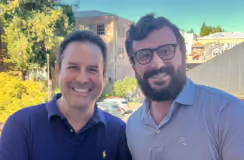
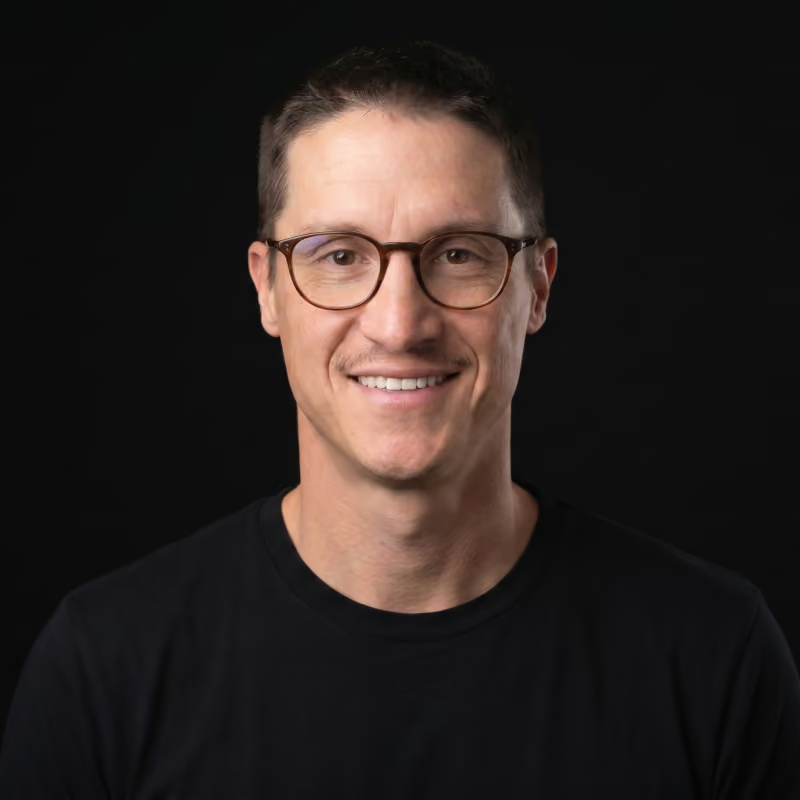
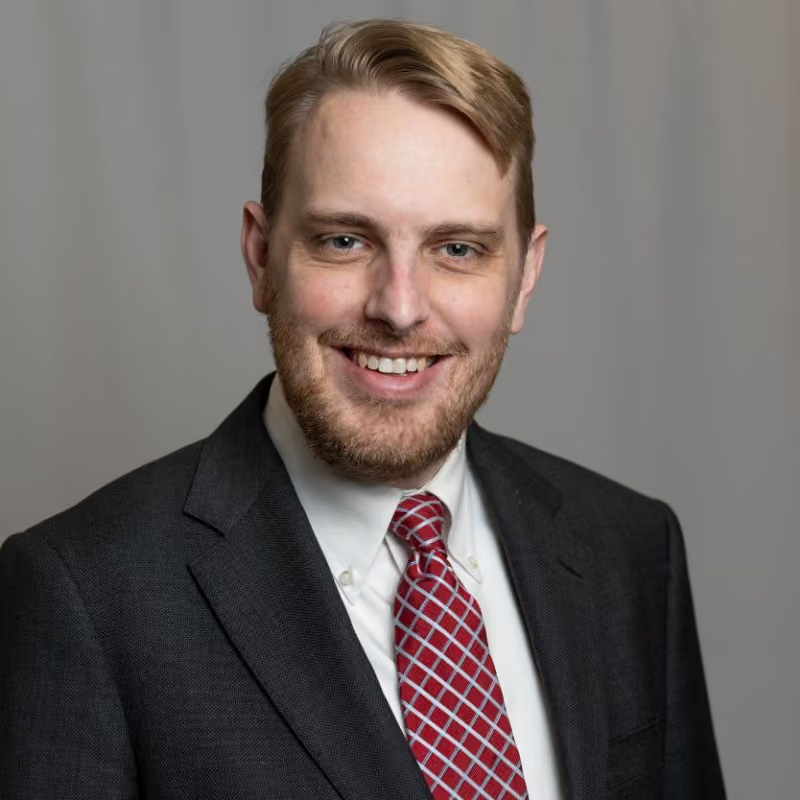
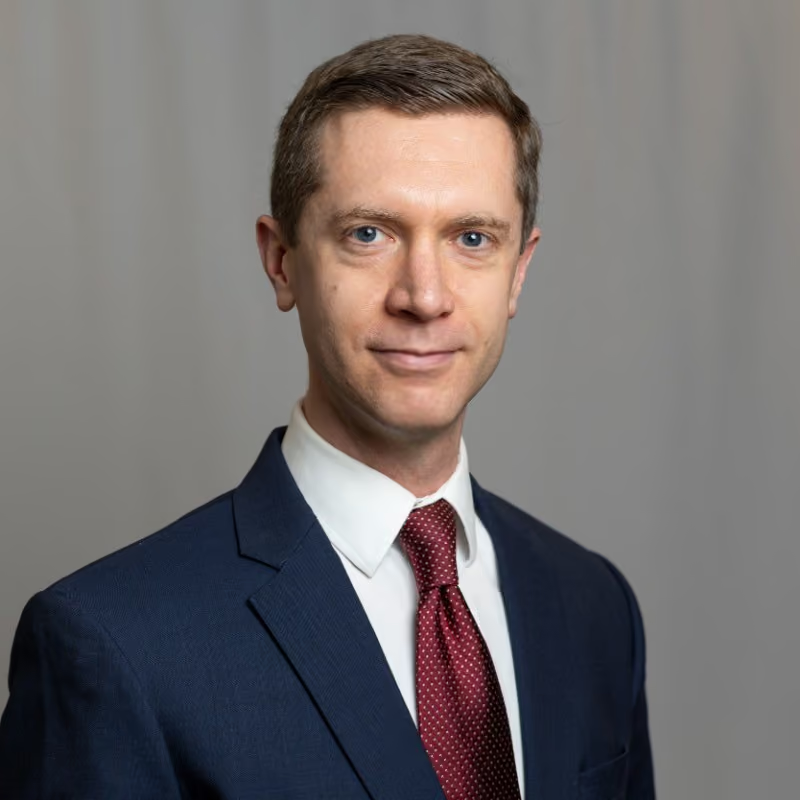
Host: Today's interview is particularly fun and interesting. This acquisition story is between two previous guests, guests who actually connected via Acquiring Minds. Mike Bodkin and Adrian Pinto have both been on before. More than once in fact. You may have listened to Adrian Pinto just a few episodes ago. He came back on to share an update after 18 months in his landscaping business. In that episode, we mostly discussed how Adrian has nearly doubled his business in the last year and a half. But we did not much discuss the big challenges that Adrian has encountered, namely access to credit. Today we do talk at length about that debilitating challenge and how it became attractive to Adrian to work with a larger, well capitalized business that can enable him to realize the growth he was capable of. Enter Mike Bodkin. Mike is a regional neighbor of Adrian's down in Orlando. Adrian's in Atlanta. Mike had been getting to know Adrian for a year. Just two guys who bought landscaping businesses. But Mike has capital from investors. He's acquired numerous landscaping businesses already and he would joke that he should acquire Adrian. Well, you know what they say about jokes. Always a kernel of truth. So I'll let the two of them take it from there. Please enjoy this conversation with Adrian Pinto of owner of Georgiascapes and Mike Bodkin, owner of One Outdoor. Welcome to Acquiring Minds, a podcast about buying businesses. My name is Will Smith. Acquiring an existing business is an awesome opportunity for many entrepreneurs and on this podcast I talk to the people who do it. The purpose of Search Investment Group, known widely as sig, is to enable entrepreneurs to buy their own businesses and maintain control and majority ownership. SIG helps the searchers it partners with source acquisition targets, submit offers, get through due diligence, find the right lender, raise equity and close the deal. Over the last two and a half years, SIG has helped 16 entrepreneurs buy businesses and across those 16 deals, the businesses have averaged $2.4 million in adjusted EBITDA, with the searcher retaining on average 72% common equity ownership. Now, if $2.4 million sounds large for a self funded search, you're right. SIG is a vocal proponent of buying big and they enable the acquisition entrepreneurs they partner with to do just that. To learn whether SIG is a fit for your search, click go to search invest group.com that's search invest group.com Mike Bodkin and Adrian Pinto, thank you both for coming back on Acquiring Minds.
[3:00] Guest 2: Yeah, thanks for having us.
Guest 3: Am I officially the most frequent guest?
Host: As I was just about to say, you're both practically regulars at this point. Mike, your Fourth time. This will be your fourth time, Adrian. When this airs, it'll be your third time. You are both on today to share some exciting news. One Outdoor. Your landscaping, Mike is acquiring Georgia Scapes. Your landscaping, Adrian. So we have one Acquiring Minds guest acquiring another. The world is feeling very small, but naturally I love this. So we're going to hear this story and unpack it a little bit. Mike, to you first, please. Can you give us the top line announcement here?
Guest 3: Yeah. So we originally set up Benchmark Landscaping as the Florida platform and getting to know Adrian and, you know, elevating our thesis, I should say, with what we're doing in the space, we are getting into a new market, Georgia. And Adrian is our lead platform and in Georgia and is going to be running the Georgia market. So we have created One Outdoor holdings, which would be our holding company for this and partnering with Adrian at Georgia Scapes.
Host: Excellent. Adrian, you want to add anything to that or is that, does that get us there?
Guest 2: No, I think that that's a good summary.
Guest 3: Great.
Host: Okay. So, Adrian, you and I spoke, I guess I think it was last week, maybe the week before. So in that interview, which has not yet aired, will be airing imminently. And what people will learn on, on that interview with you is basically an update to your first interview on Acquiring Minds and what you've done with Georgia Scapes since your acquisition. And the short version is you've almost doubled revenue. Not quite ebitda, because you're, you're, you're reinvesting a lot of that profit into the business proactively. But in our conversation we talked about it was mostly the positive aspects of your experience so far. I was going to wait for the more challenging topics for this interview. And so here we are. So people will already be familiar with a lot of what you've done with Georgia Scapes from that interview, Adrian. But now let's get into some of the things that have been quite difficult. Please go ahead.
Guest 2: Yeah, I mean, and I think we may have touched on this a little bit, but I think, you know, one of the things that we have wrestled with nearly since the beginning and certainly has been a theme of that I've talked to Mike about for, you know, over a year now, has been around some of the financing challenges that small businesses face when utilizing SBA lending. So in particular, you know, the first thing that happened with us was, you know, we did not have a line of credit. The SBA lender that we utilized did not offer that. So we had to kind of pick a set amount of money to add to the balance sheet. And, you know, the process for doing that was based off of the historical financials of the business. So we kind of looked at, you know, based off of how the, you know, the volume of the business had had in the past. What did we think we kind of needed to float us, you know, through as we were starting off. And quickly what we realized is we were growing way faster than the business had ever grown in the past. And therefore, that amount of money was hardly sufficient. And, you know, the first six weeks, we were able to scrape by despite it being super stressful, but we've only kind of continued to accelerate that growth. And, you know, the lack of. Of line of credit has been an issue essentially the entire time. And then you couple that with some of the equipment financing needs. So, you know, the landscaping space, you know, it's not super capital intensive, but it's not, you know, it's not not capital intensive. Right. So every time you start a new crew, even if it's a maintenance crew, you still need a truck, you know, a mower or two, some hand tools. You know, maybe you're looking at, let's say, 60 to $70,000 worth of stuff. And, you know, again, in a business in our position, um, we had just taken on this big SBA loan, you know, and so I'm basically having to go to dealerships and saying, hey, we need to buy a truck. Should be the literally, like, the least controversial purchase there is. And, you know, we're being faced with huge interest rates and all of this stuff, all because we had done an asset sale and created this new entity that had limited credit history. And so basically, you know, that whole first kind of year, as we were growing a lot, instead of being able to spend a lot of my time on, you know, things that, frankly, would be more beneficial for the business, I was having to spend my time on figuring out, how are we going to, you know, finance the next crew and how are we going to, you know, finance working capital, you know, on good projects that we were given. And so it was just challenges that I would say were both frustrating and not where I necessarily wanted to spend my time and brainpower. And pretty early on, in some of those discussions with Mike, as I was outlining, you know, these challenges, I mean, he had kind of thrown out this concept of us kind of working together, because that's one of the things that they don't have to worry about. Right. Having the financial partners that they do enables them to kind of focus on growth, unencumbered by all of this other stuff. And, you know, that was always interesting and appealing to me, but only became ever more so as we kind of kept growing and kept dealing with some of these headaches.
[8:31] Host: And Adrian, you know, it's interesting that this hasn't come up yet with my other guests, although maybe it's just because I typically just have on the guest for the first part, you know, shortly after they've acquired, not after they've been in it for a while, but this, this. Do. Do you predict, do you assume that this is something that other searchers who buy medium capex to high capex businesses encounter for the, for the, for the very same reason that, that the, that the business entity that's out there trying to finance whatever it might be is too young to get good financing terms?
[9:05] Guest 2: I would say yes. I mean, I, I personally don't see how it isn't. You know, I have talked to and thrown out on Twitter and different things like that. I've talked to people that have gone about this in other industries, and I'd say a lot of people have kind of thrown out ideas on how to get lines of credit that they were able to utilize. Some people have talked about equipment, financing lines. But again, the irony is that we tried pretty much all of those resources. I mean, I probably spoke to 30 banks, including our business bank. You know, I would talk to them all the time. They would see, you know, all the positive cash flow coming in. You know, I had personal banking relationships with them and was willing to personally guarantee lines of credit. And they still just weren't willing to because they had these kind of hard and fast guidelines around how, how long of credit history an entity needed to have before they were willing to kind of play ball. And we, you know, didn't have those, that or that credit history at the time. The business didn't. And so, yeah, I mean, I think, I think it's the combination of, you know, obviously utilizing sba, having done an asset sale with this new, this new entity, and lack of credit history and then being in a medium capex industry, I think those things together, you know, if someone else was faced with that, I don't, I don't know how they wouldn't have similar challenges.
Host: And Adrian, knowing what you now know, could you have negotiated harder or gotten a line of credit at closing? Do you do. Do you think.
Guest 2: Not with my lender, it wasn't. It would not have been possible. And there was a lot of beneficial things of working with a lender. I did so I don't want to like completely disparage them, you know, and they were, they were good to work with and they were fast and there was a lot of benefits. But I don't think I appreciated enough the challenges of getting that line of credit post close. I mean, basically what, from what I've gathered from speaking with both some of the large banks, some of the regional players in Georgia, I mean, the prevailing sentiment is like, if you don't get that line of credit as part of your SBA package, your ability to get it afterwards is essentially zero for, you know, a year or two or three in some instances, until you develop, you know, significant credit history.
Guest 3: If I can jump in a little bit, I think what Adrian experienced is 100% the normal experience. We experienced it on our very, on our first two acquisitions really. And luckily, just because of kind of our setup, we were able to get through it. But we had vendors that we would spend anywhere from 1,000 to $10,000 a month with asking me for personal guarantees, as well as vendors that we would spend 50 to $100,000 with a month asking for personal guarantees. And so when, if you think about like an SBA searcher such as Adrian, so he just personally guaranteed an SBA loan, he takes over a business and then you know, he's already on the hook personally for that, and then he immediately post close has to start putting more personal guarantees on. It's definitely a challenge. And I, I haven't met a new newly acquired business owner that has not faced those challenges. And there's a variety of ways to get around it and to fight through it, and Adrian definitely did. But it's a massive challenge.
[12:22] Host: I guess this is the one reason why as a buyer you might want to buy do a stock as a, as a first time searcher, acquisition, entrepreneur, but do a stock sale, it probably isn't given all of the other cons of doing that, you probably don't want to do it, but. But if you were to buy the entity outright, the stock stock sale, then you wouldn't have this issue, I guess because it's all around the age of the entity.
Guest 3: Right? Well, you're right, but I think the problem with that is the unknown. And you got to think like some of these businesses were buying and even the one Adrian buy, and I've never met the original owner from Georgia Scape, so I'm not speaking directly about him, but some of these businesses have been around for 10, 15, 20, 30 plus years and you don't know what's behind Some closed doors. Right. Everyone has some cobwebs. And so the risk with stock is you don't. The unknown versus asset. You're starting from a clean slate. There's definitely massive benefits to doing stock. But I'll give you an example. Like the last acquisition we did, the third day we were there, we're literally sitting in the conference room with the owners and they got served papers for a car accident like four years ago. And it's, luckily we did assets. I was like, hey man, I'm. That's unfortunate. But if it was stock, like it would have been me signing the paper that I got served.
Guest 2: Yeah, yeah, yeah, yeah. I mean, to me what it highlights is that there are not enough financing products in place to really support, you know, the acquisition of these new businesses. Post close. Right. Like everyone talks about the sba. It's great. I would consider it kind of a double edged sword, but, you know, no one is looking at like, hey, hey, what percent of employees are the same? What percent of customers are the same? You know, what was the revenue like over the past? Okay, this is essentially the same business, even if it's under a different entity. We can, you know, put in place some financing product to support that. And no one's really willing to have that discussion. Right. Like they, like I said, they have these guidelines and it's like if you don't check all of the boxes, you're, you know, kind of nixed. And so I think to me that that's what's really frustrating is because like I said, we were doing terrifically. You know, we were growing with the same team, all of these positive attributes that to me, you know, logically, you know, support some form of financing and no, again, no one was really willing to have that discussion.
Host: Yeah. Because the line of credit that they typically will offer that you can get at closing is based on historical performance. Right. So kind of tied to the networking capital requirements of the business to date. But when you're in a. And that seems to be something that's generally occurs or is available, but when you're growing fast like you Adrian, then it's almost, it's a little bit of growth capital. I mean, it's a, it's a debt product, but it's basically kind of growth capital. And maybe that's the difference, the, the difference that they see or their, their different, different levels of comfort with either extending credit or not.
[15:21] Guest 2: Yeah, I'm not sure the specifics and from an underwriting perspective of like why they can be, you know, why they're allowed to do one and not the other ne early. Because even if they, you know, even just a traditional line of credit, that would have been a place in close at close that would have still been, you know, incredibly beneficial to us, you know, even if it was that smaller kind of just standard working capital size line. I think again, like my lender didn't offer that and so just wasn't something that I could have gotten anyway had that been in place. I think it would have certainly been helpful. But yeah, in terms of growth capital. Yeah. Certainly no one was know those types of lines. People weren't, you know, was not accessible to us.
Guest 3: I don't know if I've ever even asked you this, Adrian.
Guest 2: Had.
Host: Did you.
Guest 3: Was that a thought process of yours when you were getting your SBA about, you know, working capital or what happens if we do need a new crew immediately? Because I could, like when. I don't really think of that.
Guest 2: I mean, not really, because. Well, first of all, I think for me, speed and certainty of clothes were like the highest, you know, criteria that I looked at. Right. And based on the three ish lenders, or I guess it was three lenders that I had been in discussions with, the one that we ultimately went with, I felt like had those, you know, were kind of the highest ranked in those two criteria. The other thing is, you know, when you look at, I mean, and I have done this, if I look back at my own kind of underwriting model, you know, in a good case scenario, I thought we would grow like 10% per year. And so, you know, the whole working capital needs were manageable. That just didn't happen. You know, it just, we grew so much quicker that like I, I, you know, I never would have anticipated, I guess, the need that we ended up actually having.
Host: Listeners of Acquiring Minds know that for almost any business you acquire, its success comes down to the people and how you develop and manage them as their new leader. Thing is, in addition to management, there is also a lot of process and bureaucratic work when it comes to your new employees. Payroll, compliance, HR technology, hiring, to name but a few. These processes are crucial to get right, but at the same time distract from where you want to be putting your energy in leadership. So Aspen HR is an HR firm and PEO that takes this work off your plate and handles it with the care it demands. Aspen is owned and run by Mark Sinatra, himself a successful former searcher. So Aspen's own leadership understands the HR challenges that searchers have. Post acquisition, the firm is offering acquiring minds listeners. A complimentary pre acquisition HR and PEO review for your target business. Check out aspenhr.com or contact Mark directly at mark aspenhr.com well, just. Adrian, what. Where do you think you would have grown to if working capital hadn't been this kind of artificial throttle on your business or. Excuse me, this credit.
[18:26] Guest 2: Yeah, it's a good question. I mean, you know, I. I don't think it would have been a much different situation than we are in today, but there's definitely been periods of time where, I mean, for instance, like today we started a whole new crew. Um, there have been times in the past where that has occurred. And you know, you go through the headache of get it. Like I said, the truck, all of that's, you know, the hiring, everything. And you know, I'd say inherently you're kind of like immediately demotivated to just go do that again because of what you just went through. You know, for instance, like the last crew that we had added before this, I personally bought the truck in full and gave the business a shareholder loan for the truck. Because I was like, the interest rates that we're getting offered are so terrible from dealerships. We don't have access to equipment financing lines like this. You know, this is crazy. So I was like, I'll just do it. But when you go through that, obviously then I didn't want to have to do it two weeks later just because we got a whole nother crew. So there's kind of this, like back in the back of your mind, I'd say that you're, you know, you kind of lose a little motivation to go reach out to new prospective customers and go through, you know, start this process all over again. And so maybe, you know, if, if that didn't have to occur, I think it's possible that we would have grown a little faster. But I think a lot of the growth that we've gotten, you know, I don't know, that has been large, you know, hasn't been that impacted by these challenges.
Guest 3: If I could jump in, because I think that's actually really crucial. So, like, one of the things that is a benefit of us, right, and meeting and getting to know and partnering with someone like Adrian is he's immensely talented and has proven that over such a short period of time of owning Georgia Scapes think about. And I, I'm assuming you can kind of hear in his voice and he's giving 10% of what he's really dealt with is that think about how much time and energy he spent on securing those kind of things for growth and for us. If we can come in and take those things away from his plate and say, don't worry about these, we will stop gather this, we will cover this, we will assist you, we will provide those resources. You do what you do and you continue to grow the business and you'd be a good steward, steward of the business. So I, I wouldn't, I, I think a question Adrian, I would ask you is like, if you look back at your short period of time, if you wouldn't have had those same capital needs and even the time and energy that you spend on that or in the back of your mind, concern of that, do you think that would have helped you either cultivate a better staff or grow your properties or work on other things like margins or like anything else in the business that is productive and forward moving versus calling 75 banks to get a loan for a car that is like crazy. You couldn't get. So I guess that would be how I would phrase to you, Adrian, is what do you think of what. Yeah, retrospect.
[21:29] Guest 2: Yeah, 100%. I mean, there's been a lot of brain power spent on, you know, financing of equipment, you know, really trying to work on working capital and make sure that, like, hey, you know, we have this project, like, are we going to be able to, you know, is the cash flow going to work? Because we have nothing backstopping us here and you know, is the timing of everything going to work? You know, there's been a lot of effort, stress at times, you know, put forth on those, you know, those things. And you know, I think that there's probably been some decisions that we've had to make that weren't necessarily in the best interest of the business, but because of these challenges that we're describing. So, you know, as an example, I'm generally of the mindset that like, if someone comes to you with a good reason to buy a, you know, a moderately priced piece of equipment, like you should do it. Especially if, you know, if it's going to increase productivity, if it's going to help on your hours, if it's, you know, all those things are obviously profit, you know, driving and so. But there have been times where we haven't been able to say yes, you know, and I've had to kind of say, well, maybe not this, you know, this month, like, let's see how things shake out. Like, you know, and those are things that I would prefer not to have to say. Right. Because they're not again, in the Necessarily in the best interest of the business. And so I think, you know, you couple those types of decisions with, like I said, some of the brain power and stress and whatnot that's been put spent on these things, which are also not, you know, value maximizing. And, you know, the idea of being able to take a lot of that away and just allow our team to focus on what, you know, we've proven to be pretty good at, which is, you know, onboarding new customers and growing and quality and all of that stuff. Like, to me, that's a huge win and certainly something that's personally appealing. And so, you know, that I think as, as Mike and I had discussions and that was kind of, you know, a big topic of the conversation, you know, that kind of, I would say, drove me to, you know, want to kind of continue and further those discussions because of, you know, having to deal with that in the back of my mind.
Host: Well, let's start easing into the story itself here about how this unfolded. But first, a little more context from you, Mike, on your end. So I know your company is Benchmark, but as you just said, you've, you have kind of started a new entity above Benchmark called One Outdoor. So let's, let's hear about kind of how big your business is today. Give us a snapshot of what Benchmark One Outdoor looks like today. So we have context from your side.
Guest 3: Yeah, absolutely. So this is our sixth acquisition, and when we originally started out, it was buying landscaping businesses, you know, the great Orlando area. And then we quickly saw the opportunity and stretched that to, you know, the Central Florida region and then the Florida area. And as we've gone about buying more and more businesses and seeing the opportunities, and each acquisition we do is bigger than the last. We've seen that. It's really not about the actual landscaping business. It's about the person that's running it or the people people or the team and the customer base. And just like a funny side note, it's actually not funny, but interesting side note is the first few acquisitions we did, we did not have any of the owners stay on. I was the de facto owner operator of those businesses, largely because I felt like A, it was needed, but B, I needed to learn the industry. If I was going to be able to sit down at a lunch or breakfast or dinner or whatever with a landscaping owner, I need to understand and have sympathy and empathy and just general understanding of what they go through on a day to day basis. And I think that's helped me a ton. But where We've transformed in the past couple acquisitions is to be the owners need to stay on and, you know, have vested interest and carry on their legacy. And these businesses thrive because of people, right? The landscaping business is a commodity. It's not. I don't want to undersell this, but it's not super difficult to have a landscaping business and to have a moderately successful one. But the ones that are exceptional, the ones that we want to buy, have phenomenal owners, and we want them to stay on board. And by doing that, in our last couple acquisitions, we saw it's a talent game. It's not a business acquisition game. It's can you find the best person. And you thankfully introduced me to Adrian probably over a year, just over a year ago. And at the time, our thesis was strictly Florida, and we're in the midst of growing that. And after meeting Adrian and talking to Adrian and really developing a friendship that had nothing to do with acquisition, I mean, we would joke about it, but it never went anywhere. And we were more just industry peers kind of talking shop, really. Hey, what do you guys think of this? Hey, how do you guys handle this? Hey, what's your pricing like on this? Hey, here's our contract. What's your contract look like? And just two dudes that were not from the industry, just kind of learning as we go, or, hey, did you hear that? This happened in the industry, and we really developed, I would say, a good friendship, and it opened up kind of our viewpoint to a different area, because we couldn't go to a different area if we didn't have someone we could trust. And it's hard to have trust in someone that you meet one day, then 90 days later, you're closing on their business. As much as you think you trust them, you really have no idea about it. And I was able to get to know Adrian on a level that had nothing to do with acquisition. It was straight friendship and just industry kind of peer and really developed a trust and respect. And I heard some of these stories, obviously, as they were unfolding in real time, and just developed, you know, a huge appreciation for him and what he's going through and his business and how he's kind of fighting through that and the decisions that he was making. And it really developed our thesis as a business overall, to not just Orlando and not just, you know, large MSAs in Florida, but to Georgia, strictly because I thought I could trust Adrian and he would be a good steward of the business in Georgia. And so for us, we developed One Outdoor holdings, which would essentially be the parent company that sits above our different platforms. And we have Benchmark Landscaping, which is our Florida platform. And Adrian's going to spear up the Georgia platform and kind of be the initial business there. And hopefully we're going to find other good businesses around him and do more acquisitions in Georgia under Adrian's leadership.
[28:02] Host: And Mike. So was One Outdoor, the inception of One Outdoor was because of this acquisition of Adrian, or was it already in the works?
Guest 3: It was already in the works from an ideology standpoint, but, you know, we don't want to get too far ahead of our skis. So the. The realization of it came when we were beginning serious talks with Adrian and thinking it was a real possibility to do a Georgia platform.
Host: And again, but just before we get into the story. Well, no, let's. Let's just do that. So you were having. You guys were getting to know each other. You were swapping notes with the occasional joke about an acquisition, nobody taking it very seriously. And then. So then take us from when it started to kind of more serious conversations started to develop.
Guest 3: Yeah, I mean, I think the. While I say we were making jokes about. I mean, I was dead serious about it, but I just knew. I knew he wasn't. I knew he was in the beginning stages of growing his business. And listen, like, I don't want to, like, pat myself on the back because I think his talent is easily recognizable the minute you start speaking to him. But I saw a guy that was down from the industry, but had a great background, was a good decision maker, was able to fight through the trenches in an industry that's like, really, really hard to be in, like landscapers and blue collar guys, you know, it's. You have to, more so than the normal guy had to really earn their trust and respect. And Adrian, I thought, was going through some things and handling it great, and I thought the outcomes were great and showing that, and he was growing his business. It wasn't like our conversations was, hey, man, I just lost my biggest customer. Hey, man, I lost this contract. It was always positive things. It was just the kind of the dirt to get to the outcome. And I would. Adrian, when did we really, really initially start. You actually turned me down the first time when we had a serious conversation. When was that?
[30:03] Guest 2: I think last summer. It was kind of one of the initial talks. And then it kind of. Yeah, I would say it kind of died down for a little bit. And then I think kind of October ish time, things kind of reignited. But you guys were in the process of closing your Most recent acquisition. And so I would say it was kind of a slower process in the beginning as they were working through their own things. And then kind of after the first of the year, things became a little bit more heated, you know, as it relates to the process.
Guest 3: Yeah, that's right. Yeah. So we made our initial offer to him last summer, like a serious offer, not just, hey, we would love to partner up with you. And, you know, first offer is never good enough, I guess. And Adrian said no. And, you know, I do not fault that because he, you know, was in a good spot and growing, and he's in a great. He's in a better spot now. And I'll let Adrian speak to his viewpoint, but I think some of the things we can bring to him today are hopefully just gonna pour gasoline on it and continue to elevate it.
Host: And so, Adrian, did you.
Guest 3: Did you.
Host: Did you actually finally entertain doing this because Mike raised his offer or because these capital burdens just became. You were just like, this is the way out of this is by partnering with somebody like Mike who has. Has more capital to work with.
Guest 2: Yeah, I mean, it's a kind of a combination of both. Right. Like, it's a difficult place for him to be in and for me to be in, because I think, you know, when obviously, like, he's a. He has a fiduciary duty to the, you know, his shareholders and the, you know, everyone that works with him to not just pick a business just because he likes the guy and be like, you know, we're going to pay $100 million for that. Right. But on the flip side, from my position, like, you know, I saw all the positive things that were occur, you know, had occurred, were occurring. I also saw, you know, the outlook was, which, you know, some recent customer wins which weren't in any of the numbers. And so trying to weigh, you know, what is a number that effectively captures what has occurred, what, you know, is what I think will occur. Well, you know, also, you know, so basically kind of provides enough value, you know, to me, while also isn't asking, you know, for the moon from him and weighing that with then some of these kind of qualitative things, like, you know, what we were talking about with the financing, you know, financing stress and challenges and whatnot. And so I think all of those things kind of added together is what I was kind of weighing. And I think when we initially had the discussion, it was just tip, not enough in the favor of kind of proceeding. And then things continue to be good, but we continue to have these challenges. And I think. I don't remember exactly, but my guess is sometime between that summer and fall when I kind of went back to them, we probably had more of these, you know, same, like, issues, you know, getting crews started and equipment and everything. And I, you know, I think that that probably kind of motivated me more to, you know, reignite the discussions at that point.
[33:19] Host: Adrian, you said something which is I really want to hear a little bit about, because on this podcast, we just talked to buyers, and now that you've. You're a seller, you recognize that there was a trajectory to your business, that there was going to be future growth, and in your own mind, you wanted the compensate that. The valuation that you were going to receive from Mike to acknowledge that in some way. And yet, as buyers, we're always told, like, no, no, we don't. We don't pay the seller for the future stuff, because that's what we're going to do. You don't get rewarded for that seller. You only get rewarded. Did you ever hear that?
Guest 2: Yeah.
Host: So how did you think about that as a seller? Yeah, how do you think about that?
Guest 2: We had, like, those verbatim discussions. And I mean, I, you know, he said pretty much that verbatim. And, you know, I said something to the effect of, like, listen, like, I totally get, like, for this to work, you're probably going to have to feel like you guys are stretching a little, because there's no other way that I'm going to feel like enough value is being captured based off of, you know, the kind of pro, you know, prospects and opportunity. And I think, you know, we were able to kind of come to an agreement there. But, yeah, no, I mean, I think it's definitely difficult, for sure. And, you know, I had some of these other motivating factors which we discussed. Right. Which helped, I think, kind of influence me. But, yeah, I think that. I think that, that, you know, that is definitely a hard, you know, realization moment, I think, for any seller, essentially. You know, especially if you're really looking like, oh, hey, I have no problem owning this for 10 more years, well, then it's going to be difficult to, you know, maybe come up with a number today that you feel like captures enough value for you. You know, I was always more interested in the shorter timeline, and then, like I said, was further influenced by some of these other things. And so I think that allowed me to be a little bit more realistic in. In that request. And fortunately, I think some of what was going on was pretty tangible, you know, we had won some pretty, you know, sizable contracts, which we had in hand, and we could point to. And so I think it enabled us to capture some of the value from Mike and his team without just, you know, asking for kind of a, you know, a blank check. Like, hey, we believe we can do all this stuff. You know, this. At least we had something more, you know, specific we could point to.
Host: Mike, anything to add to that or cover it?
Guest 3: No. I mean, no, it covers it. I think the hard part is when you develop the relationship for a year and, you know, the talent, you know, the skill, it's like, price doesn't matter because, like, we want Adrian on the team, and we know what he can do. But price does matter because we have a fiduciary responsibility, and, you know, overpaying for things gets you caught sometimes and gets you caught holding a bag. And we didn't want to be in that scenario either. And I think we were both in a place. And although Adrian so far has shared struggles that he's went through, like, he also had massive wins and massive positivity. Is it, Adrian, am I okay to say you doubled or more than doubled your business since you've owned it? Is that okay to say? You know, yeah, I said it, so I guess you could block it out if you want, but, like, that's. Are you kidding me? Like, he's owned the business for how long, Adrian? Like, 18 months, and the dude just doubled his. Like, are you kidding? Like, it's insane. And so for us, it was. Listen, and my core philosophy is a good deal is when you can put the deal, all the deal points up on a whiteboard and have the two principals sit there and say, you know what? I would take your side if I was you. And that person say, yeah, I would take your side as well if I was you. And that's a good deal. And I think if you, you know, had a couple drinks at me, I'd say, yeah, we probably stretched a little. But I think in a year, two or three or four years, it'll be immaterial. And I think if you had a few beers in Adrian, he'd be like, yeah, I think I got a little more, you know, know, than X, but I should have got more. And I. I think it's a fair comment. And I think we're both overall happy. We both achieved what we wanted to achieve. And I think moving forward, Adrian's rolling, significant stake and is going to be a significant shareholder of the business moving forward still. So, you know, as we continue to do well, Adrian's going to also reap in those benefits.
[37:49] Host: I want to get into the terms a little bit.
Guest 3: I.
Host: You know, I'm sure we'll have to be vague, but people are going to be interested. But just last thing before we do, Mike, you've said a lot about how, you know, you really think about your acquisitions in terms of the talent and respect for what Adrian's done, also that you're acquisitive anyway and that you're kind of. Your thesis has expanded geographically, and so here was an opportunity to move into an entirely new state, Georgia. But was there anything about Adrian's business that you liked in terms of, like, the mix, commercial versus residential maintenance versus project, all of that stuff? Are you agnostic on that?
Guest 3: Great question. I think Adrian has a. If he didn't have this, we wouldn't have been able to partner up. But he has the exact same viewpoint that we have on business mix and of service mix and the quality of revenue. And I got to learn about the construction side of his business from him and the pros and cons of that as well. As. As we were acquiring businesses, we were acquiring a little more construction and a little more construction. But I think our goals are aligned in that. In this area that we're playing in, commercial maintenance is the focal point. Everything else is not ancillary, not immaterial, but it needs to be material to growing the core of commercial maintenance. So it doesn't matter if, you know, you have 80% construction or 20% construction, that construction, the cash generated either needs to be used to grow commercial maintenance, or those opportunities need to result into commercial maintenance at the end of those projects for those properties. And I would say we're pretty aligned on that, and it made it attractive that we were aligned on it.
[39:42] Host: Great, guys. Well, let's get into the terms to the extent that we can. How is a. How is. How is the deal structured? Just broadly?
Guest 2: Yeah. You want me to take that?
Host: Sure.
Guest 3: Yeah.
Host: Adrian, go for it.
Guest 2: Yeah. So, as you mentioned, it is.
Guest 3: It.
Guest 2: The deal assumes that I am rolling a sizable amount of money into the, you know, the new entity, which, interestingly, you know, and I'm. I'm sure this doesn't always happen, is. You know, that was something that was probably equally as important to them as it was to me. You know, from their perspective, obviously, it kind of ensures alignment of interests and, you know, motivation and all of that stuff. And I think for me, from my, you know, from my perspective, like, I saw all the positive stuff that we were doing. And as we were just talking about, like, you know, it's difficult to capture all that value today when you believe in, you know, a two year, you know, or three year trajectory of a business. And so for me, it felt like, okay, well, if I can find an opportunity where I can roll a significant amount of money, well, that allow me to get, you know, kind of that second bite at the apple, which will allow me to, you know, capture further value, you know, when that's obviously realized. And so that was, you know, kind of a day one requirement by them. And it was great because, I mean, that was something that was important to me and I wanted. Anyway, so anyway, to answer your question, you know, there it's kind of a mix of. Of cash and then me rolling a portion of it.
Host: And when you say a significant portion, I assume you can't say exactly what that is, but give us a range. So like is. Is first of all, for people who, you know, first time listening about stuff like this, rolling means that you are taking some of the equity. So, so if Adrian. Adrian's business. Let's. Let's use some numbers from here on out. Just for simple math, say it's a million dollars.
Guest 3: The.
Host: The valuation of Adrian's business is a million dollars. I have no inside information. I'm sure it was not that number. But for easy math, a million dollars. And say Adrian takes part cash, part equity in Mike's business. Rolling is the equity part. It's basically rolling. You know, let's call it. Let's say we're 50%. Don't think it was, but say we're 50%. So $500,000 in cash goes to Adrian. Then he takes $500,000 worth of stock in Mike's business. That's rolling his equity with the idea expectation and hope that that $500,000 in worth of stock in Mike's business will at some point in the future, after Mike and Adrian have grown together, be worth more than that when Mike goes to exit the business to a yet larger player. And by the way, that moment is called the second bite of the apple. So Adrian then gets a second liquidity event for. For his. For his business. So rolling equity is that. That putting that 50% into. Into Mike's business. What is again, probably can't be specific, but when you say a significant piece, Adrian get people just like a ballpark. Is a significant piece, like 99%? Like you got 1% or is it 10%? Like give it. Give us a ballpark here.
[42:55] Guest 3: Let's say I think the easiest way to say it is we are the majority shareholder. And so that obviously would be 51% or greater. But our. Our requirement for owners is they need to roll a significant state where it is very meaningful to them. It's meaningful to us. And our goal and hope for them is the second bite of the apple is worth more than the first bite, even if it had a much lesser equity ownership of the business. So Today, Adrian owns 100% of George Skates. He's getting paid for X percent of that. The remaining percent that he's rolling, we hope is more valuable at the second bite, whether that's another us transacting and being acquired, or that is us doing share buybacks or share purchases at valuations throughout our tenure together to provide liquidity for owners that have equity.
Guest 2: Yeah, I was just gonna. The one thing I would just add also, Will, to your example, right, where you talk about, you know, the ownership percentage under the new kind of structure, new entity. I think the important thing to. To note on that, right. Is that. And one of the reasons for Mike saying what he is. Is what he's saying is that, you know, it is an ownership percentage in the new entity that is now has the. The financial backing of the broader platform. Right. And so when Mike earlier was talking about, you know, the kind of the analogy of pouring fuel on the fire, right. And, you know, utilizing their resources. So it, you know, I think what's appealing to me is having this, you know, significant stakeholders, an ownership percentage in this new entity, but under a structure where we're going to now be much more financially supported. So I think that's how you ultimately see, or one of the reasons you see, or we will see that, you know, ownership percentage and value of equity being worth, you know, hopefully many multiples of what it, you know, in the future, because we're now going to have the, you know, the proper kind of financial support in place.
[45:12] Host: And also there's an expectation, because Mike's larger business is. Is so much larger, it'll sell for a larger multiple. I mean, if it sold today, it would sell for a larger multiple. Adrian, then you could command for your business, but in another three or five years, presumably a significantly higher multiple. So you're getting some probably better multiple expansion on the equity that you rolled than if you had stayed independent. Is that. Is that a fair conclusion or am I stretching it?
Guest 2: That's definitely.
Guest 3: I was just gonna say we.
Host: Sure.
Guest 3: Yeah.
Host: That's the obvious.
Guest 3: Well, it's with anything, right? Like, if you're Will, you know, let's say you're a larger strategic in the industry, or you're a private equity firm or family officer, you know, a guy looking to buy into the industry. Would you rather have a single business in Orlando or a single business in Atlanta, or would you rather have a business that has market share of Orlando, market share of Atlanta, market share of to be determined. MSAs and coming up, MSAs that all have processes, all have systems, all are on the best ERP in the industry and have been able to have management tiers and kind of all those things that you would expect, you would hope you get multiple expansion by doing that. And as a buyer at that level, that's what you expect and that's what you want. So the sum is greater than the parts in a lot of ways. And that is kind of our goal is putting these businesses together and putting great people together. And I think something that I don't want to also lose track of because I talked a lot about me and what I thought of Adrian. I think without it being intentional, I think Adrian has had a front row seat to see us and how we react and how we pour gasoline on businesses with the decisions we've made as well. So I think he's had a front row seat and has probably made him more of a believer in what the future is going to hold by seeing what we've done in the business as we are.
Guest 2: Yeah, yeah. I mean, I definitely agree with that. And you know, the only other thing I would just say too, in that, you know, kind of along the same lines, is that, you know, they have, you know, they've been doing this longer than me. Right. And then the team that they have in place has been doing it substantially longer than maybe because they have people, you know, he has people running some of these businesses that have been in this industry forever, you know, because of all that. Right. Like, when Mike and I have had discussions even a year ago, but certainly more recently, you know, like, I definitely have come to appreciate. And I think one of the things that helped kind of drive this and encouraged me to do this was that, like, there is a lot that we can learn from them as an organization because of the experience that they have. And so, you know, obviously the financial stuff and all of that's great, you know, and the support that they'll be able to provide. But I think there's, you know, quite a bit of just operational insight that is, you know, pretty important to me also. Right. Like, I think, you know, we probably could have found a financial partner that would be willing to have supported us, but that doesn't necessarily provide the same level of operational benefits. And I think there's been a number of instances where maybe, you know, we were curious about how, you know, the best way about going about doing something or whatnot. And you know, I would go to him with some of these kind of ideas or issues that we're working through and, and you know, they, you know, we would talk through them and he would kind of explain how it's being done on their team. He would, you know, sometimes kind of connect with their team and get other people's opinions. And you know, that stuff has been certainly, you know, helpful from my end. So I mean, I think that component is really important to kind of mention as well.
[48:53] Host: Well, you just, peer groups seem to be in the air on Twitter. There's new startups around it, there's just a lot of talk about it, the need for it, the value of them. And you kind of have this now with each other in the larger, in the larger one outdoor family kind of this, this peer group effectively of, you know, what's working in Florida, what's working in Georgia, swapping, you know, really swapping notes, leaning on each other, learning from each other faster than, than you, than you would otherwise just. But I do just want to go back to the math just really quick on the multiple expansion piece to make sure I understand it. Yes, we hope that the money that you rolled, Adrian, the piece that you rolled will be worth more in the future and expect that as one outdoor grows. But I guess what I'm trying to understand about multiple expansion is let's say Mike doesn't grow. An additional dollar of EBITDA that Georgia Scapes earns tomorrow is already more valuable than pre than Mike buying you before because it's parter. It's part of a larger entity that already, without even further growth already commands a higher multiple. So the EBITDA you're generating instantaneously becomes a little bit more valuable. Do I, is that right?
Guest 3: Yeah, yeah, exactly right. I, I, you said it exactly right. So I don't really have much to add other than it makes the, you know, it makes everyone more valuable. The, you know, the bigger we get, the better we get, the better quality we have and the better people we have.
Host: And just before we move off, off from the deal altogether, were there any like other high level deal points that people could learn from? I assume Adrian's compensation is, is one kind of the working capital. I mean obviously I assumed you negotiated Something where there's going to be a lot more working capital. The whole, you know, one of the big reasons for this where free cash flow. I mean any, just any other things that you would educate the audience on a deal like this. Like what are the big points of negotiation?
[51:02] Guest 3: I mean I think from our viewpoint and you know, in terms of compensation like we. We treat the CEOs of our platforms as the CEOs of our platform. So that means they're compensated like a true CEO. They have on top of me like a true CEO. They. The decisions lie with them. We are here to make sure that. Just go back just a little bit about what I said. Our erps are the same. You know, our accounting is set up the same. All those things for process oriented are the same across the board. But other than that it's full go how they want to see the business that is completely separate from ownership in the business. So we treat Adrian as the CEO of Georgia Scapes, our Georgia platform and he has full decision making of that. And additionally he's also owner of the business. So you know, he should have aligned interests as well with us when making those kind of decisions. So in terms of comp. I don't know if that's what you're looking for, but that's how we think of the leaders of our organization. And the only other deal points I think is interesting is we did this as a stock transaction and not an asset transaction, which is new to us. We thought always done asset deals. This was a stock transaction. So it kind of muddied up the ending a little bit and some artificial delays. But that, that was the only thing different from, from our viewpoint was that.
Host: Mike, we're. We're starting to wrap up here guys. But Mike, I want to, I just want to. People will have heard part of your story on this podcast, others, but just give us two or three minutes because it's just striking how you went from an acquisition entrepreneur who bought a very too small landscaping business by your own description and are now this very acquisitive and kind of large player in the world of landscaping. Was that shift gradual or was there like a moment where you perceived opportunity and just really went after it hard?
Guest 3: Yeah, I mean I think that all depends on your perspective in terms of the gradual part. I mean I bought the first business December 11th of 2020. So you know, it hasn't been that long in the grand scheme of things. I mean look at the owners. We're buying from the whole businesses for 20, 30 years. Right. We've kind of. Once we kind of got it going, we've been on pace for an acquisition per quarter. So literally in the last six quarters or full five quarters, we bought a business each quarter, the shift really came about. Dude, I had no idea about the industry. I mean, I act like I knew about the landscaping industry. I couldn't tell you how to turn on a damn lawnmower. I didn't know anything about it. I thought the landscaping industry was John and his truck outside. And I'm like, well, I can run a business better than that guy. The dude doesn't even bill me for my lawn. So all I got to build people are already better than this guy as a business owner. And, like, I had no idea about the industry, the size, the makeup, the differences between commercial and residential, other than the obvious. And so I really went to. I feel like I got a degree in landscaping, and then I've. I'm trying to get a master's degree in landscaping by being around industry people. And it solely out of opportunity and being aggressive and being able to capture that opportunity is what's led us to grow. And I think we've created a flywheel, and I say this all the time. Our momentum now is strictly a flywheel on the people we acquire. So. And go back to what I said earlier, that we're only acquiring businesses where the owners are going to stay on or management teams significantly valuable in the business. What that does is when we buy a business that is in good standing, in good, good brand, I'll say, in the community as well as with a good owner in the industry, what's the first thing that happens when it's known that he's been acquired? All his buddies in the industry ask him about it, or he tells his buddies, you know, his wife posts on Facebook or whatever it is, and everyone asks, oh, what happened? Who did. Who bought you? How did that go? And if we're buying good, good businesses and good owners, and then they can introduce us to the next guy or talk to us about the next opportunity, and we buy that business, and then we get opened up to another opportunity. So we're continuously trying to create the hub and spoke method of acquisitions. And we are going to be extremely disciplined and extremely considerate and thoughtful on the acquisitions we're doing, because it's more about the people than the business. If Adrian was not a part of Georgia Skates and it was just some random guy running it, we would not be buying Georgia Skates. That is not a knock on Georgia Skates. It is because of our belief in Adrian. So that is what's crucial to us. And we feel like we've created the flywheel of what flywheel's gotten going. And you never know who's going to introduce you to the next acquisition. That is, you introduced me to Adrian. And you know, a year and a half later, here we are. So we feel like we kind of got that turning and that's what we look for. But yes, December 11th of 2020, and here we are today, and we have a few more kind of queued up and ready to go to expand this even further. And it's all just been kind of learning as we go and finding opportunity.
[56:27] Host: But there must have been kind of like maybe the second acquisition where you were like, huh, I guess I could do a second acquisition too. And then you do it, and then it goes, well. And then you're like, okay, well, if I can do two and I can figure out how to integrate them or at least keep them together, then I can do 200. I mean, you know, there might. Because you didn't, as you said yourself, you didn't set out to do what you're now doing. And it. And my point was it has been a short amount of time.
Guest 3: Three years. So.
Host: So I, you know, I'm just.
Guest 3: Yeah, the first two acquisitions sucked.
Host: Especially. Especially as. As. Especially Mike, because so many people who do roll ups set out to do them. You know, they, you know, they. They have this great, that. This master plan, this grand plan that they go into it with. Whereas yours seems like it happened kind of as, you know, you were building the plane as it was crashing or flying or whatever.
[57:19] Guest 3: I would say the idea was there. Like it was always in the back of my head to acquire more. How we've done it in a path we've went, the scale we've done it is materially different than what I thought. I thought we were just going to keep buying little small million dollar a year revenue, but not ste. Not EBITDA revenue businesses and kind of just packing that on in a tight geographical area. And we've obviously went away from that and changed that whole model. But I mean, the first two acquisitions we did, the acquisition and the first 30 to 90 days sucked. I mean, it's the worst moments of my life ever. But we were able to kind of get through it and learn from it and change it on the following acquisitions where it's like, okay, we feel like we kind of got a playbook here. We feel like we know what to do. We feel like we know what to expect. We feel like we know what's around the corner to the point where, and I'm assuming Adrian's probably the same, but like I can look at a landscaping deal and, and get two or three questions answered and know if we should buy it or not. It just becomes what price and obviously outside of the people. But yeah, I mean, we've gotten better. I had no idea what the fuck I was doing in the beginning and now I feel like we at least know what direction we go.
Host: Guys, I want to close out with a question about SBA loans. So we've already touched on it somewhat. Adrian, obviously with the, with your, your loan and how hard it was get it was to get credit afterwards. Was there anything more to say on that? And, or, and I can also just tee it up this way. Is there kind of like something you would want SBA searchers out there to know other than what you've already said? Be super careful about the credit piece maybe. Or if you had to do it all over again, would you not use an SBA loan and try to use other sources of capital? Anything you want to close out on about the sba, Adrian?
Guest 2: I mean, I know Mike has very strong feelings on this, but I mean, I think generally like, you know, I think the SBA is an incredibly important resource. Right. I don't think that there's a lot of other ways that individuals can buy companies for, you know, 10%, you know, equity. So I mean, in that sense, like, I think it's an amazing tool. I think what I did not appreciate enough going into it is that it both enables these acquisitions and then really hamstrings your growth ability, you know, post close. And so unless you want to, you know, take on further SBA loans for acquisitions or, you know, I've heard of people in certain instances being able to expand their, their node for certain purposes. Like unless you want, you have that appetite to kind of continue down that rabbit hole, you know, once you're in the SBA kind of term period, you know, there are limitations to your growth. And so if you have a minimally capital intensive kind of GDP plus growth type business and you're going to buy with an SBA loan and you feel pretty comfortable about, you know, a variety of those, you know, key criteria like great. And I think it's an awesome tool for that. But I think if, you know, if you have aspirations of high growth or if you think you're in, you know, your business is going to require, you know, new equipment or whatever, Like, I think people just need to understand a little bit more of kind of what they're getting into and what it may be like kind of navigating, you know, their business basically under the, you know, those. That framework. And again, like I said, like, you know, I think most searchers, you know, don't underwrite 50% annual growth, and therefore, you know, the model looks fine. And, you know, we. We did experience that and have been experiencing that. And you couple that again with the equipment and, you know, adding people and all of this stuff. And so I think it's just being a little bit more eyes wide open to, you know, where there may be limitations and then trying to understand, like, do I think my scenario will be one of those ones that kind of check the box of, hey, this could be a problem, or it could be difficult utilizing sba. That being said, again, you know, back to my initial point, like, not a lot of other options out there for people. You know, you buy even, you know, to your earlier example, like, just $1 million business. Like, you know, without the SBA, a lot of people aren't going to be even be able to buy that. So I think it's an awesome tool. I just think people need to be a little bit more understanding of its challenges.
[1:01:45] Guest 3: I. I don't. I think you have thoughts.
Host: You have thoughts on the sba.
Guest 3: Oh, my gosh, you have another hour. I think what Adrian's saying is, so everyone's like, oh, the essay. This business won't go down, right? Like, that's how everyone models, like, using debt is like the floor essentially of their deal and the model. But Adrian experienced, like, crazy growth. Like, think about this. He did everything you want as a business owner, right? Like, he hired. Well, he, you know, took out new customers. Like, he did good sales and still struggling with it. So, like, that's just the part of, like, the SBA that I always tell people. Like, think about the good and the bad. Like, the good is you grow by 50. How do you handle that? The bad is you go down by 50. How do you handle that? So Adrian's like, polo should be a hero success story of the sba. Like, the dude used an SBA and doubled his business. Like, are you kidding me? But, like, there comes challenges with that. And I, I just wish more people were open minded to the pros and cons of it, but I do think it's a great tool.
Host: Gentlemen, this was fascinating. Congratulations both on your respective businesses and now the combined entity. It'll be really exciting to. To see what happens in the years ahead. I'll. I'll let people know how to reach you. You've both shared your. Your contact information many times on the pod, so we'll just close it out here. And thank you both for coming back on and giving this exclusive to Acquiring Wines.
[1:03:08] Guest 3: Well, man, I appreciate you. And thanks for the introduction to.
Guest 2: To Mike a year ago.
Guest 3: Yeah, absolutely. Absolutely. Thanks, Will.
Host: Good deal, guys. Thank you.



































%20-%20thumbnail.avif)




%20-%20thumbnail.avif)

%20-%20thumbnail.avif)

.avif)


%20-%20thumbnail.avif)