Host: Ask any acquisition entrepreneur who bought a blue collar business what the most difficult aspect of running their business is. For nine out of ten, the answer will be people. Lots of worker turnover in blue collar businesses. Now imagine you run a seasonal blue collar business with waves of sales in the spring and fall, but still waters in summer and winter. That seasonality just adds to your staffing complexity and you're likely to see that much more churn Andrew Harbin bought an awning business outside Pittsburgh. The awning business is seasonal, with high seasons in spring and fall, and Andrew came up with a solution to the issue. Do a second business whose high season is his first business's low season, thereby smoothing out the seasonality and allowing him to retain the crews that he so painstakingly hired and trained. We get into all of that, plus the usual goodness Andrew's search, what he paid, how he's grown, and his plan to get to $1 million in EBITDA in five years. Enjoy this interview with Andrew Harbin of Venango Awning. Welcome to Acquiring Minds, a podcast about buying businesses. My name is Will Smith. Acquiring an existing business is an awesome opportunity for many entrepreneurs and on this podcast I talk to the people who do. Wouldn't it be great to have experts at your back when buying a business? People to help you polish up your pitch and processes as you go to market as a searcher, then help you evaluate opportunities once you get some deal flow? Such experts exist buy side advisors, but they'll cost you to the tune of tens of thousands, even hundreds of thousands of dollars. But another option exists, the Acquisition Lab. The Lab is a do it with you buy side advisory service, not do it for you. Founded by Walker Deibel, author of Buy Then Build, the Lab represents Walker's vision for what is most needed to make a searcher successful and available at an accessible price. It's cohort based and you will come out the other side of your cohort prepared to go to market as a savvy searcher with a tight message and process so brokers take you seriously, pre approved for a loan and with an entire community at your disposal to help you along the journey to buying a business. To learn More, check out acquisitionlab.com, link in the show notes Andrew Harbin, thank you for joining me today on Acquiring Minds.
Guest: Thanks for having me Andrew.
Host: You acquired an awning business in July of last year, 2021. So you've been in the seat now for about a year. Then you made another acquisition, more recently of a franchise in the fencing business so we want to hear your story about acquisition, entrepreneurship, how and why you decided to buy an awning business, and then why you decided to buy another business and this time a franchise rather than an independent business, and hear all about the contrasts there. But start us off with some history on you, Andrew, and what it was that led you to want to go out and buy a business.
[3:17] Guest: Okay, so I went to school for engineering. I worked at GE and operations management roles for a little over 10 years. And towards the end of that career, I kind of stumbled upon the kind of now famous thread from Brandon lafridge on entrepreneurship through acquisition. How's a great way to build wealth? And it kind of just got me thinking. I never really thought about that. I always thought of entrepreneurship as inventing stuff or starting something from scratch, not taking something over. And I felt with my operations background that I would be a good candidate to step into something that was already operating well and take it over and try to grow it and optimize from there. So spent a few months kind of just kicking tires, reaching out to brokers, learning about the process, reading the HBR book, doing stuff like that, and eventually found one that I was pretty interested in. Um, you know, learned a lot in a month of trying to figure out how to even go about doing an LOI and all that kind of stuff. And in submitting loi, I thought I was definitely going to get it. And you know, broker ghosted me for a couple weeks and came back, said, yeah, we went with someone else. But going through that made me realize like that was what I really wanted to do. And that's when I buckled down and really started to learn about it. Joined search funder. You know, consuming stuff really around the clock when I wasn't working and really got into search heavily in that like kind of December, January of 20 into 21. Searched for a few months, ended up finding this awning business and liked a lot about it. And that was the one I ended up going with.
Host: And where are you living during all of this?
Guest: So I was in Texas at the time. We. We had moved to Texas for work. We were there for about four years. My wife's from Pittsburgh, I'm from Detroit. We had two kids down in Texas. And we're looking for a way to get back closer to home. And I was trying to. Decided to try to swing both at the same time. So buy a business and move at the same time, which was challenging. I probably would have done it differently if I was doing it over again.
Host: Her home or your home Michigan or Pennsylvania.
Guest: We ended up in Pittsburgh. So yeah, I was looking in both places, Detroit and Pittsburgh. And Pittsburgh ended up being the one that we found the business that fit the best and was closest and all that kind of stuff.
Host: Okay, so you were prepared to move to either location. And this going back to your initial inspiration, this thread from Brandon Lawfridge, I probably have seen it. So this is a, um, There are a number of threads out, out there about kind of buying a business that have gotten a lot of traction and a lot of attention. I guess this is, this is a true classic and change the trajectory of your life. So I'll make sure to dig it up and link to it. But it was a good one, huh?
[6:20] Guest: Yeah, yeah, it was good. And it's funny looking. You know, it sounds easy in the thread and I thought it was going to be easy and it's a lot harder. And I think, you know, all the new threads kind of, they're the same, right? They make dumb it down, make it easy to consume and. And then you figure out that it's a lot harder than it sounds. But, but yeah, it's a good way to get people exposed to, you know,
Host: this side of the world, the potential. And what, what is it about these threads that they oversell? What, what's, what is, what is so much harder than.
Guest: I wouldn't say, I wouldn't necessarily say it's like overselling. It's just like, you know, when you think about, hey, I'm going to go buy a business and get a loan to do it. Right. I think at least I thought of it more like buying a house. Right. Like that can be challenging too. But you go, you make an offer and then if the offer is accepted, you just close and buy the house. Right. You don't go through these purchase agreement, you know, all these lawyer stuff. So that was I think the more challenging part. And then also, you know, the listings aren't as clean as a house, right. The, you know, you get a lot of garbage listings. Brokers don't call you back. You know, there's a lot of challenges.
Host: Sure. Interesting that actually having gone through one of these broken deals yourself, that, that actually made you. You were like, it was after that frankly negative experience that you were like, no, I, I'm doubling down on this, I want this. So, so even though it was kind of a negative outcome, it, it, you, you felt really that much more drawn to the possibility.
Guest: Yeah, I think it was like the effort that went into learning how to even like put some of this stuff together and then just, you know, getting my, my wife and I actually sat and talked about it at that point before, it was just me kind of like kicking tires and us randomly talking about it as like a, you know, an idea. And it became more real when I was talking about, okay, we're going to go take a. I think this was like a $3 million loan and you know, we're going to go do all this stuff and agreed that yeah, we were willing to do it when I submitted the offer and then, you know, it didn't go through, but we had, you know, spent a lot of time thinking and talking about it and so then had decided that that was going to be the best thing for us.
Host: Sure. Yeah, it had gotten real. Even if it didn't happen like you.
Guest: Right.
Host: Psychologically and logistically prepared for it actually becoming real. And can you tell us what that business was? Just high level?
Guest: Yeah, it was like a, you know, kind of your classic like CNC machining type business where they do, you know, they did a lot of work for automotive suppliers. So mostly short runs, prototype stuff, not necessarily, you know, big production runs, but very, you know, high velocity. Right. You know, they need, they need a tool, let's say, turn around in a couple weeks and did stuff like that.
Host: So good for your particular skill set.
Guest: Yeah, it was really great for my background. I really liked that one. But.
[9:03] Host: Okay, so the awning business shows up after this first disappointment. And did you say where you found it? Was that through biz by sell or brokered or what?
Guest: Yeah, it was a biz by sell. This one was for sale by owner. Very vaguely written up in the description. I think it was written up as like a light manufacturing something or another with, you know, it said like fabrication in there. So I don't know what I was picturing when I reached out about it, but when I ended up talking to the owner on the phone, it was awnings and, and my in laws that live in Pittsburgh had awnings on their home and I used to help my father in law take his up and down in the spring and fall and, and just hearing about this business like, well, I, I could see why people would pay someone to do that because it's not an enjoyable thing to do. So that's where I got interested in this.
Host: Even though your father in law actually didn't pay somebody to do it, Right?
Guest: Yeah, he had small ones though too. And so. Yeah, but it ended up being a good business, pretty profitable, you know, very niche and something I hadn't really thought of service businesses when I first started searching and then as I got more kind of acclimated in the SMB world and you know, following guys like John Wilson and you know, some of these guys that, you know, you could see the benefits of having a service business. So this was a good mix of had some service but was still kind of like a manufacturing operations business too.
Host: And. Okay. And so it was for sale by owner. So you just filled out the form on biz by sell and it went from there. I think you might be the first kind of for sale by owner guest that I've had. How did that go? Did you have to do a lot? You know, because a lot of the, the work that brokers do is, you know, setting expectations and all of that. Did this owner have realistic expect expectations at the get go or what was that like?
Guest: Yeah, I mean it wasn't, it was hard to get to the first loi and the first loi ended up having its own issues and we had to retrade after that too. So there was, it was challenging to kind of walk through how we do valuations or whatever. I think I, I, you know, people talk about a lot how many times deal deals die, but I think I walked away from this at least twice during like the LOI phase because we were too far apart on value. So yeah, I mean that was challenging. You know, later in the process, you know, not having someone that's, you know, plugged into doing deals on the seller side involved, you know, not knowing what the market terms were for the purchase agreement. So there's definitely challenges to working without a broker. I know brokers get a bad rep sometimes, but there are definitely times I wish there was a professional in the room.
Host: At certain points it's to kind of like explain to the seller the way the world works.
Guest: Right?
Host: Yeah, yeah. And okay. And so can you give us any of the numbers around the business? August Felker is a two time successful searcher. First with a traditional search fund. The second time around he did a self funded search. Today August runs Oberle Risk Strategies, an insurance firm with a dedicated practice group for searchers and acquisition entrepreneurs like you. If you've got a business under loi, Oberle will provide complimentary due diligence on that business's insurance and benefits program. A great no risk way to get to know August and team. They love helping searchers. They've worked with hundreds. Oberly is a specialty insurance brokerage for searchers by a former searcher. Check out oberle-risk.com o b e r l e-risk.com link in the show notes.
[12:48] Guest: Yeah, I give like, broad numbers. It was doing. It did about. In 2020, did about a million in revenue. It was marketed as a little over 300k in ste that ended up having a PPP loan kind of hidden in it. So it was closer to like 250. I was looking kind of like minimum 300. So when it, like, dropped down to that level, it was hard to, like, not hard, but I had to wrap my head around it. There were a lot of things I liked about the business at that point, so I was able to move forward. But if I just, you know, seen it listed as that, I might not have. So. So, yeah, that's so. And then I, I got it for about 3 times SD, so in the 750 range. And. And yeah, then it's. It's grown since then. We're doing. We. In my first year, we did 1.6 million. So it's been steadily growing at like 25 to 30%. I don't think we'll see that level of growth next year, but I think we'll kind of settle in or set somewhere around the two to two and a half, you know, down the road.
Host: Okay, well, this is, this is very intriguing, Andrew, because you. You kind of had the. The best outcome of, quote, buying small, which is like, it. It very. Under your ownership, it very quickly jumped to a business doing SDEs of like, you know, what you might. What otherwise might be the ideal window. And all you had to do is, you know, and, you know, and so you get all the benefit of that. You didn't even have to kind of find that. But, but let me just make sure I heard the numbers correctly. So it was doing a million in revenue when you bought it. And a year later it did 1.6 or two years later it did 1.62 years.
Guest: So like, the 2020 was basically the financials I bought it off of. Last year it did 1 3. This year it did 1 6.
Host: Awesome. Okay.
Guest: Yeah.
Host: Yeah. So 30. Growing at 30%. Ish. That's great. And how old was the business?
Guest: It actually. So the name Venenga Awning has been around since 1946.
Host: Can you say that again slower?
Guest: Ve Venango Awning has been around since 1946. Used to be well north of Pittsburgh. In the 90s, it moved, you know, a little closer to Pittsburgh. And then the previous owner, to me only had it for about five years and he had kind of grown it from it was, I would say a very lifestyle business before he took it over and you know, still kind of was, but for I would say a long time it was more in like the 400k revenue range. And then he grew it over a 5 year period up to about a million. And then, you know, we're still growing now.
[15:19] Host: Yeah. Did that give you. So like I would be concerned a business founded in 1946 only got to, you know, 400k in revenue after whatever that is, you know, 60 years or maybe 70 years. 70 years, I guess up to whatever called 2016. And so that now you might have already answered that by maybe that, that, that those owners over those years just weren't super hungry about growing the business. And so maybe that can explain that away. But then the fact that you had this intermediate owner, the one that you bought it from, who I get, who was probably more of an entrepreneur because they acquired the business with presumably kind of a growth mentality. And so, you know, one of the, one of the, one of the appealing things about buying kind of, kind of an old fashioned service business is that you can come in and do all the things to make it grow that the previous owner wasn't, it sounds like. But if I'm buying it from somebody who's had it for five years, who themselves are kind of entrepreneurial or have an investor mindset, growth mindset, they probably will have, you know, plucked a lot of that low hanging fruit. So talk me through your thinking on, on all of that.
Guest: Okay, so start with a little bit about the, like how the awning business works. So especially residential awning business, you, you sell the awnings, let's say in the spring and you have a group or you know, a group of service customers that you take down their awnings in the fall, you store them in the winter, you put them back up in the spring. So the owner, previous to the last owner, when they took down their awnings in the fall, he went to Florida in December, came back in March and you know, they started putting up awnings again. They weren't out trying to gain new customers. Right. They would, you know, sell whatever amount they needed to sell to hit the, I don't know, whatever, let's say 100k SD that year and you know, that was it. So this owner kind of took them out of that. We started doing more of like the winter type. We do like winter enclosures and things like that, taking on new customers like a lot of other awning businesses still will not take on New service customers at this point. A few awning businesses went under in the, you know, during COVID and so a lot of my in. In me too. Right. I ran out of space last year. So a lot of people are turning, you know, there's more demand right now for service than there are companies. So that is where you know, it's grown and, and then where it can continue to grow is, is we're still very small on the commercial side and you know, we're probably 10 to 20% commercial real customers. And I think if I grew it to 25% and did more, you know, metal and aluminum awnings, that's probably where the future growth is, not necessarily residential canvas is probably somewhat, you know, sat not going to grow significantly in the future. Okay.
[18:07] Host: Okay, great. And did you all of this kind of gross growth thesis stuff that you're explaining to me now, did you have all of that from before? Did you. Was that part of your, your thinking going into the acquisition or is this only with the benefit of hindsight?
Guest: There's some, certainly some benefit of hindsight for sure. I thought that I'd, you know, step in and be able to grow commercial. I think that's been harder than I, you know, thought it might be. I think a lot of those commercial projects, you know, construction type stuff is very relationship based. They use their same supplier they've been using for a long time. So getting your foot in the door on some of those big, you know, my average ticket's like five grand. You know, getting your foot in the door on some of these fifty thousand dollar projects is not easy. So still trying to find my way on that. And then, you know, just the growth has been residential growth has been a lot of just marketing, you know, Facebook, Google, increasing ad spend and stuff like that.
Host: And you say you don't think there's going to be a lot of future growth in the residential side and yet you, you have grown very nicely on, on your core residential business in the last year or two. Is that just because of, you know, kind of post covet tailwinds that you think will kind of run out? Why do you think that there's not a lot of continued residential growth ahead?
Guest: One is, you know, things have kind of consolidated around a handful of businesses in the Pittsburgh area. So you know, the companies that went under are gone now. And I think, you know, who knows, there might be another company that goes under or just closes up because they want to and then that throws another thousand service customers out the door and they're Looking for space. But I think a lot of the people that needed service found someone in the last two years and there's not going to be as much, you know, I don't. We did plus 30% service customers last year. I don't think we'll see growth like that again. I hope not. I can't take it.
Host: You can't take it. So, so basically one of your competitors goes out of business. The remaining players, including yourself, really feel it. There's this, this great kind of like land grab for a year, customer grab for a year, and then things settle down again. So unless that happens again, things are kind of settled out.
Guest: Right. And I've only been here for a couple years. So that, you know, it could be that it continues to grow like crazy. It's just it. And I don't know where they would come from at this point.
Host: Yeah. Yeah. Okay. And Andrew, you've been touching on it, but kind of break down the awning business for us or the residential awning business where you play, you know, how much, how much revenue is from. Break down where all the revenue comes from is this. It sounds like it's kind of recurring. Recurring. Ish. Yeah. So let's talk, talk, talk us through kind of how the revenue works first and then we'll get into like, do you have to make this stuff? And so on. So revenue first.
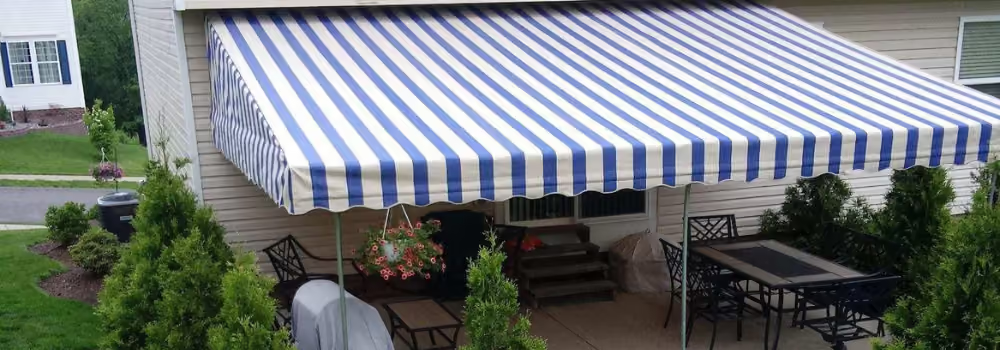
Guest: Yeah. So a quarter of our revenue is just service. So very heavily in October and April, we, you know, take down the awnings, we get half of the service revenue when we take them down, we get half of it when we put them back up. And that's, you know, grown to 3 to 400,000 a year and just, you know, going out, taking, downing down, storing them, putting them back up in the spring. Half is probably, you know, I'd say residential canvas is what I'd call it. So that's a mixture between of those service customers. You know, another nice thing about that is it's this is like the reoccurring side where of my thousand service customers, a hundred of them, you know, every 10 years or so, so 100 of them are going to get, they're going to recover their current awning. So, you know, I don't have to go build frames or anything. I just go make the canvas, recover them. So that's a good chunk of that residential canvas business. And then another part of it is just, you know, people call in, they want an awning at their house, we go make a new awning in the spring and summer and then like 25% ish is, you know, either commercial awnings or, and, or aluminum awning. So aluminum awnings we've done, that's where a lot of the growth has been since I took over. We started doing insulated aluminum awnings. And it kind of looks like a fixed roof. It has a built in gutter system similar to like what a patio enclosures company does, but without the enclosure piece. So just kind of the roof and you know, but it's not a fixed roof that goes into roof joists. It's, it's connects like an awning.
[22:30] Host: Okay, okay. Well, I encourage people to search some of these vocabulary words on, on Google Images if you don't know if you're having a hard time picturing it as I am. Okay. And great. And then in terms of the kind of the, the manufacturing. Well, you said in terms of the service installing and taking down the awnings, you had just that little bit of experience doing that via your father in law, but that was just one awning and one type of awning. And so have you had to become an expert in awning service?
Guest: Yeah, I mean, kind of. Right. More the customer service side, I think, you know, Right. You hire the guys, you get them trained, they go do the work. The customer service side is hard. Right. When you're servicing a thousand people in a five week window, you know, they get a lot of phone calls whether, you know, when are you coming, you know, they left this screw loose, they left the tool there, you know, so dealing with that was challenging. In the spring, I didn't realize, you know, I kind of prepared for hiring all the guys, getting all the trucks ready, getting all the material. Wasn't prepared for like the wave of phone calls that were going to come in. You know, it's easy to say on Twitter to just answer the phone. It's crazy how hard it can be when you run a super seasonal business like that where you do so much work in that little period of time you're touching that many people.
Host: And Andrew, let's dig into that. What is hard about that other than just the hours of manning the phone, is it just like you have to keep track of so many details across a thousand clients or customers or what?
[24:08] Guest: Yeah, there's that. Right. Like everybody that calls in, you got to get, you know, if you need to return, you've got to get that printed out and send the crew back at some point and then, and it's hard when you've got the crews all planned, you know, you spend all winter planning out very efficient routes. And then when you have to go back, you know, trying to figure out, okay, when can we go back to this area? So that's hard. And then, yeah, manning the phones is hard because it's such a wave for such a short period of time. Right. Like, I almost need like five people answering the phone in April and. But only have one or two people's worth of work for the rest of the year. So that's hard too. And I had brought on like a outsourced admin to just answer the phone. But they don't know, you know, people are talking about their awnings. They get front. They're used to talking to so and so in the office that they've been Talking to for 10 years, they get frustrated that they call and they get someone and then they call in again and they get someone else. And so that, I think, didn't go as well as I thought it would. So I got to find something else to do next spring.
Host: Yeah. Yeah. And so were. There was no employee left over from the previous. The previous owner who did that or it was the previous owner himself who answered those calls. I did.
Guest: An employee. That person quit like the last day of March. So right as we were getting busy, so I brought someone over to help me from like the shop. Someone that I kind of cross trained over the winter and that it worked. It was okay. It just, like I said, it was crazy. And that phone just like, you know, you can't even believe how. How often it rang. One person can't answer the phone all day. Yeah, it's challenging.
Host: And so what are you gonna do next year? Or I guess I should say two,
Guest: fall's not as bad just because you're more taking them down. And so like, people just see their awning's not there and they're happy. Right. Whereas in the spring, you know, you leave something a little loose or the awning looks dirtier than they remember or, you know, whatever. There's people. It's still busier in the fall, but it's not quite as busy with the complaints about random stuff. So next year. I do have two admins now. One, you know, partially or mostly supports a fence business, so, you know, they'll plug in and then I. I won't go anywhere in April. I won't do anything new in April. Last year, decided to start a fence. Fence franchise in April. I wouldn't do anything like that again. So I. I'll plug in and help and. And yeah. And then we'll just have better communication out front too. Like with the. They have now like automated text message and stuff when we're coming and things like that.
Host: Okay. And tell me about the employees at the business or contractors or just the. Yeah, the human situation there.
[27:05] Guest: Yeah. So I have about 20 employees. I just in June promoted someone to be like a service manager. So I was, up until then I was the one scheduling what the guys do each day. So now I've been able to step out of like being that into the business. So I have a service manager, I have a shop manager. So an employee that he manages the four or so, you know, fluctuates people in the sew room. And then I have two admins that support kind of both businesses. And then on the fence side right now I have one crew that works for me. I have a salesperson for each business. And then I'm working on bringing on some subcontractors for the fence business to kind of be able to lever up as we need to.
Host: So all of the people that you just recited are full time people. Conspicuously absent from. That was your cruise. So you don't, you don't. So how does that play in.
Guest: Oh, sorry. So the service manager there's right now at this time of year I have like five to six people that work under him. And then fall will probably, probably hire two more. And then in the spring I need like 10 or so people putting up awnings.
Host: Okay. And how does. I don't think you said at the outset what margins were in the business when you acquired it and then how do they look under your ownership margins are.
Guest: So it was. Yeah, it was 25% like SDE, I'd say, I'd say it's even a little bit north of that. I think the owner had some expensive hobbies that he ran through the business and we've stayed about steady. Maybe slight, a slight dip. As you know, as I, I paid more, now it's people. Right. Wages have really increased. We've tried to increase prices with it, but it's hard to match it step for step.
Host: Yeah.
Guest: So we're still in like the 25%, I'd say net range on the, on the awning business and fence is a little less. Fence is partially because, you know, in the awnings you're actually making the awning. You get to kind of get the labor advantage on that. Whereas fence, I just buy material and install it. It's hard. You know, you're mostly competing with people that all buy the Same or similar material, same or similar cost.
Host: Okay.
Guest: Okay.
Host: We're going to get into the fencing business here in a minute. The. So despite your. Well, how would you say that your year in the seat has been, how do you feel about this, the awning business now, awning generally, and this whole life path you've chosen?
Guest: I feel really good. I think it's gone about as well as I could have imagined. I've done some of the things I wanted to do. Right. The previous owner is very, very, very involved in details. I wanted to make sure to get out of some of those details, grow the team, let them make their mistakes. I knew I was going to do that before I came in and I did that and we failed at some stuff. But for a year later, I feel a lot better about where the team is. There's still a lot of work to do, but, yeah, overall I feel really good about where we're at. Certainly have no interest in going back to corporate and just happy to keep growing what we're doing.
[30:22] Host: Given your. What you were educated in was. Which it was engineering. Of what kind?
Guest: Mechanical engineering.
Host: Even in my corporate job, do you rely on any of that at all or could anybody kind of come into an awning business and with some work, learn it?
Guest: Yeah, you don't have to be an engineering expert. I mean, there's like. I'm better probably at reading maybe like the construction drawings when I'm trying to bid a commercial job than, you know, somebody that has never looked at a blueprint or drawing before. But it's not rocket science. I'm not using calculus ever. You know, it's a hard business, but it's not a technically hard business.
Host: And the things, you know, you're happy about your decision, the things that you liked about this business, were you right about them?
Guest: Yeah, for the most part. You know, the cat. It's good cash flow. We take deposits before we do. Before we do the work. Right. So my deposits cover the material cost and not. It's not a challenging business to manage from a cash flow standpoint, working with residential customers has been more challenging than I thought it would. It helps with the customer concentration piece. But it's definitely a different life than I lived before where. I don't know if I said it, but my previous role, we built locomotives and we sold them to the, you know, major railroads in the U.S. right. So I had like four or five customers that. They can be hard on you too, but you build those relationships where it's harder when you're dealing with Over a thousand customers each year. Yeah.
Host: And consumers are generally a pain.
Guest: Yeah, they can be.
Host: Yeah, you know, I can be, I know I can't be. So I know others.
Guest: Right.
Host: And let's just, before we hear about the fencing business, let's just hear a little bit about your SDE thoughts because you kind of, as I said, you kind of bought small. I just had another interview with somebody who started out their search looking for 500, 600, 700 SDE. And the months and months went by and they eventually lowered it and they kind of swung in the opposite direction. They looked at 100 and 200,000 SDE like quite small. And after looking at a business or two there, they were like, no, this is too small. Even if I can grow it, the opportunity cost is just too high. But did settle in around kind of 300 SD and are looking at deals of that size, which is still smaller than, you know, some of the conventional wisdom would say you should be looking.
[33:02] Guest: So
Host: I don't know if you have anything to add there. Was there something about your. I guess one of the things that you really hope for if you're going to buy small is that you can grow it pretty quickly. I mean, what happened to you? You grew it from you know, 300 or a little bit lower actually 250 SDEs up to whatever my math, whatever, you know, 25% of 1.6 is, is. What is that? You know, 400, 400, yeah. 400 SD and in a couple of years. So I guess what you really look for is some opportunity to grow a small business quickly. I don't know any, any, any thoughts on any of this?
Guest: Yeah, I just say like there's a lot of opportunity. You know, there's a lot of businesses are small because the owners decided to like stay at that, you know, 750 range. Like they didn't want to try to hire by, you know, there, there's cost in the growing though too, right. You have to buy new trucks, buy new equips, blah blah, blah, blah. But yeah, I mean I think if you're going to go the self funded route and want to try to take it down yourself, you kind of have to. Unless you're independently wealthy, you kind of have to aim in that area. And then if you want to, you know, if those don't feel good to you and you want to go up, up market, you just have to be comfortable with talking through investors and understanding what that's going to look like. And I think it's worked out well right I think the 3 to 400k SD is, is fine even if you don't like, you don't have to be rich, Jordan and double it in year one. Right. I think, you know, you can feed your family off of 300 to 400 SD, that's for sure.
Host: Well, and just the other point about like your point about if you want to, if you want to buy a larger company, you need to work with investors. In his case, it wasn't the financial piece that was the stopper. I don't, I actually don't know if he has investors or not. But it was just that there's so many fewer of those opportunities. I mean there's just fewer companies that are doing 700,000 SE.
Guest: Yeah.
Host: So for him it was just a question of deal flow. He just like, just to find more deals, he had to lower the bar down to 4, 300.
Guest: I was, I, I was similar. Right. I, I started out thinking I wanted, you know, let's six same range. But it was, yeah, there are less deals in that range and probably even harder that I found. Right. I was maybe impatient, maybe it have got better over time, but getting brokers to get back to me and, and believe that I could go take down 700, 800, you know, thousand. There's just a lot more friction at that higher level when you know, they just didn't trust it in me or whatever. Right. So you're trying to build that brand and I think, you know, probably spend a few months talking to the same brokers over and over again. And if you're, especially if it's regionally based like I was, then they probably like, okay, like he's serious, he's legit. But you know, it's hard to like harder to get to that point as opposed to one that's going more of like, you know, million total value. You know, people, you know, you show people what you have in your bank account or whatever, they're like, okay, he could do this himself if he wants to with, with the SPM and all that. So I think that was a challenge too. Is just like, I think I was just impatient. I was like. And you know, reading. I think it was like Nick Hashka at the time was putting a lot of stuff out on that. And it was, you know, that's when I was like, okay, yeah, like I could drift down and, and also right around the same time I think Mike Botkin was talking about like he had just closed the deal. As I was searching and just hearing what his career background was like. I was like, well, I'm too good. It was easy then to be more humble on. Okay, I can drift down too. If he can do it out of this big role that he was doing, I can too.
[36:42] Host: Yeah, yeah, yeah.
Guest: Great.
Host: That's great. Yeah. Both of those guys talked about both of those things on the pod. Early, early acquiring minds guests. Very cool. Okay, Andrew, you have, we've been talking around the fact that seasonality is a, is a key feature of your business. And it's one of the things not to like about your business and one of the ways. So I want you to just kind of talk to that point directly. You know, the hiring piece, of course, is going to be the big thing there, but talk to that point directly and then how acquiring a second business that kind of is countercyclical in terms of the season where when it's active was your solution to this pain point.
Guest: Yeah. So for the service piece, during those really four total months of the year when I'm doing, you know, actively doing service of both takedown and put up, I need almost two times as many crews as I need during the rest of the year. So, you know, right now, heading into next spring, I'll need five to six crews during put up and then I only need two to three during like the summer season of when we're just putting up, you know, new awnings. So what other people in my industry that do this type of service have done have either most of them just stay at a level of, let's say 500 or so customers, maybe 700. And if they take on new ones, they shed other ones that are further from their central location. And then there's really only one competitor in my region that has grown significantly beyond that. And they use temps in both the spring and fall. Right. So they, they hire either through a temp agency or, or through normal channels. And then when spring, you know, come Memorial Day, they lay off like half their service workforce. Didn't really like either one of those options. So what I looked at doing, you know, this spring was okay. What are maybe some labor intensive industries that are super busy during the summer? You know, I, I knew it was going to be hard to figure out something that was going to be for summer and winter busy. So I just focused on summer and kind of honed in on fencing being one of the labor intensive, but has a decent moat. Right. There's other labor intensive ones like, like land, like landscaping. I don't like businesses that a high school kid can just like go start doing tomorrow. With, you know, very little friction. So I felt this one still had some investment needed to start up. You know, there's, it's more competitive than like awnings, right? There's only a handful of awning companies and there's a lot of companies that are willing to go put up fences. But, but that was the kind of, the solution was to go, okay, let's, let's see about doing a fence business and you know, thought about starting one, thought about buying one, and ended up going with franchising because it, to me it seemed like the best option. Yeah, go ahead, Andrew.
[39:40] Host: Let me pause you there because I want to because we're gonna, we're gonna get into that pretty deeply. But on your, the thing about what you, the two solutions that you said your competitors do, they basically like keep their, you know, get rid of customers if, if they take on new customers to, to kind of keep an equilibrium amount of customers that, you know, so they, that they don't have to, they reduce their staffing problem that way. Or option two is the temp option. Why didn't you like the temp option?
Guest: It's just like, like you go through all this, what, you know, especially for me in my first year, right, I go through all this effort to hire all these people and I felt like I had a, and I did have a very good crew. And then just to turn around and lay them all off two months later, just I don't. Because then, you know, the COVID hits or something and the government's giving away free money and then, you know, how are you going to get people to walk in the door for 15 bucks an hour for two months of work? So yeah, more of like to have a steady staff and you know, not be doing that churn every year, which you're still going to deal with churn, but hopefully not, you know, quite as bad.
Host: Yeah. Yeah. Okay and then. Okay and great then. So you were looking for a business where you could basically have, you know, basically W2 folks bring them in as, as proper full time employees, train them on awnings, and then retain their, you know, their skills year in and year out or as long as they'll stick around. And then also train them on another skill, namely in this case putting up fences. Same thing. You train them. You only have to train them once other than just the natural churn of the, of the business. And ideally you were looking for something where it would be summer and winter to fill it because those are your slow times. But winter was going to be hard because there's just not a lot of stuff, I guess, in, in that, in this world at all that happens in the winter. So just fill the summer and then you got three seasons filled for your cruise and that's enough to justify w2ing kind of you're into all your crews, you find and so you, so fencing is really active in the summer. That was great. And then. Okay, so great. So that brings us out to, to why. So you thought about starting one from scratch, you thought about buying one, you thought about and then doing a franchise. So walk us through your analysis of all those options.
Guest: Yeah, so starting was going to be hard for me because, you know, very busy with the awning business. I'd almost have to hire someone to then go start it, which maybe I could have tried to do. That just seemed like something I wasn't going to be able to, to pull off buying. I still had some scars from buying the, you know, the, the awning business as far as like the process of it. It took a very long time. The negotiation, the lawyers. Right. I wasn't, didn't, wasn't really interested in going through that again yet. And I, you know, didn't think I would want to do franchises. Right. I think I, I don't know, had a bad thought about how franchises work and that went to SM Bash in February and met some people that have been really successful doing franchises. And so I think coming out of that, I had opened my mind to it. I kind of decided I was going to spend a few weeks looking and if I found something that really was interesting, then I just do it. And if not, then, you know, wait till next year and deal with, you know, potentially laying people off or whatever I was going to figure out in the summer and ended up coming across this, you know, Big Jerry's fencing franchise. Really liked the terms compared to some of the other non fencing franchises that I looked at and met with them. They really liked, you know, the idea of what I was going to be doing that I was kind of already engaged in the community and had a good path to labor. And then I really liked what they brought to the table as far as just some of the, the processes. Right. I think the big one ended up being the supplier relationships I think would be, is a, would be a very challenging part of getting into something like the fence industry because if you're not getting really good, you know, wholesale deals on your material, then it's going to be hard to compete. And some of the bigger suppliers I don't think would have Talked to me had I not had that relationship. Relationship.
[43:57] Host: Yeah, that's huge.
Guest: So there's that and then like the CRM that's already there, the contract, you know, some of like the little detail type stuff that it's hard to find time to do that. You know, they kind of have full time people always improving it, always working on it. And it's, you know, stuff that I've tried and am actively working on for the awning business. It's nice to have that, you know, someone else just working on that for the fence business.
Host: Yeah. Yeah. The other thing about doing a franchise is that like your deal flow or deal potential would have been minuscule. I mean, you basically had. Would have had to find somebody in, you know, fencing business that is either for sale or I guess you probably would have done a lot of cold outreach and, you know, found, you know, the, you know, the potential people to talk to potential businesses to buy in Pittsburgh doing fencing, I don't know, or what, 10, 20 maybe. So pretty small pool.
Guest: Yeah. What's interesting is I did find. Find one because I did, I looked a little bit. I talked to, you know, the lawyer that that's, that I worked with on my deal that's, you know, in Pittsburgh, and she knew of one that was in the area that was thinking about selling and went, you know, talk to the guy. Actually really liked him, really like the location of the business and, and the type of business they were doing, it was more like ornamental, not, not just like, you know, I do vinyl, wood, all that kind of stuff. And this was like more iron and. But, you know, we did go to the NDA and, and we're like negotiating the NDA. And he did, he wouldn't, he wouldn't show me anything because I, I didn't want, I didn't like a couple lines in the NDA and I was like, you know what? I don't want to go through this again right now, arguing with the seller about something like that. So I kind of stopped looking at that point.
[45:34] Host: This is interesting, Andrew, because you go through that first acquisition attempt which fails and sounds kind of painful, and yet, you know, you, you, you, you, it, it leaves you feeling like, no, but I do want to do this path. Then you go through an acquisition that is successful. Things are. Seem to be going pretty, pretty well. But the acquisition process, I guess was, was painful enough for you that you're like, no, I really, you're really turned off from having to, to do it again, although certainly from talking to so many people. I I understand deals are, deals are fun in theory, but actual like painful and the back and forth is just. Can be painful and long. So I get.
Guest: Right, yeah.
Host: Okay, so you choose to go the franchise route. And the cons of doing a franchise you had said you, like so many, were kind of closed to doing it until you met some really successful folks at SM Bash in Orlando, where you and I also met in person for the first time. Those cons are the usual, I assume, tell me what those cons were and then tell me how you've gotten over them. Or have they actually, are they legitimate cons and you just kind of have to like, you know, deal with it, suck it up and move on.
Guest: Yeah, I mean, there's some cons, right? Like a pro is that it's less capital. You know, you're not taking out a loan. The. There's no kind of PG that's going to ruin me on this fence thing. You know, the con being also that payment never goes away. Right. You don't pay off your royalty and it stopped paying it. Right. You always pay royalties. So that's something that I think is hard, like looking at it at first. And then you just have to kind of understand what, what are you getting out of that royalty. And I feel comfortable that what I'm getting is, you know, valuable for, for what I'm paying. As far as, like I said earlier, how they have people working on stuff, they have people always updating the contract form, you know, stuff like that. So I think that's something that you have to get. And I think when they have to, with their franchise disclosure, say what it could cost to start a franchise, and then people look at that, let's say $150,000 to start a fence or cleaning or whatever business, they're like, oh, you know, right. You know, I can start it for $0 tomorrow with a vacuum cleaner. But, you know, that's what they put in there. You know, it's up to you in most cases, or in some cases it's up to you of how you're going to spend that money or how much you're going to spend. You know, I think on mine, I forget what the total it said, but one of the line items was like a brand new, you know, F450 or whatever, you know, big truck or $80,000 truck. Well, you don't have to go buy an $80,000 truck to start a fence business. So I think some people get scared or get turned off by some of the. The documentation, but it's required that they put that documentation in there so that they're not misleading people into thinking, oh, it's only going to cost five grand, when really it ends up costing 80 grand or whatever. It ends up being interesting.
[48:38] Host: Okay, so I haven't ever looked at such a document, but basically there's like a number, a top line number that's like, this is what it's going to cost to do this. And then they itemize that and they have to be conservative about that. Meaning like show all the possible expenses. But if you really, if you really scrutinize it, some of those things are more discretionary and you might not have to actually do, especially if you already have some of this stuff in place because you have an existing business.
Guest: Right. So for me, you know, I had to pay the franchise fee which you know that you get some training out of that. You probably don't get much out of your just your franchise fee. That's kind of just your, you know, buy in. But then you, then you can either feel good or not good about whether your royalties are going to good stuff. And then yeah, there's usually a range on okay, this is what the total is going to cost. And then you have to look into that and say, okay, do I actually have to buy all this stuff? And if you're starting from scratch, then yeah, you probably do. And like you said, in my case I didn't. Right. I didn't need a new building, I didn't need brand new trucks and stuff like that.
Host: And what about, you know, for some people in the franchise, there's, there's a bit of a vanity thing which is like they, you know, they want to have their own brand, their own feeling of independence. Any thoughts on that or you. Is that not big deal?
Guest: You know, I, I guess it's maybe easier for me because I already have that in the other business.
Host: Right.
Guest: So no, it, it, for me it made a lot of sense to plug into this one because it takes a lot of the effort out of, you know, some of the things of running a business that they just have people to go do and I just go sell and put up fences. And so yeah, I don't feel that. And like I said, there's a lot of, like there's a lot of people that, especially people that have gotten into owning multiple franchises that have done really well that I, I think they probably feel just fine about it being in someone else's name. Totally.
Host: I mean that's actually, that's, that's the quote from a Couple of my guests that I've interviewed and haven't aired their, air their interviews yet who've acquired franchises and it's basically like, you know, if I'm, if I'm bringing home X dollars a year, I can, I can get over the fact that it's not, you know, it's not my name on the brand. It's so, it's so lucrative. Andrew, when did you, when did you sign on the dotted line with the franchise? What month was that?
Guest: It was, I want to say May, early April, because then I went down for training in like late April. And then we started advertising and like selling in like mid May.
[51:06] Host: In mid May. So you were really trying to hit it for this summer. Trying to get this whole.
Guest: Yeah.
Host: Yep. And have you, did you, has it solved your problem?
Guest: June was like crazy. Like it's almost growing too fast. I got nervous. But yeah, we're just kind of settling in to, I'd say about 50k revenue per month this year. And then we still, you know, pretty limited on reviews for our area yet. There's a brand new franchise to our area and I just leased a new building so like it didn't have a location either. It's like a service location type thing. So I think as you know, we get into next year, we have some more reviews. An actual service location, I think that can grow towards a million in revenue business
Host: in the second year.
Guest: No, third year. That'd be a great year. Yeah, I think like I would say probably a year from now it'll probably be like on that, you know, monthly, you know, and then you, probably the third year, I think it could get there.
Host: That's remarkable. And, and, and, and you're already on a run rate for $600,000 a year at 50, 50 grand a month is
Guest: a little less because it'll be, you know, same thing. There's some seasonality to it, so probably like a, I'd say about a half million in the first year. Ish.
Host: Yeah. Wow. That's, that's really, that's really fast growth. So, you know, your case is, is unusual because you're, you're, you know, you're, you're plugging your, your seasonal gaps in with this business. So it's a little different. But do you, now that you have insight into both, into very independent service businesses and, and franchise service businesses for somebody out there who doesn't have any businesses and is considering their first acquisition, do you have any, does your taste lean one way or the other in terms of what, what you'd recommend for them?
Guest: I, you know, the awning business is certainly higher margin. It's harder. It's a harder business in that everything's very custom. You know, we go out, I would say we're still at over 10% of our, you know, new awnings that go out have to come back to make some little adjustment because it didn't quite fit. Right. So that's challenging since. And I would say franchise in general is going to be. They're less friction on that path. Right. Like, you know, once you get through, maybe you negotiate the disclosure agreement that you sign a little bit, but, you know, it's not going to be a bloodbath like. Like what I went through in my acquisition. So I think there could be, you know, there's pros and cons to both. I probably wouldn't do another franchise just because a lot of them have, you know, they say somewhere in there that you're not supposed to associate other brands with their brand, you know, that. That kind of thing. So it's. It's like hard to grow, like a family of businesses with, you know, too many franchises. And I think John Wilson has hit on that before that he looked at doing one, but it, you know, it. Integrating it into what. With what he was doing didn't make sense. So I think it's good. It's just, you know, if you're doing it, you probably want to plan on growing, like, that franchise, you know, geographically, as opposed to what I'm doing and growing, you know, in Pittsburgh location with like, you know, maybe other businesses that are somewhat related.
[54:32] Host: Yeah, yeah. And in your franchise, what was it called? Big Jerry's Fencing.
Guest: Big Jerry's Fencing. Yep.
Host: Yeah. They were fine with the fact that the crew that you'd use for your big. Your Big Jerry's business is also active in this other business.
Guest: Yeah, like that, you know, they have to, like, wear the Big Jerry shirts and like, the trucks have to have the Big Jerry's, you know, stuff on them when they're doing that work. But, yeah, there's certainly nothing in there that said I can't. Well, because a lot of, you know, fencing, you know, those type business, a lot of them use subcontractors pretty significantly to do the work. So I'm one of the. I'd say the few franchises that has W2 employees doing the work.
Host: Oh, so that was actually. They probably really like that. Yeah. And what would you tell people about seasonality? I mean, you've. You've gone to this kind of elaborate These elaborate lengths to solve that problem in your business, although it seems like you've solved it pretty artfully. But, you know, would you, would you tell somebody out there to run kicking and scream, screaming from seasonal business businesses or. No, it's just, it's just going to be a big factor and it's something you're going to have to either deal with or address creatively.
Guest: Yeah. I think, you know, you got to understand what the cash flow looks like if you're going to have a seasonal business. I burned a lot of cash in December, January of, you know, last year getting ready to grow and, you know, getting ready for the spring and paying out your bonuses and stuff like that. So you have, you know, you have to understand that don't run out of money. And then, you know, there's good and bad about seasonal businesses. Like I was saying earlier, I'm not, you know, moving forward, I'm not going anywhere in March, April, May, like that's going to be locked in and I'm going to be working long days. You know, no matter how many people I hire in the business, I'm going to be plugged into that business, helping because I just know how crazy it is in those few months.
Host: Yeah.
Guest: But, you know, in the summer and, you know, especially the winter. Right. I have a lot more flexibility now to take my kids places, you know, spend more time at home where, you know, my corporate job, it was just, you know, 50 hours a week every week, unless I was on vacation.
Host: Yeah.
Guest: So there's goods and bads about seasonal businesses. If you're willing to just buckle down and work really hard when it, it is crazy, then you don't feel bad and enjoying the months where it's not as crazy.
Host: Yeah, I, I guess another way of thinking or kind of saying that is like, it's really intense in high season. But then the good news is that during the off season, it's actually light. Work is quite light. So then, you know, it's you. Maybe you dip down to even like below normal working hours.
[57:10] Guest: Yeah. And it feels like that. Right. Especially, you know, maybe I'm not working like so much less, but it feels like so much less because I'm working so hard. So. So yeah, like, if I feel, you know, if I want to go golfing on a Friday, I don't feel bad about it at this time of year when we're not quite as crazy.
Host: Just a couple other questions for you, Andrew. So, and just learning about the fencing business a little bit. You've already told us Some things. So fencing I guess is also then seasonable, seasonal. It's very high, you know, big and big in the summer. Is, is, is it a, is it a business? You had said that like, you know, access to materials is a big bottleneck or like competitive differentiator in a fencing business. If somebody's out there considering buying a fencing business, any, any other tips you might share with him,
Guest: I mean, I'd understand the labor piece. Right. Like even mine, it's been more challenging to just ship, you know, people into fences. Right. It's, there's, there's definitely some nuance doing fences. So yeah, that's, that's probably the biggest piece is, is understand what the labor looks like and don't. Probably don't buy a one crew fence business that has labor that's been around for 20 years. Because if they leave, you know, what are you going to do? So yeah, making sure that you're buying something that, that there's enough staying power that you know, if a crew leaves or a crew lead, you know, someone like that leaves you, that you're able to keep operating.
Host: So you had said when you, you acquired the franchise that they in late April brought you down for, for training. How long was that training? To give us a sense of like, for to basically because that's a good proxy for what it would take to train somebody new on building fences.
Guest: Yeah, I mean I got. So my, that training was like me and my sales rep doing like office type training. And then I, I also brought down a crew of my guys for two weeks to do training. Now I was lucky in that one of the guys working for me in the awning business had had experience, not like working for a fence business, but in construction and had done fences and pretty like good with his hands type person. So he's my crew lead for like the W2 guys. And because two weeks, probably not enough time for, you know, someone who's never done stuff like that before to really learn how to do fences. So I learned a little bit that of the hard way. So. But they're, you know, it took a couple months, but they're starting to, you know, kind of get in a rhythm here of doing the fences. And then I'm working on onboarding a couple of subcontractors too, just because I have three, like W2 employees that are doing it. But I don't have anybody yet that's ready to be like a crew lead to train other people. So that's a challenge is like, you know, when you're Trying to grow if you can't split off. You know, I can't just add people at this point because I don't have anyone. I don't have enough people to train them.
[1:00:05] Host: Yeah, yeah. Andrew, you said that, you know, you, you never see yourself going back to corporate life. But just to put a point on that. So how, as a last question, how do you feel overall about this path and what, what might you tell to other people considering it?
Guest: Yeah, I mean, I feel great about it. Um, you know, there's certainly. It's a different type of stress. Like, my last job had times where it was pretty stressful too, but when it's your, you know, checkbook on the line and all that type of stuff, that's. That's a different stress. So you gotta be ready for that. If you don't have.
Host: It's. It's a worse stress.
Guest: You're saying it's a. Yeah, it's different and it, it's probably. I'd say it's worse. Right. Like, it was very early in my career the last time I felt like as stressed as I did this last spring. So, yeah, it, it's a high stress. And people on Twitter have talked about it too. There's the mental health side of, of doing this that you have to be prepared for. If you haven't been like super, super stressed before and, and don't know how you're gonna handle it, you just want to think about that.
Host: And the stress is coming from the anxiety of failure and the fact you have a personal guarantee or just like I've never.
Guest: So I know people.
Host: The work is just like hard to deal with.
Guest: I think we, you know, maybe I was lucky in that I stepped into a business that was growing to the point where like the financials and were never the. Or have not been in a significant issue. It's more about just like the, you know, so. So many things to deal with. Like, especially in the spring and when that person quits and, you know, I'm doing job I've never done before and I'm trying to learn her job, you know, like, it was just not enough hours in the day is what it seemed like. Yeah, not necessarily that we were going to completely face plan. It was just like, you know, working so much and trying to understand what we were doing.
Host: Yeah, yeah, yeah. I think, I think I interrupted you, Andrew. I think you were saying on the. You were saying more beyond just the stress. So this path.
Guest: Yeah. So, you know, the stress is a challenge. And, and I don't Know, like, it's lonely. Other people have said that too. Right. Like before, in my, you know, mid level management job, we have. There's a row of us that were all similar in age and we talked, you know, went out to lunch every day, talked to each other all the time. You know, there's. That's gone in this world. Right. Like, you know, these.
Host: Yeah.
Guest: You're friendly with your employees and stuff, but they're probably not your, like, friends or you might think they are, but they're probably not. So that can be. That's hard too. Right. It's something that is hard to get used to. And then ideally, if you're going down this path, you've had roles where you've managed people before, because coming into, like, the stress of running a business and learning how to manage people, I think would be very hard. But I do know there's people on, you know, that I've heard on your show and other stuff that have done it and, you know, are doing really well, but I, I think that would be hard.
[1:03:12] Host: Yeah. And where do you see, like, the future, like five, ten years from now, or have you grown these two businesses a ton or have you acquired other small businesses or what, now that you. Now that you have some experience under your belt? What, what, what are, what are the possibilities look for. Look like for your career?
Guest: Yeah, I think, you know, I, I said, or I set out my goal that I to do be doing businesses that were doing 5 million in revenue in five years. I think, you know, we're on that path. I think that means not like a ton more acquisitions to get there. Probably like one. And that's probably not something unless, you know, opportunity really comes knocking, but probably not something I'll do in the next nine months. But, you know, coming into next fall, start looking at adding on. Right now it's probably, you know, getting the awning business on to like a smooth, you know, medium growth path, not the 30% that we're at right now, and then kind of get the fence business into really having good rhythms and processes. Mm.
Host: And I'm sorry, What was this $5 million goal? Can you elaborate on that?
Guest: I just, I don't know. I might have plucked it out of the air, but I wanted, I'd like to be doing 5 million in revenue between the businesses or, you know, in the 800 to 1.2 million EBITDA five years after my first acquisition. So four years from now, basically.
Host: Yeah, well, that would be a pretty great outcome.
Guest: Yeah.
Host: Good deal. Andrew. How can people get in touch with you.
Guest: If they have questions, they can. So I'm not super active on Twitter, but I, you know, I, I'm, I'm on there a lot. I don't post a lot. So if you DM me on Twitter, I'll respond. And that, that's how I've talked to, I'd say, several people that are considering going down this path and want to talk through what it's like and, you know, those kind of things. So that's probably the best way to reach me and then exchange info at that point.
Host: Okay. Andrew, thanks very much for coming on. This is really, really interesting, and I look forward to watching you achieve your million dollars in EBITDA goal in the next few years.
Guest: Thank you.



































































%20-%20thumbnail.avif)





%20-%20thumbnail.avif)



%20-%20thumbnail.avif)

.avif)




%20-%20thumbnail.avif)