Host: Today's story has lessons about working in the business. That's right in not on the business. We're so often focused on the goal of working on the business, we forget the value of working in it. Colin Gates bought a business that did a little less STE than the typical self funded search ideal of 800,000 or above. Master Craft Coatings, a 30 year old commercial painting business, did more like 3 to 400,000 in SDE. That meant that Colin was very involved in the business when he took over. Not only that, Colin actually worked with a crew as one of the painters before he closed on the business. These experiences were not bugs in the process, they were features. Boot camp, Colin called them and today he's much better for having had them. In his words, to hold people accountable, to let them succeed. I just had to see how the process worked up close and personal. It's a good reminder of the value of being the operator yourself, at least for a while. Think of it as an investment, albeit of time, not capital, because it leads you to make better, more informed decisions, which in turn leads to higher enterprise value. At least that appears to be how it's playing out for Colin. Here he is, Colin Gates, owner of mastercraft Coatings Announcements We've got a webinar next week hosted by the guest with the most listened to episode in the entire Acquiring Minds catalog. Matthew Saskin, episode 142 bought a $5 million towing business and while going through his deal, found and hired an operator to run the day to day of his new business. It's a difficult model, but needless to say, very powerful if you can get it right. Matthew's going to do a deep dive on how he's been successful doing it. He's owned the towing business for over a year and a half now. His operator is there running things and Matthew has kept his day job the entire time. How to Buy a Business and Hire an Operator at once is the name of the webinar. It's next Thursday, June 27th at noon Eastern. Link to register at the top of the show notes where it says Register for the webinar and if you can't make it next Thursday, register anyway so that you receive a link to the recording after the fact. The webinar is next Thursday, June 27th noon Eastern. Register at the top of the show Notes Also a searcher in our ecosystem. A veteran with a top tier mba bought a niche remediation company in the Midwest a few years ago. He's moving to a different part of the country and is now looking to sell the business and to sell it directly, not through a broker. While he could likely sell it to a strategic he knows the search community. He is of the search community and he believes that this is a great steady business for a searcher. Some highlights Decades of excellent margins and cash flow 75% of sales last year came from repeat customers. Modest competition and a strong reputation mean they win over 60% of jobs bid Long tenured non union team with extensive industry experience, minimal customer concentration, clear path to additional growth, modest capital requirements and the business has been successfully led by two consecutive owners who both lacked industry experience. If you're interested in learning more about this business and potentially acquiring it yourself, working directly with the searcher owner and not through a broker, there's a link in the show notes get remediation company SIM that'll take you to a form where you can request the NDA. This is a bit of an experiment. I've never advertised a business for sale on Acquiring Minds. I'm not endorsing the business, I haven't diligenced it myself, but given the owner's background and his connections in our community, it's a good one to try with. Lisa Forrest, head of the Search Fund vertical at Live Oak bank, was the lender when the owner bought the deal a few years ago. So Lisa and her team already know this business which could help you in underwriting if you buy it and go with Lisa for your loan. Of course, like any SBA loan, this would go through underwriting and be subject to market conditions and buyer qualifications. So if you're interested in a solid decades old business in a Midwestern city, click the link in the show notes get remediation company sim okay, on to today's episode. Welcome to Acquiring Minds, a podcast about buying businesses. My name is Will Smith. Acquiring an existing business is an awesome opportunity for many entrepreneurs and on this podcast I talk to the people who do it. A PEO run by a Searcher for Searchers if you're running a company with less than 100 employees in providing health insurance, you could secure better benefit plans at a 15 to 30% discount through a professional employer organization or PEO. Aspen HR run by search Fund veteran Mark Sinatra understands the needs of search operators and could be a great solution for you to receive HR compliance and diligence support, a powerful HR tech platform and Fortune 500 caliber benefits, all for a fraction of the cost. Check out aspenhr.com or contact Mark directly at mark aspenhr.com Colin Gates welcome to Acquiring Minds.
[6:25] Guest: Thank You. Nice to be here.
Host: Colin, in our pre call, you made a great case for how remarkable an opportunity SBA financed entrepreneurship through acquisition is that an often young, often unproven person with some hustle can go buy an existing business and get 70 to 90% of the purchase price with a loan. So I'm going to have you jam on that observation a bit later, but first let's get some background on you, please.
Guest: Yeah. So I guess we'll start from the real beginning. I'm from upstate New York originally. Grew up there, small town called Watkins Glen. My family were farmers, so as a function of that, my dad's an entrepreneur, so I grew up in that lifestyle. Saw him get the 3am calls about the broken stuff. Saw him managing the capital for payroll, all the expenses that come from that saw the challenges, you know, that come from. I mean we're a commodity business, so the cycles are extremely volatile. But yeah, so I always loved that. I always worked on the farm. Knew it was not necessarily that I knew I always love farming. I wanted to do that, but it's just not a viable path for anyone to start their own business. So I. And that was never lost on me. It was, you know, so naturally went to college from there, studied agriculture at first, and then during my sophomore year I switched over to finance. Just saw that, you know, that was the best, the best place to learn about business and simultaneously acquire capital to actually run one or acquire one someday. So.
Host: So you already knew you were going to buy a business halfway through undergrad.
Guest: I've always known I wanted to. To own a business. I always knew that I wasn't. That's always what I was into, you know, I was. I've always been furiously competitive. Like I was the kid that cried if I lost board games and threw an absolute temper tantrum. You know what I mean? I always loved like.
Host: You don't seem like it, Colin. I gotta say, you seem pretty chill.
Guest: Yeah, I. It takes a lot to like move me now, but it still happens occasionally, you know, I mean like, I mean, yeah, I'm just, I'm. The competition has always been just like that. That's why a big part of. Actually I think I love business so much. Like, and owning business, it's like I'm just. I can't stand to lose. Like I, I love like winning and the only way to like get that fire in the real world is through owning your own business. Like Bass. I. I played basketball. You know, it's just, I mean a small town, right? But like I Was just always crazily competitive by that. But like my basketball career was limited. I'm not very tall and obviously and
[9:27] Host: Colin, why, but why buy a business rather than start one? Especially in undergrad where people that age are going to really much more focused on, you know, new ideas and, and they, that, that's really when people kind of think about starting a business and they're not going to be as exposed to, to buying a business, really underexposed to buying businesses at that age.
Guest: I mean I'm not opposed to starting a business like, and I mean this will tie into the personal guarantee thing later. Like my views on that. But I think it's a good option. I think it's a great option. But like there's obvious if you have the capital which luckily I was able to acquire that by like the time I was, I bought a business nine months ago or so. You're, you're taking a shortcut, right? And you know you're trading off your capital for that. But you know, you don't have to. The first. This is a common thread on Twitter. 0 to 1 million is the hardest. There's no question that's the hardest. You have to basically build the airplane while you're flying it. You know, you have to find contracts or you have to find work while also finding employees while also doing the work yourself while also doing that. You're wearing every single hat. There's no way around it. And I'm not the guy that is like going to be like the only way to buy a business is if you're working on the business, not in the business, but you're just going to get where you want to go a lot faster. If you can acquire through the SBA for 90 leverage, 70 leverage, whatever it is someone's life's work where they've basically done all the legwork for you and then you can build off of that. So yeah, that was a no brainer for me. And also my buddy did three months before me and he was kind of proof of concept and but that was much later.
Host: That wasn't, you know, halfway through undergrad.
Guest: Yeah, yeah, no, but I, I mean I knew, I knew, I knew in undergrad. Like I, I didn't necessarily know I was going to be like on Twitter discovering like search or eta. I still didn't even know those terms. Like when I bought the business, like I just called it guy who wants to buy a business. You know, I like businesses, I like to compete. I want to make money. This is what I'm Going to do right. Like that. There was no like guidelines besides that.
Host: Well, I, as I, as I often say when I meet people who found out about search. Excuse me, did. They didn't really find out about search. They just kind of indigenous to their own, their own vision, decided that they wanted to buy a business before they knew what ETA or search was. I always find that those are really fun people because it's that much further off the beaten path for them than it is for people who maybe learned about it in business school or on Twitter, podcasts, YouTube, whatever. Carry on. So you, you leave undergrad with a degree in finance?
[12:07] Guest: Yeah. Then I go to work for a private equity company out of Boston doing agricultural investing. That was right at my wheelhouse. I was grew up in agriculture so knew about it and it was just a natural fit for me. But you know, I never enjoyed that. I knew I never enjoyed it from the first day I started. I'm not a guy that likes to sit in an office and play with a, play with Excel all day. But I mean I was capable of doing it, you know, and it was the highest value use of my time in terms of acquiring the capital you need to start. Like, I mean I've always been like this is the benefit of growing up like with your dad. Being an entrepreneur is like I knew the amount of money it takes. Like even if you had 20 grand saved up, 100 grand saved up, like that's like pocket change in terms of like the working capital you need to run any business pretty much. Unless I like, unless they have great cash flow terms. So like I knew I needed to get a base set up. You know, I'd always been, I ran cattle in like high school and stuff that was like I'd been making money. I ran a firewood business, you know, like. But I knew those things weren't like viable long term paths, you know, to, to running a business. But I, I was, everything I was doing, I'm, I'm not like a compulsive saver now or like trying to like skip coffee to like fund my like bank account. But like back then, before I acquired a business, you know, and had good discretionary income, everything I was doing was to try and boost my savings, boost my net worth, you know, because I knew I needed and to be clear,
Host: it was to build a ba A a enough cash to buy a business or for that deposit that you were going to need or because you, this thing about you perceived in small business you were going to need just working capital to just I didn't call it some liquidity at all times.
Guest: Me and my buddy talk about this too. You don't understand working capital until you run a business. Like, if you've just done an Excel model like you do, like, you cannot under, like every all these models, even if it's a monthly model, you cannot understand that you can be extremely profitable and have like $200 in the bank with 250,000 of AR and just crushed it. You know what I mean? But like, no, none of what I did. Like, I just had a goal. Like, I knew I wanted to own a business and I, like, it's pretty much common sense. You need a lot of capital to do that, you know, so everything I did was I never even focused on buying the business. Like, I knew I just needed cash to get there. You know what I mean?
Host: What do the following acquiring minds guests all have in common? Doug Johns, Morley Desai, Tim Erickson, Shag Shaw, Shane Ursum. They all went through the Acquisition Lab, the accelerator in community for people serious about buying a business. But they represent just a sliver of the Lab's success stories. The number of deals across the lab's cohorts now stands at over 120, with over $300 million in aggregate transaction value. The Acquisition Lab was founded by Walker Deibel, author of Buy Then Build, the book that introduced so many of you to the very idea of buying a business. The lab offers a month long, intensive, almost daily Q and A sessions with advisors, live deal reviews with Walker, Deal team introductions, and an active community of serious searchers. Check out acquisitionlab.com, link in the notes or email the lab's co founder, Chelsea wood. Chelsea@buythenbuild.com so keep going then with how you accumulated more because you did have a bit of a windfall that finally, finally got you there. I shouldn't say finally. You were still very young. But carry on.
[15:53] Guest: I had a few, I mean, I had a windfall. But like, I mean, I, I, I'd always worked. Like that was a huge benefit too of growing up. Like, I'll, I'll never like, deny it. Like I had huge advantages from my family. Like, like I was able to work from the day I was pretty much born, know what I mean? And like my parents were willing to compensate for me. It wasn't unpaid family labor, you know, so, but again, I mean I wasn't making anything crazy, but like I've always, if I wanted to go put 60 hours in in a week at 18 bucks an hour, when I was 15. Like that was available to me. So you know, I came out of high school and I had savings. Like I, I don't know, maybe 50 to 100 grand or something like that. Like, which is not an insignificant sum for a young kid, but.
Host: No, the richest 18 year old ever. Other than celebrities.
Guest: Yeah, I mean I was doing pretty good. I mean I worked a lot. Like I worked.
Host: Yeah, yeah. I don't mean to keep acting like you. This money fell into your pocket. I mean you, you sounds like you're.
Guest: No, I mean, but it, like it's available to everybody. If you want to get ahead, you can. Like I'll never. Like that. That's there. But yeah. Then I went to college. Like I paid for half my tuition. Like that kind of dented my capital a fairly significant amount. Obviously, you know, worked in the summers, worked during the years. But I left college not too, I, I mean I had some debt from that, but I was also able to like maintain liquidity. I borrowed instead of using all my cash to like fund my education. But I wasn't too significantly impacted. Like I said, I paid for half. But anyway, I mean I graduated. I maybe had. I was probably down to like, I don't know, 40, 50k, whatever. Like pretty insignificant in the grand scheme of things. And then you know, covet like my first job, like it was a high paying job. I was around 100K. This is, that's pretty good at the time for a recent grad, you know what I mean? And then Covid basically hits because I graduated in 2019, so I only worked in office for six, eight months or something like that. And then covet hits. I'm getting paid the same amount pretty much, but I move home, you know. So your biggest expense when you move to these cities for these jobs is rent. So so I'm basically just start hoarding all that on top of what I was saving. So I was able to start saving like I don't know, 50s, like pretty much all of that. Cause like that's also Covid. You can't do anything right, so there's nothing to spend your money on. So. So I'm, I got pretty quickly back up to like within a year or two, 100, 150. And then like I worked for four years out of college, so I was pretty much of my own cash. Like I don't know, 100, 200. And I was investing that like so I was back home. So I was, I was still doing like raising cattle at my farm, work on my farm, you Know, on the side, you know, So I probably had a net worth around, I don't know, 100, 200, something like that. It's rough numbers. But then, you know, me and my family get in an argument about, like, I don't know, me not being the best with the COVID precautions. So I end up moving down to Florida where my buddy's at.
[18:45] Host: You know, how perfect for a guy who doesn't like his Covid precautions. He moves to red Florida. Of course.
Guest: Yeah, exactly. And I mean, it was. I always mess with. Me and my dad are really good friends. We disagreed on that. But, like, we never stopped talking. Like, I talked to him every day, pretty much. I still talk to him every day. Well, my buddy was in Naples, which is, like, the reddest of red of Florida. So it was wide open, and, you know, I've got some money, and I'm like, well, I'm gonna use it. So I bought a place down there, and I thought it was a good investment. Like, I thought it was like, okay, I. And, you know, nine months later, like, I actually went back to my farm during. During the summer, because Florida's not that much fun during the summer. And then I come back down, like, the following winter. I'm still working remote, like, still Covid time, you know, And I. I was working. I'd been promoted to an associate and stuff, so was making good money, still saving a good amount of money, you know, and this realtor who, like, lived in my building told me, he's like, oh, yeah, you could probably get like 4.400plus for this condo. I bought it for 229 months ago, and I'm like, good enough for me. And, like, so I was like, yeah, market it. I had had an offer that day over ask, so sold it for, like, 420 or something. So 200k profit in nine months. In nine months, yeah.
Host: That was the aforementioned windfall.
Guest: Yeah, that's.
Host: You don't deserve as much credit for. But still, I mean, you bought the condo, so.
Guest: Yeah.
Host: Yeah.
Guest: I mean, no, I don't deserve a credit, right? Like, I mean, I believed in Naples, but, like, anybody, like, doubling real estate in nine months, like, that's. That's not standard, right? And I mean, there's people that do it, but yeah. So, I mean, after that, like. I mean, you can do the math on my liquidity. Like, it was higher. So, like. But yeah. So after that, tell us what you
Host: think your net worth was going into your search, because that'll be something that the audience can compare their own net worth to. And even if it's yours is going to be higher, which it is still an anchor.
Guest: Probably like 400k.
Host: 400k in cash after taxes. After your, after your.
Guest: It.
Host: It was in nine months. That would have been. You would have been taxed income. Income tax on that real estate pro. Those profits, not capital gains.
[21:01] Guest: Yeah. But then I was able to buy this business so like the. And I was able to use that depreciation from that and I'd had some like, some stock losses. Like maybe 40, 50k of stock losses. Like I got. I, I didn't just let that cash set. I've never been able to let cash sit. So I put that I had like, I'd had like 40, 50k of like stock losses so I was able to shield a good amount of it. You know what I mean?
Host: Okay.
Guest: And I still have the farm business and that's fairly tax protected income. So I was able to like, I don't know, buy some depreciating assets pretty good and shield myself from that. But I had to pay taxes. I had to pay like 40k of taxes or something like that. I think it was. But still, I mean I was still working, saving money. I worked in private equity. Right. You know what I mean? Like it's not a low paying job for the most part. So.
Host: So this whole time from going back up to upstate New York to your family home, the farm, then down to Naples, the entire time you're maintaining your W2 in.
Guest: Yeah.
Host: Private equity. Okay.
Guest: Yeah.
Host: Then what? You sell the condo?
Guest: Yep. Then I met a girl in Michigan. So I'd sold a condo. I was heading back home. You know, I started dating. I kind of was dating her. I was kind of traveling back and forth between there and Michigan and. Yeah. And then we moved in together. I got, I bought a place in Michigan. I'm probably glazing over some of the details, but that's kind of how I worked at a high level. And I was still working at the private equity shop hating my life. Didn't. I didn't enjoy private equity at all. I did it exclusively for the money. And it happened to be an agriculture which helped, but still I didn't enjoy it. And my buddy throughout this period had kind of had a falling out with his family. He was working on a big. He was part of a big dairy up in Michigan. Sold out and all. Didn't sell out. He got kicked out. But he, he went down to Florida. Like literally like probably the fastest search and acquisition ever within like three Months. He closed on a landscaping business. Business with like 900k SD, I think it was at the time. I think he got on the weasel lower than that after the fact that. But, you know, took a huge risk and it panned out because he was able to grow it a lot too. Like a, like 300%. So. Well, today he's grown at 300. At the time, he'd grown it, but not anything to that extent and. But yeah. So. Well, basically he just done the proof of concept on what I'd known I'd wanted to do for a while. Like, I wasn't as like, now I sound super confident about doing this. I always knew I want to have a business, but I was not as like crazy about buying a small business. Particularly, like, you don't hear of many success stories like in the news about that or any. Like, you don't hear downside stories either really. But you don't really. You just don't hear about it much.
[24:06] Host: You had. You clearly hadn't discovered acquiring minds yet. Slash, acquiring minds didn't even exist. But.
Guest: No, I didn't.
Host: Now the stories are, Are plentiful if you go looking for them. What year is this now? 2021.
Guest: Yeah, 2021. 2022 probably. And,
Host: and so you still haven't been. You still are not aware to your, to your point, you just made. You're still not aware of quote, unquote, search. You just know that you've had this vision for yourself in the back of your mind forever and that here this buddy goes off and does it super quick and crushes it.
Guest: Probably bright when he had done that, because I actually sent him biz by sell. Like, he was like, what? Because he knew he had to get out, like, basically. And he's like, what should I do? He's like, he was like looking at jobs and like there was nothing. He's like gonna make even remotely the same compensation he was. And he was like, he, he's all. He's the same guy. He's not really cut out to. To be an employee, I guess any. And intellectually he's got the horsepower to, to not be as well, so. But he did it. Yeah, but I, I actually. So I sent him biz by selling. I was actually, I was kind of turned on to search because I, I'm. I've always been a Twitter. Twitter user, like for a long time. And Matthias, your sponsor, got introduced to my algorithm somehow. I don't know how, but the Twitter God smiled on me.
Host: Matthias is active on social. That's how.
Guest: Yeah, for sure.
Host: Active on social.
Guest: Yeah. And, and he was obviously posting like, I don't know the, that look. He was basically posting like a 25 year old guy buys business 5% down pretty much. I'm like, what? That's crazy. And. But basically I was plugged into his, that algorithm and, and then it spiraled. Now I was into real estate, Twitter. Like the algorithm took it from there pretty much. And yeah. So then after that my buddy bought the business and I was like, well, I'm sitting here hating my life, you know, in private equity. Like time to. Or get off the pot for lack of a better term, you know. And I was like, we go there. Yeah, yeah, I, I literally talked to my dad. You know what I mean? I was like, I've said this for a while, I want to buy a business. Like my buddy just did it and I've got the cat say I've got the capital to do it. And I'm like, I'm just like an idiot if I don't at this point, you know what I mean? Because I'm never going to do it. Like if, if I don't do it now. And he's like, yeah, you're right, you are an idiot if you don't do it. So I don't know. He was for the most part supportive.
Host: And so obviously then having been a small business owner his whole career, he was also, despite the ups and downs of this life, he was supportive of you having this life as well. He thought it was a good life, a good career.
Guest: Yeah, I mean he's, he's reaped the benefits. I mean he's not like Bill Gates, my last name's Gates. I'm making alluding to that. But, but he's done well. Right. And he works a lot. Right. He, but he, like that's not like we, we all know that. And I mean now the big thing is like work life balance, like in surgeon. Like I don't know. That was never, that never bothered me. Like. Yeah, I never particularly cared about having a job, not having a job. You know, it was, it was always just do it. And like you could, you can, I mean you can build the life you want. You can't build the life you want through. You can through W2, but not as easily. Right?
[27:39] Host: Yep. Colin, give me a little bit on your experience in private equity and how much you, you disliked it. First of all, was it giving you an education that you could apply to search? There are a lot of people who do search who come out of private equity because there's enough overlap there. It's like, oh, huh. I could do what we do in this private equity shop as an individual on my own. Was there any linkage like that in your own mind?
Guest: I mean, I don't regret my time there. I learned a lot and I like the people for the most part. But was there like an epiphany where I'm sitting on one side of the table and the entrepreneur is sitting on the other side of the table and he gets a massive windfall? No, I was doing farmland acquisitions. So there was, I mean a lot of the farmers that are wealthy are their generational wealth pretty much. You know, they, they very rarely do you see one generation go from like 0 to 50 million or something like that. It's. You can't start a farm. Like the cash flow is not there unless your family's been in it for a while or you're backed by a PE fund. And that just doesn't, that's very rare that that happens. But yeah, I mean obviously like there, there's fundamental skills you learn, right? Like accounting, finance. Like you need those to some extent. But I mean most of my skill sets I think applicable particularly to the business I bought is like I grew up on a farm. I, I do to some extent have a bluish collar background. My passions are bluish collar. Right. Like I would never be buying an accounting business. I think I'd rather be a W2 employee. Don't do that. Like, I don't know.
Host: That's the most popular business to buy out there, Colin.
Guest: Yeah, I guess, maybe, I don't know. But like, I mean, I think it's recurring revenue, blah blah, blah, like I don't know, H Vac pretty much.
Host: And you gotta, you gotta like it. And this is business buyer fit. And so it's good that you knew where, what kind of business that you wanted, which. Perfect segue. Let's get into your search. You, you had said to me in the pre call that you actually were drawn and you kind of just said it. You were drawn to construction e sorts of businesses. Yeah. Because of your kind of, as you said, bluish color background, I guess. So tell us what your search looks like.
Guest: Yeah, my search was like nothing. Like some of these guys. There was no building a landing page like built and scraping the Internet for brokers like mine. I literally just got on Best Buy sell. I contacted maybe like five places. I, I sent one loi first loi I got, I closed on the business, you know, like it just, it worked out perfectly like that. But yeah, so I got in touch with this company off biz by sell and it just literally one thing led to the other. Like, I mean I got in like it was commercial construction. I knew I wanted commercial construction. I didn't want to be residential. I, I don't know why I knew that, but I did pretty much. And like, I don't know. So, so this. Check that box. Like for some reason I just knew I wanted commercial construction. I knew I wanted construction. Like that was fairly obvious. Like it tied to my background. It was like it was real. Like it was blue collar. It was, it was tangible. I did not want to do anything that was like, not like that, basically.
[30:57] Host: What about. You seem like a pretty strategic guy. What about the, the obvious reason not to do construction, which is that it is the epitome of project revenue and cyclical revenue. Cyclical project revenue which can be an unhappy Venn diagram there. So. So address that.
Guest: Yeah, I mean it's not recurring, but I mean the sun rising every day is pretty recurring and UV damage on the side of buildings is, is recurring and constant. You know, like siding decay is recurring and constant. You know, like, I don't know even recurring revenue. I, I think it's BS for the most part. Like, I mean it's nice but like your revenue can take a hit even if it's recurring. Like, yeah, if you've got a contract that helps. But if somebody doesn't like your service and doesn't want to pay you, they can get out of that, you know. And sure.
Host: What, and what about any, any concern about the cyclicality of it? Meaning when the economy is going well, construction you is hot and then construction is the first thing to get hurt. When an economy start. Economy starts going south.
Guest: No, I don't have analysis paralysis on really anything. Like, I mean there's a lot of people that are successful in every single business. You know, like it, it comes down to you pretty much. Like, I mean, do. Am I going to go buy a horse and buggy manufacturer? No, probably not. But you know, for the most part, like, you just have to like, I'm not a spendaholic, right? You know, like, I know there's going to be a downturn at some point. I'm not trying to predict a recession or anything. That's not, you know, like, what do I, I just live within my means. Like I, I go out and I try and sell as many jobs as possible and. But I did think about it. I guess not to contradict myself to painting is like asset light for the most part. Like I'm not, I'm not holding a huge, I'm holding a huge SBA now. You know what I mean? But you're not like it's not capex heavy. That capex never really scared me. I grew up on a farm. Like a chopper is 800,000 bucks new. You know what I mean? So again, this looked like a dream compared to that. Like, but project based revenue, I mean everything's a project to some extent. Right? Like.
[33:10] Host: Well, Colin. And so tell us more about the business. Tell us some numbers and exactly what it did, please.
Guest: Yeah, so they top line was 1.8 to 2 million before I bought it. SD was 300 to 400. Those are round numbers. Yeah, we're a commercial painting company. We specialize in HOAs. For the most part. That's probably 90% of our revenue. But we can do pretty much anything. We could do residential. Well, we don't do sandblasting or anything like that, so. Well, for the most part we can, we can paint 90% of things that are being painted. But yeah, so our specialties, HOAs, which, that's actually in terms of painting, that's the most non cyclical you can get because those HOA dues come every month and the property managers, they don't want to deviate from the plan because when you deviate from the plan, like you're communicating to so many people and you long story short is like you, you want to the keep the boat moving forward in HOA planning. So. Yeah, but I mean there'll be an impact.
Host: What was your, what was the purchase price and well actually first, how old was the business and how many employees?
Guest: The business was like 30 years old roughly. Right. Probably like 8, 10 employees. And then they subcontracted full time to two or three other companies. So if everything was W2, the amount of work they're doing would probably be like 20 employees. But I mean the subs were kind of like a shock absorber for demand. Essentially. I'm trying to get rid of them. I don't, I don't like subcontracting like that. You have no quality over or control over quality. And I would just prefer to build the team. But
Host: yeah, so the seasonality which we'll get to. And. And then what was the purchase price?
Guest: Yeah, the purchase price was like 1.05 million. I did 5% down, 5% seller finance or 10% seller financed. So I did the full standby. So I think I put in like 64,000 was my down payment. It was like nothing, nothing crazy at all. I'm a liquidity.
Host: That left you really liquid. You personally?
Guest: Not really. Like I'd like I was liquid. I'm, I maybe had like150,000 or so of remaining liquidity like which is like it is liquid but like it's in this, this business could consume that easily in working capital. You know, if you float it depends how fast you want to grow. Right. Like, I mean this year like we're moving like speeding bullet through our work pretty much, you know. But to do that I, I hired like eight people, you know, so my payroll went from eight grand a week to like 20 plus grand a week, you know. Yeah. So and if I'm floating four fifty thousand dollar jobs at a time, you know, I'm on net 30, which is fairly quick. But you know, if the job takes three weeks and then you're still out 30 days, you're like 45 to 60 days depending on. So I mean 150 grand, like it gets, it gets burned quick even if you're profitable. Right. But okay. Yeah, So I don't know. So I mean they were 300 to 400k roughly was their SD and they were pretty solid. They were actually fairly tight. There was actually a lot of upside into that. But like for example, an administrative assistant that was getting 50k with no computer. Right. Like so she was out the same week I took over pretty much. So that boosted margins. But we talked about the valuation a little bit. Like I, I undervalued the seller's time. Like that was a huge mistake on my part probably.
[37:07] Host: But we also valued meaning underestimated how many hours a week they were there.
Guest: Yeah, I mean I don't know well
Host: how, how productive they were every hour. And more productive than you could be as a new owner.
Guest: No, I'm signal. I think I'm more productive than them. They are like okay, through my use of technology, which I mean I'm not a genius with technology. I just, I'm open minded to it. Yeah. So but they, but they were working a lot. I mean a lot of it was duplicative behavior that could have been like reduced by technology. But they still were working a lot and they still do work a lot. They actually still work for me. But obviously like that should have been deducted from the valuation. So. But on the flip side, right, like I had no clue the quality of clients I have, like I already have revenue contracted for next year like through like the condos are, it's a good place to be if you've got a good reputation and they have a good reputation. Like I've constantly heard from the clients like that they're very ethical. Like the people I bought from the business that their quality is super consistent. So it's tough to put a brace on that. You know, I may have overpaid purely from a financial standpoint, but it, I'm not, I didn't buy a business basically, you know, of issues.
Host: And you paid if, if you said your SDE was 3 to 400, call it 350, you paid about 3x which is already, you know, it's not like you paid a ridiculous multiple. You paid actually a pretty conservative multiple maybe and maybe you should have paid even a little bit less. But it's not like the ticket price seems unreasonable.
Guest: It wasn't unreasonable but.
Host: And tell us more about the value of the business you were just starting to the quality of the reputation, these contracts and so maybe have you said everything there is to say there or is there more?
Guest: I mean they're not technically contracts. Like they're not multi year. Right. But like I have a shoe in. You know what I mean? And I'm. And I'm not getting bid on every job right. Like that in construction. You can't make money in construction if, if every. You're getting bid down to zero by general contractors. Like I'm not saying there's not money in general contractor work at all but like they, they. The obvious game is to reduce your margin, right. Not there's like you're splitting it, you're splitting the margin with them at at best case, you know, whereas where when you go direct to the consumer, whether that's through residential or to property managers, you're, you're getting all that margin, you know, and we target 40 to 50% gross margins, you know, so it's pretty healthy as long as you're diluting your overhead effectively. Whereas if you're going through gc, I don't, I don't think I could generate much more than a 20% gross margin. And that doesn't. After overheads considered, that doesn't leave much meat on the bone really for me. So I mean looking at that, a $3 to $4 million paint company is probably the same as an $8 to $10 million paint company as long as, if you're working directly for the customer versus working through general contractors. So the benefit of general contractors is there's a lot of work there. So if you're trying to Grow your company, which is actually kind of what I'm doing. Like you need a certain amount of throughput to justify your overhead and keep your people back busy. So sometimes as filler work that could potentially be a good option to have. I haven't, I haven't done it yet, but it's something I'd consider even though the margins are not attractive.
[40:41] Host: What about your crew? The, the painters themselves? You had said there was value there.
Guest: Yeah.
Host: Say more.
Guest: Yeah, I mean painters are, are known throughout the blue collar world as like unique characters. I guess like
Host: I will say Colin just. I don't doubt that. But I feel like John Wilson who was telling, telling me, telling us about roofing companies said that about roofers. Roofers are a stuff who hasn't aired yet was saying the same about his welders. So I feel like, you know, maybe every, every trade has its, has its reputation. Go ahead.
Guest: I'd probably give the roofers credit. Like they're probably, they're. That's a, there's some character, there's a lot of interesting people in that, that trade. Okay, but, but yeah, I mean it's blue collar. Right. We got on my family's farm too. You know, you get some characters. Right, but so, but like skill.
Host: So what are painters known for? What. Say more about this quote, quote, quote unquote characters.
Guest: Just heavy drinking prima donnas. Like, I don't know their skills. Like anybody can paint, but like can anyone? Like people that can paint well and kind of do everything, they're in short supply, you know, like you can't just. Like that's why like that's probably the biggest challenge to growth. Right. Like, I mean you might be able to go sell 10 million to work, but you need like skilled applicators of like the coding. Like, you know what I mean? Like it can go south in a hurry if you have people that don't know what they're doing like out there, you know, through complaints, they, that could overwhelm you through like product failure. Like you need skilled painters and like trying to find them. You're working around some serious personalities. But I got a few guys that like add personalities that are really like solid guys. Some of them are prima donnas, but again, they're good and then somewhere let go and replaced. So I don't know, I, I never found that too much of a challenge to be honest. Like I, I expected that. I didn't expect to come in and then be happy that a 27 year old guy with no painting experience was going to Be their boss. But I worked with them for a little bit before I took over, so I think that helped mitigate it. And again, I'm not afraid to go out and work for a bit just because I read a thread on Twitter that you're supposed to work on the business, not in the business.
[43:04] Host: You know, say more about that. What do you mean you went out and worked some, or you're not scared
Guest: to go out and work like, a week? What did you do exactly, like, a month before? A month before close? I just worked in the business. Like, I worked as a painter. Like, they didn't. They didn't tell them anything. I just went there every day, moved ladders, painted, you know, bought a brush. Just did what we did, pretty much.
Host: Really?
Guest: Yeah. Even after, I still worked a little bit just to keep things smooth with the guys, make sure they were happy, make sure they were in.
Host: Your idea for doing this a month before close was what? To meet them or to learn to. Yeah. What exactly? I could guess three or four reasons you do it.
Guest: Just learn the business, you know, Like, I think, you know, see. See what's efficient, what's not efficient? See how they would, like, try and pull the wool over my eyes, because they'll do that if they can. You know what I mean? Should this take two hours or should this take 10 hours? You know, you got to have an idea of that. And, like, if you're buying a big enough business, like, yeah, the GM could do that, but this wasn't a big enough business. So I just thought that was really valuable. And I'd already actually quit my job because I had anticipated closing, and closing was delayed. So I was like, yeah, I'm gonna come out and work. Otherwise, like, we're gonna terminate the agreement, you know, So I. I negotiated.
Host: How did the guys feel when. When they realized that their new boss had been in their midst?
Guest: One guy had an issue, but other than that, everyone was like, okay, sounds good. They all tried asking for raises. A few of them got it. You know, they tried to shake me down, but that's. That's.
Host: What did that one guy say? And I'm pushing on this because anybody else who's listening who might want to try something like this, I'm sure it would feel a bit like a minefield to do this. So how did you deal with it when one of the mines went off?
Guest: Yeah, he. I mean, he was yelling a little bit, but, like, it wasn't, like, too bad. Like, maybe swearing, saying, I don't know enough. But I just Kind of said, listen, like I'm, I'll learn.
[45:05] Host: Oh, he was, he was mad just because you don't have painting experience that you're buying the business. I, I, I meant specifically the fact that you've been working with them and they didn't know and then yeah, he was mad.
Guest: He was mad about that too. But like, I mean he's, he's, he's just emotional. He still works here. He's, he's one of my best guys. He's just like I said, their characters, like they're emotional, like, but they heal, you know, and Right. Like nothing changed for him once. I think he knew that, like he was good. You know, we went to direct deposit which was like, I don't know, there's a bunch of small things that like actually made his life better. You know what I mean? Like I'm better. Like again he, he knew how to easy. He's not young but he's like 40 so he knows how to use like technology. Like he was over, he was sick of all the paper stuff too. So like there was a lot of benefits. Like this year I just got them health insurance. Like he never had that before. So I think he started seeing the benefits pretty quickly. Plus the old owner stayed on so he really, his life just got better, if anything.
Host: Well, I want to double click on that here in a minute. All the kind of quote little things that you've done, small things that you've done and how they've added up. But just one more thing on the multiple and what you paid. Not because you know, you so overpaid, but you said in the pre call that yeah, you maybe overpaid a little bit but you're totally fine with it. Yeah, like not a big deal. Don't sweat getting a perfect purchase price. Say more about that.
Guest: I mean I was actually listening to your guy let you interview Johan something. He owned a project based turf company and he was like the Texas with the turf business.
Host: Yep.
Guest: He's like, I mean the cash flows are a huge part, part of this business. Right. So if you delay your search like a year, like I mean you're effectively paying a higher multiple. You know what I mean?
Host: So y, that's a great point.
Guest: I mean again like I was, I overpaid, right? Like in, in absolute sense of like overvaluing or undervaluing their contribution to the business of like their time. But again like I started 2024 with some signed contracts, you know, which is huge in the painting business. Right. Like, and then I was Able to let go of the administrative assistant that didn't have a computer. Like obviously that wasn't going to work in a technology based system that we were going to. And it's nothing even crazy like you know, like it's literally just. I, I don't, I, I'm paperless essentially. But you know, that was 50k. I don't know just being adding painters. Like I started subbing out a lot less like that added like 15 to a lot of these, like gross margin to a lot of these contracts because like that's basically what you're giving when you sub out at least, you know, so there was a lot of upside, you know. And like the old owners were turning people away. So like there was a backlog of like requests, you know, that like, of work. So I mean for result of that, like we're at 2.5 million of contracted work for this year and it's may, you know, I think we'll probably pretty easily close over 3 million and their previous best year was like 2, you know, so we'll see a, probably a 50% growth and it's all high quality revenue that, that we're adding. Like none of this is general contractor work, you know, so it's meaning it's
[48:34] Host: high quality because it's direct sales.
Guest: You have a direct relationship.
Host: High margin. Yeah. Like you were talking about earlier.
Guest: We're not getting bit like I' won a few bids but like I won the bids at my number. Like I didn't come down on like I, I'm actually now that I'm kind of where I wanted to be revenue wise thinking about backing off the margin, you know what I mean? So, because like the way I look at it is like I've, I've already paid my overhead for the year. Like, you know what I mean? So I mean not that and the way construction overhead works is like, or really not construction overhead overhead works a lot. It's like a step cost. It's not like a lineal peg to like your revenue. Right. So I think I can do three and a half million with my current overhead, you know what I mean? And so effectively all of the gross margin from here flows to the bottom line. So it's like do I get greedy and try and maintain my margins or do I like do whatever I can to get revenue through the door to hit that threshold because like it would actually optimize the bottom line, you know?
Host: Yeah. Yeah.
Guest: So.
Host: Well I guess, I guess the, the, the question there is, is there, is there some unforeseen negative consequence to loosening your own standards for your gross margin, Is it. Is that a some sort of slippery slope thing where you can't come back from it, or can you just do it for a few months on particular jobs?
Guest: Yeah. Like, these customers don't talk like. Right. You know, and I mean, I would hold the margins. Like, I would hold. My pricing's very consistent, like, across the existing clients, like. Cause certain clients send us multiple properties. Right. So the pricing's consistent across those. But, like, if I get, like, I don't know, a bid for. For next year, block building in West Bloomfield that I know knows none of my clients, like, there's no downside impact of me running that at a 30% gross margin and getting it versus a 40% gross margin and not getting it. The only downside is not getting it, you know?
Host: Yep.
Guest: I mean, you. We can under bid. Sure. But like, I mean, I. Like I said, I still have the old owner on here, and he's spot on bidding usually. Like, he's just done it so long. You know, there's been things where maybe one job we lost money on, but it was like, it wasn't even losing. It was like maybe 10 bucks that we lost. Like, I'm. I'm exaggerating, but it. It was insignificant. Right. And I mean, the other benefit of run, like, even if you broke even, you don't want to do that. Right. But, like, it's a people business. Right. The more throughput you have, like, the more people you can hire. And then, like, if. If there is a downturn, you. You can let go of the weak ones and keep the good ones. Right. Like, you just want to. I kind of want to constantly be turning over people and filtering out the bad and keeping the good because, like, that's. That's where you. Where you make your money is being the best. Right?
[51:16] Host: Yeah. Yeah. Fascinating. And. And just curious, what revenue level do you think you can support at current overhead without having to then make your next step up in overhead costs?
Guest: I think I could do 3.5 comfortably. Basically, that's me working 40 to 50 hours a week or so. I like to work. Right. So it's not a problem. Right. For, like, I could probably do it with less. I actually just hired a project manager and an off. A general manager this year. Like, so the general manager, like, oversees all these. Are all us based. It's not. It. It's not Filipino or outsourced, but like, so. So that and a project manager, Basically, it was 200k roughly of overhead. So I'm like, given the gross margins, I need to sell 500 to 600 work, which is basically what I did. So, I mean, you add in the overhead of, like, the added debt. So for me to make the same SD as, like, the previous sellers, I really need to do a little over three, probably. Um, and that would make it worth my time, I think. I think that'd be a desirable outcome. But, yeah, and I think it's very achievable. Like I said, I'm at 2.5, 2.6 roughly, depending how. How you look at it, kind of. But. So I've only got 400k to sell, roughly 500k to sell before I hit that, and then after that. It's upside, but I think I could do up to 3.5 million roughly, without the wheels coming off. 3.5 to 4, like, I could do it probably, but it would be more stressful, which is not a problem. But, yeah, Great.
Host: Well, Colin, before we get too far away from the deal, was there anything that you want, anything more to say about the. Was there anything more to say about your transition period or the. Or the deal itself? And, And. And also answer this. How old were you?
Guest: I was 26 when I closed, but the transition, I don't know. To me, like, a lot of this stuff is so standard, right? Like, I. I don't think you have to be smart to do a lot of this. Like, so much of the stuff is just common sense, and maybe it's not. But, like, for me, like, my. Like, I just worked a lot in the field. Like, I didn't have, like, the field expertise. Like, I wanted to know it, so I did it, you know, and now I haven't been in the field, like, maybe 10 of what I was last year just because, like, I feel like I understand it. Like, now I kind of am trying to work more on the business. Like, I've hired the people. Like, I know what they should be doing. I know what their responsibility is. Like, I just feel like I have a good baseline of fundamentals for the business, you know, so that's how I. I got that during the transition. Like, I still had the sellers, like, you know, to smooth things over with existing clients, like, if there was an issue, right? Like, I was working a lot because I wanted to work. I wanted to learn the business. And now I feel like I have a good foundation for growth. And now. So that's kind of like, I don't know, it wasn't planned. Like, there was no design of when phase two growth would necessarily start. But like, I feel like I'm in that now, you know,
[54:25] Host: and, and so to be clear, the two big advantages there were your, your one month working in the business before we even closed on it, actually being a technician, a painter out in the field. And then second, your seller sticking around and being in. Being this person who can interface with the new. With the existing customers, clients, and also with the existing employees. So. So a bit of a. Kind of a. A soft transition there.
Guest: Yeah, I mean, they couldn't unplug. They're addicted to it, you know, they're a sucker for pain, I guess. But, you know, I think that was huge. Like, could I have done it without them? Maybe it would have been a lot more challenging. Like, I think everybody who's bought a business is keenly aware of how many ways after the fact that they could have gotten screwed, basically. You know what I mean?
Host: Yeah.
Guest: Luckily for the most part, none of that happened. It was pretty much better than what I expected on all, all fronts, essentially. But, you know, that's not going to happen every time, you know, But I think I did what I could to make sure it happened. Right. So.
Host: And don't want to beat this to death, but what do you think that you did? Anything I didn't name, was there anything else that you feel like you. How you de. Risked?
Guest: I just, I mean, I had capital, right? Like, that was. That's how like, I put zero. Like I put as minimal down. So I had liquidity. Like, I mean, you're going to be in a liquidity crunch at some point unless you're like, perfect in a perfect business. Right. You know, So I had that, you know, and again, like, being in a liquidity crunch, like, doesn't mean you're doing anything wrong. Right. You might be doing everything right, actually. You're pushing growth so hard. Right? Like, but I did that, you know, that's why I put 5% down, you know, I wanted to preserve that. And I also wanted to preserve my, like, lifestyle. Like, I have a, like boats and dirt bikes and condo. Like, I didn't think, I didn't want like, any of that to suffer too, you know. So, I mean, I wasn't really using much of that during the transition ever, but. But yeah, and then I just worked my ass off as much as I could, you know, Like, I got to know the business, I got to know the guys. Like, I don't think any of them, like, if, like, I think they knew pretty quickly, like if, if they wanted to like, mess with me. Like, I can do your job right. And then I hired people. So, like, the previous owners were not good at hiring. Like, they're the classic. Like, oh, there's nobody good out there. I hired people pretty much as soon as I could. It was like, basically I just wanted to send the message to the guys, like, you're here because, like, I want you here. You're here because you're good at your job. You're good. Like, we're building a team here for the most part. Like, if you don't want to be a part of that, if you don't want to contribute it to the positive work environment, you're gone. Like, there's no questions, like, you know, even, like, I do that con. Like I said, I. I'm constantly trying to hire. Like, I'm constantly trying to screen the bad keep, the good keep. You know, because I don't know what.
[57:10] Host: Colin, this thing about the owners, previous owners were the, quote, classic. They say there's nobody good out there. Meanwhile, you're bringing people through the door all the time. What is that difference all about? What do you see that they don't? Or is it just your attitude, what you just said, that you're basically trying to. You just kind of want to be a magnet. Magnet for people so that you can always be finding the best and weeding out the worst. Or. Or what?
Guest: What?
Host: Say more.
Guest: Well, they already paid the most right to keep their guys. So, like, it was already a proof of concept that, like, they could support good margins while also paying people. So, like, I saw that and, like, that was a huge, like, advantage. But you would. The biggest change was, like, I literally just posted the job on. Indeed. Instead of, like, putting a. Like, a magnet on the vans with small lettering with our number saying help wanted. Like, that is, like, the biggest change I made, you know, and it's really not Rockland now. I'm really good at hiring because, like, I have my, like, general manager who's, like, who comes from, like, a $60 million company, you know, that grew from 3 million to 6 million to 60 million in foundation repair. And she is, like, a rock star. Like, like, just organizing interviews, getting guys in, you know, so, yeah, like, that. That's huge.
Host: One other thing, Colin, about the transition, and then I want to hear about how these changes that you've made, that it bettered everybody's lives. You've. You've described your own background as bluish collar farming, but then you go to university, fancy university, work in private equity, and then and then now back into a blue collar business. Did you. Did it feel there was no adjustment for you because you kind of already knew, Come from that world or it was a. Because you were a private equity guy from Cornell. So how did. How did you fit with the guys?
Guest: I think I fit pretty good. Like, I'm not. Like, it's doing everything I can not to be swearing right now on this podcast. Like, that's just how I talk, right? Like, that's how I'm raised, right? You know what I mean? Like, I don't know. Like. Like I like all the fancy stuff. Like, I've eaten my fair share of, like, nice dinners. You know what I mean? Like, I'm over that. Like, really all I care about now is my lifestyle. Like, I like being outside. Like, I, Like, I'm not. Like, I think the guys know, like, I'm not here trying to, like, triple EBITDA so I can flip this to somebody. You know what I mean? Like, I'm literally just here because, like, I, like, like, I don't need to be here, right? Like, you know what I mean? Like, I could be making fine money and I have capital, right, To a minimal amount in the grand scheme of things, but, like, good for 27 year olds, right? So I think that. I think they kind of know that I'm not here just to, like, collect a paycheck. Like, and I think that they see I'm investing in the business and, like, that they can. I mean, obviously I don't think they've got, like, the accounting jargon to, like, label it as. Like, I'm not just looking to strip cash flow out of this business. Like, I'm trying to grow it. Like, I made that pretty clear. So do I think that. And couple that with the fact I like it. You know, couple that with the fact that, I don't know, like, me painting. I enjoy painting. I don't get to paint at all. Like, because, like, I'm mostly doing, like, the BS work. Like going and doing work orders or talking with clients. I'm not really doing that anymore, but I was last year when I started, you know, just chasing them around. So the transition wasn't hard for me with the guys. Maybe they don't like me, maybe I'm completely oblivious, but I don't really care either.
[1:00:40] Host: Okay, you gave everybody health insurance, huge change. You said small things, but that would be a material difference in people's lives. Put in tech. What else?
Guest: I mean, really, like, I mean, it wasn't the. It wasn't Broken for the most part. You know what I mean? It was just like literally technology being able to like that, like digital time clock, direct deposit, like, I mean that was what's kind of nice from the operational standpoint. Hired a general manager, like, who's a rock star, like knows her stuff. And then I hired a project manager who literally started like two days ago. And I, I think, I don't know, I don't know if I'm good at hiring but like it seems like it's worked out, you know, like my, my goal with the project manager, I literally said, yeah, like, I mean go out in the field, work every day for three weeks and then we'll reassess in three weeks. And basically I was like, okay, if he complains a lot, like he's no good and if he doesn't, he, he's good. So he didn't complain at all. So we kept him on. I think that's like the biggest change is like that's gonna help fuel growth here, you know, and having a project
Host: manager where before there was none.
Guest: Yeah, I mean it was me and the old owner that was project managing. And then I was also the accountant and the book or. Well, I have, I outsource accounting. But like the little things that come from that and like doing everything that and literally just telling my clients like I want more work, not don't send us more work. Pretty much we're already. But like they would tell people by right now. They would, they. I was here last year, they were telling people we don't have, we're filled up for the season, you know, and whereas I'm still telling people since I've got the guys, like I have like eight more guys literally in house W2, like I can jump to things. That's the beautiful thing about the commercial contracts too is like you have some scheduling flexibility. So like a resident, they like, they send you the residential, like they send you the deposit. Like you better paint their house like within a week to three weeks if you promise that. Whereas the commercial stuff, like you give them a month, a two month range and they're generally good to go. So, so basically I tell people if you've got something like, we'll jump to it, you know, and I'll strip off some guys whoever fit that job and, and we'll go knock it out. So it's small things, but it makes a huge difference like the hiring. I really, I think being a, being a cap, if you can't hire, you're going to get screwed because like your guys know when you can't hire, right? And when, when you, they know you can't hire, they're going to be getting a raise, you know. Right. Like, so they don't leave. So I mean, I've dropped.
[1:03:14] Host: You know, it's interesting. I haven't heard this, Colin, that this, this double benefit of being good at hiring. The obvious one is business. You know that that's, that's the constraint of so many trades businesses is, is finding the people, not actually the demand side, it's the. Your own supply side. But this thing that it has, this has this benefit, this internal signal to people that, you know, they need to, they. They can't act like a prima donna because there's. You're out there in the market, always looking at the next applicant.
Guest: Everything I do is to like, basically not necessarily have leverage, but like, like I want to, like my goal is to get two of everything. I want two project. I don't want any like, basically one link that in the chain. If it breaks, like I, I get, I get screwed. Like, even with clients, right? Like if you don't, if I don't win this bid at the margin I want, like, okay, like, you know, that's why I try. Like my goal now Is to focus 100 on sales. If I can. I feel like if I can crush sales and marketing and, and hiring, like, that's really, like, I'm good to go, right? Like, because I don't want to be dependent on any clients, you know, and I don't want to be dependent on any employees. And like one of the huge things operationally that I did is like, I promoted a guy to foreman. A lot of my guys are competitive, which is really good because like, I am. And like, if you're not competitive, like, it's just weird in my opinion. But, but like, I'll put, I'll put crews on the same job since we run big jobs, right. Or big residential communities. So there's like homogeneous buildings. So in terms of accountability, I put two crews of four. Crew of four guys on one building, a crew of four guys on another. And then sometimes I'll drop in a sub on another building so they're all watching each other, you know what I mean? And it's a, it becomes a competition, right? And not just from speed, but quality too. You know what I mean? Because.
Host: So that's what matters to the client.
Guest: Yeah. So I love doing that and it's, it's fun.
Host: So Colin, one last thing to ask about something that I belabor. Here, but it's always interesting. Buying big versus small. Your business was, you had said on the pre call, a little smaller maybe than ideal or than you wanted. 3 to 400,000 in SDE and you know, you worked in it. So I feel like there's something in all of that. How do you feel now reflecting back about the size of business that you bought?
Guest: I think it was perfect for me for, like, I didn't have experience managing people. You know what I mean? Like, I didn't have like a bunch of experience working on the business, not in the business. And I think for me to be successful at that in the long term, I need to. I needed to learn the fundamentals basically, like how to do a layup, like in the business pretty much, you know, so.
[1:06:09] Host: And wait. So Colin, are you referring to your, your month of working in the field or are you just referring to buying a small enough business where you really had to be in there working in it? What, what, what do you.
Guest: I think both. I think I worked in the field for a month and even after I was in the field a lot, like maybe 20 to 40% of the time. And I just think, I think I needed that to, to just know where I needed to go and, and understand my, my business. And I, I don't think I was the guy that could just come in and work on the business and see it grow successfully from there. Like, you've had a lot of speakers on that that were able to do that. And, and I understand that. Like, it makes sense. And like I said, I'm not trying to contradict them like that. That is if you, if your goal is to generate as much wealth as possible, like, that's the way to do it. Right? But you need to like, know yourself too. And like, if you have the skills to like immediately jump in and do that. And I don't think I did at the time. Like, I think I'm much more well positioned for that now that I've done it. And.
Host: Yeah, and so the point being that kind of buying is a somewhat smaller business was a forcing function that kind of sucked you into the business, but you're better.
Guest: It was boot camp. It was boot camp. Yeah, it was, it was. I feel a lot. I feel so much more confident in my likabilities now that I've done it. You know what I mean? That part of it. And like I said, I've. I'm hiring a general. I have a general manager. I have a project manager. I've been to the job like Twice this week. You know, like not much, but to get to that point to like hold, hold the people accountable to, to let them succeed. I, I just had to see how the process worked up, up close and personal for, for a little bit.
Host: Great. Colin, have you said directly how you grew revenue from 1.8 or 2 ish million where it started to 2 and a half? You've said that you're doing it, but
Guest: yeah, talk to, talk to us about how.
Host: And then how you, how you think three is within reach by the end of the year.
Guest: So, so I said I want to, I want to be good at sales and marketing. Like, I don't consider myself good at sales and marketing right now. I think a lot of that growth literally came from me telling the clients like, like it's a, it's a honey hole. Like the property managers, like a lot of these people have 80 communities and we're doing three. You know, like they've got work, there's more work out there. I've lost a lot more bids. Like I've spent a lot of money sending the old owner out to estimate jobs that they never would have estimated. They're like, you know, we're probably not going to win this. And I'm like, yeah, I know. Like I don't care. Like we gotta, you gotta bid. Like our close rates probably 80% on existing clients on, on new bids were probably 20% roughly or so, which is not great.
Host: So wait, so, so, so if your existing clients represent this so much opportunity that's right there in front of you and you already have a foot in the door, why are you doing bidding for new work? Just to continue to grow if there's a new property. Points of contact with the market.
[1:09:03] Guest: Yeah, I mean you never know. Like one. I've got one guy that sends us like 500, 000 of work. It's kind of uncomfortable actually, but you just never know when you're going to find that the next one of those guys like you need. So I mean, just fill the funnel, keep filling the funnel. I view it as a marketing expense. Some of this estimating stuff, you know. Yeah, it's not technically, but I mean it'll come at some point. Like I just sent out a bunch of direct mail. Um, I mean the way I look at it is like, okay, I want to be a $10 million company, let's say. So I need to add on like 7 1/2 million of revenue to get there probably in the first year. I need to spend 700k. I mean financially I can't really do that for the most part. But like that's what I think it would, I think it would take 10% roughly of revenue to, to. I think you can add as much revenue as you want as long as you're willing to spend roughly 10 of the top line, you know what I mean, to get there. So that's.
Host: Where are you by the way? Where in Michigan? What market?
Guest: Detroit Metro.
Host: Detroit Metro.
Guest: Okay.
Host: And you had also said to me in the pre call, and I think you've already touched on it, that there could be a big strategic push into residential.
Guest: Yeah.
Host: Why?
Guest: I mean it diversifies my revenues. 1 Like Do I want. I would do property manager work all day long for, if there, if I could push a button, go to 10 million in property manager and revenue. Like I would do that. It's just easy. It's. It's bigger contracts, less communication with individual homeowners. But I want to diverse. I don't want to be entirely like dependent on one segment of work, you know what I mean? Like I, I'll do it. Like, like I said, we, the, the skills translate, right? From commercial work to residential to even a lot of industrial stuff. Like I mean it's good mother repetition's the mother of all skill, right? Like especially with painters, like if they do one job, they do it over and over again. They're so efficient. That's actually one of the reason why our margins are pretty good on these commercial properties. Because we've been doing these communities for five, seven, ten years. Some of them like one community. We've been doing 20 years literally. So for somebody to come bid against us, like they have to be able to do that as efficiently, you know, like, and there's no question, like there's certain operational efficiencies that naturally come from doing the same job for 20 years, you know what I mean? So there's that. But residential, it's a different segment. And like I was saying, like you need a certain amount of throughput to grow your business like and add overhead, which I mean generally it's not people's goal to add overhead. Like it's actually kind of my goal be assuming I'm growing, right? Because like the bigger I get, I feel like I'd rather have the problems of a big company than a small company, you know what I mean? So that's part of it. And, and the industrial facility stuff, like I would love to grow there. That's all door to door sales for the most part. And like I don't worry about being able to do that. Like, if we get one of those contracts, we can do it easily. There's no problem. So whereas residential, like, it's a numbers game of marketing. You send out 10,000 mailers, you get 10, 15 leads, hopefully you convert. You know what I mean?
[1:12:16] Host: So I thought that was an interesting observation. So the marketing funnel in residential is more predictable than the marketing slash sales funnel on the commercial side or on the industrial side.
Guest: It's a standardized playbook. Like, may. Maybe I'm. I'm wrong on that, but, like, as far as I know that there's a lot of people that have been successful in residential sales. I think industrial facility sales, like, I think that's an opportunity for sure. But yeah, I. I just don't know if I can put my foot on the gas there easily and get where I need to go.
Host: But there's a playbook in residential. Putting in, dumping some money into Google and bada bing, bada boom sort of thing, right? That easy. What, what, when, what year would you like to see yourself at 10 million
Guest: in revenue next year? But yeah, what is a pro forma say? I think given the capital requirements, like, I think two to three years, I'd love to be at 10 million. Three years is probably realistic and aggressive. If I can do 4 million this year, which I think is possible, that's my stretch goal. Like, that would. That would be. I have a better indication of when it's possible. But, like, there's two $10 million paint companies in my market. And like, I've talked to one. Like, I actually missed our pre call right the first time because I was talking to the one guy and he basically laid it all out and like. And the other guy literally is right down the street. Both of them go on podcasts and. And literally tell you exactly what they do. Like, there's no secret. Like, it's the same thing as, like the old San Antonio Spurs. Like, you knew, like, how, like, they beat you, right? Like, you just got to stop them from doing what they do to you. You know what I mean? Or doing what they do, but like. Or you just have to do it right? Every. There's a playbook to become. I don't know. There's always a playbook. So.
Host: And Colin, the other thing, speaking of our pre call that you had pointed to was that maybe your revenue growth has been so strong because you came in, during. In the good season. So you were like, a little bit conservative that you know that when this, when we go into the down season Your revenue, you know, that might, that might correct all this, all this growth that ostensibly has been the case this year. Are you not feeling that way anymore? That in fact you. That this, that this growth will sustain for the entire year, regardless of season?
Guest: I think it's like a personal accountability thing. Like, you know, like, if I get my ass out there and sell all day, like, I'll see results. I'm not worried about that. You know, you can make the change. Like, you've, like, you have personal agency. Right. You know, I have no worries about, like, if I go work hard, if I make good decisions, like, I'll be able to grow the revenue. You know, it's been done before. It's always a question of why, why shouldn't this be me? Right.
[1:15:20] Host: Okay.
Guest: It's a good business. Like, you know, like, it's, it's not a horse and buggy manufacturer. Like, stuff needs to be painted, you know? Yeah. Yeah.
Host: Colin, let's circle back to what I had said at the very top about you stepping back and looking at this path and marveling at it for being the amazing opportunity that it is. And then this, this also plays into your thoughts on personal guarantees and people's aversion to them. Go ahead. And I'm pulling up a soapbox and putting it at your feet to, to come stand on.
Guest: I mean, I, I don't think it's like, marvelous necessarily. Like, I think it's like, to pull off my old finance career. Like, it's appropriate compensate compensation for like the risk adjusted path you take. Right. Like, it is stressful. Like, you're putting a ton of capital in. You know, you're taking on huge leverage. Like, the returns are like, appropriate if you, if you do what you should do, right, and things work out. But the personal guarantee thing, like, we've, we've, we've talked about that. Like, it's just crazy to me that people don't think that you should put a personal guarantee. It makes no sense. Like, nobody considers like, the other side of that trade, like, at 5% leverage, like, the person's taking 95%, like, leverage for you, and you're not even willing to like, pledge your $12,000 or whatever you have, like, as collateral for them to like, repossess. It makes no sense. Like, this wouldn't be possible without that. Like, so I, I won't even take calls from people that say they won't take a personal guarantee. Like Matthias, like, recommends, Like, a bunch of people speak with me, like, when they're like, looking at Businesses. And it's just. It's not something like, if you. If you. If you're trying to get out of that, I just would recommend not doing this path. That's not to say, like, if the bank says here, you can do this without taking a personal guarantee, like, you shouldn't be like, okay, sounds good. But, like, for my business, it's like 100% goodwill. If I go bankrupt, there's, like, nothing to recover. Why would I ever get a loan? Like. Like, the whole, like, system would fall down on itself if that was possible. Right. You know? So, again, I don't think it's too controversial. To some people. It's controversial. Like, I've had multiple people call me in the beginning and be like, so how did you get, like, your head around that? And I'm like, there's no way to make this money without taking some huge risk. Like, that's just the way life works, you know? It. What, like, work at a tech company? If. If you want to make a lot of money and take no risk, you know, it's still a lot of work to get there. Like, people act like those people just make that money for no reason. Like, it. It makes no sense to me.
[1:18:18] Host: You also coming from agriculture, there's personal guarantees for getting loans in that space. It's just, like, so commonplace. Nobody bats an eye. Correct.
Guest: Yeah. My dad literally just bought a big farm, like, got a loan for it, but they. They. At the last minute, they said, yeah, we need you to pledge more equity. He's like, okay. Like, it's just standard. Like, it's. To me, everybody just knows that. Like, nobody. Like, I've never heard of anybody before entering the search world saying, I want a huge loan. I want to risk nothing. The bank, you should risk it all. Like, that makes no sense to me. I mean, I'm not like, a person. Like, some people, like, don't like banks at all. Like, I mean, the banks are the, like, the greatest things ever. Like, I mean, the fact that they're willing to take a risk on you. Like, yeah, they get. Get paid. Right. Like, I get it. Like, they're in business for a reason, but, like, it wouldn't be possible without them, you know? Like, it's. That's. That's the real marvel, you know, The SBA is the marvel, you know? Like, that's a.
Host: Right.
Guest: I'm a big fan of America for that one. Great.
Host: We've mentioned his name a couple times now. Matthias. He is a sponsor, so full disclosure, everyone, but he's a Loan broker as opposed to a lender. And it's not something that I've talked about a lot on the podcast or guests haven't talk to us about the experience and the benefits of using a loan broker rather than going direct to banks on your own.
Guest: Yeah, he's a beast. Like, I mean there's just no way around it. He's just a workaholic, right? Like, and I haven't said anything about his services, but like, yeah, so it's, it's a no brainer why you would work with him, right? Like one, you've got this guy that's hyper motivated financially to, to get your deal across the line. It costs you nothing, you know, and you don't know what you don't know. Right? Like nobody, unless you're Matthias is an expert on like the SBA loan process. And most people that are getting loans have not been doing working as a closer for a SBA bank for a couple of years, you know what I mean? So there's just, there's just no doubt, there's no downside if you want to close fast, if you want to shop your rate, if, I mean, why would you not use him? Makes no sense.
Host: Well, and to be clear, you know, there are bit, there are a couple really big names banks in the space. They do a great job of getting their name out there and they have great people on staff, names that will be familiar to the, to the audience here. Why not just pick up the phone and call such a person directly?
Guest: Yeah, I mean you could go that route but like they're not gonna like your application isn't going to be like top of their mind without Matthias hounding them. I mean, maybe you could but like,
[1:21:11] Host: I don't know, explain a little bit more there. What, what does a loan broker do other than bring you in bids or a good loan broker, other than bring you in bids from various banks?
Guest: He keeps you honest. Like I mean, on getting stuff in the, into them too. Like it's a two way street, right? Like they need documents. Like, I mean, as you should assume that you'll probably be the most motivated one to get your deal across the line. But like he keeps you organized too, which like that's a huge benefit. He helps coach you on ways to like answer certain questions from the bank, you know what I mean? He like, he knows like the rules, like when you might not have to pledge the equity in your home. Like for example, if you're in Texas, like there's a lot of minute rules that you probably don't think about that. He knows, you know, so why pledge 30% equity if you don't have to? Like, I mean, it's just everything. And he keeps them on their toes. Like, these bankers are people too, right? Like if they drag their feet on something, he'll call them out and like, they'll respond like, accordingly. So the whole. It's just lubricant for the deal. Pretty much lubricant for the deal.
Host: All right. You hear that Matthias?
Guest: He's Lou. All right.
Host: And then just one more time on working capital where you said that you can understand it intellectually in a spreadsheet, but until you're in a business and responsible for it and see the way cash moves in and out and around, you don't really feel it. Have you. Is there anything more to say there? It's such a. It's just such a. An important theme. We've done a webinar on it, but I feel like it deserves extra special attention precisely because of the point you made that while you can understand it intellectually, you don't really understand it until you get in there. So the more exposure people the audience has to this, I think the better. So anything more to say on it?
Guest: I mean, I'm just in it right now, right? Like, I mean, I've had to write like checks to the business this year. Like, I mean, it's money just because, like I wanted to grow faster than historically, right? Like, and I hired eight people. Like my, my payroll like doubled pretty much. You know what I mean? The couple that was starting more jobs still keeping the. Some of the subs going. Like, I mean, your bank account goes down faster than you think. Like, I mean, you think you've got enough and then like, I mean again, like you, you're still making money, right? Like, it just. You feel like you're. It's a, It's a mental thing too, right? Like you could. You're technically making money accrual based, but like you're losing money in reality, like in terms of cash flow. And yeah, you have to get your mind around that and like it. It's depressing to watch your bank account go down while you're working your ass off getting yelled at by clients over certain little things, you know what I mean? And you know you've got to be ahead of it, right? Because I don't know, like, you can't just expect a transfer from your LLC and like it go perfectly. You got to be ahead of that, you know, and you've got to Be like, oh, like I forgot, like, the insurance bill is due on the first of the month or something like that. You know, boom. Your bank account's like four, four or five grand lower. Whatever. Like, surprisingly. Oh, like we broke. We got overspray on this person's car. We need to buy them a new car or whatever. Like, I mean, it's an insurance problem, but you get my point. Like, things happen. You need to be ready for it. And when you're looking at a model like everything on a. On a business that's profiting 300 KSD, like, you're not looking at the like, cash flow J curve in. At the start of the season. Particularly with mine, which is seasonal. I also like another thing. Like, I stopped taking deposits for jobs like, which. So that hurt my working capital too. One I. It's an extra step for invoicing, which is not like a big deal, but I also just, I don't want, like, I like being able to tell the clients, like, we haven't got any money. Like, I feel like for solving issues like this pay when you guys are happy with the job. It's like a messaging thing too, you know, so.
[1:25:19] Host: Wow.
Guest: But it's been a matter.
Host: But you're really sticking your neck out to do that. That's just absorbing that much more risk in this world.
Guest: Yeah, I mean, it probably cost me 40, 50k a month of. Of cat. Or it probably delays cash flow of 40, 50k a month, you know, so at least. At least. Well, I mean, 25% of whatever 400k we're doing. So 100k, you know, a month. So that you gotta have.
Host: And. And so to be clear, that's a. To use your earlier word, that's a. A lubricant for sales. Yeah. And also, I guess, and also kind of strategic positioning if you can be one of the highest quality shops in town and oh, by the way, offer this incredibly favorable. These incredibly favorable terms. No deposit. Just kind of one more thing to make you differentiated in. In against your competitors.
Guest: Yeah, I mean, most of these condos, like, they're. They're doing fine on money. Like, they're not. Like, they budget in advance for this stuff, so they've got the money. It's more so like, I mean, I just want to be the easiest person, like painter to deal with. Like, I don't want to be like, I've dealt with contractors before and they're like, oh, I need a deposit. I need a deposit for this. Like, I know these guys are good for it. For the most part it's a bit different on like a residential thing, you know what I mean? Or yeah. Like where like unknown.
Host: A complete unknown new customer.
Guest: Yeah. All my clients are for the most part existing, you know, I mean like I'm, I know they're good for it. Like the only hiccup I had last year, one condo didn't. But it was that client that sends me a ton of work. He's like, can you give them terms? I gave them terms. It was actually a big job. It was like 80 grand. Like that wasn't fun. But it was at the end of the year so I was at the end of my cash collection cycle. So I had cash flow to cash to like cover it for them. But I just like, I, I just try and make it as easy as possible, you know what I mean? Like I want them to like be able to know they can call me and it's not going to be like them doing my job for me. Like can you check this? Can you check this? Like and you know, I just. When the job's done it'll be. And you're happy with it, then you can pay, you know what I mean?
[1:27:17] Host: Anything else Colin, that we didn't get to in your story or in your takes?
Guest: No, I think you've got a good biography of my life now and then.
Host: All right. If people want to reach out. Colin, is there a medium of choice? Email? LinkedIn?
Guest: Yeah, probably just email.
Host: You said you're an old, old Twitter og. Twitter.
Guest: Yeah, yeah, but I'm like quasi lurker. I have a profile pick but I don't post anything so.
Host: So did you say what you like?
Guest: LinkedIn email, seagates, Mastercraft coatings, it's on
Host: the website and so painting, it's a good industry. I haven't had as you pointed out, John, John was on a few weeks ago, did painting but I haven't for. For such a kind of ubiquitous or needed service. We all sit in four walls and need paint on those walls. Surprising it doesn't come up more often. But anyway you, you like it as an industry?
Guest: Yeah, it's a good thing. Focus on H vac and plumbing and electrical. Nobody needs. I'm not trying to sell so there's no benefit for it to become popular, you know what I mean? There are reasons like it's non recurring. Right. And it's project based and lower skilled technicians and stuff. But I mean cash flow, it's good. Right. Like there's low capex, quick terms and stuff like that. But yeah, stay out of it, basically.
Host: All right? All right. Colin Gates. Thanks very much for your time, sir.
Guest: Cool, thanks.





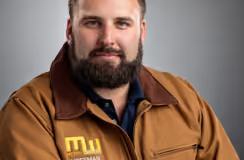






























































%20-%20thumbnail.avif)





%20-%20thumbnail.avif)



%20-%20thumbnail.avif)

.avif)




%20-%20thumbnail.avif)