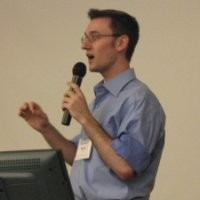
Host: Ah, the wine business. Like restaurants, it's one of those industries that exerts a romantic pull, but often then devours the entrepreneur but not today's guest, David Page. David was fully aware of the pitfalls of the wine business, but during his search back in 2010 he came across one that occupied what he saw as a growing niche within the local wine industry and one with recurring revenue vines management for the small private vineyards of Silicon Valley's elite. Talk about one of those businesses you'd never guess exists. Well, David bought that business as a first time acquisition entrepreneur and in the intervening years has quintupled it and I gather had a lot of fun in the process. Aside from the fun angle to David's story, I want to highlight another point. David bought a really small business. Tiny team. The first month David is delivering wine to the back door of local grocery stores from his own car. He was really in the muckin bullets as he says, but it's what he wanted. He expected to get in there, put his back into it, learn every corner of the business and figure out how to grow it. This goes against the exhortation you've heard a lot on this podcast that you need to acquire a business of a certain size so that day one you can be working on the business rather than in it. And while I certainly understand that David's story is just the latest of many examples where the acquisition entrepreneur got in there, operated a small business and made it grow. See if that resonates with you after listening to this interview with David Page, owner of Post and Trellis. Welcome to Acquiring Minds, a podcast about buying businesses. My name is Will Smith. Acquiring an existing business is an awesome opportunity for many entrepreneurs and on this podcast I talk to the people who do it. August Felker is a two time successful searcher, first with a traditional search fund. The second time around he did a self funded search. Today August runs Oberle Risk Strategies, an insurance firm with a dedicated practice group for searchers and acquisition entrepreneurs like you. If you've got a business under loi, Oberle will provide complimentary due diligence on that business's insurance and benefits program. A great no risk way to get to know August and team. They love helping searchers. They've worked with hundreds. Oberly is a specialty insurance brokerage for searchers by a former searcher. Check out oberle-risk.com, o b e r l e-risk.com link in the show notes David Page welcome to Acquiring Minds.
Guest: Hello. Good to see you.
Host: I'VE been working on you for a year, David, so this is a minor victory to have you here sitting in front of me. Thank you for coming on.
[3:02] Guest: Well, it's a pleasure to be here.
Host: We met at the ETA meetup in San Francisco last, I guess, November, December. You are Bay Area base, as I was up until just a few months ago. And you acquired and own a business called Post and Trellis. It's a wines and vines business, as you called it. You bought it in 2011, and it's now a much larger operation than it was back then. So I'm eager to share this really interesting business story with the audience. Please start us off, David, with a little personal history. How did you originally come to the U.S.
Guest: sure. Well, yeah, it is an interesting story. Cause I guess I started out in England and I managed to get myself to a good university where I had a lot of choice what I could do. And at that point, when you're leaving university, there's lots of branches right out in front of you and you're trying to figure out which one to crawl along. And there was several on that kind of tree of options that just did not appeal. Most of them were around kind of finance or what's called the City of London. I just didn't dig the whole kind of pinstripe formality. It seemed like a very, very staid version of a kind of a very, very private school and a snobby place. It just didn't gel with me at all. So I had grown up with my father running a small business at home. And so lunchtimes when I was around were kind of discussing little facets of his business and the world. So, yeah, I felt more affinity for commerce, more affinity for business, and decided to kind of ignore the professions, as they were called after university and kind of head leftwards. Yeah, and that made for a really, really fascinating kind of first 10 years of a career. I started off working within the software industry and specifically sales. The reason being that I wanted to earn as much money as possible. And it was a very well paid kind of junior position, but also because I wanted to learn more and more about other businesses. I was aware that I had seen the world kind of through the very narrow lens of my father's operation. And by being a software sales guy, I basically got to go in to hundreds and hundreds, if not thousands of companies and say, okay, how do you do business? How do you acquire customers? What do you do with the customers? How do you service the customers? How do you operate? How do you distribute whatever the model was in all different sectors and just talk to them about their business and see how I could help. We had just a little software utility solution that could help various businesses in various ways. And so it was, it was a really good exploration in business. It also became a fantastic passport because it offered me the opportunity to get on a plane to San Francisco. They. They wanted someone to set up their American operation and age 27, 28, I managed to convince them that was me, probably through the paucity of other good options. But yeah, it got me on a plane. They, in fact wanted to set up in la. And I knew from talking about, I just didn't want to live in la, but San Francisco sounded cool and yeah, I managed to twist their arms and
[6:28] Host: tell them, I know that decision.
Guest: Yeah, exactly. All serious technology companies have a base in Silicon Valley and surely that's where we should be. And so they bought that, they bought me and they sent us off. And there was a few of us who came over to set up, kind of old Brits who had a really fun adventure. But after a few more years of that, I suddenly looked around, having great fun, had five different jobs in two different countries, but suddenly I've been at this one company for 10 years and it's time to do something else. So, yeah, I went off and actually went traveling around the world for a year. It's something that English people do a fair bit. They take a little sabbatical, pack a backpack.
Host: They do it before or right after university though, don't they?
Guest: Yeah, yeah. So there's a gap year, which I did too. But those folks that have done a gap year tend to kind of try and repeat at some point in their lives because it's such fun, it's such a great, great, great thing to do. So, yeah, I got on the road again, came back, and at that point I'd basically packed everything I owned up into the trunk of a kind of a. Of an old car in a goat barn south of San Jose so that it wouldn't, it wouldn't disappear. But the idea was I can come back from my year off and live anywhere I want in the world, do whatever I want. I was 30, something, ish, but unmarried, no kids. So, yeah, I had that wonderful dose of freedom, but decided on completion of that trip that I actually wanted to come back to the Bay Area. That was my kind of heart and home by now. And that it was a great place to pursue a profession. I think there's a lot of. I loved, loved England It's a great place. I love going back, but I don't want to live there again. And I adore America. I think there's some serious iniquities and kind of issues with American society, but overall it's a great place to kind of make a career and make a life and provide for a family. So yeah, I decided to come back and did one more startup for a year or two until we pivoted to agriculture. And then suddenly I realized I had absolutely nothing in common with a corn farmer in Iowa. So exited stage left from the startup and by that time I still had some savings. I've always been a saver, not a spender. When I was working within the software world, I guess I had like 50, 60 guys working for me who all outspent me. They were all kind of driving fancy cars and living the good life. And I was living a good life too, but I just wasn't a spender. So I'd steadily been saving away knowing I guess that not only did I want to pay for future trips, but also perhaps pay for a future business venture. So at that point I started looking for businesses to buy. That would have been about 2010.
[9:24] Host: Let me jump in with a couple of questions here, David. So first of all, quick aside on the Bay Area, having lived there myself and been drawn there myself, it is a special place despite the well publicized problems and it does have a, a certain magnetic pull. I love that you took a gap year and saw many places around the world and still felt like it, it deserved your, your residence. It's, I think that's quite a, quite a statement. This startup that you came back and did, were you one of the co founders or were you in sales operation at that job?
Guest: No, I was one of the senior management team. There was only, I don't know, 30 or 40 of us by the time I left it subsequently got bought by Monsanto of all people. But yeah, at the time there wasn't that many of us and I was the VP of sales and running a small team as we were trying to figure out which market to operate in and which markets we could kind of make headway and we just didn't really know which areas to kind of to direct ourselves at. So anyway, yeah, it was a good choice and a kind of a good business, but it didn't work out personally.
Host: Okay. As you know, you're kind of edging toward your entrepreneurial journey. You are somebody who's attracted to business. I mean, you made that very clear. Your father ran a Business and you're in San Francisco and you're working in tech. So did you ever entertain any ideas? Start from scratch ideas, tech related ideas?
Guest: Oh really? I think by then I'd scratched that itch and had enough. I think software for me was a, was a way to learn about the world rather than a kind of an end in itself. And I think another software company I did interview at a few, but none of them pulled at me at all. And then when I started looking at companies for sale and I knew that companies kind of were bought and sold, remember that the ETA world was much, much thinner and less professional and much less well resourced than it is now. There was no search funder network, there was no Acquiring Minds podcast. So I was standing in the dark a little bit. But I did know one little jewel and that was that companies sold. Not just because I'd seen a couple of bigger companies that I'd worked for sold, but also I'd seen my father have a go at buying a very, very small company. And that kind of triggered just a memory in me or a future memory in me and that this was something that was possible to do. So yeah, I literally got on the Internet and found Biz Buy Sell or whatever they were called in those days, Bizgenbuy, not gov, something. I don't know, there were some really weird sites, but they were out there selling businesses and started looking at what was interesting. And because I had a relatively good breadth of commercial experience and a decent amount of kind of actual management and personal sales experience, I kind of backed myself to be able to pull it off and to be able to step into a world where, because I knew it wasn't going to be, as we said, software. So whichever company I bought, I was not going to be the expert on day one. I was going to need to listen hard and work harder. And so yeah, I found myself looking at all sorts of weird, wonderful companies. I think one that came up when we met was the Circus.
[13:06] Host: Well, David, let's put a pin in that because I want to hear. There was a number of weird and wonderful companies that I want to spend a minute on them. But tell us, what was the business that your dad had?
Guest: So he basically was effectively a kind of a, what you would call now a kind of a 1099 employee. So he was an international operator for French wine companies. So he became their UK limited or UK LLC and kind of ran their international operations for a bunch of small to medium sized wineries to enable them to approach kind of export Markets, essentially.
Host: And did you see him as then self employed? I mean, my impression was that he had his own business.
Guest: Yeah, I mean, it was essentially his own marketing business, but he was also essentially kind of like a. An employee. But he wasn't running the wineries. He wasn't actually running the core businesses that he was representing. He was running their representation in other markets. But it still meant that he had to file accounts, he had to figure out which clients he wanted to get after. He had to get out and make his way in the world. So he had to be proactive. That was at least a informative.
Host: Yeah, sure. Well, it reminds me of how you felt like just getting out into the world was a little bit more. What drew you versus going to. What did you say, the City of London. Is that.
Guest: Yeah, exactly.
Host: The title for the high finance world in London.
Guest: That's right. Yeah. It's the same, but it's what we call Wall street, essentially. So, yeah, it definitely resonated more.
Host: And David, your decision now to buy a business and you're in your mid-30s, as you pointed out in 2011. 2010, 2011 search, you know, capital S search is. I don't know if that term was even around then. It was certainly a very immature space. Of course, as we all know, people have been buying and selling businesses for a long time. You had that inkling, which is what turned you onto it. But there wasn't this well trodden path. Still not very well trodden, but certainly more than it was 10 years ago, 12 years ago. How did. When you told other people in your world that you were going to do this, how did they react? And just personally and emotionally, was this like a big decision? You're making it seem rather graceful and frictionless. But, but, you know, just, it's, it's a giant decision. And as we'll find out, it was. It was a huge pivot in your life.
[15:39] Guest: Yeah. So I'm sure it was stressful. I definitely got some interesting feedback from folks. I have a very good friend here who works as a senior manager within Facebook or now Meta, and he just couldn't believe it. He was like, well, but why would you do that? You could earn x hundred thousand doing what you've done before. What's the advantage? So it's interesting talking to him now 10 years later. But I was also being besieged to go to the east coast and that was really the thing that I didn't want to do before I went traveling. I said, you know, come and come and kind of Run the come and run the company out of Boston. No thanks. I moved out of a cold country. I now love living in a warm state and I don't want to be somewhere where it can snow in April or May. All love and affection for Boston aside, it's just not what somewhere I want to live personally. So yeah, there was, there was definitely people cautioning me against it and there was definitely can I pull this off? Kind of question mark in my head. But at the same time I had just kind of almost made the decision inevitable by ripping up a career and going traveling for a year and then kind of even though I'd come back and then work for another startup I hadn't pursued, I hadn't kind of lined up the next job and marched into it and in fact I had to pop back to the UK for four or five months to nurse my dad. So there was some natural breaks there that kind of were pushing me as well. And also I was encouraged by what I saw. There were definitely some sensible businesses out there and in the days of kind of 2 and 3 multiples for kind of really pretty decent sized, certainly a decent sized business. To a solo operator it seemed I could make more money and have more fun and I was really looking for income, interest and independence. Those are my kind of three watchwords. And yeah, it was a bit kind of over quaint the way that they were all started at I. But it really kind of boiled down it's like I need to, need to provide for myself but I also want to have some interest. I want to do something interesting. I don't want to just kind of keep farming money in and, and, and not really enjoying myself. And then the independence part of it was I didn't really feel much independence whenever I was working for another company even what's that saying in the, in the Star wars movie there's always a bigger fish and there, there, there is, you know, that you're always working for. There's another boss and then another boss and then there's the owner and so on and so forth. And even though I was getting to reasonably senior levels of small companies, I just never felt like I was kind of really running my own show. It was great to work as a team, but I've really enjoyed doing my own thing so I could feel that and see it.
[18:44] Host: Yeah, well those three interest income and independence Interest income and independence income is the one I was missing. Yeah, well, you know, interestingly I think that not interestingly I think those are the three characteristics that are probably common to most entrepreneurial ventures. You know, those are, those are big, so. And I would concur with those. I love how neat and quaint that is. The three eyes. You may have just trademarked something that I'm going to use and reuse. Top of the list for most acquisition entrepreneurs after they close on the business is digital marketing. Is the business doing it properly or at all? Has the website been touched since 2005? In many cases, that website is going to need an overhaul. Eversight is a firm that works with searchers to do custom redesigns of their websites for a flat monthly fee. So you don't need to spend down your precious working capital for a custom redesign of the website. That and all ongoing support is baked into their monthly fee. So your website cost is simple and predictable. Month after month with the assurance of knowing that you can ping the folks at Eversight for any changes you might need. And you will talk to a human, call or email your Eversight rep, make a request and expect your changes live in hours, sometimes minutes. There is so much going on when you transition that business you buy. Make the website management easy by putting it in the capable hands of Eversight. Check out Eversight.com searchers E V E-R-S-I T E.com searchers okay, so you turn online, you see you're making us all envy with these, these multiples that you're talking about back in 2010. And you see some, as you said, respectable businesses or some respectably sized businesses. Now, now, now tell us about some of these businesses. You didn't buy a circus.
Guest: Yeah, so we, first off, there was, there was this kind of sea of companies kind of coming my way and I had to narrow my search and I had to kind of stop and really sit down and think, okay, what was it that I was looking for? And so I started to try and narrow down as much as possible without narrowing down the sector, which is how most of the searches were kind of defined by narrowing down for size and for operations and ownership and so on and so forth. And yeah, I, I mean I think I did three or four Lois, one guitar based bass guitar kind of accessories company, one window screens kind of online custom sized window screens, replacement window screens company, one tutoring company, one medical staffing company. And each time I kind of, I pulled back for a subsequently kind of good reason. But I learned an awful lot in doing that. What was safe and what was not and where the gotchas were and where the skeletons might be and how to analyze SDE Properly. And actually one of the key lessons came which worked out really well for the Wines and Vines company. I remember speaking to my software company CEO at the time that. That he was kind of in acquisition talks and he said, it's amazing. This big company comes in and they don't want to see the P Ls and the balance sheets and all the stuff we create. They just want to see the bank statements. And I was like kind of again, logged a memory in me. And so I would do the same thing as I get into this diligence process and as quickly as possible I say, I just need to see the bank statements.
[22:38] Host: And I haven't heard that yet.
Guest: Yeah, it just cuts through the crap. Basically. You're just seeing kind of whether this. These cash flows are real or not. And are there positive cash flows? And so yeah, I walked away from a couple of companies where there was just, you know, there was. It looked really good on a P and L but didn't look so good from another lens. So anyways, I started to kind of teach myself as to what might be good and what might not be whilst also kind of still having a bit of a wild hair at my ass to do something kind of fun and wacky. So customized window screens may not sound that wacky, but it did involve getting on the plane to see a company in Texas that kind of were doing just that. And I'd never even been to Dallas. And all of those people in that company just looked at me like I was a complete alien. But I'm used to looking like the alien in America and particularly in certain parts of America. I'm kind of typically greeted like that, as we mentioned with the corn farmers in Iowa. So yeah, the adventures were kind of were varied, but I was quite happy to kind of look at some crazy stuff. The circus one popped up because I just saw it. I thought, well, that's perhaps not such a bad business, but let's see, what's the harm in kind of faxing an NDA? Because again, old school stuff like every NDA. Oh my God. Yeah, it was one of the biggest bits of friction to the whole process. So he faxed the NDA over. Back comes this business. And actually the circus was kind of sensible. It was basically a rip off for or kind of second city Cirque Soleil. So if Cirque Soleil was showing up in San Francisco, they were in Sacramento. Or if Cirque Soleil were in Sacramento, they were in, you know, in reading up the Road, they were basically kind of Doing the cities that Cirque Soleil didn't get to. And they were using a lot of the same staff, the same talent, basically, and the same even kind of choreographies. And they had an awful name, but it seemed to me with a bit of branding, a bit of better marketing, kind of a decently paid choreographer and designer, and maybe I could kind of turn this into something that I'd actually want to go see. And it also scratched that traveling itch, right?
[25:11] Host: Yeah.
Guest: This is a horrendously organized company. I mean, they had run the whole company on credit cards, so asking for bank statements was kind of. Oh, it was fraud. But yeah, they did have a tour booked to Brazil and to Argentina and Australia. I was like, okay, this sounds like fun.
Host: All the ports of call that you had been at in your gap year, you were going to get to return to.
Guest: And again, at that stage, I was not married, didn't have a kid, and this just sounded like a shitload of fun. So I was all about it for a while until.
Host: Well, I'm sure. I'm sure there are a lot of people who. Who maybe not very seriously, but have had sort of the fantasy of running away with the circus, right? Anybody who hasn't had that fantasy probably thinks that sounds so strange, but I totally understand, you know, the romance of something like that. So what's better than running away with the circus than just buying the thing and being the guy who owns it, right?
Guest: I guess it was a late bloomer. Most kids kind of dream of running away. The circus. Age seven. I was just doing it. Age 13, 35 or so.
Host: Yeah, yeah.
Guest: So I decided to. To give that one a miss. But, you know, carried on looking and, and you know, there was plenty of other interesting companies that, that didn't get to loi stage. Chocolate companies.
Host: Tell us, tell us about the dating. The dating businesses. Early, early online days, that was another
Guest: form a lesbian dating company. And to me that looked like a great business, right? They built a machine which attracts members. They've now got not only the machine that operates the site, but effectively the membership and the kind of the marketing operations set up. And they get revenues every single month like clockwork. On the first day of the month, bang hits the bank account. And how, having worked for a software company, I was pretty aware of that advantage. Right? Software companies have very, very strong finances is the reason that the multiples have gone bananas in the last few years. It's just that their finances are great. So, yeah, this lesbian dating site, I was like okay, well that's like a software company. There's the recurring revenues. Trouble was it was a lesbian dating site and I couldn't exactly be the kind of, you know, the front of House the face.
[27:33] Host: Yeah.
Guest: Have someone somewhere in the world to apologize for though. Because when I was trying to test the site out, I uploaded a dear friend of mine, this lady who lives in Spain. I uploaded her photo to the site and just kind of tested out what's it like. We got a date which we had to decline.
Host: So yeah, did you decline or ghost? Early ghosting. Early lesbian ghosting.
Guest: Pretty sure I declined and ran screaming and at that point realized, what the hell am I doing? So yeah, there was that. And then there was also the pharma dating site, which subsequently turned into a pretty decent business. Yeah, they.
Host: Well, you said that it showed back up and what was it in the Super Bowl? It was kind of like a rinky. What appeared to be a rinky dink. Very niche dating site. And then.
Guest: That's right. Yeah. So I looked it up and I said, okay, imagine I'm a farmer in Iowa and I want to date. Where's my nearest date on there? And it said 150 miles away. I know those guys are prepared to kind of travel some distances, but that seemed just non functional and kind of really just not a good plan. So yeah, I dismissed it and walked away. But I did enjoy learning a little bit about the business. They had a great line which was. Because city folk just don't get it. And that was literally the strap line with an advertising. Because if you're a farmer and you trying to date someone in the city, they say, oh, let's go for coffee at 9 o' clock at night. The farmer says, I'm in bed by then because I'm up at 4 on the combine harvester or whatever. So yeah, there's this kind of farmers dating farmers, which makes great sense. Something like 5, 7. I don't know how many years later I'm watching San Francisco 49ers and a bar on some playoff game and up pops this advert. Because city folk just don't get it. I'm like, okay, great. Someone marched in where I feared to tread and they made a success of it.
Host: So I guess 150 mile dating distances wasn't a problem after all.
Guest: Right, yeah. Or maybe they're down to 15 now. But yeah, it was, it was fun. Fun to see. But yeah. So I moved on from dating businesses, but I was just looking everywhere for a God. I don't even remember how long it was, but it was maybe a year of searching was fascinating and fun, but it was starting to get a bit frustrating towards the end of it. And maybe that's the first time that I actually really felt kind of some doubt. It's like, you know, am I going to be able to kind of find something that kind of fits my search or am I just wasting a year of my life? Again, I had saved the money, so, and I wasn't spending it quickly, so it wasn't kind of dwindling fast. But I definitely remember thinking that that was the kind of the tough end of the search.
[30:29] Host: David, can I ask you what your financial picture looked like and tie that into the fact that you were not intending to do an SBA loan?
Guest: Yeah, I mean, without getting into the specifics, I saved a good witch from being in reasonably highly paid software salesperson, then exec for a while. So, yeah, and I'd spent some traveling, I spent some, made some more coming back, but I had hundreds of thousands of dollars to my name, kind of, I think close to seven figures or around that mark. And therefore I, I was looking at businesses that involved loans and also businesses that could be bought just beneath that.
Host: So, so you were entertaining an sba like you would have done the sba. Okay, I, I, I jumped ahead. I know you ultimately didn't, so I assumed that you never were intending it, but you were open to it. And, and, and also just to again, kind of like explore a little bit where your head is at. So the model of finance it, you know, buying something for 10 or 20% down, financing the rest and paying for it out of the profits of the business. This kind of LBO model was something that you understood at the outset or you learned and were pleasantly surprised by. Or like, what was your sophistication about what the structure of your deal might look like?
Guest: Well, I had a widely kind of set search both for kind of companies around kind of the basically half million and up, I think was around where it was at in terms of purchase price. But yeah, the structure was rather, the sophistication you ask about was kind of rising, but not there initially. I was kind of backing my gut rather than going in there with a kind of a preset criteria.
Host: Okay, okay. But at some point you do learn about the SBA loan and or seller financing. So you know that financing may well be part of what you.
Guest: Yeah, totally.
Host: Okay.
Guest: I mean, I knew about getting bank loans, I knew about getting equity investors. I just, I didn't know that much about the SBA to start with. But, you know, you speak to one broker, you learn that quite quickly.
Host: Yeah, sure. Great. Okay, carry on. So we're at the tail end of a year, you're starting to get a little bit concerned, a little bit frustrated.
[33:03] Guest: Yeah. And then at this time I had an loi. I think it just been accepted for a medical staffing company. And the three months previously I had been to see, been to see a wines and vines company and kind of found a, should we say a hole in the numbers where the bank statements just didn't tally with kind of the P and L numbers. And so I said to the owner of that company, I like your business, but it's massively overpriced. And just for your interest, this is what I think it's worth and thank you very much for spending some time with me, but I'm going to pursue my search elsewhere. And so fast forward three months, the broker came back to me and said, look, I don't know what you're doing, but the owner wants to talk to you again and talk to you about your revised level of valuation. And so at that point we reactivated conversations and, and going back to the point about interest being part of the search, running a wines and vines company sounded a bit more fun than the medical staffing. So I just asked those guys to bear with me. And whilst I kind of went into deep due diligence on the wines and vines company, and I've been interested in it at first partly because, as I mentioned, dad had been in the wine business, but I think it was more just kind of academic interest than actual interest at first. It's like, whoa, what's a guy like me going to be doing with the winery? There's an old saying in the wine business that if you want to make a small fortune, you start with a large one. And that I gather it's studied in some business schools as the worst business model ever invented.
Host: Sure. Just behind restaurants in the classic vanity business, right. Rich guy or gal buys a restaurant or a winery and then, you know, starts with a large fortune and ends with a small one.
Guest: Totally. I mean, I think it might be even worse than restaurants because it's so capital time and labor intensive and particularly within capital, not just because of kind of land and equipment, but also because it takes several years to either grow vines or take the vines and the fruit that you've grown and then release it onto a market. And then it's also an ultra competitive, basically low margin market. So heap of Money up front, very little money out the back. Perfect recipe for disaster. But it also had my interest. And so, yeah, when I first looked at was surprisingly good business. It was a winery with a vineyard management account attached, kind of vineyard management business attached to it. So they had a small kind of sideline where they weren't, they weren't buying fruit and they weren't growing their own fruit. They were basically farming small estates in the hills above Silicon Valley and letting those people become kind of wine growers and make wine for them, but also take surplus wine they didn't need and, and pushing it out through their own winery. So anyway, it was marketinism as a winery, but I really saw a vineyard management company and again, essentially as a software company, here's a company with very heavily recurring revenues where I can predict this amount of revenue, I can predict this amount of business. And also, I think this is a growing market, right? There's nothing. At the time, there was only 20 vineyards under management, 25 maybe. And I could see, you know, that up in the hills above Silicon Valley, there's a lot of very, very fancy estates, a lot of beautiful, beautiful properties where, you know, two swimming pools and a guest house later. What else are you going to do with that kind of spare acre in the corner? How are you going to keep investing in your home and property? So it seemed to be a good business that the vineyard management side of it, residential vineyard management, it sounds a little weird. It sounds a little idiosyncratic, right? Residential vineyards. But within this kind of weird world that I live in, in Silicon Valley, it kind of makes sense because there's a lot of money here. There's a lot of depth and breadth of wealth. So I think it's an unusual business and very unusual location. I'm not sure it would work in any other city in America. Maybe someone will prove me wrong. But, yeah, so I saw this vineyard management business.
[37:57] Host: David, David, can I pause you there for a sec? So, just to be completely explicit with the audience, this is essentially wealthy people who want, for kind of whatever hobby or interest or investing in their property or vanity, have set up, you know, wine vines on their own property to, you know, kind of, you know, be able to be producing grapes for wine. And. And so you're managing those. So these are private little, you know, on these estates, private residences. These are not. These are not commercial wineries. These are residential. Hobby kind of hype. I hate to. That kind of diminishes it, but kind of like hobby vines, right?
Guest: Precisely. Yeah, yeah. This is entirely residential. Private owners of private estates, some serious, serious properties, and some serious people who have done very well in world and have not only property in one of the most expensive parts of the world, but also have enough property to consider putting a vineyard on a part of it.
[39:04] Host: Making my. My eyes water at the. At the thought of how much this. Some of these. One of these people have. And so they. And so you. You had said that there's kind of. There were kind of two businesses there. The vineyard management is what turned you on, but there was also a proper winery. Do you remember kind of the split of those two businesses? Was it like. Yeah. Do you remember? Was the vineyard management something that, you know, the previous owner had and didn't realize how attractive it was? And it was just a little part of the business. You anticipated growing that a ton of. Or, you know, what was that?
Guest: I don't remember the split of revenue. I would guess it was maybe kind of 60 winery, 40 vines. But, you know, the winery wasn't very big either. The guy had done a great job of getting it started, but basically kind of run out of legs and inspiration and he was, you know, he was pulling his hair out. There's just, you know, there's a lot to do. Winery is a complicated business to run, so. So, yeah, he knew that was the good part of his business financially. He had started off and started that business deliberately and had very cleverly kind of made sense of a. Kind of a very tricky wine market by putting a vineyard management operation alongside it or inside it. So, yeah, it was a. It was an unusual business. Right. It's like a winery. What do I want to be owning a winery for? It's like even more bananas. And then the kind of. The friends that we referred to previously are kind of cautioning in my ear. Well, you know, it sounds fun. Get me some wine, but what the hell are you doing?
Host: Yeah, yeah.
Guest: And then other friends who were absolutely a commercial or uncommercial, they thought, ah, Jacko, that sounds so much fun. You know, of course, you should totally do that. That sounds completely. You. You know, I was getting all sorts of kind of wild, woolly advice, but it was basically me that had to sign the check and then step in there on day one and try and figure out what the hell to do next. So I've signed a few big checks in life. We all do your first house or whatever else. But that was a tricky one to get to the point of comfort. But ultimately I didn't. And, yeah, there was quite a few Surprises when I walked through the door. I'm sure that's not an uncommon thing for your listeners. Yeah, there was a lot of. The old principle is caveat emptor, right? Beware, buyer beware. And in due diligence, you're expected to find all of the kind of all of the mines in the field. But ultimately within due diligence, what minds
Host: caught you that you didn't find in your diligence?
Guest: I don't think I want to get into too much detail on that because it'd be unkind to the prior owner. But there were some surprises, some significant surprises within due diligence. You're verifying, verifying, verifying, but you're still ultimately relying on what someone's telling you and their version of their business and they're trying to sell. So, yeah, day one, the due diligence process continued in a big way, trying to figure out where stuff was and how stuff was being done and the reality of certain situations. So, yeah, it was an ongoing voyage of discovery. And not least because even though my dad had worked for wine companies, I had no idea what I was doing. Absolutely no idea. I had never delivered wine through the back door of a supermarket, which I was soon doing. I had never been the harvest intern for the winemaker, which I was soon doing. It was basically me, a winemaker and a vineyard guy. That was it. And so I was the delivery driver, the kind of. The kind of the harvest hand, just basically everything kind of year one, and. And so learned the business.
[43:12] Host: So, David, let me. Let me a couple of questions here. So, so you. You had just going back to the transaction really quickly, you had pointed out to him, hey, you know, these numbers don't add up. This is really what it's worth. He comes back to you, says, okay, let's talk. I assume you acquire for something closer to what you said the valuation was, and you did not finance it, at least not with an SBA loan. Was there seller financing at all, or was it just.
Guest: No, tell me about essentially a 100% kind of cash purchase. I left him a small percentage of the business, which was my way of trying to ensure his kind of fidelity and cooperation.
Host: Okay. And so the business was literally three people large.
Guest: It felt that way. I think actually there was, remembering it, there was two people on the vineyard operation. There was the winemaker, there was myself, and there was also, actually there was an office manager. And then there was other folks that kind of worked for the company, including the lady who was the wine broker. So, yeah, I Mean, essentially it was kind of an upper six figure deal, but it was still a pretty raw company. It had kind of proven its market and proven its operations, proven its ability to make a profit or be a small one. But it was still very, very nascent in its market and operations.
Host: And how old was it?
Guest: Not entirely sure. That was one of my first questions. But, but yeah, it seemed like its first fourth year, so probably eight years old, even though it had a different date above the, above the door.
[45:10] Host: Okay. And just looking back, I mean you, you were self educating this whole time. We've already talked about how, you know, a lot of the searcher best practices were probably not established or at least certainly not well publicized at the time. And one of those things that you hear constantly today is about, you know, buying above a certain size business, you know, and kind of the sweet spot is 600 to 800,000 SDE, which of course is hard to find but great if you can get it. This business was, I assume quite a bit less than that. No management layer. I mean, if you're the one doing the driving the delivery truck, clearly so did that, you know, you were, I guess you were signing up for that. You saw what that was going to be like. Do you think in retrospect that you took a, like a much bigger gamble than you realized you were taking at the time or you know, kind of, would you, would you do it over again? I guess just kind of like weigh in on the size of business?
Guest: To me it didn't feel like that much of a risk because of the recurring revenues, because of the market opportunity for the vineyard management, at least because of the fact that the wine at least was well received and clearly the winemaker knew what he was doing. And also because I wasn't taking on any debt. So yeah, I was throwing down a lot of money. But a lot of folks are kind of cautioned against buying a job. Don't buy a company with less than 500k. You're just buying yourself a job. Like, well, of course you're buying yourself a job. You're buying yourself a job at any scale. This idea of a kind of a completely kind of, you know, arm's length or kind of armchair business where you're not heavily involved, that's fine way, way further up the kind of the value chain, you know, 50 mil plus. But below that, even if it's a P buyer this, and they're making sure someone is heavily involved. So yeah, I was buying myself a job for a few hundred thousand worth of kind of profit. And it was a lot of headaches, but that was just what I wanted, Right. I wanted to kind of get in there, get inside the muck and bullets, as we call it in England, and figure out how to grow this thing and how to make it, know, more successful and more fun.
Host: I love that it's so gritty and entrepreneurial and. And I think just kind of oriented for my toward in the same way that my personality is. But your, you know, vice president Buddy at. At Meta or wherever he was at the time, probably was just feeling like, you know, the fact that you were going to be not only buying a business, how crazy. But, you know, driving the delivery truck. I mean, it just gets crazier and crazier by the moment, David.
[48:08] Guest: Yeah, I mean, just to be clear, there wasn't even a delivery truck. Right. I was basically shoving wine in my trunk and running it around the place. Right.
Host: Even better.
Guest: Okay.
Host: Yeah, carry on.
Guest: So, yeah, it was fun. I learned a lot. I started to try and learn as much as possible, particularly about vineyard management, and started to assemble a good team. But, yeah, at first I couldn't afford a vineyard manager. No way. I mean, I could. It just kind of destroyed my margin. So I started getting more vineyards under management and started learning what I was doing. But basically, I was kind of doing the classic old adage of fake it till you make it, being out there and telling people that I had a great team. I did, but one under very little actual supervision or direction and convincing them to let me manage their vineyard or install a new vineyard for them. And so once that started to kind of reach a little bit more efficient size, hired the first vineyard manager or promoted the first vineyard manager, and then a few years later, kind of hired an excellent one. But basically, in all kind of all of the different business lines, because within the winery, there's an events business, there's a direct to consumer business, there's a wholesale business, there's a vineyard construction business, there's a vineyard management business. There's five different kind of business lines. And it's been quite hard to keep it that focused, frankly, because there's always someone in your ear telling you that you really ought to do this and you really ought to do that, and why don't you spend a lot of money setting up a tasting room or in another city or in a touristic area? You can go bust very quickly, kind of without focus in any business, but particularly, again, within wine. So, yeah, we tried really hard to get excellent people in place and to focus on not just the right kind of business opportunities and projects to kind of evolve how we did things, but also to really make sure that we had very, very, very happy customers and very, very happy employees. And with those two things kind of combined with the focus, I don't think you can go too far wrong. And, yeah, I look at the business now, and it's now five times the size. It has a really excellent management team, a really good events person, a really good vineyard person, an excellent winemaker, and a really good operations person. And I'm proud of where we come from and where we've got to, even though there's plenty kind of ahead. But I think one of the things I'm most proud of, actually, is some of the testimonials on the vineyard management website where I just see people saying, hey, you know, your crews are always really happy. And, you know, they come to a vineyard and they're laughing and chatting and joking, and they do a killer job. And you guys really, really, really know what you're doing, and you provide a great service, and thank you. And that's kind of how I hope all of our customers feel. They certainly seem to when we ask them. And so, yeah, we're now kind of on a different level than we were then, but this is 10 years later, and there's a few hard battles and a few misses and a few mistakes. Certainly a few mistakes, but we're definitely making headway.
[51:47] Host: Well, David, everybody would love to own a small business where the customers are thrilled and even better, the employees are thrilled and happy and fulfilled and always smiling, but easier said than done. What's the secret there?
Guest: Well, with the employees, There's so many folks. I mean, it's tricky, right, because I basically decided that I don't want to be an employee anymore. And part of the reason for that is I think employees are always valued just up to the amount of money that would stop them from leaving if they're valued. So, you know, you don't pay someone what they're. They're absolutely, definitely, inherently worth to your business so much as kind of like how much they could either be replaced for or kind of like, kept in place for. And I. It's sad, but it's true right across the world. So the. The, you know, I can't play. I can't pay our employees absolutely everything that I would love to pay them, but I do pay them well. And I learned from a very good kind of senior manager or kind of CEO within the software world. This one guy that I worked for kind of on and off, but fairly consistently for kind of for 10 years in multiple countries. And he was really, really good at. At communicating people about what they needed to do in order to earn more for him. And it was always about more responsibility and more kind of recognition and reward for results. And so if you can put more results together and you can take on more responsibility, I will pay you more. And so I try and communicate that to my team, be they vineyard workers or the head of vineyard management or people in between or in other functions. It's like, I can't pay you the kind of the earth here. We work for a winery. We don't work for a hedge fund. But here's what I pay you. I believe it's good. Do you believe it's good? Great. We're on the same page. Here's how we go forward. And if you take on more responsibilities and you take on more facets of the business and kind of help me focus where I want to be spending my time, then. Then I will pay you more. And so it's. Yeah, it's treating people with kind of openness and respect and paying them as much as you can. That doesn't sound very controversial or insightful perhaps, but it's just. Yeah, it's this kind of decency towards them and then also just making it fun. Right. I mean, how many bosses have you had that have been zero fun? You know, they can suck the air out of a room at 100 paces. It just beggars belief that they're in charge of people. Just nobody enjoys working for them. Right. And then there's the other category of folks who, like, actually make things fun. You know, they've got a good wit or a charm or something about them that makes them somewhat engaging.
[55:06] Host: Now, is that just your personality, David, or are you doing things like the weekly pool party? Not literally. Is it planning activities or is it just bringing a good attitude and being, you know, a halfway interesting person?
Guest: Yeah, I'm not saying I'm entirely in the second camp. I'm sure I can suck the air out of a room as well, you know, particularly if it's another vineyard meeting at 6:30 in the morning when they start, but when we all start. So, yeah, the. Yeah, I think it's treating people with kind of compassion, kindness, and a bit of humor and getting them on board with what you're trying to do now. I've gone from a world where it used to be PowerPoints to clients and PowerPoints to kind of. To employees and lots of webinars and seminars. And I haven't seen a PowerPoint. I certainly haven't created a PowerPoint for 10 years. And we don't have meetings. We kind of talk to each other when we see each other. The winery is actually kind of quite a communal place, and there's a bar, and it kind of. It leads to folks relaxing a little bit. So maybe I'm assisted by that, But I feel like you can make it endlessly formal and endlessly anal, or you can make it really kind of just a little bit more compelling, a little bit more human. And if you're organized enough, and that's rather than being some kind of, you know, charming kind of entrepreneur who can kind of, you know, be a Pied Piper and lead people on some merry dance just organized guy. I incessantly kind of like long to do lists. And those lists include kind of, you know, what. What I'm trying to do with. With people where I'm. Where I'm trying to get their business or their. Their kind of function. So yeah, by. By being somewhat ruthlessly organized and, and just trying to kind of be decent. I think. I think we have a good and happy team.
[57:18] Host: David, I have to. I have to ask not to take away from. Not to take any credit away from you, but does it help being in the booze business?
Guest: One thing that really helps me in booze business is that no one is pissed off. All right? So anybody who walks through your door is immediately their best selves within software. If some piece of software doesn't work or it's too expensive or something, there's a lot of crabby behavior and there isn't much of that. But yeah, having plenty of wine helps in other ways. A good way to kind of, you know, to thank and charm people for sure. But yeah, the most wine I drink these days, other than kind of just for my own enjoyment, is at 6:30 in the morning. So that's when the vineyard crews start. Okay. That's when. That's when they prefer to get the kind of the jump on the day. And that's where they kind of when we all meet up. And that's when the winemakers tend to shove wine in my face for tasting because it's before coffee and it's before breakfast and it's with the palate clean, so to speak. And so, yeah, I'm not getting soaked at 6:30 in the morning, but I quite regularly have a glass of wine.
Host: Maybe a little bust. Exactly.
Guest: Yeah.
Host: Well, here I am smiling ear to ear, just listening to it. So I can imagine that you're. Your employees are smiling a lot.
Guest: Yeah, we have a good time. Yeah, we have a good time. And they're good people. And if there's some bad apple we get when we ask them to leave, we've had plenty of bad apples that just didn't fit, didn't gel and piss people off like, okay, see ya.
Host: Yeah, yeah. Well, David, I want to turn to a slightly less levity here and back to the numbers in those early, early days, because I just, it's. It's important for people to have specifics to think about these deals and these acquisitions. Do you remember what your own take home, your own ste was that first year in the business? I mean, were you taking a significant pay cut from your software? I assume you were because you were earning very well in software land. But were you at least making six figures in day one in the business first year?
Guest: I was really just investing and kind of patching up problems and putting more working capital into it than I thought I had originally planned to. And it was six months more than a year because I ended up buying it mid summer. So, yeah, kind of the rest of that six months was not a profitable time. And it was quite a scary time as I again learned some things and kind of figured out the wrinkles and some of the heightened levels of seasonality within the business, so on and so forth. But then the first full year, things weren't very well, and I don't want to get into SD specifics, but I didn't earn as much as I had in software. But I also had plenty of money to kind of pay myself and go out to eat. So, yeah, it was fine from kind of six months onwards.
[1:00:40] Host: And for how long was it that you were wearing all the hats? Not, not necessarily, you know, speaking beyond kind of the, the crisis time. But like you, I assume you were still kind of like, you know, doing everything for. Even beyond when it. When you kind of like acclimated to the kind of crisis and seasonality. How long did that last?
Guest: Well, the first hire was probably. First significant hire was six to nine months after purchase. So the previous owner had managed something like 20 events throughout the year at the winery. And it seemed obvious that there was a possibility to do more events. We're not in a kind of a touristic area. We're not in a kind of a streetfall area. So we wanted to focus our winery's opening and kind of public face on venue rental rather than people just wandering in for a. For A wine tasting and maybe buying a bottle of wine. We were much more interested in having the place full of 150, 200 people, all having a great time and drinking plenty of wine. So anyway, so we wanted to do more events and there had only been 20 the previous year. So I started looking to it and started to realize also that the predominant folk booking events are women. And I just felt that maybe the kind of the person to really kind of kick this on wasn't a middle aged English dude. Again. So yeah, I found an events director and she agreed that there was a potential here, but there was also, it was very raw. There was very few systems and certainly no SOPs and she had to kind of figure out a lot, but she did a cracking job and within two or three years we were up to having 100 plus events and it's since grown from there. So yeah, that was kind of the first person I chose to hire and kind of first person I chose to invest in to replace myself. And then each year without it being kind of so rigidly scheduled like that, I was finding the money to invest in another person and another kind of another evolution of how we did things and to get things off my plate. I think one good principle for CEOs or business, kind of departmental managers or business owners, whoever, one good principle in general is try and, try and almost make yourself redundant. Try and stop doing the kind of the day to day stuff and find some other way for that day to day stuff to get done. The adage of work on the business, not in the business is really true for us all. And so yeah, I've managed to kind of, through focusing on that principle, steadily kind of evolved the business and evolved the team and, and so grow the company.
[1:03:42] Host: And you're now quite free and to the point where you're gonna, you're searching again, which we're gonna close with here in a second. But still a couple more questions you had touched on how much growth there had been. So when you bought the business, it was you and three or four other people. Now it's, you said a team of what, 15 or 20, is that what you said?
Guest: Yeah, I think that the best answer is we're basically five times larger in almost every respect in terms of scale of operations and revenue of operations and profit of operations and so on and so forth. We've basically got to the point now where we are away from the early days and to the point where the business is somewhat successful. That's always a relative term, but it's doing okay. And I can now decide do I want to keep investing my time and capital in the business, or do I want to maybe put some eggs in some other baskets? There are definitely things I could invest in to kind of to secure the. The next stages of growth for the winery, but also for the vineyard management operation. The thing that's good about the business now is that 60% of its revenue is recurring and 20% of it is repeat. So recurring from the vineyard management, repeat from people who continue to buy our wines and stock their shelves with it. And then 20% is kind of the event stuff, which is not repeat, but also reasonably reliable, because there's enough businesses locally that want somewhere interesting to hold their event and enough people who want somewhere to party. So it's pretty steady. And I could therefore kind of keep pushing myself. And those lines of business, those different kind of revenue streams up and up and up. Or I could say, okay, well, you know, what else is there to the left and right? I can spend five days, or I could spend 50 days. If there were 50 days in a week, I'm sure I could spend 50 days at the winery. But I also feel like I could compress it down to two and maybe even one with a different hire. And so, yeah, I've been looking around for what might be next,
[1:06:18] Host: and just going back to revenues. I don't know how public you can be about it, but is it fair to say that the business was a million dollars in revenue, give or take, back then, and so now you're looking at more like a $5 million business?
Guest: Yeah. Again, I'm not into sharing specifics, but. Excuse me. But yeah, we are definitely kind of five times the size on revenues
Host: and
Guest: on profits and hopefully on the kind of the enterprise value as well. Although that depends on multiples. And some people say that winery multiples are inflated. Not just inflated, but high. You see some businesses changing hands for five plus. But also, there's not that many wineries, winery transactions that don't involve real estate. Therefore, those transactions are kind of difficult to kind of measure up against. I don't own any real estate. I don't own any vineyards. I don't own the winery. I'm a tenant. So, yeah, we're doing fine, and it's been great to see that growth, but I feel like there's another trick or two of me yet. So we'll see.
Host: Well, let's. Let's close with that. Elaborate a little bit more. So you're at least on your LinkedIn, you're a self described searcher now so I assume you're, you're somewhat actively looking around and this time around will you, will you buy yourself a job? Well you, you made a good point that like of course, whatever, you know, anytime somebody buys a business they're likely buying themselves 40 hours of work a week if not more. So yes, you're buying yourself and you know something that's going to fill your time. But I guess what I'm really asking is size of business. Now that you've got a little bit of capital, a little bit of experience, do you think you'll go for something significantly bigger this time around or does it depend or what are you thinking?
Guest: Yeah, so my search has definitely kind of like evolved or set up on the basis of ideally looking for 500 plus SD. I don't really want to be stretching myself and putting kind of personal guarantees together for loans that are kind of for businesses that are maybe worth more than the 2,3 million level. There's a limit to my comfort and ability to cross support those levels of debt. So yeah, I, I'm looking for kind of a bolt on. I think that bolt on would be ideally of that size but also it just depends on the business again. Right. So if I can find a really sensible business that's smaller than that, that I feel like I can grow to in that and enjoy doing it, then I'd be more than happy to. There's definitely a risk reward, trade off. Right. There's a lot of folks that say well it has to be a certain size in order to be, to significantly change things like. Yeah, well it depends A whose money you're using and B what you're trying to achieve. So I think I'm realistic about the fact that be it a small, medium or large business within that kind of sub 5 million category, it's always going to be a lot of work is. But if I was putting, you know, the top end of that on the table, I would probably be wanting to spend 80 hours a week making damn sure it worked out. And at the lower end of the table I can kind of, you know, I can, I can take a bit less, less kind of intensity to a kind of a lower value company.
[1:10:16] Host: And when you say bolt on, does that mean it's going to become part of post and trellis or could it be something completely unrelated?
Guest: Yeah, I mean I'm looking. One of the main things I'm looking for is a maintenance company and there's lots of different forms of maintenance but I feel like within the vineyard management business. I've really figured out how to. Not the perfect way to, but ways to run a field service, operations, crews of people out there servicing and maintaining something.
Host: Yeah.
Guest: And so in that sense, it would be a kind of a bolt on, but they would be separate entities and separate teams and separate everything. But that's one part of my search and we'll see what I find. It might end up being a, a circus or a chocolate company. We don't know. Although I'm not sure my wife would agree with the circus one so much anymore. I love it.
Host: Well, David, what an adventure this last 10 or 13 years have been for you.
Guest: Exactly.
Host: Yeah. It was just really, really inspiring. Really. You put the fun back in business and really cool to hear that your employees seem to agree and, you know, it just, I think a lot of people out there will be envious of just the, the popping bottles. That is your, that is your life. I, I, I, I know that's a little, probably a little too rosy, but it sure seems fun. So anyway, thanks. Thanks a lot, sir, for coming on and sharing and let me know when you make that second acquisition and, and we'll have you back.
Guest: Good. Well, it's been really fun talking to you, as always. I wish you well and hope you're settling in on the east coast there.
[1:12:04] Host: Thanks a lot. Thanks a lot, David. Till next time.
Guest: Cheers.















































%20-%20thumbnail.png)




%20-%20thumbnail.png)

%20-%20thumbnail.png)

.png)



%20-%20thumbnail.png)