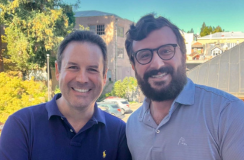
Host: I feel like James Maxwell and his partner Jordan acquired a great business. It's B2B recurring revenue, solid contracts, nicely aged, and perhaps above all what sounds like a really solid seller. Very organized, immaculate books, good to her people and good to James and Jordan. As you'll hear, she teed up some contracts for them so that within the first months of ownership, the business saw a nice pop in growth. What a gift. One thing she didn't do great, however, was delegate. Their seller worked very much in the business, not on it. And that was something that James wanted to address immediately by hiring a general manager once he became owner. So this episode is not only a great story, but one that will be particularly interesting to those of you who want to put a GM in place as promptly as possible. Listen on for that and much, much more with James Maxwell Foreign. Welcome to Acquiring Minds, a podcast about buying businesses. My name is Will Smith. Acquiring an existing business is an awesome opportunity for many entrepreneurs and on this podcast I talk to the people who do it. What size of business should you buy? What can you afford? How much SDE or EBITDA does the business you acquire need to generate to pay off your loan, pay you the income you need and reinvest in the business? Of course, the answer varies from person to person, so you need to answer this question for yourself. Chelsea Wood runs the Acquisition Lab and did a great interview on Acquiring Minds just a couple weeks ago. The lab is a Do it with youh Buy side advisory service founded by one Walker Deibel, along author of Buy Then Build. Chelsea's running a live session on this question, what size of business should you buy? She's worked with over 250 searchers who've gone through the lab and this question comes up constantly. So at the live session she'll explain how to arrive at the answer. Acquiring Minds is co hosting it, so I'll be there as well playing MC and taking notes. It's Wednesday, June 22nd at 10am Pacific 1pm Eastern. Register in the show notes. James Maxwell, thank you for joining me today on Acquiring Minds.
Guest: Will super glad to be here. Thanks for having me. Appreciate it.
Host: James, you and your partner Jordan Inman acquired a commercial janitorial business in November. So you're and you're coming up right on your six month anniversary. Lots of themes to this story that we're going to dive into. It was a partner search obviously want to hear about that. You guys acquired in a smaller market, about 100,000 people. So want to hear kind of about a search in a smaller Market you acquired in an industry that's really appealing to a lot of searchers. Commercial Janitorial is when you hear about a lot on Search Funder and other places. You're both ex military and much more. Lots to go over. Lots that's going to be valuable to the audience on this. So let's begin with your background as always. So tell me, James, a little bit about yourself and, and anything you want to mention. Also about your partner, Jordan.
[3:13] Guest: Yeah, thanks, Will. So let's see, I'm married. I've got two young kids, both in diapers. So extremely hectic phase of life right now. I've got one who's just a little bit over two and then we have a seven month old.
Host: Seven month old. So if I do the math, If I do the math, that means that one and the signing on the dotted line for the business happened right around the same time.
Guest: Yeah, yeah. I was doing due diligence from the hospital. I was reviewing stuff while holding a newborn. It was, it was great.
Host: Wow.
Guest: Bold. But yeah, so had the second child and then closed on the business shortly thereafter. Backing up a little bit. As you mentioned, I'm a veteran, spent a number of years in both the Marine Corps and the Navy. In the Marine Corps is where I met my partner, Jordan. He's a former Marine officer as well. Didn't do quite as long in the service as I did. So he's got a bit of a head start in the civilian sector, which has been great. But as I was thinking about my life post military and what I wanted to do, I went and got an mba. A lot of folks do that when they're not sure exactly what the rest of their life looks like. And really great experience. I knew the traditional paths weren't right for me. Consulting, investment banking, what a lot of my peers went and did. But thinking about what transferable skills do I have leaving the military and what career would I get the most satisfaction of my time in the service? Leading people and running a small team was the most gratifying part of my career. And entrepreneurship through acquisition is in my mind the most immediate way to replicate that and go from leading small teams in the military to leading a small team in the civilian world was just the perfect fit. And learning about ETA has been just an incredible blessing to me. My partner Jordan, I know as well and just kind of the lifestyle we want to live and the satisfaction we want to get out of our careers. And that brings us to today, we're about six months in.
Host: Did you learn about ETA in the MBA program.
Guest: So I'd say a couple years prior, I was just kind of starting to brainstorm what am I going to do when I leave the service. And a lot of people wait until two days before they leave the service to figure out their next move. I wanted to have a longer Runway than that, and I can't remember exactly how I came across it, but was recommended some books, all the majors that everybody talks about.
Host: Let me guess, right?
Guest: Yeah, you got it landed on sites like searchfunder.com and it was just like that light bulb moment, like, wow, this is actually a thing. And nobody really knows that until they kind of learn about it. So I get to my MBA program and I dedicate everything I do there to how can I give myself tools for the toolbox for an ETA career. And don't tell some of my professors, but maybe I gaffed off some of the stuff that was a little bit less relevant for. For my future. But using that time in the MBA program to really arm myself for post MBA was really awesome. And I had a lot of great professors and mentors along the way, too.
[6:45] Host: Well, you're only six months in, so this question might be a bit premature, but I do want to ask to what extent you feel like the MBA program did prepare you for being an entrepreneur. Eta. A lot of people's discovery of ETA does happen in MBA programs. At the same time, lots of entrepreneurs, and particularly in Silicon Valley land, will say that MBA is more, you know, kind of training to be a manager rather than being an entrepreneur. So weigh in on that. How did your MBA program prepare you for these first six months?
Guest: I 100% don't think an MBA is required or necessary. Is it helpful? Yes, I think it was helpful for me in the fact that I was so far removed from undergrad. I graduated undergrad 15 years ago. So my last finance class or economics class was a very long time ago. And with a couple of kids thrown in the mix, that might as well be 100 years ago. So I think what the MBA allowed me to do was kind of reset my brain and kind of relearn some of the things that I had already learned, but things that definitely helped. And we'll get into this in a bit, but talking about due diligence and some of the classes I took in my MBA program allowed me to dig into some of the accounting things that two years prior would have been a complete foreign language to me. But yeah, I'm a 100% passionate believer that an MBA is not required and for those who are coming from finance type jobs or are a little bit closer to undergrad experience, I wouldn't even necessarily recommend it.
Host: And it sounds like to the extent that it was valuable, it was really in these kind of quantitative, technical financial skills that you brushed up on that was the most valuable stuff from your MBA program.
Guest: Yeah, that and the networking I think has been great. Just being part of one of the top MBA programs and just hearing presentations from the search fund community from different of the major investors. Getting to intern with a traditional search fund, which I did between years one and two, I guess having access to those experiences was awesome. Also my favorite professor is a really great private equity guy and as I was getting ready to close on this business, he put me in touch with a really good friend of his who happened to own one of the largest janitorial companies in the United States 20 years ago. And he's been kind of an unofficial board member for us. So that network's been really great and really valuable too.
[9:33] Host: Yeah. And that is one of the things that you often hear about MBA programs, that a lot of the value of them is actually in the network rather than the book learning.
Guest: 100% cool.
Host: Now if you were, if you were, if you interned with a traditional search fund and you were going through the MBA route, so you would have been a candidate to do a traditional search fund rather than a self funded search. You guys did a self funded search however. So tell me about that decision. August Felker is a two time successful searcher, first with a traditional search fund. The second time around he did a self funded search. Today August runs Oberle Risk Strategies, an insurance firm with a dedicated practice group for searchers and acquisition entrepreneurs like you. If you've got a business under loi, Oberle will provide complimentary due diligence on that business's insurance and benefits program. A great no risk way to get to know August and team. They love helping searchers. They've worked with hundreds. Oberle is a specialty insurance brokerage for searchers by a former searcher. Check out oberle-risk.com O B E R L E- risk.com link in the show notes.
Guest: So the, the internship was awesome. I interned with two great. It was a partnered search fund from my business school. So met them through that network and just the exposure, watching how they interacted with their investors, the targets they were looking to acquire and just being a part of that was phenomenal. I think I knew from the start that self funded was for me mostly because I was very Geographically focused. And all the investors I spoke to in the traditional search fund world, and you know this, they want you to be a little bit more open to opportunities outside of a town of 100,000, which is where I knew I wanted to raise my family. So I was very specific. So I think that alone probably would have killed any traditional search fund aspirations. And then secondly, and there are some investors that are into the more long term, you know, I guess more permanent equity kind of structures. But I didn't, I didn't want any kind of exit pressure. For me, this was a opportunity to build a career in a place where I want to raise my kids. And I didn't want, you know, five, seven, ten years from now to feel the pressure of doing some kind of exit. You know, if I really like the business, if I enjoy it, if I'm able to grow it organically, inorganically, and it's just great, why not keep this thing forever and pass it down to my kids one day? I wanted that flexibility and the freedom. But the traditional search fund route is great. I know you just posted the debate there between the self funded and the traditional. They're both completely excellent opportunities. It's just you pick an orange or you pick an apple and there's different pros and cons to both. And the self funded just made the most sense for me at the stage of life I was in.
[13:05] Host: Okay, let's get into the search itself. So we're not going to say to people exactly where you are, but it's a smallish city of about 100,000 folks in the northwest of the U.S. and you wanted, as you just said, you wanted to live there. So that would limit the opportunities, presumably. So talk to us about what your search looked like in a relatively isolated or smaller market.
Guest: So the great thing about our search, and when Jordan and I decided to partner up and make this thing a reality, the great thing is we were under no time pressure whatsoever to make an acquisition some traditional search funds. You've got two years of Runway to find something and close on it. Jordan and I both had income sources. We both have wives that work. So we didn't feel that pressure, which was just great. It allows you to, I think, combat the situation very soberly, I guess, and really take our time to find the right opportunity. Regarding our specific search, it was the result of networking. We knew we wanted to buy something in the town we were in. It's just a matter of talking to people and getting to know people. And sure enough, opportunities start to percolate to the surface, this one came from a business broker, but it was a gentleman whom we had developed a relationship with, and it had gotten to the point where he's like, hey, guys, I've got this great opportunity that I haven't listed yet, but I want you guys to take a look at it. We took a look at it and it was really intriguing. That was it. We had looked at a number of other deals before. Sorry, I don't want to use the word deals. I read something recently. I think it was a big private equity firm. They banned the use of the word deal. Had you heard about that, Will?
[15:07] Host: Oh, no. Tell me why. Because it sounds so. Transactional.
Guest: Yes. I can't remember the name of the private equity firm, but they basically said nobody at this company will use the word deal ever again. And if you do, there's like a fine, crazy. But I get it. When I read people or read what they write and they're talking about deals, deals, deals, it is really transactional. And. And this is human lives we're talking about in small business. This is people's income. This is how they put food on the table. And this is a living, breathing thing. And calling it a deal for some reason, maybe it was just reading that article, but it now doesn't sound right to me. Anyway, I looked at a number of other opportunities before we had landed on this one, but once we saw it, we knew it was worth pursuing. We put in an loi, I think a day or two later after we had met the seller, and then we were under contract shortly thereafter.
Host: James, when you said you were networking in town, does that mean that you were. I mean, obviously that means you were reaching out to the big business brokers in town, getting on their radar, getting on their lists. Was there anything else that you were doing? And as a follow up, how did you call, cultivate the relationship with this particular broker who sent you this business opportunity?
Guest: Yeah. So Jordan had been in this town much longer than me. I told you, he had gotten out of the military a number of years prior. And he's ultra well connected here, you know, has a great network of friends and mentors, and that alone super, super valuable. So getting plugged in with Jordan right away kind of helped me kind of access that as well, you know, because my wife and I and my kids were fairly new here. But the power of just reaching out to somebody and saying, hey, do you have a few minutes? You know, I'd love to pick your brain. You know, I'm a transitioning veteran, MBA student. Whatever, you know, that goes a long way. And I think people are, they're very willing to help. It's just having, having a little bit of courage to go out and put yourself out there and ask. But yeah, I was surprised because I hadn't done that in years. My career had been so established. But now I need to go and kind of create opportunities in a way and just kind of reaching out, putting yourself out there and starting those conversations and you never know where one conversation will lead you. And I think that's what we found.
Host: Well, welcome to the life of an entrepreneur. That's also a big part of what's different about being an entrepreneur versus working for somebody.
[18:00] Guest: That's right.
Host: So, so James, you're doing this networking, you're talking to brokers, you're reaching out. Ask, you know, kind of what you just described. What, what a deal flow, and forgive the term. It's going to take me a few times to break the habit of using that word. What did your deal flow? What does deal flow look like in a city of 100 ish thousand people? When you're really out there, you know, beating the bushes, trying to, trying to find opportunities like do you feel like if you hadn't found this business, you might have been waiting around for another year or two or no, it's like, no, no, there's, there's deal flow. Like we could have found something, we would have been able to find something. What does that, what does that look like for people who, out there who might be also looking at living in a city of this size?
Guest: I think there's way more opportunity out there than what you might find on brokered deals or businesses that are listed for sale. The seller of our business, in fact, didn't even know she could sell the business. It was only because her daughter in law was a real estate agent who happened to know a business broker and just one day said, hey, have you ever thought about selling? And our seller, who's a fantastic woman, was like, what do you mean I can't sell this? And sure enough, that's how that conversation started. So I think my point is there are so many businesses even in a town of 100,000, and nearly all of them are for sale for the right price. And I think it's just a matter of finding the ones who maybe don't even know that selling is an option. But damn, coming out of COVID people were worn out, people were exhausted. At the traditional search fund, we did a little bit of direct outreach, proprietary and our return on Time was very, very bad doing that. But we're reaching out to massive companies that, that get a lot of contact daily from private equity firms and other potential suitors. I think the proprietary direct outreach, I think you would have a lot more success on the smaller side of the spectrum because you're mostly providing an opportunity for people who founded a business as a way to exit that they might not even know is a possibility.
Host: Yeah.
Guest: So coming out of COVID everybody was worn out, exhausted. I think the opportunities were phenomenal. Even in a town of 100,000.
Host: Yeah. Cool. But you didn't in your search resort to proprietary at all.
Guest: Correct. I think for us it was really. Jordan and I decided to do this and like I said, time wasn't really a factor and so we really were kind of slow rolling it, seeing what was out there, learning some different industries. I think had we wanted to really put the pedal to the metal, we would have gone all in on every different method of sourcing potential opportunities.
[21:21] Host: Yeah, cool. It didn't need to. And just to be clear with people, your city is not, when we say 100,000, it's not 100,000 because you're part of a $5 million, 5 million, 5 million person metropolitan area. It's a pretty self contained hundred thousand, $100, 000 person population. So just want to be, be clear with people that this isn't like a, a suburb of a major city. It's very self contained. And so how long did, how long did it take for, for you to find the business? Slow rolling it.
Guest: Yeah. So just kind of being person, kind of searching. I'd say maybe five months from when we decided, okay, this is something we're going to pursue and we're going to pursue it together. Five months until we got under contract on that company.
Host: Wow, that's great. Yeah, man, your story just keeps getting better. Wait till people hear about the numbers. So. And let's do that right now. So tell us about this, this business, James. What does it look like? Start with, I mean repeat for, for me what it does and kind of get into a little detail there and then give me the top line numbers on it, please.
Guest: Okay, so 22 year old company. So been in business a long time, profitable since year one seller is the founder. Grew the company phenomenally well over the course of 22 years. We bought the company with just north of 35 employees or so. So a very robust team. But she was managing the entire thing herself. And I think that's what you find on the lower end of the lower market here is you've got an owner who's operating it, and they are kind of tapped out in terms of how far can I take this thing with the resources that I've got? And she worked wonders in getting this company to where it was. And when we saw the opportunity, it was phenomenal because everything was so wired tight. Her books were spotless. Her record keeping was immaculate, which I would say you don't find a lot in these smaller businesses. They might be a lot more messy, this one. And maybe it's the nature of the industry. The seller is a cleaning company. So she is very tidy, very clean.
[24:08] Host: All aspects of her life are tip top.
Guest: Yeah, exactly. And so she's so tidy and such a perfectionist that we saw the exact same in the way she ran her business. And so to throw some numbers at you, basically, we were looking at, when we bought it, 2020 revenue at about one and a half million. So we came in in kind of mid 2021. So annualized, we were looking at, I don't know, 1.55 million in revenue, something like that, with very healthy SDE, just north of about 500,000. So those were kind of the numbers that we saw coming in. We put in an offer at basically 1.8 million was the purchase price that we landed on that. The seller. Accept, accepted. So we're looking at a little bit north of three times multiple. Calculating sde, by the way, is not as easy as it sounds. It's always kind of a moving target, and it kind of depends what you decide to add back, what the bank decides to add back. As the year kind of flows on, things change a little bit. So I can't say specifically, okay, SDE was 526,000, but I'm comfortable in saying it was between 500 and 600 ish. That's about where we were. I think the multiple that we offered was very fair. We were buying a company that had a phenomenal reputation, great contracts in place. You know, the top dogs in town here. So that's worth a premium to us, you know.
Host: Yeah, yeah.
Guest: Had the company, you know, been taking payments from Venmo, and, you know, you've got some cash under the table to employees. We didn't have any of that that we had to sift through. And in the lower market, there's value in that for sure. So we definitely. We paid a good multiple that the seller was happy with, that we were happy with. And, yeah, it worked out well.
Host: I mean, you changed this woman's life. She she thought she was gonna, you know, end her career and kind of close the door and walk away. And instead she's got 101.8 million bucks. So it's awesome. And you guys got, and you guys got a really, really solid business with 22 years of history and tight contracts. Now talk to me a little bit about the. So it's, it's commercial cleaning. Is there any kind of specialty work or higher skilled work that the business offers? And I ask because the margins, you know, let's call it just $500,000 on, you know, 1.5 million in revenue for easy math. You know, roughly, she's, she's, that doesn't include her salary. But I mean, those seem like really strong margins. And one of the things that you often hear about janitorial commercial cleaning is it looks desirable in many ways. You know, recurring revenue, business to business, et cetera. Except because it's rather low skilled, the margins can just be razor thin. Doesn't seem like the case here. So help me work through that.
[27:39] Guest: Yeah, the margins are definitely very healthy. And you know, we're, we're paying our team members very well and we're also charging very much in line with kind of the industry standard, at least in this region. So from a gross margin perspective, we're right on track with other commercial cleaning companies, I would say. So we don't have any advantage there. I think where we have a huge advantage is the seller was pretty much running the business herself. So she was the office manager, she was sales. She was basically every function in the business. Which by the way, we have now hired out a number of team members which is cutting into our margin quite a bit.
Host: Yeah, I want to hear about that. We'll get to that.
Guest: Yeah, so I think she ran the business in such a lean way that it was very profitable. And we knew in due diligence the, the initiatives we wanted to put in place were going to cut into those margins. So it was very important to us to know, okay, can we finance this thing? Can we pay the people we want to pay to have different functions within this business and also leave meat on the bone for Jordan and I, we felt very comfortable looking at the history of this business and, and the direction that we wanted to go, that, yeah, this thing was definitely very viable.
Host: Okay, well, let's get into that a little bit because I'm thinking to myself, doing some back of the Napkin stuff here, 500 grand in Ste. You gotta service the debt, pay yourselves. You're a partner in search. So that's actually two salaries or two people who wanna see profit coming from the company. And then you basically immediately decide to put in a GM because she's been working 18 hours a for 22 years or whatever and that's not what you signed up for. That starts to feel all of a sudden $500,000 doesn't start to feel like very much. But in fact you could afford to hire a GM and do all the things I just said, debt service and pay yourselves and have money left over to, to either hire somebody else or reinvest in the business. That's how far this $500,000 is going.
[30:05] Guest: Yep. So, so yeah, so to give a little bit more context to our debt service, so we did an 80, 1010 structure. So we're basically 90% leveraged. Right. Which is a very common structure in when you're going the SBA route. Our debt service is just about, I'd say about 200k a year. So there you go. So after debt service we've got about 300, 300k left over since we've bought the business. We're on track to do about 2 million this year. So we're up about 30%. Our SDE is about 700,000. Now at this point, Just through some simple kind of initiatives, and I don't like this phrase either, but low hanging fruit, you know, we've got a lot of customers who haven't had a price increase since 2015. And when we do the margins on that one customer, we realize we're breaking even. And so the margins are still very healthy, even though we've got a number of customers that are breaking even. So simple things like that have led to some growth right off the bat. Growth in revenue, growth in profitability. So yeah, circling back, we knew when we bought the business that Jordan and I, we did not want to run the day to day. We knew if we got sucked into that, we would be buying ourselves a job and working in the business and not on it. And so we knew hiring a GM right out the gate was how we wanted to approach this. And we found a great general manager who came on board shortly after we got the LOI signed. And that gave Jordan and I some space and breathing room to know that the day to day functions were going to be handled. And what other strategic initiatives can we work on to really grow this business and hiring that gm? If we did not do that, we would still be very successful, don't get me wrong. But I think things would be moving a little bit slower if that were the case. So that was an investment to us. That was just a no brainer.
Host: Yeah. And let's hear a little bit more about hiring this gm. I'd love for you to be able to tell us how much you pay this individual. And then also, if she was working so hard on the business, can everything that she was doing truly be replaced with just a single individual versus two founders tend to do the work of three people.
[33:05] Guest: Yep. So that's a really great question. And we're grappling with that right now. So we brought on the general manager thinking it would be a one for one swap with the seller. Right, Right. We also brought on an office manager to run our billing, hr, payroll, those functions. So we thought initially those two hires would be kind of replacing that seller in the day to day role. What we did not realize is you cannot replace 22 years of resident knowledge as easily as you think. And this goes back to the transferability of small business is something that everybody needs to really, really reflect on before they get serious about buying a company. Because things sound great on paper. When you do your Excel modeling and all that, is this business truly transferable? I'll give you a story. One of our key employees, she's our liaison, she's bilingual, she does a lot of. She comes to every meeting with team members to help translate. And anyway, she's just fantastic. She's been with the company about five years. And when she heard that the seller had sold the company, she broke down in tears. And the sellers said, hey, what's wrong? These guys are great. You know, the company's in good hands. And she said, well, you know, I don't, I don't know if I want to work for a man.
Host: Wow.
Guest: And you think about like, she had been working for the seller, who had come up as a cleaner herself, was very relatable to these team members. You know, most of our cleaning staff are women. There was a lot of relatability there. She had come up as a cleaner herself. She didn't speak very good Spanish, but there was definitely connection there. And so when you bring in a couple of military veterans, there's a huge diff.
Host: Right.
Guest: There's a huge difference there. And that was a challenge. And we have to think every day about, okay, what message am I sending with everything I do? Like the clothes I wear, the car I drive, the way I speak. And we need to really think about that. I just bring that up to think about the transferability of business and really reflecting on, can I replace this seller? Or do I have a strategy to really replace the seller? Because it's more than just, okay, I've got some management skills and I can figure this out. There's a lot of nuance there that you got to think about as well.
[36:10] Host: Well, and you know, this isn't this type of leadership challenge. I'm not sure the military prepares you for this one. I mean, this is a little bit different, right? Or no. Or no. Or do you feel like military leadership that you learn is generalizable to kind of all leadership? Like, yeah. Is there anything that you're. That you're applying from your military years into this particular leadership issue that you find yourself in?
Guest: Yeah, I think so. My biggest weakness, and I know this just from self reflection and hearing it from others, I can be very direct, very blunt, don't really beat around the bush. And the military rewards that really clear, concise communication. I found that that can be received negatively in civilian contexts. And in the military, I can say, hey, will, you fucked this up, Go fix it. If I say that at my job now or at my company now, you better believe I'm gonna have a file of team members walking out the front door.
Host: Yeah.
Guest: So there's. It's just a different culture and I have to work on that, you know, because that's, that's, that doesn't come naturally to me, I think because of so many years of conditioning, I guess.
Host: Yeah, yeah. And do you have any specifics you could share? This is so interesting about this woman who was intimidated or didn't want to work for a man. What you've done, I mean, you mentioned, like thinking about the car you drive or how you communicate with this woman. What have you done to whatever soften that relationship or engender trust? I'm just so curious because. Yeah. The way you described it, it feels like kind of oil and water. What do you do there?
Guest: So first off, our general manager is the nicest guy you will ever meet. And that's why we love him in this role, because he's so customer facing and employee facing. And he's the right guy for the job because he makes the customers feel appreciated and cared about and loved. He makes the team members feel appreciated, cared about, loved. And I think that he has the ability to disarm people right off the bat, which maybe I don't, maybe Jordan doesn't. So he, he complemented our weakness right there.
Host: Yeah, yeah.
Guest: And that's how you should hire people. And you know, he. We knew immediately we, we have to address this specific issue head on, especially with our most important team member. And it was just a, a very quick attempt at building trust with this woman and letting her know that we're not just people buying a company who are going to make changes and potentially affect the way she provides for her family. It was getting to know her on a personal level and it's great. My general manager had a, at a birthday party recently and this woman showed up and brought a cake and. Yeah. So I think we're getting there. But it's still. It's always going to be a challenge and it's never done. It's keeping trust, developing it and then keeping it.
[39:56] Host: Yeah. And James, can you tell us more about the hiring of this gm? What does somebody pay a general manager in this industry?
Guest: Yeah.
Host: And how did you find the person? Was it just an add on indeed or what?
Guest: Nope. So I think regarding pay, that's a tough question. I think I would say the market rate for general manager of a company this size maybe 70 to just north of 100. I'm a big believer that overpay for talent and putting the right person in the right seat. We're paying this gentleman 100,000 a year to run the company with the potential for some equity that vests after a certain number of years running the company. The idea is that we need to incentivize the general manager to A, want to join us and then B, do a great job and stick around. We wanted to pay enough where it wasn't going to be A, well, maybe this is a good opportunity, maybe it's not. We wanted to pay enough where this guy was like, hell yeah, I'm on board, you're paying me enough that money's no longer an issue and there's incentive for growth and being a part of this thing for the long run. So to us that was worth it.
Host: And where do you find somebody like this?
Guest: Oh yeah, sorry. So actually through our network. Very long story, I guess. But we got here and childcare for our daughter at the time and met this great gal named Sarah who ended up helping out watching our child when we first got here. And it turns out this was Sarah's husband who had a great career with a big national company. I think the problem was for him to continue to grow in the company he was in. They would have to leave the town that we're in. So he was kind of capped out in terms of career mobility without having to move to a bigger metro area, which for the same reasons as why I wanted to raise my kids. Here, he wanted to raise his kids here. So for him to take the next step in his career, I think it was just the perfect fit, perfect timing. And, yeah, he was willing to come on board. And I think the trust that we had known each other, we had developed a relationship. His wife is basically an aunt to my daughter. There was kind of that instant, not instant, I guess, built level of trust.
[42:54] Host: James so with this general manager, well, one of the things that you led by saying is that the military experience really applies well to running a small business.
Guest: Right.
Host: And it's really something that you felt like all the skills that you had learned in the military, that would be the kind of the perfect outlet buying and running a small business. In fact, you. You put in a gm, so you're actually one step removed from direct leadership. You're leading him. So I don't mean to say that you're, you know, you're not leading, but. But it's not. You don't. You're not kind of like frontline leadership. You're kind of behind the guy, leading, leading things. And if you disagree with that characterization, stop me. But I want to just kind of push on that a little bit, therefore, because in some sense, your. You guys are. Your roles are much more strategic and less kind of like rallying the troops. Yeah, talk me through that.
Guest: Yeah. So when you, when you come into the military as a young officer, you are that frontline leader, you know, with your team doing everything they're doing, rallying the troops, charging the hill, as Jordan would say. You continue to lead at different levels in the military, different sizes of teams, and I guess there's always an opportunity to be that frontline leader, even if you're a general or an admiral. But things do change a little bit. You start to, you know, think instead of thinking down, and in a little bit, you're thinking more up and out, you know, as you, as you advance in your career in the military and you become, you know, the person who's thinking more strategically and maybe issuing overarching guidance to the tactical elements that are then going to go and. And execute your. Your intent, you know, your commander's intent, which is what they call it in, in the military. And I think in terms of transferability, that's probably where I was at in my military career was more of the issuing the overall guidance and then letting the tactical elements kind of execute that. And I think that's kind of what's happening now with our company. We've got a general manager in place. We're Thinking strategically up and out, issuing our kind of overall intent and then letting our general manager execute it.
[45:30] Host: And these first six months, so far so good with that approach.
Guest: Yeah. So the first six months is I guess stabilize, like we closed on the business. Let's let the dust settle and stabilize everything and really step into the seller's shoes. And it's been tough, Will, I'll tell you what, you know, we hired the office manager. I was getting in there, really trying to get some processes and systems in place. Our seller was a filing cabinet person for 22 years and just trying to get all that stuff up on step, move to a cloud based system for organizing our files and everything like that, getting everything into QuickBooks Online, all this stuff sounds very. Yeah, of course you do that, but it takes time and just working on that. But turnover has been almost non existent from an employee and customer standpoint over these first six months, which has been awesome. Growth has been, growth has been incredible. And a lot of that, I'll tell you, has been initiatives that the seller put into place before we closed. So we can't take a bunch of credit for initiatives that she in fact did for us.
Host: And by initiatives you mean just like selling like she was getting close to signing new contracts?
Guest: Oh yeah. I mean she was signing new contracts up until the day we closed. And we had a three month transition period with her. 90 days. Pretty standard. And she never once had the mindset where I sold the company. I'm out of here, you guys are on your own. She is incredible. She loves the company, she cares about it regardless of whether or not she owns it. This is her baby and it will be forever. And we're six months into it and I called her on Monday just to pick her brain about something and she answers on the first ring and loves talking to us. Maybe we got really lucky. I think I've heard horror stories of sellers riding off into the sunset after a week, but we got really lucky. And that's another thing is during due diligence, really assess the kind of seller you have. Make sure it's a person with integrity. Make sure it's a person who is going to guide you the right way during transition and somebody who six months later will still answer your phone call and answer a question. Within reason, of course.
[48:21] Host: Yeah, well. And she sounds like a remarkable woman. I don't want to take anything from her, but I'll just repeat myself, you know, from her perspective, it's like, I mean, you made her a millionaire and she wasn't expecting. She she wasn't expecting to walk away, to walk away with anything necessarily. I mean, if she's been getting $500,000 in ste for many years, she probably had a nice, a nice nest egg saved up. But, but just, you know, she's also incentivized to make this really work because it's either $1.8 million or zero from her, from her perspective. And I really think that, that, that your story is so emblematic of, of the opportunity here where, you know, to indulge the cliche win, win. I mean, you guys got a great business at a great price and she got this wonderful, solid, you know, windfall that she wasn't even expecting as she moves into retirement. It's just so, it's just such a, a happy, a happy deal. And I think that's just, that really happens a lot in this acquisition entrepreneurship world with these small business owners who just don't think their businesses are worth anything. In fact, they're worth a lot to people like you and me. It's great. So just on the sales thing and what she, these initiatives that she teed up for you, you said it was 1.55 million in revenue when you acquired the business and now you said what, 1.9 ish? 2?
Guest: Yeah, I think 2022, we're looking at about 2 million as long as we don't mess anything up. But our January to now run rate is pointing that direction.
Host: 30% growth in the first year. But you said some of that did come from also just raising some prices, so improving margins on existing businesses, on existing contracts.
Guest: A little bit, yeah. Just the prices that we've raised on a number of accounts that contributed about 60 grand a year just in revenue increase just on some simple increases. Now I don't want people to get the wrong impression and think that that's all going to flow to the bottom line because there are serious wage pressures happening right now. The labor market is brutal and wages are going up faster than we can keep up. So don't think that we're greedily raising prices just to go right into our pockets. We are paying that back towards keeping our team members because this is a high turnover industry. You know, janitorial specifically. I can't remember the statistic. I think it's like 200% annually turnover, which is a lot. Our company doesn't have that. Our company doesn't have that problem. Fortunately. I think we've hired, I think 15 people in the last six months and we've lost maybe, I don't know, four or five. So our turnover's been really low. But you know, we pay our team members very well and that cost comes from somewhere.
[51:50] Host: James, I still have a bunch more questions for you and I'm paying attention to the clock, so I'm going to kind of jump around here and move quick. Just tell us a little bit more that what you found about commercial cleaning in the first six months. Just because this is, you know, this does have, at least from the outside, really attractive characteristics of B2B recurring revenue. And so searchers look, look at it a lot, but it also has reputation for razor thin margins, as I said. What are some of the pros and cons now that you're inside this industry that you see labor turnover? You just mentioned what else?
Guest: So I'm going to start with cons just because. So labor is always going to be the challenge. And when I talk to. Like I said, our unofficial board member owned one of the largest janitorial companies and he said labor is always going to be the challenge and if you solve it, great, but you won't. So it's just one of those things that's always going to be there. The challenge is not only turnover, but really making sure quality control is dialed in. We've got upwards of 250 accounts and we can't go and visit those every week to make sure they're being cleaned to company standards. So there's a lot of autonomy there with our team members. And so our company is only as good as the team member who is servicing that account. And that's a lot of reputational risk put on somebody who we don't have a lot of daily oversight on. So that's a con. Absolutely. The pros, you mentioned it. Recurring revenue, I think 95%, I think is recurring contract based monthly cleaning. So a lot of recurring revenue. We really looked at Covid to understand how Covid affected this industry. What we found is it was pretty Covid proof. Some customers dialed back maybe the frequency of cleaning because their staff maybe wasn't in the office regularly during COVID So maybe they went from five nights a week to two. But they also paid more to have enhanced disinfection. So maybe our team members were in there twice a week, but now they were doing enhanced disinfection of all touch points, different services, stuff like that. So really this company, the one we bought, grew during 2020. A lot of industries didn't. And I thought that was really neat. A little bit of fear. Okay. Are people going back to the office? There was A lot of conversation about that.
[54:54] Host: Sure.
Guest: His office life dead. And I read enough articles to also get me thinking about, okay, you know, is office cleaning gonna change? And what we found here is people are back in the office. It hasn't changed too much. Maybe it's different in cities like Manhattan or something like that, or New York City, but everyone's back in the office and things are booming here. So I see this industry not being disrupted in a meaningful way. I see it being very resilient. The biggest challenge is just going to be labor. Yes.
Host: Well, man, I mean, if Covid couldn't disrupt this business, then nothing will. Well, except inflation and labor shortages. Yeah, that's another tricky one. And we're. We're not, you know, we're in the thick of that. And who knows when that gets better?
Guest: Yeah.
Host: James, on growth. So again, to the theme of being in a smaller market. And I think you'd mentioned that some of the biggest names in town were on her client roster of this business that you acquired. So do you see a lot of growth potential here other than kind of, you know, tweaking the, turning the dials, like you said, on maybe, you know, slight price increases for customers that haven't. Haven't experienced those for a number of years. But just in terms of like, number of customers and new business, how do you think about that in a smaller market?
Guest: Yeah, I want to talk about Jordan in a little bit, too, and kind of the different roles that we kind of find ourselves in in this company. But regarding growth, Jordan and I have always looked at this as, like, just a platform acquisition. We're really cutting our teeth. We're getting our MBA in small business ownership right now, and we're learning a ton, and it's such an awesome experience. Regarding growth Janitorial, it's tough to scale in a meaningful way because of that quality control issue like I was telling you about. Obviously, there are solutions for all this stuff, but what we've decided as a company, the strategic direction that we want to go, we follow traction, by the way, eos, like many of your listeners and other guests, but we've decided we want to be the one stop shop for property management firms which make up the majority of our customers. When we're cleaning office buildings, it's actually the property managers that hire us, not necessarily the business owners themselves. And we want to be the vendor that property managers call when they need anything done. So when they need janitorial work, they call us. When they need their commercial windows clean, they call us. When they need their floors stripped and waxed, they call us. So we want to position ourselves as the one stop shop. We've already been doing all those functions as a very small portion of our revenue for current customers. So we see a path to organic growth just in those kind of adjacent services that we can provide to these property management companies. That's kind of our strategic vision for this company is just to be that one stop shop. And we're already kind of well on our way there.
[58:38] Host: James, you said you wanted to mention Jordan and I also wanted to hear about your decision to partner up and be partners in this. So tell me what you can about that.
Guest: Okay. So neither Jordan nor I financially needed a partner to make this opportunity happen. We both could have independently done this and we both independently would have been successful. I'm a huge proponent of partnerships. First of all, I don't want to go through life alone. I think that's boring. But I'm a believer that one plus one equals three. And there's a cliche, man, we're dropping
Host: lots of cliches today, James.
Guest: I can be stubborn. I can be set in my ways. Confirmation bias is a real thing. I can start to see what I want to see. I can start to believe my own bullshit, as they say. And for me, having a partner is having a sounding board who can talk me off a ledge, who can give me a perspective that maybe I wasn't thinking about. And it goes the other way too. I mean, Jordan, he's a brilliant mind. He is probably one of the most analytical guys I know. He's able to assess things in a way that when he mentions a thought, just like, wow, I can't believe I didn't think of that. I think the ability for us to bounce things off each other is going to make this company exponentially get to where we want it to go exponentially faster. And we don't always agree on stuff. And thank God for that, because if we did, why the hell would we partner up, just be partnered with the same person. But I think what Jordan is very good at and where I try to be just as good as him, is when we talk through something, we debate it, we go over the pros and cons. When we finally make a decision, we both support each other 100% going forward on that decision, right? And a number of times Jordan and I have gone back and forth and we come to a decision and he says, he's like, okay, he's like, I got you 100%. Do it. And there's a Lot of value in that. Not a lot of people are wired that way, and Jordan is, but he knows that he and I, ultimately, when we're facing the world, we have a united front. We might squabble behind closed doors or have disagreements, but when we open up that door and we have our message that we want to communicate, we are united. Because I think nothing is more toxic than leaders who bicker in front of their subordinates. Like, what kind of example does that set? You know, and, you know, not, not that we don't necessarily, you know, have some, some devil's advocate kind of conversations and stuff like that in our meetings. But. But yeah, he's very good at discussing the pros and cons of things. And then when we make a decision, we move out on him together and he's awesome. I wouldn't have it any other way. Like I said, financially, we both could have done it independently. But he adds so much value to me and I hope I add the same to him. Just in the way that, you know, we can just be there for each other and be sounding boards for each other.
[1:02:41] Host: That's awesome. James, hopping around here during the pre call, you mentioned that your lender actually provided some sort of coaching, kind of mentor. Mentorship might be a little bit strong, but some coaching of the process. And in fact, in. Yeah, in this space, lenders. I've heard before that lenders kind of can. Yeah, they serve that purpose a little bit because many acquisition entrepreneurs are doing this for the first time and they recognize that and they see so many deals, they know the pitfalls. Can you elaborate on that a little bit? Tell the audience what your experience was?
[1:03:18] Guest: Yep. So just being around the search funder community and you know, a frequent consumer of podcasts like yours and others, Lisa Forrest is a well known name in this space and so reached out to her directly and actually I kind of got to know her when I was interning at the traditional search fund. She came and spoke to the interns at the search fund and got to know her then. And then went, when we pursued this deal, reached out to her. There's a reason she's popular in this space. It's not because she's a banker who can, who can get the money. She is a mentor, Will, you know, she's. I was able to call her, bounce some ideas off of her and I know that she is offering guidance and not just trying to close the deal, you know, and she was awesome. I spent hours and hours on the phone with her as we were getting this thing to the finish line. And she was helping me look at due diligence in a way that I maybe some blind spots that I had, maybe in ways that would have killed the deal. Not from a bank funding standpoint, but from my own personal sense of comfort. And so she was willing to potentially lose the deal just to make sure that we were taken care of. I don't have any other experience with other lenders in small business acquisition, but I will say that Lisa was awesome and I'll 100% use her every time going forward.
Host: And James, you did your own financial due diligence, all of your own due diligence because your seller had such clean books. Talk to me about the due diligence process.
Guest: Yeah. So I, I initially thought, okay, I'm going to, I'm going to outsource some of this to a third party. But what I wanted to do was I wanted to get in there and take a crack at it myself before I brought in a third party. And I wanted to do that for a couple of reasons. First, I wanted to really get intimate with this business myself.
Host: Yeah.
Guest: And two, I wanted to see what can I find out about this business with the very limited knowledge that I've got. And I think for better or for worse, what came about was I was comfortable enough with everything I had. Mostly because of, like you said, the sellers just complete attention to detail on everything and just how clean everything was. And then my very recent knowledge with some of the schooling that I had had, I felt completely comfortable. And Lisa even kind of guided me in that direction. I asked her, I said, hey, would you advise me getting a Q of E done on this company? After walking her through everything, she said, james, I think you got it, you know. And I know that's a risky thing to say because you don't know what you don't know. But I felt, I felt pretty comfortable with what I had. I think had I come across anything that was very unusual to me or something that I couldn't, something that was making me stay up at night, I definitely would have brought in a third party. Because what's $10,000 when you're buying a several million dollar company in the long run? But yeah, I just didn't feel a need to do that.
[1:07:14] Host: And did you feel that it did also serve the purpose that you wanted, which is educate you about this business a lot more. So when you got in there, you were just going to be a smarter operator because you already knew it down to the dollar pretty intimately.
Guest: I was so read into Everything on this business, and even more so than the seller in a lot of ways. I would ask a question about some account and she'd be like, what are you talking about? I'd be like, well, it's right here on your P and L or whatever. And she didn't live in that world whatsoever. She, her bookkeeper ran her books. And she was pretty removed from that in terms of real specifics. I got so intimate with the business. It was great. And I would recommend everybody, even if you hire a third party, do not just put that off on somebody else, because there's no better way to. To find skeletons in the closet than to just open the closet door yourself.
Host: James, is there anything that we didn't touch on that you think the audience should hear about?
Guest: Yeah, I think we talked about the transferability. I really see that as being just a major thing that a lot of searchers probably overlook. They look at revenue and SDE on a listing and then they get excited about it, but they don't really understand. You're going to be living this business for a very long time. You're going to be getting married to it. You're going to be having dreams about it, nightmares about it. Is this something you really want to get married to? Is this industry something that really, that you're passionate about? So I think that would just go a long way. Just sellers or, I'm sorry, searchers. Really thinking about, is this something that a. I can take over, you know, can I now lead these people that the seller has been leading for 20 years? And can I dive into this industry in a meaningful way? I think that's. That's super important.
[1:09:37] Host: James, if people want to get in touch with you, what's the best way?
Guest: Yeah, so Jordan and I both. So we're both on LinkedIn. So James Maxwell and Jordan Inman. And then my email address is jmaxwell814mail.com and then his is jordanrinmanmail.com and I just made a Twitter account and I've never posted anything. I literally just made it because I hear all these guests like, oh, you can find me on Twitter. And so I'm just starting to poke around on that. But that's actually kind of cool, the whole Twitter thing, which, like I said, I'm very new to.
Host: I was just going to joke about it, James. I was going to say, what are you going to get on Twitter? So, yeah, you're one step ahead, as you should. I mean, and you should be on there. I'll reiterate. What you've heard. What is your Twitter handle? So, audience, go follow James. Even though he's new to the platform, let's give him a. Give him a boost in followership. What's your Twitter handle?
Guest: I actually don't know, but I'll tell you after this, and then maybe you can plug it in later.
Host: I'll put in the show notes.
Guest: Yeah?
Host: Yeah, for sure. Cool. James, this was great. Thanks. Thank you, sir, for the time.
Guest: Yeah, thank you, Will. Take care, Sam.




















































%20-%20thumbnail.png)





%20-%20thumbnail.png)


%20-%20thumbnail.png)

.png)




%20-%20thumbnail.png)