Host: You know that one of the classic criteria to look for in a business to buy is that I provide a non discretionary service. You want to offer a service that your clients really need, not merely want. Well, today's episode sheds light on how owning such a business can actually look Matt Bauer and Chris Hartman bought a weighing business American Scale Company Sells, distributes and services scales for industrial applications. Their clients need to be able to weigh things for their businesses to work, which means that Matt and Chris get calls when the scales need service. And that happens often during storm season and often in the off hours. End result, the business is 247 a grind. Now Matt and Chris are veterans high pain tolerances, but five years of running a scale business weighed on even them. Happily, they successfully doubled the business during their tenure, professionalized it, digitized it, and there was a willing buyer. So this story takes you through the full cycle of two self funded searchers who bought a gritty business, grew it, then exited to a strategic But I think you'll agree that the biggest takeaway is the need to really understand what running your target business will look like will feel like are you buying a lifestyle business or a bad lifestyle business? Enjoy this interview with Matt Bauer and Chris Hartman, former owners of American scale company announcements don't forget the webinar today, Thursday, August 29th attorneys James David Williams and Bill Barlow, whose entire practice is devoted to business acquisition, return for legal office hours. This month's topic is the main legal diligence issues that arise during a transaction. There are over 10 very specific issues that James, David and Bill see time and again when working with entrepreneurs buying businesses, and they're going to walk us through how to handle those issues. As always, there will be ample time to answer all legal questions related to buying a business, not just those about legal diligence. So come get any legal question you have about your deal, your target, your search answered by James, David and Bill. It's today, Thursday, August 29th, noon Eastern. Link to register for the webinar is right at the top of this episode's show Notes or right on the homepage of Acquiring Minds acquiringminds co. Foreign welcome to Acquiring Minds, a podcast about buying businesses. My name is Will Smith. Acquiring an existing business is an awesome opportunity for many entrepreneurs, and on this podcast I talk to the people who do it. What do the following Acquiring Minds guests all have in common? Doug Johns, Morley Desai, Tim Erickson, Chirag Shah, Shane Ursum. They all went through the Acquisition Lab, the accelerator in community for people serious about buying a business but they represent just a sliver of the Lab success stories. The number of deals across the Lab's cohorts now stands at over 120, with over $300 million in aggregate transaction value. The Acquisition Lab was founded by Walker Deibel, author of Buy Then Build, the book that introduced so many of you to the very idea of buying a business. The Lab offers a month long, intensive, almost daily Q and A sessions with advisors, live deal reviews with Walker, Deal team introductions, and an active community of serious searchers. Check out acquisitionlab.com, link in the notes or email the Lab's co founder, Chelsea Wood. Chelsea buy then build.com Matt Bauer Chris Hartman, welcome to Acquiring Minds.
[4:17] Guest 2: Hey.
Guest 3: Well, good to be here.
Guest 2: Thanks.
Host: You guys bought a scale servicing business as self funded searchers owned and grew it for five years. Then last year sold to a strategic acquirer. So you really did the full lifecycle of buy, then build, then sell. Whether or not that was your intention when you started, we're going to find out. We're going to hear the entire story. Matt, start us off with a little background on you please. Then Chris, we'll go to you.
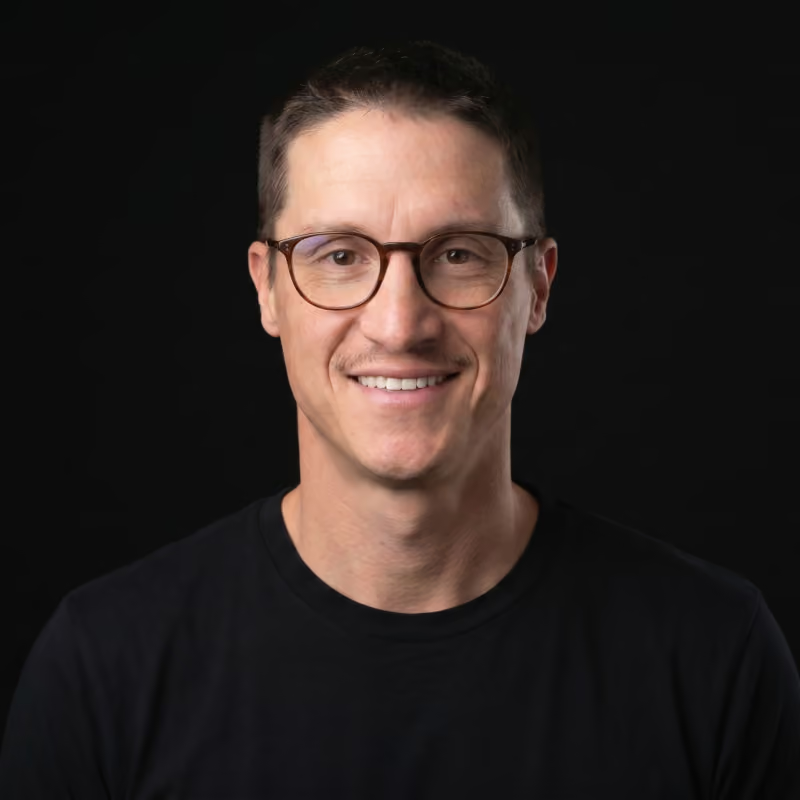
Guest 2: Sure. So I'm I'm from a small farm town in Illinois. It's about a half hour outside of Peoria, Illinois. Grew up there. My parents actually owned a small business. They owned a grain elevator and feed mill and and you know, I started working there from say 10, 12 years old onwards. Ended up going to University of Illinois, studied mechanical engineering and you know, before I went to college my dad told me that I had to pay for school to learn the value of the dollar and so got to U of I and I learned about the Army ROTC program. Ended up joining rotc. Didn't have this burning desire necessarily to serve, but joined ROTC and commissioned active duty army in 2007 and then spent about six and a half years on active duty, a couple of deployments. It's actually where I met Chris. We deployed to Kandahar, Afghanistan together. Fast forward. Got out of the army in 2013, decided to go to grad school. I moved to London, went to London Business School. Did a couple of interesting internships while I was there. Spent seven or eight months working for Schlumberger in the Middle east primarily on upstream oil and gas production projects and then worked on a Netflix movie where I advised Brad Pitt. A couple of just interesting opportunities. But anyways decided that I wanted to stay in the UK and work post grad school. So I got a ended up with a job at a private equity advisory firm. Did that for a couple of years. And I was at a bit of a crossroads both with my career and then also, you know, moving. Had been in the UK for you know, almost five years. Met my fiance, my wife now and we were looking at coming back to the States. And as a part of that I had been working, you know, 15, 16 hour days PE putting in the hours. Just I started to learn about search funds search. This is probably 2015 timeframe. Chris and I had reconnected and you know, we started talking about working together and setting something up and long story short, that's, that's what we ended up doing. So great.
[7:24] Host: Some follow ups there. Matt.
Guest 2: Sure.
Host: Brad Pitt advising. You're not going to let that one slide by. Say more. What movie?
Guest 2: The movie's called War Machine. It's on Netflix. Came out, I think it was 2016. Network friend of a friend was looking for a military advisor for the film. Buddy of mine from grad school, he was a British army. He couldn't do the job. He had to, to start, you know, his, his real work. Immediately after we GR graduated and I had lined up the job at the, the private equity advisory firm and my boss, when I told him, you know, hey, I've got this unique opportunity, he said, hey, pause, you've got to go do that, you know, absolutely, go do that and come back to us. And so I spent probably six to eight weeks in the summer of 2015 working with Brad Pitt. We, we filmed primarily in London and then we went back to the UAE where I had spent, you know, like I said, seven months of my grad school time. So it was, it was fun.
Host: War Machine. Matt, is this because I've been living under a rock? What, What?
Guest 2: It's probably not the best film. I mean it's okay. It's a parody about General McChrystal, the war in Afghanistan, ISAF. Yeah, it was actually kind of a nice bookend to my, for me, for my military career because I had to do quite a bit of research. I had already gotten out of active duty. I was already a couple of years out of the, the military. But I had to do just tons and tons of research. Both reading, reaching out to contacts, friends, different armies. You know, I reconnected with some guys from the, the Emirati military as a part of the project. So it was, it was really fun. I worked with Brad Pitt, you know, unique experience, fortunate to have gotten it.
[9:20] Host: So what's he like?
Guest 2: He's as normal as can be.
Host: Really?
Guest 2: Yeah, I Mean as normal as could be. Yeah, I think this was pre Brangelina divorce. She was actually on set once or twice. But yeah.
Host: Cool. That's really, that is quite a unique experience. So and then your, and then your, your boss or future boss at PE Advisory. PE Advisory, what is that versus we
Guest 2: are basically a placement agent. So we primarily focused on fundraising but we would help some of the GPS position portfolio companies or think about creating momentum in their portfolio to almost always driven around fundraising and fundraising tactics. My specific role there did some project management and distribution, but I covered the LP relationships in the Middle East. And so I would meet, you know, private equity general partner, the investment manager maybe in London or say in Abu Dhabi and then I would take them, you know, to the Abu Dhabi Investment Authority, Mubadala Capital, a variety of institutional investors and the general partners would, you know, pitch the pitch book and look for potential investment in their fund.
Host: Sounds like pretty high flying experience.
Guest 2: I mean it was, it was definitely at the institutional end of the market and, and to be honest, I, you know, had an engineering degree, was in the army, didn't have this deep finance experience, if you will. And so the couple of different mandates I worked on, I was in the UK so I was working with primarily European based general partners. We raised I think 250 or 300 million euro for a Finnish GP. And then honestly the one that I spent the majority of my time on, a firm called Nordic capital, it was fund nine, I think it was 4 billion euro. And so, you know, numbers sort of lose a bit of meaning I guess when you know, certain investors are writing three $400 million checks. You dissociate the actual. At least I did. The fact that it was like a currency associated with that, it was just sort of numbers at that point.
Host: And then you bought a blue collar business and every penny mattered.
Guest 2: Yeah.
Host: Okay, and then last question, follow up for you question the search fund path. Why did it appeal to you? Were you somebody who'd done entrepreneurial things before because you're family, small business experience,
[12:09] Guest 2: what it, it definitely was the entrepreneurial thing. It was a combination of that and then risk reward. You know, I was reflecting when I was working at it's called M Vision, M Vision, the private equity advisory. I was working there, I was, you know, putting in the hours and I was just reflecting like I, I was going to work that hard no matter where I was or what I was doing. And so, you know, I sort of started to accept the fact that I shouldn't really be compensated more because I wasn't risking anything. You know, the only way that I would earn more is to, to put in more hours. And I was already up against that hourly limit to a certain extent. So I started thinking about risk reward. And then my, like I said, my, my parents owned a business. I saw what it took. Both my grandfathers owned small businesses. In college, the freshman and sophomore summers, I had a painting company. You know, we did about a hundred thousand dollars worth of painting. 33 homes in the Peoria area. So just really had the entrepreneurial itch. Have been around that community and wanted to get back to it.
Host: And this risk reward approach that you take, you are at the private equity advisory firm working really hard. You really don't have any more hours in the day to give them. If you wanted to be earning more money.
Guest 2: Sure.
Host: So it was just going to be getting promotions or something was the only way you're going to be able to lever up your, your income or you figured take somehow taking on more risk. So if you take, took on more risk in whatever it was you were doing, you were going to, that was going to be the way to generate more income. I mean, it's just kind of a, it's an interesting kind of abstract way to think about making more money. Most people are just like, well, I guess I got to buy a business to make more money. But you have this almost academic.
Guest 2: I mean, I, to be honest, I actually. No, I mean, I even took it a bit further. I mean I, I sort of, I looked at, looked at my income as like a government bond. I mean, short of me doing something negligent and deserving to be fired or some catastrophic event like a Covid,
Guest 3: you
Guest 2: know, as a W2 employee, it's relatively risk free to a certain extent. If you're going to continue to work and you know, maybe that specific job wouldn't be there. But you know, I knew that I could go find another job, but at the end of the day I had to, you know, I was billing hours. Ultimately the way that I looked at it and you know, combine that with, you know, the desire to move back to the U.S. the desire to honestly have more responsibility, similar to what Chris and I had in the Army. You know, we didn't, we had a lot of responsibility as junior officers in the military. You get out, you, you lose a lot of that and then, you know, opportunity to earn more. All of those things were, were part of the calculus and deciding to, to do it.
[15:13] Host: Chris, get in here. Tell us a little about your, a little bit about yourself?
Guest 3: Well, I don't have any Brad Pitt encounters to talk about, but we should
Host: have started with you. It's a hard one to follow.
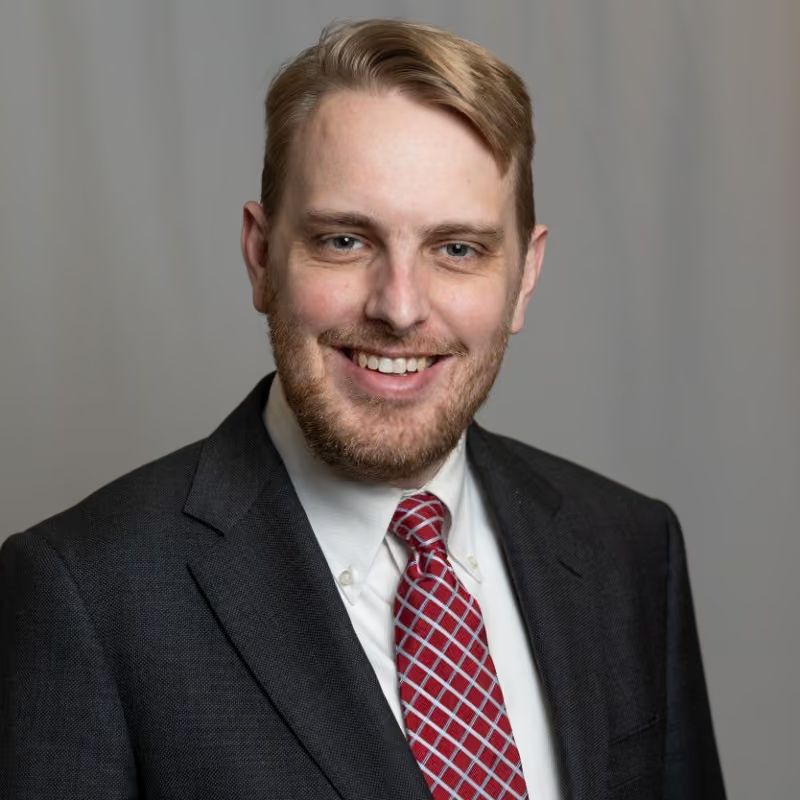
Guest 3: That's all good. I grew up in Chattanooga, Tennessee, similar to Matt, ended up going to undergrad and joining army rotc. So did that and went right on active duty and spent seven years across the US and the world. And as Matt mentioned, that's where we connected and ultimately became friends and started discussing, even way back while we were deployed, how we would potentially buy a business together. We, we talked about buying a franchise. These were very early ideations, but it sort of planted the seed, I think. Yeah, I ended up getting out of the military in 2013 and sort of went the Corporate America route and ended up working in banking up in Philadelphia for about five years doing everything from product development and national kind of marketing efforts which was, it was a really great stepping stone, great organization. But I just knew it wasn't my career. Very similar to when I joined the military. I knew I wasn't going to be a career officer. I knew when I joined Corporate America there was a lot to gain, but it wasn't my, my career. And so went back to business school during that time and reconnected with Matt and sort of heard about search and we got into researching it and before we know it we decided to pick up and move our families to Charlotte, North Carolina and launch our partnered self funded search in 2017.
Host: Chris, what was it that resonated so strongly with you about search?
Guest 3: That's similar to Matt, but I think for me it was really just betting on myself. I just felt strongly that if I was going to place a bet on anybody, it was going to be on myself. And I figured I came from an entrepreneurial kind of background, having small business growing up. I wanted to get back to that and I figured I'd place the chips on the table with, you know, myself and if it didn't go well, there was no one to blame but myself. And if it went well, then, then great and figured I'd do it with somebody that had a similar mindset. And I think that's why Matt and I were good partners from an alignment perspective early on.
Host: Well, good for you guys. You, you took a risk on yourselves and here you sit, handsomely rewarded. A PEO run by a searcher for searchers. If you're running a company with less than 100 employees and providing health insurance to them, you may secure better benefit plans at a 15 to 30% discount through a professional employer organization or PEO Aspen HR run by search fund veteran Mark Sinatra, understands the needs of search operators and provides HR compliance, flawless payroll, HR due diligence, support for your acquisition and Fortune 500 caliber benefits all for a fraction of the cost. And tis the season to evaluate your employee benefit plan. Most new clients reach out to Aspen 90 days before year end or their renewal date. So before they get slammed, check out aspenhr.com or contact Mark directly@markspenhr.com Also Aspen HR is proud to sponsor a discount for the self funded search conference September 13th 15th in Dallas, Texas. Tickets are selling at self fundedsearchconference.com use discount code aspen24. That's aspen24 self funded searchconference.com
[19:08] Guest 3: so you
Host: you mentioned moving to North Carolina, moving your families to North Carolina. So tell us elaborate on that and tell us what this what your search, your partnered search now how it takes
Guest 3: shape I was living in Philadelphia, so I moved my wife down to Charlotte and Matt moved his fiance at the time and now wife from, from London. And we set up in Charlotte and kind of drew a circle around Charlotte and said we wanted to stay in the Southeast, which was a pretty big arena. So from Florida to Texas to Virginia, sort of what we said. So we were, we were pretty open geographically Charlotte, we had some good connections here, so we figured it was a good place to start. In terms of the parameters, just like everybody is still looking for B2B service companies is what we were really targeting. I think our little bit different flavor we focused on was industrial and dirty kind of flavored ones of the service side. We had good backgrounds to kind of resonate with the owners in that space. And so we were able to connect our military time, our time before even growing up to some of these owners. And I think that let us get into some of the doors and have some great conversations with owners. So B2B services, industrials somewhere in the Southeast. We wanted a million dollars or more in ebitda and that was kind of the high parameters that we started with. But we were also pretty opportunistic. We were two or three weeks away from closing on a billboard company and so we kind of had our box we were trying to acquire in but as other opportunities presented themselves, we were taking a look at those as well.
Host: When you say that it was one detail that might be different about your search was that kind of the gritty dirty category was something you were looking at and thought resonated with your experience. People might scratch their heads at that because that actually is quite common A quite common target of business these days, was it? Not at the time, no.
[21:20] Guest 3: I mean Everybody in 2016, 2017, I wouldn't say not completely, but most of the folks we were talking with were looking for software companies, healthcare, just different, much more. I would say the targets have changed in the last five years. We were not super unique by any means, but we were in the minority. Whereas I think now we would be in the majority, if that makes sense.
Host: Just a good reminder that these the businesses that are hot even for kind of searchers, not private equity, but even down here, the kind of the lower end of private equity, which is what search is, there are trends. And H Vac now is of course the avatar for a search target. It's super hot, super popular and, and I've always just assumed it, it was thus, but it wasn't back in when my partner Nicholas James bought his first H Vac business and whatever it was, 17, 18, they were plentiful and nobody wanted that. So just goes to show that there's trends here like anything. Okay and, but just to be clear, your move to Charlotte was strategic, you guys, I mean you knew people there, you wanted to target the Southeast, but you guys just plopped yourselves down in town really pretty much cool. And million dollars in ebitda. So that's going to, if you can find it, that's going to trade for three and a half, 4 million assuming 10% or 20%, let's call it 4 million assuming 10 or 20% down, that's going to be 4 to $800,000 that you're going to have to bring to the table. Was that money that you guys had or were you planning on raising it from investors?
Guest 3: We plan to raise it for investors. I mean we, we put a good chunk of the capital into our own deal, but we ended up bringing outside investors.
Host: And can I ask what your balance sheets looks like? Just so I don't often ask this, I should ask it more. But just so people who are listening and wondering how much money a couple of guys who want to go buy a million dollar EBITDA business actually themselves had brought to this adventure.
Guest 2: I mean I think we probably had, you know, a couple hundred thousand dollars. Chris and I put in 100,000 each into 12 south to, to fund it. You know, as we mentioned, we were self funded. So I mean we weren't paying ourselves a salary that was just to cover software tools, subscriptions, things like that and deal fees. So we, we put in, you know, a hundred thousand each. I think that's how much it was you put.
Host: So basically that. And that's really where the self funded, that's to be clear, we throw that term around, but that's why it means that you guys actually put in money to fund the expenses of your search, the deal costs and so on. So each of you contribute a hundred thousand dollars and you're not paying yourselves. You're then living off of whatever other savings remain tracks and then when you find a target, you're going to raise the equity, correct?
[24:14] Guest 3: Yep.
Guest 2: The only caveat there is we were talking to potential investors in parallel with looking for potential, you know, companies to buy. So we were trying to find investors because you were. We were trying to find investors that, you know, thought similar to us or that we had some high level of confidence was going to invest in us. When we found the business, we didn't want to find the business, submit the LLI and then have to go try to find investors, you know, with 90 days or something like that. So we were building relationships in parallel with searching for a company.
Host: Chris, did you want to add something?
Guest 3: Well, the one thing I would say is the investor marketplace six, seven years ago wasn't quite as mature. And so nowadays you can kind of get your deal out in front of thousands of investors through some email lists and a few things. We had to do a little bit more boots on ground. It was much more this guy will introduce you to this person. A little more organic. And so it just took us longer and we spent time up front, whereas now I think you can probably wait a little bit longer. The investment space is just a little more sophisticated and familiar with the search terms and structures. Whereas I think we were educating a lot of folks even in 2017 and searches have been around for decades at that point, but it was still pretty small.
Host: Well, and to be clear, self funded search in particular was the redheaded stepchild. Traditional search at this time was still the one. To the extent investors even knew what it was, it was probably a traditional search fund. Traditional search fund economics that they were familiar with self funded was in its pre adolescence. Even though of course, as we all know, self funded, really all that means is you just buy your own business. And it is the, the original, the actual way of just buying a business. The point though that you guys cultivated relationships with investors before having a deal, I think is important for the audience because that's a question that'll come up to us at Mines Capital and investor panels. Should searchers reach out to you, Mr. Mrs. Investor, before having a deal to cultivate a relationship with you so that when they do have a deal, you already know who you're dealing with. And Chris, I think you just kind of encapsulated how that's changed because generally today the answer is no, probably don't do that because investors just don't have time to just have an open ended pick your brain, get to know you. Getting to know you. Coffee clutch conversation. They kind of only want to hear from you. They want to, they want to get to know you and see your deal at once and they'll evaluate both at once. Just because the. This, because of time and resource constraints.
[27:07] Guest 3: Fair.
Host: Because you're doing investing now. Is that how you feel as investors?
Guest 3: Yeah, I would totally agree with that.
Host: Okay. Anything to say about the mechanics or the process of your search?
Guest 3: We didn't do anything special.
Host: That billboard company, that's old school.
Guest 3: I would love the billboard company. It. It's a very it. Billboard companies are much more like real estate. There's not a lot of employees. It's just a little bit different business model. And so getting the financing lined up for something like that was. Was a little bit more of a challenge. And we had a third partner that was going to come in on it. It just didn't end up working out. We still both really love the billboard industry and would like to find an investment in that space, but it just didn't quite work out at the time.
Host: And what, what else, anything else was it? Were you finding lots of targets? Was the, were the pick and slim? How long did your search last?
Guest 3: I think it lasted. It was about a year. It was less than a year. There were, there were targets. I, I felt like we were always reviewing.
Host: Lois.
Guest 3: We spent a lot of our time trying to prove to a broker and explain what a self funded search was that that was really the. We spent more time trying to get through those gatekeepers because they didn't understand what we were doing. And so once we kind of honed in that messaging, we started to kind of break through. But we didn't do anything special in terms of email or direct mail. We just did everything and just stayed at it and stayed aggressive and, and ultimately I think you got to stay in the game and then you got to be a little lucky. But when you get the deal that you know is the one, you have to find a way to get it closed and not let somebody talk you out of it. Whether it's yourself or a lawyer. You got to trust your, I think your instincts a bit. That's sort of my Opinion on that.
Host: So what I'm hearing is the business that you bought grabbed you guys.
Guest 3: It did for me. I mean, I liked it from the beginning. We had actually, I had stumbled across a similar weighing business three or four months earlier just randomly and said, this is a really cool industry. The business wasn't for sale. And we reached out and that didn't go anywhere. But then fast forward 90 days later and there was one for sale in Charlotte and kind of full circle.
Host: Matt, how did you feel about the business when you first saw it?
Guest 2: Yeah, I would agree. I think it did kind of grab us. I also agree with Chris. Like, I think in your gut sometimes you'll know that it's a right deal and each one is very unique. And so, you know, there were three owners. Two of the three were former military. We connected there. You know, these guys had been in the industry their entire career. They were very down to earth worth. I think that they sort of saw themselves in us a little bit. So. And then it hit all the different, you know, criteria, both just, you know, financial and then geographic and things like that. I'd say we were pretty excited.
[30:19] Host: What the business does, tell us what the business does. And then I, I want to hear.
Guest 2: Sure. What you're about to say. The American Scale Company is a service provider, installer and distributor of industrial weighing equipment. And so we, we say we can weigh anything from grains to trains. And so literally, I mean, we sold scales that you would weigh in micrograms or even further refined weighments in like analytical chemistry labs and then a railroad, you know, train overhead weighing, each car weighing, you know, 400 to 600,000 pounds. We've got some other services as well, but yeah, it's an incredible business. It's, it serves every year just most different end markets, all different production producers. And so we would find ourselves inside of, you know, manufacturing facilities, food and beverage facilities, asphalt aggregates, building materials, and so just cut a really broad cross section of the economy and across North Carolina, South Carolina and Virginia. So super cool business.
Host: I called it in the intro a scale servicing business because I was imagining more services. But I think you just said the sale and the, in the distribution of the equipment as well was a big part of it.
Guest 2: Yeah, I mean, honestly, we want to sell a new scale and then service it, calibrate it for the lifetime, and ideally sell the replacement scale, whether that's again, a truck scale that, you know, you're driving 80,000 pound, you know, 100,000 pound trucks on every day or some small little 250, you know, dollar scale that you're weighing a chicken nugget on.
Guest 3: So,
Host: and is it like in H Vac to go back to that industry, you sell you an air conditioning unit for, I don't know, 10, $15,000 and then you try to have a relationship with that customer and you're having visits twice annually for the remainder.
Guest 2: Absolutely.
Host: And, and the, but the, the ratio of those visits to the, to the sale of the equipment is quite small. What does it look like in this case? I mean, are, you know, how big is the sale versus those, those service calls and how frequent are the service calls? Guess another way of asking is like in terms of contributing to your overall, to your net profit, which, which do you like better, service or sale?
Guest 2: What do you think? Chris,
Guest 3: from a revenue perspective, we did usually like between 50 and 60% was our service, whether that was recurring scheduled maintenance or break fix service calls. Typically that's the higher margin work because it's emergency work and it's hourly cost, time and materials. That being said, we also sold the end equipment and the end equipment allowed us to do the service work. So there's a symbiotic relationship between the two. But I think you really need both to be effective as a scale service and distributor, you know, in our industry
[33:34] Guest 2: currently, yeah, I think too, if you sort of further divide service, I mean, we had what we'll call like recurring calibration agreements. Those you're not necessarily making a lot of money on. In fact, we were probably losing a lot on a lot of them initially. You literally show up, you just check whether or not the scale is calibrated and if not, it's a simple calibration. Whereas service is, you know, that's unscheduled maintenance. Something breaks and they're calling us and that's, you know, really just tnm.
Host: Well, the rub, as we're going to hear later in the interview about this business, is that that great profitable work is also what causes the business to be so difficult operationally and from a lifestyle perspective.
Guest 3: Great.
Host: Okay. And so tell us more about just kind of the bullet points of the business. I think Matt, you were going there age employees and then revenue and EBITDA.
Guest 2: So when we bought the business, it was 20 years old. The there's about 20 to 25 employees, relatively young. Average age of the, the employee base, I'd say 30 or younger, a couple of outliers. It was doing about 5 million in top line and roughly 20 to 25% EBITDA margins. The only other sort of tiny caveat here is that it was, we actually bought two industrial service businesses. The main, you know, the elephant in the room is the scale company. But we, you know, we had a, an industrial welding, it's called American Welding Service. And, and so, you know, when we talk about, you know, the business, we kind of look at, you know, the two companies as one, but we had American Scale company and then American Welding.
Host: And what's the story there? Why did you buy them as one?
Guest 2: First of all, you, they were started. Well, what happened is that the owners, when they started American Scale Company, you, you would actually manufacture, weld the, the scales, build them on site back in the day, whereas now they, you know, send them prefabricated and you just put them together. So anyways, you need that welding capability, but it's not something that you need all the time. And so the, I think the rationale when they, when the, the founders did it is hey, we're going to need welding a good bit of time, but when we don't need them, we don't want them to have American scale on their doors and so they can go and sort of build their own customer base and, and provide different services to different customers.
[36:19] Host: And so those teams were completely independent, sort of. Okay.
Guest 3: They're all under one roof and all the same. So.
Host: Okay, okay. In some ways, was it one transaction? No, it was two transactions. It was one transaction.
Guest 3: Yes, they were owned by the same owners. The com. Both companies were owned by the same ownership groups. So they wanted, when they sold, they wanted to sell both of them together and it made sense. So.
Host: Sure, sure. In that $5 million in revenue, was that the aggregate revenue or just American scale?
Guest 3: Aggregate.
Host: Okay, well we're going to. And, and the percentage relative size scale versus welding was what?
Guest 3: Probably about 85% scale, 15% welding.
Host: Okay, all right, well we'll carry on talking about the story mostly with a focus on the scale business. The young average age. Now that's interesting. That's definitely the opposite of what you hear about these kind of skilled blue collar tradesy businesses. What's up with that?
Guest 2: You know, the, the founders, they were in their late 50s when they sold, so they were actually still pretty active in the field. And you know, they were from the community. So they had, their kids were in high school, their kids knew, you know, kids four or five years older. And so I think they just recruited, you know, folks that, from their local community that they had known and ended up, it was, it was a relatively young workforce. So I think that resonated well and worked out for us in the long run too.
Host: Yeah, well, but would you say that that is characteristic of the entire industry or just this business just was a fluke?
Guest 2: I'd say this was a fluke.
Host: Ah, okay. Well certainly, certainly an appealing fluke obviously because you weren't going to have to scramble to find replacements for an entire crew that's in there, you know, approaching retirement sort of thing, which is so often the case in blue collar businesses. Now is this so the caliber we're hearing calibration kind of inspection? But it's really, this is really the weighing industry. So one other industry, speaking of hot or not industries that we hear about these days is testing, inspection and certification tick, which feels similar but that's actually a totally different beast of an industry.
Guest 3: Depending on who's there some overlap, the weighing might be included in that or it might not be. It's sort of a gray area. But there are some characteristics I think that overlap, particularly the recurring calibration piece and some of that. And then there's components that probably aren't including selling end products and doing large scale construction projects which definitely aren't kind of in that realm of tick.
[39:12] Host: Yeah, well, I guess the, the, the question for you guys is did the multiple that you were able to get when you sold, did it benefit from any of, from any kind of association with tickets or not really. Was, was your business treated as something apart from the tech industry?
Guest 3: I think it was kind of separate. In my, in my opinion there are very specific groups that do high end calibration and testing and measurement that are really good at that and we're just at the other end of the spectrum and there's lots of benefits to being where we're at and there's benefits to being to the other end. But I don't think we, we might have seen some of those tailwinds to a certain extent, but I don't think we fit in that box well enough to get the like crazy multiple you could get.
Host: Okay. And anything else to say about the industry? Well, I, here's the detail that you shared in the pre call that I recall. This is one of those industries where if you don't know it, you don't realize it exists. At least I didn't realize it exists. And then as you, as you pointed out Matt, in fact not only does it exist, so many industries have some sort of weighing needs. And now it seems abundantly obvious that this would be an industry that there would be a lot of service to provide here that There would be a market here the in. And in fact, you had said that in North Carolina it's actually a quite, it's a quite competitive market. So you're not just a little obscure business that there are a lot of weighing companies out there. Say more about what this industry feels like, how competitive it is or not.
Guest 3: It's a competitive industry and there are a number of really strong weighing and scale companies in the Carolinas, some of which have grown to be kind of nationally known companies. And their roots really started in North Carolina and so they continue to be strong. The good part about North Carolina and the Carolinas in general is that it's a very diversified economy that is a ton of tailwinds. There's tons of greenfield development, new factories coming in here. And so it allowed us, even though we were kind of new to the industry, to really lean into all this new development. And so we focused a lot of our efforts on when these big multinationals would come in and set up a new factory and they didn't have a scale company because there was never a factory there before. And we would really try to penetrate that quickly and go in and win that customer. So the industry was great in that it was hard to take customers so defensively. You were always, you weren't worried about people taking your customers, but from an offensive perspective it was very difficult to win new customers. And so for growth we had to kind of find that other lever which was to go to these large greenfield projects, new companies coming into the geography and lean on that really for our growth. So interesting dynamics within the industry and then within, within the geography that, that we operated in.
[42:14] Host: Well, you're not the first guest who's in North Carolina and that has also said. Called out the, the benefit that they could really feel and see to be in a high growth state or metropolitan area. But and it also just sounds like this, the scale business would be a really difficult industry to be in. Well, I mean they're just. If you were in a market that wasn't growing it would you just be duking it out to try to steal customers from each other. Which is in fact the dynamics of a lot of my guests who buy kind of trades businesses in mature industries. But better to have it the way you guys had it than have to fight for every customer.
Guest 3: Well, and that is the case for a number of weighing companies. We talk to lots of them across the country and there's some in the Midwest where there's not a lot of growth organically in the state. And so it is a, you know, race to the bottom on hourly rates between the competitors trying to keep customers. And they didn't understand or, you know, we didn't appreciate that because we were, we looked around and there was always new customers coming into the geography. And so I think that's just an important aspect when you're buying a business to look at the geography that you're operating in. Because if it's just naturally organically growing, like that's just a huge opportunity regardless of the competitive dynamic in that geography. So.
Host: Yeah, yeah, such an important point. Such a, such a good point. Well, I want to hear more about what it was like to operate this business and what you guys did to grow it. You've already just touched on it sounds like you were very proactive in your selling. But before that, can we hear about how you, how you bought it, what the terms of the deal were? What can you share there, Matt?
Guest 2: We bought, I think the Multiple was like 3 1/2 times, so pretty good multiple. Underwrote it around 1 1/2 million in EBITDA. I think it was actually a little
Host: bit lower,
Guest 2: but we, it was about 75% levered. The rest was, you know, the equity down payment. And of that Chris and I put the majority, well, not the majority, but the, the most capital down for, for, you know, the investment. So we were the biggest investor of the investor group.
Host: And then the 75 came from SBA.
Guest 2: Yep.
Guest 3: Correct. Okay.
Host: Anything more to say about the transaction itself or. Sounds like it's pretty.
Guest 2: We worked with interesting broker, got it done, you know, worked with the SBA and the loan closers from, you know, a small community bank. Again, got it done, you know, but we, I think we, you know, we almost completed the transaction within, you know, 90 day timeline, which sort of a miracle given both sides of the transaction and working with the sellers and some of the service providers. So,
[45:21] Host: so the service providers, quote, quote, unquote, interesting service providers from the broker to the lender, not great. Maybe in fact, and in fact did it pretty quick.
Guest 2: That, and I mean maybe some of the advisors on, for the sellers just, you know, they maybe were finding folks that weren't as sophisticated. It was just, it was a big hand holding process, I would say the entire way through.
Host: Where'd you find the business?
Guest 2: We found it online, I think Biz Buy, Sell. Actually it had been put on Biz by Sell and Chris was like the first person to reply to the listing, I think.
Host: Had it been sitting for a while?
Guest 3: No, I didn't. I mean it went up on a Friday night and I was the first one that got in there. She picked the first three people that responded that seemed legitimate and we met I think that Monday or Tuesday and those are the only three groups that got to look at it. And we kind of were selected out of that group. So once again, luck. And then just when you see something, you just gotta move quickly on it. And we had to put an offer in I think that week and there wasn't time to do a whole bunch of, you know, dd. It was very regimented process, but we liked it and just kind of felt a good, felt he had a good feeling about it.
Host: Well, it sounds like the broker was actually trying to run a process, a pretty tight process to her. I'm saying to her credit, despite maybe
Guest 3: the broker, she, she wasn't bad. She just had a very prescriptive process that she wanted to follow through and we didn't. Some of the things we were doing with the self funded search didn't fit into those wickets quite as well. And so it just made what would normally be probably in her, her process, you know, very simple. We kind of introduced a little complexity to it and so there was a little bit of a learning process on both sides. But everybody throughout the process was, was all moving towards the, the same end goal. We never got contentious. So ultimately we got the deal done in, in 90 days and got it closed and everybody at the closing was still friends and, and happy.
Host: Chris, you'd said something a few minutes ago about when you kind of your reflexive reaction to seeing this business feeling like, okay, this is, this is a good one, this is the one. And, and clearly you just told us how quickly you acted. So your actions speak loudly. But you did say something about like you gotta, if you feel good about it, you hold, you go with, go with how you, you know, your conviction and don't kind of let doubters or naysayers erode that conviction. Maybe I'm reading too much into it, but were there others around you, maybe your investor group who didn't like the business?
[48:10] Guest 3: I don't think anybody did like it. I think they all liked it. The Q of E came back and there were some, there wasn't anything egregiously wrong. They're just, their accounting was very rudimentary and so trying to do a real thorough Q of E on it led to some, well, this is off here and this is off here. And so when you have more sophisticated investors that they start to get a little antsy with stuff like that and so we just had to say look like this is a rudimentary business with basic accounting and so don't dig into this too deep. At the end of the day it's within these two ranges. We feel comfortable that we're going to make this work. And so we started to have some people, you know, question a lot of that and we just stuck to our guns and kind of just pounded through it.
Host: Great. Yeah. Well another example how things have probably changed because self funded search investors today would understand wouldn't be as, as spooked by 100%. Yes, totally.
Guest 3: Totally to be expected. They were looking for audited financial statements for the last five years and yeah the fact they're asking for that sort of showed a. Know not understanding this. This space quite yet. So.
Host: Great. And how did, how did the transition go? How did the day one speech go? Anything to share there?
Guest 2: Somebody told us that he wasn't making two more rich. I think that was probably the highlight from day one.
Guest 3: Okay.
Host: And did that person in fact quit?
Guest 2: Eventually, unfortunately. It's pretty, pretty good dude. So he was a good dude? Yeah, he was a good, good employee. You know, very competent, very technically sound. Just didn't see eye to eye.
Host: And what, what did he, what did you say in response to that? Having it?
Guest 2: I, I honestly I don't remember you an.
Host: To your face.
Guest 2: Yeah, I, I don't know the worst thing so. Absolutely. Yeah.
Host: Well, we're going to get into the high maintenance nature of certain, of certain kinds.
Guest 2: I'll tell you. I think the other thing that I remember. Sorry to interrupt you will. That was just kind of funny. Well, two things. One, the old owners, they told us before we, we showed up because we were both driving cars and we still are both driving the same cars. The old owners were like, they're gonna make fun of you guys if you show up in cars, you better go buy a truck. So nobody made fun of us, but we were both wearing, I think we had army issued belts like these white belts. I pretty much worn mine the entire five years but I was ridiculed by the team. You know every now and then about it so.
Host: But they switch.
Guest 2: Yeah, they made some comments about the belt on day one. They're like, I don't know what you guys were wearing, but you look pretty funny. So
[51:09] Host: Chris, how did it go for you?
Guest 3: Yeah, about the way Matt described it. It wasn't bad there. A few people were shell shocked but all in all business kept moving on and folks stayed for the most part.
Host: Okay, well I hope you at least weren't driving Priuses.
Guest 3: No, no.
Host: August Felker is a two time successful searcher. First with a traditional search fund. The second time around he did a self funded search. Today August runs Oberle Risk Strategies, an insurance firm with a dedicated practice group for searchers and acquisition entrepreneurs like you. If you've got a business under loi, Oberly will provide complimentary due diligence on that business's insurance and benefits program. A great no risk way to get to know August and team. They love helping searchers. They've worked with hundreds. Oberly is a specialty insurance brokerage for searchers by a former searcher. Check out oberly-risk.com O B E R L E- risk.com link in the show notes.
Guest 3: All right.
Host: Well actually this might be a perfect segue to what the operations of this business were like. You, you, you really liked it from the outside but in fact this is a really hard business. You, you made no bones about it on our pre call so and, and it's just such an important and we're so let's spend some time here. It's such an important point that maybe it's that understanding the lifestyle of a business. Do that as much as you can because this was a, this was kind of a, a grueling one but on paper looked like a phenomenal business. All the things that we've already talked about. So why don't you just kind of tell us what the day to day looked like first.
Guest 2: I mean so like operationally when we sort of started just to find out what the day to day was, what it was, you know we had mentioned there were three owners, two of them, three owners, two different offices. So there's an office in Charlotte and then we've got an office about three, three and a half hours away east of Charlotte, east of Raleigh off 95 2. There was an owner in Charlotte handling dayto day for the Charlotte office and there was an owner and eastern North Carolina handling the day to day there. They, I mean generally would either call the individual technicians like the night before or they would come in in the morning and sit down and sort of get the daily plan together. But I mean generally the day to day, I mean what it is is you'll schedule a day for the technicians either office and you'll have calibration agreements to go do and you may have a service call from the day prior that we weren't able to get done and wasn't, you know, critical, didn't have to be completed in after hours. But you've got like a daily schedule sort of identified for, for each technician. And then, you know, then the phones start ringing and which. It's a great thing. I mean, you know, obviously we want the phones to ring, but we'll, you know, we'll get a service call and then it becomes a matter of rerouting, you know, the, the technician that has the appropriate skill set to handle the service call, has the equipment, has the right parts, you know, the inventory on his truck. So I mean, just on a day to day basis, it's, it's continually moving. Sort of controlled chaos, to be honest, I think would be a good way to put it operationally.
[55:02] Host: Very much logistics, like a ton of logistics.
Guest 2: Yeah, definitely.
Guest 3: Okay.
Guest 2: I mean again, like, you know, we fell in on, on these calibration agreements and we had them for each month. And I just remember the owner handing me, you know, the next month, it must have been the month of September, he handed me the calibration agreement and it was an Excel sheet and it was the name of the town and then, you know, the name of the customers. I didn't even know North Carolina. And so I didn't know any of the towns. I didn't know like where the technicians would be going. And so I mean, one thing we did, you know, early on just to help sort of visualize operations is we took like our calibration agreements, these scheduled maintenance, if you will, and we started plotting them in Google Maps. You know, we used like the Google suite for, for almost everything, communication and team sharing and things like that. And we started, you know, using Maps and it was just as simple as like a color code to, you know, it's red, not done, yellow, hey, we're there and green, you know, the job is complete. But again, sort of the daily, a day in the life of a technician looks like you get your schedule nowadays they get it the day in advance at like 6pm it comes out, they get it in advance then, you know, generally know what they're going to do. But then you might not even start your day. You might get a call at midnight and have to go do a service call, you know, so it's very fluid. I mean the day changes five times throughout.
Host: But this is not a good thing. This is, does not make it exciting and dynamic.
Guest 2: It makes it, it's exciting and dynamic for a while.
Host: Grindy.
Guest 2: Yeah, for sure it's exciting and dynamic. But that doesn't stop, I mean it doesn't stop on a holiday. It doesn't stop after Hours. It doesn't stop after year two. It just, it hasn't stopped now. I mean it just, it keeps going, which great business, but it is operationally, you know, challenging and takes a lot.
[57:09] Host: And what about delegating, delegating that hard stuff? So your technicians are the one who are going to go do the service call and why not a middle manager who's absorbing all of the, all of that kind of inbound as opposed to you guys. And maybe, maybe it's because the answer is the size a small business, you don't yet have that, but the ideal would be is you in fact do grow into that.
Guest 3: If you can't.
Guest 2: I think we, we did grow into that over time. You know, as a part of sort of the founders, you know, they told us that they had second line management. The reality is they didn't. So I mean they had identified an individual for the Charlotte office that you know, wanted to be a service manager. Sadly that that guy ended up passing away. He, he didn't work out. We had a, an individual at the other location who, you know, we grew and worked with him and he did a really good job. But he went from a technician to, you know, service manager to like a general manager running his branch over the five years. So I mean I think another thing that we did is the folks that did stay, we really grew professionally and personally, you know, I'd like to think so. But we got about six months in, we hired a service manager for our Charlotte office and he, he is awesome. He was that layer in between and did an incredible job when he joined us. So I mean he was a huge, huge part of the story.
Host: Well, so does the business if like talking about this employee that you ultimately put in place, does it become a more appealing business if you can get it there? I mean, I mean you get to have the, the benefits of, of a great business model and, but not so demanding work and be the, you know, the owners who are just getting rich and not having to work that hard or does. Is there, is there something intrinsic to this business that like. Not really.
Guest 2: I mean I think you could build a team and get there, but your team is gonna, they're going to be burnt just as much. It's. It. Not really. I mean I think it's just a grind.
Guest 3: Chris, we've talked to enough other scale company owners across the country and they all feel exactly the same. And so I think it's a large component of just how the industry operates. And a lot of our guys, they, they like the, they like the unknown every day. Right. They're going to go do something different every day. It's not going in, clock in and do the same thing. But because of that kind of unknown, somebody's having to manage that unknown. And, and the chaos and that just weighs on you mentally day after day, week after week. And even if you do find some, some layers of management in there, ultimately as the owner, you know, Matt and I were still extremely close to it and that may have been our own fault. We probably should have stepped back at times. So some of it may be a little self induced. But I think there's a large component that is kind of industry driven just from the data points of lots of other scale company owners.
[1:00:18] Host: And when you talk about the inbound and the moving schedule and the, you know, five having to change routes five times a day, that's because you get service calls. You're basically somebody. Somebody's scale broke.
Guest 3: Yeah. So like we've had a bunch of thunderstorms here lately and so our phone just rings off the hook because the thunderstorms hit the scales and all of a sudden they call at 6 o', clock, 9 o', clock, 10 o' clock and they all want to be up and running by 6am in the morning. While you're trying, you had a whole schedule made, you're trying to route people and all our customers can be four and five hours away from Charlotte. So it's not as simple as go to this one and go to the next one. It's trying to route people all across the southeast. And different customers have different priorities. Like some, we have some very high priority customers and you may have a technician driving the total opposite direction to somebody else. This high priority customer calls and you turn them around and head them totally the opposite direction. And so that's just sort of the unknown. And then you've got all these recurring maintenance calibration agreements that have to be done in that month. So you've got this ebb and flow of, you know, the calibration agreement. And that workload is kind of a known quantity. What you don't know is the unscheduled break fix work for a month. You can kind of project it. But some of it is, to my point, weather dependent. And I mean trying to predict the weather other than there will be thunderstorms in the Carolinas in the summer. We didn't have any rain for almost four weeks here and there were no service calls, very few. We've had thunderstorms for about two weeks straight now. And they're, they're getting just hammered. They can barely keep up with the work. Um, so it, it's hard to plan when, when it, when it rains, it pours service calls. And that could be a real challenge for the organization to absorb.
Guest 2: One other thing, Will. Yeah, I was just. One other thing I think that is part of this story is that we were also trying to grow. So, I mean, I think when you're trying to grow, it just makes things more challenging in general, whether the, the business is operationally complex. But I mean, there's a lot of owners that have gotten, you know, their scale company to a decent size and have just kind of pumped the brakes. And they said, like, we don't want to, you know, we don't want to grow more because it's, we're going to have to add employees and, you know, additional risk and trucks and equipment and we're going to keep getting more phone calls and things like that. And so, you know, not only is the industry just hard and demanding, but then layer in on top of that, that Chris and Matt are know, pushing everybody to try to grow, grow, grow. So it was just, you know, it was exhausting.
Host: Well, I heard you use the word, use the word burned there, Matt, a minute ago. So do you feel like you guys were burning out?
[1:03:00] Guest 2: I think I probably was, yeah.
Guest 3: Chris. Yeah, I definitely on the path, for sure. I was, I was, I wasn't maybe quite as far as Matt, but I was not far behind.
Host: And you know, you're a couple of former military guys and you had in fact looked for businesses like this industrial services. So I guess to people listening who, who don't run toward these types of businesses, who maybe don't have military training or, excuse me, military experience, it would be that much more of a challenge. But did, did it not. Was it not like what you were doing in some of your military work?
Guest 2: I mean, so we actually tried to hire, I think, a general manager as well to again, add another layer. And for one reason or another, we were unsuccessful. Sort of. We, we hired successfully. We were unsuccessful at retaining. And that was think about two and a half years in when we hired that individual. And then, you know, six months into the, the training process, the, the GM decides to leave. And then I think that, you know, a learning lesson is like, probably focus on building your team. I mean, I think that we could have done a better job of building our team, investing in our team, and that would have shielded us from some of the burnout.
Host: But one of the other guy, Chris,
Guest 3: I was just going to say, I think to the point around the military, I mean Matt and I were just willing to, to grind. I mean, I think that's, I mean if we, if we hadn't sold the business, we'd still be grinding in it right now and that would just be what was necessary. And so there wasn't, you know, we sort of looked at, it was like a five year deployment except you could go home at the end of the night instead of go back to your little, you know, you know, metal container you were sleeping in and you could see your kids. But your mind was never off the business. I mean I ever, it was always forefront and that was a real challenge. But it, we also knew that we could mentally handle it. It was just, there was a cost involved and it was being borne by our families and personal lives and health and other things. And I think we both came to that realization that if there was an opportunity to, you know, exit, maybe it would be the right time. And it kind of came at the right time.
Host: Yeah. And we're going to get there in just a sec. But to be clear, the point about you're never not thinking about your business. A lot of entrepreneurs will say that, but I think the difference here too is that your particular business kind of never sleeps sort of thing. I mean it's, it's always on Christmas Day, Thanksgiving Day. Yeah.
Guest 3: You know, two in the morning, you, I mean every, every after hours call from pretty much 4pm till 7am for 5 years straight went to Matt and I cell phone no matter what day of the year.
[1:06:07] Guest 2: And so I mean we had a service called this fourth of July.
Host: Yeah.
Guest 3: Wow.
Host: Well, you know, another important point for the audience here is that we all. One of the classic criteria for search businesses is that they not be discretionary spend, that they, that they be critical spend. But this is an extreme where you're truly mission, mission critical to your, to your clients, to your customers. So they're calling you in the middle of the night because if the scales don't work, they can't, whatever. The factory comes to a screeching halt the next morning. So as appealing as that is from revenue strength, quality of revenue, I mean that revenue is desperate to go to you so that you can come fix their problem. It's of course also the, the flip side can be when it's so mission critical that it's a business that never sleeps and you just gotta, you just gotta scramble to service your customers and that can be really unappealing for business. We talk about you know, lifestyle businesses. But what kind of lifestyle? This is sort of a bad lifestyle business. I'm reminded of Nick Hashka, who an early guest and who's now been on multiple times and is going to be coming on again. And one of the very first business that he bought was an indoor plant business. So basically servicing the plants of offices. So, and he liked, you know, so, so if, if his crews can't make it to the office that day, the world's not going to end, that the plants don't get watered. And he really liked that about it, the lack of mission criticality there. So just taking something at the opposite end of the spectrum and you could now and you can see the appeal of that in contrast to, to the life that you guys just lived for five years now. Of course the flip side is though that Nick's services are therefore more discretionary. So in a belt tightening environment, you know, the, the plant guys are probably going to get cut pretty, pretty quick. So pick your poison sort of thing. What about your. Anything more to say about the, the cruise and how demanding your word that they, they can be? I mean we talk a lot on this podcast about white collar people coming in and buying blue collar businesses. Maybe maybe share a little bit more about what you, what your experience was.
Guest 2: I mean I think IT crew, I mean good people, I think the great people. I think that the, another layer to the complexity is just how technical the actual scales the equipment that we work on are. I mean sometimes they'll tie into like automation systems related to like an entire production line. And then also we have larger trucks that require, you know, class B CDL to drive. And so you can't just hire somebody off the street and put them in that vehicle. So in training an individual, there's no training pipeline or program that you just send somebody to and they come back a scale technician. So you know, trained quality scale technicians that are good team members, I mean they're worth their weight in gold. And you know, I always felt very, very, very, very vulnerable that we'd get a call at 2:00am and, and it happened where somebody didn't answer and then you go to the next one and then they don't answer. And then you know, in the early days, I mean we didn't, we didn't even have any idea what we were talking about really related to the scale. We couldn't even tell the customer anything. So it's just very technical, very complex. And that added an element. And when you introduce people into the equation, you know, communication and Things like that, it gets messy and you know, even harder so.
[1:10:12] Host: And were you all able in, during your tenure to build some kind of training function?
Guest 3: We ended up, yeah, we ended up one of our manufacturers that produces scales and we would sell, they had a kind of an in house training program that we would send our technicians to and that, that was a solid program. But you still got to continue to train folks just like in any industry. And there's just not a, you know, H vac and diesel mechanics. There's literally schools that just produce these folks over and over. And you kind of know the scale industry doesn't have that, it's too small. And so we ended up leaning on our manufacturers to kind of provide that training. And it was fruitful, but it's just different.
Host: And the selling that you guys touched on earlier, is that one of the big levers that you pulled going out and getting new business. You also talked about how growth was really hard because you, you're just trying to keep the, keep the trains running on time, let alone add, add more trains, if you will. So, so what, what did, did you build sales? What did revenue do over your five years?
Guest 3: We built a sales team and you know, Matt and I still were the primary sales folks from the beginning until the end. We brought on full time sales folks and trained them from folks that had experience in sales to folks that had none and kind of got them up to where we wanted to go. Including. We, we trained one of our technicians who kind of as part of his development professionally went from a technician to a salesperson and has now actually become a branch manager. So that, that was one of the things we did well, was kind of in the train in the sales area. Matt and I were just very aggressive going out and winning new business. Like I said, lots of greenfield new facilities being built. And we just, we just leaned into that. We would show up, we would drive around, we would cold call. We did a lot of work on digital marketing. Our space was just really behind in that area. And so for us to just do what most people consider as a basic website with a little bit of SEO and paid search, like paid huge dividends because your competition was doing nothing. And so we were able to do that. Nowadays everybody's caught up to that. And so we just, we leaned in on that and just went hard. That's part of the, the grind. And that pressure was we were trying to sell, we had our sales hat on all the time, plus we were trying to run the operations and everything else. And so we were Always stressing the organization because we were continuing to sell new product, bringing in new products, we were bringing in new manufacturers, just anything to, to drive new revenue. We would also expand our geographic area. We went further than most scale companies would away from their home bases if we could make it financially viable. And that's kind of what kind of led the growth. And over time we went from 5 million in top line to well over 10. And it was just nice consistent 15% growth every year. No big massive one year up down, just. We just kind of kept at it and it's a little bit of a snowball effect I think.
[1:13:30] Host: And what had been the plan that you would own it indefinitely or that you would try to grow it and sell it or just create optionality for yourselves and decide, decide whatever you wanted to do after you knew more?
Guest 3: I don't think we really knew. Yeah, I mean I could tell you what we thought. We would run it and see where it went. I think we were both pretty open to the fact that if we liked it and it was a great business, we could continue forever. If there was a good option on the table to sell it, we would consider that. But I don't think we had something etched in stone that we were going to, you know, hold this for 50 years come hell or high water. And that's sort of how it ended up playing out it well.
Host: But circling back to your investors who you kind of had to get comfortable with self funded search, one of the things investors need to get comfortable with is when, when am I going to get my capital back? Not only you know, what, what is the opportunity here, but what am I just going to get my money back?
Guest 3: Please.
Host: So what did you. So usually they like to see clarity that like you're going to have a, you have a, that you have a plan. Not that. Well, we'll see. What did you tell them?
Guest 3: I think we, we went with the standard look, we're looking for a five to seven year hold just, just like most folks. But of course we told them look if this business is doing really well, it's cash flowing well, we're enjoying it. You're getting your return, you've gotten your prep back, you've gotten your capital that you put in back and you're going to get residual checks for the next 20 years. They were all fine with that too. So we kind of gave them. Here's the, here's the model with the five to seven year exit that everybody uses. We'll use that but just know we'll see how this goes in two, three, four years. And we'll all kind of discuss and see what makes sense. And they were always very supportive along the way.
[1:15:13] Host: Let's hear about how the exit came to pass.
Guest 2: We actually were buying a competitor and so we exited In July of 23, I think in February or March of 22. We had given a competitor an LOI that was accepted. That would have been, you know, fairly transformational that we worked on. We, we, the ultimate buyer, the strategic, the gentleman that sold, you know, it's a, it's a larger platform business. He sold to a financial sponsor. Chris and I had met him before. He sold the larger, you know, the platform, if you will. So we knew that they were on the market and that they were, you know, looking for some type of financial sponsor. We, I stayed in touch with him, I talked to him, you know, every three to six months. And so we're moving forward, trying to buy the one business and then the platform gets acquired. The owner calls us and he said, hey, you know, we've been acquired. We want you guys to come join us. Are you interested? And we thought about it for a little bit. This would have been in, you know, the second half of 2022. And we decided, you know, no, we're going to focus on trying to, to acquire this business, you know, that we, that we had already gotten the loi, we had been accepted. We kept working on that. Long story short, that deal died a month from the finish line and that was in March of 23. And you know, I think we had, we bought the business at an inflection point, a bit of a plateau. We grew through, you know, the inflection point and got to a bit of another plateau. We wanted to do something transformational. And, you know, the, the acquisition opportunity died and you know, we, the business had been performing really well. And so we, we decided to go back and talk to the, to the folks that ultimately acquired us and see if they were still interested. And, and they were. And it just sort of went from there.
Host: And so to be clear, you were trying to buy one of your competitors. In the meantime, you had, you were talking to this other sponsor who was, who had bought a platform in your industry.
Guest 2: Correct.
Host: And was interested in buying you all you guys as well as a, as a second or third acquisition bolt on, although you were big enough that you might call it something more than a bolt on.
Guest 2: And we told them, I mean, we were transparent. We said, like, look, we're, we're actually working on this other opportunity, you know, we'll, we'll entertain the, you know, the idea, but we, you know, we're going to focus on buying this and then, you know, maybe we can revisit the conversation in a few years. Yeah, when that deal died, then we went back to them and again, we were transparent. We said, look, we'd be willing to hear you guys out, you know, if you're still interested.
[1:18:25] Guest 3: So. Okay.
Host: And the inflection point was what was because buying that, doing your own acquisition, buying that second business was really going to vault you into the next level. And so not getting that felt like, you know, oh, you know, kind of fork in the road or because of your own burnout or because what. There was something magic about 10 or approaching $11 million of revenue that you felt like getting further than that was going to require. I think it was investment or what?
Guest 2: Probably more so the, just some of the air let out, just let down as a result of that, that transaction dying and then probably some of the burnout,
Host: you know, so an emotional inflection point potentially.
Guest 2: I don't know. Is that how you felt, Chris?
Guest 3: Yeah, I think there was definitely a component to the emotion, but I think the business was also sort of at an inflection point. Like we were going to have to invest probably a significant amount of more money into the business to kind of go to the 25 million dollar revenue level. We had done the double. To do the next big step function was going to require a good chunk of change. And I think we would have been willing to do it, but it just, we knew we were at a point where either if we were going to decide to exit, this was like a natural break point. We didn't want to be in the middle of trying to do this big growth thing that was spending a lot of money. We wanted to go ahead and, you know, make that decision and go one way or the other.
Host: You had mentioned that the, there was a toll that was taken on you guys burning out, but also kind of even taking your work home with you and on your family a little bit, your family life. Was that, is there anything to say there? I mean, was this something that you're, you felt like your families were really experiencing the brunt of your ownership of this business?
Guest 2: My wife would probably say so.
Guest 3: Yeah, yeah, definitely.
Guest 2: I mean, but I mean, I, I'd say that somewhat jokingly. I mean, although it's, it is true. I mean, we literally, I, you know, probably actually worked every day for the first two years, like actually had to do something because I mean, again, when we bought it, everything was analog. So I mean, we're handwriting invoice, you know, well, hand processing, work orders. But yeah, I think they definitely. I know my wife, she, she heard about it all the time.
Guest 3: We both have young kids and I think we both probably came to the realization that like continuing to work the hours we were working and missing out on kind of those experiences with our children probably in the, in the 50 years from now or 40 years from now, we'd probably look back and make a different decision. So, you know, my wife was very supportive, you know, having been through a number of deployments. I think she was still happy that I was home versus, you know, not being home. But it, it was hard, but I wouldn't change anything. I think it was a huge learning experience that I would do over in a minute. But it was just a realization of where we were in the business and kind of being honest about it and making what we thought and I still think was the best decision a year ago.
[1:21:35] Host: Well, and to be clear, this, this is a great.
Guest 3: It.
Host: This is a success, a story of success. I mean, I'm kind of, I'm kind of pressing you guys on the, the down bits here or like really just trying to understand the motivations of wanting to sell, which, which are about this kind of burnout and how, how grueling this industry or this business is, but fundamentally. Well, maybe, maybe the. Let's have you answer in a concrete way. You sell to the strategic acquirer from, from a good position. What can you share about the TR. Terms of that, of that sale?
Guest 3: It was a, you know, eight figure exit and Matt and I made, you know, a good amount of money commensurate with the amount of risk we took. Our investors had a great return. And I think just as importantly was that we were able to bring in a partner company that we aligned with and has treated our employees and team and customers really well. And we haven't had any employees that were on the payroll when we left leave only one, I say that one. And they've gotten better benefits, a lot of other pros. And so I think for me a lot of it was, and I know Matt too is making sure that there's a lot of folks that would have bought the business, but making sure we picked the right group. And I feel confident now that we picked a good group that's done what they said they were going to do and that these days is not always easy to find. There's been some new bureaucracy involved with a little bit larger company But I think by and large the pros have far outweighed the small cons that have come with the ownership change.
Host: Well, and just to put a bow on it, so you guys buy this business that did 5 million, was doing 5 million. You grow it to north of, you more than double it, grow to north of 10 million and you, you know, digitize an analog business. You put in, I guess key managers, you professionalize, I assume you do a lot of professionalization. I think you double ebita. I mean are the earnings also doubling as well? So obviously that's going to, you're going to get some multiple benefit there, some multiple arbitrage. So sounds like you can't say specifics, but we can all understand that it was a, it was a, a great run and a very solid exit. Anything more to say about the whole, the whole adventure? I want to leave just, we have a couple minutes here to hear about your investing activities, but anything more to say about American scale?
[1:24:20] Guest 3: Anything?
Host: I didn't ask.
Guest 3: No, I think my, my one point is that I think it's the industry and the employees are really like the, the heartbeat of, of this country. And I think for me personally like getting back and spending time with folks that work with their hands and get to actually physically do something that provides value, that's tangible and you can see and feel was, was just a really good feeling having worked kind of in corporate America where you don't get that feeling even in the military at times you don't depending on your role. And so for me, like I had a lot of pride and still do. Like when I see our trucks driving around or I see one of our technicians fixing something for a customer and you get these incredible notes from customers, you know, talking about how great the employee was and how they saved them, you know, umpteen thousands of dollars by getting their scale up and running under a ton of pressure. And they performed really well. And I think that was something that I valued a lot more in retrospect than maybe when I stepped into the business, you know, six years ago.
Host: It's awesome. And to be clear about the hardship of this business, it wasn't because it was a blue collar trades business. It was because it was a mission. You were servicing. Mission critical, providing a mission critical service.
Guest 3: I think it's mission critical and the technical nature and you combine those two things, it can be a challenge to, to kind of to manage.
Host: So, so, so the, to the extent this is a cautionary tale for the listener, it's not that you guys Bought a trade business. It is that you bought a highly technical, mission critical business that never slept, that you wanted to grow and double. Be very aware of the nature of such a beast listener.
Guest 2: I think Chris sort of hit the nail on the head. I mean I think at the end of the day one of the things I'm most proud of is you know those team members that did stick with us, I hope, you know, I think they've all grown professionally and personally and like it's awesome to see sort of some of the, the folks that, you know, we're with us on day one, you know, where they're at now. I mean, so that's really cool.
Host: Great guys. Well, what do you think the next chapter for you is? You're investing in search. We're going to get there in just a second with what little time we have left. We're already over. But do you think you'll buy another business? Do you think you'll. How old are you each?
Guest 3: I'm 40, 39.
Host: Chris. Okay, so what, what do you have in mind for yourselves? Looking at the investor life?
[1:27:01] Guest 3: I think we're both enjoying doing the investing for sure. It's a, it's a great way to stay connected with, to self funded searchers and kind of still be involved with, with small business. Whether we go buy another business I think is just a function of what comes on the market, timing and a number of other considerations that will sort of just play out over time.
Host: Okay, well let's hear a little bit about, about your investing. What's your position and what kind of deals do you look at?
Guest 2: So we've invested in six, seven other businesses. Six of the seven are you know, self funded search deals were you know, minority investors. But you know, one thing that Chris and I want to do is try to add value where we can and to the extent that the searcher, you know, wants it or our input. And so you know, we, we like the southeast geographically, love the southeast, like you know, business services, B2B, you know, some of the trades for a lot of the reasons we talked about. You know, you mentioned Nick, we've invested with Nick Hoska, some other probably well known names in the search ETA community that we've co invested with. And so I think just really looking forward to you know, continuing to meet, you know, entrepreneur operators that want to, you know, get in the saddle and know, help them and back them and see them, you know, achieve what they're looking to do.
Host: So, so you, you have a, an orientation toward trades, kind of industrial B2B style services and, and southeast geography. Not strictly not. Those aren't strict criteria but those are kind of your eyes light up for th, those types of opportunities because that's where you can add value.
Guest 3: That's right.
Guest 2: And then we're, I mean one just a little bit different than a self funded search deal. We're investing in a porta Potty startup here in the Charlotte market. So if you're in Charlotte within the next year you better be in one of our Porta Potties. You got to go outside. I'm just kidding.
Host: Is the, is it, is there any kind of technology angle or is this a blue collar business? Just a blue collar Porta Potty rental business, just not eta.
Guest 2: It's, it's, it's, it's that but it's the operators are highly motivated, you know, entrepreneurs that you know, have proven themselves before and have been studying this for a while and, and want to get after it and so it's exciting.
Host: Well, I should interview them because Porta Potty businesses are, are the darling of the ETA world. I mean we, we all want to buy a porta Potty business so why they chose in fact that 0 to 1 was, was better than buy. Buying an existing one would be an interesting conversation. So maybe I'll ask you for a connection for sure. Chris, anything more to say about your investing activities?
[1:30:17] Guest 3: No, I mean I think we're, we're excited to partner with folks and like Matt said, like we're operators. That's our, we're not super finance guys. But what we can do is really help you like on the like day to day ops if you're, you know, on your first go of a search acquired business like we can, we can get in the, the weeds with you and kind of provide value. So that's sort of our selling point versus you know, some other folks. And I just tell all the searchers nowadays with the abundance of investors out there is I would be picky about who you choose. I think you can actually select your investor group now versus it used to be much more. You kind of took the money you could get and so I would be very cognizant about who you select and what they bring to the table because you can get a lot of folks that can bring to the table to check but they could bring together potentially new customers, tactical experience, industry knowledge. And so I would lean on doing that diligence on your investors to make sure they're the right fit because there's enough investors out there these days. So yeah, it's great for the searchers, so.
Host: Well, it's, it's a great point, Chris. And with my group Minds Capital, what really got us excited was when we could articulate what differentiated us from other capital. So it's also, you know, having for the investor, knowing where they can add value, where and why they can add value, and being able to articulate that also just demonstrates the inability to add value because they've, they've thought it through and they've really understood where they differentiate and can add value and have positioned themselves accordingly and are going after a particular, a particular kind of niche within broader search. So. Well, well put. Okay, Chris and Matt, I want to invite you guys to share your contact information or how you like to be contacted, but I'm reminding myself to give a PSA to the audience going forward. We'll see if I remember to do so. I'm remembering now. If you do reach out to an Acquiring Minds guest, please, have done your homework, have done, you know, the, mastered the basics, listened to a bunch of the pods, this or others, read the books because there are people who are really, you know, guests are generally really generous with their time. But I do hear from time to time that people just, they get so much inbound to just get on the phone and talk about their search. If you reach out to Chris and Matt, treat their time as the precious resource that it is and come with some real dialed in questions and have done your homework. And with that, gentlemen, how can people, how can people reach out to you?
[1:33:09] Guest 3: I think we're both on LinkedIn. That's always a good one.
Host: Good enough.
Guest 3: And then Our website is dwellsouthcapitalpartners.com Our emails and phone numbers are on there.
Host: 12 South Capital Partners.
Guest 3: Correct.
Host: Okay, Matt and Chris, thank you guys very much for coming on. Congratulations on a successful journey. It was hard, but here you sit, Victoria, and with a lot of value now to pour back into the community. So congratulations.
Guest 2: Appreciate it, Will.
Guest 3: Thanks for having us. Will.


















































%20-%20thumbnail.avif)




%20-%20thumbnail.avif)


%20-%20thumbnail.avif)
.avif)




%20-%20thumbnail.avif)