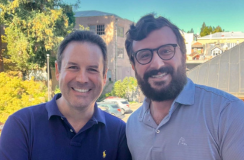
Host: Nathan Lenihan and two partners just bought an H VAC business. In this interview, Nathan lays out what is so appealing about H Vac, which is a business you hear a lot about in the SMB acquisition world. Also, Nathan and his partners bought small. This was a $400,000 acquisition, not very big counter to the advice you've heard from other Acquiring Minds guests who say you should buy as big as you can. But Nathan already sees a path to very strong growth in the first year of ownership. So even though they bought small, he and his partners may have a consistent, considerably larger business in a relatively short amount of time. Anyway, Nathan knows a lot about home services. And now I finally know something about H Vac and you will too, after this interview with Nathan Lenahan. Welcome to Acquiring Minds, a podcast about buying businesses. My name is Will Smith. Acquiring an existing business is an awesome opportunity for many entrepreneurs. And on this podcast I talk to the people who do it. Are you using Twitter to learn how to buy a business? If not, you should be what they call SMB. Twitter is a thriving community of acquisition entrepreneurs. Very helpful, very supportive, and many of them very successful. You don't even have to tweet yourself. You can just read the great stuff others are writing. Twitter is actually where many of the guests on Acquiring Minds have been sourced. If you don't know where to start, just go to Twitter and follow me when there's a will. And once you follow me, Twitter will recommend others in the community follow them, Twitter will recommend still others. And before long you'll be following 2050 people and you'll watch your Twitter feed fill with valuable and interesting conversations around buying businesses. Highly recommended. Again, start by following me at whentheresawill. Nathan Lenahan, thank you for joining me today on Acquiring Minds.
Guest: Excited to be here.
Host: Will, you and a couple business partners are the new owners of Bart's Heating and Air, an H Vac business in Fort Worth, Texas. So we are going to hear the story today of that business, that acquisition, the numbers, the whole deal. And we're going to talk a little bit about the, at the end about what your strategy is here. Because actually this business acquisition is part of a grander, multi year startup that you, that the three of you are pursuing. So it all plays together in very interesting ways. It's, it's, it's certainly the first, the first plan I've heard of any of my guests like this. But before we get into all of that, why don't we just have a couple minutes on you, Nathan, on your Personal background. So give me all the relevant personal and professional history that led up to this decision by the three of you to go buy an H VAC business.
Guest: Yeah, I mean this has been a plan of many years getting to this point of buying a business. I think we, me and my two partners, we go back and forth on should we start something from scratch, should we buy something back and forth, back and forth. But for me, I mean I came, I went to college right when 911 happened, joined the army right after that. And there's just no better place to kind of learn leadership. And I think based on your perspective, it can be a very entrepreneurial place where you have very kind of intention driven orders of like hey, go take this hill. And then how you take that hill is up to you. And I found that to be like incredibly empowering and entrepreneurial and I think that just helped build the spirit of what I wanted to do. I love real estate so anything having to do real estate or real estate services is kind of my background. So I left the army, got my bachelor's degree degree in facility and property management again that real estate and business kind of tent to it and joined Lockheed Martin. Wonderful company. Hated it for me, really poor fit. It's basically the US government regardless of what it says on the building. And so what I did is I actually personally moved to a night shift. So working from like I always get the numbers mixed up Sally, but it's like 4pm Till 3am and then I would go work on my company during the day with my partner. So we started property, property management company at that point, built it up, grew considerably over the next 12 to 18 months, sold it and then I went and worked for a very large real estate company. Wework and grew incredibly, got to grow in a region from 5 million to over 200 million in just a few years and then moved to another startup as a senior leader. And then now I'm back doing my own thing again with two of my closest friends. So really excited to be here. I'm a huge family guy. I got four kids started way younger than I'd hoped or expected. We had an oops baby at 18 and it's been one of the best things that's ever happened to us. So about to hit 20 years marriage with my wife and life's pretty darn good and really excited to jump into Bart's.
[5:05] Host: Well you've, you've packed in a lot in that time so I mean I could drill down to do a lot of aspects of your story. But this is a business podcast, so let's focus. Just a couple follow up questions. Your property management company, you kind of, you kind of breeze through that, but you guys had started a property management company, moved, moonlighting, or I guess I should say daylighting, your property management company while you were at Lockheed and you guys grew something over 18 months and sold and just give me 30 seconds on that. What, what kind of properties were you managing? How many doors did you get to? Was it a good exit?
Guest: Yeah, started with just single family homes and, you know, grew up to a little over right around 150 doors by the time we, we left. So we knew how to grow really fast. We knew how to build systems really quickly to handle the growth. We did not bring in enough money though. So that was probably the hardest constraint for us, is like we grew faster than our capital actually should have let us. And so with that, we basically we got a couple. Even when we thought about selling, we had like four or five offers, pay them off each other for a while and it was like the most amazing tuition ever. You know, I made a little bit of money. I say I made so much money basically on it, but, you know, we sold it for a good profit and yeah, that's it. So made some lunch money, but learned even more, which was basically how I got to WeWork, honestly.
[6:25] Host: Well, you know, if you figured out growth and you figured out systems and the only thing that was missing is capital, usually it's the reverse. At least in Silicon Valley you got plenty of capital, but you don't know what to do with it. So I guess today that would be a good problem to have lots of capital floating around and maybe that's what you're taking advantage of. Okay, and so then you mentioned that you were at WeWork for part of its explosive growth. Say that number again. From what revenue to What?
Guest: From about 5 million ish to a little over 200 million run rate when I left.
Host: The entire business. The entire business or your region?
Guest: Just my region. We were a multibillion dollar company by the time I left.
Host: Okay, and so what years were Those?
Guest: End of 2016 through end of 2019.
Host: Man, you were really there when WeWork entered the national consciousness and peaked. And then were you there during the crash, for lack of a better word, the WeWork crash?
Guest: Yep, I was there for. Through the attempted IPO and then kind of the subsequent, you know, rearrangement, we'll say, or reorganization, a new vision after that. And it was an incredible experience.
Host: Yeah, well, I imagine that could be A podcast unto itself. But we'll move along here. Okay, so. And throughout all of this, you have the two business partners that you have now have been in your life through all of this and involved in these projects in one way or another. Maybe one, maybe both, right?
Guest: Yeah. I mean, they were both part of the property management company. They both ended up. Wework with me and we will. One of them is full time with us now and one's helping and hopefully we'll get them, you know, in the future.
Host: Okay, so Bartz, so why. So you've started a company, you've worked at a high growth startup, you've worked at another company, you work for the government, you've been in the military. Why buy an H VAC company? Why is that the next step in your career?
Guest: All right. I mean, I love, I just love homeownership and residential and just like helping people enjoy the, the home life of their dreams. Not just the home of the dreams, but I think it's really about the home life of their dreams. And I think with fewer skilled trades out there, it's just become an even more competitive and challenging business in a lot of ways. It's just behind the times on technology as well. You have some pioneers, but I love H Vac specifically because it's absolutely critical In Texas specifically, it could be life and death during the summer and people know they have to pay for it and they're not willing to go without it. So now we have a service that you know you're going to get paid for and people need it. So I love that part. I love making it easier. So we're going to try and apply some technology in there. And then there's a few things like H Vac is complex, but it's simple in the things, the number of things that usually go wrong, you know, so it's usually like the same 10 or 12 things. You know, is it thermostat, is it power, is it capacitor? Is a fan motor, is it Freon, is it TXV, Valve? Like it's the same 10 to 12 things over and over again. And so I love the finite number of things to manage, you know, from an inventory standpoint, supply chain standpoint, like all those different things. And then also I'm really, I love H Vac because of the skilled trades like plumbing, electrical, etc. It has the highest percentage of subscription or recurring revenue as well. So with annual like service plans or maintenance plans to tune up for like the, you know, for the summer or for the winter, you Know, I love the idea of that recurring revenue that helps stabilize you across a very seasonal business and will come out, you know, in early spring or mid spring, right before the summer hits. You know, make sure that you're ready to go. You know, it's condenser coils are cleaned, you know, filter changes, inspection, making sure everything's working like you want it to you so you don't have any problems during the summer. Ideally, you know, giving any recommendations you might need.
[10:12] Host: And so what percentage of your revenue is subscription revenue versus, you know, one off repair or whatever?
Guest: No, very small. For our business, specifically Bart's, I think we came in with like 70, you know, service contracts when we joined. And those are usually between 150 to $250 a year, you know. And so it's, you get two visits, you know, for that price and then there's usually like some kind of discount, like, oh, you get 5 or 10% off of, you know, service up to a certain amount and you get priority booking. And you try and create it like it's an actual membership that creates value for people because it creates value for us as well. And for anyone that doesn't want to do the work themselves. I actually highly recommend it, but it's not like super complicated either. It's the one thing that I do believe we will always sell. I'm not a big salesperson. I believe in recommending things are needed. But this is one thing that we will as a company continue to try and build more value onto so that it's easy to sell to anyone. And it doesn't feel like a sell. It's just, hey, this is going to make your life easier.
Host: So that's really quite a pitch for H Vac. And we know that H Vac is really a popular business for acquisition entrepreneurs. It's one that's talked about a lot, kind of like plumbing. But I didn't realize that it was kind of had this, you know, small handful of 10 or 12 things that could go wrong. Whereas plumbing, the things that might go wrong are kind of infinite or there are many, many more problems. So it's more, I guess, much more complex business didn't realize or much more complex work that needs to be done. Didn't realize that. Did you all then when you decided to buy a business, look for H Vac specifically. Like had you decided, did you have this thesis about H Vac or were you looking all different types of home services businesses? H Vac came up and now you know that it was, it was a great buy, but you weren't. So your criteria wasn't so tight going into this.
[12:02] Guest: Yeah, I think. Well, just for a lot of listeners out there, like we've been looking for years passively, you know, this is not something that happened in the last six months. And so our thesis, our thesis has, you know, evolved over time, I think, where, you know, we had a very wide aperture and then we kind of narrowed it and then we opened it up a little bit more. So HAC certainly is number one target. And after that, because we are geo constrained, focusing on just dfw, that made us kind of open the aperture a little bit more of like, hey, we'd be okay with a plumbing business, electrical. So like plumbing and H Vac are top two. But shoot. We looked at appliance companies, we looked at multifamily, kind of like turn companies that get new units ready for turn when someone moves out. We looked at hundreds of businesses, but H Vac was our ideal one and it worked out wonderfully. Great buyer, great relationship and just about as seamless as it could be, I think. Great.
Host: Well, I want to hear more about that.
Guest: But.
Host: But before that, why not property management again? I mean, you guys have this track record. You have this deep experience. Then at we work, there's obviously there's some sort of property management involved in we work. One might argue that it is a property management company. So. So why not? Why not property management again?
Guest: Yeah, I think, you know, we had, I mean, we're kind of open to it, I guess. It's not as much passion as going after something a little more technical that requires skilled labor. I'm fascinated with almost like this idea of how do you make the trades sexy again? How do you. Because you can make an incredible living. I think you have. It's underrated. So a new report came out recently and skilled trades have one of the highest happiness in their profession, of any profession out there. And I was actually really surprised by that. 90% of skilled trades or higher are actually either satisfied or extremely satisfied with their work. And I think having that purpose behind it is really, really valuable. So we want to go a little more niche and our niche and jump into H Vac and property managers. It'll always be there if we want to go by.
Host: Okay. And your own experience, I assume you've worked with a lot of. I know this from a previous conversation in your tweets, that you've worked with a lot of crews and managed. I assume you've, you've interacted with people in the trades for years now. Just curious, anecdotally, does what you've found in talking to people in the trades square with this report that they seem like they're content in their work?
Guest: Yeah, I think, look, no one likes climbing in addicts in Texas in the summer. So there's the downsides of this that are very, very real. But when you walk away from a house like that and it was a family with young kids who had no ac and you came in, you were like the hero, I think that is incredible. And if you treat I think those employees the same way incredibly well, volume for the skills and everything they bring. Absolutely. I've seen it over and over again. Most of the time I see disgruntled ones are the ones who maybe have a little more cynical view of life anyways and then have been wronged or had really trouble with, with previous leaders or companies. But I can tell you good leadership solves a lot of things. A lot of things. And great company cultures solve many of the others. So those are two things that are incredibly important to us. How do we make it easy for them? But at the end of the day, they come away with a lot of pride of the work they do and the people they help.
[15:34] Host: So you guys are searching passively for a few years. So this acquisition was a long time in coming. When you say searching passively, does that mean that you had a filter set up on Biz by Sell to shoot you new listings and you talked to a broker or two in town? What is that? What does that passive search look like in your case?
Guest: Yeah, so definitely, definitely the filters and alerts, building relationships with brokers, talking to owners. You know, we did, you know, some cold outreach on our own. Mostly just friends of friends, you know, like reaching out or we'd see you see a van drive by, you talk, you call in and see who you talk to, see if you can get a hold of the owner, you know. And a lot of it was. But a lot of it was mostly through brokers and just really seeing, you know, who we could find, what we enjoyed learning about and who we connected with. And so brokers end up being the best source for us overall. And this one I don't think we found through BizBuySell. I believe we found through a broker from BizBuySell who we built a relationship with. And this was like, I don't know if there's a pocket listing, but I don't know if it was fully online when we actually were introduced to it.
Host: And had you in these years of passive searching, had you gone down the path with, on other deals that just hadn't come to fruition or was this really the first one that you got serious about and it also was the first one to close?
Guest: Yeah, we, I mean we've made it into due diligence on a few. We had, we'd made it to working through loans on a few, but never, I don't think, let's see, we'd gone into exclusivity probably once or twice. So at the end of the day I'd say we've probably been like really serious about three to five deals at most. And this is the one when we took the farthest and you know, actually close. So like loan approval, everything was ready and in place and by that time we'd already talked to banks several times. We had financing ready to go. You know, everything was kind of ready and really primed. And this one, that's. I think that's why this one felt so right and was pretty smooth overall.
Host: So tell me more about Bartz then. What did you like about it? What if you can share numbers? What, how much revenue was it doing? How many technicians and employees are there?
Guest: Yeah, sure. So Bartz, we love that it's in the growth corridor of dfw. It's kind of hard not to be in a growth corridor DFW because it's just growing everywhere. But we're on the north side of Fort Worth and it is just incredible growth between North Fort Worth and kind of Oklahoma basically. And then we liked that. So that's a great demographic. It's where one of our partners lives, it's where the other two partners want to live. So really good area there. Solid revenue numbers. The owner had optimized for, for lower taxes and had not optimized for selling the business and kind of that three year timeframe that you'd expect. So we actually got an incredible multiple on the company because the revenue and profit was much higher than he claimed on his taxes. But because of his taxes or so his tax statement was so low we got a better price on it and so that was great. We ended up at a. We bought it for 400k and a little over a million in revenue, which turns out was probably even understated at that point. So we think it's truly about 1.25, 1.3 million in revenue overall and 20% margins, net margins as well. So just a strong business in totality. And I say 20% margins, that's kind of after us pro forma ing out adding because he used his house for the office and things like that and that wasn't included in any of the expenses. So we had to kind of go burden that the right way. So we're still looking at 20% margins after we burdened it with what it actually cost to run the business.
[19:25] Host: Great, great. So 20% margins on about a million dollars. So 200, 250 SDE.
Guest: Yep.
Host: And so three of you are in the deal and you, one of you is working is the GM at the business stepped into the leadership role at Bartz.
Guest: Exactly. So our partner, Scott Titanser, he has background's facility management, property management as well. And, and so he stepped in as the general manager for Bart's. He's running the day to day. He is working full time in it so he's actually paid a salary based on that role. I am full time as well, but I am more of the. I'm helping with the growth and systems and implementing service titan and marketing and everything like that. We were not anticipating me joining as soon as we did. Actually I was laid off from my previous role. I won't say unexpectedly, but it was sooner than I was planning on joining the business. We were going to have me join in probably a year full time. But it's been wonderful. Like great, great timing, having a lot of fun and so that's my role. And then our third person, he is, he's still working his job full time but he helps with the finance side and the kind of the technology side. That's his background and.
Host: But he's full time in something else, correct?
Guest: Yep.
Host: Okay. All right. And what, what have you found in the. So you closed on this in November. So it's been little over a month, correct?
Guest: Yep.
Host: 45 days. 45 days. So what. How are you feeling? Any skeletons? It sounds like one of the things, some news has been good that revenue looks like it's going to be bigger than what was reported because of the. I was trying to optimize his tax returns but any other good news or bad news?
[21:08] Guest: Yeah, I think no skeletons in the closet, which has been wonderful. You know, just the seller's been incredible. He's a high character kind of human being, ran it with his wife, done really well, took care of his people. But the things that you'd expect, I think the Wilson companies on Twitter he talks about go buy a business that's 4 or 500k and as inefficient as possible. And I think that we found inefficiencies everywhere. He had just signed up for his first technology with Housecall Pro recently, and he just thought that was unbelievable as far as the tech. And we found that to be. It's not up to the standards or expectations that we want. So we're moving to service titan. No, no Skeleton. I'll tell you, like, the worst part has literally been just transitioning phones, like getting phones from his phone provider to our phone fighter provider. It took us four weeks and probably about 15 to 17 hours just to get phones changeover. So, like, that was the thing that threw us off the most. But everything else has been pretty seamless.
Host: You know, it's funny, I hear that a lot that these kind of what should be straightforward logistical changes are the ones that are the biggest headaches. But the good news is, like, those are fixable. They might be five times times hairier than they should be, but they're so fixable. And once you get on the other side of those, like, if there aren't any more systemic issues that you encounter, like, you should be off to the races. So that's great. How many. How many employees or how many technicians and how many overall employees?
Guest: Yeah, so he had. He had two technician. Well, two technicians. When we went under contract, he lost one technician during that time, had some Covid issues or whatever, and things just kind of spiraled so that person had to step away. We actually made a contingent upon the close that he have a second employee that was back, second technician back in and trained and ready to go. He found someone incredible and a more junior tech, but just a great human being, really knows what he's doing and has a great head on his shoulders. So we have two techs. We've already hired a third, actually. And then we hired a csr. So, you know, his wife was kind of like the CSR customer service rep for originally. So we've hired someone to replace her. And then Scott is the gm kind of replacing Richard. Richard was also a technician as well. And so he still advises us on escalation points, but for the most part, I mean, we talk to him once or twice a week maybe, and that's about it at this point.
Host: So the whole business is basically reliant on two techs. The output of two techs. Right. Right. Now you said you hired, but you hired. Just hired a third.
Guest: We do have a third. Yep. So getting ready. And we're about to go through and have the best December they've had in the 20 years it's been in business.
Host: And is that because of you have this new capacity with this third hire, with this third tech new hire.
[24:03] Guest: You know what?
Host: Or is it all those emails you're sending, all that growth work you're doing, which you're reporting well on on Twitter.
Guest: My, my very, very Fisher Price first email marketing email. I'm sure. I' But I'd love to tell you it's because we're so awesome and we're so great or anything, but I think it's literally just answering the phones and being really accessible and getting out there and responsive wise and then being, I think we're not at the top of market and we're not at the bottom market. We're probably in that 75th percentile as far as pricing. So it's still very affordable. And we have great reviews too, for a small company. So overall, I think we're just kind of lucking out right now. It's a warmer Texas winter to you.
Host: Well, it sounds like you, you have high opinions of the seller and his character, but maybe that he wasn't as responsive as he could have been. Or maybe this was an example of, you know, you hear sweaty startup always talking about, you know, in home services or local services in general, just, you know, be more responsive and answer the phone and you're already doing better than 95% of your competition. Is, is there something to that going on here?
Guest: Yeah, I mean, look there. They had a level of success that I think gave them a willingness to kind of be a little more crass or with customers sometimes.
Host: Okay.
Guest: Or like simple things were like, oh yeah, I need that information, just text it to me. Versus just taking the time to say, hey, let me take that down for you and put it in our CRM and we'll follow up and like putting more onus on the customer. There's just things from a customer standpoint, like service standpoint and like a customer experience standpoint that definitely made me cringe a little bit. Not because he didn't care, but just because I think he's busy and that's the only way he could get it done one way or the other. So that's what he did.
Host: How were you able to hire a tech so quickly? I mean, did you just put out the opening and you brought somebody in? Because everything that I'm hearing is obviously we're living in a time of labor shortage, but particularly in the skilled trades, it's acute. And yet here you are in month one. You're able to grow your workforce by 50% with this, with this third hire.
Guest: It's always, it's always easy to grow by big numbers when your base is so small. But yeah, look, I think I came from my last job, I worked in real estate as well and you had to be licensed and we probably, in the two years I was there hired, I don't know, 800 people. And so I just came from a recruiting machine and I think there's this huge gap between like the job postings and jobs that people put out there and like what really happens and how important you are to a company. And so I tell you a little bit, is just trying to put out more like human type job descriptions and like how we're going to care for you, how we're going to take care of you, the role you get to play. We actually have three people ready to start with us as soon as we say that we have the business for them, which was really exciting. This person actually ended up being one of the technicians that had worked for Bartch previously. So he had come back and was interested in potentially working again. So he saw our ad when we put the stuff out and was excited to try and join. So it happened to work out really well. We needed someone that was strong on the install side. And air quality, that's one of our big pushes right now is trying to figure out more of indoor quality management, indoor air quality management. So he's really strong in both those and it just was a really nice match. And then we have two more people that are ready to go and we're hoping to hire in January as business continues to pick up. So we'll see. I honestly, I believe that if you have a great offering from a company standpoint, like a compensation standpoint and like a culture standpoint, it's actually not that hard. It's not that hard to hire out there even for skilled trades. You know, it's going to take some effort and you have to treat do it right. But if you put a process behind it and actually know what you're doing, then I feel pretty confident that we're going to be able to fill those roles.
[28:03] Host: Well, maybe it's kind of like what I was saying earlier about sweaty startup where the service provided to the end customer just isn't as sophisticated or as tight or as professional as it could be. And just by doing that you're way ahead of the market. Maybe the same thing applies internally. Like all of your competitors out there who are just not servicing the customer, you know, as professionally as customers want, are also not treating their employees as professionally as the employees want. And so you just fix both the, both your external facing business and your internal facing business. And you know, you're better than 95% both externally and internally. Something like that.
Guest: Yeah, I like to think so, honestly, I just don't. I mean I treated treat recruiting just like sales. So if I get a lead on the H Vac side, you better believe I'm calling back within a minute. But people think that I think there's been such a, there's been so much time where companies had the advantage and they could respond a month later to an application. And so we're striving like how do we, within an hour we get an application saying, hey, we're so excited that you applied, thanks so much. We are interested in talking to you. Here's the timeframe and the process that we're looking at. Will this work for you? You know, if it doesn't, we don't want to waste our time and we don't want to waste our time. And so that's the approach that we're taking. And that would just like real, you know, like real written job descriptions that sound like, hey, there's a human behind. This isn't some professional job description that sounds like a robot wrote it. It's like, hey, you're going to be valued here. And here's how we're going to do that. We're kind of a no bullshit tech forward company. And that's our little saying right now is we're a tech first company, technicians and technology. And that's how we're going to take it to our customers so that they get the best service and the best, best price.
Host: Nathan, you have all this experience in real estate, self self described as a, you love real estate. You built and sold a property management company, worked at WeWork for Run, you've managed crews. So you seem like somebody who, even if you don't have H Vac experience directly, you're, you're pretty well positioned to get in there and learn quickly and understand, get your arms around it. What if, what would you say to somebody like me, for example, who might be looking at buying an H Vac company but really doesn't have nearly the experience that you do. How should I feel? How learnable is this? If you're really new to home services and don't really know anything about it?
[30:30] Guest: I think it's very learnable but you have to have someone that knows far more than you and I think that's the most like if you're going to go buy an H vac company, let's say, and you don't have any experience in that. You can absolutely learn, but you have to have someone that you can lean on, that you trust within the company, and you need to do everything to keep them. And so that goes from day one. Like, how do you build that trust with them if you get to meet them in the actual, you know, acquisition process? Like, we met the. We met all the technicians before we closed, you know, and we interviewed them and we talked with them and we talked about retention. And so I think as long as you're not too good to do anything, you know, so if you're willing to be up in that attic and, you know, putting that, you know, that coil up on your back and getting it up into the attic after you taking the stairs off, and you're just, you know, that's what Scott's done in so many ways, trying to build that trust. I think that's where you start. You ask lots of questions, you empower the people, and when they say things, you listen. I think that's incredible. And at the end of the day, this is a people business. This is a people business all day long. And nobody cares how much you know until they know how much you care. And you show you care by being with the team, by listening to them, by paying them what they're worth, by giving them opportunities to, you know, be proud of the work they do. And if you can do those things, then the technical knowledge will come. Come. It will absolutely come.
Host: So are you expecting, or is Scott expecting of himself that he's going to basically learn 50 to 80% of what his technicians know over the next year or 2?
Guest: 50 to 80%, man, that's a good. Maybe, like, probably in that ballpark. I mean, he could go in. I would say between Scott and I, we could. We could. We could take care of, like, simple things. Like, I've changed plenty of capacitors. I've changed plenty of fan motors in my day. Like, I don't mess with Freon. I haven't messed with Freon much. You know, of course, change filters. I cleaned coils. Like, there's lots of things that I've done. So I feel I'm relatively personally, like, mechanically inclined. Like, I'm not too good to do anything. And Scott's exactly the same way. But more importantly, can he talk incredibly well on the phone to customers, give them confidence, that is. We're really worrying about that because he's going to be teaching a lot of our customer service reps how do they troubleshoot? How do they ask questions? How do you know that? Like, you know, most people don't like nest thermostats, like, on the H VAC side. Like, there's a lot of problems with them, and there's a lot of challenges. And this is why. And you know, and when there's problems with it, he knows already, hey, here's the three or four things you gotta ask, because this is the problems that happen most of the time, because he's talking to the techs, constantly listening, talking to the customers. And so, you know, at the end of the day, he's gonna be the gm, but he's learning everything he can right now to make sure he's knowledgeable in the entire business.
[33:10] Host: Let's talk about size of the business that you acquired. So about $200,000 in SDE 2 to 250 and about a million dollars in revenue. You. And you acquired it, you said, for 400,000.
Guest: Yep.
Host: So you've probably seen on Twitter this. This debate that happens every now and then, and I'll tweet things about it, like buying small, buying on the smaller side versus buying something quite a bit larger, like, you know, maxing out the SBA loan of 5, buying an enterprise of $5 million in value, and I would. I would call your acquisition a smaller acquisition. You bought small. Was that a philosophical decision? Do you have thoughts about this? And now that you're in there and you're actually. You're demonstrating to yourself that you can. That you can actually. Sounds like you can grow pretty quickly. I mean, if you go from two to five technicians within the first 60 to 90 days, that's. That's pretty awesome. So any thoughts there?
Guest: Yeah, I mean, philosophically, it was, we want bigger, and we would like to max out the SBA loan, but the market kind of kicked our ass, and this is what we get. So at the end of the day, we got in there and I think we got laughed out on some of our offers, if I'm honest, of trying to go after some of the bigger ones because, man, the multiples they started using for some of them were just getting out of hand, if I'm really honest. And so we're really happy with the size of this. It makes it harder to. It means we're putting more of our own money in for growth. We're going to hire a more senior kind of CSR, kind of ops manager who can be on the phone more here soon. And that's going to be a little risky because we will be able to pay for it, barely. But we will be much closer to breaking even at that point until we start seeing the summer ramp. So that comes out of the working capital that we brought into the business. But it's a risk that I think is going to pay incredible dividends, especially is that allows us to install more systems and frameworks, that creates more consistency and everything else that comes with it. Because we do want to elevate Scott in a way that he's running the business, he's not in the business.
Host: Sure. So when you say the working capital you brought, that was above and beyond the 400 that you paid for the business.
Guest: Yeah. So, I mean, if you want numbers working, I'm happy to do that. So SBA loan, we paid 400. They usually want you to put in 10%. So what we did is we did the acquisition loan, and then we got a $100,000 line of credit in addition to the acquisition loan. How that all broke down was we put in about 53k to close the deal. So 53k to get a little over a million in revenue. I'll take that all day long. And then we put in. So 53k split between the three of us. And then we each put in 70. We put in another 55k each for working capital. So we have 100k working capital line plus 100, 165 ish between the three of us. So that's kind of where we're sitting right now as far as hoping we don't have to put more money in. But if we need to, then it'll be in the pursuit of growth. And I think we'll actually be in a place to do that. So I can tell you we're going from that one. Our plan is about 2.72 million for next year. And if we can get that second acquisition, if we get a second acquisition, then we're probably looking closer to 5, is the plan. But 2.72. That's the plan for 2022, Nathan.
[36:29] Host: So you acquired a business doing a million dollars in revenue, and you. You think you'll get it to. Your goal is to get it to 2.72 in. In the first year. That's incredible. And then you said to five, maybe in year three. Sorry, no, that would be year two. That would be year two of ownership.
Guest: If we. If we do get a. You know, considering Bart's is our kind of our. Our platform company, if we do add a second company, the goal would be how do we get to 5 million at least a $5 million run rate next year. But, you know, we'll see how it goes. I mean, it's not. We would love to get that second company and. And start kind of adding plumbing or electrical onto this, but, you know, we'll see how it goes. There's a ton to learn and kind of really optimize on just the H VAC side. So, yeah, lots of work to do.
Host: Well, even if you. But this two point, this 2.72 number, that is without an acquisition, that's just organic growth of parts. That's exactly, exactly, man. And you know that that's actually one of the arguments for buying small. If. If you are able, like, if you have better access to deals and acquisitions now that you own Barts and you're seen as legitimate and, you know, in the industry, or maybe other people in the industry who are looking to sell, hear that you've acquired Barts and that, you know, they reach out to you and they say, hey, buy me. You know, this is what I. This is like a pattern that I often see. So that's actually an argument for buying small. Just get in the game because doors will open versus, you know, spending another two or three years of your life looking for that $4 million business where nothing other than your search is happening
Guest: 100%, I'll tell you. We met with an owner of a business in kind of the same, like, geographic area as us recently, and we're actually just going to talk to him about some real estate he happened to own. And. And he was good friends with Richard, who we bought this company from, and he's like, hey, you know, how's it going? And we're like, hey, how's business going? What's going on? He's. My business would be a lot better if you guys just bought it from me. We would love to talk to you about that. And so that's how easy some of the conversations have started now that we treated an owner really well and we've taken care of him. He's made out. I mean, we just made it as easy as possible for him. And I think that that's starting to spread. Right. And you're just building more credibility. So we're really excited about that opportunity as well. Just having credibility in the business. And people are willing to talk to you and share more now that they're. That you're there.
Host: Yeah. Nathan, in the last few minutes that I have, you talk to me about the grand plan.
Guest: What.
Host: What is this? Step one of what is homework?
[39:00] Guest: All right, Homework. Is, is the grand plan of, we believe it to be a platform to make homeownership easier. So if you think about, you know, taking all the data that, that may involve a home and using it to basically put your home on autopilot. And so an example would be, be like you've probably seen a floor plan, but like what did you ever do with it? Maybe, maybe people have taken down your H VAC equipment model numbers or serial numbers. Maybe they've collected the same thing for your appliances or have gotten window measurements for quotes. And I believe that if you can bring all of those things into one place, all that data, like how do you create kind of a platform where you will, could just go to your home address online and, and you know, every time that we visit you, service wise, like the service gets better because now we know what HBCU you have. So do you want to quote on a replacement? Well, I don't need to come out there next time. I've already been there. We have pictures of the data plate. We know exactly what you are. Here's your quote in 60 seconds or less. Because we already have that information about you or windows. If we have window measurements of what kind of windows you have in your house, like just, just, just look at all the different kind of windows and we'll give you a quote on, on that and then just tell us a time and we'll come out and do it for you. You know, I think that's kind of the grand vision. And so the way that works for us. Why H VAC business? Well, there's three pillars on this whole point. There's the data. So the data is the hardest piece. It's kind of the crazy, like how do you get all the data of every house in the country? It's going to take a very long time. Right. But we believe that if you take the data and you build incredible tech on it and then use that tech to actually go to service, we believe every time we service that we can build better data. And it's like a flywheel that keeps building on itself. So for instance, my H VAC team goes out to your house, Will, and the first time all they do is they take down your filter sizes and they take down the equipment that you have. So you have a four and a half ton heat pump system with. And so now we have that information. And if you ever have problems or we wanted to do a filter subscription, let's say you just like, hey, I want my filters here every other month on the, on the first of every month. And I want them in my sizes and I want them to smell like cherry, you know, like you could, you could do that, right? And, and I think I love that idea of automation and creating more and more value for homeowners and kind of putting that on Isle of Pilot. And like that's just the beginning. Because if you think of all the subscriptions or kind of reminders that you could do for people of if I know you have St. Augustine grass in Texas, well, I can tell you, hey, based on the weather now, it's late March. We're gonna send you that fertilizer that you should be applying right now. Cause you have a subscription with us for home care or excuse me, lawn care. Excuse me. And so that's kind of this idea of like how you do that. So H Vac is our first service. The second service we're actually doing is home inspections. It's hard to think of a service that is richer in data than a home inspection where you could take all those things and get it in one fell swoop. And then imagine you just had that home inspection and you're going into a home that you just bought and you already have everything you need to provide to service providers or to us. So they can get quotes. Or we could tell you, hey, it's average price for your lawn care is $45 a week, $150 for pool service. And you could just walk in day one with all that information because we did your inspection and gathered all that data and then applied it to our platform. So that's kind of the grand vision. H Vac is one of the first ones. So we're learning how to do like instant quotes for H Vac Filter subscriptions. And then we're going to play a lot with that, that service plan to try and make it more of like our Amazon Prime. So how do you, as you add more services, how do you make that like an Amazon prime where you get all this great value if you just subscribe to homework? So that's kind of the grand vision.
[42:43] Host: And Nathan, so, so this solving this data problem, you all are through your H Vac and your home inspection eventual home inspection companies, you're collecting the data yourselves via these client relationships that you have.
Guest: Correct.
Host: Okay, okay. And so I, you know, obviously you'd be local first. So homework would kind of its first market where it kind of blanketed the market and had lots of data about home homeowners would be dfw. And so you'd prove out the model there and then you take it, then you stamp them out in other cities 100%.
Guest: I mean we'll probably third party most of the inspections and share that data. But you're exactly right. The platform, at some point we'll figure out how to make it more widespread before we can actually provide the service. And we have lots of thoughts on that obviously. But yeah, it will be constrained by the service part for sure because I think that's where the real value comes. Lots of people want to do like these angio lists or they just sell leads and like you just hand it off. But there is no, there is no full cycle where someone brings the data and like confirms what happens and what's, you know, and then like that data informs the next time. That makes it even easier and like just continues and continues. And so that relationship is so key. Very much like Amazon built this platform of trust where they fulfilled everything in the beginning and then eventually after you knew Amazon was a place that you could find whatever you need. It's the everything store and you could trust it. They'll make things right. If they get it wrong, then they brought in third party sellers and third party fulfillment. And I think we think very similar of like I'd rather grow slow and only have a few offerings service wise and build that platform of trust and then explode with, you know, lots of third party providers and helping people, you know, build their own little service businesses, you know, through the platform and make it really easy for them.
Host: And the H Vac acquisition you said obviously that was about starting to collect data. But was, is there also kind of a revenue play here that it becomes, if you get it to 2.72 or $5 million run rate, it also becomes self funding.
Guest: Absolutely. But I think at the rate we want to grow, we'll be going out this summer probably to raise funding a seed round for homework overall. So that's the intention. But yes, absolutely. Because I know skilled trades are profitable value driven business businesses and that will drive value for the whole company because man, if you could self fulfill anything in electrical, plumbing and H Vac, then that's just an incredible pillar for the company to be able to do. But I'm sure you'll end up having a partner at some point down the road who knows how it goes. But yeah, absolutely, that is a huge part of it. It's funding us right now and it's funding us doing anything development wise. So
[45:22] Host: Very interesting. Nathan, I found you on Twitter. What's your Twitter handle? For others to follow along?
Guest: Yeah, I'M Aytelenahan And Nate is N8, like the number 8. And then Lenahan. L E N A H A N. Great.
Host: And is that the best place for people to reach out to you?
Guest: Yeah. Very active on Twitter or LinkedIn.
Host: Okay. All right, Nathan, thank you very much for the time and sharing this acquisition. Congratulations on that. And, and best of luck with homework. I'm sure talking to you in a year, there will be lots to report, so why don't we plan on that?
Guest: Sounds great. Thanks so much for the time. And let me share a bit of my story. Will.




















































%20-%20thumbnail.png)





%20-%20thumbnail.png)


%20-%20thumbnail.png)

.png)




%20-%20thumbnail.png)