Host: The vending machine business. You see lots of little vending routes for sale on BizBuySell and many of these are just one or two person operations. Tiny businesses really. Then there is the one that today's guest, Ujwal Velikapudi acquired thousands of machines. Millions in annual revenue, over a million dollars in cash flow. Or should I say quarter flow? Sorry. Ujwal's business is at a whole other level. So if you've ever been curious about this weird and wonderful little industry, you're gonna love this episode. Now, you may have noticed that at over 90 minutes, it's a long one. Well, I wanted to get Ujwal's entire journey, not just the recent acquisition of the vending business. And that's because it's an inspiring one of good old fashioned bootstrappy hustle. Ujjwal starts by buying a little commercial building he found on Craigslist. It's got fire damage on one side. It's in a rough section of Detroit. It cost $20,000. But he buys it. He parlays it into a portfolio of real estate. Then he buys a bar, then a gym, then a consulting business, an e commerce business, an online business, and finally the vending business. Ujwal is an acquisition entrepreneurs. Acquisition entrepreneur, a serial buyer. What an interesting path. And at 30 years old, he's really only getting started. I hope you enjoy my conversation with Ujwal Velikapudi as much as I did. Welcome to Acquiring Minds, a podcast about buying businesses. My name is Will Smith. Acquiring an existing business is an awesome opportunity for many entrepreneurs and on this podcast I talk to the people who do it. August Felker is a two time successful searcher, first with a traditional search fund. The second time around he did a self funded search. Today August runs Oberle Risk Strategies, an insurance firm with a dedicated practice group for searchers and acquisition entrepreneurs like you. If you've got a business under loi, Oberle will provide complimentary due diligence on that business's insurance and benefits program. A great no risk way to get to know August and team. They love helping searchers. They've worked with hundreds. Oberle is a specialty insurance brokerage for searchers by a former searcher. Check out oberle-risk.com O B E R L E- risk.com link in the show notes. Ujwal Velikapudi. Thank you for joining me today on Acquiring Minds.
Guest: Hey well appreciate you having me on Ujwal.
Host: You're a serial buyer of all sorts of different businesses. So It's a really interesting and still early career. And in fact, the joke at SM Bash in Orlando where we met, was that you were the most interesting guy there. So no pressure. The headline to your story though is that you've owned commercial real estate, a bar, a gym, e commerce and FBA business, insurance, software consulting business, a SaaS business that is blowing up, and most recently a sizable vending business in Florida where you now live. So we're going to spend some time on the latter two, the SaaS and the vending, but we'll get there. I want to trace your whole story and walk through each of these ventures of yours. So take us back as far as you want to, wherever you believe this acquisition journey really started.
[3:38] Guest: The acquisition journey, I'd say it was really triggered starting on Craigslist. So back in the day I really.
Host: All fun adventures start on Craigslist.
Guest: They do, they really do. So back in the day I spent a lot of time on Craigslist from buying shoes. I love shoes, gym equipment, this, that, everything that got me, you know, just the building blocks of how to use Craigslist to buy my cars. I bought and sold maybe a dozen cars on Craigslist. Not anymore, but back, back in the early days, high school, college, early part of my professional career. So.
Host: And what is that? Flipping cars or do you buy them parts and then chop them up or what?
Guest: No, so I actually just like all my businesses, genuinely purchased them because they interested me and then for whatever reason would sell them. So. But it was a very short duration, so never had any intent to flip. I'm not a flipper in anything. I've never looked at anything to flip. It was purely with the intention to purchase. And then, well, I want something else now and I want something else or for whatever reason I would sell it and I would always make a profit on it. So that just got me into the negotiation aspect, buying and selling, the, you know, the basic fundamentals of how that process worked, of hustling and. Correct, correct. And so then a year out of college, I was like, all right, I need to put my money to work, do something, and had started looking at real estate to purchase in my hometown and the suburbs of Detroit. I was looking at condos and suburbs and, you know, single family homes. Then of course I was stumbling or running across Craigslist and stumbled across a commercial building, a three unit strip for a ridiculously low amount. And it was a fraction of the condos or the houses that I was looking at and had three tenants. So three times as many tenants plus a lot more income per month. And so for me it just, I'm just looking at the numbers. This does not make sense. This is a fraction of the cost, but multiples on the revenue, so.
[6:02] Host: And by the way, it's being sold on Craigslist, which strikes me as, it
Guest: strikes me as a red flag. Right. So this was a 75 year old seller, owner, occupied building, took care of it, been in his family for decades, and ultimately bought it for 20 grand. And so that was my journey. Three unit retail strip in the worst parts of the city of Detroit a few months after they, the city had filed for bankruptcy. But for me, it was a beautiful red brick building with some fire damage on the side and a lot of abandoned homes adjacent to it. But for me it was just beautiful. Had two great tenants and got that occupied and that really started the journey. I did everything from the.
Host: Wait, well, let me, let me, let me jump in really quick. So what neighborhood exactly? For people who know Detroit, this was
Guest: 7 mile and Van Dyke.
Host: 7 mile in Van Dyke.
Guest: Okay. So if you don't know where that is, just check it out. If you're just curious, just google it. 7 mile in van Dyke. And that is where my property was.
Host: And this is the part of Detroit that, I mean, I remember. First of all, what year is this?
Guest: This was 2014 a year, 24 a year out of college at that point.
Host: Okay, okay. And it was around that time or maybe a few years earlier, where Detroit was just getting so much attention for the abandoned homes and the, the ruined porn. You know, people would go there and take photos of old, you know, old abandoned buildings and stuff. So, and so that's kind of squarely where this property was in that sort of, that side of Detroit.
Guest: Okay, go ahead.
Host: Yep.
Guest: And, and I say all that just because that's, that truly was the fundamental for me. And that was, it was all, you know, the cars and spending time on that, and spending time on that platform on Craigslist. And then finally purchasing this with no attorney, never seen a lease before. Did the entire lease, did the entire purchase agreement myself. Went through that entire acquisition process. I had to sell my car to liquidate enough cash to be able to get that cash. Cause 20 grand was a lot. So I put in all the cash that I had.
Host: The entire building was 20 grand.
Guest: Correct? Correct.
Host: Wow. Okay.
Guest: And I was generating about a thousand bucks a month. Got it up to 1600 about 1550 after. And so even to get that 20 grand, I went to Chase bank to get a Loan and they laughed me out. One year in the city of Detroit. It's a commercial building. We don't do loans for 15 grand, you know, I mean there were just all these little things that I didn't know. So anyways, cash it out, bought that, that was three units, slowly became a few dozen units. And simultaneously during that process I was always on Craigslist, right, Because I'm looking at commercial buildings now, not just their housing section. So I would go into their business section to look at, all right, what are these business owners selling off? Are they selling off their commercial land or commercial buildings? So I came across, I was just looking at these ads and I'm like, they're selling a pizza shop, they're selling a restaurant, they're selling a bar at about the same price or you know, considerably more than what a building would cost, but it's obviously generating a lot more profit. So huh, you know, and I'm always curious so I'm like, alright, let me check this out. So I started with exploring a pizza shop, then a restaurant. Those fell through and then I was involved with the acquisition of a club for a very long time, about 11 month period and put in my money in escrow, did everything, did a lot of diligence, learned a lot, but it was with multiple people, it was a multimillion dollar purchase. And I was a little guy, I was a brand new guy, fresh and didn't know much, but I just was not confident in the peers that were involved in that transaction. So I said, you know what, I'll step away, you guys can do what you want to do. I was the only one going through the operating agreement, the only one reviewing all the legal documents and you know, the only one that seemed to have a certain level of ethics in an industry that I think really needed it.
[10:32] Host: So was this another deal you found on Craigslist?
Guest: It absolutely was.
Host: And these other investors are co buyers alongside with you? They were. Who were they?
Guest: So this one guy who was kind of spearheading the project, he had made the post and said, we're looking for an investor. I jumped up and said, you know what, I'll be involved.
Host: And
Guest: there were other club owners that had other clubs and there were managers and other people in the industry. I was the only outsider coming in, but that ended up falling through at the last second and I had moved on and said, you know what, I'm going to do this by myself, let me try and tackle it. So a few months fast forward, another deal falls through the cracks, another Bar. And finally, I'm sitting over in Europe with my day job and I see this bar come through in the heart of Detroit, downtown, right next to our NHL arena. And I'm like, holy cow, this is so close by. I know exactly where this is. Former Red Wings owned the place. I'm like, all right, I'm going to go check this out. So I flew back and went straight from the airport to the bar, checked it out. I loved it. Had just amazing history. It was a dirty, grimy old bar, but just such rich history, which. Absolutely. I just fall in love with the history aspect of it.
Host: Yeah, yeah.
Guest: And I put in an LOI and four days later had a purchase agreement with down payment and everything ready to go. And we got it signed within four days of seeing it now.
[12:05] Host: Okay, okay, okay, okay, okay, okay. Hold on. So at this point, you own, you said your real estate portfolio has grown to dozens of units?
Guest: A few dozen.
Host: Yeah, just a few dozen. And they're all. It's all commercial, Correct?
Guest: Mostly commercial. I had a few residential that I was dabbling with, but mostly commercial, mixed use and light industrial as well.
Host: And are they in the same parts of Detroit, like the kind of challenged parts of Detroit?
Guest: Correct, they were. And then I had some out in the suburbs, still in the southeast part of Michigan, but.
Host: Okay, well, I mean, we just gotta keep an eye on the clock here. But I'd love to ask you more about what you learned in ownings and just being so exposed in these, you know, challenging parts of town that people often kind of don't want to touch. And that. That. That's precisely why the real estate there is so affordable. But I guess we'll have to leave that for another time. But meanwhile. Okay, so you've built this real estate portfolio and all the while you have a day job. So what's your day job?
Guest: So I worked in supply chain management, primarily on the procurement side for aerospace and automotive companies. Worked at three companies before quitting in 2018.
Host: Okay, okay. And so you on the side, were doing this because you wanted to eventually leave the 9 to 5 or because it was just fun and it piqued your interest? Kind of like what you said, going back all the way to your car buying or. Yeah. Or what? Or had you always envisioned being an entrepreneur since you were a little kid? Or what? Like, what's. Yeah. Why. Why are you special in the fact that you're doing this? Because you are special and it's not something most people are. Wouldn't it be great to have experts at your back when buying a business. People to help you polish up your pitch and processes as you go to market as a searcher, then help you evaluate opportunities once you get some deal flow. Such experts exist buy side advisors, but they'll cost you to the tune of tens of thousands, even hundreds of thousands of dollars. But another option exists, the Acquisition Lab. The lab is a do it with you buy side advisory service, not do it for you. Founded by Walker Deibel, author of Buy then Build, the Lab represents Walker's vision for what is most needed to make a searcher successful and available at an accessible price. It's cohort based and you will come out the other side of your cohort prepared to go to market as a savvy searcher with a tight message and process so brokers take you seriously. Pre approved for a loan and with an entire community at your disposal to help you along the journey to buying a business. To learn more, check out acquisitionlab.com link in the show Notes
Guest: yeah, I think I was always a hustler. Even growing up as a kid I would, I don't know, little things like selling my homework for 10 cents or a pack of gum or you know, selling arts and crafts in elementary school. But all the way to my very first internship, professional internship. I just looked around, did a 360. I was 20, 19 or 20 at the time and I'm like, all right, when I'm 40, 50, 60 years old, I'm not going to be one of these guys, you know, there's just no way. I can't, I can't envision myself in this environment. And I absolutely hated it. It just was so mind numbingly boring that I started that summer actually Googling. I don't really know where the word passive came from. I don't know where I learned that word. But I just started googling how to make money. Passive income. Or maybe one article led to another and I was looking at little candy routes, like vending routes. I was looking at being a taxi driver. I've never drank in my life so I was like, I was already DD ing a lot of folks. So I thought, oh, you know, maybe I can start a taxi service.
[16:06] Host: Why not monetize being a dd?
Guest: So I was always thinking of that stuff and then never ended up transpiring into anything. And then once I got my full time day job, I said I need to do something outside so that slowly I can start to generate income. And then maybe one day I can make enough money to eventually quit. So that's where I was looking into the real estate and then, you know, I think just the curiosity of purchasing an actual live business.
Host: Yeah.
Guest: Made me make the switch.
Host: Yeah. Yeah, it is super cool. And at this point. So we're going now back to when you. This discovery of the, of the Red Wings bar, your real estate portfolio. How much is that putting in your pocket every month?
Guest: About five grand.
Host: Five grand. Okay.
Guest: Five, six grand. Yeah. Okay.
Host: Has that, has that. Are you making more money in your day job or has that matched your day job salary at this point?
Guest: Right around that point, I was, I think I was making like 75 on my day job. So. Yeah. About comparable. Approaching it. Yeah, approaching it, yeah.
Host: Cool. Okay, so this bar. So you, you, what did you say? It was four days. The whole transaction, from the moment you walked in the door and fell in love with the place to. To the transaction itself was about four days.
Guest: Is that what you said to assign purchase agreement with down payment? Yeah, about four days.
Host: So tell me about, just really quick because I know I have the fantasy, and I suspect other people do too, of owning a bar, and not a fancy one, a high profile one, but one exactly like what you just described. Like a hole in the wall that has history, that makes me feel like I'm, you know, have a watering hole that's my own, that is part of the bones of the city that I live in. I mean, it's just. To me, it's also just such a co. Kind of fantasy. But I'm always like, whenever I've shared that with somebody, they're like, no, no, no, don't fall for that temptation. Just go to that bar. Don't be the owner of that bar. That takes away all the fun of it. Because owning a bar like that is crappy. Is it crappy or was it a good business? Talk to me about the actual business itself, running this business.
[18:22] Guest: So I. So in hindsight, sitting now, I absolutely love the experience, but I'll say that about every single business that I've owned, good or bad. But the thought process leading up to it was all right. I've just come away spending a year on this club that I was working on and I wanted to buy this multimillion dollar business as a part of the group. I didn't know enough to actually go through with it. I was not educated in the nuances of the industry. So I was purchasing this one by myself at a reasonable amount that I could afford purely for the education. So I had purchased it knowing that it may not make me money and in fact, it might even lose me a couple bucks. Best case scenario, I make a few bucks. But it wasn't for the money. So it was purely a learning opportunity. Yep. An experiment. It was more of a project. Yeah. Because they demolished the old arena and they relocated it. So I knew that it was only going to be a one to two year project. And so I was like, this is the best way to get in. I can get in. I can still liquidate for what I sold it for and all that. The actual, the actual economics I did make, I was in the black by a little bit as far as the actual operating income. But overall the project costs, I did lose a few bucks because I got hit by the landlord. So that was another story where they kind of just got me from both sides. I wasn't able to work through the lease. I could not extend it to bring on investors to build out and actually make it a full scale restaurant as well as sports bar. And they also just didn't allow me to continue operating there and they wanted to kick me out so that they can demo the building and erect a two or three times bigger building there. So. But overall I was very happy with the entire purchase. I learned a ton. I mean that was. If I did not do that, I would not be sitting here today because that made me go through the entire process of acquiring an actual living, breathing business by myself. I had no seller transition support. I had no bartenders on day one.
Host: I've never had no bartenders on day one. Yeah. Wait, you had no bartenders? Where was your staff or the staff of the previous one?
Guest: I found them on Craigslist.
Host: So yeah, no, but I mean, why didn't the bar come with staff?
[21:02] Guest: So the seller notified the previous staff in kind of a poor way and they were pretty ticked off. They would not retain on. There was no hard feelings. I still have never met any of the staff, but it was just not done in a proper way. So the staff was ticked off and I was just kind of left to fend for myself. And so tried to find a bunch of people on Craigslist and finally got one guy on Craigslist and then found another bartender from a friend's bar.
Host: Man, Craigslist solution to all your problems. So, and okay, so and just if you remember the numbers roughly, like what, like how many seats does this bar have? And so for a bar of that size with that many seats, like how much does it, how much revenue does it generate in a year? Just curious.
Guest: It was very small because it was more Event based. So this was a very tiny acquisition, but I want to say about 75 seats or at least fire capacity. It did not have a kitchen in there. So we would do little oddball things here and there. Getting free pizza, getting a food truck vendor, getting a small chef to bring in his own food, little things like that, and then have miscellaneous items that we would sell. As far as top line, I think we were just barely over a hundred, under 200 for the season. So not a whole lot for a season.
Host: Yeah, no, it's pretty small.
Guest: Okay. But with one and a half bartender and very low opex, it was. It was decent.
Host: Cool. And you're still in your day job doing this. So this is all on the side. Yep.
Guest: I would work, I guess, nine to five and then come back, open the bar, and then stay till especially early on, stay till past 2, 3am clean up, and then go back to work the next day. When I was working in Mexico or Europe for work, I'd have my POS completely on my phone and so I could see all the financials. And then I would also have the cameras on my phone so I could see visually what's going on even when I'm halfway around the world.
Host: And so when you were at home in Detroit, how many days a week did you go in there after your. Your 9 to 5 was done?
Guest: Early on? It was almost every single time. We were opening up every day. And then slowly it got to be. It got to a point where I wasn't going in except for once every couple of weeks.
Host: Okay, wow, cool. And so. Okay, so the landlord basically wants you out of there after how long? So. So you. You. You sell the bar? No, I guess you have to close the bar down, because I.
[24:00] Guest: Close down. Finally sold it. So I kept the entire space, or I guess I was there for about a year and a half. A little over a year and a half. And then liquidated what I could. Sold the liquor license, the assets, and all that. Okay.
Host: Okay. And ultimately lost a little. Some lost money on the overall investment.
Guest: Right.
Host: But gained years of experience.
Guest: Oh, yeah. Yep.
Host: Cool. All right, next acquisition.
Guest: Simultaneously, while I had the bar, I was on Craigslist looking to buy a building or something. I don't know what I was doing. And then saw this gym that popped up. Well, I was looking for a gym before, and it kind of got away from me. And this one, I was like, all right, I'm gonna buy this. This was one of the hottest gyms around the area. It was. It was a franchise gym A Snap Fitness. And it was one of the hottest ones in the country, actually. And I was just excited, you know, a bar, I couldn't really relate. I used to work at bars in college, but I don't drink, I don't party like that. I don't, you know, it's not my vibe exactly. I'm not a good bartender either, but I used to be a personal trainer. I love sports, I love to work out. So that was more of my environment. So I thought I could be, at least as a business I could relate a bit more. So I was extremely excited for that. I bought that. And it was also another one that I had to purchase cash. I could not get financing because I wanted to close within three weeks of seeing it. So from end to end, working through a franchise, all the little things that they make you go through and then to actually close the deal and yeah, less than about three and a half weeks from seeing it.
Host: And how much are we talking here? What was the sale price that you were going to put down but spend your own cash out of pocket on?
Guest: Yeah, I bought the gym for 75 grand.
Host: 75 grand, okay, so not a whole lot. That strikes me, yeah, it strikes me as not a very high price for what is ostensibly a wildly successful gym.
Guest: So it took a very big hit. It was making about two and a quarter, two and a half or almost two actually. And they had the price up significantly higher. And then it took a massive hit because An LA Fitness moved in right next door. And so I got in right after thinking, okay, they've already taken the hit, the damage is done, I can come in. And this was a corporate owned location. As a local owner, I can do a lot better. And they had it for 200. And I negotiated it with private equity group that had owned the franchise down to 75 and it was making 50. So it was a pretty good multiple even for 2017. So I was like, all right, that's terrific multiple. It's a little, you know, additional cash. This in addition to the bar, in addition to the real estate, plus my job, this is all, you know, just slowly aggregating a few bucks here and there. So, yeah, I was excited for it.
[27:12] Host: 75 grand. And it was throwing off cash flowing. 50 grand. So that's whatever one and one and a half x and and so is that how much a gym makes? Like what, what is the revenue on a gym like that? I mean, how many members, how big? And what is the revenue on a gym like that?
Guest: Yeah, square footage was only 2900 square feet in a prime downtown location in a small suburb of Detroit. And it was doing about two and a quarter gross, so about. Okay, a little under 20% or over 20%.
Host: So our gyms, I mean, I, I know it's hard to generalize there, such variety in gyms, but two, two, you said 2900 square feet. So is that a small gym or a medium sized gym?
Guest: That's a very small gym. So we were, that's a very packed. We had everything extremely close, tight knit, but we had all the equipment, jungle gym, all the cardio equipment. We had a little yoga studio with a punching bag in there and tanning bed, everything in there. So you could do everything from kids starting off, you know, the leisure athlete or leisure person wanting to go in the gym and see results, all the way up to pretty big meatheads, you know, that are cranking out quite a
Host: bit
Guest: with the weight. So we saw the full spectrum and it was, it was very convenient. It was a 247 style. You have the key card, can come in whenever you want.
Host: Okay, okay, great. And so how did that, that acquisition go?
Guest: That was great. That was. I was able to sell it for about, about two and a half times what I bought it for and sold it. Actually, that was one of my favorite ones because I sold it to my gym manager. And so he was actually involved with the gym since day one as a patron turned personal trainer, turned assistant manager turned gm. Then I had acquired it, retained him as a gm and his dream was always to purchase or own his own gym. And due to financial reasons and background, he was not able to get financed by the SBA or even other avenues that we went down. So I said, you know, I'm going to sell or finance the whole thing. So I hooked him up with my CPA to put in the down payment in conjunction with him and they together purchased, purchased the gym.
Host: And is he still paying that off? What was the term of the 100% financing?
[30:03] Guest: So it was, I believe it was a 10 year AM five year note. And they paid it off during COVID towards the end of 2020. And I actually did give a relief on the payment because obviously Covid took just a massive hit and I relieved them of a good chunk of the remaining payment.
Host: Really very generous of you. And why did you want to sell it at all?
Guest: So I quit my job. I had just spent a couple months, a few months overseas in Southeast Asia with anticipation of living there. And then I got too bored and came back. And then I was like, all right, I got.
Host: Wait, wait. This is the Thailand thing. I want to. I want to dig into that. So. So I said, hold on a second. Let me. Before we go, actually, let me ask you another question. So, you know, you've acquired this real estate portfolio. You bought a bar, you bought a gym. We're talking, you know, the numbers and how you're feeling about these businesses, but there's a lot of management involved in this stuff. I mean, these are. These are people businesses. How. How are you finding that? Are you. Are you like. I mean, I feel like a lot of people would just be pulling their hair out with bad tenants and bad managers and bad bartenders and bad personal trainers and so on. So. Yeah. So talk to me about your experience with all of these people who are now part of your, you know, your. Your portfolio of holdings.
Guest: Yeah. And that's probably why I got no hair.
Host: But.
Guest: All right, you did pull it all out. No, it was. So for me, the way I manage it is extremely hands off. And I like to be super chill. I first and foremost want to be happy. So I Probably going back to the bar, for example, that I told you I was in the red overall on the project. I could have been in the black. I could have made a few bucks, but I chose not to because I didn't want the headache to make a few extra bucks that came with it. So, yeah, and same with all my businesses, even today, you know, I could probably be cranking out a good amount more, but it's just not worth it to me at the end of the day. So I took that same mindset, and maybe back in the day, as a kid, it could be called lazy, and now it's. You know, I try to call it being efficient or passive or, you know, delegating, but I streamlined the entire real estate process where even though I'm in such an environment, I did not deal with the tenants that much. I did not deal with the transactions with the. With the. I mean, I was doing DocuSign in 2014 with my tenants that, you know, barely used email, that did not really have a bank account or not really. They didn't have a bank account. So I was docusigning the leases. I was accepting payment for rent only at my Chase bank, which Chase bank was at every street corner in Detroit. So little things like that, anytime I needed something fixed, I don't know how to pick up a hammer, literally. So I would go on Craigslist, find some dude, have him go out to the place, and just invoice me for it. So, I mean, of course, it was a lot more challenging than that during the early days, but once I got it set up, it was fully streamlined. And then I moved on to the bar. Once I got it fully set up, my manager in there, my bar manager, I had the video camera set up, the pos. I knew what was going on. The purchasing was there. He was. Gave him a lot more autonomy. I moved on to the next thing and bought the gym. The GM was in there doing such a great job. I got more personnel, and once I wrapped my arms around it, did a renovation, I kind of handed it off, and I actually went into the gym, for example, with the mindset of, all right, I spent about three months heavily investing into the renovation and updating this place. Three additional months where I've slowly eased off, and then all of 2018, I'm going to pretend that I'm like a million miles away and don't have access to it physically. So I only went in physically into the building that I lived 22 minutes away from about 10 different times, I think. And I remember counting. I think I spent a total of 10 hours or something. And that's including working out at my own gym that was 20 plus minutes away that I would go out and eat next to, go to a competitive gym right next door, go out to the bars next door, but purposely did not go to my own gym because I wanted to manage it as if I was foreign to that location.
[35:04] Host: Totally.
Guest: And so just kind of setting myself up for the future. So kind of like that. That's how I managed it. And this is all. While I had my job, I was sometimes in Mexico and in Europe or wherever that I had to travel to. So I would always set up the operations, give as much autonomy to my team as possible, and be extremely content if they were doing what they were supposed to be doing. And I wasn't getting any headaches. I didn't really care that much as long as the financials looked on par and they were chugging along and doing okay.
Host: Yeah. So you don't. Like, at the gym, you don't. You're not in there looking at every little thing. I mean, even before you did your test to see if you could run it remotely, you really just kind of like, look at. Kind of. You treat the financials as kind of a dashboard. And as long as that dashboard is showing you the numbers that it should, everything that happens, you know, behind the scenes or in the business itself, you're. You don't need to know about the general managers handling it. And the litmus test is always just those financials.
[36:13] Guest: I would say yes, more so in the early days. But what I've learned throughout the years is sometimes it's screwed up in the financials before you can even see it in the financials. So by that I mean there's a lot of leading indicators that you won't see in the financials, which I think in a lot of cases can be a lagging indicator in most cases are. So I want to make sure that certain things are nipped in the bud. So I will keep an eye out on certain elements and just kind of poke in and make sure. And I didn't even know what the word KPI was back then, but I would look at certain attributes and certain characteristics if they're being followed or not. And based on that, okay, if I'm doing that operationally and making sure that whoever I put in place is doing it operationally, then yes, then the financials can just be as simple as that, just a dashboard. And as long as it's doing well, it's good. And also I had a slightly different mindset. These businesses were just investments at that point. If I bought the gym to make 50k, it better be making 50k. I don't care if it makes 60 because it's just additional cash flow every single year, whereas now it's slightly different mindset. But that was. That also factored into it back then because I had at that point, three, four different income streams.
Host: So in other words, you weren't trying to optimize this business to a T. You just as long as it met your nut or what you expected it to, your 50 grand, you were content, you weren't going to.
Guest: Yeah, I wasn't looking to scale it at all, but yeah, it had to be completely on autopilot. I just wasn't looking to scale at that point, though.
Host: Okay, all right. So you've got these multiple income streams and businesses. You, at this point, do decide to quit your day job. Finally. Finally. We're 35 minutes into the interview and you're still gainfully employed.
Guest: Okay.
Host: You're finally going all in with your businesses and you go to Thailand to sit on the beach and, you know, do whatever, live the life and, and
Guest: you find that it, what, it was absolutely boring. I mean, I, I just, I just absolutely hated it, I think. So I went for a conference for one of my e commerce businesses that I bought after the gym and went to go meet all these entrepreneurs around the World amazing retreat, great group of guys, met folks that had seven figure businesses, eight figure businesses, and I was just that little guy with a tiny six figure e comm business. But and so that just gave me such a like rush of just inspiration, just people that spoke my language. Like this is the first time I got out of the Detroit bubble. I couldn't relate to anyone. And here I am with international entrepreneurs that have been there that know what I do and kind of on the same vibe. So I loved it. And then spent a few more weeks in Thailand, sitting there on the beach, probably 10ft away from the water, just in my bed looking at the beautiful sunset. And I'm got my laptop out, looking at the dashboard for my piano for the gym and the real estate bank account. And I've still got the three businesses running, three full time incomes coming in. But it was just so boring and I just could not be motivated in that environment. I mean I was living the four hour workweek lifestyle except I was working five hours a week. And it was just, I knew at that point, okay, I worked so hard to be able to quit thinking that it would be amazing and thinking that I could take a year or two off just to feel out what that next big thing would be in my life. And I just realized at that point I got to do it now. I can't wait that long. I got to be doing something, I got to be learning, I got to be putting my mind to use or at the very least I got to be around other ambitious people that are doing cool stuff so that at least I can learn.
[40:31] Host: Awesome, man. So you get that, so you fly home. Wait, wait. Actually we didn't hear about the econ business. So what was the quick story on this econ business that you were now an owner of?
Guest: Yeah, so I bought an E comm business. There was a local business that I was looking at, but that fell through. There was another pet grooming business that I was very close to purchasing that fell through and then stumbled across this E comm, this Amazon FBA business selling hats, women's accessories, bags, purses, gloves, various things like that, about 800 SKUs. And I was like, all right, this is great deal, great multiple, amazing. And I just negotiated the heck out of this thing and closed on it. Got it. I see my first check come in and it's nothing. I actually owe money because Amazon seller central account had a lien on it because there was a loan that they had taken out. I did not know about this loan. And so every paycheck that I was supposed to get from or the payout that I was supposed to get from Amazon, it was being debited to pay back the principal and interest. So that was a dispute. That was something that one. In hindsight, yes. I should have done more diligence on known more about this Amazon business and the seller central account to be able to go and find that in diligence. And then that was just the start of a myriad of things with the seller. He hijacked my account, threatened to sue him with cybercrime, with the FBI. And he forewent a six figure seller note as long as I paid him sixteen thirty two dollars or something like that. It was somewhere in that ballpark. Spoke to his ex girlfriend and she was like, yeah, that's his, that's his drug money. So he was found out he was a felon, had some drug issues and needed literal exact dollar amount for that day itself. He's like, all right, I'll give you the login credentials back that I hijacked and I'll also give you. I'll sign off on the remaining note that you owe me. So we did that and it was just. And he stole, he piggybacked off of my listings on Amazon that I was ranked number one for one. It already took a hit because they were out of stock because I was having cash flow issues even prior to that there were out of stock. That hurts the listings. Cash flow issues. You couldn't rank higher. And then finally he was piggybacking off of my listings and undercutting me. So all directions I was getting hit on this business. And so that took a pretty, pretty large hit and ultimately sold it and liquidated to the best that I could.
[43:38] Host: And what were some of the numbers on this business? What did you acquire it for? What was the revenue and profit at least that this guy was saying?
Guest: Yeah, so it was prior year was trailing twelve was about five and change. And it had done. The number that I came down to was 160 during diligence. And then I had purchased it because it was going on a downward trend trajectory. So I was like, okay, you know, maybe I can expect to make about, about 90 to 110. That was like my rough guesstimate for looking 12. So I offered him 180, 90 down. And that was. And so he was carrying about a 90k in and note plus a few other little things here and there. So I paid him 90 and then I did not pay him anything after. And I told him, you got to write that complete note off. So yeah, so it was, it was a decent sized business. It still had some legs to it, had I, I never seized that business, to be honest, by the horns and just really took it. I was hoping that I could make that whatever it was, 80, 90, 100 grand a year in addition to my other businesses and job.
Host: And where did you find this business? And I know this one was not Craigslist.
[45:02] Guest: This was not Craigslist. This was online. I was looking. I finally got the bug after listening
Host: to
Guest: a lot of these authoritative online brokerages for years. And I'd rather not say the name just because.
Host: Okay, sure, sure. But it was one of the, it was one of the well known, like online business brokerages. Oh, it was not.
Guest: Okay, no, I sold with, I sold with Empire Flippers and that was a great experience overall. That was where I went on the retreat. But this other smaller brokerage, I mean people would have people know it, but it's a relatively smaller few, few person operation. And the second I would say it would ring a bell to most people that have done diligence on this. I can just say that the purchase price was 400 and then ultimately ended up being 90. The SD was like 2, 250 ended up being like, you know, about 100. So if you've ever done any diligence on any of these brokerages, you probably know the one that I'm talking about because their top line is always off, their bottom line's always off. Their sales price is probably half by the time you buy it. And even then I would not suggest buying off of them.
Host: Okay, all right, well you're not going to, you're not going to say who it is, but people, people will know who know the space.
Guest: But I just don't want to put bad.
Host: Sure, yeah, yeah. Actually, and that reminds me of another question I wanted to ask earlier, going back to Craigslist. So first of all, do you think that people today in 2022, like legitimate business opportunities can be found on Craigslist still?
Guest: I'm not going to say no. But it's getting increasingly more difficult because back when I started in 2014 with the Real estate, these were a lot of. This was really, I mean, a lot of the businesses in real estate I bought were from 60, 70, 80, 90 year olds. So they were like, screw the broker. I'm just gonna list this thing on Craigslist. Cause I kind of know how this thing works. But even then I found a lot of this stuff because they were miscategorized so you had housing that was in the business section, you had like even in the housing section you had misclassified like apartments and commercial. Commercial and apartments. I mean just poorly constructed ads where unless you were scouring it every single day like me, you would not be finding these things. So right now it's been super fragmented with Facebook marketplace and actual brokerages. I mean brokers are real estate brokers or business brokers. They're just picking off everything, you know, not just six, seven figure businesses but even the little tiny stuff, they're, they're putting their name on it and trying to broker the thing. So it's gotten a lot more difficult
[48:01] Host: and it's, and it's gotten difficult because there's just, there's more competition for Craigslist. So people are putting businesses all over the place. But the idea that you could find some diamond in the rough on some site that wasn't, let's say Biz Buy Sell, you think that still exists? Like people should be looking in these random corners of the Internet for stuff?
Guest: A little bit. Yes, but I think that has even gotten more difficult just because I think people are more aware that their business does have some value. I think there is a little bit more education around that and whether it's not directly for you know, 75 year old seller, it could be their grandkids, you know, telling them hey, I think you should actually go with a broker and actually market this thing properly instead of selling to a kid off Craigslist. So yeah, which is.
Host: And were you looking at Biz Buy Sell at all during the time when you were looking at Craigslist for businesses?
Guest: I was heavy on biz by sell Craigslist. Just a lot of these oddball places and as well as some brokers locally.
Host: Okay, okay, so back to the E Commerce. Now we haven't even gotten into your two most late year, two most recent businesses so we're going to have to accelerate here. But take me through just quickly if you would from the E Commerce business to buying the what happens between then and your bride and story.
Guest: So yeah, yeah, so I sold the E Comm company and right after I had purchased minority ownership in a, an insurance software consulting company. And this is what I had moved out to Texas for, moved down there, took over this office. It was a 20 year old company. The team in their former lives had created a software that they had eventually gotten acquired by Oracle and that's the consulting firm that I now have a monopolistic specialization for. But it's Very, very, very, very niche. So Oracle would sell to one of the top insurance carriers and we go and do the implementation as a systems integrator. So had that business was running it and Covid hit enterprise sales took a pretty massive hit. All sales were put on halt. And at that point I was really looking, all right, I gotta work on my next thing. You know, this company is very tough because I was a little captive to that product that we did not own. Oracle would not sell it back to me. I tried. But large corporation like that will not divest any ip. So even if it was garbage to them, there's no R and D, they still will not divest it. And meanwhile, there's hot and sexy startups coming up putting in billions of dollars of VC capital, going public and competing with this little product that I specialize in. It just. We weren't able to compete. So I was like, that's just, just
[51:16] Host: to be, to be clear for people, this, there was an insurance industry product. Oracle acquired it. And then the company that you bought into this consultancy were specialists in the implementation of this insurance product. So Oracle would feed you all a lot of business to go and do these implementations, but you had no ownership over this very niche piece of software that Oracle held and would never let go of.
Guest: Okay, And I had to go in and say, you know what? Oracle's not selling, so let me go and try and sell. That was one I was pushing my entire team, which was business development. The very first developer, the very first business analyst, the second business analyst. I mean, my team had developed that product, so we had the foremost expertise in the world, but it was a decaying product. And so I was like, all right, I gotta diversify. This will always be here. If any client wants to come in, it'll be a pretty hefty contract. But if they don't, then we're sitting here twiddling our thumbs and doing nothing. So let me go on, move on to something else. And even till today, it's still very much in the same state. But so then I went on looking to buy a business for. I was thinking online. You know, I've got a few bucks from selling the gym, selling the real estate. Let me go look online for any sort of SaaS, company, any sort of online business, and could not find anything. I was like, this market is heated. This is right after the pandemic hit and early to mid 2020.
Host: And where are you looking, Microacquire?
Guest: Everywhere. I was looking everywhere. I've got about 20 plus brokerages and forums and private. Just groups, friends groups and things like that that I network with. And so I was looking everywhere and I just could not find anything. And finally at the end of 2020 I was on Microquire and saw one pop up that kind of looked like it was something that I should be doing. And this was Christmas Eve, I think two hours after he had put it out or it went live, I reached out to the owner, contacted him directly, had a few conversations with them via email and the very next day spoke with them over the phone as well over Zoom and had an LOI and then eventually had purchase agreement within a couple days and closed the entire business end to end. I think it was five or six days. So Christmas Eve till the 31st. You know, we closed on before the new year.
[54:09] Host: And tell us about the business including a size because this really was a micro. A micro acquisition or a micro SaaS.
Guest: Yeah, so it was a five figure business. It was doing two 6K in MRR and it's a productized service.
Host: 30 grand a year.
Guest: Okay, Yep.
Host: Productized services.
Guest: Okay, Yep. So it's US based virtual assistants. So kind of think, you know, you don't want to or you can't purchase and you can't hire or contract a full time virtual assistant. So you do it on a fractional basis for five hours a month or 10, 20, 40, whatever it is. And we're more tool oriented. So it's not just your data admin, although we do have that, the executive admin. It's more oh QuickBooks or Salesforce or you know, Zoho or you know, various tools that you want. So this is more geared towards the online business owners. But we do get a lot of small business owners and we rank, you know, pretty well for certain keywords for small business owners too, like, for example QuickBooks. But anyways bought that 2.6k MRR at the present like prior 3 months average and trailing 12. Cash flow was 24 grand. So but for a pretty good multiple. I knew at the time that I was buying it, I had, you know, gotten a pretty good deal because it wasn't just a financial play, it was, I thought it was a great base. There was a lot of R and D put into it, a lot of blood, sweat and tears that had gone into it and I knew that I could build off of it. So I was pretty excited to be able to get the actual technology aspect of it, the platform, the product as well as everything that was laid out.
Host: And
Guest: now we've grown it considerably Since. But it was just such a beautifully laid out business and foundation. And the seller, it was just such a great opportunity to work with the seller he had. It was the bestseller transition that I've gone through, SOPs tutorials, this, that, everything, it was just so well done even for such a small business. But I think going back to how I closed that, I think one point that really sticks out and also if you notice the same thing that I did at my bar, I close immediately or like if I, if I see something that I want, I will put an alloy down, put a purchase agreement down and I know exactly what I want. So I'll act on it quick and make sure that I close within a short amount of time as well.
Host: And your point is, you think that that favors you among sellers?
Guest: Definitely. Definitely.
Host: Yeah.
[57:00] Guest: My little catchphrase was, what was it? I will close within or I will. I'm a cash ready buyer that will give you an LOI or purchase agreement within two email transactions. So I've got a set of questions. You respond, I'll follow up with another set of questions. You respond, I'll either tell you no, save everybody their time, or I'll put something on paper and make it official. So I think that speaks volumes to a seller that's sifting through 150 or so messages on whatever platform you're using, especially one like microguire where you get inundated with a lot and you're trying to sift through. All right, who's, who's legit? All right. This guy's actually asking me specific relevant questions. Seems like he's got experience, seems like he's got cash and he says he's going to close within two email transactions. So you know, it's something that's definitely very attractive to a seller.
Host: Oh, that's a great tip. I actually thought that what you were implying earlier around the timing that this was Christmas Eve was that there just weren't other buyers active. So you got in there because, because it was, you know, Christmas and you were the first one to jump all over it while everybody else was out, you know, being merry.
Guest: Actually, I think he had a few Christmas stuff. So I actually think he, if I remember correctly, I was like the fifth person to talk to him. So I think there were actual other conversations that were had and people are offering even more than I did. And so I think it was more about having the right fit, connecting. Once you get that FaceTime, really making sure, okay, this is the right person because they were so relevant. I Mean, especially if you're talking to a founder and this is their baby. So you got to make sure that you take it into good hands. And so I think I was able to convey that in this case and say I will do X, Y and Z with it and really work with you to transition well.
Host: Two follow up questions. You'd said the revenue, you'd set the cash flow 24,000 over the previous 12 months. What's the number?
Guest: Correct.
Host: Okay. And you acquired it for, it was
Guest: a five figure range.
Host: Okay. And so it was cash flowing 24 or 25 grand. For the, for the, for the previous year. 12 months. Trailing. 12 months. But how much revenue was it doing?
Guest: It did 44,
Host: but.
Guest: 44. 45,000.
Host: 44, 45,000 and then 25,000 of that. So it's whatever, 60% margins. But, but so are you not including like how does it work? So if I, if I, it's a way for me to find a, a virtual assistant for 10 hours a month and I'm paying that virtual assistant 25 an hour or something. 20 an hour. Is the, is, is the Byron taking a cut of that or what? How does the.
[1:00:11] Guest: Okay, yeah, so you're, you're paying, you're paying Byron our team that, let's say 25 an hour, whatever it is. And the team is in house. Right. So we are paying our team members and so it's, it's essentially like a staffing agency. It's like yeah, your back office team. I mean you're contracting it out to us and then we are paying our individual team members. Gotcha.
Host: Okay, interesting.
Guest: So there's a margin involved. I mean obviously we're going to be taking a cut of that and paying that on. But just to make a note of that, our margins are not 60% on the individual talent. That just happens to be because there were a lot of pre orders or a lot of prepayments that had accrued or unused credits that had accrued over the years.
Host: Okay, that makes more sense. That really say a service business with 60% margin sounds.
Guest: Yeah, yeah.
Host: Especially you know, kind of, I assume it's kind of lower end, you know, lower hourly wages, not higher hourly wages. So, but interesting model. So it's not a platform. It is, it's as you said, it's staffing. It's your own people that you're deploying.
Guest: Correct. But we do have our online platform and that's where, I mean, can't call it a true SaaS, but that's where kind of the Sasification aspect of it comes in where the team is fully utilizing especially all short term projects on our platform. And they use that for communication, they use that for requesting the projects, for requesting an assistant and doing everything, time tracking, tool management, all of that. When you go more towards a full time assistant, then they really start to get onto your platform and use your email. You hook them up with an email, get them on your Slack channel, get them fully integrated with your systems, but that's because you're leveraging more of their time. But if it's on a short term basis, almost always they're going to be utilizing our platform.
Host: Okay, all right. So when I characterize it as a SaaS, that's not really accurate. It's more of a virtual assistant staffing business that has this online component so, so that the, the job management is done in the cloud that you've built custom software for. Unless the virtual assistant is doing like 40 hours a week for the client,
Guest: then they just use product service with the platform built in. Yep.
Host: And so the seller founder sounds like, as you said, they built a really high quality service here, productized service and tech to back it up, but just didn't. What, just burned out or just didn't see that it could get, they could grow it to how they wanted to. Why did they want to sell?
[1:03:10] Guest: They did not spend as much time on it. And as that was happening, they started working on another project that they got and so they started divesting their time and resources on Byron and work towards their next project, and rightfully so, because it was starting to take off. And so that was kind of the reasoning for divesting here. But I mean, definitely acknowledged that it had a lot more legs to go off of and a lot more potential. It's just the lack of time.
Host: Okay. Okay. Yeah, well that, that does sound really appealing as an acquisition. Okay, so then what happened after that? This is where things get really juicy.
Guest: So right after that. So I bought it at 2020 Gen 1 and I did not want to take care of it. I took over transition and all of that. But simultaneously this time period, about a year and a half ago, I was living in Mexico and working on finding my next business. So this one, I only bought Byron because it was a little test run. It was, hey, you know, can I do this again? I've had a few misses here and there. Wasn't fully confident, like, can I go out and buy a massive company, I need another win under my belt, can I do it the right way? And so can I Diligence. Well, can I source? Can I work with the seller? Well, can I, you know, do all this? And so this was a great opportunity to execute. And I did, and I felt great. And what that momentum, I was like, all right, you know, I feel pretty good. I think I have taken all the lessons, learned of my previous experiences and learned from them. And, you know, there's. Obviously, I can make new mistakes, but I'm not. I'm not going to be making the same old mistakes again, at least in the exact same manner. So that's what Byron was. And so now I gone to Mexico to spend some time and just kind of chill out and really work to find my next company. Two months in, three months in, I was starting to look at pretty large companies, and I could not spend mentally the time in investing and learning and really working on Byron. So I was like, all right, I need to find somebody to hand this off to. You know, I didn't spend much on it. It's making me a couple bucks a month. It's something that I see potential, but it's not something that I can invest my time in today, especially when I have much larger businesses in the pipeline. So someone had reached out to me on Twitter and ultimately, after a few conversations, decided he should be the one running the company. So gave him the opportunity to take over fully. And it was a structure where it was kind of phantom equity, where any incremental growth he would be getting. So I did not give him any tangible equity. It was just anything incremental. And so that was his incentive. And he. We were working, I guess, for another few months. And sometime summer of last year is when we started getting a few more sales. A few more sales. And then Q3, Q4 of last year is really where it took off. And we've grown considerably with new accounts, new customers, new requests, and primarily one larger customer really took off. And so that really helped create the momentum that we have right now with
[1:06:49] Host: Byron and so put some numbers behind that. It was two and a half thousand mrr. When you acquired it. What is it now?
Guest: Right now we're about 45,000.
Host: Phenomenal. So two and a half to 45 in what, a year you said? Yeah, or a year?
Guest: Five months.
Host: About.
Guest: We hit 40 in about a year. And then right now in the last few months, just a few grand more. But I still think it's got just so much potential that we're really trying to find growth. Hacker, marketer, SEO person. I mean, just anybody can. That can really help us on the marketing aspect and generate new leads for us. So.
Host: And who is this big customer that just blew things up and is that really where the vast majority of the MRR growth has come from?
Guest: Yep, a significant chunk does come from them as well as we've been getting a whole bunch of new customers. But this is a pretty large customer that works in. They are a vendor to OnlyFans and so if you're familiar with them, but they are, yeah, I'll just leave it at that. They are a vendor to them and we are fulfilling their contracting requirements to help this vendor then assist OnlyFans. And so as OnlyFans has blown up, so have their vendor basis, their supply base. And as a result where one of them tier 2 to them, I guess
Host: it seems like you could be an obvious acquisition to this, this vendor, this OnlyFans vendor.
Guest: We could, we could, but I think we're slightly different. I think there's a few folks that would find us a bit more attractive that are in the employment, staffing, HR job board niche. And so a lot of those folks are kind of who come to mind and some of the people that have reached out to us for an acquisition,
Host: the phantom equity, can you walk me through that? So they earn, what if they grow it? How did that work?
[1:09:04] Guest: Yeah, so we did a 60, 40 split. So let's just say for number's sake, we valued the company at that point when I handed it off at 100k, let's say anything incrementally over that, every dollar will get split 60, 40, 60 my way, 40 his way. And that's it. It's as simple as that. Upon liquidation, so upon a liquidity event. And so if, you know, even if we divested half the business at a million, then we would split the incremental 900,000, 6040 and we would still retain onto the remaining portion of the business. But I looked at and what if
Host: this individual leaves prior to a liquidity event?
Guest: It would be vested after a year. So I did a pretty short vesting period just because one working a pretty good job gets paid pretty well. And I was needing someone to really come in, fill in, take over full operations for me so that I did not have to do anything. And so there was a one year vesting period which I thought was pretty, pretty long for a very, very tiny company. And so it takes certain type of individual to vest that type of time without seeing nothing but a few hundred bucks during that entire time. So I was pretty grateful for all of that. And I think it really works well for all parties because it's all about the growth. Everybody's in it for that long term growth of the company and that potential exit.
Host: Sure, sure. You said you were explaining why you did this Byron acquisition and it's hi Byron. Is the URL Hibyron.com/Byron.com Yep, yep. This Byron acquisition, a large part of it was just to kind of, you know, do another acquisition on the slight, slightly smaller, to feel like you could, you know, you just kind of sharp, keep your knives sharp and build a little bit more confidence. You, your confidence had been kind of depleted from I guess the earlier recent deals that you were coming off of. So just to clarify, that was the E Commerce business. I assume that sounded like a pretty bad situation. And then also that Oracle consulting insurance software consulting business also you considered like not a great outcome. So those two are the things that kind of got you that brought your confidence down.
Guest: Yes. Yeah, I wouldn't say depleted, but it was, I was like, I know I could do another one. But then I'm actually looking back, I bought four companies up till that point. Not all of them. I mean one, I lost money on the bar, a couple bucks I lost money on E Commerce when I lost money on software consulting business and then the gym I made money on and I made money on my real estate. But am I really a good buyer? I mean I love to buy and I'm buying, but are you really a good buyer? Are you really about to go spend X amount, you know, with a few extra zeros on top of what you've already bought and you know, with what balls like what, what foundation do you actually have to go and do that? You know, I know you got experience but you don't really have the true wins on paper to show for it. Like. And so I was like, all right, if I'm about to put in nearly my entire net worth and my life savings into something, you know, I better have that confidence to be able to do so. So that's, that's really why, you know, I went with this thought process of let me try it out on something small, let me get that win. Let me just mentally because as you know, just in the process of acquisition, closing and even operating, it's very much a mental game. So, so let me get that win so that mentally even I can be prepared. And to be honest, I would highly, highly, highly recommend it to anybody else that instead of going brand new into 78 figure company, buy something tiny, go through the entire process, feel that rush of okay, I've got. This went well, or it went terribly and learn from it and move on. But that, that really helped me for the next one.
[1:13:41] Host: So you had made the decision that you were going to take a bigger swing, actually a quite a big. Your biggest swing yet, I mean, by far. And then you kind of pumped the brakes and said, well, let me, let me do something smaller first to make sure, you know, I have the chops for the bigger one.
Guest: Yep. And it was kind of simultaneous. Like, let me. While I'm doing this, let me also kind of do this. And the business case for Byron was it'll be a portfolio company, so I'm always going to need virtual assistants. Even if it's a physical business, it can always be there. So it wasn't 100%, like, this has to come before my next one. But it just happened to be. All right, well, actually, this is a great opportunity. Let me buy it and, you know, continue to work on. On the other ones, because the other larger deals are. They're going to take months and months to close anyways.
Host: Yeah, yeah, very interesting. I love, I love that, that psychological discipline. Okay, so that takes us to the final and what I think was a pretty big acquisition, right? The vending business routes. Okay, so tell us about this one. So,
Guest: yeah, so I was again in Mexico, grinding away day in, day out, calling up on every single broker around the country that I've spoken with over the past couple years to find my former company, going back out to them, reaching out to them, saying, hey, I know I was looking for X, now I'm looking for Y. I need something with a few more zeros. Need something with these certain parameters. And you got anything, let me know. And simultaneously went to a bunch of small business brokers, small boutique investment firms or investment banks, private equity companies. I mean, everybody tried to network as much as I possibly could to find my next thing in all 50 states. I did not care. I even looked in Mexico. I looked in Canada. I was looking all over North America. Wow. And
[1:15:46] Host: you were prepared to buy business in Mexico?
Guest: I was, I was. I mean, I was. I was flirting around with it just like I was when I was on Craigslist, you know, eight, nine years ago. So if something came up, I probably would have been there and done it.
Host: Okay, and what is your. What is your budget when you say a few more zeros?
Guest: I was primarily looking for, I guess, in the typical search model, which I recently become familiar with. So I had kind of stolen that model and said, you know, I gotta have at least half a million to a million in cash flow and a maximum that I can chew off is probably 2, 3 million, top line or in cash flow. And so I was looking at, primarily I was looking at low seven figure deals, but I really wanted something in the high seven figures, borderline eight figures. But I knew if it got up to that number, I wouldn't be able to tackle it completely solo. So I was just trying to buy something that I could chew off myself 100% with my cash as well as not have to take on outside investment and a whole bunch of parameters. But that was roughly the size that I was hoping to get.
Host: Okay, all right.
Guest: Okay.
Host: And so what were people coming back to you with?
Guest: I got three businesses under that were either I was the final first choice for the sellers or I was number two. A very close number two. One was a chemical distribution company and loved that business. It's a great one, but it was a 60 year old company, would have bought it at like a 2 1/2 x. Just complete mess of operations and just really cool, dirty, grimy business that I knew that I could have gotten into and really worked out, especially with my background in supply chain and operations. And then there was a technology company that did a lot of the securitization for the phone systems. When, for example, board of directors companies are going public and they're having the conversations, they're dealing with any PR activities from publicly traded companies to Wall street or whatever it is, they were doing the securitization for all those conversations. And so that company was, that was a bit larger company. It was something that was 100% office based. There was no, you know, it was a technology company. And it was also 20, 25 years old. And that was one that I could not have done myself. But I got beat out by somebody else in that one as well. Someone that just was bringing in investors, outside capital, everything. The chemical company. I was number two only to a strategic acquirer who is looking to roll them up. And then finally this last thing, the oddball one was an amusement vending company, which means it's a company that does jukeboxes, pool tables, arcade games, ATMs, things like that, all across bars, restaurants, theaters, clubs, fraternal organizations, et cetera, across the state. And so that came up and that just seemed just super weird to me. I was like, all right, this feels
[1:19:35] Host: like a business I would have found on Craigslist.
Guest: Right, right, exactly. And so I'm like, all right, this is like, why am I even. I Don't hit delete. Because I bought so many weird stuff and so much weird stuff attracts me and I just love to learn the intricacies of everything. So I'm like, all right, you know what, I'm just gonna kind of play around with this. All right, please send me the financials, like the updated financials. And so I was just asking a few questions back and forth. I thought absolutely nothing of it. After a few email conversations it was like, holy cow, this thing is cranking out. It's dead consistent. I love the model and it absolutely fits my mold of everything that I'm looking for except one, one element which I can kind of overlook. But so I'm like, holy cow. This is actually very intriguing. Let me talk to the seller. And so that started a six, seven month journey and finally closed on it.
Host: How big was the business and what was, what was the thing that you could, the issue that you were comfortable overlooking?
Guest: It was a seven figure cash flow, not EBITDA but actual cash flow.
Host: And so how much revenue is that in quarters?
Guest: It was a lot. It was a lot. And it was a pretty good margin as well. And because we do a 50, 50 split on what we take and so our opex is not very large except the labor. I mean, labor. I mean there's parts. Capex is one big piece of it which for me, I include Capex as part of my P and L. It's, it's very much an operating expenditure. Not truly Capex for me at least. And so, but as far as you'd ask about the one thing that I overlooked, that one thing is that it's local. So I did not want a local business. I don't want something that I only can sell to people around me. And I wanted something that, for example, a distribution company, well, I can sell to someone in Alaska. It might not be logistically feasible or economically feasible, but at least, you know, I can, I can make something happen. Maybe if it's smaller parts, I can distribute globally, nationally or at least regionally, you know, but here it's, I have to be around my base. I only have if I stretch it, maybe a two, three hour radius. And so that's the one thing that I didn't like. The one other kind of negative aspect was that it's retail. I hate B2C. I will not touch it. Just, you know, with prior experience, just not my cup of tea. And it, I did not want the retail exposure where this is absolutely, truly retail exposure because all of our customers are in that industry. But I said, you know what this is? This is still B2B. Our customers are these businesses and that's who we're dealing with. Even though the end consumer is, you know, technically a B2C. But yeah, so I made, I justified it with that aspect. But everything else was just. It was dead stable. There was no growth. It was just had a lot of growth.
[1:23:06] Host: You liked that there was no growth
Guest: after seeing so many Covid bumps. I liked that it was dead stable over the years.
Host: So. Interesting. Yeah, yeah.
Guest: So I liked the stability and liked that, you know, I. They didn't just have a crazy 2020 year. It was overall relatively stable.
Host: So they must have had a terrible 2020 because the whole world shut down and people weren't going to bars.
Guest: Yes and no. So yes, because they were almost 80, 90% shut down for a lot of locations. And that's, you know, a lot of the revenue was lost for a few months and scattered parts of other months. But there was looking at the P and L, it's a little of an oddball because there were things in 2019, there was an acquisition at the tail end of 2019 that the numbers for it did not come to fruition till 2020. So that 2019 acquisition really came into play and made up the Delta for 2020. And then on top of that 2020 also just a ton of people moving down, streets are open, everything's open. So kind of just people coming down here. So a couple of those things really impacted why it was so stable. Even when digging through under the hood and looking at everything. But it was. And even now it's. It's been relatively stable business overall, which, but it did have a ton of levers to be able to pull on, which, which attracted me and give us
[1:24:52] Host: just two or three minutes on the vending business. I mean, I think it's. It's about one of the simplest businesses there is. So we don't need to go too deep. But yeah, just give us a primer on the vending business.
Guest: It's simple as a one man show. And then once you scale to 2030 plus dozens of employees, it gets extremely complicated. But you are placing an equipment that you own. So I own these jukeboxes, these golden tees, these crane machines that have stuffed animals or they can have iPads and Beats headphones and things like that in them. ATMs, arcade games, the pool tables. We're going to a bar, restaurant, retail establishment and placing our equipment and saying, hey owner, let's split the profits. All right. You good? All right, let's go. And then we send our collector to go collect the money after a certain duration, we send our technician. When the kids break the glass because they don't win the prize and or to replenish the toys in there because they're running low or the pool table balls won't drop or whatever it is, when something's gone wrong, it's our team that comes out and fixes it. And so there's really two elements that is absolutely critical in this business that I've learned from a dozen plus owners. It is the service and it's the customers. And I mean, same can be said for a lot of companies. But in this, it's absolutely critical that you take care of any service call and especially the late ones. When a majority of your clientele are the bars and a jukebox goes down. If a jukebox goes down, that will empty a bar faster than anything else.
Host: Yeah.
Guest: Because it's all about the music. Right. So if a jukebox goes down at 11 o', clock, you better be out there and go and take care of it. If an ATM goes down or runs out of cash at a cash heavy bar, you better go out and take care of it and fill it up. So the service aspect is absolutely critical. And that was the foundation that a lot of these folks really built their companies off of. And the customer aspect is another critical aspect where they want to text you, they want to call you 24 7, you gotta baby them, you know, so it's just like everybody else, they expect it. Because one, we are, when walking into a new location or even our customers, we are one of the very few vendors, if not the only vendor, that is actually paying you, whereas every other person coming in that building, they're expecting you to pay them. So we come in there, collect the monies and give them a chunk. And really nobody else does that. So we are financially in bed together with every single one of these customers. And it's truly mutually beneficial relationship. If a machine's down, you better call us, because that's not making you money. It's not making money and it's not allowing your patrons to play so that they can stay in your venue for an even longer time. So it's perfect alignment. Yep.
[1:28:16] Host: With your customers. And so your point about the fact that it was local and it anchoring you to a particular geography was a. Was a con of this business. You know, it's also like, not only is it. Is it anchoring you geographically, but it's it's a bear of a schedule. I mean, I assume it's not you going out, you know, to service the ATM machine at 1am in the morning at a bar, but you got to make that happen. And so just a little bit about the logistics of that. Do you have a couple of, you know, your, I mean, your own staff that needs to be on call at all times?
Guest: Yeah. So how we're situated, we have gone through a few additional acquisitions now which have alleviated this, but we are, we were tackling about a three hour radius, which is insane, you know, because you're there sitting on a weekend and you're on call. But we had guys on call every evening, Monday through Friday, and then one individual would take on call for the entire weekend. And throughout the day we would dispatch and just say, hey, so. And so location called about their jukebox not working, we got to go out there. And so that's how it worked. During the day we had a bunch of guys to address it. And then in the evenings, okay, you know what, this is like one of our driving games, our racing games went down or the shooting games, the, the, you know, the scope isn't working or something and it's something that's going to be a longer fix or we need a part put an out of order design on it will come in there, order the parts and get in there within the next business day or two. You know, whereas some of these other things, okay, I can do this. It's just, it's not a part issue. It's. I can go out and address it and fix it right then and there. Then we'll be out there. So. But logistics was and still is very much a challenge just because of the way this company was set up, where it's scattered all over the state. Whereas another one that I purchased was very condensed within a certain geography and footprint around that owner's house. So I've kind of seen the pros and cons of how everybody sets up their companies. But what I've inherited is, you know, what I've inherited and I've got to fix it in terms of the logistical aspect, in terms of the operational aspect, and really cleaned up so that it reduces the stress levels on us operationally and our team. And then ultimately we can get to our customer faster so that we can take care of them.
[1:30:47] Host: So you're putting these changes in place or you already have?
Guest: I am in the process. A lot of things we have, like for example, we bought a new company and drew a line in the sand. Everything above this line we take care of with a new branch. Reducing the time for the southern branch by X amount of hours and vice versa. So just really splitting everything up so that ideally we don't want to be more than an hour away from any customer. So we always have a physical presence somewhere.
Host: Yeah. So that makes your customers happier. It saves, it saves you, your, your aggregate time in your travel time for all of your people together in a given month. Reduces that a lot when you're not making money. So it's a win across the board. That's great. And how many do you call your, your cash generating arcade machines and pool tables assets? What do you, what do you call each individual producing machine?
Guest: Machines, pieces, equipment, games.
Host: Yeah. How many, how many of these alcohol assets do you have in total?
Guest: A few thousand Handful. Wow.
Host: And so in the world of vending, this is, is this a big operation or is this like a medium size? I mean. Yeah, scope it for us.
Guest: It's. In the world of vending, this is typically ginormous, but there are a few actual publicly traded companies or just, just massive, massive companies. So. And relative to them, it's, it's absolutely nothing. But typically the, the way it works is there's a whole bunch of one man shows. These are people that have grown up in the industry, they've worked at it for decades. They're in the latter part of the century, you know, 60 to 100 years old. And, and they've been doing this forever. And they've got a little route that they do everything for the service. They maintain, do the books, do customer service, do every single thing for, and that's it. And they've plateaued it as a one man show because they're their own boss. They put a machine out there, it's passive. They take a customer service call here and there. They might have a handyman, like a guy that helps them do a few things here and there. And that's really about it. That's the vast majority of companies in the industry. And then you get over the years, kind of like this one where, okay, you know What, I'm Bob, 85 years old, I'm looking to sell my route. I sell to someone else and then someone else sells to him, and then someone else sells to him and then he aggregates just organically because he's maybe younger, he's maybe got a few years of ambition left in them to say, you know what, I'll try something bigger. I'll actually take on employees, I'll take On this overhead. And there are very few companies like that that do that. But that's what the companies that I bought had done. They had acquired organically, not aggressively or anything. And they had done that growing up in the state or in their footprint. And that's kind of where I am at. I bought out the next biggest company. And so now when you merge, you're one of the biggest in the state or sorry, the biggest in the state, but, or even the biggest in the region. But then you do have your competitors out there that are, for example, they got all the national accounts, you know, so you have a competitor that can easily, with a flip of a switch, just go out and drop a half million and assets to build out a brand new arcade or a million dollars, you know, and that's something that for a small business, it's something that we would have to take some time, truly budget, plan and work with to put in versus someone else. They can just say, you know what, yeah, well we got that in our inventory right now. We'll go and put this stuff out there. So we're the biggest in the state, but that doesn't really mean much because we're still very much a small business in a very niche and small industry.
[1:35:02] Host: But when you, so you made this one acquisition and you just said you've already acquired another, you're the second, the, the, I guess the second player in your market, right?
Guest: Yeah. So since that first one last year, I've bought three more. Two small ones, little tuck ins and then one larger one.
Host: And what did those three, the acquisition and then the two tuck ins, these three additional acquisitions, what did they do to percentage wise above the revenue of your initial acquisition?
Guest: So to be honest, I don't look at revenue, but cash flow, it was one was just a little drop in the bucket, maybe 5% and then another one was also another 5, 6, 7% and then this other one was about 150%. So that more than doubled what we were doing.
[1:36:14] Host: Oh, I, for some reason I had the impression that that that larger one was smaller than your first acquisition.
Guest: No, so the latest one, larger one was bigger than everything that I had before combined.
Host: And what was the ca say sorry again on your first acquisition, what the cash flow was?
Guest: It was a seven figure cash flow.
Host: Wow. So you are now doing over $2 million in cash flow.
Guest: If, if with these acquisitions multiple seven figures, you add it up.
Host: Yeah, it's pretty cool. In the, in, in the vending world. In the, in the world of vending. So to ujwal I mean I mismanaged our, our time here. We're at 90 minutes. I gotta let you go. I gotta let the poor audience go. Not the poor audience. I'm sure they're really enjoying this, but we should have just devoted the whole thing to vending. But I do have two more questions for you before we, we cut it off.
Guest: Are you good? Yep. Yep.
Host: Okay. Appreciate how generous you're being with your time. The first is, you know what, what you just described how, how your seller assembled all of these routes over time. And it sounds like, I guess when you use the word organically you meant like he kind of just waited for people to come to him. People would knock on his door and say, hey, buy me out. I'm looking to retire. So if you go on biz by sell you. Yeah. You'll see a lot of these vending routes for sale. Small little vending routes for sale. So it seems like that strategy is still, is still an open strategy that you could pick a market and start and buy up these little and be more aggressive about it than your seller was and actually build something. Is that, do you think that there's a thesis there?
Guest: I really don't. Oh really? And I'm not saying that discourage people out of my industry, but it's what I've realized is, and this is probably the same for other companies as well, but it has to be of scale for you to build a platform out of. Right. My first one was it had a team, had a back office, had everything operating with management in place. I was able to come in and learn to a certain degree. And unfortunately or fortunately I was inundated with sellers requesting me to buy their companies because you know, they saw that 30 year old, 29 year old kid was buying their competitor out so they all came to me and I had to buy them. But it's something that the more and more I've gotten into it, you know, I'm, I think I'm nine months into it right now. If I had started off with a small route, I would not have been able to do it. I couldn't manage. I am not a one person operator. You know, like if I bought out a company just doing a couple hundred grand and SDE and bought that out, I could not manage that myself. I need the team. I need someone to actually do it. There's technical expertise. It's not rocket science, but it's not what I'm wanting to do or I had any desire to do or something that's very advantageous for me to do so. Okay, then I need to buy something that's got at least a million, two, three million cash flow. Okay. At the minimum. And how many of those companies are actually out there? Not very many. And so, and once you get even larger, you know, they're probably scooped up by other private equity companies or other family owned companies that are now even probably eight figure cash flows. And so there's not a whole lot. But to purchase, you know, for example, you said, you know, on biz by sell I would see these companies throughout the years or even on Craigslist. Not once has it ever attracted me, you know, because for a lot of them you see the chips routes or you know, the pop routes, physical like the pop machines, but actual game routes you don't see a whole lot of. And the issue with that is there's a lot of capex involved and there's a lot of expensive equipment that needs to be serviced in a particular way. And so for me it's, it's really not attractive to go and add in and sprinkle in 100, 200 grand or even 50 grand in cash flow. That's just, I don't know, for me it's just a waste of time. And so I really think if someone can get into not just this, but anything, a platform company that has some of the foundation built up, then you're able to sprinkle on, you know, other platform size companies or maybe even the sprinkle, you know, a few hundred thousand here and there and in cash flow. But that's one thing that I've realized was I really benefited from that foundation and that organization with the management in place and had that not been in there, like for example, it's just a complete night and day switch between the two larger companies that I bought. One is much larger in terms of the personnel and the expertise. One is almost bare bones, you know, it's got a very skeleton crew, it's very lean. And had I started out with that company, even though the cash flow is larger, I don't think I'd be here today. I would not have been able to learn as much, do as much, or been able to walk away from it and purchase another equivalent size or larger size company. So I think that learning absolutely has to be there, especially on the first company. So you don't tend to get those from the smaller businesses.
[1:42:02] Host: Yeah, interesting. You know Ujwal, everything that you just said about buying a platform first and for all the reasons, and then, and then maybe doing bolt ons and, or sprinkling as you put it. You could, that could, you could have been talking about like any other industry. I mean this is just kind of, I feel like that's a nearly universal rule in small business. Acquisition is to buy a platform. Don't be tempted by something smaller which is going to be way more fragile and you're going to be working in the business and so on, buy the platform company and then maybe look at those smaller acquisitions once you understand the industry and you've got the management layer and the infrastructure in place to start bolting stuff on. So I've heard that time and time again, no matter the industry. Last question for you, sir. So now I want to tie it back to this. That half step you took with the microacquire with Brighton that you acquired, sorry, Byron, that you acquired on micro acquire. You needed to prove to yourself that you know, you could buy something good before you went and took this big swing. Now you've taken the big swing and then another. I mean, I mean you've acquired a lot. Now how does, how do you feel about that? That's that, that micro acquire step. I heard you say that you actually really recommend people do it, but a lot of searchers are just jumping straight to what, to your vending machine acquisition. They're jumping straight from nothing to buying a two or $3 million business. And it seems like you're doing it successfully. Do you really think that the Byron acquisition helped with this vending acquisition?
Guest: Oh yeah, 100%. And, and why that helped, particularly because I was in a position where this took seven months to close and there were a lot even for the experience that I had and all the failed deals that I've had and all the know how of having done dozens of deals, whether real estate or, you know, business. Mentally too, and as strong as I think I am mentally, there were still like, holy cow, man, am I going to close this thing? Like, is this actually going to happen? Why am I spending so much time. I'm at the finish line. Two days before, actually, sorry. One day before closing there was a massive thing that happened that unfortunately. But I thought the deal was going to get pushed out and then eventually never ended up happening. There's the economic turbulence and so there were a lot of things that were going on and I got rejected quite a bit. I mean that was a whole nother story. But I saw financing from over 150 lenders, investors, banks, everybody. I called everybody in SBA's top 100 list. So there was a Lot of rejection and mental fortitude that needed to be there in order for me to actually get through the finish line. So that absolutely helped, especially because it was a short term, near term win and you got a recency bias like, oh yeah, I did a great acquisition. It's growing now. And as opposed to the few others that hadn't gone so well. But going back to every one of my former deals, without any one of those, I don't think I'd be here or close the deal because it took a lot of mental tenacity. It took a lot of even to get to here today. Just the operational tenacity to be able to make it through all of these.
[1:45:41] Host: Yeah, let's leave it there. Ujwal. That was a great point to end on, I think. How can people reach you? What's your. I know you're on Twitter. What's your Twitter handle?
Guest: It's so just my first name and last name.
Host: Yep. And we'll put that in the show notes. Any anywhere else you want to send people or is that the best place to reach out?
Guest: Yeah, Twitter would probably be the best place. LinkedIn. If you guys want to find me. First name U J W A L and last name starts with a V. Hopefully the only person. So it should pop up pretty quickly.
Host: Cool. Well, I want to congratulate you on a really cool acquisition in the vending, but also just a really interesting career path. I mean, you're. You said you're what, 29, 30?
Guest: Just. Yeah, 30 now.
Host: Yeah, just turned 30. Really a packed 20s for you and a lot of colorful, cool business adventures. So look forward to having you back on in a year or two to see how the vending business has gone and what else you've gotten up to. But it's, it's really. I think this will be an inspiration to people. So congratulations.
Guest: Appreciate it, Will. Thanks so much.
Host: All right, Uzwo, until next time.


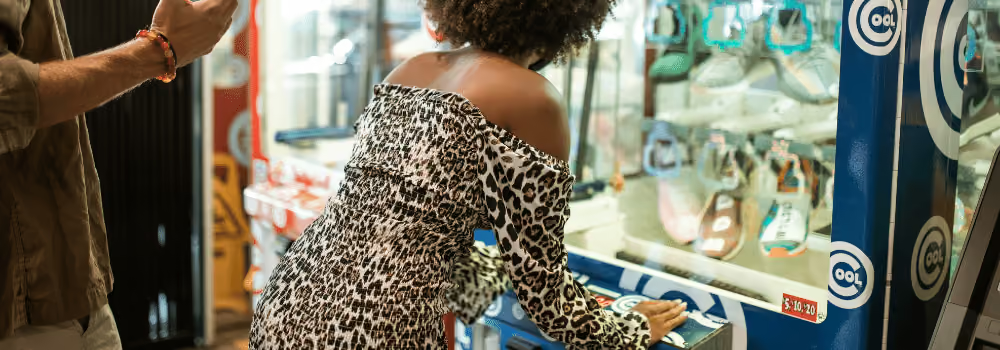















































%20-%20thumbnail.avif)





%20-%20thumbnail.avif)

%20-%20thumbnail.avif)

.avif)




%20-%20thumbnail.avif)