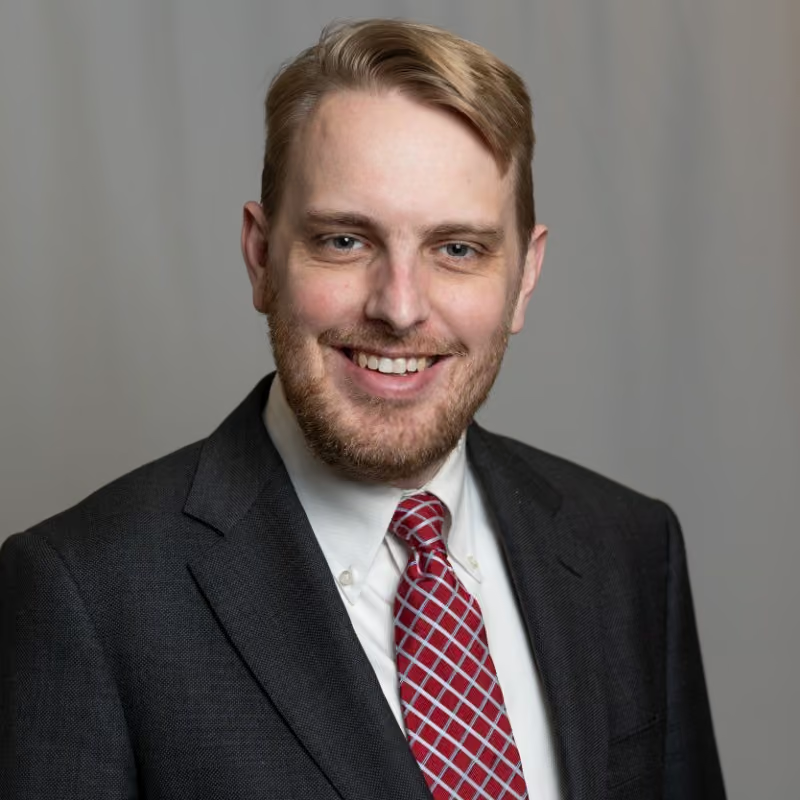
Host: I've had a number of guests on acquiring mines who own holding companies. Holdcos think the Higginses of Chenmark, Justin Turner of Traction, Trevor Boehm at Saturn V. So those guests hold cos are established. They've already made a number of acquisitions and have the portfolio going well. I caught today's guest at an interesting moment. He's under three years into only his first acquisition, but he has every intention to build a Holdco and it looks very likely to happen this year. So Andrew Hitchings, alongside his wife Marcella and third partner Max Williams has come off of two and a half years of operating a small business and really operating like in the field, getting his hands dirty. And now they're about to take the next real step to becoming a Holdco. So for those of you out there with the aspiration of building a Holdco yourselves, my conversation today with Andrew will show you what your life could look like just two or three years from now. And even more hopeful and intriguing, their first acquisition, the one whose story we covered today, a very small business, just the seller plus a single employee and less than $1 million in revenue. Now it's not so small today. Andrew and team have tripled top and bottom line these last two and a half years and we spend a lot of time on how they did that turn a first quite small acquisition into a platform company for a Holdco. This was a wide ranging and really fun interview and I'm eager to watch how Andrew, Marcella and Max develop in the years ahead. Here is Andrew Hitchings, owner of Colorado Home. Welcome to Acquiring Minds, a podcast about buying businesses. My name is Will Smith. Acquiring an existing business is an awesome opportunity for many entrepreneurs and on this podcast I talk to the people who do it. I want to share an update on the Acquisition Lab. As you know, the Lab is a highly vetted cohort based accelerator and community for people serious about buying a business. After going through the Lab's month long intensive, you have ongoing access to almost daily Q and A sessions with advisors, regular live deal reviews with Walker Deibel, author of Buy, then Build Potential Deal, team introductions, and a very active Slack group with other searchers on the path. Well, the update is that the Lab recently passed 60 businesses acquired and for well over $100 million in aggregate transaction value. Also, all members now enjoy lifetime access to the Lab because when you buy a business, it's often just the first of many and the Lab wants to support you in every deal, not just your first. Lastly, check out my recent interview with Shane Ursum Episode 105 Shane acquired a business with over $1 million in EBITDA in just six months. And he attributes a lot of his deal success to what he learned in the Lab. Check out acquisitionlab.com or email the lab's director, Chelsea Wood. Chelseieve. Andrew Hitchings, welcome to Acquiring Minds.
[3:22] Guest: Thank you, sir. Appreciate the opportunity to be here.
Host: Andrew, we have a lot of ground to cover today. By way of brief introduction, you and your wife Marcella acquired a home services business. It was quite small and only a month into Covid April 2020, you closed, I believe, but things have gone well. You have grown it a lot, and you all are on your way to more acquisitions and developing into, yes, a Holdco. So I see our conversation today as talking to somebody who's really early on the Holdco path, but with a lot of momentum. I'm catching you right as you guys look to kind of graduate from acquisition entrepreneurs to Holdco entrepreneurs. So really kind of pivotal moment in time. That's the context. Let's do some. Let's do some history on you and your partners. If you would tell us a little bit about you, Marcela and Max, please. Andrew.
Guest: Cool. Thank you for the intro. I want to pause first and just say I'm absolutely honored to be here. I started listening to your podcast not too long ago, but all of your guests are incredibly thoughtful and very genuine. In the podcast, I think you're able to expose some of the true challenges that people don't generally like to talk about, but the breadth of your guests, I think, is phenomenal. Max and I discovered your podcast before we flew to Kansas City to pick up a hybrid vehicle, because you can't find hybrids in Colorado. You have to go to Missouri to get one. And we drove it back and we listened to Acquiring Minds the entire time. And it was awesome because we just. We would listen to something about whole cos and find it really interesting. Then we'd listen to something about, you know, an H Vac business, find it really interesting. We listen to your private equity guests and so it's just been really awesome to be first. It's awesome to be on the. On the podcast, but I really just genuinely think this podcast is super helpful, so wanted to get that out there first.
Host: That is extremely humbling and flattering. I think somebody telling me they binged my content on a car trip is about the highest praise there is. So that's awesome.
Guest: Yeah, there was a little bit of Foo Fighters mixed in there somewhere, but mostly it was Acquiring Minds. So. So Our background. So my wife and I started a search back in the winter of 2019 and 2020 and bought this business by way of introduction. Marcela, my wife, she's Mexican. She had a very entrepreneurial background. She started one of the most successful cideries to date in Mexico before she, this was after, you know, a corporate job, and then she sold that and went on to GSB. And after GSB, she went to McKinsey where we met and then later eventually got married. Marcel is awesome. She kind of handles a lot of our finance and accounting elements. She's really great from a customer experience perspective, and so she brings that to the table. Max Williams is our other partner here at Olive Bridge Partners. Max is a UT undergrad. He's a chemical engineer who spent three years at McKinsey. And we met a long time ago whenever I was interviewing UT undergrads. And we really hit it off as friends. And then eventually he came and joined our team. And so Max handles all the data, he handles all the platforms. He also is running the search, for the most part for us. And just a brilliant guy as far as, you know, technical skills. And then I'm the, I'm the operator of the bunch. So I grew up in Missouri, went to West Point for undergrad, spent, spent a bunch of time in the army leading infantry and tank units, and then went to business school and then McKinsey for six years. Thoroughly enjoyed all of those experiences. But I'm just really kind of the roll up your sleeves, get deep in the ops type thing. And so that's kind of what my, my role in the, in the trio.
[7:17] Host: Okay, great. And so how did you and Marcella decide to search? You're both, you're at, both at McKinsey at the time when you make this decision.
Guest: We were, we were at McKinsey. We both left the firm at the same time. We got married, went on a seven month motorcycle honeymoon through Europe, Africa and some other places. I think part of our decision to jump into search was because we spent, we literally spent seven months living on a motorcycle with very little as far as belongings go. And we went through some hard times and we became a really awesome team. And this was shortly after we got, this was right after we got married. We came back from the honeymoon. I was looking for private equity jobs. She was, you know, still trying to figure out exactly what she wanted. And, you know, I, I talked to a few PE firms who just told me, hey, you know, you seem really good, but we probably won't put you in charge. Of a business for two or three years till you prove yourself out. That wasn't something I wanted to settle for. I only knew one searcher, to be honest. I, in business school, I never went to any of the courses. You know, the Rick and Royce book was completely foreign to me. So I called up Greg Ambrosia, who was one of my friends from the army and from hbs. And he was like, man, it's easy. Just buy a business. Just, you know, just buy one, make it better and sell it. It's pretty easy. And he's like, just read this book. Just read this book. It's, you know, Rick and Royce wrote it. It's really easy. Just read the book and buy a business. And I was like, all right, cool. Well, I didn't know that he was in the book. I think he just wanted me to read about him. I think he kind of sucked me into it and tell people who Greg Ambrosia is. Oh, so, so Greg. Greg did a traditional search right after business school. He grew citywide. It was a window washing business in Dallas and had a very successful exit. And I just remember in business school, he's like, yeah, man, people, people will invest in you to run a business. And I thought, man, we're military guys. Like, we don't know the first thing about how to run a business. And he had the, he had the confidence to go out and do it, and he did it incredibly well. I was not interested in making that leap. You know, McKinsey is a safe way to go. And so, you know, I took his lead, read the book, somehow got a call with Jim Sharp, called up Trish Higgins at Chinmark, who was a good friend of mine from, from business school as well. And it all just seemed pretty easy, you know? You know, but I mentioned it to Marcela and because she's very entrepreneurial, we just kind of decided, cool, let's, let's, let's spend some time doing that before we decide to jump back into a corporate world. So.
[9:58] Host: Great. Okay. And so at that point, you probably started really immersing yourself, having more conversations, reading maybe the other books. So, so tell me, kind of how the search unfolded and what did your search look like? Where are you living? Kind of give us a picture of the search.
Guest: Yep. So we knew pretty early that we wanted to do a self funded search. We were fortunate enough to have some funds left over from our consulting time. We'd already paid off all of our student debt. We didn't have kids, so we had a lot of flexibility. There and enough to invest in a business we thought we could wrap our arms around pretty quickly. So if there was one thing from the beginning that was very clear, it was a self funded search versus anything traditional. The search started with a super wide geography. It's like, well, we could live anywhere, right. We just came back from a motorcycle trip, we have nowhere to live. So we were living with my parents for six weeks, her parents for four weeks. We stayed in a family home for a little bit and we just kind of bounced around while we were looking. And our search started with a really wide geography and wide industry scope. I think as we got two weeks into it, we realized that's not helping at all. Narrowed it down to a handful of states. So then we went down to like six states. And then when we moved out to Colorado, because it was the only, like her parents have a place out here. It's the last place we could stay for free. We just decided we'd rather settle here in Colorado. So quickly, within a probably six weeks, narrowed down to the Denver metro area in Colorado. And then we kind of kept our eyes open and had some flexibility on industry. Right. So we primarily looked for something that was fairly ops focused just because of my background and what I enjoy. But it took us a little bit of time to narrow down to that.
Host: Well, and so you were committed to a single geography to the Denver metro. So that's pretty limiting. Although that's not unusual. A lot of searchers don't intend to move when they find that business. You know, it's funny that you had just said that the McKinsey was the safe option, Andrew, because I'm hearing a lot of adventurousness in you and Marcel's relationship. I mean, obviously the, you know, biking across two continents over seven months broke, and then deciding to search and kind of like, you know, what's the couch surfing? The two of you kind of couch surfing around and not really having a plan. So I don't know which you are. Are you actual. Are you, are you conservative or are you adventure seekers or Depends.
[12:30] Guest: Definitely adventure seekers.
Host: Okay.
Guest: Without a doubt, we, we have a very strong biased action, I would say in a lot of things. We do. I, I do. I think she, she helps to counter that a lot. But in general, we're, we're just, we're very aligned and I think, I think we're fortunate. I mean, we didn't come back from the, the motorcycle trip broke. We had some good savings. Right. That we wanted to put to you.
Host: Yeah.
Guest: But you know, we, we, I think Both of us just could not picture ourselves working for anyone ever again. And that drove a lot of that decision.
Host: Okay, all right. So you are settling in Denver and you are starting your search. It's self funded. You want something operations focused. It's what you enjoy. Tell us how you find what you found.
Guest: We only knew brokerage at that point. We do brokerages and we saw, you know, it's as easy as buying real estate. Right. The way it works now, my mind was blown at that. And so we really just built a lot of strong relationships with brokers. I think we really only searched in the Denver metro area for probably two months until we were under contract to purchase Colorado Home Cooling, which was an 18 year old business that specialized in whole house fans, attic fans, attic ventilation, and had had a very pro, like I wouldn't say super profitable, but steadily profitable history. We, we kind of landed on it, I would say probably fairly quickly because again, we weren't sitting around waiting for a unicorn. I'd had friends that were doing traditional searches who'd been looking for two years and had brought pretty decent deals to their investments, investors and couldn't get it through. Whereas we like the freedom to say, hey, this one looks good, it looks good enough to where we're going to grow it and so let's just pull the trigger on it. And so, so that's, that's kind of what it looked like. It was super short. And I think because Covid was, Covid was starting to kick in when we were under contract and we had a closing date, there was some echoes through the banker that, you know, that is possible that funding might dry up given the uncertainty in the market. So it's better to just squeeze it across the finish line before COVID really gets, gets disastrous. And so we had a pretty fast timeline and in general it was like, well, do we just buy this one, grow it through the pandemic, Learn a ton. Because we already had a feeling that if there was going to be economic impacts, then most likely the deals on the market were probably going to reduce for a while. Interest rates might go up and it might be harder to get a deal through in a year, but rather let's just buy something, grow it and go from there.
[15:16] Host: Wow, how right you were.
Guest: Hope so.
Host: So two months, a two month search, that's pretty incredible. Pretty short. And, but just so we understand kind of how educated you guys are at this point, you have business school friends. Greg, you've already mentioned, are you having lots of conversations? I mean, how are you able to educate yourself so quickly. Is it, is it, are you educating yourself that much or you basically you had a few calls and you were just kind of improvising, figuring it out as you went.
Guest: I think there was a lot of, there's a lot of improv going on to be, to be totally honest.
Host: That bias toward action there.
Guest: Yeah, yeah. And we, we chose to have a lot of conversations with brokers. We, we would, we would index more on talking to sellers as quickly as we could to try to understand the bit of the minefield that we might be walking. We actually got under contract super quickly right off the bat just to. Because the business was great, but also we knew the likelihood of it falling through was pretty high. Let's have a few at bats. Right. And so we found ourselves writing offers quite often. The other thing is we do have a good network of friends and family and advisors that we can tap on at any moment to give us advice. And we did reach out to a handful of other people beyond Greg that had been through this experience. Marcela has some family members that invest in small businesses quite often and we would reach out to them and specifically like her dad gives, gives a lot of advice to us. And so we, we, we gleaned a lot of, of guidance from them as well pretty early and we still do all the time.
Host: That's great. The. So you, you talked about that, how the business, Colorado Home Cooling was nicely profitable, an 18 year old business, but very small. Tell us about kind of the size of it and how you reacted to that. Didn't seem to be a stopper. Go ahead.
Guest: Yeah, so they were doing about 250k of SDE. You know, once you put all the add backs back into it, it had been steady, it had been right at that level for 10 years. And we bought it for a 2.6x multiple and we saw a lot of promise in the product. A few things we really liked about it was the seller was incredibly genuine. I think it's really hard to parse out what the seller is like when you're looking at some sort of sim that may have a bunch of exaggerated forecasts and things like that. What was really interesting is that this broker, rather than having to make graphs, he would just do a 30 minute video interview unedited with a seller and, and you watch this thing and it just really this. Okay, so this is the person I'm going to be dealing with. All right. That's awesome. I would really like to purchase that person's business. And the seller was very Genuine. He was tired. He'd been, you know, the main, main technician of this business for almost 20 years and he was ready to go. The deal was also attractive because there was a lot of transparency. The broker basically connected us and then stepped out of the way which was really nice and so we could ask questions very directly. The diligence had open books from the start and so we appreciated that transparency, which was really nice.
[18:57] Host: You already know that business owners are making amazing use of virtual assistants, often based in the Philippines. And while virtual assistants are helpful, virtual professionals are transformative. More Staffing is a boutique agency that hires a players in the Philippines not for task execution but for deep competency work. Think controllers, operators, supply chain managers. Moor Staffing helped an E commerce company build their entire supply chain analytics and finance team. It saved them over $400,000 and enabled them to build the in house expertise of a much larger business. Global staffing is increasingly the norm and building the muscle within your business to take advantage of it will be crucial in the years ahead. So if you're sourcing the next management hire within your business, make sure you speak with More Staffing first about the pool of capable, affordable managers they can connect you with. Check out Morenow Co. That's Morenow Co.
Guest: There was a bit of a red flag that was raised fairly early which was once the seller leaves, this has one employee. And of course there's the old adage buy a business, don't buy a job, something to that effect. And it got to the point pretty quickly that we realized we were buying a job. Yeah, but we looked at the industry, we looked at the product which is a, it's a, it's a green solution that is an alternative for air conditioning. We saw this as something that would help with you know, the climate change movement and all of these things. There wasn't a huge, you know, sophisticated competitor landscape and it was something we could do, we could wrap our minds around pretty quickly. And so I think as we got deeper into the diligence, these elements of trust in the seller, the transparency and the diligence, our ability to probably grow the business fairly quickly outweighed the drawbacks of the size, the small employee base and any of those other things that might scare people off.
[21:04] Host: Let's pick at those a little bit. Well, actually first, Andrew, more on what the business does. So what is this product and what's the pricing model? Is it a product or is it service to. So people understand more specifically.
Guest: So, so when we purchase the business, the primary product is called A whole house fan, some people call an attic fan. It's really great. In drier climates such as Colorado, you mount this fan in the ceiling, and the homeowner will open windows, turn the fan on. It pulls cool air through the windows, pressurizes the attic, and pushes the hot air out of the attic. They've been using these for a very long time because refreshes the house, but it also consumes a tenth as much energy as air conditioning. The product's actually required in California now by law for track homes. And so we saw that this could be something that Colorado would be doing eventually, and so it seemed like a really good investment. We're also right on the verge of COVID And this is a product that freshens your house. And the first thing that the CDC was saying is like, prevent viral spread, open your windows. And so, boom. Right. Right from the get go, demand skyrocketed. And so if we could harness, you know, jump on this horse and ride the horse through the COVID bump, that'd be awesome. So that's what it focused on initially two and a half years ago. Now we've grown it to also install skylights. We also a licensed electrical contractor with where we were originally a handyman with a very limited scope. We now have licensed electricians on staff, and we offer full services of electrical contracting. So we have solar companies that outsource work to us, general contractors that are building homes, municipalities. So we have like a good electrician base with a larger barrier to entry, and that's given us more of a platform to grow from.
Host: Great. Well, I want to connect, figure out how you got from point A to point B, but I still want to spend some time on point A here. So this product, the whole home fan, that's, you know, essentially you were in version one of the business. You were a reseller of this product, obviously not the manufacturer. So a reseller of a particular product, and then you would mark up the product some and then have fees for installation. Those are kind of the two revenue sources.
Guest: Okay, Correct.
Host: And just. Just getting comfortable with this business. You know, in this, you've talked about why these risks were overcome in your mind, but I do want to. They were still some significant risks, so I think we should just address them. So the key man risk, I mean, you had a single employee. What, you know, what did you and Marcela say to each other when it's like, well, what if he. What if this guy quits day one or. Or he, you know, he demands twice the amount of salary you know, 100 raise on day one. What, what. How did you, how did you get comfortable with that?
Guest: Well, this. I think part of it was the simplicity of the product and the installation. I figured I could figure it out in a few weeks if I needed to do a lot of the work that was probably you yourself would fill
[24:04] Host: in if that guy quit or whatever.
Guest: We also had the seller under a contract for four months to support and to train new employees. And so we were entering the busy season. And so under the purchase agreement, he would at least stick around through the duration of the peak season. So we at least had him to help the business through the hard times, but also to recruit more people if he needed to. Another thing we did was in the negotiations of the price, we. In order to reduce the purchase price a little bit, we agreed to, or actually we would meet the seller's asking price, but a portion of that asking price would be a retention bonus. So the actual seller price, the sales price went down a bit, but the delta there was going to be given over to our key employee as a retention bonus, and it would come from the seller as a thank you for letting me successfully transition my business. And it was kind of a little nuanced thing that we developed after. After a handful of back and forth and knowing what his intention was, again, the seller was super genuine. He wanted to make sure that his employee was taken care of and we wanted to make sure he stuck around as well. So that kind of helped. And so I think there were a few things that came into play that gave us a bit of confidence that we'd at least make it through the first four months without any significant issues.
Host: Great. That's great. That's helpful. And on the point about you and Marcelo are pretty confident that you could grow this. Obviously, it's frankly quite a small business, so it's not interesting unless you can grow it. But you also said that it basically had been steady at a quarter million dollars in Ste for 10 years. He hadn't grown it. I anticipate your answer is going to be he just wasn't kind of growth oriented. Maybe he was more of a technician or whatever. But still, you know, it would give me great pause if a business hadn't grown in. In 10 years, because you. You would hope that demand alone would just pull a business along and pull. Pull some growth out of a business, even if the leader of that business isn't very growth oriented themselves. Did that bother you guys or was it just a matter of like, no, we're going to we're really growth oriented and the seller is not. And, and it's as simple as that.
Guest: We knew that the reason why it was not growing is, was seasonality. So the, the seller was one of the key technicians. He would hire people in the spring, try to train them and, you know, hire enough talent that he would stick. He would keep around year round. But he'd basically hire a handful of people in March over, you know, overcome the busy season. And then unfortunately, he would have to let them go in like September. And so it was very clear that that was the problem to solve. And I think we underestimated the challenge of that. But it was not a demand issue. It's just that he could not hire and retain and keep people long enough to help the business grow. And so he had the key employee who'd been there forever, who'd done this for 15 years with him. And beyond that there was just not a whole lot of retention, right? There was zero retention actually. And so we saw a lot of other levers that we could pull to grow the business. But we kind of figured, well, if you can make enough, if you can grow it enough to earn enough to pay somebody and keep them around year round and say you just plan to keep one or two employees on salary as opposed to making them seasonal, then you should be able to break through the clouds on it. Right. And so we saw that as the challenge. We knew it was the challenge and we were ready to take it on.
[27:44] Host: Great. And so did you just answer the question then of how you dealt with seasonality? You would grow, you would kind of put your own elbow grease into it enough to grow the business to a point where it could afford having hiring two full time people. Was that the answer or was there
Guest: more at that time? Yeah, it was like, just make more money, right? Just, just make more money. But I think at the beginning that was it. Let's just have enough earnings to reinvest into the business, keep more technicians around and, and go from there. That was the original thesis and that was part of the solution, I think.
Host: And then last thing on, on the risks or the acquisition itself before we move on to how you've grown. So 250sde is, you know, one of the reasons that we're told not to buy, buy small is because at that point you're barely replacing a salary and yet you're taking on all this risk. So it's like, why not just, you know, W2IT at that point, but further in your case, because it's a Pair of you. So you need, you know, in, in, in theory, if you're thinking about salary replacement, you need to replace two McKinsey salaries to at least on paper look like this, this decision makes sense now. You're an entrepreneur and so you know, you, you have bigger, a bigger vision and bigger, bigger plans. But still like the argument about like needing to have some ste to at least replace the salary is even more extreme in your case because you had two salaries to replace because it's two of you searching how did you think about it? Just make more money.
Guest: No, I mean we, we honestly haven't paid ourselves much. We knew, I mean again, to go back to the setup here, we had just lived on a motorcycle for seven months. Like we've got like four pairs of clothes, right. We don't have kids, we don't have a, we don't have a mortgage. Our fixed costs are incredibly low. And it's like sure, we could, between the two of us, we can live on a hundred thousand dollars pretty easily. Right? We're just living in a small apartment. And to us, you know, if you, if your personal accounting is, is that type of picture, then it doesn't seem that bad. With the intention of a longer term payoff. I'll kind of go back to as well that I think something that Trish from Chinmark said was that they are extremely delayed gratification type of people. Right. And that is us 100% as well. Like we, we leave a ton of money, as much money as we can in the business for future investments. We know that it's going to take a long time to do that. And so as a result we can take that pay cut and be perfectly fine with it. We also, I mean we were generally very blessed in that again, no student loan debt. We'd saved up a bunch of money working for consultant consulting. And, and so we were okay with tightening the belt for a while until we could get the business up and running. Great.
[30:44] Host: Excellent. Well, the, yeah, the superpower that is being frugal and having a low kind of lifestyle nut to cover. It's, it's powerful. Not having kids too helps. And, and where did Max enter the picture?
Guest: So yeah, so Max, Max, I had known from the firm, I actually reached back out to McKinsey and said hey, you got any summer summer MBAs that are looking for an entrepreneurial, entrepreneurial experience? And Max saw a job listing where I, you know, because a lot the consulting firms, people will take some time off go to get an mba. And then in the Middle in the, in their summer in between, they don't have to go back to work for the firm. They can go do something else. And I was hoping to land one of those folks, but Max, who I knew from the business, from, from the firm, he, he came out on secondment. So he got a full year to test drive our lifestyle, our business, our pay scale, our mentality, and he just fell in love with it. And he's been crucial to the business
Host: growth and, and he's now a partner, the business.
Guest: Yes.
Host: Uhhuh. And was that always part of the vision or did it just kind of evolve that way? Your vision of bringing him on? Bringing him on initially, I mean, he
Guest: fills the biggest gap that we have that we had. And so, you know, from when I recruit, you know, I was like, man, I can't pay you much. You're going to take a massive pay cut to come work for us. But you know, there will be equity opportunities down the road. You know, you will be able to invest in future businesses once we get to that point. And he liked it, he liked the business model and he enjoyed working with us and we love working for him. It's funny, I kind of Pride myself on six years at McKinsey and I never opened Excel. He is the, he is the counterbalance to that. And so he was exactly what we needed at the time and exactly what we'll continue to need as we start to buy more stuff.
Host: So let me, let me double click on that. So a lot of what you hear in this world is that, is that the kind of Excel jockeys need to understand that when they do find that small business to buy and get in the seat, it's not going to be moving numbers around Excel all day. It's going to be a very different experience. And you keep talking about how you like, you're not an Excel jockey and you really like operations and you're, in fact, you're really drawn to it. It's what you wanted. What about it? Is it that you, that you like so much? What does your day to day look like? Like what diff. What makes you different than, than Max? And kind of what message would you have for the people out there who are more like Max looking to buy a business and less like you?
[33:19] Guest: Ah, that's a tough one. What to tell them? I, I don't know. Let me see if I can answer that in a roundabout way. I was going to mention at the beginning, it seems like a majority of your guests have an investment banking or a private equity Background and have seen deals and like purchasing a business feels comfortable to them because they've seen deals go through both from a purchase and a sale perspective. Am I off base on that?
Host: No, no, I wouldn't say a majority, but certainly there's a large contingent of people like that. For sure.
Guest: Yeah. And, and so to me, it was more like, I know I can run this business. I just have to build the muscle of learning how to buy one. And so that was the uncomfortable element of this whole experience, was understanding how to purchase a business. And so once we got past that, we're okay. I, I think Max is interesting in that, is he not. Not only is he brilliant on the keys, but he also, he has a good intuition for people. I think there are, there are individuals out there that have some overlap about how to run a business and a really good intuition. Max has that as well. And I think that anyone who is. Has spent the greater portion of their professional life purely managing spreadsheets and being on the bench should really consider, you know, when they have to go and fire somebody, how's that going to feel? Right? When, when someone quits their job and you have to go fill in their shoes, what will that. Can you do that? Right. And so I think maybe then to answer your question is for someone who wants to get into this, you know, maybe you need to find a partner that can fill that gap. You can, you can have an immense impact on the business, both from a search and an operations perspective. If that's not your skill set, but if that is unquestionably uncomfortable to you to, to be in the pocket as the manager of people, then it, you should consider your path. Right, so, so does that, does that kind of answer that?
Host: Yeah, that's great. That's great. And just a little bit on you, Andrew. So were you kind of always naturally drawn to kind of leadership roles or is this military training or.
Guest: Yeah, it's both. Back from high school. I mean, it's just always, always been a thing. So.
Host: Okay. Okay, great.
Guest: And I mean, military just reinforces it, right? You just build confidence and, and, and you put more tools in your toolkit over time. But yeah.
Host: Yeah, Excellent. Okay, let's get into how much you've grown this business and how you've grown it. So, so actually, fast forward to the end. It was a 250k SDE when you bought it. What is it today?
[36:05] Guest: 750. 750 now when you think about, when you think about it like that is what the business is earning and then we Take a lot of that cash and you know that is going to fund the next business acquisition. Right. And then also I'm paying, we're paying Max a salary so he can live. And he's almost purely looking at businesses to buy. You know, Marcella, we've had two kids since then, and so, you know, she kind of helps to buffer that. So I think our SD is a little bit, it's, it's a little bit muddy because of that element. But if you were to strip out the cost of the search, that's where you right now. Yeah. Great.
Host: So that's essentially you've tripled it in whatever, less than three years. So let's, let's, let's hear more about how you, how you've done that. You, you overcame the, the seasonality. Did, did we, did we finish on how you did that or was there more on overcoming the seasonality?
Guest: I think, I mean, you had a, you had a guest on who bought a seasonal business. I think it was an awning business.
Host: Yeah. Andrew Harmon.
Guest: Yeah. And I thought it was super interesting. And he purchased another business to be counter seasonal, which I thought was awesome. It's really interesting. And yeah, that was one of the first ones we listened to on the way back from Kansas City. But I think we dug our way out of it by taking a lot of steps to make the business not only less seasonal, but have more of a moat around it. We still see seasonal business. It's kind of funny, we still see very seasonal businesses, be it landscaping here in Colorado, there's a lot of hospitality and skiing and recreational related businesses that come across our radar. And it's funny because every time we're like, ooh, that would be a lot of fun. It turns cash. We could figure it out pretty quickly. But then we just say, nope, it's seasonal. Never mind. I mean, it's not something where we want to keep doing that. It's just that, you know, we manage to a few things that have really helped. We've looked at products that help to be counter seasonal. So as I mentioned, we had a purely a cooling element. You know, H Vac is your perfect combination. You've got heating and cooling. So it's not a seasonal business. We didn't have an H Vac license and so we couldn't do that. So we looked at other products such as skylights, sun tunnels, other things like that that helped move the needle a little bit. We kind of gave way to some elements of it where we said, cool, we know this is going to be seasonal. And so let's just recruit from seasonal sources. And that might help us buffer that peak, but unfortunately that just exacerbates the peak. And so we learned that maybe that's not going to solve the problem. I think our, the two biggest things that have helped the business to grow the time of year when it's profitable is one, you know, actually becoming licensed electrician service. Right before there's, there's tons. In small business world, there are tons of people operating out there that don't have a license that shouldn't, shouldn't be doing what they're doing. I mean, this is your handyman, Joe, who's actually doing things electrically that he shouldn't be doing. This is people who are, you know, not purchasing proper insurance to work on a residence's home to make sure that both parties are protected. There's a lot of that out there. We saw that. But we wanted to take it a step forward and hire a master electrician, hire journeyman electrician. So we were doing everything above the board and we did that pretty quickly and that helped. That opens us up to a whole world of things we can do. So, you know, to the original discussion of we need enough people that we can, you know, keep someone on staff. Sure, we could keep adding handymen, but instead it was like we realized, no, we need to hire electricians, licensed, capable people that will do the job right. And that is going to help open the aperture of the business, but also reduce the seasonality. And then the third thing I think we did to overcome seasonality was as opposed to reducing your sales staff in the off season, we re pivoted them to business development. So it's not just are we looking for someone that could do phone sales, it's like, hey, when the season starts to wane, how comfortable would you be going out and digging up business? And so we. It took us a couple of winters to figure that out. But now our Q1, while snow is on the ground, is going to turn more revenue than the previous owner had in a year. And that is from standing up a business development capability. And so again, a bit more of that delayed gratification element of let's invest time and energy in the off season to help create work in the off season. I think those were the big ways that we overcame seasonality. And we're not totally in the clear yet, but the future is looking pretty bright.
[41:20] Host: Yeah. And let me just make sure I understood here two things. First, on the Q1, snow on the ground, sales being larger than a Full year of business under the previous owner. So that's selling cooling services now for delivery in springtime.
Guest: Yep, delivery in February and March.
Host: Wow, great. And.
Guest: Okay, I'll tell you, I'll tell you how, but I don't want to. No, I'm just joking. No, we, we actually, we found a pretty good pocket in the market that we, that we have really approached full steam and it's paying off. So I think a lot of times, you know, a seasonal business relies purely upon a certain customer base as well. Right. And we looked beyond that normal customer base to, hey, who else can we sell to? Who are the decision makers for larger purchases? How can we find those rather than let's just bang our heads against the wall trying to sell to the same individual.
[42:13] Host: Okay.
Guest: And that's, that's kind of been our approach.
Host: Okay, okay. So there's some kind of secret sauce there in terms of the target market you identified, who's willing to say yes to a sale in January. Okay, but this is all still consumer business, right?
Guest: Yes.
Host: Okay. Okay. And then, and then the other thing about the hiring electricians, properly licensed electrical folks, are you then kind of evolving into an electrician business? I mean, why electrical?
Guest: It's always a need. I mean, people, you know, the United States is having a globally. We're moving to a much larger electrification focus over time. Right. You're talking solar panels, we're talking heat pumps, batteries, EV chargers. There will always be demand. And if there's one place where we can really thrive, it is providing electrical services to residences. And, and so it just, it feels strategically very good with a lot of tailwinds. But also it was kind of what we were doing already. And once you have licensed folks and you can apply for permits and you can apply for, you know, municipal contracts and stuff like that, it just really opens it up quite a bit. But hiring that first electrician or a master electrician is very expensive. And so you have to get past that threshold of earnings in order to afford that investment. You, you know, knowing that it will provide opportunities in the future. I think it's probably the same way in, in a handful of other industries, but you know, in, in residential services, you know, you've got your plumbing licenses, your H Vac licenses, and your. And your electrical licenses. And once you get one of those, then there's. There's a huge market out there.
Host: Yeah, well, but, right, but finding that, that master electrician, that's, that's what. People listening are going to be so envious that you were able to Do. And it sounds like the answer is delayed gratification, reinvesting in the business, willing to invest a lot of money in an expensive, that first expensive proper electrician hire and then just. Yeah, just paying market rate, which is higher now than it's probably ever been for an electrician. That's really what it comes down to.
Guest: Right, right. There's some, there's some ways, there's some ways to find the right person as well. But yeah, you're right, those are the key elements to kind of breaking out of that rut, if you will.
Host: And, and so is the cooling, the installation of the, the home. Sorry, what's the term again? Home fans. Home full.
Guest: Full home fans close. Well, I mean the, the industry would call it a whole house fan.
Host: Whole house fan, yep. The whole house fan. Is that becoming less and less of the business and it's more evolving into just a, just an electrical electrician business?
Guest: It's still, it's still our core because we spent so much time focusing on it and growing it. Um, and so there is still a lot of momentum and, and it's a, you know, because it is a bit of a niche offering it, it's pretty profitable. It's our most profitable element. But I think the, I imagine in three years our electrical side, just general electrical services or you know, like remodels, new home builds, stuff like that, that'll probably overtake it. I would imagine so.
[45:23] Host: And Andrew, why is it that I should probably already know the answer to this, but you'll tell me, why is it that in this world of search you. In the trades that we talk about so often, the, the three big ones, H Vac, plumbing and electrical. I hear a lot about H Vac and plumbing and I hear a lot less search activity in electrical. Why is that? Is that safety stuff or what?
Guest: It's probably. Yes, I would think so. I think the industry and the trade of electrical services, vast. It's so big and a master electrician has a lifetime of experience. And so I think it, it might be a little bit more daunting potentially. There's also the fact that. And we've look, we've looked at businesses as well where there's a master electrician involved. And from a lending perspective, it's a big deal, right, this someone else holds the license and you're going to buy this. Well, what happens if that person leaves? And it can be a deal breaker and rightfully so, because you can't operate without that person. And so I think that that's probably A pretty big part of it. A master electrician can do anything from, you know, just manage a small business like ours or they might be designing power plants. Right. And, and so I think, you know, finding that master electrician license holder who enjoys doing this type of search focused business is a little bit more rare. The other thing about the comparison with H Vac is I think H Vac has more opportunities for recurring revenue.
Host: Yeah.
Guest: You know, you can sell packages and all of that stuff. And as, as well as repairs, which I think is great. Electric, the electrical services business doesn't, from a residential perspective, doesn't have as much of an opportunity to do that.
Host: Yep, yep.
Guest: So I, I do think, I do think it's, it's probably, it's probably a harder trade to break into and manage. But then also it does lack a few elements that H Vac could be appealing.
Host: Yeah, great. Thank you for that. Okay, back to the growth story here. It's happened in less, less than three years. So we had, we had communicated a little bit offline about this. Overcoming seasonality was a big part of it. Also data, how you deal with data. I assume this is, this is Max's contribution again, but can you elaborate on that?
Guest: Yeah, I mean given time there's all kinds of things Max could talk about maybe in another episode. But you know, small businesses don't keep good data. It just doesn't exist. Right. I mean they'll say they have a CRM Zoho or something and they. It's basically a big Rolodex. Right. And the data's everywhere, it's not organized. I think when we look at businesses now we understand the, the value of unlocking data. We originally one of our big learnings was we started trying to reinvent the wheel using Google sheets and all these other things. And then we realized that maybe we don't need to build a platform. We need to find the platform that will enable operations and sales. The next layer of learning was use the platform that makes the data usable. And Max could get super technical on this. But there are major platforms out there that you can pay a lot of money for, but what it can give you is not usable data. And so finding those right platforms is really important in order to enable that. So now the, the live dashboards that we have that show a sales reps performance or an operator's performance and how much they're getting in their commissions because of quality work versus how much they're losing. It's all super live. And we originally built it from scratch. Now we're reliant upon some, some SAS programs that give us the data and then Max mixes and matches the data how he wants.
[49:16] Host: Are there any particular tools that you remember offhand that you might plug that these dashboarding tools?
Guest: Dashboarding is his dashboarding capability is now all in Google Looker. And you basically have to figure out in studio how to manipulate the data and put it into the right format. And then after that the world is your oyster. Um, I believe, I don't, I don't know, I, I'm not technical enough to do it. I just know that like there's certain things that, that are, are fundamental to figuring out. Max could probably go on and on for hours about it, but.
Host: Okay, okay, great.
Guest: That's his lane again. I, I've never opened Excel. I, I hear it's a really great tool.
Host: You and Brent, be sure. I just actually heard, heard them on a podcast talking about how Brent doesn't, it doesn't work in Excel. I assume they were joking, but maybe not. We had also talked a little bit offline about full time versus part time or fractional hires. Expound on that, please.
Guest: Yeah, I think this is super interesting. One of our biggest learnings was the value of a good marketing person. And you know, as a searcher, if you don't have a marketing background, you don't know what you don't know. Right. And a broker will tell you, oh, there's all these marketing opportunities and you really just don't know what that means. And we took the leap after a few months of hiring a full time marketing director who was experienced, was expensive and was fantastic. And while there was the option to pay a third as much for someone that's a consultant that can come in, I think that in general, because we were all consultants before, we wanted someone that we could problem solve with, someone we could, you know, poke in the eye if we needed to and get the most out of them. And so I think while expensive, that was a huge benefit to us. Now at this point it's either, you know, once a marketing person does a 12 month sprint on revamping your entire marketing strategy, they kind of run out of things to do and it's either, well, you bump down to something fractional or you've acquire another business to leverage that type of thing. Right. So I think, I think marketing is super interesting. The next one would be accounting. You know, when you buy the business, their books end and your books begin. And if they had bad accounting practices before, you don't necessarily adopt those. But you don't necessarily know if you're a searcher and you're not an accountant. You don't necessarily know the right way to do it. And so Marcela spent a lot of her time in the first months setting up the books the way we wanted. And then because she was in the business all the time, she could adjust the way we're doing accounting to make sure that it was all according to Gap, but also just makes sense from a common sense perspective. This has been a bit of an evolution for us like accounting. And so we went from Marcela running it to an outsourced third party. And then at that time, Max and I are saying, why are you looking at the books and, and giving us an up refresh on the P and L every month? We want to see this every day. And you talk to an accountant and they're like, what is that going to help you? Why do you want to look at the books every day? It's because we can. But, but in reality it's, it's like you want enough real time data. This was another thing that I learned early on from, from Trish was she, she talked a lot about how important it is to have a financial look all the time and you know, looking at your cash flows and all that. And then she, she was spot on. And so we started out internally with accounting, went fractional. Now we have a full time accountant because she makes sure the books. It alleviates a lot of it from Marcella naturally, but also she manages the books. We can look at the P and L more routinely. It helps us make better decisions in this case because we're growing job costing and understanding on larger electrical scope where the true cost overruns are happening is incredibly valuable that not many small businesses can do. And so it gives us, it really gives us those, those eyes and ears on the financials. So you know, the last one would be hr. I mean hiring, some hiring is really tough, right? You've got a, you got a general manager who's trying to grow the business, you got salespeople are trying to grow the business and then suddenly you need to hire somebody. It is, it's kind of almost a distraction in a lot of ways. If you're trying to grow the business. I think our next level, from an olive ridge central services of like full time, we might look at something HR related. So you've got a marketing person that kind of provides value throughout the year. Accounting helps and then HR to kind of hire for growth. We learned a lot about hiring and what to look for internally enough to where we could help to drive a hiring process. But it's not something we want to do because it's just. We don't have time. Right. Anyway, so it's been a bit of a journey. But if there's three functions that I would think that a. That a grow a searcher intending to grow the business should focus on. It's going to be your marketing, your accounting and then your hiring to some. To some extent.
[54:26] Host: And if you can afford it full time is. Is better than fractional.
Guest: If you can afford it.
Host: Yeah. Going back up to the marketing person. Do you. You guys. I know one of the things that she must have done was the brand change because you are no longer Colorado Home Cooling. Right. What's the name of the business now?
Guest: Colorado Home Services. We have, we have three business lines. We still have Colorado Home Cooling, Colorado Skylights and Colorado Electricians. So it all kind of those three service lines fall within the larger brand.
Host: And do you. I know this is her lane, but do you know of other things that she did any of the other marketing stuff that she did that really move the needle for you? I mean was she kind of, you know, your Google my business page sort of thing like a lot of online PPC related stuff or, or what?
Guest: So our marketing guy was a he for some reason. No, that's fine. He took, he took a little sabbatical this winter which is, which is great because you know he had had so much impact and he probably bring. Bring him back on board this spring or find you know, someone else of, of equal capability we hope. But I would say so what's interesting about this is he came from a print background, so newspapers. Right. And in this day and age of digital you have. There's enough ways to pay for views out there on TikTok and Facebook and all of that that in. In my opinion using words is just as valuable. And so SEO is a huge unlock. You know, customers will. Customers will view and value a an organic search ranking much higher than a paid search ranking. And so if you can really beef up SEO and you hire a smart person then then it's a, it's a really high payoff investment. Great.
Host: Okay. Yep, that's. It's good to know. I mean I, I recognize the value of SEO but that you. That it could be such a needle mover for you guys. And I always also just would have thought it was extremely competitive already.
Guest: It is and it kind of strategies
Host: are always kind of like easier said than done.
Guest: Yep, exactly. That was the next thing I was going to say, it's not super. I mean it was, it was a, you know, three year investment of his time. And just seeing, you know, how, and, and for him, like from a home cooling perspective, like the whole house fan perspective is pretty easy to, to take over that market. From an electrician perspective, it's much harder.
Host: Right.
Guest: Because of just the, the breadth of the competition and how much spend is going into it. Right. So you know, you got to pick your wins. Right. But, but you know, if you hire a full time marketing person, they're not just doing SEO. Right. They're building email campaigns, they're doing visuals for you, they're making videos, they're putting stuff on social media, they're handling the home shows or you know, they're supporting business development. There's a million things they can be doing. It doesn't just have to be one focus area. And all those things in aggregate can really help the business though.
[57:19] Host: Mm. Well, certainly if you weren't doing kind of any of that before, because if you were, it was just a two person business before. I imagine the seller was doing very little in the way of marketing.
Guest: Yeah. Yep. And that's, that's generally the way it is with a business that small almost always. So.
Host: Yeah. Andrew, we are, we're almost an hour in and there's still so many things I want to cover just on the operations a little bit more before we move on to other things. And really where I know people are going to be eager to hear about the Holdco vision, but just again, on, on the growth of Colorado Home Services, you told me that you focus a lot on, on three other elements that we haven't touched on. Customer journey, streamlining, sales and operations performance management. I assume the operations. Operations performance management is the data or is that something else? Again,
Guest: it's a bit of data and reporting and having performance discussions with your operators, which are not always easy discussions to have.
Host: Okay, can you tell us more?
Guest: I mean, I think in a lot of times. So for instance, when we bought the business, the seller would super nice guy, but the way he managed operations was he, he'd take notes of things that he noticed his operators weren't doing well and he'd put them on a piece of paper and then once a month he'd tape that piece of paper on the wall and have the guys sign their names that they read and acknowledged these operational changes. My style of leadership is every morning we have a discussion. We look at pictures from yesterday. We talk about what customers have Called back with some sort of issue, we drive to the root cause of that and we figure out how we never make that mistake again. And I think, you know, my operators are patient, but they get a poke in the eye every other day. But they take it well because they know that our operational culture is to constantly improve. And, you know, if you're not managing your operations to that element, then it's just going to backslide. Right. And so ops performance management. And if, and you can, you can tie performance back to compensation, then it, you know, all incentives are aligned. Right. And so managing ops in that way is. It's hard to do if you're a small business owner and you don't have help. Right. If you're too busy answering phones at the same time. But fortunately, with our trio here, it's given me the opportunity to drive some of those things home.
Host: So daily, every morning, you talk to your ops people. People who, your technicians and you. And you kind of debrief the previous day and talk about things that they could have done better.
[1:00:05] Guest: Sort of, yeah. I mean, it's something back at McKinsey, like the first thing we do when we go into an operating environment is we'd stand up at a whiteboard and we'd call it Grade the day. And so let's talk about yesterday. What went well yesterday? What could we have done better? How do we grade the day yesterday? And that's what we do every day. And so we talk about yesterday's jobs, we look at photos. If something looks off, somebody says, hey, we should have done that differently. Which is pretty rare at this point because we're pretty smooth. But having that opportunity to have an honest exchange is absolutely crucial. And then we look at the next, this day's jobs and say, hey, sales team, did you gather, like, let's look how much information you gathered. Are there still questions? Hey, sales team, next time you talk to a customer like this, ask them these three questions. That's going to make my operations smoother and help me perform better. And so there's always a backward looking discussion and a forward looking discussion all. All focused on continuous improvement.
Host: Wow, that sounds so powerful. That's great, Andrew. And then on streamlining sales and customer journey.
Guest: Realistically, there's a lot of great tools out there that can help you automate things that really flow a quote through an invoice, through, you know, through, through payment. I think, you know, a lot of these, I think there's more and more adoption of these types of tools all the time from a small Business owner's perspective, but there's certain other elements you can layer on top of it to really help the customer journey, make sure it's good. We, we, we really care a ton about our reputation and so we've got, you know, more five star reviews, a higher rating across all kinds of platforms and because we really care about that. Marcela has owned Customer Journey for the duration and she has a very personal vested interest in it. And so that's been a big focus. Streamlining sales naturally, it's just like, especially in a seasonal business, training someone to understand your product, sell your product, is very tough. Instead, Max just built an app for it, which is kind of nice. So we can kind of put somebody in the hot seat and we. Within a week, they're almost as good as someone who's been around for a year. Especially in the seasonal business when you may have some turnover, having those sort of programs in space, in place as opposed to, you know, just a big fat training manual is pretty nice.
Host: But wait, Andrew, what is this magical app that Max built? Is it like a series of videos or.
Guest: No, no, it's, it's in Excel. It's a sales journey built in Google Sheets.
Host: Wow. Okay. Okay.
Guest: With a series of clicks and inputs and outputs that basically, you know, with a, with a bit of a script and it works pretty darn well.
Host: Okay, okay. And so that, that kind of guides the salesperson through like, objection handling and the flow of a conversation. Interesting. Okay.
Guest: Tech specs all at their fingertips and all that good stuff.
Host: Okay. Okay. So it's kind of like a native kind of app built on Google Sheets for the salespeople to, to really streamline their, their process, like you said. Great.
[1:03:08] Guest: Really cool.
Host: Wow. It really does sound like you guys really, all the three of you complement each other so well. Okay,
Guest: the. Any where do you want to go next? Will we. Yeah, we got, we have a whole list of other things we're supposed to talk about.
Host: I know we're about halfway through it. Well, we did what this, this last bullet point was a big one. So it's, things are going to move a little faster, but yeah, we might go a little long here, Andrew, so I hope you're ready for it and I hope the audience is too. So how about some mistakes? Let's hear any, any, any bad memories that you're like, in retrospect, you're like, ah, man, boy, did we screw that up
Guest: first. First one I would say is we, we learned to hire for character, not experience. So hiring someone is less about do they have phone sales experience or do they have, you know, X, Y, do they, do they know what our product is? It's more about is this person thorough, is this person reliable, do they have a power of persuasion? And so if you hire for somebody for character traits as opposed to experiences, it will create much better results from day one. So I think that was a pretty big learning through mistakes. I think another one is when you're running a small business, you are constantly assessing where your time is best spent.
Host: Yep.
Guest: And I spent the first 18 months in attics installing with my guys climbing on roofs, cutting holes in roofs, installing ventilation, putting wires together, making Home Depot runs when we needed stuff. This was a byproduct of the nature of a small business. It's also exacerbated by my military upbringing where it's like, you would never send a soldier through a door if you wouldn't go through that door yourself. Right. And you don't criticize a soldier on how he's cleaning his weapon if you can't clean it better. And so I think some of it's ingrained, but then some of it was the nature of a small business. And so there comes a point in which I just have to start thinking, hey, my. But my time is better off thinking about the strategic stuff and the growth stuff as opposed to being in the trenches with my guys.
Host: Yeah.
Guest: And, and, and you know, part of it's driven by you got to make money in the peak season. Part of it's driven by my tendency to just jump right in. That was a pretty big, that was a pretty big lesson, I would say. And then I, I would think that the third one is going to be around just reinventing stuff. I mean, like, we spent a lot of time in Google suites and just all kinds of things saying, well, if we just make it perfect, like we need the perfect amount of flexibility. If we want the customer journey to look like this, we have to build it ourselves. We can hire somebody in the Philippines that can code this and we can do it. Or it's just like, meh, the 80% solution is still going to be twice as good as what our competitors are offering. So let's just go with the 80% solution. And so I think our third learning was a little bit around, like making certain trade offs to various elements of the business that would give us the returns that we need without overcomplicating things. Because when you put three McKinsey people in charge of a small business like this, it can get very complicated very fast.
[1:06:37] Host: By the way, I wanted to call out the fact that when you guys were talking about your fractional hires or keeping them full time and you said, you know, three McKinsey people, we, we didn't want consultants because we, and you implied like we'd been consultants. So, I mean, it's a pretty, that's a, it's a pretty funny thing for McKinsey consultants to be like, yeah, we'll, we'll skip the consultants. I mean, you guys are supposed to be the, the biggest believers.
Guest: It, it is what it is. I mean, yeah, once you've seen how the sausage is made, you know, you don't always eat the sausage, but we still respect the industry 100%. We all absolutely loved our experiences there. It's just that we have a different view on things now
Host: that you're fine.
Guest: Yeah.
Host: And also kind of funny, Andrew, that you know, many people, again, if they're coming from a comfortable Excel kind of background or any sort of corporate white collary background, which is going to be most people listening, they're, you know, they're going to be very hesitant to get in the trenches with the team. They'll, they'll do it, but they certainly won't dive in like you did. So in any way, it's just, it's the opposite of what I usually hear, that you actually had to decide to do that less rather than more. You had to decide to go into the field less rather than more because you were really drawn to it and comfortable there.
Guest: Yeah. I mean, Marcela kind of liked it though, because like every summer I'd lose 20 pounds and like come off of a roofer out of an attic and be super ripped. And it was like awesome. And now I'm too far away from it. I might just get back on that weight loss plan.
Host: Okay. Speaking of Marcella, so anything you want to say about doing this with your, with your wife?
Guest: You know, I think it can really, I could imagine it ending really poorly. We're fortunate. I think as I mentioned the honeymoon, we went through some, you know, hard, hot, sweaty days in Namibia and just like learn to work through that. And I think we had a pretty good similar baseline of pain tolerance, if you will, and discomfort. And I think that helped a ton. Some of the pros about this type of lifestyle of searching with a spouse is that she understands the business. And so if I come home and have had a bad day, she gets it. She understands, you know, there's no question about it. And I, I don't even have to talk about It I can just tell her this is bothering me and she gets it right because she's been here.
[1:09:18] Host: Yeah.
Guest: I think the other advantage that we have is she really enjoys it. I mean, she likes running a small business. She likes looking for more. She likes that range of experiences and needs. And so we really understand one another. In that case, the drawbacks of both searching and operating in business is, me personally, I think about business all the time. I mean, like, all the time, man, like you wouldn't believe. And when the business is your baby, you know, I wouldn't even think about this, but, like, whenever she got pregnant for the first time, she said, you take care of your baby, I'm going to take care of our baby. And we kind of bifurcated roles at that point, and which was really helpful, I think, because having the kids gave us a lot more balance. And so I think we, you know, while she's still very much involved, I think that's kind of been a good, good way to kind of break. Break lanes temporarily. And now she's starting to get more and more involved. I think about business all the time. It can definitely, like, consume a marriage. If you're searching with your spouse, it's like, what do you talk about at dinner? The same thing that you talk about at work. And it's just kind of like, can be all consuming. So there's some, some drawbacks there.
Host: Yeah.
Guest: Some corrections that we've made. You had asked me about that.
Host: We.
Guest: We now have, like, dedicated family vacations. I think the first time we tried it, I was still on the phone all the time and taking sales calls. And now it's to the point with a good general manager, I can, I can unplug, which has really helped. And then, you know, at one point, I don't know when it was, but at some point when we'd have a discussion or a disagreement about work, she would just say, well, you're the CEO. What do you want to do? And I think her taking that step and saying, indre, you're going to do what you want and you're there more often. So while I have an opinion, you're going to make the decision kind of helped to alleviate any of those tensions about whose role is it. But then on the, on the flip side, you know, as she and Max are looking for businesses, a lot of times it's like you guys make the decision on if you want to continue with this. I'm just here to help run the business whenever you buy it, you know. And so I think that we've kind of really found our own lanes in, in what we really enjoy and where we want to spend our time. So it, it's been a journey, I think that we, we're really fortunate to find one another and have a lot of the same values and the same perspectives and, and by owning and running a business together, it's really helped a ton. But there has been a little bit of, you know, repositioning and, and refiguring out roles and things like that which has, has helped us keep it sustainable at this point. So.
[1:12:02] Host: And you have one child now or two?
Guest: We have a two, two and a half year old and a newborn. And you know, and Marcel, I can't come back to like in our, in our partnership, each of us really have significantly different strengths and we really balance each other out. And you know, it's good to always have that, you know, even as a spouse or a business partner when, when you've got a certain opinion to, to be able to bounce it off your, your team and get a good, honest response. It's, it's invaluable, you know, so totally.
Host: Anyway, you know, Andrew, this is not to take away from the growth that you've seen. It's, it's tremendous growth in, in these last less than three years. But I, I don't want to, I don't want to understate how much blood, sweat and tears you put into it. I mean, I'm hearing you, you know, there's all this evidence all over the place of how, I mean, you, you've, you've sacrificed financially because you guys keep reinvesting into the business with making these, these more expensive hires than somebody else might opt to do. You were taking sales calls on family vacations. You were out in the trenches with your guys working in the field hard. So, you know, this isn't like, oh, you know, pull pulled the right levers. I'm so clever. Like grow 3x in 3 years. It was like, yeah, there's blood, sweat and tears here. Is that a fair characterization? Do you see it the same way?
Guest: 100%.
Host: Yeah.
Guest: I'm tired. It's a tiring role and doesn't mean I won't keep going with the same amount of energy and vigor. But yeah, it's hard. It's been a journey.
Host: So on, on that you. We talked about on our pre call about how hard this is, how hard running a business is and I'm recalling what Greg Ambrosia told you, like, you know, just go buy business, you know, grow it Sell it. You know, it's straightforward, it's easy practically. It sounds like was the, was the tenor of his message to you. It sure doesn't sound like it's easy. And you just said how tired you are. But you also say that like what, it's straightforward, you like it. What? Just kind of talk to me about kind of the emotions and in this path and how hard or not it is. Like respond however you want.
Guest: Cool. I love questions that go like that. No, I, I had to think about this one a little bit more because I, I think, I think that when you purchase a business of this size that has been profitable for a long period of time, the bones are there. You just gotta put meat on the bones. I mean, so running a business from that perspective, continuing profitability is not that hard. Barring some sort of weird externality that was completely unforeseen. I don't think it's that hard. You can make small changes that have a big impact. You implement a new CRM, you tweak the SEO, you rebuild the incentive structure, you can change some vendors. It's all those typical layers, right? And when you're in a small business, it's already been profitable. It's not that hard to do those things. What could be hard and is, you know, if you have investors that are telling you to do it one way and you're on the, you know, in the trenches and you see it some other way, then I think that could create some friction and challenges which we don't have. I think it's also hard in that you're wearing all hats. I mean, there's a tremendous amount of growth that has to occur when a business is this small to understand all kinds of elements and functions. And so that is hard to learn that fast. But in general, if you buy a business that's been profitable, I think most searchers out there are quite qualified that they're not going to break it. And so in that sense it's not that bad. Which is why we're going back to the well and continuing to look for other good opportunities.
[1:16:09] Host: Perfect segue. So let's talk about that. Let's talk about, you know, building a Holdco is, is going to be sexier to people than, than the day to day grind of operations. Of course, where the, the real magic happens is, is the operations. But talk to us now about what this vision is and. Yeah, yeah, what's so, I mean we've,
Guest: we've kind of got some great, we've got some great capabilities for central Services. I've listened to a lot of your podcasts, probably not all of them. I hear of opportunities where there's, you know, and you'll meet groups that will invest and help you fund a deal. There's groups that will help you get the deal done. You know, if you just want to, you know, help with mentorship through that. I've not heard as many that will help support post close, but it's more of like an investment to them and the searcher will figure it out. Our whole co model is, you know, we, we will own and operate ourselves and if, if, if we can find a good deal that is, you know, cash flow positive and has a great outlook, we will purchase and continue to operate that for the long term. There's some tax benefits to holding businesses for a long term. There is stability in that. You know, long term wealth creation for holding businesses for a long time is, is definitely attractive to us. But our whole co model is don't look for something sexy, you know, kind of similar to Chinmark. Look for cash flow positive, plan to own it for a very long time, hold as much of the equity, if not all of it all the time. Make the decisions as you see fit for the good of the business, the customers and the employees and then, you know, just kind of manage them all in, in tandem. We, we're pretty confident that we've got a, you know, potentially a couple deals that are on the table right now that could close within the next few months. You know, we're actually staggered in different, in different timelines, but Max is keeping the pipeline fresh and you know, we'll see where it goes. So.
[1:18:22] Host: And one of the questions that I always ask a Holdco operator is why a Holdco model where you're acquiring disparate businesses rather than investing all of your energy in, if you're drawn to acquisition, investing all of your acquisition energy in buying more of the same type of business and building a single enterprise that's just larger. But in home services,
Guest: You know, I think that if you do, if you've got a niche product, it's better to just earn market share as opposed to buy market share. You know, delayed gratification, right? It's a knife fight. We're just going to bleed them out and it's cheaper that way in my opinion. And there's a lot of learnings along the way to make the business better. You know, you could purchase something and inherit a bunch of issues, right? There's risk involved in that. Whereas if you've built a culture in your core business, you know, you can grow for this is for like, you know, for grow versus acquire something in the same space. So I think, I think that's why we would probably not directly look at bolting on something just like this. The other reason why is. I know, I think diversification is good. I think you've had a guest on that's mentioned that, you know, your portfolio earnings are going to be better with diversification by, by nature. And so we view it that way. But I think we're also to the point where we like new challenges. You know, we could rinse and repeat in a very similar business, which might bring us, you know, some earnings, but maybe we'd enjoy running another business that's not quite going to have as high earnings. But you know, you know, Marcel, I always tell Marcel we should just start up a bunch of froyo restaurants or whatever. Anyway, I'm just joking. But, but, but I mean something totally different could create, can create a new, a new reinvigorate us for, for a new challenge. Right. And so I think we, we also approach it that way.
Host: Yeah. And I, I think that's a really important point because sometimes we are always so focused on kind of the financially, what's the most prudent decision or prudent path. And you got to just also pay attention to what interests you, you know, because, you know, this is your life after all, and you're meant to enjoy it
Guest: 100%. I, you're spot on. It's like you could make X and hate your life. You could make one point. You know, you can make 0.8x and still be just fine and really love what you're doing. Yeah, right. And we look for opportunities that have cash flow that we would love to run and really grow and enjoy being part of that type of business. And that's just way more rewarding than, you know, overthinking the exit value in five years. Right. And that, that's, that drives a lot of our decision making.
[1:21:12] Host: I love that. That really resonates with me. Okay, one more question. Unless you're going to tell me I've forgotten to mention something from our long, our long list. Obviously, one of the biggest bottlenecks in building a Holdco other than deal flow itself is the operators who are going to run these, these businesses. So you have, how, how do you, how do you address that issue? What's the situation in Colorado Home Services now and how do you, you know, what's your formula for looking forward to.
Guest: We're short on time. But, yeah, I might take a little bit on this one. So. So at Colorado Home Services, we needed to find somebody that replaces me as a general manager, and that's a little bit hard to do. And I think we kind of looked back and thought, okay, what is at a core, what are all the capabilities that this person needs? And what was really interesting when I think about hiring for character versus experience, is we found someone from the fitness industry, someone who had managed 19 gyms. And I at first was like, what does this guy know about electrical systems? Nothing. But when you run 19 gyms in the fitness industry, like, you have to learn how to hire and fire people and take ownership of that. Like, if someone calls in sick and they're supposed to teach a fitness class, who's doing it? The general manager. Right. And so that person has an incredible amount of ownership and accountability to themselves and the business, but also is, like, in the trenches every day. And so we found somebody who can do that. And Max Marcella and I are purely enablers for that guy to manage the growth. And so, you know, we strapped him onto this bull and he's riding it just fine. And it's, It's. It's been awesome. And so having a good general manager has been really great. And I think that that is the challenge for the next one. And, and depending upon the situation at the next one, maybe they don't need a general manager. Maybe they just have some elements that some certain unlocks. If Max, Marcela or I stood in for six months to give the business some better growth, we're happy to do that. Or maybe we promote someone internally, I think we would play that all by ear. But we also think that there's probably a population of searchers out there that maybe are really motivated to buy a business, but they don't want to do it alone. I actually talked to a guy the other day who gave up his search, and he said, I realized at one point I could buy a business with 18 technicians. And who was I going to talk to for, like, you know, you know, who's. Who's going to be, you know, who's going to be my problem solver with me?
[1:24:00] Host: Yeah.
Guest: And I was like, dude, that's what we do. I couldn't have done this without Max and Marcela. If I didn't have a someone that I thought is a 100% intellectual peer, I'd be super lonely. Right. And so it's been. It's been really nice. And so I think there's a population of Maybe your listeners, but people who aren't quite ready to take that dive, maybe they're a little bit worried about support post close on various functions and various, you know, growth, growth methodologies. And so we will probably look to that pool of people if and when we should need someone like that to really own and grow a P L. And so I think there's probably some amazing people listening to your podcast right now who have tons of potential and we're gonna, we're gonna keep an eye out for them, so.
Host: Well, I'm sure you're well aware of Chen Mark's program.
Guest: Internal.
Host: Yeah, yeah, yeah, the internal program. Yeah.
Guest: So they have, they have a lot more scale for us. I mean they're what, like nine businesses now? So their ability to, to move and repos is much better than ours. I would love to have be that established as they are, but at this point we don't have that liberty. But I'm sure that program's awesome and very well run. Maybe we'll get there someday.
Host: Well, the loneliness thing, it's not that person looking forward into a potential CEO role for themselves and seeing loneliness, they weren't wrong. That's a theme that comes up time and again, including Andrew Harbin, the awning business guy that you mentioned earlier. That was one of his big call call outs for his experiences as CEO. Now Andrew, did I, did I forget anything?
Guest: I think there's a couple things in there, but to be honest, we covered a lot of ground and I apologize for my ramblings on occasion but hopefully this is great.
Host: This is really great. Well, I foresee having an excuse to have you back on later this year.
Guest: I'll bring my, I'll bring my, I'll bring my buddies with me with Maxim Orson this time maybe they can do more of the talking.
Host: Cool. Cool. And, and we'll, and we'll probably talk even more Holdco at the time, so we'll see how that unfolds. But thank you very much for coming on. This has been a really fun conversation, Andrew, and really exciting to see you kind of just at this. You're already successful with one acquisition, but just about to move into Holdco land is really cool. So it'll be really fun to revisit this later this year. So. Sounds great, we'll talk then. Thanks a lot, Andrew.
Guest: Thanks.
Host: Will.




























































%20-%20thumbnail.avif)





%20-%20thumbnail.avif)


%20-%20thumbnail.avif)

.avif)




%20-%20thumbnail.avif)