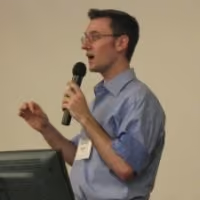
Host: For today's guest, Andrew Sieve, buying a business was the way out of a dark few years. The arrival of COVID led to a cascade of bad events in Andrew's business, city and family. It all culminated in the unraveling of both his professional and personal lives. He struggled badly for two years. Well, he recently became owner operator of a neighborhood restaurant, the type of place that's been there for years and years that everybody in town knows. Andrew's life is very much back on the right track. Redeemed you might say. And this whole adventure started thanks to an offhand teasing comment he made to the proprietor when he was dining at the restaurant. It's a wonderful story and you're going to learn something about how to buy a restaurant business, what to do, and more importantly, what not to do. But see if you agree with me that the biggest takeaway from Andrew's story is the power of a single comment. How just raising your hand can sometimes unlock life changing opportunity. Here is Andrew Sieve. Well welcome to Acquiring Minds, a podcast about buying businesses. My name is Will Smith. Acquiring an existing business is an awesome opportunity for many entrepreneurs and on this podcast I talk to the people who do it. You already know that business owners are making amazing use of virtual assistants, often based in the Philippines. And while virtual assistants are helpful, virtual professionals are transformative. More Staffing is a boutique agency that hires a players in the Philippines not for task execution but for deep competency work. Think controllers, operators, supply chain managers. Moore Staffing helped an e commerce company build their entire supply chain analytics and finance team. It saved them over $400,000 and enabled them to build the in house expertise of a much larger business. Global staffing is increasingly the norm and building the muscle within your business to take advantage of it will be crucial in the years ahead. So if you're sourcing the next management hire within your business, make sure you speak with Moor Staffing first about the pool of capable affordable managers they can connect you with. Check out Morenow Co. That's Morenow Co. Andrew Sieve. Welcome to Acquiring Minds.
Guest: Hi Will, it's good to be here.
Host: Thanks Andrew. We were connected by my cousin Brandon who said to me, will, I have a good friend who's got a remarkable story that kind of centers around buying a business. He was like going through a real rough patch in his life and now is flourishing as the owner operator of a local business, kind of a local institution type business. And it was really buying that business that kind of turned things around for Andrew. You should talk so we did. So last week I heard this remarkable story, and thank you, Andrew, for coming on Acquiring Minds to share it with the audience.
[3:25] Guest: Thanks, Will. I appreciate those words. Yeah, it's an interesting story, for sure. I'm glad you thought it was a fit for your show. Happy to be here. This would be good.
Host: Great. Well, yeah, we're going to, we're going to get right into it and. And we're going to learn about the restaurant business. It was a restaurant that you acquired, and that's a. That's a common business type that people see for sale but don't often act on because it's a notoriously hard business. And so we're going to get into that as well. So start us off, Andrew, with a little bit of background on you. Go. Go ahead.
Guest: Yeah. So I grew up in Minnesota, actually, in a smaller resort town in, like, west Central Minnesota. My father and my uncle ran a large restaurant in a smaller town, sort of at the heart of things, and grew up with a bunch of brothers, a bunch of cousins, all guys. We were raised in the business. So I'm 40 years old. I say I have 30 years in the industry. I think that's pretty accurate because when you're. We have a family in the restaurant business, you guys, you know, you live it and it's. It's kind of a constant thing. So I loved it. I love growing up in it. I think it made a huge impact on my DNA, basically, from a young kid. And once I graduated high school, went off to college, I said, well, I won't be working in restaurants anymore. That was fun. And little do I know, 20 years later, I'm still in the business in two different iterations and couldn't get away from it. So, yeah, that's where I grew up. Went to college at St. John's University, also in Minnesota, and did a couple of things outside of college. I moved to San Francisco, worked for AmeriCorps for one year in the city of San Francisco trying to teach. Didn't do that very well. And then took a stint at Corporate America with Wells Fargo. And it just happened to be in the time of the recession. So I got to witness that from behind a banker's desk and realize that that's not a fit for me.
Host: And from within the belly of the beast. Right. Wells was one of the kind of the banks that was causing all the mayhem.
Guest: Absolutely. Yeah. Pretty much at the center of the whole scandal. And I just really didn't like the way I felt when I was working. And I, you Know, at the time, probably didn't see it, but should have taken it as a sign that you're doing the wrong thing, you know, internally. It's against the grain. You know, once an entrepreneur or knowing family business like I do, that was the right fit. And I was trying to do something else. Same with the teaching. So I got out of that, started working for a restaurant, came up with an idea, said, hey, I want to run a restaurant. This is what feels right and natural. But it was the midst of the recession. Talked to my dad, he said, why don't you start looking for businesses that might be for sale? So I spent a couple years looking all over Minneapolis, looking at all the different commercial real estate that was for sale or for lease. And then I got turned on to some of the business websites that sell businesses that are existing and kind of looked at a Jimmy John's or two and thought, you know, but I have a concept. I have an idea drawing from my upbringing that I could implement into this market. So I looked at restaurants that were up and running and had equipment in them that were for sale. And that kind of brings me to my first opportunity in the Minneapolis area.
[6:26] Host: And the idea was that you would buy an existing restaurant but change the concept. So you'd inherit, hopefully, a customer base, but also equipment and obviously the lease and the location, but that you would really transform it into your concept and.
Guest: Absolutely. And that is kind of a funny thing. I always. I didn't really. What I was buying was basically an existing client base, also some of the FF&E, the furniture, fixtures, and equipment. But yeah, you know, if you're. If you buy a family comfort food restaurant and change it into a hot dog stand, it's really hard to compare those numbers at the end of the day, so.
Host: Exactly.
Guest: Buying that business was kind of a weird. I mean, I was only 28 years old, and I'd never done it before, so I was trying to get my head around the angle. But in hindsight, you know, our concept was similar enough to what existed that there was kind of a seamless transition. And we kind of captured the neighborhood audience in the same way that they had been going, but they enjoyed what we were doing, you know, very, very much so.
Host: Anyway. And so. So tell us about your now restaurant business and. And your partnership with your brother, I believe, as well. Correct?
Guest: Sure. Yeah. So I had this concept, maybe 2009, this idea, and pursued it. You know, looking at all the real estate, about 2010, about a month before the deal was done, my brother was moving Home from Chicago because his deal out there was finishing up. And he said, let me join you in this venture. And so, you know, I witnessed growing up, my dad and my uncle having disagreements in the business, as any owners and operators of a business would have, but family members and brothers as well makes that a tough combination. And, you know, maybe hindsight vision is 2020, and I maybe should have seen that as a bad idea, but I saw it as a good idea. We were very close. We went to college together. I used to follow him around to his buddy's house when I was a kid. So this is, of course, going to work. And it did. You know, it did work for about 10 years. We were very, very successful at that first restaurant. We had a great product and awesome staff, great location. And, you know, it was kind of like cheers. I always wanted to.
Host: For people who know Minneapolis, this was In Minneapolis or St. Paul, this.
Guest: It was in Minneapolis, in the neighborhood of Northeast, actually. Kind of a hipster community getting.
Host: And so you guys had it for 10 years. And the concept was what.
Guest: It was basically named after my grandmother who started us in the family business. So I was technically a third generation. So I kind of thought I tip my cap back to the story of how we all arrived in the business and where we were. So I named it after her. And then I served a higher level of comfort food towards the end of the recession that we grew up eating this hot beef sandwiches and brisket, hashes, biscuits and gravy, all the warm, fuzzy feeling food that people have been ordering for a hundred years in this country. You know, I thought if it was in style in the 60s and the 80s and the 2000s, it'll probably work here, too. And it did. It did. So you guys, by the way, just a small, small little restaurant.
[9:41] Host: How many seats did you say?
Guest: About 60.
Host: 60? Yeah. And. And so that's considered pretty small by restaurant standards.
Guest: It is. You know, I learned a lesson working in a restaurant during the recession and then talking to another owner. When you have a big restaurant and there's not a lot of people in it, it feels very unwelcoming. It's not a fun place to be. And when you're in a small restaurant that's full of people and you have to wait to get a seat, there's an excitement in that air, in that environment, and I prefer that. And so we base the concept on have a little place that a lot of people want to go to and then have it be full all the time, and we should make some money.
Host: And. And make money. You did. So it was a successful concept. Like a lot of your ideas and your thesis, if you will, around this. Around this startup, restaurant, startup panned out.
Guest: They did, actually. We. We had the. You know, when you're doing a business deal, usually the seller of the business hires a broker, and there was a broker involved. Didn't do much on our side, but we got to look at the numbers, tax returns, panels from the previous owners, and thought, you know, if we could provide a similar or better product than they were serving in the way that we know how these numbers should work out, and, in fact, we could probably beat these numbers. And I think by the end of the second year, we had almost doubled the business.
Host: Wow. Awesome. That's great. Especially considering that you changed everything up. Like, you worry about turning off existing customers, but it sounds like you doubled existing customers.
Guest: We did, yeah.
Host: And just so the audience is clear, this is not the store. This is not the main story. This is a previous story of acquiring a small restaurant. So I. Because the way I introduce things, I think people might be a little confused. Okay, so your 10 years of success with this. You're partnered with your brother, your co owner. We're what, 20, 18, 19 now?
Guest: Yeah, late 2019.
Host: I had then what.
Guest: I had just gotten married in September, and I'd been. You know, my brother had had a family, and I wanted the partnership to feel different than it had felt for the 10 years we had ran the place. I mean, we got along well enough to operate the business, but it was a little dysfunctional, and some would maybe use the word toxic. And that's not to throw anyone under the bus. It always takes two to tango. We all bring what we bring to the table. But I had decided that I wanted to kind of call him on how the partnership was going and change. It turns out he wasn't very receptive to that and said, you know, I think the partnership should be over. Maybe I'll buy you out. And I was pretty shocked by that. You know, like I said, I'd just been married three months before and didn't see my life changing like that. And about a week later, Covid hit, and all conversations about selling out were off. You know, survival mode changed the entire way that we ran businesses. And by this point, that's kind of like saying, hey, I want a divorce, but will you sleep over at my house? So I didn't really get to work at the restaurant during those times. My brother said, I'll run it and get us through this. And when we're at the end of it. We'll do a deal. And it took two years. It took two years. And that was a long time to wait with a lot of uncertainty.
[13:09] Host: But meanwhile, Covid. So Covid is unfolding.
Guest: Yeah.
Host: And in your personal life, things are also happening in your marriage. And then on top of it, of course, George Floyd occurs in your. In your city.
Guest: Correct.
Host: So how is all that. So tell. There's more going on.
Guest: Tell us about that stuff. I was married to a journalist who, you know, 24 new, 24. 7 news cycle is difficult to be involved in and stressful. And our city under the pandemic, I think it was. I don't know. I'll misquote history here. April May, it's all a blur to me, but George Floyd was killed in the streets in a. In a neighborhood not far from ours, and the city just, you know, went up in flames. It was. There was so much tension and so much stress. And, yeah, my home life got rocky, you know, and we. You know, I guess I told you this in our previous conversation. It. It hit home so close that George Floyd's girlfriend, who testified at his trial, was a regular at our restaurant on a weekly basis.
Host: Wow.
Guest: So we were in the thick of it. And, you know, I. Not to get into too many dirty details, but it was. It was hard to keep the nose above water in all those areas with all that change, and my wife and I. My ex wife, and my. The stress kind of boiled over, and she took off, and I decided to go back out, and I relapsed on alcohol. I'd been sober for over four years and had stints over the last 10 where I'd been in recovery and trying to work on myself. And, you know, the world was falling apart, and I felt desperate, and I went out and medicated myself the way that people like me do. And that's. That's not a fun thing to admit to the world, but it happened, and it's real. And we tried to make it work a few months later, and it didn't. And then at that point, I was really, really low. Said, I don't want to be married anymore. And so I lost my business. I lost my partnership. I lost my sense of purpose. The pandemic's happening, tension everywhere, and now I don't have a partner at home. So I was pretty desperate. And I ended up. Ended up having a little bit of a mental break. And I went away for a little while to a treatment center for about 28 days. And I Got out and my wife had left. She had taken everything out of the house that was hers and basically said in a text message, I don't want to be married anymore. Let's not talk about it, let's just be done with it. So yeah, that was tough. Those were dark, unbelievably brutal. Yep. Yeah. And then, you know, just fearing how that was going to go in the process. I had just this lightning bolt moment, I guess like the lightning bolt that told me the first time that I should start a restaurant. It just came out of nowhere and it felt right. I had the idea that I should just sell my house. It was three blocks away from the restaurant in the same neighborhood and I couldn't go there. I didn't want to show my face. So I said, I'll just sell my house. I'll eventually get my business sold to my brother and I'm going to move somewhere that I can start over. And I think I was 39 years old, 38. Sold my house, sold most of my personal belongings, rented a U Haul, threw my dog in the truck, drove out to a little town in Colorado that I'd never been to before. I didn't know a person out here, not one single person, and didn't have any job prospects. Rented an apartment and said, we'll just figure it out.
[16:47] Host: Wow. And was that an invigorating moment or was it a sad moment or a desperate moment or all of the above?
Guest: Oh, all of the above for sure. I mean, so bittersweet. I knew I was moving away from my family. We all lived in a few block radius in Minneapolis and got together for everyone's birthday. I knew that I was going to be extracting myself from the situation. But it's what I had to do to be okay for me, you know, I couldn't do it for anybody else. And so yeah, you know, but coming out here, driving across the Nebraska plains and the foothills come into view, it was exciting. And one of my older brothers came with me too. He said, you're not going to move out there by yourself. I'm going to drive out there with you and helped you get adjusted, which was so cool. Yeah. So I landed here and said, okay, well I'm semi retired. Not permanently. I got a little bit of time, but not all the time, so I better figure something out.
Host: August Felker is a two time successful searcher. First with a traditional search fund. The second time around, he did a self funded search. Today August runs Oberle Risk Strategies, an insurance firm with a dedicated practice group for searchers and acquisition entrepreneurs like you. If you've got a business under loi, Oberle will provide complimentary due diligence on that business's insurance and benefits program. A great no risk way to get to know August and team. They love helping searchers. They've worked with hundreds. Oberle is a specialty insurance brokerage for searchers. By a former searcher, check out oberle-risk.com O B E R L E D risk.com link in the show notes and give us just a sense of your financial picture at the time. You have a little bit of home equity that you got from selling the house, right?
[18:42] Guest: Yeah, I actually signed my first house up. I bought in 2012. I signed up for a 15 year mortgage because I'd been in the banking industry and said if I'm making a higher income and that little bit of, you know, this was when interest rates were 2.79 on a 15 year, so why not? It's not that much more money. And I ended up paying down most of my house in the course of about nine years, which was cool. So I had a lot of equity and then the values of the homes in my neighborhood and I think our restaurant had a lot to do with it. I didn't say that. Our customers say that. The realtors said that house prices went way up. So I was, I had a really good first experience of home buying and I own the house outright so I got to keep the proceeds as things kind of divvied up. So that was nice. And then I knew I was, I was always responsible with my savings. I had brokerage accounts and things like that. So I knew I had a cushion. And then I knew that there would be someday down the road a payout from the restaurant. Maybe not what I had expected or what I had hoped it to be, but enough to be reasonably comfortable. But if you're a guy like me, even that doesn't make you comfortable. So I was in panic mode for quite a while. The trying to figure out the next
Host: thing when you were in the business in the restaurant in Minneapolis with your brother and things were going well pre. Covid. Pre. All of it kind of unraveling. Were you earning well? Was your salary, your annual salary? Oh yeah, okay.
Guest: Absolutely. Yeah, we were, you know, six figures plus, very comfortable. You know, I did whatever I wanted to do and I was a single guy for most of that time and the income was so consistent. And I think that if you run a certain kind of business and can have consistency from Month to month with your customers. And that income comes in, you know, was a really comfortable place to be.
Host: Yeah.
Guest: And for both of us. And then I think it made it ultimately scary because that, that sense of security goes away in an instant. And then you say, how am I ever going to find a job working for somebody else that's going to replace the kind of income you can have as a small business owner, even if you're a 50% partner? I didn't see how that was going to work. So it got a little scary.
Host: And did your brother ultimately sell the restaurant?
Guest: He actually currently still runs it.
[21:01] Host: Oh, yeah. Okay.
Guest: Yeah.
Host: Okay. But you're still expecting maybe at some point? Well, I guess it's probably. He's probably not going to sell it, at least not imminently. If he survived Covid, he's probably. And George Floyd, the fallout from George Floyd, he's probably gonna. Probably intends to keep it open now.
Guest: Oh, yeah. I, you know, I'm not sure about the day to day operations or, you know, what he's really up to there. I know it's open, still running. I think the same staff's in place, so it should be just the same as it always was. He's just doing it on his own now.
Host: And. But through that kind of separation of the partnership, not a, not a legal dissolution, but a de facto separation in the partnership, you guys became kind of out of. Fell out of touch. You're not really in touch with him anymore. So this was a rough, rough separation.
Guest: Yeah, it was. And it's tough because we were, we were two middle brothers out of four. And like I said, I looked up to him and we worked a lot together. We both put blood, sweat and tears into our business and, you know, built it with our backs and our people. And yet to not be able to have discussions regularly or ever really is a tough thing. It's kind of like a death in the family. And I have hopes that someday it will be better and that we'll find resolution, but it just wasn't. It just wasn't the best way it could have gone. So time will heal.
Host: We'll say, okay, well, so you arrive in a town in Colorado, sight unseen, with one of your other brothers there in the passenger seat supporting you. And then what unfolds in the next number of months?
Guest: Yeah, so I really, I really dug into like the recovery community out here in this town because I knew that that's a built in network of people who meet regularly. And I knew it would feel like I have at least Friends or some family. So I. So I spent a lot of time, you know, in certain meetings in the recovery space and getting to know people. And I met a few people in this smaller town that were very well connected and kind of got taken under their wing and introduced to different people. And I, you know, I was pretty outgoing. I was hurting pretty bad. But I knew, you know, if you don't know anybody, you have to talk and have conversations and be open and try things you weren't comfortable doing. Show up to meetups by yourself. It's a little bit of a scary thing. But one day I was. I went out to breakfast with one of my friends, and it was this cute little restaurant in town that had apparently been there forever. And I walked in and I just got this feeling kind of washed over me. It just felt like what I used to do. It just felt very right. And I sat down and with my friend and his baby, and we were eating some food, and a woman walked by and I said, excuse me, are you the owner of this place? And she said, I am. And I said, this is a great little spot. So cute. And your food is really good, you know, what are you doing working here right now? And she laughed and she said, well, it's a Saturday and I'm in the restaurant business. I always work. And I said, will, you wouldn't always have to work. You could retire and just sell the place to me. And I kind of saw her back on her heels, like, well, who are you? And I just said. She said, what do you know about the restaurant business? Or something to that effect. And I said, well, I grew up in it, and I ran a place in Minneapolis, similar seating capacity. And, you know, I bet you do about X amount of sales on a Sunday that's busy or X amount of customer count. And I saw her kind of little look in her eye and she said, you can give me your phone number. And I did give her my phone number. And one of those things, I empty my pockets at the end of the day and anything that's paper is in the trash. There's no reason that she should have taken that real seriously. But fast forward. So that was probably November of 2020. Yeah, 2020. Excuse me, I'm trying to.
[25:08] Host: Well, and let me. Let me pause you there real quick. Andrew, first of all, what possessed you to ask that question? And I actually don't mean like, what gave you the, you know, the cheat, the cheekiness to do that? Why. Why were you even talking about buying a business? Where did you get this notion that you might buy a business, Was this something that you were contemplating and, and on, you know, related to that question, what were you thinking you would do for money to support yourself or as a job or what once you kind of got established out there?
Guest: No idea. I mean, I worked at a golf course for the first summer I was out here just to go somewhere and play some free golf, which was nice, but. So what gave the question was what gave me the. The.
Host: Well, what, what, what. Oh, why, why did this even occur to you that you might buy it, even as a joke? Yeah, yeah.
Guest: Well, I remember when I was a kid, you know, watching my dad, my uncle, kind of operate this highly successful center of town business. I liked what they did and I grew up, you know, playing golf and I lived on a lake. And it wasn't an entitled upbringing, it was just a nice upbringing. So I knew whatever was going on with running a business was raising a family of four boys in the 80s and 90s with pretty good opportunity. And so I looked up to my dad and what he did and used him as sort of a model of what could be. And he said something to me when I was maybe a young teenager. He said, you know, you can, you can always buy an income. If you go to work for somebody else, you get paid what they want to pay you. And if you work for yourself, depending on how you do it, there's really no cap. And you know, he had other investments in hotels and apartment buildings. So I saw him doing the multiple revenue stream and a lot of real estate investing that had, you know, they were cash producing assets thought, you know, that seems to be the way to do it. So that little statement, you know, you
[27:03] Host: can always buy feels like kind of a millionaire next door, rich dad, poor dad kind of guy.
Guest: 100% real, real low key in terms of how he presents himself, but has done quite well, I would say. I'd love to be where he's at at 72. So that's.
Host: So this idea you can buy an income, that little one little phrase of a piece of advice, kind of.
Guest: And to be honest with you, when everything was falling apart in the spring of again, what was it? 2020, I guess.
Host: Yeah, 2020.
Guest: I just walked forever. I just went out with my dog and walked. I like walked to keep my sanity and to keep me on the rails as best I could. I mean, talking hundreds of miles in a few short months. And I was listening to podcasts because I needed to have a conversation in my ear. And for some reason I Kept gravitating towards business based podcasts like Bigger Pockets Money, Bigger Pockets Real Estate. Just lots and lots of stories about people buying businesses and what that looks like and, you know, appliance repair companies and plumbing companies and you name to what your show is doing. I was listening to and I thought, you know, the only way that I'm going to get back is to probably do it that way, you know. And so I guess that was just
Host: to buy a small business.
Guest: Yeah, to buy that income stream. And if I have, if you have capital or you, you have good credit and a combination of that and capital, that's a possibility. You know, you're going to buy a business with a percentage of what the value is as a down payment and take out a loan that gives you access, you know. Yeah, I remember hearing that like 90% of business owners don't have an exit strategy. And I fell into that category. My brother and I had no idea what to do with the restaurant if the partnership didn't work out. We didn't think that far ahead. And I think that for the audience listening, there are websites that sell businesses and there are a lot of baby boomers who own businesses and they're 70, 72, 75, and they don't know how to retire. And so for me, I saw this business owner who might be similar to that age or has done it for a long time. And for some reason it just clicked one day to say, I mean, it was the only time I'd ever eaten there too. I wasn't like a daily regular. I just, I just said, hey, maybe you should sell it to me. So then over the next 10 months or so, I was part of the whole crypto rise and fall. I thought that was gonna be my, my ticket to riches. And it looked pretty good there for a while. But as the stories always go up and back down and shoulda, coulda, woulda, so I think come spring and summer, it was starting to get real heavy. You know, I'd been out here for a year, year and a half now. Tried to do a couple other, I guess, jobs, work at a restaurant, serving tables. I looked into becoming a roof salesman because there's a lot of hail out here in Colorado.
[30:15] Host: That's the, yeah, big, big job, big thing in Colorado.
Guest: Yeah, it is. And you know, it seemed like every time I had this idea or I felt desperate and I needed to force the situation, go out and find something, something in my life happened that prevented me from proceeding with that career choice or that job option. And I Can't really explain it without sounding woo woo or esoterical or kind of weird, but I think it was all happening for a reason. Like something was grabbing me and saying, don't go that way. That's not what you're supposed to do. So I guess I could share the story. I told you previously. I was sitting on the roof of my apartment with one of my friends and she commented on me searching for jobs and feeling miserable, trying to put a resume out there to the world, not knowing what I'm qualified for. With high income expectations, it's starting to look desperate. And she just said to me, why don't you just tonight put out to the universe or whatever's out there what you want. I said, okay, I'll note this night as a statement, a declaration of what I'm looking for to get out of life. And I was specific and I said, I want to start a business or own a business again. I want to work for myself. I want to have the income that I used to have or more, and I won't. And she said, great, now go rip up your resume and delete your profile online because you don't need to find a job. And I said, okay, I think you're right. So the next morning, I'm having some quiet thoughts by this, by the pool at my apartment and wondering how I'm going to fill the hours of the day. And my phone rings and it's a strange number that I didn't know. And I picked it up, which I don't always do. And it happened to be the current owner of the restaurant that I had offered to make a purchase on in a passive and jokey but serious kind of way. She said, hi, it's me from the restaurant. Do you remember the conversation we had? Is it? Yes, I do. And the phone almost dropped out of my hands. Would have hit my throat on the way down because it was way down there too. And she said, I think I'd be interested in having a conversation with you. And I said, I can't wait. Let's go have coffee. We did. And so she said, you know, what kind of questions do you have? Just throw them out there and let's talk about, you know, what you know about the business. And, you know, she said, why don't you, why don't you come and work for me for a month at one of our other stores so I can, you know, see how you are and you can see how we are and see how if this is a fit. I said, sure, I'LL come down and be a busboy. I'll be a host, I'll be a server, and I'll cook in the kitchen. And I did that. Now, this is probably in late July of this, this year or last year, 2022. And I lasted four shifts. And she said, all right, she's. Get out of the kitchen. Don't waste your time doing shift work for me. Go get a loan. Let's get this deal done. How fast do you want to do it?
[33:23] Host: Because how, how can you impress her so quickly in four shifts? It's just like she just wanted to make sure that you knew the business and it was very clear that you were competent and were an old hand in the restaurant game.
Guest: I could finish her sentences. I, you know, I know how to expo food out of a window. I know how to cook on the line. I'm a pretty good server. I've been a host and a person as the face of the business or one of the faces of a business for a decade. Like, I just, I know how to do it. It's. It's second nature to me. It's who I am. And I think, you know, as a person who's like that herself, she saw that in me right away. And I think a lot of people in business or, or restaurants even talk a big game and they don't have the skill to back it up. And so I showed her through, however, I showed her that I was the real deal and knew what I was talking about. So she cut my month down to less than a week or two and off to the local bank to see if I was lendable.
Host: Well, let's hear a little bit more about the business, Andrew. Whatever you can share, I know you can't. You can only share so much. But you mentioned multiple stores, so tell us about that and just tell us, give us a kind of a story, the story of the business. It's kind of a cute place that everybody in town knows, been there for decades sort of thing. Flesh it all out for us.
Guest: Yeah, so I would call that an institutional restaurant with a captive community supporting it. And there are multiple locations, again, the partners of mine. So I bought my location outright. I'm a sole owner operator, but it's under a licensing deal. So there's a handful of locations scattered around the area. Some of them are independently owned, a couple, few of them are, and a couple, few of them are owned by the founders of the company, the people who created it. So we're all partners under a name and under a licensing Deal. But a few of us are allowed to operate our own stores, tweak a few things. But there's a lot of proprietary stuff going on again, many decades in business, so people know what to expect. And I, I'm no dummy. Just the worst thing you could ever do is come into a restaurant and start changing things that people expect. I mean it's the fastest way to going out of business and it happens all the time. So I told the owners, I said, are you looking for the most money possible? Are you looking for a quick exit or are you looking for a seamless transition? They said, seamless transition. I said, I can provide that for you. And they said, great, that's what we're looking for.
[36:01] Host: Okay, and just a little bit more on the, the mechanics of the relationship to this woman, the founder and her husband. So you said. So there's a number of stores, some are owned outright like you own yours. But then you have a licensing agreement in place where you're licensing the name and there are kind of understandings, the menu, the proprietary stuff that you said. But this is, which starts to feel kind of like know a franchise might, but this is no franchise. This is a woman who has kind of just found local operator, entrepreneur types to kind of strike these informal, well, not informal, but, but not overly architected agreements with somebody that she likes trusts. A young go getter who has restaurant industry experience. There is kind of a mothership and you need to stay true to kind of the rules that you've agreed to with her. But it's not this like hyper controlled situation, like a traditional franchise. It feels like something that might grow into, if this woman were maybe younger and not at retirement age, might grow into a proper franchise concept. But at this point it's more of like a, like a prototype of a franchise.
Guest: Yeah, I think that's true. And you know, licensing versus franchising. I think there's some overlap. And I'm not an NBA grand grad with knowing all the terminology and the intricacies, but I think the idea of licensing is, you know, a selected partner gets access to an asset and then can use that asset in the way they see fit under terms of the agreement. And so that's sort of how it is. And it also kind of feels like a big family, but we're not really getting into each other's business or telling each other how to do things. It's sort of a template, there's sort of a way to do it. And within that there's a little bit of leeway and then I, you know, I pay a licensing fee, there's a percentage on my gross sales on a monthly basis that goes to the former owners of my location. And so it's a good deal for them. It allows them to work less, it gives me an opportunity and yeah, it's kind of an everybody win I think. I think that proposal I made that morning at the restaurant, I think it was mutually beneficial. And again, I can't explain that timing. All I can tell the audience that might be listening is you never know what you might get. If you ask or you have a intuitive thought or feeling, act on it. It's telling you something, it's never wrong. And for me it took nearly a year to come to fruition by planting that seed. So I know that it wasn't on my timeline. Certain things had to happen and on both the seller and the buyer side to make this a deal that was going to happen. And I tell you, well, it worked so quickly. The broker said, I've never done a 30 day close. This is crazy. Like we made it happen. It was like seamless. The whole thing just worked out. I bought the business actually for pretty good percentage discount on the appraised value. So I got a good deal on the business which again, most people selling a business want the most money possible for their little baby and that just wasn't the case here. I think it was a right fit type thing that.
[39:21] Host: Yeah, yeah. Oh no, it makes a lot of sense. I think a lot of, a lot of sellers look for that and it's a theme that comes up again and again with the buyers, guests on acquiring minds. Can you give us a sense of any of the financials, business size of the restaurant? I know you can't get into specifics, but that's any kind of ballparks.
Guest: Yeah, ballparks. And again, I've only been involved for a little over a quarter now, you know, four months or so. But I can look at how it has performed in the past and you know, it's a million dollar plus revenue restaurant which I don't know what the expectations are. There's a lot of restaurants out there, much bigger, lots of seats and a huge bar that might do $7 million in a year. So a million plus doesn't look, you know, attractive. But if you run a million dollar plus business the right way, it can be very profitable. So it doesn't really matter the size. I think it's more about percentages and how you operate and keeping keeping certain metrics in check to make it work.
Host: And what do percentage, what do margins look like in the restaurant business? And as you answer that, explain to us why the restaurant industry is so notoriously difficult.
Guest: Well, for instance, if you're serving breakfast and like currently this place in time, eggs are out of control, there's an egg shortage. I don't know if it's across the country, but it's definitely in my area. With the avian flu, you know, egg prices have tripled. So how do you, how do you weather that and keep your margins in check for food cost? You got to get creative. Or, or there's strategies to it. Inflation, minimum wage increases in popular parts of the country. All of it cut into, you know what, what. I guess generally speaking, restaurants would want to have somewhere between 25 and 30% food cost and maybe a 25 and 30% labor cost and 20 to 25% operational costs. And so you're, you're, you're cutting down that number pretty good. Then you may have light. Then you may have licensing or, or fi. What franchise fees. So, you know, you, you hear people saying, yeah, I never made any money in my restaurant. I lost money until I went out of the business. I haven't had that experience. I think we're pretty good at what we do in my family. A good education, a lot of experience, so we run it well. But I think, you know, 5% to 20, 25% if you're a killer operator, you know, and if you're doing a million dollars, let's just say that's pretty good money, I think.
[42:04] Host: Sure.
Guest: So, I mean, again, it's all relative. Everybody's at a different level, but it's a livable. Livable for sure.
Host: And what kind of margins was the business doing? Can you share that before your ownership?
Guest: I don't think I can, but what I can say is we're good at running it. So, you know, there's a, like I said, there's a range, a low end range, 0 up to 20, 25%. We're pretty good at what we do.
Host: Okay.
Guest: But there.
Host: Great, great. Gotcha. Really, really neat. So you're three months in Andrew. Three. You're your first quarter or you said you just finished out the first quarter.
Guest: Yeah, I think I bought it to place. September 16th was my first day. Yeah. Four, four and a half months, something like that.
Host: Okay. And just give us a sense of what you, you kind of already did with the story of kind of manifesting what you want, but you had been just really casting about kind of applying for Jobs, but not having any success, not really knowing what you wanted, knowing that everything that you were applying for was not what you wanted. Just going through the process that's really demoralizing for everybody looking for a job. I mean, it's a terribly unhappy process for most people anyway, let alone when you have the hurdles that you had. So you're really, like, still in a pretty low spot right before.
Guest: Yeah, before, Absolutely.
Host: Yeah.
Guest: Like the lowest. Like the lowest. I've. I mean, I've been in some low places and it was feeling like the walls were closing in because I was living off savings and I didn't want to. I knew what my potential was. I just didn't know how to find an avenue to express that. Yeah, and that's a very frustrating spot to be, especially when you're starting over in a new community and it's. Again, it's not a large community. You know, I thought moving out here, there'll be endless opportunity and jobs falling out of the sky for $100,000 a year. It just wasn't the reality. And so I was getting, yeah, like you say, very demoralized.
Host: So there, so there. So there was some reinvigoration moving there, which may have given you a buzz for a little bit, but after a while, you've been there for a year, you're approaching a year and a half, and nothing's come of it, come of it. And now you're almost kind of even sinking lower maybe, or to where you were as you left Minneapolis sort of thing.
Guest: Sure, yeah, that's very accurate, you know, but I felt like I. You want to call them synchronicities or coincidences or luck or head scratching moments where I go, I shouldn't meet, I shouldn't have met that person, but I did. And wow, look at what's happened since I've met that person. Or, boy, I was sure at the right place at the right time that one morning I chose to go to that restaurant. You know, too many of those things happened over the course of the time I'd been moved out here that I knew, you know, from what I've been studying and what I've been focused on, sort of tuning into that, that there was. There was stuff swirling in the ether, so to speak. It was out there, it was in motion, it was on its way to finding me. I was losing my patience with the timing, but I knew it was. I knew something was going to happen. One. One thing, one day was going to click, and it was just a matter of the right time.
[45:11] Host: Well, you got to give yourself some credit, Andrew, for, for saying, saying what very few people would have. The, the chutzpah or the, the quick wittedness, quick on your feetedness to, to say to her. I mean, that was really, what, a fateful, spontaneous decision to jokingly say that to her in your life? Unbelievable.
Guest: Well, Will, let me tell you this one. I mean, that's only the second time that exact scenario has happened in my family's history. That's how my grandmother and grandfather bought the restaurant I was raised in. They were dining there. My grandmother made a flippant comment about wouldn't it be wonderful to run a place like this to her husband. My grandfather and the owner walked by, overheard him and said, I'd be happy to sell it to you. And it changed my whole family's trajectory off the farm, dirt poor, to being, you know, living on the lake in a resort town in Minnesota, running a beautiful restaurant. It just so happens that's how I acquired my second restaurant. I said the same thing in the same scenario and it happened to me too. So again, that could be just coincidence, but kind of weird.
Host: Yeah, it's incredible.
Guest: I'll take the credit, Will. You can, you can give me the
Host: credit, as you should. But it's both things. There's, there's certainly some spooky or, or compelling parallels there, but also you, you played a part in this, a big part in this for, for saying that to the woman at the, at that moment. So what did the acquisition deal structure look like? I stopped you when you said you were going, went to a community bank. So tell us how you got the money.
Guest: Yeah, that's great. I was advised when I moved out here to, to start banking with a community bank, specifically one that one of my friends has a good relationship with. And I put that off and put that off until there was a need to go do that. And so I thought, you know, I sold my house, I sold my business, I don't have assets. I, I was about 90%. 90% of my net worth was cash. And inflation is ripping at this point, and I'm going, it's nice to have flexibility, but, boy, this is a bad position to be in. So I didn't know how lendable I was going to be, but I did have cash. I could use a good portion as a down payment. Again, I think the pricing and the structure of the deal was very fair in my favor, which I'm very grateful to the previous owners too. But talking with the local bank, it took a couple conversations, about 10 minutes each time just telling him what business I was buying. Here's my net worth on paper, what it looks like, how it's broken down. I have no liabilities. You don't have any kids, nothing like that. So it was pretty straightforward. And they were like, well, we can take a chance at this guy. So I think I put down, I think I put down about 30% of the value of the business or the, or the purchase price in cash. And that was my personal cash. And then because we needed to secure the loan, my father was very generous and said, you can put a lien, a second lien on a line of credit on our house that's paid for back in Minnesota. And the terms of the loan from the community bank are five years. So it's a really quick payoff for a pretty good chunk of money. And I think that was really responsible lending on their part. That gets me out of debt faster. And when I can take that large debt payment to the bank a handful of years from now, five years or less, and apply that to my bottom line, I'm going to get much more comfortable real quick. And I'm excited about that. So I'm focused on the debt reduction over the next few years with any additional income.
[48:56] Host: And so this was not a traditional SBA loan. SBA 7, a business acquisition loan.
Guest: No. And then the community bank that I, that I'm working with said, you know, the sba, it just gets complicated and if you need to go that route, you can, but if we can get creative and you're very lendable person, let's try to avoid that. And so I did, and I think I got very favorable terms and I think it's structured in a very responsible way. So they took care of me.
Host: I believe you told me also that when you dropped the name of the restaurant that you were acquiring, they knew it. And also, so it wasn't just you that they found bankable, it was also this neighborhood institution, you know, carried a lot of brand equity in their minds.
Guest: Correct. Actually, the bank I bank at is a half a block north of where I do business.
Host: So they, so they all, you know, go to lunch and dinner.
Guest: Yeah, exactly. Pretty much.
Host: Great. Well, what, what, what are you kind of, what are the plans now, Andrew? Is it basically to just, you've already said you want to pay down that five year debt and continuing to operate the business? I mean, you're only three or three couple months into this, so you don't need to have big plans. You're just probably getting your feet, but seems like things are going really well,
Guest: Getting some breathing room now after a little while, and that feels good. I did purchase a house in town as well the same week I bought a business. So apparently I pushed all my chips into the center of the table and decided to plant roots here. I think is a good move. Yeah, I think the plan is just to operate the business. My staff, for the most part has been a core staff that's been there for quite a while, multiple years and all departments. So I have a good core group of people that I can trust and help me run the place. I think a friend of mine said when he came in for breakfast one morning, he said, this is the first time I've seen you over the last month or so running this place where it doesn't look like you're wearing your dad's suit. And I said, oh, like he's saying, you know, I looked comfortable finally in my own skin there because, you know, I was the new guy.
[51:06] Host: Sure.
Guest: And I talked to a restaurant consultant that was offered from one of our vendors. Just a high level conversation. And he said, you know, buying an institutional legacy restaurant is often much more difficult than starting one from scratch, which I was surprised to hear. But he said, oh, these things, they, they fall apart all the time. Staff leaves, new management comes in, changes things. Community doesn't embrace, new ownership. I said, whoa, that's a good point. I guess I didn't really think that was going to be the case here. And it wasn't. It didn't work that way in my case, which was great. Maybe I'll take some credit for leadership or something or just having luck and good people to work with, but I think I'm kind of whittling the stick into a spear right now. I want it to be a really, really high level, high operating joint and just get a really good team around me. I know the former owners brought me in as a partner to their organization with the idea that I would help grow the brand and, you know, the community that I'm in, the whole area of this part of the country is growing so, so fast. People are flooding in from the south and the coasts and they're landing in this little spot and, you know, they want me to find a couple more locations if it's possible over the next five years. And to your earlier point, with the hopes that some large franchise company comes in and buys everybody out. And when they do that, they typically make it an offer you can't refuse. And then the former owner said, and then we all retire and become artists in the mountains, which would be my dream. So there could be a five year play, there could be a ten year play. I could just have the one, um, run it. You know, our hours are very reasonable. Have a nice work life balance, you know, make enough money to live on and, and enjoy being in a new community without the stressors of my old life. I don't know what direction that's going to be yet. I don't know what path I'm going to be on and I'm not in a hurry to find out. I think everything will happen when it's supposed to kind of just unfold.
Host: Speaking of hours worked and stress, that of course is, is also one of the things that is notorious about the restaurant business. How, how hard are you working? I mean, how many hours are you working a day?
Guest: More than I need to, for sure. I mean, I have a staff of people who are so responsible and take such good care of the place. I could let them do what they've been doing for a long time. I, however, like to be there. I like to hear nice things that people say about the business that I own and operate. I can't take credit for all the history of make, but I know how we're executing currently and people seem to be really enjoying it and that feels good. You know, I like being around people. I like stirring up conversations and sharing my story and, and getting to know the town. So I'm kind of. You know, I always wanted to be Sam Malone from Cheers. I just grow up watching a show with my brother.
[54:06] Host: Perfect.
Guest: Yeah. And so I actually have a frame picture of Woody and Sam back by the back bar and the restaurant is sort of my inspiration for taking this path. You know, I want to run a place where people walk in the door and they recognize you, call you by name, you do the same. And that's the kind of place this is. So like, why would I sit at home on my couch with my dog while there's action to be a part of for, you know, limited hours during the day? And if I'm there and it's going well, it's financially beneficial to me. Like, I haven't been earning money or had a place to go. So now I do. I've been, I've been working a lot.
Host: I mean, yeah, I mean, I imagine you're kind of hungry for some structure to your day. Hungry to go somewhere because, you know, being unemployed and aimless and kind of, that's a terrible feeling after a while. And Just being hungry to have somewhere to go and feel productive and feel engaged is probably scratching up an itch you've had for a while now.
Guest: I think that was the biggest part of feeling down when I did, when things weren't working out. It's just like there's a ball game being played and I'm sitting on the bench and I don't know how to get in the game. And, you know, for any of your listeners who are saying, oh, I want to buy a business so I can sell it in a couple of years and I can retire at 42, I don't know, I mean, maybe that's for you, but days get long and that might be nice for a month or two, but you stretch that out and, you know, you're in your prime working years and you opt out. It's a tough spot to be. I know it's not a goal for me anymore. Like, I just want to have something that I enjoy doing that I can be a part of. And then I'm not looking for, like, really an early exit. I can say that now. Bags under my eyes probably tell you, but we could do another re interview at 8.
Host: Let's connect in a year. Andrew, just to close out here, a couple more questions just on the transition. So this concept of buying an institutional restaurant, you know, kind of counterintuitively, actually there's more risk rather than less. Part of it is, according to this consultant, I suspect part of it is that a lot of people try to change stuff and you were wise to not do that and know not to do that, but, you know, employees will leave was one of the things mentioned. What, did you have a day one speech? Did you kind of go in and gather everyone? Was there a handoff or was it more kind of quietly done, where you just kind of started showing up and were introduced around kind of not in some big production, but kind of more gradually.
Guest: Yeah, it's all a bit foggy, but I'll try to remember. I think I was secret shopping, you know, because I. I think the deal started getting in place in August. Like it's a reality. And again, I was living not far away from where this place was located. So I would find myself just going out for a meal there and observing and looking, and I would change this. I see that person, they're doing a great job. Why is the floor all messy? Et cetera, et cetera. And I was showing up as a person who didn't show up there. And then I was there every other week. And I think Staff started going, who is this guy? Who is this guy? And they put it together, apparently before the whole thing was done. But I think I had a staff meeting, like, three weeks in.
[57:23] Host: Okay.
Guest: Had to hire up a couple people. And then I just brought everybody together and poured everyone a glass of champagne that was legal to drink and said, this is sort of where I'm from, and this is sort of what I did. And this is what I'd like to do for this company and this business in this community and for all of you guys. Like, I want to be successful, and all ships will rise with the tide. You know, if you don't want to be a part of, like, what we're doing and row in the same direction, totally fine. But I'm here to make all of our lives better if I can. So, you know, and we lost a few people here and there over the last few months, but that's the nature of the business. All my core people have stuck around, and I brought on some new people that are fantastic, and I show up there every day, and I say, despite all the illness going around, the scratchy throats and the sniffly noses, I couldn't be happier with who's there. So it's fantastic.
Host: And does it feel like what you. The business that you ran back in Minneapolis, I mean, is it kind of feel familiar or have there. Are there surprises? And it's a. It's a different animal than that one. Because every restaurant has its own.
Guest: It's. It's better in almost every way. The hours are better. I have a kitchen that cooperates. Our kitchen was great back then, but, you know, chefs sometimes have ways about them that are difficult. And my people just. Anything I want to do, they say, oh, let's do it. We're excited about it, which is awesome. I can delegate projects to staff in the front of the house instead of thinking, you know, if. If I could do it, then I should do it. Well, that's the. The old owners of my location said, we don't want you to act like that. Like, we want you to grow our brand, grow your business. We don't want you busting tables. And I bust my fair share of tables too. But I'm also looking at my team and saying, I think that's the most important thing to having a work life balance. So great. I don't know if I got lost in the weeds in that answer, but.
Host: No, no, that. That was great. Andrew. Well, is there anything else that we didn't touch on from. From this story of. Of Kind of resurrection to hopefully, not to use too heavy a word, but it. You. It sounds like, you know, you. You couldn't have been much lower than you were. And now you're. You're in a wonderful place with this institutional restaurant business that. That you acquired. And it all started kind of on a whim. And you're off to the races again. Yeah. We'll have to check in and see how things are 912 months hence. But right now, things. You're sitting pretty.
Guest: Yeah, it feels really good. I mean, you know, you used a heavy word. Resurrection. Redemption would be another similar word that I. That's what I was hoping for. That's what I wanted. You know, nobody likes to leave town with their tail tucked between their legs and, you know, whoever is around might tell stories and might have opinions. That feels bad to run away from that and then not know what's going to happen and have all this uncertainty and, you know, finally something that was totally right. A deal that I probably, you know, shouldn't have got. Whatever the circumstances, it's worked out. And I have a. I can sigh, you know, big sigh of relief for being where I currently am because I know what it looks like on the other side. So I wake up every day with the feeling of gratitude. Willing to work, put in the hours, take care of my people. Just. Yeah, grateful, really.
[1:00:48] Host: Great. Great. Well, thank you very much, Andrew, for coming on and sharing your story. I'm so glad Brandon connected us. Congratulations to you and. And we certainly will circle back around and hear how things are. Have gone a year from now.
Guest: Excellent. Well, this has been fun and I appreciate you having me on your show. Thank you so much.
















































%20-%20thumbnail.avif)




%20-%20thumbnail.avif)


%20-%20thumbnail.avif)

.avif)



%20-%20thumbnail.avif)