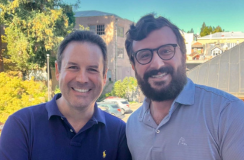
Host: Today's guest started his first search way back in 2009 as a traditional search fund. He successfully exited that acquisition and about 10 years after his first search started another, this time self funded. August Felker. It's a name you'll recognize via his insurance firm, Oberle. August is a longtime supporter of Acquiring Minds. August has been in and around search for almost 15 years. In this episode we hear about his experience doing both a traditional search fund and more recently, a self funded search. It's a topic you've heard about before on Acquiring Minds, but rarely from someone who's done both. And there are some dichotomies between the two models that August crystallizes for bigger business versus Tiny business, mentorship versus Being on your own and having to exit versus holding forever. We also get into the business of insurance agencies, which turn out to be really good businesses if you can get them. My favorite part of the interview is August talking about his evolution as a leader. Leadership was difficult for him at first, but there was a key shift in behavior that finally unlocked it in that arc from random outsider who bought the business to to true leader that your employees look to and respect is one that many of you who buy a business for the first time will experience. Because even if you've managed people before arriving day one as the new owner of a business you just acquired, it's a unique experience that's hard to prepare for. Here he is, August Felker, owner of Oberly Risk Strategies. Welcome to Acquiring Minds, a podcast about buying businesses. My name is Will Smith. Acquiring an existing business is an awesome opportunity for many entrepreneurs and on this podcast I talk to the people who do it. You already know that business owners are making amazing use of virtual assistants, often based in the Philippines. And while virtual assistants are helpful, virtual professionals are transformative. Moore Staffing is a boutique agency that hires a players in the Philippines not for simple tasks but for deep competency work. Think operators, supply chain managers, controllers. Moore Staffing de risks your engagement with a 12 month guarantee to you and they provide coaching for six months to their talent. When an engagement begins, that means your hire is coached in the background, no additional cost to you so that your working relationship flourishes and is as successful as it can be. Global staffing is increasingly the norm and building the muscle within your business to take advantage of it will be crucial in the years ahead. Speak with more staffing about the pool of capable, affordable managers they can connect you with. Check out Morenow Co. That's Morenow Co. August Felker welcome to acquiring minds.
[3:17] Guest: Thank you, Will. It's great to be here, August.
Host: I feel like you need no introduction because regular listeners will have heard your sponsorship copy a two time successful searcher first with a traditional search fund. The second time around you did a self funded search and today you run Oberly Risk Strategies. People will recognize those words. But really August, you do have two successful searches under your belt. You, you've been in this community for over a decade. I believe today you work with searchers who are close to closing a deal on all things insurance. You've got deep expertise in the insurance business. We're going to get into all of it. So please start us off with some background on you, August.
Guest: Awesome. Well Will, I'm, I'm pumped to be joining the podcast. I also am so happy to be kind of in partnership with you. It's, it's been a great ride and it's just amazing how the community's grown so much over the last 10 years. And thank you for all you've done to help that. So my quick background I grew up in St. Louis, Missouri. Very proud St. Louis Cardinals fan. Went to college at a small school in Maine called Bowdoin College. After graduating from college I was excited to go and try to live out in the west coast and move to San Fran. Worked in, in the insurance business out there right after college. Met my wife out there. You know, love, love living in the Bay Area. Ended up living there for seven years. But towards the end of my stay in the Bay Area I linked up with a couple guys who became very, very close mentors and got excited about the search funnel space. And this was like 2008, 2009 and was very, very excited to try my hand at doing a search out of the Bay Area. My wife and I had one kid and, and we were sort of at that point where we were flexible and, and so that's sort of where the, where the search story starts.
Host: Were you associated with a business school out there?
Guest: I wasn't. So I, I, you know, when I was out in the Bay Area I linked up with two guys who were Stanford GSBers who had used a search fund to buy a logistics business in South San Francisco. And I joined them as sort of one of their first sales hires and just love the experience, love working for them, love the model. So when they ended up selling that business, I re sort of partnered with them and said hey, let's go out and do a search fund and do it together. And so that's how I got into the world. Of searching. I did not end up going to business school.
Host: And had you expected that at some point in your life, in your career, you'd be an entrepreneur, or did this come out of left field, the idea of this and therefore being an entrepreneur?
[6:06] Guest: I didn't, I didn't know, you know, 100% that I, that I wanted to be an entrepreneur. I, I sort of in my mind knew as I, as I got older, I wanted to have some freedom and, you know, I wanted to have a great career and literally was something I wanted to do. But I had no idea about the search fund world until I was sort of exposed to it. And that totally changed everything. And once I got, you know, heard about it and learned about it, I almost became kind of unemployable. I was just an entrepreneur. I'll probably be an entrepreneur. Entrepreneur for life. Cool.
Host: Yeah, yeah. I think a lot of entrepreneurs have that moment.
Guest: Yeah.
Host: And so these two guys that you'd worked for before, you, they buy a business, they grow it, presumably, they sell it, at which point, and you've been working for them through that exit, at which point you say to them, let's go do a search fund together. Be my partners.
Guest: Yeah, yeah, exactly. So, so the model with them was they had already done a search. I was 29. I didn't really know how to do it, didn't know how to go about it, didn't know how to raise funds. And so they were sort of, they kind of vouched for me and they sort of said to the investor community, hey, it was, it was a traditional search I was going to do at that time. There weren't a lot of them. So they sort of vouched for me. And they also said, hey, we'll sort of sit on your board, we'll mentor you, we'll coach you through the whole process. But, but we're not going to move out to wherever you end up buying a business. That was sort of my, my, my part.
Host: So you were going to run it. It really was going to be the August Felker show, but they were kind of mentors first. Investors vouching for the investor community.
Guest: Yeah, okay, exactly.
Host: So I wasn't active in this world at that time, but from my understanding, to do a traditional search fund at that time, to not have come out of an MBA program, which is really, as I understand it, the only place it was being talked about, you must have been pretty unusual to kind of be a self starter to go do it.
Guest: I was. I mean, it was, it was, I Got a lot of sort of, I didn't really get a lot of pushback, but I got a lot of questions about it. And I think the, the thing that kind of gave me comfort in sort of, you know, moving across the country and wanting to buy a business was my experience working for these two guys in an environment really operating. I really got a lot of sort of on the ground experience running and managing a small business with these two. And so I felt like even though I didn't have an mba, I still like, hey, you know, I think I can do this. And it gave me confidence. So. And then having them behind me, sort of pushing me on, saying, you can do this, you can do this, was a huge part of it.
Host: Cool. Really, really cool. Yeah, that kind of, hey, I think I can do this feeling. Epiphany is one I've heard from from a lot of my guests where they, they kind of peer into an operating business and they say, and they realize that, you know, I, I could do this too. Yeah, you've partnered with them in the Bay Area, but you say you're going to do a geographically agnostic search or you're trying to get yourself back to the Midwest, because I know that's where you end up.
[9:01] Guest: So what I did is, is when I, when I talked to my wife about this, I said, you know, here's what I'm going to do. Here's this model. She was in the middle of just a thriving career. And so I said, hey, we sort of agreed to pick 10 cities. That was our compromise. And we went through a list, and most of them were actually on the West Coast. There were a few in the Midwest that I was looking at. Chicago was one, St. Louis was one. But most of them were on the West Coast. So I really focused my search just on those 10 cities. And I also, you know, focused on, on insurance. So I, I, I, I mentioned earlier that I, I worked in insurance right out of school. You know, one of the sort of my, my, my theories was, hey, I could really buy an insurance brokerage. And, and that would be a great search business. I know the industry. My, my dad used to be in the industry. So I, I had this experience where I was like, you know, I think I can buy an insurance brokerage. I had 10 cities picked out. I didn't know what I didn't know, and my wife was on board. So we sort of launched in 2008.
Host: And so she was willing to go to one of these 10 cities.
Guest: She was game.
Host: Now, I didn't Hear you mention the city that you ultimately ended up in the outskirts of. So how did you find this business outside Madison? And I don't know how far outside Madison it was. So tell us how you found this business.
Guest: I had a search where my strategy was heavy on cold calls. I was in the sales, I was in sales before, so I was very comfortable getting on the phone and calling sellers. Got hung up on it. I was just sort of totally okay with that process. And I also wrote a lot of handwritten letters, I didn't send a lot of emails. And sort of the third part of my strategy was to try to find a river guide where you find someone that's going to hopefully give you a warm intro into, into a business or a seller. So one of my ideas was to call insurance magazines. You know, there's this insurance magazine called the Insurance Journal. And I called the editors there because I was thinking, you know, these, these people probably know a lot of people that own insurance agencies. They probably are pretty well connected. They've got their sort of viewers out there. And so I called them and the editor called me back and said, you know, I like your story. I know this gentleman who's got an agency, an insurance brokerage for sale in Madison and I'll make an intro. And so that was how I got connected to what ended up being my first deal. I should note that I really felt strongly going into my search that it was going to be really hard to do a brokered search in the insurance space. There's a handful of insurance investment bankers and brokers and I felt like every time I reached out to them, they, they could kind of get a sense that I'm only going to do one deal. They're probably going to send their best deals to, you know, the roll ups or the larger private equity firms that were getting in the space. I was at the very, very bottom of the list. And then even if I got invited to participate in some type of bid, I knew the investor group I had in the search. In the traditional world, multiples were already starting to kind of go crazy that it was going to be very hard to win those deals. So I sort of like, I've got to find a seller just directly and I also need to find a seller that kind of gets it. What I'm trying to do. I really felt like, hey, I could be sort of the son that a seller never had to kind of take over the business and come in and learn the business and you know, ask questions and keep the culture going and stay Independent. So I was really trying to, I knew that was my, my only shot. And so when I got this intro to this person in Madison, I felt like really lucky. And that was very early on in my search. It was like the first, second, first or second month.
[13:08] Host: Wow. And August, all that, all that stuff that you just said about the son that the owner never had and continuing the legacy, those are all kind of catchphrases that are well known in the search community today, but I suspect they weren't at the time. And this is really from kind of your own strategizing, but you know you meant it. But at the same time, like you were trying to position yourself in a way that would be appealing, but you didn't have a playbook. You were figuring this out as you went 100%.
Guest: And I knew I didn't know a lot. I mean, I knew even though I was in insurance, I really needed someone, a seller to also teach me the business. So it's very, very genuine. I needed to come in and learn the business and actually try to, you know, walk in their shoes for a year or two before I could, you know, make changes or do anything. So. So yeah, yeah, it was, you know, in many ways I got lucky.
Host: Well, as we're going to find out, I, as I recall from our pre call, actually there's a mandated pretty much three years that you need to be working with sellers in the industry.
Guest: I know.
Host: And were you looking for traditional search funds, typically targeting bigger businesses than a self funded searcher would be? Was that. I assume that was the case then. How big a business were you looking for?
Guest: Yeah, I was trying to. So this was 2008 and 2009 and this was, you know, the economy. This was sort of a crisis time a little bit. And I started out right, kind of before all that happened in my search and then I found the deal as that was sort of all blowing up and so I started. Once I sort of got to the point where I got a deal, I started getting worried. Oh man, this is too big. This is going to be too tough to raise capital for. It's hard calling your investors and asking for money when they feel like the world's on fire. So I was trying to think the business ended up was like a million seven in EBITDA, had about 50 employees and IT, it, you know, it was sort of right in range. What, what at traditional searchers at the time, at the time were doing.
[15:15] Host: We don't have time for all the ins and outs of it because we have another search story to get to and then so much more after that. So I guess jump us in to you know, either the transition, any, anything you, you think would be most relevant to the audience in terms of, of the deal itself, negotiating the actual acquisition or the transition or the handover and working whatever you think is, is most relevant for folks from that whole experience.
Guest: One thing that, that you know, a lot of searchers, not a lot of folks have done bought an insurance broker and it might be worth mentioning kind of what, what that is and perfect what they do. And so an insurance broker, it's also called an insurance agent agency. Really we're sort of a, we function as a middle person where businesses come, they hire us and say hey, help me buy insurance. And then we go out and we talk to different insurance companies and get quotes from those different insurance companies and present them back to our client and connect them and hopefully they buy insurance through a Travelers or Chubb or someone like that. And in exchange for that service that an insurance broker provides, you make a commission and you usually it's like a 10 or 15% commission on the, on the premium. So that's, that's kind of what, what we do. There's two kinds. There's a commercial insurance broker which you know, they do like property and casualty, which is sort of a workers comp, general liability auto insurance. And there's a whole separate service or, or broker type that does employee benefits. My background was on the commercial side. So that, that's kind of where I, where I came in. I, I felt like, and I, I, I love the insurance business. It's, it's, it's a highly recurring revenue business. So usually insurance brokerages keep about 90% of their clients every year. So you know, I look forward to the next year. I think we about, we've got a very good chance of keeping nine out of our 10 clients that, that we have on the books.
Host: And so, so to be clear, that commission is a recurring commission, 10 or 15% for the duration of that insurance policy. That's great. Yes.
Guest: Yeah. And so, and you know, I think it's, it's, it's people don't want to change insurance, it's change brokers. It could be kind of a hassle. And so that, that, and you know, if you give them great service and take care of them and if they need to add a vehicle to their program, we do all that.
Host: I want to share an update on the acquisition lab. As you know, the lab is a highly vetted cohort based accelerator and Community for people serious about buying a business. After going through the Lab's month long intensive, you have ongoing access to almost daily Q and A sessions with advisors, regular live deal reviews with Walker Deibel, author of Buy, then Build, potential deal team introductions and a very active Slack group with other searchers on the path. Well, the update is that the Lab recently passed 60 businesses acquired and for well over $100 million in aggregate transaction value. Also, all members now enjoy lifetime access to the Lab because when you buy a business, it's often just the first of many and the Lab wants to support you in every deal, not just your first. Lastly, check out my recent interview with Shane Ursum, episode 105. Shane acquired a business with over $1 million in EBITDA in just six months and he attributes a lot of his deal success to what he learned in the lab. Check out acquisitionlab.com or email the lab's director, Chelsea Wood. Chelsea buy then build.com When I bought
[18:59] Guest: the first business multiples for insurance brokerages were like six, six times ebitda.
Host: Wow. Because the quality of revenue is so attractive.
Guest: It was and it really was sort of what the market was then. But a lot of, since then a lot of private equity firms have gotten into the space. I think there's like 30 roll ups going on right now in the insurance brokerage world and they've bid up the multiples and so now it's like 10 to 12 times EBITDA what insurance brokerages go for. So you know, that's sort of, so I got in at a really fortuitous good time and the, the things that I worried about the most when I, when I moved out to Madison and move my family out there was, we call it, it's an elevator asset business. So there's no hard assets that you buy in this business. All of your assets go up and down the elevator every day. They're the, they're the team. And so you have this fear. All you really are doing is buying a client list and all the people that are, they work with the agency or brokerage, they usually have non solicit agreements. So you kind of know hey, they can't steal the business. The sellers typically have like a non compete which is like one step more formal where they can't compete at all. So I had that. But I was, I was very panicked and worried about this elevator asset situation. So you know, if I got in there and it didn't go well, technically all the employees could just leave and it could be, it could go to Zero, you know, immediately. And so that, that is the major worry about buying a business like an insurance brokerage. And it's very relationship driven. So a lot of these clients know the people in Madison. They don't know me. So it was very, I was really worried about that. And I think that for, for that reason the deal structure in insurance agencies is such that it's very common. Almost 100% of the time we have an earn out, we have like a three year earn out and the seller needs to stick around for three years and usually like 25 to 30% of the purchase price is allocated towards, towards the earnout. So that's something, there's ways to solve that elevator asset issue. But it freaked me out. It's still something I think about all the time because you realize it's all we really have as a client list.
[21:28] Host: Well, August, I mean, hearing you say that, so many of the businesses that my guests buy are similar or frankly worse because an insurance policy is tighter. The recurring nature of the revenue is, you know, more contractual and higher, higher quality. So you know, a commercial janitorial business or a commercial landscaping business, same thing. I mean there's no elevator involved because those are going to be blue collar businesses. But, but, but, you know, it's just the relationships in your team that you're buying and those contracts are, are probably way less secure than an insurance business. So, so I don't mean to minimize your fear. It just, it's just, it just makes the, the landscaping and janitorial of the businesses of the world seem, you know, even more vulnerable, frankly.
Guest: Yeah, yeah, yeah. And I, I, so, so, I mean, I think that was the big deal dynamic is trying to figure out the people there. Are they going to stick around? Yeah, you know, are they, are they going to be, are they going to help the business grow? All that stuff. So that, that was my main, main concern. You know, also my wife is a west coaster. She's from Portland, Oregon. And, and I'm from St. Louis. I'm kind of used to winters, but we moved to Madison in February and she was like, what the, what did you get me into? It's so cold there that time of year. So, so those were the two areas where I was worried.
Host: Well, it's funny, I, I moved my family and wife from the Bay Area to Arlington, Virginia, which is a suburb right outside DC Last year. And I, and I timed it to avoid August, which is just that, you know, the swampiest, hottest, nastiest, most humid time of the year, so that you Know, on day one, she wasn't like, what, what have you done? But by the way, given that Madison wasn't on the list of 10 cities, also, she's already making an exception to the rules. How did you, what did you say to say, you know, make an exception?
Guest: You know, I think, I think, you know, what she had. It's really hard being a spouse, I'm sure. I know you guys have talked about this before on your podcast, but especially when you're moving every day I'd come home and maybe we're gonna move here, maybe we're gonna move there. And so I started getting excited about Madison and I, I remember the deal. You know, deals fall apart like four times. I remember I came home from work one time. It's off. It's. It's not happening. Don't worry. Let's. Let's focus on some other city. And she was genuinely bummed. And she hadn't expressed that she was excited about Madison, but I could tell she was genuinely bummed. And she's like, well, I looked at some houses and I looked at the schools, and I was sort of starting to think about it. So I sort of, I woke up that morning, I got to figure out how to get this deal back on track.
[24:12] Host: That's cool.
Guest: And I did.
Host: Well, Madison is renowned for being family friendly, isn't it? It's a great town for. And my, My.
Guest: It is.
Host: My parents actually met there too, so I have a soft spot for medicine. Cool.
Guest: It's the best.
Host: Cool. All right, so. So you're, you're feeling a lot of anxiety about the elevator asset nature of this business. And as you've explained to us, because of this, it's. What are kind of typical terms in the insurance business when there's an acquisition is that the seller is working. You're working alongside the seller for three years, and there's an earn out structure. So how did all of that go?
Guest: This was a hard part for me is it was the seller dynamic. And I was thinking about it. The seller rolled 10%, the seller had a seller note, the seller had an earn out, and the seller was our landlord. So I was, I was, I had to kill this person. And, and, you know, I think in many ways he, he was very much still kind of my boss. And, and so it was. But yet I was a CEO and I was in charge of like, driving the direction of the company. And I think, you know, ultimately what, what ended up happening is, is we sort of went through this first year too, was kind of the honeymoon period and I was learning the business and things were going pretty well. But then towards the second or third year I think just naturally, I mean we're both sitting right next to each other in offices. He's super worried about his earnout and stressed about it. He's counting on it for retirement. I'm thinking about other things and growing and trying to learn the business. And so naturally like tension and friction develops. And I tried so hard, I think we both did is tried so hard to get along and make it work. But it just felt like there were two cooks in the kitchen. And when that third year came up, I was like, you know, it's time we, we sort of, he, he moves on, he retires and I sort of move forward and drive the growth of the business. But that was another big area I was very worried about. I, I really had to make sure that, that this relationship was going well. He, you know, and, and, and I had to transition all those clients and get to know them and all the employees. And so it was, it was tricky. And I think one thing that I've sort of learned through this whole process is there's, there's two ways I would probably do it if I could do it again. One is, you know, try to give the seller, if I, if I ended up buying a, you know, another insurance business, really give the seller autonomy to, to run the business and control their own earn out and not metal or have an agreement with the seller where they're going to leave right away. But in the middle where I'm really meddling and we're working close together and we don't, we're not totally have our incentives aligned. It's just sort inevitable that there's going to be friction. And so that was a big challenge and a big part of the Madison story was working through that relationship.
[27:16] Host: Well, something you'll hear a lot is kind of buyers, searchers want that seller kind of want them leashed to the business so that they can't run away with all of the business still locked up in their heads or not support you if there's a problem or what have you, which is valid and sometimes that really is needed. But then on the other side, like once you kind of got your arms around the business, many searchers find that they would just want the seller out of there as asap. Like once they've done, you know, you used the seller for what they've needed them for, better that they not be there in the room anymore sort of.
Guest: Yeah, yeah, I agree that that was my. My feeling, too, but go ahead. Yeah, go ahead. Well, I was going to say one thing, that on that I was afraid of clients leaving because I didn't have that relationship. And early on, we had a sales producer leave. And so I was worried, oh, boy, all their clients are going to leave. And this person had a big chunk of our business. So I got in a car and went out to see all these clients and said, hey, my name's August, and I'm from St. Louis and I'm new here.
Host: Would you stick. Would you stick with us?
Guest: I know the producers. I know the salesperson would just. Would you stick with me for a year or two? And maybe it's because people. Wisconsin, you know, you've heard that trust in Wisconsin. Nice. They were too, Too nice to.
Host: To.
Guest: To. But they stuck with me, which. Which was amazing. And I sort of started to get confidence. Hey, I could. I could keep these clients if the seller left or if a key salesperson left. And I think that sort of rings true with a lot of searchers as you start to go through. I can. I can do this. I can. I can make this work so well.
Host: But. But do you think it was also to your credit that you were so proactive about it that you literally knocked on doors and hat in hand and said, let give me a chance? Yeah. Like, is it. Like, is that. Is that the takeaway that you should do? You should. You should really lay it on if.
Guest: Yes.
Host: If these relationships. Yeah.
Guest: Yes. I think you got to show up in person, you know, be genuine, say, hey, here's what happens. But don't worry, I'm going to take care of you and deliver. And so that, you know, people gave me a chance that really worked out through that whole transition.
Host: What's the name of this business, August? It was called Murphy Insurance Group. Okay. And what about becoming a leader for the first time?
Guest: I, you know, that was also something. So I think going into it, you feel like you got it all figured out, and, you know, you're going to be a great leader. And then I feel like being a leader, there's like a huge magnifying glass on all of your strengths and all your weaknesses, and it's just magnified enormously when you step into a leadership position. And so one of the things that I think I felt like I really struggle with early on as a leader, I felt very scripted. I felt like I was sort of running a playbook that wasn't really me. I was saying things that I'd read in a book. Or heard before. I felt like I didn't listen very well. You know, I felt like I was sort of just ready to try to, you know, not listen. I was listening with an intent to respond. You know, you listen to someone, you're just all of a sudden, while they're talking, you're thinking about what you're going to say without actually listening. And so I, I think those two things, you know, I. I really struggle with. And I think people felt like they couldn't. I wasn't genuine, I wasn't sort of real. And I think learning to be that way and be comfortable with yourself as a leader is really hard. But once I sort of started doing that and being more me, things started to work a lot better as opposed to sort of like, hey, I'm following the script. This is what you say, this is how you do just comes off scripted and people know and people just don't like it. And I think it's just really important to be. Be you.
[31:16] Host: Well, it is. And I feel like that error, for lack of a better word, is, is just so common in all an experience. You overcompensate because you're insecure and you try to, you know, put on the hat of whatever role you're trying to fill. And people can see it from a mile away. And, you know, with time, we all learn to be ourselves. And that's why old people are so refreshingly direct. Yeah, they just don't care anymore. But August, curious. How did you kind of get the message that you were coming off as fake and not a good listener?
Guest: So I had these two guys who I told you about at the beginning. They were on my board and I almost talked to them almost daily. And I think I've got. This was the beauty of the traditional search model is you have this built in group of investors of very smart, capable, experienced people to guide you through this. That part. And so I've really counted on them to give me advice, give me coaching. And they were great at giving me honest, candid feedback. So I was totally indebted to their feedback as things were going about how to tweak and become a better leader and be more comfortable in that position. So I had a great board. We had really great. It wasn't like, you know, report out session. It was. They were all strategy meetings. They were really fun. People gave me great ideas, great coaching and feedback. And it was almost like that period at traditional search was sort of like just a super. My learning curve was just, just straight up. And I really benefited from, from that sort of traditional model, you know, that way. I've heard searchers talk about this. Should you do traditional or search. That's the main thing that I just loved about that traditional model was that, was that coaching.
[33:09] Host: The, the coaching of your investors, your investors on. In a traditional search fund, at least when you did it, were very involved with you as coaches, as, as a board. Okay, that's great. Well, we're going to get to the contrast here in a minute because you also then did a self funded search. Well, one other thing before we. Well, I also want to hear about the exit of Murphy. Your exit. But also the cultural. Wasn't there wasn't kind of going into. It wasn't in Madison proper, was it? It was a little outside Madison.
Guest: Yeah. Yeah, it was about 10 minutes north, 20 minutes north of Madison. This town called Want Wanakee, famous as being the only Wanakee in the world, loved it and you know, it culturally, you know, it was a very sort of informal. Everyone knew each other in this little
Host: town
Guest: and you know, that was sort of an adjustment to learn how to fit into that. You know, it wasn't something where I really, you know, said hey, I'm from California. I moved out here from the Bay Area. That wasn't like the best. I think people wanted someone from the Midwest. So I really played up my same background and yeah, so, so that was hard too is getting, getting into that culture. But everyone in Wisconsin, I mean everyone was just so nice. That was a huge part of it. Hard workers, just, just a great team.
Host: Well, and because fitting into the culture of the, of the business you buy and, and so one of the themes comes up over and over is white collar people buying blue collar businesses and the cultural gap there. Bridging that gap where you're the outsider, you're typically going to be the, the white collar one. Was there any. Was there any learnings there or was it. Was it kind of more of just learning to lead this organization, be authentic and, and yeah, I think so.
Guest: So my dad was an insurance and I grew up watching him go to work in a, in a suit and tie and I, I look up to him and I, I really. It was like that's. I bought an insurance business. I'm going to work with it with a tie on. And like the first week I was like, this is not going to work in rural Scots.
Host: Okay.
Guest: So I mean just lose the tie, lose the top. Okay. So those kind of things, they really. People see that. So I think I learned quickly.
Host: Great. Yeah. So how does this adventure, your first traditional, your first search, a traditional search, come to a close?
Guest: So you know, with many times in a traditional world, sort of the finish line is an exit. And many times that's like five to 10 years after you buy the business. And so we got to that point 5, 5 or 6 years in multiples have gone up a lot. We had a good ride in terms of growth, but not incredible. We'd sort of struggle with some getting the right salespeople on board and working through the seller transition. But we felt like, hey, you know, this is, the multiples are going up. This is 2015. It might be a good time to talk to a broker or a banker and see what kind of multiples we could get. So we went out, hired an investment banker who specializes in insurance who knew all the players. We did a very sort of specific process where the banker was like, hey, we're going to just talk to three or four and we're going to have very casual, informal chats with these folks and tell them the story. And we're not going to send this deal out to 30 people. And I think that really worked. We ended up getting like four very interested parties, all larger insurance brokers that most of them were backed by like a private equity roll up and sort of went through all that process and sold. And as part of that, just like I had done, the new owner said, hey August, you're, we need you for a three year earn out. So I was kind of prepared for that going in. That was a big part of it. It could not be, hey, you're going to leave on day one. I think that would hurt the value of the business. And I was really committed to that three years and making that work. And we ended up selling to this firm called Hub International, which is a big insurance broker that buys a lot of agencies. It's backed by a private equity fund. And so it was exciting. It, it was like, it, it was like just a, a mad dash. This five years, learned a ton. Then you go through this, this very high of selling your business. And, and, and it was, it was, you know, quite a, quite a ride.
[37:51] Host: So you had grown it somewhat, but you got, but not a ton. But you got to enjoy multiple expansion, if we can call it that, simply because the market multiples had gone up.
Guest: Correct? Yeah, correct.
Host: And, and just two things on the insurance business going back to when you bought it in 2008, 9 and the how the world was coming apart then economically did that also would have been a good time to stress test the idea of like how recession resistant a particular business is. And intuitively it would seem like insurance is extremely recession resistant. Did it prove to be even, even during a crisis like 2008?
Guest: Totally. It's kept growing. You know, everyone has to buy insurance. You know no one, it's, it's one, it's like the last thing you'd probably have to give up if you're a business is no longer insuring yourself. Yeah, it, it's pressure tested the drama with the seller. All those clients ended up being a lot stickier than I thought. Of the sort of 50 people that were there when I bought it, I think that only like 10 or 20 were let me totally had refreshed the whole team. We kept a lot of those clients. You know, maybe just being nervous and worrying wasn't really, it probably was worth it but because you know you can you stay sharp when you're worried. But all those things sort of played out and it kind of worked out and we got really lucky that you know, multiples went up and there was, it was such an active market for selling. An insurance agency got lucky with that and then.
[39:26] Host: So were you literally there from 2015 when you sold through 2018?
Guest: Yeah, I was, I was and I, I, they put me sort of in charge of like a, a region which was fun. I learned a lot. I, you know they're a professional buyer of agencies so I, I learned a ton seeing how they did it and how they managed it. They made it seem a lot easier than, than when I did it myself and. But I started feeling like during that earn out like I mentioned you almost. It's hard working for a bigger company. At least it was for me after being an entrepreneur and having total control over your destiny and your time and I was sort of plugged into a bigger company. It was a great firm, is a great firm. But for me I started feeling gosh, you know, I still have more energy. I've got, I've got another, another venture in me. And so I started in my mind thinking during that period that hey, I'd love to, I'd love to search again and do it again. So I did do the whole three year period though.
Host: Great. Well, we're just about to get there. A couple follow ups though. How old were you at this time?
Guest: I was 35.
Host: 35 in 2015?
Guest: Yeah.
Host: Or in 2018?
Guest: Yeah, exactly when I finished it. I was 38 when I got out here. Yeah.
Host: And then were you 30, the same age?
Guest: Yeah.
Host: In August the so A searcher contemplating buying an insurance business or agency or brokerage, they do need to. This, this kind of three years at the start, three years at the end intrigues me. You really, if that's the industry norm, you got to be prepared for a three year transition with the seller. Although as we've talked about, maybe that'll be cut short because that is a very long time. But then if you're, if you're expecting to then exit the business at some point, you are likely going to be expected to stay in the business for a three year transition. So that, that, that strikes me as kind of a big, big deal calculation. Big deal to, to, to something to consider before you dive into the insurance world.
Guest: Yeah, it is. And I think if you signal anything but to, to a buyer that's going to buy your agency that you're not going to do it. I think they'd have red flags and I think many buyers of agencies wouldn't do a deal unless the seller was going to stay on for, for an Internet period. And, and now what they've sort of learned even further is they're really almost insisting that sellers of agencies roll equity, a sizable amount of equity. So they're totally in it, totally incentives aligned and you sort of help erase that, that worry about those elevator assets issue because the seller is going to have equity and they're going to be there for three years and you know, that's not a problem.
[42:01] Host: So. Great. Thank you, August. Okay, so you're, you're, you're 38 and you're getting the entrepreneurial itch again. Think you might have another rodeo in you. What, what do you look to do? Are you guys still in Madison at this point?
Guest: Still in Madison. We had four kids now. Wow. Young, pretty, pretty young kids. And you know, if there's anybody listening to this or watching this, that's from St. Louis, they'll know that a lot of St. Louis is love kind of coming back to St. Louis. And so that's always kind of been in my mind. I don't know why that. It's just, it's just, it's just such a great place to, if you're from there, to, to raise a family. So I, I'd always been telling my wife it'd be fun to get back to St. Louis. Let's maybe what you think about it? What do you think? So during that earn out period, my wife's like, okay, okay, okay, okay, well we'll, if you could find something or do something in St. Louis, we'll do it. So, you know, as that period sort of wound down, I started really thinking about, hey, I'd love to do another one, buy another agency. Multiples had gone up, so I knew that I couldn't buy a bigger, it had to be a very small one. Something that was kind of under the radar of all the, what the bigger brokers would buy. I wanted it to be in St. Louis. So there was like 10 of them or 15 of them. It was a very limited sample size. So I sort of identified these 10 or 15, you know, little agencies in St. Louis and started cold calling, just redid the process, started cold calling, going down there and you know, doing breakfast and buying lunch and, and, and one seller in particular here in town was, it was a husband, wife, team. Like, you know, we'll, we'll, we'll sell it to you. We love the story. We love what you, you know, you've done and you know, they, they. In 2019, I closed on another agency here in St. Louis and did it totally self fund it this time. I sort of felt like one of the things that there were so many good things about the first deal, but the one thing that I thought about is I sold when I felt like I was just getting good as a leader and you sort of cut that off and it's kind of like, okay now, yeah, you could still help out and impact the bigger company that bought you. But I felt like, you know, you're definitely going to be a better CEO your second decade than your first decade. And you can, literally, you can. I, I thought, hey, maybe if I could let it work in an industry too. I was starting to get good at the industry. You know, I knew the players, had all the relationships. I knew how it worked. I knew and I was starting to get better and better and better. And so I, I thought with the second one, I really wanted to set it up where I could, I could own it for 40 years, 30 years, and hopefully just really get into something where it keeps growing. I don't sort of interrupt that period where I'm improving and take advantage of all the things I learned. So self funded worked out perfectly. With that, you can buy, you can do whatever you want with it. You don't have to sell it. I think the biggest concern is I brought on some debt, is making sure your lender's happy, but that's it. And so that, that the, the downside is you kind of, when you buy a smaller business, many times you use this expression to use, you buy a job and that's Totally true. That's what I did. Very small business. We had like six employees.
[45:38] Host: Wow. Very small.
Guest: But I sort, I sort of, I lined it up where I, I felt like, hey, I got a long time to try to try to do this and figure it out. And, and I've learned all this stuff going through the traditional model and, and I learned a lot when I was at Hub and seeing that. So I thought it was like a perfect. Yeah, I think the right thing to do.
Host: Well, when you had bought the first business at Murphy, was that not also buying a job?
Guest: We were bigger. You know, we had like, we had 50. We had some, you know, we had accounting people. We even had an IT guy. It was incredible. Yeah, you know, here I had.
Host: We had nothing.
Guest: And you know, it was, I mean you really learn the business when you buy, when you do it, when you do really small like that. Yeah, it's just a totally different job than when you buy a bigger business. And so that was like a shock. I wasn't totally prepared for that. I figured that out quickly. But you know, the benefit is it's sort of like, hey, this is a time where hopefully you can sort of build it and you'll be, you know, set your up, set the business up to own it for a longer time.
Host: Yeah, yeah. Well, you know what I'm reminded of August is Amir Habuche, who has. Is buying H Vac businesses around the country, talks about what the types of operators or presidents, CEOs that he likes to put into the businesses if they need that. And basically the idea is you want somebody who is at a larger organization to then come to the smaller one because they know, you know, what the larger one should look like. And so they're the perfect candidate to grow the smaller one into the bigger one. And that's essentially what you did for yourself. I mean you Knew what a 50 person insurance agency looked like. And so you buy a six person one and you kind of know what the six person one should look like when it grows up.
Guest: 100%. 100%.
Host: And August, you know, at six employees now, I don't know can you share anything about revenue at that level or no?
Guest: We were tiny. I think we were a million in revenue and I think, you know, EBITDA was under half million any but so very small, very small business at that level.
Host: And given that you know the business really well already, although there's always more to learn. But you, as you said, you were getting the connections and you were just feeling really like starting to get A taste of kind of mastery of the insurance business, or at least a veteran of the insurance business. Did you consider starting from scratch at that point? If you're going to buy something, that's
[48:05] Guest: so, so I did, I did. I think I would have if I wouldn't have gotten lucky and found this deal. But I felt like buying something small would give me a two years, two or three year jump start, you know, like, you know, starting out, you got to get all the insurance licenses and software and, you know, really starting from scratch. I think it's going to take a couple years, two or three years just doing that stuff. So I felt like if I could do it, I give myself a little bit of a, of a jump. But I was in my back of my mind, I was, I was ready to start from scratch if, if this wouldn't have come up. Yeah, that's a great question.
Host: The. Just, just curious. When you were doing your outreach, when you got back to St. Louis before, you said you didn't even do email back in 2008, 9. Were you sending emails this time around or are you still old school? Phone in person?
Guest: I still did a lot of phones and a lot of handwritten notes and, and the seller who I ended up selling to, when I came in to see him, he had my handwritten note on his desk that I'd sent from months before. And I think that sort of resonated with him. And so it takes a lot longer, but I felt like you kind of got to do what no one else is doing and just try to be different. And so that, that worked, you know, it, it was sort of a way to sort of, kind of show him who I am and, and, and come, you know, and sort of just, you know, distinguish myself from other, other buyers for sure.
Host: Although I don't want to leave the audience with the impression, go start writing handwritten notes just only to say, only to say because you had so much, there was so much in that handwritten note. I'm sure that was also, it was like, I, I'm, I'm, I'm a native of St. Louis. I want to come home. I have a family with four kids. I just spent, you know, I just spent, I guess, 10 years buying an insurance business outside Madison, growing it and selling it. So I know what I'm doing. So there were so many things about you that was like, wow, this guy is worth talking to.
Guest: Yeah, yeah, yeah. I've talked to searchers who are friends and the second time around is much easier. And almost everyone says That, I don't know why that is exactly. I guess it's just because you have confidence and credibility and you kind of, you know, skip what doesn't work. But, but that's, that's, I, I found that really true. Second time is much easier.
Host: And what about any kind of non compete. How can you dive right back into the same business industry?
Guest: It's a great question. So, so I had a non compete in Wisconsin, so I, I kind of had to leave. Yeah, I, I like if I was going to work in insurance, I had to leave Wisconsin and so being able to, to work in Missouri and St. Louis, that, that worked and so that sort of fit. And you know, you obviously can't go after any of your old clients or any of that stuff. And I've always felt like you got to really honor those things and try to, you know, do it. You have clients call you and you gotta say hey I got two years, call me in two years or whatever the time period was being, you know, that's how that kind of went down.
[51:19] Host: Okay, and so you're returning now to doing self funded. Could you bring all the necessary equity and capital for the deal yourself?
Guest: I did, yeah. I did it myself and I found, I didn't do an SBA deal. I found a lender who was in the insurance business. It's like an insurance company but they had a bank attached to it. And I reached out to them and they said yes, we'll do it. It kind of mirrored what an SBA deal was, a 10 year deal. But they knew insurance. I, I think they felt comfortable with my background. So that really was, they've been just a wonderful partner and they know the industry, they've helped me on various things. So that, that was how I, I financed it myself. And, and with this, this bank senior
Host: debt and the, so the vision is this will probably be, it means something that you, I heard you say 40 years. I think on the pre call you said pass it on to your kids if they, if they're interested. This really is, yeah, this is a long term thing. And, and by not having any investors and doing self funded versus traditional, you have that autonomy, that freedom to choose to write, chart your own course and however long you want to do it. And that's the vision.
Guest: Yeah, that's my plan. I, I, because there's so many roll ups going on in insurance, we're now sort of unique that we're independent. Oh, I love that. I think that's cool. And I think that helps with recruiting. I think it helps with talking to clients in St. Louis, just here alone. Almost every of the big agencies has been bought. We're one of the few independents left. I sort of have this, it's, it's this, this vision of trying to also create a brand. And I think creating a brand takes a lot of time.
Host: Yep.
Guest: I mean I really want to have Oberle be just viewed and deliver as just a super high quality, great firm that's special and that's going to take like years. And so I want to sort of try to try to build that. That's what I'm really. That's what gets me out of bed every day and that's what gets people excited here, is trying to do that. And I've got a long time to do that which is really I think helpful. And that's really my main driver right now is to one day, hopefully people say overly they're just the best and that's what we're really working for.
Host: And two follow ups to that. August, what is being the best in insurance? Just high touch. Great. Basically great customer service. Essentially for your client service.
[54:07] Guest: Yeah, I think you know, customer service
Host: is
Guest: everything we do and you know, basically people don't love buying insurance. I know people aren't excited about doing it but if we can make it very easy and hassle free, that's a huge win. If we can have people that totally trust us, we're almost like their insurance person. Like they're out there, part of their company. We got it handled and that if we have their best interests in mind, you know we're going to find them the best deal. And there's some great competitors in this space but there's a lot of people that aren't that give kind of insurance agents a bad name. I like that because we can be the anti that and I think that. And again it takes years and years and years of work to try to earn that from people and build that. But that's 100% what I'm focused on. I'm not looking at buying any other add on acquisitions. I'm really focused on that. I'm really focused on trying to recruit, find great people, which is brutal. I'm sure people talk about that and really trying to grow it organically.
Host: It's awesome. And Oberle, the brand name, what does it mean? Where does it come from?
Guest: So the business I bought was called CLH Insurance here and I wanted to have my own brand and name and so I was like how do you pick a name for a company? So I had someone in Madison that I knew that was like a marketing person. And she said, well, we're going to have lunch and we're going to go through it, but before we go, lunch, email me every street you lived on, every maiden name in your family, every possible name in your world.
Host: I sent.
Guest: I sent her like, like a hundred names. You know, my. Where I grew up in, where, you know, like my dorm name and call it everything. Yeah, yeah.
Host: Grandma's middle name.
Guest: I mean, I really.
Host: I went.
Guest: I pulled out all the stops and she. And I sat down and she. She pointed to one name. She says, oberly. That's. That's got to be it. I'm like. I'm like, why? She said, well, it's unique. And she had looked it up and it. It was. It means kind of. It's a German. An old German name, I think that means kind of on a hill. It was like my great grandmother's maiden name or something. So that was sort of a good visual for me.
Host: Yeah, yeah.
Guest: And it was a family name, an old, old family name. So I was like, that's perfect. Do it. Cool.
Host: Cool.
Guest: Done.
Host: I love it.
Guest: I love it. Yeah. Yeah.
Host: Okay. You bought it. It was six employees, and this was 20. 19. 19.
Guest: Yeah.
Host: And how many employees are you today?
Guest: 15. All right.
Host: And while we're kind of in and out of the world of insurance brokerage, you touched on the license. Like, if you had started from scratch, it would have meant getting a lot of licenses. This is something that readers will tweak me about not asking more, which I should do. What does for the searchers out there who might be interested in this space? What does it look like to be an outsider without any sort of insurance licensing? What are the requirements there with. What should they be aware of?
[57:15] Guest: You know, it's not. It's not. Getting an insurance license isn't that hard. It probably should be harder. You know, you don't have to go to school, you don't have to get a degree. But what we do is. It's very critical. So if you mess it up, it's always amazes me how, you know, sometimes some people say it's easy to get a license, but we need to get licensed in every state. Insurance is regulated on a state by state basis. There's not like a federal regulatory body. So it's more of the administrative hassle going to every single state and signing Oberly up and getting a license and waiting weeks to three weeks. You got to apply for it. That was. That's the biggest thing, the other hard part about sort of starting from scratch is insurance companies are partners with us like a Travelers for example, and they decide who's going to sell Travelers product or who's going to, you know, be able to distribute Travelers insurance policies. So it's called appointing. So they appoint you and it's hard to get those appointments. So I'd have to call if I started from scratch. Every single insurance company, say Travelers, we've got this business called Oberly and they would go back and forth for a few months or maybe even a year and then appoint us. But by buying something smaller that already had all those appointments and all those licenses, I kind of just skipped all that stuff. And that really, that was the hardest. Getting insurance license. It's more of an administrative thing than it is, you know, going to school
Host: or anything like that. And do you just get, there's just a blanket insurance license or do you have to get sub licenses for the various kinds of insurance?
Guest: Yep, you're right. It's, it's, you have to get a, like a commercial insurance license and then a life and health license. And you know, I, I had to get those myself and then I got to get overlay to get every single one too. And then if a new person starts here and they're not licensed, they got to go do a class and a course and, and take a task to get a license.
Host: So, so August, as we, as we touched on at the, at the top, you are a sponsor and so you're quite involved in the search community because you have searchers as clients and it's actually been a great niche for you. But mutually, I mean, you've helped a lot of searchers and you know, a lot of searchers have come to you for that help. It's kind of compounding. Well, first, why do you think it's a kind of a good niche because you are a two time searcher or is there something specific about searchers that makes it a good niche?
Guest: I guess one is I love working in the niche. So that's important, right? If you don't love it, you got a problem. So I love working with searchers. These are people who are putting their careers and their lives on the line to buy a business and moving there. It's inspiring. It pumps me up. I love trying to help and I know the feeling of being scared and nervous and jumping and taking that leap. But then this all kind of started when I first bought the first one and there was a group of traditional searchers and we all kind of knew each other and a couple of them called and said hey, I'm going to buy this business and I know nothing about insurance. Can you just walk, take an hour call and walk me through everything I need to know about insurance. I've never bought insurance in my life. I need to make sure this is right. I'm not stepping into a problem here. And that's essentially what we do today is searchers call and say hey, I'm buying a landscaping business for example and I've never purchased insurance before. Can you just guide me and tell me what I need to know and make sure I'm not making mistakes and help me get it all organized for closing. Searchers don't, unlike private equity, they don't have like a deal team. They don't have like four people working on their deal. It's just them. They have to do the accounting diligence, the legal diligence, the lenders, the equity, the sellers, everything. It's very, very hard. And so if we can come in and just sort of make the insurance part easy, educate them, explain them what it is from someone that's done it before that they can really trust, that's what we do. And it's, you know it started out just kind of one, you know, a couple projects here and there and it's just, it's grown and grown and grown. It's primarily what main thing what Oberle does now and you know we're doing self funded. We work with traditional, there's a, got some accelerator clients, some independent sponsors, all sort of in the middle market to small market, small business group. And it's so fun to stay connected with it. I love it. I feel like we can really help and it's been really fortunate and we've benefited because the world has grown so much in searching thanks to people like you will and all the conferences and people teaching at the business schools. It's really been just a fun great niche.
[1:02:18] Host: That's awesome August and are there any things that you see over and over that are, you know, potential, potential red flags in the insurance setup of target acquisitions? Like any, anything that's just a pattern that you would, you could just advise folks now about this piece of their acquisition, the insurance piece.
Guest: Yeah, I think you know a small business person who's selling their business, they're pretty scrappy and they're pretty clever and they will when it comes to insurance they'll try to cut areas here or, or not buy insurance here or do different things. And I think the biggest Surprise we have is, is when we look at it, we say, you know, the seller is really, they're not buying two or three important things they should buy. Now it's totally up to you if you want to end up buying those when you buy the business, but we think you should. But I think it's just sort of that realization that things are kind of thin when they buy a business. And many times we have clients end up paying just a little bit more than they were than the old business was paying. And that's because the searcher's like, well, I want to make sure if I have a claim for that it's covered. And those are sort of the bigger. That's very common.
[1:03:37] Host: And is there a particular type of insurance or types of insurance that sellers will skimp on?
Guest: You know, I think they, they like, like, like for example, they don't have a board. Sellers won't. So they won't have directors and officers insurance where, you know, a searcher might have a board. So they'll have to put that in. Sometimes they do funny things with the auto insurance. You know, they'll, they'll buy it personally or they'll, they'll do all kinds of quirky things with that. We see also there's this thing called an umbrella and insurance, which is like excess insurance in case there's like a really bad claim. And many times sellers like, oh, I'll never have a bad claim. I don't need to buy that. But we've seen those claims. So those are kind of the areas where we see, we see people kind of skimp on it.
Host: You know, the reason to not skimp on insurance is obviously to get the value that insurance provides, namely protection from some sort of bad thing happening. But it also strikes me as like, this is kind of part of the profile, the professionalization process that many, so many searchers are intending to, to do to their, their target acquisition, which is, you know, a big boy company has proper insurance. You know, it doesn't, it's not cutting corners on, on some of this, on some of this stuff.
Guest: Yeah, yeah, absolutely.
Host: Is there anything more on the insurance industry that we haven't touched on? I think I'm just, I'm just looking at my notes here and I think we've, we've, we've touched on a lot of it. Are there you. Well, you had said that there's been so much consolidation, you're actually the only indie left in St. Louis. So are there even opportunities for searchers today?
Guest: You know, I get called Pretty regularly about searchers are interested in doing it. I think just that shock about multiples is sort of the big issue is you got to pay 8 to 10 times EBITDA now. And a lot of investors in the traditional space don't want to do that or hesitant to do that. It's tough to grow an insurance agency organically because you think about everybody's got 90% retention, everyone. So there's an issue there. And so that is a challenge is figuring that out. It's tough to find salespeople that are, you know, great that can sell insurance, that can do that. It's a rare, rare personality there. We, we do a lot of personality sort of profiling. We're trying to find the right hires and I had a consultant tell me that like a, a true salesperson who's really like a true blue, like incredible, like, like 3 or 4% of the population has that type of personality that can go out and do that. So just by that nature it's rare to find that person who can help you bring you in your insurance business and help you grow it. So those are all the challenges but all the great stuff that still, I always thought is still there with the business. It's good recurring revenue, it's good margins, it's steady, it's recession proof. I think with, with interest rates going up, you know, I've read a lot about that deal activities slow down. Like deal activity in the first half of the year is much lower than I guess 20% low than it was last year. I think that some of these rollups are, have a lot of debt. So I think that's going to impact them. So I, I think that maybe these times are changing a little bit with, with, with, with the interest rates and all those kind of things. And, and if it does become more attractive, I, I would love to try to buy one or do something. But right now it's just, I just can't, I can't make the math work. Just my,
[1:07:25] Host: I feel like in the 90s insurance brokers served consumers as well. And then I'm going to guess that the Internet kind of killed that and we all just go to Progressive or Geico directly or our health insurance from, you know, from employers, many of them, Many, most folks. But it hasn't obviously for commercial insurance. Is that a threat or is that threat come and gone in commercial insurance? It's just too complex for somebody to point and click their way through it.
Guest: I think about it, I'm not too, too. I mean it could always Happen. And I think on the smaller, smaller sort of really cookie cutter type businesses, they might go direct, but it's just got, it's still very, very confusing. And there's so many choices that, to have someone out there kind of walk you through it. And, and I will note on the personal insurance, like your own personal or auto, there's a big number of people, I don't know what the percentage is that still go through an agent.
Host: Oh, huge.
Guest: That don't go direct. And, and, and these are folks, you know, who are like, okay, I got a house in Wisconsin and then I got my, you know, a cabin up north. It's, I don't know, how do I ensure that? And I got, you know, I got a teenage driver. How does that work? And you know, all of that stuff. So they end up going through an agent too. And that's, that stayed pretty consistent. Geico and Progressive have kind of picked up some of the more price buyers, but I think folks who need more help and looking for value go through an agent. And you know, I think with Geico, one of the things that those carriers, I mean they spend so much money on advertising, it's almost like that's their commission expense that they would pay to an insurance broker, they pay in advertising. So one way or the other they've made their choice. And so I think that the insurance companies we work with, you know, give us commissions, so we're the salespeople, whereas Geico, they're just doing it, doing it that way. It's a good question though.
[1:09:26] Host: August, just a couple more questions for you. I want to zoom out now and just kind of talk about search general in your observations and then ask you a personal question. So yeah, you kind of touched on the fact that the search ecosystem has grown a lot since your time in and any, any other observations to make about now versus 2008 with respect to people buying businesses?
Guest: I think it's, I, all I could say is I just think it's great. I think that more and more people have confidence because others are doing it, that they can do it and make that leap. And I think just that's just been fun to see people who have totally changed their lives by doing a search fund. And that is, that is a big one. I think there's probably always been self funded, but now it's really like a, it's more specifically called self funded searching and that's grown a ton. I think traditional has grown, but I feel like self funded probably has grown even more and that's A huge trend that we've seen. It's just more and more folks are sort of doing that self funded path and I think there's more information out there than ever. So I think it's just been, it's been great to see and I think it's going to keep growing because it's a great path.
Host: We also got some contrast between your first experience buying a business as traditional search fund and then your second is a self funded. Is there anything more we can, we can say about those two experiences? Maybe the difference in feeling, you know, one, one, one contrast is often owner versus CEO. You know you're. Do you feel like that is applicable in your case? Do you feel more of an owner versus did you feel like more of a CEO with Murphy?
Guest: I think that's, I think that's right. I've had to really proactively reach out to people in my network to help supplement that coaching and support I got when I was in a traditional world and kind of formalize it a little bit. Have like sort of a group of people I talk to all the time that I can commiserate with. Whereas in the traditional world it was sort of baked in. And so that is something that I sort of had to proactively do. Sometimes I felt myself getting frustrated that I bought a really small business and I wish it would go faster. And I was like, oh, only if I was back to where I was I, I felt I've had that emotion. Sometimes it's hard to recruit being really small. I mean you can, you can sort of be the David and the Goliath and you can use that as a selling point when you're recruiting. But it's also be like, you know, why would I join it? Like is that, is that a risk? I'm joining an eight person company. Like why would I leave a big firm? I got these benefits, it's just tougher. And so those things are, are real in terms of difference. But I have no, when I look back on it, I really think it was the right for me it was the right way to kind of go about it because I learned so much in the traditional world and then I sort of had this confidence to do it, do it all with myself. On the, on the self funded side.
[1:12:48] Host: It reminds me of something that Derek Turner recent guest said who also like you did a traditional search fund first and then a self funded. And he said that his traditional search, he chose to do a traditional search fund first because it felt like a, a good on ramp to search because you have.
Guest: Yeah.
Host: Structured terms, a structured communities and then, and then these investors that you can lean on kind of guardrails. And then he stepped out of that business and went on to buy another business as a self funded searcher and really had, in retrospect, felt that that was accurate, that he felt kind of much more equipped to be a self funded searcher, having done a traditional search fund the first time around.
Guest: Yeah, 100%, totally agree. Exactly. My experience too. I. That's exactly how I felt.
Host: Great. Anything we didn't touch on August?
Guest: No, I think that's. I think that's great, Will.
Host: I love it.
Guest: I could talk insurance all day.
Host: Well, we'll have to. I'll have to see if I can find any other searcher out there who's bought an insurance business and get their take on it. Yeah, but August, what's the best place for people to reach out to you other than, you know, clicking that, that link in the show notes that appears every other episode.
Guest: That link is great. Or just, you know, shoot me note on LinkedIn or our website, oberly-risk.com. those are the best ways. Or call me too.
Host: Yeah, August, thanks so much for coming on. This is a really fun conversation and thanks for being so great to my listeners who, who reach out to you for help. I hear nothing but good things through the community about Oberly, so more, more where that came from.
Guest: Awesome. Thank you, Will.













































%20-%20thumbnail.png)





%20-%20thumbnail.png)

%20-%20thumbnail.png)

.png)



%20-%20thumbnail.png)