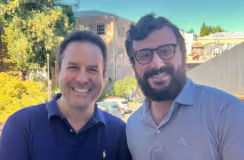
Host: We cover a lot of ground today. Brian Lee Shields and his partner acquired a small property management business in December 2019. You know what happened three months later? Well, Covid notwithstanding, Brian implemented lots of internal improvements at the business and bolted on a second acquisition just two and a half years into the journey. He exited for a premium when two strategics showed interest at the same time. A sampling of the topics in today's rich conversation with Brian how to gently implement new tech into an inefficient paper and process heavy business, transforming such a business into one that can be remotely managed. By the end of his ownership, Brian was running his San Francisco business from his new home in la. Property Management as a Target Industry for Searchers and what the Opportunity Is why Buying into an industry you already know allows you to move quickly to sell or not to sell should you be given the opportunity sooner than expected. How to adapt to an environment that isn't as hard charging and high achieving as you might be used to, and burnout. Make sure you listen to the end where Brian hits the wall after pushing himself to the limit. Okay, Please enjoy this conversation with Brian Lee Shields, buyer, then seller of two property management businesses in San Francisco. Welcome to Acquiring Minds, a podcast about buying businesses. My name is Will Smith. Acquiring an existing business is an awesome opportunity for many entrepreneurs and on this podcast I talk to the people who do it. I want to share an update on the Acquisition Lab. As you know, the Lab is a highly vetted cohort based accelerator and community for people serious about buying a business. After going through the Lab's month long intensive, you have ongoing access to almost daily Q and A sessions with advisors, regular live deal reviews with Walker Deibel, author of Buy Then Build Potential Deal, team introductions and a very active Slack group with other searchers on the path. Well, the update is that the Lab recently passed 60 businesses acquired and for well over $100 million in aggregate transaction value. Also, all members now enjoy lifetime access to the Lab because when you buy a business, it's often just the first of many and the Lab wants to support you in every deal, not just your first. Lastly, check out my recent interview with Shane Ursum, episode 105. Shane acquired a business with over a million dollars in EBITDA in just six months and he attributes a lot of his deal success to what he learned in the lab. Check out acquisitionlab.com or email the lab's director, Chelsea Wood. Chelsea then build.com Brian Lee Shields welcome to Acquiring Minds.
[3:07] Guest: Hey yo, Glad to be here.
Host: Brian, you acquired and exited Two and a half years later, a property management business in San Francisco. Property management is an industry with some seemingly intriguing opportunities. We're going to get into how accurate those are, but definitely appealing characteristics like recurring revenue, B2B, low churn, et cetera. So, so it's an industry that a lot of searchers consider think about and I am no exception. So I'm eager to learn what this experience was like for you. You also had some burnout that you've suffered more recently, and it's a theme that is something that you now talk about and help people with. So we're going to spend some time on that as well. Toward the end, let's start off with some background on you, please. Brian.
Guest: Absolutely. So thanks for again for having me. Will, just for background. So I started my career out fairly traditionally. I started at a small place you might have heard of called Lehman Brothers in the investment banking department for financial sponsors, which is the private equity coverage group, and then went from there to a private equity firm called Welsh, Carson, Anderson and Stowe. And while I was there, it was just at the peak of the financial crisis. And so what that means is that there were no deals getting done. And in my first few years there, I think we did maybe two or three deals in the firm and I did all of them. So the gift of that was that I got a lot of hands on training, both in mer, in traditional leverage buyouts and in a buy and bill platform, which I then kind of spent my a big part of my chunk of time with. We acquired three diagnostic labs, put them together. I did a rotation through our internal like McKinsey, which works with all the portfolio companies and then worked in hr, inventory sales, et cetera. Then went to go launch a division at that company. So I moved down to North Carolina for a year and got it off the ground. And that all kind of gave me tactile experience with what it actually means to run a business. And from there I was like, I think I should do this. And I took a little bit of a winding path to get there. I stopped through the Bay Area to run growth at a few venture backed companies. Candidly, my thinking was, oh, this is entrepreneurship, so let me go do that. But eventually I saw the light and decided I should really just go buy a business and take my shot at really running a business firsthand and applying all those lessons I learned that I mentioned into it. So that's what brings us here today.
Host: That's great, Brian. And when you said when you got some operational experience, I Guess it was in North Carolina. And you said to yourself, I think I should do this. What about it did you like what? What about it made you feel like, oh, this is what I should be doing as the principal, not as an employee.
[6:00] Guest: Okay. So first of all, when I got down there, I just had a lot of fun. And one of the things I realized before getting down to the business on the ground was I just didn't know how EBITDA happened, right? And speaking to all you folks who I know, there are a lot of you that listen, that are private equity folks or banking folks or even consulting folks, you know how to do the math. Like, that's not new, but how the EBITDA actually happens, how you organize people in ways and processes and systems to deliver the ebitda. It takes a different skill set than the Excel macros require. And so, like, I don't say that demeaningly. I say it's like valuable to get out and go try it. And when I did it, I really found that I enjoyed the people leadership process, right? The collaboration process and the accountability process, right? So I don't know if you can see, but one of the books on my desk here is Traction, which talks about the entrepreneurship operating system and like, any flavor of that. I love, like High Output Management by Andy Grove is one of my, like, core personal belief system bibles. And I just believe you manage what you can measure, right? And I developed that by working with this team who were really good at what they did, but needed to kind of like get a little more organized to go to the next level to see metrics and go to the next level to make decisions from those metrics, et cetera, to go to the next level. And so by doing that, I was like, oh, this is a ton of fun. And I mean, I did everything, Will. I worked with the team to get through a bunch of regulation and file paperwork. I created the marketing materials for this new service. I became the expert. This was a diagnostic lab. Sorry, let me be clear. So we were launching a pain management test. So I did not mention anywhere in my background that I'm like pre med or healthcare related, except for the industries I used to focus on. So I was doing all this from like scratch and becoming an overnight expert. And like, I taught myself the talking points. I sat with a bunch of clients for customer development. Then I did the sales training and wrote along with different sales reps in seven different states to make sure that they understood how to sell it. And we got that business to about $3 million of revenue run rate before I left, which is great, but I just found that experience of taking an idea from conception to execution as very fun. And as I matriculated in my career and learned a little bit more about risk and how hard it is to start something completely from scratch, the buy and grow from there option really looked more attractive. So I thought that that would be a good application of my learnings and kind of like feeling of what worked going forward.
Host: Well, let me, let me press you on that because it sounds like in North Carolina you were starting from scratch, even though you had, you had kind of all this machinery behind you, I guess, financing it, funding it. So. So it wasn't truly just Brian out there in the ocean alone figuring out how to swim. But, but still it was a pretty start from scratch effort. So. So it sounds. And you really thrived in that situation. So, so I'm actually. So, so. So you do seem kind of like you have a zero to one orientation.
[9:01] Guest: Well, in that scenario, yes. But I think the key differentiator and why that worked candidly was I had a great team who surrounded me with expertise. Beyond that, what I had. Right. Like I was like, okay, I'm going to, I have infinite energy. I'm going to run really hard at doing this thing and you know, wherever I need to be, I'll be there physically and I'll like read all the documents and get it all together. Like that was cool. But I didn't know the regulation very well. I asked a lot of basic questions. I didn't know like what the specific nuances of this industry were, especially when you're trying to sell, which is different than making an investment decision. Right. And like when you have to look someone in the eye and explain to them the value why they need to make a decision of switching from product A to product B, et cetera, that takes a little like a different level of EQ and understanding of the on the ground experience to make that transition. And so I got a lot of that education from the existing platform.
Host: Okay.
Guest: In addition, I wasn't like just marketing like brand new product in the sense that like we were selling into an existing customer base. So our ramp up time was cut down dramatically by the fact that it was.
Host: Hey.
Guest: And also by this conversation. So it helps dramatically.
Host: Yeah, yeah, Good, good clarification. Okay, yeah. Well then. Okay. And then I want to make sure just on the 0 to 1 point. So then you go to Silicon Valley and you say while you're working in growth in Silicon Valley, you characterized an experience as seeing the light that buying and build and building versus starting from scratch was the way to go. What did you mean there now, now with the context being a Silicon Valley startups as opposed to what you're doing in North Carolina.
Guest: Yeah. And candidly, the, the mindset that you kind of brought will, in terms of thinking about it as a zero to one experience. That was kind of where my head was at at that transition point. I was like, oh, I could do this startup thing, this is cool. Look what I just did. And so I went to a larger startup. When I joined a company called Funding Circle, we were at, we had just raised a series C, so fairly established, but still startup. Right. And you know, my job was to find new partnerships and business development opportunities for distribution. And so I had a little bit of a tailwind in infrastructure, but it was like kind of carte blanche. We had like one good partnership and then it was like, Brian, get out there, talk to people, figure it out. And so I was doing that. And then similarly, when I went to a company called Mind Property Management, which will be relevant to the business I bought, we were at series A. And so like we had half a million dollars of revenue. We were kind of just figuring it out. And then the question was like, what do you do? Where do you go? And in that environment of startup land where any decision can be possible, but you're really operating off of intuition. In a lot of cases and a lot of experiments, I found that the, the momentum building was very difficult. Right. You didn't have an existing product market fit to then say, okay, based on what I'm seeing in the trend here, I can maybe pivot this way into a higher margin opportunity. It was like, I'm going to place a bet here and maybe I have enough capital to place another bet and then that's it. You get two bets. That's like kind of it. So, so as I was going through that process with the team and figuring out different sales configurations, different marketing strategy, config and growth strategies, I just found that what ended up working for us particularly at mind was we should buy these companies in the landscape by other property management businesses and then build on top of those revenue streams. So it would give us an entree into a market and then we would layer on additional services, additional fees, et cetera. So, so we surfed the wave of an existing brand in the market and a distribution very similar to that company that I mentioned earlier and then grew from there. And so what that told me was when I ended up defaulting back to like a method and emotion that I had done in the past, I realized, oh, you know, I think that having the existing platform matters a lot. It matters a ton in terms of reducing your likelihood of failure and increasing the opportunity to just like grow really quickly in any given market. And especially for someone like me who I have been in 15 different industries, you know, people aren't going to say Brian is the healthcare guy or the software guy or whatever he's going to say. They're going to typically say like, oh, he knows how to buy businesses or grow businesses efficiently. And so being that that's a function and not necessarily an industry, I just need to find ways to enter industries and kind of dovetail off the back of the tailwind really quickly.
[13:30] Host: Well, I love that encapsulation of kind of your personal value prop and how powerful. I mean, I think the way you just described yourself is how one would like to be basically a generalist from an industry perspective, but knows how to grow and knows. Knows how to buy a business and grow it irrespective of industry. I'm exaggerating and being overly broad, but let's go with me versus just being like super deep industry expertise where you get, you know, unless you really, really, really love that industry, which, you know, some people happily will do and stay their entire careers in an industry, you can get pigeonholed into an industry and you're, you know, you're the health care guy and then good luck getting out of health care. So would love to have, you know, your skill set over kind of deep industry expertise. Not, they're not, not much more powerful expertise to have in business than being able to buy businesses and being able to grow said businesses.
Guest: I will say that the one of the keys of success for Hill and Company, the coffee mug that I'm drinking out of is, was having some familiarity with the industry. And I know we can get into it later, but like going forward, one of the things that I find is going to be really important for success going like with me is going to be finding someone who understands the industry to have some level of investment and involvement with the business. Right? Because being able to set a base level of acquisition price is really valuable, right? Like doing a margin of safety in the acquisition is key and like picking the right business is key. But then you run into these situations where it's like, hey, things are moving really quickly. I don't know, like let's say a global pandemic. How do you adjust the value proposition? The service Delivery, et cetera, in a way that still gets the customer what they want, but keeps the operations efficient and profitable. And to a certain extent that requires some intuition about how like customers think in the industry behaves. And like I think they are a very good pairing. And it's like a marriage that you gotta have, so you gotta look for both halves.
[15:32] Host: No, it's a great, it's a great kind of refinement of what I said because I certainly don't want to suggest that just being a generalist without industry expertise you can just blow into any industry, buy a business and grow it. Absolutely. Industry expertise is, is really valuable. But if you're going to have a deep skill set, great, great the skill set that you have and then find people within those industries to, to, to work alongside. And another thing I just want to highlight that you said about having a platform business or basically buying entrepreneurship through acquisition versus zero to one. That is an obvious value, but not one that we say very often. The institutional knowledge baked into the business that you're buying. We often talk about the value of buying an existing business as you know, the website that already has traffic, the phone that rings, the brand that exists, all that stuff kind of, kind of the top line value that there's money coming in which is probably, that probably is value number one. But not very far down the list is there's institutional knowledge there, there's people within the organization who can take you newcomer and educate you pretty quickly and kind of act as guardrails before you come in and do something crazy. I mean, it's a shortcut. It's not only a shortcut to revenue, it's also a shortcut into an industry.
Guest: Yeah, no, I was just going to agree with you on that Will, because I think that, you know, one of the things that we were able to do, and I would hope that this happens for more people than less, is we found people within the organization when we took over that could be leadership track. Right. And created pathways for them. The previous ownership kind of, you know, they're traditional. Like they had started the business, kind of grew it for 30 years. And so they operated in what made rational sense in the decisions in the moment. But one of the benefits of coming at it from an outsider perspective is you then have had an opportunity to be exposed to all these different types of businesses and business models, etc. So they didn't have leadership tracks or promotion tracks. And we were able to do that. And so the quid pro quo, right, is hey, you person, you might Be an accounting leader, a product leader, a sales leader, or whatever in waiting. We're new so if you educate us and make sure we're all making the best decisions, there is a lot of upside for you here and they love that. They're really excited about that. It bodes well for their career and obviously as the owner and acquirer, it like bodes well for your bottom line. So it's a win win.
Host: You already know that business owners are making amazing use of virtual assistants, often based in the Philippines. And while virtual assistants are helpful, virtual professionals are transformative. More Staffing is a boutique agency that hires a players in the Philippines not for simple tasks but for deep competency work. Think operators, supply chain managers, controllers. More Staffing de risks your engagement with a 12 month guarantee to you and they provide coaching for six months to their talent. When an engagement begins, that means your hire is coached in the background, no additional cost to you, so that your working relationship flourishes and is as successful as it can be. Global staffing is increasingly the norm and building the muscle within your business to take advantage of it will be crucial in the years ahead. Speak with More Staffing about the pool of capable affordable managers they can connect you with. Check out Morenow Co. That's Morenow Co. Brian, before we move on with the plot, I want two follow ups. Something that you said now a few minutes ago about get operational experience and how that gave you some kind of more granularity around what EBITDA really is or how it's earned and how maybe you know, kind of people, private equity types or people pushing numbers around a spreadsheet don't really in their bones understand it. What did you mean?
[19:34] Guest: So I get phone calls from people that are thinking about buying businesses, you know, like once a week or so. And in a lot of cases there'll be like folks like me who are private equity folks and are just like I, I know this industry, I know there's opportunity, you know, I can buy it for this, I can sell for that. And, and a lot of it's about the spreadsheet and the transactions which is a big part of the equation to your earlier point. But in between those times of like entering and exiting the investment, right, there's somebody's got to run the business and make decisions about the business and capitalize the business and ensure that you keep capital in the business. And you know, to my earlier point, I benefited from having some direct industry experience into the business that I acquired being from a venture backed property management company to a Traditional property management company. And that helped me with hiring, with quick decision making, with access to insider information in the industry networks for a follow on acquisition that I did and things like that. And I think that it's really valuable because I had to make a decision at some point that I was willing to live in this industry with these kinds of people and the kinds of problems that come with this specific industry at some point. Right. And furthermore, even just like a level up, I just had to decide that I wanted to be in the, in industry in general. Right. And just to kind of like encapsulate this in a kind of cheeky analogy or like story. One of my mentors at the fund pulled me aside when I was leaving to go work at the company and he said, hey, Brian, really excited for you to go join this company. I think you're going to do great there. I want to give you one piece of advice. When you get there, things are going to be a little different. You are used to working with people who will stay up till two in the morning working on something just to make sure it's right. They'll dot their I's and cross their T's. And you know, the standard of excellence is really high. And when you go work at this company, right. And this company was $300 million revenue business, so it wasn't a small business. And he was like, look, the most important thing that these people are going, some of these people are going to be thinking about is going home to paint their, their house. And I was like, all right, cool, I hear you, but that's crazy. Whatever. And the first week I was like talking to somebody who worked down the hall for me and we're like, oh man, it's Friday. That's great. How was your first week? I was like, oh, it's great. And she said, man, I cannot wait to get home. I'm leaving early today to paint my bathroom. And I was just like, oh, okay. And the decision making, the teamwork, the responsibility, even the way you communicate with people in a business is very different than in these high functioning, high intensity finance organizations. And so I think to the spirit of the point, getting a little bit of operational exposure just helps with the transition, right. And like that is just invaluable both in making sure you can lead a team effectively if you're going to be the CEO and if you're going to live in that industry for, you know, five to seven years.
[22:24] Host: So what you would tell kind of private equity type people or people who see this more as an intellectual exercise or only have kind of been kind of only contemplated it intellectually and haven't gotten their hands dirty yet is first, try to understand the nature, the culture of the industry. Because every industry has a culture and has its own whatever idiosyncrasies first. Second, the kind of classic, you know, people, this, this, it's likely to be very management, very people intensive and people aren't going to care about their work as much as you're used to. If you're coming from like a high functioning finance background, absolutely.
Guest: I had one buddy who was thinking about getting into industry, but he was a hedge fund guy and he told me, you know, what I really want, man, is to just get on my private plane, show up to the business, make some decisions, and then get back on the private plane and go like back to New York. And I was like, bro, that's not going to work. That's just not how this works. Right. And candidly, like, if you're listening to this pod, you're probably not in that bucket. But I only make that point to say that there is, there's some, there are some people who are just in that headspace and they just got to be real about it. Right?
Host: Sure.
Guest: And for this, right, you are getting your hands dirty. If you take over a restaurant business, you know, you got to be comfortable with the dynamic of turnover in the employees and staff and the kind of culture that some restaurant businesses have. If you're taking over a manufacturing business, there's just a different vibe and a different way you show up to work than you're used to. And I think that deserves some attention in investment in preparing for the transition.
[24:01] Host: I'm getting a little bit ahead here, but since we're on topic, did you find it hard to adjust? I mean, you were surprised by that. Your, your former manager totally called out the thing that the future employee would be interested in doing, painting one of the rooms of her house. But just in terms of truly like adapting to the new environment, was it difficult for you or did or were you fine?
Guest: You know, if you had known Brian 10 years ago, I would have been much more direct and confrontational in my conversation and like management style. Right. I was very much like, why didn't you do this? You said you were going to do X. X isn't done. What? You know, WTF. And I have found over that 10 year period that nuance has to be introduced because at the end of the day, right, Especially in a business that is not even $300 million, but like you definitely not hundreds and hundreds of people. You are, you're dealing with dynamics of people on a day to day basis where something might be going on with them. They may have different personality styles than you. I'm an extrovert. Some people are introverted. And I had to find, as the person who ultimately found myself best used as a leader of people, I had to find ways to get the most out of those people and be effective and still hold my standard of excellence. And so that isn't. That didn't take just like a hammer like I used to be. So now I have like a whole toolkit. And I say that to say that even taking over a healing company, I would find myself not realizing and taking for granted that folks would know even some of the things I thought were basic, but they didn't know them. Right. If it was, hey, this is how a sales pitch should go, or this is how you should communicate back to a client when you've completed something, etc. And granted we bought a fairly like a relatively smaller business in terms of people and overhead by design, but those, those things still persist, right. Like, I have a buddy who bought a business, a $20 million business, and he's educating some of the finance staff on some of the financial reports that he thinks are kind of standard and routine, but their FPA team maybe hasn't thought of before in terms of working capital management, stuff like that. So I think that there's like going to be a gap in terms of sophistication and how you navigate that gap will impact how much productivity you get out of the team. And being right always isn't the right way to pursue getting them to do their best work. Right. Like, you can't always be just like, well, I'm right and you're wrong. There has to be some education, there has to be some coaching and nuance and you know, that takes some patience. Right. Like my, my partner and I had an explicit conversation before we acquired the company of like, which one of us were going to be that person. Right. And that was me by design. And so even though you were the former hammer. Yeah.
Host: And me. And frankly, like, you're the one. Wait, you're the soft one.
Guest: I am the, I'm the Swiss army knife now. But I mean, but candidly will, to the spirit of that point, like, I just found that it didn't work. Right. I found out by my own lived experiences, even trying to like run little side businesses, that that approach wasn't the best in being effective. Trying to get people to do things that I needed them to do. And so I had to evolve my approach to say, hey, we still need to do X. But instead of just being like, I don't know, like this is maybe my experience on Wall street, but it's just like, hey, I need to do X. Here's an example, Here are the numbers. Go figure it out, right? And expecting the person to figure it out, I had to give them context, you know, tell them why we're doing X so they can understand the bigger picture. In some instances, depending on the person, I had to maybe tell them in private or tell them in a group setting. They maybe needed some prior examples, maybe some check ins more frequently. And it was very case by case, even with the leadership team that we ultimately had run the day to day. And so once I got them trained, it trickled down and that was where, why it's important to have that, that that toolkit is because, you know, like you might have people that are really capable and you just need to make sure you're coaching them and training them in the right way so that when they're good, you can step back and then do higher level level things. But if you only apply that hammer, they'll never like be able to grow to the level you need them to so you can focus on higher level things.
[28:17] Host: Brian, one other thing that you, I heard you say about yourself is that you have infinite energy. Did I hear that correctly?
Guest: Yes, at that time I did. When it was man was there. Is it North Carolina? I think a 20. See 2012. Yeah. So like 11 years ago I had infinite energy then. I have like renewable energy now.
Host: All right, well just to, just to give people a sense of who, who they're, they're listening to. You're a high energy person. Would you say you're a high energy person? Even among, in high functioning environments, are you one of the more energetic or are you just high energy like a lot of high functioning people are? If you followed my.
Guest: I think I like to think of myself as like top 10 to 15% high energy people amongst high energy people. You know, I think I told you previously, the way I think about myself, right is when I started my career out, I was on Wall street. I worked 100 hour weeks regularly and there was one summer from April to September that I didn't see the sun at all. Like I came into the office when it was dark and I left when it was dark and I saw the sun through the windows, but not really. And so I'm no stranger to hard work and intensity and high output and, and also like I'll go to events with these folks and people will be like, there's no way you can keep up this energy level that you have right now all day at this conference. And like, just watch me.
Host: Wow. Good for you, man. Good for you. I, I, I used to think that talents were, were the greatest asset to have and I've evolved that to thinking that energy is a more valuable asset than just kind of raw talent.
Guest: Is that because energy allows you the time and force to get skills and talent?
[30:00] Host: Yeah, maybe, maybe. And that's a, that's a great point. It's like if, if you have a deficit of one or the, like somebody with a lot of talent but no energy is going to go nowhere. Somebody with a lot of energy but low talent can, can probably get further and compensate for the lack of talent with their abundance of energy. And also you can channel energy in other ways. I mean everybody, the world wants hard workers, wants committed people, wants passionate people, even if their raw talents aren't, aren't exceptional. Maybe I just perceive high energy as, as scarce. All right, Brian, so where are we in the story? You, so you're in, you're in Silicon Valley. You're at Mind, which is a, give us, give us a description of exactly what Mind was, which was the last startup you worked at in the property management space. What exactly was Mind doing? And that's Mind with a why my nd.
Guest: Correct. So when I got Silicon Valley, I made this broader bet on how technology would enable and create more efficiencies in existing industries. So funding circle. The first company I was at was a lending company and used technology that we built in house to make the lending process more efficient. And so on that thesis I went to Mind Property Management, which is a venture backed property management company that builds its own technology to make the experience and operations of property management more seamless and just like easier to digest. And so what that looked like in the early years was we had some like, we had to build a foundational system that plugged together a bunch of disparate tasks that in the existing ecosystem weren't easily integrated. So you know, like dealing with your repair and maintenance person, the person who's going to go in and out to fix holes in the walls stuff and like connecting other vendors and their work into an accounting system and then also having that be available to the customer service reps who talk to the tenants or talk to the property owners and then making all that seamless. So that you can expose information even to the property owners or tenants and reduce the amount of phone calls and questions you're getting internally. All serve to create efficiency and like have fewer keystrokes and steps for the people internally. And so in a perfect world at scale, the margin profile would be like double the industry average because of all this software that was brought in and automation that was enabled so that there were fewer keystrokes. And that was really great. Like, that thesis has been bearing itself out for the most part within that organization. We would acquire businesses, existing property management businesses, bring them in, transition them over to our software, plug some people into the capacity we had today, and then just kind of like scale from there. So we would see it kind of bear out after about a year or
Host: so owning the businesses and remind us why Mind got into the business of direct property management by acquiring these property management firms.
Guest: Yeah, so for, so when I, when I was talking to the company initially, we were having this conversation about how to grow, how do we get really big, really quickly. And when I think about like growth in general, the first question I ask is how does a client make a decision about this product? Right. And for property management, I mean, I'm in, I have a few investment properties. I think you have some too. In a lot of cases, you decide on it when you inherit or take over or buy an asset. Like, I just got a rental property, so now I need a property manager. And when something goes wrong, like I really hate this property manager now I need to switch. And so, so I make that point to say that the switching costs are very high and the frequency is very low. So in scenarios like that, in industries like that, you have to say to yourself, okay, I can either find some offer or market in such a way such that like I make this, I make the person make a decision that is atypical to what their usual behavior is. So free property management for three years or whatever, something that maybe financially doesn't make sense, but it's eye catching, or you try to find a way to just like string together existing books of revenue and find ways to grow that from there. And so that's ultimately what we decided to do was enter into these new markets. At the time when I started there, we were only in Northern California. And then when I left, we had 16 markets that we had opened, meaning states. And we got into those through acquisitions in each one of them. So we would buy an existing property management business over time, rebrand it, and then use that existing platform to grow through new clients and New services, services offered. And it worked out for the most part. And they've since expanded into working with existing funds as well to create scale.
[34:40] Host: Okay, great. So. And you were involved in some of these acquisitions. Buying. Buying a presence in the market. So you basically had gotten your hands dirty doing acquisitions of property management firms.
Guest: Yep, yep. Like, I had seen it from soup to nuts. And, you know, we can get into this. But like, I ended up going back to like, oh, I should buy a property management business for myself. But that's not where I started when I started looking for businesses. So obvious. In hindsight, it should have been obvious that I should just like, go from A to A. But I did not go from A to A initially.
Host: Okay, well, let's hear the progression from A to Z and back to A. But, but, but before you start that, give us the context of your decision to search. Were you somebody that was always gonna. Didn't. Had known about search forever and was a matter of time, or did it hit you like a bolt of lightning, like it does with some of my guests, and you decide very quickly that you're gonna go do it or what?
Guest: I think it's a little column. A little column B. So I have some good friends that went to Stanford Business school, and through them I learned about search funds as a concept. This was back in 2010. And so I had had this thought of, oh, there is a world where you can buy your own business and that's your pathway to. At the time, I was thinking creating a fund. Right. I was at a private equity fund. I was like, okay, well, this seems like a cool thing to do. How do I do it? But, like, on my own without having to raise $3 billion. And so search funds entered my life and I read the search fund Bible and I was like, this is great. We should do this. So I've been looking at buying businesses for a long time, and I put it down for a period of time because the, at the, at that time, you know, like more than 10 years ago, the ecosystem of financing for it was much smaller and much different than it is now. Right. The founder economics were fairly challenging. The, the number of people to go to, to raise capital to acquire these businesses was much, much smaller than it is now and much less formalized. And so I just didn't see myself having a differentiated angle into getting into and then raising the capital for. From this network of people. So I kind of put a pause on it and then I circled back to it. It hit me like a light bulb, actually. I Remember going to this conference in Denver at which the founder of Humans of New York was speaking, and he showed this picture of the very first photo that he took, which was of this, like, really scraggly, leafless tree. It was like probably some New York tree you see in like January. And the lighting was bad and everything. And then he showed a picture of President Obama and he said, the time between these two was two years. I started here, but then I got to this. And it requires you to start. So if you have an entrepreneurial itch or something that you want to do, you have got to start. Because if you don't start, you will never get to the point where you can take pictures of the president. And so it just hit me and I was just like, oh, you know, I think that the underlying thing within me was I always wanted to be an entrepreneur. And I was like, I need to take a bet on myself at some point. Brandon's right. I should take this. I should take. I should start. Like, I don't know if where I start will be where I end, but I'm going to start. And so I committed. This was in, I think, like June of 2019. So I just decided to commit and started looking for businesses to buy more formally in a more structured manner. And so just to kind of like continue on the follow up question you had. So I started. And like, whenever I started, like new asset classes or something, I like to tell myself I'm going to look at 100 deals just so I can get a feel of my risk profile, what's out there, what I'm focused on, et cetera. So I applied the same thinking with this and I started with like, biz by sell and, you know, all the usual, like, really easy suspects to just find opportunities. And I found one really good opportunity. There are two deals that I like, really liked, one of which I wish I did. The other one I'm glad I didn't do. So the first one was a photo booth business. It was a really cool business. Like, you know, you go to parties and have the photo booth with like the mustache and the glasses and stuff. Those things throw off a ton of cash. Like, this guy was, this is a professional snowboarder. He had built this business up from scratch over like three or four years. And he only ran it like half of the year. He cleared like a quarter mil in cash flow and basically worked from like July to January at holiday parties and stuff, and then skied the rest of the. Or snowboarded the rest of the time. And So I was like, oh, this is really interesting. I feel like I need to figure out how to do this deal because if I could just like double it and use my network advantage of being in the middle of all these startups and having run a few events with different corporates locally, I could expand the revenue base pretty quickly. And it's clear that you can get leverage based on the way this guy's running it, so I don't have to be in it every day. And it didn't work out because I realized that the bulk of the revenue was going to be made during the holidays. And I had a third two and a half year old daughter at the time. And I was just like, I can't, I can't find a pathway to have someone cover some of these events and be present during the holidays. And I'm not willing to trade off like my family time for that in that way. So it was like almost there, but didn't really fit my like personal life thesis. The other business was a dental lab. And so I mentioned before I had done a buy and build with Welch Carson in Diagnostic Labs. They also had acquired a dental lab business that was very similar to the one I was looking at. And it was perfect. It was like in the Bay Area, it was a short bike ride away from me. So I was like, cool, I can just ride my bike to work every day. That'd be cool. I met with the sellers. They were fairly reasonable until we really started getting in the nitty gritty evaluation. And I was like, this is cool. I talked to all of my old contacts at the firm. I said, hey, look like, are you guys still buying companies? What kind of things you need to look for? I got the checklist from them on diligence, running through that with this seller. And I hit this moment in diligence where I was asking myself, all right, what could go wrong here, right? And in diligence, I had found that the owner and founder had been recruiting a lot of dental techs from where he was from in Korea. It was great because he would get them visas, have them come over, he could pay them under market so that they could get training and eventually they would graduate on to somewhere else. It was a great platform to almost provide community service to the people where he was from and obviously like create a business that had leverage. And I asked myself, if I stepped in as this young, not Korean dude on day one and half of the staff quits because they just don't trust it, what would I do? And I did not have an answer for that, Will. And I looked at like recruiting firms and all this stuff and I just recognized that the, that risk of transition and change management was really, really high to a key component for, for why this business was generating such a high profit margin. And that was a risk I tried to price into the deal. I was like, all right, cool. Like, you know, this is a big risk and a couple other things are big risks, so let's value it a little bit lower. And they weren't willing to meet me on that for obvious reasons. And so, you know, that had to be a broken deal. And I feel proud about walking away from that deal because I didn't make a decision like overconfidently. It was a good lesson in recognizing like what you do and don't bring to the table. And so that experience then pivoted me back to property management because I thought to myself, if I wanted to get a deal done that has the highest, like I can contribute on day one, the highest likelihood and levers to success, what would that be in? And it was in the industry I was just coming from where I could hire, I could understand the industry, I could price really quickly and do all the stuff that's necessary and create leverage and training within the staff underneath me very quickly to ensure that the business is running well.
[42:31] Host: Yeah. Why do you think that you didn't immediately start looking for property management businesses? It was it just because you were just kind of, your aperture was wide and you were like, I'm going to go buy a business and just started looking at stuff. Or had you decided against property management in some way before you found your way back?
Guest: That's a fair question. You know, candidly I applied the standard search fund approach, which was, you know, every time you apply some variable that you filter deals out with, your opportunity set gets smaller. So I was trying to keep it as wide as possible. So I had property management as like a sliver. But then I basically said, hey, I am looking for businesses that have high recurring revenue, that have a certain amount of revenue, that are kind of in the west coast slash California area, that have a certain profit margin, that are not heavy manufacturing businesses and like function closer to services businesses. So that, that brought in a lot of different kinds of deals. And as. And to my earlier point, I did the hundred deal. I think I got up to 60 before. I really committed to just like looking at property management and real estate services broadly before. And that, and that allowed me to test theories with some of these. And I would always ask Myself, cool, what's the hundred day plan? What's the three year plan? And can I look myself in the mirror and say, you can execute this with the team that you have today, which is like myself and a couple other people that might have invested. And whenever I would come up with like a no in that scenario, then I'd have to ask myself, okay, what have I learned from this no? And then how can I kind of pivot myself and my strategy a little bit to get closer to as much of a yes as possible and what I could do to create success? And so ultimately that wide aperture got whittled down and one of the other key drivers of it will was, you know, like, do you have that wide aperture in order to increase the likelihood of getting a deal? And at some point I had to say to myself, look, like the best deals come from your network, right? In a perfect world, you through some set of relationships, know somebody who's willing to like be open with you, provide you a reasonable deal. Like every deal dies like three or four times before it closes. And so somebody who can get over those humps and hurdles and work with you, like a lot of those come from the network. Right. And I said, hey, where, where? What would my network be able to get me right now? And it was obviously property management opportunities. So I tried to carve out things that wouldn't conflict with my current company at the time. And then I found an HOA management business that had some rental management, but it was primarily an HOA management business. And, and then, you know, the story unfolded from there.
[45:04] Host: And this is Hill and Company.
Guest: That is Hill and Company. Yep.
Host: And, and just, just quickly before we hear about Hill and Company, what did working your network look like? I'm just curious, what, did you just send out some emails or did you already know? Are there brokers who specialize in property management? What, what was this quote, unquote search? Although I know in your case it was kind of more networking than anything.
Guest: Absolutely. Yeah. And, and I think that this is good to understand in any industry. So what I ended up, when we were buying property management businesses for mind, we found that the, you know, you could search given databases in the local state real estate directory for licensed property management businesses. So in California, for example, you can only manage properties. Yeah. If you are a licensed broker. And so then you can go on the Department of Real Estate's website and basically search for licensed brokers and property management companies. And then that can be the basis of which you can start calling or doing mail Orders, et cetera. So in doing that for mind, we came to discover that a lot of times select real estate brokerage owners just like know the different property managers in a, in an area. So because if they're selling rental properties like I'm selling a 10 unit building, they usually want to make a referral to somebody that they trust so that the deal will have a higher likelihood of going through. So we then, so then I would just like talk to those people. I started talking to all of the brokerage folks that I knew in Northern California that I had met through this experience and said, hey, I'm looking for an HOA management business or a commercial or office management business. Who do you know? And they would start making introductions for me. So going back to my earlier point about having some industry context like that helped accelerate. And then similarly there were brokers that like exclusively focus on property management transactions. They didn't market themselves as brokers. So if you like googled property management brokerage sale, couldn't find them. They were actually media folks that had like blogs or podcasts and stuff in the space. But I just happened to meet them because we had been meeting all the people in the ecosystem. So that was actually the source from which I found the first. And then the second deal was kind of having a conversation with them and then, you know, them being like, oh yeah, I remember you. And then it flipped into talk to this person. And then, you know, I have a mug now that says the company name.
Host: A mug and some scars and a fuller bank account. So it's not all bad.
Guest: It's not all bad.
Host: Great. Well, tell us. Okay, so tell us about Hill and Company.
Guest: Yeah, yeah. So as I mentioned, I got introduced to Hill and Company through this brokerage relationship, or the broker relationship. And it was a company that had been basically family built and run for about 30 years. They were a brokerage and a management firm, meaning that they used to sell rental properties and HOA condos and then manage some of them on behalf of the clients. And so they had recently sold the brokerage business to Compass and were trying to wind down their real estate holding operations in general. So they had the property management business they were trying to find a buyer for. They had found a kind of a buyer the year prior, but the deal didn't really work out and there was some personality clashes between the seller and the buyer, which in hindsight was great for me, but I don't really totally understand it. So that opened the door for me to come in and it was a really Interesting opportunity because it was about a $3 million revenue business which as I mentioned earlier, fairly small, but great because myself and my partner were looking to self fund the acquisition and you know, we only got like a lot of money. So we were like, how do we find a really good opportunity? And this was great because it was incredibly undermanaged. You know, we had, there was 170k of SD at the time of acquisition. And in our infinite due diligence wisdom, we saw a path to growing that really quickly. And a lot of it was just operational mismanagement, overstaffing. We had a. Oh man. We had an office that was, I'm going to say it was 20,000 square feet in prime heart of San Francisco. So it was really expensive and there were just a lot of opportunities to be a little bit more rational about how the business was set up to make it more sustainable. And so we had some conversations with the sellers. We thought that there were some alignments in how our skill sets fit with what they wanted to see for the business in the go forward, period. I also thought that there were some really quick wins in terms of taking a business that took five different people and two manila folders in order to pay a bill for a vendor and turning it into a more modern business that worked more efficiently for everybody. So we found a lot of value there and then said, hey, let's do this. So we ended up acquiring the business with a portion seller note, bridge financing and then equity for about the total
[50:06] Host: purchase price was 600k for that business, the 170k ste. Now, now understanding that you see all of these places where you can juice that really quickly but that's, that's pretty low, that's pretty tight. So if you're, if your thesis doesn't work out or your plans don't work out, that's not going to support you one person, let alone two. Actually this would be a good moment. So answer that, but in so doing, please also introduce your partner here and what, what that relationship was about.
Guest: Yeah, so, so I mentioned that I had a, a partner in this. He's a buddy of mine that we had been looking at real estate deals and a couple acquisitions informally for like a couple years. And he had a similar background to mine. He was a private equity guy. He left that to go start a company which was super successful. It was bootstrapped. And so, you know, like they got a liquidity event and bootstra companies get liquidity events and put it straight in their pocket. So it was great. And more Importantly, he had done this once before, right. And I was effectively a first time CEO. And so the partnership was valuable in that we had very complementary personalities. As I mentioned earlier, I was in charge of people stuff, he was in charge of like finance and strategy stuff. And also being out of the day to day of the business so that one of us had a level head in case I lost my mind. And in addition to that, we had seniority compliment, meaning that he had done this once before. And so whenever I would run into something that I wasn't clear on or maybe didn't have a framework to think about, or I was stressed and needed to reframe something, I could talk to him and be like, hey man, how did y' all handle this at your other business? This leadership issue or this change management challenge or whatever. And he would have a repository of stories that could help me think through the situation on the ground, which is great. I also brought the industry experience, whereas he had the transaction and capitalization to make this work. So we just found a lot of great synergy in working together. And so to the spirit of the point, the opportunity was thin or the cash flow was thin, which is accurate. A couple of things that were playing into that. Number one, the way that the financial. I feel bad for saying this, the way the financials were presented, they didn't account for a few things that probably should have counted towards sd. The existing general manager salary, who was going to leave was one of them. So on day one, we actually had like about 100k increase to that. So we had, we had some increase in cushions, obviously that bought down the multiple. But again, due diligence, super important. And I knew that we were able to think about transacting the business at a certain multiple of revenue. So in my mind I was like, look, if we have to sell this, because we could not figure it out in the first like six to 12 months, there's some intrinsic value to the business that as long as we keep the revenue at a certain level, we can at least get our money back. And so that was like our downside case planning. And again, like from my network I could call on at least like five potential acquirers just out of my cell phone. So we, we entered it knowing that this wasn't the ideal cash flow level and there was going to be some turnaround in improvement, operational improvement required to get to where we wanted to go. But we had some downside protection based on who we were. And so we decided to take that risk. And as part of our strategy we wanted to do add ons as well to, you know, just use the standard terms, right, like have synergy in location, extract some value. One of the things that we saw, or I saw with mind was the value of having density in a local market was really valuable because you have one office, you have higher capacity utilization of the existing managers, less drive time for any of your, your staff that need to go like, do work at properties so the profit margins will be higher with the higher amount of density you have. So our first thought process was like, cool, we know that these things are possible and there seem to be a lot of property management businesses for sale in the area. Let's get in, stake a claim, have some upside with this manager transition that they didn't price in and then run really hard at trying to execute some of the cost saving measures and potentially get another acquisition in the first year, some of which we achieved, some of which we didn't. I think the spirit of your question is like, did we think about bringing software in? And the answer is definitely yes. Right? So what I learned when I was at my previous company was the value of having systems that allow a high amount of collaboration and a high amount of transparency to this customer base in particular. So for those of you who have investment properties, I suspect your experience with your property manager, if you have one, might be, hey, like, I got my rent check, but then there are all these bills or I don't know what's going on with my property. I'm going to send them a message or call and then maybe I'll hear back from them in the next couple of days or maybe I got to follow up with them five times to figure out what's going on, that I'm, I'm not making this up. This is my experience. And this is also the feedback that we got from the client base at Hill when we first took over. You know, I did a listening tour with all the clients which I would recommend for anybody just to hear. Like, hey, I'd introduce myself, try to build some confidence in me as the new president and then also listen to what was going poorly in their mind and what was working so we could do more of what was working and try to fix or show some progress on what wasn't. Very quickly and for context, we took over and we had a negative 50 NPS. So very bad. The industry average is 7. So we had our work cut out for us. And a big part of what was holding us back was just like communication and transparency on what was going on with Things. So we brought in, we used, we transitioned to a very basic, like, Google sheet to start with of like, hey, who's working on what? Right? And my intention here wasn't that I didn't know what system to bring in, but I wanted to get the team used to doing this. Right. And so to my earlier points about like, not being a hammer, I recognized that our staff was very technologically behind in terms of like, what systems exist. So they like, didn't even, like, using a cloud tool that everybody could collaborate in and enter data at the same time was mind blowing, right? This is a company that still had servers on site to run file storage and emails. There was no redundancy will. So every time the lights flickered in the office, I'd kind of freak out, just like, oh, we're gonna lose everything. So. So I'd use that as a first step to just start getting them used to collaborating and having some kind of accountability around what they're working on. We then graduated from that to Asana. And once we got on Asana, I opened that up to the clients to have full exposure to. And even when we had the Google Sheet, I would have the team screenshot or summarize their week from the spreadsheet into an email to the clients at the end of the week. So fairly quickly after we took over, people went from, I have no idea what's going on with these projects, some of which are multimillion dollars that they're operating on behalf of their hoa, to oh, now I understand. Like, we scheduled these things. We had a couple of incidents at the property. Okay, cool. And they could cut down on the number of calls that they would send in trying to figure out what was going on and either send in an approval that was needed or just like, leave the manager alone for the week, which is great. And then we just escalated the value provided by having, you know, Asana, which some people downloaded onto their phones and, you know, would just check on their properties from their phones, which was really, really valuable. But it took a lot. Like, I just gave you a little bit of the behind the scenes of like getting them from A to B with that, because internally we had some wood to chop in getting people comfortable using a system like that.
[57:40] Host: Well, that's a really good little tutorial, Brian, because your technique of, of not hitting them over the head with some new SAS tool, but like to have an, having an intermediate step of using a tracking stuff in a Google sheet, which is kind of crude if you're already used to like, cloud Tools but you know, but also accessible. So people could just like fill out a few rows of, of a Google sheet and then that kind of softens them to getting using the cloud. So I love that. I'm not sure I've heard that technique. I think people generally either go, you know, go hard, go all at once. Maybe they'll wait, maybe they'll be patient, maybe they'll give it six months or whatever, but they still kind of like roll out the software in one fell swoop when they decide the timing's right. But I like this kind of incrementalist approach. Anything else? Well, two, two questions now about your time as operator, Brian. Anything else you want to share about how you improve the business? Actually one thing I, I want you to share which you mentioned to me in the, in the, in the pre call was outsourcing some of kind of the human resources changes that you made.
Guest: Yeah. So that's, thanks for that actually will. Because that, that'll uncover something that's probably worth mentioning as well. So in this process, right, going from a company that had paper stacked so high, like people had to stand up over the cubicles to see just bananas, to a company that was effectively remote first technology enabled, had high amount of visibility in the day to day change management was a big challenge. So to the spirit of the point you're getting at about some people rolling things out kind of like as binary and just like we're now using this, I just recognized the staff wasn't ready for that. I watched them for a week or two and just saw like people using notepads and like using email as text and just like things that you would see at old school businesses. And so it was incumbent upon me to find the way to get them there quickly but effectively. But one of the things that was important to me was knowing have people done the things that they were supposed to do, right. In a services business like property management, it's very easy to hand wave and then not actually say did you or did you not finish the thing? And that was one of the complaints I heard in the NPS conversations that I was having. Hey, things aren't getting completed. And so my father in law's air force, he likes to say takeoffs need to equal landings. And so I introduced that concept to the team and I said we need to know if somebody asked you to do 10 things in the beginning of the week, did you finish those 10 things at the end of the week? And more important than it is for the client to know which that's paramount. Like, you all are super busy and I know that, like, you just lose track of these things. It's easy. I can see it happen. You know, you have a scrap of paper here, another one there. Let's get organized, right? And not to say that, like, this company was the pinnacle of organization. Like, obviously there are solutions for this, but they just didn't have it, which was my opportunity. So I implemented that. But then some people didn't, like, it felt like big brothering to them. And it's funny. Well, because I was. I just set the basic standard of just complete 70% of your things in a week. And some people who would complain about this big brothering were completing like 50%. So I was like, what do you want me to do, man? Like, you didn't finish half of your work. Like, does that sound like valuable work to you? Like, should I pay you for that? And so we had turnover, right? And we started having turnover in some positions because either people were really underperforming or because they felt like they weren't used to being held accountable in this way in this new world, which, you know, in either case was fine. But going back to my previous business that I've walked away from, right? My concern was if people quit because they didn't like the new direction, how could I solve that and backfill for it? So in this industry, I was able to do that, right? Like, I had friends and people who trusted me from previous companies that came to join. Actually, like, one of my wife's best friends had a lot of experience in HOA management in particular. So we brought her on to be an operational leader. And we really started focusing on creating a new culture that was centered around, like that high output management mindset of you manage what you measure and if you are measuring completion rate, let's get increased completion rate. So because we also had staff leaving, we had the opportunity to rethink how our staff was allocated, right? And going back to how do customers consume this product? Right? Especially in HOA and property management for rentals, they, like, see people on site, but then everything else happens behind closed doors, right? And if you think about any property managers you guys have worked with, you probably have, like met them at the property. When you're first considering working with them, you maybe expect some pictures of them popping by the property once in a while. But then if you have an accounting question or, you know, you like want to get a document, you just email them and then the information comes back, right? So if that's the Core of the experience. Do you care where the person is? No, you care about them being responsive, about being thorough and accurate. So we ended up finding opportunities to relocate accounting positions, some of the property assistant positions and things like that to other places. Right. We had some folks in Florida and West Virginia, in Texas, in San Diego, Southern California and like outsourced that. But we also have people in the Philippines and in Argentina supporting the company. So we went from a company that like you could never get somebody on the phone because frankly like we were getting a ton of call volume and people were tied up on site or running down paperwork or whatever to you didn't get. If the person didn't get the phone picked up when they first called, they would get a call back within the next 20 minutes. Because our assistant in the Philippines, that was like her job. She was just like, answer the phones, take notes and then put tasks in everybody's asana to make sure to get back to people or execute the thing that they're supposed to. So from the minute somebody reaches out to us as a client to full completion, we could see the completion rate and the progress of the workflow, which is really valuable. In addition, it obviously lowered our cost basis for staffing. And that's really important because in a state like California where we're operating, it can be very, very expensive to operate. Not only from the additional taxes and benefits that you have to cover and the salary basis that you have to have, because this is an expensive state, but you know, like, it's a litigious state too. So like there's some back end expenses there that we just had to plan for. And it started working right. As we started building this culture around transparency, around completion rate and just kind of like a remote first but connected culture, we started getting a lot of positive feedback, the most valuable of which was existing clients would start referring their friends to us, which translated to our net promoter score. We went from negative 50 to zero in about six months once we started doing these things. And like I said, the average industry was 7. So we got pretty close in a short amount of time. And I'm thankful for that. But the, the other thing was like we started getting onto like property manager of the year lists and stuff like that, which helped elevate our profile and created some open doors for, you know, our future transaction.
[1:05:01] Host: Future transaction. Little teaser there. We're going to get there. Well, let's. Now, since we're kind of getting into the weeds of how you improved Hill and company, let's talk directly about Property management. So I teased it at the very, very beginning and said, and said that there it's kind of intriguing. Well, it's got, it's got characteristics that kind of fit the check the boxes for traditional conventional search friendly type industries. Recurring revenue B2B enduringly profitable, not going anywhere. And the, but the intriguing bit about it is that there you have this sense first of all, if you have any interest in real estate or all maybe already have a real estate portfolio or aspire to have a real estate portfolio, you are in the business of you know, the, the managing property and, and, and having any sort of real estate portfolio requires having property management. So you would just feel like, you know, this is the eyes and ears of, of your building is kind of the property management business. So you just think that somehow maybe there would be some way that it would kind of help you get into, into real estate or accelerate if you're already in real estate. And then the other thing is it touches so many vendors because a lot of what property management is, is project management of getting vendors to and from properties, of getting the plumber to the building or the, the contractor, you know, to the house or whatever it is. So you think that maybe oh interesting. I buy a property management business and then then there might be opportunities to acquire or build adjacent businesses that are also all touching my customers. So it seems interesting. But then also it's notoriously difficult. I think you said this to me, Brian, so I'm gonna, I'm gonna take steal your thunder here a little bit. If some of these small businesses are operationally very difficult, property management is another 20 to 40% more operationally difficult. That was you?
[1:07:00] Guest: Yeah.
Host: It's a business where the very nature of the business is moving pieces and lots of them. So with all of that, please respond to. First of all, I guess the, the way I characterize kind of it being an interesting opportunity for searchers to think about. React to that first, please.
Guest: Yeah. So I would agree with it on the surface that it is an interesting opportunity. Right. Like all of the things that you would have in your checklist or like that you're in the search fund bible of like what you're looking for in a business. Great. It's a highly fragmented industry. You can be individually very profitable. The revenue is pretty recurring. If you do it right, the churn level is low and there are opportunities to vertically integrate to say the way that you know the add on services point you're making end up quarterbacking a lot of spend on behalf of your clients. In different ways, right? And so if you want to get into any of those, it's great. It's also potentially a really interesting backdoor way to get insider information and potentially buy properties if you're doing, you know, investment. And so like all, like there, there's a lot of boxes to check there. Now, going back to something I said earlier, it's very important that you get a. You choose the devil that you keep. Or, man, what's the, what's the phrasing, right? Like you have to choose the prison, like, choose the prison, you're gonna lock yourself in, something like that, you know what I'm talking about? So there's this. Anyway, so definitely there's a, there's a quote there. Somebody will tell you in your comments. So, but, but like, you have to recognize what you're getting into with this, right? And so just to paint the picture of any property management business, but in particular residential of different flavors, you sit in the middle of tenants of some type or homeowners for HOA who have one set of desires, issues, etc. And then you have the homeowners, the people who are responsible for the asset, right? The property owners, the HOA board, et cetera. And so on the one hand, you have somebody saying, I want this thing done and I want it now. Can you make this better? And then on the other, you have, I don't want to spend any money. And so those things tend to clash, right? And property managers sit in the middle trying to make sure both of them are happy. And so when, when we bought our company, we bought it In December of 2019, March of 2020, everybody knows what happened. Covid exploded into the market. Things shut down, especially in California. So a lot of the things had to change very quickly. One of the things that increased very dramatically for us was the number of inbound calls and complaints about neighbors. Because in the Bay Area, in San Francisco, we have a lot of high density housing, small to mid to high level rise buildings. So if everybody's home all day now and they're taking calls like this all day, they can hear each other, or they can and hear each other stomping or. You know, one of my favorites was we got, man, we got so many phone calls about people not cutting their boxes when they're putting them in the recycling chutes and they're given buildings. And they were like, you need to like lock down this and like make sure everybody does it, et cetera. And so I make the point to say that in times of high stress, you are at the bottleneck of that stress and receive a lot of it. So being aware of that is really important. And I'll tell you from my experience. So we bought that first company, we bought a second company with the intent of increasing density and scale. And we can dive into the details about that. But the reason I bring it up was it helped us have enough capacity to start putting in a better middle level of management between myself and my partner and the rest of the team and the clients. So we brought in a VP of operations, we brought in a controller to handle the two most important parts of the house, which are like the day to day customer service and then the, the finances of the properties. And that gave us some headspace. One of my other buddies who's doing a really large roll up of H businesses on the east coast started with a smaller property management business similar to how we did and very quickly bought the second largest in the city because he ran into a situation where he was like, I'm too close to the day to day and I'm too subscale. And even like with the middle level management, clients want to call the owner and talk to them and they want to feel that personal connection. So he needed to put somebody in between him and them with scale. And it's been working so far with him. But my only point is that like he was if I am like a, like a much more people and operations leaning acquirer with like a lot of finance and transaction skills, he's like way ahead of me in terms of like the transaction skills part. Like he is the traditional like private equity guy in a lot of ways. And so he very quickly had to supplement with like a lot of operational infrastructure underneath him. And so it's not like a don't enter it, it's a go into it, eyes wide open and be thoughtful about how you grow so that you can very quickly solve some of the devils that you're going to face at that new level.
[1:11:52] Host: One of the things that always struck me about when people talk about how hard it is, it's like I understand why kind of the moment to moment of property management can be hectic. But like is it if. Yeah, if you have a business that's big enough, isn't that what your employees are doing? Like your, you're, you're paying them to do that. So you would hope that you're not the personal throat being choked, you're not that, you know, it's, it's your employees that are responding to that.
[1:12:15] Guest: I'll tell you man, it should be. It should be. Will the. There are a couple of things that play with that, right? Number one, there's no real certification requirement to be a property management employee, right? So you get a lot, you get a lot of people of different types and different sophistications. So you have to manage them differently and with different levels of attention. Secondly, and I think most importantly, the way I thought about property management, it's, it's really like, like a wealth management service. But again, it's like fairly unregulated to a certain extent. And so for myself, with my personal properties, like, I want to know that I can trust the person who is in charge of the business, even if his sub, like his, you know, employee is in charge of my property. I want to make sure that the person in charge who's overseeing all these people is not going to mess my stuff up. And so irrespective of scale, like that comes into play, like with the, with the startup that we were growing, you know, we got to 10,000 doors under management pretty quickly and clients still wanted to talk to the CEO, right? Let me just have a conversation with him. Let me have a conversation with the CEO. I just want to look them in the eyes, right? I just want to make, I want to shake their hand like those. That's the kind of language that was used specifically in this space. And so, you know, that dynamic will go away a little bit as the generations transition. But even still, like, I mean, I'm. I don't know, I'm 40 and I still like think that there's some, like, I flew to Texas to make sure that the person managing one of my properties was like a good guy.
Host: Good. That's a good one of those idiosyncrasies, industry idiosyncrasies that like, only with your operational experience do you really taste and understand. And then what about this, the intriguing opportunities. So as you put it much more concisely, vertical integration. So you can, as a property management business, you can in theory acquire an H VAC plumbing business or whatever to then offer to your customers. Does that kind of angle, that kind of scheme play out? Does that work?
Guest: It does, yes. So I'll speak to the HOA management space. So there's a company called First Service Residential, which is like the largest in the space. Don't ask me to quote how many units they have under management. It's like in the hundreds of thousands. And the way they function is they are a vertically integrated service provider. So they will manage your hoa and then they have pool service, landscaping, emergency services for after hours, general contracting and all these other lists of services that they can provide. And so you select them because you know, in theory they have, it's a one stop shop for all the things you're really going to need and the quality should be managed such that if I believe in the management, all these other services should be at a high level as well so I don't have to worry about like suing somebody for not like pouring the concrete in my pool effectively. So that's the theory. And so that being said, you know, I think God, Lord, don't, don't, don't, don't get mad at me if I'm wrong about this, but I think they managed somewhere in the, in like the hundreds of thousands to like maybe low millions of units. But there are something like I think 10 million units or 20 million units of HOA. I forget the number off top of my head of HOA units in the country right now. And it's growing. So I make that point to say it is a very fragmented industry. Right. Like there is not, it's not like Facebook that has the entire social media Market or etc. Right. So if you were to apply the same strategy in this space, it is very capable because at our business we had, we managed I think $15 million or $20 million of spend on behalf of our clients and there were very clear chunks of spend that we could have tackled through an acquisition to be able to capture that money. And furthermore, in some states, right, like having some of the licensing for some of these functions was very, very hard to find. So if you, if you just bought them then you could have that in house and have differentiation.
[1:16:18] Host: And so do you think that's a viable strategy? You gave us kind of the total outlier where it's a perfectly integrated, very large operation. But for the searchers listening who haven't yet bought a property management business, do you think it is something that they can, can contemplate doing eventually once they get there by their first business, their first property management business, that it's a, a viable path for them and they don't have to be some enormous operation to get there, that they could buy that H Vac plumbing business couple years into their tenure as owner of a property management business? Like how mature and big do you have to be to, to start vertically integrating?
Guest: Yeah, I mean I think if you want to treat this as a, let me capture existing spend, I would just keep an eye on how much spend you have and can control. So I made the point about, like, we had 15 or $20 million of spend, because then we went through the list and started looking at what do we have around a million dollars of spend that we're controlling now in a given category. And we could maybe like, redirect some of that.
Host: Right.
Guest: So I would say, like, that would be my metric to look at. Like, set some minimum threshold of revenue that you can direct, if that's the strategy you want to do. Some people are okay growing, like, two businesses at once. And, you know, that can have its own headache. And I think as long as you're staffed and have the infrastructure for that, great. I would suggest having some level of spend, which doesn't mean you need to be, like, $100 million business. You know, I've seen businesses that are in the, like, 3 to $7 million revenue range have these in house. Like property management businesses specifically have it in house and be very, very profitable. And depending on the market you're in, the fee that you may be getting on the property management may be, like, at cost to a certain extent. And so having these additional service lines will increase your individual client profitability pretty dramatically and pretty quickly. So I think it's worth looking at, even if it's just hiring a person who's a H Vac person or, you know, legal counselor, whatever that category is that you're trying to tackle, like, you can just start building that out immediately tomorrow and start making money.
[1:18:22] Host: Well, then I guess it is justifiably intriguing. All right, well, we are. We still got some big pieces of your story to go here, but we have it. Let's first get to your second acquisition. So, yes, please give us some. Some numbers around what around the business itself and the deal itself, if you could.
Guest: Yeah, so it was almost the exact same business that we first bought in terms of a property HOA and rental property management business. We filtered based on, like, what can overlay our existing footprint pretty dramatically and create increased density. And it was perfectly fitting into our footprint. We found it through the first broker that we had acquired the first business from. And we had been, like, networking with other folks. So we had a pipeline of other deals to do, but this one came because they were very motivated. Our credibility with them was really high. And because of the overlap of footprint, we thought we would stretch and rush to get this one done to increase the existing profitability of our combined business out of the gate. And so we acquired. This property management business is called Pacific Union. And, you know, like, we bought it for 1 to 1.2 mil. So we're all in about 1, 8. And we actually did that almost exclusively through debt. So when we bought the first business, we had built a good enough track record and relationship with a bank that by the time the second deal came around, we were able to refinance the whole capital structure with a bank loan. So the initial equity check we wrote was good enough to basically do the second acquisition as well, which great. So we refinanced the bridge debt, we refinanced the seller note. We were left with a term note that was a five year term note. First year was I.O. if I remember correctly. And you know, that's great. And so we had a great cost basis. We had a great amount of leverage given that we were in for a fairly small amount of the total purchase price and equity. And then we had this business that added another 40 ish percent of revenue on top of us, but like dramatically improved our cash flow because we shut down their office. We only needed one software system. We ended up finding some augmented staff that we wanted to have in certain pockets. But then some folks from there left and they were frankly like underperformers. So we didn't need a backfill. And so we ended up getting like a lot of increased cash flow from that, which is great. Additionally, we were then connected to a larger brokerage, so that larger brokerage started referring us as their property management solution anytime they were selling an HOA or, or a rental property. And so we started getting some growth that way. So. So it was like there were a lot of add on benefits to that and we added on like more spend in categories to start looking at how to create relationships with. So. So it actually ended up being a real win for us.
[1:21:26] Host: Now we know that you exit the business. Do you want to. Is now the time to jump ahead and talk about that or why don't, why don't we. Okay, so we know that you exit the business, Brian, but before we get to that piece of the story, give us your intentions. Were you coming at this from kind of the private equity perspective? You have so much of, kind of the private equity culture and your network is very much from the kind of PE culture. So buy, grow, sell in five, six, seven, eight years or hold indefinitely or somewhere in the middle. What was your approach with this project?
Guest: Yeah, you know, Will, we came into this with the intention of holding it forever. We wanted it to be kind of like a passive asset that we could just say like, you know, we have a general Manager running it. It's an asset in a portfolio and we're going to keep going. Right. And we ultimately wanted to start looking at vertically integrating and starting or buying businesses that would tackle some of those parts of the spend. So we had set the business up to run that way. Part of the reason we wanted to have transparency and completion rate was so that we could manage it from wherever we were. Right. I started out in the Bay Area. I moved to Southern California during this process. So did my partner. But we had great staff that could run the day to day and we had visibility. So we set it up with that intention.
Host: Brian, let me interrupt really quickly. So you were able to stress test how hands on this business needed to be because you moved while you were still owner of the business. You were five hours away in Southern California.
Guest: Correct. And Covid helped a lot with that. Right. Transitioning this to a remote first business kind of made that okay to a certain extent. But we stress tested it by being away. I would stay out of the office for a period of time to see if it would work. And then we moved and I was like, oh, seems like the trains are still running. All right, we're good. And I won't say that didn't require me to come back once in a while, but it wasn't like I had to be there every day.
Host: Okay, so pretty much successfully completed a transition to a business that you can run remotely. You've stress tested it, you've moved to Southern California. What changes? I mean, this is, this is unfolding the way you wanted it to, but we know that you sell, so what changes?
Guest: Yeah, you know, we were having a discussion kind of similar to my lesson learned from my buddy who was like, I bought the second largest HOA management company pretty quickly. We were thinking, hey, you know, just to really make this sustainably passive, we probably need to be a little bit bigger. So let's think about how we can finance a transaction for another business without raising outside money. Right. Like, we wanted to just kind of control as much of the economics as possible since we did a self funded search. So we had the rental and the HOA business and we were willing to really make a bet on the HOA business. So we were going to sell the rental business. And in this conversation, like I started talking to folks in the market, I got unsolicitedly approached by two strategics in the market who had raised capital and were looking to grow really quickly. And so they wanted, one of them wanted to just buy actually our HOA business. And Then they were going to take the rental business as, like, part of it. And then the other wanted to buy our whole business and have us run the HOA division and grow. And so, you know, my dean of pledges in college told me, never pass up for show for some mo. So I had this. You can use that as your chapter title. But the. And I talked to one of my mentors who sold a business to Apple at a very early stage of their development. And his advice to me was like, look, acquirers don't come along every single day. What makes them willing to strike now might not still be there in two or three years. So unless you think that you're going to triple the business really quickly in a capital efficient way, you should take this seriously. And so we had the benefit of having two bidding parties who were serious and working against each other, so we were able to have a significant premium in our purchase price. That was great. And it made my wife very happy. She likes to say you can't spend balance sheet, which she's not wrong. But I think just kind of going back to the original question, we had to confront my partner and I had to confront our desire to keep this thing forever with the opportunity to create liquidity. Now, you know, like, there were practical aspects of this, right? We had personal guarantees from the debt that we had to consider whether or not we wanted to keep in place. We had, you know, like, decisions around, do we want to keep going this alone or do we want to do this in a team for a little while. And frankly, like, we both have desires of, I guess, like saying we could raise capital because we have a track record and have been entrepreneurs that have had some success for a period of time. And so having, like, exits is valuable. And, you know, my buddy who I worked with was like, he had an exit that gave him credibility with me. So we went to roll that forward. So having an exit was an interesting opportunity. So frankly, we just had the conversation of, are we trying to be property managers forever or do we want to think about ourselves as entrepreneurs? And is this an opportunistic time to just create liquidity? And ultimately, that's what we did.
[1:26:36] Host: And Brian, when you said, you kind of hinted at what the next chapter might be and how this would set you up nicely so maybe raising your own fund and you can point to this really compelling irr that you got for yourself over the last project, and so therefore that helps you make the argument to raise other people's money for the next chapter is that your designs
Guest: are Yeah, I think that's right. I think first and foremost I've been looking at investments in business acquisitions and just like personal investment opportunities, which is great. Right. Like there's, there's something to be said about a certain amount of comfort you have with like the family being set. Right. Yeah. And so that's, that's valuable. And you know, I come from fairly blue collar backgrounds. Like neither my parents really went to college. So having the win was like in and of itself like a badge of honor and like a stress reliever. But additionally. Right. Like I'd like to be able to say, hey, you know, we did this with this business. Now we're looking to raise a fund to do it in a diverse way or operate a holdco that functions as a capital allocator to roll up a couple of services within an industry. But either of those, especially from my lived experience, is tightly associated with track records. So I called a bunch of buddies from the private equity firm that I used to work at just to say thanks for training me. Once we started talking through the details of the deal very quickly they would follow up with well, hey, if you're ready for your next check, you let me know. Right. And that opportunity set is very, very important to where I'm trying to go next.
[1:28:10] Host: Yeah, that's, that's fantastic insight. I mean the question of selling or not, you can, it's, there's so much quantitative and qualitative to that decision because you can really. I think we talked on the pre call about AJ Wasserstein's case note about holding forever and the kind of, the argument for holding a business forever and never selling and how there's so much sort of bias and orientation towards selling and exiting because that's where the kind of sexy stories come from and you know, the big windfalls occur and the headline grabbing numbers. But in fact you can make a quantitative argument for holding onto a business indefinitely. But there are some very well defined parameters of that analysis and there's all kinds of qualitative stuff or personal subjective stuff that also needs to enter everybody's calculus differently. Like, like what you just said, kind of this setting you up strategically for something else you want to do in your career as, as just one example. So it's. Yeah, it's a, it's a complicated decision, but damn if it isn't a fun decision to have to make.
Guest: Yeah, I mean, look like I should be so lucky.
Host: Yeah, exactly. Well, congratulations. And so netted out for us on numbers or whatever you can share so you were basically in for, I think you said 1.8. Your first acquisition was 600. The second one was 1.2. So 1.8 in total. Heavy on the leverage. So what can you share with us about the exit?
Guest: Yeah, well, we sold for a pretty hefty premium. If you look at some other talks that I've talked, you can figure out the premium because I realize I've said it on other ones. But, but, but broadly speaking, you know, we were able to. Let me, let me put it this way. The most important thing to me in the financial component of this was making sure that my business partner got a return on his investment. Right? He took a risk on me. He invested and helped capitalize a significant portion of the transaction. And so I wanted to make sure that he got a meaningful return. And you know, we both were able to take pretty significant money home. And like, like I said, like, my wife is happy that I took this risk, which is great. And I would say to anybody out there, like, the math of having it in pocket is no small part of that. That calculation that you were referencing earlier. And so, you know, like, he was able to put some money in his pocket. Like, I know it helped like fund an acquisition of a couple of investment properties that he's done now lately. We both actually looked at buying a bunch of investment properties prior to the, the interest rates taking a huge leap last year. So it was pretty meaningful in terms of our ability to put money into college funds and have a little bit of play money to think about what to do next with.
[1:30:57] Host: So this is all sounding great, Brian. This is all sounding like a happy ending, but then what happens?
Guest: So we ended up going with the acquirer that we were going to run the HOA division with, right. And you know, things were great. But this is the beginning of 2022, and if any of you are wondering if burnout is a realistic thing, let me tell you about what it looks like and how realistic it is.
Host: What does it look like in this?
Guest: So, so in this year I started having performance challenges. I. It started out with me like just not being punctual anymore. And as I've shared with you, I'm super punctual. Like, the college I went to likes to say that if you're not early, you're late, right? So I was like, okay, cool. Like I need to be on time for every single thing I do. And I started slipping on that. And it wasn't because I was over scheduled. It wasn't because, like, I like, my calendars are messed Up. I just like, my brain wasn't remembering to do this thing, and that started playing itself out in decision making and communication and just like synthesizing things, right. I think about myself as very quick to synthesize and understand new information and like, new industries. I couldn't do it. I would be in situations that would require a little bit of complex thinking and it would just like, not click. And so I started to worry about that. I mean, even, like, I missed a series of calls with my business partner who I tend to prioritize over everything else, and I just like, literally forgot. I would look at my calendar an hour before the call and be like, oh, I need to talk to him in an hour. And then the call would. The, the call would come and I just be sitting on my thumbs and completely forgot about it. So I thought something was up and. And then this, like, snowballed into physical symptoms. Like, I. I thought I had a ulcer for a period of the time over the summer. My stomach was really upset and like, I just, I couldn't sleep very well. I was having, like, stress dreams like crazy. And. And why should I be having stress dreams when I just sold the business? And like, we're in.
Host: It makes no sense of timing here, Brian.
Guest: Massively. And like, I started having hypertension issues. And, you know, that runs on both sides of my family, which was a big concern for me in particular, because during this time frame. So we moved to a new. A new city, which, you know, anytime that I've almost broke up with my wife was around us moving. So it's a high stress time for us. We got pregnant with our second child and it was a really hard pregnancy for her. So I was on deck with the house and with my daughter and making sure, like, everybody was taken care of. We were integrating with the acquirer, which had a lot of challenges and really put a lot of stress on me and the team. And then my dad passed away from a stroke tied to his high blood pressure issues. So you can imagine when I realized I was having high blood pressure, how much the stress level increased on me. And I think all of that became the last straw where the cumulative output of prioritizing my team way ahead of me for the last two and a half years and ensuring that no matter when a phone call comes in for me, I would answer it and if somebody needed a response, I would give it to them. And, you know, giving my team days off and fun things to do to recover and not burn out, but not giving it to myself. All Came to a head and I self diagnosed that I had burnout. And after talking to dozens of executives who have taken time off for themselves because they burned out, it's been pretty clear that there is consistency in this experience where your performance can't be willed forward. You can't tell yourself, I'm just going to power through this. You are just at a point where your brain and your emotional state is so damaged that you actually have to take time off to heal. And that's what I did. I had to take a sabbatical for a year to allow myself to recover and come back to myself. And so, you know, now I feel like I sound back to my normal self, if not better. But if you had talked to me even six months ago, Will, it would have been like questionable if I could string together sentences.
[1:34:55] Host: Well, wow. And so, so this kind of degradation in your, in your functioning continued because, because you, you characterize it by, you know, you would just forget. You'd flake on a meeting that was only an hour, an hour before you remembered you had to be there. And then you, you'd flake and kind of physiological issues and, and how bad did it get? Because those are when the kind of those initial signs. How, how. What was the bottom like?
Guest: Oh, man. The bottom was I went into the doctor's office to figure out like, what, like why I was having these stomach pains. And you know, I was like, am I having an ulcer? What's going on with me? And they took my blood pressure and I looked at it and my blood pressure was like 160 over 100 or something. It was like super high, right? And that's like stroke level. And I was sitting there thinking to myself, like holding back tears, worrying that I was going to like, I've killed myself. I've killed myself by doing this thing. And so like pursuing money and pursuit and like holding all this responsibility and obligation to the team and to my investors and like myself and my family. I've held it in such a way that it's actually killed me because like my dad had just passed away like a couple of months prior and it was just like very top of mind for me. But that was the wake up call, man. I was like, I have to figure out what to do here. And I tried, I tried to take like a week off or like a few days here, go to this little retreat, go to the spa, quiet, quit for a little bit just to try like hand some things off to my partner so that he could run it so that I could Take a step back. I tried all the things you would normally think of with stress management, and it was, I was too far gone at that point. And it came to a point where I had to have a conversation with the, you know, the new team we had just joined and said, look, like I'm, I'm just not in a place where I can competently execute the plan that we wanted to execute here. And I think it's responsible for me to step back so you can put somebody in place who can.
[1:36:48] Host: And so when did your sabbatical begin? Was it six months ago? And so you're six months into it?
Guest: No, it started in September of last year. So I ended it effectively on my son's first birthday. So I started it when he was born and I ended it on his first birthday. And so now I'm like, back from sabbatical.
Host: Okay. One thing to just kind of try to understand, I mean, the timing of your burnout was post being an operator in the business that you acquired. And you said that there were these other external stressors, your father's unfortunate passing, your wife's second pregnancy, struggling pregnancy, your move. So none of those are about the business, although the, the integration with the acquirer, which isn't going badly. So that's context one. Context two is you've, you've told us about buying two property management businesses and that you seem to crush it. And it didn't seem like it was. I'm sure it was challenging, but it didn't. I haven't heard you say you had fetal position moments or that you were, that you were, that you were about to crack while, while doing all of that stuff. You almost made it sound easy, actually, Brian, over the course of our, of our interview. And then yet there's this, this, this response, albeit somewhat delayed. So one of the things that I always try to draw out is like, how hard is this project of buying a small business? And so should we connect these two things or not? Might, might it have happened anyway?
Guest: No, I mean, I would connect them and I use the framing of like that 6ish month period in 2022 where, you know, moved dad passed, etc. As the straw that broke the camel's back. But it was, it was 100% an accumulation of things over the, you know, runtime of operating the company. And I will tell you, it's funny. Use the fetal position point. And that just really struck a chord with me because I was like, oh yeah, I definitely had those.
Host: You did.
Guest: They're the. Oh yeah. For sure. And so if I made it sound like it was a cakewalk, like, you know, I apologize to the listeners. That is just me speaking in hindsight. But in the moments, you know, you have these dark moments, right, where you're thinking about payroll or, you know, the debt balance comes due, or you're just trying to figure out, like, man, we just lost this client. Why? And you take it personally, Right? And I was not great in that run of creating the spaces and habits for myself to flush that stress out and to reframe it. I was very good at compartmentalizing, Right. And to my earlier background point, like, hard work isn't an issue or new to me. So, like, I could absorb all that. The way I typically do it is compartmentalize it. So I would just, like, stuff it over here until it was time to deal with it. But I never dealt with it, Will. And so, like, I had this huge amount of, like, heavy baggage that I was just dragging around with me. And it got heavier and heavier as I would encounter frustrations or challenges where we'd have another staff that left. Or, you know, we hired this one person and then they made this big mistake, or, you know, this client is calling me because they're mad about something that really isn't in our control, but then they're just, like, trying to blame us and spreading that around. And how do we manage these kind of fires that we have to put out? That all added up and it took a toll. But in the moment, I felt such a high amount of responsibility and obligation to everybody involved that I didn't give my. I said to myself, like, I don't have time to let this stop me, right? I need to make sure that these 30ish people are getting paid because irrespective of them showing up to work, like, they gotta. They gotta live. They gotta. They got a life. That's my responsibility. I gotta make sure I'm making good decisions so that my daughter can eat, you know, and my wife has a comfortable life, you know, it's not like we're living lavish. Like, I just want us to be able to pay our bills.
[1:40:40] Host: Yeah.
Guest: And all of that added up. And so my, like, main takeaway from that is, like, I just never opened the release valve. And we actually structured our culture for that. We did that. We'd have, like, employee appreciation days and, like, time off and ice cream socials, so the staff would do it. But I wasn't taking the medicine. I was giving to the staff. And I never, like, allowed the release valve to Open.
Host: Yeah, Brian, last question. Again, related to kind of this whole experience and contextualizing it. So you're somebody who had finance experience and some private equity and then at a startup and tech startup land, in fact, you buy your business in San Francisco. So contrast the operational being, being a small business owner and operator with all of those various paths. For people who might be in tech fantasizing about buying a small business or be in private equity or investment banking fantasizing about a small business, what would you, what's your message to them?
Guest: Yeah, yeah, that's, that's a good one. You know, I think the biggest difference in my experience, when you're at a startup or in banking or even like, you know, GE or gm, large established businesses, there are processes, there are routines. There's also some general expectation of excellence and thoroughness that comes with being in those spaces, right? Everybody's kind of there to perform. Even if they're like underperforming, they're still performing. When you go into a smaller business, you are going to be not only exposed to, but more sensitive to underperformers. And that might just be because they are, you know, that's just like the, the sum of their talent, their capability. They're not like capable of being like an investment banker, right? Or they would have been an investment banker or they might be owning the business. So it is, you're going to experience that deficit in different ways in man management approaches, right? Like your mid level management might be deficient in some ways, your line level people might be, et cetera. And so it is incumbent upon you to figure out how to solve those problems and be willing and prepared to step into weird roles, right? You might have to be on the phone with, you know, the San Francisco tax authority trying to figure out like some payroll tax that you know, they never told you about, but apparently you need to pay and your accountant didn't pick up. Or you might have to be on the phone with Comcast for like two hours because your Internet just went out in the office and you got to get it turned back on to make sure you work. Like, and sometimes like, you know, you might have your assistant do these things, but there are going to be things that will really fall to you as the person in charge that, you know, you just have to make sure it happens and it will feel in some instances like, why am I doing this? I can't believe that I have to do this. But you know, to the person who wears the crown, much as expected, right? So you're in charge. You got to get these things done and, you know, hopefully build yourself to be in a place where the systems and processes and infrastructure and standard of excellence are such that, you know, you're. It's where you're used to. But, yeah, it can be a change, it can be a culture shock, it can be a responsibility shock for sure.
[1:43:42] Host: What a great conversation. Thanks for coming on. If people want to reach out to you, what's the best way to do that?
Guest: Sure. I am Brian Lee Shields. It's Brian with an I L E E Shields at pretty much everything. So Instagram LinkedIn threads, like come find
Host: me still on threads?
Guest: Kind of. I check it. I keep it simple. So just come find me. And I'm happy to talk about anything we talk about, about today.
Host: All right, great. We'll put all your links in the. In the notes. Brian, thanks so much for coming on, man. What a great conversation. Really appreciate it.
Guest: Thank you. Keep doing what you're doing, Will. I'm a big fan.



































































%20-%20thumbnail.avif)





%20-%20thumbnail.avif)


%20-%20thumbnail.avif)

.avif)




%20-%20thumbnail.avif)