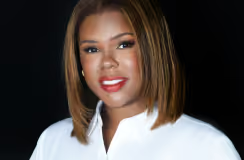
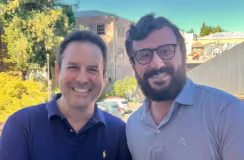
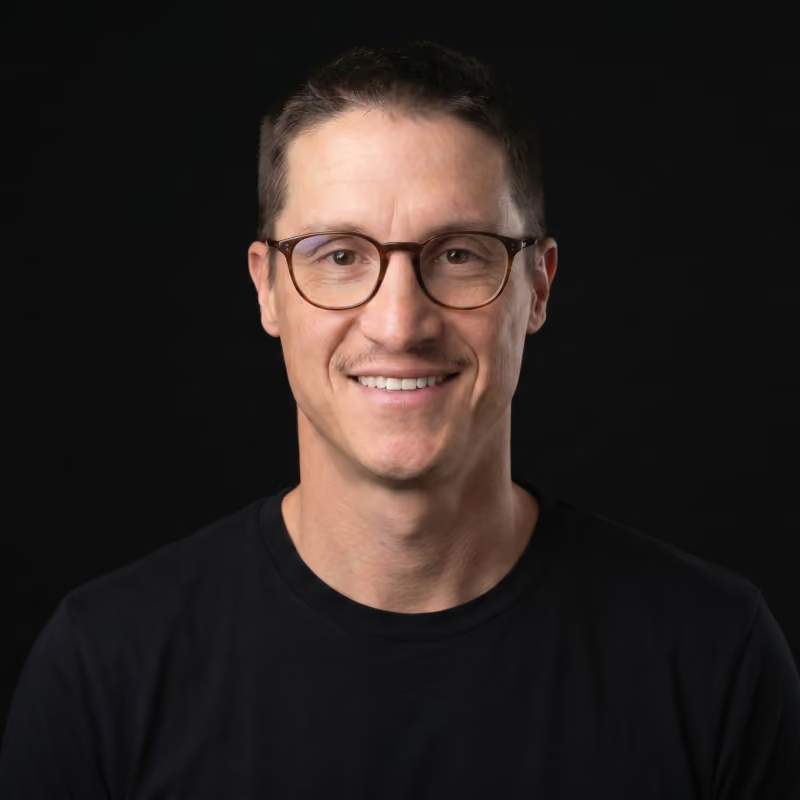
Host: Some people see themselves in the context of their ancestors and their progeny, that their lives are like a little segment of a line, a line that goes back hundreds of years and which will hopefully continue years into the future. During their life, they endeavor to bend this line upward so that their descendants start their lives from a higher position. That perspective is courtesy of Bruce Vann Bright, one of today's four guests. The theme of this conversation is the life changing potential of buying a business, especially so for people starting at the margins. Bukhari Akil, Bruce Phan and Chris Munn, each of them black, each of them from modest backgrounds and in one case, outright poverty. Buying a business changed the lives of these guys profoundly. It was how they bent their lines and they want people, especially people from like circumstances, to be aware of the opportunity. I handed the mic over to Elliot Holland to moderate this conversation. Many of you will recognize Eliot as the founder of Guardian Due Diligence, which provides the diligent services that Elliot wishes he'd had when he was himself searching to buy a business. I hope this conversation provides you with inspiration and perspective, as it did for me. Here are Elliot, Bruce, Chris and Bakari.
Guest 2: Enjoy.
Host: Welcome to Acquiring Minds, a podcast about buying businesses. My name is Will Smith. Acquiring an existing business is an awesome opportunity for many entrepreneurs and on this podcast I talk to the people who do it. August Felker is a two time successful searcher, first with a traditional search fund. The second time around he did a self funded search. Today August runs Oberle Risk Strategies, an insurance firm with a dedicated practice group for searchers and acquisition entrepreneurs like you. If you've got a business under loi, Oberle will provide complimentary due diligence on that business's insurance and benefits program. A great no risk way to get to know August and team. They love helping searchers. They've worked with hundreds. Oberle is a specialty insurance brokerage for searchers by a former searcher. Check out oberle-risk.com O B E R L E- risk.com link in the show Notes
Guest 3: welcome everyone. We're going to start off today. We're going to have an interesting panel I think and have some fun. But we have sort of four black SMB buyers and people in the ecosystem that all have different stories and to start off we're going to go through and just everybody's going to get a chance to sort of introduce themselves and their genesis story of how they got here and then the topic today is going to be just around what it means and what it's like to be a black small business buyer or owner or operator. So I'll kick it off and then we'll go around the horn for introductions. My name is Elliot Holland. I'm a proud alum of Morehouse College, Georgia Tech and Harvard Business School. I started in the deal world from a private equity perspective and then was an independent sponsor for several years with an older business partner and then spun out and was a self funded searcher for a while. Had some success, but definitely some challenges. And around 2018 I took a look at all of the influx of folks into the small business buying arena. I had known from my previous years how difficult finding good due diligence solutions were. I thought a lot of offerings were pretty bad for even experienced business buyers, but I think even worse for first time buyers or people new into the arena. So I started my current firm that I run, Guardian Due Diligence, to be the diligent solution that I thought I needed and hoped other people needed as they came in sort of fresh without the I banking or private equity experience. And now I run a team of 17 forensic accountants and we do due diligence work for some of the folks on the screen here, but also for other folks that are probably listening. So that's my quick introduction and then I'll pass the microphone to Bruce.
[4:27] Guest 2: All right, thank you. So my name's Bruce Van. I was introduced to this space in business school. I'm a Darden alum and. But it, it sort of was. I graduated in 2013, but it was sort of a passing thought. And then I didn't revisit it until I want to say. When Was that? Late 2018. I'd lost my third job in four years and I saved up a little bit of money and I said, okay, I'm just done working for people who are, I don't think, as smart as I am. And I'm not saying that I'm the smartest guy in the world, but I can say demonstrably I was more intelligent than these folks who had the habit of firing me. Possibly for racist reasons. I don't know, but we all kind of know. So then time went on. I beat the bushes of my network. Somebody said, hey Bruce, you ever thought about doing a search fund? I was like, no, I hadn't thought about it. Oh, wait a minute, that's a great idea. Read the HBR Guide to Buying a Small Business and really just hit the road from there. That was early. That was January 2019. I found my, my first company, Lux, out Products in July of 2019. I closed on it on February 14th of 2020. And I've since acquired two other companies since then. Small acquisitions. The whole group has about, roughly, roughly about 750 and in SDE right now. But I hope to get some more acquisitions here in the next, in the next six months to a year and, and, and, and get my income up a little bit higher than that. And that's where I am and that's how I got into this space. All right, let's go with, I'll pass it to Bakari next.
[6:20] Guest 4: Hey guys, let's see. So my name is Bakari. So I founded Graves hall Capital in 2016. Since then acquired two companies or first bought a burlap bag manufacturing company
Host: in
Guest 4: partnership with the private equity firm. It's a $35 million company. We have 80 employees. We hired a CEO who runs the company for me and we were doing pretty well. About 5 million in EBITDA on a trailing 12 months basis. The year before that, executed an acquisition with a family office of an educational technology company. Completed that deal the year before. So besides that, I also teach entrepreneurship acquisition or just Specifically how teach MBAs how to buy companies through whatever model that they choose to take at Cornell. And I speak generally and show up at these different panels and things to try to inspire people who are like me, who are interested in doing this. I don't share the academic pedigree that some of my peers do. While I went to Morehouse College, I actually didn't finish. So I left school before I completed my degree and I never got an mba. And so my introduction to this space really came from an interest in not being poor anymore and looking for ways to not have to be that anymore. I identify a bit with what Bruce, you said a second ago about getting fired, often by people who didn't feel like they were smarter than me in terms of like their business knowledge. And so in this process, starting to learn and think about how to get involved in entrepreneurship, which I felt was going to be my path. I think some of you guys may have heard Dame Dash when he was on the Breakfast Club years ago, telling people how important it is to have something that you own in your own name as opposed to just working for people for the rest of your career. And that Inspired me in 2015 or 16 when he, when he gave that interview. And so for me, I started looking for those routes and looking into entrepreneurship. And as I was exploring entrepreneurship, I couldn't find a route that made a lot of sense that didn't require me to have to go out and raise a lot of money. Sure, you know, dropouts raise money for VC deals all the time. But I didn't have like a really great like idea about what to look for or what to create. And in the process, these three letters kept ringing up to me. I kept seeing these letters in different spaces. And the three letters were LBO. And one day I just typed those three letters into, into YouTube and came across this whole world of acquisitions. And the thing that inspired me beyond that was that I found out that there were MBAs who are about the same age as me as at that time I was 25, who are going out and buying companies. I came across an article that was produced by HBS called Early Career lbos. And this was before there were, before Rick and Royce had published their book, which is, you know, pretty prestigious and has been referenced already. But the, there was no information about this subject or not as much information in the public, public space. And so I actually went out and I sat in a course, Columbia Business School, which is taught by Tim Bogard, and learned how this process, or this, this process works for going out and buying a company. And then I flew. I lived in New York at the time. I flew out to Stanford and sat in David Dawson's class at the GSB and learned how this process went. And so after getting the knowledge, I decided to execute and go after trying to complete acquisitions. And so, and now I'm where I am now. And so that's my story. There's a couple I should mention that I've known Elliot for a while and Elliot was a big part of my introduction to the space before I came, before I was in the entrepreneurship to acquisition space. I didn't have a private equity background. And so Elliot was very helpful in providing me with materials and a perspective. And the knowledge that he had also gone to Morehouse and was at Harvard Business School was a great amount of authority for me to take his advice very seriously. And it's helped me significantly through my career. And so so now I sit here as board of directors, owner of multiple companies, lecturer in this space in a pretty high way. And so that's me.
[11:24] Guest 3: That's compelling. Great story, Bakari. And then Chris, bring us home on the introduction.
Guest 5: Yeah, so thanks, Elliot. Happy to be here and happy to do this panel. My name is Chris Munn. I'm a proud Howard University graduate. And that's it, because when you go to Howard, that's all you need. But I got into this space Similar to the other guys, like, not knowing anything about it. I worked in finance in New York, worked on Wall street, didn't really know about buying small businesses. I took a corporate M and a job in Atlanta, where it was our job to buy businesses that were doing 2 to 5 million dollars, 2 to 10 million dollars in EBITDA. And that's where I really learned about it. Read Reginald Lewis book, why Do White Guys have All the Fun? And that kind of really inspired me to get on this path. So since then, I've done two acquisitions. One in 2020, one in 2022, both remote acquisitions. I live in California, my acquisitions are in Florida, and we do a little over $5 million in revenue. And I'm still looking to do more acquisitions. So super inspired by the space, super inspired by the people that are on this panel and hopefully can inspire some people to join the path as well.
[12:52] Guest 3: Awesome. So different pedigrees, different experiences. So. And some of that stuff I'm not even sure I knew, which is tis tisk on me. So we're gonna, we're gonna get into it here. So I wanted to a give a shout out to Reginald Lewis's book, why Should White Guys have All the Fun? As controversial as the topic is, it could also be said, or could have been called why Can't Fill in the Blank? Have some fun Too. And I really enjoy the book. And if anyone who's listening, whether you're white, black, or any kind of denomination, I think you should pick that up. And I think we'd all love to talk about that book. I think you'd enjoy it. So, moving on. One of the things that's challenging, I know I've experienced it, and talking to these brothers and other brothers we've all experienced it, is getting deals done is hard for smart, connected rich people. It's even harder for folks who may be even partly a little outside of the traditional type of folks that do these things. And I think part of the challenge oftentimes is when you get denied, because nobody on this panel, I think their first lender, their first investor or their first pitch was just like, hey, take all the money, guys. You can go do whatever you want. Sometimes when you go through those processes as a black buyer, you don't know if your deal stunk. You don't know if the investor just wasn't interested or you don't know if it's because of your wraith. And so what I wanted to sort of open up this conversation to start is just talk about a difficult Fundraising time or deal time, when maybe you got dinged or were held up and you just weren't sure whether it was because you were black or for some other reason. Chris, you want to start us off?
Guest 5: I can tell one of my stories. So I had a. I had a lender, Lender, lender on both the debt side and the equity side of experience, what you're talking about, and to be specific, you go into a situation, you think you have everything buttoned up. And as black people, you know, we have. We always extra buttoning because we know we don't want to be subject to the criticism and the scrutiny, because if there's a hole in the argument, it'll be found. And so having. Having everything buttoned up and still receiving kind of negative feedback or difficult feedback. And for the equity side, I think it all came from the. Stems from the fact that I'm not connected to any money. And so I grew up in Detroit. I went to the worst school system in the country, Detroit public schools. I literally knew no one growing up with any money. So when people say, oh, yeah, I just raised it from friends and family. Yeah, friends and family are like $5,000 checks for me. So you can imagine how far that gets you. And so that's a. That's a setback from being black in itself. And so I think I say that to say there's gonna be. I think you have to go into it knowing that luck is not gonna be on your side. You're gonna have to push through. Shit. I don't know if I could cuss on here to get to the other side. You just have to assume that luck's not gonna go your way, things aren't gonna go your way, and you're gonna question a lot of times like, I'm only in this situation because I'm black. I know if I was a white guy, I wouldn't experience this difficulty raising money or not to the same degree at least. And so you just have to say, look, I got to work. The old saying, you got to work twice as hard. That's 100% true in the search world. Even more so in the search world, you'll have to work twice as hard to get what you want. But if there's something that you want to pursue, then that work is worth the effort.
[16:55] Guest 3: Bakari, you want to give us some flavor on that topic as well?
Host: Yeah.
Guest 2: So
Guest 4: I spoke at MIT maybe two months ago, a month ago, and told a lot of people my story, and I started to get some inbound responses from people via email, phone, et cetera, who wanted to have a chat with me, particularly young black men, black women who had been in my shoes and were thinking about trying to buy a company. And one of them reached out to me and I had a conversation with them and they were telling me about how they had this concern about going after the search route because I just finished business school. I think they were at hbs, they had just finished business school and they were considering going into investment banking, but they had this urge and interest in becoming going into the search fund world, but were concerned about the difficulty of navigating that. Now, as I mentioned at the beginning of this call, when I went after this, I didn't not only have like all the things that you just mentioned, Chris, which is even when you said $5,000 checks, I don't think I ever saw $1,000 when drawing up. So like even like I came from nothing to, to pull this off, right? Like zero, zero. Like when I, when I connected with Elliot, Elliot was probably the richest dude I knew and Elliot wasn't rich. So, so I was coming from nothing and this dude is reaching out to me, asking me about, like, whether or not to do this with a. @hbs.edu email address, getting ready to be an investment banker, you know what I'm saying? So listen, if I could pull this off with all of the difficulties and all of the ching ding ding dings that I navigated, if you're listening to this and you're thinking about pursuing this, you're going to bump into those things. But these things are not insurmountable. These are the same challenges that I bump. The guys who started started Harlem Capital, we were all in Harlem around the same time to navigate this business world. And they bumped into a lot of the same things that I was bumping into even though they had graduated from hbs, you know, so like we, I, this process is hard. It's difficult. I have tons of stories, particularly in my situation, in that not knowing if somebody's turning me down because this is a great business, a great CEO who's stepping in a great industry. It fits every search single one of the search form factors, but I'm getting a no. And that because they're like, oh, you can't buy this company because you don't have an undergraduate degree. That sounds stupid. Or you can't buy this company or we don't want to back you because you're black. I was never able to determine those types of things, but I eventually got it done. And so my advice to anybody listening to this is that you can do it. Just push through it.
[20:06] Host: I want to share an update on the Acquisition Lab. As you know, the Lab is a highly vetted cohort based accelerator and community for people serious about buying a business. After going through the Lab's month long intensive, you have ongoing access to almost daily Q and A sessions with advisors, regular live deal reviews with Walker Deibel, author of Buy, then Build Potential Deal team introductions and a very active Slack group with other searchers on the path. Well, the update is that the Lab recently passed 60 businesses acquired and for well over $100 million in aggregate transaction value. Also, all members now enjoy lifetime access to the Lab because when you buy a business, it's often just the first of many and the Lab wants to support you in every deal, not just your first. Lastly, check out my recent interview with Shane Ursum, episode 105. Shane acquired a business with over $1 million in EBITDA in just six months. And he attributes a lot of his deal success to what he learned in the lab. Check out acquisitionlab.com or email the lab's director, Chelsea Wood. Chelsea, then build.com
[21:17] Guest 3: and then Bruce, I'm going to get you in a second. Since I know Bakari a little bit, I'm going to add to his story. So I've been involved with a lot of people that have hit me up over the years about getting deals done, buying businesses, a lot of black folks, a lot of folks that aren't black. And I can tell you that probably the most relentless person I know that I've met is Bakari. I don't know how many times you hit me up about deals or opportunities or things that sort of could have worked or maybe should have worked and just never had a bad spirit about it. So if anybody wants to talk to somebody about just resilience and just running through it, I call it running through walls sometimes.
Guest 4: That's exactly it.
Guest 3: You can, you can definitely talk to Bakari. But let me, let me get over to Bruce. Bruce, I know you have some good stories. Talk to us a little bit.
Guest 2: Yeah, man. I can echo what Chris and Bakari both said, like literally for the, and it's funny and I'll get to the story, but the first time I actually had a thousand dollars, I distinctly remember this. I was 22 years old, the first time I ever had $1,000 in my life.
Guest 4: And I was like, wow, I actually
Guest 2: have some pocket change here.
Guest 4: And so rich.
Guest 2: And I'm, I'm 30. Yeah. I felt rich, like, for real. And so in terms of, like, I think there's a. There's like, this cultural mismatch for us going into this space of really owning these businesses. And so when people see us trying to go for it, they. It's sort of like their heads explode because they're like, what are you doing? You're not supposed to be here. So I think for me, I had challenges initially on the equity side, and then once I saw that I was kind of getting a little bit of pushback, I was like, well, screw them. They can stay out of my process. I don't even want any other. Anybody else having any say so over my deals. I'll just scrape together my own capital and go do this. And that's what I did. But the place where I really had the biggest challenges, I think, was in trying to buy companies. Like, there were certain people or brokers or sellers who just kind of gave me a real nasty energy sometimes from time to time by saying, hey, look, I want to come and buy this company. Like, I remember I was trying to buy a landscaping company one time, and the seller called me a nuisance and said I would drive his people nuts. And then the broker was. Was, like, fussing at me about something I don't remember. And I had to say. I had to say, hey, look. I won't say his name, but I was like, hey, look, hey, hey, hey. I'm the customer. I know you're an old white man and you're a baby boomer. You think that the world revolves around you and your feelings, but that's not how this works. If I'm paying here, you need to talk to me a certain way. You need to consider what I have to say, even if you don't want to hear it. And you got to give them that kind of energy and persist past. I mean, you can be polite with it, but you got to be able to do that. So, I mean, my only advice with people who run into that sort of energy is like. And it's kind of really befitting today, especially with the Supreme Court striking down affirmative action. And as. As we've known it for so long, if somebody's going to just don't let your. Don't let your opposition out bold you out bold them.
[24:28] Guest 3: Be.
Guest 2: Be more bold than them. I'm not saying you have to be rude, but you can assert yourself in these situations, and there's no way to. Actually, it's a very assertive thing to go to a broker or a seller or anybody or a lender and say, I want to buy this company. But you have to do it if you want to get there, and you have to. And you got to do it every day after you buy it, if you want to, if you decide to be running the company. So that's my thoughts there.
Guest 4: That's such a great point about being assertive. Like, it's such a great point because for. When I first came into the space trying to buy companies, I thought. I thought that I needed to be this, like, really, like, like, highfalutin and like, like, very gentlemanly and very, I don't know, like, demure. Like, like, I thought, like, I needed to, like, I don't know if you guys have ever seen Pretty Woman, but the Richard Gere's character, he buys companies. And so when I would watch that movie, I was thinking, is this, like, the, like, the effect that I need to, like, provide when I'm, you know, trying to do this? And so there was times when I used to, like. Like, if I was going to meet a business owner, I would be like, meet me at the Harbor Club. I was not a member of the Harvard Club, but I was actually friends with a member of the Harvard Club. And so we would go there together. And so they would meet me at the Harford Club. And it was beautiful. And we would sit down and we would have these conversations. And ultimately, even if we were in this beautiful place and all these types of things and I had suited and booted and everything, I would sit down and. And we're talking. It's. It's a deal. It's money. It's cat. Like, I can have the niceness that. But if I'm coming $500,000 shorter than the other guy, it doesn't matter if he shows up in a pickup truck, give it to the dude who's giving more money. And so ultimately, I just decided to say, listen, I'm going to be me. Like, I show up like this.
Guest 3: Like, that's right.
Guest 4: I have my chain out. I have my hair. I've had my face on my website. I look just like this when I show up, right? Like, I, like, I, I. And I assert the per. Like, because I'm going to be the person who owns the company.
Guest 3: Like, it's right.
Guest 4: It's me. Like, I don't. I don't need to be the other version of me. Like, I could be me and get this done, or we can't get it done. But to, like, asserting that point about who I am, that this is legit. This is me. And you're gonna have to deal with me, not some other version of me not being disrespectful, but just being like I'm the guy who's buying the company. You know what I'm saying? Like, so when I'm dealing with the brokers or the. Or the bankers, it's, It's. I'm always in that frame of mind. This is. This is the equivalent of me showing up at a restaurant. The waiter, the broker should show that same respect to me because I'm the person who's paying and making this possible. And so I respect exactly what you're saying. I know exactly what you mean. You gotta assert yourself. Not in a way that's disrespectful, just. But just in a way that. That reminds, or not even reminds, but just sets the agenda and the clarity that this is a business transaction, and the person who's providing the money and is going to have to do all the work organizing the entire transaction is standing in front of you. And so. And I found in my experience that the sellers are pretty comfortable once the. Once they see that they're dealing with, like, a real person as opposed to, like, you know, the representative version of yourself.
[27:53] Guest 3: I actually think that's where black people have the best advantage. And so I'll take it to the left and then bring it back. So I think that we're so often taught to be respectful, to show deference, particularly to older white men, particularly. I'm just going to say it the way I know how to say it. And we come up through high school, college, professional life, the whole thing, making our bones, making our money. That thousand dollars that Bruce probably made was probably being very, very nice to others when there was an alternative to be assertive. And then you get into this game. And actually, I think the way that black people present when we're not in business, you know, when we're at church, when we're at the barbecue, when we're at the HBCU cookout, it's actually the best way by far to communicate in this deal world. And when we able to turn that on, it becomes a superpower. But it can be challenging to get past that. I remember I literally was sending a note out, I think, on Twitter or my email, asking for feedback. And if HBS dude, who I like, was like, elliot, I love your stuff, man. But my feedback is that you're not super professional when you speak like, you don't. You don't speak like a typical consultant. Or investment banker. You know, you drop F bombs and four letter words and I just have a hard time keeping up with you at times. And I was like, well, how's all that proper language working with when you talk to a seller, bro? Yeah. And I appreciated him because he sat back and he said, you know what? You're right, it's not working. And I remember that moment because it was another test of the hypothesis I'll also throw out here. Quickly. I was looking at deals as a independent sponsor, 2012-2016, when Obama was still in the White House. And I would say on 80% of my calls with brokers and sellers, they spend the first 20 minutes dogging Obama. To me and my black business partner just dogging this man running through the sewer. And I remember we'd be on text just like, when are these dudes gonna finish? And you sometimes have to make that choice, like, do you want to be right or do you want to be rich? And I remember having that conversation many times and letting dudes kind of say what they had to say because I was, I was there for the money, but I wanted to kind of toss that in the mix because I remember those years.
[30:15] Guest 4: I agree exactly what you're saying. Like, I see, I. When I, when, when Obama, just to speak to Obama, when Obama became the president, I think there was a generation of us who were like, oh, so to be successful, we need to follow the Obama mouth. So keep your hair low, you know, keep nothing on your face, try to live the squeakiest, cleanest life as possible, get off every single degree. Like, there was like a whole generation of us who were like, I, blue, blue shirt, white shirt, always have a tie on, you know, all of that. And because we saw that success and it reflected as to what it seemed like if we were going to follow some version of that success, even if we don't want to be the president, but we want to do anything that reflects it in the public space, that we need to adopt that. And I. The. Another counterpoint to that is I remember maybe three years ago, Jay Z was at a. Was at Columbia, and you said, I walk into every room as me. I don't, I don't do no changing of my voice. I don't change my inflection. I'm exactly the person you see here and there. And that, like, stuck with me in a way that, like, I, I knew at those times that I was still trying to navigate what it meant to be a black person in business in a way that was authentic to who I really see myself as opposed to being whatever version that I was attempting to be. And so I respect that. The other thing is what you just said about the, like, the bosses don't talk like that. Right? The bosses don't have the nice inflection and are super. When I talk to bosses, they all talk. They say the F bomb, they say the S word. They say everything in every single conversation. Every time I'm in those private meetings, it's not buttoned up like that. What shows in the press release and, you know, public facing kind of things, that's where you might see, you know, a drawback to that. But in the actual conversation, everybody's realistic. They're who they are. I've been in conversations with business owners who just like you said, Elliot, who are just who voted for Trump and are like, explaining to me why they voted for Trump. I'm not there to have a conversation about Trump. I'm there to buy your business. So if you want to vote for Trump, I say, nah, I can see why you would do that. Right? Like, I don't need to agree with you why you want to make that conversation. Now, let's. Now that we're past that, what's your ebitda? How many employees do you have? Is any customer concentration that I should be aware of? Is anybody getting fired soon that's going to affect the business? Like, that's what I'm there to have a conversation with. And if they want to trail into that, we can address it and move the right on.
[33:10] Guest 3: That was some good belly laughing there. Thank you, everyone. So. So now you guys are operating businesses. I guess we all are. And I want to give you guys an opportunity to tell us what that's like, just in general, but particularly from the lens of being black. And I want to start with Chris, just because I know a little bit about his situation and then doing it remote. And I love how he put some things very simply, but emphatically so. Let's talk a little bit about your operating experience, Chris, and how that's been for you.
Guest 5: Yeah, I'd say my operating experience has been really positive. I really resonate with what Bruce and Bakari were saying, and even you two, Elliot, about being yourself and taking up space, because eventually you'll have to. Right? Like, you can't live your whole life and not be yourself. And to touch on that just a little bit more. I think it's a big struggle for black people, especially black men, because we're taught to minimize and shrink ourselves, to fit in and whether that be at school, whether that be in the workplace, or especially like in situations with the police, it's like, because being black and being yourself can be a detriment to your life. And so we have to change that thinking when we go into business and say, I need to be my full, authentic self. I need to come as myself. Because all the skills that made me me is what got me to this point. And so I try to bring myself to work all the time. I talk just like this when I talk with my co. With, with my coworkers, I and my team. I don't try to sugarcoat things on myself. And you get the sense that this is not in a dictatorship way, but this is my company, this is the way I want to run it. And you're going to have to get on board with that. And that's just very different than anything any black person has ever experienced. In my life. Nobody gets to say like, hey, you're doing it my way, or except my father, you know, like in the house. But other than that, it was like, you know, you get to tell a team of 100 people, hey, this is the way we're doing it. And follow me. And so you have to be authentically yourself to be able to do that. And I think that's. It's the hardest thing. It was the hardest thing for me to switch on. And to Bakari's point, you really have to lean into it though, once you become a business owner, because that is the way the boss is taught. It's the way people receive communication, simplest terms. And the simplest way to communicate is just to be yourself. And so being myself, being my authentic black self, coming to work, listening to my hip hop in the office, like, that's me and that's the way we do it at my company. So I completely agree with what you guys said and I would just encourage the listeners. It's gonna take a mental shift to start taking up space and start being yourself. You're taught your whole life that you're gonna get ahead by not doing that. But I think all of us are here to say we all are standing where we are because we are ourselves 100%.
[36:21] Guest 3: Yeah, you're gonna give me that every single day. Bruce, let's hop into your experience. Talk a little bit about. About your experiences.
Guest 2: Yeah, I mean, I think it's my experience is. So I'll get. I'll tell my experience with. With another story, right? Like, so I went and bought my second acquisition, which was or is a, a ribbon Weight machine and ribbon weights are. Is what it sounds like. This, this machine that takes a long piece of ribbon, folds it in half, puts little pieces of steel inside of it, fuses the, the ribbon around the steel, and then we use those ribbon weights at the bottom of our stage curtains. So I bought that from this guy in Georgia named Bill, right? And we did all this work. I went down there with my cousin and we did all this work to get the, to get the machine dismantled properly and get all the pieces and hope that it worked once it got to Richmond. We. I rented a truck and all this other stuff. And so the morning of I was supposed to fly out and so was the Bill the guy was selling it to, to me. He was supposed to fly out because he and his wife were going to retire to Costa Rica, which they ultimately did. The, the trucking company lied. They said that they were going to. Or was it the trucking company or the legisl. Somewhere in there somebody lied to me about the timing of when the truck was going to be there. So it was much later. So I ended up, both of us ended up missing our flight. And I was getting mad. I cussed the guy out because like, what the matter with you do like this, you're, you're, you're holding up my money and all this other stuff and this, that, the other. But I could only show sides of that anger in it off of the training in my programming and the way that, that I've been set up. So when I went and talked with Bill about it and he was waiting, he was like, Bruce, you're too nice. Here's the guy selling me this business. Tell me you're too nice. And I thought about it. I was like, man, yeah, you know, you're right. I am too nice. And the reason I'm too nice is because there is no socially acceptable way for a black man to display anger. And when you are managing people, you have to. You absolutely have to. And it's not saying you got to be. You have to be angry all the time, but you absolutely have to. From time to time there's going to be times when somebody does something dumb and you got to call them on it. And, and, and there's, and people aren't really used to that. So I think it's been, it's been a journey for me. And not to say that I've. I've mastered it, but it definitely has been a journey for me. And I can't imagine what that is like for managers of people and teams who are black in companies that they don't own because that would be nightmare of a tightrope to walk for me. So God bless it if that's you,
[39:03] Guest 3: I'm in the seat I'm in now because I could not figure out a way that 30 years of that, Bruce, made any sense or I could find success in that not having agency with being required to deliver results and then only using some of the skills that you can bring to the table because some are unacceptable to hr. You'll be in the HR meeting quick. And I think a lot of us are here and even a lot of the black entrepreneurs of the older generations were forced into ownership because what you just spoke about, Bruce, being a middle manager, having to affect results without agency is so difficult. So Bakari, tell us a little bit about your experiences. Good, bad and ugly and operating.
Guest 4: Yeah, I mean, luckily in my case, and sort of unluckily too, I don't run my companies. The first company I bought, I mean, the last company I bought, the burlap bag manufacturing company, I have a CEO who runs that company and I sit on the board of directors as an independent sponsor overseeing the business. And so in my situation, I'm mostly being reported to by the CEO and some of the team when I ask questions. And so there are some key responsibilities that I'm taking on just to accelerate some of the growth of our business. We have some e commerce projects that we're working on. And so a lot of that, but a lot of that stuff is mostly outsourced. What is interesting is, I guess from a race dynamic is that the majority of the board are white men. And so I'm the only black guy in the picture. In fact, when I say the picture, if anyone's listening, you can go on my LinkedIn page. I have a picture of all of us at our last board meeting. And I'm dressed pretty much like this. And everybody else is in professional gear as well. And it's such a stark picture when people look at it, because I'm. I look like the person who's out of place. But the funny thing about that picture, in that picture are the two sellers, the people who sold us the company and one of the investors who, who I participated with and two of the people who, who work for him, actually two of the partners and one associate. And. And the only reason that transaction happened is because of me. I'm the only one. Like, I negotiated the letter of intent with the two brothers. I found the investor to participate, get the transaction done and so while I look like I'm the most quote unquote out of place person in the picture, it's your picture. This picture doesn't happen.
Guest 3: You're the curator of that picture. I'm the person to make this whole thing.
Guest 4: And so it's such a funny, like, if anyone's listening, just go on my LinkedIn page, you'll see the picture and you'll, you'll, you'll, you'll bust out laughing. You'll understand exactly what I mean. And so that's the experience or that's the space operator. That said, you know, I enjoyed the guys I work with and we're trying to make our board even more diverse right now. We have some people who come from our industry, but also have some diverse background beyond even me, from like an all male standpoint in women into our, onto our board as well. And so we're thinking thoughtfully about this stuff already. And so I like the guys I work with and I love my board, I love the company. And the goal is over time to find places to add more diversity to our, not just to the board, but also to the leadership and the management of our business as well. To me, that's a great big opportunity that I think more business owners and more search fund people should take. Taking a note, it's something that I'm working on sort of on the side of pulling together a small fund to go out and buy companies in the lower middle market that we can convert or get MBE status or certification for. There are literally billions of dollars that are allocated to minority businesses that go unclaimed, which ultimately result in those contracts being available and open on the public markets for MBE suppliers and service providers. Starbucks just announced that they're going to spend $1.5 billion on minority businesses. Another company, Echelon, I believe, announced that they spent $2.8 billion in 2022 with minority businesses. Apollo, all of their portfolio companies. They just announced that they want to, across all their portfolio companies, spend at least $2 billion with minority businesses. And so this is a, and that's just the private sector. In the public sector. The gsa, Biden just announced that the GSA is going to be focusing and targeting even more for minority businesses. And so there's a big opportunity for companies that are not currently owned by black people or minorities to buy those companies, get that certification and get access to all of these, these contract dollars that are literally just sitting there waiting. And so that's the fund structure that I'm looking to put together right now and just like a short on our thesis that we're, that we're hammering out now. So that'll be. That may show up more publicly in the press within the next 18 months.
[44:46] Guest 3: Well, Bakari, I'm definitely betting with you, given your persistence. So just let us know when those acquisitions take place. So we had a discussion before we got on here, and so I'm going to switch gears a bit. We've been here, we've had some jokes, we told some stories, we kind of set the scene, but we have to juxtapose or sort of reconcile these things we're talking about. There's some challenges in this process of buying a business as a black professional, but all of us are in it and sort of happily in it and trying to grow it. And so let's talk a little bit about what motivates you, what drives you. Why do you consistently choose this path despite the challenges? And if there's any sort of moment or item or situation that gives you inspiration, let's share it so that people who are listening may get it as well. And so I want to start with Bruce on that one. Tell us a little bit about what makes you choose this fact every single day.
[45:50] Guest 2: I mean, I think about. I think about myself as a small line segment in a much broader continuum of a bloodline. And I think about my ancestors who were like, probably kidnapped off the, the River Niger and put into the Middle Passage, like the ships on the Middle Passage, and had much rougher lives than me. Right. And my challenges. And so to me, I think I owe it to them and I owe it to my progeny. I just had my son a couple of weeks ago, my first son, and I'm really happy about that. But I owe it to them and I owe it to my progeny to be everything that I possibly can and to try to pay it forward so that the wealth of, not just the money wealth, but the wealth also of the wisdom and the knowledge and the financial knowledge and how to do all this stuff snowballs over generations so that I can. So that we can change the order, because I don't have a lot of control over, like, it's just like when I started with that thousand bucks. I don't have a lot of control over what happens tomorrow, but I have a ton of control, like, or a lot more control over what I want. And this is just us as people in general. We have a lot more control over what 400 years into the future are going to look like, what, what that reality looks like. For, for our progeny. So for me, that is, that is my why I don't want any more vans working for people who don't see them as full human beings. I just, I just don't want that. And then the other part of my why is I just, I think ETA in general is the very best. Well, is generally, I won't say always, sometimes somebody can go and start something that's going to just blow up and be amazing, some amazing startup or something like that. But, but generally the case, the case is that the best, it's the best and most consistent and predictable on ramp to building wealth that's out there if you, if you do it the right way. Right. Like I mean it's, it's how, I mean look, Elon Musk still does it. Sam Walton did it when he got on board. Robert F. Smith has been doing it and had a lot of success with it. Like all these different people, they found something that already existed and then backward engineered the financing, acquired it, controlled it and then grew it all these times over and over again, over again. And even Jay Z was doing, you mentioned Jay Z earlier. He did it with Title and probably I think a few other companies. So this is really the, this is the final frontier and this is how we skip the line and we don't have to shuck and jive and ask anybody, oh, would you please hire me? Please pick me. I'm the special, I'm the special one in the exception. You should pick me. No, we don't have to give any of that energy anymore. We could just go and buy the companies and I think that's the best route for that.
[48:40] Guest 3: So let me interject a little bit about the history of deal making and I talk a lot about some of my challenges earlier in my career. Getting deal done were just, I didn't have enough rich uncles. So a lot of times the friends and family concept that's been talked about already, people sort of assume if you can't raise $100,000 with your friends and family and they don't really adjust that for your, your economic sort of opportunity set, then they don't want to put their money with you. And I understand that concept of skin in the game from an investor perspective, but let me circle it back to why I wanted to bring all that up. With the growth of ETA, with the growth of the SBA 7A program, with the growth of search funds, but particularly self funded search and now where you can put 10% or less down on a million dollar business and not be the only one at the bank having that discussion, but have hundreds of people, if not thousands having that discussion. It's like a double click on what Bruce said around it being one of the easiest on ramps of wealth generation. Because now you don't need as many rich uncles. You can actually get things done with a lot less equity. In fact, there are groups that will, that will emphatically and market that. They will put up all the equity and you will still have control, ownership. And so a lot of us, I think, came from, how do I put these $2 together and go get a million? And there were very few ways to do it, even as recent as five years ago, ten years ago, certainly now there's a lot, there's a lot more ways. So I, I wanted to continue on in the concept of sort of what's your why? I think it's a good way to phrase it. Bruce, Chris, what is your why?
Guest 5: Yeah, so I really, I really love what Bruce said. A lot of that resonates with me about family. And at the end of the day, I want to change the course of my family. So to Bruce's point, my family, we don't, we didn't come up with money. Nobody in my family has money. And I want to be the person to change that. So a quick story. My dad died when I was like 25 or 26. And he worked at General Motors his whole life, like 30 years. And after he died, we found out that when General Motors went through bankruptcy, they like canceled life insurance policies for their employees. So we find out after he dies that my dad life insurance we thought he had, he didn't have because General Motors just said we can't pay it. Right. And it went away in the bankruptcy. And so that will never leave me. Like the fact that he worked somewhere for 30 years. My dad, oldest of nine kids, grew up in the projects, like did everything he possibly could. And at the end of his life, he still got shat on. Like, that will never leave me. And so I want to be the person that changes that in my family. Like Bruce said, I don't want somebody to have to work for 30 years and then still have to hope that the white man treats you right. Like, I want to, I want to make sure that my niece or my kids or whoever can come work for me at a place where I know they'll get treated right because I'm in charge. And so that's my why.
[52:06] Guest 3: Bakari? Yeah. I want to talk to you about your why, but also I want to give you the chance to talk about your motivation because I, we've talked about it previously and I want to get it on whack.
Guest 4: So as I mentioned early in this call, Dame Dash's interview at the Breakfast Club was a huge wake up call for me, man. I was 25 and he was like, he was talking to Envy. He said, he said, can you, can you own this business? He was like, yeah, I own shares in this business. He was like, no, no. If your son needs a job here, can you give him cash flow at the bank to work here? No. So you don't own this? I would say I was just like, he just made it so crispy clear about that situation that the majority of us. And I'm 25, so I'm at the beginning of my career, but at the time I felt like I was like leaking my career. Like, I just felt like, you know, everybody at this time was. A lot of the people I respect at the time had started businesses and all these types of things, but still, like I was 25 at the early stage of my career, hearing this guy who had effectively inspired me since I was a kid, right? Like I've been listening to hip hop since I was, you know, 10 years old. And so I'm thinking like, how do I get into entrepreneurship? And every version, every style of entrepreneurship that I would look at seemed like the high end version of it. The best outcome was maybe make a million dollars at the end of 10 years. And I was like, and that's like a great outcome for, you know, some entrepreneurs. And the entire first six or seven to eight years you're making $10,000 a year or something like that. Like it just seems or you got to raise a bunch of money which lose your ownership in the business and you're back into the same situation. And I was like, man, like there's gotta be some route to do this where you, you're an actual owner, where you're, where you, where, where you have control over your income. You have. What is this route? And when I started looking into it, I saw real estate and everybody who was teaching real estate and I'm coming with no knowledge. Everybody who's teaching real estate, they look like they're shiesty, like they're charging $30,000 to learn how to buy and flip homes and stuff like that. And I'm like, my God, like there's gotta be. And then I found out about the ETA world. And at the time ETA was literally only being taught at HBS and Stanford. It was the only two places you could go and actually sit down and learn this thing. And so from my perspective, it looked like it was a secret. And I was like, okay, if it's a secret, I'm showing up to try to figure it out. They teaching these hvx kids how to. How to buy companies at 26. Like, oh, my God, we got to get this done immediately. And so I literally just showed up, and I was. I was hbs. I was at Columbia. I was at Stanford. I did whatever I could to learn this knowledge because to me, it was a secret. Now it's not a much a secret anymore, right? There's books, there's podcasts, there's all types of things that make it possible. And so the only difference and the only distinguishing difference, and this. This goes to a Nipsey quote. And I love that we're. We're quoting so many good people. But Nipsey has this quote where he said, yo, the only distinguishing quality that separates me from anybody else who's trying to do this or get down to what I'm trying to accomplish is that I didn't give up. That's it. Like, that's the only. Like, he was like, I went through every emotion, man. I went through excitement and sadness and depression and glee. Like, I went through every. Every version. I was getting ready to give up and keep it going, but I just didn't give up. That's the only different. And so, to me, that's. I took that as like a personal model for this. Like, I was not going to get that. I was not going to stop it, and I still not stop it. Right? Like, this is just like the beginning. Like, this is this.
[56:05] Guest 3: This.
Guest 2: The.
Guest 4: The things I've accomplished so far give me the ability to accomplish even more. That's. And so my goal is to buy as much as I can. And just to add to your point, Bruce, that was the other. I looked into the same thing. I realized that even the guys who were starting businesses the way they were adding to their businesses, M and A. Facebook bought Instagram. Warren Buffett, he's known for being a great stock investor, but he buys companies. He bought Geico. Like, all the guys who do this at the highest levels, they do not go out and just start businesses. They acquire businesses. They learn how to integrate them into their own entities. And there's a bunch of different work that goes into the M and A process. You know, I've worked as director of corporate development for an engineering software business. I've been head of M And a for an artificial intelligence company. So I understand that M and A work is even more complicated than, you know, what can be described sometimes on a podcast like this. But regardless, the approach, the strategy, the growth factor, there's nothing more powerful than finding a great business, buying it for a good price, integrating it well and taking off. And so that's what I recommend for anyone listening is take this seriously.
[57:18] Guest 3: And I think I'll add a little bit about my story. I know I'm in IT as a service provider now, but I spent, gosh, six, seven, eight years as a private equity professional and self funded searcher and independent sponsor. I think when I looked at it, I said to really give yourself some freedom, you got to get some wealth, you got to get some agency, you got to get some autonomy. Because the likelihood that 30 years in somebody else's organization that you're going to be dealt a fair hand, I just, all my old school cats that were that were in these companies weren't getting Delta Fairhand. And you get so high up into the organizations where you don't have many options, like you're a senior director, director, VP at some company and they let you go. There's typically very few companies in that industry already and then ones that already don't have that seat filled and then ones that will take you on, it's so few. So I was looking for ways to actually create wealth and this, this opportunity just never left me because you can actually leverage some of your skills being real. I think a lot of owners actually see themselves in people who are disenfranchised because a lot of the owners, particularly in blue collar businesses, are high school graduates who sold something and now they have a, whatever they sold business, right? And people beat them down and kick them in the face. And when they see somebody who may have had similar experiences, they, I think they, they see themselves in those folks. And so I just knew that if you kept hustling to Bakari and my man Nipsey's comment, if you just didn't give up, there was, there was gold at the, at the end of those hills. And then of course, you know, I am a Harvard dude here and I throw myself under the bus sometimes. But I had that secret concept too because all my super ultra rich friends are buying company. So it's like there must be, there must be some gold in those hills.
Guest 4: Yeah, that's exactly right. Exactly right. And I saw the same thing like I was like when I was, when I was listening to the, to, to, to Dame's interview. I was working for a company at the time and I was thinking to myself, wow, like, if I stay here, I'm just going to be here. Like, like, I'm never going to own this thing. I'm never going to have a major ownership stake. Even if I'm provided options to buy this company, I'm never going to be in major. I didn't found this company, I didn't buy the company. I'm always going to be, I'm going to be kept here. And the thing that's really scary is if I stay here, I'm going to move, I'm going to, I'm going to end up having more responsibilities that are requiring me to have a paycheck or that I'm going to feel that we're going to require me to have a paycheck, an annual monthly income or biweekly income to actually be able to support that is a family, kids, wife, mortgage, all those things. The types of things that are going to, I'm up, I'm 25. Those are things that may be 10 years away from me. If I stay here, I'm gonna march. It's gonna push myself completely out of this moment and not be able to really fully take advantage of it before. Before I'm out of. Before the risk tolerance gets so low that I'm not actually able to take advantage of this moment. And then there's a problem of becoming senior. As you just said, we're black people, so we, we get senior on organization. If for some reason they have to downsize and we get kicked out, we're going into a competitive market with our skill set, trying to take, again, trying to take Josh from the white man. This is exactly what Malcolm was talking about, right?
[1:00:46] Guest 2: He's like,
Guest 3: how long are we going
Guest 4: to bend the white man for these jobs? Particularly in this situation, Like, Malcolm would just say just start a business, but now we can buy companies. So from my perspective, it was like, this is it. This is the only route that makes any sense to me. And it's still, it's still 10 years later, I still see only this route.
Guest 2: Bruce? Yeah, I just want to add something to that point. I mean, because what he was talking about, what Malcolm said, like, in my opinion, and this is. I don't have some great academic study to support this or anything like that. There are three things that are necessary for capitalism to work. The first is entrepreneurs have to have access to capital. The government has to secure property rights of, of individuals. And then there has to be some Level of protection against the law, super duper anti competitive behavior. Like stuff like whether that's monopoly power or whether that's the too much power getting in the, into the hands of a few people in the government, whatever it is, or whether that's too much in the big business. If you think about it historically for us black folks, we've never really in the culture in the 400 years and we've been here a lot longer than a lot of people have been in this country. We've never had all three of those. But, but, but now we have this thing where with, especially with this distribution of knowledge over the Internet and conversations like this where it's, we can understand how to navigate it and how to get access to, to that capital and get access to. And know that we can also like no one can just go and take your property rights easily. Like they could take, I don't know, 100 acres of land from your family in Alabama 100 years ago. Because they definitely did that to black people a lot. Black Wall street, but yeah, and especially with black Wall street and, and what
Guest 3: happened in California that they're trying to get back to the family of the people who was taking it from I think Manhattan beach, maybe. Yeah, maybe.
Guest 4: Yes, exactly. Village here in New York.
Guest 2: Yeah. And all I'm saying is like the, the, the playing field is, is different. It doesn't mean that they're. Because every time what happens is something, something racist happens, they have some racist policy and then they're like oh no, we're going to take it away and then it morphs into some other new racist policy and it just goes over and over and over again. But if we have to, if, if our enemies are going to be that inventive, and I call them enemies because there are, there are people who really conspire against us. And that's very real and true and we need to accept that and we need to have those conversations and be real about that. But if they're going to be that way and creative, we got to be that more on it and creative for it. Because I think, I mean what, there's 40 million of us in this country. If even a fraction of us had a large representation in small businesses in this country and small businesses employ half of the country. Like you're going to affect culture, you're going to be the most protected class in the, in the entire society because the small business goes down, then the society falls apart. Like all of these different things. And that's that, that's just what I wanted to piggyback on, on, on your point, Bakari. I didn't mean to go on a rant.
[1:04:03] Guest 4: No, no, no. And this is the opp. This is the time to do it right, because the baby boomers are retiring. These companies are becoming open for sale. They, and it's, it's not like ultimately even, even the, even deep, deep down in the south, Georgia, Alabama, all those places, you come with the right amount of money, you still buy that company. And so, you know, so this, this is in my opinion the opportunity to get it done and then to build even further.
Guest 3: I couldn't agree more. I'd even toss in the fact that before, particularly for self funded search, it was so difficult to get access to the lenders and to build relationships with the lenders, whereas now the lenders are way more accessible on places like Twitter and LinkedIn. And so people can actually see your line of progression and when you get into the zone of executing your transaction, you can actually know those folks, which was far more difficult even five years ago. So we're kind of coming to the end a little bit. So I wanted to sort of give everybody a chance to kind of wrap things up. And you know, I'm not going to go with the prompt actually. I think everybody is brilliant here. So if you have any sort of final thoughts or, or a charge you want to give to the folks who listen in or a story you want to tell. Let's, let's, let's, let's do that on the way out. Chris, you want to start us off?
Guest 5: Sure, man. So first thing, thanks to you, Eliot, for, for moderating and thanks for will, for, for doing this and allowing us on his platform. That's super, super generous of him to do that and thoughtful. But I think on the way out, all I really want to say is this ETA path is arduous. You're going to come across challenges. It won't be easy, but when you put into context that this can change the, the trajectory of your family, then to me it's something that's well worth doing. I think everybody here is interested in changing the trajectory of their family and what they come from and changing their circumstances. And for a lot of black people, changing your circumstances is like the most life changing work you can do. We come from places where there's not a lot of opportunity. I mean, in Detroit I just knew people that worked at the plant and worked at the post office and getting out and going to Howard like changed my life literally. And so it put me on this path to be able to pursue eta, to be able to buy businesses. And I'm super thankful for that. And it's challenges every day, but I always think in comparison, black people are the most resilient people in the world. We've been here for 400 years, haven't been treated well for 400 years, and we still get up every day and have joy and, like, have family, and we've stuck together. And to me, if people could get through 400 years of that, that's nothing compared to what you deal with in eta. So that's my story, and that's just what I want to leave with everybody. If we, if we as a people can get through what we've been through in this country, then ETA is like small fries.
[1:07:44] Guest 3: Bruce.
Guest 2: So I'll, I'll try to be quick, but I got two points. One is a story. When I was a broke college broke grad student at Darden, I had two roommates, and they were also black. They were JD MBAs. And we lived in a, a triple. Each of us had our own room, but we had an apartment with three bedrooms. And we got this letter from the office saying, hey, look, you all have been good tenants and you've paid your, your rent on time. We're giving a hundred dollars to each person that's on the lease. And so I saw that, and I was like, oh, okay, well, I guess I'm broke. I'm gonna go out and seek this out thing, and I'm gonna seek this out. And I went to the office. But before I went to the office, my roommates were like, oh, no, they're just talking. There's some sort of gimmick or whatever. This, that, the other, blah, blah, blah. Well, I went to the office, and as soon as I got my hundred dollars and I came back in, they immediately both got up and ran to go get theirs. And, and I think this, that is a personality type. You have to be the type of person you want to do this to go and actively seek the thing out yourself. And to Chris's point, whatever you're seeking out, it's out there, but it's, it's, it's so much easier than what people have had to deal with in, in our bloodlines in this country up to this point. And the other thing I would say is, and I'll just say this is like, you're going to have a very hard time ever really getting ahead. If you start from nothing or very little, you're gonna have a very hard time doing that. If you never take advantage of leverage, and that leverage at least has to be operational leverage, but it may also be financial leverage. And if you can get a nice thing going with both operational and financial leverage, then the system works for you.
[1:09:25] Guest 3: Bakari, how would you like to leave us off?
Host: Yeah.
Guest 4: So I know there are some people who are listening to this who, who have. Who come from, like, really cool backgrounds and may just be a little bit more secure than I was. But what I'm going to speak to now is if I'm. I'm. The audience I'm speaking to is somebody who is poor right now, and poor in whatever sense. Maybe you just can't afford whatever you're trying to afford. It could be rent or it could be something even more pressing. And so let me just tell you a little bit about what's going on in my life right now. So I come from real poverty. If you Google my name, there was an article in the New York Times that talked about how me and my family, we used to survive on donated bread. It was when I was at Morehouse when that article happened. And I was trying to raise money so that I could go to school. And so it was like before GoFundMe, I was out there raising money, trying to. On the Internet. And so right now, today, today is my last full day in New York City. Tomorrow I'm flying to Cape Town, South Africa, where I'm going to live for a month. And I'm going to be traveling across the world for the 12 months. So going on a world tour, seeing the entire world. My younger brother, who also comes from the same poverty background as I did a couple months ago, wanted to. He's a drummer and a good musician. And he was graduating from.
Guest 3: From.
Guest 4: From undergrad and was looking into grad schools. And I had suggested that he go to Juilliard. And he thought it was going to be a little difficult. We did a lot of work to connect with the actual organization at Juilliard. Eventually, he got an audition ahead of the audition. He was getting ready to go out and he was dressed, you know, sort of like in street clothes to go, because that's what he could afford. And I was like, nah. So we went down to the suit store and I spent like $500, bought him a suit, got them all suited and booted. When he got to the audition, they were like, man, you look so good. And then he got in. He's good. He's also a good musician, but he also got in because they like this style as well. Then my, my sister came to New York City for her birthday a couple days ago. When she came into town, I gave her $500. We went out, saw the, saw the city, went to museums, went to the World Trade center, went out for dinner multiple times. And now when I leave tomorrow, my younger brother is taking over my apartment here in New York City. And so he has a place to live while he goes to Juilliard in the fall. Now all of this has been made possible by the fact that I increased my income the way that I did. And my brother, even if he had gotten to Juilliard without any of those things, the suit and the being able to commute back and forth between where he lives to stay with me here in the city and now having his own apartment, even if he had gotten it to Juilliard, he would have had to find a place to live. And he's poor, saying just like I was. And so if I hadn't solved that problem for like, in a very direct way, even my family's, like, immediate ambitions would, could have been curtailed. And so these are the things that I think are critical. Like, there are, like, short term things that I'm able to resolve and then do luxurious things like the world tour that I'm talking about, which is also just beneficial for me as a human being to go out and know what it's like to be an American outside the United States and be a black person outside the United States. And so these are, these are experiences and opportunities that became, become afforded to me because I solved the money problem and I solved it for good, right? Like, not in, like, you know, I came up and I hit the lottery real fast, right? No, like, I, I own something that generates money from me and a huge amount of money on a consistent basis. That puts me in a position where even if I go get a job, even if I decide in the future, you know what, I enjoy this, but I'm also going to work for this company while I'm, you know, doing this so I can be an owner and an employee, I'm making that decision. I'm making a choice to work for a company. And it's coming from a place of,
[1:14:05] Guest 2: if they don't, if I don't want
Guest 4: to work for this company, I can literally say deuces. And I don't got to worry about my rent. I don't got to worry about nothing. It creates a place where I'm dealing human to human with people not from, can I cover, can you let me please pay my bills. And so these are the things. If you are hearing this and you're poor, I've been in your shoes. I know exactly what that's like. And I'm telling you this path that I took, no matter how hard it was and all the things that I went through, it has made it possible for me to live the life that I live now. And if you're inspired by any of those types of things, I would say take advantage of this.
Guest 3: So I'm going to say two things to wrap us up kind of like the Baptist church. Thank you Will for giving us this platform to speak and to be seen. All the deacons and I won't go through the whole list
Guest 4: giving honor to gouge.
[1:15:01] Guest 3: Yeah the head of my life. In case anybody was checking to see if we had our cards. I think we all have our black cards. So I'm going to say the same thing to anybody listening. So I'm speaking to the person who's considering this path and is 5050 because if you're already on it, just keep going. If you're 5050 and want to get some help. I'm a busy professional but I'm always willing to help people who are willing to help themselves. So when I'm first met Bakari I did the same thing that I'm going to do just for anyone. And my my Twitter DMs are open, my website has my email address. If you're looking for help in this process or where to get started, you can email me. I'm going to email you some things to read and as long as you are participating in the reading and learning about this, we can continue the conversation. And so I'm speaking to the person that's 5050 who's considering doing this. Not sure if they want to do it, not sure how to do it. I want to provide an on ramp for that for that individual. So I'm very happy that we got a chance to sit here and speak. I hope that the stories that you heard here felt genuine and give you motivation. And I also think this is the best path for those who want to create wealth. So I'll end it there.
























































%20-%20thumbnail.avif)





%20-%20thumbnail.avif)


%20-%20thumbnail.avif)

.avif)




%20-%20thumbnail.avif)