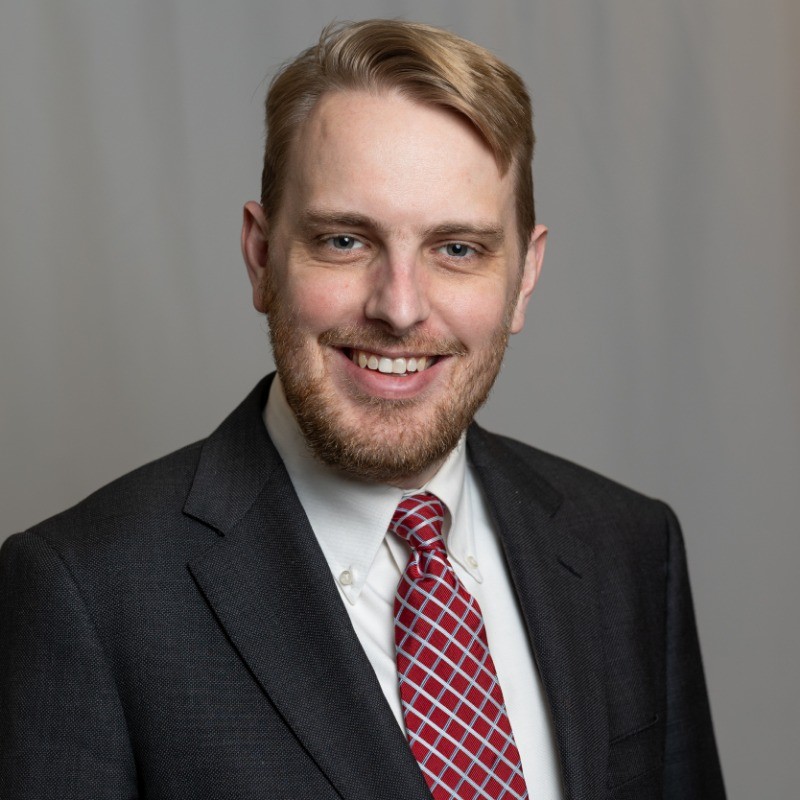
Host: Today's story is just the latest where a first and very humble acquisition has grown into something impressive. In 2018, Colin King and his partner Joe bought a business doing just $250,000 in revenue. It was a route business that distributed parts to automotive service centers and dealers in the Indianapolis region. Every night in the middle of the night, their employees would drive from auto dealer to auto dealer delivering car parts. And yes, you guessed it, it wasn't too long before Colin and Joe were having to drive those routes themselves. Matter of fact, it was the very first night they owned the business when two of their drivers didn't show up and there would be dozens and dozens more nights like that to come. Well, you probably aren't surprised to hear that Colin and Joe no longer own that business. Today their portfolio looks like an apparel business, a decor distributor, a Montessori distributor in a financial training business. Aggregate revenue is approaching $30 million, a long way from those 2am drives between Indianapolis and Toledo. This is the story of how two guys with a willingness to buy imperfect businesses and just figure it out have built a hold code that is really just getting started. Here's Colin King, Co owner of CircleCity Capital Group Announcements Last week I told you about the launch of Smith List, a platform for business owners to post leadership roles they're seeking to fill at their businesses. It's a job board for operators of small businesses. Well, roles have been posted and you can check them out@smithlist.com you'll see the caliber of opportunities that Smithlist will collect all in one place. A couple examples A sponsor is looking for a CEO to come run the first acquisition of a rollup the platform business. The goal is to grow and acquire to $200 million in gross revenue within five years. Immediate P&L responsibility for $15 million in revenue and over 60 employees. The business is a manufacturer of custom metal components based in New England and the sponsors got it under Loi. Another role the CEO owner of a wood products manufacturer is looking for a chief Operating Officer. This is a strategic operations role to start with. Potential to grow into full president and maybe one day buy the business from the owner. The owner is actually a searcher himself who bought the business back in 2015. Tons of untapped potential at this 25 person furniture manufacturer. Their 40,000 square foot manufacturing facility is only at a quarter capacity based in Manchester, New Hampshire. So if you go to smithlis.com, you'll see much more about each of these roles as well as a few others and you can Apply for the jobs right there and you'll hear me continue to mention new roles in this space on the pod going forward. One more announcement. The Self Funded Search Conference is coming back around September 13th through 15th in Dallas. Come meet other self funded searchers and learn from two packed days of highly tactical content. There was a wait list last year so you should probably not wait. If you want to attend, get your ticket@self fundedsearchconference.com okay, on to today's episode. Welcome to Acquiring Minds, a podcast about buying businesses. My name is Will Smith. Acquiring an existing business is an awesome opportunity for many entrepreneurs and on this podcast I talk to the people who do it. August Felker is a two time successful searcher. First with a traditional search fund. The second time around he did a self funded search. Today August runs Oberle Risk Strategies, an insurance firm with a dedicated practice group for searchers and acquisition entrepreneurs like you. If you've got a business under Loi, Oberle will provide complimentary due diligence on that business's insurance and benefits program. A great no risk way to get to know August and team. They love helping searchers. They've worked with hundreds. Oberly is a specialty insurance brokerage for searchers by a former searcher. Check out oberle-risk.com O B E R L E Risk link in the show notes. Colin King, welcome to Acquiring Minds.
[5:07] Guest: Thanks for having me.
Host: Colin, you and a partner are building a Holdco. It is a fascinating collection of businesses and you're actually at a bit of a fork in the road in terms of where to place your next bets. We'll get to that later. You also recently made another, as I said, fascinating acquisition. We'll, we'll hear about that. But first, Colin, why don't you give us a picture of the Holdco today and then we'll start back at the beginning and work forward. What is the current state of CircleCity Capital Group?
Guest: Yeah, yeah. So let's see. CircleCity Capital Group is a collection of what I'll call four operating groups. And each operating group is itself a collection of a couple of different brands rolled up into, you know, one industry vertical. So we've got four businesses that we run today. One is American made apparel and soft lines. One is a decor distributor, another is a Montessori education supplies company, and the last a financial training and education company. So Those are the four groups that we're in today. It's a 5050 partnership with my business partner and it's just shy of 30 million in run rate. Revenue.
[6:18] Host: Can you tease your latest acquisition or not yet?
Guest: Yeah, yeah, yeah, I'm happy to. So our, our latest acquisition is within that American made apparel and soft lines business. So that business itself is two denim brands, one flannel brand, and now a teddy bear brand. So American made teddy bears. We've got a teddy bear factory up in Burlington, Vermont area. It's about 10 million in revenue. Just closed on it last week. So it's, it's tucked within that, that singular operating group of companies.
Host: So interesting. A teddy bear manufacturer. Teddy bear.
Guest: Actually North America's largest teddy bear manufact. Okay. Yeah.
Host: So. So a teddy bear business, a apparel that's part of the apparel group. So denim and apparel brands. Decor, home decor and. And I think. And I think business. Decor distribute. Distributor.
Guest: Yep.
Host: A Montessori supplies distributor.
Guest: Yep.
Host: And a financial training business, which is essentially an online. Kind of, Kind of an online course.
Guest: Online course and keynote presentations. Yeah.
Host: And keynot eclectic would maybe be a better word than fascinating. Both, I guess they're not.
Guest: Yeah. Very clear that it was, it was created without, without intention at the outset. Right. It's a, it's a very opportunistic collection of companies.
Host: Well, let that opportunistic collection that is says something about your philosophy here. So we're gonna, we're gonna spend time on how you choose to make the acquisitions and where to double down and so on. So we'll get there. All right, Colin, that was awesome. Let's now start way back. How did this happen?
Guest: How did this come to be? Right. Okay, so 30 second overview on me and my professional background. I spent two years in public accounting. Spent six years working at a hedge fund on the buy side. One year as CFO at a private equity firm here in the Indianapolis area. And then the last six years I've been acquiring these companies with my business partner. So how did that all come to be? Uh, we actually joke when someone asks this question. You know, how'd you guys meet and how did this all come to be? You know, we, we look at each other and say, okay, who's going to have to tell the story this time? We actually met on Craigslist. So our thesis, independently of each other, was that Craigslist was this great place to, to pick up potential, you know, acquisition ideas. Right. If you're a business owner, you don't know what to do with your company. Yeah. Craigslist might be the first place you go to list your company and see if people are interested. So Joe had a, had a posting up there Saying, hey, I'm in Indianapolis and I'm looking to buy a company. And I thought it was pretty well written. Reached out and we hit it off, started chatting every day, talking about deals and ideas and what we wanted to do. And that's actually how we originally met. And so it was just a snowballed relationship from there.
[9:14] Host: So he put out a post on Craigslist saying, I'm looking to buy your business. So he was fishing for business to buy.
Guest: Yeah, yeah. Basically he caught you.
Host: Caught in our at. AT and caught you instead. Which, of course, probably was the most fruitful thing he could have gotten. And you're both in Indianapolis. Circle City, for those who don't know his nickname of Indianapolis. Right.
Guest: Yep, yep.
Host: And got to talking and in there, and one thing led to another. Okay. And by the way, did he ever find businesses on Craigslist?
Guest: So we actually made our first acquisition off of Craigslist. So in 2018, we bought a little trucking company delivering automotive parts in the middle of the night. We spent about $75,000 to buy. It was a 250,000 revenue company. Just a guy who had a couple of routes and drivers and some trucks.
Host: Colin, let me stop you because I want to. I want to spend a little more time on that story.
Guest: Yeah.
Host: So you guys meet, decide to partner, and your background, your education was in accounting.
Guest: Accounting, yep. Yeah, yeah.
Host: And then had had accounting, cfa, CFO roles. Yep.
Guest: Yeah, yeah. So basic progression of accounting and finance. Yeah.
Host: Great. And Joe's background?
Guest: Joe had a completely different background, and he used to work at Google. So he would travel to foreign countries and stand up support offices to support local sales teams, engineering teams, et cetera, all over the world. And then he'd come back to the US and, you know, get deployed and go do it again. So he's got a very different, more operational mindset than I do. And so we had a totally different worldview when it came to looking at companies, which made for a great partnership. And we had had very complementary skill sets. Yeah. Okay.
Host: You were also on Craigslist looking to look for businesses for sale.
Guest: Yeah, yeah. So independent of each other, we thought, hey, okay, this is a place to hunt for potential deals. Right. I mean, you're just getting started. You don't. You know, this was. This was maybe before the whole searcher thing was as popular as it is today. Biz by Sell was a place, and we looked there and, you know, we started talking to and meeting local brokers just in different areas of the country. We've got A few that we actually like quite a. But it was just another place to go hunt for deals. What year was this? This was 2017. 2018. That we were looking at stuff.
Host: And what was your independently, what were your visions? To just buy a business as a side hustle, to actually build a Holdco. Didn't know what was the vision.
Guest: I don't think it started out as this intentional. We're going to build this large conglomerate. I think we toyed with that idea and said, yeah, in a future state, that'd be nice. Right? The Buffett approach, you've got a diverse portfolio. You've got multiple horses in the race. Right. If one is down 40%, then it won't take the mothership down. But at the time, we both had a small amount of personal money, so we knew we were going to be using SBA financing to do something. So it was really just a, hey, let's find something to get started that is going to be big enough to A, pay for the two of us, B, service the debt, and C, generate some cash. Above and beyond that, that we could, you know, maybe keep doing some things. So I don't think it ever started with this grandiose image.
[12:33] Host: Okay, okay. But you were aware of, I mean, you were admirers of Buffett, so the idea that you could assemble a portfolio of businesses was certainly on the radar, even if it wasn't an explicit mission at this point.
Guest: Totally. So Joe's background was maybe more entrepreneurial. He was involved in the startup scene and working out in California was more exposed to those types of businesses. His family also has a couple of small business owners. So that's just a world he grew up in. For me, working in the public markets, my thought was, man, if I can identify a good company in the public markets, maybe I can take some of those same thoughts into the private markets. Right. And, and this idea of, oh, stocks are trading at, you know, 10 to 20 times earnings, well, I can go buy a private company for two or three, you know, was pretty attractive. Although that is kind of a red herring.
Host: Ah, well, say, say more about that. Why is it right here?
Guest: I mean, I guess I'm a little bit cynical about the industry now. Right. Because you look at it and, and you'll get, you know, you maybe get a broker who throws a deal to you and says, oh, okay, it's a hundred thousand dollars of cash flow. Right. And that's always an optimistic look at it. You know, you come into these situations and you've got to take a haircut when you're thinking about 90% confidence interval of what a business is actually generating. Right. There may be, you know, people that have been underpaid for years or this, that or the other that are deferred, you know, capex investments or other things that the businesses needed for a long time and just, you know, it's gotten by without it. So in almost every situation we've walked into, you know, the, the, the advertised earnings are almost always higher than what they, they wind up being on day one. Sure.
Host: Meaning the effective multiple of course is higher.
Guest: And, and then at the same time this idea of, oh, I can buy a company at 3x cash flow and you know, I don't have to be involved in it. Right. I mean it's just, it's just almost a complete joke. Right. Just the level of things that come up even today at the size that we're at, you know, there's a ton of issues that surface up to us as, as the owners. Right. So it's not like we're shielded from this stuff. And yeah, we've got a management team in place in a lot of these businesses and we can step away for periods of time but, but you know, nobody's thinking about things the way that you do when you've got your own money and debt on the line. Sure. Yeah.
Host: On the other hand Colin, despite your jaded eye when looking at listings now you have in what, six years time built a 30 million dollar holdco. So let's, let's also recognize that not as easy as the napkin math suggests, but still pretty amazing the path here.
[15:20] Guest: Yeah, yeah, I need to, need to have more of an optimistic, I want thinking about what we've already built. Yeah, yeah.
Host: You have so many acquisitions under your belt, we're obviously not going to hear the story of all of them or even probably half of them. But let's do here the quick versions of a few of your very first acquisitions, starting with this small, modest, as you put it, trucking business. Tell us where you found you and Joe found this business and why you decided to run after it.
Guest: Yeah, we bought this trucking company in 2018 off of Craigslist. Right. So that's where we found it. Just the business owner himself was listing it for sale. It was a collection of, I don't know, six trucks. Just box trucks. Right. 26 foot box trucks or shorter. Think a little U Haul and it was a routes business. So they would go to this distribution center, gather up automotive parts and then run out and deliver them at night. We Looked at it and said, hey, we're buying 250k of annual revenue and a contract, right? So we had a contract with a customer to work these routes and it was a business that came with some assets. So we thought about it and said, hey, we've got drivers in place, we've got assets and we got a contract. It's a business that's been around for a long time and what do we have to lose, right? Because the investment was so small in terms of total dollars outlaid, $75,000 was the enterprise, $75,000 was the total transaction price. So we just paid for that personal money. We each went 50, 50 on it. So what is that? 37 1/2K did that deal. And then the first night, you know, two drivers don't show up, it's like, okay, well here we go. Joe and I are hopping in trucks and running out making automotive part deliveries in the middle of the night.
Host: So Colin, what. When you say delivering in the middle of the night, automotive parts, be more specific. Where? Delivering to where? Who's the end deliverer?
Guest: So, so think about it. If you're going to the shop to get your car fixed and they say, oh yeah, we don't have that part in, but we'll have tomorrow. Usually there's someone like us in the middle of the night who is loading up a series of parts, right? They could be mufflers to engines to, to whatever, right? And we're loading them into a box truck from a distribution center and we're driving to, let's say from Indianapolis to Toledo, Ohio and back. And along the way we're going to stop at 15 to 20 auto dealers, right, or service centers or whatever, and drop off the 1 to 2 to 5 parts that they need that night, right? So it's just like a, like a plain and simple route based distribution business, delivering parts to local auto dealers or service centers.
[18:06] Host: And how old was the business? You said it had been around for
Guest: a while, about 10 years.
Host: An SBA loan broker, as opposed to a direct lender, doesn't work for a particular bank. Instead, the broker pairs you with the right SBA lender for your deal. Based on industry terms, risk thresholds, then helps you navigate the process better than many lenders themselves do. Matthias Smith of Pioneer Capital Advisory is just such a broker. Matthias worked at two of the country's top 10 SBA lenders. So he's been on the inside of the SBA process and knows well the pitfalls and hurdles and how to avoid them. He Struck out on his own to laser focus on the ETA and search space. Our niche is his niche. You'll see Mathias at all the ETA conferences. He's closed over 30 search deals since starting Pioneer in May of 2022, including some acquiring minds guests. To learn more and get in touch, go to PioneerCapitalAdvisory.com or click the link in the notes. And how many drivers or employees? And were there any employees that were not drivers?
Guest: So everybody was a contractor. When we came into the business, there were five drivers, five routes. So one route went to Cincinnati and back, one to Toledo and back, et cetera. So we had five drivers in place, no management team and no first layer of defense, if you will.
Host: And was the owner one of the drivers?
Guest: He was. Was technically the first on call. Right. Same situation. So my thought was it's a business where it grinds you pretty hard, right. If someone doesn't show up and you're dry, I mean, it wears on you to have to go and deliver parts from call it midnight to 11am every night. So the owner was very burnt out in. In doing that. Right. So someone didn't show up, he had to do it. And, you know, putting a backup driver system in place or hiring a manager is just something that eats into your cash flow. 100. Right. So if he was making X on the business, there was really no incentive for him to say, I want to go hire a backup driver to sit idle in case I need him. So, yeah, he was the guy who would hop in the truck if someone didn't show up. Just like we did when we took over.
Host: Just like you did on day one.
Guest: Yeah, yeah.
Host: And Colin, how much. How much Ste was it generating, if any? Because you have said that whatever business you acquired was going to need to support the both of you. Not just one, but two people.
Guest: Right. So this was a $50,000 earnings business or so on day one. So we came into it saying, hey, we're not both going to be full time on this. Right. So, so Joe had a couple of little consulting arrangements that he was doing with local startups. I was still working with the Lev guys at the time and just had this as sort of a side project for a year. So ultimately this was a side hustle, right. To get things. To get things off the ground.
[21:07] Host: So the idea was kind of just to do a deal, get in the game, learn. Because even for, even for 50 grand, split two ways, $25,000 a person, that's almost so little just purely financially now, it almost doesn't justify doing it for sure.
Guest: And in hindsight, I think that's the lesson you learn. Right. And coming into it with your first deal, you know, just like a lot of other folks out there think I, you know, I thought, hey, we can, we can get this thing to run on its own. Right. We got drivers in place. You know, there should be ways that we can, we can manage this business without having to be active in it on a daily basis. So that just turned out to be flat out wrong and something that's pretty hard to evaluate in a due diligence period.
Host: So, Colin, is the takeaway on that business that basically you realized that it was going to require a ton more volume, ton more revenue to have enough room for you guys to step out of the business. So. So there's a business model there, but it's, you know, maybe doing 10 times the revenue that it was.
Guest: Yeah. So I think the, one of the main takeaways was that Critical Mass concept. Right. Which I think we're both huge believers in, is that you need to some scale to wear fewer hats and be able to step back into the role that you ultimately want to play in a business. So Critical Mass is a very real concept in small business. And then two, I think it just was a business model that we were not interested in. Right. Because it was never going to be a company that would operate during the day. Right. So you're always going to get phone calls with some emergency that pops up in the middle of the night. And it just gave you some time to reflect on the actual business model that you want to operate. Right. So there was zero flexibility in it. Right. You can't be geographically far away, have a driver not show up, and then be able to like step in and fix that problem. Right. So that led us to steering toward, hey, how can we build something that's maybe more of a remote based company in the future?
Host: Great. Okay. But you hold onto the business or you exit it now, at this point, we exit, yeah.
Guest: We've exited it as of 2019.
Host: Okay, so you held it for a year.
Guest: Yep.
Host: And did you buy, do your second acquisition before you exited or after?
Guest: Let's see. I think we, we closed on that and then rolled the proceeds of from that into a string of deals that we did in the back half of 2019. So call it October timeframe. We bought three businesses within maybe a five week span of time.
Host: Okay. But the trucking business, as you call it, that. Or the distribution, the automotive parts distribution. Yeah, that was. What did you sell it for. You bought it for 75 with cash.
Guest: Yeah, I want to say, I want to say we sold it for about 150k with, with all the assets and everything included. So on the surface it sounds like a decent return. But when you, when you factor in the return on time and you know, all the things that you have to do in it. Yeah, absolutely. Not a slam dunk in my opinion.
[24:15] Host: Okay. But enough capital to then make three acquisitions rapidly. So tell us about acquisition number two.
Guest: Totally. So acquisition number two was the first in the string of decor distribution companies we now own. This was actually a little Amazon business that imported bamboo vases and sold them on Amazon and then to certain, like business customers. So think about a hotel or a restaurant that wants to outfit their store or location with a whole bunch of vases and, and dried flowers and dried branches that go inside of it. So that was the first acquisition and that was followed up shortly with the first in our apparel businesses, which was All American Clothing, a online retailer of blue jeans T shirts and some other American made apparel Items. So those two came in the fall of 2019 and really was our first foray into E commerce as a business model.
Host: And how did you. So give us some numbers around first, the decor business.
Guest: Yep. So the decor business was doing about 1.2 million in revenue. It was based out of San Jose, California. We got it from a broker email list and it was marketed as a turnaround opportunity. Right. So they were asking for, I can't remember, maybe 150k. I think we paid 120 for it. So it was a very low multiple of revenue. But the business was advertised as breaking even. Right. So they were self warehousing, self fulfilling out of a warehouse in San Jose, California. So they had very high rent, very high staff costs and very high shipping costs. So when we took that over, we looked at it and said, man, if we just picked this thing up, put it on a truck and sent it to A3PL, we could maybe recreate the, recreate the earnings of the business, A, to a variable cost model and then B, you know, walk away from a $300,000 a year warehouse expense out in San Jose, California. So that's what we did. We bought it, we went out there, we loaded up, I don't know, I want to say about five truckloads worth of stuff worth of inventory and moved it to A3PL here in Indianapolis. So that was the, that was the general profile of that company. I think it turned out to be about $100,000 earnings business at the end of the day, when we were all said and done with it. And let's see on the apparel business,
Host: how did you finance it if you only had $150,000 in cash? And it sounds like this business was selling for $150,000.
Guest: Yeah. So we gave her, I want to say, about a third of the price up front and then the remainder of it paid out over two years. So total cash outlay initially was about 40k and we just paid for that with cash. No SBA financing, no debt financing whatsoever.
Host: Okay, yeah. And is what you liked about the business, given that it was a turnaround, so therefore not high quality as it stood? Maybe the answer is that you saw how it could become a high quality business. But why did you buy this business if you'd already, you'd already come out of a business that was really challenging and here you are buying for your second business a turnaround. What's up with that?
[27:18] Guest: So, so yeah, it was a business that had been around for about 12 years. It operated online, which is attractive. Right. And we knew that the 3PL model existed and that we wouldn't have to staff or run a warehouse and ship product. So when we got the financials for the business and looked at the last three or four years and saw two or three line items really jump out, one in personnel, payroll costs and the other in warehousing, rent, utilities, all the things that go into to having a warehouse. And, and just did the math on man, if okay, we went and talked to 2 3pls here in Indianapolis before we bought it and said here's some sample data, here's about how many pieces of items we would be bringing over and storage space we would need. And said let's just recreate the economics of this using a 3PL. And that math penciled out to work pretty well. So maybe it was a little bit of a leap of faith. But. But we looked at it and said, man, we can walk away from $600,000 a year in expenses and shift it to this $450,000 expense over here.
Host: And not only were. Did that kind of play in. Give you enough confidence to buy this turnaround. I guess it also gave you enough confidence that hey, let's, let's also buy another business because this is all going to just work out. But in fact it has worked out. So we're going to hear. But before you tell us about acquisition number three, have you at this point gone full time in your budding Holdco?
Guest: We had not, I guess at the conclusion of that third deal. So let's call this October of 2019. That's when we said, okay, well great, we've got enough assets here that we're both going to be full time on this thing. So I guess at the conclusion of that third deal is really when that happened.
Host: Okay. Okay, great. So tell us now about this third deal.
Guest: Yeah, well, so let me come back to All American Clothing. So we, we bought that again in October of 2019. It was a contract apparel manufacturing retailed online on our website. All the sales were on this one website, all americanclothing.com. it was about a 2 million revenue company. And we paid somewhere between 750 to 800k. I can't remember where the working capital actually shook out. So it was a good price. And it was another company that had been around for 20 years. So we liked the stability in it. The last six years that we looked at had flat revenue and flat earnings, which we really liked. So again, a big part of our thesis is finding companies that have been around for a long time. You've got stable customers, stable products, hopefully stable cash flow. And this one showed that. And we really like that on top of a low purchase price. So when we bought it, we said, okay, great, this is our, our jumping off point. We were buying, I want to say about 250 to 300k of SDE at the time is what it was advertised at. So that plus the decor business that we had bought and moved to Indianapolis said, okay, now we've got enough of a base here that we can really build off of because that All American clothing business we financed just using a traditional SBA loan. So 10 down, 90 borrowed. That was the, that was the model for that acquisition.
[30:32] Host: And okay, so at this point with those two businesses, you're, what is your sd? What are you able to pay yourself? Sell.
Guest: Yeah. So we were, we were at about 350 before death service. You're testing my memory on what the death service was at the moment. Maybe it was 50k, 60k. So we had enough.
Host: Sorry. Why? So why so little? I always would. Yeah, back of the back of the envelope would be kind of half. Halfish of your ste. Sorry, what did you buy the businesses for?
Guest: We bought that one for 750 and the other one had no debt. So I don't know, call it 700K. Yeah, I guess. Maybe it was. Maybe it was. Maybe you're right. Maybe it was closer to 10k a month in total PNI on that one. So yeah, maybe it was about half of that. So let's say that was 250, less 125. We're at 125 plus 100k of SDE from our core business. So we're at 200k. So I don't know. Our initial starting salaries were like $50,000 a piece. A piece. Which was considerably lower than what we were making coming into this thing. But we said, okay, great, now we got this thing, we're covering our debt, we're paying ourselves something, maybe we got a little bit extra. We still had some personal money set aside that we could maybe do something extra with. So that's where we were starting.
Host: And just on what you were paying yourself, Colin, because a lot of people will. Well, first of all, how old are you at this point?
Guest: At that point in time? Let's see, that's 2018. I was born in 1987, so 31. Yeah.
Host: Okay, well, paying yourself 50 grand a year isn't going to last very long. And, and for a lot of listeners, it's not gonna, it's not gonna be possible totally for any at all. So you're, you're doing a little bit of ramen profitability here on your, on your. And of course, nothing, nothing at all wrong with that. That's how many, how many things get, get going. But I'm just wondering was the idea, could you sustain that for a while or was this just, you know, holding your breath for a year and you needed to get to150,000 of take home each ASAP sort of thing?
Guest: Yeah, so. So it was twofold. One, one. I'm fortunate in that I have a spouse who, who's you know, a higher earner. Right. So I had some support at home to say I can make this work for a period of time. You know, not forever, but a period of time. So I probably had 12 months of Runway at that lower level of earnings to get my house in order. Right. And so the play was we do this, we're going to jump in with both feet. We need to find something else to add to the mix to get to that point where we're actually generating some real income and can, can step change that earnings. So great. Yeah. Great. Yeah.
[33:15] Host: Okay.
Guest: Helpful.
Host: Thank you.
Guest: Yep. Yep.
Host: You were gonna say something?
Guest: Yeah, no, I just was trying to formulate my thoughts on that at this point. And you know, it's. I, my original plan was to as long as possible try and side hustle. Right. So own some businesses on the side that I can contribute part time attention to While maintaining a W2 job and let those get to a point where, okay, now I can jump in with both feet. It didn't work out quite that way and in hindsight I think that would have been really challenging to do for a long period of time. Like really challenging. So, you know, now I think as I look back on it, I would almost rather jump in with both feet faster and say I'm going to find something or two things that are big enough to allow me to do that at a quicker pace. And you know, I'm not opposed because I guess I've got some experience in doing it now to just saying instead of one really large deal, find two medium sized deals that will get you there just as fast. Right. So I think that's where I would, where I would shake out on that, that thought now.
Host: Well, interesting. We're going to return to this theme, but in some ways this, this trying to figure out where to put your attention either in your W2 and, and then having kind of this nascent Holdco as a side hustle or, or going all in on the Holdco. That resource allocation question is one you still struggle with because as we'll get to in a Holdco, you're, you're similarly having to decide where to give your attention and capital kind of all the time on, kind of on an ongoing basis. So this is when you got a lot of irons in the fire. You, you're always wondering which iron you should be giving attention, which is a challenge but not necessarily a negative. It's just part of the beast, nature of the beast.
Guest: And you know, I think like a lot of other people out there, well, you know, maybe the searcher crowd is looking for something that's a little larger right at the outset. But you know, the first deal we did was small because that's the, that those were the financial resources we had to start. So we started small and then you know, each deal we did got a little bit bigger and a little bit bigger and now, now we're at the point where they're, they're quite a bit bigger than the first few. And you know, I think Buffett had the same, same situation when he was starting. Right. You know, the first thing you buy is always going to be smaller than, than the last over a five to ten year period. So now, now we're at that crossroads of okay, the stuff we did six years ago. What do you do with that?
Host: Yeah, yeah, yeah. You mean the stuff that you did six years ago still in the portfolio Correct. What do you do with these businesses? Do you keep or shed?
Guest: Yeah.
Host: Before we get too far away from the trucking business, you're, you're foray into this world. How many times did you guys find yourself selves in the car in the middle of the night driving to Toledo,
Guest: see Joe probably every night for three months maybe.
[36:05] Host: Wow.
Guest: Yeah, yeah, probably so. Joe had a long stint of it. Joe had a long stint of it. I'd say at least three months total of trucking experience that he got for me. It was probably, I don't know, two dozen times and then a couple of them we did together, right. We just said, hey, let's just take that plunge together, right. And form a bond. And nothing brings two guys together more than like, hey, it's 4 o' clock in the morning and nobody's out in the road and you're, you know, delivering parts to some random auto dealer downtown Cincinnati.
Host: Yeah.
Guest: So that's where we kind of hashed out some plans, right?
Host: Yeah, yeah, yeah. I bet those, you know, 10 years from now that those, those nights in the cab of a truck at 4am coming into Cincinnati will be kind of the stuff of company lore. Holdco lore, if it isn't already. All right, so then you had said that you did three acquisitions in rapid succession. So that would be acquisition in the Holdco 2, 3 and 4. You've told us 2 and 3. What is acquisition number four?
Guest: That was a bookkeeping firm. So a bookkeeping firm based in Raleigh, North Carolina. It was a remote business at the time. We paid about 1x sales for it. It was a $500,000 deal and we used SBA financing to do it. So we came up with 50k to put down, borrowed the remainder. And it was a cash flowing company right out of the gate, probably about 200k of SDE right when we bought it. And it was a business that we said okay again, it's been around for a long time. They've got monthly recurring revenue, no working capital needs, which was really nice. And we're going to need to do this for our own companies anyway. So we figured it would be a nice complement to the portfolio to say, great, we can do this service for other people and do the service for our own companies. And now we've got start to a shared services platform, so to speak.
Host: Yeah, yeah, okay. You know, one of the other things that strikes me here is you clearly are doing an analysis before each of these acquisitions, but maybe not the exhaustive analysis of the searcher crowd. Do you agree with that or are you just kind of giving me an abbreviated version in the interest of time?
Guest: It's a little bit of both. It's a little bit of both. But I do agree that I think for us, some people come at it and say, I've got a checklist of 100 things that I want to see before I'll do a deal. And I think most people would try to get to 90 before they pull the trigger on a deal. And Joe and I may try. We may try to get to 60. Right. So let's identify the three most important things that are going to work for us or not work for us and find those as fast as humanly possible and not sweat some of the other things, either because we've got confidence that we can backfill whatever that problem is, or it just may not be as big of a problem given our dedication to making it work, so to speak. So, yeah, I guess it's partly giving you the abbreviated version, but also partly. Yeah, I think we just, you know, we looked at it as something to say we don't need to have every item on the checklist for it to work, so long as it carries what, what we intend to get out of it when we buy it.
[39:26] Host: Right, yeah, Yeah, I love that. And I also love it that you are able to continue with that approach even though your first acquisition, I would say, was not a failure. You sold the business. You sold at a profit. It didn't fail, but it was brutal. Three months. Three months midnight driving for Joe and 24 times for you.
Guest: Yeah.
Host: So it was a very difficult experience where you bought a business. You were like, oh, crap, what did we just get ourselves into? And even though that was your, your experience, it didn't scare you so much that you became ultra conservative in subsequent acquisitions.
Guest: Totally. But, but at the other end of the spectrum with that deal, one thing that we learned was it was a business model problem. The actual financial profile of it worked phenomenally well. Right. So we, we had trucks. Yes. And we had to replace maybe two or three trucks along the way. And we had a good strategy for doing that. But it was a business that paid us weekly. All our cash came in weekly, all our cash went out weekly, and we had no working capital needs. And so the, the actual finances of that business were phenomenal. Right. I mean, it was a cash flowing company. And yeah, we, we, we had to jump in and, and do a lot more work than we, we really would have liked to in or, sorry, did the type of work we would not have liked to do more often. But the actual financial profile of that business was great. It just was the business model that didn't work for us. And what we were trying to build, it was not conducive to. To scaling and building a Holdco. You know, this thing that you had to be paying attention to in a time of the day that you did not want to be paying attention to. A business being operated.
Host: Right.
Guest: So I think that was a. That was a big lesson for us. Right. Is, is okay, we've got some confidence in the numbers, in our ability to look at the numbers going into it. And now we need to pay more attention to. To the business model.
Host: Yeah. And so then there you are, three more acquisitions later. So a total of four. And those three later acquisitions are all acquisitions that are basically location independent.
Guest: Correct. Correct.
Host: To E commerce, kind of D2C.E commerce businesses.
Guest: Yep.
Host: And then the, and then the other one, a virtual, I assume book, you said based in North Carolina, but I essentially, I assume it was essentially kind of a virtual bookkeeping.
Guest: Yeah, they had a cluster of employees in Raleigh and then a cluster of employees in Indianapolis. Oh yeah.
Host: Oh, they had folks in Indianapolis already.
Guest: Yeah. Which was an appeal when we were looking at it. Oh, sure. Yeah.
Host: Great. Colin. Okay, so you close out 2019 just before COVID hits with what, what, what, what did the Holdco kind of distill it for us? What did it look like then?
[42:00] Guest: Gosh, let's see. Yeah. So it was three companies then, Right. One decor business, All American clothing, and then the virtual bookkeeping company, all in. That was about three and a half million of run rate revenue at that point in time.
Host: Three and a half million.
Guest: Right.
Host: But not still, not very much. Ste. I mean this is still in the time frame. You're paying yourselves 50 grand a piece.
Guest: Correct. With debt service. Right? Yep. Two, two, two notes. Decent sized notes.
Host: Okay. Pick us up from there. Then what?
Guest: Yep. So then covet happened. So we got to the first quarter of 2020 and. And Covid came and, and fortunately very, very fortunate. I mean there's, there's absolutely some luck at play here. E Commerce was a serious beneficiary of that. So All American was experiencing just phenomenal revenue growth at that point in time. And part of our business was inventory centric, but part of our business was also reselling other companies products and drop shipping some other company's products. And that allowed us to move pretty quickly. So we weren't beholden to, hey, we've got to go build a ton of inventory. And then at the same time it's All American made stuff. So we didn't have some of the supply chain issues that other companies faced and bringing stuff in from overseas. These were all US factories that were making our product. So that business essentially doubled overnight. So from 2019's run rate revenue of call it 2 million, it went to 4 million in 2020, which provided a ton of earnings for us to redeploy into some other things. So 2020 came all American turned into a crown jewel. Right, Turned into a crown jewel. We reinvested in a couple of other deals in 2020. Let's see, one decor business, which was Silk Flower Depot. Two more virtual accounting firms. So we kind of packaged those together within that one brand to make it a little bit bigger. And that's where we finished 2020. So it was a year of COVID helping out on the E Commerce side. The other businesses did fine, just didn't, didn't see the explosive growth that All American had.
Host: The clothing manufacturing, sorry, what's it called? All American.
Guest: That one was, yeah, All American Clothing.
Host: All American Clothing.
Guest: Right.
Host: It was the American Apparel All American Clothing. So we haven't talked about like the operations of these businesses other than that they are location independent. What does the leadership look like? Are you guys, how in the business are you guys? How much do you need to understand and know and learn about manufacturing etc. Like how's it, how's the learning curve through all this?
Guest: Yeah, so, so let's see, at the time we didn't have a formal structure and how we were going to run these things. It was just, you know, Joe and I kind of sitting in that GM seat with, with maybe one person inside of each company being the quote unquote leader of that business. Right. Call them a gm, call them whatever you want to. Not necessarily CEO caliber person, but we had a leader person in each business. So our decor company had a guy who was very good with Amazon and could manage that and reorder inventory and make sure Amazon was functioning properly. And that's really all that business needed at the time because that's really all it was, was just this little Amazon sales company. All American Clothing when we first acquired it had, I don't know, three and a half employees who were doing accommodation of order processing. They had a little warehouse that they were fulfilling some product out of in, in the Dayton, Ohio area. And then it was Joe and I and that company was pretty well functioning on its own without us interfering with it quite a bit. So it was more or Less self sufficient without like the, the Plan for Growth. Right. So if we wanted to do more, you know, we were going to be the ones who needed to do that. And then the accounting business had a team of you know, call it knowledge professionals. Right. I mean these are people who are, who are educated and they know what they're doing and very self sufficient in managing their book of clients. And then we had one person who was sort of the, the GM leader to corral that group and we worked closely with that person and each of them to make sure everything was happening the way it needed to. Now that doesn't mean that we weren't jumping in and putting out fires and doing things on a daily basis, but we had someone who was keeping the trains on schedule so that we could come in and add whatever else needed to be added to that business.
[46:27] Host: Yep.
Guest: Yeah.
Host: You know, it, it strikes me that the transition of a virtual business, or call it location independent business, virtual business, e commerce business, the, the transition in these businesses is far less disruptive or, or even visible to the employees than in say like a blue collar physical traditional business where there's often a day one speech where buyer goes in and says hello to the team. And it's very, there's very, this very kind of hand to hand combat, if you will, person to person interaction. Whereas from the, from the perspective, let's say of, of one of the bookkeepers in the bookkeeping business, you're coming in as new owners was probably all but seamless to them.
Guest: Yeah, I mean really, those, those people, I mean much like in any acquisition they care about, hey, how is this going to change my, my life? Right. Is my comp going to continue? Are my benefits going to continue? Is my work going to change? They care about those things. But you're right, the, the physical business has a very different look and feel and we've gone through that now just in this acquisition we closed last week the Vermont Teddy Bear Company. And when we bought the Vermont Flannel Company which had a big production and brick and mortar presence up in Vermont. So we're starting to see that now as we've scaled that American made apparel business. Yeah.
Host: And one more thing before we move into the flannel business, the all American clothing business that you bought, it was not manufacturing its own clothes then, correct?
[48:02] Guest: Yeah. So it didn't have any in house manufacturing. These were all products that were designed and created by the company. So they were quote unquote proprietary products, but contract manufactured just through factories in the US who did cut and sew.
Host: Interesting. So the way a business looks like that looks is that you can have a team of designers who are designing the apparel and. Yeah, just the designers. And then, and then there's actually manufacturing facilities that, that fulfill the, these designs. Not unlike what we hear about, you know, Nvidia who designs the chips, but they don't actually make the chips.
Guest: That's. That's right. Yeah, that's right. So for, for that business, you know, the founder and the founder son created those designs and created those products when they started the company in 2002. And one of the things that we liked about it, we weren't necessarily looking to get into, into fashion or apparel or anything, but it was a business that had very stable skus from year to year. So it didn't require. We call it no fashion. Right. No fashion apparel. So these are things that don't need to get redesigned or recreated very often. Now that doesn't mean that we haven't learned that the companies have benefited from merchandising as we've gotten larger. Right. And we actually have the ability to invest in a team who knows how to do those sorts of things. But out of the gate it was a nice little business that, that had skus that were well, performing from year to year to year. Yeah.
Host: And maybe just giving a little more color on like the nature of the, of the, the vibe of the, of the store would explain why it didn't need to be keeping up with fashion.
Guest: Yeah. It is a what I'll call a no frills, maybe dad gene or a workwear type company. So these are thick, very blue collar jeans that tradespeople would wear or construction workers or what have you. So I definitely wouldn't consider it a high fashion, high trend type of product that we were getting into. It was more of a rugged workwear type type customer demographic.
Host: And it also has like a, a hint of kind of politics to it or kind of nationalism kind of right leaning vibe.
Guest: You know, we, we've tried to stay out of that. Joe and I are maybe the two least political people that I know. But, but you keep getting drawn into it. You can't help it when you're in that USA made space. So we've tried to avoid taking a side on any of that. Even though there may be a revenue opportunity if we, if we were to take a side. So we, we've, we've tried to steer clear of that. But yeah, it's, it's a space that you get drawn into it.
Host: Okay, all right, so Covid is happening. Things are surging. Tell us about the flannel business.
Guest: Yeah. So the flannel business came along. It was a company that. So let me back up Joe as someone who was just very in love with the All American brand and the growth that we were experiencing. He's just a very social person and likes connecting with other business owners. And he had been out talking to other people in the usa, made space thinking, hey, this might be an area for potential acquisition targets and how do we carry more product to keep the growth going as our customer base was exploding. So Joe was constantly adding new suppliers into the mix. And he came across Vermont Flannel as a potential supplier, reached out to them and said, hey, you know, I want to carry your product. Will you wholesale to me? And they said, absolutely not. We don't wholesale. So one thing led to another, and Joe's just keeping a conversation going with these different business owners. And then one day asked them, hey, what's your succession plan for the business? And they didn't have any kids that were interested in running the company. Said, hey, why don't you come out to Vermont and let's just get together? So we went and took a trip to go visit them, talk about their business and their plans and what they were trying to do. And I think they viewed us as just two Midwestern guys building a company and had the energy and enthusiasm to take their business to maybe a national scale. So that's what they were looking to get out of it. And we crafted a deal that they could roll some equity and participate in that and would give us operating control to fold it in with All American clothing and then really try and grow it from there. So it was a substantial acquisition for us. It was about 7 and a half million in revenue at the time we bought it. All American Clothing was just shy of 5 million in revenue at that point in time. So All American went from 2 million in 2019, 4 million in 2020, to 5 million in 2021, which was when we started that conversation with the Vermont flannel folks. So we looked at it and said, man, we're, you know, creating this 12 and a half million revenue company at that point in time. And, you know, now we've got some real scale here to play with. So that was the context of that, of that business.
[53:04] Host: Can you tell us about the terms of the. More specifically about the terms of buying Vermont Flannel? You mentioned the rolled equity, but can you. Can you go into more detail? Because it sounds like they liked you. Because you had already demonstrated some competence. You had this growing holdco, you had another apparel business. But it sounds like the Vermont flannel business might have been sort of an appealing target for somebody listening to this, like if they find a business like that. Yeah, it was, it was kind of of that size. I assume a 7 and a half million dollar. 7 and a half million dollar apparel business is. The margins are what, 15%?
Guest: Yeah, probably 10 to 15%. Yeah.
Host: Okay. Yeah.
Guest: So let's see. We paid about five and a half million for that business in total, including the seller, rollover equity. And we looked at it and they, you know, a big part of their want. Right. So in this two way conversation of talking to a seller, I think a big part of it is, you know, understanding what the key variable is to them. And for them it was, hey, we want to retain a piece of this while you guys are, are, you know, doing the heavy lifting of trying to build it and turn it into a national brand. So with that rollover equity, we knew that the SBA wasn't going to be a route that we could go at the time, that, that those rules around getting SBA financing with some rollover equity wasn't a thing. So we, you know, we courted just conventional banks and said, okay, we're going to put these two companies together. This is pro forma, what it would look like, you know, what sort of senior loan can we get? You know, how much equity would we need to bring and what else could we do? Could we do seller financing, seller debt, that kind of thing? And so we just had to create the capital structure from there based on what we could reasonably get from a senior lender. So we took it to a couple different banks and said, what can we get? They gave us some term sheets and then from there we started to backfill. Okay, great, let's go do a friends and family round. Right? All those people who, who were, you know, following us from the couple years prior said, okay, yeah, you know, I'd write a check to that. So we did a small round. I think we raised maybe 1.3 million from friends and family, Mark and Linda, the owners of Vermont Flannel, they rolled their 19 equity into the combined company and then they gave us some seller financing. And so that's how we packaged that whole thing. So we just, we just kind of created it from scratch and said, how do we creatively solve for, you know, the equity that we didn't have at the time and the inability to go get SBA financing for it.
[55:36] Host: So, so it was 1.3 from friends and family. 19% rolled from the existing owners.
Guest: Yep.
Host: And then seller financing and conventional financing.
Guest: Correct.
Host: For four pieces on the.
Guest: So. So pretty messy capital structure. Yeah, yeah. And we still have that in place today. So that was all rolled into that consolidated USA Brands view. So what we did is we created a new entity. We dropped our all American business into it. That new entity is called USA Brands and it's basically a parent company with our, all of our apparel businesses within it. And, and they contributed Vermont Flannel into that and in exchange we gave them equity of that combined USA Brands. So you know, they got a piece of our business and then we got their business too. This was a husband, wife, team in their 70s looking to retire. So they were done, right? They were, they were ready to retire and saying, hey, you know, you guys are young and you have energy and you'll go do it and you'll do all this, you know, hard work, you know, managing the retail footprint and managing the online store. I mean that's really what, what appealed to them is we had an entirely online business. Their online portion of their business was growing, but still pretty small. And they said, man, these guys, they could take that same playbook to our e commerce platform and really get it growing. So I think that was something they were looking at when, when we were talking to them.
Host: Great.
[57:00] Guest: Yeah.
Host: And indeed that has come to pass. And this is, this now is the jewel in the crown, correct?
Guest: Yeah, absolutely. So USA Brands is the large holding in our portfolio. It's at this point probably 15 times larger than the next largest company in terms of revenue within USA Brands. Yeah. Vermont Flannel is the crown jewel, the growth engine, the business that may have national appeal, national retail footprint, national e commerce presence. Yes. All American clothing has more of a low end value and consumer demographic. Right. And I think that customer benefited a ton during COVID from stimulus and you know, other benefits and has since been pretty tough. Right. In lapping all of that. So All American went from 2 to 4 to 5, back to 4. And now it's just essentially holding water at that 4 million revenue mark while Vermont flannel continues to grow at about 20% a year.
Host: Colin, I'm just watching the time and we you have other interesting businesses to tell us about. So what I want to do is rather than get too much into the weeds, too much detail on them, just quickly tell us about Montessori, the course, the course digital content business called Profit Mastery and then the teddy bear acquisition. If you can give us abbreviated versions of those stories and then I want to just kind of zoom out and ask some theme based questions.
Guest: Yeah, that's good. And it's, it's, it's funny because as I thought about this, I'm like, man, it's so hard to just drill down into the specifics of each of these because we've done 14 deals since, since 2018. So the Montessori business was 100% opportunistic. It was a broker deal. We got an email from, from a, from a broker saying, hey, I've got this business down in, in Fort Myers, Florida. It's a Montessori business that's been around for a long time. We looked at it and said, man, this is a really interesting niche. They had at the time maybe $250,000 of inventory. And they were asking, I don't know, 120K for it with about 500,000 of annual sales. So we looked at it and said, okay, well we could just do the same thing we did with our green floral crafts decor deal and just pick it up, put it on a truck and move it out of their warehouse and just run it through a 3 PL and okay, we're going to buy it at less than inventory. And it may just be like a last puff kind of cigar butt bet. But at the time we bought it, Joe had a connection from college who was a Montessori school principal in the Cincinnati area, which I guess is a big Montessori community. And she was interested in doing her own thing, starting her own company and wanted to get involved. So we told her about this deal and said, hey, are you interested in coming to run it? And she was. And so now she's the person who runs that company. And she's really a gem. I mean, she's great. She knows the industry, she loves the business, she's very passionate about it, and she's just a good leader. Right. Having led an actual Montessori school to be someone who can lead a Montessori driven product company with an E commerce and distribution aspect to it. So she's leading that company and we've hung onto it even though it's pretty small. It's just a great little business. It didn't require any debt because the ask was low. And yeah, it still sits in the portfolio today at about 350k of sales.
[1:00:35] Host: 350k of sales? It was 500 sales initially, so it's actually declined a bit.
Guest: Yep. Covid. Yeah, yeah, yeah, yeah, yeah. Okay.
Host: And it was, it was 500 in sales. It was about 250 in inventory and they were asking 125 for the whole thing. And you paid in cash?
Guest: Yeah, yeah, I think we paid for it in maybe three installments. Right. So we gave them maybe a third of it up front and then 2/3 spread out over 18 months or something like that. Okay, yeah.
Host: Okay, great.
Guest: Yeah. So that's my story. Let's see what else you said. You said the Teddy bear one and Profit Mastery. So Profit Mastery was, was recent. It was in October of 2023 that we bought that company, we in 2020 because we had an Ohio legal entity for our All American clothing. That's where the company was based. And we kept it in Ohio. We were offered this profit training program for free through the local sbdc and the SBDC gave us access to this. We took it, we watched it and we said, no, this is kind of interesting and said, man, we could probably do a lot with it. Right. It was an E commerce company, training based, so there's no working capital, no inventory. We just reached out to the owner and said, hey, what's your succession plan look like? And he got back in touch with us and we chatted off and on for I guess, three years. He told us a bit about the company, it was a much larger business than we thought and said, hey, I'm looking for someone to pass the baton. And so again, it was mostly an opportunistic deal. But what we liked about it is unlike our retail businesses that needed a lot of inventory, we could grow this without a ton of capital investment. And the one thing it was lacking was some DTC E. Com attention. Right. So can we do paid ads, a new website, you know, a new LMS platform to actually like try and grow the online portion of the business? Because he had built it through distributions or throughout the state, business development centers, through banks, through CPA firms, through franchisors, and arguably that's the harder path to go. So if we could add this one other aspect to it, maybe we could significantly add to earnings. And it was about a 750k to $1 million business, top line pretty consistently for the last six years, which is pretty great for a business that's close to 100% gross margin business because it makes something once, sell it over and over again. Yeah, so yeah, that's that. Again, it was just an opportunistic deal, but we thought we had a skill set that could add some value to it.
[1:03:22] Host: And the employees, were there employees to this business or was it just the
Guest: seller, there were two employees who, who remained with the company. The seller, we actually did the sba, we did an SBA loan for it and we did an SBA with the rollover. So the seller rolled some equity as part of that SBA loan. So he owns 5% of the company today and he's active. So he's, he's, he said, hey, I don't want to manage the day to day. I don't want to think about the numbers and the finances. But I'm still interested in doing keynote presentations and I'm interested in doing business development. So he talks to some clients and he does presentations and you know, I think just focusing on that one aspect of the business has been reinvigorating to him.
Host: Yeah, yeah. Well, yeah. And the fact that business development, I mean hard, hard to find good salespeople. So if he's kind of able to absolutely interest him and it's his product, a product that he built from, from nothing great.
Guest: It's a 40 year old company. So he's, you know, he's got some name recognition in the space. Yeah.
Host: And, and does. Are these channels, these distribution channels, is it Ohio specific or is it.
Guest: No, that was just one, one SBDC that he's worked with. So we've got contracts with, I don't know, five or six different states in
Host: their local SBDC chapters and early signs are. What is your thesis coming to pass? That, that you can drive good volume through PPC to this?
Guest: I think it's, I think it's working. I think it's working so far. Honestly, we're pretty early in the. It needed a new website, it needed a new tech platform. So there were some things that we needed to do on the back end before we could say, yeah, let's go throw some ads at this. Because it wasn't in shape to take that. But the distribution channel has hung in there quite well. Right. So the thought was, and with all of our deals has been, you know, let's find a company that's, that's, that's been around for a long time and doing well on its own and if we can add one or two things to it, right. Whether that's sales or marketing or advertising or technology, then you know, we can capture that upside to ourselves. So this is again that hey, yeah, the core business is performing nicely and if we can add those things over time, then we should do okay with it.
Host: Fantastic. And then to close this out just on the story and understanding what the portfolio consists of, tell us about this teddy bear business.
Guest: Yeah, the teddy bear business. So we got a call in December of last year, December 2023 from a company that we had done a product collaboration with earlier in the year. So this is a teddy bear company. We did, you know, we outfitted them with some of our flannel and put them in our stores. Did kind of like a shop and shop experience at some of our Vermont flannel locations. So they called us in December and said, hey, you know, the parent company is in distress. It was a house of brands with about 60 million in revenue. And they called us and said, hey, are you interested in, in taking a look at any or all of our, of our brands in the portfolio? And we said yeah. And so we took a look and you know, they had this, this niche teddy bear business that was steadily growing, had good margins and it's, it's manufactured here in the US So it was again pretty insulated from COVID supply chain impact like their other brands had seen. And it fit nicely to the theme of this USA made business that we were cobbling together. So it didn't necessarily fit in the apparel theme, but you know, I guess we're, we're still kind of redefining the category. Right? Maybe it's, it's USA made soft goods or USA made consumer products or something. But it was a nice complementary brand and just an attractive tuck in to what we were already doing. So it was about 10 million in revenue? Yeah, it was sizable. Yeah, I mean it, it didn't quite double the size of the business overnight but, but you know, adding 10 million of revenue to a 15 million revenue company was pretty game changing. So we just closed on that last week.
[1:07:18] Host: Congratulations.
Guest: Thank you. Thank you. Took us a couple months to line up the financing. We did not go the SBA route for that deal and it is part of USA Brands so it'll share management team and resources and all that. And now it's, I don't know, 150 person organization and just a totally different set of challenges than, you know, what we faced back when we were trucking with five truckers and me and Joe. So.
Host: Yeah, yeah. Can you share what the terms of the $10 million of the acquisition looked like with the.
Guest: Yeah, it was financing and it was, was a two and a half million dollar deal with all assets and inventory included and just all cash.
Host: All cash, yeah.
Guest: So we financed it but there was no seller equity or seller debt or anything like that. So we did kind of a 10 down, 90 borrowed situation. Despite not using the SBA. We had a local bank who worked with us to help craft that. So Joe and I kicked in the 10% equity, borrowed the remainder, and it was a $2.5 million purchase price. Yeah, I would say that that is maybe less than if the business had not been tucked inside of this otherwise distressed brand, facing some of the challenges that it had. I think they might have gotten a little bit more for that had they had time to shop it adequately.
Host: Yeah. Well, good for you.
Guest: We'll see. We'll see.
Host: All right, Colin. Well, that's. That brings us up to the present. I guess I have a bunch of themes I want to hit on here and questions I want to ask, but maybe I'll put it to you first. Are there any big picture takeaways that you yourself have from your story and for the listener who maybe hasn't made acquisition number one yet?
[1:09:16] Guest: Yeah, a whole bunch. I think partnerships have been helpful. Right. I think I've got a really, really great business partner and I know for certain that I would not be here without the support and extra effort gotten from him. At the same time, I think that that can be challenging. Right. To find the right fit. I think I'm fortunate in having found Joe and just our philosophy is the same and our level of effort and attention to the business is the same, but that's been a tremendous, tremendous help. It makes it harder to. Right. Support two people, but at the same time you can move a lot faster. Critical mass is so, so real, right? It's so real. And, you know, I don't know, I haven't really looked at or found a million dollar EBITDA business until just, just recently actually. Right. So this is the first time we've gotten into that million dollar EBITDA territory for a single business. So I can't really opine to what that, that looks like throughout all the deals that I've done. But I guess I'm more inclined to just get started and get going with maybe two smaller things that combined turn into something larger to get you off the ground instead of saying, I'm going to hold out and find the perfect business that checks all the boxes and fits the size criteria that I'm looking for. So I guess I'm more predisposed to just taking action and getting it going, assuming it fits the four or five high level criteria that you have to have to get the ball rolling. So I think those have been the big takeaways. And I guess the last one, the last one is the importance of working capital Right. So we. Making flannel is a highly seasonal business and we burn cash from. Call it January to August of every year and then make all of our earnings in the September to December timeframe. And if you want to grow, which the brand has been growing, I mean, it requires a lot of cash to. To build inventory and pay your suppliers and all that. And it's hard to predict that. So having enough capital lined up to make sure that you can fund working capital. So inventory, A.R.AP, those sorts of things, man, that's been a lesson. Right? That's been a big lesson in a growth business.
Host: Great. So one thing I want to ask you about, Colin, is how you find managers or already have managers, and how you think about that because you have a number of businesses now and they all are. Have people keeping the trains running on time, as you put. Although you are of course, giving a lot of attention to each of your businesses and are there as a backstop and are making strategic decisions. Have you learned anything about where to find managers, how to find managers? Any. Any takeaways there? Because to really do a Holdco and to scale something that is.
[1:12:15] Guest: You've got to have it.
Host: That perhaps is the bottleneck. Because listening to you, it doesn't feel like deal flow is much of a bottleneck. All this stuff is just coming to you inbound now. Not all this stuff. I mean, it's. It's not like you're just batting away amazing deals, but. But still, you guys haven't really actively been going out. Stuff has been coming to you. And guest after guest will say that once you're in the game, deals tend to find you versus when you're a searcher. It's so the opposite.
Guest: And I think that's totally true.
Host: Still finding the right people. So therefore, if deal flow isn't the constraint, finding somebody to operate these businesses that you come across is.
Guest: Yeah.
Host: So any thoughts there?
Guest: Yeah, absolutely. We've been fortunate to have a decent personal network of. Of people that have, you know, that we've known throughout our career, through college, whatever, that have been interested in the field or interested in being part of a small business. And so we've recruited a handful of folks that way, probably five or six if memory serves. And then in a couple of instances, we've used that same thought process for doing a deal. Right. So starting with the person as opposed to starting with the deal. Right. So like in the instance of our Montessori business, you know, we kind of had that. That happen all simultaneously to say, oh, great, we know this person who's interested in, in running a business, right, and being involved in SMB and they're also a specialist in this field that we're currently looking at a deal, right? So leading with the person and then finding the business to fit around them as opposed to the other way around. The generic hiring, you know, putting an ad out there and saying, oh I'm, you know, I'm looking for XYZ has actually been pretty tough for us. So we've leaned into our own personal network and then networks of other people that we've met along the way. So Joe and I have a handful of mentors now and say, okay, hey, you know, we really need a person who knows retail, right, or merchandising or E comm or what have you. And then leading with that has been way, way more fruitful because you've got someone who's, who's vouching for the quality of a person that they're sending to you, right? So we've had more success with that than we have through generic hiring. But I will say, I mean it's still a challenge for us. I wouldn't say that we're perfect and that it's been easy. We're a straight line path. We still deal with personnel problems on a daily basis. But at the high level we do have a good crew.
Host: Turning our attention to the portfolio, to the makeup of this portfolio first. How about pros and cons of a Holdco structure where you've got multiple, as I said earlier, very eclectic businesses. Not a lot of them overlap, frankly. None really. In the four. In the four. What's your word?
Guest: The four operating groups.
[1:15:00] Host: Yeah, operating groups. Thank you.
Guest: Yeah, yeah, yeah. It's the context switching is just a nightmare. I mean it's, it's, it's awful. And to come into it saying, oh, I'm going to spend, you know, one day thinking about this business and the next day that business that just doesn't happen and it can't happen, right. I mean things pop up all the time that you're getting pulled into. So losing focus is real. And you know, the cynic in me still says, hey, I can't just go park someone in a company and then never pay attention to it and it's going to work out okay. Like I just don't think that that exists. So yeah, I think we're at this point now where we have this really great USA made themed mission driven business at scale, right? It's a, call it 25 million run rate revenue and then the next largest company is right around 2 million in revenue. So for us, any rational person will look at it and say, yeah, you should just dump that and go focus on that one big thing. And we got here opportunistically, so we didn't set out to do this. We're just now facing that dilemma with a real tangible situation here. Right. So the context switching is the biggest challenge. Right. You can't, you can't think about everything all days. Yeah, sure.
Host: And anything positive about it.
Guest: Yeah, I mean, absolutely. You've got income streams that are not correlated to each other. Right. So our, our flannel businesses, seasonal in the, in the winter and fall. Montessori is the opposite and decor is the opposite. So yeah, we've got some seasonal cash flow balances that are nice and we've got different business models. So our decor business is mostly dropship, so it doesn't require a lot of inventory. The flannel business is highly inventory centric, so we're building a ton of inventory. Profit Mastery is a business that doesn't require really any capital in it. Right. It's a product that's already been made. It's all ip. So the business model differences have been, have been wonderful. And we're now looking at it saying, well, man, if we could build up that, that asset light business, that would be a really nice compliment to Holding USA Brands. Because if we just kept that one apparel company, we might need a lot more capital to try and grow it from 25 million to 50 million. You know.
Host: Great. And on the point, therefore, about, about context switching and that being a challenge and the relative size here, I mean, as you just said, it's like you've got this one business that's a lot smaller, the Profit Mastery, a lot smaller but highly profitable. Then you've got the apparel business which is a lot larger. But to really get to the next level will require a lot of investment, presumably. So how are you thinking? So, so it's not as easy as the person who would just say, oh, just shed the small stuff and give all of your attention to the big stuff. Although Colin, there's such a difference between the sizes of those businesses, it kind of does feel easy like you, like maybe you should, of course you'll sacrifice the diversification that you like so much, that you value so much. But it does feel like maybe, I mean, the apparel business is so much bigger. No, did disabuse me. Why haven't you guys shed everything to just go in, go all in on apparel?
[1:18:17] Guest: Well, so so one thing, the apparel just last week turned into that, that significant step change. Right. So it was a bigger company. But, but really we're very fresh into that. 2 I think we're going to need to raise some capital in that USA business, that USA made business. And so we may come and do an equity offering and pay down some debt and then have the cash that we need to grow that. And so retaining those other pieces in the meantime would be a nice benefit during that period. Right. Until we have that all done next, we have people in those businesses that we care about. Right. So like these are friends that we've hired to come run these things. And we don't want to just say hey, we're going to sell the company and you're out. Or, or maybe we offer the business to them if they're interested in it, but there becomes a personal situation there with the people involved. And then last, I don't also want to discount the idea that there is probably an acquisition out there that could make those larger and more justifiable from a time standpoint. And if we could get them to a point where each company has a CEO in that CEO seat and you know, we're kind of acting as a board of directors to oversee that person, that is a model that could be done. I mean there are decor business, we've looked at other ones, we just haven't pulled the trigger on some of them. But there are other IP based companies, there's other Montessori or education related companies and there's other decor companies that are out there. So it could be a get bigger problem as opposed to a just shed them and focus on one problem.
Host: And I think maybe a slightly subtle point that you touched on there is the people who are running each of your businesses, the GMs are not CEOs and kind of the distinction there would be a CEO is going to be somebody who's growth oriented and who's really going to be driving the business so that all of the in a strategic, strategically oriented. So all of the strategy isn't at the Holdco level. That is you and Joe. Yeah, but to justify a CEO you need a much, you need these little businesses to be much larger. So this, so there's this again this question of size where a smaller business, you can't afford a true CEO. But if you could acquire your way into a larger profit, mastery becomes larger, the Montessori school becomes larger and there are million $2 or $3 million businesses then, then you can have a CEO and the CEO absorbs some of the strategic burden that is currently on your shoulders.
Guest: Yeah, yeah, yeah, that's, that has been a thought process and we like to call it, you know, who's the person who's waking up every day thinking about where the next dollar of revenue is going to come from.
Host: Yeah.
Guest: And, and at that smaller end of the spectrum, you don't get that all that often. Not always, but, but mostly. Whereas, you know, if you own a company, you're thinking about it 24 7. Right. You may not actually be working 24 7, but you're thinking about it almost 24 7. So yeah, I mean that's again, it comes back to that critical mass and the critical mass has worked for us at the USA Brands level and that doesn't mean that it couldn't work in these other ones. It's just, you know, we would have to make that an intentional effort at this point.
[1:21:27] Host: Yeah, yeah. E Comm and digital. So we all know the benefits of E comm and it's, it's been a, it's been a through line here of your story. You learned that you didn't want to be driving in the middle of the night for 11 hours and, and tied to, you know, various routes near your home. So location independence, you know, the business not needing sort of no physical constraints in the business, etc. Etc. But we did see and, and you've already said that one of your businesses tracked this a rise and then a decline of E commerce from the, the, the COVID surge and then pullback. What would you tell people about E commerce today? Maybe, maybe kind of what is The E Commerce D2C.
Guest: Yeah.
Host: World and industry and business look like today. Spring 2024.
Guest: I think E comm is really tough and really tough and we, I wouldn't call us necessarily experts in E comm. I think we have bought companies and taken them from maybe a D grade up to a B. But we're not the guys who are so good at E comm that we're, you know, we're a players and we're really optimizing for perfection. So E Com is really tough and that's why we've, we've liked some of these other business models that are more B2B distribution oriented or even the physical brick and mortar retail stores that we now operate are good counters to that, that E comm. So I think of it as having a, you know, you've got a diversified portfolio of companies, but you also have diversified revenue streams within each of them. And I think that, that's important to us. So one other thing real quick is, I, I didn't, I don't know that actually touched on our, our original acquisition criteria which we, we E. Com or digital is I guess is a component of that. So really when we're looking at a company, you know, our, our boxes that we're trying to check are one, a company that's been around for a long time, right. 10, 20, 30, 40 years or more. Ideally a company that has spent zero or close to zero on marketing or advertising. So like no PPC spend, no digital, digital ads, no nothing. And then three, hopefully they don't have any technology in place. Right. So maybe they're doing like, you know, they're banking at their local bank and they don't have online banking set up or, you know, they're not using any kind of software tools to manage inventory planning or marketing or whatever. So those are, those are really the three criteria that we look for to say, hey, companies have been around for a long time. We can trust the products, customers and cash flows. They haven't done any marketing efforts. So, okay, if we can invest in that and layer it on, we'll get some upside. Hopefully three, we can put some technology in place and we're not afraid to do some heavy lifting. I guess the fourth thing would be pay a fair price for it. So that's what we're looking for in every deal.
[1:24:18] Host: Well, Colin, not to take away from your success, but those criteria are not unusual criteria. Those are kind of. A lot of those would be on most searchers buy box. So. Interesting. I, I'm, I guess I'm kind of trying to tease out what differentiates you from other guests. And I think if I had to pick something, it's this bias for action that we've already touched on. Your, your willingness to just get, get your hands dirty. Real dirty. I mean everybody listening to this is somebody who's prepared to get their hands dirty.
Guest: Yeah, generally.
Host: But you guys are, you know, prepare to drive to, you know, drive to Dilo and back every night for six months or whatever it was.
Guest: Yeah, yeah.
Host: And I think.
Guest: So we physically moved, let's see, I think four warehouses now, like.
Host: Right.
Guest: Joe and I have gone, ordered full truckloads and just loaded trucks up and moved and closed down a warehouse. So we've reinvented a couple of businesses along the way. Yeah, yeah, yeah.
Host: And to close out the. For somebody aspiring to build a Holdco, kind of integrate what you might tell them with this bias for action. I think I Think another thing about bias for action is not just waiting for the perfect business of a certain size. With, you know, you said, you know, the, the 100% perfect business searchers are looking at least, you know, 90% perfect. You guys are willing to settle for 60% perfect. So there's the, the bias for action is just getting in the game by being willing to deal with more unperfection than everybody else. But there's also the not over strategizing a grand multiple year plan and kind of the knock on. One of the knocks on the trendiness of hold cos is that a lot of people are mapping out their Holdco before they've, they've bought their first business. So it's kind of, there's also kind of like a don't overthink something when you haven't, don't overthink a five or ten year strategy when you haven't even taken step one. What more might you say to somebody? But they aspire to it. They like the idea. They're sitting here listening to Colin King and think it's really awesome what he's built. They're aspiring to that. What would you tell that person?
Guest: Yeah, and you know, one of the, I think you, you alluded to it earlier. You know, once you're in the game, the deals really do start coming your way. Especially if you make an effort to get to know customers and suppliers. So really finding a space where you know there's, there's the possibility for another deal in that industry. Right? I mean maybe the Montessori is so niche that it'd be really hard to find another deal in that space. Maybe not, I don't know. But if you know that you're playing in a space that you'll find something else along the way, you're better off getting started now and getting to know the business and talking to suppliers and talking to customers because it's likely that you'll find another deal in that internally. And then again that bias for action just, you know, you've got to start just making inroads toward it as opposed to mapping it out and saying I'm going to find this, right? Because you don't know that it's going to come your way. So it does get easier to do add ons once you're already in the game with something. So I just, I think about that, right? If I were to add to a new industry then I would want it to be something that I know I'm likely to find something else that I can add to the mix or something complementary to it.
[1:27:32] Host: And what about the lesson, the big lesson that you guys learned from your first acquisition, the trucking, automotive parts distribution business, that the flavor, the nature, I should say the nature of that business was one that just wasn't going to work for you driving in the middle of the night. Is there. How can the audience leapfrog your pain there? Is it just you did you didn't, you didn't really. Did you and Joe not, not kind of push yourselves enough to really imagine what, what running this business would look like? Was it that?
Guest: Yeah, I, I think about it as, as you know, there's a business model and there's a profit model. Right. The profit model is the financial profile of the company, how the company makes money, the unit, economics, all that stuff, which is, which is pretty easy to understand and a lot of people probably get that. Then there's the business model, which to me is the, the logistics, the meat and potatoes of how it all happens. Right?
Host: Yeah.
Guest: Hey, we're going to plan to make something, we're going to make it, we're going to market it, we're going to sell it, we're going to collect cash, whatever, right. There's a lot of other things that happen in between that, but the actual steps that, the functions that take place to make that happen, right. Like, oh, I'm going to go visit a factory and like convince them to go make 10,000 pairs of pants or whatever. That stuff I've got more of an appreciation for now than I did back then. I just thought, oh yeah, the numbers pencil out, right? We can't lose on this deal. Great, let's do it. And then the first night you've got two people that don't show up and you're, you know, you're sitting in a truck for 12 hours. So I, you know, I think about the business model almost as much as I think about the profit model of a business today. Right. Who's going to do what?
Host: Yep. Yeah, exactly. And this would be the part where we advise the audience to the extent that they can go to the business, visit the business, do a ride along. You know, if it's kind of a blue collar field business, do a ride along. I mean, really get as close to the operations of the business as you can to understand what your future day to day will be.
Guest: Yeah, it's that game of, you know, playing 20 questions, right. You know, how do you do that? How do you, who does that? Right. When do they do that? And really understanding that stuff and you know, we've got a, we've got this flaw of just thinking there's an easy button for a lot of stuff. I'll just go hire someone on upwork to do that or whatever. And that doesn't always work. So really understanding how the meat gets made or the sausage gets made, whatever. Yeah, I think that's important. I think that's really important. And if it's not something you're willing to do. Right. I mean, I think that's what it comes down to is you understand how it happens. And if you're not willing to do one of those functions, let's say it's 11 functions to make a business work and you're not willing to do one of those, man, you probably shouldn't do that deal.
[1:30:08] Host: Colin, is there anything that we didn't get to. Any topic that we didn't touch on that you really wanted to make a point to?
Guest: I don't think so, other than, you know, I think we, we, we floated all around but we came back to the, to the big picture, which is great. I would be curious to hear. Well, I don't know if you have thoughts on our situation and which path sounds like it's the obvious no brainer to you, but I'd be curious to hear other people's takes on that. I don't know if any of the, any of the listeners have an opinion to sort of crowdsource where we go next because we've talked about, hey, do we raise money at the, at the Holdco level? Say, hey, we're going to go do more. Right. Make those other smaller holdings bigger. We've talked about shedding them and just doing the USA Brands thing or there's an entirely different path that we're not, that we're not considering. So I think we're at that crossroads now just through opportunistic deals that we've done over the years and we're trying to chart the course on where we go next. So I don't know, we're seeking feedback, so to speak.
Host: Yeah. Okay, well, how can people reach you with said feedback? With your feedback?
Guest: Probably email would be the best way to get in touch with me. And it's colinirclecitycapitalgroup.com and it's just C O L I N. Well, Colin, you
Host: expressed interest, so I'll give it to you. I think I've already hinted. My instincts are. It feels like there's a lot of inorganic opportunity in the apparel world, in the apparel business, so you could find a Lot of opportunities to grow that business, continue growing it into really some pretty big numbers. The Montessori business and the. I don't even really know the silk flowers business. So I'm just going to put that one to the side because we didn't spend a lot of time on it. The Montessori business in the, in the course and digital content profit mastery business, it doesn't seem like those businesses have as many, nearly as many inorganic opportunities where you could, where you could go out with, you know, six months and find a bunch of businesses to add on to the, in those, in those groups and make those sizable enough that you then hire CEOs that then that they can kind of become more autonomous and even growing on their own because you've got a CEO who thinks strategically in each of them. So it seems like a lot of effort, a lot of lost time and, and likely not even gonna get there. It's just, they're just much, much smaller markets. So it sounds in theory good that you could just, just, just grow them to the next level, then hire CEOs to put those in and then those businesses run themselves. But also we know that those businesses probably aren't going to run themselves. I mean that. Yeah, I mean, maybe not. Maybe if you find the right CEO, they'll, as you said, go to bed and wake up thinking about how to grow revenue and they'll just do that for you, but they're going to consume your attention no matter what. So it just feels like, so, yeah, so I feel like you could, you could really move the needle much more quickly and you've got this track record now. You bought two sizable businesses in apparel or soft, what do you call it? Soft goods. Apparel and soft goods.
[1:33:18] Guest: Yeah. Yeah.
Host: You can also just start to really build a narrative around your Holdco that we are an apparel and soft goods brand house. I think I heard you use that phrase earlier now recognize. So, so that seems like the easier and faster moving path to build to, to build revenue and build size, if that's what you're prioritizing. Recognizing, of course that you're very drawn to diversification, which is sound, and that you would be sacrificing some diversification here. So I acknowledge that that would be, that, that's that to me, the, the big counter argument to my, my suggestion here.
Guest: Yeah, yeah, no, I think that's, I think that's absolutely fair commentary. Yeah.
Host: Anything that I'm not getting about your situation in that analysis?
Guest: No, I think you're right. I think when I look out on the horizon, there's probably a sizable decor deal that we could do that would, would fit nicely with that and maybe even something that has a brick and mortar presence to it, whatever. So I think that's an area that, that probably has some add on to it. But you're right, I think the Montessori might be a great little niche business, but it might just be just that. Right, A very, very niche business. Yeah.
Host: And what about Profit Mastery?
Guest: Profit Mastery seems to me to have more organic opportunity than inorganic. And we've accomplished most of our growth inorganically than, you know, I think we're more in the, hey, let's try and keep it in the 5 to 10% organic growth mindset and, and not try to blow it out of the water. So Profit Mastery to me seems like it has this nice organic piece that we haven't scratched the surface yet. But I'm curious to see if we can do that because, you know, our, our, our consumer businesses are, you know, they're always going to be a 10 to 15% margin business where an IP driven business could be 50 or 60% at the end of the day, which is, which is nice. You don't need to get to 20 million in revenue for it to be a meaningful contributor, you know.
Host: Yeah, exactly. Well, and the other thing about Profit Mastery is you can, especially now that you've redone the website or kind of like laid the foundation, you can pretty quickly start to test your thesis about organic growth. I mean, maybe not so easily, but basically crudely pour some money into PPC and see if it works. Yeah. So within a couple of months you can really have a sense of if that, if that thesis will bear.
Guest: Absolutely, absolutely. So that business really needs a digital marketer who can, who can do that sort of testing and experimenting for sure.
Host: Well, and that's another great point is you could get a really sharp digital marker in their marketer in there and not have to have a CEO, have to hire a CEO, but just a sharp, sharp digital marketer who will live and breathe the funnel there.
Guest: Exactly.
[1:36:00] Host: To truly kind of move the needle or see if the needle is movable, I should say.
Guest: Yep, yep.
Host: Well, audience, let Colin know what you think. This will be fun. He's crowdsourcing what this guy should do with his Holdco.
Guest: There you go. We'll see.
Host: Colin. All right, sir, you've given us your contact information, you've given the audience the homework. What else are we, Are we good or is there anything more to say here?
Guest: I think we're good. I think we're good. I guess if I could leave one overarching takeaway is that at the same time, you know, building something like this is. Is not easy, but if you just start taking steps toward it, it really isn't that hard. I mean, there are tons of good deals out there, Tons and tons of good deals, and sometimes you just need to take that first step and get going.
Host: Wow. I love that you closed on that point. It's not as hard as it seems. And get in the game.
Guest: Yeah.
Host: Good, good, good. Good kicking. Kicking the behind for everybody. Colin King. Thank you, sir. Really appreciate it.
Guest: Thanks, Will. Appreciate.
















































%20-%20thumbnail.png)





%20-%20thumbnail.png)


%20-%20thumbnail.png)

.png)


%20-%20thumbnail.png)