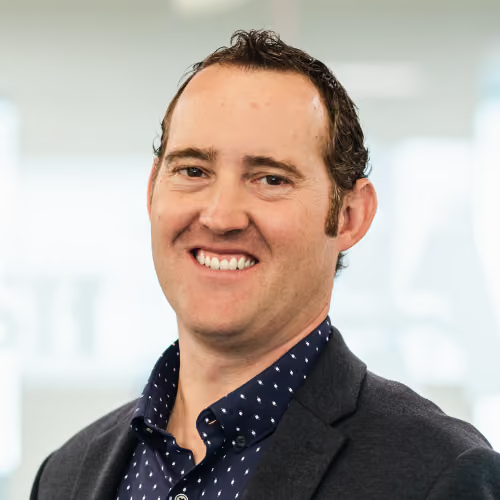
Host: A wife and five kids, the amenities of life in a big metropolitan area, a commitment with his wife to stay put in their current home after years of moving around, a big job overseeing the construction of a mega project in the nation's capital. That is the picture of Eric Hay's life when he decided to buy a business and move his family across the country to Laramie, Wyoming. Not that it was a sudden decision, in fact it was years in the making with starts and stops along the way. But he got there and this is the story of how Please enjoy this interview with Eric Hayes of Rocky Mountain Reclamation. Welcome to Acquiring Minds, a podcast about buying businesses. My name is Will Smith. Acquiring an existing business is an awesome opportunity for many entrepreneurs and on this podcast I talk to the people who do it. I want to share an update on the Acquisition Lab. As you know, the Lab is a highly vetted cohort based accelerator and community for people serious about buying a business. After going through the Lab's month long intensive, you have ongoing access to almost daily Q and A sessions with advisors, regular live deal reviews with Walker Deibel, author of Buy, then Build Potential Deal team introductions and a very active Slack group with other searchers on the path. Well, the update is that the Lab recently passed 60 businesses acquired and for well over $100 million in aggregate transaction value. Also, all members now enjoy lifetime access to the Lab because when you buy a business, it's often just the first of many and the Lab wants to support you in every deal, not just your first. Lastly, check out my recent interview with Shane Ursum, episode 105. Shane acquired a business with over $1 million in EBITDA in just six months and he attributes a lot of his deal success to what he learned in the lab. Check out acquisitionlab.com or email the lab's director, Chelsea Wood. Chelseieve.com Eric Hayes welcome to Acquiring Minds.
Guest: Thanks. Thank you. Glad to be here Eric.
Host: A few weeks ago someone posted on Search Funder asking about moving quote to the middle of nowhere to buy a business. You responded, I just did it. Six months ago you moved from the D.C. metro area where I am to Laramie, a town of, according to Wikipedia, 32,000 in Wyoming. Now I love Wyoming, spend time there growing up. So this is not to ridicule Laramie, Wyoming, but it is decidedly not a bustling metropolis let's say. So we'll want to hear about that move Eric, among a lot of other interesting aspects to your story. Let's begin with some background on you. Please.
[3:07] Guest: Well, thank you will? Yeah. I'm Eric Hayes. You know, for this conversation, it's important to start at the beginning. I'm a farm boy from Southern Illinois, but then went into the heavy construction, heavy civil business. Mega projects is where I lived for several years. So I would go from project to project, big city to big city, take a few key people with me, build a team there and finish the project, then redo, move, relocate, take a few people, build a whole nother team, build a whole nother project, and just keep doing that process over and over again. Last ended on the Frederick Douglass Memorial Bridge project in Washington D.C. which is a, it's a, it's a good one to talk about, right? I mean, it's one that you can show your, you show your kids. You know, it's right outside Nats ballpark. It's on the news all the time. I tell people that are fans of like say Blacklist or Madam Secretary or some of those shows currently, when those shows were being made, they were doing fly ins from commercial break. Or you could tell it was commercial break. We don't have to watch commercials anymore. But, and they'd always fly in over the, the Arlington Memorial Bridge. And I, I'd always tell our team, I said, once our job's done, those fly ins are now going to be over our bridge, the Frederick Douglass Memorial Bridge, which is over the Anacostia. So it's cool. I get people sending me texts and Instagram DMs all the time. Hey, just saw your bridge, blah, blah, blah.
Host: Eric, let me, let me ask, so when you say your bridge. So were you really kind of on the contractor side of that project? Kind of. The buck stopped with you?
Guest: Yeah. Yeah. So we were. I'll just say who I work for. I work for Walsh Construction. Cause they're, they're a great company and I was a project executive for them. So yeah, the buck stopped with me on that job. I had the number one slot on the job. We had joint venture partners, then we had design partners, and then we delivered that project for DC DOT. And yeah, five, five years, $500 million later, the city's got a great new conduit or gateway to, to the Anacostia side of the river, which is really needing some economic development. And creating that crossing there will definitely help with that.
Host: Yeah, absolutely. East of the river for sure. Yeah. And I, and I like your other people in your network, know the bridge well, drove across it just a couple of weeks ago. So that's, it's really neat to have you here. So yeah, carry on.
Guest: Yeah. So how we got to buying a business named Rocky Mountain Reclamation in Laramie, Wyoming was, it was a little bit of a windy road. We, my wife and I have wonderful wife Carrie, five kids. And so making the decision to relocate was not easy. We had done it many times before. Wyoming's my eighth state, my wife's ninth. We thought it was just going to be another move because we had done it so many times before. But now our kids are ones in college and three or four other teenagers and you know, it's, it was much, much more difficult move than anticipated. But we were looking for things. When we decided we wanted to acquire a business, we were looking for no state income tax states, conservatively run states. So our, I loosely call it a search. I was by no means a full time searcher. I was still full time on running that project for, for the Walsh Company and, and, but we were looking in Tennessee, Florida, South Dakota, Wyoming. Those were kind of some into Texas. Those were our states where we were really focusing. There's not very many businesses that come up for sale in Wyoming. So it was kind of like, well whatever, maybe, but this one in Laramie did arise.
[7:12] Host: Let's hear a little bit Eric, on your own decision making journey.
Guest: Yeah.
Host: So how was it that that a guy who's clearly so successful in his corporate role that he's basically the top dog on a $500 million five year project decides to buy a small business? Where, where did all that come from?
Guest: Yeah, yeah. So I had some family capital I needed to manage and I just started figuring out what's what, what is the wise way. How can I be a good steward of this family capital and just started looking at side hustles, I mean small things where putting a guy in the seat of a van buying bread routes, I mean talking really small passive side hustles to being investors. Investor in small businesses. I've been involved in a, a couple other private offerings, you know that it's since exited and as an investor and so I really just started gathering intel, consuming content because I wasn't sure what I wanted to do. I wanted to make an impact for long term for my family. You know, you're in corporate America, you put money into your 401k and you know, most your wealth ends up, or a lot of times it ends up all in that 401k or a lot of it does. And okay, so you retire, you spend it, maybe you have when you, when you leave this world, you'll end up with a couple Million dollars left there to give to your kids. And you got five kids. I'm like, well, 2 million divided by five, $400,000, 40 years from now. That's not going to mean much to my kids then. And so, but you know, I needed to do better for, for them. And also the, the construction business on those mega projects, it's, it's a rough go. I knew that. I mean I had, I had pride of ownership in that position and I worked my tail off there and I knew I was not going to have to work any harder on my own business than I was currently. I grew up in a family business, so I knew what, knew what that was like. I very much enjoyed that with my parents. I also, that aspect I talked about building a team, moving, rebuilding a team. We'd get up and go and have a successful team. Then the project was done and you do that again. And I was like, man, so jealous of these businesses that have employees that, where you can stay together for a decade or more instead of where I was changing employees. And employees were getting a new leader in me every few years, you know, employees. And that just made it a lot, a lot of work.
[10:04] Host: And so, so actually, Eric, let me stop you there. The five year, a five year project to a lot of years. That will sound like a pretty long time. I mean, you know, work 10 years these days, especially in an industry like tech, people stick around for two or three years and so, so five years feels like a pretty, a pretty good run to, to, to be working together with others on a team. But that felt short to you and you were thinking more like you want to stay with the teams that you assemble for longer 10 and 15 years.
Guest: Yeah, yeah, exactly. And, and yeah, and again, I got to take several key people with me on jobs where I'd have four or five people that would go around with me. But then I'd also get the phone call, hey, such and such jobs needing somebody. And I'd, I'd send my best, my best employee to that other job to give them an opportunity, you know, and so I was really looking for building long term relationships. Also, most listeners know in a big city, you all commute in from different places, you may see someone at work every day, but in reality you could live up to three hours apart if you wanted to go to one another's residence. So I was wanting to be able to really build community with, with employees and that, that's a very important aspect to me. So those things drove my decision making and I, I also just you know, how does some. So this ended up being a pretty big deal. So how did I go to put together an independent sponsor deal? Coming from without a finance background but being, you know, an executive in the construction business. And so I just like scratched down, I went back, I looked through my podcast records, I looked through my books, and you know, I read like six different books. I was a regular consumer of like eight or nine different podcast. So I had long commutes in the morning, long commutes in the evening. I would purposely push mow my very large yard so that would take me like two and a half hours. That way I could consume more content while push mowing my yard. All my neighbors are like, who's this guy, one that mows his own yard and two who push mose it. And then, you know, I took up running because you can burn up an hour running pretty easy. And I just consumed all this content. And it was, it was varied across from real estate investing to setting up funds, to acquiring businesses, to operating businesses and listening to podcasts that were specifically directed to investors. But that helped me learn what investors were looking for in, in my pitch deck. That helped me learn also how to better evaluate a good business. And so, I don't know, hundreds and hundreds of hours of podcasts and books over a couple years finally turned into this deal getting done.
[13:04] Host: And Eric, so let me just understand your headspace. So you're really kind of in an exploratory mode consuming these hours and hours of podcast. You know that you, you want to grow the nest egg into something more substantial than what a 401k is going
Guest: to do for you.
Host: But at this point, you don't know how to do that. And so you're looking at all, you know, all the kind of ways to make money, sort of entrepreneurial ways to make money. Double click a little bit on your evolution from looking at doing something very passive. You start, you talked about like do buying a bread route where you wouldn't even really be very involved all the way to of course, what you, what you've now done, you kind of did, you know, you're operating own and operate a business. When did it, when did this project of like I got to grow my nest egg evolve into, I'm going to pivot my whole career, buy a business and become the owner operator of it. What was that evolution?
Guest: I, I think a key point in that is my, my wife and I very much enjoy charitable giving also. And that's an aspect that I should have brought up more and you know, there's some great groups out there doing great things. And it was actually at a session where it's a DC based or Northern Virginia based group called Alliance Defending Freedom was giving a presentation and we support them and like, man, they're doing such great work. It'd really be good if we could give more two groups like that. Then there's all the talk of, oh, all the baby boomers are retiring. There's going to be this huge transition of small businesses to the next generation. Or probably in reality it's skipping a generation, is transferring two generations down. And, and so my wife like, okay, why shouldn't we do this? Somebody is going to buy and operate those successful businesses. We think our intentions are good, Most people's are, some aren't. But why shouldn't we go and do that and try and make a bigger impact in a positive way for the world with charitable giving. And we're Christians and we believe in giving to those organizations that support the calling and support the people that they love. And so that's when it went from, I'll say kind of a, well, I don't know if we should do this. Maybe we're being selfish. Obviously it's uprooting our whole family. I have a great career. I'm very loyal to the company I was working for to where it became, okay, let's, let's do this.
[15:49] Host: And then it was actually a sense of purpose that got you over the hump there.
Guest: Yes. Yeah, for sure. And then just, you know, coming up in the construction business, I always worked for heavy civil contractors, so we self perform a lot of our work. If you look at more commercial guys, you hear about, oh, this general contractor just subcontracts everything out. Well, that's not who we were. We did that work that, that made me a nuts and bolts details operator guy. So I saw the opportunity in that, you know, there's many people are looking for, don't be the operator, be more passive or be the CEO. Make sure there's a general manager in place. I had confidence in my operating abilities where maybe those businesses that are at a little lower evaluation because they have that key man risk because the operator of the company is done the day you buy it. Well, I had confidence in my operating skills so I saw that that created some momentum there or potentially would allow me to, to get into some businesses that, you know, I was definitely looking in the space where private equity was starting to dabble, you know, big enough that where I was at the lower end of the big Private equity firm Belt and, but they weren't interested in the type of business I decided I was interested in because they, they wouldn't take that key man risk that I was willing to take because I had the years of operating experience.
Host: Well, it's, it's a great kind of illustration of how, you know, a lot of buying a business is kind of picking your poison because there's, there's no perfect business and but if you, if, if you can find a poison that for you, you actually, not only, not only is it kind of the least of all possible poisons, but you actually like it. Yeah, you really like, you really like keeping, keeping the trains running on time and the deep gritty operational details, then that becomes this huge advantage because yeah, there's all these opportunities that a lot of people wouldn't look twice at that you're, you know, you're, it's your briar patch. So that's a really great aspect of your story. You already know that business owners are making amazing use of virtual assistants, often based in the Philippines. And while virtual assistants are helpful, virtual professionals are transformative. More Staffing is a boutique agency that hires a players in the Philippines not for simple tasks but for deep competency work. Think operators, supply chain managers, controllers. More Staffing de risks your engagement with a 12 month guarantee to you and they provide coaching for six months to their talent. When an engagement begins, that means your hire is coached in the background, no additional cost to you so that your working relationship flourishes and is as successful as it can be. Global staffing is increasingly the norm and building the muscle within your business to take advantage of it will be crucial in the years ahead. Speak with More Staffing about the pool of capable affordable managers they can connect you with. Check out Morenow Co. That's Morenow Co. Just to go back for a second to the evolution of your thought process here when you said you had some family capital. I'm going back a few minutes now. Is that essentially like your, your 401k or whatever, whatever nest egg that you had saved up over the course of your corporate career or was there some sort of inheritance or something else where you were looking to deploy some generational. Something generational like that?
[19:31] Guest: Yeah, yeah. So I think one thing, you know, there's lots of conversations about your spouse's needs in the search process. And you know, my spouse, one thing that's important to her and I think that's important to a lot of wives is security. Yeah. And so it's a big risk. But the 401k dipping into it, borrowing against it was never a conversation because that's the security that we were not willing to give up. We sold our home. I did have some inheritance or some family business capital to run. Not exactly inheritance, but managing capital for my mother after my father had passed away. And yeah, wanting to be a good steward of that capital as well.
Host: So you had, when you say the capital that you wanted to be a good steward of and grow, and you're not referring to retirement money because that was untouchable. Agreed. As agreed by you and your wife, but it was kind of your own savings from your career separate from the retirement fund. And then this. And then this bit of capital from your. From.
Guest: For your.
Host: On your mom's behalf.
Guest: Yes, that's correct. Yeah.
Host: Great. And, and let's talk more about risk because, yeah, you are really successful in this, in this corporate career. You know, if you're working, if you are the guy in charge of a $500 million five year project at a leading contractor, you know, doing one of the, one of these mega projects for a big city, dc, the nation's capital. And again, you're living in the DC area, an expensive place to live. I imagine you're doing quite well. I imagine that W2 check looks pretty hefty. You got five kids. So yeah, this was going to be a lot of risk. Eric, is there anything more to say about that? I mean, we've lingered on this question now for a couple minutes, but is there anything more to say about that? I mean, I applaud your appetite for risk.
[21:40] Guest: Yeah, the risk is, the risk is real. I think the. Burden of leadership, burden of success. The anxiety after closing was greater than I had anticipated. That was something that I had never dealt with in my life. I was, I was a pretty even keeled guy. But yeah, yeah, that, that, that's real after the fact. And you know, I would also say that all those things you just said when I went to get outside capital, they're like, this guy's crazy. There's no way he's going to take this risk and let it flop. And so that actually made, that was very attractive to investors. Now we all know that in an individual like myself, I'm not in control of all things, but they are correct that I took a big risk and I'm going to do what I can do to make this business successful.
Host: Yeah. Talk about skin in the game, man. You put a lot here on capital. You walked away from a fantastic career. Well, on that question of anxiety, we're gonna, we're gonna return to that but there are a couple of things from our pre call in that I know about your search that I wanna make sure we get to as well. How did the, the outline of your search take shape? So you, you just characterized yourself as an independent sponsor and, and, and why not a self funded searcher? How did you kind of, what did your search look like and how did you end up kind of slotting yourself in that bucket?
Guest: I think I listened to a podcast a lot called Investment Fund Secrets and it was about establishing funds. And I had first started out maybe down the line of okay, that sounds interesting to me and you know they do the 8020 with the carry and, and, but then when I decided I wanted to be an operator, well that's not how funds work. And so it just started evolving. I decided that I wanted to make sure I was in the control position from an ownership perspective and just basically what model I needed to do to, to maintain control. I knew what level of capital I was bringing to the game and then how much outside capital I was going to be able to raise and maintain that. That's really how it evolved into me getting into this slot that we decided was the right slot for us in the whole acquisition and funding space. I don't feel like I gave a real great answer there that.
[24:44] Host: Well, that's okay. I just want to, I just want to make sure we're clear because I suspect most of the audience is going to hear independent sponsor and think that you're not the operator, the lead operator, but indeed you are very, that's the whole point, as we just touched on a few minutes ago, is that you very much are operational, you are the owner, operator of this, of this business. And we'll get in a little bit more into the, into the terms of your acquisition here in a minute. You, from the, the moment that you had this notion that you needed to, to grow the family capital and you considered bread routes all the way to when you re like really started getting serious about your search. How long was that? These, these, these hours of mowing the lawn and going for jogs, starting a new hobby just so you could listen to podcasts. Yeah. How many was it? Years?
Guest: Yeah. Well, so I'm very bad with, with anniversaries. And so I was actually thinking about, well like what, what date did we actually even close on the business? And I, I just remember it, it was the same day that Elon Musk closed on Twitter or now X. And I'm like well, okay, that's how, that's how I'll remember that for the rest of my life. Because, you know, we're the same, me and Elon. But, but so if I, I think back, I think it was, you know, I think it was actually coming home on a Valentine's day getaway in 2020, before the world shut down, that I told my wife about these aspirations of which very atypically from her, for her, she just broke down in tears like, no, we said we were gonna hopefully establish ourselves where we were and we had a 15 year plan to stop this moving every five years inside of corporate America there. And she was against.
Host: So what she, what she was upset about was that this, this suggested you were going to move again. And the constant moving was what you guys had agreed between each other to not do. You wanted to stay in Northern Virginia for 15 years.
Guest: Yeah.
Host: And it had been only how long at this point?
Guest: Probably only three years at that point. So I, yeah, it wasn't, but it
[27:02] Host: wasn't, it wasn't the financial stuff. It wasn't the risk necessarily that she was upset about. It was just the prospect of uprooting the family.
Guest: Yeah, yeah. And so then, so then that led me more probably down the passive route. So maybe I even started with the acquisition route and then her response led me down the more passive route. And then I discovered no passives, not for me. And so it was probably then like in October, November of 21, when I had said, okay, this has bounced around in my mind long enough. And I'd had lots of conversations with her. It's either whatever you want to say, fish or cut bait. You know, it's time to, either. It's either time to do it or for it to get out of my head, because I wasn't. And she said, well, let's start praying about it more. Be diligent in our prayer. And it was just like. So I, you know, made a Search Funder profile and stuff just started happening. It was like just a couple weeks. And all of a sudden private equity firms were contacting me about operating businesses for them for a small portion of ownership and on Search Funder because of
Host: this new Search Funder profile.
Guest: Yeah, yeah, I guess, I guess there's, there's some firms out there that are looking to skim good operators off the top and short circuit the difficult search process. So they say, oh, hey, this is not maybe your, maybe not your typical searcher. This is someone that's got more mid career, a lot more operating experience. We're looking at purchasing much bigger businesses than your typical search business will say. So they were, yeah, yeah, trying to, I'll say, skim some good operators off the top for their benefit and for the, and for shortening that process for the searcher too. And so then that just kind of built my confidence more than anything. You know, I really wasn't interested in that path. And you know, it was just, you know, so say that was October, November 21, went on a mission trip to Jamaica in say February, March 22, where we have a friend that's a missionary there. And he said, you know, from the good time God told me to go be a missionary full time in Jamaica. It took 10 years till I moved down here for things to happen. I was like, all right, that's, that's his wisdom telling me, hey, just be content, keep doing your job. You have very well. Because I was still very much needed where I was. And I'll just be patient. And I think I got back from Jamaica on a Tuesday with that attitude. And on Thursday I found Rocky Mountain Reclamation for sale in Laramie, Wyoming. And so I had had this attitude of commitment, long term, we'll just see how it plays out. And then, you know, I looked at the financials and by like Saturday I told my wife, I was like, hmm, this one's, this one's for real. And it was a non broker deal. I had immediate contact with the owner, asked them a series of questions over a few days and said, you know, after about four or five days, I said, hey, I don't need to ask you any more questions. I need to come see you. So the next weekend my wife and I got on a plane, came to Laramie, got stuck in a snowstorm, all the hotel rooms were full. Ended up having to stay at the, at that time, the current owner's home with he and his wife because there was nowhere else to stay and nowhere to go. So we built a relationship very, very quickly and sent an sentinel. I gathered up my, gathered up my legal and accounting teams and, and we were off to the races. So this was, this was the first loi I ever wrote, the one and only. And yeah, then seven later we closed. So there was a lot of stuff left covered right there.
[31:09] Host: Let, let's, let's rewind to Jamaica. You come back from Jamaica and you are resolved to be patient because you see in your, in your friend that it took him for his vision to become reality. Took 10 years. So you're prepared to be patient, but I guess you're still Checking Biz by Sell every day because it's two days later that you. That you see that you see this business on Biz by Sell. And remind me, you were looking in six particular states, right. That met your guys. What were they?
Guest: Tennessee, Florida, South Dakota, Wyoming, and then also North Carolina and Texas. So, yeah, we'll say 6, 4 to 6, 6.
Host: So you have these filter filters set up for biz buy, sell and you come back. Prepare to be patient. But up pops. Or you're going to bizbuysell.com and searching either way, two days later you see this business in one of your target states in Laramie, Wyoming. Back in. It's not even broker, but which is kind of, I guess, unusual for. Particularly for a business of this size, which we. Not sure you told us yet, but we're going to hear. And you're back and forth with the owner. Things move quickly. You say you hop on a plane with your wife to go meet them and snow hits no hotel rooms. You're staying with them. How does that go? How does. Yeah. What is it like when you.
Guest: Well, you know, I think you're here. Yeah, yeah. I think there is a few. A few things there. One, my wife and I went out. I knew that his wife or the couple owned it. They were both integral. She had been the essentially frog, for all purposes, the CFO for several years and had just retired. So she was heavily involved in the business. I think it was important that my wife and I came. This was also not a decision I was willing to make on my own. You know, my wife had to be involved. And so then there was that immediate like this. The previous owners, they had four kids. This was their life's work, right? And so to see that my wife and I came together, we had five kids. We had a vision to run this business. We weren't private equity that might try and flip it in a few years. You know, so there was this, this. And this is another reason I was so attracted to the business. There's been. There's several employees that work for us that we graciously inherited. Been with a company over 20 years, you know, 9, 10, 15 years on employees. You're talking about a company that's got 15 to 18 employees and eight of them have been here nine years or longer. You know, so that was something that was very attractive to us. The owners saw that, you know, hey, these, that they. They too recognized the things that we were, quote, giving up or the risk we were taking to do this. And that's also Gave them confidence in us because we didn't have the capital sitting there. I had not done and gone all done to capital raising yet. So, you know, if they would have said, well prove to me you have X million sitting committed to for the down payment of this business before we proceed any farther, I couldn't have done it. So it was really a true blessing and helped develop our relationship, which is so important during the due diligence process that, that in Laramie's small world that things shut down for that day and we ended up at their house that night.
[34:40] Host: Yeah. And obviously you closed on the business and here you sit as owner operator of it. But would you say that that particular experience of, of spending the night under their roof went well or was it awkward or was it, what were those particular 18 hours like?
Guest: Yeah, it, it went well. I mean it was a little awkward because they weren't planning on having anybody come stay in their house. We stayed in the, you know, we stayed in one of their now adult kids bedrooms who had never like cleaned out their stuff. Right. I mean, there were still all the sports trophies on the walls and you know, it was just like staying the night at a friend's house is what it was really like. And yeah, yeah. But of course there was some awkwardness because, yeah, I had just met him like, you know, the morning before.
Host: Yeah, yeah, exactly. Wild. And Eric, give us, I don't think you gave any of the criteria, the financial criteria that you, that bounded your search. What did that look like? What size of business were you looking for?
Guest: Yeah, well, that, you know, that's something that evolved as I learned more and more. You talk about on this podcast a lot about the, the don't buy too small conversation that goes on. But because of my career that I had, it had to be a significant enough business to replace a very good executive level income. So the business had to be able to support our family and then had to be able to obviously make the debt payments. And so definitely above 1 million EBITDA was required. And the closer to 2, the better. And then once it got above 2, that's where I found my sweet spot, say the 1.5 I decided was my sweet spot. Above that, I didn't have enough personal capital to bring to the game to maintain control. It wasn't going to be realistic to ask investors at that time for me to maintain control if the business was 3 million in EBITDA or something because I didn't have enough personal capital to bring to the table.
[36:47] Host: To be clear, you expected to raise capital from investors regardless. But if the business becomes so large that your relative capital contribution to the equity becomes smaller than the investors, then on the other side of the transaction you find yourself owning less than half the business.
Guest: Yeah, yeah, yeah.
Host: So you don't control it. So you wanted to, you wanted to buy a business of size big enough that you know, it, it, it met your financial criteria, which was substantial but still small enough that you, by, even by raising money from investors, you'd still own north of 50% of it.
Guest: Yes, correct. There's a premium on my operating experience also. It wasn't just, you know, there's okay, what capital am I bringing to the table? And then I'm doing the deal, I'm operating the business. There's that premium that I self assigned after getting lots of advice and consuming content on what I thought was a reasonable premium for that, you know, to be able to maintain that control position.
Host: I see. So when you, by premium you mean when you're kind of negotiating with investors, you're saying look, I'm, this isn't just, you know, let's not just look at the numbers of this deal. I'm also the guy who's going to be bringing not only sweat equity, putting my sweat equity into this, but really high caliber sweat equity because I, I, I'm a really good fit to be the operator of this business. So that's worth extra in terms of the equity that I retain.
Guest: Right. If I, if, if I brought $10 and they brought $10, we were not going to be 50, 50. There was a premium for me with, for all these things that maybe it was 67, 33 or whatever because, because of the premium for my, but then again I realized once we got up, that only goes so far and to be fair to investors and to be able to attract investors, that only goes so far. So that's why I decided really can't get over that 2 million EBITDA number and be able to meet those goals that I had self assigned.
Host: Well, a business of the size that you're looking for, that you were looking for Eric, I mean those are, Even though you had decided to be patient, was it still just going to be a kind of a biz buy sell strategy or were you going to do any proactive outreach or broker networking at all or were you just kind of going to keep your eye on biz by sell?
[39:14] Guest: It was no, no broker outreach, no like email campaigns. It was going to be biz by sell. But also I was talking to a lot of Other people in my network telling them my aspirations. Successful business owners, you know, you got your eye on anything you look into. Partner with anybody. That was one huge advantage of having lived all over the US I got to meet, you know, lots of, oftentimes they were subcontractors or suppliers that I developed long term relationships where I knew these business owners. And you know, so I was really able to develop a big network of, of successful business owners to bounce ideas off of and, and ask them, hey, do you know of anybody that's retiring? And so that, that was really the only other outreach I had planned on doing. And I had done a little of that, but it didn't really matter because this business came up on biz by sell.
Host: Are you able to share with us what amount of capital you had that you could bring the actual dollar amount that you could bring to your deal?
Guest: Yes, our family capital was $600,000 we were willing to put into the deal.
Host: Thank you for sharing that. All right, Eric. Well, so tell us about this Laramie business. We haven't addressed directly what it does.
Guest: Yeah, so Rocky Mountain Reclamation is the name of the business. It was started in 1979. Also happens to be the same year I was born. Like I said, I'm not good with anniversary, so I'm glad that those line up with each other that way. I can remember that. And it had been owned and operated by one family the whole time. They had grown it from starting doing plant and weed surveys off the back of a motorcycle. The husband would drive and call out things and the wife would sit on the back with a notebook and scratch things down and then they'd file these reports and that's where they started. And that motorcycle, I saw it, it still exists. And it's, boy, I don't know how two people fit on it, let alone riding around on the prairies of Wyoming doing weed surveys. But anyway, so Rocky Mountain Reclamation now we specialize in seeding work, revegetation work, erosion control, wetlands. We do some freight hauling as well and servicing the mining industry, the DOT, highway industry. Our biggest customers clients projects are on the wind and solar farms that are so prevalent in the windy areas of the Mountain West. We work border to border, Mexico to Canada, up the belt of the Mountain west states. So Arizona, New Mexico, Colorado, Utah, Wyoming, Montana, Idaho, those are our main states. Wyoming's where we do our most work. For whatever reason, just because long term client relationships, New Mexico is the area we do our second most work. And so our specialty is coming in and restoring native plants to areas that have been disturbed. All those industries I talked about, they make a lot of disturbances. When they're done with their project, those disturbances need cleaned up and restored to native. And that is not. If you, if you live east of this, do a north south line through Kansas City, Missouri. If you live east of there, you know, you don't have to do anything to get grass to grow. You don't have to do anything to get weeds to grow. In the very arid western US that is not the case and especially with native species. And so that's our specialty is restoring these native ecosystems. And we do it all over the place for many, many clients. 60 to 100 projects a year, projects that are a couple thousand bucks or projects where our mobilization to do them is far more than the value of the work itself to projects well over a million dollars. So very varied. And that's, that's.
[43:15] Host: And what we do. Let's hear to get a, to get a visual here. So you said mining, the wind industry are large industries that you serve. So you'll, for example, go to a mine site where the mine is being retired, I guess would be the word. And you'll, you'll kind of re. Vegetate, resurface, try to re. Try to restore that land to what it looked like pre mine existing.
Guest: Yeah.
Host: And, and elaborate.
Guest: Yeah, yeah. And it's not only retired mines that are totally being reclaimed. We do do several of those. And there's some good technology out there now where you've probably all seen these giant just straight slopes, they have grass growing on them. You'd be like, well, yeah, it looks like something used to be there. It doesn't look natural. Now there's computer programs that model what the natural slopes undulations look like. And so then these large reclamation dirt contractors come in and you actually build the site to look back like native terrain. Then we come in and put the native vegetation on it. And in five years, unless you are local to the area or having a very, very trained eye, you can never even tell there was a mine there anymore. But we also do a lot of work in the active mines just because Powder River Basin here in Wyoming, it's mainly strip mine. So they're constantly stripping topsoil off of one area, stockpiling it. We have to stabilize those topsoil stockpiles for maybe a period of four or five years while then. Then they'll take other topsoil, spread it back over areas they are no longer working in. Then we come in and permanently revegetate It. So there's this constant movement of dirt in these big mines. We do a lot of work for the copper mines as well. And you know, copper demand is just absolutely through the roof right now and is only expected to trend upward. So there's some like, kind of the business momentum we saw was that, hey, we do a lot of work in the copper mines, we do a lot of work in the renewable energy space. Those both are growing very much. We do a lot of work in the DOT space. We know the funding that's been happening there over the last few years. We do a lot of work in national parks. Same thing with them. They got way behind on their funding. Then Congress committed several billion dollars a year to do this national park work. So those were the momentum we saw. And basically it's just anywhere that there's disturbance, we come in and put it back to native.
[45:54] Host: And you're not the dirt guys, you're the, you're the green guys.
Guest: That's right. Yeah. Yeah. Construction lingo is dirt guys have a lot of yellow iron. Well, we run all John Deere tractor, so we have a lot of green iron, but we don't have yellow iron.
Host: Ah, gotcha. Cool. And, and, and you had said like sometimes the mobile, the cost of just mobilizing is larger than the cost of the actual work when you get there. So what is like, say you got a job down in, in New Mexico, which is what, 15 hours away. So what is that? You know, what does that mobilization look like? I mean, there are a lot of moving parts there, a lot of moving bodies.
Guest: What give us a well, or there's, you know, it's. Wyoming's a big state. You know, we do a lot of work in, in Yellowstone and around that area, Park County, Teton County. And you know, it's, it's 400 miles plus to that part of the state from, from Laramie. So it doesn't just have to be in another state. But, you know, there's all these, you know, there's so much federally owned land and so many projects that go across federal land. They may be very small disturbances. A pipeline had a. They ran their telemetry pig and they have a problem and they have to go in and dig up a section of pipeline that's in the national forest somewhere. It's tough to get to, but they have to restore it. And they're like, well, we know Rocky Mountain reclamation, they pick up the phone every time we call and the grass grows when they leave. And so sometimes they're literally just you know, a 100 by 300 foot scar on the side of a mountain that we have to crawl our way up into and restore it. It may be 5, 6, 700 miles from the office. So yeah, we'll have a, well, we'll have a four or five thousand dollar mobilization demobilization for, for two thousand five hundred dollars worth of work. But they've counted on us for years and, and they know that the federal regulators trust us and you know, there's just that peace of mind and nobody wants trouble with their environmental permitting agencies anyway. Right. So you call us to button stuff up.
[48:05] Host: What? Well, this is just absolute, I mean what a niche. I mean really, really one of these businesses, maybe people in construction know something like this exists. I sure didn't. So one of the other things that we talked about on the pre call about this business and, and you in particular Eric, is this, is this business Buyer Fit and how great it was. We've already talked about how you wanted to be an operator and how that's, that was this great advantage for you. But also you come from heavy construction and this has elements of construction. And you grew up in a small business farm and this is, you know, you're, you're, you're revegetating, you're, and you said something like three or five years might go by before the fruits of a particular project are actually seen or, or things are totally back to normal. And so you're, I mean that you're in a sense farming here as well respond to all that.
Guest: Yeah, absolutely. We operate as a contractor, as a construction business, but our business is agronomy related. You know, we, we are in the business of putting seeds in the ground and helping them to grow. And so those are my two past lives if you want to say, you know, that business Buyer Fit, this was right for me. Our, our employees have a high level and the previous owner has a high level of technical expertise. You talked about this as a niche business that maybe the construction people know up. There's a ton of general contractors that really don't know about the revegetation work that has to happen at the end of their job. But it is very critical for them to be able to close out their job. But they know that those employees that I talked about before that have been here so long, they know when those guys come to site, they answer all the questions that an inspector might have or that the permitting agencies might have and that we're going to, like I said, we're going to button the site up for Them and yeah, so that, that. But I had to have, in my opinion, being an operator, I needed to have some level of confidence in my abilities in the business. And so where the, the AG part of this business combined with the construction part of the business, I was very comfortable in both of those spaces.
Host: Yeah. Yeah. Although, and we're going to get to this in a second, but there was still a big learning curve for you here. I mean there's, this, is kind of, this, the environment feels vaguely familiar to you, but there's still a whole lot for you to learn, especially since you're going to be the guy bidding the projects, doing the estimating. We're going to get to that. And how competitive is this industry? When I hear you say that even, even contractors who need your services don't even really understand when they start the project that eventually they will need your services, it just, it, it suggests that it's a really overlooked need. And therefore maybe there aren't that many players and given, you know, your geographic footprint and how people from all over the Mountain west are calling you to come down, that would suggest that you're kind of like there really aren't that many players who can offer what you offer.
[51:22] Guest: I think in the large metro areas. So Colorado, Front Range, Salt Lake City, there's, there's a lot of competitors there. It's, it's more in these remote places. It's, and we definitely have plenty of, plenty of competitors, but we have these long term relationships with folks and they know that. Again, we'll pick up the phone and we'll go to these remote places and we'll help them get their contract closed, get their permit closed. And so while we still compete in the hard bid market for sure in the DOT space, you know, most of our wind farm work, it is, it's hard bid to us. A lot of times the, you know, the contractor is proposing, but they're going, you know, they have competitors and so everybody wants the lowest number from their sub. But we are seeing a lot more where owners of these projects are contacting us, not just the general contractor, where the owner's saying, okay, we want Rocky Mountain Reclamation to do this work for us, Mr. Contractor, go get them to do the work. And that's just a testament to the previous owner and to the employees that we have. But there's lots of other, you know, if you're bidding on a, a state or federal project, it's going to be hard bid and there's going to be lots of competition because everybody knows about It So we try and we try to differentiate ourselves through relationships and the ability to get up and go be nimble.
Host: Yeah. And it sounds like it's very much a project business that yes you have these, you have a lot of repeat business, repeat customers but that there isn't a recurring element to the business.
Guest: About 20%, 25% of our revenue is recurring from these long term costs clients mainly in the mining space. But it is very much project based. I mean we'll burn 60 to 100 projects a year and you know we do seven, say $7 million in revenue and 80% of that revenue is awarded, bid awarded and complete in that calendar year. And so the long term revenue projections aren't there. I mean they're just projections. You have to go with the past performance in this case hopefully is an indicator of future success because again we bid, award perform 80% of our revenue all within side the same calendar year sometimes. I did a job last week that it was two days. This owner's like, it's a owner we have a relationship with. We got a problem at XYZ place. I got another crew coming in there after that and I'm really concerned about. They had, they had some serious weed problems and they're like can you go in there and get the weeds not sprayed but mowed and taken care of before this other crew comes in there and just. And spreads them all over, spreads the seed all over the place. And we're like we need you there tomorrow. So we made it happen. And that was an aspect of our business I didn't talk about. That is also very, very important is noxious weed control. Across the west. Cheatgrass. Probably most people have heard of cheatgrass. It's an invasive species, leads to lots of fires, lots of accelerated wildland fires. And so we do a lot of work in that space as well.
[54:47] Host: Well, we're going to return to talking about the, the business itself and your experience as operator at the end. But I want to. There was a lot to say about how you put the deal together, Eric. So let's tell that story. You've decided after Laramie, after your snowy night together that you're going to buy this business. You put in an alloy, it's your first loi and you make it happen. But in fact it wasn't, it wasn't that straightforward. It was a hard equity raise for you. Let's start with. You said the business is a $7 million business and what do margins look like? Give us a sense of, of what this project cost.
Guest: Was going to be, yeah, margins were 20% or so, a little better than 20%. EBITDA margins were 20%. And you know, we had agreed to a purchase price of a multiple a little, little below a four. And one thing that I had done, you know, again this is my first deal. So I made lots. Looking back, I made lots of mistakes or missteps or things I could have done better. But I, the owners and I agreed to a reduced, somewhat reduced purchase price and I was not going to ask them for a seller's note. I later learned that that was very much and rightfully so a requirement of many investors that that was very important to them. So I was having trouble raising equity a few months into it and just went back to the owner who we had developed this great relationship with and said look, I'm not going to be able to get this deal done if you don't take on a seller's note. And they graciously said with they had some counsel that yeah, that's right. And so they agreed to do that. So after a few months of beating my head against the wall, I found out that that seller's note was very, very important. Also that this was not. My investors were not going to come from the search world. We had too much project based revenue for most of them and, And their, their terms didn't meet my terms. You know, many of them were wanting or all or most were wanting preferred returns. Found that, that that group of search investors is, is pretty tight where they've all kind of developed their own criteria or it's a criteria they all pretty much implement. I don't know if they have gotten together on that or if that's just what the course of business is. But you know, it's, it's, it's pretty vanilla. You talk to two of them, then you talk to eight more and they all have the same criteria, preferred returns. You know, so much recurring revenue, not too much project revenue. And it just became evident that that's not where my investors were going to come from.
[58:00] Host: Started doing Eric, as you're, as you're getting discouraging signals from the search and from search investors. Are you yourself feeling like, is that giving you doubt that about the business itself? Like, well, if these, if these savvy investors don't like this business, maybe I shouldn't either?
Guest: Yeah, absolutely, absolutely. And so that, that's a good thing, right? To have that doubt and to be more cautious. I had Cane Crossing as my due diligence team. They were accounting due diligence they were, they were excellent, provided a lot of help, a lot of insight. They helped me through a working capital issue where what maybe in my early stages, what I thought was needed working capital was actually only 40% maybe or so of what I actually needed. So that was another negotiating point with the owner. Mr. Owner, you told me working capital was 400k, so that's what we said we were going to go with. But financial say it's actually quite a bit more than that. And so that was another negotiating point and you know, again, just learning those things.
Host: So you needed to push your seller for an extra $600,000 effectively of purchase price or pull them down on that because you needed that to remain in
Guest: the business or accounts receivable left behind is how it ended up shaking out. Yeah, yeah. And so just on the investor front, learning who my target audience or target investors were going to be, I talked to quite a few institutional folks that, that ran in the smaller space and also environmental, environmentally focused funds, agriculturally focused funds, because our business fit into both of those. And they were, they essentially were not willing to give me the premium that we spoke about earlier that I thought my operating experience brought. They were just straight dollar for dollar. If you're bringing, if you're bringing 600 and you need 2.4, then you get 25%. It's just a straight dollar for dollar relationship there on the ownership size side. And so, you know, I had talked to several of them. Many of them were, you know, encouraging. One guy just said to me, he's like, hey, just keep smiling and dialing. And I thought, well, that's a pretty good, pretty good phrase for when you just keep getting running up against the wall all the time.
[1:00:37] Host: But so Eric, the other, one of the things I'm struck by is that you are doing this for the first time. There's, there's all these risk aspects that we've talked about. You're leaving this great career and yet, and, but you are really firm on the, on whatever percentage of the business you wanted to retain and that this premium that you attributed to, to your ability to operate this business and, and to be the one in there doing a great job operating this business. And that that was really worth something. You really stuck to that even in the face of investors pushing hard on it, that's, that's pretty confident.
Guest: Well, and I, you know, honestly, I think probably, probably more people in my position need to be more firm. I mean, you're, we are the ones taking out the personal guarantee. And so, okay, you want 33% of business, but you have 100% risk. You know, that didn't. That's one of the reasons why. Also, I pushed. I pushed on it. Yeah, I'm taking on a lot of risk already and I have to put a personal guarantee on it. But then you're saying, well, I could then I can't control the company necessarily. Now, hopefully you have a good group of investors that would still let you run the company the way you see fit. But that's just where I saw that, you know, there was some misalignment, I thought in my eyes on what Inspect investors expectations were.
Host: No, that's very well put. That's great. Okay, Carry, carry on. So you're smiling and dialing, smiling and dialing.
Guest: And, you know, lots of referrals. Hey, no, I don't quite do that, but call xyz. And there were so many phone calls and I can't even remember all the paths it took. But. But essentially it became a lot of referrals, friends and family, referrals of other successful, you know, people that were financially successful, that were looking for some diversified investments. I very much also portrayed this and accurately that, you know, this was a little bit of bringing private equity to the masses and how that relationship, if you go and invest with a fund, what return you're going to get yet you're willing to trust those people and they're going to take. They're going to keep at least 20% of the returns. But here I am sitting in front of you telling you about myself. You already know a lot more about me than you will any fund manager you ever send an email to. And your returns are going to be, you know, better. As far as you know, there's nobody skimming 20% off the top of your returns there. And so it was definitely a democratization of private equity is one thing I was telling investors and ended up with. I did end up with one institutional fund that specializes in agriculture deals. And so they have a pool of clients with committed capital and. And they maybe push out. They've been pretty successful. They do probably one fundraise a month. So you tell them what your minimum fundraise is through them, what your maximum fundraise is through them. You do webinars, Q and A sessions with all their clients. And so that was one institutional investor that came on board. The rest of them are all individual investors and ended up, by the grace of God, gaining a lot of momentum at the end, actually ended up over raising what our goal was and actually Even turned a few investors away because of the amount of ownership that I wanted to maintain. As more money came in, my level of ownership decreased and so ended up actually turning some folks away at the end.
[1:04:20] Host: And what was your target? How much money did you need to raise?
Guest: 2.2.
Host: And you had said that the business is about 7 million in revenue with about 20% margins. So that feels like. It feels like that falls right in the sweet spot of what you were targeting. And you paid a little below 4x, so people can do. Do the math on that. And you're looking to raise 2.2 and you are going to bring your own 600K.
Guest: Yeah.
Host: To the table. So all in, that's 2.8. And so this is the valuation. So what was the rest going to be? Sba.
Guest: Yeah, sba. Mm. SBA and seller note. The seller note that we negotiated and my 600,000 was actually part of the 2.2.
Host: Okay, well, by my quick math here, you're definitely. The SBA was going to be a lot less than 80%. So this is not your typical 10, 10, 80 deal. Correct. Where 80% is SBA loan.
Guest: Yeah, I was not comfortable. I was not comfortable with that model. You know, I know there's, there's. That's probably the most popular model out there, I'll say, for a lot of folks, based on one very, very popular book. I was not comfortable with that level of risk. That's what it all came down to there.
Host: And just to be clear, one of the things, Eric, you said on our. On our pre call was that you bootstrapped your investors. And I just want to be clear, I understood what you meant there. Just how you basically smiled and dialed your way to. To these relationships. You didn't have any kind of, you know, you tried to kind of go the trodden path of the search community, but got a lot of closed doors. And so from there, you were just really anywhere you could find the capital. And it was just a lot. And in fact, you said at the end it gained momentum, which is to say that for a lot of it, it was really discouraging. And it was a lot of dead ends and disappointing calls, correct?
[1:06:13] Guest: Yeah, absolutely. And yeah, it was just being persistent, telling people where you were at in the fundraise. You know, hey, I got. I got 1.4 of 2.2. This is the gap I'm looking to close. These are the terms, you know, just so that. And of course, having 600 of my own money up front, you know, that, that definitely, you Know that that was more proof of the skin of the game. Yeah, yeah. And that there was some momentum and this, this wasn't a pipe dream or far flung idea that this is a well put together plan. And you know, did, did spent a lot of time on a pitch deck, you know, had the data room. All these things that I knew next to nothing about before I started this process. But you know, I attribute a lot of that just to, you know, my previous line of work where you, you bomb into a new city, you build a new team, you build, you know, my engineering and construction background very much like, okay, here's something on paper that you have to have a real vision for to know how it's going to come out at the end of the day. But you have to start planning with the end in mind. And that's just where I started. I knew where I wanted to get, knew where I was. What do I have to do in the middle to get there. And you know, don't be afraid to ask people questions. Never be afraid to steal somebody else's idea that they're willing to give you. You know, don't be too pride, prideful to do that.
Host: I love that. Eric. That's, this is awesome. And when you say, as you just said, as with so many of my, so many people listening right now, you didn't know any about how to do any of this beforehand and you were learning as you were going, including putting together a pitch deck. And also one of the things you'd said to me was modeling, like financial modeling. You had some Excel skills from working on $500 million projects, but you felt like you needed to really bone up on your modeling. What did you use to bone up on your, on your financial modeling skills? And then also where'd you get the pitch deck? Did you do something from scratch or is there a template out there that you'd recommend people use?
Guest: It was pretty much from scratch. Yeah, pretty much from scratch. Of course, being in an executive leadership role, I was no stranger to public presentations, having to do the monthly PowerPoint for the bosses. You know, it was no stranger to how to put together a good looking PowerPoint. And sorry, what was some of your.
Host: And then the modeling, the financial modeling, what would you recommend to people who, who also feel like that their financial modeling skills are a little below where they need to be?
Guest: Yeah, there's, there's some folks on LinkedIn that, that have some businesses around modeling. They give lots of tips. I also read a few of, I believe they were, they were produced by Harvard, some shorter books. They were essentially directed toward operators that were now in the C suite but didn't have the finance background and knew since what their current role is, they needed to bone up on that. And so they had some very good books, very good guides that, you know. But how does the balance sheet relate to the income statement? And, and, you know, what are things that the CFO should be looking for and how does that impact you as a CEO? And, you know, I was very familiar with, you know, in construction business, cash is everything and getting your invoices in and getting paid. And so I wasn't naive to finances, but I did know that I needed to become stronger in them. And so I used those Harvard guides were very helpful.
[1:10:00] Host: And did you find that the modeling and kind of financial skills that you gained by reading that stuff that. Did you then use that stuff, was it, was it actually important to getting your deal done?
Guest: I. I did today as an owner, yeah. And you know, they, they have some good ratios, some quick ratios to pull off the balance sheet or the income statement and, and, and, you know, aging ar, aging reports and, and things like that that they tell you are important, which really benefited me the most in my initial evaluations of business. Yes, Rocky Mountain Reclamation was the first loi, not the first business that I had pulled financials on. And I was able to quickly, you know, in a few hours say, do I. Do I really want to pursue this anymore? Or not. But then also it made me knowledgeable enough to know what I didn't know. That's why I brought on Cane Crossing as my accounting due diligence team. It definitely helped me in understanding the data they were giving me, asking questions and also being able to answer questions from them or when they asked me questions, being knowledgeable enough to be able to put it in terms for the current owner, that was not, you know, they're very, very successful. But it's that typical founder mentality. You know, they weren't super savvy on the financial side of things. So, yeah, having that ability to be the middleman between my due diligence folks and the existing owner, you know, just smoothed out that communication line and helped us get to the needed answers quicker. So I think it was important at the end of the day, it was important for me to gain that knowledge.
Host: Well, congratulations on putting that deal together and of course, buying your business. So let's close with a little bit of a conversation around some of the things you've already teased about your experience now owning and operating the business. This is, we've already talked about how the business buyer fit here. It was, it was really great. You are comfortable in construction and agricultural environments and this business is something of a hybrid of the two. But at the same time you don't know everything about, you know, how to make grass grow west of the, west of Kansas City or whatever it was. What has the learning curve been like? And in fact, from your previous years of experience, how much of that are you able to bring to bear? Or could I get in there and run this business? Somebody with no agriculture and no construction experience.
[1:12:33] Guest: I'm very thankful for the experience I have had. I think it would be very hard to come into this business cold. I think it'd be very hard to come into any construction business cold. If you were managing a bunch of subcontractors, maybe not as, not as much, but where you are actually a contractor performing the work, I think the experience is very needed. I'm still definitely learning every day. Coming up in the large construction business, primarily the large bridge world, making my way up through the ranks, I definitely had lots and lots of people that worked on my teams that were much better, better doing their job than I could be at their job. But I had done their job before. I was definitely a industry expert. Well, here I am not an industry expert and my employees all know a lot more than I know about it. And so that, that takes some getting used to and leading people that, leading a group of blue collar employees that know that you don't know as much about that specific thing as they do is harder than leading a group of people where they're pretty confident that hey, you're, you're technically on top of it and you're my leader too. Where here it's okay, you're my leader, but I'm not sure about your technical abilities here, you know, and, and so, you know, again, not being too prideful, ask questions. The, the, the previous owner has been a great resource, gracious with his knowledge sharing, willing to do so, willing to help and you know, and that's, that's important because he, he was definitely known across the whole west as a technical expert. And so there's lots of these long term clients that have known him for 20, 30 years. Now he's gone. Sure we do an introduction from him to me, but they, they too know that. Oh well, it doesn't sound like you've done this before. No, I haven't done this exactly before, but used to all these components. So that's a big, that's a Big transition.
Host: Yeah. And two follow ups there. First of all, this, this thing about your crews, seeing that you don't know as much as they do, but still kind of being expected to follow your lead as leader. Is there any technique or approach that you could recommend to the audience who find themselves in a similar situation? Because that is earning the respect of a new team when you don't know the industry is what makes this process very difficult in a lot of acquisitions.
[1:15:19] Guest: Well, I think I am not perfect at it, but, you know, when I'm preparing a bid, I will call those guys and say, hey, this is what I'm seeing. This looks a little different than our normal work that I'm very, very comfortable with pricing and understand and, you know, what's your experience been before? Or hey, this soil type in this area, it doesn't look like that the client has picked the correct species that are going to be successful there. And so just asking them questions, you know, we had our first. So we're very seasonal. So when it came go time this spring, there was some rub in that I would just call and check in on my foreman every day that are scattered across the nation, because that's totally normal to me. I'm used to running very big operations. I'm a guy that was always on site. You know, I'd have, you know, I'd meet with eight or 10 superintendents every day at 1 o' clock and they would meet with all their foremen at whatever in the morning. And I could tell you if, if, if George on crew number seven was out sick today, I could tell you that on, on jobs would have hundreds of employees. Well, here this is a much smaller group of employees that were used to operating pretty autonomously. And they're like, why are you calling me? Why are you busy? But why are you bothering me? I'm busy. I'm doing my job. And they thought I was kind of trying to micromanage them, when in reality I care about them, I care about our business. And I was just calling to check in. And so one dude like, who, he just had the frank conversation. He's like, don't call me, I'll call you. And I'm like, all right, I understand who you are. Just understand when I do call you, you know, I'm not necessarily calling to tell you how to do your job. I'm just wanting to see how things are going and keep in contact with you. So there's, there's definitely learning curves there. And just having those frank conversations because it became apparent to me, whoa. These guys expectations and my expectations are very different from each other and just say hey, it's okay if we don't necessarily like the way each other operates, but to know that neither of us are doing it out of ill intentions. I'm not trying to micromanage you. I don't think you're totally blowing me off. So we'll just keep open lines of communication and we'll work through this knowing that we're coming from two very different backgrounds.
Host: And how is it shaken out? Do you continue calling at the rate that you prefer or have you had to adjust kind of foreman by foreman?
Guest: Yeah, definitely adjusted foreman by foreman. And, and right. I mean I'm, I'm a, I'm, I'm a new business owner. I was a little nervous. You know, I wanted. We had come through again seasonal business. We come through the down times when cash is this going out the door every day. Right. Keeping the business open. And then when it's go time when we're in the field, I wanted to make sure we were being successful because if we're not successful and go time then it makes the slow time no good. Right. And so yeah. And just. And the guys are performing great. I mean, yeah, the crews are performing great. When they know what they're doing, they go out and execute and they knock it out.
[1:18:36] Host: Eric, you said that about this business. Their your construction background. Like for somebody without a construction background, it would frankly be very hard to get into this business and operate it. What specifically is, is the hard part about construction businesses for people without the experience?
Guest: It's, it's the pricing, it's all the contracts, the bidding of, of the work. Not only do you. I'm very thankful for my time as a general contractor where I can understand that relationship in between the general contractor and the owner and, and the flow down impact that can have on us as a subcontractor and knowing those questions that ask the general contractor. Okay, this is, you know, without getting too jargon heavy on you, this is a design build contractor. This is a construction manager at risk contractor. This is a hard bid contract that all impacts how I bid the work, how I price the work. Understanding that, okay, no having to be able to look at plans and drawings and specs and say this is what the schedule is, this is how far out we're going to be. This work that they're calling me about today and need a price on tomorrow. Well in reality I'm not going to do that work for two and a half years. And I need to have my proper escalation clauses in there and, and things and things like that and, and just knowing the background of how to price work, you know, what's the value of that piece of equipment, what's how much fuel, how much maintenance, what its replacement cost is, you know, all, all those things that if you're not in the construction industry or not in, you know, an equipment intensive industry, it would be, you know, knowing what I've learned, I would think it'd be very, very hard because it took me 20 years to learn it all and still don't know it all for sure.
Host: Yeah, yeah. Well, my head is swimming after listening to that, so. Point taken. Eric. I want to, I want to close out with a couple of, just the kind of the questions about the emotional journey of this. So the first on the financial piece, so earlier you were talking about how you guys do 60 to 100 projects a year and, and, and you know those are short term projects. So you, you know, are hoping the phone keeps ringing but you don't have any guaranteed income for next year or the next year after that. And in fact that's not uncommon. That's how most businesses are that you don't know what your revenue is going to be next year other than like you said you can project. But that's all very not certain. You come from a world where it's a $500 million five year project. So it's a mind shift for you. You're used to long term contracts and that you know what, you know money is going to be coming in four years from now. So it's just kind of, it's in fact what you come from is, is the exception, not the rule. What you're experiencing now I think is the, is the reality for most businesses where you can only see a couple months into the future talk about what that feels like and how it's different.
[1:22:05] Guest: Yeah, yeah. So that's been a very big adjustment for me. Very large faith exercise for me. I joined a Christian CEO group called Convene and in our meeting with them last week I said I have revenue insecurity complex, which is a term I coined myself, myself. But it very much fits how I feel. And so yeah, it's just, it's just getting used to that. And actually in, in our pre call when you were talking about things, some stuff definitely resonated with me. I mean home services are in vogue in the acquiring space. In the acquisition space right now. And the guy that's doing garage doors, he doesn't have any idea what he's going to be doing two months from now. And right. I'm more, I'm much farther, I'm trying to figure out what I'm going to be doing two years from now. You know there's lots of things that play into that capex and debt payments and all those things. So it's definitely been a big, a big shift for me. You know cash flow management is huge. When you're in corporate America you definitely manage your cash, you know where your cash is at for your respected project. But there's always somebody behind you that's got more cash right from corporate. But on a small business that's not the case. And so just you know, really staying on top of your billing, really staying on top of your cash flow, trusting that the business cycle that has been will continue to be. There are people that pick up the phone that have gotten to a large of, to the end of a large project and do not have a plan for reclamation and revegetation and they're like hey, can you come look at this job that's you know, 10% of your yearly revenue that I'm telling you about today and if your pricing's good I need you out here in two weeks. And so it's just very. And I even have more extreme examples. I mean I'm talking like a 15 or 20% revenue job that you get the subcontract 12 days before they want you on site. You know, I'm very grateful and thankful for that but man, it's hard on the planning part.
[1:24:20] Host: Yeah, sure. What about the other kind of anxiety? This is related to that but you just referred to the anxiety of earlier you referred to the anxiety of just buying the business having you know, the risk that you took, having loans, a big loan, having investors. You're also, you're also a kind of lonely at the top CEO for the first time versus a corporate environment where you had said on our pre call that you had all kinds of really capable people all around you, above you, to the side of you, below you. Talk, talk about just kind of the emotional shift that it has been to, to become a small business owner.
Guest: Yeah, yeah, I think that's, you know that what you said that, that I had said in the pre call, you know, in my previous job I had, I had a great boss, I had great peers, very talented employees below me that were still wearing a manager hat and here I have, I have great employees and but none of them wear a manager hat with me. And so that's just, that's a transition and trying to develop managers out of those employees that are, that have the capability but have never been given the opportunity. And because I don't want to be the end all, be all of decision making and planning and vision at Rocky Mountain Reclamation. I very much want that team, that long, that long term team that I talked about before. That, you know, one thing that attracted me to this business so much. And so it's been, it's been very much an adjustment. It's been tough on the employee front right now. Just the blue collar space across America is, is tough right now. The demand actually this week, Wyoming, Wyoming's at its historical record low for unemployment and there's like 61 applicants for every 100 vacancies. So there's nowhere close to in neighboring states. North Dakota's at its historical low. So Wyoming's like right at 3% unemployment. North Dakota's at 2%. All the surrounding states are at very low unemployment rates. And of course the, in the blue collar space, it's probably even more extreme. And so keeping the team intact, adding new members to the team, you know, that's very important and hard to do right now.
Host: Last question for you, Eric.
[1:27:00] Guest: The.
Host: Let's circle back to where I opened the move. Moving into, quote, the middle of nowhere. I don't, I don't like that expression because it sounds disrespectful and I don't mean it like that, but it's, you know, moving from some big metropolitan area to some more remote and small town feel. You said the move was actually it was difficult in. More difficult than you thought it would be, especially for a couple like you and your wife who are very experienced at moving into new places. What. How's it been? Give us more detail, please.
Guest: Yeah, well, first I'd say, yeah, I kind of agree with your statement middle of nowhere. That don't want it to sound negative. I think Wyoming is a, is a great place to live. The people here have been great. It's that I, I lived in Loudoun County, Virginia, the wealthiest county in the, in the US And I used to tell people like, this isn't real. This isn't what the rest of the country is like. You know, I grew up in a, in a small town in a county that, you know, I don't know, there may not be two or three houses over a million dollars. And every one of my neighbors had houses well over a million dollars in Loudoun County. Right. So it's just not what the rest of America reflects. I say the same thing about Wyoming. Wyoming is not like the rest of America. It's, it's great. People pick up the phone when you call them, they want to help you. They, you know, there's still customer service, there's just friendliness. But you get used to all the conveniences of living in a large metropolitan area. You get used to, you know, your kids have very large friend groups. Your, your church is large and well developed and everything here is just a little smaller. And, you know, it's been a little tougher for my kids to get connected. I think that's all improving. You know, my, my daughter is going to the University of Wyoming. Just, just a little shout out to Wyoming. Here. It's, it's. Every student has the exact same opportunity. Here's your gpa, here's your ACT or SAT score. Here's a scholarship. You get that simple. Every single student walking into the door and just to have. Again, that's not real in most of the rest of America. But that's an example. My, you know, my, my son being able to, who's 16, being able to work in the business, he's out driving tractors with us. He's doing whatever, you know, where I was working in corporate America, very large job sites, that wasn't a reality for him. So it has been hard, it's been a big adjustment. But then we're really seeing, you know, the, the benefits of it coming to our family now as we kind of get out of this transition space and get into, get into the more longer term of, of being here.
Host: And it's so, it's so particular to one's own situation, your situation, your family, where you were in life, having five kids, etc, is there any, is there any generalizable, something generalizable to take away from your experience? Like when you responded on Search Funder and the person was asking, I'm, you know, should I move to, quote, the middle of nowhere to buy a business? And you said, and you raised your hand and said, well, I, I just did it. Let's talk over dm. What is it just kind of like a yes, do it? Is that your response or were you just going to kind of share what your experience has been or how do you generalize your one experience? Well, I think maybe you can. Yeah.
[1:30:44] Guest: Not, not real well. But I would say one thing about small towns in general is relationships are slower to make, but they're deeper once they're made. There's, you know, when, when you're in an area that has is transient. A lot of people moving out. Whether, you know, whether you're, you know, if you're in an area like D.C. i mean people are moving in and out of there all the time because just the churn with the military and, and, and everything. So people are seeking out relationships because they don't know anybody either. When you go into a small town, most people have lived there longer. They're more comfortable inside their friend groups. They're not really looking to make connections necessarily because they're content where they are. So it takes longer to make those relationships. And you know, in the business environment is going to be grossly different in a big city versus a smaller city and, or smaller areas. There's still lots of handshake agreements, lots of email confirmations for contracts that you never see a real subcontract on. But you, you trust those people and they trust you. That's how you're expected to operate. Where obviously if I'm on a $500 million job, I'm not doing handshake agreements off to the side with somebody. And so there's, it's just different and it's a good different but it takes a little bit of getting used to and I.
Host: Thanks for that. Eric, is there anything I haven't asked you that that you want the audience to hear?
Guest: You know, I think it's, you know, we have really enjoyed being able to take what was a family operated business and hopefully do that with our family and you know, we hope we get to do that. You know, we could see ourselves doing it again in the future because there's, it's important that the existing employees were very important to the previous owner and to be able to come in and do our best to keep all those employees and not have some grandiose plan to get rid of all those employees and shake things completely up. I mean, I think that's, I think that's a noble cause for people to pursue and we're glad we did it. So just keep your eyes out for those opportunities.
[1:33:00] Host: Excellent. Eric, if people want to get in touch with you, how do you prefer they do that? LinkedIn Email Search Funder LinkedIn is the best.
Guest: Yeah. And Eric Hayes. E R I C H A Y E S Great.
Host: Eric, thanks very much for coming on and sharing your very interesting story and for being so transparent about it. The ups and the downs. Really appreciate your time, sir.
Guest: Well, thank you for the opportunity. I hope it's encouraging to others. Sa.






























%20-%20thumbnail.avif)



%20-%20thumbnail.avif)

%20-%20thumbnail.avif)
.avif)
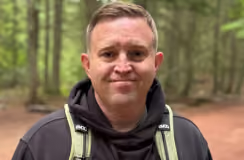

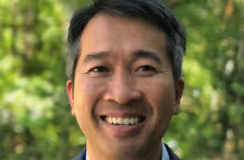
%20-%20thumbnail.avif)