Host: One of the themes you'll hear on Acquiring Minds is how the decision to buy a business needs to factor in a romantic partner and sometimes a family. In today's interview with Gabe and Kristen Perez, that theme is the story. Gabe and Kristen were both frustrated by the state of their professional lives. Gabe was deeply disillusioned by corporate life after pouring himself into his company and his team, only to be forced to lay them off when the company's fortunes turned. Meanwhile, Kristin, having paused her career for 10 years to be at home with the kids, was ready to rejoin the workforce, but finding scant options to do so in a way that made sense. Speaking of kids, the couple has four in the prospect of putting them all through college loomed finally. Behind all of this was the impulse not to merely pay the bills, but to build some wealth for the family and their kids. Buying a business addressed all these issues. Even when the business they ultimately acquired is three hours away, we spend time on how they've made that work and that there are even benefits to it. Another thing you've heard from guests is that they decide to buy a business and become an entrepreneur early in their domestic lives, before they're planning to have a family, or when a baby is on the way, or when their kids are still very young. They say things like, I felt like if I didn't do it now, I'd never be able to do it. Well, today's story shows not just that it can be done in a big family with four mature kids, but indeed that it was the solution for a husband and wife who sought autonomy, more financial resources and self actualization. Please enjoy this interview with Kristen and Gabe Perez, owners of Refrigerated Structures of New England. Announcements for some of you, buying a business right now is less your priority than simply operating in leading one. You want to get in the seat? Well, don't forget to be checking Smithlist for amazing opportunities to do just that. Smithlist.com is a job board for operators and leaders of small businesses, and many of the roles posted there are from within the searcher community and perfectly suited to entrepreneurial operators. Which is probably you if you're listening to this podcast. A couple examples this week, two businesses that were featured in Acquiring Minds interviews are looking for entrepreneurial operators. Costa Dio, who bought a tree business two and a half years ago and is someone many of you will recognize, is looking for an entrepreneurial operator to help him run his three crews and grow to five crews and beyond. Also, Jules Brenner, who is rolling up metal fabricators is looking to fill two positions, a GM and a Plant Manager. Now, even if those particular roles aren't a fit for you, make sure to sign up for the alerts at Smith List so so that you're notified as we post new job opportunities for entrepreneurial operators. Smithlist.com Smithlist.com. Welcome to Acquiring Minds, a podcast about buying businesses. My name is Will Smith. Acquiring an existing business is an awesome opportunity for many entrepreneurs, and on this podcast I talk to the people who do it. What do the following Acquiring Minds guests all have in common? Doug Johns, Morley Desai, Tim Erickson, Chirag Shah, Shane Ursam. They all went through the Acquisition Lab, the accelerator in community for people serious about buying a business. But they represent just a sliver of the Lab's success stories. The number of deals across the Lab's cohorts now stands at over 120, with over $300 million in aggregate transaction value. The Acquisition Lab was founded by Walker Deibel, author of Buy Then Build, the book that introduced so many of you to the very idea of buying a business. The Lab offers a month long, intensive, almost daily Q and A sessions with advisors, live deal reviews with Walker, deal team introductions, and an active community of serious searchers. Check out acquisitionlab.com, link in the notes or email the Lab's co founder, Chelsea wood Chelseie then build.com Kristen Perez Gabe Perez welcome to Acquiring Minds YouTube.
[5:01] Guest 2: Thanks for having us, Will.
Guest 3: Thanks.
Guest 2: Great to be here.
Host: Well, I've had multiple guests on who've bought a business with their spouse, their partner, but I've never had both people in the couple on at the same time. So this is a bit of a first that I'm looking forward to. I'm also looking forward to it because I think many of the themes in your story, your motivations for choosing this path as a family, are going to resonate with people. So let's start with some backstory on the two of you. Who wants to kick us off?
Guest 2: I guess I'll go first. Well, I guess first off, Will, I just want to say I think I speak for the both of us that this is pretty awesome that we're on this podcast right now. This podcast played a very, really important role and in our journey and, you know, kind of getting ourselves comfortable with the idea of doing this. So, you know, I know other people have said this to you. I feel like I'd be remiss in not just thanking you for what you've done and what you've done for this community and it's meant a lot to us. So it's really an honor to be here on this podcast.
[6:17] Host: Well, Gabe, thank you very much, sir. Very kind of you to say. Appreciate it. Thank you, Kristen. I really appreciate it.
Guest 2: So I am originally from New York, was born in Manhattan, my to a Puerto Rican mother. My mother was 18 when she moved here, and my father was of Cuban descent. You know, my mother was a Social Security worker. My dad was a construction worker. So we grew up pretty blue collar, bouncing around New York for a bunch of years, moved out to the suburbs where it was a very different life. I was exposed to money, and the idea of going to college was a pretty important sort of transition in my life. I ended up.
Host: How old were you when you moved to the suburbs?
Guest 2: I was eighth grade.
Host: So, you know, delicate time.
Guest 2: Pretty delicate time it was, you know, and my parents ended up getting divorced right around then. So it was a. It was a very challenging part of my life. And I think revisiting that was actually a big part of this story as well as I was doing some reflection and thinking about my life and where I was and where I'd been really coming to terms with some of the feelings and things I. I think I was suppressing back then was a really important part of helping me get my mind right heading into this acquisition process. And so, you know, like, well, why are you talking about your childhood? Well, you know, it's. It's an important part of everyone's life, I think, to under. Understand that. I ended up going to Fordham in the Bronx for undergrad and, you know, cut my teeth in the property and casualty insurance world after college. At that point, I met a friend, a colleague, who floated the idea of going to business school. And it's something I never considered. And I thought it for a lot of reasons, it made sense. In the same way I kind of evaluated this opportunity was really the same way I evaluated going to business school. There was a right way to do it, and for me, that was trying to get into the best school I could get into and do it full time and get it out of the way. Um, so I went. I ended up going to Tuck up at Dartmouth. And it was a great two years we had. Our two first kids were born there. Our first child, Olivia, was born. My first first semester of business school. So that was a pretty crazy time.
[9:24] Host: Isn't that when you're supposed to be doing keg stands and socializing and networking with all the future leaders of the world? Gabe?
Guest 2: I think we got some street cred with, with my classmates, you know, being as responsible as we were, but I wouldn't have changed it for anything. I think, you know, we were young parents. We were 27, 26, 27 at the time. Yeah. And I think now, being the age we are, I'm 43 now. Having, you know, kids at a young age, I think was, was great, you know, and I think, you know, we're able to, to be a big part of their lives. You know, being a parent's exhausting, and I can't imagine doing this if I was much older and having young kids.
Host: By the way, I am 44, about to have a baby. That's my second. But still, everyone's different.
Guest 2: Everyone's different. Well, this is my experience. It may not be yours.
Host: I'm a late bloomer. What can I say?
Guest 2: Go ahead. Yeah, yeah. And, you know, after business school, I ended up working for a consulting company, Lek Consulting, out of Boston for a couple of years. And our family continued to grow. We had our third child and we're looking to really settle down and ended up moving back to our hometown in New Jersey, which is the house that Kristen grew up in. So we ended up buying it from her parents. And that's where I started my healthcare career. So I spent about a decade working in healthcare in various different capacities, most recently for a Medicare Advantage company overseeing the rollout of their software product they asked physicians to use when they were evaluating their patients. At the peak, we had about 40 people on the team. We had grown that from about a team of six. We kicked butt. You know, the company went public. It was, it was a really cool experience. And then the company hit some hard times and, and on late 2022, they told me that I had to lay off my team. And you know, they were restructuring. That really stung. I think when you build something, when you contribute to such a degree of value creation, uh, and, and for that to happen really, really stung me. Um, and I think, you know, I decided to take severance and take time off and decide what was next. And you know, that's, that's really where the, the ETA process started. Now I can get more into that, but that's my story. Anyway.
[12:33] Host: That was great. Gabe. Kristen.
Guest 3: Okay.
Host: What about you?
Guest 3: So Gabe and I have been together a long time, so my story is kind of interwoven with, with his. I grew up in that New Jersey suburb that he moved to. So I'm from kind of a traditional upper middle class family, New Jersey suburb. I went to college and got my undergrad degree in business. After college, I bounced around. I had a few jobs, the last of which was on a trading floor of a hedge fund, which was really fun at the time. I did really well there. It was a fun job, an exciting job. I was felt liked. I was made to feel like a real part of the team. But then around this time was when Gabe started thinking about business school. And so I liked this job, but I was thinking a lot about what does this mean for my future? Am I really going to work at this hedge fund as a research assistant, administrative assistant for the rest of my life? Probably not. So Gabe got into business school, and that really changed a lot at that point. It was around 2009, that year we got married, we had our first baby, we moved to Hanover. First baby, first semester, like Gabe said, second baby, the last semester of business school. And I think when Gabe got that management consulting job, we had to make a big decision about my career. You know, I had been home with the kids while he was in business school, and when he took that management consulting job, it really felt like both of us could not be working on a career at the same time. Those jobs are known for tons of travel. You're basically signing up to work every waking hour when you're a management consultant. So at that point, I didn't have a career that I was passionate about going back to. So I made the decision to stay home with the kids, and I felt really good about that. I always wanted to be a mom. I was happy to make the kids my number one priority and let Gabe focus on his career. So that was about a decade. I was home with them for about a decade before I started thinking about next steps. That happened when the kids went to school and Kristen. Yeah.
[15:13] Host: Did you. Did you expect it to be 10 years going into it, or did it end up being longer, shorter than you thought?
Guest 3: I think it ended up being longer, yeah.
Host: Okay.
Guest 3: It just always, you know, I think we were like a lot of families. Well, when you start doing the calculation of how much it would cost to put. Take care of four kids, to pay someone else to take care of four kids, and how much I would make, it just never really made sense, and I was happy enough to do it. I think maybe we would have been further along financially if I had works. If we had two working parents, but it was kind of like a sacrifice that we decided to make.
Host: But it was something you thought would be not forever, so you eventually thought you'd go back to your.
Guest 3: That's why when the kids Were all in full day school. I started realizing, like, I. I wasn't exhausted anymore. Like I had mental space. And I started thinking about what can I do? What kind of meaningful work can I do outside of the home but still prioritize the kids? And that's, like, really hard. I think I was like a lot of moms who have stayed home for a period of time. I felt like I had grown so much as a person and I had more to offer than I did before I had the kids. Right. Like, I had a lot of experiences. I like to joke that I had a business degree by osmosis. Like, I. I was at tech with Gabe. Like, we have a lot of smart friends. Like, I'm in circles with people who do a lot of interesting things. And I am just the type of person who's always seeking out knowledge and content and learning. So I felt like I was valuable to the job market. But really, when I went to look at it 10 years after staying home with the kids, there really wasn't much for me to do. So I tried a few things. I did baby sleep consulting, which was fun. I was a preschool teacher for two years, but that was during COVID and kind of a disaster. And then we moved here to Western Mass. I took some time to settle us, and then again, I started hitting the job market and I started looking at admin jobs again. You know, that's kind of what I was doing before I had the kids. And they just like, I did not see it being a good fit. I got pretty far in some interviews. And in the end, I think having to go to a desk every day, like, being expected to show up wasn't going to be a fit with my family priorities and four kids. And really it was hard to wrap our head around, like, the pay that I would make. Even though we weren't paying for childcare, Having me unavailable and at a desk was just like, it was always a calculation of was it worth it. And that kind of leads up to the time where Gabe went through the restructuring. That was really hard for me to see him go through. I saw how hard he worked. He's an extremely hardworking person. And it was super disheartening to know that you could put everything into something. And in the end, if you're not in charge, like, it could just be taken away. So that was kind of where we were at when Gabe introduced eta.
[19:17] Host: Well, it's funny, guys, because it, it, it does certainly feel like all roads are leading to this decision. I mean, the, the problems that you're describing in your life, your lives are nicely solved if you will, by becoming your own, by buying a business and becoming owners. But I, I couple things I do want to also note that like while this is a story of a couple, I also think it's very much a story of each of you individually. So people listening. So Kristen, what you just described is a woman. This is something that women who have an appetite to have a professional career but also have kids know too well. I mean this is a classic story of if you decide to step off out of the race for a while, getting back into it is very difficult. You're punished, you're you in the sense that like you, you know, you don't, you're not earning what you think you're worth. None of that life experience you've accrued is really matters on the, on the market. And, and it's just, it's a very constantly hard kind of thing to confront. So you know, the modern American woman has to deal with this. And so you're, you're a perfect encapsulation of this. Am I, am I wrong?
Guest 3: No, that is completely what I was trying to convey. Being a mom is, you know, being a mom of any amount of kids makes you a bath in a way that's really hard to turn into bullet points on a resume. It's, it just. There's experience there and there's value there, but it's not something that translates.
[21:01] Host: So re. Entry into the work in the work market is so hard.
Guest 2: And I think it was hard as, as her husband to you know, sit there and, and realize I've always thought Kristen could probably have been better at business than me. In fact, whenever we go to any you know, ex work events or conferences, I, I made sure to bring Kristen because she just, you know, lights up a room and can, can you know, just really good at making connections and meeting people. And I think seeing her as a mom of four kids and how difficult it can be to manage that and organize it, I just knew what an underutilized asset she was.
Host: How romantic.
Guest 3: It's so romantic.
Guest 2: And to sit there and just like see her like interviewing for these jobs that I like were just really she was way overqualified for really. And yet she's being told that she doesn't have the experience and it's a low paying job and so it's frustrating.
Host: Right, I can imagine. And then Gabe, you with just a way we haven't quite gotten, I think to kind of the kind of emotional crisis that you Experience. But I think, you know, anybody who's experienced kind of a deep professional kind of crisis that's also really tied in kind of emotionally will resonate with. With what we're about to hear, I think from out of your mouth. But so anyway, just want to call out that like a lot of the themes in your story, independent of what you are both going through independently, I think are. Are patterns that you'll see in. In people's lives, aside from just the fact that you're doing this as a couple. So I wanted to say that the other thing I wanted to ask you guys, which I know from the pre. Call is your move to Western Mass. And the. Your. Your experience of the economics of trying to live in a major metro area with four kids, maybe you were going to get there. So if I'm spoiling it, but tell. If you're going to get there, fine, but otherwise, please tell us.
Guest 2: I think that's a very important part of the story. It's. And it's consistent with the pattern we've had as a couple. You know, it's going to business school, deciding where I was going to work after business school, having more kids, you know, deciding to move to New Jersey and kind of settled down a bit, moving out to Western Mass. In each one of those cases, we, we really talk through, you know, what are the pros and cons, you know, what do we need to think about as we embark on this next chapter and, and really make sure we're on the same page. Like, you know, we still want the same things in life. And I think, you know, moving to Western Mass. I think, yeah, as you said, I mean, it's. It's difficult as a, you know, family of four and a, you know, we had the smallest house on the block, but, you know, taxes were super high. The cost of living is just high. And yeah, you know, as. As we. We knew we had some equity in the house and you know, we could upgrade in size and quality quality of life. You know, maybe Covid. Covid changed a lot of people's mindsets, but I think, you know, I was working remotely, so it made sense for us and we kind of pulled the trigger.
[24:39] Guest 3: I just will add that in terms of themes of our story, that wasn't a normal thing to do. Like when we told people in our town, we're moving to Western Mass. They were like, we why? What? Why would you ever leave this suburban oasis? And so we had to get comfortable doing something that people don't understand. And I think that really Worked a muscle for at least me personally when we decided to buy a business because people were like, wait, what are you doing? You know, it was a. And I had to be comfortable with. They've never heard of this before. And. Yeah, it sounds crazy. So a building block.
Host: Exactly.
Guest 2: Yeah.
Host: Good. Good practice for continuing to let the world know that you're making unconventional decisions. I love that. And. And just for people who don't know Western Mass. Give us a quick picture. It's kind of rural. What's it. Why Western Mass. What's it got to offer? What's it look like?
Guest 2: Well, it's. It's kind of like New Jersey in the sense of if you ask people what Western Mass. Actually is, they would say anything. West of Worcester, we are way west. We're in Berkshire county, so it's the westernmost county in Massachusetts. We live in Williamstown, which is a college town. Williams College is here. And we, you know, so we live in the very top corner of Massachusetts. You can walk to Vermont from our house. It's pretty remote. It's pretty rural. It's a small community, but we love it. It's been great.
Host: An SBA loan broker, as opposed to a direct lender, doesn't work for a particular bank. Instead, the broker pairs you with the right SBA lender for your deal based on industry terms, risk thresholds, then helps you navigate the process better than many lenders themselves do. Matthias Smith of Pioneer Capital Advisory is just such a broker. Matthias worked at two of the country's top 10 SBA lenders. So he's been on the inside of the SBA process and knows well the pitfalls and hurdles and how to avoid them. He struck out on his own to laser focus on the ETA and search space. Our niche is his niche. You'll see Mathias at all the ETA conferences. He's closed over 30 search deals since starting Pioneer in May of 2022, including some acquiring minds. Guests. To learn more and get in touch, go to PioneerCapitalAdvisory.com or click the link in the notes. Okay, Gabe, please. I think it was your turn to carry on the story after being disillusioned with your corporate experience.
[27:35] Guest 2: Yeah, I think the weight of
Host: what
Guest 2: was in front of us really hit home. And you're in the day to day of your job. You don't really have time to sit back and think about these things. But I. I think that the minute I realized what my. I could very clearly see what my future was if I continued down this path, or at least the Likely future moving from job to job, VP job to VP job, to maybe a SVP or CEO at one point. All jobs that I really had no interest in actually having. I, I mean, if you, I've met a lot of these people that work in these, these jobs in these corporations, it just wasn't appealing to me. But I was still, you know, fighting for it for some reason. And I saw a lot of risk in that, that path. Like there was no certainty there. Right. And this, what, what happened to me really, really hit home and I started to think about college. My kids are going to be in college soon. We've got several million dollars in college tuition, probably cars and everything else that comes with kids coming of age. And that was scary to think about. And it's a big reason why a lot of people don't have kids in the first place, you know, and I think we were just of the opinion we want to have kids, we're going to figure it out. And. Yeah, and so, you know, those two things, like really being really understanding where I was and the gravity of this next decision and where I was in my career, I was 42 and I was like, man, I've got like,
Guest 3: I
Guest 2: don't know, 10 years where I could like physically go hard, right, like in my next thing and like go all in and then maybe another 20 if I'm, if I'm kind of got things going right. And that's not a lot of time. Like, yeah, you have to make a decision at some point. And then I was still searching for what, what is that next step? And I, you know, when I thought about some of the things that I, I trying to understand what was preventing me from getting to that next level in my corporate career, it always seemed like I was waiting for that next promotion and never got it or, you know, just, I don't know, felt like it was a struggle, something was getting in my way. So I wanted to understand that. And I think it was a lot of self, self loathing happening at that point in my life. Like, I just didn't like who I, who I become. Like, I was just not happy. I, I look back at my, I kept a journal for many years and I recently looked back at my journal and I mean looking back at some of the things I wrote in there about how unhappy I was in my career and just in general was really like startling, you know, and then I compare that with how I feel now and I mean, things could not be any different.
[31:22] Host: And do you think in the moment, even though you Were it sounds like even though you were literally writing this stuff down, your emotional state at the time, it somehow wasn't. You didn't quite realize it because it's like you've only had recognition of it after the fact.
Guest 2: Yeah, that, that's right. Rediscovering kind of who I was and what makes up sort of my, my character. Like why, why, why do I, why am I the way that I am?
Host: Right.
Guest 2: You know, I think really understand with the help of my family, my childhood friends growing up, you know, we talk through some stuff and that needed to be talked to that hadn't been talked to, talked about for a while.
Host: So. And this is, this is when you revisit like the move to the suburbs and some of the, and I probably the divorce as well. Like this is this. You, you start unpacking some of that. Yeah, this is that moment.
Guest 2: Yep. Exactly.
Host: What did you learn about yourself? Maybe, maybe there, that's a separate podcast or two person personal. But is there anything.
Guest 2: Yeah, no I can share. I think I just realized how difficult a time it was and how I never really gave it enough credit for like how, how difficult that probably was for me to deal with at that age and not really appreciating it.
Host: Yeah.
Guest 2: And I think, you know, I just, we go from being everyone in your school is a last name Perez or Hernandez and you go to, you know, Westfield where everyone's last name is Smith. Felt like a fish out of water. And in many ways I felt like a fish out of water ever since. And you know, I think about how I feel now in my role is I've almost gone back to my roots of blue collar upbringing. I own a construction company basically and the people I interact with on a daily basis are blue collar. And I've, you know, I, I feel more comfortable now in the shop than I ever did in a boardroom, you know. And I think that's part, I think of why I feel so different now than I had before. And I think so, yeah, it's about, it's a transaction, but this is also about, you know, a transformation really. I mean, and realizing your, your potential. And you know, I think, and you know, I, I, I still didn't really know what I was going to do. Right. I was still looking for jobs. I knew I was starting to understand a little bit more about myself, but I still didn't know what the heck that meant for my future. And you know, I was still looking for jobs and came across a job listing for Chenmark on the Tuck Job board. And I was like, huh, that looks interesting. They had a, you know, kind of a GM and training type role. And doing some research on chenmark, I came across their podcast on Acquiring Minds, and that's how I found you. And the rest is history. The rest is history.
[34:29] Host: That's right. I'm so, you know, touched and honored that Acquiring Minds has been part of the journey, guys. But. But it also sounds like Chen Mark deserves a little credit here. If that first episode hadn't intrigued you. So, Chen Mark, if you're listening.
Guest 2: Yeah, that's right.
Host: That's really cool.
Guest 2: That's.
Host: That's great. Kristen, were you sensing his unhappiness in those years?
Guest 3: I mean, yeah, it's one of those things where it's like, this is what people do. Right. I think we knew that you would prefer not to be working at. In healthcare. You weren't passionate about healthcare or. But you were just putting your head down. And, you know, he was providing for our family. We had a good life. We had beautiful kids. Like, I think he was just doing what he thought he should be doing. And really, we didn't feel like we had many options. You know, what. What were the options? We could start a business. Like, we definitely had conversations during those years of, you know, daydreaming about ideas of businesses we could start, but I think we knew that that was just too risky for people in our situation. We needed Gabe's paycheck to pay our mortgage. Like, we weren't going to. We didn't have the luxury to start a business from scratch. So I think what Gabe said, you know, we were in it, but we didn't realize it could be different.
[36:12] Host: I'm reminded of Christian Bateson's interview. Christian, who bought the. The construction cleaning business in Georgia. Finance background, 20 years in a financial. And on a financial career progression and just absolutely miserable. But at some point tells himself, like, if I can just slog through another 20 years, if I can just, you know, this is kind of what I have to do. So if I could just make it to retirement just to kind of. Before he kind of awakened, if you will, it was just this kind of like, well, this is just how life looks.
Guest 2: Mean.
Host: You got to provide and it's a, you know, pays me well. So I guess this is this. I guess this is it sort of mentality.
Guest 2: Yeah. I mean, you use the word awakening, and that's like the perfect word for it. I mean, you know, I've said to many people, it's like taking the red pill in the matrix. I once, once like the risk calculus changed in my head. It was, I was left with two options, right? And I told Kristen, we're talking about this yesterday. But you know, if you lay out these two options side by side without any sort of, you know, indication of risk of either option, right. So you evaluate option one, which is corporate. Option two is going SMB and buying a small company. I think 10 of 10 people would probably pick SMB based on the, the economics of it and just the, the overall opportunity and the autonomy. I think what gets in people's way is the risk. Right. And I think once that's gone, I, and, and it was gone. Like I, there was, I mean in my mind it was like there's doing what I was doing was just as risky as this, you know, in many ways and for my, my, my, my mental health, our financial health, you know, for a number of reasons. And I think, you know, deciding to go down the SMB path I think was just, it was just such a clear option. Once it like really settled in, it was like this is the way, like this is the only way, right. And like I needed to get there to like get through the process because like it's a hard process and like yeah, the transaction, but then the transition and the managing, like it's all very hard. Like, but having that mindset, I needed to be in that mindset before going into this process. And I think, I don't know, I thought maybe I was ready at certain other points in my life, but I don't, I don't think I was like, I think there was just, it just happened when it was supposed to happen.
[39:05] Host: No, I only just the thing about risk and you know, this concept that is so, I think is so helpful. People think about having a job, corporate job generally as like the, the less risky option, the risk free option. And somebody has put it very well, I don't know who. But this concept now travels where actually that's just like the ultimate in customer concentration. To borrow a term from our world. You have just your employer and you are just at the mercy of decisions on high and you experience it. And so, so, so it's not nearly as, as riskless as it appears. Indeed, it's quite risky a job. And you were on the other side of experiencing that because somebody who's maybe you know, their careers just continue to progress their A W2 and they're, you know, they're progressing, getting promoted and nothing. There's never been kind, some kind of crisis in that or interruption in that they continue on their merry way and maybe never realize the risk of it because it, it never, it never bites them. But you were on the other side of an experience where oh like this corporate path can be really. Is really risky because this decision was made and all that I'd worked for was, you know, cast aside. And so, so that probably really informed or really made visceral your sense of the risk of a W2. Whereas for other people, maybe they get it intellectually, but they've never felt it like you did.
Guest 2: Yeah, I think that's right.
Guest 3: So, yeah, it took a little while for him to get me on board because, you know, he was going through this emotional journey. I wasn't sure if it was like a midlife crisis.
Guest 2: Yeah.
Guest 3: So. And then he throws out this, oh, we're going to buy. I want to buy a business. Like now he knows what he's going to do. And I know Gabe. And when he sets his mind to something, I knew it was going to happen. But at the same time, you know, coming from our world, like, we don't know anyone who owns a plumbing business or a types of businesses he was talking about. I was like, okay, first of all, we know nothing about that. And second of all, where are we going to find the money to buy like a million dollar 2 million dollar 3 map? How. How are we going to do that? Like, it seemed very unrealistic. So then, you know, he set me acquiring minds. Well, I spent this one weekend of my life at a volleyball tournament with my daughter Mohegan son, pacing the casino floors for exercise in between games and binging acquiring minds and texting Gabe questions like I read the books and I did.
[42:10] Host: So that's full circle for me. Kristen. I have sat at those tables playing blackjack as a younger man in college, long time ago, but still I know that, I know that. I know that casino floor. So I'm glad to hear that my, my voice was in your ears.
Guest 2: That's beautiful.
Host: Go ahead.
Guest 3: Yes. I mean, I got there and
Guest 2: I
Guest 3: was, you know, I trust Gabe. Right. We've been through a lot in life together, so it, it made sense. And maybe it wasn't the red pill, that Gabe, the matrix pill, but I definitely got there and it solved for a lot of our problems and it seemed like a solid plan. I was all in.
Host: And Kristen, talk about how it solved your problem in your personal career journey.
Guest 3: So, okay, my calculus was worst case scenario. I'm doing like really low level admin work. But it's for the business that we own. Right. So, like, that is the worst case scenario. And the best case scenario is that there are ways in which I can really get involved in a business where I can grow my skill sets and be valuable to our family, to our future. I thought it could be a real unlock for me and my career. And I was really drawn by the idea I was looking for meaningful work. And I think I was sold on ETA because of, you know, you can really impact people's lives with.
Host: Yeah.
Guest 3: Owning a business. So.
Host: And that came across from acquiring minds and your reading of the books, because that, that's a recognition that people, my guests, often have post facto, like, once they get in the business, they're like, oh, wow, I can impact my employees lives. This is lives. This is amazing. But it wasn't a motivator or necessarily even something that they realized going into it.
Guest 3: Yeah, no, I think definitely from acquiring mind stories like that, the box, for me, I. I hear that a lot from your guys.
Host: Yeah, yeah, yeah.
Guest 3: And I think, you know, sometimes owning a business or working in a business, it's like, feels like meaningless work. Like, what is the point? But just that flip of the script of the ways in which you can affect people's lives and what it means to have employees and to help people grow their careers. I thought that was really appealing.
[45:03] Guest 2: I think, to answer your question, Will, from my perspective. Yeah, I think having an impact on people's lives was very important part of the. The, you know, motivation to do this. I think I. Maybe it was a little bit of resentment and, and thinking, you know, if. If it was my company, I would treat people a certain way. Right. You could say that about any, any company. But I think for me, it was important to like, have a company that people were treated with respect, that we really cared about the employees and their growth and their families. And I thought I saw that as like a huge bonus and, and plus for doing this, like, it's almost like politics in a way. Like, we vote with what we decide to do with our talents. And, you know, for me it was, how do I put this, like, positive energy into the world, in the business world and attract awesome people to do awesome things. And I think, you know, that that was really a big motivator actually going into it.
Host: Yeah, I'm not, I'm not sure that I've had many guests for whom it was so crystal clear going in some, I'm sure. But it sounds like for you guys, it was just absolutely. I mean, you just said a clear and a motivator. That's wonderful to hear. Okay, guys. Well, at 45 minutes in, we haven't even gotten to the search, but that's okay because I, I feel like the most important part of the story is what we've, what we've been spending 45 minutes on. The rest is just numbers and searching. No, no, but let's, let's get into the weeds now of the actual search and, and business.
Guest 2: Once we decided this was a path we wanted to go down, you know, I, I started looking at companies locally. So I started networking here in Berkshire county. And you know, there were some businesses that were, that, you know, at first glance, like, look pretty good, pretty promising. The issue was like, there's not a lot to choose from here and it's extremely limited. And the companies that I thought were worth buying, the seller wasn't, you know, the owner wasn't looking to sell yet. So, you know, I, I felt like I had done a lot of work to at least assess. Was working closer to home buying a company in Berkshire county, the surrounding area possible? Am I. You know, I think the conclusion I came to was probably not like, and I didn't. We didn't have the luxury of being able to wait it out for four or five years. At least in my mind I hadn't because I'd already sort of made that, that flip in my, that switch flip in my head. And that's also when I reached out to an organization that you've had on here that has been mentioned, New Majority Capital. And you know, I joined their first cohort. And through part of that process, I really was hitting kind of the broker network pretty hard. And, you know, looking at sims every day, looking through a bunch of opportunities. And one night right before I was about to go to bed, I got an alert on my phone from Search Funder that some broker had posted an opportunity for a small manufacturer in Massachusetts. And I was curious. So I called him up at 9:30 at night and he answered and we, we hit it off and he said, hey, we should have a call with the seller. Spoke with the seller the next day and we hit it off. And the more I learned about it, the more I liked the opportunity. The only problem was that it was three hours away. And so we did put an loi, and it was the first loi. I put it on the business. And, and that was in April, early April of 22. And we ended up closing about six months later at the end of August.
[49:45] Host: Well, three hours is far. I mean, clearly, but it is, it's it's also, I mean, spoiler, you did it. And we're going to hear about what it's like. But the, it's a radius that I've heard other guests have as they're kind of in their search or starting their search and then wind back when they, when they actually do, they go on site to visit a business that's for sale or whatever that's three hours away. I think it was actually, I think it was Jesse in New Jersey who had a three hour radius for his criteria and he did it once and he was like, this is, I can't do this. This is too far. It's, you know, so anyway, it's dangerous. It's a tempting number because it seems manageable. But in fact, maybe it's not for most people. So probably not yet. But correct me if I'm wrong, but I do want to hear how, of course, how you're managing that. But I guess the question would be for right now in the story. Yeah. How did you get comfortable with that?
Guest 2: I think obviously we talked about it a lot and you obviously will share your own thoughts and feelings on it. But I think in another life, I'm a long haul truck driver because I
[51:01] Host: can, Me too, actually.
Guest 3: Yeah, It's a unique person.
Guest 2: Yeah, I can drive forever. So it wasn't the driving that, that really concerned me. I think it was, you know, I worked from home for many years and for most of my kids lives, that was their experience, me being home. Yeah, yeah. And so it was, it was, would definitely be a huge change. And I think, you know, I knew I was secure in our marriage and I, I knew that we were both very aligned on what we wanted. So I didn't really have a tremendous amount of concern there. I think we've always been able to, when things kind of start to feel out of sync, we kind of know it and we, we talk through it. And I was confident we'd be able to manage through that, you know, as part of this transition. And I think it was, you know, the kids and I, I told myself I would, you know, nine to 12 months, we'll try and you know, get someone in there so that I'm not, I don't have to be out there every day. Right. So, you know, at this point I'm, I'm there a few nights a week, rarely. I, I don't think I've been there Monday to Friday in a very long time. And so, you know, I'm there two, three days a week most weeks, which actually gives Me, the space to, you know, really work on some of the things I need to be working on without the distractions of somebody coming in to, I don't know, just shoot the. You know what.
Guest 3: Yeah, but I think part of the calculus was also we knew what it was like for Gabe to be away.
Guest 2: Yeah, that's true.
Guest 3: You know, we did it in his management consulting years. And just in terms of what we've said about timing, having to be right, like our kids were good age, right. Like they go to school all day, they come home, they have insane sports schedules. As much as we knew that they were gonna miss Gabe and it's valuable to have two parents there, we felt like our weeks go by in a blink of an eye. And then he would be home for the weekend. It was like good timing and in their lives.
Host: And so to be clear, the plan was you, obviously you're not going to do that commute in the day, so you'd spend the night there. Multiple nights. You spend the week. There we go. Is what, is that what it was? Monday morning to Friday night sort of thing?
Guest 2: Yeah, I'd say the first couple months, more often than not, I was there, you know, Monday to Friday. Yeah. And that was the plan. Yeah, it was, I think strategically, I never got like a full time apartment there. I didn't want to sort of feel like I had a second home. Like, I have one home and I, you know, I think, interesting.
[54:06] Host: That's clever. I get it.
Guest 2: I intentionally different.
Host: It's a different psychology.
Guest 2: It was definitely intentional about that.
Guest 3: I, I think this is a good part to say. Like, part of our strategy was, you know, I was going to be here three hours away and he was going to be there. And some people might say, like, well, then it's impossible for me to be involved in the business. Right. Like, how is that going to happen? It's a small construction company. What could there possibly be to do? But we were pretty dead set on the fact that it would not work if I was not involved. Like, our happiness would not be there. There was no way he could come home after a week away and, you know, fill me in on every detail. And for me to understand actually what he was going through, like, the only way for us to survive this, what we anticipated was going to be a really hard time, was if we were in it together, like on the daily, like a team tackling the problem.
Host: So. But had that, had that not been the plan?
Guest 3: It was a plan. But when you're. We're talking about three hours away you might think that, well, it wouldn't work. Like our, our plan for me to be involved wouldn't work. Right. Because we can't both be three hours away. Like, so how are we both going to run a business if I can't be there? Because someone has to be here. So. And we can talk more about it. But it wasn't exactly easy at first to get me involved.
Guest 2: Yeah, no, I think we had to
Guest 3: buy video conference, like video cameras for the office. You know, the women in the office had never done a zoom before and they were all really open to it and we were lucky. They, they were right there with us on the mission to make sure I felt involved. But it would have been easy, I think is my point, for me to like drop away. But we had to, we knew it was important for me to be involved if it was going to work and we were going to come out the other end.
Guest 2: I agree with that.
Host: Yeah. Interesting. So, so, yeah, so the three hour difference made it like in some ways, Kristen, you could have dropped off or, or not found yourself a part of it. On the one hand that could have been kind of an easy outcome or on the other hand, but, but on the other hand the three hour difference made it that much more important that indeed you be super involved. You needed to be that much more involved.
Guest 2: But I think it also, you know, it was part of the criteria was, you know, it. If it was going to be something I had to commute to and stay multiple days away from home, I sure as heck, you know, was not going to be working on the weekends because I, I just, I knew I needed that family time. I think I needed to be a dad. And you know, so that, that was also another reason why I liked the business. Among a bunch of other reasons was that they really typically did not do much weekend work at all. And so I've, I've been able to be dad on the weekends and still coached my kids baseball this spring.
[57:39] Host: Yeah.
Guest 2: And it's been, it's been good.
Guest 3: That was a little bit insane. But you did do.
Guest 2: Yeah, spring was like next level insanity. Like, I don't know. Yeah, I, you know, I think the, the first few months, you know, I'm not really involved in my kids fall and winter sports like from a coaching standpoint. So I just have to show up to the games on weekends. Um, when you're coaching a team, it's a little different. Uh, you gotta be there for practices, you gotta be there for games. And managing that was way more difficult than I anticipated.
Guest 3: Well, I think what, it's not just about coaching. It was just about showing up for the kids because those are things that you've always done with them and just like following through on that.
Guest 2: Yeah, I, I hate making a commitment to something and like feeling like I'm, I'm falling short. And so it was like, it was, it was a challenge, but we're through it now. What we do is, you know, the business is a really. What they do is they are a construction company primarily. And if you ever walk into a restaurant or if you had the privilege of going to the back of the supermarket, you'll see a walk in cooler or freezer. This company essentially assembles those structures. We don't do refrigeration, we don't do plumbing, electrical. So there's no licensing involved, typically no permits. We have to pull and we do everything from a very small walking cooler to a huge commercial industrial freezer for a distribution center, for example. And business have been around 30 years. So it was founded in 1990. The owners who were selling it had been there for seven and they were looking to retire. It was three owners, a husband, a wife and one of their friends. And you know, the, the business had done, when they bought it, it was doing about a million dollars, I think, you know, and I think, you know, it had, it had grown basically about four times that by the time, you know, they were looking to sell it. And yeah, they, you know, so they were looking to get out. I think one of the things that I really liked about it was a ton of repeat customers. There was no real customer concentration. There was, wasn't recurring revenue. But that didn't really scare me. I, I saw the repeat customers as, as, you know, I got, I got pretty comfortable with that. And I think, yeah, yeah, everyone loves recurring revenue, but it felt like a unicorn. And any company I came across that had recurring revenue was asking for way too much money. Yeah. So, you know, I, I like the competitive dynamics. You know, this company was really going way back. There was one company in New England that did this back in the 80s and the owner got, I guess he had a few vices and the company went under and it split into three companies. People started their own sort of thermal contracting companies. One of them is right down the street from us and the second one was about 20 minutes away from us. And those were the two competitors. That was really who we were up against on, you know, 90% of the work we were bidding on. And I thought, well, all right, I like my chances against to Other people, you know, and I thinking about, you know, the average job size is about $10,000. We did about 400 projects last year. And you know, there's, there's a real opportunity for us to get into, you know, much larger projects there. There are very big projects. I'd say a million dollars and above that, you know, then you start to see national players come in. There's way more competitive. It's not nearly. The economics just aren't nearly as good. Yes. Like they keep your guys busy, which is I, I've come to learn is a very important metric is man hour utilization. But there was a sweet spot sort of sub million to kind of where we were today. And I saw a tremendous opportunity there. I thought there was plenty of business out there that this could easily be, you know, 10, 20, $30 million business. And you know, people need to keep things cold. That doesn't go away. They did really well through Covid. They were an essential business. So there was a lot of things to like about it, you know, and the owners were great. That was a huge part of the criteria for me was owners that I could, I could just be comfortable with knowing they were going to be there for the transition and maybe beyond and that they were just good people, high character people. And I, you know, the, the, the owners were. That they were really just outstanding and have been super supportive. And you know, the business was. Was doing great for a construction company. You know, it was averaging about 35% gross margins, sometimes close to 40, and it was making plenty of money. And you know, I think I, I just thought it was a great, you know, the, I think the first time I mentioned it to Kristen, she was like, wait, what, what do they do?
[1:03:59] Host: Well, speaking of which, let's make sure we. I got it right. So it's called refrigerated structures of New England. So you build refrigerated structures. So you get the panels of these walk in coolers and as a. Then, then build to spec a cooler that is, that is large and sits in the back of a restaurant or a. A like a supermarket. And so you're kind of a fabricator. Well, you've said it's more of a construct really. It's a construction business. So you bring in supplies, so you have suppliers for all the materials and the supplies. And then you guys turn build to spec the. The cooler.
Guest 2: Yeah, that's exactly right. And we also make cold storage doors by hand from scratch. And so refrigerator, cooler and freezer doors. I was, I think it was one thing I didn't really appreciate coming in was just how important I think doors are. It's really kind of a great way to your foot in. In the door with customers. We've got our logo right on the door. You know, it's. We made about a hundred doors last year. I think we're on pace to probably double that this year. But doors, you know, doors have been. Been a important part of our business as well.
Host: But.
Guest 2: Yeah, so that's.
Host: So when you make a cooler, all the supplies of the walk in cooler come from suppliers. But then you all will be the manufacturer of the door itself.
Guest 2: Exactly. Yep.
Host: And that is a night. And that has branding on it. So it can be. It's kind of like the, you know, the H Vac company that puts their magnet on the side of the H Vac cooler. It's like when, when they go to need service or they want to do a new one. There's your name. Yep.
Guest 3: We also do service.
[1:06:00] Guest 2: We do. Yeah, yeah, yeah, yeah. We do a lot of repairs and service. I mean, you know, you think of any, you know, a lot of Panera's, McDonald's, Dunkin, you know, we've probably done a cold storage door and you know, a bunch of those across New England supermarkets, you know, every Shaws or Star Market or Hannaford Liquor stores. Liquor stores. You know, we've, we've sort of touched probably. So it's. Yeah, that, that's, that's kind of who our current, you know, target customer is. What else can I say about it?
Guest 3: Well, I think it's interesting.
Host: Yeah.
Guest 3: Our competitors have kind of over time moved away from these smaller jobs. They all want the big jobs. So it's just created this opening for us to just, you know, it's like the bread and butter of our business. All of these small jobs and it's tempting to go after the big ones, but they are riskier and they're more competitive. The margins are smaller. So I think if we can really focus here and then just. Our goal is to just do a few big. Jerry. Few big projects, not get into much over our head.
Host: Especially if this whole segment of the market is just yours for the taking.
Guest 3: Yeah, it's a sweet spot.
Host: Yeah. I'm reminded, and maybe this is a classic pattern in all kind of construction related businesses, but I'm reminded of Ben Rizzo's episode. Ben bought that distressed elevator servicing business in Pittsburgh and the business was in distress because they had. They'd been sitting in a certain segment of the market and then they, then they they were contracted to do a big new construction project in Pittsburgh. Like, apparently everybody in Pittsburgh knows this project, like a giant project. They got a lot of work on that project. The project fails, so then they're caught holding the bag. You know, they did work and didn't get paid for it. But the, the moral of the story is that like, they really reached, they were hungry to do a bigger project. They had this opportunity, you know, that seems like the natural progression of an ambitious company. But understanding those risks and being able to manage cash flow and working with the giant general contractor that was their client and knowing how to negotiate better terms and so on was not something that they knew how to navigate. And it bit them hard and it literally almost put them out of business. Not saying that that's what would happen here, but it, it does feel like there's a pattern there. You're at a certain segment of the market, maybe in construction, if you want to go bigger, it's not just, it's just a lot of risk and complexity to go to the next level up. So you got to think hard about whether or not you really want to do that.
Guest 2: Yeah, yeah, yeah. And I think we've seen firsthand how that can happen in our space. You know, one of our, really one of our competitors has come across hard times lately, I'll just say. And we've, we've benefited from it, certainly from a, you know, business standpoint. But even some of the, the people that were looking to, to leave, we've taken on. So, so it gave us, you know, I didn't really touch on like luck.
[1:09:35] Guest 3: Yeah.
Guest 2: But like, there's like a ton of luck once you get past the, like being in the right mindset and having the conviction. It's like, yeah, like we needed some luck too, you know, I mean, that broker answered the phone.
Host: Well, okay, but you, you picked up the phone at 9:30, Gabe. So that wasn't luck. Give me a better example of luck in your story.
Guest 2: I think coming into this, you know, we had a strong competitor that I think we were aspiring to be like, right. Which was, this was a company that was basically us just a decade ago, and it grew into a 50 million plus dollar company. And this, you know, the owners ultimately ended up selling out to a private equity group. And it's been kind of a disaster ever since. And, and so, you know, I think I couldn't have predicted that they were gonna, you know, fumble the ball. Right. And like that, that was a huge tailwind for us. And I think that, you know, Yeah, I could have bought this business four years ago and that would not have been the case. And the, Our other company that's down the street, I, I learned that they actually sold. They closed. We closed on August 29th. They closed that Friday, August 29th. I think it was a Tuesday or Wednesday. And so literally two sister companies sold almost within. Within the same week. And so they were also going through transition. Right. So all of a sudden it was kind of us against a strong large competitor that was kind of hobbling and another competitor that was going through the same transition. And again, I felt pretty good that, you know, we could do a good job through that transition and, and take some market share. But, like, I couldn't predict. Like I couldn't predict.
Host: Were you at all frustrated, Gabe, that the same business was for sale down the block as opposed to three hours away?
Guest 2: Oh, no, no, no. This is down the block from our shop.
Guest 3: Yeah.
Host: Oh, oh, oh. So both three hours away. So where, where, where is it, where is the business? Where is three hours away from Williamstown?
[1:12:05] Guest 2: Lakeville, Massachusetts, which is in the South Shore, kind of east equidistant between Boston and Providence.
Host: And by the way, that that competitor didn't sell to a searcher, did it?
Guest 2: No, no,
Host: because I, I have been reached out to. I couldn't, I couldn't find that. My message with the person, the dm. With the person. So forgive me person, if you're listening, who bought a very similar business recently. And I said, how bizarre. And because, you know, Gabe and Kristen also, blah, blah, blah, and, and he had apparently met with you guys at some point or talked to you guys at some point. So is that somebody else or is that indeed this, the person who bought this?
Guest 2: I would not be surprised if he listens and hears this episode. So.
Host: Well, that'd be interesting if he came on my first time were two. Two guest or competitors.
Guest 3: That's a good angle.
Guest 2: Plot thickens.
Host: The plot thickens. The world gets smaller. Well, guys, we're. We're approaching time, but there's still some important stuff I want to get to. I want to hear just some numbers around the business, if you could. I want to hear what the transition. We gotta, we gotta hear a little bit about what it's been like as operators from, from both of your perspectives because your roles in the company are so different. So let's start there. Can you give me what numbers can you share about the business and the deal?
Guest 2: Yeah. So the business was doing about a million dollars, give or take in ste.
Host: And that's also something to like about it. Nice size.
Guest 2: Yeah, yeah, it was, it was the right size. But you know, I think, you know, one of the things that comes up on your show quite often is, you know, do you buy the million dollar company that has like a full management team in place or you buy a $700,000, you know, company that, that's, you know, that, that has that in place. And so I think, you know, they had, the owners were, the owners were running the business like they were running the business like the husband and the friend were, were out there selling and the wife was in the office kind of managing the office and everything related to that. So you know, I think when I, when I reflect on the price, you know, we ended up buying it for about 4.2x that, that SD number there was, I definitely paid think a premium in hindsight, but there was like a lot of opportunity cost for me in there. I thought that if this business were for sale a year from then, it probably would sell for something that I couldn't afford. Right. And you know, I think that's proving out, you know, you know, we're, we're going to grow probably 17, 18% at least. That's what we're on target to this year and you know, be a five plus million dollar company. I think we've got tremendous opportunity in front of us. I believed in the growth story and I was willing to maybe pay a little more than I could have if I really pushed.
[1:15:36] Host: Well, and Gabe, to be clear, you thought it would like, if this business sold a year later, it would sell for more because it was growing, correct, in other words, correct.
Guest 2: Yes.
Host: Well, and, and you know, growth costs a premium, people. The, a high multiple is, is the price you pay for a growthy, a growthy company. So while it might feel like a bit of a premium and you know, I don't obviously I don't know the, all the details of the transaction. While it might look and feel like a premium, you can, you can explain that away by basically this is a growthy company. Now we, you could argue both sides of that that maybe an eta you don't want a growthy company because you know, you want something that's a little bit flatter because we're buying endurance, you know, enduring profitability and something that grows quickly. You worry that it could also come down quickly. So you know, one, one of these kind of debates that we could go back and forth on, but doesn't seem crazy to me that you had to pay a little extra for a Business that was, was on a trajectory.
Guest 2: Yeah. And the reason I say that is because, you know, when we went to the bank, you know, we, we worked with Live Oak for the SBA loan. I think they had trouble getting to the, you know, to the, the price, are getting comfortable with it. So, you know, the sellers are ultimately put in about 12% in, you know, sellers notes, half of which are on stand full standby. And you know, we haven't even talked about equity. That's a huge part of the story too.
Host: But to be clear, Live Oak didn't like that it was growthy, did they? And they didn't like that it was construction.
Guest 2: Yeah, I mean, and I, I have to give a shout out to,
Host: to
Guest 2: my, you know, working with my Liveo kind of rep. But he was just fantastic. I mean, and he really helped kind of usher us through the process and like advocate for us internally there. And so, you know, I think that that was huge, was just like having that and I, you know, I very easily could have had someone who wasn't as effective at that. And you know, I think for, for us, you know, the company had its three best years in the last three years. Yeah, you know, so yeah, there was growth. And it seemed, at least to me, I believed in the sustainability of it. To convince the bank that was, you know, you know, just took a lot of kind of going back and forth. Like, you know, are you comfortable with, with these growth assumptions? Even in a conservative case, you know, this is what it could look like in a few years. But I think just getting them comfortable with believing that the company was, was in a new place now it was not that $1 million company that it was seven years ago, but it's a, it's a, you know, growing four plus million dollar company and, and that will be stable. I think that was, it was challenging, but I think it took again a lot of like just kind of talking, talking it through with, with the bank and the underwriters.
[1:19:03] Host: Well, Gabe, talk, talk it through a little bit with us because there, there are lots of businesses out there, particularly maybe construction, where there's been a lot of growth in recent years. And this tension of will that growth continue or not is, is not only one. You, if you want the business, you have to convince your lender of, but you have to convince yourself of. So, so, so I'm aware of time, but I think this is important where. How did you convince yourself? How did you get over the very doubts that Live Oak was presenting to you and plug your Live Oak guy yeah.
Guest 2: So I think, I think that there's, you know, one thing is I, I, I had a strong background, so I had, you know, plenty of experience in dealing with, you know, just building teams. And I, you know, so I felt very strong in my, my background. The bank liked my background. I was an mba. You know, I had a good resume. I think talking through the competitive dynamics and kind of what we talked about in that, you know, these margins are what they are because there's no one else doing it right now. Right. And I think, and for the foreseeable future, you know, we didn't see that going away. Right. And we could always expand geographically if, because we're, right now, we're just in New England. And you think about all the, you know, cold stores that's, that's, you know, from Providence down to New York City or Philadelphia, there's a ton of opportunity there. That, that's for kind of the future. There's a competitive dynamics. My background, and I think it was, you know, the fact that they had no money marketing at all whatsoever. They did very little in terms of having kind of an organized, you know, sales process. And so I think painting the picture of like, I'm able to handle, like, ushering and leading this business through this transition, we've got like a favorable, we've got a favorable playing field. We've got a lot of repeat customers. They like to repeat customers, you know, very little concentration. So it wasn't like we were going to lose one customer and lose half of our revenue. And, you know, it was the, the dynamics around, related to competition, I think meant we could, you know, have a pretty healthy, healthy margins on the work that we did. So I think a combination of those things is what ultimately got them to be comfortable or untrained.
[1:22:00] Host: Well, just, just to emphasize your point on gross margins, it's a really, it's a really strong one. People should look at the margins of businesses they're evaluating and look at them, not look at them also just kind of objectively. But also compared to other margins within that industry, strong gross margins is a great signal of pricing power, which is a great signal of competitive differentiation. Maybe there aren't many competitors or maybe the company, your target company is just out. You know, it's just a, is a standout and out competes the competition. But either way, it's a very strong signal. But the other thing, the other thing just to push here, Gabe, on construction businesses, of course, the people get spooked by is their cyclicality. How did you, how did you again, get comfortable or get live. Oh, comfortable with the fact that, like, how many Dunkin Donuts are going to be being. Are going to be being built here in the next 10 years, really sort of thing.
Guest 2: What, what we pointed to was that, well, a, you know, when the world shut down, these guys were open and they, you know, they really thrived through it, I think.
Host: Yeah.
Guest 2: When people, when the economy is down, okay. People hunker down. They don't go out. Right. So maybe the restaurants aren't upgrading their coolers and freezers, but the supermarkets are expanding their capacity. Right. And the distribution centers for those supermarkets are expanding their capacity. When times are really good, a lot of restaurants being built, a lot of, you know, upgrades being made on the. The restaurant side of the business. And we hadn't even really touched other sort of market segments like Life Sciences. They'd done some grow houses. So actually marijuana cultivation facilities use our panels. That business has slowed down. But I think it's, you know, there was a diversification there. There's, you know, we've got restaurants, you've got supermarkets, you've got food processors. So, you know, across the, the spectrum of like, the food chain, we were playing in, like, every little part of it.
[1:24:16] Host: Right.
Guest 2: And each one of those is gonna. Is gonna react differently to a recession.
Host: Yeah.
Guest 2: Or really good times.
Host: And I think we can smooth out your own demand.
Guest 2: Yeah, that's right. And I think we, you know, yeah, there's a lot of new builds going on, but, you know, in our industry, there's a lot of activity in the areas you'd expect. Right. Like Texas and Florida and the south.
Host: And.
Guest 2: But what, what I see up here is we're kind of reached this replacement cycle where some of these supermarkets haven't upgraded their, you know, their cold storage in like 30 years. And that's a tremendous amount of our work is upgrading sort of old, existing cold storage and using some of the latest technology we have in insulation now. But that's a huge part of it as well, is like, yeah, there's the sort of. The larger macro picture, but then there's just. There's just like demand. Right. If you have a cooler that's falling apart, the health department's going to come in there and say, hey, you can't have food in this. In this cooler. You got to knock this thing down. Happens all the time.
Guest 3: We've seen some pretty gross coolers.
Guest 2: Yeah. I mean, I've seen mushrooms growing out of cooler ceilings, so it's.
Host: Oh, gross.
Guest 2: Yeah.
Host: Don't tell us none of us will want to eat in restaurants again. Kristin, how has the transition gone for you? What does life look like for you now?
Guest 3: Yeah, I think in terms of the work, it's been best case scenario. I had a slow transition in just by proximity, but I've probably been there five times. Maybe now at this point, whenever I see a window of opportunity to get away, I'll go over to the shop and just those visits and staying super consistent with showing up every day on my computer. I've really gotten my hands dirty in the business. The transition. I don't know how anyone, one single person could pull off a transition. The first days you can see spend weeks just changing usernames and passwords and setting up accounts. And there's so many logistics to get through just to like get started. So in the beginning, I was doing all of that and Gabe was just like, in it. He was going out with the crews, meeting customers, getting to know the employees. And over time, I've just taken over, I think, like all of the hr. A couple big projects involved there, like switching our payroll company, setting up 401k benefits for everyone. They had them before, but changing providers and creating our own. There's a whole thing. And you know, Gabe and I spend. Are spending a lot of time now talking through our handbook and I've kind of just become the HR back office. My vision of what I'm doing is I'm setting a foundation. So whatever we do next, if we're growing, if we're acquiring a new business, you know, I've figured it out, it will be smoother next time. I'm constantly learning and Are you full?
[1:28:11] Host: Full time.
Guest 3: So this has turned out to be perfect for me because it's flexible. Right. Like game and I are accountable to each other. I'm at my desk every single day. Some days it's two hours. Some days I do get eight. Eight hours in. But that schedule works for us because I get to prioritize the kids.
Host: Yeah.
Guest 2: And as long as you process payroll.
Guest 3: As long as I process.
Host: Yeah. That's more important than your kids, frankly. Don't. Don't sleep on that one.
Guest 3: Well, I mean, yes, like, if I don't process payroll, there's 23 people who pay their bills. So that's a huge responsibility. The first time I pushed that button, I, like, couldn't breathe. Yeah, it's been really fun, Will. This has gone better than I could have expected. And it's been super fulfilling. It's been really cool for our family. I know we Focused on a lot of the negatives of three hours away. But in the same way, we have made a point that we both need to be involved in the business. We've done it with the kids. So they take a ton of ownership and like being business owners and it's really a true family business. Like, Gabe comes home and they know, like employee names, they know projects we're working on. I don't know, it's been just really great for all six of us.
Host: Well, guys, there's. There's more to hear about. We don't have time in, in the business and, you know, plans for the business and so on, but I gotta start winding us down and let you go. But to the point about your family, let's close out with a couple questions there. First, what's it done to your marriage? What is your. How does your marriage feel? Different. And then second, just the big picture, the kind of, the really the. The money picture. Because I think we. You just answered Kristen, for us. If this is kind of emotionally and in a sense of like, purpose. It's given you both a purpose. I'm putting your words in your mouth that you, you lacked. But on the, you know, the, the money thing and the building wealth, is, is it working? So first, the marriage question. Has it changed your marriage? And if so, how do you.
[1:30:39] Guest 3: Well, I think, you know, when Gaba's talking about all those years where he was here, you know, physically here, working from home here, but unhappy, and that was just like the status quo and there was nothing bad. But I think in terms of our marriage, it feels different because now were personally fulfilled, I think separately personally fulfilled. And so when we come together, I think even though we don't see each other every day, I think it might make our marriage better. Would you agree?
Guest 2: Yeah. No, I think.
Guest 3: Sounds crazy.
Guest 2: I think a lot of people ask us this question, question. And it's hard for them to like, actually believe me when I say I actually, I think things are better than they've ever been because, you know, I think so far at least I've been able to balance, you know, really once when I'm there in Lakeville, I am focused on the business. This is really 100% right. And I'm going all out, you know, sun up, sundown on. On that business, making sure I'm moving that forward. And when I'm. When I'm here, you know, that's. That's my family time. Right. And outside. Yeah, I do have some stuff that I do here at home that's Important. But I just being able to like separate those two things and compartmentalize those things like physically, because I'm not physically here, has in some ways just made this transition sort of feasible in many ways because if, if I was like in the family every day with the business, you know, and having to manage those two things and take kids to play dates and other things and who knows what, what else, like that might be too much. So it's worked out. And I think like I said, you know, we, we do make a point to, you know, going on date nights and making sure we're staying, staying in touch and in sync.
[1:33:07] Guest 3: Yeah. And we really, we don't think it's forever. I think we've said that
Guest 2: we have a. Yeah.
Guest 3: Plan to get Gabe hung more.
Host: Forgive me, to compare it to revenue. There's quality of revenue as listeners know. There's, you know, not every thousand dollars that of revenue that comes into the businesses are created equal. Similarly, there's quality of time. And so Gabe being in a bad headspace, even if you were getting more time with him, it was low quality time. But to put it bluntly, because he was in a bad head space. And I think in any couple, any, any, any couple or any relationship really, if one party is unhappy, that's going to spill over of course into the relationship. I mean I've seen it in my own life for sure. So, you know, I'm, you know, I'm, I'm happier doing what I'm doing now than I've been in a very long time. And my wife Will is the beneficiary of that. She'll, she'll, she, you know, that. So, so that, that's very logical. I think that makes sense. The other thing just to say about the three hour separation of church and state there. I, I mean I used to be a big believer of that because I've, I've mostly kind of had jobs that I can do from anywhere. Work that I can do from anywhere. And I, I remember I was such an advocate of just keeping those two things separate. But over time it's just, it's just so easy to start working from home if you have a job that allows that. And then of course Covid did that for the whole all of civilization. For people who can work from home, they now are part of the week. And you know, we liked the flexibility, but now we also realize that there's a lot of unhealthiness to that and keeping a nice stark line between professional life and personal life is very appealing. I Get the appeal of that and how that, that's, that's almost more functional rather than less. Okay. And so how do we feel about. So, so you bought a business with a million sde now, obviously there's loans there. We didn't even get too much really into the terms of the deal very much. You did give us some details there, Gabe. We're not going to get into that now, but just. And you're growing it. I assume you have also, you have plans to grow it even more over the next five and 10 years, but distill it for us. How do you feel like it addresses the balance sheet of the family and the future of the family and millions of dollars, maybe literally of college fees you got around the corner, etc.
Guest 2: So, you know, we're able to pay ourselves enough that we're fine right now, you know, and I think that that, that was just like baseline. We needed to make sure we could pay our bills. Right. I think. Right. We are, I think, still trying to get comfortable with, like when it's okay to start taking money out of the business, you know, and I think we're, we're still, the company is still performing very well. Right. And I'll just say that, like, you know, of course, life would be very different if, you know, that that huge chunk of money wasn't going out to Live Oak every month. But it's performing well enough that we could still make a decision at the end of the year, like, do we want to reinvest in the business or do we want to take some of this money out? And I think that's a decision we'll have to make at some point. I do feel like, you know, if, if, if the company is where I want it to be in five years, then I think that the answer to that question will like unequivocally be yes, like this. This was exactly what we expected.
[1:36:53] Guest 3: And completely life changing.
Guest 2: And completely life changing. Right. And I think, I think it's.
Host: What number is that, Gabe? In five years, where do you want to see it?
Guest 2: I'm happy with us getting to, you know, 15, $20 million.
Host: And what SDE, what translate that to SD for us.
Guest 2: So that would. Then you're talking about,
Host: I mean, four times.
Guest 2: Yeah. Three to four million dollars. Well, hell yeah, that'd be pretty nice. That'd be great.
Host: That'd be a wonderful outcome. And it, and just to touch on it, you feel like that's pretty realistic. You've already kind of talked about the markets that you're not in and you could see going into the geographies that you're not in that you could see going into that all that all feels, therefore feels like you could get to 15 to 20 million in revenue.
Guest 2: It's definitely feasible. I have really sold that vision to some of the kind of important people we've been able to bring on to help get us to that next level. And I think that one important thing to say is, you know, we talked about like changing people's lives. Right. And that is still a huge part of what, of why we're doing this. And you know, we've put in essentially a profit share program. And so the better we do as a company, the better everyone does in our company. Right. And I want it to be that way. And so, yeah, talking about is it good for us, but it's also, it's good for everyone that trusts their lives and careers, their, their well being with us. Right. Everyone. We want to make sure that, that folks feel rewarded and that's a great place to work. So. I forgot to mention earlier that I, I meant to give a shout out to Eric Rabinovich over at Live Oak. Sorry, I, I forgot to mention his name earlier.
Host: Noted. There you go, Eric. Thank you for doing that.
Guest 2: Thank you, Eric.
Host: All right, Gabe and Kristen, anything that we didn't hit on plot point theme that you want to convey? We covered a lot of territory here, but there's a lot to your story.
[1:39:09] Guest 3: So anything that wasn't said, I think we covered everything. I just hope that people who listen to the story know that it's something that can be done. It can feel daunting going down this path. It can feel crazy, but it's super rewarding. It's possible. And I think it can be life changing.
Guest 2: Yeah. I think it's taken me 43 years to figure out what I was supposed to do with my life. And I guess the one thing is, you know, we know, we know what it's like, like facing the, you know, all the, the cost and expenses of things coming down the road and, and raising children and, you know, having a happy marriage. You know, we, we've dealt with, with all those things and we still continue to deal with them and, but I think, you know, have. Being in sync and knowing that we're, we want the same thing in life for us and for our kids is maybe the, the single most important thing in all of this because we couldn't do it without each other. And I, you know, I can't like, overstate that. I mean, our relationship has been, I think, just like the foundation that's allowed us to build this life. And it's super important, you know, and I know we, we said that, but I think really hammering it home and, and knowing that it's okay to feel like you don't know what you're doing with your life, but as long as you keep moving towards, you know, that direction, whatever it is, towards improving your life, you'll find it eventually.
Host: Well said, Gabe. And a beautiful note. And a beautiful note to end on, Gabe and Kristen, if people want to reach out for marriage counseling or other questions about your deal, how do you prefer they do that? Do you like email? Do you like LinkedIn? Do you like something else?
Guest 2: You can find me on LinkedIn and Kristen as well.
Guest 3: Yeah, I prefer email.
Host: I noticed, Kristen, that you, you've added a photo on LinkedIn.
Guest 3: I added a photo. Will, I'm really working on that LinkedIn profile. You were one of my first friends. I call them
Guest 2: friends.
Guest 3: I'm building it out though. My LinkedIn page is up and coming.
Host: Great.
Guest 2: You can get us kristen.com and gabe@rsovene.com
[1:42:03] Host: and just to say the name of the company again, RS of NE is Refrigerated Structures of New England. Rsofne.com Name of the business. Gabe and Kristen, what a cool story. Thank you guys for coming on. And now you will be part of the inspiration for others who come after you. So congratulations to you both for figuring it out, for taking an unconventional path, having the, you know, the chutzpah and vision to do that. You guys really deserve all the credit for the good things that are happening to you. So thanks for coming on.
Guest 3: I appreciate that, Will.
Guest 2: Thanks to you again, Will.


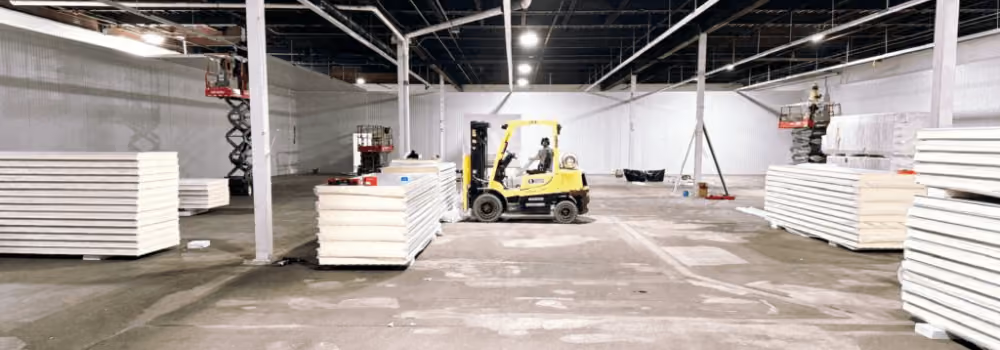






























































%20-%20thumbnail.avif)




%20-%20thumbnail.avif)


%20-%20thumbnail.avif)

.avif)



%20-%20thumbnail.avif)