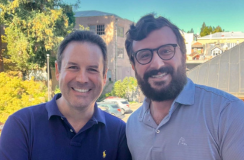
Host: Today's guest owns five businesses. He has debt on them but no outside investors. So his family are the sole owners of this portfolio that generated $9 million in EBITDA in 2023. Also, Garrison Snell is 30. He has no formal background in finance. He actually planned to be a professional musician. So hopefully this interview will show you how an outsider, someone completely naive to investing, can make a decision to pursue a path and not only be successful, but be successful in a relatively short amount of time. Garrison has built this $38 million Holdco in about six years now. It doesn't just happen. Garrison threw himself into his self education. A lot of people claim to study Warren Buffett, but have they listened to all the four hour long Berkshire Hathaway annual meetings going back to 1993 times over? In addition to a great story, you're going to learn about Porter's Five Forces, a model that you and I should commit to memory. And you're going to hear about the realities of Holdco life. Garrison just this week had a crisis in one of his businesses and he tells all Enjoy this fascinating interview with Garrison Snell of Snell Ventures Announcements as you know, we've been doing webinars this year and they've been going great. We have brilliant people in our space with deep expertise and a lot to teach, and the webinar format is better than a podcast for an educational session, particularly when there are visuals. So we're going to do more of them to the point that we've converted the homepage of the Acquiring Minds website into a calendar, essentially. Now you can easily find information and registration links for all upcoming webinars right on the homepage acquiringminds code. Here are the two upcoming webinars scheduled for next week after this holiday week here in the States. First, the SMB Lender Roundtable. Three lenders whose names, you know will be in discussion about what they're seeing out there in the market right now. Good and bad. Hearing from a cross section of lenders is a window into the overall health of SBA search deals and how they're performing under their new owners. Searchers like you, that is. Thursday, July 11th at noon Eastern Thursday, July 11th noon Eastern Second Due Diligence Office Hours Max Lummis and his team at LCS are going to host a live session devoted to answering your questions on all things related to the process of due diligence. You'll recognize Max's name. He's my partner in Mind's Capital and his company, lcs, is a forensic accounting firm that does the quality of earnings for dozens of search acquisitions every year. So come get your due diligence questions answered by those who do it professionally week in, week out. That is Friday, July 12th at noon Eastern. Register for both of those upcoming events at the top of your show notes or just go to acquiringminds Co, where you'll see them right there on the homepage. SMB lender roundtable Thursday, July 11 due diligence office hours Friday, July 12 register at the link in the notes or at acquiringminds co. Also some amazing new opportunities on Smith List the job board for operators and leaders of small businesses that we recently launched. A landscaping roll up is seeking a VP of Finance to lead M&A. They've done seven deals already. Four more are under LOI and another 20 are in the pipeline. An amazing opportunity for someone with a finance background who is drawn to search and acquisition entrepreneurs. You will be dropped in midstream to run the M and A of a fast moving roll up. Also, a towing business is spinning out one of its functions, a profitable function, into a standalone business. They're seeking someone to take this entity to market and build a team and a business with it. There is existing revenue and proven demand. You'll have the backing of the parent business and you'll participate in ownership. Really a unique opportunity for someone in the ETA space. So if instead of buying a business right now, you want the opportunity to run one, to lead one, check out these opportunities and others@smithlist.com link in the notes. Okay, on to today's episode. Welcome to Acquiring Minds, a podcast about buying businesses. My name is Will Smith. Acquiring an existing business is an awesome opportunity for many entrepreneurs, and on this podcast I talk to the people who do it. An SBA loan broker, as opposed to a direct lender, doesn't work for a particular bank. Instead, the broker pairs you with the right SBA lender for your deal based on industry terms risk thresholds, then helps you navigate the process better than many lenders themselves do. Matthias Smith of Pioneer Capital Advisory is just such a broker. Matthias worked at two of the country's top 10 SBA lenders, so he's been on the inside of the SBA process and knows well the pitfalls and hurdles and how to avoid them. He struck out on his own to laser focus on the ETA in search space. Our niche is his niche. You'll see Mathias at all the ETA conferences. He's closed over 30 search deals since starting Pioneer in May of 2022, including some acquiring Minds guests To learn more and get in touch, go to PioneerCapitalAdvisory.com or click the link in the notes. Garrison Snell, welcome to Acquiring Minds.
[6:58] Guest: Thanks for having me, Garrison.
Host: You're about five years and five acquisitions into a career that you're pretty sure will be buying businesses for the next few decades. This is the dream career for many listening today. And you're young, you got started early on this path. So let's hear how you're doing it. Start us off, please. With some background on you, Garrison.
Guest: Yeah, I guess I technically am still young. I turned 30 last July, I'll be 31 this July. And I don't know, you turned 30 and I think everybody suddenly thinks you're an old man. I don't know what it is, but,
Host: well, try turning 40.
Guest: You know, most of my friends are in their mid-40s and going on 50 and I just, they're like, you're, you're, you're really young, dude. Yeah, yeah. I started a small company in the music industry when I was 20. When I was 20, I was at Belmont University and you know, Belmont's a music. Music school mostly is a great music business program. And I wanted to help artists with their marketing and started a little marketing agency and it did well. There was a gentleman out of New York who was doing a hub and spoke roll up of these agencies and decided basically that he wanted to buy us and a few other companies. I was 24. Whenever we closed that, I had been married like four months and I was living in a little probably, I think it was like maybe 600 square foot apartment and on 8th Avenue in Nashville. By the way, I'm based in Nashville, Tennessee. It's where our headquarters is. And my wife and I, we come from a Christian background, a faith background and we said, hey, like we want to do something good with the money. Like we've been. I'm the first one in my family to graduate from a four year university and first from Arkansas originally. And that transaction gave us the capital to start what we see as a permanent holding company for buying family businesses, keeping them forever and loving on the people, the employees, the community through the proceeds of the business and the activities of the businesses. So yeah, like you said, we've bought five companies since 2000. Well, we started buying, we started the company in 18, bought some, bought a few different things and then started buying operating companies in 2020 and have bought five companies since that point. Four of which are heavy manufacturing, as you know, and one of which is in financial services. And trust administration. So.
[9:26] Host: And so the restaurant was 2020, or was that 2019?
Guest: Yeah, I'm sorry, the restaurant was actually Christmas of 2019, so.
Host: Okay.
Guest: Yeah, it was right there. Yeah. Yeah, I think we. I think we took over January 1st of 2019. And I don't count the restaurant today because we since have sold the majority to somebody else. But technically six. Six acquisitions.
Host: Okay, great. Thank you for that. And we'll. We'll hear a little bit about the restaurant as well and the real estate which came before it. But before we get into all of that, Garrison. So this say a little bit more. You were at Belmont. It's a music school, as you said, in Nashville. You actually went there entertaining the dream fantasy that you'd be a musician.
Guest: Yeah, my dad's a bass player that grew up with him in bars and music venues, helping him with sound equipment and set up and was drummer. So I was. I was a. I guess you would call it all state jazz drummer in Arkansas. So I went to the largest and kind of most well off high school in Arkansas and had a great music program. And I didn't. There was. I didn't have any interest after high school other than playing music. And I was not good enough to have that dream. So I got to Bellbot very quickly and realized, oh, this, this is hard. Like, there's a lot.
Host: But this was one of those things where you thought you might have been the best drum player you knew, give or take.
Guest: Well, not the best that I knew. There was a couple who were. Who were fantastic. Beyond me, but I thought good enough to make a career out of it. And the truth is I didn't have many interests beyond it at the time. It was just something I had connected with my dad on and it was what I did as, I guess a primary extracurricular. And I know it sounds kind of weird, but I didn't have a lot of ambitions beyond just trying to do something independently for myself. And music gave me that outlet for, for, for many years.
Host: Well, the independence. There's a through line.
Guest: Oh, yeah, actually.
Host: So. But what's the experience of having a dream and really not. You just said not having really any other interests or ambitions. And then frankly, the dream shatters early on, I guess in your exposure to kind of the big leagues or the. Or the next level up.
Guest: Yeah, it was. It was such a stark reality of how, how far the competition was ahead of me when I arrived at Belmont that I said, I. I can't even be upset by this. This simply is just a Reality. So what happens? I got to. Got to Belmont in 2011 and I began looking at my peers and realizing, oh my gosh, these guys are incredible. And then I learned more about what the life looks like on the other end of that. And I wasn't sure it was ultimately something I wanted. So, I don't know, maybe it was. There was some moments of sadness, for sure, but mostly there was a realization of, I don't think this is the life that I want. I'm not really sure what it is that I want. So I'm just going to begin to help artists as a manager and a marketer and just work with students in and around campus. And I set up a little company at the time to do that when I was a freshman at school. But it was sad. I. I still enjoy playing, but it
[12:44] Host: wasn't maybe as devastating as it. As it might sound because it was just like so obvious that. Maybe
Guest: so obvious you're like, just don't even try, man. Like, this is, this is not going to work out well. I became a little disillusioned by the idea that when I reach the 10 year, 15 year mark of putting in the effort it takes to make a career out of this, I might be at the point where I would like children and a family and I might have selected a career that would make that difficult. It was a conscious choice.
Host: Yeah. Yeah. Okay. And then, and then, so freshman year, then you start the agency.
Guest: Freshman year I started a management company to work with four independent artists. Basically saying, what do you need me to do? How can I help your career? Let me book recording studio time for you, find you little shows to play, do your website. And then when I was 19, I got connected to a guy who was working with Ronnie Dunn of Brooks and Dunn, the large popular country duo. And so I ended up doing the marketing work for Ronnie's independent record label from time I was 19, or I guess I had just turned 19 for about two years following that. And that was what turned into the agency. So, so that, that work with Ronnie turned into me setting up an agency to do it for other artists.
Host: And, and that in that getting that work with Ronnie in, in the world of country music, being a 19 year old, that would have been a big deal. That would have been an incredibly exciting opportunity, I assume.
Guest: Yeah, I mean, I. I owe Ronnie. I owe Ronnie a large significant chunk of what I've accomplished today. He bought me my first laptop, he put me in his house and said, I'll pay you to figure out how to do this. You're smart and compelling or whatever. He saw in me and thought, I'll essentially sponsor you into doing this if you'll help me figure out how to do it. And we had a really good time. It's hard, it's expensive. And he decided that ultimately I think there was a better situation for him and they decided to go do a Vegas residency after that. And then he ended up signing with a classics imprint called Nash, Icon of Big Machine Records. But I did that for about two years with him. And I wish that like the value that was created out of that one laptop purchase in 2012 to when I bought a new laptop in like 2020. I mean, it's, it's insane how much value is created. And I, you know, I owe that to him.
[15:17] Host: And then so the agency, you, you parlay that into an agency and eventually sell the agency. Can you share? You've said that the money from that exit was significant enough that it caused you to contemplate what you were going to do with it. So it must have been more than just a token amount. Can you give us a sense of how much it was or.
Guest: Yeah, sure, it's all relative, obviously, but at the time after tax, it was about a half million dollars, about 500 grand. And that was 24. And to be honest with you, to my knowledge, that's the most money anybody in my family has ever seen at any one point in time. Never. And my wife and I, she was working for a non profit and we were living very, very frugally in this little apartment, newly married. And we're staring at this, that this amount of money thinking, wow, we could, we could hang out for a long time. You know, we don't have to, I mean the, I mean, yes, you're gonna have to work eventually in your life, but that's, I mean the way we were living, that's eight to 10 years of salary right there that, yeah, we were living off of, you know, and we decided instead that we wanted to invest and try to do some good with the investments. Like I say, in a, in a way a life changing amount of money, but not enough such that you're retiring forever. Especially not as a 20. Was I 24? Yeah, 24 year old.
Host: Right. Well, with wealth there are many tiers between having no money and being able to not work ever again if you don't want. But each of those tiers is still quite significant and life changes all of them. And it sounds like you, you got to the next, or maybe skipped even a Few tiers from. From zero to half a million bucks post taxes at age 24. Not bad.
Guest: I was very happy with it. So I was like, I will take that deal. That's fine.
Host: Well, I. But I know where this story is going. You were happy with it, and then you weren't. We'll get there, but just before we do, Garrison the becoming an entrepreneur. So you were going to be a drummer, then you weren't. And then all of a sudden you're. You're. You're this hustler who is kind of trying to just kind of be the quasi manager for other Belmont students. I assume there were other Belmont students. They weren't even. Yeah, so. So where did that energy come from? Were you always a lemonade stand kid?
Guest: I was not always eliminate stand kid by any means, but I did have little side hustles. I had a small lawn mowing business, obviously, like a lot of. A lot of kids do. I think I had 10 lawns, maybe. But I was 16 and 17 and had put together a couple things in high school that were, I guess you'd call them independent projects. I started a Battle of the Band series at the high school that was a. Would raise money for VH1 save the music. And I was really involved in Boy Scouts, so I'm an Eagle Scout. Both of my brothers are Eagle Scouts. And it's. There's a. It's. It's quite good leadership training, I think, and principal leadership training. And there's a lot of independent thought and independent work that's done in that. But the truth is like being a musician and what it. The. The. I guess you'd say, like the. The hustling side of it is not too dissimilar from, I think, starting a business. It's. At least.
[18:36] Host: I never heard that comparison.
Guest: Yeah, that's the way I experienced it. I mean, you. You have a view on the world and a particular flavor of something that you want to do. And you have to go convince folks that you got some value to contribute to what they already do. And it requires a lot of networking and a lot of interactions, good, positive interactions with folks. And it requires the ability to be highly emotionally intelligent in social situations and rooms. It's kind of a weird. I don't know. That's what it says. It's kind of a weird political. The way people make decisions, at least who they're going to play music with. Is, are they a good hang? Do they like spending time with these people?
Host: Yeah.
Guest: And so there's a. There's a natural. Like if you can become warm and ingratiating and ask for the right things that offer the right value, it ends up moving a lot smoother. Sure. And honestly, maybe I'm better, better off saying being a musician isn't that far off from being someone who's in sales. Which is.
Host: I was going to say. That was the word I was waiting to hear. Yeah.
Guest: Yeah. Which is. Which is, you know, a key function of getting something off the ground, but exactly. Yeah. So heck out of it. Yeah. There were some definite skills translations and I have a little bit of a natural proclivity for that. My dad is similar, so, you know, I wasn't fully translatable, but it was enough.
Host: What do the following Acquiring Minds guests all have in common? Doug Johns, Morley Desai, Tim Erickson, Chirag Shah, Shane Ursam. They all went through the Acquisition Lab, the accelerator in community for people serious about buying a business. But they represent just a sliver of the Lab's success stories. The number of deals across the Lab's cohorts now stands at over 120, with over $300 million in aggregate transaction value. The Acquisition Lab was founded by Walker Deibel, author of Buy Then Build, the book that introduced so many of you to the very idea of buying a business. The Lab offers a month long, intensive, almost daily Q and A sessions with advisors, live deal reviews with Walker, Deal team introductions, and an active community of serious searchers. Check out acquisitionlab.com link in the notes or email the lab's co founder, Chelsea Wood. Chelsea buy, then build.com now jumping back forward again to the exit. Half a million bucks after taxes. You're 24. Feels good. Then what?
[21:15] Guest: Yeah, so my wife says, Garrison, you really are never, you've never been successful at anything you didn't have your heart in. So the, the ability to just do it for the money alone was never has never been enough to really get me up, get me going. When, when I sold that business, I really believed in what we were doing. Okay, so I really believed in the fact that we were using modern digital tools to help independent artists grow their careers for a price that was accessible to them. And in my mind it was me kind of helping my dad and helping what he did. When he was my age, he came to Nashville and was in a band and tried to try to do very well and ended up not. And I traded that mission for. For money. I traded that mission for some money. And so I woke up with some money in my bank account and not a, not a reason to Go to get up and go to work, you know, nothing to do, no mission. And almost, I would say, very little purpose. And for some reason that hit me really hard. I'm just built, I guess I'm just built that way. But I experienced a pretty significant, I guess, depressive period around why did I do this? What's my mission? What's the purpose? Like, what's this for? What's this about? How do I, how do I help? And I reached a point where a friend of mine told me, he said, garrison, in order to stay happy yourself, you got to give the happiness back. You got to give it away. And so Snell, Snell Ventures, the holding company is set up as an extension of it, basically says we're going to use the good that we're given, the resources we're given to do good for others in a sustainable, permanent, long term way. And it keeps, it gives me a purpose, it gives me a mission. And that's a lot more enjoyable to me than the smattering of financial security that I had. I just didn't feel very strongly that the financial security mattered as much as the mission did, you know, So I don't, I don't know. It's just the way I'm wired and for better, for worse.
Host: Well, it is interesting, Garrison, because I understand existential crises, they usually come later in life and they usually don't hit so soon. It sounds like you, you were only able to enjoy your newfound wealth very briefly before, before a crisis set in. So anyway, so it does seem like there's something about your personality that might be a little bit different because you do hear that people, after they have a windfall, it's exhilarating and then it's, it's then, and then they can kind of go into a funk. So maybe this is just that pattern and you just experienced it earlier than most people would.
[24:01] Guest: You know, relatively speaking to a lot of exits, relatively small. I experienced about an hour of elation. And I remember, I remember where I was sitting, I was sitting at Soho House in LA with one of my marketing clients and it went, it went through. And I was looking at the bank account, I was like, holy crap, life's good. And then about an hour later, I was like, what am I going to do tomorrow? Like, what's the point? You know? And it just, it just, it hit me really quick and.
Host: Yeah, exactly.
Guest: You know, I'm, I'm okay with that. It's, it's, I find it as a good motivator.
Host: Yeah, no, well, it's it.
Guest: Sure.
Host: It sure has motivated you in a really compelling direction. Okay, so you've, you just said a couple of minutes ago what kind of the mission around Snell Ventures is. But how did you arrive at buying businesses? There is essentially the risk of putting words in your mouth. You're generating wealth so that you can then kind of plow it back into good work and help the communities in which you operate, help the employees in which you operate. Just kind of all the goodness that comes in, you just amplify and send right back out.
Guest: Fair. Yeah, that's what we're trying to do.
Host: But there are many ways. Maybe you could have started a non profit. Maybe you could. I mean, yeah, there's a, there's a hundred ways. Buying businesses is an unusual non obvious way. How'd you land on that?
Guest: Well, the first thing was it was obvious to me that $500,000 wasn't enough to do the am of good. I want to, want to do. My little personal motto is maximum good for maximum people. And if I'm going to spend my life doing something to help others, I'd like to do it in as large and permanent a way as possible. But I've always connected, I mean, personally, so I've always connected with the idea of the small business and it kind of logically makes sense. So they're usually, you know, smaller companies with a small ownership set and a very intimate relationship with their employees and the families attached to it. In a town where they know what's going on, they know what the high school needs, they know what the Boy Scout troop needs, they know what's going on in the local churches, they know which families are struggling, which families are going through divorce. They know where the addictions are and the illnesses are, and they know where all that is. And they are one of the few entities in all those communities that can direct to their excess how they would like. All the owner has to do is decide that that's what he wants to do with the earnings. And so it's, I mean, there's an owner or two owners or a small family. And almost all of these businesses we buy have some element of that already. They've got some sort of support fund for the employees or they, they hear of a surgery that needs to happen and so they write an anonymous check to the local church to then pay for that surgery, or they're already directing their excess in ways that help others. All I'm doing is saying, hey, you've run out of the next generation to do that. Very thing. I'm going to take it and steward it for the rest of my life. I'm going to make sure it continues to do that for the rest of my existence. And that's why we don't intend to ever sell anything we own. It's just a real compelling, in my mind, a real compelling entity in society. This is that little business can decide in a unilateral fashion what to do with its excess. And it knows it happens. It has an informational advantage in that it knows what's going on in the lives of its people, their families and that immediate town. So it's, to me, it made the most sense that if I bought one of those companies and said we're going to do that forever, you could probably do a lot of good over time.
[27:35] Host: So there's not just, there's kind of a two pronged strategy here. It's not just generating wealth so that you can send wealth back out into the world. It's also, like you said, this informational thing where you're buying businesses that are, have, have a finger on the pulse of their communities. So where, where and how you deploy wealth, you have this kind of this, this, this information edge to do that in a, in a, you know, in a really great, hyperlocal, personal, community oriented way.
Guest: Yeah. I'll tell you a quick little story about one of our companies in Bradford, Tennessee. It's a small town, probably two out two and a half hours west of Nashville, just off the highway in a rural community. And that plant has been there since 1909. And the, the lady who runs the front desk has been there since she graduated from the high school across the street when she was 18. It's been 40 something years since she walked across the street and went to work. The guy who's in QC graduated, the class behind her, I think, or the class before her. Maybe the longest tenured employee lives literally across the street. And when I showed up and bought the business four years ago at this point, I said, hey, when you hear of something that the community needs, let us know and let's, let's put some money in place for you guys to meet it. They came to us, I think it was two years ago and said, hey, the high schools, future farmers of America needs a new fence and a new kind of polish of the facility that's over here. Can we send some money that direction? Yeah, absolutely. And so, I mean they feed us and then we in turn give them the capital to go and find those things. Trying to think of another really good example. We did some renovation work on one of the high schools in one of the communities. Things like that. Every, we don't hear about all of them, but every employee at the company or every department has at least $1,000 to give away every year to some need in their community. So, you know, we have 200 something employees at this point. We typically do it by head. Some of our businesses choose to do it by department, but they can direct that money and say, hey, I heard that so and so needs help. I'm going to use my allocation to go and go and do that. Does that make sense?
Host: Yeah, yeah, it's really cool. Okay, well, let's fill in the gaps here and hear the story. So you decide this is the way you don't buy business. First you look at real estate as many people do. So tell us quickly about your real estate adventures.
[30:15] Guest: Yeah, it's barely an adventure, to be honest, but it's knowing nothing about investing. I simply said, what do people do? And I hear people buy rental properties. So I'm going to go explore some rental properties. I had this thesis that Chattanooga sits, you know, a couple hours between Nashville and Atlanta. It's very tech forward, very outdoorsy community. There's a lot of compelling reasons why you might want to leave Atlanta and Nashville and go live there. And so I called a friend of mine and said, hey, can you look for properties for me in Chattanooga? Ideally they're properties that we could then rent to low income families or folks who are transitioning from recovery programs or homeless shelters. We found 11 units down there in the span of about four months, bought them and then dedicated them to various organizations in the city who put folks in it. So the initial thesis was folks who are transitioning out of homeless shelters or folks who are transitioning out of recovery programs or coming from other cities, they can live in our homes and in most cases the city will pay most or all of the rents. And so we generate about a 15 return on our cash every year out of that. And we've housed in the last, well since 20, 18, 35 or 40 different families, something like that, all, most of which have gone on to live in more permanent situations. But it's great we still have the portfolio. I just, I decided I like the operating businesses better. I liked working with the employees and the learning about the companies and I like that better.
Host: Given that by your own description, you didn't know anything about investing.
Guest: Yeah.
Host: How did you learn that buying an operating business would be an al. A good alternative or an Alternative to buying real. More real estate.
Guest: Well, I mean, I had a little bit of just practical personal experience from the company I built. I just said I like working with the people. I like. I like the competition of offering, of determining what they're doing and what we can offer and the value proposition to customers and sales. And I like the activities associated with the operating company better than the real estate. Yeah, but from an investing standpoint. Yeah. And you knew absolute nothing. And I just said, well, what do the best do? And so I immersed myself, similar to Rafael and those guys, very immensely into Berkshire and Buffett Munger and have attempted to emulate for the last six years exactly what they might do with our small amounts of capital. And so we run Snell very similarly. But our investing definition is it must promise the safety of principle and it must generate an adequate cash dividend annually. Adequate being greater than 8% or better than the alternative, better than the safest alternative that we know of. And we try to buy things that we understand and try to buy things that we have shown persistence over many years. Our oldest company is 115 years old that we've bought, and they've shown quite a lot of persistence. So the real estate, it's awesome. We love having them. But they. It was my first step towards trying to figure out how you do. You both do good and to have a great economic return in the same package. And that was. I don't regret or dread any of those activities. I just like the businesses better. They're just more fun.
[33:45] Host: Well, then why was the second attempt to invest in something, a restaurant, where did that fit in?
Guest: It's a great question. Why was that? So what's a good way?
Host: I just aired an episode last week of somebody who bought a restaurant. It's. And it's been a phenomenal investment. So despite the fact that restaurants are. We talk about how they are the one of the least attractive businesses to buy, Jared Burke and in Hanover, New Hampshire, is making it work.
Guest: So I saw the. I saw the teaser for that one and thought, yeah, that might work. You know, So a friend of mine, when I told him I was going to buy this business, he's like, garrison, what are you doing, dude? And he's. He was thematically right. Okay. But I know you've heard this a few times, but there are certain businesses, restaurants included, these have so much love and loyalty and are in such a unique situation that you can see what the mode is. You can see, like, why it's defensible. And this was. This was One of those. I definitely got some things wrong in my assessment of the business, so, so I can wind back a little bit. But yeah, basically the restaurant was one of Nashville's oldest restaurants. It was founded in the 90s and Nashville has gone through a ton of change. A lot of local places are gone and this place happened to be located in a very unique 8 or 10 unit strip center smack dab in the middle of a neighborhood. So it was, and it was not a strip center. What you might normally visualize. It was kind of this older, cobbled together, very, very cool looking strip center next to a very popular bar and a popular boutique and across from an even older family restaurant surrounded by one of the oldest neighborhoods in Nashville, one of the wealthiest neighborhoods in Nashville. So this place was the date spot for all the old legacy Nashville locals. And the gentleman who sold it to us was wanting the next generation to preserve the business and we, we bought it from him for a fantastic price and then covet hit within four months. And we found out that the community really does love this restaurant. You know, it was one, it was one of the few that there was so much this, 30 years of loyalty for that they, when we texted them and called them and said please buy our, our freezer meals and please buy our lasagnas and stuff, they bought them in bulk and they, they said whatever we can do to help will help.
[36:14] Host: Fantastic.
Guest: Yeah. So that's what I thought was there when I first looked at it. That's what I thought was inherent in this one. And we got to test that thesis really quick. One of the things that I thought was really good that wasn't, it turned out to be a double edged sword was it's small, it's like 60 seats and it has a pretty small kitchen. And I thought, well that's great, we only need to staff one or two people. It turned out that I overestimated people's willingness to work full time at a kitchen, especially a high volume dinner kitchen. And so there was a, we didn't, we had a lot of turnover at the cook position and the kitchen lead position when I thought it would be easier to staff that I didn't logically obviously think, well, they might want a few evenings off to hang out with their family, you know. And then so this, the fact that it was small actually became somewhat of a disadvantage, which if it was bigger and had a little more volume then we could have spread it out among more people and we would have been less dependent on one or two cooks. Does that make sense?
Host: Because it's, it's small. It's, it's too, too small to support multiple cooks.
Guest: And so if you'd had a kitchen twice the size, you could have staffed a really nice part time schedule for six or seven guys, six or seven men or women back there. The kitchen size that we had, you needed basically two. Two people at maximum, maybe three. And do you. There wasn't enough. I guess the best way to say this is there wasn't enough hours to spread around to get some folks who were interested in staying a long time. And there was too many hours needed to really convince anybody to be there full time. You said. I'm saying it was kind of this dead zone where we needed just a little more capacity to make everybody's lives a little more balanced. So, you know, lessons learned. But the, the love of that thing that was. People love it, man. And it's what we realized it needed was it needed somebody who's going to be in there every day. It was not a fit for a holding company, specifically a passive, decentralized holding company. So I sold 90% of it to a local family whose son is a restaurateur, who's in there every day running it. And we still owe 10% of it and participate in the business with it.
Host: But. And while you owned it, and it was the only thing you owned, I mean, you had your units in Chattanooga, but this was the first, your first operating business that you acquired. Were you in there all the time? What, what. How are you spending your time?
Guest: It's a great question. I was in there pretty much every day, if not every other day. And then my director of operations, who's been with me since month two of the business, she was in there pretty much every day. And because she, she used to live here, she now lives in Florida, and she was in there every day. We would work shifts. We were just trying to learn the business.
[39:10] Host: Yeah.
Guest: But actually I spent the majority of my time when I wasn't there looking for other companies. And I found the two manufacturing companies that we bought in June of 2020, about the same time that I found this place. So, you know, we only own the restaurant for six, seven months before we bought our manufacturing companies, the first two.
Host: Okay, okay. And just. Okay, well, let's hear about those two acquisitions and then we'll come back to how you're, how you're buying these businesses, how far this half a million is taking you. I guess you've already said, though, that the restaurant was kind of a screaming deal. You got it for a really low price.
Guest: So yeah, it was. And I'm not for the purposes of the folks in the community and the folks that know me, I'm not going to share what we paid for it. But it was very, very good deal. I've noticed through all the deals that we've done, the sellers who really connect with why we do what we do will often want to accommodate us on terms and price in order to get it to somebody that they, they know is going to take care of it. So yeah, so the two companies we bought in 2021's called New Deal Trailer Parts. In it says Northern Asheville. They've been around since 1955 making trailer suspension mounts. So if you look at a utility trailer pulled behind a truck, you look at the axles, they're hummed. The, the axles are mounted to the trailer with these things called leaf springs, which are just springs. And those springs are mounted to the trailer with these U shaped brackets. And there's only three, maybe four companies in the country that make those because they're very thick metal parts and they require a lot of tooling to make. But there's not a lot of. They're pretty price sensitive parts. It's not like a desirable end market. But this company owned 150 something sets of tooling for a wide variety of parts. And the seller was in his late 70s, had had seven back surgeries and was at a point where he really wanted to get out of the business but hadn't met anybody that he thought was aligned with his way of doing things. Met me and then made us a very, very good deal. That business was, is and was quite small. It was doing maybe 1.4 million in sales and 300,000 of earnings when we bought it in 2020. By the end of 2021 it did 7.8 million in sales and about 2 million of earnings that year. Yeah. Do you want to hear that story? I'll be happy to tell you that story. It was.
Host: Well, well, I do, but yeah, but let's hear about the other acquisition because it happened right around the same time.
Guest: We actually, we did it at the exact same time. It's the same deal, two different families, the same loan package and the same bank. But two different businesses acquired at the same time. It was, they're called Quad Industries, the one in Bradford I was talking about earlier. They make what are called Babbitt Bearings. And Babbitt Bearings are a very old technology. So Babbitt is a type of molten white metal. It's made out of a bunch of different types of metals, tin, lead, a few other types of metals. And it's put inside kind of a U shaped metal shell. And then that shell goes around these shafts. So big reciprocating shafts that generate energy, usually used in highly corrosive environments, but where a steel ball bearing or roller bearing is too expensive. So Babbitt's been around since 1880 as a formulation and has been in play for a long time. Still very much in play. GE uses a ton of very large Babbitts. I'm talking 60, 72 inches in diameter Babbitt bearings in a lot of their equipment. National Oil well uses a lot of them in downhole drilling and oil wells, turbines, air compressors. And we make. We're the only national manufacturer of baby bearings under 21 inches in the, in the country at this point. Mainly because you can, if you want to buy large quantities, you can import a lot of them a lot cheaper. But for those that want 1 to 10 to maybe 25, and they really, really care about the, the precision, you have to get the Babbitt and the. And the cuts within plus or minus three ten thousandths of an inch. So take an inch, take an inch, cut it into 10,000 segments, and you've got to get the precision of the. The dimensions they require within plus or minus 3,10,000. If you really worry about that, quad's probably the only one that can do it in that size. And there's a couple reasons for that, but. So we bought those two at the exact same time. Quad.
[43:50] Host: What did quad look like on the. Yeah, numbers.
Guest: 1.8 million of sales. 400, 300, 400 in earnings. It'll do three and a half, maybe 4 million this year. And 750 to 900 in earnings. I paid a million for quad, which included the real estate, and the real estate was appraised at 550,000. So the total deal, I paid 450 for the business and then I paid 900,000 for new deal. So, you know, roughly three times earnings. The total financing was. The total deal was 1.9 million.
Host: Oh, sorry. You bought two different businesses from two different families, but one single loan.
Guest: Correct.
Host: How did you swing that?
Guest: I used an SBA loan and I asked them. I told them this is what I want to do, and they said okay. I mean, basically.
Host: Interesting.
Guest: Yeah, we talk about it. I can. There's not a lot of detail other than I showed them what we were trying to build. I showed them why we were doing it. I showed them the management was in place and that it was within two hours of me and that I was willing to go back and forth and do whatever would satisfy their requirements. And there was an SBA lender who, who loved it. So.
Host: Interesting. I'm not sure I've heard that before, that somebody did an SBA loan for two businesses, but one loan.
[45:03] Guest: Yeah, it was one loan. They blended Quads real estate into the deal. And so it advertises at 19 years and we lease the facility for new deal, but we own all of our other facilities, which we have five facilities right now. So it's, you know, we like to buy the real estate. But yeah, it was, it was a. I thought it was unique as well, but this particular lender was. Was all about it, so.
Host: And how are you able to get such a good deal on Quad where the business piece of your million dollar acquisition price was 450?
Guest: I asked myself.
Host: The business was generating 3 to 400. So I mean, you paid less than 1.5x.
Guest: Yeah, I asked myself this all the time. The truth is the gentleman who sold us the business was one of four partners left in the business. Everybody else had passed away. He was the cfo, controller and accountant and was experiencing some health issues. And I asked him to tell me what it. What. What was his price? And he said, a million dollars. And I said, can I have the building as well? And he said, yeah. And he viewed the business differently than I view it. He viewed it. And we can talk about this with the Porter's five forces stuff at some point, but he viewed it that the suppliers to Quad had too much influence and ultimately too much dependency. And therefore it would be really. He told me after we closed, he said, you'll be out of business in three years. And I said, I don't see it the same way. And neither did the.
Host: After you close. That was nice of him.
Guest: Yeah, I'm not. Not. Yeah. Enough said on that. But it's. He. We didn't see things the same way. And so far we've been proven out to be correct. There's a decent possibility we could be wrong in the future. I don't know. But our gross margins on that business are about 65% and it has a ton of pricing power. And it's. It's a really nice. It's a really nice business.
Host: And in the risk that he saw that, why he thought the business would be defunct in three years, did you perceive that in advance and decide that it wasn't as you were comfortable with that risk or had you not even seen it? So you.
Guest: Okay, so I knew. I knew it. Yeah, I knew it was there.
Host: And he just thought it was existential, whereas you didn't. Correct.
Guest: Yeah, correct. Yeah, I. And like I said, part of that might be. It might have been naivete. You know, this is four years ago. I was just kind of starting our investing journey, but I was looking very naturally at dependencies. And what I didn't know is that's basically Porter's five forces. And one of the key dependencies that quad has is if they're going to make bearings of a certain size, they have to buy steel coil with Babbitt laid into it. Already. There's only a few people who do that. And specifically there was a company, and there's a company in Michigan, in Troy, called Federal Mogul, and they make similar. They make a lot of bearings, but they make similar types of bearings for the automotive industry. And they were selling us material. They announced a year into the acquisition that they were no longer going to make that material and that we had to put in a final order. And. And that was what he was worried about. What he didn't do was go look for other suppliers. And we found a couple other great suppliers overseas, and we import in that material and then warehouse it and cut it up. And what we would like to do very shortly, and we're going to put some capital into it, is bring that in house. Our facility is about 90,000 square feet, and we use 45 of it right now, and the other 45 is empty. And we're probably. The goal is to put a Babbitting line in that. In that side. So we're getting to the point to where we can make that investment. But I thought it was very likely, given how use useful these bearings are, that there's going to be somebody else on the planet who's going to put Babbitt on steel. And, yeah, I went and did a little bit of research and found that there were some. So I know it sounds really simple, but I just. That was a dependency that's, you know, quite acute in this business, but is something that I was willing to take on.
[49:04] Host: Well, Garrison, now let's zoom out a little bit. You mentioned Porter's five forces, so I. I do want to get to that now, but just before we do. Sure. Just. Just speak to us about the evolution of your own sophistication at this point in the story, because you went from, you know, just a few years earlier not knowing anything about anything, to then buying some real Estate. Because that's what you heard people do.
Guest: Yeah.
Host: Deciding that that wasn't great. Still not knowing much about much buying a restaurant, you know, so by the time you buy these two businesses, you're getting into a different league, I would say, although still small businesses. And your analysis that you just shared with us was not so naive. I mean, you were looking at the risks and poking on the risks and seeing out, trying to figure out if something, if one of your suppliers went away, how you would plug that hole. And so, so anyway, talk to us about the evolution and you're getting smarter as you do this.
Guest: I hope I'm getting smarter. All I know is, but at this
Host: point in the story, because now you're super smart.
Guest: No, thanks. Yeah, I mean, I guess I would say that when we bought the restaurant, I thought I saw something good. And I had been reading a ton of Buffett and a ton of out of Berkshire. There's a Essays of Warren Buffett book that I've worn out. And I've got the complete financial history of Berkshire sitting right here in a book. And he kept saying, buy things you understand? Buy things you understand. And I'm like, okay, what does understand? And he answers that in maybe 2000, the 2000 annual meeting. I've listened to every single berkshire meeting on YouTube probably three times at this point, at least.
Host: How many hours of.
Guest: They're each about four hours and the earliest I can find is 1990. So I don't know, do the math. I drive a lot. But it's basically he says, buy things you understand. Buy things you understand. What does understand? It's I have a clear conviction, or at least a well reasoned conviction about what the future economics of this business might look like, well into the future, at least if you're going to do it mathematically, maybe 20 years. So the question is, it's kind of like real basic, like what is in this thing that has made it stick around for so long? Like it's already been around for a while. That's why I like old stuff. It's already been around for a while. Like what is it? And until I can answer the that question, it's not a mathematical question. It's a qualitative essence question. It's an investigative journalist question. Until I can answer that, I don't buy and I really don't think I can price it until I do that. So at this point in the story I'm looking through, I mean, I kid you, seriously, everything we've bought, except for Our most recent two acquisitions were listed on businessesforsale.com so like I literally would just look at listings all the time and I would scan it and go, yeah, instinctively that thing doesn't make sense. It has nothing to differentiates it. It's. Somebody could open up right next to it, do the same thing and it has, has nothing to defend against that. I was trying to just go through very redneck basic questions to determine whether I thought it was, thought it made sense. And the restaurant. The thesis was basically this, it's a low price. The brand is worth that to somebody else in Nashville if we can't do it. And the people, based on where it is, the people and how long it's been around and the stories and people love it. So if we have to ask for help, there's a lot of brand equity that hasn't been tapped. Let's, let's try. That wasn't much more sophisticated than that, to be honest. Uh, the manufacturing focus was can I understand what these guys do, why the customers need it, uh, how difficult it is for someone else to get into this business based on the people that are already in it. How, what do we bring to the party? Like what, what do we compete on? And then what else is out there that might, might change this? Like, is there something out there that might make Babbitt obsolete or might make suspension hangers obsolete or in the case of our last manufacturing acquisition, portable racking systems obsolete? And I didn't realize that those are Porter's five forces. I didn't realize I was asking those questions. But to me those felt like the most logical questions to ask. And I told my wife in the beginning, we're not going to buy anything that we can't liquidate every single thing that's there and sell it and at least pay off what we, the loan we took out. So that criteria forced me into heavy asset stuff, you know, and, and so,
[53:40] Host: and, and another way of putting that is you buy it for less than you could. Like you could flip it for the next excuse. Not flip it, but liquidated for the very next day.
Guest: Correct? Yes, correct. Or, or at least that there was such a, like obvious, clear, like for instance with Nudio. So we bought it for $900,000. There's 25 or 30 presses in there. There's inventory. Some of the presses are 500 ton presses, 20ft high. Great, great machines. But the tooling, you probably need to spend about $5 million to rebuild that tooling. It's worth that to somebody. Does that make sense? Like scrap Scrap, scrap value. You probably could get 2, 300 grand out of it. But like, it's, it is. I'm walking around looking at it and I'm like, there are plenty of other contract metal stampers. If I told them, hey, I'll just sell you this tooling for $900,000 and it allows you to immediately compete in this line of business with maybe two, three other competitors in the whole country. You're going to walk into 2, $3 million of revenue day one just by buying the customer list of the tooling. I thought that was pretty, pretty, pretty sound. So yeah, yeah, could be wrong, but it's, there's a, there's a lot of things in that industry that might prove us wrong, but it's, that was the rationale at the beginning. So.
[54:58] Host: Well, Garrison, I love how you, I really think that that's a neat way of putting it. The investigative journalism. I don't think I've heard somebody else use that analogy. Also, the kind of qualitative analysis that you're doing here is I think a lot of people come to this world focused more on the financial aspects of, of doing the deal and, and kind of the modeling, which is very intimidating and off putting to a lot of people if they're, if they don't know their way around a financial model, which unless you have a finance background, you probably don't. You probably didn't. So what about, so what about that piece of your education, the quantitative to go along with the qualitative skills? Were you developing them?
Guest: Yeah, it's a really good question. I am self taught in most of that, but I had a couple friends who helped me a lot in 2018 and 2019. So I got to see, when I sold my marketing company, I got to see two other transactions pretty quickly that some clients of mine went through. They sold some big song catalogs, one to a very large pension fund, one to a private buyer. And my two good friends who brokered that deal used it as an education for me. And then the guys that bought my company, they also showed me how they did it. They showed me what their assumptions were, they showed me their spreadsheets. And then I just kind of sat down, to be honest with you, I just kind of sat down and said, all right, forget the colors, forget the formulas, forget the interest in precision. How can I just get on paper some estimates that are reasonable and conservative and directionally correct that show me that if I buy this thing at this price, it's going to create some amount of safety for me? And in the beginning that was just an estimate of liquid value and then like possible strategic value. It's now basically very conservative. Discounted cash flows, you know, what's the present value of all the future cash flows out of this thing? I am almost 100% self taught in that and I, I don't know that that's a good thing, you know, but it's, I have adapted it to just make it work for my, my way of thinking. But I, I kid you, I kid you not. I sit on chat GPT all the time and say just teach me how to do this, teach me how to do these things.
[57:17] Host: Financial stuff or everything.
Guest: Yeah, yeah. And then I check it with some friends. But my, my financial models are not super sophisticated. So I, I lean very heavily on my assessment of the people, my assessment of the, of the before quarters, five forces of the manager and their ethics and basically the, the organisms that I'm getting into business with the, the, the qualitative substance and then really trying to get at the essence like what are the elements that this thing has? Like great example, New deal. Because they're small and because they compete in a really cost, cost sensitive industry, price sensitive industry, they have this culture of radically low overhead. And I don't have to teach them to keep their costs down. They inherently are trying to keep their costs down because for the last 70 years that's how they've behaved. That's really interesting. And it's definitely a really big advantage over time. Right? So I mean the fact that that's built into the way these guys work and just talk and behave is, I mean that's really, that's an advantage for us. You don't find that and you find indicators of that in this, in the financials you find like signals that that might be there. And I'll say this just as an aside. One of the things we do in diligence that's very different. I allow every employee to come sit with me one on one and ask me questions. I also interview every employee that's willing about their view on the company. And all I'm trying to do is just build in my head a story of what it is that this thing is like on a day to day basis, how does it behave to its suppliers, its customers, its people, the community? What is, what does it bring? What are we proud of? What do we think we do well and once I get that, I then go look at the financials and I have a couple key indicators. I want to see gross margins above 40% ideally, and I want to see as high as possible EBITDA margins. And then I want to discount that EBITDA by some future CapEx allocation, somewhere between 5 and 15%. And then I want to price it at above a 20% yield. So I want to be earning 20 off what I pay for it. So that's four, four and a half times. And we've put out 38.
Host: Sorry to interrupt, Garrison, but that yield number is effectively capping what you'll pay for it. So that, that's how you back out into a multiple. You're not going to pay more than 4x.
Guest: Exactly correct. And I have 5x. Yeah, it's 5x. But, but our blended, our range actually is 1.5 for, for quad to 6. But there are qualitative reasons for choosing an 18% or a 16% yield on the 6x side. And I could tell you about that business if you want, but we, our average is four and a half and we've put out, like I said, 38 million to do that at that price. And then last year our ebitdas were like 9.2 as a group. And so, you know, I'm really, I want to clip above a 20% return on invested capital and then I want to recycle all earnings. So I want to put all earnings back in and keep all earnings and then reinvest them at the same rate. And I just learned all of that through listening to a ton of Berkshire asking chat, GPT and Google to tell me what it means, and then asking my friends, just teach me the language of this investing thing. And I'm getting it. I'm still very young in it, but there's a. I think, I think I'm getting it. And the financial piece, I don't really think it drives the boat. Like I think Buffett said at one point, like, financial statements are not the territory, they're just a map. So it's like you, you, they're not the substance of the territory, they're just a map. And so you see signals of what it might be like and what the business might be like, but they're not telling you the reality of the business. It's the business that tells you the reality of it. And that's for whatever reason, maybe it's the, the musician background or the interacting with people background or the, you know, the music industry kind of DNA that I have, that's the way that I interact with these companies. So, and that's what gets me comfortable. I'm less comfortable making a decision Just off of the financial statements. Although I have a very, very good friend who is a value investor in the public markets, runs a, ran for 12 years a $2 billion portfolio for one of America's largest wealthiest families, earned 19 annually for 12 years and doesn't visit companies, sits in a closet and reads annual reports. And he is, he doesn't want to talk to the people, he doesn't want to talk to management. And he can make good decisions that way. I, I just can't. So that makes sense.
[1:02:12] Host: Well, it does. You've told us so you've told us how you've kind of, you're an autodidact on this, on this very much finance stuff and, and how you've leaned on kind of qualitative assessment over quantitative. While you bone up on the quantitative stuff. And it's a journey. You're not full yet, but obviously you know quite a bit. But now if you would speak directly to the person who doesn't have financial chops, who's listening to this and is really intimidated by that piece of it. You, you've, you've told us what you did, is the answer. Do what I did, you know, countless hours of Warren Buffett and just study, study, study. Or is there maybe a short, like reflecting back on how much time you've given this project? Is there a shortcut? Or what would you say to that person?
Guest: Yeah, I would say that. Don't let. Okay, so how do I want to say this? The Buffett describes it as like the high priesthood of finance. He's like, you need to, you need to learn the acronyms and you need to learn the formulas in order to be in the priesthood. And it's, I think it's ridiculous. I mean, there are a couple basic things that you need to know, I think personally about the assessments. And they, they are basically, if you're going to put money out today, what do you expect to receive as the years roll on? And what are you, what are you giving up by choosing that opportunity over some other opportunity? That is the present value concept. So the, the things that matter basically are how much money's coming in, how much do we keep after we pay for all the stuff that we have to have in order to do the job? What do we have to pay for after that and why do we have to pay for it? Office overhead and all that. Like, what's, how do we keep that pretty low? What's the final number? And then how much of that actually turned into cash? And it didn't just live on the accounting statements, how much of that's actually in the bank? I would say when they're doing diligence, go into the bank statements, take five years of bank statements, go through every single transaction, and just try to rebuild the P and L. Like, just put it. Put inflows, outflows, reductions for the stuff that went out to the owners and see how much cash is left over every month, and then put your debt service on it. I do that for literally every acquisition, and it's tedious, but I would say do not over complicate it. All you're trying to figure out is how much money is coming out relative to the money that you're having to put in or the. The risk that you're accepting. So, like, I've personally guaranteed a lot of this money that we've put out, so I don't count this as return on Garrison's capital. I count this as return on the purchase price. What did I guarantee and what did I pay? You see how like, like what it's. To me, it's. It's as if I bought it all with cash in my mind.
[1:05:07] Host: Wait, I. I missed that point. Can you say it again?
Guest: Yeah, yeah. So basically, when I'm thinking about our return. Yeah, it's going to be the net earnings number before depreciation, after you kind of adjust the depreciation thing a bit, divided by the total amount of money that was. Was paid out, regardless of the fact that the bank paid it or the fact that I paid it or something.
Host: Okay.
Guest: Some company, because I'm guaranteeing the loans. And in my mind, like, I just. I don't know. I know people would disagree with me on that, but that feels a little like common sense, so.
Host: So whereas another investor might be like the return on my investment, if I'm buying this business with an SBA loan, I'm putting in 10%, 20% of my own cash. So when I look at the cash that comes out of it, I compare it to that 20% of the enterprise value. You, Garrison, compare it to the entire. The price of the business.
[1:06:00] Guest: The entire.
Host: And by the way, what that is for the audience is, is what you'd call the unlevered return on investment, as if you did it without debt. But of course, the power of lever leverage is that you get to amplify those return, those returns.
Guest: Well, the truth is, like, early on, we didn't really have much of a choice. We had about $500,000 to work with, and we were trying to. We were trying to buy we thought we saw a lot of great things, and we're trying to buy as many as we could. So we did, you know, we took on significant loans as we went along, but I never wanted to pretend that I was, I don't know, in my mind, a better investor than I thought I was because I had access to the SBA or whatever it might be. It's, you know, and that is just straight from Buffett. That's just straight from Berkshire. It's like, when we get to the point to where we're able to take down a 20 to $25 million purchase in all cash, that's what we'll do. Like, I, I will. I won't use. If I use leverage, it'll be very, very, very small.
Host: And so why, why, why? What's your opinion on leverage? It sounds like you have a philosophy there.
Guest: Yeah, I do. It's. It's similar to Raphael's and those guys. But I just don't like how it makes me feel, you know?
Host: Okay.
Guest: I just don't. I just don't like the fact that it sits in my mind as something that taxes my managers, it taxes the employees, possibly it create. It increases the possible existential risk for a business that I've told the family that I'm going to steward for the rest of my life.
Host: Sure.
Guest: You know, so.
Host: So fundamentally, the risk weighs on you. Weighs on your soul a little bit. And, and of course, it does put the business at more risk. Yeah. For real risk.
Guest: But I just have a. I just. I've chosen to have a real sensitivity to that because the, that's what the best do. Like the, The. The What I'm choosing to model myself off of. That's what he does. Therefore, that's what I'm doing. Going to do. And I guess the, the best way to say this is like. And he says it this way, it just makes me sleep better. But I mean, our, Our average interest rate for the loans we have is like 5.5. So, I mean, we're, We're. We're. We still have. We have really good cost capital. Like, I'm not super tore up about the position we're in. I just would prefer to not have any of it. I'd prefer to. To be able to recycle all those earnings into another investment.
Host: Yeah. Interesting how everyone has a different emotional relationship to debt.
Guest: Yeah.
Host: Raphael and those guys, I've heard you say a couple times. And so the audience, who's. Anyone who's not clued in, whatever, a month ago, maybe A month and a half ago, an interview with Rafael Quinn, who's, who's, who buys businesses to hold forever. Value investor. Very much in the, in the Warren Buffett vein, just like you, Garrison.
Guest: So thank you for that plug. Yeah.
Host: All right. We've, we've heard you mention also Porter's five forces now a few times. Tell us please, what Porter's five forces is.
Guest: Sure.
Host: Professor Snell.
Guest: Yeah, I'm going to try to be real redneck about it, but. So Michael Porter is a Harvard professor from the 80s. He kind of pioneered this field of strategic management. Basically, if you're a manager over a corporation, there are competitive forces that you deal with regardless of the business. There, there are things at play that you deal with regardless of the business. There are five of them that he describes and I would recommend his book highly. It's called competitive strategy. And it's, it's, it's, it's a bit academic chat. GPT can summarize it. I have it, I have it explain it to me a lot. But the basic takeaway, like The Business School 101 takeaway from Michael Porter was there are five forces that every business deals with. How much bargaining power do your suppliers have over you? Meaning if it comes down to it and you guys disagree on price, who's got more power? How much power do you and your customers have between each other? Does your customer have the ability to dictate that price or do you have something they need so badly that you can dictate the price? How easy is it or natural is it would be, would it be for somebody to get into this business and compete with you? That's number three, ease of competition. Based on the competition that's already in that industry, how intense is it? How much does it have to like, is it a race to the bottom in all cases? Is there like, what's the competitive set look like? And then what are the logical substitutes and alternatives to the thing that you do that your customer needs alternatives is they're kind of the same way of saying the same thing. But basically what else can the customer go get that you, that you offer that you're not considering as a competitor or you're not considering as a competitive offering? So in the case of Quad, our bearing facility, we have pretty significant marketing power on the supplier side. If they decided to raise our prices 200%, we're going to be, we're going to have to scramble to find somebody else and it's going to be, it's going to be difficult. You can offset that by ordering a lot more material at a certain price, tying up your cash and that material by investing in product development, research development. To get your own capabilities in house. You can go to somebody who has the capability but isn't in that line of business, instead of a strategic partnership, which is something we've started to do. But as it stands today and as it stood four years ago, that's difficult. That's the weakest point of that company. On the flip side, though, the customer doesn't have many alternatives and it gives you some significant bargaining power. So when the customer has a certain pain point with that business, they need 10 very precise bronze bearings that are critical to the operation of this oil drill. They don't want to import them. They're really concerned about quality because it's going into, say, a government application or something. They can't bring them in overseas. We need somebody who's going to do that. There's really only a couple companies that do it. And it's mainly because Babbitt is kind of hard to work with and it's kind of a foreign substance. And that level of precision is really hard to get. I've taken those bearing designs to one of our other companies that has a CNC division and said, can you guys make this? And they said, if we got that, we would. No quote it. We can't. We can't make that. The tolerances are too tight. Quad happens to own some machines from World War II that allow them to do that. And it's a, it's, it's kind of mind blowing. That technology from that era would allow you to do it. But it's one of their competitive advantages. It gives them bargaining power. Nobody's getting into this business. Like very few people are going to, going to go and one, try to figure out how to work with Babbitt. It's a hot casting process. It's kind of intense. And then try to figure out that precision, that level of precision from a customer expectation. They're going to have a, they're going to have a hard time with that. They're just going to pass on that revenue stream. They're just gonna say, forget that. And the folks that are already in it have a real nice oligopoly. So there's only like three other companies in America that deal with Babbitt at all in any application. And from what I, from what I've found. And some of that is repairing big bearing, some of that is making big bearing, some of that is casting it. But the Competitive. The competitive set is already pretty small and balanced, and it's unlikely to get much bigger. And the substitutes are interesting, but they're not things that we couldn't adapt to. For example, certain bearings. And I had to learn all this. Like, this is part of my diligence process. This isn't how I think about diligence. Part of the, Part of the things that exist out there that are alternatives to Babbitt or substitute for it are ceramic bearings, silicon bearings, and certain other types of chemical compounds. The difference is, is they're all pretty extreme in price at this point, which defeats the purpose of why you're buying Babbitt in the first place. So it would. It would perform the same function, but it would not. It would not like. It would eliminate the price. Like Babbitt's, the best alternative. All in. Now, if somebody, if, if ceramic improved and the ability to produce a ceramic bearing improved and the price got dramatically cheaper, we would then have to go and adapt to that and start producing ceramic bearings. Does that make sense? Yeah, but it tells you the vectors on which you're going to need to compete. So I. I look at everything through that lens and I look at it really quickly. And that's my. That's my initial screen and filter for every company that we look at. And it's why most of our, you know, we have, like I said, five companies at this point. It's why most of them are classified as a small piece of a big thing, because there's usually bargaining power in that. And in most cases, they use a material or a method or a process that's easily. They basically, like, you can get from a lot of places. And there's already a pretty nicely balanced little competitive set, and it would be hard to get into it if you wanted to do it. And there are very few practical substitutes or alternatives for. For what they do. And when you say a small piece
[1:15:36] Host: of a big thing, what did you mean by that? Garrison?
Guest: So take the trailer business. It's a couple brackets and equalizers. That is one part of a very large trailer project. So the guys that are fabricating trailers are taking probably 20 different material types and welding it together quickly to get that trailer out the door. All we're doing is selling them the brackets and the equalizers that go on the axles and the mounts like it'd be. The bearings are very, very good example. The customers on that end are building or repairing large industrial equipment, power equipment. We're selling them a piece of that. Our racking Business sells portable stacking racks which are modular racking for moving weird, hard to handle material types around. So like coils of steel, carpet, tires, pipe and tube. When customers are buying that, they're usually, they've also spent, let's say 10 times or five times what they spent with us on the structural racking that goes into a distribution center. So the guy that's in charge of buying all the racking is bidding a lot of money on the structural racking and a small amount of money on the portable racking. For us it's more about quality and delivery than it is service levels than it is about price. So you get, you get a little bit of pricing power by being the small, the small guy. Does that make sense?
Host: It does. And it, and it reminds me of a theme that comes up again and again. It's where you, you particularly comment in manufacturing, where you want to be the widget that is low price, high essential. Yep, highly essential, but low price.
Guest: Yeah.
Host: So when, when you're, when your customer is looking at their, you know, all their expenses and all the things they're spending money on and, and they're feeling tight or whatever and they need to go out and negotiate prices down, you're so far down the list that they're not going to get to you or it's not even worth their time because it's a really small expense. It's funny how often I find myself saying that because it's a phenomenon that seems to come up at least in high quality businesses again and again.
Guest: Yeah, our CEO. So I hired a gentleman two and a half years ago to run the manufacturing group. And he comes from Illinois Toolworks itw which is a massive holding company of industrial businesses. They own 860something individual manufacturing businesses, all of which are about 20 million of revenue apiece. So very decentralized, very small companies. He's 55 and he likes to talk about the long tail of stuff. You know, you pareto it out, you've got all the stuff they concentrate on up here, then you get all this little stuff down here that's just don't hold up the project. Just get it to me on time and get it to me right. That's what I love. I love that. And so Porter's five forces is just another way of accessing the same conclusion.
[1:18:22] Host: You know, running a business through Porter's five forces. It's a good forcing function to make you understand the kind of qualitative nature of the business and where. Yeah, I mean, I mean that's the point is that it's an exercise for you to make sure you understand how. Not what's going on in the balance sheet or cash flow, but really the forces that are acting there. It's really powerful. One of the things, Garrison, I would want to ask about this is like, you know, it's a. You're an investor first and foremost, like Quinn, like Buffett. So you're just waiting for fat pitches, I assume. I mean, you can look at sim after sim after sim. There's no. You don't feel compelled to act when everything isn't perfect. And so therefore, you probably have a higher bar than maybe a searcher who's got a Runway. And they're really looking to. To just move on with their lives and buy and own a business and start operating.
Guest: So a lot.
Host: So where I'm going with this is that a lot of the businesses that my guests would buy probably would quote fail porters five forces or they'd be quite vulnerable in one or two of the. The. According to one or two of the forces. Home services being a great example. So if I buy a plumbing business, the. The competitive environment is terrible.
Guest: Yep.
Host: The. What are some of the other things? So the price sensitivity of my customers, like, I can't just double my prices because they'll go elsewhere and I'm probably forgetting others.
Guest: No, you're right. It's. It's. You're right. That's why I've stayed away from those. Historically, I've had a hard time getting around a really unique good home services company, for example, and I've looked at them. I just. I have a hard time with them for.
Host: For this very reason.
Guest: Yeah. Yeah, for this very reason. And I'm not saying they're not great businesses for an awesome operator. I just don't look at it as an operator.
Host: Yeah, right. Exactly. So I guess. So the takeaway for the audience is or for the searcher is it's a. It's a really valuable exercise, but it might be too high a bar, frankly, to pass if you're looking to get in there and own and operate in the next year or two. Garrison can wait and wait and wait for that fat pitch and for that business that nails it on all five. On all five forces. But maybe the person listening can't.
Guest: Well, I'd say that's probably true, but quad. None of our businesses are perfect in that. Okay, so, like, we've. Every one of our businesses has some deficit along one of those vectors. And the cool thing about great management is that they can go and find some way to smooth out those vectors or solve for it or defend against it. Yeah, like there's a reason in our marketplace here in Nashville, there are three quite large home services companies, all above 150 million or so in revenue. They compete ferociously. But there's one in particular that has developed some great value propositions that makes them a lot stickier than somebody else and that's why they're the leader. You want to, as an investor, at least I want to find a manager like that. You know, I want to find an operator like that. But I would say maybe like Porter's five forces might just be a little bit of a look into a crystal ball of what you're going to deal with over time. And so if you're a searcher and you're like, hey, I'm, I'm gonna go buy something, you might just help you be clear eyed about the, the dynamics of what you're going to be in for, for the years that you're in it. And that's okay if you're, if you can operate it, if you can be successful in that like rock and roll,
[1:21:53] Host: you know, well, and two points on that. It's, it's kind of like if you see that along one of the Porter's five forces vectors, it's weak. But many business, you know, like you said, all businesses are probably going to have some weakness on along one of those vectors, if not more. It's kind of like a pick your poison thing. It's like can I handle for example, if you're comfortable being in a really competitive market and so you're looking at a business that has that quote, weakness, you just, you're fine with it. You, that, that, that's an environment in which you're comfortable. So it kind of surfaces to you the poison that you're gonna have to deal with. And then you can decide like is, is the pain of this particular business one that I'm more comfortable with than the pain of that business over there?
Guest: Yep.
Host: First, second, this is another, this seems like a really valuable exercise to identify how you can add value to a business. So if a particular business is really, it performs really poorly on one of these vectors along one of these vectors and you feel like there might be an answer to that or a way to improve upon that. It, it, it surf, it's another way of surfacing how you can get in there and make the business, you're buying a stronger business and add value to that business the way we typically do. This is, we just kind of, you know, look around and oh, they're not doing digital marketing. Let's do digital marketing. Oh, they're, they don't have, you know, they're, they don't, they're not direct deposit to their employees. Let's implement that. All those things are great and can, and are often low hanging fruit that can move the needle quickly. But they're not, there's not a strategic framework there. And maybe Porters five horses could be that.
Guest: Yeah, I, it helps us not guess on where we need to invest effort, you know.
Host: Yeah,
Guest: I'd say it's very true. You know, Buffett said, I can't remember, it's 2002 maybe he said somebody asked him what's the best business he's ever seen. And he said the Harvard Business School. And he said if you drop prices, demand goes down. You raise prices, demand goes up. That's a pretty great business. And if you run it through Porter five forces like okay, let's just, let's just run it real quick. Yeah. How much power do you and I have over dictating what Harvard charges us to get an mba? Can we influence that at all? Zero. We can't influence that at all. How likely is it that somebody's going to set up a true alternative or substitute to the Harvard Business School mba? If somebody wants to set up a new university and just compete directly across the street, what's the likelihood that they are going to make any progress in the next hundred years or that is pretty low. How many folks are competing with Harvard? Really? The Harvard mba truly today, Wharton, Columbia maybe, maybe like a London School of Economics, maybe like a small handful. And the one place where they might be somewhat weak but have done a really good job by being speak Harvard bargaining power suppliers. Who's your supplier? It's the teachers, it's the talent, the professors that you're attracting in. There's a good chance that the very best of the best, like the Michael Porters of history, can dictate a higher price because you need them to make that MBA worth something. But they kind of need your platform too. Right?
[1:25:00] Host: Yeah.
Guest: You see what I'm saying?
Host: Yeah.
Guest: I mean even Harvard, which is the best business that Buffett said he's ever seen, has a, has a slight deficit in the fact that it needs certain key suppliers in order to be what it is. Does that make sense? Yeah, it just tells you on like the vectors on which you could, could invest.
Host: And as you were going through that exercise, I, I'm probably Three, maybe even four of the vectors. In my mind, it was like, well, the brand is so strong here. That's why it, you know, that's what gives them the negotiating power with.
Guest: That's right.
Host: Suppliers. That's what allows them to charge students and students will pay anything. And so that goes, that could probably goes to why brand is so valuable. And Buffett has said like he'll just pay for brand. Yeah, because brand straddles a number of those vectors. It just gives you power across a number of those vectors.
Guest: That's what a good operator can build. Like a good operator can take the raw material and build that. You know, cool thing about being an investor is I get to pick from all those great stories about, you know, which ones I want to put capital into, but I can't do what a great operator can do and build something like that over a lifetime.
Host: You know, Garrison, we're pushing up on time hard, but I still have two important things I want to do with you if you'll give me the time. If you can't, let me know.
Guest: No, no, I got plenty.
Host: Awesome. The first is to finish out your story. So, so, and we're going to have to do that quickly, unfortunately. And then I want to just hear, take a, take a look under the hood of what your life is like because it's not all just moving, you know, the chess pieces around. You had a hard day, as you told me, as right as we got on the call. And so we'll just want to hear about that. It's not as glamorous as it may always seem. So first, can you, can you kind of bang through the. The next three acquisitions?
Guest: Yep. We did our third acquisition in the summer of 21. We paid 9.9 million for the real estate and business of a very large quirky job shop in Columbia, South Carolina. They basically offer six different market or six different manufacturing services in one business. They're the largest non captive metal stamper in the state of South Carolina. Cnc, tool and die, machine rebuild, custom automation, aerospace stamping, all under kind of one roof. It's, it's a very unique offering in a very popular area. So we bought them and then we acquired what we believe to be. It's hard to know, but at least the top three leading domestic producer of what are called portable stacking racks, which I talked about earlier. It's a company called Tierrack T I E R rack out of St. Louis and they make basically racking custom racking systems for shipping and moving around and distribution for Stuff that's hard to put on a pallet. So Walmart uses them for Christmas trees and Goodyear uses them for large agricultural tires and Lowe's uses them for lumber. And it's, you know, we use them internally for coils of steel and it's, they're used in nuclear waste facilities. It's like you got to move stuff around. It doesn't all fit on a pallet. And so you need a custom solution for that. And that's, that's what they do. And then we bought a company whose name I won't mention because it's a, it's been asked that I don't. But they're one of the leading managers of medical trusts for paraplegic families in the country. And it's a fantastic family business, second generation. And we are partners with the family in that I own 100% of the equity in everything that we own at this point except for that business we own 80% and the founding family owns 20%. So we buy one or two companies a year and we usually are looking for at least a couple million of EBITDA. The biggest I've looked at is like 15 million of EBITDA, meaning that I actually like was pursuing and could close. I'm looking at one right now that's about 5 million of EBITDA and they're, that's kind of the range we're in and we, we try to do one or two a year.
[1:29:09] Host: And so tell us what the overall, the aggregate revenue of the Holdco is today and in ebitda, if you would.
Guest: Yeah, the last year, end of last year was 37 million as a Holdco to like total and EBITDA was 9.2 roughly. It's like right in that ballpark. And you know, the rental properties are not big contributors obviously, but the major contributors are the Racking company, the company out of South Carolina and then the trust company.
Host: And where do you think you'll get in in at the end of this year?
Guest: I don't know.
Host: It depends on if you do another acquisition.
Guest: It is on another acquisition. The Racking company is a, we knew this going into it. It's a boom and bust company. It has really high highs and really low lows. We're in a low low right now. We just got confirmation that we got a large, almost 3 million dollar order last Friday. That'll probably take us to another high. So it, you know, you never know with that company. But if we do another acquisition, if we do the acquisition, I think we could do this here I'm looking at. I'm visiting it next Friday. That will put us at. Using last year's numbers, that'll put US at about 60 of revenue and 15 of EBITDA, roughly thereabouts. So. And that, like, if we can do one or two of those a year, it's. It's a good thing to do.
[1:30:27] Host: So at age 30.
Guest: Yeah. Yes. I turned 31 in July.
Host: And this is what you intend to do for the. For the duration of your life?
Guest: Yeah. I mean, unless I can find something better to do, meaning some other way to help and do something contributory. But I see it as personally, like a. Like an honorable thing to say. We're just committing to this great family business that we're gonna hold it for the rest of our lives. I mean, they. So the Rafting company, they had two private equity offers, and our offer was about 6 million below the largest private equity offer. And they. They picked us because of what we do. And there are sellers out there who that really matters to. So that. That's kind of why we're in the marketplace.
Host: And Garrison, how do you convince sellers that you have this. That you have this approach, this philosophy? Because you could imagine people being skeptical of it. You could imagine a seller being like, this guy's saying he's trying to help the world, but, like, you know, maybe he's. Maybe he's a shark. So how do you really prove. Prove. Prove it to them?
Guest: Well, I mean, the first thing I do is I try to communicate it as authentically as I can. But two, I let them diligence me. So we have annual reports of everything we've given into, what we've given to, and the programs we run. And then I encourage all the selling families to call the employees, call the plant managers, and just ask, like, I mean, I'll give them any reference they want to talk to. You know, if they want to talk to former sellers, whatever it might be, it would let me be honest and clearly very clear. We have not been perfect in this at all. Like, systemically. We're a young company, and we are getting systems in place to make sure we do what I want to do right and authentically, which has led to part of the frustration and pain of the last couple days, but there has not been any doubt. Or when people sit with me and they look at our. Not just our what I say, but the track record is well documented. They truly believe, like, he's actually trying to do that. And then they may ask the question of, like, am I Willing to let him go through the bumps of growing into it with my business, you know, so. So, like, typical alternative that we've noticed to us is an esop. So people might look at us and then they might say, well, they're a little young or they're a little new or a little unproven. We love what he's trying to do, and we love what he has done, but maybe we'll sell it to the employees instead. But I just do the best I can. I mean, I just. I tell them what I'm willing to do, and I let them talk to anybody they want to, and I hope that they'll tell them the good, the bad, you know, and then just let them take me from there. So.
[1:33:17] Host: Okay, Garrison, well, tell us a little bit about the. The getting your hands dirty that you had to do the last couple days, why it happened, what's happening, and why it's not just all moving money around all the time.
Guest: Yeah. So we have this business that's. They're. They're just super passionate people. Very, very lovely, lovely people. And culturally, they believe very strongly in what they do. They have very high standards. When we acquired them, we wanted to institute some services and some features to them that we thought would be really, really good. And we told them, hey, we're not going to make any changes to your business that are not accretive and positive for everybody. We're not going to force something on you, which. That's our way of doing things. Well, we implemented a bunch of changes. Health care, new handbook, direct deposit, some. Some things that, you know, some very basic things. And had no idea that the net result of that was a lot of pain and confusion and I guess the feelings of abandonment and cynicism and bitterness towards us because we didn't communicate it well, manage it well, like ease it into. Ease it into the process. And so I had, in a plant two days ago, the entire workforce walk out and. And got a phone call saying, we can't handle this anymore. And I had no idea what they were talking about. And so I had to parachute in. I did parachute in immediately. Got in the car with our CEO, went in there, spent five hours with the plant team, hearing everything, and realized we did a really bad job of delivering on the leadership feeling. The smoothing of the transition. The smoothing of the transition. Everything we did did have the result that we wanted. It was going to be a net positive, and it was a net positive. We didn't integrate it well at all. And for whatever reason, the. The primary Thing that I need to do better and have not done well over these years is spend enough time in the early years with the teams. I really lean heavily on the operators at the plants to make, make 95% of the decisions and our CEO to do that. But they need to feel me, you know, they need to feel our culture and our why and I'm not there regularly enough for, for them to feel that. And I realized that like, if we're going to do things that we know are net positives for these folks and that they want us to do, they've asked for and we're not going to follow up on the implementation. We're not gonna, we're not gonna manage it to the last minute and that I'm not going to be there to take the bullets. That's gonna be really hard. And so I, I've, I just realized I don't, I don't have a, this is something, we have to have an early warning system, you know, like a tornado warning system for what's going on at the plant levels related to the fact that we bought the company. It's, it's usually just like, hey, we're gonna, we're gonna offer you guys a better deal on your healthcare by joining the group plan. Okay? That requires some administrative changes. There are, there are, it's rife with the opportunity for hiccups and potholes and distrust. So what we have to do is we have to handle that with kid gloves. Well, we just kind of did it and then didn't really check in, you know. And so I had some folks who had been working there for 20, 25 years who were just like, what is happening? And nobody called me and that really bums me, so I don't know why. And I found out over the last couple of days that basically they don't feel like they know me, you know. And so I am now committed to being at that plant at least every week, if not every other, if not more frequently. I shared a lot of my personal story, my family background and things with them. Spent a lot of one on one time with them. And the key thing in my mind that I have to do in that situation is not be defensive. Like, it's, I have to take, it's my fault, you know, and there are things that they could have done different. There, there's some folks that are culpable. And in this, that's not the point. Like, the point is, no, we screwed, we screwed up and I screwed up. And so it's very, very important for me to be there, own that, hear a out, write it down, follow up, deliver on it, and then make sure my team feels the same level of expectation. So it's just, honestly, I'm chalking it up to being young. The fact that we are new in this system of integrating companies and we have not had this one before to this extent, this extreme extent. The main reason it got so extreme was because they didn't feel like they were being heard and there was a communication channel right above them that was blocking the news from getting to us. And that was a. That's a big deal. So I have had to go through and kind of break that the last couple days and we will. It seems like I called up there three or four hours ago and they said it feels real normal today. Everybody's in good spirits. What you did yesterday was really good work. And we'll. I'm going to be out there next Wednesday and then we're just going to keep moving. So it was a, it was a long couple days.
[1:39:01] Host: Were you, were you panicking at all? Or were you mostly disappointed and, or what. What was the emotion? Because you're big enough now that this wasn't going to be even an absolute disaster wasn't likely going to be a fetal position moment for you, as it might be for a searcher who bought their business and is looking at a mutiny. You're. You're big and diversified enough. Maybe I'm wrong.
Guest: I don't. Yeah, I don't feel like we are. But I also, I also look at every business as an individual commitment to a family and a group of employees. And so it's. To me, it's like there's, there's no excusing my disappointing them, regardless of size or commitment. It's. It is, it's as if it's the only business I own, and that's the way it should feel. No, I was terrified. That's a buffet thing. You know, it's a. So. But I was, I was absolutely terrified and very, very, very focused. Like, the way we are set up is that my leadership team in Nashville and Ohio is where we have our COO for the manufacturing group. They are in charge of everything that goes on in the facilities, and the people just below them are in charge of those facilities. Okay. So it's very decentralized. I only spend my time mostly on acquisitions. Basically. If we're going to run that, then I have to trust completely that the folks below me and the folks below them are going to make the same types of values based decisions I would make. Well, we're still really young with a lot of these people and so sometimes they make decisions that they think are best, but it may be a old school way of doing it or a fear based reaction or that, you know, they're, they may react in a way that doesn't align with our values. And that's what happened. And I'm not doing a good enough job of communicating why we do it, how we go about things, and then being there to model it. Does that make sense?
Host: Yeah, sure.
Guest: So yeah, I was terrified and I said everything, drop everything, get in the car, we're going and we're not going to leave until I'm gonna, I'm gonna pour my heart out to these guys, explain to them our intentions, hear everything they have to say honestly and perfectly, not question it, not defend myself at all. And wanna, and then ask how, what can I do to help? Like what can I do to fix this now? And it really galvanized our team and we realized, oh, we've got to do this better next time. So like I said, when I called up there today and then talked to a couple of the other leaders, they were like, you really did a great job of making us feel better yesterday. Thank you for, thank you for coming. Thank you for taking action. Thank you for being here. And it seems like we're okay right now. So we still are probably going to have some people who, who leave, but if they do leave, they're going to leave because they're honoring a commitment to a new job and they're going to, they're going to feel a lot of respect towards the way we've handled the, the cleanup. So there is a leadership change that'll have to be made. And there is a, there, there's some, some other like key things that will have to be done. But it just, I just felt really sad that it got to that point that I didn't know and that the system kind of failed to deliver on our values. Yeah, it won't happen again. Well, I mean it may happen again, but I, I'm. There's a couple things I'm doing differently to monitor what's going on that I haven't done in the past just to make sure that we get ahead of these things before they, you know, become unhealthy.
[1:42:46] Host: Yeah. Well, Garrison, it sounds painful, but that you deserve congratulations for, for the action that you've taken and how you've handled it. And of course the silver lining I guess is that you'll look back at this in five years and it'll be a key moment in helping you in your own learning about how to communicate values up and down the organization and how you make Snell ventures that much more robust and long lasting. So some of this stuff has to happen to stress test the apparatus of the, of the Holdco and then you emerge on the other side stronger and all that.
Guest: Yeah, I was in my YPO forum earlier today and one of my buddies in there was like, yeah, this is going to happen eventually, dude. He's like, it's a good thing. It's happening now. And I'm like, yeah, you're right. It's, it's, it's reorienting for everybody. They realize like, oh, we, we slipped a little bit. We will. I mean, look, I view this as a permanent stewardship commitment to these people, their families in that town. And so if we say we're here to improve your lives, we're here to do things for you guys that no other employer does. And you know, there's a lot of those that I could talk about or that most employers question whether it has economic value or not. And I just think it's a good human thing to do. And then we go and make their lives harder or miscommunicate or are heavy handed with them or like abrupt and dismissive. I mean, it's just very, very jarring. And the truth is a lot of our employees have already had experiences with management in the past where they feel that management may not be trustworthy. And it is one of my deepest desires that they feel trustworthiness from us and dignity because of what we do for them. Yeah, that makes sense. And yeah, so that's what, that's what got me upset was that we've, we failed on that mission. And. Yeah, but this is exactly what every owner that I've bought from would do. And so I'm just trying to do what they would do. You know, this is the kind of principled nature of what they've done for. I mean, this particular company has been around for a long, long time. And that last owner had a really hard 2008 and did some really virtuous things for the employees during the 2008 setback. And we're just trying to do what he would do. So. Yeah. Does that make sense?
[1:45:18] Host: It does. And we're gonna have to leave it there. Garrison, thank you for sharing that bit of.
Guest: Yeah, real life.
Host: Painful.
Guest: Yeah, yeah, real life.
Host: It is a. Despite sending on a bit of a down moment here, it's a remarkable what you're building, how early in life you're doing it. It's really going to inspire people. Thank you for the the Education on Board of Five Horses. I've been exposed to it. It's actually taught in the acquisition lab, so Walker Dibel and Chelsea Wood. It's a big part of the instruction there, but I haven't actually heard it come up much since I did the lab over two years ago. So I was rusty and it's such a valuable tool that it should be talked about more. So thanks for the education on that and for sharing. How can people get in touch with you, Garrison, if they have questions, want to say hi, want to say congratulations?
Guest: Yeah, a couple ways our office line does come to me and to another person. So it's yeah. So it's 615-68-2-3412. Feel free to call, leave a message or send a text and I get that. Then my email is just garrison.snellsnellventures.com and it's really easy so just to holler at me. I love getting messages from folks who are trying to do this and I've helped a few people with acquisitions recently, specifically in structuring their financing or putting the deal together or something. So if there's anybody that needs it or wants to talk about it, I'm happy to to discuss it with them. So.
Host: Well, you're talking to the right crowd and there probably will be a lot of inbound from that invitation. So very generous of you, Garrison.
Guest: Yeah, Happy.
Host: Thanks for giving me so much of your time and coming on today.
Guest: Yeah, dude, thank you.



















































%20-%20thumbnail.png)





%20-%20thumbnail.png)



%20-%20thumbnail.png)

.png)




%20-%20thumbnail.png)