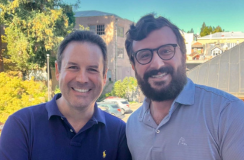
Host: It's mosquito spraying week here at Acquiring Minds. Coincidentally, two guests I wanted to interview both bought resales in the Mosquito Joe franchise system and at around the same time. Today's guest is Jesse Sundquist. If you've been listening to Acquiring Minds for a while, you'll remember Jesse from this time last year. I had had him on to expand on a thoughtful essay he'd published online about being one year into his full time search but not having found a business to buy. One of the things he talked about then, and we hit on again today, is how his search criteria needed to evolve. With a wife and two kids, now three, he wasn't going to move for his search. And in a market without a lot of deal flow, he realized he needed to relax his SDE criteria and be open to smaller businesses in the 300,000 SDE range. That did the trick. Jesse found and closed on this Mosquito Joe resale a few months later. Today, Jesse and I revisit his challenging search and talk about what life is like today as owner operator of a small blue collar business within a franchise network. Ever thoughtful, Jesse brings tons of observations and reflections. A theme to listen for in today's episode and Thursdays with my other guest who bought a Mosquito Joe franchise is how both of them have designs on growing their businesses by buying more territories, something that being in a franchise system makes relatively smooth. AJ Wasserstein at Yale School of Management calls this strategy programmatic acquisition. Very soon after Jesse's acquisition, he experienced firsthand the potential in the strategy. Okay, and on Thursday you'll hear from Neil Finneran, who also bought a Mosquito Joe franchise resale some months ago. Neil is a former hedge fund guy, a former cfo, so as you can imagine, he too has lots of reflections about this new professional path. Okay, please enjoy this conversation with Jesse Sundquist, owner of a Mosquito Joe territory in New Jersey. Welcome to Acquiring Minds, a podcast about buying businesses. My name is Will Smith. Acquiring an existing business is an awesome opportunity for many entrepreneurs and on this podcast I talk to the people who do it. You already know that business owners are making amazing use of virtual assistants, often based in the Philippines. And while virtual assistants are helpful, virtual professionals are transformative. Moore Staffing is a boutique agency that hires a players in the Philippines not for simple tasks but for deep competency work. Think operators, supply chain managers, controllers. Moore Staffing de risks your engagement with a 12 month guarantee to you and they provide coaching for six months to their talent. When an engagement begins, that means your hire is coached in the Background, no additional cost to you, so that your working relationship flourishes and is as successful as it can be. Global staffing is increasingly the norm, and building the muscle within your business to take advantage of it will be crucial in the years ahead. Speak with more staffing about the pool of capable, affordable managers they can connect you with. Check out MoreNow co. That's MoreNow Co. Jesse Sundquist, welcome back to Acquiring Minds.
[3:43] Guest: Thanks, Will. Thanks for having me back.
Host: Jesse, you came on the podcast last fall, 2022. You had been searching for a business to buy for a year, but didn't yet have your deal. And you wrote an essay reflecting on your psychology after a year of searching full time, your process and kind of the evolution of your search and your process. And you posted this essay on Search Funder. It got a lot of attention and I invited you on to walk us through these reflections. It was really a great episode, a great essay. So, of course, I will be linking to that in the show notes. But happily, some months after that, you did find a business to buy. And that's what we're going to talk about today. The end of your search story and the beginning of your story as the owner operator of a business. But please start us off, Jesse, with a reminder of who you are and why you decided to buy a business in the first place.
Guest: Yeah, certainly. So, you know, my story really starts in the pandemic where, you know, we all got sent home. We're working remotely. I had two small kids at the time. My wife and I were trying to work at home and manage the kids. And it was just a disaster, right? Like, it was super stressful. We were watching the kids during the day, staying up till midnight or later to catch up on our corporate jobs. And, you know, it just wasn't the lifestyle that we wanted. And, you know, during that time, I had found out about eta entrepreneurship through acquisition sounded really interesting. So I started, you know, devouring books and podcasts and was introduced to Search Funder and started going on there and, you know, was just thinking about it more and more and thinking like, hey, I think this is a viable path for, for me and my family in the future, right, to own an asset that we have, you know, control over, you know, how hard we work dictates how, you know, the output, how much money we can make. But also, like, give me some flexibility as well, because that's really what we were struggling with, was not having enough flexibility to be with our family, with two parents that were working, like, pretty intense corporate jobs. So I was a tire kicker for a long time, probably like nine to 12 months. Was just, you know, doing a little networking, reading things, you know, filling out lead forms on Biz Buy Sell, maybe getting a reply. Like every time I got a sim, I was so excited and I would dig into it, but I would never call the broker. And, you know, didn't really take much action, but became more and more disillusioned with my corporate job and just becoming more and more convinced about ETA being a viable path. That I decided, hey, if I was going to really take this seriously, I needed to pursue it on a full time basis and not do it sort of like part time with my job. It wasn't really allowing me much time to search during the day. In the evenings I was watching kids, so I couldn't really do it in the evenings. So my wife and I had a conversation. We looked at our personal finances and our situation. We were living with our in laws at the time, which helped financially. And we decided that I was going to quit my job and pursue search full time for at least a year and give it really a fair chance. And then we'd sort of like reassess at the one year mark if I was making enough progress, if I was still interested, if I thought I could get a deal done and if worst case scenario was I could always go back and get another corporate job. But I wanted to give Search at least a year to give it a fair chance.
[6:52] Host: And two quick follow ups to that, Jesse, the first is in what capacity was your corporate job? What was your background, your field?
Guest: Yeah, I mean, I started out my career as an auditor. I worked for Ernst and Young for five years. And then I sort of worked my way out of the back office and I kept on getting closer to the front office. Right. So I went into finance and accounting from there. Then I went into operations. I managed a small team of client managers. Then my last role was at a small software company where I was doing sort of like deal desk contract negotiation work for large software contracts.
Host: Okay, and so it sounds like your motivation to buy a business was more about flexibility than it was about building wealth. Respond to that.
Guest: Yeah, that's accurate. That's absolutely correct. You know, something that I've reflected on a lot when I started my search was just how, you know, personal. It is like everybody's motivations are different. Everybody's, you know, why, as to why they're doing this is different. And you know, it gets very easy to, you know, compare, you know, play the comparison game with other people or other success stories, but, you know, they have a different reason for doing things. They may have a different, you know. Yeah, different sort of like endgame. I was actually listening to an episode this morning that you did recently where a guy was talking about ipoing his company that he bought. Right. Which is. Which is awesome. It's incredible. But, you know, that wasn't my motivation. Right. It was more around flexibility and, yes, yes, wealth building in the long term, but at least in the short term, having one parent be more flexible with the ultimate end goal of three to five years from now, having enough sort of financial mobility where the other parent can sort of back away from their intense corporate job and spend their time differently and not have as much stress to be forced to make a certain level of income to maintain a lifestyle.
Host: Yeah, well, I'm jumping ahead a little bit here, Jesse, but I'm struck that you keep talking about kind of your wife as the one with the intense corporate job, as if jumping into a small business is not going to be intense, as if you're going to have this, you know, this breezy professional life that gives you all this flexibility. We'll get there.
Guest: Well, yeah, we will definitely get there. But, like, you know, she made sacrifices for over a year while I was searching. And then, you know, she had to make more sacrifices, you know, in my first year of ownership. Because you're right, it's not a walk in the park when you step into being a new business owner. But we're figuring it out, and she's super supportive, and I couldn't do it without her.
[9:15] Host: Great. Great. And she's, of course, still working really hard herself and whatever her job is. Yeah.
Guest: Yep.
Host: Okay, Jesse, So. So returning to the plot. So you. You guys together, decide that this will be your path, and you get serious. You go full time on your search, you quit your W2 and give us just real quick, like, take us up to the moment that you wrote that essay.
Guest: Yeah, the first year was a slog. It's every bit as difficult as people make it describe or people describe it. And I forget if I mentioned this in my essay or not, but I was actually under loi within probably two months for my first deal, and I was over the moon. Hey, this isn't supposed to happen this quickly. So excited. It fell apart within the first two weeks of diligence, but it was probably the best thing that could have happened to me because, you know, getting under loi, doing some preliminary diligence, talking to a bunch of bankers about an SBA loan. I just learned so much from that first experience, and it really prepared me for, you know, the next, you know, 12 to 16 months of my search before I closed. You know, my, I think my, my first year to 14 months was a little atypical because I actually had my third kid during that time. And, you know, after, after we had our third kid, I didn't do anything for probably six weeks. Right. I was just exhausted. And so I, yeah, I was just trying to keep up with the family. And once I sort of got myself out of a hole of changing diapers and stuff like that, I kicked it into gear again a couple months later. And that's sort of like phase two of my search, because phase one was getting this deal under loi, having it fall through. The, the deal that fell through was a remote bookkeeping company, and it was a great little business. And after that I was like, man, this is so good. Why don't I just build this from scratch as opposed to buying one? And so I went down the rabbit hole of probably six weeks about thinking about, and potentially launching my own bookkeeping company instead. And I got to the finish line and I couldn't pull the trigger. There was something about doing a solo effort by myself to launch something new that just didn't feel right. And once again, back to my why I didn't quit my job to start something from scratch. I'm not really a zero to one type of guy. I'm more of an optimizer. And I think I knew that about myself, which was really holding me back from going about something by myself. So I put that aside, had my third kid, took some time off, and then was sort of rejuvenated to kickstart my search again after that.
Host: And so where are we now? What month are we in now?
[12:00] Guest: Calendar month, probably like February. So I quit my job in August of 2021. We're now in February 2022.
Host: Okay. All right. And then the essay comes out, what, probably July.
Guest: Yeah, probably July. I was coming up on that 12 month mark, and at that point I had one LOI fall through. I had, you know, three offers that were not accepted, and I had a fourth offer that I was down the path of, you know, negotiating the loi felt really good about the seller, about the broker. You know, I was very excited about it. But then as we're negotiating the loi, the seller's accountant finds out about the sale and he's like, whoa. He's like, you're not going to make enough money from this to retire, he's like, you got to work for another couple of years. And so the broker pulled the listing and an unfortunate outcome. It's happened to a lot of other people before. And I think the broker was actually like, this broker was really good. You could tell he felt a little embarrassed by it because he's an experienced broker and he probably should have known better. But it happened. And so I had to pick myself up and keep looking for the next deal. I should clarify that. A big thing that was different about my search than others was geography was my number one criteria. My wife and I had bought a house. My kids are in the school system. I was not looking across the country for any good deal. I was going to pick up and move. And so I started with a two hour radius from my house and after a one site visit, two hours away, I reduced it to a one hour radius from my house. So that was the biggest sort of constraint in my search, which was good because it helped me focus. But it was also super frustrating because I felt like anything above half a million of SDEs I had looked at three times and it ended up being me trying to force fit deals that I should have passed on into my criteria because it was within an hour of my house. Right. And that's sort of the wrong reason. And so I had to sort of change my criteria. And so I reduced the floor from 500k to 300k stes and I found out there's a lot more deals in the 300k space. And so that was, that was super helpful. But it became, I had to be a little more critical in my thought to think, okay, it's 300k now. Are you buying a job or is this something that you think you can really grow in the future?
Host: Well, but I suspect that you were comfortable with buying a job, at least in the immediate term. So yes, buying a job. But then you could see a path to growing into something.
Guest: Am I buying a job in perpetuity or can this actually grow and scale to be something where I can work my way out of a job and make it be something bigger?
Host: And you are in Jersey, but geographically like a good two hours from New York sort of thing?
Guest: No, I'm like, I'm like an hour south of New York City. I'm in Monmouth County. Oh, yeah, okay. Yeah.
Host: Okay. But still, like for people who maybe don't know that region super well, it's. You're not in a super urban area even though you're only an hour from New York. So the deal flow is pretty light.
[15:03] Guest: Yep, yep.
Host: So a year comes and goes. You're feeling frustrated. Your wife is probably like, dude, we said we agreed to a year. You know what? Now she actually wasn't.
Guest: She actually wasn't pushing me to stop at all. She was still very supportive. I was pretty frustrated after the first year because I realized just how hard it is to get any deal done. Like how many things have to come together to successfully close a deal. I actually went through and went very far along the process of applying for another W2 job, which that job I think would have been good, but after the final round of interviews, they were like, hey, sorry, we're doing a hiring freeze, not going to work out. And so I was disappointed about not getting a job that I thought I could actually do well. I looked at a bunch of other corporate jobs and just wasn't excited about any of them. And I had a conversation with an older guy. I wouldn't call him a mentor, but an older guy who had some perspective. He's just like, look, quitting your corporate job was a really big step. I would just encourage you to remind yourself why you did it. And if all those reasons are still valid, just give it a little more time. And then that was the exact advice that I needed at the time. Because I was like, yeah, all those reasons why I quit, they're still valid. Why would I go back to a corporate job that I wasn't excited about? And it was literally a matter of weeks after that conversation where I got an email from a broker, just one of their regular email blasts, and they had a franchise pest control company included on it. And you know, I had never considered franchises before, so I decided to be a little more open minded. And it looked too good to be true, right? Like the multiple that they were talking about and the purchase price based upon the earnings, it looked too good to be true. So I was like, this can't be real, something's wrong with it. But whatever, I'll just go, you know, inquire about it. So I gave him a call, requested more information, and every conversation I had sort of like checked out. Eventually got to meet with the seller. He was the perfect seller profile this guy in his mid-60s who was looking to retire and pass on his legacy to a capable pair of hands. So I checked the box there and yeah, everything sort of checked out. And despite the fact that it was franchised, it wasn't really a deterrent because I had many conversations with the franchisor, I had many conversations with other Owners in the network and every other owner that I spoke with, I asked them the same question at the end of the call, like, hey, would you recommend me doing this? And they were all like, yes. Nobody had any regrets about the franchisor. They had some cautions and concerns, but nobody really tried to talk me out of it.
Host: And were these franchisees that the franchisor had introduced you to? You always wonder if the franchisor is going to cherry pick the references that they put you in touch with.
Guest: Only one was. The nice thing about franchises is they're super transparent. Like there's a thing called an FTD franchise disclosure document, which is almost always public. There's some state websites you can go to get them if they operate in them states. And in the back of every FTD is every single owner, along with their contact information. So it's super easy just to pick up the phone and cherry pick and start calling people. Even if you don't know anything about them. I can know that, hey, this person in Maryland owns five territories. Like, I'm going to give them a call because they probably have a pretty big business.
[18:22] Host: And you did that, you'd cold call them and say, hey, I'm looking at this territory in New Jersey, so I could be joining this network. Kind of. What do you think?
Guest: Yeah, absolutely. Absolutely.
Host: And how many of those calls did you have? How many franchisees did you talk to?
Guest: I probably talked to like four or five on my own, and then they recommended one or two other ones.
Host: So that is so valuable. I mean, that's one of like three or four things about being in a franchise network that are just so incredibly valuable. And let's, let's dwell on this. Jesse, why? It's a theme that's come up many times on this podcast. People being kind of closed to doing a franchise. I'm not even really considering it. And then either a franchise opportunity comes their way, a resale opportunity comes their way, and they look just like you. They look at it, they're like, huh, well, what's not to like about this? Or something else opens their mind. They hear an interview with somebody who's bought a franchise, resale or something else, and they just kind of take a second look at the entire concept and almost always warm to it. So that that kind of opening of the mind I find really interesting. Listeners of acquiring minds know that for almost any business you acquire, its success comes down to the people and how you develop and manage them as their new leader. Thing is, in addition to management, there is also a lot of process and bureaucratic work when it comes to your new employees, payroll compliance, HR technology, hiring, to name but a few. These processes are crucial to get right, but at the same time distract from where you want to be putting your energy in leadership. So Aspen HR is an HR firm and PEO that takes this work off your plate and handles it with the care it demands. Aspen is owned and run by Mark Sinatra, himself a successful former searcher, so Aspen's own leadership understands the HR challenges that searchers have post acquisition. The firm is offering Acquiring Minds Listeners a complimentary pre acquisition HR and PEO review for your target business. Check out aspenhr.com or contact Mark directly@markspenhr.com why do you think that you were not considering or not open to franchise buying a franchise resale? Initially?
Guest: Yeah, I mean I didn't have a good reason to be honest. It was really just the sort of like stigma and stereotypes around franchises. Like oh, like you're paying a royalty for what? Like what is a franchisor providing? Like are you really running your own business? They're telling you exactly what to do. Like you don't have control over the brand. Brand. It was all pretty stereotypical nonsense. None of them are really good reasons why not to consider a franchise. But the real opening of the mind came for me was I met so many people in my search process and I just happened to meet so many multi unit franchise owners that were running wildly successful businesses in a franchise network. Some of them are doing seven figure EBITDA in a franchise, not on the food space. And I was like that's like serious. These are businesses searchers would kill for those earnings. So I was like man, if they can do that in a franchise network, maybe I shouldn't ignore them. The number one thing with franchises is that you have to pick the right franchisor. And that's been written about a lot. But it's so, so true. And there's a lot you can get into around do you want to buy into a small and emerging brand? You want to buy a mature brand somewhere in the middle. Once again that becomes a sort of personal life decision. But at least for me, Mosquito. So the franchise I bought is a Mosquito Joe's and Mosquito Joe has probably like 350 plus territories. So they're not in the thousands but they're clearly mature. They've been doing it for a while. Mosquito Joe like three or four years ago was acquired by Neighborly, which is a private equity backed franchise hold co of 20 plus home service brands. So they become successful on their own. Right. They were acquired by a private equity firm, and now they're under this private equity umbrella, and so there's credibility there. Right.
[22:37] Host: Yeah.
Guest: So that really was sort of comforting for me. Right. I think in a different life stage, I would potentially consider buying into a emerging brand, buying five territories and then rolling up the sleeves and building from scratch. Because you can build, know you can have a lot of, like, it's a grind, but you can have a lot of success doing that with very little debt or much less debt than doing a full business acquisition. But, you know, I was very clear that I needed, you know, cash flow or some sort of, like, income from day one. And so a franchise resale was really the only thing that I was considering.
Host: Yeah. And just the flip side of that is that, okay, you're not taking on a lot of risk in terms of not needing to take a lot of debt, but where the risk is is that you don't know that an emerging brand is necessarily going to be successful. It could sputter out. You just. I mean, you're the early Orange theory. Franchisees couldn't predict the phenomenon that it would become so lucky them and good on them, but that's where the risk is.
Guest: Yeah, no, 100%. I mean, I think my. My seller had owned this for six or seven years. I think he was like the second territory in New Jersey. So, like, Mosquito Joe was not popular, you know, or even, like, successful in New Jersey by the time he bought in. But he bought it in a really good time. Right. And I think, yeah, he bought it in a really good time, and it worked out well for him.
Host: Jesse, let's just return a little bit to your. Your loosening of your criteria around sde, which you're basically forced to do based on the lack of deal flow because you were geographically constrained. This is something that comes up again and again and again, what size of business to buy. Your criteria had been, what, 5, 600,000 SDE and above, and it was just not happening. You kept returning to the same deals. I mean, it was a really, really light deal flow, trickle. And then so just kind of give us a little bit more detail on that process of going down to 300 and what changed and how you got comfortable with it.
[24:32] Guest: Yeah, I mean, I had to. Right. Like, if I wanted to get a deal done, like I was approaching the year mark. And with that, actually, I think I changed to 300 before the year mark. But I got to a certain point where I felt like I had seen everything And I was just waiting for new deals to come on the market. And I was like, well, this doesn't make sense. It's not a good use of time. I don't have an infinite waiting time. So I decided to look smaller, which unlocked a lot of new deals that I hadn't really considered. But I think, like I was mentioning before, you really have to think through, is this going to stay 300ish in perpetuity, or can you actually grow it? Right. Or do you think is there the potential for it to become bigger? And in some cases it's no. And so then that's a sort of, like, hard pass. But I think in a lot of cases it could be yes. Right. Because there are. People have talked about this on Twitter and search Funder all the time. Right? There's a sort of like, to cross a million bucks in revenue is an accomplishment. Right. And then it's like 1 to 5 or 1 to 3. I forget what it is. Like another sort of like, zone. And a lot of businesses can't get out of that zone. Right. So you have to have confidence in yourself as an operator. But also look at the business model and how they're operating today and say, like, okay, do I think I could get it out of this dead zone that they're in into the next level?
Host: Yeah. And so when you came down to 300, 350 SDE and saw a lot more the deal, that kind of unlocked deal flow, and you started looking a lot of seeing more sims and into more businesses, some of those you'd say to yourself, this thing really can't grow beyond this. It can't break, you know, the, the million dollar ceiling or the $3 million ceiling. And others you'd say, yeah, it could, I could definitely see this getting to 1, 3, 5 million and beyond. And the Mosquito Joe territory, checked that box. What, what, what did, what was its revenue at? Let's tie this in now to the business that, that you bought. What, where was revenue for it? And why did you see a path to growth in this business and not in some of the others that you looked at?
Guest: Yeah, so, you know, I, I didn't want just one territory, right? I was like, man, just one territory. That's. With a franchise model, you're only given a certain territory that you can operate in. Right? Which is good because you're not competing with the other Mosquito Joe franchise 50 miles away. But it's bad because you're limited to. In Mosquito Joe, they call them targeted households. You're limited to A certain number of targeted households and you're only going to have enough penetration. So can I grow 5 to 10% a year? Yeah, but I'm not going to grow 40, 50% for three years because it's going to get saturated. So the play with a franchise is always that it's so easy to do a roll up in a franchise because everybody's using the same systems, CRMs, processes. And so the play there is really get in with a good territory that's providing you with enough sort of like SDEs, your minimum amount of SDEs, and then see how you can grow within the network by acquiring other territories. So it was a little bit of a calculated bet. But to your point earlier about franchises having a lot of transparency in the diligence process, I can see some of the weekly leaderboards that are published. I can see, wow, this territory in New Jersey is a top 10% individual territory in all the Mosquito Joe's network and in the ftd you can say, here's what the average revenue is per territory. I can see at the revenue that this guy's bringing in, I'm like, wow, it's significantly higher. This is a good territory. So I knew it was a well performing territory and that would give me a good sort of foundation to operate from. And then it was a little bit of a calculated bet on, okay, in this not uber mature brand, but in this more mature brand there's likely going to be other owners that are looking to retire in the next three to five years. And there's a good chance that once I'm in network I'm a known quantity, I could be a very attractive buyer to another owner.
[28:17] Host: Yeah, well Jesse, this is just, this is just hitting on so many of the themes of the franchise. Buying a franchise resale with the intent to roll up, basically. So Brian Beers talks about this a lot. He's been on the podcast with the Midas. He's the guy who's bought so many Midas Midas locations around the Philly metropolitan area and beyond. And to your earlier point, which I meant to plug episode of two weeks ago, when you were talking about like once you've opened your mind to franchises and you think you want to buy a resale of a territory or a handful of territories or locations to then do programmatic acquisition and expand far beyond that, devoted a whole episode to that. Where we, with AJ Wasserstein, Michael Horowitz and Peter Mistretta, who are AJ being a professor, the other two being actual exemplars of this of this model and the 10 questions you should ask yourself as you're like the framework to very systematically think through what franchisor to go with so hard plug for that, that episode. It's a, it's a really solid one and really, really helpful. Those guys crushed it. So here you are, you, you are doing exactly that. You are going to buy territory. You're looking at the potential of, you know, buying more territories in the future. You're looking at the age, you know, the demographics of existing owners and seeing that they're kind of boomerang and that there you'll be waiting for them when it's time for them to retire or pass on, pass the torch. I'm, I'm jumping around here a little bit, but one of the things you said was really interesting how a Mosquito Joe territory is. It's basically every territory has what, what did you say? A targeted number of households. Is that or targeted households what the phrase was?
[30:00] Guest: Yep.
Host: So you can really, you can really see what the ceiling is here. So say the targeted households is a hundred thousand. And you know, the, the monthly fee to a household is. I don't even know what it costs. A hundred dollars, let's call it. So that's what, $10 million potential in the territory. And you say, well, I'm not, you know, that's the kind of total addressable market. And then you say, I'm only ever going to get 5% or 25% of the market. You could do some really quick napkin math to see kind of what the potential is of that territory. But then of course you can say, okay, well, that times five, if I were able to get to five territories, or that times 15, 15 territories. It's also interesting is that you can, this is so, I mean, you could just really, you can really dissect this. It's very interesting. So you can not only look at, you know, kind of look at the territory that you're contemplating buying and seeing the targeted households there, but look at the immediate neighboring territories and see what those targeted households are. So you can almost not only just play the game of like, well, if I get to 5 and 10 and 50 territories, but you can actually look at like, well, if I do a contiguous play where I'm just getting the territories right around me. I mean, you can see right there in the ftd, right, what, I guess what their revenue is, maybe not what their targeted households is. So, I mean, are you doing all this analysis or am I, am I. Is this like more than most? You know, am I Overdoing it here.
Guest: No, you're not off the mark. I think I did a lot more of that once I was in Network and understood it a little bit better. But yeah, you can absolutely, absolutely do math like that. I don't think they post, you know, in the ftd, every, every franchisor is going to post different levels of information. Some post a lot, some post a little. I think Mosquito Joe is, you know, they post an okay amount. They're not going to say, like, I mean, I think they say, they may say the average revenue. They have like quartiles and average revenue per the top quartiles or whatever. So you're never going to see like how much revenue each owner is doing. But they'll give you sort of like averages. But if you know that an owner has five territories, like, and you can say what the average territory revenue is, like, oh, well, then you can sort of like guess at approximately what their revenue is. You know, back of the envelope type stuff. But, but yeah, I mean, I think, I think they try to, they try to make the targeted households pretty consistent. So if you're paying a franchise development fee of a certain amount of money, they want to make sure that the playing field is level. And so one person is not getting 100,000, you know, targeted households for that cost and somebody else is getting 20,000 households for that cost, right? So they try to make it a little bit level playing field. Now, I don't know how that was, you know, six or six or eight years ago, but at least now you know that if you have a territory, there's probably a similar number of targeted households.
Host: Yeah, yeah.
Guest: But, yeah, you can do all sorts of math around like, penetration rate, average cost per spray and stuff like that to say, like, yeah, what is the potential of this?
Host: Is there anything more to say about why you like this business in any of the parameters of the business?
Guest: Yeah, I mean, it's, it's, look, it's a simple business, right? It's not an easy business, but it's a simple business. You have, you have guys in trucks that complete a spray, right? Like, we don't go inside the houses. There's a couple other like, auxiliary services, but our bread and butter service is outdoor mosquito barrier sprays. And so you, you know, you come up with dense roots, you set the guys up with materials, you send them out, they complete the sprays and they come back. Right. It's, it's not rocket science, you know what I mean? Like, it's very easy to learn, you have you provide a service that customers are very happy with? Like Mosquito Joe's whole thing is like make outside fun again, right? And like I've done the spray on my house, like it works, you know, and so like we can actually go outside and not be bit by mosquitoes. And when people are happy with that, like they, they come back year after year. Right? And so like we have very high retention rates. It's not recurring per se, like a, like a SaaS product. But like, you know, people are coming back year after year. We have very high retention rates. Referrals are our number one acquisition source. And so when people are happy, they tell their friends about it. So it's nice to get a referral versus having to pay hundreds of dollars for a pay per click ad, even though we do that obviously. But referrals is the number one lead source, which is really encouraging. And yeah, it's just not a hard business. So that was attractive. Super high gross margins, also attractive. And yeah, I think there's a lot of potential for roll up as well. And so it has a lot of the characteristics that most searchers are looking for. And so it sort of like, you know, fit the bill for me. And I think I got to a point in time in my diligence process and I was like, if I can't pull the trigger on this, I'm never going to buy a deal. Right. Did I want to be into outdoor pest control? Not necessarily, but I think there's enough, there's enough attractive, attractive areas of the industry and of the business itself that it's like, it's a great business to own.
[34:44] Host: Yeah, couple follow ups there. Jesse, you said it's actually not technically recurring. So I, I, as you know, I talked to Neil Finneran. I've already, I've already recorded that interview. It'll be airing around the same time as this one. Neil bought a territory in Massachusetts, I guess. Yeah, I characterized his business as a recurring one, but it's actually so, it's actually not. You don't have them on automatic billing, your customers or you only go when they call or what's it like, what's that look like?
Guest: So we have a 21 day cycle that we come out and treat, but we don't have any contracts. And so like, you know, most people will sign up and set it and forget it. We come out every 21 days and they're happy. But you have some people that are like, oh, like I'm on a vacation for two weeks. Like, you know, skip this one or like I'll just call you when, when I want you to come out. And like, those customers are more annoying, but like, you're not going to say no to them. Right. But because we are non contractual, people can start and stop whenever they want. I have a hard time calling it recurring, but for the most part, you know, most people sign up for the regular berry spray. We come out every 21 days and treat your property until you tell us to stop where the season ends.
Host: Great.
Guest: Okay.
Host: Yeah, that's, that's kind of right on the edge of recurring. I guess it's kind of recurring, but your customers have the option of having, having it not be recurring.
Guest: Yeah, yeah. And most of our customers are on autopay with their credit card. So after we do the service, the car is charged like, boom. Like it's, it's easy. But yeah, you know, you said that
[36:05] Host: they're super high gross margins. But this is also a bit. One of the things not to like about pest control is that the barriers to entry are pretty low. So, you know, anybody with, you know, some spray equipment, some chemicals and a truck is in business. So you'd think that there like a lot of that margin would be competed away. So square that circle for me.
Guest: Yeah, I mean, it's. Barriers to entries are low. Like you do have to be licensed to be able to buy the product that you need, but then also apply the product as well. So you have to go through a licensing process to be able to do this, but it's not that difficult. Right. And so anybody can get licensed and then buy a truck and a blower and be up in business. And so the competitive pressure does increase year after year, which will probably, you know, push down gross margin over time. But like I said, at least, you know, with, with referrals being the number one lead source. If you have a good customer base to work from, that just sort of like perpetuates the flywheel, right. Of existing customers referring other customers. And then you're able to, you know, you have a little bit of a moat that way versus somebody who's starting out with guy in a truck and is like, I'm just going to undercut Mosquito Joe and you know, get some market share. And then they're really sort of like hustling. It's going to take them years to really sort of like eat away at us. But like, we do see it in certain areas. You know, one guy in a truck goes out there and, you know, tries to get, make a name for itself and undercuts our price. And you know, we do lose some customers like Mosquito Joe is will never claim to be the lowest cost provider, nor will we ever be the lowest cost provider. But you know, we stand by our services and we do a good job. And like I said, having a good solid customer base to work from really perpetuates the acquisition. Flywheel.
Host: Yeah. Excellent. And tell us a little bit with a little bit more detail about what the business actually does when you spray. What are you spraying? How does it work? Does it kill mosquitoes or is it just kind of something that keeps them away that they don't like the smell of or whatever? What's it. Give us a picture.
Guest: Yeah. So, you know, we have a couple different options, right? Our standard, our standard spray is what they call a synthetic pesticide, which is, you know, a man made pesticide. We'll come out and treat the perimeter of your property and all your foliage, and any mosquito that lands on an area that's been treated, it will die. And so that's sort of like one aspect of it. We'll always treat any sort of like standing water that we see. And so if a mosquito lays eggs there, then the eggs won't be able to like hatch and grow into a full grown mosquito. We're moving more towards what they call a botanical treatment, which is all all natural, all organic products. But because you have a bunch of all natural products that are mixed together, they can't be called organic anymore. They have to call it botanical. But essentially it's essential oils and soaps, which also will kill mosquitoes as well. And so we're trying to move more in that direction to be more eco friendly. And then the third sort of treatment option that we have is just a repellent, right? And so you spray it, it's these different types of essential oils which emits a aroma that will actually just drive the mosquitoes away but won't kill them.
[39:09] Host: And I assume the repellent is the least effective? Unhappily, yeah.
Guest: I mean, the repellent, we have to actually come out every two weeks instead of every three weeks because it doesn't last as long. But I think it's important to note, especially in certain areas of the country, that our treatment is effective for mosquitoes, ticks and fleas. And in New Jersey and further north in New England, ticks are major concern. And so a lot of our business at the start of the season and at the end of the season is because ticks are active anytime the weather is greater than 55 degrees and so we have some customers, our best customers, they're like, spray me the last week of March because I know it's going to be 50 degrees and don't stop until the end of October. Right. Because I have dogs and I live, you know, on the edge of the woods and I don't want them getting any ticks.
Host: Well, Jesse, this is a seasonal business as, as you keep alluding to. And we're kind of right at the end of the season here, I guess October. So you haven't yet experienced a cycle of going through an off season. So you probably can't speak to it with, with experience. But you're certainly, you were certainly thinking about that as part of your, as part of your decision making process for whether or not to get into a seasonal business. How did you think about it? How are you thinking about it now?
Guest: Yeah, so I mean my thinking has evolved, right? I mean, I think the, the most important thing is that it's doing, you know, 12 month revenue numbers in a seven to eight month period. Right. And so it's like it becomes a cash flow management exercise for me in the off season more than anything else because I'm doing the full year cash flow in a more condensed time period. I think before I got started I literally had a file on my phone. I was thinking about what are some other businesses I can do in the off season to retain some employees, make some money and really grind it out for those four or five months. I got to about the midway point of the season and I'm like, I'm not doing any of that this year. In the future maybe, but at least for now I'm so looking forward to the opportunity to work a little bit less, spend some more time with my kids and really it becomes a planning exercise for what I want to do next season. I think the unique aspect of this business is that I'll have three or four months where I can reflect on what went well last season, what didn't go well and what do I want to do differently. And then when I start up again next year, I'm going to hire probably 50 to 60% of my workforce is going to be new in first year to mosquito Joe. And so I can launch some things with them next year that they're just going to think is business as usual, but is actually like new and different for the 2024 season than how we operated in 2023.
Host: That I feel like is a kind of profound difference between seasonal businesses and not the change management is less because you sneak in change. And if you're hiring new people every season, then they don't have to adjust your changes or resist your changes. Now Jesse, why are 50 to 60% of them going to be new? Is that just the nature. How are you projecting that number?
Guest: Because I have to lay off my entire workforce at the end of the year. And it's unfortunate, but like I can't, you know, if I'm not making money in the off season, I can't retain them on payroll. And so I have a couple of guys that they just go on unemployment in the off season and they'll come back, you know, next year. Some guys, I have a few college guys that I'm pretty bullish will come back next year because they've enjoyed themselves this season. But yeah, I mean, I had at peak, I was probably at like 12 technicians this year. Four of them, actually five of them came back from last year to this year. And so I'm just assuming that, you know, similar, a similar number.
[42:38] Host: I think now, Jesse, we can get into the. How it's gone, basically. So. So once you bought the business. Well, I. Before we do that, was there anything to say about the actual closing or deal negotiation? Actually, tell us, tell us what the business was. Give us some numbers around the business. I don't think you've done that yet.
Guest: Yeah, so the territory that I bought was doing just under a million dollars of revenue. And I'll say that, you know, I lowered my floor to 300k and it exceeded that, you know, from on an SDE basis. So that gives you a. You can back into that math. Yep, the closing, you know, the closing was interesting because the seller really didn't want to run it again for another year. And because I had to get licensed in the off season. Like you can buy the business without being licensed, but you can't operate until you have your license. Right. So we all knew that the season was going to close at the end of October. So we didn't want to close for the end of the season. But I needed to have enough time to buy the business and get licensed before I had to hire people and buy product next March. Right. So that gave me a sort of like five month window. Well, we didn't close until the, we got delayed. We didn't close until the end of December, like after Christmas. Between Christmas and New Year's, we closed. Which that gave me about like three months to go through my Mosquito Joe training, get licensed, hire technicians, transfer all the trucks for the DMV and do a whole Bunch of other transition stuff so that I'd be ready to launch on day one. Now, I was fortunate in that, like, I didn't have a business to operate during that time. So I had a lot of time to focus on passing my exams, waiting in line at the DMV and doing some of those other things that would have been hugely distracting if I was trying to run a business at the same time. But it was sort of a little bit of a race against the clock. I didn't spend nearly as much time on season opening procedures this year because I was spending all my time on licensing procedures and transition procedures. So I have a lot of ideas for things I can do differently to make me more efficient next year that I can do in January, February, March. But I didn't have the opportunity to this past year. But the one thing I did want to add was my thesis around rolling up mosquito does territories started to prove itself very quickly. Like I said, I closed at the end of December. I got access. They didn't give me a new email account. I got access to the owner's email account so I could see all the history. So of course I'm going through and trying to learn as much as I can and reading things. And I came across an owner in Pennsylvania whose territory is right across the river from mine. My office is right outside Trenton. So this guy was in Bucks County, Pennsylvania, and he actually reached out to my seller, and he'd owned his territory for probably six years. He reached out to my seller and was like, hey, I'm super frustrated. I want out. Do you want to buy my territory? And of course, my seller was in the process of selling his territory, so the conversations never went anywhere. But I follow the email thread and I figure out that this guy's so frustrated, he's at the point of just returning the territory to Mosquito Joe and walking away with nothing. So I call him up and I said, hey, I'm the new owner. Took over from this guy. I'm right next to you. Are you still thinking about getting rid of your territory? And he was overjoyed. And he was like, yes, I would love to get rid of it. I don't want to give it back to Mosquito Joe. I can sell it to you, blah, blah, blah. Long story short, he sent me some information. I was able to look at it. The amount of revenue he was doing was irrelevant because this guy was essentially an absentee owner. He hired some people to manage it. They did it really poorly. He didn't really oversee it. It was a really mismanaged territory. But I knew I could see what his target population was. I could see the density of where the households were and I could see that the majority of his customers or the majority of his target households was a 20 minute drive from where my office was. So I was like, I could run this out of the same, you know, I can run the trucks out of the same garage, I can run the office out of the same office. Like, boom, this is a slam dunk. So him and I negotiated a deal pretty quickly where instead of walking away with nothing, he's going to walk away with something. We had a seller finance deal. And yeah. So I was able to acquire my second territory six weeks to two months after I bought the first one.
[46:47] Host: That, that's. God, what a stroke of luck. That's awesome, Jesse. And, and so just to be clear, it was doing, you said, kind of like a negligible amount of revenue, like
Guest: 150k or something like that.
Host: Okay. But that's still more appealing to buy Those customers generating 150k than having it kind of go back to Mosquito Joe and then you being granted the territory or whatever. Like it's still, there's still enough of a business there that it was. That it's a head start into that territory.
Guest: Yeah, no, definitely. And I think like I said, what he was doing before was kind of irrelevant because he wasn't actually working in the business. But the fact that I could take all of the overhead and run it out of the same office was like, it was a no brainer. And it really was about the potential of the territory versus what they were doing beforehand. And I think the interesting thing is that territory, that neglected territory would make no sense for a new buyer to sort of buy. There wasn't enough there. But as a sort of like add on to an existing territory, we can just like fill in. It's just slam dunk.
Host: And not to mention, you got it for a song. So it was fully seller financed. Yeah, fully seller financed and a low price, presumably.
Guest: Presumably.
Host: That's great. Congratulations.
[48:00] Guest: Thank you. Thank you.
Host: And so. And did it all work? Did it all work out? So you said this happened right at the beginning of your tenure. So you've now had a season in both territories. Did it work out? Is the integration as easy as you'd hoped? Are you running it all out of the office that I see behind, you know, over your shoulder there?
Guest: Yeah, I mean, the thesis definitely panned out. I think the most challenging part was because it was in Pennsylvania and not New Jersey, that's a separate licensing district. And so now I have to go through the Pennsylvania licensing process, the New Jersey licensing process. I have to understand the differences between the two. Can I use the same technicians? Do I have to use, you know, do I have to get technicians dually licensed? So there's a whole bunch of stuff like that I had to figure out. And, you know, Mosquito Joe helps you out with it, but it's still just like, a lot to sort of, like, keep that separate in your mind. And, you know, fortunately, even though the territory was poorly managed, they did have one technician that came over with the sale. And this guy is a. Is a rock star. He's been a total stud and really, you know, really helpful during the first year because, you know, going from a much smaller base. But that territory has performed really, really well this year in its first year.
Host: And so do you envision if you bought a third territory that you kind of just get better at it? It would be easier. You kind of know you've been through it once, you've got one rep under your belt.
Guest: Yeah, 100%. I mean, I had two returning office staff from last year, which has been great. And I asked one of the ladies recently, I was like, has it been really difficult, like, having Pennsylvania and New Jersey? Like, how, you know, how much harder has it been this year versus last year? And she's like, it's no different. Right? It's the same CRM. I can look up the same. Yeah, the notes are worse in the Pennsylvania territory, but essentially to process a payment and to schedule them and do all that stuff, it's no different. So, yeah, they haven't been overwhelmed by having those additional customers come over.
Host: You just mentioned how Mosquito Joe will help you with some of the licensing and educating you on differences between two territories in different states. What else have you found being a franchisee? So now. Now you know that you're inside a franchise network and. And can really see the benefits or not of being inside a franchise network. What would you tell people about your experience?
Guest: So there's good and bad to it, right? I will say, like, I'll. I don't want to spend too much time on the bad, because that's not really the point. But I think, you know, I came from the corporate world, so I know that there's, you know, I know how to smile when people want you to smile and, you know, go attend things when you think that they're silly. And, yeah, like, there's a lot of that that you have to sort of like hoops that you have to sort of like jump through. Because, you know, like I said, Mosquito Joe is owned by Neighborly. Neighborly is private equity backed. They're corporatizing a lot of things. So there's a little bit of a corporate vibe around there. But like, I still feel like it's my business to run. I still have a lot of latitude. And so, yeah, there are some things that are a little bit annoying, but like, the pros outweigh the cons big time. And I think one, there's two. The two biggest benefits for me are one is just the owner's network. Like, I've. We've mentioned this a little bit earlier, but like, I feel like the franchise owner's network is such a freaking cheat code. It's like, it's almost. I mean, I have people that are doing the exact same business that I am who know exactly what I'm going through and that aren't competitors and they're happy to share anything. Right? It's incredible. Like, you know, Neil, for example, you know, Neil bought the territory a few months after I did. We're both first year owners of Franchise Resales and Mosquito Joe, him and I are texting all the time. You know, he picks up the phone to call me to be like, dude, terrible week. Listen to what my technician did, you know, and it's like, awesome, right? Like, I have, like I said, I have some friends on a WhatsApp group that I talk with all the time as well. And we can share war stories about our different businesses, but they're very different. Right? So they can empathize, but they can't fully understand. Just like I can't fully understand what they're going through. But like, the Mosquito Joe franchise owners have been amazing and they come from all sort of like different walks of life as well. You know, there's younger guys in their late 20s, early 30s who are, have a W2 job and are launching in Mosquito Joe's territory and they're grinding. And then you have a bunch of owners that are sort of like second career type people, like my old owner who worked a corporate world for a long time and then like, you know, not ready to retire yet, but they wanted to do something else. And so they bought this seasonal company and so they have a very sort of like different perspective. But it's just been incredible to have access to the owner group because everybody's super like, you know, willing to talk and, you know, share their best practices and their learnings. So that's been Worth every hoop I have to jump through being in a franchise. The second is Mosquito Joe. They've demonstrated themselves to be a really good franchisor. And one example of that is we had a customer reach out. They weren't accusing us of anything, but they were just really confused. They're like, look at my plants. I think your spray is killing my plants. I don't know what's happening, but this is thousands of dollars worth of horticulture and now it looks like it's all dying. And so as a first year owner, I don't know enough about it. I don't think our spray is killing your plants. But I needed some talking points and so I emailed the pictures and I forwarded this guy note to Mosquito Joe corporate. And within two hours I had a response back from Mosquito Joe saying, this is not from our spray. We think it's X, Y and Z. They can also do A, B and C to follow up on that with this horticulture group to really identify what the species of. I think it's like a grub or something like that that was like going after the plants. Boom, within two hours. And I was like, that's amazing. You know, so I was able to sort of like send that over to the customer and he, you know, felt better about things after that. But yeah, you know, they were able to support you with areas where you really need support like that, which has been priceless.
[53:46] Host: One of the things that you said about that, why people might not like franchises is are you, are you really running your own business or are you running somebody else's business or. It's not kind of. You don't feel like you're fully autonomous. Respond to that now.
[54:01] Guest: Yeah, no, I do. Right? I mean, like, yes, we're. There's certain parameters that I don't have flexibility over. But like, I do feel like it's. It's my business. I have, you know, I have the opportunity to make operational changes and tweaks to fit my sort of like, territory and my operating style. And, you know, that's been really fun. And that's not like corporate driven. Right. Like, they'll give you a playbook for here's some best practices, but you don't have to use it. Right. You can also modify it as well. And so, yeah, I definitely feel like I'm running my own business. I think there's. Even within a franchise network, there's still so many decisions you have to make as a small business owner that it can be overwhelming. But I'm super thankful that I don't have to think about certain decisions like what CRM am I going to use? Right. I'm told what CRM to use and is it perfect? No. But I don't have to think about should I change it? Like should I talk to a bunch of vendors about seeing if we can get a better CRM? Like I don't have to worry about that. I just have to work. I just have to learn about the nuances of the existing CRM and how to sort of like best manage it, you know.
Host: Yeah.
Guest: So I appreciate that there are certain decisions that have just been like, you know, given to you and like this is what you do. Right. Like they have a whole bunch of like print vendors that I don't have to use but like they have all the Mosquito Joe templates and everything. So it's really easy to like you know, order with three clicks online with them or I can go through and like engage a bunch of other print vendors and like share with them the copies and go back and forth on a proofs and stuff like that. I could do that but like it's not worth the time for me.
Host: Yeah. Well, in our pre call you had actually talked about some of the improvements that you have made that you know, you took advantage of your autonomy and made them. And so let's get into a few of those. One was about, was actually about the kind of nightly routine of printing the routes for the next day. So talk about what you did there.
Guest: Yeah, so routing is super important because you have to have tight routes so your technicians aren't wasting a bunch of time. They call it windshield time. Driving around between services. You want them to have as little driving as possible. The challenge is I can set the route at 10am in the morning, but we send notifications to the customer the day before. And so we're getting responses all throughout the day into the evening about like, hey, tomorrow's not good for me. I have my landscapers coming or like on vacation this week, can you skip? Or you know, things like that. So there's constantly changes happening to the routing. So you know, routing can't really be locked down until as late as possible. Well, what was happening in the beginning of the season was I had an office staff who was in the office and she would print the routes at like 6 o', clock, you know, but then I was at home and I would see a bunch of changes come through over email. And so there's sort of like one of two things that can happen. We can stay with the old routes and then have to sort of like coordinate in the morning about like this person's a skip or like this person needs service, you know, between 12 and 2 instead of 9 and 10, or, you know, something like that, which is logistically kind of complicated. Or we can just print the routes in the morning once we've gotten through all the changes. And so, you know, and also I didn't want my office staff just like to stay till the office till 7 o' clock at night because she was printing routes and going through them. Right. It wasn't a good use of time. And so I discovered a way where I could do all the routes at night at home. And then I would upload a file to a printer in the office and then my head technician would come in in the morning and he will print out the routes in the morning, which is the final basically. And then there's no more changes and he gives them to the technicians and they're out on the road. So it was a small sort of like operational tweak, but it saved a ton of time and sort of like headache and sort of like potential for miscommunication between a change being made between 6pm and 6am when, when the routes were printed the night before.
[57:33] Host: And was that something that you came up with or was that something that your, the somebody in the franchise network shared with you, was their technique?
Guest: No, I came up with that one on my own.
Host: And have you shared it with the other owners, given back to the network?
Guest: I haven't yet. I think, you know, my situation is a little different because the, the garage is about an hour from my house, so it's not close, so I'm not in every day. Actually I have somebody in the office every day, but it's not always me. And so I think a lot of the other owners, they just take it upon themselves or they'll stay until 8:00 clock at night and print routes or they'll show up at 6:30 in the morning before the other guys get there and they'll print their routes. But I don't have that luxury. And so I was sort of forced by necessity to come up with a solution that worked for me. And so I think this works really well.
Host: Yeah, great. Good for you, Jesse. And what about the outsourced call answering, another operational improvement you put in place?
Guest: So, yeah, so actually this, this idea came from another business owner friend of mine who owns a, like a, like a swim club and a squash club nearby. And I was having breakfast with him one day and I was just explaining how, you know, I had a couple resources that, you know, we weren't getting a lot of calls certain times a day. But I had a person there just to be able to answer the phone. It was like kind of expensive. And you know, he was sharing with me that he has an outsourced call center that is like answers a hundred percent of his calls. Now he's got much less sort of like call volume. But basically this outsourced call center is us based experts on the phones that they support other, they support a bunch of different businesses and they're just really good on the phone. And so he's like, you should have a conversation with them. So before I had a conversation with them, I actually posted a position to try to hire somebody in my office to be there to answer phones and follow ups on leads. And just the candidate pool was really poor and I was getting no showed a lot on my office staff job. So finally I was like, you know what? Well, I had two things happen. One, I was frustrated by the candidate pool and two, one of my office staff was going on vacation for a month. She had this big vacation plan. So I was going to be down in person. So I was like, you know what, I'm going to try this outsource call center and see how it goes. And it's gone really, really well. So basically my phone in the office rings three times and then after that it gets forwarded to the call center and they're able to pick up. We worked on a script so they know how to answer the phones. They have access to our CRM system so they can do basic things. But the biggest thing that they do is they'll just take messages and then they send it to us on Slack and then we're able to sort of follow up on things. So for year one at least I'm calling. This year one I have somebody who will always answer the phone during business hours so it never goes to voicemail, which is super important. And they're able to do sort of like basic tasks like take updated credit card numbers and do things like that. But I think for year two there's a potential where I can train them to actually follow up on leads and do some other sort of follow up on leads, but also do some outbound calls around reschedules, season opening things like that. And which will be hugely beneficial because you know, I've, I've done the math 100 different ways and I think they're actually cheaper than having another sort of like Full time resource in the office.
[1:00:52] Host: Well, it reminds me of the kind of one of the tropes you hear about small business ownership and how uncompetitive it is because as long as you just like return calls, you're, you know, in the top 90th percentile of small businesses. I think that of course is not very accurate and an overstatement of the reality, but there's probably something to it.
Guest: There's definitely something there. Yeah, I think it's a little bit overstatement, but there's definitely something there. And I think answering the phone is super important. So I feel like the other thing about this call center is there's five different people that could pick up the phone, right. So it's not like if I miss it in my office, there's only one person. If she's on another line, then she misses it. There's five different people that can pick up. And so I'm basically guaranteed that, I mean, it's going to get answered.
Host: Yeah, yeah. Jesse, one of the kind of interesting observations that you had about the nature of this business when we talked to the pre call was in if you're going to be in a B2C business, consumer business, you either are. If you're in home services, you're probably having your crews go into people's yards in your case or homes or if you were something else, a gym, a salon, a restaurant or any, anything where there's an office and consumers come to you, you can control your environment more and. But then the general public is, you know, walking into your home, as it were. So both of those have cons to them. But what, what are, what is life like when you're sending out your crews into people's you yards and you know, there's just constant interaction between your, your team and the public in, you know, the very spaces that they're most protective of their homes.
Guest: Well, I'm, I'm really glad that we don't go into homes, let's put it that way, because I have enough problems with only being outside the home. I was like, I don't have a ring cam myself, but I was shocked at the percentage of our customers that have a ring cam because our technicians are constantly being watched. And I get it right, but this is the reality. And we tell technicians on day one, like assume that everybody's watching you assume that everybody has a camera because they likely do, you know, But I think, you know, even on the outside of people's homes, some people have elaborate gardens, some people have very Particular landscaping. And, you know, we have some really detailed notes out of how to treat some people's houses, which becomes. I have to be able to trust my technicians to actually be able to read notes and follow instructions. I've had a couple of very angry phone calls from people who had things. Sprays that shouldn't have been sprayed, and it was in the notes, and the guy missed it. And you have to sort of just apologize and do the best you can. I think on the flip side, there are some people's yards that are an absolute disaster. And even though you come out to treat it, they still call you and they're angry because they still have mosquitoes. And it's like, well, you have, like, six, you know, old tires that all have water in it, and we can't empty them out every time. Like, you have to cut your grass. You know, things like that. And so it's. It becomes really challenging. You know, the one thing that I didn't anticipate or, you know, think about asking during the diligence process was, you know, how often is your service actually, like, disputed? You know, because I would say at least every week, I get a phone call or an email, or our office gets a phone call or email saying, like, why did I get this invoice? You guys were never here. Or, like. Like, how do I know you were there? Like, the guys are supposed to put a door tag on the door. They're supposed to put a flag in the ground to show they've done it. Sometimes they just don't do it. Or sometimes, like, they put the door tag on and it blows off, right? And they can't find it. But, like, if you're not home and the technician doesn't make contact with you, like, people will actually dispute the service because, like, you were never here. There's been a couple of, you know, and if they have a ring camera, that becomes a little bit easier because they don't show up on the cameras. If they don't have a camera but there was nothing left, it's like, yeah, we can check the GPS. We have GPSs on our truck, so we can sort of see where the truck was, how long they were there, and use that as evidence. But more times than I care to admit, we've had conversations with customers around, like, were you guys even here? How am I supposed to know if you actually did the spray? And so that's been. That's been challenging. We've thought about potentially taking a picture of the house every time or something like that. Something like Amazon does when they deliver your packages to ensure that. Yep, I was here. Here's timestamp. I don't know if we'll actually do anything with that, but disputing the service was something I didn't anticipate would have happened. That happens, unfortunately, too often.
[1:05:31] Host: Jesse One of the themes from my conversation with Neil Finneran was kind of what a dramatic pivot this was in his career to buy a Mosquito Joe franchise territory. He had worked in hedge funds and other kind of highfalutin high finance roles in his career and now has the territory. And sometimes because he bought relatively small, he's actually the one outspraying. And so any. He signed up for that. But it's of course, always interesting to hear somebody contrast their, their now life with their previous life when. When there is such a dramatic contrast. So what about you? You come from corporate and you're now doing the same thing. So are you ever out spraying and then also just generally talk about what life feels like now?
[1:06:15] Guest: Yeah, I mean, I've definitely done my, done my stint in the truck. You know, usually it's when somebody calls off day of, or has to go home sick midday or, you know, something like that. And, you know, there's just an immediate need. And so if I'm in the office, I can fill it. It's not, you know, it's not my preferred. But I think it's also like, super important for me to understand what these guys are going through. And it's also important for me to understand, like, hey, if I'm putting this many stops on your route and I think it should take you this amount of time, I should feel comfortable that I'm not asking them to do it too quickly or I'm not putting enough on their plate. Right. So the times that I've gone out and I've probably been out four or five times, it's been helpful for me to sort of see the pace that I can work when I'm like, I'm textbook following exactly what they're supposed to do. And I can tell you how long a spray is going to take. So if anything, it's been like a really good learning experience for me. But it's not certainly, like, certainly not something I look forward to. Right. There is a couple instances where I knew the guys had, like, really big days. I was in the office, I had some bandwidth, and so I was like, hey, guys, like, I'm available to spray with you for a few hours. Like, let me know if you want me to Help out. And guess what? There's no takers because nobody wants to work with the boss. But that's normal. I don't take it personally. Yeah. So I think, you know, there's, there's the actual spraying, treating job right. Which I've had to step up and do. There's the, you know, answering the phones and responding to customers, doing lead, follow up. Like I do more of that, but I still try to only be like the escalation point on the phone and not the primary one picking up the phones. And I've done that pretty successfully, which has been, which has been good. I think that, you know, the most value that I add right now is around the routing because that logistical component is super important, around making sure that the routes are dense and the guys aren't wasting their time driving around. And honestly, that feels kind of like corporate because I sit at home remotely and do it. All right, so there's not a whole lot different from there. Yeah, I mean, sure, it's hugely different, but I'm enjoying the learning. I've learned so much this year and am thankful that there's been no, like, catastrophes. Right. Knock on wood. I still have six weeks left, but there's been no real catastrophes and I've learned a ton and the business is performing well. So I'm just, you know, I'm having a good time. It. It has given me a lot of flexibility and I'm just, you know, I'm really happy with how things have worked out so far.
Host: Great. So you're basically feeling, you're feeling pretty solid about life and about this decision.
Guest: Yeah, yeah, absolutely. Absolutely. I wouldn't regret it for anything.
Host: And how do you feel about the STE number that you acquired, Jesse? Because you, you did lower your ste threshold of what you were willing to, to buy from the 5, 6, 700 that we're all advised we should down into the threes. And that, in fact, is the size of business that you bought. How has that felt?
[1:09:00] Guest: It's felt fine. Right. Like, I think if, if anything else, it's more of like a not like a shame thing, but it's like, like, oh. Like I don't want to be the guy that said, like, I bought a super small company or it's like, oh, it's embarrassing because my friends have bought $700,000 SD companies and I just bought this little one. If anything, I have a mental block about it. But it's felt fine. And once again, my wife is still working, she's still making. She's still primary breadwinner. I've taken very little salary this year. So her and I are more thinking about the next couple of years about, okay, how much can Mosquito Joe grow? Should I focus on paying down debt or pay myself a higher salary? What's our sort of immediate needs? I have some flexibility, which is good. Like I'm purposely not taking much of a salary to sort of figure out like if I want to plow it back into, you know, or keep it in the business and use it to pay down debt or if I want to, you know, if we have some immediate needs for a family, I can take a higher salary or something like that. So trying to figure some of that out. But like I have levers, I have flexibility and I do see a path if I don't acquire any other territories, I do see a path for growth in the next couple of years. But if I can acquire a couple more territories in the next three years, then I think I'll have a, a good, good enough sized business where my wife could possibly quit her job or take another job that you know, she would earn significantly less but that she would have a lot more time flexibility with.
Host: And actually, Jesse, to your point about kind of being in your head about the size of business that you bought, that was one of the themes in your reflections essay. Circling back to that. That search is so personal. Don't waste your time comparing yourself to others. So just talk a little bit about the hazard of comparing yourself to others. That was actually a theme that was brought up on the episode that aired today with Shane Ursum. So let's hear your perspective on that, please.
Guest: Yeah, I just think it's not. I mean, look, everybody's gonna do it, everybody's human, but it's just not healthy and it's not a good use of your time. And I think you'll drive yourself crazy and get super depressed if you just look at other sort of like success stories or other people that are doing things that are different or quote unquote, better than you, you know, and it's easy to get yourself beat up and super down about it. Look, I fall into the same trap, right? I don't go around broadcasting like, oh, I bought something in the mid-3002 SDEs. Yeah, once you pay down debt and stuff like that. I was probably earning more in the corporate world, so that doesn't feel good. But I do think that this is not a one or two year decision. This is a literal lifestyle and career change for me. And so I think over the next Decade. I have a lot more earning potential and will walk away with. I'll have an asset that's worth a lot more than anything that I would have had continuing my W2 job. And that's the most important thing to focus on because like I said, it's personal. This is my wife and I's situation and what works for us and thinking about going public or something really big, it just is not a good use of mind share. I have enough things that, you know, I have to think about, consider.
[1:12:04] Host: Yeah, yeah, well, and also just reminding oneself of like, you know, what your, your own why was. Which was flexibility before wealth. And, and if that was your goal, you've like, you're well on your way to achieving that already. And so that's, that's a huge accomplishment.
Guest: Yeah. Yeah. I mean I'm going to, you know, I'm going to pick up my kids from the bus stop. Like actually I already have been picking them up from the bus stop since I've been back at school. And I'll do that probably for the rest of the year, which is like super important for me. We don't have to have an after school babysitter because it's me and I can spend more time with them. And you know, right now when they're really young, that's super important because they're excited to see me when they get off the bus. Right. Like, that's not always going to happen, but at least for now I want to, you know, take advantage of that.
Host: Excellent. Jesse. Well, anything that I didn't ask you that you wanted to make sure was set.
Guest: Yeah, I mean I think we had, we mentioned this in the pre call. I don't know how relevant or how apparent it came out now, but I never had one of those on the floor of the bathroom moments so far this year. Right.
Host: Fetal position.
Guest: Yeah, fetal position. Never had one of those. But it is tough. It is really tough and it's not for the faint of heart. And I think it's really hard to get a deal done, but it's also really hard to operate after the fact. And I think if there's anybody who's sitting there thinking about ETA or buying a business, I would probably say if you've never made managed people before, I probably wouldn't want owning a small business to be your first experience managing people. Right. Because people are by far the most difficult part of this. Right. Like the operational stuff, the system stuff is like, it's all easy in the grand scheme of things, but like it requires People to sort of like execute. And if you're not a good coach, if you're not a good, you know, yeah, if you're not a good coach, if you're not a good leader on, you know, how to motivate them to do that, then it's going to be an absolute disaster. And it's difficult. It's difficult. It does take an emotional toll on you as a business owner. There's high stress. The buck stops with you and you can never turn your brain off, even in the seasonal business. I know I'm going to be thinking about mosquitoes and mosquito Joe in December. Even though I'm not operating, I know I'll still be thinking about it. And it's not bad per se, it's just different. And you have to be, you know, be ready for that.
Host: Jesse, let me, let me follow up that thought with, can you give us an example of any of the kind of people episodes that you've had to get to really give some color to this, this warning?
Guest: Yeah, I mean, I won't, I won't, I won't get into specifics, but I would say like, before you buy a business with blue collar workers, you should expect every single one of them to ask you for money. Like, I had to come up with sort of like principles for, you know, principles for lending money, you know, very quickly, personally. Personally. And so whether it's like, and more of it happened to be like, hey, like, you know, can I get paid weekly instead of bi weekly, I have an expense coming up or you know, something like that. Like one guy was like, hey, like I need this money today. Can I pay it back over three paychecks? You know, something like that. So you have to sort of like deal with them on a, on a one off basis. But like you, you should expect everybody is going to ask you for money, right? And you need to come up with principles for how you're going to handle that. Like, I had one guy say, like, hey, my cell phone's going to get turned off. Can I use my, can I use my fuel card to pay for my cell phone bill? Then I'll pay you back next paycheck. You know, like you need to be prepared for those, right? Like, I didn't think about that before, but like, that's the reality. And so I was able to sort of like talk with other people and then come up with some like principles for that. But like, yeah, those are tough, those are tough conversations.
[1:15:36] Host: And Jesse, what are the principles? I mean, we don't need to do a deep dive, but just give. Because I'm just wondering. I have no idea. So directionally give us a sense of how this is dealt with.
Guest: I think for me it depends on one, the caliber of the employee and their sort of integrity. Right. I think what I've felt comfortable doing is if somebody has a need for money, I don't lend money. If you're like, I need $1,000, I'm sorry, I won't do that. But if you need an advance on your paycheck, and I know you're not going to run away next paycheck, I'm open to doing that for the right people in the right circumstances. Right. So if you need more than three paychecks to pay me back, sorry, that's too much exposure for me. There was one guy who asked for a loan who I said no to, but I said, look, your mid season bonus is coming up three weeks from now. I'm willing to give you that now as long as you don't leave. And will that help? And he was very appreciative. And it was a calculated risk on my part to know that or to trust that this guy wasn't going to leave me in three weeks before he was eligible for his bonus. And he didn't. So it worked out. But I think that built some loyalty with him that I was able to do that because in my mind it was money he'd already earned or already would earn. And I'm happy to sort of front that for you, but I'm not going to give you a loan and work on a two year long repayment or anything like that.
Host: Yeah, it's interesting. I, I might have guessed that the, the guidance here is just, it's a hard no every time. But I guess, no, I guess you should be prepared to have some nuance and say yes sometimes and no others and set up conditions because that, that means every time you get the request, you really have to devote mental energy to thinking about how you're going to treat it.
Guest: True. And it's, I'm a little bit like being a hypocrite here, but every time, every time this has come up with somebody, I said, look, I'm willing to do this, but do not talk about this, do not tell anybody else. This is between me and you. Now. I'm saying this on a podcast, so it's public, but I tried to make sure that they were at least discreet with it and if they're not, then it's only going to go back and that'll do damage to them and their reputation if they are broadcasting it. But I've tried to handle it quietly with the limited number of times it's come up, but it's been a limited number of times, but with three or four different people, you know.
Host: Yeah, yeah, that's great. That's really, that's. I think a lot of people wouldn't expect that because that does not happen in the corporate world.
Guest: Exactly, exactly. Or even like take a situation like this. We had a customer call in and he said, hey, like, your guy was here, like way too fast. There's no way he could have completed the service. And so our office staff was like, hey, like, no problem. We'll just like, you know, we'll send the guy back and he can go, you know, spend some more time on your property. And so office called the technician and said, hey, can you go back to this guy's house? Like, he said, you weren't there long enough. Can you just like do another touch up so he feels better about it? And the guy said, no, I was there long enough. What do you do? Right, like, real situation that happened and we had to handle that separately. But like, things like that will happen because, yeah, like, this is not the corporate world, like, where people generally say yes and will, you know, do what they're asked. Sometimes they'll just say no and not do what they're asked. And then you have to be forced to handle it.
[1:18:42] Host: And how did you handle that one, Jesse?
Guest: We pulled them aside and just basically said, look, when the office asks you to do something, it's not optional. This is what you do. And if you can't listen and follow instructions, then you don't have a place here. It's pretty simple.
Host: What else did you want to make sure that we touched on, Jesse?
Guest: Yeah, I think the last thing, I think one of my biggest learnings and something I'm still sort of reflecting on now was I do feel like I gave up a little bit too much during the transition due to fear. And what I mean by that is, you know, I had some returning people that were coming back and there's a lot that I don't know. And so I feel like I can. I need to leverage them a lot for my learning. And, you know, everybody's asking for a raise, right? Which is like the biggest thing and raise or like a separate sort of like arrangement. And, you know, there was one guy in particular who was super vocal about it or super pushy about it. And I wanted to say no, but I felt Like, I was so dependent on this person that ultimately, before I ever worked a day with this guy, I caved and gave in to his request because I felt like I couldn't. Like, he would walk if I didn't. And it feels like that was the wrong call now, now that we've worked together for long enough and it's been fine. But I feel like I was a little. Like, I should have pushed back more by saying, like, dude, you can ask me that, but I've never worked with you. So, no, I can't give in to this request, but I didn't feel like I was in the position where I could have done that. But hindsight 20 20, I probably should have pushed back more and say, look, I totally get it and happy to reassess after X, y and z time or something like that. But that was a call that I made, which I probably would have done differently if I could do it again.
Host: Well, the question here is, is that generalizable advice? Maybe you have found out in retrospect that this guy, whatever his requ. Ultimately wasn't worth conceding. But I wonder if it. It could have turned out the other way, that it was a good call. I'm trying to understand if that is something that you would generalize to people in the transition. You know, have confidence in yourself and say no a lot more or just happen to be this way in this case.
Guest: So there's another instance. Like, I mean, they asked for something different, but I did cave, and it's worked out really well. And so, like, I just think that you do need to have. You should feel comfortable to go with your gut right in the beginning and don't feel like just because you're going to get asked a thousand different things as a new owner and you don't have to say yes to everything. I think is the biggest way that I could sort of summarize it. It's okay to say I need some time to think this over before I make any changes, and that's fine, and you should feel comfortable doing that.
[1:21:21] Host: One technique I've heard is when you come in, in your day one speech, you basically just announce, like, no changes for six months, no raises for six months. Maybe it's not six months, maybe it's less, but you just kind of nip all of that in the bud. Now, I'm. I'm not actually advocating this technique, and I'm. And I couldn't even point you to interviews where guests have mentioned doing that, but I do recall it. And so does that. How does that land on you? Does that feel like something that you could have done or that wouldn't have flown?
Guest: So I didn't have a day one speech because when I closed on the business, I had no employees. Right. Everybody was laid off. So, you know, I. I don't think that's bad advice by any means. Like, I think that's fair to sort of, like, be transparent and say that to everybody so everybody can hear. I think my situation was a little different because I had no employees. And, you know, in the off season, before they were employed by me, I had a couple meetings with people and so I could sort of, like, meet them. And, you know, I know that they were. They were checking me out as much as I was checking them out. You know what I mean?
Host: Yeah.
Guest: Um, and that was fine. Um, and yeah, I probably, in those sort of like, one off meetings, should have. Should have had something like that prepared where I talked about, like, hey, like, you know, no changes for the first 90 days or something like that. Like, it's hard to say six months because that's half. That's like more than half season, you know, but, yeah, that's something I probably should have handled a little bit differently.
Host: Well, this has been great. You're thoughtful as always. A really packed episode. Thanks a lot for coming back on Jesse to share with us about your experience with Mosquito Joe. How do you prefer people reach out
Guest: two ways? I'm on Twitter. I think I'm a Sundquist. I'm not as active now as I used to be, but they can find me on Twitter. And then also you can just email me at jesseount Sophia Capital, which was the LLC that I created when I started and now I'm kind of stuck with because I created it and I acquired with it, and now has nothing to do with mosquitoes, which is confusing for some people, but that's what I'm using. So.
Host: Great. Thanks a lot, Jesse Sundquist.
Guest: All right, thanks. Will.




















































%20-%20thumbnail.png)






%20-%20thumbnail.png)



%20-%20thumbnail.png)

.png)



%20-%20thumbnail.png)