Host: All right everyone, this one might make you feel a bit envious like you saw in the title. Today's guest, Luis Aguilar is presiding over a linen cleaning business that does five and a half million dollars in Ebitda. And he got there in about 14 months from quitting his W2. Not bad for just over a year's work. I'm reminded of one of my observations in the 200th episode that things can move very fast in this world. Now, that eye popping 5.5 number is actually the result of two acquisitions. His first was a $1.5 million EBITDA business. By itself a big win for a first time self funded searcher. That business grew about 50% and meanwhile Luis acquired a second business with $3.3 million in EBITDA. And how did he find that second business? He offered the seller of his first acquisition a finder's fee for any introductions that led to another acquisition. Now, I don't know if that's common. I don't recall another guest mentioning that tactic to me, but boy did it work well for Luis. In this episode we go very deep on how Luis put together his first acquisition, where he got the money, how he talked to different groups of investors and lenders and weighed their relative benefits. For you deal junkies, you'll love the level of detail here, but I think for all of you, you'll just love the story. As an example of the power of buying small businesses, here is Luis Aguilar, CEO and President of Size Linen. Welcome to Acquiring Minds, a podcast about buying businesses. My name is Will Smith. Acquiring an existing business is an awesome opportunity for many entrepreneurs and on this podcast I talk to the people who do it. As you graduate into being a business owner, you are going to want to optimize your taxes like never before. Because for business owners, effective tax strategy easily amounts to thousands of dollars per year in savings. Steed is a tax firm that creates personalized tax strategies for entrepreneurs and business owners, including searchers and acquisition entrepreneurs. Steed has specialists on staff who understand the challenges you face buying a business and can maximize tax benefits during the acquisition process. They're running an exclusive offer for Acquiring Minds listeners a free tax strategy session. There's a link in the Show Notes to book the session directly, so try out Steed Risk Free and see how their CPAs can deliver immediate value. You can learn more at steedstrategy.com or click that link in the Show Notes to book your free tax strategy session today. Luis Aguilar welcome to Acquiring Minds.
[3:07] Guest: Thank you for having me.
Host: Luis. What a story we have for today. You bought a commercial laundry business, then a second one. And the punchline is that you now preside over a business doing north of 5 million in EBITDA. And this all happened in about one year's time now, so very quick. But a whole lot happened in that 12, 14, 15 months. So we have a lot to cover. Let's get into it. Luis, start us off with some background on you, please.
Guest: Awesome. Yeah, thanks. When you say it like that, it's like, be careful what you wish for because it happens so quickly and you kind of forget where you started. But yeah, my background, I'm originally from Guatemala. I grew up there. I came to university, I went to Virginia Tech, studied industrial engineering, then I went over to work for General Electric, did about five years there in a couple of leadership rotational programs, and then I moved over to private equity, middle market private equity in New York City in the operations portfolio team. So basically partnering with middle market companies after we've acquired them. And then, you know, after 10 years of doing that, you know, I really had an ambition to one day buy a business myself. So, you know, those experiences led me to have the capabilities and the, and the desire to explore doing an acquisition myself. And that's when I started learning about search and that's how I got here.
Host: And exactly how did you learn about search, Luis? Was it from being in private equity or in school or what? Or Googling?
Guest: I think my first real deep dive into search, I read the Harvard Search Fund book, right? Like I found the book, read the whole thing and learned about what kind of business you need to look for, what industries, what profile, how to structure it. And this was while I was still working in private equity, maybe like two years into my five year old stint into private equity. So that allowed me to kind of, you know, connect the dots and use my job to, you know, learn what I would do if I was gonna run a business, right? Kind of learn with somebody else's money, knowing that one day I wanted to do it myself. But really, you know, I was still learning after four years. And then on the fifth year, I'm like, okay, I think I've learned enough. So that was my first real exposure to it. Then I would say I had a couple of friends that did a traditional search and, you know, heard some stories from them of their experience. They were still engaged in, in, in their search that they had done. So that's really how I got some exposure to it. And then, you know, As I got into it, I learned more and more about it through, you know, the Stanford Study Search Investment group. And it's a community in itself.
[6:19] Host: We're going to also circle back around to your private equity experience and how it informed the deal that you did. But just to, before we, we, we move ahead, you were working on the operations side in private equity, correct? You were not doing the deals?
Guest: I had exposure to how deals were structured and the whole process. But really we got engaged in the ops due diligence part. Right. So when it was time to really assess the company, we would get more exposure to it. You know, is this a good company? What does the commercial profile look like? So we would start working with a merger acquisition team when a deal is going to go through. And then I was more post close, partner with a CEO, partner with the team, develop a vision, a strategy, re circle back with M and a team to determine, you know, what other acquisitions we can do. So that, that was kind of my, my role at the firm and doing
Host: that, kind of seeing up close and acquisition and then actually being part of the transition. Did that, did you take anything away from that in terms of like doing this yourself? And let me, let me maybe give a little bit more context to the question. So many of my guests who, who have worked in private equity and then decide to go buy a business, they see deals being done in the private equity, you know, their private equity firm and they, and they, well, two things. First of all, they notice who's really getting paid at the moment of signing on the dotted line. And it's that operator who's having, having their liquidity event. And so that is appealing. But then they also kind of just see a lot of operators come through and have these amazing exits and kind of learn something about their stories and say to themselves, I can see myself in that person, or at least I can see doing what that person has done. Let me, let me go out and try, try my hand at this. So does it, did you have any of that kind of channeling, you know, what you were seeing into? Like, huh, let me try my hand at this.
Guest: Yeah, I mean, absolutely. I mean it wasn't like top of mind all the time, but at the end of my, you know, five year stint, you know, I saw four different companies, did a bunch of acquisitions, saw the work that I did, create tremendous amount of value for these different companies. So I'm like, well, if I was able to do it with somebody else's money, why, why shouldn't I be able to give It a shot by structuring it myself and create that kind of value, you know, for, for me and investors that I choose. So yeah, it was definitely, you know, like, okay, I know I can do it. I know I can work with these companies. Doesn't seem that hard. But it is harder when you do it on your own. Right? Because when you're not responsible for the recommendations and decisions and the financial outcome, it's, it's easy to make a PowerPoint and tell a CEO, yeah, you need to grow 10% and go buy these businesses. It's hard to do it. And when I was working in private equity, I acknowledged that. Right. I wasn't the guy who just made you a PowerPoint. I would fly out to the companies and be very hands on. And that was one of the differentiators for me in that space was because of my background in GE. I know that, you know, a PowerPoint is just a PowerPoint. The recommendation is just a recommendation. And to actually make things happen, you got to go there, sit with people, train people, talk with people. And given that, that, that was my approach, I think it gave me even more exposure to what actually needs to get done. Right. To buy a company, just to buy it, it's hard, but it's the easy part. To row it to, to run it and grow it and you know, have all these employees on your shoulders, that, that's kind of the, the harder part, which I'm just learning.
[10:12] Host: Well, and I think that that may be the theme of this conversation. At least it was the theme of our pre call. So, so Luis, okay, so you, you get the notion to buy business. You start kind of down the search rabbit hole. You read the books, the Stanford study, etc. I guess you start kind of plugging yourself into the ecosystem. You have, you have a couple of friends who did a traditional search fund, then what, what is it? What does it pick us back up?
Guest: So then it was like, okay, I think I've, I've learned as much as I'm going to learn in my current job. Do I want to do a traditional search or a self funded search? When do I start it? How do I start it? So really the hard thing about this is to just get started, right? Because many. So I tried to take it as far as I could before I quit my job. So you have, you know, the stability of your income and you know, just explore it as far as you can. And once you're like, okay, this, this other branch is close enough for me to let go of this one that's to the point where I got. Right. So I had, you know, read all the books. I actually developed the PowerPoint, creating my framework. Right. Like what industries do I want to look at? And I used, you know, information from these books. Right. Industries that are, you know, growing highly recession resilient, high barriers to entry. So I narrowed down on five industries and from there, you know, I narrowed down on, you know, types of business. I can go into what those businesses were. They were all five very different businesses. Yeah. And then once I had that framework, I'm like, okay, let me go search for these businesses. So I had narrowed down on pet food manufacturing. There was this trend where during COVID a lot of people got dogs and I saw like some tailwinds on the pet food manufacturing. That coupled with my manufacturing experience. I worked for a gummy manufacturing company when I was in private equity, so. So I was trying to kind of connect dots like what am I good at? What industries have tailwinds? Dog manufacturing. I also had outsourced IT services. I saw a trend that, you know, outsourcing it not only in the US but to Latin America was a up and coming trend. Given my background, I'm like, okay, let me look at if there's some near shoring IT outsourcing companies based on the trends I'm seeing. And I'm also, you know, sort of tech savvy and enjoy technology. And then I.
[12:43] Host: So, so American clients. Latin. Yeah, Latin developers. Yeah, yeah, yeah. Continue please.
Guest: Then I also narrowed down on the linen rental business. One time I was interviewing for a private equity fund and the case study was a linen, a healthcare linen rental business. This was back in 2014, 15. And I remember, you know, getting into the sim, learning about the industry, preparing this presentation and what struck about me was five year contracts, rental business, cool operations. So when I started doing this, I remembered that, that case and I actually went back to it and I said hm, the linen rental in the healthcare space is. Seems like a very interesting business. 95% recurring revenue, you know, 95% of revenue under contract. It's a rental business, it has operations, which I'm good at. And then I looked at the industry trends. You know, it's huge market recession, resilient and high barriers to entry.
Host: Right.
Guest: So that was another industry. I'm like, okay, let me, let me look into that. What were the other ones? Oh, I looked at last, last mile 3 PL delivery. Seemed like a big trend like last mile logistics, three PL businesses, like an
Host: Amazon delivery route sort of thing.
Guest: Yeah, it Was more like a third party. It's not Amazon, but yeah, sort of like that. You know, there's a bunch of warehouses that, you know, Bed Bath and Beyond or Peloton use to store their products. And then these companies deliver the last mile to the end customer. Highly fragmented. I also wanted to look at fragmented industries that had a potential for, you know, a roll up strategy. This was one of the strategies I got exposed to in private equity is like find the fragmented market, build a platform and then find smaller targets. And all of these kind of industries met that, that criteria. I can't remember the fifth industry. I'm sure it was something, something similar. But those were the four that, that hit my matrix. I made a matrix and evaluated and then just like, okay, these meet all the criteria. And then I started searching for businesses on my weekend, on my spare time, mostly on buy, biz, sell. I know many people think there aren't quality assets there, but what I found is when you find a business on there, half the battle is done because you know they want to sell, you know the price they want and you're the buyer, right? So real quick, you're like one third of the way, right?
[15:27] Host: Yeah, yeah, that's well put.
Guest: So I found all these kinds of businesses I mentioned. I found like two or three, right? And I started practicing, you know, I knew the first business I'm going to go and talk to, I won't even know what to say, right? So just, you know, on a weekend, on the time I would, you know, fill out the form, call the sellers, chat, you know, and maybe I called like 20 people I met like two or three and nothing really came of it. This was, you know, maybe June, July of 2022. Then you know, I started getting some traction and I actually got like, you know, started talking to investors, right. First part was just talking to businesses. I don't have anything. Second part is like, okay, how do I actually do one of these deals? What do I need to get, you know, I need investors, I need debt, you know, so I started, I started talking to, to some investors, like family and friends, stuff like that. And just to feel them out, like if I were to do this, would you, would you invest in me? And you know, a lot of the people I talk to, yeah, definitely do it. You have the right profile to do it. So originally I started thinking about doing a traditional search. The people I talked to, they're like, yeah, we'll do it. Traditional search. Just let us know when you're ready to get started.
Host: I want to share an update on the Acquisition Lab. As you know, the Lab is a highly vetted cohort based accelerator and community for people serious about buying a business. After going through the Lab's month long intensive, you have ongoing access to almost daily Q and A sessions with advisors, regular live deal reviews with Walker Deibel, author of Buy, then Build potential Deal team introductions and a very active Slack group with other searchers on the path. Well, the update is that the Lab recently passed 60 businesses acquired and for well over $100 million in aggregate transaction value. Also, all members now enjoy lifetime access to the Lab because when you buy a business, it's often just the first of many and the Lab wants to support you in every deal, not just your first. Lastly, check out my recent interview with Shane Ursum, episode 105. Shane acquired a business with over $1 million in EBITDA in just six months and he attributes a lot of his deal success to what he learned in the Lab. Check out acquisitionlab.com or email the Lab's director, Chelsea Wood. Chelsea @buy then build.com was your search geographically focused? Where, where are you based? How does that play? The geography?
[18:11] Guest: Yeah, it was geographically focused. I decided very early on I wanted to buy a business in Florida, specifically Miami. I had moved down to, to Miami. I was working in New York, flying back and forth. But you know, I had, I have two young kids so I wanted to provide stability, you know. And the way I thought about it is if Florida was a country would be like the, the 15th largest country in the world, right? Or something like that. So I'm like, this is a big enough market where I should be able to find a business. Right? So I decided to, I wasn't limited to like only in Florida, but I, I initially got focused there because I thought, you know, it's, it's a big enough market, it's under represented on the private equity space. You don't hear too much about, you know, M and A deals and activity. So it was, it was focused on Florida for sure.
Host: Now I'm thinking of Sam Rosati's three big little two. The model where if you have two, if you have three, the three criteria, geography, industry and size and you're strong on two of them. You got to let one, you got to be kind of weaker on the other. You're strong on geography, you've put a lot of thought into industry. So you're basically strong on industry. Were you therefore much more agnostic on size or did you also have size criteria?
Guest: I would say I My size Criteria was like 200k in EBITDA to 2 million was my, my size criteria. I, I, so you were, you were
Host: very flexible on size. 200, 200 SD is pretty, pretty small. You were prepared to buy pretty small.
Guest: I saw a couple of businesses doing, doing that and yeah, I mean my, my thought will was like, I'm not going to be too selective in the business I'm going to buy. There's people who spend many years looking for the perfect business. I knew out of the gate I want to buy a normal business, an okay business, but I want to be a great operator. Right. So doesn't matter, you know, if it's like the best business with the best tailwinds and all the stars aligned. You know, I'm more focused on like something good enough that if I jump in, you know, I'm confident I can grow it and run it and kind of be on the quicker side. I'm kind of biased towards. Action is kind of the word. So I'm like, you know, I'll look at anything and whatever, whatever comes, if I can get it done, I'll do it. I got lucky that the one I ended up doing, which was relatively quickly, ended up being a good company as well. Right.
Host: And so much bigger than 200k in SDEs, so. And now you're 20 times bigger, more than 20 times larger than that. So that's, that's pretty remarkable. Okay, we're getting ahead. Oh, and then I wanted to ask about your kind of personal financial situation. Were you going to need to raise? I mean, of course it depended on the size of the business, but were you going to need to raise equity? Did you anticipate or did you have some of your own or what?
[21:10] Guest: I had some equity. Definitely not enough to get a big deal done.
Host: Right.
Guest: So I definitely thought I need to raise some money. I had figured out all the math, you know, like, okay, if I'm going to buy a million dollar EBITDA business, maybe I can get it for three times. I can get two and a half millions of debt on that. I need 500k. Right, right. I had like maybe 300k if you count the 401k. So I was willing to put it all in and in fact I did. So I knew I had to raise. You know, my, my range was like, okay, I just got to get one guy to give me 200k and maybe I can get this done in, in, in the lower end of, of, of a deal. Right.
Host: So I'm interested then. So yes, of Course you were going to need to raise some equity view. You've already said that you were talking to friends and family. But how did these conversations, especially if you thought maybe you'll just need, you know, an additional 2 or 300, depending on the size of the deal, how did that evolve into traditional, you know, considering a traditional search fund, which is typically, you're looking, you know, you're looking to do a much bigger business. I mean, that really narrows your options of what you can buy. And it's often for, I don't want to say exclusively, but for the most part people who are already kind of plugged into, you know, MBA programs where, where the kind of, the, the traditional search fund investors, you know, are kind of buzzing around and you, my impression is we're kind of just an outsider. You were kind of mid career type guy coming in and doing this. So bridge that gap for me. How did you consider doing a traditional search fund?
Guest: So basically by, you know, August, I'm like, okay, I, I got some targets, I got some people that are going to invest, I got some practice. I'm ready to kind of quit my job and go and do this full time. You know, I got some promising leads, whatnot. Right. So I had enough money where I didn't have to have the, the traditional search structured already and, and have that income coming. You know, I had enough savings to, you know, give me a few months to figure it out.
Host: Yeah.
Guest: So, you know, very quickly after, after I quit, I had this, this deal that I found in Biz Buy Sell, like you know, early September, right? It was 1.5 million in EBITDA. It was in the linen rental and it was 20 minutes away from my house, right? So I'm like, okay, this might be the one. So I jump in my car and I go see this guy. And you know, I, I told you I had learned about linen rental, but I had never been in a plant that did that. I just saw it in a, in a, in a sim, right? And I'm like, okay. So I talked to the guy, we, we hit it off. He's like, nice, nice gentleman in his 65s. And you know when you show up to these meetings, you don't have anything, you don't have money, you don't have debt, you just have a poker face, right? So I'm like, yeah, I saw your ad, I'm interested in buying your business. I got some investors behind me and I got it all lined up and we talked a little bit about the deal and he's like, yeah, let's keep talking. So I left that day and I'm like, okay, 1.5 million. He wants five times that, 7.5. And he wants to sell the real estate as well for 5. I think he wanted like 5 million for the real estate, so he wanted 12.5. So then I, then that's quite a poker face, Luis. Yeah, I know. No problem.
[24:54] Host: Go ahead.
Guest: So, so then I go back to, to these, to the drawing board, right? Okay, 7.5 million. Let me go ask investors and let me see what kind of debt I can get. And you don't. Within a week, I'm like, okay, I could probably get 4 to 5 million from an SBA loan. I actually, you know, getting pre approved for a loan on the SBA is like, like getting candy, right? Like you fill out a form online and you're gonna get a term sheet. So I got a term sheet for $5 million. You know, there's a little bit of process. You know, this is the type of business, you know, very quickly I could put together a little, a little teaser for a few bankers and, you know, got a $5 million term sheet. So then I'm like, okay, I need to come up with 2, 2, 2.5 million more of which maybe I have 300k. So I went to these friends and family and known investors that I had learned and they're like, yeah, we'll put 500k each. It was four. There's your race. But we keep 80% of the business, right? And you keep 20% over time. I'm like, yeah, I mean, 20% of, of something is better than the nothing. So I, we kind of shook on it really quickly. These, these guys believed in me and, you know, I brought him along through the process a little bit, sharing, like my narrowing of my search, etcetera, but they didn't really give me money until, you know, here, here's the deal. This is what we have to do.
Host: And Luis, were these, at this point, are these actual traditional search fund investors? Investors who have done traditional style search fund deals before?
Guest: 1, 1. One of them did a deal in one search fund and he was very successful. And the other people were people in his network that believed that, that have done business before. Right? So he said, I like it. I believe in you. I'll do 500. I have three other bodies that, that will do 500. Each will do it like that. Right.
[27:03] Host: And were they, they modeling what Your, your percentage, your 20, your 20 of the business? And only over time that vests or you have to earn it. The. Based on the traditional search fund model or did they kind of come up with that on their own? Okay.
Guest: You know, based on the, on the traditional search that the one, one gentleman had. Had been familiar with. Right.
Host: Okay.
Guest: So basically it was a game. The more leverage I get and the more money I put in, the more equity I'm going to get to an extent and then I'm going to have, you know, I think 20% was like the carry and they were pushing back to like, how about just 10? So, you know, at this point I don't have anything. I want to get the deal done. So I'm like, sure. But then along the way, very quickly, while I was getting into it, I got introduced to Sig Search Investment Group. And you know, a friend of mine said, why don't you talk to these guys? I think there's a. You're giving away too much. This is a great deal. Why don't you talk to these guys? I think there's a way where you can put in like the 200k and get like 80% of the company. Like, well, that sounds interesting.
Host: That sounds a little bit better because
Guest: at this point, you know, I knew about self funded search, but you know, for smaller deals, right? So for something like 200k in EBITDA maybe, but this was a little bigger. So I'm like, okay, I'm curious. So this, this friend of mine introduced me to Sig and I had a meeting with the Sig team and shared with them the deal where I had it at this point, like I had already an loi with the guy and they're like, we love this deal. This is a closable deal. We'll make you an offer for you to partner with us and we'll help you get this deal done and you'll get to keep like 80%, 70% of this company. We're pretty confident. We've closed many deals like this. So then that was my first decision hurdle I had to make. Right. Like, you know, at one point I have guys that already believed in me and committed capital, but I'm going to end up with a smaller piece of the piece. So, you know, I ended up the decision to, you know, go with Sig, right. I told my investors, hey, listen guys, I'm going to try and do this one a different way. I appreciate your, your investment, but we're going to try to structure it a different way. I'll pitch it to you guys afterwards to see if you still want to invest. And they were like, Good luck, Luis.
Host: And why you said this was a decision hurdle, why was it just not a no brainer to go with Sig given that the economics were so much more favorable? Because it was, there was uncertainty there.
Guest: Yeah, it's the famous saying, a bird in one hand or a bird in the bush. Right. These guys already told me they're going to put in the money and I already have a sure thing. I already have the deal, Sig. You know, I had one meeting with them. They, they look pretty legit, but you
Host: know, they, Robert and Jordan look legit. Those guys, Those guys look legit to you?
[30:02] Guest: Actually, you know how I, I knew they were legit? As I saw Robert's acquiring minds debate against traditional search. When, when I learned about Sega, I searched them and I saw the debate. I'm like, okay, this guy has got passion for this concept. So, you know, I, I felt some altruism to, to, to going to, to that model, you know, great that. I love that Luis, he's probably smirking right now.
Host: And by the way, we keep talking about the seven and a half million for the business. So in case the audience missed it, 1.5 million of, call it SDE, he wanted five times seven and a half million. So that's the business price. But he also wanted to sell the real estate for another 5 million. So I also have this 12, 12 and a half million number kicking around in my head. What were you going to do about the real estate?
Guest: Yeah, that's a great question. So I was negotiating with him. I'm like, listen, I can come up with the 7.5. I can't come up with the real estate. I can, but it'll take longer to do the deal. He wanted to move quick. So I said like, sell me the business and then give me a couple more months to find investors for the real estate and rent it to me for a while. Give me a right to purchase it and give me a long term lease. And you know, I give you my word, I'll try to take it off of you or mortgage. It's. But it's going to be too hard to try to get both deals done at the same time. He didn't really want it, but he's like, fine to, to get this done. I can be a little flexible. But he did not want to retain the real estate. Right. So he said fine. And this is actually why the deal fell apart later on in the story. So we'll get into that. Right. So I was able to convince him to lease the real estate for me and we, we went about our, our deal just to buy the business at this point.
Host: Okay, and why do you think a business that has so many favorable characteristics, I mean, of the universe of businesses out there, this is, this, this vertical, this industry, Linen rental, is one of five that you identified. And here this business is available for all to see. Right? On Biz by Sell. First of all, it's an amazing coincidence, but also, if you know as like linen rental, as you'd already demonstrated to yourself, has these incredible characteristics, B2B recurring revenue contracts, etc. Why is it on Biz by sell? Why has. Haven't people, you know, the competitors snatched it up or some other searchers or the broker? Why couldn't the broker just like, you know, email his network before putting on biz Buy sell and get this thing sold like that?
Guest: That's a great question. I don't really have the answer to it. I mean, I think many of the players who are acquisitive in this space are larger and they wanted to buy his routes only and not his plant and his legacy would go away. So he told me, I have like, these large players, they've made me offers, they want to pay less and they want me to keep my real estate, and they just take the routes, so to speak. And I don't want to do that. So he said. And then he actually had other offers. Like when we were negotiating, he said he had this hedge fund from, from New York interested and, and he also had a competing party at the same time with me that I later found out who it was and it was true. So there were other people in, in the running. I think, you know, we got a little lucky. We gave him what he wanted. We, we presented, you know, certainty of clothes, even though I didn't have anything at the time. But, you know, I was like, yeah, I can, I can get this done. And we had a good report. Right. Sometimes you also gotta build a relationship. This guy, his grandfather founded this business. He's been running it for 35 years. So he's emotional about it. And, you know, we spent a lot of time talking. He also saw, you know, when we walked the factory or the laundry or the plant, whatever you want to call it, you know, I was asking very thoughtful, smart questions about operations. So he's like, okay, this guy's not a joke. He's. He's remembering everything. He's asking everything. He. He can run this place, right? So I think combination of those things gave him confidence. You know, this guy might actually be Able to, to pull it off.
[34:15] Host: Okay, thank you. Carry on, please.
Guest: So we're, we're.
Host: You're talking to Sig and Sig. You got to decide between Sig and. And your previous investors. Sounds like you have decided. You let them know, guys, I'm going to go with this group, Sig. I'll bring the deal back to you at the terms that me and Sig, that we work out and then you'll get another chance to invest. But they're going to be dramatically different terms. I'm going with Sig.
Guest: Yeah, so I went with Sig and then immediately they introduced me to like they partner with me, right. I have to sign a contract with them that if I do this deal, they're going to get an interest in the deal. So you kind of choose that path and go there, right? So we have a meeting, we talk about where the deal is at. They help me figure out when we can close this and how we're going to do it. Right. So they partner with me to prepare like collateral and the SIM and make introductions to all this SBA lenders that will. There are cash flow based lenders and not asset lenders. So we can get this larger deal done with a little extra, extra leverage. They're like, we're going to send an email with our marketing material to our network of, you know, 400, 500 investors and then you're going to pitch all of them and they help me structure the deal. Right. Based on the projections that we think and the hurdle that we want to give our investors. Using conservative assumptions, we think you can keep 70% of this business and raise, you know, $1.8 million and get debt for the rest of the. Right. So they were, they were more aggressive on the, they, they thought I could get like 6.5 million in debt from the SBA, plus some MEZ debt. So the raise would have to be lower and I could keep more, more equity. Right.
[36:09] Host: So, and, and Luis, tell us what MES debt is. What, what is that additional, we all know $5 million for the SBA loan. So you're saying now six and a half. So a million and a half of this is quote, unquote, MES debt.
Guest: What is mesdet is like a secondary unsecured debt, probably at a higher interest rate that is unsecured, but people are willing to take the risk. And it wasn't necessarily going to be mezdat. Like the way Sig told me is we know some SBA lenders that can get creative and they will take the risk on the incremental, it's still the same bank, but they get some exposure on the incremental, 1 million, 1.5 million through lines of credits, etc. So you know, they just said there's options to get to 6.5. Like don't worry about the cap of the 5 million. But, but the 5 million was the, is the cap on the traditional SBA.
Host: And so when you're hearing all of this, are you pretty psyched that, you know, because one of SIG's big value props is that they're going to help you self funded searcher retain a really large piece of a really large business? Really large, meaning large for a self funded searcher. So in your, you know, this is kind of all becoming clear to you, or at least this, this, this possibility. Are you, how do you react? I mean, obviously it's better than the offer you had before. Are you psyched? Are you amazed? Are you like, are you still just so kind of naive in this world? You're like, okay, I guess this is another option and I'll just go this way.
Guest: I mean, at this point, my, my thought process is a deal isn't done until it's done. I'm, I'm like hesitant. Until there's ink on a contract, it's not done, right? So yeah, yeah, I got Sig. I'm excited. But you know, at the same point, I still got, you know, negotiations with the seller, negotiations with, say I got to go get $6.5 million of debt. You know, I still got to go talk to 400 investors to raise the equity. So at this point, I don't got anything. Right. I got all the rights, the right things, you know, coming about, but I still got nothing. Right.
Host: A long way to go.
Guest: I'm focused on, okay, one step at a time. Like, it's very tough to get a deal done. You know, like you got all these things you got to figure out. And I think that's one thing that the traditional search fund is, is better at. Right? Like once you got a deal, everything is lined up. You just focus on closing the deal. At this point, I'm, I gotta focus on many things to actually get it done.
Host: Wait, sorry. Why is it easier to get a deal done with traditional? Because your capital is committed already, basically.
Guest: Exactly. Yeah, yeah, yeah.
Host: Okay. And in your. Okay, great. Okay, carry on then. Luis, please.
Guest: So, okay, at this point, all right, I got my deal under loi. Everything is good now. Sick prepares their material and you know, they send an email to 400 investors, right? And now it's like, okay, is you gotta raise $1.8 million from a pool of 400 people. Shouldn't be that hard. So we send an email and you know, like I've never been rejected so many times. Like out of 400 people, you know, maybe 200 pass. Like no, not interested. Don't like the business too small. I'm used to investing in traditional search funds. But nice try. So a lot of rejection, right? Like I, I'm not used to that. Right. Like, but you know, like a hundred reply.
[39:38] Host: Yeah.
Guest: And they want to engage and they like the deal and you know, they give me a meeting, right? So I got 100 that actually bit and signed an NDA. Then you start scheduling all these meetings back to back, refining your pitch. You got the presentation, you're really selling, right?
Host: Yeah.
Guest: Out of a hundred that I got a meeting, 50, like, okay, we want to, we want to go to the next level, we want to see the presentation. Let's set up an hour. And you know, at this point we're fundraising for like the goal was to raise the 1.8 million in four weeks. At this point it's like a week and a half and I haven't raised anything, so I'm starting to get nervous, you know, and the sick guys, this is where they were great. It's like, don't worry, like it's always slow to begin. Once the first one comes in, they all jump in. So then I remember like maybe eight days into it, a guy who did a self funded search, he committed 100k on the spot. After 15 minutes of talking, I was so happy. I'm like, wow, you know, 100k, only 1.7 to go. And then after that it started going, you know, a little quicker but smaller investments, right? Like all these guys say, oh, I'll do 50k. And you do what is called like soft commits. You know, you get soft commitments, like they give you your word but they haven't signed anything. So you know, by the end of two and a half weeks, I had like 500k of soft commits. And then Luis, Luis, after you got
Host: that first hundred thousand, a yes to the first hundred thousand, did you find that those that yeses started coming more easily even if they were soft yeses?
Guest: Yeah, yeah, for sure. You know, like you can say you exaggerate a little bit. Yeah, I got a lot of commitments. But you at least have some commitments you can name drop a little that everybody knows in the industry. So at this point I'm like Man, the other deal looked a lot better. I had raised the 2 million already, right? But now it's too late to. You know, the other guys were going to keep 80%. I can't come back and say, hey, same deal, but you get to keep 30%, you know? So I was keeping the old investors in my back pocket at some point, but I kept fundraising, you know, and then my lucky break was this. This guy who was like the. The CEO of a big, big fund here in Miami. He gave me a meeting. I came to his office, and he was like, this is a little small for our fund, but I might invest. You know, at the personal level, I'm like, how. How much would that be? He's like, I would probably do, like, 500k. So I had 500k. And this guy's saying he might do 500k, but he's like, I'm gonna need some time to think about it. And so, you know, the weekend goes by, and then Sunday, he sends me a text of a picture of my truck while he's driving back from, you know, vacation here in Miami. He's like, did you plant this truck? Because it's my trucks. The trucks I'm trying to buy, say, size linen. And he. It's like, right in front of him at a stoplight, and he takes a picture, sends it to me, and he's like, did you plant this truck? I'm like, no, that must be a sign. And he's like, if you didn't plant it, it's a sign. And if you planted it, I admire you for the. For the hustle. I'm gonna do 500k. Right? So that really got the ball rolling right at 1.5. And then, you know, the people who are a little slow to reply and give me the meeting after two, three weeks. We keep nudging them, then they give me the meeting, and it's like, okay, I've raised 1 million. Now we only got, like, a little left. Do you want to get in? And then, like, a bunch of, like, 200k checks came in. So we raised the. The whole money after the.
[43:19] Host: The.
Guest: The four weeks, pretty much.
Host: Right, Great. So. So it did all kind of play out the way SIG predicted that it would. And just a little bit. Luis, more on all of this pitching. So you really. You just. Your calendar is full. You just have 30 minute or 60 minute calls back to back to back to back for all. Yeah, all day, every day.
Guest: Not all day. Right. But like two, three meetings every day. And, you know, if following up with a lot of emails, right? Like, hey, following up on this. And you know, like, you, you gotta keep that momentum going. And at the same time, I'm still negotiating the deal with the guy, right? Because in parallel, he's saying, hey, I'm kind of changing my mind. We need to sell the real estate. And he's so he calls me 30 days in the middle of this. He's like, I changed my mind and you got to take the real estate or there's no deal. I'm like, I can't do the real estate. So he's like, then there's no deal. I'm like, come on. Like I showed you the debt I've raised. I have the money. Here's the term sheets. I've done all this work and now you pull it under me. He's like, well, the other guy is offering to buy the. The deal the real estate. So I'm going to go with him unless you, you take on the real estate. So I thought he was bluffing. I didn't think he had another offer. And I say, okay. And then he effectively sends me like a termination of the loi. Like, no, no deal. He sends me a letter and then I call him up and we. And I'm like, you know, this other party was like a competitor. So I'm like, he's going to take your legacy and, and your father's name of your company away. And, you know, let me. Give me a day to see if I can pull off the real estate. And so he's like, okay, I'll hold off in signing the loi with the other guy. I'll give you a day. So then, you know, I went back to the drawing board and I talked to the sick guys and they're like, yeah, tell him he will take the real estate. We'll help you raise debt, there's like other avenues, etc. And see if you can get a seller note on the real estate. Because the seller didn't want to give a seller note on the business. So I went back to him and I said, I'll take the real estate, but you got to give me a big seller note on the real estate that is secured by the real estate. And he said, I have already signed the other offer. I haven't send it to my attorney. I like you. I'll go back to doing the deal with you if you take the real estate and I'll give you a big seller note on the real estate. So at this point, deal is back on. Money's Raised, and now I gotta go get the debt, right? Because I, at this point, I only had, like, preliminary term sheets from the SBA bank. So, okay, we're in business now. Now we got, we got, we got the equity. We're ready to go to the sba. And this, this might also be a learning opportunity for the searchers. Like, what, what, what steps do you go in to get it done? The SBA usually wants to see that you have the equity lined up before they give you a commitment letter. Right. And you also have to have an LOI signed before you get equity or a commitment letter. And that's where, you know, you gotta be doing all these things in sequence and have that poker face that all along you had it, you had it lined up.
[46:35] Host: And Luis, one other question about this process. So you talked about how your, your pitch to investors is being refined with, with every time you do it. And I'm sure it's very particular to your, your pitch, but was there anything generalizable about how you improved your pitch to investors or learned how to better communicate this, this opportunity over that, over those many, many pitches?
Guest: I think a combination of, of confidence and knowing the story and knowing the types of questions that investors are going to ask. Right. So a lot of them ask similar questions after answering the same question 20 times. It's like top of mind. And some questions that at first I didn't have the answer to. I would go back, meet the seller, ask the questions. And along this process, I'm also visiting the seller, like, once a week, talking, negotiating, asking questions, doing my diligence. So I think you're just more knowledgeable about, you know, the business at this point. Right. Like, how many under contract? Why was there so much growth this year? Why did margins compress? So you just get more familiar with the, with the story. So that, that helped a lot.
Host: Great.
Guest: So at this point, moving on to the debt, we starting to talk to the sba. We have, like, three term sheets. And then, you know, we start getting commitment letters, Right. But they're coming short of the, of the 6.5 million, you know, like 5 million. And we can do 500K and a 300K, you know, credit line at close. And we want to see you close with more debt with more cash on the balance sheet. So then you start playing with, like, numbers, you know, like, okay, maybe I can close with less capital on, on the, on the balance sheet. And, and the long story was we were coming up short. Right? Any way you slice it, I got to raise more equity or, or I got to give up more, more debt, right? So at this point I'm like, okay, I'm short 700k of equity, 500k of equity. And you know, we're getting creative, saying, okay, instead of closing with 500k on the balance sheet, let's close with 200, which is getting too close to comfort for me. Right. I got 15 people I owe money to and I gotta start paying. And I got that and I'm gonna close with 200k. So, you know, we, we decided to look for other lenders that would, you know, write a bigger debt check. And we got introduced to a fund named Stonehenge Capital through some common contacts. And Sick had a connection there as well. And you know, I talked to them about the deal. They really liked it. And this was an impact fund. They had like a $250 million debt impact fund. This deal qualified because it was in an opportunity zone in Florida. And because I was a minority Latino, you know, they like the deal. And they gave me a term sheet as well for the 6.5 million. SBA was at 5.5 and with less cash, etc. But it was more expensive debt at the time, right? It was more expensive interest rate and certain things. The only good, no, not the only good thing, but some positives of this lender was that they could provide more capital for add on acquisitions. They weren't limited by the 5 million. And I didn't have to provide a personal guarantee. I did have to provide a guarantee of all my assets pretty much, but it wasn't like unlimited personal guarantee. So at this point, you know, I got to make a decision now. Should I go with a traditional lender and the small investors or with the sba? But I got to go and raise more equity, right? So even though the debt from the traditional lender is more expensive, I don't have to raise the additional equity. So it ends up being about the same. Right. And you're.
[50:30] Host: So you're calling Stonehenge a traditional lender, but to be clear with everybody, so they're kind of a lender. They have this $250 million to deploy as loan in loans in an impact fund that meet these certain criteria which you meet your deal meets. But they're not a bank, as it were. No, they're totally outside of sba.
Guest: They're a private equity lending fund. They're larger than that fund I mentioned is just one of their funds. So they're a little larger.
Host: A lot.
Guest: Okay. So at this point, you know, I Haven't made a decision. I want to get a commitment letter from both and I'm negotiating with the sba, getting a little more and with the lender, you know, getting more favorable terms. So at this point, SIG is like, you better keep calling investors. If you need the 500 extra 500k, get some other investors to, to, to commit. Right? So I start following up with some people that hadn't replied to my emails. And one of, one of these family offices replies, yeah, sorry, we, I read this deal, I liked it, but you know, life got in the way and I never replied. I'm ready to like listen to your pitch and, and Sick tells me, yeah, this is a very big family office. Like they would be a great partner. They could potentially take your whole check. So I go and meet with them. I meet with George, who's maybe like the managing partner of the family office of the capital provider and we really kicked it off. You know, they are operators that have experience with like lean manufacturing. Because I was a General Electric, I learned a lot about leaning manufacturing. So we, we, we had a good presentation and, and he really liked the, the business, the deal. So at this point I'm like, we're raising like 200k because we got most of the commitments. And he's like, let me, let me get back to you. And the next day, you know, we jump in a meeting and he's like, we really like you. We like the business. We like Florida. We want to take the whole check, we want to take the whole investment. I'm like, wow, that's, that's the, that's pretty, pretty cool. What does that look like? They're like, we're not a traditional self funded search investor. We'd be looking for more equity. We want to be partners. We have an infrastructure. We have more team members. We're backing four other strategies similar to yours. And they basically put me in touch with the guys that they've already backed and there was definitely more expensive equity. So, you know, at this point, the clock is ticking and I got four ways I can do this deal, right? The small investors and the sba. The small investors and the traditional Stonehenge fund. The large investor and the sba. The large investor are Stonehenge, right? And I don't know what to do at this point. Right. They all, you know, from not having anything now, I have too many decisions and I don't know what, what decision to make. And you know, you start asking your mentors, your friends and of course all of them have a Different view, a different opinion. And long story short, in the end I decided to go with the family office and Stonehenge for, you know, I saw an opportunity to take this company into a platform and then do more acquisitions. Right. Based on my experience I'm like okay, there's something to be thought about starting with one, buying more, putting them together. What am I going to need for that? I'm going to need a partner with, with more money who's not scared of taking risks and I'm going to need a lender who can provide add on capital. Maybe I'm going to have a smaller piece of a larger pie and then to be honest, then I have to go to all the individual investors. This decision by the way, I made it like a week before close because sick advised me, you know, like don't, don't say no to the, to anybody until you know what you're going to do. So at this point, you know, I make the decision to go that route and I got to go and tell the individual investors at the end they believed in me and they were going to trust me with their capital. So it's tough conversations to go and like hey, sorry, but you know I'm going with somebody else.
[54:42] Host: How do they react to that?
Guest: I mean everybody understood it. At the end of the day, you know, they're all deal makers and, and, and stuff like that there. Some were definitely disappointed, you know, like can we get in on this secondary deal? Etc. But the large investors was like no, we, we don't really need more, more partners. Right.
Host: So let's be super clear with the audience. I mean you've said it, but the learning here or the, the what was the ultimate kind of what made the decision for you was you are thinking bigger about subsequent acquisitions to this one, that this becomes a platform and that you might do some kind of roll up or multiple acquisition strategy. And so to do that, that really favors sources of capital, both a lender and equity that can write you subsequent checks. So, so when if you're looking at, you know, raising a lot of money from a lot of little, like little checks from smaller investors. Well, when the time comes for acquisition number two or three, you got to go back to all of them and you know it's just going to be much harder to continue raising money for future deals. So, so, so the learning here or the, the thing for the audience is dependent. You know, maybe don't just think about this first deal, think about what you really want to do with the business that you buy and if you're thinking about that, you might want to do multiple acquisitions later, then think about that strategy right now and the capital partners that you choose, maybe, you know, you might prioritize the deep pocketed ones as opposed to others.
Guest: So 100% and there's no right answer because I think I could be in the same spot. Had I gone with the small investors, had I gone with the sba, I could have still ended up in the same spot. Right. The path might look a little different. So there's no right answer. I just felt this was, you know, it was hard for me to think, oh, owing like 100k to 15 people and having to repay that because that deal structure, it was like preferred equity with an interest. And I felt like based on the condition of the business, like I could see it needed a lot of, not a lot, but some investment in infrastructure maintenance and CapEx. So the path with the smaller investors was going to suck more cash out of the business, not allow me to focus on investing and growing versus the path with the large investor. He's like, we don't need to get paid back. We want you to invest. We'll put more money if you need it. So it, you know, basically it, I felt I would have a funner time in that situation.
[57:25] Host: Yeah, wait, sorry. So you weren't going to have to pay a preferred, a preferred rate to the big investor?
Guest: No, I, I, it's still a preferred investment but with no interest on it. So I'm not incentivized to pay it as quickly as possible and.
Host: Right. So just to be clear with the audience, typically in self funded deals, like the kind of typical structure that you see with self funded investors is they, the money they give you is kind of this hybrid loan equity. So if they give you say $100, so one self funded search investor gives you 100 strikes, you $100,000 check, you're, you pay interest on that $100,000. You know, it used to be kind of 8 to 12. Now people talk about it being 10 to 14% as rates have gone up and you pay them, you're paying the interest on that $100,000 until you pay all the hundred thousand dollars back. And then they, they, then they also have a piece of equity in the business based on whatever you negotiated, whatever that hundred thousand dollars should be worth. And so then they have, then they, they, they keep, you know, piece of your business forever. But what that means is that you're paying, you know, this heavy interest, there's a lot of interest that's just going out the door every month because it's basically, you know, a debt instrument as well. And so leaving you with less cash to invest in your business. And you wanted to avoid that.
Guest: Yep.
Host: And this was, and this was pretty unusual, I guess, I don't know the whole universe of self funded deals, but this was a pretty unusual opportunity to be able to, you know, have this, have this debt and not. Or in equity and not have to pay kind of really pretty heavy, you know, 8, 10, 12, 14 interest on it. All right, carry on please. Luis. This is fantastic.
Guest: So at this point we're getting close to the end of the deal, right? Like I got the lenders, I got the investor, I made my decision. I was able to structure their real estate acquisition with the seller note that the guy gave me. And he reduced the asking price from 5 million to 3.8. So I basically raised 800k from friends and family, let's call it. And it was like an arm's link transaction. Right. Like I bought the real estate separately because the investors didn't want the real estate and we just rented the business to the real estate. So that's what ended up happening on the real estate side. And he gave me a.
[1:00:02] Host: So he knocked down the price. He knocked down the price that much?
Guest: Yeah. Nice guy.
Host: I mean was that was the original $5 million price? Not really. Market, was that like well above market? And why, why was he so why Louise, why was he so eager to get rid of the real estate when assuming, you know, $5 million for this piece of real estate was market. I don't know commercial real estate very well at all. I really know nothing about commercial real estate. But I assume if you have an asset, a real estate asset that's priced at market, it shouldn't be that hard to find a buyer. So why did he have to sell it to you?
Guest: Yeah, so I think he was like a conservative gentleman. And there are some risks in this type of business with environmental concerns. Right. You know, dry cleaners in the past use different like chemicals. So he's like, I don't know what you're going to do with the property, I don't know what you're going to dump. And in the end I'm going to be responsible for that. I don't want to keep the real estate. So I actually had to do a bunch of environmental tests because, you know, I also don't want to be exposed to that. So I had to do what is called a phase one environmental test, a phase two and kind of COVID all my bases. But that was basically his hesitation. He's like, I don't want to be a landlord. I don't want to. You don't have to worry about what you're doing here. So. So he's like, in order to get this done, I'll lower the price, I'll give you a huge seller note, and let's get it done. Right? So he wanted to get the deal done. And, yeah, I would say market for that property is. Is. And was 5 million. It's even a little higher now. So, you know, we got a good deal there. And it's $3 million of seller note at 7% interest only for five years. But his whole point is, my debt is secured by the real estate. If you want me to give you a seller note on the. On the business, you know, it's not secured. So I. So he gave me 100k seller note on the business because lenders still want to see a seller note on the business. We actually flipped a coin on it. He's like, I'm like, I need a small seller note on the business. This was when I was trying to bridge that 500k gap because the SBA wouldn't give me more. So I'm like, I need 500k seller node. He's like, I'll do 100k. Let's flip a coin. If you win, you got 100k. I'm like, okay, 100k. I'll take it. Let's do it. Heads or tails? He flips it out, throws it, and I actually get it. And he's like, okay, congrats. You got 100k seller note. And he ended up giving the seller note.
Host: Okay. Like you said, nice guy. All right, Luis. Okay, so does that get the. Is that the end of the deal? Does that get us across the finish line?
Guest: Yeah, I mean, we. Circling back. I chose the family office, Stonehenge. And then we get to the closing, which is way more unpivotal than I had imagined. You know, it's like, you know, you just get on a call and, like, the lawyers release signatures. The problem was we go to his office on closing day. Everything is lined up at this point. The guy's air conditioner is broken the day of closing. So we're in his office the whole day sweating and, you know, getting with the lawyers and this and that, finalizing everything. The AC is not working. It's 4pm and, like, okay, why? Wires are ready, right? And, you know, we receive all the wires from. From, you know, myself and, and that. But the main wire, the main Investor's wire, it's 4pm and the wire never came, right? And at this point like I'm getting nervous. The, the, the, the, the family office, like yeah, we sent the money but today is like the final day of tax closing or something like that. So Morgan Stanley had a delay and you know, which should be there shortly. So basically we go, it's like, okay, it's 5:00pm Money never came. We're all worried at this point and we go home and like, okay, let's come back tomorrow. And evidently like 8am the next day the wire came and we had the closing the, the following day. So you know, sweat it all the way till the last, last minute.
[1:04:22] Host: The, the deal literally and figuratively. Okay, and then, and then Luis, one of the things that we had talked about in the pre call is like what you would have done differently or reflecting back on your search, how could you have done things better? So share that with us, please.
Guest: I wouldn't change much because obviously it all worked out. I would say I underestimated how complex it would be to run this business, the first one at least. And you know, you don't see the whole picture when you're going there for one hour once a week. You don't see how complex it actually is. And I think the seller, not to his fault, he'd been running for the last six months to optimize for profit, right? Keeping the wheels on this thing, charging as much as possible, investing as least as possible, taking as much money, knowing that he's going to sell. And then I acquired the business, you know, sometime in November when the busy season for this industry starts. All the snowbirds from north are coming, Miami's booming. So I acquired this business, you know, with a lot of deferred capex, the busiest time of the year. And one thing I didn't mention as one of the conditions of this guy doing a deal was he would give me a 30 day transition period. 30 days, that's all I would get. He said this pretty early on that you, you know, he was going to give me 30 days. He was going to be here from 4:30am to 1:00pm every day for 30 days and that was it.
Host: So 4:30am Is that when the day starts in the linen cleaning business, the
[1:06:02] Guest: shift starts at 6am but the crew starts coming in at 4:30am to turn on all the infrastructure. Like that's, that's the point I'm, I'm making like there's a lot to Running this business, you got boilers blowing steam across the whole building, burning natural gas. You got water systems, you got huge industrial irons that need to be fired up. You have a compressor that fires air throughout the plant. You got 10 washers, 70 employees, eight trucks, 500 customers. So it's a lot. And this guy was doing a lot. He's running payroll every day, depositing checks, fixing machines, fixing washers, turning on the plant. So, you know, that's, that's when I'm like, okay. Running a business, especially this business, is no walk in the, in the park. So, you know, in hindsight, I wouldn't have done anything differently, but I do think I paid a little bit more because I ended up having to spend like maybe 500k on maintenance CAPEX that he should have done probably.
Host: You know, how could you have diligence that better? I mean, what do you do? Get a third party to come in and look at all the equipment and, and give you an expert, an opinion on what needs to be.
Guest: I had, I had done. Yeah, I had, I would say I did a very thorough diligence. I had experience in my private equity days doing thorough diligence, you know, so I, I had a pretty thorough diligence. I think it's just the reality of running a business is like he never, he never not told me anything. You know, he was very upfront. You know, the plant is old, stuff is old, you gotta fix it, it breaks all the time. So he never hit it. That's just how he ran it. Right. So I think there wasn't much I could have done, done differently, to be honest. Just maybe be a little more prepared. I certainly think if I had gone with the smaller investors, I would have run out of money. If I had closed with 200k of cash and having to pay and their preferred return and having to invest more than I expected, I would have probably run out of money.
Host: And so sorry, to be clear, the 500 grand that you put, put in to the business came from where that you put into the business in these first months to, for the, the capex. Right. Did I hear that correctly?
Guest: Yeah, it was, it was. You know, the business is cash positive after debt service, so I generated some, but I also closed the deal with 500k on the balance sheet.
Host: Great. And, and so let's talk a little bit about more about this, the, the, the operations and what you found. First of all, to this question about the capex. So you put in the 500, did that once. You kind of. So it was disappointing. To see that there was actually, there was actually going to be more capex than you thought. But you do it and then do you feel like things from, from that perspective, the capex perspective kind of stabilize and you kind of like swallowed the bitter pill, but it's behind you and now things are, you're comfortable sort of thing?
[1:09:15] Guest: Absolutely. But it wasn't like 500k right out of the gate, you know, it was like a bunch of little things, you know, like, okay, the belts on this iron hadn't been changed. That's 15 grand. The air compressor, you know, it's all that hasn't been maintained. That's like 70 grand. And it's not quick projects, you know what I mean? Like, these are big stuff. You gotta haul it out, procure the new one. So it's over a year. I've invested in the infrastructure to create a better business. So I'm a little less profitable in my first division because I've invested in people in machines and everything. But I'm coming after one year into the same busy season in a much better spot. Right. Yeah, there last year, I just remember it was like problem after problem, right? Like water flooding, machines down, trucks breaking. And to this guy that was normal. That's how he ran it, right? Like not spending but, you know, firefighting all day. So, you know, that was my first three months was just root causing. Why is this problem happening? How do we fix it at its core and get everything to a much better spot? So our first company is now much more stable and ready to like grow by 20, 30% and not be scared that, you know, the wheels are going to come off this thing at any moment. Which it was what it felt like when I had just closed.
Host: And so when you were dealing with that, the operation, you know, you're basically firefighting. You're picking up the firefighting that he was doing and now you're doing it. Do you think that you were really leveraging your operational experience there? I mean, was that, was that real experience that you were bringing to the table? Or could anybody have any searcher kind of come in and done the same root cause fixing?
Guest: No, definitely. My experience working at GE came very handy because at GE I would rotate across factories every six months, working on the shop floor with machines, people, utilities. So I would tell you, your average person who worked in finance or something like that would have had a tough time. Like I was, you know, troubleshooting machines, you know, hauling waste. Like it was a lot of hands on stuff that, you know, it was Hard. And I think the way the seller ran the business, he liked to do everything himself. He fixed the machines himself. I took a different approach and empowered my employees to learn it. I said, you learn from Mark before he leaves in 30 days how to fix that machine, because I don't want to be fixing machines. And they learned, they learned. Like everybody bloomed. And I think it was just, you know, this old school mentality when this generation, you know, he felt like he needed to do everything and he didn't trust the team too much. I was a little different. I'm like, I want my team to be empowered to do it because I shouldn't be doing these things. So. But I also needed to learn how to do these things before I could outsource them. You know, like, you need to know how to do everybody's job so that you're never at the mercy of one single person. And I did. Over the first three months, I went on a truck, I loaded washers, I ran dryers, I put napkins through, I packaged them, I visited customers, I did payroll, I received checks. So at this point, I can do anybody's job, but I don't, I shouldn't be doing anybody's job, right?
[1:12:44] Host: Yeah, well, that's, I love that, Luis, because, because I think a lot of searchers get in there and they learn as much as they can and they, they with the idea that they're going to be the primary operator. Now, you, you clearly are the operator, but you've just got this orientation to be working on rather than in as quickly as possible. I mean, you're very delegation, delegation oriented. You know, the. So, so you're, you're got this learning curve. You're learning as much as you can. You, you're, you know, fixing machines, putting out fires. What about the. Just psychologically, how you doing? So it's, you've said it's hard work, but what does it feel like? First of all, you've consummated a deal. You, you know, you're living the dream, right, Luis? I mean, this is what you had been trying to do and now you're doing it. How does it, how. What's your emotional state like during this transition?
Guest: I would say stressed. Stressed, like stressed working long hours. I never woken up at 4am in my life, much less to like go to work. Right. At this point, I'm waking up at 4am every day to show up at work at 4:30am and you know, I kind of learned a lot about waking up early. You know, many people Say it and, but until you do it, basically it's, it's 9:00am in the morning and I've got like six hours worth of work in and I still got the whole day ahead of me. So that was, that was cool to learn. You know, waking up early before everybody, before the sun comes and, and you like waking up with the sun, working with everybody. It was a cool experience, but it takes a toll. I was working 4:00am to like 6:00pm you, you got adrenaline like kind of moving you forward and, and learning. So I'm, I'm tired, I'm stressed, I'm scared, like, you know, because I got a lot of debt too. That's another added pressure. You know, I got covenants and a lot of debt. I gotta make debt payments. I gotta maintain this company being profitable. I got employees who, you know, I, I don't know what, what, I don't know them for long. Right. So I would say stressed and worried is, is a good word to describe it. And at some point I'm like, what did I do? Like, I miss my job. But you know, really, you gotta, yeah. Some days still, still, still, I, I, this is 24 7. Like, I, I don't, you can't turn it off, right? Like it's problems all, all the time. Customers all the time. When, when I had my job, you know, you clock in, you clock out, you still give it your all. But at the end of the day, it's not really your problem here. You got 110 people's livelihood on you. You owe a lot of people money. You got 500 customers that are depending on your service. You got all these machines, you got your family that you need to prioritize. So it's hard. I mean, it's not easy, right? It's fulfilling. It's worth it. I wouldn't change it. But it's, it's not, it's not, it's not easy, for sure.
[1:15:58] Host: Well, in those moments when you fantasize about just being back in your W2, what do you then kind of snap out of it? How does that not, how does that feeling not become bigger and bigger and bigger? Or does it. Maybe it does become bigger and bigger. Bigger. But you just said you wouldn't change it for the world. So, so which is it?
Guest: I mean, not to sound shallow, but then you just think about the end, right? If there is an end. And then you think about the economic value that I've created and then you come back to reality, right? Like I would have never been able to do this. Sure, I have all these problems, but even though the reward of it is not real yet, it's certainly, well, it's not in my pocket. You know, the value that we have created and the reward economically that I'm going to come out of, it kind of snaps me back out of it, you know, like, and that's not why I do it, but that's what, you know, when I'm having these second thoughts, it's like, okay, it's harder, but there's going to be a reward someday. There's already a reward because now, you know, like, you're, you're empowered, right? Like you're, you're, you have all these people depending on you. You don't have to ask anybody for permission. Pretty much you're the decision maker. And, and that's one thing I don't miss about my prior jobs is you were never the decision maker. You always had to ask permission. You always think you, you know more than your manager and you would do things differently, but you can't, you can't make those decisions yourself. You gotta play politics here. You know, the ledger is all that tells the truth. You know, like your scorecard is your, your P and L, your revenue growth, your customers staying. There's no, there's no BSing your way here. You know, when you're at work, you know, you do your work, you do, you succeed, but at the end of the day, you still get your paycheck. You do good or you do bad, you're going to get a paycheck.
Host: How much management experience did you have working in your career before this?
Guest: I would say quite a decent amount because at ge I would be in charge of like production team on the shop floor. I had a couple of associates working for me, you know, so a bit, I was never like the, the boss of 100 people, but I did learn, you know, how to be a good leader, how to motivate people, how to treat people. And I think that's very important, right? Like knowing how to deal with people. Because at the end, you know, they, I'm just one guy. They're the ones who run the business and, and you know, you got to take care of them and it's, it's competing priorities.
[1:18:40] Host: Well, how is it different being a boss of a hundred people and also in kind of a blue collar environment versus, you know, a smaller handful of people? I guess maybe in, in you also had teams on the production floor, as you said, that you were in charge of, but also that you were a Manager of associates, so kind of white collar types. Anyway, this experience of, of, of running 100 people, managing 100 people, being the boss of, and the source of a paycheck for 100 people. Talk, talk to us a little bit about the, what that's, what that's like and how it's different than what you're used to.
Guest: I think, you know, you, you got to find yourself as a leader. Like what kind of person are you going to be and what kind of tone are you going to set? And there's no right answer, right? Like the question I asked myself at the beginning is, do I want to be fear or do I want to be loved by my workforce? Right? Do you want to be, you know, this, this hard ass, like work and you know, pushing people or do you want everybody to just admire you and love you and work because you know they love you, right? And I wasn't sure, you know, I wasn't sure what, what angle I want to take because I had, I had seen both during my experiences and, and I asked a mentor of mine and, and he said, you want to be respected, you don't want to be feared, you don't want to be loved, you want to be respected, you want to treat people with respect. And you gotta be tough when you gotta be tough and you gotta be empathetic when you have to be empathetic. And it's a constant balance because running a business, you have so many competing priorities, right? Your customers, what do they want? They want lower price, better service. Your vendors, what do they want? They want the higher price and to squeeze you and your employees, they want more salary. And what are you ultimately trying to do? Run a more profitable business, right? So you, you constantly have to be saying no and know how to say no, right? You want to raise. You know, I would love to give all these employees a raise because they're working hard, they're doing all the work. But at the end, if I do that, I can't pay my debt and we'll all be out of a job. Same with the customers. I'd love to lower the price, but I got to increase my wages for my employees. And so, you know, I've learned a lot how to say no, but still, you know, find a solution to problems, right? Find a common ground. But I think that's, that's one of the things I struggle with, with all these employees is, you know, of course I want to give them more money, but I can't. But if the business does well, probably more money will Come and it's kind of like the chicken and the egg problem, right? So, you know, I think I've, I've learned to, to balance it. And you know, one mistake I made is I gave everybody a raise too early on. I gave like within two, three months of starting, I gave everybody like an 8 to 10% raise. I did my calculations and you know, because these are folks that are making, you know, low, low wages, right? It's, it's the lower end of, you know, of the wage spectrum. So I did some quick math. I said I can probably stomach away a wage increase, especially to the people who make lower money pass on customer increases. But I underestimate it. When you increase wages as your workers comp increases, your payroll tax increases, when there's overtime, it's exponential because you're paying time and a half, double time. So I was a little too early to increase wages and I got a lot of pressure on the financials and I couldn't pass along as many price increases to the customers as I thought I could. But in hindsight, you know, I think it was the right thing to do. But maybe it was a little too early. Right, because now everybody's expecting a wage increase again and this year I probably won't be able to do it.
[1:22:53] Host: So, so it was, it was early for the reason that you just explained. But it also sounds like you under calculated a little bit. Yeah, you did? Yeah. Okay. You didn't see that if you, you know, there's all these other costs tied that are, that are proportional and tied to the wages of your employees who increase the wages. And it second order effects is that it increases these other costs as well. Like taxes, like.
Guest: Yeah, I would say, you know, when you jump in, you think you're going to be able to accomplish more than you actually can. Right. So I'm like, oh, I'm going to optimize routes, I'm going to implement this system, I'm going to negotiate all these things and I'm going to, you know, get so much more profitable. I would say I overestimated how much, you know, I thought I could do. And in reality, just running the business was like hard, right? Let alone, you know, optimizing it for, for profit in the first year. So I would say, you know, it, it's common when you buy a business, don't expect, you know, some are really great and they grow revenue by 30% and EBITDA and it's really quick. But I would tell you that, you know, it's more realistic when you buy a business the first year to expect and don't be scared of some, some margin erosion, some small revenue decrease. And I would say if, if you're going to be highly levered to take that into account, don't just think, you know, year one I'm going to be up 5% and my EBITDA is going to increase because if I go back to my models, that, that's, that's what they said and it's not a reality. Right? You, you got to take a dip before you can go up when you're buying these small businesses.
[1:24:29] Host: Right, right. The J Curve. Well, the thing is, is I, you know, if, if we were just talking about Size Linen, the name of the name of their business, we haven't said that very clearly. Size cy apostrophe s Linen. That would be true. But the thing is, you bought a second deal. Now we're not going to have another hour to tell that whole story. You're going to have to compress it into about five or ten minutes here. But, but, but we got to hear this Luis, because it's an Incredible, you know, second deal to have done within the first 12 months of, of the business and it really changes the trajectory of, of your business now. I mean this platform, if you kind of consider these both as the platform, you've got quite a platform now. So, so let's hear the abbreviated version of the second deal.
Guest: So basically three months into it, the, the seller of the first business gives me a call. He'd been visiting from time to time. He says, you know, you're doing a great job. I think you're ready. I got another deal for you because I struck a deal with him. If you bring me any add on deals, you know, I'll give you some, some sort of like finders fee. So he brings me this deal. He's like, it's a commercial laundry down in Key West. It's a buddy of mine. You interested, I'll set up a meeting. So I met, met with the gentleman, he came to Miami again. We, we built a good report. We told him what we had done. We basically said we can, we can get this deal done. It was 3 million in EBITDA, so it was quite big, right? It would more than double us in size. And of course, you know, we, we excited to, to explore it. But some questions, you know, I'm barely just getting to learn how to turn the lights on in this first one. At this point I'm a little more confident, right? Like okay, after three months, no no, not, Nothing has gone terribly wrong. We're still here. Why not, right? So, met with the gentleman. We agreed pretty quickly on, on a price for both his real estate and his business. Then I went to Stonehenge. You know, hey, you said he would double down and you had deeper pockets. Here's an opportunity. They were hesitant. They were hesitant because they're like, are you sure you're ready for it? I mean, you're, you're just getting into it. This is a big deal and, you know, this is where, where you kind of have to play a little tough. And it's either with you guys or we're going to refinance you and do it with somebody else. Dallas is all over it because this is what they want to do. This is the family office that is backing us. So we decide to go down this route and go into diligence. This is December 25th. We're starting diligence. So I flew with my family to Switzerland, skied one day down the mountain, spent Christmas with my family, and jumped on the plane on the 26th to keep running this business and, you know, didn't spend New Year's with them. So you got to make sacrifices, right? So we engaged in diligence. This was a much newer business. He had just made a big capital investment in re investing in machines, so new machines. The end market was hotels. So now we had restaurants and hotels with this operation and a lot of synergies. So we got into the deal, long story short, March, middle of March, we closed on the second acquisition. And we were able to leverage the value of the real estate to do a sale leaseback transaction and minimize the cost of the business itself because we, we agreed on a certain amount for business and real estate. And then, you know, we, we, we use the real estate to, to maximize our, the value that we, we, we sold the real estate in the, in the sale leaseback transaction. And.
[1:28:18] Host: Wait, wait, wait. So you agreed with the seller to have a blanket sum? A blanket sum. And the, the goal was to increase the ratio that the real estate represented under that blanket sum and, and reduce the business price correction by, by being
Guest: able to afford a higher rent in the real estate because it's a very high margin business. You know, we go and we say, okay, this business could afford, call it 350k in rent. Right? Right now he owns the building and the real estate. So it's, it's, it's free. But if I go to an investor and sell this real estate with a 350k lease that implies a value at a, you know, a 7% cap rate of $5 million. Right. So we think we can go and sell this real estate simultaneously at close for $5 million, reducing the price of the business by a great amount. And that allowed us to be able to fund the entire transaction of the business with debt and a little equity. Right? So we basically didn't have to put much equity of our own or our investors to get it done. So fast forward at close, our first business was doing a little better than we thought. Even with all the cost pressures. We were doing about 2, 2.2 million in EBITDA and this business at the time of close was doing like 3, 3.3 million in EBITDA. So you know, very quickly, after six months we were, you know, five and a half million in EBITDA. So a scalable operation at this point. And you know, my focus right after close was on integrating both businesses as much as possible to the extent that we can do it because it's two separate factories. But for example, I merged all the financial systems all into one. I merged all the payrolls into one. All the invoicing, basically all the back office I took away from the Keys operation and brought down to Miami to let this business focus on operating and build out my back office team in Miami. And then now we're getting to the point where we gotta refocus on growth, finding more customers and we always actively looking for add on deals. We have, you know, a pretty healthy pipeline, like five other acquisitions in the pipeline, anywhere from 200k in EBITDA to 8 million in EBITDA. So you know, to do a large one like 8 million maybe is a little bit of a stretch. But you know, we just see what makes sense at this point and well,
[1:30:57] Host: your first deal was a stretch, your second deal was a stretch. So you're two for two on doing deals that were a stretch. And so just to return to the numbers so people are totally clear, your first business, the one we spent the most time on outside Miami was 1 1/2 million EBITDA. It has since grown to 2.2. The other business, when you, when you first, when your first seller brought you the deal, the Key west deal, it was doing about 3 million in EBITDA. It's now at 3.3. So 2.2 plus 3.3 equals 5.5. So in about 13 or 14 months you went from an aspiring searcher to a guy who has a business generating 5.5 million in EBITDA. Obviously you have, you have a debt and equity, so it's not a hundred percent yours. And, you know, and there are a lot of things on your shoulders, but this is a substantial business. And, and then you got this pipeline of, of opportunities to, to continue building this. I mean, you could get this to. I mean, I don't know. I mean, if you buy an $8 million EBITDA business, so you'd be at 13 and a half million dollars of EBITDA if you did that deal, which I recognize is a stretch. I mean, what are multiples in this space? I mean, if you got to 13 and a half million EBITDA, what would the multiple on that be?
Guest: Around 10, 10 times? On, like, 10 times? Because you got to remember, it's recurring revenue. It's almost like a subscription model, right? At 13 times. There's a lot of comps between 10 and 15 times in this space. Some in the healthcare, which commands a little higher multiple. But, yeah, that's the angle we're playing, right? The bigger you get, the higher multiple you command. And this is 100% contracted, highly recurring revenue business. So the multiples are quite attractive when you get to scale, right? So that's the idea here, is that five, six times, multiples aren't 10 times for sure, but higher than two, three, four times, which is the multiple you could get for anything between 200k and a million and a half in EBITDA. So you start creating some multiple arbitrage when, when you acquire these smaller targets. I think the, the problem is this. This is a tough business to run, right? It's not, you know, you just scoop up a couple of plants, right? They're all, they're all a business in itself. So really the angle that we're looking at is acquiring routes from smaller plants. Like, we don't want your. Your plant, but we'll buy a route and put it in my plant. And then there's a lot of organic, organic growth. And right now we're only in South Florida. We've been, you know, looking at deals outside of South Florida. But, you know, we. We got to take it one step at a time, right? There's days where I'm confident there's days where, you know, I have so many issues, I don't even want to hear about this business and want to sell it tomorrow, right? So it's. I think it's just taking one step at a time, not losing vision of where you want to go and the big picture, but not living in a dream of what it could be, you know, Like I got to protect what we've built here, think about the future, but not get too ahead of myself thinking, you know, I can, I can do all these things. In order for us to continue to scale, I think I have to hire more, more people. I've been a little shy about, you know, really investing in, in middle management because right now I've been kind of like, I bought this, I want to maintain these margins in this profit. And you got to invest a little bit more in your upper middle talent to be able to, to go all out. So I think that's the natural next step for us is to kind of hire, hire some more, more folks that can, you know, help me keep running this business.
[1:34:56] Host: It's interesting to hear you struggle with that decision, Luis, because when you were doing your deal, you were able to recognize that it was in, that it was in your interest to give up a little bit of equity. In other words, more expensive. It was more expensive to you to do the deal with, with the partners that would, long term, you know, it would be worth it. But it seems like when it comes now that you're in the business as operator, you're struggling with separating yourself from the, some of that profit to again make a longer term investment in people. And just to be clear for your plan, as I, you know, you just said one step at a time, don't get too far ahead of yourself. But the idea here is kind of roll up at this point where you would think, you know, after you got scale, you don't know when exactly. But let's say you get scale, let's get, say you get to EBITDA of a certain level level, you've got a management layer then sell or then, or hold forever or what? You don't know.
Guest: I mean, yeah, that's the question of the million dollars. I, I don't know. Right. Like the, the core investment thesis is, you know, five year hold, right? Let's do this for five years, see how far we can get it and then exit. That's, that's the, the dream, so, so to speak, right? Like, and then, you know, do it again or, or become an investor or you know, take some time off. I don't know. But I don't discard. You know, if we built a great business, why not keep it forever, right? Once, you know, if you can build a business that constantly produces, why, why not keep it forever? And then there's also, if somebody comes tomorrow and offers me like a great offer, you know, we've created a lot of value real quick. Why not sell it real quick and then go, go do something similar in a different space, right? So I don't like to, to limit myself to, to one path. I think the, the main path or our initial thought was, you know, let's do this for, for five years and you know, we'll, we'll look at what we need to look at as it, as opportunities present themselves. I'll say it's, it's harder than I thought to, to do it. Like to do a deal was harder than I thought. To raise the capital was harder than I thought. To run a business was harder than I thought. So I think, you know, the message is not nothing in life is easy. Right? Anything worthwhile is going to be hard and you're going to have to do a lot of sacrifices, right? So I would say, like, I wouldn't have been able to do this without my family, my brothers, my sister, my parents, my wife. Like, they all instill the confidence in me. I needed to get to this point, right? Like they were always, you can do it. Go like, what's the worst that could happen? So everything I do is kind of to, to try and make them proud one day and say, this is, this is what I did. And then I think the path has been a lot easier also with the partners that I ended up choosing, right. Like Stonehenge has ended up being a great lender, a great partner, and Dallas has been a great partner as well. You know, I've had a lot of off sites with them in their offices in New York. I visited all the other searchers that, that they've backed and they've even come down to my business multiple times to help me with, with some projects. So I think, you know, it's all turned out great and you know, now we just, we just got to keep going.
[1:38:24] Host: Well, when I hear you talk about how hard all these things are, so much harder than you thought. You know, it's hard for me to square that with the incredible progress that you've made. So, yes, hard, but still very fast. You know, I know I've said this now probably twice. I'll say it a third time. Five and a half million dollar EBITDA business in about 14 months of hard work. That's, I take that, I take that 14 months of, you know, anybody can suffer for 14 months if that, if that's what's at the end of that, that particular rainbow. And you're only getting started. I mean, you got, you got all this pipeline now of other deals, you can do. Let's close out. I want to just ask you a personal question. You touched on your family, your extended family, but let's just hear a little bit about you. You said at the beginning you got two kids and a wife. You said you had to cut your. Your Christmas trip to Switzerland short. I know from the pre call that you were back and forth from. Back and forth to Key west, from Miami in the early days of the second acquisition. What can you say about how this has affected or not your family life?
[1:39:31] Guest: I mean, I would say I've had to sacrifice many, many moments that I wish I could be there for. You know, I wouldn't say, like, I'm missing out on life, you know, but, you know, that. That example when I had to fly back for. For, you know, New Year's, you know, because all my employees are working. Our busiest time is New Year's. So, you know, what. What kind of leader would you be if, like, all your workers are working and you're off, you know, in a hot tub skiing, Right? So, one, I felt like, you know, after three months of buying this business, I need to. To show, you know, my team that. That I'm there in the trenches even when. When, you know, I wish I wasn't. And I had this deal that it was like, you know, we got to close it, so I got to focus on diligence, et cetera. So, yeah, I mean, that's the sacrifices you have to make. Today I'm in the Keys, right? Come, you know, two days every week to check the plant out here. That's time I don't spend with my wife and my kids, but I try to make up for it in the moments that we are together, being present, you know, like, doing fun stuff when we take a vacation, being there 100% and having them be a part of the process. Right. I've brought my daughters to the plant, and, you know, they don't really understand, but, you know, you want to make 25 cents, fold those napkins there, put them on the chair. Literally, that's what I did with my older daughter. And she's like, I want to fold more. I want to fold more. So, yeah, it's tough, but I think it's part of the process, right? My dad always said, life, you have to do it like an X, right? It's a balance. You have friends, you have family, you have work, and you have sports. There are certain periods in your life that you're going to be more towards friends, more towards sports, more towards family, and more towards work. I would say right now, my shift, it's a little more towards work, but hopefully, you know, after a couple of years, I'll be able to go more towards family. So, yeah, it's. It's what it is.
Host: But, Louise, sports, that's. That's one of the quadrants.
Guest: Exercise, you know, exercise, being healthy. Exercising, Health. Yeah. Not. Not sports, but exercising.
Host: Like watching football or something. I was.
Guest: Well, that's also important. But, no, I would say staying active and taking care of your health is very important.
[1:42:05] Host: Right.
Guest: Sometimes you're, like, busy, but going for a run, going to the gym, you'd be surprised. Like, that's just as important as putting in the hours, because it gives you, like, mental clarity. Like, I'm not a gym jockey, you know, but you gotta try to stay active, I would say is important. I don't do it as much as I should, but, you know, it's one thing you. You gotta think about.
Host: This isn't that season. You'll return to it when it becomes that season again. Exactly. Luis, is there anything that I didn't ask you or that we didn't touch on that you wanted to?
Guest: No. I mean, I think we had a pretty holistic conversation. I think I'm lucky to get to this point, and I don't want people to think this is easy or this is the norm. Like, you got to work really hard, you got to be a little lucky. But it's. It's a lot of persistence. I remember when I was in my search, you know, you almost think you can't do it, and. And you just. You got to keep. Keep going. Right. It's. It's. It's not easy. And, you know, I want to encourage everybody to try it because it's a big opportunity. And just how I got lucky if. If people take that leap, I think many people can get lucky. And I think we're in a phase where it's an interesting period where there's a lot of baby boomers transitioning out. And, you know, there's not a lot of young generation who want to enter the. The linen business. Right. So there's a lot of these, you know, old, robust industries that need to stay. And there's an opportunity for, you know, young, young aspiring operators to. To take a leap and take a chance. But it's not easy. Right. Like, sometimes I miss my job.
Host: How can people reach out to you? How do you prefer they reach out to you, Luis? If they want to ask you a question.
Guest: Yeah, they can shoot me a message on LinkedIn. Happy to, you know, exchange contact information and chat from there afterwards.
Host: Luis Aguilar, what a. I'm hearing you that this is really hard. So, so I'm not diminishing that, but it's still eye popping what you, what you've been able to accomplish in 14, 14 months. So I want to congratulate you for that. And this will really excite people. So thank you very much for coming and sharing and being transparent.
Guest: Thank you, Will. Thanks for having me. It's been great. Sa.


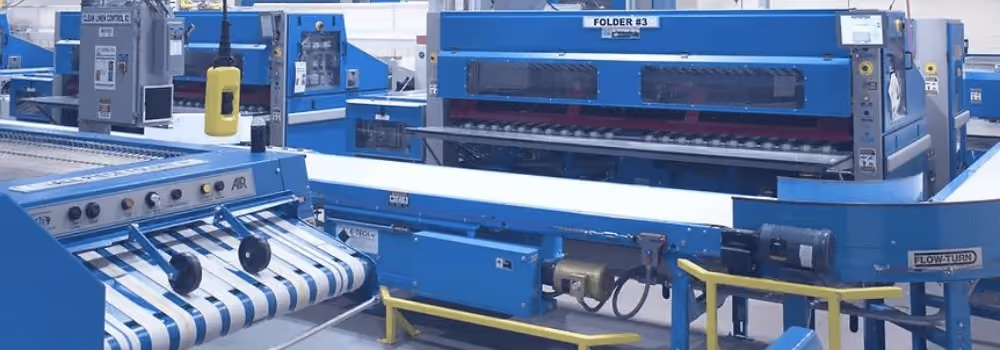




















































%20-%20thumbnail.avif)




%20-%20thumbnail.avif)

%20-%20thumbnail.avif)

.avif)




%20-%20thumbnail.avif)