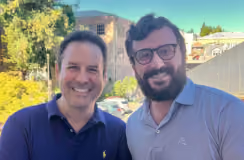
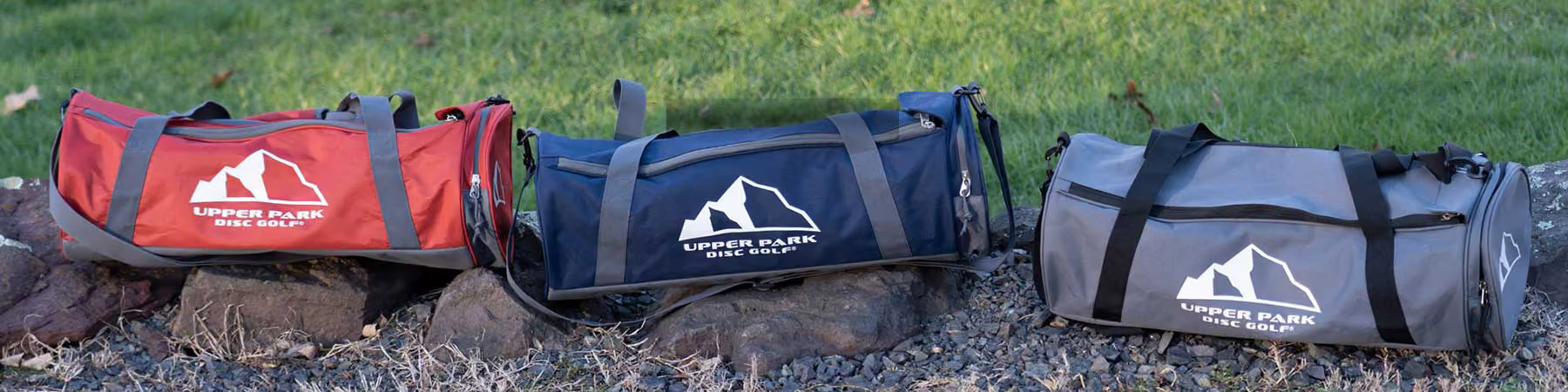
Host: In the fall of 2020, Martin Bispels bought a very pandemic friendly business, one positioned to benefit from the consumer trends unfolding due to Covid. It was a direct to consumer or DTC brand, meaning essentially that it was an E Commerce brand with a Shopify store and it sold bags for Disc Golf, a hobbyist, no contact sport, the perfect activity for being outside safely. Not to say it was easy though. When Martin and his partner acquired the business, revenue stood at $0 in inventory at 0 units. Martin was going to have to rebuild it from an absolute standstill. And he did. When Martin came on acquiring mines in September 2021, he was on track to reach $2 million a year in sales just one year after buying the business. Today, you'll hear how things have gone since. As we all know, E Commerce has softened and people are spending less time and money on their outdoor activities. Martin's business has felt those shifts A few of my favorite topics in our conversation are how to think about acquiring a consumer product brand, what it's like to move your supply chain from China to Vietnam, and the high availability of talent if you're operating a remote business. Finally, Martin is a brand guy. He worked for years at qvc, the shopping channel, so pay attention to how he thinks about brands. It's not something we talk about much On Acquiring Minds the businesses many of my guests acquire are operations heavy, so operations are what gets attention. But maybe your average small business buyer isn't thinking about brand enough and is leaving some opportunity on the table. See if you agree. Here's Martin Bispels, owner of Upper Park Disc Golf. Welcome to Acquiring Minds, a podcast about buying businesses. My name is Will Smith. Acquiring an existing business is an awesome opportunity for many entrepreneurs, and on this podcast I talk to the people who do it. Listeners of Acquiring Minds know that for almost any business you acquire, its success comes down to the people and how you develop and manage them as their new leader. Thing is, in addition to management, there is also a lot of process and bureaucratic work when it comes to your new employees. Payroll, compliance, HR technology, hiring, to name but a few. These processes are crucial to get right, but at the same time distract from where you want to be putting your energy in leadership. So Aspen HR is an HR firm and PEO that takes this work off your plate and handles it with the care it demands. Aspen is owned and run by Mark Sinatra, himself a successful former searcher, so Aspen's own leadership understands the HR challenges that searchers have. Post acquisition, the firm is offering Acquiring Minds listeners, a complimentary pre acquisition HR and PEO review for your target business. Check out aspenhr.com or contact Mark directly@markspenhr.com Martin Bispels, welcome back to Acquiring Minds.
[3:25] Guest: Thanks so much. Yeah, great to be here, Will. Good to see you again.
Host: Martin. I first interviewed you back on September 7, 2021. So about 20 months ago, you'd bought a consumer product business, a D2C business, Upper Park Disc Golf, that manufactures and sells its own line of bags for people who play the sport of disc golf. So we're going to get an update on how things have gone in the last year and a half plus since we talked. But first, Martin, can you refresh our memories and give us a little bit more on your backstory and how it was that you came to acquire Upper Park Disc?
Guest: Gol yeah, so my background is as a, you know, big company executive. I resigned at 14, had my own consulting practice and then looked to acquire this business in September of 20 after Covid had really taken hold and looking for something new in the next chapter. So we acquired the business, my business partner, Jim and I, in September of 20. The business had been around since 2011, but we liked what we saw and we thought we could take it to the next level.
Host: The, one of the striking things from that interview, Martin, was that you basically bought a business that, yes, while it had some history, the sales were literally at zero in the moment you bought it and so was the inventory. So it kind of come to a absolute halt. And while you saw a lot of good bones in the business, happy customers, a proven track record, solid products, a passionate founder, you were still going to kind of have to resurrect this, this, this business. And you were well on your way to doing so. When we talked in September 2021, we literally talked the day after your one year anniversary of buying the business. So tell us, and in that moment, you were looking at revenues getting to about $2 million or over $2 million. That was your next big milestone in fall 2021. Can you give us a sense of where revenues are today?
Guest: Yeah, so we haven't gotten quite there, but we're certainly better than we were our first year, which is good. Gross revenues definitely eclipsed a million. And I think we can still get there within maybe another year or two based on, you know, trend and what we're doing to move the business.
Host: And in many ways, the business seemed like a very Covid friendly business. It was D2C E commerce and it was in a sport that was an outdoor sport. And not only that, an outdoor sport where you don't necessarily have to be close to one another. For those who aren't familiar with disc golf, maybe give us five seconds or ten seconds on what that looks like, and then my question will be, have you basically felt the slowdown in kind of COVID activities and E commerce, those. Those two things that you were probably benefiting from. Have you also felt a slowdown in.
[6:30] Guest: Yeah. So all the things you said were true. In addition to the fact that disc golf was just exploding as a sport, it's one of the most popular sports right up there with pickleball that everybody talks about. And so. And still, even now, five new disc golf courses are going on the ground every day. So it's still growing very fast. And so we caught that wave. I would say that we're still growing, but it's certainly been challenged, I think, partly just by the economy being very bumpy. It's just inconsistent. Right. As you see a lot of E commerce reporting and trends and benchmarks and all of this, it's just very bumpy. There's still strengths, areas of strength, but a lot of areas that are struggling for various reasons, supply chain, whatever, consumer behavior, et cetera. And so we're just sort of riding that wave, and we're kind of somewhere in the middle.
Host: Okay, okay. And what does the sport look like?
Guest: You know, still growing like crazy. The professional game is certainly growing and becoming more popular. The crowd size, for example, at major events is growing. More people are aware of it. It's still one of those things that people are either way, way into it, or they're like, what are these metal baskets in the middle of the woods? You know, and so there's still that sort of tipping point where people really get it and get into it. And so, you know, sports growing, the community is great. It's certainly changing as well in a variety of ways. We sponsor over 60 players, so we're very in tune with what's kind of happening, you know, as I like to say, you know, what's the word on the course? Right. And so you really understand what's happening out there as far as trends and competitors and, you know, player activity and so forth. So, yeah, it's still a fun place to be, Good community of people.
Host: Martin, when you talk about the business being lumpy, bumpy, that says to me, kind of unpredictable. And a lot in the economy is unpredictable, and particularly now. But one of the things that was really striking about our first conversation, and you were one of My earlier interviews, I've since interviewed many dozens of people more and it's still. Listening back to your interview was striking. You and your business partner were extremely methodical in planning what you would do the business after you acquired it. You had very structured plans for what it was going to look like in terms of the people you were going to hire, what you were going to hire them for, what you were going to spend your budgeting. I think you had a 3, 5, 10 year plan even. How does that, is all of that stuff still in play or is it kind of out the window with the unpredictable nature of what this market is?
[9:25] Guest: Yeah, I, it's certainly still very much in play. So I think I mentioned I use eos, which is the entrepreneur operating system and it's part of that. It's available at EOS Worldwide. It's a free plug. I'm not paid by them or anything, but I found it to be very helpful both with Upper park, but also when I was consulting and using it with my consulting clients. So it's a system of tools and tactics to be able to run the business and as part of that, right. Having a 1 year, 3 year, 10 year goal and plans very specifically, not just revenue, but really what the business will look like, how we will operate. And we're still very much following that. And I find that to be very helpful because when things are lumpy, we have days that we're like, wow, we're doing great, or weeks or months and other where we say, oh gosh, that wasn't what we expected. You know, that is still a good anchoring point of where we're going and how we're going to get there specifically. So right down to quarterly goals, knowing what are the three most important things we're going to do this quarter. And what I find in working with, you know, different businesses of all different sizes is, you know, half the battle is getting all of the people to row in the same direction. Right. You know, people can do anything, businesses could do anything. I'm a firm believer and very optimistic when it comes to that. But everyone has to know what the plan is and be marching towards it. Otherwise I can't tell you the number of consulting clients I've had where you walk in with the senior team and you say, okay everybody, what are the three most important things you're working on right now? By the end of the conversation they're like, no, what do you mean? I thought we were okay. But you know what, that's all opportunity. Because if the business is Already doing okay. And you can just get a little more aligned around these things, then you can really gain traction and momentum. Right. And so I try to do that as CEO of Outer park, making sure everyone, our design team, our vendors, our social media person, everybody understands what it is we're trying to achieve and how we're going to get there. And so whether it's a marketing initiative or whatever, supply chain changes or whatever, trying to inform, keep people informed so they feel like they're part of something and they understand why we're doing certain things.
Host: That's fascinating. And Martin, I actually don't think that you called out EOS in our first conversation, so I didn't realize that you were using eos and so you can. EOS works just as well in a D2C remote operated E commerce business as it does in a traditional in person services business.
[12:12] Guest: Oh, I find it does. Matter of fact, I think it's even more helpful because you're not in person. You know, I'm running the entire business from my barn. None of my team, my supply chain guy was here once, but everyone has worked remotely. I only met my developer last summer because we were both at an event that I invited her to. So being remote, it makes it even more important to over communicate and have everyone on the same page. That's talked about a lot in business, but this is a way to actually make it happen.
Host: Great. And your team, I believe when we spoke last was around 7 people. I don't recall if that was 7 people plus you or. Anyway, what does your team look like today?
Guest: Yeah, so now we're actually at about 4 because I've trimmed things down a little bit and I've taken on some of it myself. For example, paid advertising, you know, I've had people focused on that. I've had agencies, I've tried, I've done it myself. It's one of those things that, you know, one of many things that I can do. I know how, but it's a question of how is my time best spent, Right. Is it doing that or is it getting someone who has that expertise and letting them run at it. But, you know, we've continued to make personnel changes and you know, it's just amazing how much good talent is out there. And quite honestly, what you can get for the, for the price, you know, you can get some virtual people that are happy to work remotely. My developer, Lamia is amazing, you know, and she's very experienced. She's done big things in the past, but loves working with us. In Upper Park. And, you know, and it's economical for me. I'm not paying for an office and benefits and all of that. And so, you know, we've been fortunate to be able to have the right people in the right seats, which is another EOS tool or way of thinking about it. And that's been extraordinarily helpful.
Host: Martin, one of the things that you had said toward the end of our conversation last time is you ask yourself every day, you make a point to set aside some time every day to say what can only I do? What can only I as CEO leader of this organization do? Because as you said, you've witnessed so many entrepreneurs and leaders get into the weeds. They can't help themselves. And so you have this daily discipline where you force yourself to say, what is the thing that only I could be working on? And that's where I should put my energy. Doing the. Managing the ads online is now something that you consider that you should. Should be doing. A and B. Do you still. Do you still have that daily ritual?
[15:05] Guest: Yeah, I do definitely have a daily ritual. And it's not an ego thing. It sounds, you know, egotistical. So what can only I do? It's not. That's not it. It's really, how is my time best spent? Right.
Host: Right.
Guest: And therefore, what am I spending the time on that truly only I can do? The big strategic relationships, the bigger decisions, the setting of the annual goals, you know, those kinds of things are where I should be focused on. Right. And then hire people that are smarter than me to. To do all of the, all of the nits and that's of the business. Right. Whether it's paid ads or social media or et cetera. And then I also have found, and this has been something new since the last time we spoke, even finding people that are willing to help out. For example, some of the player team who are people we're sponsoring because they're either pro players playing on the tournaments or they're helping out and they're running events at their local areas. And offensive. What I found is that they want to be involved. And so, for example, we build a discord channel and one of our team members said, well, I've built a bunch of these before. I'd love to help build it. Great. And I sent them a bag as a thank you. And so there's some neat dynamics there. When you get people involved because they truly want to be involved, it's not because they're looking for their next job. And I think that makes it stronger because then he's invested in it and he has something he's passionate about. And our Discord channel is great. Now, it's just for the team.
Host: You just said a couple minutes ago, Martin, it's amazing how much good talent is out there and at a frankly reasonable price. Well, that's going to be news to the ears of many of my listeners, for whom finding people to hire is their biggest bottleneck, their biggest challenge. Now, obviously, as a remote business and online e commerce, D2C business, call it what you will, you have the great benefit of, of the entire world being your. Your labor pool. So I guess the question would be if you're looking at upwork or just sort of any online platform to hire somebody either in the US or around the world, you don't feel like the labor supply has. Has tightened noticeably like it has in, you know, in the domestic US Market of hiring people to. To. To. To. To. Do, you know, physically show up?
Guest: Right? Yeah, I honestly don't. I feel like there's just as much, if not more talent available. And I, and I come to that because I, you know, even way before COVID I was using virtual assistants, for example. So working remotely and using virtual assistants was not something I was trying to figure out. You know, in March of 2020, when everything, when the world changed, I had already years of experience right of. And I think there's a couple things. One is there's a ton of agencies and all kinds of virtual assistant places and, you know, a million platforms to find people. But that's not the hard part. You know, the most important part is giving people, you know, clear accountabilities, clear understanding of what's expected of them. Managing the people is really what's most important. Setting clear expectations and accountabilities and building a culture around a team, even though it's remote, that they want to be a part of. So another part of EOS that we've really instilled is our core values. And I tell people right up front, even before I hire them, that this is what we stand for. This is what we're all about. One of our core values is be a good human. Another is create legendary relationships. And so I talk about these core values with anybody that I'm going to hire. They understand all of that. They understand their accountabilities. It's crystal clear. And again, I think that's half the battle. It goes, just like I said, about having everyone roam in the same direction. That communication is absolutely critical. And I think that's part of what's led to having great people on the team?
[19:21] Host: I want to share an update on the Acquisition Lab. As you know, the Lab is a highly vetted cohort based accelerator and community for people serious about buying a business. After going through the Lab's month long intensive, you have ongoing access to almost daily Q and A sessions with advisors, regular live deal reviews with Walker Deibel, author of Buy, then Build Potential Deal team introductions, and a very active Slack group with other searchers on the path. Well, the update is that the Lab recently passed 60 businesses acquired and for well over $100 million in aggregate transaction value. Also, all members now enjoy lifetime access to the Lab because when you buy a business, it's often just the first of many and the Lab wants to support you in every deal, not just your first. Lastly, check out my recent interview with Shane Ursum, episode 105. Shane acquired a business with over a million dollars in EBITDA in just six months and he attributes a lot of his deal success to what he learned in the lab. Check out acquisitionlab.com or email the lab's director, Chelsea Wood chelseieveenbuild.com Back now to some of the dynamics of the business. Are you all selling on Amazon?
Guest: We're not. And the reason I laugh is, you know, I think I shared before that I am not a fan of selling on Amazon. And interestingly we surveyed our customers and we asked them, where are you buying your disc golf stuff? All over your discs, whatever. And less than 1% said Amazon, which honestly was surprising because everybody buys stuff on Amazon. But what it led to was an understanding of that and some other survey results and talking to customers. You know, they want to buy from people who love disc golf and are really into it and know what they're talking about. And so, you know, and I think that's a differentiator of our business. You know, when we bought the business it was from a guy, John, who loved disc golf. He worked in the industry, he really knew disc golf. He knew why he had designed the bags the way he would want one as a disc golf player. So it was different than somebody who maybe makes luggage and all of a sudden decided to make disc golf backpacks. Just completely different mindset. And so I think the customer respects the fact that we know what we're talking about. I've played disc golf for 30 years myself. I have a basket right out here by my grill outside my barn. I play all the time and so I think the customer can kind of feel that it certainly comes through in our social posts, in the way we support the team and the way we support a nonprofit Disc golf related nonprofit called Uplay Disc Golf, where I'm president of the board of directors. And it comes across in our customer satisfaction, which is 98%, which I'm very proud of. And so I think we can sell on Amazon perhaps just as a way to get eyeballs. I almost look at Amazon as TikTok advertising. Right. We've done our fair share of Google and Facebook meta Advertising and TikTok in my opinion is still good for brand awareness but not necessarily conversions. And I think Amazon is kind of the same. I think it's a way to be out there. So we might list a few items there, but it's mostly going to be a DTC play. Mm, that's great.
[22:57] Host: On the point about E commerce and passion products or passion industries, I've looked at a number of e commerce deals, Martin, and, and although not one like yours. And so maybe this is. I'm going to answer my own question, but I often ask myself when I see some of these businesses, Even if they're D2C, it's not clear to me why they continue to get traffic it's often not clear to me why they continue to get traffic and customers instead of Amazon because what they might be selling, it's if it's not their own product, if it's not their own branded product, for example. But they're, you know, they're a, a store for X category. Why they kind of what value proposition they have over Amazon. And you might, and you might say, well they, you know, they're going to be people who don't like Amazon. Okay. But that's not a strong enough value proposition for me. You might say that there's some legacy buyers who have just been buying from the same e commerce store forever. Also not strong enough for me. Do you have any thoughts on this question in E commerce broadly? I guess what I'm trying to draw you out on, there will be a lot of people listening who have looked at e commerce businesses and what they can learn from your experience in buying an e commerce business versus the many that you see for sale out there.
[24:18] Guest: Yeah. So I think you have to do a lot of things right and it's difficult. I'm not going to sugarcoat it. And I think differentiating from what else is on Amazon. When I was at qvc, when I led sales there, we would talk a lot about the difference between buying and shopping and Amazon is very much a buying I Need deodorant. I go on, I'm there for 30 seconds, I click click and I'm done. You know, that's not a shopping experience and believe me, I know this is soft. Right. You know, it's a soft reason. But I do think that there is something about the experience, like I said, of buying from people who know what they're talking about. Yeah. Amazon's site is very, you know, it's very sterile. Right. You know, it's all about efficiency and you know, and God knows they've tested it a million ways to know what the best click through rate and all of that. I think an E commerce business on a Shopify platform, for example can tell the story better. I think can relate to the community. We have great UGC for example, we have videos of our players reviewing the bags. There's a real sense of brand that comes through on an E commerce site that you just can't replicate on, on, on an Amazon. So I think that's part of it.
Host: And Martin, another thing that a lot of the listeners will be contemplating is, is if they were to buy an E commerce business or already have or frankly any business buying a second one and a third one perhaps and maybe building a portfolio or a small Holdco. You had M and A experience from your corporate years, then you did this deal, you kind of as an entrepreneur, you did a deal. Have you looked at doing another acquisition either within Disc Golf or, or without.
Guest: Yeah, we've certainly looked at it and because the advantages are clear. Right. You know, the operational leverage, you know, call them economies of scale, you can call whatever you want but right. To, to, to be able to, for example, you know, have your three PL costs spread out over a couple of business, you know, is obvious advantage and tough for a single business to optimize. So I'm going through that now and we're on our fourth three pl in the two and a half years because we've had issues and I've had to dig in and I'm still having issues and there's always more to do there. But yeah, so I think we have looked at other opportunities both in Disc Golf and outside to see, you know, Small Cap Ventures is our parent company and certainly that's, that could be a holding business for a number of different businesses, not just this one. And so, you know, we're opportunistic, we'll do it if it makes sense. We certainly don't have, you know, unlike my 1, 3 and 10 year plan, we don't have a particular target or goal for this year, a number of business or anything like that. But we have looked at possible adjacencies. We've also looked at the other opportunity, the other way to look at this, which is there are a number of strategics within the disc golf space and the sporting goods space that would be logical partners maybe to come in on an equity basis. And so we've looked at that and we've had some conversations. You know, nothing imminent, but you know, there's possibilities there. And I like that because I'm a big fan of, you know, if you share the pie, the pie gets bigger. You know, I really do believe that. And you know, the right kind of partnership that adds real value and connections, you know, could make some sense.
[28:13] Host: One of the reasons that I'm interested in your view there is not just because that's how my listeners are thinking, but also because when I kind of hear how you're describing your business, when we Talked back in September 2021, you've taken it from zero to approaching $2 million in revenue in a, in a year. And now things have gotten a little lumpier, a little flatter. And so the game has shifted perhaps from kind of high growth to operational efficiency. And there's only so much operational efficiency that you can really wring out of, out of your operations. At which point a lot of people in, in, in this audience will, you know, will, will consider inorganic growth, buying another business as the way to, to, to, to, to grow either that business or a Holdco. So I was just, does that play into your, your thoughts about what the future holds? Because upper upperpark is, is maybe a little bit more mature and less high growth than it was when we talked last. That, you know, looking around for ways to grow wouldn't, would necessarily include buying, buying more stuff.
Guest: Yeah, yeah, it certainly could. And you know, if it's the right match and the right complement to the business. Right. Or if there's operational efficiencies because we do similar things and can share resources. Absolutely. And I, and I look at those things. But, but I also look at, you know, what else can we add to the business? Right. And what else can we sort of bolt on? For example, we sell disc golf bags. There's a number of, we don't sell discs. It's the most obvious category. So we're actually going to be launching our line of discs here soon and we'll again do it in a curated way. I'm not trying to be the biggest disc seller out there, but we'll do Things that are obvious complements to what we have, some branded products, for example. Another way to grow that's sort of in the partnership category that I really like is having other Shopify store products on our site, basically through a drop ship kind of platform. And it's funny, I attended the Shopify employee off site events last summer, three of them, and I said to them, why isn't it easier for Shopify sellers to just sell each other's products? You know, like it's a great idea, right? I mean, there's a lot of cool products out there and companies that have neat, you know, like us, like niche, you know, innovative. And so now of course they said, yeah, you're right. Well, I don't know if it existed back then or not, but now we've actually discovered there's an app called Caro C A R O that allows us to do just that. And there's thousands of products in their marketplace and the tech is good and they make it very easy. So we just added some apparel and some gear items as a way to broaden our assortment. Right. And if you give the customers more to look at and more to shop for, it's going to bring more traffic and engagement and you'll sell more bags. So we've been leveraging that. That's very recent. And so that's kind of a way to sort of get your. They get the advantage, right, of having additional products and some of those efficiencies without actually doing an acquisition.
[31:37] Host: I want to tie this back into this distinction you made between shopping and buying. And I think it is probably self explanatory, but indulge us and give us that framework for thinking about those two activities differently.
Guest: Yeah. So, you know, I think any kind of commodity product, you know, it's really just about price and you don't really care what brand of deodorant you're going to use. Maybe there's some ingredients you care about, but not really. And whatever's on sale, fine. That's very different from, you know, the kinds of products that we sell. And also that I remember, you know, from my days at QVC where, you know, there's a story, there's a founder story, there's an origin story of how they came up with the product and how it's made and where it's sourced. And you know, one of my favorites is a guy that I've recently run into is he has a honey farm in Colorado and he has 150hives and he makes this amazing honey. It's called Frangiosa Farms and the guy, Nick is the owner and he's just the nicest guy and he's got the handlebar mustache and you know, and his kids help him, you know, on the farm. And so there's really something special about that. That and feeling, you know, when I have his honey, I feel like there's a real connection there as opposed to just, you know, whatever honey is in the supermarket aisle, you know. And I think that's a real difference. I like those kinds of things. I like supporting businesses that I like and admire and respect. I feel like my life is richer when I have those kinds of products and stories, you know, in my life. And I think most people are the same. But again, there's other times when I know what I want and I just send it to me and it'll be here tomorrow. Great. So to me that's the difference between shopping and buying. And I think again, it's the power of brand. It's really just all comes back to building a brand, explaining your brand, living your brand values, that's just critical.
[33:42] Host: Well, at the risk of overstating this or overanalyzing it, I wonder if there's for people interested, interested in buying an E commerce business if there's a,
Guest: a
Host: thesis or, or at least a criterion of look for D2C businesses that are what you just described, that are kind of founder owned, led. The brand proposition is, is. Is really clear and strong and there's kind of craftsmanship behind it. All of the things that we associate with craft and quality, but which are frankly very lacking in the world of E commerce because there's so much. At least it's less so now. But for years there was so much dropshipping and so much the Amazonification of everything and nearly every product category was just commoditized to death. But I wonder if, if that resonates with you kind of, if, if people out there are interested in buying an E commerce business, if it should be something like what you described, something where there's a real brand there and a real founder story behind it as opposed to something more commoditized.
Guest: I think so. I mean, first of all, it's more fun.
Host: Yeah.
Guest: You know, if all you're doing is chasing price, you know, it's short term, it's not a lot of fun, you're under constant pressure, the margins suck, you know, and so that's not a fun way to run a business. And you know, so I stay away from those things. Both when I was Consulting, and certainly with Upper park now, you can certainly still deliver a strong value. Right? You know, we're very tight on our operational efficiency. I've, you know, work closely with the factory, our supply chain, the 3 PL Everywhere, to make sure the value chain is all there so that we're offering a great value to the customer. And part of that is looking at competition and understanding where you sit, you know, your pricing versus theirs, all of that. And the product, you know, the merchandising itself. We introduced a new bag model because I wanted something around that hundred dollar mark, which we didn't have. And so, you know, to be a player in the full range of the market possibilities. We're never going to make a $20 bag, but we wanted to have something more at that $100 more entry level kind of, you know, you're serious about disc golf, but you're not ready to spend 250. Right. So it goes right through to your merchandising. But yeah, looking at the criteria like we originally looked at of, you know, something that's not a commodity business, something that's on trend, something that has decent margins but you can offer a strong value, something with a strong supply chain available. And we've been very fortunate there, and we've improved that substantially since we bought the business. For example, we don't source in China anymore. We moved to Vietnam. That was a huge change. The three PL changes I talked about, there's been a ton of packaging. I mean, there's a ton of other things. Our sustainability initiatives. All of our bags are made out of recycled material. Now. That's a big differentiator. So, you know, a business. If I was looking for a business to buy now, I'd probably follow many of those same criteria and, you know, expand on it a little bit and probably lean even more into the brand, the founder story, et cetera. But yeah, I mean, you know, and the most obvious way to do that, by the way, is look at product reviews. Because you're right, when we bought the business, there was zero inventory, zero sales, but there are a whole bunch of positive reviews of people saying, we love these bags. Well, okay, I mean, so the first order of business was just get in stock, because once we have product, people will buy it.
[37:25] Host: And how big was the list of customers when you acquired the business? I mean, you could immediately send them an email and probably start driving, hey, we're back in stock.
Guest: Yeah, right. I think it was about 8,000. And we've doubled that in the time we've had it eight. It's like an email list of about 8,000 people. Yeah, great.
Host: You know what we're. And we're going to be wrapping up here, Martin, in a minute. But just a couple more quick questions for you again just to try to kind of glean what we can from the opportunity that you found in Upper Park. A later guest of mine from our conversation, Keith leinbach bought a D2C business offering something in the automotive business. He, he was, had to be quiet about it. He was under non disclosure. He had subsequently sold a pe, but it was kind of an attachment to vans that enabled people, to people who were living out of their vans, you know, hashtag van life, to, to, to do so, you know, more comfortably. So similar to yours, it was a D2C product. It was a product that had been designed by the founder, a product person. It was selling into, if you will, a hobby, community. I mean van life, people, you know, it's a way of a life, a lifestyle community there.
Guest: Yeah, yeah, yeah.
Host: And people were passionate about the product and it did very well. And as I said, he sold after a short amount of time of ownership to private equity. So I guess, I guess the other thing here is if you can, if you can identify communities or lifestyle brands, things that, where people are really passionate about something because if you have a product that they like, it probably travels quickly. There's probably a word of mouth effect there that there isn't when it comes to, as you said, deodorant or whatever other commoditized product. I'm just struck by the similarities between your, the two, the two products that you and Keith bought. Care to respond to that?
[39:28] Guest: Absolutely. So, you know, look, the way we, we buy products, most humans is, you know, we, we have an emotional connection and then we justify it and to justify the purchase, you know, we, we have that. Oh, wow, that's cool. And that a lot of that has to do with identity, right? Who am I as a person? How do I want to portray myself to the world? And we do that through the products we buy, right? And so, you know, the van is this embodiment of your personality and your identity, right? And so, you know, understanding that and then, you know, communicating back to brand, you know, communicating what it is that we stand for, right? With our core values and our social media showing, you know, it's not just here's a product, buy it or here's a product, here's a sale. It's, you know, this is what we stand for, this is how we live. Here's examples of our players or us, you know, living the disc golf lifestyle. Right. You know, and you can have this too, right? I mean, that's a classic, you know, sort of marketing tactic and way of explaining products because it's not the physical thing, you know, it's what it does for you. Right. And so what is the benefit of this product in your life? And if you can bring that alive, as the best marketers do, you can be very successful and actually satisfy your customer most of all. You know, not just sell them something once, but satisfy them to the point that they want more of it. Right. In their life. And we're fortunate that way. People have three, four, five of our bags, you know, when they only need. Need one at a time.
Host: Excellent. Just let's get into the mechanics of E Commerce for a minute because you've said two interesting things that again, I think people listening who might be interested in E Commerce would like to learn from you about moving to Vietnam. So we're hearing about this. This. This what? Disentanglement between the US And Chinese supply chains for all kinds of geopolitical reasons we don't need to go into also because China's just gotten expensive to the point where The China of 2023 is. Is Vietnam and so on. So anyway, I've heard about this, I've seen headlines about this, but you're the first person I'm talking to has actually moved their supplier, their manufacturer from China to Vietnam. Give us a couple minutes on what that looked like.
Guest: Yeah. So, you know, from the very beginning, honestly, when we acquired the business In September of 20, I knew that I wanted to make the this change. And it was a matter of finding the right manufacturing partner. And so we did that through our design team, whose wonderful connections. And you know, our design team is just fantastic. They're veterans of the space. And it's all about relationships and experience.
[42:24] Host: Right?
Guest: And so, sure, anyone can go on Alibaba and find somebody to make something for them, but that is only the beginning. It's the tip of the iceberg when it actually comes to getting a quality product that's truly dialed in the way our products are. We're on version 7, 8 of each of these bags because John, the original owner and now us, with John's help, because I kept them in the business, have continued to just refine and tweak based on customer feedback, based on ours. So we have all of that knowledge and design specs that have been developed over time. And so we often talk about original designs. It's not just that we took something and knocked, knocked off somebody else, but the process was a lot of vetting and conversation and relationship building. And then there's the tactical part of actually getting samples and make sure they are what they're supposed to be. But the advantages are clear. I mean, the people in China were lovely. Lots of video calls, very nice people. But sure, the geopolitical stuff, the fact that I can stand in front of our customers and tell them that, you know, we're not sourcing out of China and that spy balloon that you heard about, you know, you don't have to worry about that. The fact that the people that make our bags go home to their families at night, you know, those, those things all matter. The quality of the materials, the certification, you know, when we moved into recycled materials, knowing that they truly are certified recycled materials, you know, and that they're not, a lot of greenwashing goes on. They'll take new stuff, new materials, grind it up and call it recycled. It's crazy what happens. And so the quality of the craftsmanship as well. And so all of those reasons were the reason to move. And then the process was all about building the relationship. In the scheme of things, we're a smaller player. And so any of these factories, of course, if you run in a factory, it's all about volume. Right. And so, you know, working with them, convincing them that you're going to be a good partner, you're not just making one order, that you're going to come back for more and build a business over time, those are all the things that they're looking for and you have to sort of prove yourself in order to get there. And so that's been really.
Host: So it's you selling them on you.
Guest: Yes.
Host: And is that just because you chose a manufacturer that had a great reputation, lots of demand for their services, and it was that sort of dynamic that you really had to convince them to take your business.
[45:03] Guest: Yes. And just the fact that we're, you know, we are in a niche business. Right. So we're not, you know, the size of some of their other customers. Right. So, you know, they're willing to take us on, but they want to know that we're going to keep growing and keep bringing them orders, otherwise it's just not worth their time, you know, for a one off order. Right. None of these, none of these factories are looking for one off customers. It's a hassle because, you know, there's a lot of work that goes into these products and actual learning how to build these products. I mean the craftsmanship is extensive and so you know, they don't want to just make one something one time and then sort of that knowledge is lost. They want to, you know, bring that back and keep making the bags better and keep making the products better. And so we're in a good position there.
Host: Great. You had mentioned that you've, I think you said you're on your fourth three pl. So is finding a good three pl this is news to me. I didn't realize it was that hard in E commerce. So I guess it is. It is.
Guest: And you know, each has their own strength and you know, really what it comes down to is what's the best match for your kind of business. Right. Because they all serve different kinds of businesses, different audiences. Some are more on the big box. They're fulfilling the E commerce orders for big box retailers. Well that's completely different from truly being focused on E commerce and then the efficiencies around that and then the packaging options and choices and optimization of the packaging and of course the shipping rates and all of that. So it's a lot. And to find the best one for your business is not easy. It just isn't. Okay.
Host: And John, the founder, is he still working with you guys?
Guest: Oh, very much so, yeah. So very active. I'm on slack with him all the time trading ideas. He's been great. Now he has a full time job. He and his wife just had a baby and so he's certainly busy. But you know, from the beginning, the very first phone call, I told him we're going to make you an offer but I actually want you to stay part of the business. And I gave him a nice equity stake in order to do that because he had great knowledge about the business and some relationships in the space and even two and a half years later that has still come in handy and been valuable. So I'm glad that he's part of it. He's a really good guy too, which makes it even better. But he also appreciates that we've taken the business to a new level and leaned in a lot more on brand than really he had time to do before and expanded the team again more than he had time to do. So he appreciates sort of the updates we've made to the business and yeah, it's something I'd recommend. You know, it's got to be the right fit and there's got to be the right relationship there. But you know, when it works it's very, very helpful.
[48:12] Host: You know, it's Interesting. Martin. A lot of my guests will feel, particularly first time acquisition entrepreneurs will feel like they really want that seller owner around for as long as possible because they're insecure about, you know, the knowledge transfer and making sure, you know, that all of the potential, all of the potential risk in a transition with having the owner there as long as possible, in theory, would smooth things out. But then what you'll also hear is that kind of once that first transition is, is past, maybe the first 30 or 60 days, it actually starts to feel a little, I don't know, too many cooks in the kitchen and, and, and, and, and they'll, and they'll be surprised at, at finding that, oh, actually I kind of want the seller to be on their merry way, but please respond.
Guest: I mean, it's really just about communication and expectations. You know, from the very first phone call, I said to him, you know, I understand what you're saying, but from the very first phone call I said to him, all right, what do you love to do? He goes, I love designing the bags, making the bags better, figuring out how to make them. Okay, what do you not like to do? Oh, God, the supply chain stuff and the customer support, great, I'll hire people and I'll do all that other stuff. You just keep focused on working with the design team and the factory to make the bags better and better. Great. And he was relieved. He was great. Oh, my God, this is a dream. To just be able to focus on what to him is the fun part. Now I have another guy, Tim, who's my supply chain guy. He loves this stuff. He loves wrestling with a 3 PL and figuring out the best way to make things happen. And, you know, and so everybody has their strengths and setting people up for what they really enjoy doing and what they're good at is critical. Right? So again, accountability chart expectations, communication is just critical.
Host: So I wonder if the takeaway for that is, for listeners is, you know, when contemplating how much you want the seller to remain in the business, if it's more than just kind of a consulting contract where they're, you know, downloading their knowledge into your brain, if they're actually active in the business, if it's like having that conversation that you just had, what do you enjoy about the business? What are you really good at? And then, and then setting a really bright red line fence, if you will, around everything else, and they can't really say, okay, you're, if you're really into sales, you can continue doing sales and let me do everything else. Or Something like that just re. Redefine where they'll sit in the organization and allow them to do what they love and less of what they don't love. But that also means that they can't really, you know, you guys won't be stepping on each other's toes there.
[51:02] Guest: Yeah. And. Right. And just being, you know. No, he can certainly make suggestions and he does, you know, and I'll ask him, hey, here's a marketing idea. No, he's kind of a, he's a marketing guy in his other job and his, you know, his other position. And so he certainly is marketing knowledge and so I'll bounce ideas off of him and things like that and he'll suggest things. But. But he understands the dynamic that ultimately, you know, he's going to suggest stuff but that's not his wheelhouse and you know, that's not what, you know, ultimately I'm going to make the decision. That's all. You know, it's just clear communication.
Host: Martin, anything. I didn't ask that you would let the listeners know about where you are and Upper park is and the whole process.
Guest: No, I think we covered it. I think just E Commerce will continue to evolve. I still think that DTC has a place and I think with the right brand story and the right operational efficiency, you can be very, very successful. I don't think everyone has to just give it up and say, well, we're just going to sell on Amazon. I don't think that's true. As a matter of fact, I think over time that's going to be less true. So I still believe in D2C and in brand and in storytelling and in the connections that you can have with people through products. And so I think, you know, I would encourage anyone who's looking to do it to lean into those things
Host: and
Guest: you know, when it works, it can be incredibly rewarding.
Host: Great, great note to end on and if want people want to get in touch with you, Martin, any questions? Is email still the. Your preferred way?
Guest: Yeah, sure. I'm Martin at upperpark this golf.com yeah, great.
Host: Thanks for coming back on Martin. It's been a great update. Appreciate your time and. And you're sharing all of this with us.
Guest: You bet. Will. Thanks.



























































%20-%20thumbnail.avif)





%20-%20thumbnail.avif)

%20-%20thumbnail.avif)

.avif)



%20-%20thumbnail.avif)