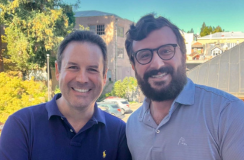
Host: You've heard it said that when you communicate with sellers, you should go easy on the finance language. Constantly referring to multiples and EBITDA makes you sound like an academic stock investor, not a human with the skills to lead their people and protect their legacy. So listen for how Today's guest Matt Barnes was very human, very personal with his seller. Matt explained to his seller about how buying the business was a project of his family, how they wanted to become part of the fabric of the community, how they intended to own the business for the long term. This seems to have resonated. Matt's LOI was ultimately chosen over 14 competing offers, and even when the deal died, Matt was able to bring it back to life again using a personal touch. Also, listen for Matt's approach to proprietary outreach door knocking Matt showed up to businesses in person, asked to speak with the owner about buying the business, and had a high hit rate doing so. I was fascinated by this and we get into the weeds of exactly what he said to owners and their gatekeepers. Listen for the fire story and how Matt turned a bad accident into the ultimate due diligence stress test. Finally, listen for the role of conviction in his search, particularly around his decision to buy a business in the first place. A lot of people are intrigued by buying a business, but in Matt's experience, it takes another level of commitment to actually get a deal done. Okay, please enjoy this conversation with Matt Barnes, owner of Professional Touch Laundry Service. Welcome welcome to Acquiring Minds, a podcast about buying businesses. My name is Will Smith. Acquiring an existing business is an awesome opportunity for many entrepreneurs and on this podcast I talk to the people who do it. Listeners of Acquiring Minds know that for almost any business you acquire, its success comes down to the people and how you develop and manage them as their new leader. Thing is, in addition to management there is also a lot of process and bureaucratic work when it comes to your new employees. Payroll, compliance, HR technology, hiring to name but a few. These processes are crucial to get right, but at the same time distract from where you want to be putting your energy in leadership. So Aspen HR is an HR firm and PEO that takes this work off your plate and handles it with the care it demands. Aspen is owned and run by Mark Sinatra, himself a successful former searcher, so Aspen's own leadership understands the HR challenges that searchers have. Post acquisition, the firm is offering Acquiring Minds listeners a complimentary pre acquisition HR and PEO review for your target business. Check out aspenhr.com or contact Mark directly@markspenhr.com Matt Barnes. Welcome to Acquiring Minds.
[3:17] Guest: Hey, thanks for having me, Will. Longtime listener, first time caller.
Host: Matt, about six months ago, you stepped out of corporate and closed on a professional laundry business in Denver. As you said in your LinkedIn post announcing the acquisition, I traded Excel macros and Outlook calendar invites for 120 inch roundtable linens and wrenching on steam boilers. Great line. One of the things that struck me on our pre call, Matt, is the strength of some of your values around your search and around choosing this path of owning a small business. So to put that another way, you had a very clear and strong why. And so we're going to, of course, spend some time on that, but start us off with some background on you, please.
Guest: Yeah, absolutely. So I'm originally from Texas. I went to Texas A and M University. Um, graduated there, got into consulting and then into oil and gas. Spent two years in consulting, two years working for a CFO down in Houston. Um, and things were going great. I ended up getting a job in private equity that moved us to Denver in 2018 and worked in private equity for two years underwriting oil and gas deals. Um, and sometime in that two years, I think it was the late nights waiting for 20 turns of the model or the deck. Started reading a lot about search and ETA. I want to say that was 2019 or so and reading the literature and hearing a few of the stories. This was pre Acquiring Minds, but hearing a couple of friends in the network that have done this, I just thought to myself, this is something that I need to do. I think I was designed for this. So worked in private equity in 2020. Then Covid hit the energy markets were also a mess. And the literature at the time said that there was kind of only one way to do this if you didn't have millions of dollars in the bank. And that was to raise a traditional search fund. And so in the summer of 2020, I started making calls and started raising money while I was working. And I had most of the money raised and took my wife out to dinner and said, hey, babe, this is what I'm thinking about doing. I feel really passionate about it. I've raised some of this money. And she looked at me and said, I am not aligned on this. And so instead of completing a search or starting to search, I just returned money and shut down the fund and moved out of private equity, went and got a more traditional job as a director of finance at a telecom company for the next two years or so. And part of my wife's rationale was, you know, why don't you try to manage a few more people? Why don't we save some money? Why don't we, you know, start a family kind of in this time? And then in a couple years, if it still makes sense. I still think you should chase this dream. And, you know, it kind of came to a head last summer, the summer of 2022. We were on an anniversary trip in Mexico, and I said, I really think I should do this. I think now is the time. And she was entirely aligned. And that was really important to me. And so, yeah, September of 2022, I decided to start searching.
[6:38] Host: And Matt. So she. So her initial lack of alignment was purely timing. It sounds like she was open to it, just not right then.
Guest: Yeah, absolutely. I think. I think it was timing, but it was also just an understanding of the risk and reward associated with it. I'd worked really hard with the oil and gas private equity fund, and a lot of late nights, long hours, there was like, days I didn't see her. And we were married, living in the same house. And so I don't think initially I did a great job talking about how hard this could be, especially once we're owners and operating. And I think it took some years to give time back to my wife before it made sense for us to do that.
Host: Well, I'm skipping way ahead, but. But because it's right here in front of us. Let's ask, has has owner, being an owner operator been days away from home? Has it been the time sink that you thought it might be like your private equity or worse?
Guest: You know, it has not been. I. I don't think I've worked more than 50 or 60 hours a week, and that's only been occasionally when I pop up on a Saturday to catch up on some laundry. I think that the difference here in this situation is that while I may have to work some longer days, it's all on my discretion. And I'm not being told that I need to work those times. And so that kind of gets into the autonomy and the freedom of small business ownership. That has been awesome. And my wife having gone through, you know, hell and back with me to get the deal closed, she is, you know, emotionally invested in the success of the business in the same way I am. And so, yeah, we're. We're super aligned on when times have to go kind of late. Great.
Host: Cool. Okay, going back now to. To your kind of discovery of. Of search or the. Or the. This decision to want to pursue it. You were working in private equity at the time I've had numerous guests talk about being in private equity and kind of seeing deals occur and seeing, you know, when money is being passed back and forth like the. The biggest target of that money is often the entrepreneur, the owner that's selling their business. Now, the nature, you know, private equity has all sorts of flavors and varieties. So maybe you weren't seeing those types of deals happen. Point is, were you exposed to deals or business acquisitions in private equity that gave you kind of a similar recognition, like, oh, I should be. Rather than staying in private equity, I should be an entrepreneur who's selling to private equity. That. That's. That's where, you know, the real value is.
[9:19] Guest: Yeah, I mean, that. That certainly occurred to me that the deals we were working on were so much larger than something that I would be able to transact on. But the. The methodology and the mentality of being an outright owner of something. You know, I. I think I read. I read a ton of books in 2019 and 2020, one of which was like, Rich Dad, Poor dad, before I got to the HBS guide and the Buy Then Build kind of literature. But it was just. It was like a mentality shift. And my brother and my wife were sick of me talking about it. We were at home, and I was talking all the time about it. But just being an owner is really the only clear path to wealth generation. It has a ton of auxiliary benefits. But the shift of saying, hey, if I was able to own something outright, I would not only have the strategic control, but I'd also see the merits of accretion and appreciation. And so whatever I do next, I need to be a controlling owner of something. That. That was kind of the bigger shift.
Host: Fantastic. Thanks for that, Matt. Okay, so September 2022, you've circled back around to your wife, who is now aligned. You decide to start your search. Take us through that. What does it look like?
Guest: Yeah, absolutely. So probably the end of August, before I contacted brokers or started standing up like a deal team or even looking at deals, I went through my Rolodex and talked to anyone that would talk to me about search. So I probably had, you know, 20 or 30 phone calls with people that were familiar with search. I talked to some brokers, some bankers, but more importantly, I talked to people searching actively, people that had tried to search and failed, and then people that had searched and bought a company just to information gather. And after those two or three weeks of conversations, I was more convinced than ever that I should do this. But I also had a pretty clear game plan. I've talked to quite a few searchers since I've transacted and if I leave them with anything, I always say there was a moment kind of early September where I kind of looked myself in the mirror and said, hey Matt, you are going to buy a company in one year's time. I know we talk about this average of how long it takes to find a good deal, but I had decided at that point in time and I had resolved that I was going to do it. And maybe if it had taken me a year, I would have bought something that was not wise or not valuable. But the demarcation in time at the beginning of September, promising myself that I would buy something was pretty huge, I think, for the aggression that I took on search with. So I, I started out in September. I, I did a geographically constrained search to 75 miles around Denver, Colorado where I live. In hindsight that might have been a little wide because I've got a commute now. It's not bad, but driving an hour in and back would have been tough for me. A lot of windshield time. I decided to go industry agnostic. And so I think a lot of the brokers that we talked to, they talked to a ton of tire kickers and a bunch of average looking white guys around my age. And so I thought it would be wise to differentiate myself. So my tagline was basically, hey, I'm willing to look at any deal that's not a strip club, a gas station or a cannabis retailer. And that basically says, hey, I'll look at anything. Naturally I had a tighter filter when deals got to me, but if a broker remembered me as the guy that wouldn't buy strip clubs, I'm okay with that. And it seemed to work. So I saw all kinds of deal flow from the brokers. You know, we talk about ways to find deals and certainly you can go online quite light biz, buy, sell. Certainly you can network with the local brokers. I think I met with someone at every brokerage in the state of Colorado just to get to know them and start to see deals. And then the big wild west is proprietary deal flow. And be happy to talk about how I went about doing that. But I decided to keep the aperture really wide on the type of businesses, really wide on the size of the deal. I looked at stuff as small as 200,000 in earnings, up to 3 million in earnings. And because I kept two of those lenses really wide, I was geographically constraining. So I saw a decent amount of deal flow, but I saw a lot of really horrible businesses that should not be sold. But that was my strategy going into it.
[13:53] Host: Well that that reminds me of Sam Rosati's. I think he calls it the Big Three Little two. It was an episode that ran a few months ago and the philosophy is basically if you're going to be really strict on one, you got to be flexible on the other two. So as you just articulated, you were strict on geography, therefore you had to be agnostic on industry and really wide aperture on on on earnings.
Guest: Absolutely.
Host: And it worked for you. I want to share an update on the Acquisition Lab. As you know, the Lab is a highly vetted cohort based accelerator and community for people serious about buying a business. After going through the Lab's month long intensive, you have ongoing access to almost daily Q and A sessions with advisors, regular live deal reviews with Walker Deibel, author of Buy, then Build Potential Deal Team introductions and a very active slack group with other searchers on the path. Well, the update is that the Lab recently passed 60 businesses acquired and for well over $100 million in aggregate transaction value. Also, all members now enjoy lifetime access to the Lab because when you buy a business, it's often just the first of many and the Lab wants to support you in every deal, not just your first. Lastly, check out my recent interview with Shane Ursum, episode 105. Shane acquired a business with over a million dollars in EBITDA in just six months and he attributes a lot of his deal success to what he learned in the lab. Check out acquisitionlab.com or email the lab's director, Chelsea Wood. Chelsea then build.com going back a couple minutes here, Matt, when you looked in the mirror and said to yourself I am going to buy a business in a year and you kind of made a commitment to yourself and you feel like that kind of channeled a certain aggression in your search. And when you now hear from other searchers who reach out to you to ask about doing a search, do you have a spidey sense for similar conviction or is that criteria you look for when giving advice?
[16:02] Guest: Yeah, absolutely. I think I've Talked to over 50 searchers since I had transacted primarily in the effort in the same spirit that I'm doing this podcast because it's been really life giving for me to pour back out what I learned. Especially now because I'm not that bright of a guy and I know I'll forget it, but I can filter pretty quickly in their first couple of sentences whether they have the resolve and the grit to buy a business and all of them, I kind of leave the conversation with saying, hey, if you're going to do this, like, you better really commit to yourself you're going to do it. I don't know, maybe that's a way to filter out the tire kickers of the world or maybe just to call them kind of on their stuff. And, you know, it's landed really well with a bunch of guys that want to search because, like, I speak with conviction because I've now lived it and I think it's. It's not a bad thing to be a tire kicker or to be interested in maybe searching one day. I just hope that there's a demarcation in people's lives where, you know, they're interested, they're looking at deals. Then they're like, oh, no, I'm going to go buy something. Because I think key is when you find a good deal, unless you've got that resolve, you're probably going to back out and not put in a very strong loi because you haven't really committed to do it. You have to reconvince yourself a second time to then go buy a business. You just get that out of the way up front. Then I think you're searching with a pure mind and a pure heart and you can go transact when the time comes.
Host: Really well put, Matt. And maybe there will be some overlap in your answer to this one. When you were talking to searchers, when you were starting your own search and talking to those who had gone before, and you talked to some people who had, quote, unquote, failed in their search. Do you remember any takeaways from those calls? What, what not to do or what these folks had reflected back? Reflected back on having done poorly, that they would have done a different way?
Guest: Yeah, that's a really thoughtful question, Will. Nothing sticks out other than the general principle that it seemed like they, you know, they still had corporate jobs, but they were searching with 50% effort for like 3 years. Felt like the theme. And I don't know, maybe that subconsciously informed my resolve to go do it. But the theme was, hey, I looked at a lot of deals. You know, I had a couple Lois go bad. Then life got busy and I just kept the W2 job and I'm doing fine now. And I think there's a tendency in our little microcosm of the market to like, I don't know, disparage or look down on people that don't buy or that, you know, really should just keep a really good W2 job. And provide for a family and, you know, earn and then retire and live a great life. I don't think that that is like losing in our world. And I feel like people talk about that a lot.
[18:52] Host: When you first were introduced to search, and as you said, like at the time, it felt like a traditional search fund was the way, was the only way. So you went out and started raising money for your search and then, and then you and your wife decided not to do it. You return that money. So what? So I'm just curious because I know that eventually where you land is, you're kind of really not into traditional search funds, which I, of course I want to have you expand on. But at the time. So was it a traditional search fund that you were raising or was it kind of a friends and family thing? What did that look like? And I asked you this so that we can have more context later for where your opinion stands today.
Guest: It was more friends and family. It was, I mean, frankly, like Network of Texas. Growing up there, being around people that want to invest in untraditional asset classes, it was, it was raised that way and it wasn't like papered and termed as officially, as I'm sure a traditional search fund is now. It was like, hey, I got to go raise this money. I'm going to get this committed capital and then I'm going to search. And yeah, in hindsight, I'm really thankful that I didn't search that way.
Host: And were they going to fund these folks, these friends and family investors, Were they going to fund your search or were you going to. Yeah, and they were going to find
Guest: you classic $100,000 a year while you search and then the real capital being reserved for buying a business. I had a friend in Dallas who had bought before me named Austin Miller, and him and I talked on the phone quite a bit. And just as an aside, the network of people you know, searching currently or have searched or related to this is incredibly generous and forthcoming. I probably called Austin 15 times in a two month span. He'd answer every time from his, you know, CNC machine shop that he had bought and there's like a plasma cutter in the background and he'd answer every question immediately and then get back to work. But something Austin did I thought was clever. He basically took the database of what you can download at the library, every business in your state, and kind of, you know, filtered that down. If it starts at 150,000 companies, you take out your nonprofits and things that are clearly not interesting or accurate, and you get down to like 7 to 10,000 businesses in a state. And then what I did was I just pulled up Google Maps and I would look at office parks and industrial parks and I would, you know, cross reference businesses on my list based on revenue size and location with what I was seeing on Google Maps. And I would take Friday afternoons off, I was working full time the whole time I searched and I would take afternoons off where I would go to a business park and just walk around and knock on doors and try to get in with the business owner there in person. And I would say I had a 60 to 80% success rate doing that. If I didn't talk to the business owner there that day, they would always follow up with me. I think part of just like a natural advantage I may have had is that I'm, I'm kind of an 80 year old man stuck in a 30 year old man's body. And so I, I do better in person with the baby boomer kind of generation. And that played to my advantage. I probably, you know, saw 40 or 50 businesses that way over a couple of months, some of which didn't realize they could sell their business, some of which, you know, for what they wanted for their business it would have implied a 10 to 20 times cash flow multiple. And so it just was not reasonable to try to talk them into selling their business. And then a few of them were pretty interesting and I've done a thorough job getting to know other searchers here in Colorado. And so I was able to like send some of those businesses over to friends of mine where the business was not a good fit for me, but it could have been for them. So that was fun. I didn't end up buying a business from a proprietary search. My, my business was brokered and I thought that was really helpful. But yeah, that was the way I went about it.
[22:48] Host: Well, we're going to spend some time here, Matt. This in person door to door version of proprietary search, while you didn't actually close and you know, find the business that you bought that way, you did find really strong leads, had a really strong, that you actually passed on to other searchers and in general had a really good hit rate. You said you had 40 to 50 convert in person conversations and off of how many door knocks?
Guest: I don't know, maybe somewhere between, yeah, 100, 120 or so. Oh yeah. I mean it was a very successful campaign, very. I mean it's time intensive but I, I just, you know, know thyself. I knew that with business owners I would be better in person than calling them or sending like a email or marketing mail kind of campaign from, from the owners that I've gotten to know in the last year. Very few of them will respond to the latter. But if I just show up and I'm pretty honest and authentic with them on who I am and what I'm trying to do, even if we never get around to talking about the size of their business or evaluation or selling their business, I think they appreciate those phone calls because it's genuine interest in what they've spent their career doing. And so you win a lot of goodwill even if it never pans out for you. And I, I don't know if it's lame, but I also just kind of like talking about business with people that have gone and actually run successful businesses. And so I found it pretty fun. After a while it was clear that, you know, it's a needle in a haystack on, you know, not only building the goodwill with that seller, but them needing to sell them. Selling at a reasonable valuation. As a searcher, playing the intermediaries role can be really exhausting. I've seen that play out with a few friends. So I think sometime in November I was like, you know, snow's starting to fall in Denver. I'm going to spend more time on brokered stuff because I'm seeing a higher likelihood that I would transact there.
[24:45] Host: Okay, well that's interesting. So you do feel like it was pretty successful? I guess. I guess what it is is as a way of generating leads, for lack of a better term, let's call, you know, a warm conversation with a potential seller a lead. It's, it was really, it was really, really effective. On the other hand, it did not neutralize the fact that you still have to, like you said, you serve the role of intermediary. If you do a proprietary search, you're the one who often has to be the bearer of bad news that their business probably isn't worth as much as they think. You're the one who has to tell them, you know, all the information that they're going to have to provide all of that uncomfortable stuff that the broker does.
Guest: Explain the API.
Host: You still have to do all of that. Even if you, you know, it doesn't get around that uncomfortable bit.
Guest: Yeah, yeah, yeah. It can be exhausting. And after a while I could see through to that and then, yeah, you know, that's, that's really just pre getting to an loi.
Host: Right.
Guest: Like all of like explaining why diligence has to Happen in the way that it does or how an APA works is like two other monsters you have to defeat later in the process.
Host: Yeah, yeah. And Matt, when you say. I just. Because I just really want to get a sense of kind of value of time here. You said you knocked on 100, 120 doors. So that's anywhere from what, a 33 to 50% actual hit rate of having conversations? Enormously high. What about total hours? So how many Friday afternoons did you do this?
Guest: Yeah, I probably started doing that early September until November. It'd be tough to quantify the hours. You know, some of them, some hours would be spent having knocked on the door, you know, made a good impression with the gatekeeper of that business. And then, you know, the business owner calls me back and that could be anytime throughout the day. So it's tough to like deduce exactly how many hours. I mean, maybe 50 to 100 hours between there. Yeah, it wasn't. I mean, if, if I'm not getting in with the business owner at a business, they just walk out the door and walk down the block to my next Google pin on my little app.
Host: Part of the reason I, I really want to deep dive into this, Matt, is because even if, even if listeners don't choose themselves to go out in door to door proprietary search, there's probably elements of this that they can pick and choose from. Elements of this process they can pick and choose from to, to help them. So the other obvious question is like, what was your script to get to, you know, when you, when you arrive at the receptionist or whatever gatekeeper it is, share what you said and then, and then I'll ask when you actually, if, if you were let through what you, you know, you actually could sit down and get an audience with the owner, what you said to them. So first the gatekeeper.
[27:39] Guest: Yeah, absolutely. I don't have it written down, but I probably said something to the effect of, hey, my name is Matt. I live here in Denver, moved here five years ago, plan on staying forever. My wife and I really want to buy a business here and stay kind of long term to become the fabric of Denver. We've got a young son. You know, we're Christians and our faith is really important to us. And we think that if this business was for sale and being passed on, we would be good future owners for the business. We'd take care of the employees and the customers and the vendors and do it with honor. And what I found is a lot of business owners care a lot about the transition of Their business. So is the owner in here? Would he be willing to talk about that? And usually that would get me to the owner.
Host: Wow. Okay. And then you get in with the owner and you kind of repeat the same thing. You say the same thing.
Guest: Yeah, yeah, same thing. I. I think in the deal world, people. People are scared of a lot of stuff. I can talk more about it, but people are really fearful about getting emotionally invested in a deal. I think if I had not done that, I wouldn't be a business owner right now. I kind of played contrarian on that. I also think that being pretty radically transparent in something like this, you know, like, I'm coming here and asking for their time, I'm going to show all of my cards and then do my very best job to live up to that throughout the rest of the process. And so I would say, hey, like, you know, you might have a son or a daughter, that makes sense to pass this business down to. Or maybe you've gotten offers from private equity to buy this business. I probably can't pay as much as private equity, and I wasn't raised in your house, so I'm not your kid. But if you need an alternative to that, like, our family is going to pay you a reasonable amount of money for this business, and we don't plan on doing this for quick financial reward. We plan on holding and running these businesses for a long time. We're just looking for one right now. And it means a lot to us that we would connect with the sellers personally so that we can ensure that that transition is everything we say that we want it to be. And that that is not just a sales pitch. Like, I really believe that. That was really my mentality. I think a lot about, you know, the. The pie chart in the minds of sellers for motivations or not sellers, buyers for motivations of wanting to buy. You know, certainly some slice of that pie is like wealth generation. Clearly you can generate wealth doing this. Some slice is autonomy. Some slice is just like the wild hair to see if you can do it. I think a really big piece of my pie of why I wanted to do this was like, values driven. I mean, like, I'm a Christian. I care a lot about using my work for the flourishing of my community and for the employees. And so, like, I came into search with a pretty pure attitude that, like, if I can get a small business where I'm kind of controlling the culture and the environment and I can pay those people more money and I can increase their quality of life and give them something they're excited to come to. I think the business flourishes. If you can get that stuff right and the widget works just good enough. That is what gets me like really excited about this stuff. And I think that bled through on when I was talking to sellers because whatever I bought, I was going to work really hard at that. And if we make some money, that's great. Hopefully we just don't run into the ground and can keep hiring people and serving different customers. Like that stuff was so much of my. Why before I started that. I think that bled through in transparency to the sellers when I was talking with them.
[31:17] Host: Yeah, well, that was very compelling, Mr. Barnes. That was really. That was quite a pitch. And it's funny because listening to you say it, in some ways it's not dissimilar from what you see on a lot of searcher websites. You know, I'm looking for that one business to carry on your les. Your legacy, Mr. Or Mrs. Seller or Mrs. S.M.B.
Guest: talking Point. Yeah, but, but you.
Host: What you said was way richer and more convincing and not as kind of sterile. I mean, it, it felt. It felt very genuine. And so I, and so just thinking here off the cuff, what it was that made it feel so genuine, first of all, I think referring to your faith is potent. I also think that. And, and not to. Again, neither of us are saying that this was something, is it? This was something that you were manipulating. I mean, you were. This was all very genuine. And maybe that's all. Maybe. Maybe that's the answer. Just because they could feel the genuineness of all of it. Even if the words are the same as some other website, some searcher's website, you can tell when somebody's being genuine or someone's just kind of saying something. But your faith, the importance of. And how that kind of bleeds into your wanting your community to flourish and how you see kind of SMB ownership as an instrument to. To kind of have a, A positive effect, create positive effect in the world. And then the other thing that strikes me is that you, the. The we. How you kept referring to, you know, it's. It's we. We we rather than I, I, which referring to you and your wife and your, your family, but primarily like you and your wife, since you're the two adults. Yeah. I don't know it, but it, it, it. I sure, I sure would have taken that meeting. That was pretty, that was pretty good there. That's pretty great.
[33:02] Guest: Yeah, absolutely. I mean, I told you about my wife earlier. I'd love to go on about her, but it's not exactly related to the business. But yeah, we're absolutely unified. I mean, we bought the business with our money, not my money. And if she is not a partner in this, I don't see it going well with me. And so she's not up at the business every day now, but I come home and talk about it every day. And I think she gets a lot of life and feels a lot of value from being kind of in the strategic mind meld of how we're gonna make this business incredible now that we have it.
Host: And when you say it's a we and it's. And it's. It's your. Collectively your money and that you talk to her about the business, is she a true sounding board where she's kind of involved in the strategic decision making or is she more a support while that's extremely valuable, but it's not collective decision making. It's mostly you making the decisions and then just sharing updates with her. What is it there?
Guest: Great question. Well, it's probably half and half support. We have two young kids at home now, and so she's helping quite a bit with that. But she's also just a lot smarter than I am, comes from a different background. And so, yeah, a lot of our conversations stem with an idea or a problem that I come in with and end with a result or a resolution that comes from my wife. And I think my staff would also echo that. They know her pretty well. And we're just, we're really good balance when we're making thoughtful decisions.
Host: Well, I have been told more than once that I should do an episode devoted to kind of the role of partners or just kind of some theme about partners and partner involvement and the importance of partners. Certainly obviously the importance of partner support on this journey, but I've never addressed it directly and there's. There's clearly a lot there to talk about, so I should. Okay, Matt, returning to the story. Okay, snow is starting to fall in Denver. The door to door was effective in its own way, but you, you. You concluded not likely to actually yield a true business that you transact on. So you focus on brokers and how do you find professional touch?
Guest: Yeah, absolutely. So it's probably like December at this point in the story. I was looking at deals aggressively and, you know, I want to say the week before Christmas, I had another friend that was a searcher here and I was catching up with him and kind of checking on him, make sure he was doing okay. He'd been searching For a while. And he texted me, hey, I almost bid on this business. I thought it was really cool. It's a service business, but it's a little bit too small for what I'm looking for. You should check this one out. So he, like, passed me the deal. I don't know how it got through my filters on not seeing it, but it was listed by one of my favorite brokerages here, and I was not the first of the party. And so, you know, right after Christmas, I express interest, ended up meeting with the owners in person. I brought my wife and my son to the meeting, and we toured the laundry facility early January, and then it was the first loi that I papered up and sent in. I think there was 15 Lois that the business had received. It was listed at the very end of November, and they were doing tours and accepting lois till like, very early January. So we're like kind of last in the pile. And my loi was not initially accepted. I think they were going with a different one. There was a higher price, just pure purchase price was higher. And, you know, we. We felt really convicted that this was a. A good business for us. You know, it was like a little bit subscale of what the talking heads say that you should buy, but we were okay with that. And we ended up writing kind of a handwritten letter and sent it over with a little bit revised offer. And they immediately accepted it. And so we were under loi. And that was really exciting.
[37:04] Host: Wait, Matt, your initial loi was rejected? Broker tells you no, and then you say with you and your wife decide, let's write a letter and take one and adjust our loi in some minor ways. I assume you bumped the purchase price a bit, and then you went back to the broker and said, please pass on this letter and a new loi and just have them take another look sort of thing. And then they came back and said, yes.
Guest: Yeah.
Host: Wow.
Guest: Yeah, yeah, yeah. And yeah, we just felt. We felt convicted that this business was a good fit. And we felt really strong that we could develop a healthy, healthy relationship with the sellers. And so that made it attractive, you know, the financials and the aspects of the business. It was really simple. Laundry businesses can be pretty simple on face value. That all attracted us to it. And then, yeah, we got under loi and I was. I was excited.
Host: Yeah. And the letter that you wrote, I assume it had many of the elements that. That the language that you shared with us earlier about when you. When you talk to sellers, similar language. We want to benefit the Community. We want to hold this forever. This is a we move. It's me and my family. We're people of faith. Kind of. Is that. Is that kind of the contents of the letter?
Guest: Yeah, yeah, that was the gist of it. I'm happy to send it to you after this, if you want to read it.
Host: Oh, okay, sure. That'd be great. All right. So then your. Your LOI is accepted from among over 10.
Guest: Yeah, I think there was 15 total. That's what the broker told me after we closed.
Host: Carry on. So then what happens between LOI and closing? Because I know a lot does.
Guest: Yeah, yeah. So we. We started diligence. I had kind of pre. Prepared a. A diligence team, like a CPA accountant, a lawyer. That's really good that I really trusted a handful of bankers that are. We're gonna. I was gonna let underwrite this deal, and, you know, at first I was just gonna go with the one that gave me the best prime plus rate, but in time, I chose the one with the most experience here in the state. His name is Kevin. He's incredible. But, yeah, we started the diligence process. I mean, to get an SBA loan underwritten is quite a bit of work. Part of the resolve of getting this done is what they require of you. And I think it's all valid, but it just takes time. And so we had a great January. Things are going well. And then early February, I got a call from the sellers, the. The husband of the husband wife team. And he was not in good shape. And he said, hey, Matt, the laundry caught on fire today and destroyed everything. And I was like, man, that is tough to hear. I'm really sorry about that. And he said, you're probably out on the deal, but, like, do you want to come see it? And I said, yeah. So I drove over and met him at the facility. And, you know, it was just me and him in there. And we walked through it. What happened was that a handful of the laundry baskets, polyester linens and rags, it was like spontaneous combustion. Essentially. The right combination of temperature and oils and pressure happened in the bottom of one of these things that had never happened before in 25 years of this business. And it just spontaneously combusted, caught on fire, burned a few laundry bins around that. So there was no structural damage to the facility, but everything was covered in, like, soot and ash. Like in the bathrooms with the door closed, there was soot under the toilet seats in, like, closed door bathrooms. And so it was like, it was everywhere. It was Pervasive. But there was Also, you know, 70 to 90 grand worth of linen. It was, it was a, it was slow season, which is a silver lining. But everything was totaled, essentially, if you want to use like a insurance term. And so it was a really sweet moment, really sad for the previous seller, but, you know, I got to like sit there and hold him while he was crying while we were walking through it and ended up praying with him. He wasn't particularly a man of faith, but he let me do that. And I just said, hey, you know, I don't know if I can still buy this business because it is in bad shape now. But the biggest risk to me really is like, if we can remediate this and get this back online, this laundry is that all the customers would leave. And so I'll say this. If we hit a certain target, number of customers retained, once it gets back online, I'll still be interested in buying it. And I, a man of my word, I'll still buy it at the purchase price that I communicated to you. And so he worked they.
[41:38] Host: How did, how did he respond to that? Matt?
Guest: In the moment, I think he was overcome with emotion. I mean, his baby of the last 25 years had just gone up in smoke. You know, money he was expecting from the sale of this business was kind of gone. Functionally. He was understandably emotionally overwhelmed. But in time, we got a remediation company in there. They did a great job, you know, pressure washing and spraying and cleaning up the facility. It took about two and a half or three weeks. And then he started doing laundry again, first on one side of the facility, and then like could expand to the rest of the facility. And yeah, I mean, customer retention or reputational damage is probably the number one thing that you would be worried about something like this. Yeah. And so I think I set the bar at like, hey, if we can retain like 85% of the regular customers, like that's enough for me to like just take the gamble. And after like four weeks, like he had retained 100% of the customers. Not a single customer has left the laundry since the fire, even to today. And so in a, in a funny way, that allowed me to perform diligence on the customer base no one would otherwise get to. And so in a roundabout way, it was, it was incredible. I also like walked in when I bought it into an incredibly clean, brand new facility. Just been refreshed after 25 years. And. Yeah, so we got back into diligence kind of in the month of March, and Matt let Me, Can I.
[43:18] Host: Let me hold there for a sec.
Guest: Yeah.
Host: A sharkier person or a shark ish person might also have used might who might still be interested in the business. They might have had the same calculus as you, which is this actually, you know, is a setback for the business, but it's not the end of the world. There could still be totally, a totally great business here. And so therefore I still want to buy it, but might have used the, used it as an opportunity to really squeeze this seller. And you, you didn't at all. I mean, you basically said, you know, as long as, as long as we can demonstrate that my downside is covered here, that this isn't just going to shed all the customers and that they're going to come back, I'm still in and at the same price. Was there any part of you that considered, you know, retrading here?
Guest: Yeah, absolutely. I mean, the proper private equity move is either retrade this aggressively or walk away because I don't run a fund and I'm not looking at deals perpetually. As an investor, this was like going to be a big part of our family and like our deal. That led me to some conviction that like, hey, if this was as good as I thought it was at the end of December, if we can get through this, it's still a tried and true, you know, decades long, Lindy principle kind of business. The seller had also mentioned that there were a few key customers that were coming back to the laundry is kind of the way he phrased it. Sometime this year that would have been some chunky revenue, some like new growth business. And like at that point, like there's, I just have to take his word on that stuff. But that part of building, you know, the stability and the goodwill with the relationship with the seller, I really believed him. And so I was like, well, there's also some upside he's talking about and he's an honest man. And so I, I think I want to take this gamble and maybe the deal blows up later. But yeah, I felt convicted that we should stay in it where we said we would.
[45:18] Host: Man, that's powerful. And, and boy, was that a relief for your seller that he still had you as a partner in the deal and that you weren't even, that you weren't even squeezing him on price. Before we continue, Matt, we have, let's define, well, what the business is. So we're talking professional laundry, but let's be more specific, please.
Guest: Yeah, absolutely. So we're a commercial industrial laundry that serves the front Range of Colorado. So that's Fort Collins through Denver and Boulder down to Colorado Springs. We are. We're pretty Nichy. We're specialized primarily to do table linen laundry. So that's table linens that would be at a birthday party or a wedding or a event of some sort. We're relatively tied to hospitality and events. And naturally, being here in Colorado, we're pretty seasonal because people don't throw big weddings in February here. And so, yeah, we. We have delivery routes every week where we'll go pick up linen, usually, like on a Monday. We'll do the laundry in a few business days, deliver it back later that week. And when we deliver it back, we usually pick up other laundry from the same customer. So it's kind of a. I don't know where you would put us in recurring versus reoccurring revenue. But our customers don't leave the laundry pretty much. The previous owners told me that, you know, we've just done a really good job doing what we said we would do at a fair price for so many years that the retention of the customers is incredibly high. And yeah, so we do table and laundry pretty much. And we, I guess we slide off the, you know, under the table of the big industrial laundries. The Ciscos, the Aramarks, Alsco Image First. A lot of them operate in Denver, but their offering is so wide on what they will launder, I would argue the quality of each piece is just not as high as it could be. And we do such an excellent job with what we do. We also do aprons and napkins and drapes, like some auxiliary stuff. But table linens are really important. If you walk into an event and the first thing you see is not a crisp linen or a stained linen, that is going to inform how you view the event. And so the host of the event really cares a lot about that. It's the first thing you see. And so if we can do that really well, it helps our customers do really well with their customers. Yeah, so that's pretty much what we do.
Host: And table linens require. It's a more delicate washing process than sheets and pillowcases.
[48:02] Guest: Yeah, I could nerd out on the chemical formulas and the timing and the cadence of it all. I would say that we do a really wonderful job ironing and pressing them, kind of finishing the linens. And most of that is my team has just got decades of experience doing this one thing really well. Takes a lot of pride in it. And like, the craftsmanship of that was so attractive to me. Like they, they love pressing table linens and they're really good at it. And so that was kind of some of the magic that what kind of brought us in.
Host: Really cool. And so on the recurring versus reoccurring. So when you said that you'll send a truck around, you've got regular routes, but you don't actually have contracts. So there's no contracted work that's being done. It's all kind of on a per order basis, but the orders come very regularly, fast and furious. So you're often doing work, a lot of regular work for the same customers. It's just not officially contracted work.
Guest: Yeah, that's right. And I've thought a lot about that, Will. I thought a lot about that when I was underwriting the deal and I've thought a lot about it since. I have customers asking me to do contracts and we'll probably move in that direction with some of them. They can be mutually beneficial. But I think our, the quality of our work really speaks for itself. Um, the only instances of, you know, decent sized customers leaving this laundry, the previous owner told me this and then I've seen it play out myself, is they'll leave because they want to do it somewhere else for some reason and they will almost immediately come back. And so relying on the quality of our service has allowed us to continue to build and stack customers and revenue without the need of contracts. Naturally, private equity brain switching on. If I was going to monetize this business and try to sell it in three to five years, naturally everyone wants to see contracted revenue there. Yeah, that is not my plan. And so I don't feel the emphasis to do that really quickly. I really don't feel the emphasis to make a ton of changes in general very quickly. But that's one of the things that, you know, could play out that direction in the next couple of years. And for some strategic customers, it makes a whole lot of sense. And I can't wait to work with my lawyer to get that done. But that didn't scare me. Underwriting the business. It doesn't scare me now. I feel confident that our customers really like what we do.
Host: Well, it's also one of those where it's like the whole, I don't know if when you were reading all the personal finance books, the rich dad, poor dad and the rest, if you ever came across Built to Sell, great book by somebody in the brokerage community. So basically the gist is you should build a services business to sell it, but not necessarily because you're going to Sell it. If you, if you're always build it with a sense of, of, of making it an attractive business to sell to a prospective buyer, you also make it that much more attractive just for yourself. So build, build it as if not because you're going to sell it, but as if you're going to sell it. And what you'll find is even if you never sell it, you've just got a, you've got a stronger, more robust, more attractive business on your own hands that you can joy and you can enjoy as owner indefinitely. And Matt, on your plan, this would probably be a good time to be explicit about your kind of your permanent hold philosophy. So talk to me about that, please.
[51:23] Guest: Yeah, I, I hold this business ownership pretty open handedly. I, I've been punched in the face enough in the last decade of working in my career where, you know, having definitive plans with businesses is really difficult. I certainly like and subscribe to the idea of having a long term holding company. I think that that therein lies a lot of the flourishing for all the counterparts of doing this and the owners too. I think that there's a lot of financial wisdom in that and I just want to make good on my word that I'm not looking to just flip this business. I, I had a call in June with a gentleman that owns a very large laundry and I really thought it was more of like a mentorship advice kind of setup and call. And after being transparent with him, at the end of the call, it sounded like he wanted to try to buy my laundry. And I said, hey, I've been in this for like three months. I'm not looking to flip this or to monetize it. And we talked about roughly on numbers and we could have made some money. But then I'm a searcher again and that's the hardest part of this whole bit. And so I was happy to say, hey, no, not right now. Talk to me in 10 years, talk to me in 20 years. We really want to make sure we do this well before it makes sense to go sell it.
Host: And your permanent hold is because, because you want to have a, an impact on the community. And that's just something that takes longer. I mean, if that guy said, dude, Matt, I'll give you 10 times what you paid for it, like, and maybe you would have taken that deal. But I mean, what, what, what is it? Why is holding it, other than being true to your word, why is holding it longer the goal? Because a lot of people will come on the podcast either long term hold oriented or kind of PE oriented five or seven years because they want to get richer faster. You know, fast is better. Why do you not feel that?
Guest: Yeah, I mean you can go read Permanent Equity's website for why they do it and they can probably say it a lot more eloquently than I will be able to. I agree with everything they're doing. I think they're fantastic. I think it comes back to the pie chart of motivations for why you would search in the first place. For the same reason that I got into wanting to buy a business is the same reason I don't want to give it up in three to five years. Like the wealth generation slice of my pie was just not big enough. And I know myself well enough now to know that that's not why I'm doing these things. I think that long term appreciation and accretion certainly fits in that bucket and there's like some economic rationale to why you wouldn't want to do that. I don't have investors where I have a fund life I have to worry about, which is really nice. But I think when you talk about the things that matter the most, building the culture, primarily building relationships takes years and decades and if you want to do that really well. I think we talked in the pre call but like you've got to earn the right to be heard. It's the same reason I haven't made a ton of low hanging fruit operational improvements. It's like the same reason I haven't moved a lot of chess pieces with my staff. You know, touched the cadence of our business, done any of the operational stuff, software stuff is like I feel really convicted that searchers should earn the right to be heard with all of the counterparties before putting on the consultant operational efficiency hat and changing everything. Because you got to just figure out what you actually bought. Unless you're buying in an industry where you have specific experience. I just think it's like incredibly prideful and foolish to go in and start moving everything. The business was attractive to you because of certain aspects. If we go and change all those things, does it stay attractive? I think that's like a, that's a question mark and people should really be thoughtful about that. We use paper invoicing at our company right now. I looked at this file cabinet when I moved in and was like, I cannot believe we're doing this. Checking it in and QuickBooks signing it, you know, with pen and paper. I haven't touched that in six months. Because you know what, it's working. My route Sheets are on paper. It's working. In time, I will make the business more digitally advanced, more efficient, but like, to do that the best way. I gotta learn how we actually do this business before I go in and change those things. I feel like I got off on your question there, but I feel strongly about that.
[56:00] Host: Yeah, no, no, that was it. And give me more. Matt on. You gotta earn the right to be heard. Cause I know that's a reference to something. What is that a reference to? And just give us the context.
Guest: Yeah, I. My wife was involved with Young Life. It's like a ministry when she was in college. And I think they use that phrase that's more in, like, the vein of, you know, if you want to share the gospel with someone or tell them about Jesus, you can't just go like, wham, bam, street corner. Expect them to believe. Sometimes that happens. But a. A more loving way to do that is to build a relationship with someone and hear about what they think and hear about their experience. If they ask you what you think, then you can share that, and that is a. An effective evangelistic or ministry strategy. I don't see why it wouldn't translate to what I'm trying to do in business. Like my plant manager, who's been there 11 years, she's wonderful. If you're ever in Denver, you should come hang out with us and meet her. But. But she doesn't want to hear about my grandiose plans with business on day one, and she probably doesn't want to hear it on month three. She wants to believe that she can trust me and see me as a leader and then anything that I want to implement. She's respected me and heard me and trusts me. We have a relationship. I know her husband, I know her son. She knows my family. All of the difficult blocking and tackling that will come with making this business better than it already is is done in partnership with the people that can actually go do it really well. So I want to be. I want to earn the right to be heard with all of the counterparties. Same with, you know, when it comes to customers and price increases, let them trust me before we roll that stuff out. Same with my vendors, who look at my LLC with no credit history and they're like, should I send you this big order? Are you going to be worth it? And I'm like, hey, let me pay up front for the first six months just to prove you that the money is in the bank and that we're going to be good on our word. And then they give you net 30, net 60 terms on stuff. And it gets easier. It's just you can't do all of this in month three. And I think that's where like some of the people you hear online that just make it sound so easy to buy a business. They make you believe that you can just buy a business and install a manager and step away and go to the Bahamas. And I just don't think it's done well that way. Hot take. Sorry.
[58:21] Host: Fantastic, Matt. Not, not, not at all. It's exactly what I wanted wanted from you. Thank you for that. All right, Matt, so we haven't got across the finish line on the deal. Can you give us some so your LOI is accepted. Can you share numbers of both the business and. And the terms of the deal that you offered?
Guest: Yeah, I can talk conversationally about it. It was, it was, you know, around 400,000 in earnings, SDE profit, EBITDA, whatever you want to use splitting hairs, which is a little bit subscale. They wanted about three times for the business. I offered about that. You know, it was north of a million in revenue, had a healthy margin. And I could sense, and I think from seeing it, a lot of deals in a few months is they, the sellers were not in it to make the maximum dollar. They cared about who was going to take it over as much as they cared about the final kind of purchase price. And I think that was a really good fit. And so, yeah, we paid about what it was listed at. There's some puts and takes if you kind of work in working capital and all of that, but that was about the size of it.
Host: So that sounds like right down the middle, at least in terms of valuation. It was. Yes, it's a little bit on the smaller side if you think about the ideal of 700, 800, maybe a million if you can get it. STE was smaller than that. Well, that reminds me of something that you also said on the pre call, Matt, that I wanted to give you an opportunity to. To hot take is the how kind of no two searches. No two deals are alike. And there is this conventional wisdom that is you hear a lot on this podcast about, you know, the right way to right size to look for the right X, the right Y. But your view is what?
[1:00:14] Guest: Yeah, on size of deal, on.
Host: On all of it. How just how like buying a business, every situation is so unique, both the searchers and. And the sellers, that the idea that there's just like one pattern and we should all be striving for this one pattern. Is what?
Guest: Yeah, absolutely. Happy to talk about that. I mean, it's why your podcast is, is so successful, Will and, and why I have already bought and I tune in, you know, Monday and Thursday to listen to it is like every search deal and every story I've heard is so subjective. It's like, it's like watching good tv. They all play out. You know, I think a lot of people want a narrow view and they want to like standardize how search goes. Why it's so attractive to a lot of us is that every story is so wildly different and it's all pretty fascinating. And so I think putting really rigid parameters on anything around search is just not a wise way to go about it. You know, it's like people bar out franchises, but franchises and franchise roll ups are a great fit. I've been listening to a lot of those episodes you've had recently. That's a great fit for a lot of people. You know, people. If. If you could buy a hundred thousand dollar SDE business for two times cash flow and you had reason to believe that you could grow that to a million dollar SDE business, why would you not do that? Why would you let the parameters rule that business out? Alternatively, say you're looking for a half a million dollar earning business and you find one that is 2 million in EBITDA and you're pumped about it and you get it under contract. I think really good deals like that, the money raises itself for a deal like that. So you probably don't have the cash in the bank for the down payment. But if you can go take down that animal, I think the money comes to fund that and then you've got to kind of work with your terms to get it, to get it closed. But I don't think you should put a strong size parameter on searching for a business. I also don't think you should put an industry parameter on it because there's so many fascinating businesses that you have never heard of. And why not Just look at all of them. They take 20 seconds to delete out of your inbox if it's not a fit. And you get to learn so much about how varied commerce is in this country. I love that stuff.
Host: Returning to the close. Matt, please go ahead.
Guest: Absolutely. So we're in March, we have remediated the facility and emotionally we are all in on this deal. And I've got the email kind of queued up in my corporate email address to leave my job and resign. And right before I'm about to send that, the sellers Contacted their broker, who contacted me and said that they were out of the deal. After all that we'd been through, they were out of the deal. And that was like a real blow to my wife and I because we kind of hung our hat on this happening. You know, it's not over till it's over. I knew enough. But I had been, you know, emotionally involving myself and so had my wife, because, like, we really thought this was the path. Like, it seemed like God's providence that we were going to buy this business. And, you know, no discredit to the sellers, but they had just been through two months of emotional exhaustion. And I think, like, some. Some petty language stuff with the asset purchase agreement between our lawyer and their lawyer kind of got to them. And so they, like, cut the cord and they said, don't contact them. They deleted me from the Dropbox, the whole nine yards. Like, the deal was functionally dead.
[1:03:47] Host: Wow.
Guest: Couple of days before close, and wow. You know, I don't. I don't know if this was right or appropriate, but I drove with my family to their house where we had met a few times, and I left them another handwritten note and said, hey, this is like a real blow to us. We really thought this was like a perfect kind of marriage of transitioning this wonderful business. We're willing to change things in the contract if you guys will just kind of negotiate with us on it. But we'll be here until that point comes. And then a couple of sad days. Had some incredible community and friends here in Denver that supported us in those days. And then I think it was like four days later they came back and they retraded. One reps and warranties thing, I think in the contract, like, something pretty minor, kept everything else the same. And then we closed that Friday and we owned a business.
Host: Amazing, Matt. But that one thing that they. That they. That little niggle the. In the reps and warranties, do you think that that was the only thing that had caused them to kill the deal or had there been something else that they just emotionally needed to overcome with just. Just them separating themselves from their baby?
Guest: Yeah, that's a good question. I don't know their entire psychology on it, but I know that what they had been through and trying to get this business sold would have exhausted me. And so, yeah, I think it was like, hey, maybe if we have some time away, rest from this exhaustion, look at it with a fresh set of eyes. This makes a lot of sense. I suspect that's kind of what happened. And I'm thankful that it did.
Host: Were you at all resentful of it? I mean, you might just be resentful anyway. Anybody who gets so close to the finish line and then has it snatched away from them by the seller is going to be pissed off. Pardon my French. But. But additionally, because you guys had shown a lot of grace with the fire where you didn't try, you didn't use that as pressure against them at all. And, you know, you. You would have liked to see some of that goodwill reciprocated.
Guest: Right? You know, transparently. I had no resentment for the seller. There were. There were some service providers involved with, like, kind of the closing of our transaction on this. On the seller side that had made some mistakes. And I think the seller's opinion of selling businesses or us had been jaded a little bit because of some mistakes that were made on that side of the table. It's just not worth, like, disparaging or holding resentment on any of those people because they're just trying to do their jobs, too. I think I was more sad than I was angry, and I think it's a pretty human response. My wife was sad. She wasn't angry.
[1:06:39] Host: Okay.
Guest: And, you know, it panned out. I think if it had not panned out, I would still be sad about that deal, but I don't think I would be angry about it. They're just humans trying to. Trying to live and do. Do what they think is best.
Host: Well, that is a. That is gracious of you, Matt, but I do wonder if there's a takeaway here. And I know you don't want to disparage anybody, but I feel like what I'm hearing maybe is that part of their deal team somehow represented you guys or any buyer a certain way that was unfavorable to you. And again, we're not casting aspersion. What I'm trying to tease out is if something I just saw somebody talk about or read somebody talking about recently, that was if the seller, your seller's team, the deal team they've assembled, are not wise to the ways of an SMB transaction, if it's like the first, you know, if they don't have a lot of experience in SMB deals that they can, even though they're trying to do right by their seller, they can focus on the wrong things. They could just. They can just sabotage the deal because they don't know where to be conservative or not. They don't know what's the kind of the norms are in a deal, what to let slide, whatnot and so on and so. Yeah. So if you follow me, do you think it's one of those. Do you think there's something like that?
Guest: I do follow you. I won't. I won't speak to our transaction because I don't. I don't think it's edifying. But there is, like, a common course of business in diligence, and there's a common course of business with terms and conditions that are in purchase agreements, or APAs, or. Yeah, PSAs, whatever you want to call them. That language can be interpreted in like a contract, for instance, in like a protective but almost accusatory kind of manner. It's just the way legalese reads sometimes. And I think that, you know, on the. On the buy side of things, you just cannot control every detail of how the counterparty interprets what you believe is boilerplate. You know, it's not. It's not put in there aggressively. It's not communicated aggressively. It's like, hey, this is kind of normal. This is market.
[1:09:01] Host: Yeah.
Guest: And some of that stuff, it's like, that's where we really, like, trusted God, where it's like, look, I think we've done our side of this to the best that we can, and we've communicated it friendly and we've. And we've been genuine. And if it dies because of this, it's not mine to worry about. You know, it's like it's the same thing with the business today. It's like the business goes out of business next year. I've just given my all. We've done it to the best of our abilities. If it burns, that could happen, apparently. Or if we go bankrupt, it's just not mine to control. It's not mine anymore. It was never mine. I don't know if that answers your question.
Host: It was never yours.
Guest: The ability to run the privilege to run a business is like a gift that I get to do that. I just don't see it as like, I did this and I earned it and I deserve it. I just see it as like, this is a privilege to get to do this. It's a privilege to walk through a whole deal process with some really great sellers, and if it didn't close, like, I still think that was my time well spent. And we're running business now. If it goes well, awesome. If it doesn't, there's no place I'd rather be. I'd rather be here running this business because it's a privilege to do it. That's. Sorry if that was unclear.
Host: No, that's great. That was great perspective. Matt, a couple more questions as we wrap up. Where do you see opportunities for growth? Let me ask you that after I ask you.
Guest: Is there anything
Host: about that we can learn about the laundry business in general from your experience. We've already talked about how you kind of have a niche within the laundry business. Laundry businesses seem like really attractive businesses. They're very process oriented, recurring revenue and as you said, there's some giants in, in this world, even a Cisco Sysco. It's like I've seen those trucks driving around. So you know that there's a big market here because they're, I mean that's probably a public company. So you know that this is both a fragmented market but also a market where you know the, the a business can grow quite large. What would you tell us about the laundry business in general? Commercial laundry in general? Yeah. From what, what you've learned being in the seat.
Guest: Yeah, absolutely. I think the Cisco I was referring to is Cisco. I could be wrong. There are some massive players to your point. Your point is well made. As much as I know and having been this in this a handful of months, commercial laundry is, it's a mature industry. So it's been consolidated for the most part. I think the non national players that are still in it are really good at a certain thing and I think they're medium to small size fish that it's only a matter of time before they're acquired and there's complete consolidation. I have learned that laundry as a service is pretty innocuous. It's like, it's like almost infrastructure investing. If you're looking at, from an investing standpoint, it's like it has to be there. AI is not going to disrupt it too much, but it's still an expense on a lot of balance sheets or P and ls. And so like I see longevity in the industry and I see it as like an easy service to differentiate yourself with high quality product and high quality customer service. And so that feels like a lot of Runway kind of in the mentality of like if you just answer your phone, do what you say you're going to do, you're going to win. People like to talk about that laundry. I think that, I think that applies really well to laundry. I also think that there's, I mean I've learned that there, there are verticals in this industry. There's a lot of commercial laundries that'll just do hospital linen and there's biohazard standards for that. There's A lot that want to focus on spas and gyms and hotels and they. They kind of take over that market. Napkins are hard to process for everybody. They're so little, such a small per unit cost and they, they're labor intensive most of the time. There's a lot of competition on, on napkins. We are like, you know, an auxiliary vertical of. Of table linens which only serves a certain number of and types of business. When I was doing the underwriting on this, it's like, you know, you want to put a TAM or a total market value of what I could capture with table linen laundry on the front range and from my, you know, cheap seat analysis on this like I have most of the TAM of what I can drive to right now and that's okay. So you talk about growth. I mean again I'm open handed with where the business goes where, where we find success and breakthrough and we're providing the best value. That's probably the direction that I'll grow it. I'm open minded to organic growth. Intend on being the primary salesman as we do that before I hire a sales team. I think that's a next year project. I'm optimistic there are opportunities to acquire other small laundries that are really good at what they do. They serve a region really well. I have a short list of 10 of those in the state that I've already kind of interacted with some of those. But I also really love the idea of the hold co mentality of diversifying different types of businesses. Yes. That means that you'd have to go into an industry that you don't know anything about and then figure it out to like own a different business in a different industry in the same city. But I just think that's so intellectually compelling to go do that thought exercise. So long term I'd love to buy another small business here kind of in our state.
[1:14:38] Host: Well, it sounds like if. If somebody in the audience is interested in laundry service and niche would be where the. The corners of this market are are not consolidated away.
Guest: Yeah yeah. Said by.
Host: Maybe what I just said is true of every industry.
Guest: Maybe that was. Yeah. Just just large caveat on any. Anything in that realm is said by a guy who's done it for seven months and probably didn't do the laundry at home before this year. Very new.
[1:15:07] Host: Fair enough. All right, well one, one and and the last thing that we. That I wanted to ask you Matt and I'll give you a chance to ask anything we may have overlooked was part of Your background, which you didn't mention to me now, but you did on our pre call, was your hard work working on a ranch as a kid and this being part of your why, so. So tie it up for us there, please.
Guest: Yeah, absolutely. I. Working on a ranch growing up is. Is fun language for. I grew up in Dallas, and I was, like, in the city of Dallas. Our grandfather was a plumber, ran a small plumbing business out in West Texas, you know, a sleepy, forgotten oil town that didn't have oil anymore. So he was a plumber and had a cattle ranch. And I think a formative experience I didn't really acknowledge until kind of my late twenties was my brother and I went out there every summer. You know, any break, we got to kind of go give my parents some time away by themselves. But we got to work on his ranch. And I think, like, working with our hands and not getting paid for it and, you know, the reward being like, a catfish fish fry at the end of two weeks of work was like. Was really formative for us. It was also just really great perspective from where we came from in Dallas. It was just a different world. And I think that started to bleed through in my career in my 20s, where I was like, I'm having a really hard time in corporations trying to trace the meaning and the value of, like, me being really good at my Excel keyboard and answering the phone at the right time and a PowerPoint slide to the derivative of the value being provided. And something that I found myself jealous thinking back home. My grandpa is like, he turned a wrench on a commode, a toilet. He called it a commode. And, like, that brought him a lot of value. And. And then he, like, raised cattle and, like, such tangible, you know, craftsmanship. And then, like, product of what you're doing just, like, started to become really attractive. And I think that's what, like, led me to really wanting to, like, go touch and feel something myself in a small business. And then, yeah, I think that, like, maybe that's the old guy coming out in me, but I think that, like, hard work is just really important, and it's really formative, and you can't take enough courses or listen to enough podcasts to learn how to just work really hard at something. I think that's why investment banking is such a good precursor to, like, an executive or, like, a business owner kind of thing. I didn't do that. But those guys work so hard for such a specific amount of time. It, like, you. You learn the muscle of being able to really grind and work hard and like that's, that's not like an ethereal thing. I think that's a real thing. And so, I don't know, I think my two bit psychological analysis of why I maybe landed in something like this, I think stems from some of that. And you know, it's playing out. You know, I was behind a computer screen for almost a decade in my corporate career. The business I bought has large machines that break down often. And so I've been, you know, changing sprockets and you know, learning how to do a lot of things on my machinery. And you know, if the wrong searcher had bought this, it would not have been a good fit for them. There's been days where I'm covered in grease and my wife was like, what did you do today? And I was like, I was under this thing and I learned about the thermocouplers on the boiler and I cleaned those out. And that stuff's been really life giving to me. And I think that kind of came from always really desiring to see the, the result of hard work like in my hands or with my eyes there in person.
[1:19:00] Host: One of the phrases that you used in our conversation was the honor in the trades. And I, and I feel like you, you, which kind of distills, I think what you, what you just articulated, which is where you, you know, the, the final product of whatever service you're delivering, the final, or the final value of whatever service you're delivering is something that is often done with your hands, done, done physically. And that there's yeah, craftsmanship and, and gratification in that, that when you're, when you're working at, you know, such a remove from the end product behind a screen, you don't, you don't get to touch, feel and taste in the same way.
Guest: Yeah, absolutely. Listeners can go read the book Zen and the Art of Motorcycle Maintenance I think is what it's called. That does a really great job explaining kind of the mentality I have on that. But you know, we were talking about it at dinner last night. Like when we think about our young kids, I have a two and a half year old and an eight week old right now. And when we think about our kids being raised with like values and like the faith that we share. I think that like the trade schools start to look really attractive when you see like the state of the world and like how, how value is being created. There are some trades that will just never go away and won't be replaced by a robot or a process in our lifetimes. And like I just remember coming out of college in 2014 and working in energy and seeing like welders make $120,000 a year. Like this guy didn't finish high school, he learned how to weld. He is making incredible retirement kind of money at the same age as me right now. Like this is, it was confusing to me. And then we've just like observed how like it's just, it's not cool to be a highline technician. It's not cool to be a plumber. And yet a lot of the recipients of these small businesses that all the finance, you know, corporate guys are trying to buy now, you know, they could just be the son of the plumber and then he owns all of the value. Like, like it's backwards that we've all like fled to try to buy these businesses that were very not cool five years ago in our minds. I think there's some beauty in that. But I just think like you think about the honor and value of the trades. I just think that we were created to work and take dominion over the earth and to help this world flourish. And the trades get to touch that and feel that more than like a CEO does most of the time. I think there's some real value there.
[1:21:35] Host: Perfect point to end on. Matt, did was there anything that we didn't get to that you wanted to.
Guest: Um, I don't think so. You did a great job asking questions. Will. Uh, I think I said in our pre call the searcher community could really benefit from having you interviewed. Having seen such, such a wide variety and talking to people on and offline about their businesses. Uh, would love to hear you do the same kind of format podcast. Um, and yeah, I would just say that if you are interested in search, like my biggest messages are like figure out kind of your why on why you want to do it before you really start searching. Commit to yourself and then just like don't forget it. It is a lot of hard work to do this. This is a job I like. Even with, with big companies bought by searchers. I think every, a common thread is every owner, operator or just owner all say that they're more involved in the business initially than they thought they would be. No matter what size of business they buy. It is like you're getting into a full time job. Almost nothing about this is passive. Maybe it is in a couple of years or maybe I just haven't talked to the right people. That certainly could be the case. But you're really getting into like Kind of a adjacent career path. And you should make sure your family's in a place to do that and you have the resolve and the grit to follow through on it because it's not like a cakewalk every day.
Host: And how do you feel about your decision where you are now? If you had to net it out in kind of a sentence, feeling good, thumbs up, thumbs down, what would you say?
Guest: I'm feeling great. I'm so thankful I did this. I'm so thankful to have gotten in a business. And it's been a ton of personal development for me. This whole process that's been, I think, really good for the person that I'm becoming and not just the stuff that I'm achieving. And so it's been incredibly life giving. You can ask my wife. You want to later that like I come home pretty excited about what I'm doing and I leave the house really excited about what I'm doing. So overall, net positive experience and I hope it goes well.
Host: You got a lot of values driving you, Matt, and I think that that's. That's incredible fuel for success. So you got that advantage and your heart is certainly in the right place. Seems like things are going well so far. So thank you for sharing it with us, for spelling out how you feel about so much of this stuff and the whole journey. Be eager to hear from you again in 2024 how things have progressed. So thanks a lot.
[1:24:09] Guest: Yeah, absolutely. Let's stay in touch. Sam.



















































%20-%20thumbnail.png)





%20-%20thumbnail.png)


%20-%20thumbnail.png)

.png)




%20-%20thumbnail.png)